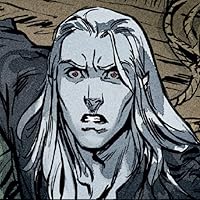
Un an s’est écoulé depuis qu’Elric a quitté Imrryr, son palais et son trône, laissant derrière lui une Cymoril profondément blessée et folle de chagrin. Un an qu’il arpente les Jeunes Royaumes, sous le regard distant mais toujours présent d’Arioch, son protecteur. Un an qu’il marchande ses talents de sorcier et combattant au plus offrant, forgeant à chaque bataille la légende du guerrier albinos dont l’Épée Noire à son flanc fait trembler les guerriers les plus braves. Aujourd’hui, il n’est plus Elric de Melniboné, quatre cent vingt-huitième empereur du peuple de R’lin K’ren A’a. Aujourd’hui, les Jeunes Royaumes le connaissent sous le nom de Loup Blanc.
La fabuleuse saga d’Elric, personnage culte de la littérature de fantasy, se poursuit dans cette adaptation BD plébiscitée par le public et la critique. Retrouvez, en fin d’ouvrage, le making of de l’album et des hommages graphiques au personnage par de grands noms de l’illustration et de la bande dessinée dans un cahier bonus exclusivement réservé à la première édition.
L'inaspettato cliffhanger finale, molto più delle tante piccole differenze presenti nei volumi precedenti, stravolge parecchio la storia rispetto ai romanzi, ma questa serie di graphic novel resta il miglior adattamento a fumetti della saga di Elric mai realizzato.
Da brividi la vignetta in cui si intravedono Corum, Erekosè e Hawkmoon, incarnazioni presenti e future del Campione Eterno insieme al principe albino di Melnibonè, ed è un vero peccato che l'autore abbia deciso di saltare la loro avventura insieme narrata da Moorcock nel racconto Sui mari del fato, ma visto il formato alla francese del fumetto, probabilmente avrebbe occupato un intero volume o più.
E se l'Elric mercenario, uccisore di mostri e vagabondo solitario che si vede nella prima parte de Il Lupo Bianco dovesse ricordare a parecchi lettori un altro personaggio ultimamente sulla cresta dell'onda da un po' di anni, protagonista di romanzi, fumetti e videogiochi (per non parlare del Caos di Warhammer, lì la citazione e fin troppo evidente), sappiate che tutto il fantasy contemporaneo ha un debito impagabile nei confronti di Michael Moorcock.
Il desiderio di rileggermi i romanzi cresce sempre più, ma ormai i miei to-read futuri sono talmente tanti che possiedo più libri e fumetti di quanti riuscirò mai a leggere neanche reincarnandomi nel Campione Eterno...
This was a really cool take, unexpected but fitting. Too bad it was not like this from the very first volume. I am not going to spoil any plot, just that its different to the book and I kind of want more of this. This is fun. 5.0 out of 5.0 stars
while an interesting addition to the collection of stories in this world in graphic novel form, I felt like there was something missing for the majority of the book. Elric was mostly just moving around and going places but nothing is really explained, as it sometimes goes with graphic novels - because we are only seeing the drawings of the world and some dialogue.
that ending however was actually really cool, even if I didn’t fully understand what was happening. and it actually does make me very intrigued for what comes next in this series. as always, I am interested in reading the original fantasy series, but until then this graphic novel series is interesting enough.
↬ trigger warnings: death and murder, brief sexual scenes, indentured people, war themes
What can I say? Its fucking Elric!! and Elric means awesome to the rockstar level.
The first 2 chapter's are manly focus on adapting the first novel. Were Elric is an albino emperor yada yada yada and largely explain the world building of the Elric Saga. This one is mainly focus on the other side of Elric Mythos A.K.A time/multiverse travel. Setting I think somewhere Sailors of the Sea's of faith. It shows the world outside the kingdom of Melnobonei where kingdoms with different culture yet somewhat similar. Its is also a year later and Elric is already had a reputation as a mercenary/monster slayer (sounds familiar doesn't it).
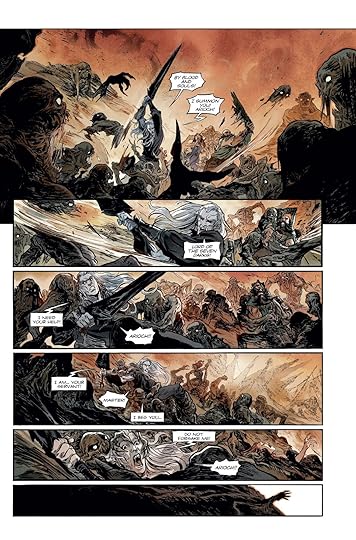
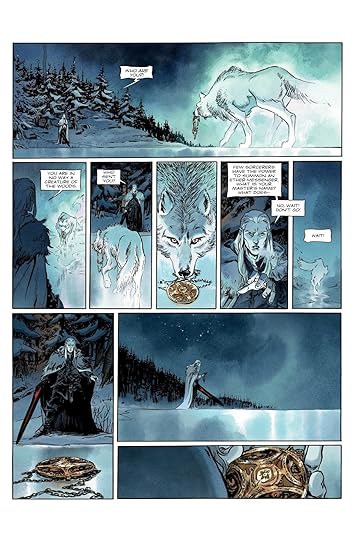
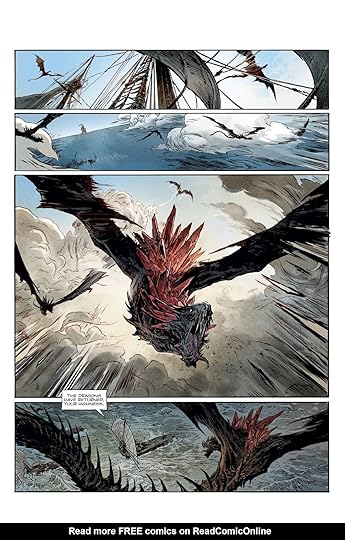
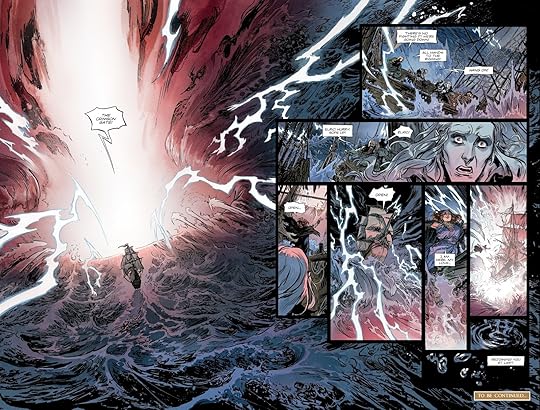
Same as usual the art is amazing same as the other previews two; like just look at it:
After the events of the first novel (volumes 1+2 of this comic adaption) Elric is in exile.
This story adapts a story from The Sailor on the Seas of Fate called Sailing to the Present, a novel I have bumped up my to-read list! This is basically a stand-alone short story where Elric helps a Queen go on a journey where Elric meets an ancient hero of Melnibone.
The more I think about it, the more pointless this story felt.
Its story concerns two minor characters who die quickly after their introduction, with little in terms of twists or turns or drama. Elric himself had little agency in it and did not do much at all to impact things, save maybe serve as the key in the midpoint - where all he needed to do was to exist. Overall it's basically just a showcase of the gorgeous artwork and imagery, some exposition of Melnibonean backstory, a bit of foreshadowing, and of course the big twist in the end.
It's not a tale in its own right, just an interlude - a prologue, setting up things to happen later. Things I'm really looking forward to, admittedly... but still.
This is third volume in newly adapted Elric saga. Same as previous two novels art is amazing and story is somewhat adapted and not exactly in line with the nature of Elric as we came to knew him from novels.
He is still morose, lacks actual sympathy for the Young Kingdoms and tries to battle the Stormbringer sword's extremely insidious nature (I mean it is a sword, right, not a toothpick - but this one aims to corrupt its wielder which is not something swords are supposed to do .... as far as I know).
While on a run, Elric, now known to the rest of Young Kingdoms as White Wolf gets involved with the person from his past and learns a thing or two about the burden of fate.
And when we think that our hero finally manages to escape the danger absolutely unexpected twist occurs. I wont go into details because ending shocked me (and got me searching for the original novels to compare) and would be a huge spoiler to mention it.
Excellent graphical novel, beautiful art and new (and, in my opinion, original) twist on the story itself.
Highly recommended to all fans of fantasy in general and Elric's saga in particular.
The art is stunning, as always, with much to look at and be inspired by. However, I do not like that they skipped Fortress of the Pearl and this is only a very loose adaptation of the third part of Sailor on the Seas of Fate. I mean, we get a glimpse of Erekose, Hawkmoon and Corum and that makes it all the worse for what might have been.
Furthermore, the actual story has been bent out of shape, in my opinion to make it more palatable to modern sensibilities. Mostly same characters, very different roles.
I was more interested about all the adventures he tells the readers he lived during the one year between last volume and this one than the actual plot he went through in this volume.
Totally saw the plot twist in this one coming though.
And side note : I don't really enjoy reading these. A tad too darkish for me.
Έχουμε ξαναπεί πως η κόμικ διασκευή του έργου του Michael Moorcock από τους Julien Blondel και Jean-Luc Cano, (εδώ για τον πρώτο και τον δεύτερο τόμο) για τον τραγικό, αντιηρωικό αλμπίνο και έκπτωτο αυτοκράτορα Έλρικ του Μελνιμπονέ είναι η πιστότερη απεικόνιση του ίδιου του πνεύματος του βιβλίου. Το εξαιρετικό σενάρια των δύο δημιουργών, εντοπίζει όχι μόνο τον βαθιά πολιτικό πυρήνα του έργου: την παρακμή μιας (νησιωτικής) ιμπεριαλιστικής αυτοκρατορίας που κρατιέται στη ζωή από την ονειροπόληση του παρελθόντος της και τη σύγχρονη βία, αλλά και τα κοινωνικά κύματα που ξεπηδούν από αυτό, τον ηθικό εκφυλισμό και αναλγησία, ή καλύτερα, την ευχαρίστηση του πόνου.
Στον τρίτο τόμο (στα ελληνικά από τις εκδόσεις Αίολος και σε μετάφραση του Θωμά Μαστακούρη) συνεχίζει αυτή την εξερεύνηση, βγαίνοντας ελαφρώς από τη φόρμα της ιστορίας του βιβλίου και πατώντας πιο γερά στα καρέ του μέσου των κόμικς. Την ίδια στιγμή, βγάζοντας τον Έλρικ από τα όρια του νησιού των δράκων, ο τόμος μας δείχνει τον ζωηρό πολιτισμό των Νεαρών Βασιλείων, όπου ο φονικός θρύλος του Έλρικ και της Καταιγίδας έχει ήδη εξαπλωθεί. Εκεί, πέρα από μια πολύ διαφορετική πολιτισμική κατάσταση από ότι στο εκφυλισμένο Μελνιμπονέ, οι συγγραφείς βρίσκουν και την ευκαιρία να “tease”- άρουν δύο πολύ σημαντικές φιγούρες για το μέλλον του Ελρικ, τη βασίλισσα Γισάνα και τον νεκρομάντη Θέλεμπ Κάαρνα, όπου στα βιβλία αντικατέστησε τον Γιρκούν ως αρχιεχθρός του αυτοκράτορα. Όμως εδώ δεν είμαστε στα βιβλία…
Το κόμικ κάνει μια στροφή από αυτά και δεν αντιπαραβάλλει τα Νεαρά Βασίλεια, τα οποία δεν είναι ούτε Νεαρά ούτε ηθικά άμεμπτα, απέναντι στο Μελνιμπονέ. Μη θέλοντας να φύγει εντελώς από την ουσία του νησιού των δράκων, οι συγγραφείς βρίσκουν την ευκαιρία να συγκρίνουν το παρελθόν και το μέλλον του πολιτισμού που σμίλεψε τον Λευκό Λύκο. Μας δίνονται ψήγματα για την αλήθεια πίσω από την αιμάτινη Ιμρίρ και τους παιάνες από τις κραυγές των σκλάβων, το πώς τελικά το Χάος επηρέασε τους κατοίκους του νησιού του Μελνιμπονέ και έφτιαξαν την αυτοκρατορία τους πάνω στον πόνο. Μας δίνουν δηλαδή την ουσία που έκανε ένα νησί απομακρυσμένο από όλους να πνίξει τον κόσμο στο αίμα, όπως άλλωστε και το νησί στο οποίο βασίστηκε, η ιμπεριαλιστική Μεγάλη Βρετανία.
Για όλα αυτά χρησιμοποιείται η μορφή ενός πάλαι ποτέ αυτοκράτορα, του Σαφίξ Ντ’ααν, ένα φάντασμα από το χαμένο παρελθόν που καλεί τον Έλρικ να ανακαλύψει τις δικές του ρίζες, πίσω από τους θρύλους με τους οποίους μεγάλωσε, κυνηγημένος ταυτόχρονα από το παρελθόν του, το οποίο παίρνει μια απροσδόκητη μορφή…
Ουσιαστικά η ιστορία του Λευκού Λύκου θέτει τα θεμέλια που θα κινηθεί ο επόμενος τόμος, το Η Πόλη Που Ονειρεύεται, το κάνει όμως με ρευστή δράση, τρισδιάστατους χαρακτήρες (παρά το σύντομο της εμφάνισής τους) και, τελικά, αυτή την έωλη μαγεία με την οποία ο Moorcock έφτιαχνε ανάκτορα και θαυμαστές μαγικές πύλες μέσα σε μόνο μια παράγραφο. Το κόμικ βασίζεται επίσης απόλυτα στην οπτική αφήγηση που επιτυγχάνει το ονειρικό σχεδόν σχέδιο των Robin Recht και Julien Telo, οι οποίοι εστιάζουν όχι μόνο στα πανέμορφα, ατόφια high fantasy σκηνικά και περιγράμματα, τα οποία βρίθουν λεπτομερειών, αλλά και στα πρόσωπα των πρωταγωνιστών της ιστορία τους, τα οποία φωτίζουν ή σκιάζουν ανάλογα την κατάσταση. Αποδοσμένα με προσοχή και ενδιαφέρον, τα πρόσωπα των ηρώων, και κυρίως του Ελρικ, καθρεφτίζουν με διαύγεια τα συναισθήματα και λένε την ιστορία με τέτοιο τρόπο που δε θα γινόταν δυνατός σε κανένα άλλο μέσο. Ταυτόχρονα, οι επιρροές από Clive Barker κάνουν ακόμα αισθητή την εμφάνισή τους, προσδίδοντας μια απαραίτητη αισθητική φρίκης στο έργο. Το σχέδιο γενικότερα παραμένει η σπουδαία και πανέμορφη προσθήκη αυτής της διασκευής στον θρύλο του Αλμπίνου Αυτοκράτορα.
Επιλογικά, το Λευκός Λύκος είναι ουσιαστικά το προοίμιο του επόμενου, ένα νέο κεφάλαιο και μια νέα αρχή στην ιστορία του Ελρικ στην προσπάθεια του να βγάλει νόημα στα συντρίμια του μέλλοντος, κατανοώντας πια πως στο παρελθόν υπάρχει μόνο θάνατος. Για τους φίλους του αλμπίνου αντιήρωα είναι μια υπέροχη προσθήκη για τη βιβλιοθήκη τους, ενώ για όσους θέλουν να γνωρίσουν καλύτερα το έργο του Moorcock και δεν έχουν υπομονή να διαβάσουν τα βιβλία, είναι μάλλον μια καλή αρχή για ένα jump cut, αν και θα χάσουν πολλά!
More and more, I realize two things: A) I’d love to see an Elric series on HBO with a budget on par with Game of Thrones. B) I’d also be wary of any adaptation that changes too much—(like so many modern ones tend to do, devolving into glorified 'fan-fiction'). This volume continues the trend of the last two, altering some details from the original books and ending with a particularly strange change I don’t quite understand (unless I’m seriously forgetting something from the novels). Still, I’m really enjoying it so far, and we'll see how it plays out (I'm assuming it will still end the way it did before).
"To me you are but a puddle of muck who believes herself the ocean." - Saxif to Gratyesha
"You have become a slave to your Isle of rage... and I will ever be but one to a fleshly coffin." - Gratyesha to Saxif
"I go now to rejoin the one I love in oblivion... thanks to you. You know nothing of your origins but you have a lifetime left in which to learn. Seek them out find them." - Saxif to Elric
A tale of enslavement to tyranny, to power, to love, to fanaticism, to basically anything that drives one forward. History of a time before the Lords of Chaos corrupted. Of the Melnibonéans from their own exile from R'lin K'ren A'a. Of their war with the Menastrai before they splintered to become the Melnibonéans. An ancient civilization, of H'hui'shaan. The art is great. The story was chaotic to me in the beginning but once the history started to take off, I was in tune with it. Maybe if I read the source material it would make more sense.
4.0/5.0: Initially, The White Wolf came off as a disappointment. It didn’t adapt The Sailor on the Seas of Fate, a story known for being the result of Moorcock’s usage of LSD. Being the second/third story in the chronology, it seemed obvious as the next plot point for Elric to explore. However, it begins by telling us that things have changed for Elric since becoming a travelling sorcerer and swordsman. We’re given a brief monologue as an introduction, moving toward an original story of finding a lost Emperor of Melnibone. After a re-read, my feelings have changed. It presents a tragedy that if Elric followed the hedonistic pleasures of his beloved Melnibone, then his fate would be repulsive in its excess. It foreshadows a difficult choice for Elric, emphasizing his conflicted nature as a tool for a dark god and his personal ethics. It hints at a larger conflict brewing underneath the surface as I’m hoping that Volume 4 would be able to deliver. For fans of Elric, this Volume delivers a delightful surprise for veterans and initiates.
Elric es troba autoexilliat als Reialmes Joves, on se li afegeix un company d'aventures, una misteriosa dona li proposa una missió perillosa i s'enfronta a esclavistes i dimonis d'una altra dimensió. També hi ha dracs.
Aventura, màgia fosca i fetillers maleïts en la primera part de l'adaptació de la segona novel·la de la saga d'Elric: «Marinero de los mares del destino». L'adaptació prescindeix de la primera part del llibre, però entenc la decisió, ja que eixa part desenvolupa una història diferent a la trama de la resta de l'obra. Gran història i gran dibuix. L'edició és espectacular.
En esta ocasión el tomo cubre una de las etapas nunca mencionadas de la vida de Elric, entre Marinero de los mares del destino y El Lobo Blanco. El dibujo sigue siendo excepcional y esta vez veremos un nuevo enfoque muy interesante a las figuras de Saxif D'Aan y Cymoril. El próximo promete.
Fantastic art and a great adaptation of the Elric storyline to graphic novel. This third tome further cements this series's rightful place as the superior Elric incarnation since the original stories.
No tiene el acabado y la dirección de arte del primer volumen (IMHO, insuperable) pero se viene muy arriba respecto al bajón que sufría el segundo. Este es el Elric que siempre quise ver.
PT Antes de mais, é de sublinhar o trabalho absolutamente notável dos ilustradores desta série. O mundo de Elric é profundamente épico, e isso reflete-se de forma clara na riqueza visual dos cenários que surgem ao longo da narrativa.
Agora, afastado de Melniboné, Elric percorre os Reinos Jovens — ou seja, o domínio dos humanos — onde encontra uma jovem princesa que lhe pede ajuda contra um feiticeiro chamado Saxif D'Aan.
A história trágica deste novo antagonista chamou-me a atenção e levou-me a uma reflexão interessante: muitos dos grandes vilões das histórias, mesmo sendo apresentados como encarnações do mal, acabam frequentemente por encontrar o seu destino por via do amor por uma mulher. Outro exemplo que me ocorre é o de Imhotep e Anck-su-Namun na franquia "A Múmia". Isto evidencia o poder do amor, já que até figuras profundamente associadas ao mal acabam por amar e sacrificar tudo por esse sentimento.
Este tema, de resto, parece ecoar noutra série da Arte de Autor, "Fábulas das Terras Perdidas", onde se coloca a questão: “é o amor que está no coração do mal, ou é o mal que está no coração do amor?”.
Importa clarificar que não se trata de uma relação direta entre obras — não existe qualquer ligação entre elas. Trata-se apenas de um conceito que me parece bastante universal e que só agora me surgiu de forma mais evidente: o amor está presente mesmo nos corações dos grandes vilões.
--
EN First of all, it is worth highlighting the truly remarkable work of the illustrators of this series. The world of Elric is profoundly epic, and this is clearly reflected in the visual richness of the settings that appear throughout the narrative.
Now, away from Melniboné, Elric travels through the Young Kingdoms — that is, the realm of humans — where he meets a young princess who asks for his help against a sorcerer named Saxif D’Aan.
The tragic story of this new antagonist drew my attention and led me to an interesting reflection: many great villains in stories, even when presented as embodiments of evil, often meet their end through their love for a woman. Another example that comes to mind is Imhotep and Anck-su-Namun from "The Mummy" franchise. This highlights the power of love, as even figures strongly associated with evil end up loving and sacrificing everything for that feeling.
This theme also seems to echo in another Arte de Autor series, "Tales from the Land of Lost Stories", which raises the question: “is it love that lies at the heart of evil, or is it evil that lies at the heart of love?”
It is important to clarify that this is not a connection between works — there is no relation between them. It is simply a concept that seems quite universal to me and that I have only now begun to notice more clearly: love is present even in the hearts of great villains.
The French adaptation of Elric’s story continues in this third book, ‘The White Wolf’, originally published as ‘Elric: Le Loup Blanc’ by Editions Glénat and featuring French talent. The French have a rich graphic novel tradition and regarded it as a serious artform long before us Anglo-Saxons. Thankfully, Titan Comics have issued this translated edition for our delectation and delight.
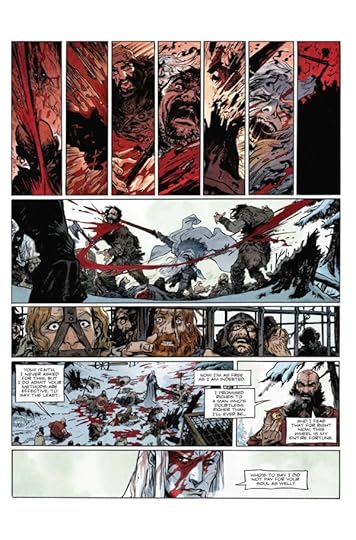
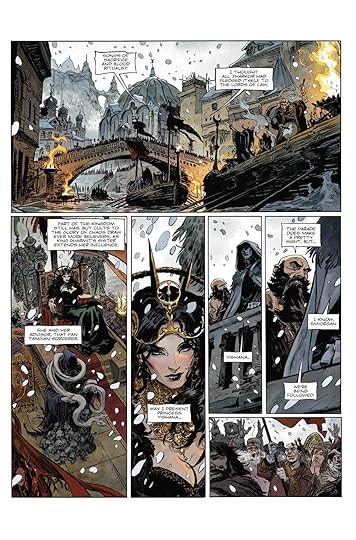
The story continues. It’s now a year since Elric gave up being Emperor of Melniboné to roam the Young Kingdoms where he is known as the White Wolf. He saves a group of slaves on a whim or perhaps to feed Stormbringer their captors’ souls. One Smiorgan Baldhead, Count and Sea-Lord of the Purple Towns then accompanies the albino on his travels. A strange emissary in the form of a white wolf summons Elric to Dhakosi, capital of the Kingdom of Jharkor where Vassliss, heir to the Guild of Merchant Princes seeks his aid on a special quest involving an ancient Melnibonéan Emperor, thought long dead. The book ends on a cliff-hanger.
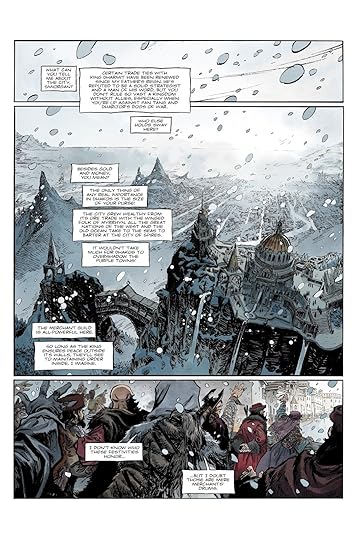
The art has a slightly sketchy quality in places but I think that suits the epic fantasy subject matter. I’ve been reading Walter Simonson’s ‘Mighty Thor’ lately and that has a similar look. Telo and Recht can draw human beings, demons and architecture with equal facility and the colouring is subtle and beautiful. There are splash panels for grand scenes and small panels to show sequential action effectively. The storytelling is well done. As a bonus, there are pen and ink character sketches at the back of the book. Other pages, front and back, list or advertise the many graphic novel adaptations of Elric and other works by Michael Moorcock, perhaps the most adapted fantasy author after Tolkien and Lovecraft. He worked in comics himself in youth and has never looked down on the medium, not even when he got all literary and started being noticed by ‘The Guardian’ newspaper.
It’s a good story, fine art and a nice hardcover edition printed on quality paper. It’s not a very thick book and the actual story is only 46 pages but this is new stuff, not old comics reprinted so I guess it costs more. Still worth it, but this came out a while ago now and my research has revealed that ‘Book 4: The Dreaming City’ is the last one in this series and there’s a box set coming out in September. There are also eBook versions of these things, slightly cheaper. Ah, eBooks! Age will not weary them, nor the years condemn, but many old folks prefer paper. ‘Elric: The White Wolf’ is recommended in any medium.
Debo admitir que mi repulsión a los diálogos excesivos activaron mi sentido arácnido con este libro. Pareciese que, al ser una adaptación de una novela, hayan querido poner todos y cada uno de los diálogos de ella. Pero luego cuando empecé a leerlo con ojos de quien lee Shakespeare, donde el drama y el diálogo predominan, me sentí más a gusto con las secuencias silenciosas, que son varias.
Este es mi primer libro de esta saga y debo decir que estoy bastante intrigado con los demás. Me pondré al tanto con los dos anteriores, y quizás escriba una segunda reseña para ver si le doy esa última estrella.
El dibujo fue de principio a fin envolvente. Cada personaje es distintivo y los fondos son para pegarlos en la pared. En los colores no hay pérdida. En cada escena donde habrá acción, los colores son sobrios para así darle más impacto a la acción con fuertes rojos o naranjas. El trabajo secuencial me sacó de ritmo algunas veces, pero cuando hubo que sorprender hizo. Y algunas decisiones que no se si fueron a propósito que rompieron la cuarta pared sin salir de la historia, fue muy sutil por lo cual me cuesta trabajo darme cuenta si fue un accidente.
El dibujo es tan bueno que lo volví a abrir solo para hojearlo.
Back in 2018, I read and thoroughly enjoyed the English translation of the French two-album comics adaptation of Michael Moorcock's Elric of Melniboné: The Ruby Throne and Stormbringer. So, when I learned that head writer Julien Blondel, co-writing (as on the second album) with Jean-Luc Cano, had produced a third album, primarily drawn by Julien Telo, with earlier artist Robin Recht contributing with one longer and one shorter section (in total between a third and half of the album), I felt compelled to check it out.
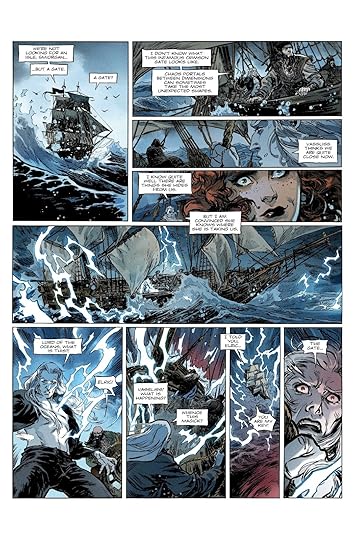
This time Blondel et al. turn to Moorcock's book The Sailor on the Seas of Fate, skipping past the opening section, "Sailing to the Future", and adapt the section "Sailing to the Present", in which Elric first meets Count Smiorgan Baldhead. In the adaptation, which takes some liberties (as far as I can recall), the two new companions travel to Dhakos where a woman by the name of Vassliss enlists their help (primarily Elric's) to find a way to reach another world, wherein awaits a former Melnibonéan emperor: Saxif D’an.
The ending of the album, suggests that the final section of The Sailor on the Seas of Fate – "Sailing to the Past" – is next in line to be adapted by Blondel et al., as Elric and Smiorgan find themselves aboard a ship captained by Duke Avan Astran from Hrolmar.
All in all, Blondel and the people he opts to work with continue to produce interesting adaptations of Moorcock's stories about Elric, which stay true to the characters while altering minor details en route as it were. My warm recommendations go out to anyone interested in Moorcock's ouevre in general and Elric in particularly.
The third of Blondel's Elric adaptations, the best part of this slim volume is the stunning artwork by Bastide and Recht, who perfectly capture the grandiose strangeness of Elric's world. At just 64 pages, this loosely adapts the 'Sailing to the Present' section of the second published Elric novel, 'the Sailor on the Seas of Fate.' My first look at this series (picked up for a bargain price in a Forbidden Planet sale), it doesn't feel like much or any prior knowledge is needed to make sense of the story. And as a story, it's pretty good. There's a lot of deviation from the original book and, a tremendous, shocking ending that made me want to read the fourth volume just to see where all this is going. Job done, monsieur Blondel. Job done.
Après deux premiers albums de très haut niveau, le troisième volume de l'adaptation en bande dessinée du cycle d'Elric de Michael Moorcock m'a semblé un peu moins réussi. Les dessins sont toujours beaux, mais j'ai été moins impressionné que face à certaines planches splendides des deux premiers albums. Quant au récit, il m'a moins passionné lui aussi : on s'éloigne de lutte pour le pouvoir entre Elric et son cousin pour le Trône de Rubis, et je n'ai pas été aussi conquis. Le résultat reste toutefois très honorable, et suffisamment prenant pour me donner envie de lire la suite, avec un quatrième album dont j'ignore malheureusement la date de sortie.
« Combien de temps peut-on vivre dans un rêve, Cymoril ? »
Ce troisième tome est pour le moment mon favori. De nouveaux personnages, comme Smiorgan (je l’aime bien, il est sympathique) sont intégrés. De plus, de petites intrigues secondaires prennent place et remplissent la trame principale, déjà riche en rebondissements !
Moins violent graphiquement que les deux précédents, ce tome ne laisse pas moins apparaître une nouvelle menace, menace qui pourrait bien réduire à néant tous les efforts d’Elric.
J’aurais juste aimé en apprendre davantage sur l’Épée Noire. Dans le quatrième tome, peut-être ?
este volumen se aleja demasiado de los libros para mi gusto, no sólo de la trama sino también de la esencia de elric como personaje. cambios que sean necesarios para la adaptación para ajustar la obra original a otro medio son más que bienvenidos, pero creo que aquí los cambios hacen que la historia no tenga ningún sentido. tampoco entiendo la decisión de omitir las tramas más interesantes de marinero en los mares del destino (ejem ejem los cuatro que son uno) para adaptar esta en concreto y encima hacerla regular...
un poco decepción respecto a los anteriores pero a nivel visual y de dibujo sigue siendo un 10/10 (este elric no podría lucir más perfecto me tiene dando volteretas)