

What do you think?

Tamed: Ten Species That Changed Our World
For hundreds of thousands of years, our ancestors depended on wild plants and animals for survival. They were hunter-gatherers, consummate foraging experts, taking the world as they found it. Then a revolution occurred – our ancestors’ interaction with other species changed. They began to tame them. The human population boomed; civilisation began.
In Tamed, Alice Roberts uncovers the deep history of ten familiar species with incredible wild pasts: dogs, apples and wheat; cattle, potatoes and chickens; rice, maize and horses – and, finally, humans.
She reveals how becoming part of our world changed these animals and plants, and shows how they became our allies, essential to the survival and success of our own species.
Enlightening, wide-ranging and endlessly fascinating, Tamed encompasses thousands of years of history and archaeology alongside cutting-edge genetics and anthropology. Yet it is also a deeply personal journey that changes how we see ourselves and the species on which we have left our mark.
In Tamed, Alice Roberts uncovers the deep history of ten familiar species with incredible wild pasts: dogs, apples and wheat; cattle, potatoes and chickens; rice, maize and horses – and, finally, humans.
She reveals how becoming part of our world changed these animals and plants, and shows how they became our allies, essential to the survival and success of our own species.
Enlightening, wide-ranging and endlessly fascinating, Tamed encompasses thousands of years of history and archaeology alongside cutting-edge genetics and anthropology. Yet it is also a deeply personal journey that changes how we see ourselves and the species on which we have left our mark.
368 pages, Paperback
First published October 19, 2017
About the author
Alice Roberts
46 books871 followersAlice May Roberts is an English anatomist, osteoarchaeologist, physical anthropologist, palaeopathologist, television presenter and author.
Roberts studied medicine and anatomy at Cardiff University, qualifying in 1997 as a physician with a Bachelor of Medicine, Bachelor of Surgery (MB BCh) degree, having gained an intercalated Bachelor of Science degree in anatomy. She earned a PhD in paleopathology in 2008 from the University of Bristol.
Librarian Note: There is more than one author in the Goodreads database with this name.
Roberts studied medicine and anatomy at Cardiff University, qualifying in 1997 as a physician with a Bachelor of Medicine, Bachelor of Surgery (MB BCh) degree, having gained an intercalated Bachelor of Science degree in anatomy. She earned a PhD in paleopathology in 2008 from the University of Bristol.
Librarian Note: There is more than one author in the Goodreads database with this name.
Ratings & Reviews
Friends & Following
Create a free account to discover what your friends think of this book!
Community Reviews
Displaying 1 - 30 of 216 reviews

February 22, 2025
I lost my Netgallery virginity to this book, and I feel pretty good about it. Respected, like. Alice Roberts treated me well, didn’t talk down to me and taught me a lot. She knows her stuff, and has some very good instincts about how to present it.
As an example of that last statement, she decided to devote the first of ten chapters (each describing a different plant or animal that has been domesticated) to dogs. This could be because dogs are our oldest allies, first domesticated around 35,000 years ago. And that’s pretty fortunate, as this marked the beginning of a 20,000 year Ice Age. Those dogs, who were essentially wolves that had evolved to digest starch and enjoyed free meals, helped out ancestors tough out their hunter-gatherer lifestyle amidst the glaciers. This is pretty astonishing, since the old wisdom is that we didn’t begin domestication until settling down in an agricultural lifestyle. We now know that even hunter-gatherers built villages, allowing time for wolves to overcome their shyness in order to grab whatever chunks of bison the humans didn’t eat. Anybody that's formed a strong bond with a dog knows what great and loyal companions they are, so the book got off to a good start.
Dog breeds as we understand them today, in all their glorious variety, have all been bred within the past couple of hundred years. Until then, they all looked more or less like wolves.
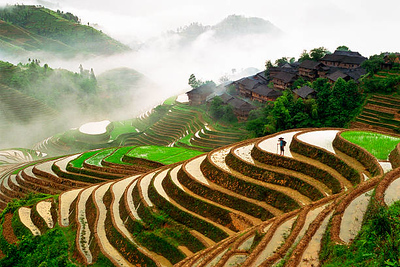
I don’t want this review to become a litany of facts about wheat, rice, potatoes and corn; horses, dogs and cattle. Oh, and chicken and apples, too. Suffice to say that we can learn a lot about human history by studying the history – both artifacts as well as genetics – of these species, and the nice tidy history we’ve learned of Mesopotamians inventing agriculture around 9000 years ago is a bit too simplistic. While this story generally holds together for wheat, people were farming rice in the lovely and romantic Longsheng region of China at about the same time, and of course corn and potatoes were still confined to the Americas, but doing quite well, thank you.
Roberts notes that Europeans north of the Alps were initially suspicious of the potato – after all, if they were meant for people to eat, why didn’t the Good Book mention them? It was also believed they led to elevated levels of lust and flatulence. “Hopefully not at the same time,” the author helpfully comments. It’s one of many commonsense observations she makes throughout the book.
Scientists were excited to find clay cooking pots, or at least pottery shards, in a Chinese cave dating back over 25,000 years. Those of you who’ve been paying attention will remember this was in the heart of the most recent Ice Age. While scientists note the role that cooking cereals played in aiding digestion, Roberts notes that a pot over the fire after a hard day of hunting and gathering in freezing conditions was an appealing thought indeed, and they didn’t need no science malarky about enzyme conversion to enjoy a nice hot meal. Similarly, she notes that horses were probably not tamed by the village chieftan/warrior, but by a group of teenage boys with too much time on their hands (which exactly reflects my own experience with trying to ride a horse that adamantly didn’t want to be ridden. "C’mon, boys, let’s ride this thang!")
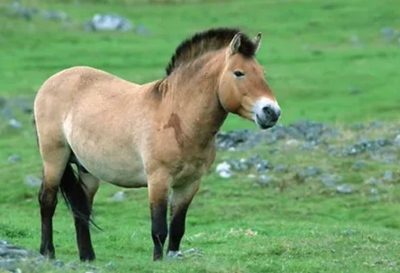
Przewalski's Horse. These are the last remaining truly wild, i.e. never domesticated, horses. They actually went extinct in the wild but there was enough breeding stock in zoos to allow them to be reintroduced, and now it looks like they're going to make it.
Only the most committed of paleophiles will be enthralled with all ten chapters of this -- it did tend to become repetitive. But any of the long chapters is rewarding on its own -- just pick the ones that interest you. Her final chapter, on how humans tamed themselves and became citizens, was perhaps the weakest. But I recommend this book without hesitation to anybody who is interested in what a tough and smart bunch our ancestors (and their dogs) were.
As an example of that last statement, she decided to devote the first of ten chapters (each describing a different plant or animal that has been domesticated) to dogs. This could be because dogs are our oldest allies, first domesticated around 35,000 years ago. And that’s pretty fortunate, as this marked the beginning of a 20,000 year Ice Age. Those dogs, who were essentially wolves that had evolved to digest starch and enjoyed free meals, helped out ancestors tough out their hunter-gatherer lifestyle amidst the glaciers. This is pretty astonishing, since the old wisdom is that we didn’t begin domestication until settling down in an agricultural lifestyle. We now know that even hunter-gatherers built villages, allowing time for wolves to overcome their shyness in order to grab whatever chunks of bison the humans didn’t eat. Anybody that's formed a strong bond with a dog knows what great and loyal companions they are, so the book got off to a good start.
Dog breeds as we understand them today, in all their glorious variety, have all been bred within the past couple of hundred years. Until then, they all looked more or less like wolves.
I don’t want this review to become a litany of facts about wheat, rice, potatoes and corn; horses, dogs and cattle. Oh, and chicken and apples, too. Suffice to say that we can learn a lot about human history by studying the history – both artifacts as well as genetics – of these species, and the nice tidy history we’ve learned of Mesopotamians inventing agriculture around 9000 years ago is a bit too simplistic. While this story generally holds together for wheat, people were farming rice in the lovely and romantic Longsheng region of China at about the same time, and of course corn and potatoes were still confined to the Americas, but doing quite well, thank you.
Roberts notes that Europeans north of the Alps were initially suspicious of the potato – after all, if they were meant for people to eat, why didn’t the Good Book mention them? It was also believed they led to elevated levels of lust and flatulence. “Hopefully not at the same time,” the author helpfully comments. It’s one of many commonsense observations she makes throughout the book.
Scientists were excited to find clay cooking pots, or at least pottery shards, in a Chinese cave dating back over 25,000 years. Those of you who’ve been paying attention will remember this was in the heart of the most recent Ice Age. While scientists note the role that cooking cereals played in aiding digestion, Roberts notes that a pot over the fire after a hard day of hunting and gathering in freezing conditions was an appealing thought indeed, and they didn’t need no science malarky about enzyme conversion to enjoy a nice hot meal. Similarly, she notes that horses were probably not tamed by the village chieftan/warrior, but by a group of teenage boys with too much time on their hands (which exactly reflects my own experience with trying to ride a horse that adamantly didn’t want to be ridden. "C’mon, boys, let’s ride this thang!")
Przewalski's Horse. These are the last remaining truly wild, i.e. never domesticated, horses. They actually went extinct in the wild but there was enough breeding stock in zoos to allow them to be reintroduced, and now it looks like they're going to make it.
Only the most committed of paleophiles will be enthralled with all ten chapters of this -- it did tend to become repetitive. But any of the long chapters is rewarding on its own -- just pick the ones that interest you. Her final chapter, on how humans tamed themselves and became citizens, was perhaps the weakest. But I recommend this book without hesitation to anybody who is interested in what a tough and smart bunch our ancestors (and their dogs) were.

December 29, 2018
A look at the domestication of various plant and animal species in 10 largely standalone chapters, covering dogs, wheat, cattle, maize, potatoes, chickens, rice, horses and apples, with a last chapter covering humans, of which more later.
I took a little while to get into this. The first chapter, about dogs, didn’t grab me, but perhaps I just needed some time to get into the book’s style. I definitely got more interested as I went along. It’s a difficult book to summarise as each species is different, but there were a few themes that seemed to stand out. One is that in recent years new archaeological discoveries, and more complete genetic analyses, have tended to push back the earliest known dates for the domestication of the species featured, as well as complicating the issue of geographical origins; another is how the process of domestication causes physiological and genetic changes to the affected species. For the most part these changes would be strongly deleterious to survival in the wild. In the last chapter, Prof. Roberts argues that humans are a “self-domesticated” species, who have undergone similar changes, including smaller jaws and teeth than our ancestors, and a reduced level of male aggression. She attributes the latter to sexual selection in favour of less aggressive males. I thought this was interesting but a bit speculative.
The author also expresses concern about how our demands for efficiency and standardisation in food crops have reduced genetic diversity in these species, leaving them vulnerable to disease pests. There is a fair-minded discussion about the pros and cons of genetic modification as a way of increasing crop yields.
One thing I would say is that the book has a slight but noticeable bias towards a British readership. I couldn’t help feeling that the inclusion of a chapter on apples was because Prof. Roberts is herself from the south-west of England, the heart of apple growing country in the UK. I mean, I like apples well enough, but I don’t think they have had the overall impact of the other plants featured. There’s also a humorous reference to Downtown Abbey and another to a 1970s TV commercial for instant mashed potato, well-remembered by Brits of my vintage but probably mystifying to anyone else.
Overall, I wouldn’t describe this as a quick read, but I found it a worthwhile one.
I took a little while to get into this. The first chapter, about dogs, didn’t grab me, but perhaps I just needed some time to get into the book’s style. I definitely got more interested as I went along. It’s a difficult book to summarise as each species is different, but there were a few themes that seemed to stand out. One is that in recent years new archaeological discoveries, and more complete genetic analyses, have tended to push back the earliest known dates for the domestication of the species featured, as well as complicating the issue of geographical origins; another is how the process of domestication causes physiological and genetic changes to the affected species. For the most part these changes would be strongly deleterious to survival in the wild. In the last chapter, Prof. Roberts argues that humans are a “self-domesticated” species, who have undergone similar changes, including smaller jaws and teeth than our ancestors, and a reduced level of male aggression. She attributes the latter to sexual selection in favour of less aggressive males. I thought this was interesting but a bit speculative.
The author also expresses concern about how our demands for efficiency and standardisation in food crops have reduced genetic diversity in these species, leaving them vulnerable to disease pests. There is a fair-minded discussion about the pros and cons of genetic modification as a way of increasing crop yields.
One thing I would say is that the book has a slight but noticeable bias towards a British readership. I couldn’t help feeling that the inclusion of a chapter on apples was because Prof. Roberts is herself from the south-west of England, the heart of apple growing country in the UK. I mean, I like apples well enough, but I don’t think they have had the overall impact of the other plants featured. There’s also a humorous reference to Downtown Abbey and another to a 1970s TV commercial for instant mashed potato, well-remembered by Brits of my vintage but probably mystifying to anyone else.
Overall, I wouldn’t describe this as a quick read, but I found it a worthwhile one.

February 27, 2018
The way I see it, Tamed has two great strengths to recommend it: the first is its up-to-date research. If you want to know all the latest debates and study findings in the ancient process of domestication of plants and animals, this book will get you up to speed. Understandably this won’t hold true in ten years, however. The second strength is Alice Roberts’ writing. The author is a well-known figure – at least here in the UK – and indeed her job is to make the historical sciences lucid to the general public. Her work is both professional and accessible, so don’t worry if you’re a complete newcomer to the subject, you’ll get the facts and they are explained in a clear, straightforward manner. At the same time, Roberts doesn’t skimp on the complexities of the subject either. I would be equally happy to recommend this to my colleagues in the field as I would to my non-historian friends.
8 out of 10

November 8, 2020
This book is enlightening and really well researched. The biggest advantage is that its updated with all the recent research and hence it makes it a one stop solution with respect to the species mentioned. The book might be little overwhelming because of the information present but its worthwhile to go through till the end which talks about humans.
The most incredible insight I gathered from the book is that we humans tend to create boundaries and distinctions. But biology seems to break those barriers again and again. The book starts with the most beautiful alliance man had that is dogs. It's really interesting how the eurasian wolf exerted selective pressure on humans and we did vice versa. So that terrier, that german shepherd, that labrador and all other breeds we know so well are technically a wolf at heart but one which is more friendlier and less dangerous than its wild cousins.
Then the author goes on to explain the evolutionary history of wheat and maize. Wheat played a pioneer role in neolithic revolution and then maize also took over in many regions.
The evolutionary history of potatoes and other tubers was very insightful and interesting. The need to dig up tubers and the relative advantage it offers in terms of energy was immense in earlier times. Along with wheat rice also played a key role in neolithic revolution and all has been mentioned very nicely in the book.
Another interesting species were the horses.
Humans and horses have a long history of interspecies cooperation. One which is often neglected if compared to species like dogs. The origin and further evolution of horses and the selective pressures on both species is indeed a treat to read and the author keeps it very interesting amidst giving out scientific details about it.
The last chapter of the book is actually the most insightful one. Not only because it deals with humans but it gives us a larger picture. The larger picture is that all biological species are interlinked and to assume that we are at the helm of everything would be demeaning and ofcourse would be arrogance. This could be elaborated with respect to natural and artificial selection. This very distinction is artificial to be precise. Because humans are not the only species which affect the evolution of others. Our very existence depends on interdependency. For eg bees have affected the evolution of so many other species and just because they cant sit and reflect on it doesnt mean they didnt drive the change in ecosystem.
The final blow to our mastery of nature comes when we consider the relatively small number of species that we have been able to recruit as our allies. For a species to become a successful ally it had to possess a certain qualities which would - when the occasion presented itself - act as predispositions to become human domesticates.
Also while domesticating other species we also got domesticated in the long run. This was done in order to live cohesively in a society where communication and cooperation was the key to survival.
The book ends with beautiful lines which kind of summarises the whole point which is " There are divisions here between the wild and the domesticated, the untamed and the tamed. But in the end, it's all one : a tangled bank, beautifully intertwined for eternity.
The most incredible insight I gathered from the book is that we humans tend to create boundaries and distinctions. But biology seems to break those barriers again and again. The book starts with the most beautiful alliance man had that is dogs. It's really interesting how the eurasian wolf exerted selective pressure on humans and we did vice versa. So that terrier, that german shepherd, that labrador and all other breeds we know so well are technically a wolf at heart but one which is more friendlier and less dangerous than its wild cousins.
Then the author goes on to explain the evolutionary history of wheat and maize. Wheat played a pioneer role in neolithic revolution and then maize also took over in many regions.
The evolutionary history of potatoes and other tubers was very insightful and interesting. The need to dig up tubers and the relative advantage it offers in terms of energy was immense in earlier times. Along with wheat rice also played a key role in neolithic revolution and all has been mentioned very nicely in the book.
Another interesting species were the horses.
Humans and horses have a long history of interspecies cooperation. One which is often neglected if compared to species like dogs. The origin and further evolution of horses and the selective pressures on both species is indeed a treat to read and the author keeps it very interesting amidst giving out scientific details about it.
The last chapter of the book is actually the most insightful one. Not only because it deals with humans but it gives us a larger picture. The larger picture is that all biological species are interlinked and to assume that we are at the helm of everything would be demeaning and ofcourse would be arrogance. This could be elaborated with respect to natural and artificial selection. This very distinction is artificial to be precise. Because humans are not the only species which affect the evolution of others. Our very existence depends on interdependency. For eg bees have affected the evolution of so many other species and just because they cant sit and reflect on it doesnt mean they didnt drive the change in ecosystem.
The final blow to our mastery of nature comes when we consider the relatively small number of species that we have been able to recruit as our allies. For a species to become a successful ally it had to possess a certain qualities which would - when the occasion presented itself - act as predispositions to become human domesticates.
Also while domesticating other species we also got domesticated in the long run. This was done in order to live cohesively in a society where communication and cooperation was the key to survival.
The book ends with beautiful lines which kind of summarises the whole point which is " There are divisions here between the wild and the domesticated, the untamed and the tamed. But in the end, it's all one : a tangled bank, beautifully intertwined for eternity.

November 29, 2017
A good general introduction to domestication and (for me) an update on some of the ground covered in Jared Diamond’s Guns, Germs and Steel. Clearly this is a fast moving area so the science is likely to go out of date fairly quickly.
I enjoyed the range of types of domestication Roberts covered. Some chapters, especially those on dogs, apples and horses were particularly fascinating. Others were weaker, for example the chapter on cattle didn’t really cover how people might have gone about domesticating massive aurochs. I also felt there wasn’t enough coverage of early domestication in China in comparison to the Eurasian chapters. Finally the chapter on rice has along long section on GM rice which was not what I wanted to be reading about so for me that section dragged.
I enjoyed the range of types of domestication Roberts covered. Some chapters, especially those on dogs, apples and horses were particularly fascinating. Others were weaker, for example the chapter on cattle didn’t really cover how people might have gone about domesticating massive aurochs. I also felt there wasn’t enough coverage of early domestication in China in comparison to the Eurasian chapters. Finally the chapter on rice has along long section on GM rice which was not what I wanted to be reading about so for me that section dragged.

April 14, 2018
interesting science book looking at ten things which have been tamed including humans and a bit science and history but did learn a lot however.

February 4, 2020
Alice Roberts is a renouned scientist most famous for her work tracing back human history to the ancient times depending on archeological findings and on DNA researches, in this epic book, she sticks to her field of expertise but with a tiny drift towards other species that accompanied our marvellous journey of evolution. These ten species had and have a huge impact on our lives. Dogs, wheat, cows, corn, potatoes, chickens, rice, horses and apples, dedicating the last chapter for the top predator, Homo Sapiens; us.
I still find the choices of the species in need of reconsideration for E.coli has changed our world more than apples did for example. True, a negative change, but still it is change anyway. Camels, llamas, donkeys, pigeons, garlic.... Deserve a chapter.
The chapters extensively discussed one species at a time showing how long have we been together in this ,rather, receprocal relationship of interest,the approximate time and place where we first domesticated it and a comparison with its wild counterpart.
Every single chapter starts with a poem about the species to deal with which eventually gave this scientific book a gentle artistic touch.
Overall, I enjoyed every part of the book, it was worthwhile. I certainly do recommend it.
Beatifully written, quite informative, up-to-date, enjoyable.
I still find the choices of the species in need of reconsideration for E.coli has changed our world more than apples did for example. True, a negative change, but still it is change anyway. Camels, llamas, donkeys, pigeons, garlic.... Deserve a chapter.
The chapters extensively discussed one species at a time showing how long have we been together in this ,rather, receprocal relationship of interest,the approximate time and place where we first domesticated it and a comparison with its wild counterpart.
Every single chapter starts with a poem about the species to deal with which eventually gave this scientific book a gentle artistic touch.
Overall, I enjoyed every part of the book, it was worthwhile. I certainly do recommend it.
Beatifully written, quite informative, up-to-date, enjoyable.

October 5, 2022
Alice Roberts has provided a beautifully written book about the domestication of 10 animals and plants that influenced human communities. The latest (at time of writing, 2017) debates and academic findings (in the fields of archaeology, genetics, anthropology, and history) relating to the the evolution (when, where and how) and interaction with humans (past and present) are elucidated for dogs, wheat, cattle, maize, potatoes, chickens, rice, horses, apples and humans. I learned many new things from this book, which made my day. Roberts has a gift for disseminating scientific information in a manner that is interesting and accessible to the non-expert, without simplifying everything too much. Tamed is a fascinating, informative and delightful general introduction to the subject of domestication. I would, quite happily read, another book stuffed with other domesticated animals and plants if Roberts wrote it. Note: there really should have been a map for each chapter.

January 4, 2020
I loved this book right out of the starting gate. I stalked Alice Roberts on YouTube and found a great lecture she gave on human evolution. https://www.youtube.com/watch?time_co...
Not only is she brilliant and funny, she’s also smoking hot. Now I'm a huge fan (big difference between fan and stalker as now I don't have to live in my van parked across the street from her house). I even bought an Alice Roberts lunch box with a matching thermos, just like back when I stalked people back in grade school (In truth, the only lunch box of mine that I can remember was Bonanza, which tells you how old I am. I'm not positive, but I don't think that I asked my folks for it. Must have been marked down, and why wouldn't it be marked down, way down?).
I was reading this right at the end of 2019 and was thinking that it was the best book I read that year. I couldn’t quite finish it, so it remains to be seen if it will stand out as my favorite book of 2020.
What could possibly be more interesting than the story of how we came to be? I want to throw this book at religious fanatics while telling them to grow the fuck up. What they are being taught about human origins can’t hold a candle to the things we are learning from modern scientific techniques.
Here is my question for religious people: If humans have souls destined for life after death (seems pretty farfetched to me), at what point in the evolution of mankind were we assigned a soul? Did Neanderthals have souls? It’s all too silly to consider, at least for an adult with the ability to read something beyond a holy book.
Not only is she brilliant and funny, she’s also smoking hot. Now I'm a huge fan (big difference between fan and stalker as now I don't have to live in my van parked across the street from her house). I even bought an Alice Roberts lunch box with a matching thermos, just like back when I stalked people back in grade school (In truth, the only lunch box of mine that I can remember was Bonanza, which tells you how old I am. I'm not positive, but I don't think that I asked my folks for it. Must have been marked down, and why wouldn't it be marked down, way down?).
I was reading this right at the end of 2019 and was thinking that it was the best book I read that year. I couldn’t quite finish it, so it remains to be seen if it will stand out as my favorite book of 2020.
What could possibly be more interesting than the story of how we came to be? I want to throw this book at religious fanatics while telling them to grow the fuck up. What they are being taught about human origins can’t hold a candle to the things we are learning from modern scientific techniques.
Here is my question for religious people: If humans have souls destined for life after death (seems pretty farfetched to me), at what point in the evolution of mankind were we assigned a soul? Did Neanderthals have souls? It’s all too silly to consider, at least for an adult with the ability to read something beyond a holy book.

Read
August 18, 2024This is a wonderful book!
I am already a fan of Professor Roberts, so I quickly purchased this audiobook when I heard of it.
The book concentrates on ten things that have been "tamed" (ie domesticated) by humans.
Readers probably expect dogs and horses to feature (they both do), but I found myself fascinated by the others. Professor Roberts makes everything interesting and accessible to all readers, and her narration is faultless.
I highly recommend this book - you may learn a few things that you never knew you needed to know.
I am already a fan of Professor Roberts, so I quickly purchased this audiobook when I heard of it.
The book concentrates on ten things that have been "tamed" (ie domesticated) by humans.
Readers probably expect dogs and horses to feature (they both do), but I found myself fascinated by the others. Professor Roberts makes everything interesting and accessible to all readers, and her narration is faultless.
I highly recommend this book - you may learn a few things that you never knew you needed to know.
December 20, 2019
I almost put this one down midway through.
Some science books are written in an engaging, interesting manner. Others are dry, arduous, and somewhat lacking cohesion. "Tamed" is an example of the latter. The information presented in the book is interesting, and I was excited to hear where the author would take this book. I was disappointed with it ultimately, however, and found my attention wandering more often than not while reading this.
This book exemplifies the problem that plagues many science books; they are written by scientists and not story-tellers. The narrative and thesis become lost in a sea of data. So while the book contains a ton of information, the style that it is presented in leaves the reader not seeing the forest for the trees...
Maybe this is a subjective thing, and others will enjoy the way this book is presented. I did not, however.
She also talks about GMOs, but seems to give credence to the scientifically-illiterate fear-mongering that surrounds them. Her stance seemed pretty wishy-washy. Pretty disappointing to read from someone with her education and qualifications.
2 stars.
Some science books are written in an engaging, interesting manner. Others are dry, arduous, and somewhat lacking cohesion. "Tamed" is an example of the latter. The information presented in the book is interesting, and I was excited to hear where the author would take this book. I was disappointed with it ultimately, however, and found my attention wandering more often than not while reading this.
This book exemplifies the problem that plagues many science books; they are written by scientists and not story-tellers. The narrative and thesis become lost in a sea of data. So while the book contains a ton of information, the style that it is presented in leaves the reader not seeing the forest for the trees...
Maybe this is a subjective thing, and others will enjoy the way this book is presented. I did not, however.
She also talks about GMOs, but seems to give credence to the scientifically-illiterate fear-mongering that surrounds them. Her stance seemed pretty wishy-washy. Pretty disappointing to read from someone with her education and qualifications.
2 stars.

July 26, 2020
Un libro de divulgación científica muy técnico a veces, lo que lo hace pesado de leer, pero si te concentras y agarras el ritmo y el tono, te otorga una satisfacción muy grande en ese adentrarse en un viaje por la ruta de la domesticación de 10 especies y cómo eso ha influido en la naturaleza completa. El último capítulo es un LUJO.

November 15, 2021
This book was both a surprising but also not so surprising read. Let me explain... It was surprising because it was such a good and really fascinating book to read and not surprising because the previous book I read from Alice Roberts (The Celts) was also a 5 star read so I'm not sure why it should be even a little bit surprising to me that I loved this one too. It definitely puts up the pressure for any future Alice Roberts books I will read.
Tamed is about ten species that changed our world (as the full title says) and is written in ten chapters. Which makes sense. The chapters are about dogs, wheat, cattle, maize, potatoes, chickens, rice, horses, apples and humans. I will do it a little differently in this review and write down my short thoughts on each chapter.
1. Dogs:
As a dog owner and someone who is obsessed with dogs it wasn't a surprise that I adored this first chapter. It went into how our dogs are descendant from wolves but of course Alice Roberts puts it in a more eloquent way. I was really surprised to learn that the domestication of wolves went as far back as 32.000 years. I was really wowed by that. It was a really great first chapter and opening to the book + dogs! I just love dogs!
2. Wheat:
I've gotta admit when I reached this second chapter I was a bit skeptical because I wasn't sure I was going to enjoy reading about what is basically a grass. But once again I was really surprised because the author's passion was really shining through and it was a really interesting chapter actually. I really enjoyed learning more about wheat and how we as humans cultivated it in the first place.
3. Cattle:
In this chapter we're back to animals and just like the other two chapters this was a really interesting one as well. A big part was focused on the Aurochs (a large species of cattle that are extinct now) and I thought these animals were very intriguing to read about. Actually they might make a comeback at some point in our future as scientists are working on that, apparantly. Not sure how I feel about that but nevertheless is was interesting to learn.
4. Maize:
Color me surprised when a chapter about maize of all things ended up as my favorite from the entire book. I did not see this coming at all. I've never thought much about maize in general but I just loved reading about the early days of when the Americas were rediscovered (I say rediscovered because obviously the vikings had reached it all first). The chapter went also into the Aztecs and how they venerated maize which also really fascinated me. I just couldn't get enough of this chapter and wanted it to go on forever.
5. Potatoes:
This was another really great chapter (all of them were great though). Potaties have played such an important part in our history even though they came to Europe not so early and there were quite some misgivings about them, which surprise me to learn. Needless to say the author also talked about the Irish Potatoe famine and how there's still less people living in Ireland currently than before the famine. I did not know this so that was also pretty surprising to know about.
6. Chickens:
Yet another surprising chapter that kinda wowed me. Chickens and with that I mean the chickens we now know and eat were pretty late introduced to us and all because of a contest in the 1940's. I really had no idea. A big part of the chapter was about DNA and genetic modification. If I had known about this before that a big part was about that I probably would've been a little reluctant to read it but once again I ended up actually being really fascinated by it all. Like damn, I wanna learn more about it actually.
7. Rice:
This was yet again a chapter about something that we eat but also an interesting seed of grass species to learn about. This chapter went deep into the prehistoric past of Asia which I, of course, loved. Alice Roberts also talked a lot about pottery and pottery where rice may have been stored in. This chapter could also be called: things just keeps getting older and older and older (which I love so much). And I will leave it at that.
8. Horses:
I knew beforehand that I would really enjoy this chapter because I love horses. It's funny because lately I've been watching some documentary style youtube videos that go into horse domestication in our past. That stuff is just so fascinating to learn about. So of course this was a very interesting chapter for me. Like how did we go from hunting horses for meat to riding them. I would absolutely love to read a whole book about that, seriously!
9. Apples:
One topic I had not seen coming in this was this one. I had never thought about apples to be life changing for us humans. I like to eat apples but that was it. But obviously this was a chapter that was really interesting. Especially learning about the wild species of apples versus the apple orchards. Very fascinating stuff!
10. Humans:
Alice Roberts is an anthropologist so of course she had to dedicate a chapter to humans. It was a great final chapter. I was even a little sad that it was the final chapter because I didn't have anymore to look forward to. But even so I really enjoyed reading more about early humans like neanderthals for example. I've always been fascinated in our very early past so it was another excellent chapter that I loved reading.
Overall, Tamed: Ten Species That Changed Our World was a really fascinating read. Even though I didn't think I would enjoy reading some chapters Alice Roberts changed my mind and kept me hooked until the very end. I can't ask for more from a book. Compelling doesn't even begin to cover it!
Tamed is about ten species that changed our world (as the full title says) and is written in ten chapters. Which makes sense. The chapters are about dogs, wheat, cattle, maize, potatoes, chickens, rice, horses, apples and humans. I will do it a little differently in this review and write down my short thoughts on each chapter.
1. Dogs:
As a dog owner and someone who is obsessed with dogs it wasn't a surprise that I adored this first chapter. It went into how our dogs are descendant from wolves but of course Alice Roberts puts it in a more eloquent way. I was really surprised to learn that the domestication of wolves went as far back as 32.000 years. I was really wowed by that. It was a really great first chapter and opening to the book + dogs! I just love dogs!
2. Wheat:
I've gotta admit when I reached this second chapter I was a bit skeptical because I wasn't sure I was going to enjoy reading about what is basically a grass. But once again I was really surprised because the author's passion was really shining through and it was a really interesting chapter actually. I really enjoyed learning more about wheat and how we as humans cultivated it in the first place.
3. Cattle:
In this chapter we're back to animals and just like the other two chapters this was a really interesting one as well. A big part was focused on the Aurochs (a large species of cattle that are extinct now) and I thought these animals were very intriguing to read about. Actually they might make a comeback at some point in our future as scientists are working on that, apparantly. Not sure how I feel about that but nevertheless is was interesting to learn.
4. Maize:
Color me surprised when a chapter about maize of all things ended up as my favorite from the entire book. I did not see this coming at all. I've never thought much about maize in general but I just loved reading about the early days of when the Americas were rediscovered (I say rediscovered because obviously the vikings had reached it all first). The chapter went also into the Aztecs and how they venerated maize which also really fascinated me. I just couldn't get enough of this chapter and wanted it to go on forever.
5. Potatoes:
This was another really great chapter (all of them were great though). Potaties have played such an important part in our history even though they came to Europe not so early and there were quite some misgivings about them, which surprise me to learn. Needless to say the author also talked about the Irish Potatoe famine and how there's still less people living in Ireland currently than before the famine. I did not know this so that was also pretty surprising to know about.
6. Chickens:
Yet another surprising chapter that kinda wowed me. Chickens and with that I mean the chickens we now know and eat were pretty late introduced to us and all because of a contest in the 1940's. I really had no idea. A big part of the chapter was about DNA and genetic modification. If I had known about this before that a big part was about that I probably would've been a little reluctant to read it but once again I ended up actually being really fascinated by it all. Like damn, I wanna learn more about it actually.
7. Rice:
This was yet again a chapter about something that we eat but also an interesting seed of grass species to learn about. This chapter went deep into the prehistoric past of Asia which I, of course, loved. Alice Roberts also talked a lot about pottery and pottery where rice may have been stored in. This chapter could also be called: things just keeps getting older and older and older (which I love so much). And I will leave it at that.
8. Horses:
I knew beforehand that I would really enjoy this chapter because I love horses. It's funny because lately I've been watching some documentary style youtube videos that go into horse domestication in our past. That stuff is just so fascinating to learn about. So of course this was a very interesting chapter for me. Like how did we go from hunting horses for meat to riding them. I would absolutely love to read a whole book about that, seriously!
9. Apples:
One topic I had not seen coming in this was this one. I had never thought about apples to be life changing for us humans. I like to eat apples but that was it. But obviously this was a chapter that was really interesting. Especially learning about the wild species of apples versus the apple orchards. Very fascinating stuff!
10. Humans:
Alice Roberts is an anthropologist so of course she had to dedicate a chapter to humans. It was a great final chapter. I was even a little sad that it was the final chapter because I didn't have anymore to look forward to. But even so I really enjoyed reading more about early humans like neanderthals for example. I've always been fascinated in our very early past so it was another excellent chapter that I loved reading.
Overall, Tamed: Ten Species That Changed Our World was a really fascinating read. Even though I didn't think I would enjoy reading some chapters Alice Roberts changed my mind and kept me hooked until the very end. I can't ask for more from a book. Compelling doesn't even begin to cover it!

November 19, 2017
The author is "Professor of Public Engagement in Science" at the University of Birmingham. At first hearing that sounds like an elaborately made-up title, but if you think of for a little longer, it is a vital role. The future of mankind may very well depend on the level of public engagement with science. And this is an engaging book.
If I may quibble a bit: Alice Roberts is a well known television figure, featuring in science and history programs for the BBC, and as she is a talented television maker and a very beautiful woman, I am usually very happy to watch. But sometimes these programmes irritate by playing it too cute. And the same could be said about this book. She too noticeably tries to be personable, but in a book that deals in millennia, I find references to her garden and to Downton Abbey to be gratingly incongruous. With all respect for the fans, I doubt Downton Abbey is that significant a historical landmark.
But that is a minor objection and it is the only real criticism I could make. The ten chapters of this book (each seems to be written to be readable in isolation) are admirable in their effort to convey a maximum of scientific research on the origin of domesticated species with a minimum of technical jargon. The author makes no attempt to protect the reader from complexity and controversy. When the story of the domestication and evolution of dogs, rice or apples becomes complicated and entangled, it is served up as complicated and entangled. But that difficult story is told in a very accessible style and vocabulary. As an effort to popularise science, this is a real success.
As the subject matter goes, I found some of these stories, on the origins of apples and the breeding of chickens, on the farming of wheat and the phenotypic flexibility of Maize, to be fascinating. Professor Roberts describes how genetics research has found species to have a remarkable fluidity, with constant gene flow between "domesticated" and "wild" species. It is a tour of the world that drags us along and makes us wish to explore in person. I now very much wish that I could see Belyaev's foxes and the apple trees of Kazakhstan. I think it is regrettable that there are no photographs in the book, though Roberts's descriptive style is excellent.
The last chapters and the final pages become increasingly philosophical, as the author starts to explore how much meddling with nature and genetics we will find socially and ethically acceptable in the future. These important questions are approached here with calm consideration of the ups and downs, without presenting easy answers, but with a strong advocacy of making intelligent choices. It is, frankly, so sober and balanced as to be a bit boring. One can only hope that this book will indeed convince a few people to set aside simplistic slogans and start thinking for themselves.
If I may quibble a bit: Alice Roberts is a well known television figure, featuring in science and history programs for the BBC, and as she is a talented television maker and a very beautiful woman, I am usually very happy to watch. But sometimes these programmes irritate by playing it too cute. And the same could be said about this book. She too noticeably tries to be personable, but in a book that deals in millennia, I find references to her garden and to Downton Abbey to be gratingly incongruous. With all respect for the fans, I doubt Downton Abbey is that significant a historical landmark.
But that is a minor objection and it is the only real criticism I could make. The ten chapters of this book (each seems to be written to be readable in isolation) are admirable in their effort to convey a maximum of scientific research on the origin of domesticated species with a minimum of technical jargon. The author makes no attempt to protect the reader from complexity and controversy. When the story of the domestication and evolution of dogs, rice or apples becomes complicated and entangled, it is served up as complicated and entangled. But that difficult story is told in a very accessible style and vocabulary. As an effort to popularise science, this is a real success.
As the subject matter goes, I found some of these stories, on the origins of apples and the breeding of chickens, on the farming of wheat and the phenotypic flexibility of Maize, to be fascinating. Professor Roberts describes how genetics research has found species to have a remarkable fluidity, with constant gene flow between "domesticated" and "wild" species. It is a tour of the world that drags us along and makes us wish to explore in person. I now very much wish that I could see Belyaev's foxes and the apple trees of Kazakhstan. I think it is regrettable that there are no photographs in the book, though Roberts's descriptive style is excellent.
The last chapters and the final pages become increasingly philosophical, as the author starts to explore how much meddling with nature and genetics we will find socially and ethically acceptable in the future. These important questions are approached here with calm consideration of the ups and downs, without presenting easy answers, but with a strong advocacy of making intelligent choices. It is, frankly, so sober and balanced as to be a bit boring. One can only hope that this book will indeed convince a few people to set aside simplistic slogans and start thinking for themselves.

January 17, 2018
A beautifully written book that documents the stories of how 10 species have been tamed by either themselves, other sub-species or humans. Laid out in classic, intellectual and scientific prose Alice Roberts educates with ease, filling the reader with information in a succinct fashion, yet with enough description from the latest areas of research. I throughly enjoyed the final chapter, the summary of the entire book that touched upon some of the major issues that we as a species have introduced to our planet and how important it is that we work together with the wilderness, not against it for our own advancement.

June 3, 2018
Well-researched and presented, but I wish the book spent less time on the phylogenetics and ancestry of the species in question, and more on how they actually changed the world or what made them so suited to do so. Or for that matter, how we changed them.

August 15, 2026
A well written account of the history and the science of domestication told through the stories of 9 domesticated plants and animals, and also humans. The author presents a very nuanced version of domestication of each species, carefully crafted from latest studies in science, history and archaeology. Lots of new things to learn!
September 9, 2019
This is a very well researched and interesting book by an excellent scientist and science writer.
Roberts looks at evidence from history, pre-history, archaeological evidence and the latest in DNA techniques to investigate the sources of 10 key domesticated plants and animals. As humans have interacted with these other organisms, we have changed them and their behavior to make them more useful to us. They in turn have had a dramatic impact on the development and evolution of humans, even changing our DNA as we have been instrumental in changing theirs.
Among the species discussed are dogs and their evolution from wolves. She posits various kinds of interactions between our species and theirs and looks for evidence for locations and time frames of domestication. There have been anatomical changes as well as genetic changes in the domesticates, that probably happened in the distant past. (We are not talking about the varieties of dogs that have been bred for specific characteristics over the past couple of centuries.)/Dogs probably accompanied humans across Beringia over 15,000 years ago. It is understandable that humans could have chosen more docile animals to live among them, and helping them survive by providing some food and shelter. It was also clear that the wolf-dogs would have been a help in hunting ans providing early warnings of danger.
In her discussion of the domestication of wheat, the author suspects that it did not cause the explosion of the human population, but aided in feeding the burgeoning humans in their settlements.
Cattle are another important domesticate- there are millions of them being bred for food in today's world, as well as for milk and milk products. The cows we know were descended in Europe from aurochs, a large ungulate. While these animals were first hunted for food, there is also early evidence that milk was used in making cheese. It is likely that these products were developed in northern Europe, as the enzyme that digests lactose (milk sugar) is not normally present in adults of other areas, such as Africa and Asia.
Maize (corn) helped fuel the development of empires in the Americas and was developed from a smaller seed crop, teosinte.
Potatoes are an important domesticate, also from south America, where dozens of types were grown (and still are). They are high in iron and vitamin C and their starch provides cheap energy. They can grow in a variety of climates and altitudes. When potatoes were recognized for their low cost, easy growth and nutritional value, they became a staple in Ireland (and many other places as well, particularly the Andes). Unfortunately the fact that one variety of potato was grown from "seed" potatoes -easier than harvesting seeds from potato flowers- the crops were virtual clones. When a fungal blight attacked, there were no resistant plants, as there would be in a population developed from the sexual reproduction in the flowers with a mix of genetic material. Thus the devastating famine.
Chickens also were domesticated very early, most likely in Asia from red jungle fowl. However the kinds and volumes of chickens we eat today are mainly due to a competition in 1945 for the "Chicken of the Future". Thus sprang up the concept of chicken as an agricultural product with noticeable changes in size, color and taste. (Not necessarily an improvement in nutrition or taste or safety, given the way they are produced and fed.)
The history of rice is also included- feeding millions in Asia, and now all over the world. She also recounts the more recent development of "golden rice" which incorporates more vitamin A as many people whose diet consists mainly of rice are deficient in this vitamin, leaving them vulnerable to some infectious diseases among other health impacts. This new rice was never accepted -partly due to the fact that it was genetically modified, and partly due to the poor timing of its introduction.
This was a time of high suspicion of industrial agricultural practices, including "mad cow" disease, Montsanto's Round-up ready soybeans and other genetically modified organisms.
Horses changed human lives in multiple ways. Evolving in North America, some animals found their way west into Asia, while eventually becoming extinct in the New World. In Eurasia, they were domesticated for their transportation value, strength, and assisting in hunting and warfare as well. Then brought to the Americas again by early settlers and explorers.
Lastly, she explores the development of apples. Apparently from stands of trees with large sweet apples in the Tian Shan area of China, we have the apples we know and love.
I found this book fascinating, if not a rapid read and I highly recommend it to anyone interested in how we happen to enjoy the lifestyle we have now the foods we love and need, the animals we partner with still o the advantage of both of us.
Roberts looks at evidence from history, pre-history, archaeological evidence and the latest in DNA techniques to investigate the sources of 10 key domesticated plants and animals. As humans have interacted with these other organisms, we have changed them and their behavior to make them more useful to us. They in turn have had a dramatic impact on the development and evolution of humans, even changing our DNA as we have been instrumental in changing theirs.
Among the species discussed are dogs and their evolution from wolves. She posits various kinds of interactions between our species and theirs and looks for evidence for locations and time frames of domestication. There have been anatomical changes as well as genetic changes in the domesticates, that probably happened in the distant past. (We are not talking about the varieties of dogs that have been bred for specific characteristics over the past couple of centuries.)/Dogs probably accompanied humans across Beringia over 15,000 years ago. It is understandable that humans could have chosen more docile animals to live among them, and helping them survive by providing some food and shelter. It was also clear that the wolf-dogs would have been a help in hunting ans providing early warnings of danger.
In her discussion of the domestication of wheat, the author suspects that it did not cause the explosion of the human population, but aided in feeding the burgeoning humans in their settlements.
Cattle are another important domesticate- there are millions of them being bred for food in today's world, as well as for milk and milk products. The cows we know were descended in Europe from aurochs, a large ungulate. While these animals were first hunted for food, there is also early evidence that milk was used in making cheese. It is likely that these products were developed in northern Europe, as the enzyme that digests lactose (milk sugar) is not normally present in adults of other areas, such as Africa and Asia.
Maize (corn) helped fuel the development of empires in the Americas and was developed from a smaller seed crop, teosinte.
Potatoes are an important domesticate, also from south America, where dozens of types were grown (and still are). They are high in iron and vitamin C and their starch provides cheap energy. They can grow in a variety of climates and altitudes. When potatoes were recognized for their low cost, easy growth and nutritional value, they became a staple in Ireland (and many other places as well, particularly the Andes). Unfortunately the fact that one variety of potato was grown from "seed" potatoes -easier than harvesting seeds from potato flowers- the crops were virtual clones. When a fungal blight attacked, there were no resistant plants, as there would be in a population developed from the sexual reproduction in the flowers with a mix of genetic material. Thus the devastating famine.
Chickens also were domesticated very early, most likely in Asia from red jungle fowl. However the kinds and volumes of chickens we eat today are mainly due to a competition in 1945 for the "Chicken of the Future". Thus sprang up the concept of chicken as an agricultural product with noticeable changes in size, color and taste. (Not necessarily an improvement in nutrition or taste or safety, given the way they are produced and fed.)
The history of rice is also included- feeding millions in Asia, and now all over the world. She also recounts the more recent development of "golden rice" which incorporates more vitamin A as many people whose diet consists mainly of rice are deficient in this vitamin, leaving them vulnerable to some infectious diseases among other health impacts. This new rice was never accepted -partly due to the fact that it was genetically modified, and partly due to the poor timing of its introduction.
This was a time of high suspicion of industrial agricultural practices, including "mad cow" disease, Montsanto's Round-up ready soybeans and other genetically modified organisms.
Horses changed human lives in multiple ways. Evolving in North America, some animals found their way west into Asia, while eventually becoming extinct in the New World. In Eurasia, they were domesticated for their transportation value, strength, and assisting in hunting and warfare as well. Then brought to the Americas again by early settlers and explorers.
Lastly, she explores the development of apples. Apparently from stands of trees with large sweet apples in the Tian Shan area of China, we have the apples we know and love.
I found this book fascinating, if not a rapid read and I highly recommend it to anyone interested in how we happen to enjoy the lifestyle we have now the foods we love and need, the animals we partner with still o the advantage of both of us.
February 21, 2026
Alice Roberts is such a strong writer. She has a real talent for presenting up to date, relevant research in a way that feels accessible and grounded rather than overly academic.
I really appreciate that she’s honest about the gaps in our knowledge. She doesn’t pretend we have all the answers, and that openness makes the science feel more human and more exciting. This book is no exception.
Informative, engaging and refreshingly down to earth. A great read.
I really appreciate that she’s honest about the gaps in our knowledge. She doesn’t pretend we have all the answers, and that openness makes the science feel more human and more exciting. This book is no exception.
Informative, engaging and refreshingly down to earth. A great read.
October 19, 2021
I enjoyed this! And thought it was better than the other one I've read from this author, on early humans.
Before reading I was hoping that she wouldn't include plants - a stupid thought, as obviously domesticated plants are wildly important - but I was glad to be wrong, the plant chapters were very interesting, and I enjoyed them as much as the animal ones. I did think the author started with the strongest chapter overall (dogs) and almost wished it was further in the book rather than right at the beginning.
I also am fascinated by the idea of humans domesticating ourselves, and that chapter was full of new information for me. I wish the author had gone further into the philosophical aspects of what it means to domesticate ourselves, and whether that is even a phrase that makes sense, but the biological information was interesting enough.
The last chapter on how we can go into the future was mostly things I already knew, but it is always a good reminder that our species is as part of nature as anything else, and (more importantly) as reliant upon the ecosystem as anything else as well.
Before reading I was hoping that she wouldn't include plants - a stupid thought, as obviously domesticated plants are wildly important - but I was glad to be wrong, the plant chapters were very interesting, and I enjoyed them as much as the animal ones. I did think the author started with the strongest chapter overall (dogs) and almost wished it was further in the book rather than right at the beginning.
I also am fascinated by the idea of humans domesticating ourselves, and that chapter was full of new information for me. I wish the author had gone further into the philosophical aspects of what it means to domesticate ourselves, and whether that is even a phrase that makes sense, but the biological information was interesting enough.
The last chapter on how we can go into the future was mostly things I already knew, but it is always a good reminder that our species is as part of nature as anything else, and (more importantly) as reliant upon the ecosystem as anything else as well.

January 18, 2022
Lovely book; there's one paragraph by Alice Roberts that summarizes everything: "we’re so used to thinking of domestication of animals and plants as an idea that occurred to our ancestors some 11,000 years ago as part of the so-called ‘Neolithic Revolution’, when our forebears gave up their primitive hunter-gatherer lifestyles and settled down to farm, taking control of themselves and their environment and laying the foundation of civilisation itself. There are lots of things wrong with this simplistic view – not least that domestication is a gradual process that is probably much less deliberate, from the human perspective, than we have tended to presume".
You will learn the history of the domestication of 10 species, including us humans, and how different disciplines beautifully converge to put together the pieces of the puzzle that make up our history.
You will learn the history of the domestication of 10 species, including us humans, and how different disciplines beautifully converge to put together the pieces of the puzzle that make up our history.

May 9, 2021
雖然現在流行「基因多樣性」的思維,但放在人類馴化動植物的歷史,可以說是反其道而行:一但出現更有利於人類農業畜牧業的品種,則該品種便以不可思議的速度普及開來,並使其它品種遭到遺棄與消失。愛爾蘭著名的馬鈴薯疫病所造成的饑荒,正是因為全島種植馬鈴薯基因完全相同之故:一有病菌恰好可以侵入感染,則所有無性繁殖出來的塊莖生物無一能夠倖免。
但是,如果有人能培育出更容易養殖且更受消費者喜愛的家禽家畜或玉米蘋果時,我們又有什麼理由阻止民眾靠此賺錢呢?若排除環保激進主義份子的胡鬧瞎搞,人類文明一直都伴隨著「同盟物種」的馴化過程。要如何取得新科技進展與未來可能發生的副作用,永遠是沒有固定解答的大哉問。
但是,如果有人能培育出更容易養殖且更受消費者喜愛的家禽家畜或玉米蘋果時,我們又有什麼理由阻止民眾靠此賺錢呢?若排除環保激進主義份子的胡鬧瞎搞,人類文明一直都伴隨著「同盟物種」的馴化過程。要如何取得新科技進展與未來可能發生的副作用,永遠是沒有固定解答的大哉問。

September 6, 2021
Well researched and full of intriguing facts and anecdotes.
Each section links backs to offer in its final analysis a complete and clear picture.
Highly recommended.
Each section links backs to offer in its final analysis a complete and clear picture.
Highly recommended.
January 31, 2023
An interesting if rather repetitive book.
There are ten chapters, each covering a species that humans have tamed and altered to suit our needs - from dogs and horses to apples and rice. This has resulted in changes to human behaviour, from hunter gathering to farming for example and ulitmately to cities and civilisation. The book argues that we have, in the end, tamed ourselves.
Each chapter has a similar outline. It starts by explaining how a specific creature lived before human intervention and how and why humans tamed them. Much of this can only be educated guesswork and was very readable and interesting. The chapter then went on to outline DNA changes and other scientific study to support these ideas which I found hard going at times.
There are ten chapters, each covering a species that humans have tamed and altered to suit our needs - from dogs and horses to apples and rice. This has resulted in changes to human behaviour, from hunter gathering to farming for example and ulitmately to cities and civilisation. The book argues that we have, in the end, tamed ourselves.
Each chapter has a similar outline. It starts by explaining how a specific creature lived before human intervention and how and why humans tamed them. Much of this can only be educated guesswork and was very readable and interesting. The chapter then went on to outline DNA changes and other scientific study to support these ideas which I found hard going at times.

December 14, 2019
You might also enjoy:
✱ Strange Harvests: The Hidden Histories of Seven Natural Objects
✱ The Founding Fish
✱ Four Fish: The Future of the Last Wild Food
✱ Cod: A Biography of the Fish That Changed the World
✱ American Wolf
✱ Gods, Wasps and Stranglers
✱ The Botany of Desire: A Plant's-Eye View of the World
✱ The Omnivore's Dilemma
✱ Strange Harvests: The Hidden Histories of Seven Natural Objects
✱ The Founding Fish
✱ Four Fish: The Future of the Last Wild Food
✱ Cod: A Biography of the Fish That Changed the World
✱ American Wolf
✱ Gods, Wasps and Stranglers
✱ The Botany of Desire: A Plant's-Eye View of the World
✱ The Omnivore's Dilemma

September 9, 2018
Archaeology, biology, genetics, and climate clues brought together to tell the story of domestication.
Caution: To love this book you have to get into the back-and-forth debate about the dates of domestication, and single vs multiple origins. It turns out I'm not that interested in that. The first two chapters (dogs, wheat) in particular put me right off this book.
But the storytelling grew on me. Yes, there's lots of informed speculation, and the specifics of any story are going to be just reckoning ("surely...", "I'd imagine..."), but you get a feel for how domestication might have come about. It's fascinating stuff. In contrast to the first two chapters, the chapters on horses and apples were engrossing for me.
Common themes emerge over the chapters, and it all comes together in the last chapter (trying to avoid spoilers: the discussion of self-domestication of humans was eye-opening for me).
Caution: To love this book you have to get into the back-and-forth debate about the dates of domestication, and single vs multiple origins. It turns out I'm not that interested in that. The first two chapters (dogs, wheat) in particular put me right off this book.
But the storytelling grew on me. Yes, there's lots of informed speculation, and the specifics of any story are going to be just reckoning ("surely...", "I'd imagine..."), but you get a feel for how domestication might have come about. It's fascinating stuff. In contrast to the first two chapters, the chapters on horses and apples were engrossing for me.
Common themes emerge over the chapters, and it all comes together in the last chapter (trying to avoid spoilers: the discussion of self-domestication of humans was eye-opening for me).

September 10, 2020
For some reason, the wheat chapter stalled my reading progress suddenly and decisively to the point where I abandoned this poor book for six months. I can't even say that it's an overall preference for the animal over the plant chapters, since I enjoyed all the others when I did finally pick it back up. I guess I'm just not that into wheat?? IDK.
Anyway, a lot of fascinating tidbits in here, although I did find the anthropological/sociological aspects a lot more interesting than the DNA-level stuff. I also have a weird urge to actually read On the Origin of Species now.
Anyway, a lot of fascinating tidbits in here, although I did find the anthropological/sociological aspects a lot more interesting than the DNA-level stuff. I also have a weird urge to actually read On the Origin of Species now.

February 27, 2023
I've given a lot of 5 star reviews, but this truly is deserving.
It's a wide ranging and personal look at the domestication of 10 species; Roberts has made maize relatable and apples appealing. The sections on the domestication of various animals are more engaging.
This is one of those books, like Silk Road, by Frankopan, that everyone would benefit from reading.
Second read, Jan 2025: Still great.
It's a wide ranging and personal look at the domestication of 10 species; Roberts has made maize relatable and apples appealing. The sections on the domestication of various animals are more engaging.
This is one of those books, like Silk Road, by Frankopan, that everyone would benefit from reading.
Second read, Jan 2025: Still great.
December 4, 2018
Explains very complex issues extremely well, and makes them interesting. Thought provoking.

March 27, 2018
Ten chapters of social history and science - interesting tidbits in there
3.5 stars
This came out last year, but I hadn't heard of it until I saw the Audible version advertised. It sounded like the sort of easy listen that I would enjoy and hopefully learn from, having enjoyed Roberts' television programmes.
It turned out to be a mixed bag. Absolutely fascinating on one hand, but rather long-winded on the other as a listen. The dates and delving do feel quite cumbersome when you are listening, it's hard to hold all the facts in your head as new ones constantly bombard you. But that would be easier on paper, I feel.
I did learn various interesting facts, and just considering how our species has tamed and cleverly used these animals and plants was mind-expanding. From potatoes and rice to dogs and chickens, I found it one of those non-fiction titles that I would quite have liked to see televised.
Alice Roberts herself narrates, which is no bad thing. I knew from her voice and style on TV that she'd be a narrator I would have no trouble listening to, and she was both personable and kept her clear voice light and full of enthusiasm for her subject.
Personally, I think this would be easier to follow and refer back to on paper/as an e-book, but I still picked up a lot of information from the audio version.
With thanks to Nudge Books for the sample Audible copy, provided for an honest review.
3.5 stars
This came out last year, but I hadn't heard of it until I saw the Audible version advertised. It sounded like the sort of easy listen that I would enjoy and hopefully learn from, having enjoyed Roberts' television programmes.
It turned out to be a mixed bag. Absolutely fascinating on one hand, but rather long-winded on the other as a listen. The dates and delving do feel quite cumbersome when you are listening, it's hard to hold all the facts in your head as new ones constantly bombard you. But that would be easier on paper, I feel.
I did learn various interesting facts, and just considering how our species has tamed and cleverly used these animals and plants was mind-expanding. From potatoes and rice to dogs and chickens, I found it one of those non-fiction titles that I would quite have liked to see televised.
Alice Roberts herself narrates, which is no bad thing. I knew from her voice and style on TV that she'd be a narrator I would have no trouble listening to, and she was both personable and kept her clear voice light and full of enthusiasm for her subject.
Personally, I think this would be easier to follow and refer back to on paper/as an e-book, but I still picked up a lot of information from the audio version.
With thanks to Nudge Books for the sample Audible copy, provided for an honest review.
Displaying 1 - 30 of 216 reviews