

What do you think?

Dumb: Living Without a Voice
Part memoir, part medical cautionary tale, Dumb tells the story of how an urban twentysomething copes with the everyday challenges that come with voicelessness. Webber adroitly uses the comics medium to convey the practical hurdles she faced as well as the fear and dread that accompanied her increasingly lonely journey to regain her life. Her raw cartooning style, occasionally devolving into chaotic scribbles, splotches of ink, and overlapping montages, perfectly captures her frustration and anxiety. But her ordeal ultimately becomes a hopeful story. Throughout, she learns to lean on the support of her close friends, finds self-expression in creating comics, and comes to understand and appreciate how deeply her voice and identity are intertwined.
196 pages, Hardcover
First published August 7, 2018
Ratings & Reviews
Friends & Following
Create a free account to discover what your friends think of this book!
Community Reviews
Displaying 1 - 30 of 113 reviews

September 11, 2018
Georgia tells the story of losing her voice--for many months, maybe forever--and how it altered her identity. It is not clear how she lost it, exactly, but it in part is due to stress, to not taking take care of it properly, to abusing it. Singing loudly in the shower every day seems part of it! Everything changes for her, she communicates through texting, through writing messages as she talks to other people. People treat her differently. She likes men, but they treat her differently, somehow as less. Her sense of self dramatically changes. She requires social services.
This is a disability memoir, where Georgia learns to communicate differently with others and herself. One way she learns to express herself is through comics. Her style is sort of raw, sketchy, black and white, with the color red expressing degrees of emotionality. It's not always easy to read, as she fills the page in her worst and most confusing moments with scribbles and color. The story becomes hard to read as she becomes hard to read, as she becomes hard to read to herself. Finally she has to trust friends who love her. The story is complex on some levels, but it is also quite straightforward: She gets sick, and everything changes for her. Could it be otherwise?
Graphic Medicine is one comics series I have been reading about issues of health, psych, and disability, but this is one contribution from Fantagraphics. (I have them categorized in my books on Goodreads as gn-health, gn-disab, gem-psych, and so on, in case you're interested in this sort of thing). We all get sick. How do we handle it? What do we go through? How do people treat us? Who are the professionals we must depend on? What is our social network? What happens when illness puts you at financial risk when you can't work, you lose your job?
P.S.: I heard a lecture on this topic of voice care specifically from Dr. Steven Sims, a laryngologist, the director of the Chicago Institute for Voice Care at the UIC Medical Center in Chicago; he came to this work because he is a doctor who loves music, and a lot of singers come to him for therapy and surgery; I heard the lecture because teachers--I'm one--talk a lot and don't take care of their voices.
This is a disability memoir, where Georgia learns to communicate differently with others and herself. One way she learns to express herself is through comics. Her style is sort of raw, sketchy, black and white, with the color red expressing degrees of emotionality. It's not always easy to read, as she fills the page in her worst and most confusing moments with scribbles and color. The story becomes hard to read as she becomes hard to read, as she becomes hard to read to herself. Finally she has to trust friends who love her. The story is complex on some levels, but it is also quite straightforward: She gets sick, and everything changes for her. Could it be otherwise?
Graphic Medicine is one comics series I have been reading about issues of health, psych, and disability, but this is one contribution from Fantagraphics. (I have them categorized in my books on Goodreads as gn-health, gn-disab, gem-psych, and so on, in case you're interested in this sort of thing). We all get sick. How do we handle it? What do we go through? How do people treat us? Who are the professionals we must depend on? What is our social network? What happens when illness puts you at financial risk when you can't work, you lose your job?
P.S.: I heard a lecture on this topic of voice care specifically from Dr. Steven Sims, a laryngologist, the director of the Chicago Institute for Voice Care at the UIC Medical Center in Chicago; he came to this work because he is a doctor who loves music, and a lot of singers come to him for therapy and surgery; I heard the lecture because teachers--I'm one--talk a lot and don't take care of their voices.

September 16, 2018
Fantagraphics gold (as usual). Artful on so many levels, visual, practical, metaphor... How does one lose one's voice? How do we take courage and adapt to a life without it? What does a voice mean to us?...
November 8, 2018
This was incredibly interesting, but I'm not sure I quite connected to it. It's the story of when one woman loses her voice, and how she copes. I was incredibly sympathetic almost in the abstract, and there are images/moments/flashes that really work in this. I'm not sure it ever comes together as quite a cohesive whole for me. It reads almost more as a series of connected visual vignettes than a full story. Perhaps because the story is as yet, incomplete, as one would also perhaps expect from a memoir.
I do wonder if it would have helped to start the story a bit earlier. The story starts essentially with the vocal injury. I feel like if I had a better sense of who Georgia was pre-injury, the frame of reference would have allowed for a better understanding of the impacts of the injury.
I also generally really liked the style of the art, but every so often I found it a bit... I don't know if inaccessible is the word, but it didn't quite speak to me.
As I said, some of this is very interesting, and effective, but some of it missed the mark ever so slightly. Glad I read it though.
I do wonder if it would have helped to start the story a bit earlier. The story starts essentially with the vocal injury. I feel like if I had a better sense of who Georgia was pre-injury, the frame of reference would have allowed for a better understanding of the impacts of the injury.
I also generally really liked the style of the art, but every so often I found it a bit... I don't know if inaccessible is the word, but it didn't quite speak to me.
As I said, some of this is very interesting, and effective, but some of it missed the mark ever so slightly. Glad I read it though.

December 19, 2020
This graphic memoir is about a young woman in Montreal who has damaged her voice and now must rest her voicebox.
One would think the graphic format —words and pictures— would be an ideal means to portray an inability to speak. Voice is more than just speech; there is also the inner voice, and self-talk. But Webber chooses to depict her predicament with scrambled images and defaced text; a choice that is not kind to readers. (Tellingly, see the publisher’s own description of the book: “devolving into chaotic scribbles and blotches”).
This book feels underdone, still evolving and settling in the author’s mind. There is a fascinating story here, and a lesson to all of us who struggle with authenticity. I found the way this story was presented to be distancing, rather than engaging, and thus, sadly, only two stars.
One would think the graphic format —words and pictures— would be an ideal means to portray an inability to speak. Voice is more than just speech; there is also the inner voice, and self-talk. But Webber chooses to depict her predicament with scrambled images and defaced text; a choice that is not kind to readers. (Tellingly, see the publisher’s own description of the book: “devolving into chaotic scribbles and blotches”).
This book feels underdone, still evolving and settling in the author’s mind. There is a fascinating story here, and a lesson to all of us who struggle with authenticity. I found the way this story was presented to be distancing, rather than engaging, and thus, sadly, only two stars.

September 16, 2018
This book-long expression of anguish and pain speaks for anyone who has suffered from an ill-defined and hard to treat medical condition. The art becomes raw and splotchy to show the increasing frustration and despair of the creator.
But while I can recognize and appreciate the intent of this work and the technical aspects of it, I found myself detached. I can be a cold fish, and this book just didn't have the hard-to-define jolt I needed to trigger my empathy and connection to the material.
But while I can recognize and appreciate the intent of this work and the technical aspects of it, I found myself detached. I can be a cold fish, and this book just didn't have the hard-to-define jolt I needed to trigger my empathy and connection to the material.

August 18, 2018
A story of a woman who overused her voice, until the pain drove her to silence, and her struggles to make a living, heal, deal with doctors, and still communicate with friends and family.
The style is rough and emotional, evocative, but sometimes unreadable. Does it capture the feeling of being silenced? Yes. But I couldn't quite tell what was going on in the most chaotic places, where the writing overlaps the images, scribbled and frenetic.
And the story doesn't quite feel complete. There's a start of a sense of understanding of her particular relation to her voice, and to being voiceless, but just the start.
The style is rough and emotional, evocative, but sometimes unreadable. Does it capture the feeling of being silenced? Yes. But I couldn't quite tell what was going on in the most chaotic places, where the writing overlaps the images, scribbled and frenetic.
And the story doesn't quite feel complete. There's a start of a sense of understanding of her particular relation to her voice, and to being voiceless, but just the start.

July 14, 2020
This was an interesting one for me to read because of my own personal connection. Approximately 2 years ago, I started having similar issues in that it started feeling painful to speak. Explaining it to people often made me feel a little nuts because I could tell that nobody had a frame of reference for why it would hurt to speak for so long. My throat would feel tight even when I wasn’t speaking. I really related to Webber’s struggles.
I was also working in a laryngology clinic at the time (and looking back, I do think the two are related), and I luckily had a lot of information on my condition. I can’t be sure, but from the way Webber describes it, she may have been dealing with the same issue: laryngeal hyperfunction and/or muscle tension dysphonia. It’s often the result of mental stress, and in my case, I know it was. Webber seems to hint at this at the end, too.
I think this story would have been much more compelling if we’d seen a little bit more in the way of potential stressors. It sounds like she may have been a student, working multiple jobs, creating art, and keeping an active social life all while supporting herself in a fairly large city. That’s a full plate and certainly something that could cause tension everywhere, including your throat. There’s even talk of past mental health issues. Exploring how anxiety can manifest anew throughout our lives would have been an interesting angle.
Also, for anyone out there struggling with this issue - the laryngologist in the beginning sucked. She should have been immediately set up for a course of speech therapy if on exam there were no physical abnormalities. To see a doctor be that dismissive made me frustrated. There are definitely crappy doctors - don’t let that stop you from getting care. Get second opinions and let departments know if doctors are blowing you off. And even though Webber didn’t seem to have breakthroughs with her speech pathologist, mine brought me back to normal voicing.
I was also working in a laryngology clinic at the time (and looking back, I do think the two are related), and I luckily had a lot of information on my condition. I can’t be sure, but from the way Webber describes it, she may have been dealing with the same issue: laryngeal hyperfunction and/or muscle tension dysphonia. It’s often the result of mental stress, and in my case, I know it was. Webber seems to hint at this at the end, too.
I think this story would have been much more compelling if we’d seen a little bit more in the way of potential stressors. It sounds like she may have been a student, working multiple jobs, creating art, and keeping an active social life all while supporting herself in a fairly large city. That’s a full plate and certainly something that could cause tension everywhere, including your throat. There’s even talk of past mental health issues. Exploring how anxiety can manifest anew throughout our lives would have been an interesting angle.
Also, for anyone out there struggling with this issue - the laryngologist in the beginning sucked. She should have been immediately set up for a course of speech therapy if on exam there were no physical abnormalities. To see a doctor be that dismissive made me frustrated. There are definitely crappy doctors - don’t let that stop you from getting care. Get second opinions and let departments know if doctors are blowing you off. And even though Webber didn’t seem to have breakthroughs with her speech pathologist, mine brought me back to normal voicing.

August 28, 2018
This book resonates with me so strongly that I wish I could give it more than a 5-star rating. I've now read it in zine form and as a hardcover collection - both are equally impactful. Georgia's exploration of how to exactly illustrate pain - which is invisible - is an important moment for the graphic medicine genre. You'll also want to pay attention to how the story "ends" because, at the risk of spoilers, life isn't simple and illness narratives, when they're honest, seldom wrap up in a nice, neat, plot satisfying way.
Did I mention that you should read this?
Did I mention that you should read this?

May 20, 2020
2.5 stars.
I just finished reading Dumb: Living Without a Voice by Georgia Webber, and I'm honestly not sure how I feel about it.
Webber writes of her experiences with a vocal injury that left her unable to speak. When it comes to chronic pain and disability, I'm very interested in hearing these stories, and many parts of Webber's experiences echoed my own, even though our health problems are not the same. Her experiences with government paperwork, financial struggles, not getting actually useful advice from doctors, getting unwanted advice from strangers and acquaintances, worrying about keeping to my values while trying to make my surroundings accessible, and more.
But. SIGH. I had a lot of problems with this. I think my number one issue was the lettering. The journaling style often had me trying to interpret what some of the words were even supposed to be, which was frankly just frustrating. The character art was really cute and the scenery was lovely, but in trying to depict chaos, it gets just... to chaotic to enjoy reading? It feels too much like actually reading someone's visual journal, and that aspect was really not enjoyable for me.
Even though I deeply appreciated a lot of the points she was making, I felt let down by how little time was devoted to them. I just felt like i was spending more time trying to visually interpret what was even on the page than actually thinking about what she was saying.
I wanted to love this, and even though I did love parts of it, a lot of it left me feeling let down. I would probably still recommend it for the content and messages, but the actual delivery left a lot to be desired, and it wouldn't be the first thing I would recommend. Even though a lot of the stuff she was talking about was intensely relatable, I felt like this book just wasn't for me.
I just finished reading Dumb: Living Without a Voice by Georgia Webber, and I'm honestly not sure how I feel about it.
Webber writes of her experiences with a vocal injury that left her unable to speak. When it comes to chronic pain and disability, I'm very interested in hearing these stories, and many parts of Webber's experiences echoed my own, even though our health problems are not the same. Her experiences with government paperwork, financial struggles, not getting actually useful advice from doctors, getting unwanted advice from strangers and acquaintances, worrying about keeping to my values while trying to make my surroundings accessible, and more.
But. SIGH. I had a lot of problems with this. I think my number one issue was the lettering. The journaling style often had me trying to interpret what some of the words were even supposed to be, which was frankly just frustrating. The character art was really cute and the scenery was lovely, but in trying to depict chaos, it gets just... to chaotic to enjoy reading? It feels too much like actually reading someone's visual journal, and that aspect was really not enjoyable for me.
Even though I deeply appreciated a lot of the points she was making, I felt let down by how little time was devoted to them. I just felt like i was spending more time trying to visually interpret what was even on the page than actually thinking about what she was saying.
I wanted to love this, and even though I did love parts of it, a lot of it left me feeling let down. I would probably still recommend it for the content and messages, but the actual delivery left a lot to be desired, and it wouldn't be the first thing I would recommend. Even though a lot of the stuff she was talking about was intensely relatable, I felt like this book just wasn't for me.
March 18, 2019
Somehow this deeply personal story didn't quite convey enough to really touch me. Oversimplification: a vivacious, chatty woman develops a mysterious health problem that causes her to lose her voice, obviously changing her life, and is sad about it. Okay, but it concentrates on her inner sadness, with a few monologues touching on it, without showing enough of the little everyday events that would poignantly flesh out the nuanced feeling of her or strongly bringing the monologues together. Panels often literally scribble over important images and text I assume to convey her understandably troubled emotional state, but frustratingly obscuring the reader's understanding of that state--an odd choice in a comic I thought aimed to illuminate the mental and emotional state of a person in such a predicament. At one point she is at a party, communicating via writing, and someone walks away with her notepad, effectively (casually, thoughtlessly, maybe even callously) isolating her in a crowded room, but I did not know this had happened until she complained to a friend about it several panels later and I had to flip back to look again because that whole interaction had been shown from the shoulders up, not showing the hands doing the deed or her reaction to it at the time (which I would think would include things like alarm, anger, embarrassment, anxiety, etc).
Disappointingly, not enough is explained, directly or indirectly, to make me really connect with the author or her experience. It could have been better.
Disappointingly, not enough is explained, directly or indirectly, to make me really connect with the author or her experience. It could have been better.

October 29, 2018
I appreciate that Webber truly struggled with vocal chord issues that kept her practically mute for several months. And that sucks! But Dumb kinda makes her issues seem, well, dumb.
Here's the problem: we don't learn much about Webber (aside from the fact that she loves to talk) and the art's simplistic response to her struggles (splotchy scribbles = upset!) make her issues seem overblown. Because Webber is a mystery, she's defined by her ailment in Dumb - which is exactly what she seems to fear happening in the text! And when Webber is defined by her ailment, it diminishes the effect of that ailment and, honestly, makes her seem like she's getting worked up over a bad case of laryngitis.
Of course, it's worse than laryngitis - Dumb explains that it's a combination of stress and overuse. Seems like there's an easy solution: talk less. But when Webber is told she needs to clam up, she quits her job and seems to feel like she also needs to quit her life. Without knowing Webber's backstory, this seems like a crazy leap to make, an overdramatic reaction to her ailment.
It feels pretty weird to criticize a medical memoir. "Your illness isn't so bad!" But in this case, Webber simply doesn't give us enough information about herself to make us understand the depth of her ailment. And her simplistic artistic response to her struggles makes it seem like she's blowing something minor out of proportion.
Here's the problem: we don't learn much about Webber (aside from the fact that she loves to talk) and the art's simplistic response to her struggles (splotchy scribbles = upset!) make her issues seem overblown. Because Webber is a mystery, she's defined by her ailment in Dumb - which is exactly what she seems to fear happening in the text! And when Webber is defined by her ailment, it diminishes the effect of that ailment and, honestly, makes her seem like she's getting worked up over a bad case of laryngitis.
Of course, it's worse than laryngitis - Dumb explains that it's a combination of stress and overuse. Seems like there's an easy solution: talk less. But when Webber is told she needs to clam up, she quits her job and seems to feel like she also needs to quit her life. Without knowing Webber's backstory, this seems like a crazy leap to make, an overdramatic reaction to her ailment.
It feels pretty weird to criticize a medical memoir. "Your illness isn't so bad!" But in this case, Webber simply doesn't give us enough information about herself to make us understand the depth of her ailment. And her simplistic artistic response to her struggles makes it seem like she's blowing something minor out of proportion.

Read
April 5, 2021First, I did like reading about her perspective as she struggles with not being able to speak. It covers difficulty with wellfare and getting access to helpful treatment, and on top of that struggling to be understood all the while well-meaning people actually making it difficult.
That being said I found some parts hard to read because of the hand-written font and how it was placed within the panels. Some of this was intentional especially in the places where it was more journal/draft-like. Reading some other reviews I realize this isn't entirely a me-problem, but could have actually been done better. Some text was intentionally word soup and obscured by drawings, but that had a clear purpose, whereas other times it just made the reading experience difficult for no reason.
Another review mentioned how starting before the incident would have given better perspective to the story as we would've been able to see the drastic changes first hand.
That being said I found some parts hard to read because of the hand-written font and how it was placed within the panels. Some of this was intentional especially in the places where it was more journal/draft-like. Reading some other reviews I realize this isn't entirely a me-problem, but could have actually been done better. Some text was intentionally word soup and obscured by drawings, but that had a clear purpose, whereas other times it just made the reading experience difficult for no reason.
Another review mentioned how starting before the incident would have given better perspective to the story as we would've been able to see the drastic changes first hand.

December 9, 2018
A young graphic artist tells/draws her own story of literally losing her voice. I look forward to seeing more from Webber in the future, but I think there wasn’t enough time between her personal tragedy and when she created the book. It’s mostly the story about what a pain it is not to be able to speak and how difficult it is to do young-people things like go to clubs. She had to text friends standing next to her to tell them what she was thinking, and they sometimes said insensitive things because they didn’t understand how hard every minor interaction was for her. But so much could've been done with the story of a young woman being silenced; I wish she’d spent more time — any time — on how other people are silenced in other ways. As it was, she didn’t show anything I couldn't have guessed she’d experience before I read the book. Bechdel test: Pass. Grade: B

January 17, 2022
This graphic novel memoir details the journey of the author when she’s medically forced not to use her voice for many months as her vocal chords heal. The author gives great insight into the subtle challenges like when a stranger opens a door for you but you don’t reply back “thank you”. How do you order food? How do you maintain your relationships? What if your job requires you to speak? I really liked the artwork which was intentionally messy and chaotic to reflect the battles the author was facing. I think it went on a little bit too long for me - but I still liked it.

June 24, 2019
The concept was intriguing but the story was muddled (perhaps on purpose, but to my dislike) and uninteresting the more I read. I felt only superficial feelings of pity for the main character but not enough to truly empathize.

May 7, 2020
Read for Read Harder 2020 prompt Main Character with a Disability
A mostly powerful graphic novel about the struggles Webber goes through when she loses her voice for unknown reasons for an unknown period of time. I think the art is really cool, showing her increasing despair as the book goes on, and how clueless some of the people around her are. She also deals with things you may not think of: how do you work without a voice? How do you communicate - notebook, whiteboard, text? How do you stay calm when you have no idea when something will end? (relatable)
It's a pretty quick read, I'd recommend it!
A mostly powerful graphic novel about the struggles Webber goes through when she loses her voice for unknown reasons for an unknown period of time. I think the art is really cool, showing her increasing despair as the book goes on, and how clueless some of the people around her are. She also deals with things you may not think of: how do you work without a voice? How do you communicate - notebook, whiteboard, text? How do you stay calm when you have no idea when something will end? (relatable)
It's a pretty quick read, I'd recommend it!

April 8, 2020
Really excellent depiction of what it's like to struggle with a mysterious illness while you're still young. At times the pages became difficult to read, which I understand was the point, communication being made more difficult. Impairing the reader's ability to understand is conceptually interesting but in practice just makes it difficult to follow what's going on.

April 24, 2022
I really liked that Webber chose to share her experience with her disability in a comic format. She did a really good job illustrating her feelings of loneliness, anxiety, and helplessness after choosing to be silent for months in order to save her voice. However, I, sometimes, felt it difficult to truly understand her struggle. Webber starts off the comic with what she thinks happened that caused her to start losing her voice. Therefore, I never really got to “know” who she was or what she was like before this incident. I get the impression that she was very sociable, outgoing, talkative. But, I think if she had shared that part of her life at the beginning of the comic, I would have gotten a better grasp of the tremendous shift losing her voice caused in her day to day life.
She also shares very tiny glimpses/info into her younger years that may contribute to her (what is believed to be) stress induced mutism, yet, she does so in a way that’s just glossed over and ignored. There is more to her story than fighting to preserve her voice due to overusing and abusing it. I saw she has another comic, that I may read in the future. I sincerely hope she gains her voice back, but, most importantly, that she seeks help/treatment/remedy for whatever it is that is causing such severe stress.
3 ⭐️
She also shares very tiny glimpses/info into her younger years that may contribute to her (what is believed to be) stress induced mutism, yet, she does so in a way that’s just glossed over and ignored. There is more to her story than fighting to preserve her voice due to overusing and abusing it. I saw she has another comic, that I may read in the future. I sincerely hope she gains her voice back, but, most importantly, that she seeks help/treatment/remedy for whatever it is that is causing such severe stress.
3 ⭐️

April 19, 2019
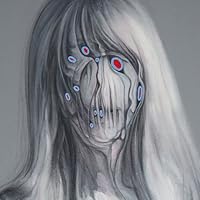
this was really good! i didnt know what it was about, it was just on the used rack and cheap and looked cool. turns out it fit with my theme lately of women having some kinda illness and their struggles w the medical system and with other ppl in general. it felt like reading someone's journal. very honest. i can't imagine what it would be like to suddenly not be able to talk. this brings up an important part of disability justice//politics: unlike other fixed identities like your race, disability can strike anyone at any age at any time without warning. its also for sure coming for everyone if youre lucky enough to live into old age. really liked the black and red drawings. would recommend!
March 24, 2021
This meditative comic is for anyone familiar with a long recovery from a frustrating illness or injury. I personally spent a stupid amount of time in post-accident recovery, and a lot of her struggles resonated with me. Mainly the time suck, the isolation, the caring, but sometimes misunderstanding friends, and the mind-numbing frustration of worrying what the future will hold when no one really has a clear path to offer.
Many of the visuals explore what the author was feeling more than what she was doing. This is fitting considering how much of what we "do" hinges on our physical and mental health. If you too have had weeks/months/years of your life stolen by an isolating illness, her journey will likely speak to you too.
Many of the visuals explore what the author was feeling more than what she was doing. This is fitting considering how much of what we "do" hinges on our physical and mental health. If you too have had weeks/months/years of your life stolen by an isolating illness, her journey will likely speak to you too.

January 31, 2019
Dumb: Living without a Voice is a truly unique graphic memoir. After losing her ability to speak, Georgia Webber must relearn how to communicate with the world around her. Watching how her life and relationships changed really makes you think about the role the speech plays in our lives. I couldn’t help but consider my relationship to my own voice, and what would happen if I were to mysteriously lose access to it for several months.
The color palate for the artwork is entirely made up of black, white, and red, and has a sketchy, at times messy quality to it. I found this appealing for the most part, but there were a few times (especially near the end) that it became too nebulous and difficult to follow. Regardless, Dumb: Living Without a Voice is a thought-provoking work that I’d recommend to anyone with an interest in graphic memoirs.
The color palate for the artwork is entirely made up of black, white, and red, and has a sketchy, at times messy quality to it. I found this appealing for the most part, but there were a few times (especially near the end) that it became too nebulous and difficult to follow. Regardless, Dumb: Living Without a Voice is a thought-provoking work that I’d recommend to anyone with an interest in graphic memoirs.

March 7, 2026
Not a fan of including drafts/scraps/scribbled out text in the finished product. Just not my personal style. I also felt like this was a tad too long and padded with too many stories about going to parties and not being able to communicate. Disability sucks and it doesn't have to be inspirational to be a story worth telling, but this was just kind of .... meandering.

July 5, 2022
an important insight into a woman's new reality after having to temporarily quit using her vocal chords. personally, the vignettes didn't really connect to offer a holistic plot and the book felt a bit incomplete, but that is justifiable as it is a memoir

October 1, 2019
So nice to read. Harrowing in parts, because it's about someone who loves to talk/sing losing their voice due to a stress-caused illness. However, it's heartening and warm to read about Georgia's coping mechanisms, her patience, and her anger.

September 12, 2018
I immensely enjoyed this story! Webber masterfully conveys the frustration, the pain and the anguish at loosing one's voice. For those who think "I can't even imagine what that would be like" Webber manages to give us a glimpse into this trying experience.
December 3, 2021
This graphic memoir is about a young woman who is required to rest her voice after experiencing chronic and severe pain. She is naturally social and busy and struggles with the lifestyle changes, including quitting her job and spending more time alone. As her frustration mounts, the Sharpie style illustrations become more haunting and agitated. Some sequences were really heartbreaking.
And while these parts were memorable, I never felt like I had a good sense of Webber. There is little background information and her fear of becoming just her medical condition becomes true! Even a couple of get-to-know you pages might have helped with more context and a bigger picture.
And while these parts were memorable, I never felt like I had a good sense of Webber. There is little background information and her fear of becoming just her medical condition becomes true! Even a couple of get-to-know you pages might have helped with more context and a bigger picture.

September 6, 2018
What happens when you damage your voice and can't talk? What do you do when the doctors can't help? How do you do your job when you can't speak? Friends and other people treat you like you're purposely being difficult.
March 23, 2020
In Webber’s “Dumb: Living Without a Voice”, the author teaches the audience the experience of taking for granted what we value most, until it is wiped from under our feet without an explanation (Webber, 2018). Throughout her lived experience of losing her voice, Webber finds herself disabled in a patriarchal and ableist world while exposing the maltreatment of the healthcare system and ableist ideas of self-care (Webber, 2018). In a society consumed by social pressures of body image, we forget the importance of focusing on our authentic selves until our world is turned upside down. Throughout the process of trying to get her voice back, Webber experiences frustration, isolation, and immense pain without access to control over her daily life (Webber, 2018).
The accessible novel opens the audience's eyes to the disabled experience by sharing a true story on what it feels like to wake up one day without a voice, and the pain of trying to get that back (Webber, 2018). After losing her voice, Webber experiences the struggles of living through pain while ignoring her disability because the fear of missing out is more important to her than aiding to self-care (Webber, 2018). However, this experience is not uncommon, and frankly, it is encouraged by ableist and patriarchal attitudes and perceptions of disabled women (Webber, 2018). After being diagnosed as a “vocal abuser”, Webber is told to stop taking and drink more water (Webber, 2018, pp.18). The lack of explanation and adequate solution causes Webber to take matters into her own hands by researching her ‘diagnosis’ online moments before breaking down (Webber, 2018). The discourse of power is significantly represented here, meaning that because we all assume the doctor knows best because of the social and political power they hold, the label of this diagnosis inevitably begins to consume Webber who later internalizes its connotation and attached stigmatization (Webber, 2018 & Newman-Stille, January 2018).
Youth are consistently represented in society as ‘healthy’, therefore wellness is not be a priority until something stops working properly (Webber, 2018). Moreover, with responses such as “Oh you poor thing!”, “I would never leave my house.”, and “I would just hide in my room all day and cry to myself.”, Webber feels overwhelmed and anxious by everyone else’s ‘opinions’ (Webber, 2018, pp.55). Additionally, the guy that Webber had been seeing only makes matters worse when he reflects patriarchal values of women as inferior, silent, and decadent when he regards, “I like this Georgia. She's quiet, she gets things gone…nice Gigi” (Webber, 2018, pp.69). Much like in modern society, Webber is told that women are supposed to be quiet novelties; a mere decoration for a man. This heteropatriarchal experience becomes even more difficult to withstand because of her intersecting identity that causes Webber to feel like she cannot stand up for herself, and therefore feels consistently trampled on by those around her who feel they have the right to do so.
After realizing how difficult it is for disabled people to live in an ableist world, Webber is forced to give up her café job that seems immensely inaccessible and apply to Welfare assistance (Webber, 2018). On top of experiencing powerlessness, loneliness, and confinement, Webber endures the long documents of Welfare that require her to see another doctor (Webber, 2018). Much like her first encounter in the healthcare system, Webber is told that her disability is in her head and that she should see a counsellor to help her talk again - as if it is that easy (Webber, 2018). Being a disabled woman, Webber learns the assumed power that healthcare professionals hold, and the experience of constantly being told what they are experiencing instead of being listened to like a respectful human being (Webber, 2018 & Driedger, 2010).
Similar to the power healthcare professionals hold, able-bodied people often assume they know best as well, taking on the ‘saviour’ role for those whom they pity (Webber, 2018). Webber’s friends never shy from ableist remarks of how bad they feel through gestures of ‘sympathy’ by helping with groceries (Webber, 2018). However, this experience can be significantly belittling for disabled people due to the lack of control they feel, resulting in an internalization of the idea that disabled people should be thankful instead of uncomfortable (Webber, 2018 & Newman-Stille, February 2018). Webber claims, “I have no choice; when the fear comes, I let it go.” (Webber, 2018, pp.54). Reading this as someone who is also a disabled woman, it breaks my heart because her experience is all too real. Similar to Webber, I have a hard time standing up for what I believe because society tells me that my voice is less important than those around me. We as women are taught to value what others think of us and that we should be thankful when treated as powerless and dependent. Furthermore, as a disabled woman, for someone like Webber who cannot orally speak on her behalf, it seems almost impossible to be in control of your own life and body. However, that is not true, rather it is an assumption that our ableist, patriarchal society wants us to believe so that we continue to let others trample all over us until we are nothing but a mere objective toy to play with.
In conclusion, I think this novel does a remarkable job at sharing the genuine and raw lived experience of being a disabled woman in an ableist, patriarchal society. Moreover, as a reader, I think it is an accessible and eye-opening read that allows us to feel empathetic as we imagine ourselves in her shoes throughout the pain, anxiety, and isolation that Webber experiences.
References
Driedger, Diane. (2010). Medication Reaction in “Living the Edges: A Disabled Women’s
Reader”. INANNA Publications and Education Inc. 31.
Newman-Stille, D. (2018, January 13). Lecture 2: Medicalized, Gendered Bodies. WMST 4551:
Gender and Disability in Canada. Trent University, Peterborough, ON.
Newman-Stille, D. (2018, February 3). Lecture 5: Gender, Disability, and Carework. WMST
4551: Gender and Disability in Canada. Trent University, Peterborough, ON.
Webber, Georgia. (2018). Dumb: Living Without a Voice. Lake City Way, Ne: Gary Groth.
The accessible novel opens the audience's eyes to the disabled experience by sharing a true story on what it feels like to wake up one day without a voice, and the pain of trying to get that back (Webber, 2018). After losing her voice, Webber experiences the struggles of living through pain while ignoring her disability because the fear of missing out is more important to her than aiding to self-care (Webber, 2018). However, this experience is not uncommon, and frankly, it is encouraged by ableist and patriarchal attitudes and perceptions of disabled women (Webber, 2018). After being diagnosed as a “vocal abuser”, Webber is told to stop taking and drink more water (Webber, 2018, pp.18). The lack of explanation and adequate solution causes Webber to take matters into her own hands by researching her ‘diagnosis’ online moments before breaking down (Webber, 2018). The discourse of power is significantly represented here, meaning that because we all assume the doctor knows best because of the social and political power they hold, the label of this diagnosis inevitably begins to consume Webber who later internalizes its connotation and attached stigmatization (Webber, 2018 & Newman-Stille, January 2018).
Youth are consistently represented in society as ‘healthy’, therefore wellness is not be a priority until something stops working properly (Webber, 2018). Moreover, with responses such as “Oh you poor thing!”, “I would never leave my house.”, and “I would just hide in my room all day and cry to myself.”, Webber feels overwhelmed and anxious by everyone else’s ‘opinions’ (Webber, 2018, pp.55). Additionally, the guy that Webber had been seeing only makes matters worse when he reflects patriarchal values of women as inferior, silent, and decadent when he regards, “I like this Georgia. She's quiet, she gets things gone…nice Gigi” (Webber, 2018, pp.69). Much like in modern society, Webber is told that women are supposed to be quiet novelties; a mere decoration for a man. This heteropatriarchal experience becomes even more difficult to withstand because of her intersecting identity that causes Webber to feel like she cannot stand up for herself, and therefore feels consistently trampled on by those around her who feel they have the right to do so.
After realizing how difficult it is for disabled people to live in an ableist world, Webber is forced to give up her café job that seems immensely inaccessible and apply to Welfare assistance (Webber, 2018). On top of experiencing powerlessness, loneliness, and confinement, Webber endures the long documents of Welfare that require her to see another doctor (Webber, 2018). Much like her first encounter in the healthcare system, Webber is told that her disability is in her head and that she should see a counsellor to help her talk again - as if it is that easy (Webber, 2018). Being a disabled woman, Webber learns the assumed power that healthcare professionals hold, and the experience of constantly being told what they are experiencing instead of being listened to like a respectful human being (Webber, 2018 & Driedger, 2010).
Similar to the power healthcare professionals hold, able-bodied people often assume they know best as well, taking on the ‘saviour’ role for those whom they pity (Webber, 2018). Webber’s friends never shy from ableist remarks of how bad they feel through gestures of ‘sympathy’ by helping with groceries (Webber, 2018). However, this experience can be significantly belittling for disabled people due to the lack of control they feel, resulting in an internalization of the idea that disabled people should be thankful instead of uncomfortable (Webber, 2018 & Newman-Stille, February 2018). Webber claims, “I have no choice; when the fear comes, I let it go.” (Webber, 2018, pp.54). Reading this as someone who is also a disabled woman, it breaks my heart because her experience is all too real. Similar to Webber, I have a hard time standing up for what I believe because society tells me that my voice is less important than those around me. We as women are taught to value what others think of us and that we should be thankful when treated as powerless and dependent. Furthermore, as a disabled woman, for someone like Webber who cannot orally speak on her behalf, it seems almost impossible to be in control of your own life and body. However, that is not true, rather it is an assumption that our ableist, patriarchal society wants us to believe so that we continue to let others trample all over us until we are nothing but a mere objective toy to play with.
In conclusion, I think this novel does a remarkable job at sharing the genuine and raw lived experience of being a disabled woman in an ableist, patriarchal society. Moreover, as a reader, I think it is an accessible and eye-opening read that allows us to feel empathetic as we imagine ourselves in her shoes throughout the pain, anxiety, and isolation that Webber experiences.
References
Driedger, Diane. (2010). Medication Reaction in “Living the Edges: A Disabled Women’s
Reader”. INANNA Publications and Education Inc. 31.
Newman-Stille, D. (2018, January 13). Lecture 2: Medicalized, Gendered Bodies. WMST 4551:
Gender and Disability in Canada. Trent University, Peterborough, ON.
Newman-Stille, D. (2018, February 3). Lecture 5: Gender, Disability, and Carework. WMST
4551: Gender and Disability in Canada. Trent University, Peterborough, ON.
Webber, Georgia. (2018). Dumb: Living Without a Voice. Lake City Way, Ne: Gary Groth.

November 25, 2022
I always feel a bit odd when I give a low rating to work that is extremely personal, but I think that's my main disconnect with Webber's memoir. It reads more like a loose diary than it does a memoir, in that the throughline (pain when speaking, rendering her mute while she tries to recover) doesn't resolve. I empathize with her frustration and anxiety, but the cause of her ailment is undetermined and the graphic novel ends abruptly.
Also of note: Webber is Canadian, and her frustrations with the medical system were a part of the story that I wish had more context. Not all readers are American, I know, but having any kind of medical coverage without having direct employment is far and beyond the American experience. I suppose this note is like when Europeans review American cookbooks and complain that the ingredients are not available in their country; context matters.
Also of note: Webber is Canadian, and her frustrations with the medical system were a part of the story that I wish had more context. Not all readers are American, I know, but having any kind of medical coverage without having direct employment is far and beyond the American experience. I suppose this note is like when Europeans review American cookbooks and complain that the ingredients are not available in their country; context matters.

March 21, 2019
I really liked this. It made my throat hurt to read it, though. I had no idea that you could be a "vocal abuser" to the point where your vocal cords are so damaged you can't speak. Yikes! Made me want to take up all those breathing, voice, and diction exercises I learned way back as a theater undergrad. Probably not a bad idea.
Webber illustrates her pain and despair at this situation really beautifully using only a minimal color palette. Worth a read and a re-read.
Webber illustrates her pain and despair at this situation really beautifully using only a minimal color palette. Worth a read and a re-read.
Displaying 1 - 30 of 113 reviews