

What do you think?

Disorientale
Uno dei maggiori successi editoriali dell’ultimo anno in Francia.
«Emozionante, divertente, intenso e drammatico».
Elle
«Una voce che incanta e al tempo stesso ci stringe dolorosamente».
Le Monde des livres
«Un’epopea romanzesca».
Le Figaro littéraire
«Una storia romanzesca all’ennesima potenza, piena di digressioni squisitamente orientali».
Télérama
In esilio a Parigi dall’età di dieci anni, Kimiâ, nata a Teheran, ha sempre cercato di tenere a distanza il suo paese, la sua cultura, la sua famiglia. Ma i jinn, i genii usciti dalla lampada (in questo caso il passato), la riacciuffano per far sfilare una strabiliante serie d’immagini di tre generazioni della sua storia familiare: le tribolazioni degli antenati, un decennio di rivoluzione politica, il passaggio burrascoso dell’adolescenza, la frenesia del rock, il sorriso malandrino di una bassista bionda…
Un affresco fiammeggiante sulla memoria e l’identità; un grande romanzo sull’Iran di ieri e sull’Europa di oggi.
Premio 2016 per il miglior esordio letterario della rivista Lire.
Premio 2016 dello Stile.
Premio delle Librerie Folies d’Encre & L’Autre Monde.
«Emozionante, divertente, intenso e drammatico».
Elle
«Una voce che incanta e al tempo stesso ci stringe dolorosamente».
Le Monde des livres
«Un’epopea romanzesca».
Le Figaro littéraire
«Una storia romanzesca all’ennesima potenza, piena di digressioni squisitamente orientali».
Télérama
In esilio a Parigi dall’età di dieci anni, Kimiâ, nata a Teheran, ha sempre cercato di tenere a distanza il suo paese, la sua cultura, la sua famiglia. Ma i jinn, i genii usciti dalla lampada (in questo caso il passato), la riacciuffano per far sfilare una strabiliante serie d’immagini di tre generazioni della sua storia familiare: le tribolazioni degli antenati, un decennio di rivoluzione politica, il passaggio burrascoso dell’adolescenza, la frenesia del rock, il sorriso malandrino di una bassista bionda…
Un affresco fiammeggiante sulla memoria e l’identità; un grande romanzo sull’Iran di ieri e sull’Europa di oggi.
Premio 2016 per il miglior esordio letterario della rivista Lire.
Premio 2016 dello Stile.
Premio delle Librerie Folies d’Encre & L’Autre Monde.
325 pages, Kindle Edition
First published August 25, 2016
About the author
Négar Djavadi
6 books191 followersNégar Djavadi was born in Iran in 1969 to a family of intellectuals opposed to the regimes both of the Shah, then of Khomeini. She arrived in France at the age of eleven, having crossed the mountains of Kurdistan on horseback with her mother and sister. She is a screenwriter and lives in Paris. Disoriental is her first novel.
Ratings & Reviews
Friends & Following
Create a free account to discover what your friends think of this book!
Community Reviews
Displaying 1 - 30 of 998 reviews

March 8, 2020
PERSEPOLIS

La torre Azadi a Teheran.
Marjane Satrapie solleva il piede dal pedale del comico, tiene invece premuto quello sull’ironia, racconta una storia che più o meno si conosce ma è sempre bene riascoltare (mai smettere di raccontare la dittatura, la violenza, la prevaricazione), ci fa riflettere mentre ci diverte e intrattiene nel senso più nobile del termine.
Ooops, non è la Satrapie, e non è Persepolis. Ma lo ricorda molto.
Perfino in meglio.

Il Mazandaran, Iran del nord, verde e con spiagge sul Caspio: da qui vengono i Sadr, la famiglia di Kimiâ.
Sì, secondo me, Négar Djavadi in questo suo tardivo esordio (pubblicato quando lei era quarantasettenne), riesce a cavarsela in modo egregio e a sfornare un libro che è lettura piacevolissima e molto interessante.
Viene da pensare che la scrittura cinematografica (Djavadi è sceneggiatrice) abbia giovato. Possibile? Di solito, rischia di essere un handicap: qui, invece, sembra aver fornito brio, freschezza, piglio, originalità, carica.
La prima persona adottata dalla protagonista narratrice, Kimiâ, e il fatto che Djavadi abbia storia simile al suo personaggio, inducono a ritenere che il suo racconto sia molto autobiografico.
Possibile. Probabile che ci siano punti in comune, a cominciare dall’esodo, dal definirsi esiliata e non migrante. Ma comunque lo definirei ben più romanzo che memoir.
Non è solo la differenza d’età a fare la differenza (Négar ringiovanisce la sua protagonista di un paio d’anni, lei è nata nel 1969, il suo personaggio nel 1971), è che Négar sembra sparire attraverso la voce di Kimiâ.
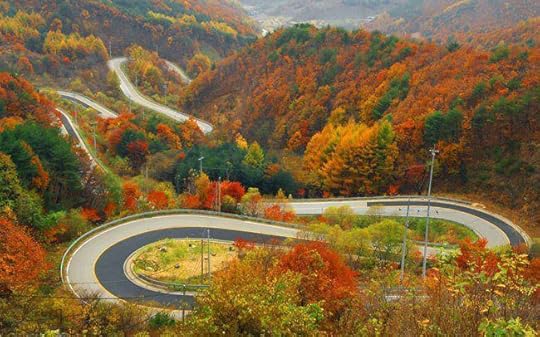
Il Mazandaran è considerato il paradiso del paese.
E di cammino in senso letterale si tratta: cinquemiladuecentosettantasei chilometri, la distanza tra Teheran e Parigi, in buona parte percorsa a piedi, oppure a dorso di cavallo. Con la figlia più piccola, la narratrice Kimiâ che fa cambio di scarpe con la madre, all’adulta che sprovveduta è partita in stivaletti da città la giovane passa le sue snickers: perché attraversare a piedi d’inverno le montagne del Kurdistan, il confine tra Iran e Turchia, non è impresa quotidiana. E se i curdi che le scortano le prendono in giro perché son poco pratiche di cavalcature, le donne (la madre e le tre figlie) rispondono, provate voi a guidare nel traffico di Teheran, restereste fermi al primo incrocio.
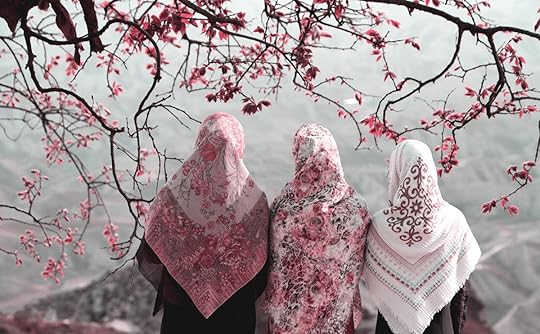
Arrivate finalmente a Istanbul hanno percorso in senso inverso il cammino degli avi: i nonni della madre, armeni, abbandonarono la Turchia subito prima del genocidio e dopo varie peripezie approdarono in Persia (prima che fosse trasformata in Iran). Nipoti e pronipoti fuggono dall’Iran, si sentono in salvo in Turchia, e proseguono per la mèta finale, la Francia, Parigi, dove potranno finalmente ricongiungersi con Darius, il padre (e marito) che con le sue idee di libertà, di giustizia sociale, di ateismo ha compromesso la loro stessa vita.
Per completare il quadro, en passant Kimiâ ci ricorda che Rudoph Höss partecipò all’organizzazione del massacro degli armeni qualche anno prima di andare a dirigere Auschwitz.
Ma questo è solo un frammento del racconto, e ci si arriva più o meno a due terzi. Prima siamo nella sala d’attesa di una clinica dove Kimiâ è seduta con un tubo che contiene gli spermatozoi lavati e ripuliti del suo compagno, sieropositivo. Vogliono un figlio, Kimiâ aspetta di fare l’inseminazione artificiale, lui non c’è, non è potuto venire, un impegno di lavoro, Kimiâ preferisce comunque essere sola.
Per inciso tutta la costosa e complessa pratica è a carico dello stato: hanno falsificato carte e dichiarato il falso, non vivono insieme, non hanno intenzione di sposarsi, ma lo fanno credere ai funzionari, e così lo stato francese si assume tutto il costo dell’operazione, disponibile a ripeterla più volte.

Kimiâ preferisce essere sola in quella sala d’attesa popolata da coppie, dove lei è l’unica single, probabilmente la scambiano per una ragazza madre, o una fresca vedova, vattelapesca: Kimiâ preferisce essere sola per concentrarsi, liberare la memoria, e consentirsi un racconto lungo queste trecento e passa pagine che ci porta in Persia, poi in Iran, sotto lo shah, che s’incoronò re dei re, attraverso la cosiddetta rivoluzione, poi sotto la guida suprema Khomeyni, e da una dittatura si passò a un’altra, difficile attribuire la palma della peggiore.
La famiglia di Kimiâ è numerosa, il padre ha cinque fratelli più uno illegittimo, hanno tutti gli occhi azzurri come l’acqua del mar Caspio, come il cielo sopra il mar Caspio.
La memoria di Kimiâ cavalca, percorre i decenni, dal 1915, con particolare attenzione alla fine degli anni Settanta (la fuga dello shah, la cosiddetta rivoluzione, il ritorno di Khomeyni).

”Tiger Lily 4 femmes dans la vie” la miniserie in sei episodi ideata e sceneggiata da Négar Djavadi nel 2013.
Ma non si ferma, né la memoria né il racconto, questo piccolo scrigno ha in serbo altro per il suo lettore.
A Parigi non è come avevano sperato, è ben più dura, è al limite della depressione, l’esilio è un mondo a sé, e uno stato a sé. Non si tratta soltanto di disorientalizzazione, ma anche di disorientamento.
Kimiâ cresce, sempre più ribelle. È nata femmina ma doveva essere maschio: solo che nell’esatto momento della sua nascita, è morta la nonna paterna, e per questo dio le ha cambiato sesso. E siccome lo ha fatto senza preparazione, lo ha fatto per così dire all’ultimo momento, al volo, Kimiâ cresce con forti caratteristiche maschili, a cominciare dall’altezza.
Scappa di casa, via via più di frequente, finché decide di andare a vivere da sola, all’estero (Bruxelles, Berlino, Amsterdam, Londra): squatter, rocker, punk, cameriera, sfatta, intossicata, sbronza…
Presto il mio nome non verrà più pronunciato alla stessa maniera, nelle bocche occidentali la “â” finale diventerà “a”, chiudendosi per sempre. Presto sarò una “disorientale”.
Mentre l’aereo si infila nelle nuvole irrompe un presente carico di gioia violenta.

Négar Djavadi
La torre Azadi a Teheran.
Marjane Satrapie solleva il piede dal pedale del comico, tiene invece premuto quello sull’ironia, racconta una storia che più o meno si conosce ma è sempre bene riascoltare (mai smettere di raccontare la dittatura, la violenza, la prevaricazione), ci fa riflettere mentre ci diverte e intrattiene nel senso più nobile del termine.
Ooops, non è la Satrapie, e non è Persepolis. Ma lo ricorda molto.
Perfino in meglio.
Il Mazandaran, Iran del nord, verde e con spiagge sul Caspio: da qui vengono i Sadr, la famiglia di Kimiâ.
Sì, secondo me, Négar Djavadi in questo suo tardivo esordio (pubblicato quando lei era quarantasettenne), riesce a cavarsela in modo egregio e a sfornare un libro che è lettura piacevolissima e molto interessante.
Viene da pensare che la scrittura cinematografica (Djavadi è sceneggiatrice) abbia giovato. Possibile? Di solito, rischia di essere un handicap: qui, invece, sembra aver fornito brio, freschezza, piglio, originalità, carica.
La prima persona adottata dalla protagonista narratrice, Kimiâ, e il fatto che Djavadi abbia storia simile al suo personaggio, inducono a ritenere che il suo racconto sia molto autobiografico.
Possibile. Probabile che ci siano punti in comune, a cominciare dall’esodo, dal definirsi esiliata e non migrante. Ma comunque lo definirei ben più romanzo che memoir.
Non è solo la differenza d’età a fare la differenza (Négar ringiovanisce la sua protagonista di un paio d’anni, lei è nata nel 1969, il suo personaggio nel 1971), è che Négar sembra sparire attraverso la voce di Kimiâ.
Il Mazandaran è considerato il paradiso del paese.
E di cammino in senso letterale si tratta: cinquemiladuecentosettantasei chilometri, la distanza tra Teheran e Parigi, in buona parte percorsa a piedi, oppure a dorso di cavallo. Con la figlia più piccola, la narratrice Kimiâ che fa cambio di scarpe con la madre, all’adulta che sprovveduta è partita in stivaletti da città la giovane passa le sue snickers: perché attraversare a piedi d’inverno le montagne del Kurdistan, il confine tra Iran e Turchia, non è impresa quotidiana. E se i curdi che le scortano le prendono in giro perché son poco pratiche di cavalcature, le donne (la madre e le tre figlie) rispondono, provate voi a guidare nel traffico di Teheran, restereste fermi al primo incrocio.
Arrivate finalmente a Istanbul hanno percorso in senso inverso il cammino degli avi: i nonni della madre, armeni, abbandonarono la Turchia subito prima del genocidio e dopo varie peripezie approdarono in Persia (prima che fosse trasformata in Iran). Nipoti e pronipoti fuggono dall’Iran, si sentono in salvo in Turchia, e proseguono per la mèta finale, la Francia, Parigi, dove potranno finalmente ricongiungersi con Darius, il padre (e marito) che con le sue idee di libertà, di giustizia sociale, di ateismo ha compromesso la loro stessa vita.
Per completare il quadro, en passant Kimiâ ci ricorda che Rudoph Höss partecipò all’organizzazione del massacro degli armeni qualche anno prima di andare a dirigere Auschwitz.
Ma questo è solo un frammento del racconto, e ci si arriva più o meno a due terzi. Prima siamo nella sala d’attesa di una clinica dove Kimiâ è seduta con un tubo che contiene gli spermatozoi lavati e ripuliti del suo compagno, sieropositivo. Vogliono un figlio, Kimiâ aspetta di fare l’inseminazione artificiale, lui non c’è, non è potuto venire, un impegno di lavoro, Kimiâ preferisce comunque essere sola.
Per inciso tutta la costosa e complessa pratica è a carico dello stato: hanno falsificato carte e dichiarato il falso, non vivono insieme, non hanno intenzione di sposarsi, ma lo fanno credere ai funzionari, e così lo stato francese si assume tutto il costo dell’operazione, disponibile a ripeterla più volte.
Kimiâ preferisce essere sola in quella sala d’attesa popolata da coppie, dove lei è l’unica single, probabilmente la scambiano per una ragazza madre, o una fresca vedova, vattelapesca: Kimiâ preferisce essere sola per concentrarsi, liberare la memoria, e consentirsi un racconto lungo queste trecento e passa pagine che ci porta in Persia, poi in Iran, sotto lo shah, che s’incoronò re dei re, attraverso la cosiddetta rivoluzione, poi sotto la guida suprema Khomeyni, e da una dittatura si passò a un’altra, difficile attribuire la palma della peggiore.
La famiglia di Kimiâ è numerosa, il padre ha cinque fratelli più uno illegittimo, hanno tutti gli occhi azzurri come l’acqua del mar Caspio, come il cielo sopra il mar Caspio.
La memoria di Kimiâ cavalca, percorre i decenni, dal 1915, con particolare attenzione alla fine degli anni Settanta (la fuga dello shah, la cosiddetta rivoluzione, il ritorno di Khomeyni).
”Tiger Lily 4 femmes dans la vie” la miniserie in sei episodi ideata e sceneggiata da Négar Djavadi nel 2013.
Ma non si ferma, né la memoria né il racconto, questo piccolo scrigno ha in serbo altro per il suo lettore.
A Parigi non è come avevano sperato, è ben più dura, è al limite della depressione, l’esilio è un mondo a sé, e uno stato a sé. Non si tratta soltanto di disorientalizzazione, ma anche di disorientamento.
Kimiâ cresce, sempre più ribelle. È nata femmina ma doveva essere maschio: solo che nell’esatto momento della sua nascita, è morta la nonna paterna, e per questo dio le ha cambiato sesso. E siccome lo ha fatto senza preparazione, lo ha fatto per così dire all’ultimo momento, al volo, Kimiâ cresce con forti caratteristiche maschili, a cominciare dall’altezza.
Scappa di casa, via via più di frequente, finché decide di andare a vivere da sola, all’estero (Bruxelles, Berlino, Amsterdam, Londra): squatter, rocker, punk, cameriera, sfatta, intossicata, sbronza…
Presto il mio nome non verrà più pronunciato alla stessa maniera, nelle bocche occidentali la “â” finale diventerà “a”, chiudendosi per sempre. Presto sarò una “disorientale”.
Mentre l’aereo si infila nelle nuvole irrompe un presente carico di gioia violenta.
Négar Djavadi

April 23, 2018
Disoriental. Indeed. Recommended by my favorite bookseller. We were talking about what we're reading. I told her that for a few years I've been reading debut novels by women, and preferably a new translation to English. She brought this book to me. The cover is excellent, the title as well, and Megan said that it was a translation from French, new to the American book market. She handed the book to me as she spoke like a gift. It is.
"In Paris, my father, Darius Sadr, never took the escalator. The first time I went down into a metro station with him, on April 21, 1981, I asked him why. His answer was, "Escalators are for them." By "them" he meant you, obviously. You, the citizens of this country, with your income taxes and compulsory deductions and council taxes - but also your education, your intransigence, your critical minds and your spirit of solidarity and pride and culture and patriotism, your devotion to the Republic and democracy, you who toiled for centuries to achieve these mechanical staircases installed meters underground."
Djavadi starts us at the top of the escalator, and then makes us take the stairs. Up and down, breathing heavily but excitedly through familial history that moves back and forth from the harem of great-grandfather Montazemolmolk to Kimia Sadr sitting holding a cardboard tube in the fertility clinic, back to Mazandaran, forward to Brussels/Paris and the punk music scene; all the while sharing the family's stories, the true and the familially accepted false. Uncle Number Two's Famous Story. Emma's story of how Nour's death at the same moment of Kimia's birth messed up her coffee ground reading prediction. The Peacock Throne and the Revolution.
And THE EVENT.
This novel evokes all our senses; food cooking, the smoldering walls of bombed buildings, the sound of that knock on the door, the silence of disappeared loved ones.
Djavadi devastatingly and lovingly allows her reader to grasp - at least vicariously - the stripping of person in the immigrant experience. Leaving under threat without the items that helped to define you: family, setting, language, food, community. No doorways that may or may not open in your future are the door to your home. Your memories are useless in whatever life you can find to journey forward. Bereft, confused, in danger still from the tyranny you'd hoped to leave behind.
If we are our stories, how do we go on when the stories are taken from us? Profound. This book will never leave me. I've begun to examine what it is in my life that defines who I am. And what I would do without that.
"In Paris, my father, Darius Sadr, never took the escalator. The first time I went down into a metro station with him, on April 21, 1981, I asked him why. His answer was, "Escalators are for them." By "them" he meant you, obviously. You, the citizens of this country, with your income taxes and compulsory deductions and council taxes - but also your education, your intransigence, your critical minds and your spirit of solidarity and pride and culture and patriotism, your devotion to the Republic and democracy, you who toiled for centuries to achieve these mechanical staircases installed meters underground."
Djavadi starts us at the top of the escalator, and then makes us take the stairs. Up and down, breathing heavily but excitedly through familial history that moves back and forth from the harem of great-grandfather Montazemolmolk to Kimia Sadr sitting holding a cardboard tube in the fertility clinic, back to Mazandaran, forward to Brussels/Paris and the punk music scene; all the while sharing the family's stories, the true and the familially accepted false. Uncle Number Two's Famous Story. Emma's story of how Nour's death at the same moment of Kimia's birth messed up her coffee ground reading prediction. The Peacock Throne and the Revolution.
And THE EVENT.
This novel evokes all our senses; food cooking, the smoldering walls of bombed buildings, the sound of that knock on the door, the silence of disappeared loved ones.
Djavadi devastatingly and lovingly allows her reader to grasp - at least vicariously - the stripping of person in the immigrant experience. Leaving under threat without the items that helped to define you: family, setting, language, food, community. No doorways that may or may not open in your future are the door to your home. Your memories are useless in whatever life you can find to journey forward. Bereft, confused, in danger still from the tyranny you'd hoped to leave behind.
If we are our stories, how do we go on when the stories are taken from us? Profound. This book will never leave me. I've begun to examine what it is in my life that defines who I am. And what I would do without that.

January 30, 2019
Now shortlisted for the International Dublin Literary Award 2020
To really integrate into a culture, I can tell you that you have to disintegrate first, at least partially from your own. You have to separate, detach, dissociate.
Disoriental has been translated by Tina Kover from Négar Djavadi's 2016 French language original Désorientale. Already shortlisted for the first National Book Award for Translated Literature, I would be surprised if it doesn't feature in the UK Man Booker International running.
The story is narrated in the first person by Kimiâ Sadr (Kimiâ from the world Al-Kimiâ, alchemy) born in Iran, which she fled in 1981, crossing the mountains of Kurdistan on horseback, aged 10, with her mother and two old sister, to Paris where they rejoined their already exiled father, a process she likens to a rebirth:
Soon I will be born for the second time. Accustomed to coming into the world amidst blood and confusion, to awakening Death and inviting it to the party, this rebirth- from the crossing of the wild, violent land of Kurdistan to the hotel room in Karakoy - is undeniably worthy of the first. Soon, my first name won’t be pronounced in the same way anymore; the final â will become a in Western mouths, falling silent forever. Soon I will be “disoriental.”
The first part of the novel - Side A - has Kimiâ waiting to be impregnated in a fertility clinic in Paris, having tricked the authorities that the sperm donor is her partner rather than just a willing friend, her real lover Anna not part of the official picture. While she waits and a few hours pass, reflections on her experience of the fertility clinic process are mixed with her memories of a rich and complicated family saga, going back to her Persian great-grandfather Montazemolmolk and his 52 wives, and leading to the story of her own birth; a birth which coincided with her grandmother's death and also confounded everyone for the most reliable fortune tellers had predicted a boy. Another strand of her recollections is focused on events in Iran either side of the 1979 Revolution where her father Darius, an intellectual and journalist, was first a campaigner against the Shah for democracy, but equally an opponent of the Islamic Republic that emerged. She laments that Western observers, even self-proclaimed experts, of Iran have not seen the part played by activists such as her father, and have failed to make the effort to see the Revolution as a protest movement by intellectuals, a spark lit in the universities and carried forward by the enlightened youth, rather than as an insurrection orchestrated by the Old Man in the Turban who was then in exile [...] observers focused their journalistic efforts mainly on the last months of 1978 - which were the only the home stretch, when Khomeni, now a messianic figure, had come to symbolically represent the opposition and Islam was portrayed as a rampart against the unequal society promoted by the Royal Court.
The story-telling is very non-linear and knowingly so, tipping nods to the reader, with comments such as Wait, no, that's not how I should start, footnotes to some of the historical references given as it will save you the trouble of looking it up on Wikipedia, and a list of characters at the back headed If doubt has brought you to this page, you probably need a little genealogical cheat-sheet.
Side A also skirts around 'The Event', a pivotal moment in Kimiâ and her immediate family's life, and one that reduced her mother, Sara, to a mental wreck, but which she approaches but is reluctant to reach in her narration, returning each time back into the rich family history and the vicissitudes of life in Iran either side of the Revolution. It also treads lightly around the her acknowledged but not discussed sexuality and how exactly she comes to be sitting in the fertility clinic.
Side B - a deliberate reference to her beloved music (those of you who are old enough to remember 45 rpm vinyl records know that the B-side is usually less interesting that the A-side. Side B is the failed side, the weak side ... the ugly little sister who gets shoved along behind the popular one) - focuses on her personal story. It tells in more detail the events of their flight from Iraq (including a slightly anomalous two page section from Sara's perspective) but also of Kimiâ's struggles on her arrival in Paris, with both the new country but also her own emerging sexuality (particularly difficult in a country where while sex-changes are legal even under the Islamic republic, but homosexuality's very existence is denied and, post 1979 punishable by death). She eventually, as a teenager, finds salvation, and after many years her lover, in the music scene:
I plunge headlong into punk and postpunk. Johnny Rotten, Ari Up, Ian Curtis, Joe Strummer, Peter Murphy, Siouxsie, Martin L. Gore. Their music fills every emotional and intellectual hole in my life. It becomes my daily bread, my life preserver. Because it puts the world back in its right place and tears away the facades. Because it is aware of the rage and the sweat and the strikes, the working-class quarters and the revolts and the gunpowder. Because it denounces the hypocrisy of power, and demolishes the certainties and social and ideological affirmations that claim to explain to us how the world works. Because it is made so that people like you will look at people like me.
Side-B also finally reveals The Event, although with all the build-up it comes, despite the trauma and violence involved, as something of an anti-climax. Indeed that it is keeping with the relatively understated tone of Kimiâ's account, in contrast to the often dramatic and bloody events described. The focus is more on her feelings than the events themselves, and effectively so.
I am not sure how much of the story is biographical - at least some as the endflaps explain that the author also fled Iraq for Paris for similar reasons, at a similar age and time, and by a similar method. And actually I don't think I need to know that - but what is apparent is the depth of feeling in the book and the authenticity. This personal drive may also explain the occasional didactic passage - particularly those focusing on the pre-Revolution resistance to the regime - and the at times hagiographic treatment of Kimiâ's father. Although on the latter, to the book's credit, Kimiâ acknowledges how memories select, eliminate, exaggerate, minimize, glorify, denigrate and the reader is given enough information to form their own, not necessarily, consistent view.
Tina Kover should be congratulated on a highly readable translation. In the novel Kimiâ's mother Sara has written a book about their family's struggles, which has become a bestseller in Iraq. She urges her daughters to translate it into French so their new fellow countrymen can better understand the country, but the daughters refuse on the grounds that translation is a craft. Sara retorts:
Translation, a craft? Believe me, if Iranians had worried about things like that, no book would ever have been translated into Persian.
Fortunately here the reader is in the hands of a skilful craftperson.
And overall, the combination of historical family saga, accounts of the events leading up to the Iranian revolution focusing on the role of pro-democracy activists in the country rather than religious leaders outside, and a personal account of coming-of-age/coming-out, cohers effectively, particularly given the underlying thread of disorientation.
A solid 4 stars.
To really integrate into a culture, I can tell you that you have to disintegrate first, at least partially from your own. You have to separate, detach, dissociate.
Disoriental has been translated by Tina Kover from Négar Djavadi's 2016 French language original Désorientale. Already shortlisted for the first National Book Award for Translated Literature, I would be surprised if it doesn't feature in the UK Man Booker International running.
The story is narrated in the first person by Kimiâ Sadr (Kimiâ from the world Al-Kimiâ, alchemy) born in Iran, which she fled in 1981, crossing the mountains of Kurdistan on horseback, aged 10, with her mother and two old sister, to Paris where they rejoined their already exiled father, a process she likens to a rebirth:
Soon I will be born for the second time. Accustomed to coming into the world amidst blood and confusion, to awakening Death and inviting it to the party, this rebirth- from the crossing of the wild, violent land of Kurdistan to the hotel room in Karakoy - is undeniably worthy of the first. Soon, my first name won’t be pronounced in the same way anymore; the final â will become a in Western mouths, falling silent forever. Soon I will be “disoriental.”
The first part of the novel - Side A - has Kimiâ waiting to be impregnated in a fertility clinic in Paris, having tricked the authorities that the sperm donor is her partner rather than just a willing friend, her real lover Anna not part of the official picture. While she waits and a few hours pass, reflections on her experience of the fertility clinic process are mixed with her memories of a rich and complicated family saga, going back to her Persian great-grandfather Montazemolmolk and his 52 wives, and leading to the story of her own birth; a birth which coincided with her grandmother's death and also confounded everyone for the most reliable fortune tellers had predicted a boy. Another strand of her recollections is focused on events in Iran either side of the 1979 Revolution where her father Darius, an intellectual and journalist, was first a campaigner against the Shah for democracy, but equally an opponent of the Islamic Republic that emerged. She laments that Western observers, even self-proclaimed experts, of Iran have not seen the part played by activists such as her father, and have failed to make the effort to see the Revolution as a protest movement by intellectuals, a spark lit in the universities and carried forward by the enlightened youth, rather than as an insurrection orchestrated by the Old Man in the Turban who was then in exile [...] observers focused their journalistic efforts mainly on the last months of 1978 - which were the only the home stretch, when Khomeni, now a messianic figure, had come to symbolically represent the opposition and Islam was portrayed as a rampart against the unequal society promoted by the Royal Court.
The story-telling is very non-linear and knowingly so, tipping nods to the reader, with comments such as Wait, no, that's not how I should start, footnotes to some of the historical references given as it will save you the trouble of looking it up on Wikipedia, and a list of characters at the back headed If doubt has brought you to this page, you probably need a little genealogical cheat-sheet.
Side A also skirts around 'The Event', a pivotal moment in Kimiâ and her immediate family's life, and one that reduced her mother, Sara, to a mental wreck, but which she approaches but is reluctant to reach in her narration, returning each time back into the rich family history and the vicissitudes of life in Iran either side of the Revolution. It also treads lightly around the her acknowledged but not discussed sexuality and how exactly she comes to be sitting in the fertility clinic.
Side B - a deliberate reference to her beloved music (those of you who are old enough to remember 45 rpm vinyl records know that the B-side is usually less interesting that the A-side. Side B is the failed side, the weak side ... the ugly little sister who gets shoved along behind the popular one) - focuses on her personal story. It tells in more detail the events of their flight from Iraq (including a slightly anomalous two page section from Sara's perspective) but also of Kimiâ's struggles on her arrival in Paris, with both the new country but also her own emerging sexuality (particularly difficult in a country where while sex-changes are legal even under the Islamic republic, but homosexuality's very existence is denied and, post 1979 punishable by death). She eventually, as a teenager, finds salvation, and after many years her lover, in the music scene:
I plunge headlong into punk and postpunk. Johnny Rotten, Ari Up, Ian Curtis, Joe Strummer, Peter Murphy, Siouxsie, Martin L. Gore. Their music fills every emotional and intellectual hole in my life. It becomes my daily bread, my life preserver. Because it puts the world back in its right place and tears away the facades. Because it is aware of the rage and the sweat and the strikes, the working-class quarters and the revolts and the gunpowder. Because it denounces the hypocrisy of power, and demolishes the certainties and social and ideological affirmations that claim to explain to us how the world works. Because it is made so that people like you will look at people like me.
Side-B also finally reveals The Event, although with all the build-up it comes, despite the trauma and violence involved, as something of an anti-climax. Indeed that it is keeping with the relatively understated tone of Kimiâ's account, in contrast to the often dramatic and bloody events described. The focus is more on her feelings than the events themselves, and effectively so.
I am not sure how much of the story is biographical - at least some as the endflaps explain that the author also fled Iraq for Paris for similar reasons, at a similar age and time, and by a similar method. And actually I don't think I need to know that - but what is apparent is the depth of feeling in the book and the authenticity. This personal drive may also explain the occasional didactic passage - particularly those focusing on the pre-Revolution resistance to the regime - and the at times hagiographic treatment of Kimiâ's father. Although on the latter, to the book's credit, Kimiâ acknowledges how memories select, eliminate, exaggerate, minimize, glorify, denigrate and the reader is given enough information to form their own, not necessarily, consistent view.
Tina Kover should be congratulated on a highly readable translation. In the novel Kimiâ's mother Sara has written a book about their family's struggles, which has become a bestseller in Iraq. She urges her daughters to translate it into French so their new fellow countrymen can better understand the country, but the daughters refuse on the grounds that translation is a craft. Sara retorts:
Translation, a craft? Believe me, if Iranians had worried about things like that, no book would ever have been translated into Persian.
Fortunately here the reader is in the hands of a skilful craftperson.
And overall, the combination of historical family saga, accounts of the events leading up to the Iranian revolution focusing on the role of pro-democracy activists in the country rather than religious leaders outside, and a personal account of coming-of-age/coming-out, cohers effectively, particularly given the underlying thread of disorientation.
A solid 4 stars.

October 3, 2020
Where to start? Well I really enjoyed this and there is a great deal to it. It is narrated by Kimia Sadr who escapes from Iran to the West when she is 10 in 1979 with her mother and sisters (her father having left some months earlier). Her father was an academic who had managed to anger both the Shah’s secret police and then Khomeni’s regime in fairly equal measure. It is not a linear story and it jumps around: as the narrator says:
“Talking about the present means I have to go deep into the past, to cross borders and scale mountains and go back to that lake so enormous they call it a sea. I have to let myself be guided by the flow of images and free associations, the natural fits and starts, the hollows and bumps carved into my memories by time.”
There isn’t a smooth logical progress, so some concentration is required by the reader. It is beautifully written and easy to read (it’s a good translation in my opinion). There are multiple themes running through it: obviously immigration and exile, political dissent, but also motherhood and sexuality, even fertility. The novel won the Lambda literary award for bisexual fiction in 2019. It is also a family history going back to the early twentieth century. Kimia’s father is one of six brothers. We are the audience, a silent witness:
“But you know as well as I do that, to claim to get inside a man’s head, first you need to really know him—to absorb all of the lives he has lived, and all of his struggles, and all of his ghosts. And believe me, If I start there […] I’ll never get around to telling you what I am about to tell you.”
The French title combines the words Oriental and desorienter (losing orientation or direction).
Djavadi manages human emotions skilfully and there is something of the Scheherazade about her, but the storytelling is not to please. She writes to define to express the meaning of her history and not to let it disappear:
“With the passage of time, the flesh of events decomposes, leaving only a skeleton of impressions on which to embroider. Undoubtedly there will come a day when even the impressions will only be a memory. And then there won’t be anything left to tell.”
There is a snapshot of Iranian history and culture and a dislocation with the move to France:
“In Paris, we didn’t talk to each other anymore, about anything. None of us. Each of us was shut up in a silence mode of stupefaction and adjustment. In a state of unconsciousness. The past was just anecdotes now that could be retold, but were only a vast, white, ruined wasteland.”
There are parallel journeys going on with various characters but we follow Kimia through her childhood, adolescence and early adulthood from loving and obedient daughter to rebellious punk. The narration changes and amidst serious events and tragedies there is a vein of humour. The narration revolves around THE EVENT. This is something which occurs in the early 1990s and is pivotal in the family history. As well as a family saga, there is a little bit of love story, a coming of age and remembrance. It is a little Proustian as well.
This is creative and well written. It may have benefitted from being longer, or even a few volumes, but that’s probably me being greedy. Well worth reading.
“Talking about the present means I have to go deep into the past, to cross borders and scale mountains and go back to that lake so enormous they call it a sea. I have to let myself be guided by the flow of images and free associations, the natural fits and starts, the hollows and bumps carved into my memories by time.”
There isn’t a smooth logical progress, so some concentration is required by the reader. It is beautifully written and easy to read (it’s a good translation in my opinion). There are multiple themes running through it: obviously immigration and exile, political dissent, but also motherhood and sexuality, even fertility. The novel won the Lambda literary award for bisexual fiction in 2019. It is also a family history going back to the early twentieth century. Kimia’s father is one of six brothers. We are the audience, a silent witness:
“But you know as well as I do that, to claim to get inside a man’s head, first you need to really know him—to absorb all of the lives he has lived, and all of his struggles, and all of his ghosts. And believe me, If I start there […] I’ll never get around to telling you what I am about to tell you.”
The French title combines the words Oriental and desorienter (losing orientation or direction).
Djavadi manages human emotions skilfully and there is something of the Scheherazade about her, but the storytelling is not to please. She writes to define to express the meaning of her history and not to let it disappear:
“With the passage of time, the flesh of events decomposes, leaving only a skeleton of impressions on which to embroider. Undoubtedly there will come a day when even the impressions will only be a memory. And then there won’t be anything left to tell.”
There is a snapshot of Iranian history and culture and a dislocation with the move to France:
“In Paris, we didn’t talk to each other anymore, about anything. None of us. Each of us was shut up in a silence mode of stupefaction and adjustment. In a state of unconsciousness. The past was just anecdotes now that could be retold, but were only a vast, white, ruined wasteland.”
There are parallel journeys going on with various characters but we follow Kimia through her childhood, adolescence and early adulthood from loving and obedient daughter to rebellious punk. The narration changes and amidst serious events and tragedies there is a vein of humour. The narration revolves around THE EVENT. This is something which occurs in the early 1990s and is pivotal in the family history. As well as a family saga, there is a little bit of love story, a coming of age and remembrance. It is a little Proustian as well.
This is creative and well written. It may have benefitted from being longer, or even a few volumes, but that’s probably me being greedy. Well worth reading.

August 12, 2018
Wow, what a read, and an ending, all those blank pages at the end, I wasn't ready for it to be over, and a little overwhelmed by that news.
My son:
"Mum, are you crying?"
"It's finished" is all I can mutter.
I could end my review right there, those were the words I tweeted not long after I finished 'Disoriental' while I was still in the moment of coming to the end of an excellent story, of an immersive experience I wasn't ready to be done with.
The book is a dual narrative, set in the present and the past, where the protagonist, who for some time is nameless, and little said to explain how/why she came to be here, is sitting in a fertility clinic, waiting for her appointment. This immediately creates questions in the reader's mind, because it is made clear that there is something unusual about the situation, that she is taking a risk in order to even be there. This contemporary narrative, slowly builds the picture of who she is and what that circumstance is.
This interminable waiting creates an opening for her to reflect and remember, thus interspersed between what takes place in the present, is the sharing of the story of her family, a long line of the family Sadr, her parents Sara and Darius, forced to flee Iran and came to France when she and her sisters were of school age.
The sharing of family stories, taking us back as far as her great-grandfather Montazemolmolk with his harem of 52 wives, serves to provide a context and explanation for why certain family members
behaved or lived in the way they did, helping us understand their motives and actions. The daughter Nour, born with unusual piercing blue eyes, her mother dying in childbirth, the man obsessed with making her his wife, her reluctance to go out being the object of unwanted attention, her children who desire to be free of of restriction.
Darius, the timid son, sent to Cairo to study law, abandons his studies and pursues a doctorate in Philosopy at the Sorbonne, returns to the family, changed by his studies and his experiences and though quiet in person, wields a mighty sword through his journalistic pen and letters to a political regime he detests and chooses not to ignore.
It is a story that spans a changing, turbulent time in Iranian history, one that travels through highs and lows, for while the passionate intellectual is free to express their opinion and brings no harm, they continue to live within their culture, family and be an active part of their community and society. But when freedom of expression becomes a danger to the individual, the sacrifices that are made become a form of stiflement. Life in exile, without the connections to friends, family, neighbours, reduces these adults to shadows of their former selves, unable to be themself in a foreign culture.
I highlighted so many great passages in reading, but I've already passed the book on to someone else to read, so can share any here yet. It is a reminder of another era, of people who had rich, cultural and intellectual lives, of families who fled persecution, not because of war, but because of their intellectual and philosophical activism and of how much is lost, when a new generation grows up within a culture no longer connected to their past, to their heritage and worse, in a country that has been subject to the propaganda of the media, and perceptions of that culture are tainted by the agenda of politicians and parties, and what they wish their populations to believe about foreign cultures.
I absolutely loved it, I liked the slow drip revelation of what this young woman's life had become, having been severed from her country and community of origin and the colourful, abundant richness of the family history and culture, which while separate from her life today, was still there somewhere deep in her psyche, in her genes, and in those non-genetic aspects that we inherit without even needing to have knowledge of what has passed.
It is as if she has a crystal ball to look back through the years, through lives she hadn't personally experienced and discovered events from the past that have created an aspect that has become part of who she is and will mould the yet unborn child she is hoping to create.
Highly Recommended.

March 4, 2021
” Ho cambiato paesi e lingue, mi sono inventata altri passati, altre identità.
Ho lottato, sì, ho lottato contro il vento imperioso che si è alzato molto tempo fa in una remota provincia della Persia chiamata Mazandaran1, un vento carico di nascite e morti, di geni recessivi e dominanti, di colpi di Stato e rivoluzioni, che a ogni mio tentativo di sfuggirgli mi ha afferrata per il collo e rimessa al mio posto.
Per farvi capire cosa sto dicendo devo riavvolgere il nastro e ripartire dall’inizio, farvi sentire, come la sento io stessa in questo momento mentre un’infermiera ci dà un’occhiata e si allontana indifferente, la voce di mio zio Saddeq Sadr, detto Zio Numero Due, che in tono minore, soave come un clarinetto, racconta quella che fra noi chiamavamo “La famosa storia di Zio Numero Due”
Parigi.
In una fredda e silenziosa sala di attesa del reparto procreazione assistita, Kimiâ Sadr si lascia andare ai ricordi della sua vita.
Un racconto denso, fitto di avvenimenti che si accavallano e reclamano attenzione.
Teheran prima e dopo la rivoluzione; il luogo della prima infanzia in una famiglia particolare.
Figlia di due dissidenti (dello scià prima e dell’ayatollah dopo), il padre giornalista e la madre insegnante di Storia.
Storie che si attorcigliano tra i racconti fatti chiudendo le porte della cucina dalla fedele domestica Bibi oppure declamati dallo Zio Numero Due in soggiorno a beneficio di un pubblico più ampio.
Racconti che riportano indietro alle origini e assumono toni quasi fiabeschi raccontando di una nonna nata in un harem e si scontrano con la serenità che va sbriciolandosi alla fine degli anni ‘70 dove arresti e minacce di morte costringono ad una fuga disperata e clandestina.
La Storia della Persia diventata Iran è fondamentale e l'autrice fornisce note importanti alla fine di ogni capitolo.
La fuga dunque e, così, Kimiâ vive una seconda nascita.
Quando arriva a Parigi ha dieci anni :
” A dire la verità niente somiglia più all’esilio della nascita: strapparsi con violenza e speranza, per istinto di sopravvivenza o per necessità, alla propria casa, al proprio nido sicuro, per essere proiettati in un mondo sconosciuto in cui bisogna continuamente fare i conti con sguardi curiosi. Nessun esilio è slegato dal cammino che conduce all’espatrio, dal canale uterino, cupa giunzione tra passato e futuro che, una volta oltrepassata, si richiude e ti condanna al peregrinare.”
Strutturato in due parti (un Lato A ed un Lato B come nei vecchi vinili), “Disorientale” già dal titolo ci parla di una fusione.
La combinazione tra il disorientamento della propria identità e la forza con cui le radici orientali la trattengono.
Un dibattersi per non essere incatenata né da una parte né dall’altra.
Non il “solito” libro che parla di immigrazione ma un racconto ricco e forte che dal passato trae la forza per costruire un nuovo presente e un modo di essere Donna.
” Kimiâ. Dall’arabo al-kimiya, alchimia, che a sua volta viene dal greco khemia, magia nera, che a sua volta deriva dall’egiziano kem, nero. E quindi Kimiâ, l’arte che consiste nel rendere puro l’impuro, nel trasformare i metalli in oro e il brutto in bello. E nella mente in chiaroscuro di Sara a trasformare il maschio in femmina.”
Ho lottato, sì, ho lottato contro il vento imperioso che si è alzato molto tempo fa in una remota provincia della Persia chiamata Mazandaran1, un vento carico di nascite e morti, di geni recessivi e dominanti, di colpi di Stato e rivoluzioni, che a ogni mio tentativo di sfuggirgli mi ha afferrata per il collo e rimessa al mio posto.
Per farvi capire cosa sto dicendo devo riavvolgere il nastro e ripartire dall’inizio, farvi sentire, come la sento io stessa in questo momento mentre un’infermiera ci dà un’occhiata e si allontana indifferente, la voce di mio zio Saddeq Sadr, detto Zio Numero Due, che in tono minore, soave come un clarinetto, racconta quella che fra noi chiamavamo “La famosa storia di Zio Numero Due”
Parigi.
In una fredda e silenziosa sala di attesa del reparto procreazione assistita, Kimiâ Sadr si lascia andare ai ricordi della sua vita.
Un racconto denso, fitto di avvenimenti che si accavallano e reclamano attenzione.
Teheran prima e dopo la rivoluzione; il luogo della prima infanzia in una famiglia particolare.
Figlia di due dissidenti (dello scià prima e dell’ayatollah dopo), il padre giornalista e la madre insegnante di Storia.
Storie che si attorcigliano tra i racconti fatti chiudendo le porte della cucina dalla fedele domestica Bibi oppure declamati dallo Zio Numero Due in soggiorno a beneficio di un pubblico più ampio.
Racconti che riportano indietro alle origini e assumono toni quasi fiabeschi raccontando di una nonna nata in un harem e si scontrano con la serenità che va sbriciolandosi alla fine degli anni ‘70 dove arresti e minacce di morte costringono ad una fuga disperata e clandestina.
La Storia della Persia diventata Iran è fondamentale e l'autrice fornisce note importanti alla fine di ogni capitolo.
La fuga dunque e, così, Kimiâ vive una seconda nascita.
Quando arriva a Parigi ha dieci anni :
” A dire la verità niente somiglia più all’esilio della nascita: strapparsi con violenza e speranza, per istinto di sopravvivenza o per necessità, alla propria casa, al proprio nido sicuro, per essere proiettati in un mondo sconosciuto in cui bisogna continuamente fare i conti con sguardi curiosi. Nessun esilio è slegato dal cammino che conduce all’espatrio, dal canale uterino, cupa giunzione tra passato e futuro che, una volta oltrepassata, si richiude e ti condanna al peregrinare.”
Strutturato in due parti (un Lato A ed un Lato B come nei vecchi vinili), “Disorientale” già dal titolo ci parla di una fusione.
La combinazione tra il disorientamento della propria identità e la forza con cui le radici orientali la trattengono.
Un dibattersi per non essere incatenata né da una parte né dall’altra.
Non il “solito” libro che parla di immigrazione ma un racconto ricco e forte che dal passato trae la forza per costruire un nuovo presente e un modo di essere Donna.
” Kimiâ. Dall’arabo al-kimiya, alchimia, che a sua volta viene dal greco khemia, magia nera, che a sua volta deriva dall’egiziano kem, nero. E quindi Kimiâ, l’arte che consiste nel rendere puro l’impuro, nel trasformare i metalli in oro e il brutto in bello. E nella mente in chiaroscuro di Sara a trasformare il maschio in femmina.”

August 15, 2021
Kimiâ Sadr has made it through a gruelling vetting process for specialist fertility treatment. As she waits in a French clinic for the final procedure, her mind’s overwhelmed with images of her extended family and childhood in Iran. Out of apparently random thoughts an epic family saga slowly emerges, at its centre six brothers including Kimiâ’s charismatic father, Darius. Darius’s radical politics placed him in conflict first with the Shah’s, then the Khomenei regime that followed, forcing Kimiâ, her parents and sisters, into permanent exile in France. But Kimiâ places Darius within the framework of a broader, patriarchal history traced back through generations of larger-than-life ancestors. Kimiâ tells much of her story from a waiting-room in Paris, seemingly isolated and alone, the setting’s a fitting metaphor for a character who’s spent years in a liminal state: between cultures, between genders, between languages.
Kimiâ frequently addresses comments to an absent reader, suggesting she’s deliberately countering sweeping assumptions and uninformed curiosity she’s encountered since leaving Iran. Her fragmented narrative mimics the workings of memory but it’s shored up with a series of footnotes outlining aspects of Iranian politics and culture for the uninformed. On the surface this structure’s an innovative one, playing with genre conventions and reader expectations but it’s a thin disguise for what’s actually a fairly conventional novel - although piecing together various timelines can be slightly challenging. Négar Djavadi also attempts to create an atmosphere of mystery, deliberately releasing key information in dribs and drabs, hinting at something terrible to come that Kimiâ calls the ‘EVENT.’ This approach’s presumably intended to add momentum but I found it quite frustrating, an unnecessary dash of melodrama, ultimately undermining the very real tragedy that’s later revealed.
Djavadi's semi-autobiographical piece explores themes of displacement, the intense feelings of disintegration that come with being forced to exist outside of your own society and culture. This sense of dislocation’s reinforced by Kimiâ’s complicated relationship with her parents, partly rooted in her slow recognition of her love of women, which has made her a sort of internal exile within her immediate family. It’s all territory that’s worth exploring but even so this is one of those books I liked but didn’t love or admire. The style could be hard to relate to, emotional highs and lows often presented in the same muted tones, and it’s as if the Sadrs are being filmed in close-up but everything around them’s in long shot, so Iran can appear more as a backdrop than anything else. The addition of footnotes filling in the background to the Sadrs' flight from Iran were potentially useful but I was uncomfortable with the impression they gave that a necessarily, partial perspective was somehow fixed, absolute. Although there was a lot I liked here too, including how forcefully Djavadi confronts an all-too-dominant Western, Cold-War-type fantasy of Iran, her emphasis on its rich, complex heritage, society and culture. But still I never fully connected with this. I’m not sure if my reservations were linked to first-novel issues, this was Djavadi’s debut, or the overall nature of her book - the blurb on my edition, quite reasonably, compares her work to Isabel Allende an author I feel I ought to like but never found particularly engaging. I’ve also read a lot of non-fiction covering Iran which may have lessened the impact and immediacy of Djavadi’s account. The version I read was a translation by Tina Kover, and it seemed pretty fluid, although I've come across reviews that claim the original French is far more vivid and arresting.
Kimiâ frequently addresses comments to an absent reader, suggesting she’s deliberately countering sweeping assumptions and uninformed curiosity she’s encountered since leaving Iran. Her fragmented narrative mimics the workings of memory but it’s shored up with a series of footnotes outlining aspects of Iranian politics and culture for the uninformed. On the surface this structure’s an innovative one, playing with genre conventions and reader expectations but it’s a thin disguise for what’s actually a fairly conventional novel - although piecing together various timelines can be slightly challenging. Négar Djavadi also attempts to create an atmosphere of mystery, deliberately releasing key information in dribs and drabs, hinting at something terrible to come that Kimiâ calls the ‘EVENT.’ This approach’s presumably intended to add momentum but I found it quite frustrating, an unnecessary dash of melodrama, ultimately undermining the very real tragedy that’s later revealed.
Djavadi's semi-autobiographical piece explores themes of displacement, the intense feelings of disintegration that come with being forced to exist outside of your own society and culture. This sense of dislocation’s reinforced by Kimiâ’s complicated relationship with her parents, partly rooted in her slow recognition of her love of women, which has made her a sort of internal exile within her immediate family. It’s all territory that’s worth exploring but even so this is one of those books I liked but didn’t love or admire. The style could be hard to relate to, emotional highs and lows often presented in the same muted tones, and it’s as if the Sadrs are being filmed in close-up but everything around them’s in long shot, so Iran can appear more as a backdrop than anything else. The addition of footnotes filling in the background to the Sadrs' flight from Iran were potentially useful but I was uncomfortable with the impression they gave that a necessarily, partial perspective was somehow fixed, absolute. Although there was a lot I liked here too, including how forcefully Djavadi confronts an all-too-dominant Western, Cold-War-type fantasy of Iran, her emphasis on its rich, complex heritage, society and culture. But still I never fully connected with this. I’m not sure if my reservations were linked to first-novel issues, this was Djavadi’s debut, or the overall nature of her book - the blurb on my edition, quite reasonably, compares her work to Isabel Allende an author I feel I ought to like but never found particularly engaging. I’ve also read a lot of non-fiction covering Iran which may have lessened the impact and immediacy of Djavadi’s account. The version I read was a translation by Tina Kover, and it seemed pretty fluid, although I've come across reviews that claim the original French is far more vivid and arresting.

November 2, 2019
This is quite a difficult book to rate and review because it contains so many different elements. The narrator Kimia tells the story of her family and its part in Iranian political history - her father is a journalist whose independent views bring him into conflict with both the pre- and post-revolutionary Iranian regimes. The slightly smaller second part (Side B) is a much more personal account of the family's flight to Paris and Kimia's discovery of both her independence of her family and her complicated sexual identity.
Much of the political and social content is interesting and new to me, and the whole thing is always readable, though perhaps Djavadi is trying to shoehorn too many disparate elements into one novel.
Much of the political and social content is interesting and new to me, and the whole thing is always readable, though perhaps Djavadi is trying to shoehorn too many disparate elements into one novel.

September 17, 2020
I read this book due to its shortisting for the 2020 International Dublin Literary Award.
Paul's review here gives the background and plot of the book:
https://www.goodreads.com/review/show...
So I will restrict my review to my impressions:
There was a lot to like in this book. I enjoyed much of Side A – I liked the way in which the author broke the fourth wall so consistently (and on balance appreciated, rather than was annoyed by, the idea of her acting as her own Wikipedia guide in the footnotes); I felt the book captured really strongly the loneliness of exile and different cultures (Parisien, Iranian intellectual, Iranian traditional aristocracy); I appreciated the nature of the memory as it unfolds – both the non-linear digressionary jumps and the slowly inwards spiral around THE EVENT; I liked the way in which the book combined a more Middle Eastern family epic (with the saga of the blue eyes) and a European autofictional approach – with rather cleverly the narrator’s sexuality combining both aspects (the first in her grandmother’s explanation for it, the second in the way she discovers herself).
If I had an issue with the first half it was perhaps the fact that the family featured in the book were a rather privileged family in Iran and her parents secular liberal intellectuals who rather naïvely seem to have played an important part in ushering in a theocracy that despised them (although I do feel the author turns this around a little to the French – and the US – and their own role in playing a game of unexpected but perhaps foreseeable consequences in the region).
The second half – as perhaps the author strongly hints with her Side B footnote is weaker I think. While the exploration of her own life in the West is interesting – it is I think simply far too rushed. Seemingly complex and interesting characters around her life (particularly from the European music culture she gets involved in) seem to leave the story on the same chapter (sometimes the same page) that they appear. Overall it feels like there was the making of a different but distinct novel in this second part
Like many debut novels, particularly those with a strong auto-fictional element like this one, she simply crowds too much in. And interestingly, I think some of the most successful elements of the book (the ancestral family history, the Armenian background, the fate of her father) are the most fictional.
Overall I feel that this could have been 2-3 excellent novels, but ended as one good but overcrowded one.
Paul's review here gives the background and plot of the book:
https://www.goodreads.com/review/show...
So I will restrict my review to my impressions:
There was a lot to like in this book. I enjoyed much of Side A – I liked the way in which the author broke the fourth wall so consistently (and on balance appreciated, rather than was annoyed by, the idea of her acting as her own Wikipedia guide in the footnotes); I felt the book captured really strongly the loneliness of exile and different cultures (Parisien, Iranian intellectual, Iranian traditional aristocracy); I appreciated the nature of the memory as it unfolds – both the non-linear digressionary jumps and the slowly inwards spiral around THE EVENT; I liked the way in which the book combined a more Middle Eastern family epic (with the saga of the blue eyes) and a European autofictional approach – with rather cleverly the narrator’s sexuality combining both aspects (the first in her grandmother’s explanation for it, the second in the way she discovers herself).
If I had an issue with the first half it was perhaps the fact that the family featured in the book were a rather privileged family in Iran and her parents secular liberal intellectuals who rather naïvely seem to have played an important part in ushering in a theocracy that despised them (although I do feel the author turns this around a little to the French – and the US – and their own role in playing a game of unexpected but perhaps foreseeable consequences in the region).
The second half – as perhaps the author strongly hints with her Side B footnote is weaker I think. While the exploration of her own life in the West is interesting – it is I think simply far too rushed. Seemingly complex and interesting characters around her life (particularly from the European music culture she gets involved in) seem to leave the story on the same chapter (sometimes the same page) that they appear. Overall it feels like there was the making of a different but distinct novel in this second part
Like many debut novels, particularly those with a strong auto-fictional element like this one, she simply crowds too much in. And interestingly, I think some of the most successful elements of the book (the ancestral family history, the Armenian background, the fate of her father) are the most fictional.
Overall I feel that this could have been 2-3 excellent novels, but ended as one good but overcrowded one.

December 31, 2018
If I could give this book 10 stars I would. 5 because it's extraordinary and another 5 because no book has ever resonated with me like this book. This is my life with a few exceptions, but it's written so beautifully that I read it like a work of art as opposed to a memoir. The book straddles both genres. It's obvious that the novel is autobiographical, but it somehow seems to stay true to both fiction and reality. I highlighted so much of the prose in the book that by the end I had more highlighted than not.

June 17, 2020
Disoriental by Négar Djavadi, translated from the French by Tina A. Kover, won several writing awards in France. And deservedly so. The title word combines the disorientation characterizing the immigrant experience with that of families moving from the orient to Europe. It also applies to the disintegration of a large, cohesive family unit uprooted from its homeland to scatter all over the globe.
The novel opens at a fertility clinic in Paris. Our narrator is Kimiâ Sadr, a young Iranian immigrant awaiting her appointment to be artificially inseminated. This pivotal moment in her life prompts her to explore who she is and where she came from by going back in time to describe her extended family. She does so in a series of fragments and anecdotes populated by great grandparents, grandparents, parents, six uncles, aunts, two older sisters, and cousins.
The first part of the novel (“Side A”) introduces the Sadr family, an upper class, flamboyant medley of characters. One side of the family is originally Armenian, the other Iranian. Beginning with her great-grandfather Montazemolmolk with his harem of fifty-two wives, Kimiâ traces the generations until she arrives at her parents Darius and Sara. Her father, a journalist, wrote articles critical of the Shah’s regime and of the Khomeini regime that followed since both stifled democratic institutions and brutally clamped down on dissidents and freedom of expression. His life in danger, her father escapes to Paris and arranges for his wife and daughters to join him. With her mother and sisters, Kimiâ experiences the harrowing journey of being smuggled out of Iran to Turkey before finally arriving in Paris.
Side B describes Kimiâ’s coming of age in Europe, her struggles with her sexual identity, her increasing estrangement from her family, and her search to find an anchor in a foreign culture. One of the great strengths of this book is Kimiâ’s manifestation of the struggle facing new immigrants. In order to be re-born in the culture of their adopted country, immigrants are obliged to sever themselves from the fabric of their original culture. Kimiâ’s parents are shadows of their former selves, never able to fully adapt to life in France because their hearts and minds remain in Iran. Her sisters marry and successfully assimilate but try to preserve some vestiges of their traditional culture to pass on to their children.
Djavadi skillfully weaves recent events of Iran’s turbulent history into Kimiâ’s narrative. Footnotes are conveniently included on the political and historical events to assist readers unfamiliar with Iran’s recent history. The narrative unfolds in a non-linear fashion. The scene in the fertility clinic is peppered with multiple journeys back to different points in time, anchoring Kimiâ to her family and culture. The anecdotes and fragments are immersive, capturing in evocative detail the sights, sounds, and smells of the characters populating her life, from the way they look, to their activities, to the food they eat.
But perhaps the greatest strength of this novel lies in the narrator’s voice. Kimiâ frequently addresses the reader directly. Her tone is intimate, as if she is sharing her life story with a close friend. She can be funny, informative, serious, sarcastic, complex, confused, and conflicted. But throughout it all, she is authentic, engaging, charming, and believable.
This is a compelling narrative capturing the immigrant experience of an upper-class family while seamlessly threading it with the personal and political history that drove them to flee their homeland.
Very highly recommended.
My book reviews are also available at www.tamaraaghajaffar.com
The novel opens at a fertility clinic in Paris. Our narrator is Kimiâ Sadr, a young Iranian immigrant awaiting her appointment to be artificially inseminated. This pivotal moment in her life prompts her to explore who she is and where she came from by going back in time to describe her extended family. She does so in a series of fragments and anecdotes populated by great grandparents, grandparents, parents, six uncles, aunts, two older sisters, and cousins.
The first part of the novel (“Side A”) introduces the Sadr family, an upper class, flamboyant medley of characters. One side of the family is originally Armenian, the other Iranian. Beginning with her great-grandfather Montazemolmolk with his harem of fifty-two wives, Kimiâ traces the generations until she arrives at her parents Darius and Sara. Her father, a journalist, wrote articles critical of the Shah’s regime and of the Khomeini regime that followed since both stifled democratic institutions and brutally clamped down on dissidents and freedom of expression. His life in danger, her father escapes to Paris and arranges for his wife and daughters to join him. With her mother and sisters, Kimiâ experiences the harrowing journey of being smuggled out of Iran to Turkey before finally arriving in Paris.
Side B describes Kimiâ’s coming of age in Europe, her struggles with her sexual identity, her increasing estrangement from her family, and her search to find an anchor in a foreign culture. One of the great strengths of this book is Kimiâ’s manifestation of the struggle facing new immigrants. In order to be re-born in the culture of their adopted country, immigrants are obliged to sever themselves from the fabric of their original culture. Kimiâ’s parents are shadows of their former selves, never able to fully adapt to life in France because their hearts and minds remain in Iran. Her sisters marry and successfully assimilate but try to preserve some vestiges of their traditional culture to pass on to their children.
Djavadi skillfully weaves recent events of Iran’s turbulent history into Kimiâ’s narrative. Footnotes are conveniently included on the political and historical events to assist readers unfamiliar with Iran’s recent history. The narrative unfolds in a non-linear fashion. The scene in the fertility clinic is peppered with multiple journeys back to different points in time, anchoring Kimiâ to her family and culture. The anecdotes and fragments are immersive, capturing in evocative detail the sights, sounds, and smells of the characters populating her life, from the way they look, to their activities, to the food they eat.
But perhaps the greatest strength of this novel lies in the narrator’s voice. Kimiâ frequently addresses the reader directly. Her tone is intimate, as if she is sharing her life story with a close friend. She can be funny, informative, serious, sarcastic, complex, confused, and conflicted. But throughout it all, she is authentic, engaging, charming, and believable.
This is a compelling narrative capturing the immigrant experience of an upper-class family while seamlessly threading it with the personal and political history that drove them to flee their homeland.
Very highly recommended.
My book reviews are also available at www.tamaraaghajaffar.com

July 31, 2019
A bold statement but this has got to be up there as a contender for my favourite novel of the year.
Part family saga, part crash-course in Iranian history, Disoriental is the story of the Sadr family narrated by the youngest daughter, Kimiâ. We meet Kimiâ in the present day where she is living in Paris, is in her 40s and in a fertility clinic accompanied by a man who (it becomes apparent) is not her husband. The family's story is then told alongside the present day narrative through a series of flashbacks including various members of her immediate and extended family - including her activist parents, her two sisters, her six uncles (don't worry, there's a short section at the back of the book to help keep track but I didn't find it to be a challenge) - chronicling their history and explaining how they ended up leaving Iran in 1981 to move to Paris.
This may sound like just another family saga, and, while the story is fascinating (I honestly learnt SO MUCH about Iranian history and it was blended seamlessly into the story) it's the wonderful writing which made this a standout novel for me. And it's a debut! I'm so excited to see what Djavadi does next. I really can't extol enough about this - highly recommended.
Part family saga, part crash-course in Iranian history, Disoriental is the story of the Sadr family narrated by the youngest daughter, Kimiâ. We meet Kimiâ in the present day where she is living in Paris, is in her 40s and in a fertility clinic accompanied by a man who (it becomes apparent) is not her husband. The family's story is then told alongside the present day narrative through a series of flashbacks including various members of her immediate and extended family - including her activist parents, her two sisters, her six uncles (don't worry, there's a short section at the back of the book to help keep track but I didn't find it to be a challenge) - chronicling their history and explaining how they ended up leaving Iran in 1981 to move to Paris.
This may sound like just another family saga, and, while the story is fascinating (I honestly learnt SO MUCH about Iranian history and it was blended seamlessly into the story) it's the wonderful writing which made this a standout novel for me. And it's a debut! I'm so excited to see what Djavadi does next. I really can't extol enough about this - highly recommended.

March 16, 2022
Real Rating: 4.5* of five, rounded up for the gorgeous translation and fascinating structure
WINNER OF THE 31st Lambda Literary Award—BEST BISEXUAL FICTION!
I CHECKED THIS BOOK OUT OF AMAZON'S PRIME READING PROGRAM. USE THIS BENEFITS! WE'RE HOW THEY LIVE, SO TAKE ALL ADVANTAGES.
My Review: From the off, this is a very musical, music-like story, told in the form of "Side A" and "Side B." This alerts us "...old enough to remember 45 rpm vinyl records know that the B-side is usually less interesting that the A-side. Side B is the failed side, the weak side", that we should expect the whole read to be inflected by this frame of reference. And lo and behold, it is!
Kimiâ, or "alchemy" as the word has come to us in English, is a magical confabulation of stories and ideas and history. She is in a fertility clinic when we meet her...she is making the future, deliberately and calculatedly, in other words...and she begins with many skips and backtrackings and forward-lurchings to relate to us the recent history of Iran. ("Recent" is relative, of course, since Iran's history dates back to the invention of the idea of civilization so dwarfs silly Western concepts like "history" and the yet-more-modern "prehistory.") Kimiâ's family, the whole huge swath of them...six uncles, a grandfather who had a wife for ever week of the year...are in their different ways shaping the world's as well as their own world's history.
Sara and Darius, her mom and dad, are revolutionaries against the Shah, though very much antithetical to the theocratic horrors of the Islamic state that replaced one cruel oppressor with another. Their exile to France doesn't dim their ardor for and connection to an Iran free and liberated from repression and tyranny. For Kimiâ that includes her sex's oppression and reduction to the role of housewives. She's a bisexual woman and very much anathema to the present regime. They don't acknowledge the existence of gay or bi identities in Iran.
It gives special poignance to the read to realize that Home, when it doesn't want you, isn't home anymore; and France, the land they're living in if not part of, is in the awful, wrenching process of a rightward shift that rejects foreigners like her. It's a miserable truth that Négar Djavadi, the author of the work, is living in that same France, writing in French, and unable to conceptualize a safe return to the land of her birth.
It is, in the end, the birth, "that dark hyphen between the past and the future which, once crossed, closes again and condemns you to wander"...her own, your own, the one Kimiâ is going to endure soon enough...that provides Kimiâ's final reckoning with the subject of exile:
She is compelled "to let myself be guided by the flow of images and free associations, the natural fits and starts, the hollows and bumps carved into my memories by time." She is the witness, the one whose between-state of emigrant/immigrant is definitional; her responsibility equally to the parents and family whose worlds are so different from hers, and the life she's making whose existence will continue a line of existences that partake in many beautiful, braided strands of the bread we eat with our every act, that we call History.
WINNER OF THE 31st Lambda Literary Award—BEST BISEXUAL FICTION!
I CHECKED THIS BOOK OUT OF AMAZON'S PRIME READING PROGRAM. USE THIS BENEFITS! WE'RE HOW THEY LIVE, SO TAKE ALL ADVANTAGES.
My Review: From the off, this is a very musical, music-like story, told in the form of "Side A" and "Side B." This alerts us "...old enough to remember 45 rpm vinyl records know that the B-side is usually less interesting that the A-side. Side B is the failed side, the weak side", that we should expect the whole read to be inflected by this frame of reference. And lo and behold, it is!
Kimiâ, or "alchemy" as the word has come to us in English, is a magical confabulation of stories and ideas and history. She is in a fertility clinic when we meet her...she is making the future, deliberately and calculatedly, in other words...and she begins with many skips and backtrackings and forward-lurchings to relate to us the recent history of Iran. ("Recent" is relative, of course, since Iran's history dates back to the invention of the idea of civilization so dwarfs silly Western concepts like "history" and the yet-more-modern "prehistory.") Kimiâ's family, the whole huge swath of them...six uncles, a grandfather who had a wife for ever week of the year...are in their different ways shaping the world's as well as their own world's history.
Sara and Darius, her mom and dad, are revolutionaries against the Shah, though very much antithetical to the theocratic horrors of the Islamic state that replaced one cruel oppressor with another. Their exile to France doesn't dim their ardor for and connection to an Iran free and liberated from repression and tyranny. For Kimiâ that includes her sex's oppression and reduction to the role of housewives. She's a bisexual woman and very much anathema to the present regime. They don't acknowledge the existence of gay or bi identities in Iran.
It gives special poignance to the read to realize that Home, when it doesn't want you, isn't home anymore; and France, the land they're living in if not part of, is in the awful, wrenching process of a rightward shift that rejects foreigners like her. It's a miserable truth that Négar Djavadi, the author of the work, is living in that same France, writing in French, and unable to conceptualize a safe return to the land of her birth.
Sleep isn't about resting, it's about letting yourself settle, like the sediment at the bottom of a wine barrel. I'm nowhere near trusting this world that much.
It is, in the end, the birth, "that dark hyphen between the past and the future which, once crossed, closes again and condemns you to wander"...her own, your own, the one Kimiâ is going to endure soon enough...that provides Kimiâ's final reckoning with the subject of exile:
With the passage of time, the flesh of events decomposes, leaving only a skeleton of impressions on which to embroider. Undoubtedly there will come a day when even the impressions will only be a memory. And then there won’t be anything left to tell.
She is compelled "to let myself be guided by the flow of images and free associations, the natural fits and starts, the hollows and bumps carved into my memories by time." She is the witness, the one whose between-state of emigrant/immigrant is definitional; her responsibility equally to the parents and family whose worlds are so different from hers, and the life she's making whose existence will continue a line of existences that partake in many beautiful, braided strands of the bread we eat with our every act, that we call History.

September 1, 2021
Both a multigenerational family saga and an intensive primer on modern Iranian history, Disoriental is translated from the French with skill and humor by Tina Kover; the resulting novel is an absolute tour de force. We meet Kimiâ Sadr in the waiting room of a fertility clinic in Paris, and the pages that follow tell the story of her family’s history, unfolding in a nonlinear fashion and focusing largely on her father, journalist and radical activist Darius Sadr.
This is a complex book both in terms of structure and subject, but Djavadi manages to navigate it with finesse, making this an unexpectedly smooth reading experience. I’m firmly of the belief that it’s not an author’s responsibility to educate the reader about their country’s history and culture, and I’m not sure what Djavadi’s intentions were with this novel, whether she envisioned it primarily in the hands of international readers, but as someone who knows shamefully little about Iranian history, I never felt out of my depth and I appreciated the level of detail — informative but not overwhelming.
The story itself is hard to sum up in brief, so I’m going to take the easy way out and not attempt to, but Disoriental is a darkly funny, affecting, thought-provoking work that I’m happy to have read; maybe the highlight of Women in Translation Month for me.
This is a complex book both in terms of structure and subject, but Djavadi manages to navigate it with finesse, making this an unexpectedly smooth reading experience. I’m firmly of the belief that it’s not an author’s responsibility to educate the reader about their country’s history and culture, and I’m not sure what Djavadi’s intentions were with this novel, whether she envisioned it primarily in the hands of international readers, but as someone who knows shamefully little about Iranian history, I never felt out of my depth and I appreciated the level of detail — informative but not overwhelming.
The story itself is hard to sum up in brief, so I’m going to take the easy way out and not attempt to, but Disoriental is a darkly funny, affecting, thought-provoking work that I’m happy to have read; maybe the highlight of Women in Translation Month for me.

July 6, 2018
It is difficult to articulate the feeling of otherness engendered by being a refugee; drowning beneath an endless sea of loss, to be washed up on the shores of an alien culture, a culture which beneath a thin veneer of liberalism masks a sense of smugness and superiority. If you were to sum up the theme of ‘Disoriental’ it would be of retaining a sense of hope amidst an endless feeling of alienation; alienation from the tyranny of parochial regime which seeks to strip people of their rights, alienation from a society which, despite its implicit rejection of you, you seek to cling on to because its all you have, alienation from a society which, despite allowing you freedom from political oppression, offers a deeper, more deeply embedded oppression, a sense of otherness which seeps into your very pores. Yet, despite this it is a novel full of hope; hope that the fearless political discourse of her father will live on, hope that her family will re-gain a sense of belonging and meaning.
The story follows the life of Kimia; daughter of the aloof political dissident Darius and his wife of Armenian descent Sara, the story constantly intersperses past and present;for Kimia the two are intrinsically entwined, with the past constantly influencing our actions and shaping our futures. So Kimia contrasts her past; from the harem in which her grand-mother was born amidst a sea of women, to the insouciance of her father, his strangeness and sense of individuality, all of this filters down to Kimia herself; all of these factory into and play a part in making Kimia who she is, a kaleidoscope of different identities; tomboyish teenager, reticent adult, a misfit meandering through a maze of identities until she finally finds herself beneath the every-day drudgery of a fertility clinic waiting room.
Kimia’s quest for freedom and meaning forms the backdrop of a wider search for belonging; not just of the Iranian diaspora who, like Kimia’s family, struggle against the hard reality of leaving their lives behind after their dreams of the freedom of the West, but of immigrants as a whole, of being uprooted, of being displaced, of being exoticised and losing all of the things which gave your life meaning and walking down the street and never quite fitting in. For Kimia, her sense of displacement is doubled by her feeling of alienation from the Iranian culture she is a part of; of her not conforming to standard notions of femininity, of her desire to break free and experience life on her own terms.
The story follows the life of Kimia; daughter of the aloof political dissident Darius and his wife of Armenian descent Sara, the story constantly intersperses past and present;for Kimia the two are intrinsically entwined, with the past constantly influencing our actions and shaping our futures. So Kimia contrasts her past; from the harem in which her grand-mother was born amidst a sea of women, to the insouciance of her father, his strangeness and sense of individuality, all of this filters down to Kimia herself; all of these factory into and play a part in making Kimia who she is, a kaleidoscope of different identities; tomboyish teenager, reticent adult, a misfit meandering through a maze of identities until she finally finds herself beneath the every-day drudgery of a fertility clinic waiting room.
Kimia’s quest for freedom and meaning forms the backdrop of a wider search for belonging; not just of the Iranian diaspora who, like Kimia’s family, struggle against the hard reality of leaving their lives behind after their dreams of the freedom of the West, but of immigrants as a whole, of being uprooted, of being displaced, of being exoticised and losing all of the things which gave your life meaning and walking down the street and never quite fitting in. For Kimia, her sense of displacement is doubled by her feeling of alienation from the Iranian culture she is a part of; of her not conforming to standard notions of femininity, of her desire to break free and experience life on her own terms.

August 25, 2023
An epic family saga that discusses identity, love, freedom, and the immigrant experience. Equal parts funny and touching, Disoriental is the journey of one Iranian family as they navigate relationships, political exile, and forging new identities while attempting to honor the past. It is filled with such personality, authentically capturing the conflict between modernity and tradition, duty and desire, the attempts to successfully blend two cultures, languages, personas. It is a richly imagined saga that feels true to so many families in the Iranian diaspora; our narrator feels like an old friend as much as a guide into not only a family history, but also a liaison between two expectations, and an encouragement to find something that is both and neither simultaneously.

September 4, 2020
Kimia Sadra ar vecākiem un māsām ir emigrējusi no Irānas uz Franciju. Pamazām Kimia lasītājam atklāj, savu, savas ģimenes un Persiešu vēsturi.
Interesanta grāmata, kurā grūti nošķirt reālo vēsturi no fantāzijas, autore atklāj man iepriekš nedzirdētas imigrantu izjūtas, dzīvojot svešā valstī, kā arī pavēra man acis, cik maz gan zinu par Persiešu kultūru, Irānas vēsturi un Tuvo Austrumu reģionu vispār.

Interesanta grāmata, kurā grūti nošķirt reālo vēsturi no fantāzijas, autore atklāj man iepriekš nedzirdētas imigrantu izjūtas, dzīvojot svešā valstī, kā arī pavēra man acis, cik maz gan zinu par Persiešu kultūru, Irānas vēsturi un Tuvo Austrumu reģionu vispār.

July 28, 2018
Thanks to Russell from Ink and Paper blog for turning me on to this book. When I came across his channel and saw that he had a debut bookclub that included A Kind of Freedom, one of my favorite reads from the TOB longlist last year, I figured that it was definitely worth my time to check out the other five. Links below
Disoriental opens with a lesbian woman waiting for treatment at a fertility clinic, but this is not the focus of the story. Our narrator, Kimiâ Sadr warns us that the pages of this story won’t be linear. She contends that in order to lend any truth to the present one must call upon our memories of the past. To use Djavadi’s own words, rather than merely a storyteller she takes on the role “of a historian using a personal story to tell a much broader one; anecdote as a cruel reflection of the world in general.” The world that is reflected within these pages is that of a life lived in exile. Djavadi compares exile to immigration in the sense that we are always asking immigrants to assimilate into society, to become one with, to fully integrate without hardly ever considering that this integration process requires that they “disintegrate” themselves from their own culture, beliefs and past. The distinct difference between these groups is that immigrants choose their new land, their hearts filled with hope while exiles are forced out of their countries. Exile, as described by Djavadi, is more akin to the process of birth: “Being torn, out of survival instinct or necessity, with violence and hope, from your first home, your protective cocoon, only to be propelled into an unknown world where you constantly have to deal with curious stares. Every exile knows that path, like the one from the uterine canal, that dark hyphen between the past and the future which, once crossed, closes again and condemns you to wander.” The wanderer cast aside without a compass; disoriented.
Djavadi does excellent work of carving out her characters and giving her characters a voice. The writing in Disoriental is intelligent, yet highly readable. I especially appreciated Djavadi’s use of footnotes to elucidate historical events. They allowed me to experience the novel on a deeper level. Although some critics have stated that these were one-sided, my opinion is that it is important to be granted access to viewpoints other than those which promote the American political agenda.
Allegedly
Sorry to Disrupt the Peace
Standard Deviation
Sleeping Giants
Disoriental opens with a lesbian woman waiting for treatment at a fertility clinic, but this is not the focus of the story. Our narrator, Kimiâ Sadr warns us that the pages of this story won’t be linear. She contends that in order to lend any truth to the present one must call upon our memories of the past. To use Djavadi’s own words, rather than merely a storyteller she takes on the role “of a historian using a personal story to tell a much broader one; anecdote as a cruel reflection of the world in general.” The world that is reflected within these pages is that of a life lived in exile. Djavadi compares exile to immigration in the sense that we are always asking immigrants to assimilate into society, to become one with, to fully integrate without hardly ever considering that this integration process requires that they “disintegrate” themselves from their own culture, beliefs and past. The distinct difference between these groups is that immigrants choose their new land, their hearts filled with hope while exiles are forced out of their countries. Exile, as described by Djavadi, is more akin to the process of birth: “Being torn, out of survival instinct or necessity, with violence and hope, from your first home, your protective cocoon, only to be propelled into an unknown world where you constantly have to deal with curious stares. Every exile knows that path, like the one from the uterine canal, that dark hyphen between the past and the future which, once crossed, closes again and condemns you to wander.” The wanderer cast aside without a compass; disoriented.
Djavadi does excellent work of carving out her characters and giving her characters a voice. The writing in Disoriental is intelligent, yet highly readable. I especially appreciated Djavadi’s use of footnotes to elucidate historical events. They allowed me to experience the novel on a deeper level. Although some critics have stated that these were one-sided, my opinion is that it is important to be granted access to viewpoints other than those which promote the American political agenda.
Allegedly
Sorry to Disrupt the Peace
Standard Deviation
Sleeping Giants

August 13, 2021
3.5 stars
*Morning after update* (my original review is below)
Thinking back on why I only rated this as 3.5 stars after enjoying reading it, and I think that's because it feels like a very safe book to me. There are traumatic and painful things that happen throughout the narrative but they're perhaps not given the emotional weight they deserve and so it's easy for the reader to note them but not really feel them. For example, without spoilers, there are early scenes set in a harem involving Kimia's female ancestors where the tone is slightly quirky, almost as if it's saying look at these idiosyncratic happenings that took place in this 'exotic' setting distant in time and place.
Similarly, there are catastrophic events throughout but what weighs on the memory, at least my memory, are the countermeasures hence my repeated use of the word 'warmth' in my original review below. Certainly it's the case that Kimia, the narrator, is quite upfront about the central trauma of her life, 'THE EVENT', and her understandable reluctance to write it and, of course, it is brutal and brutalising. I don't know, I guess I just feel that this is a book which perhaps doesn't want to disturb or upset its readers too much - a legitimate stance and one the author is, of course, entitled to take - but it just left me feeling a bit pacified, a bit like a tourist who is told of, but doesn't get to experience, the dark underbelly that is somehow held at arms' length.
* Original review*
I liked so many aspects of this book more than my 3.5 stars rating seems to indicate: I love the warmth evoked in Side A, and the skillful way in which a history of Iran is wound so closely and seamlessly with the family saga. I also think that the deliberate interweaving of past and present is done with accomplished style, as is the first person narration that addresses the implied reader with self-conscious flair. And the characters of Darius and Sara are nicely complex so that their possible failings as parents are bound up with the love that Kimia, the narrator, feels for them.
However... I disliked the framing story that stretches over more than half the book of Kimia being impregnated at a fertility clinic from which scene her mind conjures up her family history. And Side B feels rushed and verging on the superficial despite some big scenes raising the stakes in the story: the revelation of 'THE EVENT' (no major surprise but brutally impactful), and the crucial scene between Sara and ten-year-old Kimia as they are smuggled out of Iran .
There's a light touch throughout that gives this an air of warmth despite harrowing scenes and events of psychic trauma, and the encroaching sense of loss is powerfully marked. Overall, though, this added up to slightly less than the sum of its parts for me, and it has the air of a debut novel with a naturally skillful author still finding her feet. Well worth reading, all the same, and beautifully translated by Tina Kover.
... to make our own story part of their own. There's nothing better than a ritual for erasing borders and going back to our mutual roots, to who we are, and where we come from.
*Morning after update* (my original review is below)
Thinking back on why I only rated this as 3.5 stars after enjoying reading it, and I think that's because it feels like a very safe book to me. There are traumatic and painful things that happen throughout the narrative but they're perhaps not given the emotional weight they deserve and so it's easy for the reader to note them but not really feel them. For example, without spoilers, there are early scenes set in a harem involving Kimia's female ancestors where the tone is slightly quirky, almost as if it's saying look at these idiosyncratic happenings that took place in this 'exotic' setting distant in time and place.
Similarly, there are catastrophic events throughout but what weighs on the memory, at least my memory, are the countermeasures hence my repeated use of the word 'warmth' in my original review below. Certainly it's the case that Kimia, the narrator, is quite upfront about the central trauma of her life, 'THE EVENT', and her understandable reluctance to write it and, of course, it is brutal and brutalising. I don't know, I guess I just feel that this is a book which perhaps doesn't want to disturb or upset its readers too much - a legitimate stance and one the author is, of course, entitled to take - but it just left me feeling a bit pacified, a bit like a tourist who is told of, but doesn't get to experience, the dark underbelly that is somehow held at arms' length.
* Original review*
I liked so many aspects of this book more than my 3.5 stars rating seems to indicate: I love the warmth evoked in Side A, and the skillful way in which a history of Iran is wound so closely and seamlessly with the family saga. I also think that the deliberate interweaving of past and present is done with accomplished style, as is the first person narration that addresses the implied reader with self-conscious flair. And the characters of Darius and Sara are nicely complex so that their possible failings as parents are bound up with the love that Kimia, the narrator, feels for them.
However... I disliked the framing story that stretches over more than half the book of Kimia being impregnated at a fertility clinic from which scene her mind conjures up her family history. And Side B feels rushed and verging on the superficial despite some big scenes raising the stakes in the story: the revelation of 'THE EVENT' (no major surprise but brutally impactful), and the crucial scene between Sara and ten-year-old Kimia as they are smuggled out of Iran .
There's a light touch throughout that gives this an air of warmth despite harrowing scenes and events of psychic trauma, and the encroaching sense of loss is powerfully marked. Overall, though, this added up to slightly less than the sum of its parts for me, and it has the air of a debut novel with a naturally skillful author still finding her feet. Well worth reading, all the same, and beautifully translated by Tina Kover.

November 15, 2019
"After so much time and distance, it’s not their world that flows in my veins anymore, or their languages or traditions or beliefs, or even their fears, but their stories."
The title of the book is a sort of portmanteau word combining “disorient” and “oriental”. It is the perfect title for this book which concerns itself with the confusion and complexity of exile from an Eastern nation. It is, in essence, a family saga about four generations of an Iranian family which moves from Iran to France as the political unrest in Iran makes life impossible there for many, including members of this family, to remain.
But it is also a lot more than this. Our narrator is Kimia who is part of the youngest generation represented in the story. Kimia is a tomboy in a country that does not recognise the concept. She comes to realise that she has homosexual desires, but this takes time for her to work through because her country, her culture, believes, in the words of their president, “We don’t have this phenomenon”. When your culture does not recognise that what you think you are even exists, then working out what you are becomes even more difficult than it might have been elsewhere. Iran is shown to us as a country that tolerates transgender people but denies homosexuality, so much so that many homosexuals undergo gender reassignment surgery because the alternative is death.
The title of the book is apt for another reason: reading it is itself disorienting. Kimia tells us right at the start that this is going to happen. She often takes breaks from her current thread in order to go back, or forward, to explain something different but related. She has four generations to play with and she skips around them in a way that initially feels quite random but which gradually seems to draw together into a coherent whole. I found the book hard to get into to begin with, despite my often mentioned preference for non-linear timelines. But it gradually won me over.
The core of the novel, at least as I read it (other interpretations may well be available), is the story of Kimia’s parents, Darius and Sara. Their awakening into opposition to the authorities in Iran and the consequences of this opposition for themselves and for their wider family drive the narrative along. A lot of the skipping around in time is to provide context or even outcomes of this opposition. The influence of Darius over the story, over his family and over Kimia is huge. He is not physically present in large parts of the book, but he still dominates. We learn the story of Kimia’s family while she also relates to us the story of her attempts to become pregnant: the book opens with Kimia in a waiting room preparing for a hospital appointment which is the next stage in her quest.
Perhaps the biggest flaw in the book, for this reader, at least, is its heavy-handed attempts to explain the national and historical background to the story. This extends to lengthy footnotes giving historical details as context which the narrator tells us are there to save us the trouble of looking it all up on Wikipedia. I found this exposition far too detailed and it felt to me like it weighed down the story.
That said, I found this to be an interesting book to read. It covers some big topics (immigration vs. exile, sexuality, politics, for example) and, once you get yourself oriented, so to speak, it is actually very readable.
The title of the book is a sort of portmanteau word combining “disorient” and “oriental”. It is the perfect title for this book which concerns itself with the confusion and complexity of exile from an Eastern nation. It is, in essence, a family saga about four generations of an Iranian family which moves from Iran to France as the political unrest in Iran makes life impossible there for many, including members of this family, to remain.
But it is also a lot more than this. Our narrator is Kimia who is part of the youngest generation represented in the story. Kimia is a tomboy in a country that does not recognise the concept. She comes to realise that she has homosexual desires, but this takes time for her to work through because her country, her culture, believes, in the words of their president, “We don’t have this phenomenon”. When your culture does not recognise that what you think you are even exists, then working out what you are becomes even more difficult than it might have been elsewhere. Iran is shown to us as a country that tolerates transgender people but denies homosexuality, so much so that many homosexuals undergo gender reassignment surgery because the alternative is death.
The title of the book is apt for another reason: reading it is itself disorienting. Kimia tells us right at the start that this is going to happen. She often takes breaks from her current thread in order to go back, or forward, to explain something different but related. She has four generations to play with and she skips around them in a way that initially feels quite random but which gradually seems to draw together into a coherent whole. I found the book hard to get into to begin with, despite my often mentioned preference for non-linear timelines. But it gradually won me over.
The core of the novel, at least as I read it (other interpretations may well be available), is the story of Kimia’s parents, Darius and Sara. Their awakening into opposition to the authorities in Iran and the consequences of this opposition for themselves and for their wider family drive the narrative along. A lot of the skipping around in time is to provide context or even outcomes of this opposition. The influence of Darius over the story, over his family and over Kimia is huge. He is not physically present in large parts of the book, but he still dominates. We learn the story of Kimia’s family while she also relates to us the story of her attempts to become pregnant: the book opens with Kimia in a waiting room preparing for a hospital appointment which is the next stage in her quest.
Perhaps the biggest flaw in the book, for this reader, at least, is its heavy-handed attempts to explain the national and historical background to the story. This extends to lengthy footnotes giving historical details as context which the narrator tells us are there to save us the trouble of looking it all up on Wikipedia. I found this exposition far too detailed and it felt to me like it weighed down the story.
That said, I found this to be an interesting book to read. It covers some big topics (immigration vs. exile, sexuality, politics, for example) and, once you get yourself oriented, so to speak, it is actually very readable.

November 19, 2019
I love this book. Told in 2nd person the narrator, Kimia Sadr, tells the history of modern Iran by embedding it in the history of her Persian family.
I am a sucker for generational stories with wise, old grandmothers and colorful relatives, and Négar Djavadi’s skillful weaving of the tales of her powerful great-grandfather Montazemolmolk and his 52 wives, her beautiful blue eyed paternal grandmother and her 6 sons, her maternal grandmother’s Armenian parents’ journey and her ability to read coffee grounds, family holidays spent with all her aunts, uncles, and cousins, all bring color and life and familial love to Kimia’s personal story of the constant terror she and her sisters lived under because of the activism of her intellectual parents and the key roles they played in the Iranian Revolution to bring down the Shaw and then the Ayatollah Khomeini and create a democratic country.
The history of modern Iran is violent and bloody and that is here; leaving one’s homeland and extended family is traumatic and living in exile is lonely, isolating, and takes a toll on families, yet this is not a depressing story. This is a story of strength, courage, heartbreak and suffering, and profound love. One of the best I’ve read this year.
As I watch the news of more violent protests and deaths happening in Iran while I write this I strongly recommend this book.
I am a sucker for generational stories with wise, old grandmothers and colorful relatives, and Négar Djavadi’s skillful weaving of the tales of her powerful great-grandfather Montazemolmolk and his 52 wives, her beautiful blue eyed paternal grandmother and her 6 sons, her maternal grandmother’s Armenian parents’ journey and her ability to read coffee grounds, family holidays spent with all her aunts, uncles, and cousins, all bring color and life and familial love to Kimia’s personal story of the constant terror she and her sisters lived under because of the activism of her intellectual parents and the key roles they played in the Iranian Revolution to bring down the Shaw and then the Ayatollah Khomeini and create a democratic country.
The history of modern Iran is violent and bloody and that is here; leaving one’s homeland and extended family is traumatic and living in exile is lonely, isolating, and takes a toll on families, yet this is not a depressing story. This is a story of strength, courage, heartbreak and suffering, and profound love. One of the best I’ve read this year.
As I watch the news of more violent protests and deaths happening in Iran while I write this I strongly recommend this book.

May 29, 2023
DISORIENTAL (first published in French in 2016, in English in 2018) is both the story of modern Iran and a family saga (with similarities to the writer’s own life), which goes over generations of the narrator's family.
Kimiâ Sadr, the narrator, is the youngest daughter in a family of intellectuals and political dissidents. She fled Iran with her mother and sisters at the age of ten to join her father in Paris. We learn about her childhood in Iran, her large extended family and then, when things turn ugly, we are told about the bombing of the family's Tehran apartment by the secret police, their terrifying escape across the mountains of Kurdistan on horseback and their days in Istanbul before they finally traveled to France.
"To really integrate into a culture...you have to disintegrate first", Kimiâ confesses. She describes herself as an exile, not an immigrant. The title of the novel plays with her "orientalness" and her sense of alienation, the pervasive feeling of being confused and disoriented. Western ignorance about Iran is particularly painful and irritating.
DISORIENTAL is a kaleidoscopic novel about identity, the pain of exile and the harrowing cost of political opposition.
Kimiâ Sadr, the narrator, is the youngest daughter in a family of intellectuals and political dissidents. She fled Iran with her mother and sisters at the age of ten to join her father in Paris. We learn about her childhood in Iran, her large extended family and then, when things turn ugly, we are told about the bombing of the family's Tehran apartment by the secret police, their terrifying escape across the mountains of Kurdistan on horseback and their days in Istanbul before they finally traveled to France.
"To really integrate into a culture...you have to disintegrate first", Kimiâ confesses. She describes herself as an exile, not an immigrant. The title of the novel plays with her "orientalness" and her sense of alienation, the pervasive feeling of being confused and disoriented. Western ignorance about Iran is particularly painful and irritating.
DISORIENTAL is a kaleidoscopic novel about identity, the pain of exile and the harrowing cost of political opposition.

July 31, 2022
rep: Iranian cast, sapphic mc, Dutch lesbian li, gay side character
tw: blood, gore, murder, mentions of homophobic violence
it's a complicated novel. it tells a simple story, but at the same time the most convoluted ones. it's abt what might make you love or hate a country, even before you ever step foot in it, or seconds after you do that for the first time. it’s abt families, and love for ur homeland, and motherhood. the mc just happens to also be sapphic but it’s abt her journey to having kids, not her journey as a sapphic, which is such an interesting approach.
i absolutely love the narrator's voice, the first person pov which is less a diary and more a letter from a close friend who actually reads it out to you over coffee
also the way the second part is titled 'side b' and it has no embellishments, no stories from the past, no side stories at all rly, just getting to the point!
in all fairness when talking abt motherhood & even being sapphic, it does turn very binary, with a pretty cisnormative language, which was rather jarring. but i felt like it was coming more from a difference in upbringing than any maliciousness.
tw: blood, gore, murder, mentions of homophobic violence
it's a complicated novel. it tells a simple story, but at the same time the most convoluted ones. it's abt what might make you love or hate a country, even before you ever step foot in it, or seconds after you do that for the first time. it’s abt families, and love for ur homeland, and motherhood. the mc just happens to also be sapphic but it’s abt her journey to having kids, not her journey as a sapphic, which is such an interesting approach.
i absolutely love the narrator's voice, the first person pov which is less a diary and more a letter from a close friend who actually reads it out to you over coffee
also the way the second part is titled 'side b' and it has no embellishments, no stories from the past, no side stories at all rly, just getting to the point!
in all fairness when talking abt motherhood & even being sapphic, it does turn very binary, with a pretty cisnormative language, which was rather jarring. but i felt like it was coming more from a difference in upbringing than any maliciousness.

April 17, 2018
This is my review, originally published on LA Review of Books:
https://lareviewofbooks.org/article/t...
DISORIENTAL, A STYLISTICALLY FRAGMENTED novel by the French-Iranian Négar Djavadi, reads like a multilayered pastiche of unrelated themes, yet all connected to Kimiâ Sadr’s troubled life. A daughter, a sister, a political refugee, a bisexual, going through an existential crisis, needing to write. From the opening, we realize the novel’s main protagonist, Kimiâ, is writing for an audience, almost as if the audience is one of the characters of the novel. The reader becomes the silent witness, on whom she calls for help, approval, and compassion.
But you know as well as I do that, to claim to get inside a man’s head, first you need to really know him—to absorb all of the lives he has lived, and all of his struggles, and all of his ghosts. And believe me, If I start there […] I’ll never get around to telling you what I am about to tell you.
The French title, Désorientale, intelligently combines the two words Oriental (anyone from the East) and désorienter (one losing her orientation or direction). This word also summarizes one of the novel’s main story lines: at 10, Kimiâ leaves the East (Iran) to live in the West (France), but growing up in France, her malaise de vie and a deep sense of alienation leave her confused and disoriented. A marginal at the margin of a society to which she has been trained to conform.
Djavadi’s writing paints the most complex human emotions with ease and depth. The reader cannot remain indifferent to Kimiâ’s rawness and vulnerability. Like Scheherazade, Djavadi’s protagonist is a storyteller, but unlike her, she doesn’t use storytelling as a device to please or feel loved. Neither is she motivated by her struggle as an immigrant, nor by her confusion over her sexual orientation. She writes to define and engrave the meaning of her father’s life — to glorify him — and not to let his family’s story vanish in the ruins of passing time. As she says:
With the passage of time, the flesh of events decomposes, leaving only a skeleton of impressions on which to embroider. Undoubtedly there will come a day when even the impressions will only be a memory. And then there won’t be anything left to tell.
Disoriental, a family saga with similarities to the writer’s own life, goes over generations of Sadrs through Kimiâ’s eyes. She is the youngest daughter of Darius and Sara Sadr. Darius, a journalist and political activist before and after the Islamic Revolution, against both the Shah and Khomeini, remains the same mysterious figure throughout the novel. Kimiâ’s mother, Sara, the other central figure, like any good mother is pragmatic and dedicated. She has learned to live in the shadow of her husband, Darius, her existence intertwined in the existence of his, living only to express her love and devotion to her man. But Darius is mostly absent, or spends his time in his room, consumed by big dreams of change and revolution.
Darius’s roots go back to Mazandaran, a small province in the north of Iran, blessed with beauty and rain. His grandfather ruled his world with his 50-plus wives and uncounted children, keeping them all in “Andarouni,” a place hidden from the eyes of strangers. In his kingdom, women compete for a simple attention from the ruler of this archaic world. But we can’t ignore how much the novel focuses more on Darius’s family history, because “this is a man, man’s world.”
Sara’s past appears less remarkable. Her main achievement has been to make Darius Sadr, the shining star of the Sadrs’ clan (and the bad boy who has left a girl at the altar), fall in love with her at 22. They get married despite a big gap in age, but who cares? Sara should feel lucky.
Kimiâ’s act of writing is a tribute, the remembrance of an exceptional being, a man who doesn’t resemble any of us, even though “[o]ur memories select, eliminate, exaggerate, minimize, glorify, denigrate.” So the reader wonders: What is true? What is not?
On the day Darius Sadr decides to write and publish a letter to the dictator of the moment, he becomes a political activist, the rebel in a totalitarian world where any rebellion would end up in arrest, torture, and death. On the other hand, he is also portrayed as a whiskey-loving-porn-watching bourgeois who wants to save the religious-less-fortunate, those who would never accept him as one of their own. This contrast, visible to the reader early on, seems oblivious to Kimiâ. Darius is the kind of protagonist born to fight and defy in order to shine without interruption, almost flawless, a man who (in exile) wouldn’t even take the escalator, because “this kind of luxury was sort of abuse, if not outright theft […] Escalators are for them,” he says. By them, he means the audience, those who read this book and pay their taxes: the good citizens with income, welcoming and tolerant, and not for any immigrant indebted to the country to which he owes his life. Darius Sadr is a complicated character we barely get to know. Djavadi — by holding off the full revelation of this character — creates a mystic figure, a beloved creature admired for obvious reasons. After all, he is the father any daughter dreams of. A father she regrets not having known better, while at the same time she is afraid of bringing him down to human level: “To want to understand everything about him would have been to destroy him.”
Due to threats to his life, Darius escapes Iran and goes to France. After a few months, his family follows his steps and, with the help of human smugglers, joins him. They live in Paris and, as much as the two older sisters thrive in the new environment, Kimiâ has difficulty integrating, and grows up to become a misfit: “To really integrate into a culture, I can tell you that you have to disintegrate first … from your own.”
Kimiâ’s difficulty in adapting amid her deep connaissance of French language and culture jolts her into constant conflicts with her mother and her old-fashioned discipline, which leads her to complete alienation from both her past and her present.
In Paris, we didn’t talk to each other anymore, about anything. None of us. Each of us was shut up in a silence mode of stupefaction and adjustment. In a state of unconsciousness. The past was just anecdotes now, that could be retold, but were only a vast, white, ruined wasteland.
She is pushed back to the margin of a society she cannot deal with. She leaves her house to become a punk and to live with junkies. Until the Big Event happens and “loss,” in the collective meaning of the term, brings her back home.
Kimiâ not only cherishes her father, but also admires most male characters such as her uncles and their ancestors. She comes from a patriarchal world where the birth of sons is celebrated, while daughters are born into homes where women have few rights. No wonder the dichotomy of her character transforms her into a girl who wants to be a boy, the boy her father dreamed of taking in and duplicating in his own image.
Born into an upper-class family in Tehran and raised by highly educated parents, Kimiâ has become used to a sense of privilege and superiority. The condescending undertone each time she refers to average Iranians might seem a bit exaggerated for non-Iranians, but familiar to Iranian readers: “If there is a God of Lies, Trickery, and Hypocrisy, He must be both Persian and extremely resilient, hiding in a corner of our [we Iranians] brain, ready to jump up and remind us who we are and where we come from.” Kimiâ, as an Iranian stereotyping other Iranians, shows the consequences of living in a society where the immigrants are always looked down upon, and unconsciously have accepted their own inferiority. It also depicts her own mechanism of self-defense against the harsh world. By telling white lies, she pretends to be one of them (the Westerners). This duality is one of the main characteristics of Kimiâ. Girl versus boy, traditional versus modern, good-family-loving daughter versus the rebellious punk, loving Iran versus hating it.
The voice of the narration changes to a more journalistic tone when summarizing Iran’s recent political history, which interrupts the normal flow of the novel; this could help or disturb, depending on the reader. This could actually benefit the non-Iranian reader in understanding where these characters come from. Yet the reader should be aware that the simplification of history might not serve its purpose. For the Iranian reader, these sections are not necessary. Every living Iranian has a history of their own, or a “Revolution” story, even if they weren’t born before 1979. In all Persian gatherings, in every first “rencontre,” Iranians eye each other discreetly to figure out what could be this new person’s “Revolution” story. It goes beyond a simple memory; it has become an identity — the way they judge and/or accept other Iranians. But Djavadi, by choosing to include most political and historical events in the footnote, has made a brilliant choice. Iranian or not, most could feel satisfied.
Djavadi’s writing is not linear. She masterfully takes her reader through multiple parallel journeys in time and space. But all the Sadrs’ backstories, mostly told to Kimiâ at a tender age, and now retold to the reader, have some kind of fairy-tale quality, reminiscent of Gabriel García Márquez’s magic realism. The reader might resist believing them, and to doubt Kimiâ’s credibility. The effect is provocative and, in the end, enriches the reading experience.
The novel, originally written in French and translated by Tina Kover, leaves a different impression in English. The French language, by nature, uses a more complex sentence structure. Djavadi’s prose is rich, deep, lyrical, with cinematographic quality, and the structure of her sentences adds more elegance to the flow of narration. But as this prose is translated, faithfully, into English, the well-crafted French sentence sometimes becomes the long English paragraph, where the subject and verb have lost each other.
In spite of the novel’s heavy themes, Djavadi, by smart use of humor at tragic moments, lifts her reader’s spirit and alleviates the atmosphere. On the other hand, it could be perceived as Kimiâ’s weakness, as she hides her sorrow behind a facade, acting as if everything is fine. Kimiâ is used to escaping, to lying, and to pretending. But no matter how deeply she loves and hates her roots, no matter how absurdly her words reveal and hide her true emotions, the disaster of “The EVENT” (something the reader has been warned about in the first pages) is the defining moment in this daughter’s life from which she cannot escape.
The novel ends with a deep sense of void emerging, an empathy for lost times à la Proust, and regrets for missed opportunities. As Roland Barthes says, “[T]o know that one does not write for the other, to know that these things I am going to write will never cause me to be loved by the one I love.” Kimiâ might feel disappointed at the end of the novel, but this place is where she was destined to arrive all along.
https://lareviewofbooks.org/article/t...
DISORIENTAL, A STYLISTICALLY FRAGMENTED novel by the French-Iranian Négar Djavadi, reads like a multilayered pastiche of unrelated themes, yet all connected to Kimiâ Sadr’s troubled life. A daughter, a sister, a political refugee, a bisexual, going through an existential crisis, needing to write. From the opening, we realize the novel’s main protagonist, Kimiâ, is writing for an audience, almost as if the audience is one of the characters of the novel. The reader becomes the silent witness, on whom she calls for help, approval, and compassion.
But you know as well as I do that, to claim to get inside a man’s head, first you need to really know him—to absorb all of the lives he has lived, and all of his struggles, and all of his ghosts. And believe me, If I start there […] I’ll never get around to telling you what I am about to tell you.
The French title, Désorientale, intelligently combines the two words Oriental (anyone from the East) and désorienter (one losing her orientation or direction). This word also summarizes one of the novel’s main story lines: at 10, Kimiâ leaves the East (Iran) to live in the West (France), but growing up in France, her malaise de vie and a deep sense of alienation leave her confused and disoriented. A marginal at the margin of a society to which she has been trained to conform.
Djavadi’s writing paints the most complex human emotions with ease and depth. The reader cannot remain indifferent to Kimiâ’s rawness and vulnerability. Like Scheherazade, Djavadi’s protagonist is a storyteller, but unlike her, she doesn’t use storytelling as a device to please or feel loved. Neither is she motivated by her struggle as an immigrant, nor by her confusion over her sexual orientation. She writes to define and engrave the meaning of her father’s life — to glorify him — and not to let his family’s story vanish in the ruins of passing time. As she says:
With the passage of time, the flesh of events decomposes, leaving only a skeleton of impressions on which to embroider. Undoubtedly there will come a day when even the impressions will only be a memory. And then there won’t be anything left to tell.
Disoriental, a family saga with similarities to the writer’s own life, goes over generations of Sadrs through Kimiâ’s eyes. She is the youngest daughter of Darius and Sara Sadr. Darius, a journalist and political activist before and after the Islamic Revolution, against both the Shah and Khomeini, remains the same mysterious figure throughout the novel. Kimiâ’s mother, Sara, the other central figure, like any good mother is pragmatic and dedicated. She has learned to live in the shadow of her husband, Darius, her existence intertwined in the existence of his, living only to express her love and devotion to her man. But Darius is mostly absent, or spends his time in his room, consumed by big dreams of change and revolution.
Darius’s roots go back to Mazandaran, a small province in the north of Iran, blessed with beauty and rain. His grandfather ruled his world with his 50-plus wives and uncounted children, keeping them all in “Andarouni,” a place hidden from the eyes of strangers. In his kingdom, women compete for a simple attention from the ruler of this archaic world. But we can’t ignore how much the novel focuses more on Darius’s family history, because “this is a man, man’s world.”
Sara’s past appears less remarkable. Her main achievement has been to make Darius Sadr, the shining star of the Sadrs’ clan (and the bad boy who has left a girl at the altar), fall in love with her at 22. They get married despite a big gap in age, but who cares? Sara should feel lucky.
Kimiâ’s act of writing is a tribute, the remembrance of an exceptional being, a man who doesn’t resemble any of us, even though “[o]ur memories select, eliminate, exaggerate, minimize, glorify, denigrate.” So the reader wonders: What is true? What is not?
On the day Darius Sadr decides to write and publish a letter to the dictator of the moment, he becomes a political activist, the rebel in a totalitarian world where any rebellion would end up in arrest, torture, and death. On the other hand, he is also portrayed as a whiskey-loving-porn-watching bourgeois who wants to save the religious-less-fortunate, those who would never accept him as one of their own. This contrast, visible to the reader early on, seems oblivious to Kimiâ. Darius is the kind of protagonist born to fight and defy in order to shine without interruption, almost flawless, a man who (in exile) wouldn’t even take the escalator, because “this kind of luxury was sort of abuse, if not outright theft […] Escalators are for them,” he says. By them, he means the audience, those who read this book and pay their taxes: the good citizens with income, welcoming and tolerant, and not for any immigrant indebted to the country to which he owes his life. Darius Sadr is a complicated character we barely get to know. Djavadi — by holding off the full revelation of this character — creates a mystic figure, a beloved creature admired for obvious reasons. After all, he is the father any daughter dreams of. A father she regrets not having known better, while at the same time she is afraid of bringing him down to human level: “To want to understand everything about him would have been to destroy him.”
Due to threats to his life, Darius escapes Iran and goes to France. After a few months, his family follows his steps and, with the help of human smugglers, joins him. They live in Paris and, as much as the two older sisters thrive in the new environment, Kimiâ has difficulty integrating, and grows up to become a misfit: “To really integrate into a culture, I can tell you that you have to disintegrate first … from your own.”
Kimiâ’s difficulty in adapting amid her deep connaissance of French language and culture jolts her into constant conflicts with her mother and her old-fashioned discipline, which leads her to complete alienation from both her past and her present.
In Paris, we didn’t talk to each other anymore, about anything. None of us. Each of us was shut up in a silence mode of stupefaction and adjustment. In a state of unconsciousness. The past was just anecdotes now, that could be retold, but were only a vast, white, ruined wasteland.
She is pushed back to the margin of a society she cannot deal with. She leaves her house to become a punk and to live with junkies. Until the Big Event happens and “loss,” in the collective meaning of the term, brings her back home.
Kimiâ not only cherishes her father, but also admires most male characters such as her uncles and their ancestors. She comes from a patriarchal world where the birth of sons is celebrated, while daughters are born into homes where women have few rights. No wonder the dichotomy of her character transforms her into a girl who wants to be a boy, the boy her father dreamed of taking in and duplicating in his own image.
Born into an upper-class family in Tehran and raised by highly educated parents, Kimiâ has become used to a sense of privilege and superiority. The condescending undertone each time she refers to average Iranians might seem a bit exaggerated for non-Iranians, but familiar to Iranian readers: “If there is a God of Lies, Trickery, and Hypocrisy, He must be both Persian and extremely resilient, hiding in a corner of our [we Iranians] brain, ready to jump up and remind us who we are and where we come from.” Kimiâ, as an Iranian stereotyping other Iranians, shows the consequences of living in a society where the immigrants are always looked down upon, and unconsciously have accepted their own inferiority. It also depicts her own mechanism of self-defense against the harsh world. By telling white lies, she pretends to be one of them (the Westerners). This duality is one of the main characteristics of Kimiâ. Girl versus boy, traditional versus modern, good-family-loving daughter versus the rebellious punk, loving Iran versus hating it.
The voice of the narration changes to a more journalistic tone when summarizing Iran’s recent political history, which interrupts the normal flow of the novel; this could help or disturb, depending on the reader. This could actually benefit the non-Iranian reader in understanding where these characters come from. Yet the reader should be aware that the simplification of history might not serve its purpose. For the Iranian reader, these sections are not necessary. Every living Iranian has a history of their own, or a “Revolution” story, even if they weren’t born before 1979. In all Persian gatherings, in every first “rencontre,” Iranians eye each other discreetly to figure out what could be this new person’s “Revolution” story. It goes beyond a simple memory; it has become an identity — the way they judge and/or accept other Iranians. But Djavadi, by choosing to include most political and historical events in the footnote, has made a brilliant choice. Iranian or not, most could feel satisfied.
Djavadi’s writing is not linear. She masterfully takes her reader through multiple parallel journeys in time and space. But all the Sadrs’ backstories, mostly told to Kimiâ at a tender age, and now retold to the reader, have some kind of fairy-tale quality, reminiscent of Gabriel García Márquez’s magic realism. The reader might resist believing them, and to doubt Kimiâ’s credibility. The effect is provocative and, in the end, enriches the reading experience.
The novel, originally written in French and translated by Tina Kover, leaves a different impression in English. The French language, by nature, uses a more complex sentence structure. Djavadi’s prose is rich, deep, lyrical, with cinematographic quality, and the structure of her sentences adds more elegance to the flow of narration. But as this prose is translated, faithfully, into English, the well-crafted French sentence sometimes becomes the long English paragraph, where the subject and verb have lost each other.
In spite of the novel’s heavy themes, Djavadi, by smart use of humor at tragic moments, lifts her reader’s spirit and alleviates the atmosphere. On the other hand, it could be perceived as Kimiâ’s weakness, as she hides her sorrow behind a facade, acting as if everything is fine. Kimiâ is used to escaping, to lying, and to pretending. But no matter how deeply she loves and hates her roots, no matter how absurdly her words reveal and hide her true emotions, the disaster of “The EVENT” (something the reader has been warned about in the first pages) is the defining moment in this daughter’s life from which she cannot escape.
The novel ends with a deep sense of void emerging, an empathy for lost times à la Proust, and regrets for missed opportunities. As Roland Barthes says, “[T]o know that one does not write for the other, to know that these things I am going to write will never cause me to be loved by the one I love.” Kimiâ might feel disappointed at the end of the novel, but this place is where she was destined to arrive all along.

September 20, 2024
In cerca di un’identità
Da una sintetica sinossi (la storia, in prima persona e con una forte componente autobiografica, di Kimya Sadr: l’infanzia in Iran, l’emigrazione con la famiglia in Europa all’età di 11 anni, le difficoltà e le contraddizioni nel processo di integrazione) ci si aspetterebbe un racconto già sentito e letto innumerevoli volte, condito in tutte le salse e con tutti i cliché del caso.
Invece Negar Djavadi ci sorprende e da un canovaccio ampiamente sfruttato nella narrativa degli ultimi decenni riesce ad esprimere, con una voce originale, il romanzo di un’identità in perenne trasformazione perché “…per integrarsi in una cultura bisogna disintegrarsi almeno parzialmente dalla propria. Disunirsi, disaggregarsi, dissociarsi”, un concetto forte che già il titolo stesso richiama.
“Disorientale” allude sia allo stato d’animo, al senso di disorientamento di chi, rispetto alle abitudini e alla tradizioni acquisite e consolidate nell’infanzia, il periodo più recettivo dell’esistenza, deve trapiantare in sé un nuovo approccio ad un altro mondo, un’altra lingua, un modo di porsi verso il prossimo che differisce in moltissimi aspetti, eclatanti o subliminali. Si tratta di un concetto generale e in qualche modo reversibile, ma “Dis-orientale” simboleggia al tempo stesso la pulsione, per adesione o necessità, ad occidentalizzarsi, a rielaborare a fondo la propria identità per cogliervi gli aspetti retrogradi e limitanti pur conservando i valori fondanti della cultura d’origine. Un’impresa evidentemente improba che induce profonde lacerazioni interiori, contraddizioni, afflizioni anche per una persona educata in un contesto familiare laico e progressista, già alle prese con i dogmi e le imposizioni di un regime totalitario.
La famiglia Sadr ed in particolare il capofamiglia Darius, ricalcato in parte sulla figura di Asghar Sayyed Javadi padre dell’autrice, subisce in pochi anni la doppia conflittualità di essere dapprima fra gli oppositori che contribuirono alla caduta dello Shah Reza Pahlavi, per poi trovarsi perseguitati dal regime dell’Ayatollah Khomeini, ancora più intollerabile per chi ha fondato e trasmesso ai figli le proprie convinzioni sui principi della laicità e della tolleranza.
Tralasciando l’aspetto storico, che pure resta una componente molto interessante ed istruttiva del romanzo, il valore aggiunto di “Disorientale” risiede soprattutto nello stile particolare di Negar Djavadi che sfrutta abilmente, in questa sua opera di esordio relativamente tardivo, la professionalità di sceneggiatrice esercitata da un ventennio. Tramite ripetuti flashback, ricordi familiari e bruschi ritorni al presente, le storie si intrecciano in modo in apparenza caotico ma di fatto ben controllato ed impeccabile, alternando toni ironici, parentesi romantiche, escursioni drammatiche, ricostruzioni delle vicende di un Iran tormentato e lacerato da conflitti perenni.
La voce della protagonista suscita immediata empatia, ci fa partecipare alle turbolenze dell’adolescenza, assolvere i suoi errori, condividere le scelte così radicali e anticonformiste rispetto alla cultura originaria, una comprensibile reazione destinata a provocare forti contrasti anche con l’ambiente familiare che tuttavia non viene mai del tutto rinnegato; tutto il racconto in definitiva si mantiene in precario ma ostinato equilibrio fra due mondi quasi inconciliabili nell’anima di Kimya Sadr, alias Negar Djavadi.
Da una sintetica sinossi (la storia, in prima persona e con una forte componente autobiografica, di Kimya Sadr: l’infanzia in Iran, l’emigrazione con la famiglia in Europa all’età di 11 anni, le difficoltà e le contraddizioni nel processo di integrazione) ci si aspetterebbe un racconto già sentito e letto innumerevoli volte, condito in tutte le salse e con tutti i cliché del caso.
Invece Negar Djavadi ci sorprende e da un canovaccio ampiamente sfruttato nella narrativa degli ultimi decenni riesce ad esprimere, con una voce originale, il romanzo di un’identità in perenne trasformazione perché “…per integrarsi in una cultura bisogna disintegrarsi almeno parzialmente dalla propria. Disunirsi, disaggregarsi, dissociarsi”, un concetto forte che già il titolo stesso richiama.
“Disorientale” allude sia allo stato d’animo, al senso di disorientamento di chi, rispetto alle abitudini e alla tradizioni acquisite e consolidate nell’infanzia, il periodo più recettivo dell’esistenza, deve trapiantare in sé un nuovo approccio ad un altro mondo, un’altra lingua, un modo di porsi verso il prossimo che differisce in moltissimi aspetti, eclatanti o subliminali. Si tratta di un concetto generale e in qualche modo reversibile, ma “Dis-orientale” simboleggia al tempo stesso la pulsione, per adesione o necessità, ad occidentalizzarsi, a rielaborare a fondo la propria identità per cogliervi gli aspetti retrogradi e limitanti pur conservando i valori fondanti della cultura d’origine. Un’impresa evidentemente improba che induce profonde lacerazioni interiori, contraddizioni, afflizioni anche per una persona educata in un contesto familiare laico e progressista, già alle prese con i dogmi e le imposizioni di un regime totalitario.
La famiglia Sadr ed in particolare il capofamiglia Darius, ricalcato in parte sulla figura di Asghar Sayyed Javadi padre dell’autrice, subisce in pochi anni la doppia conflittualità di essere dapprima fra gli oppositori che contribuirono alla caduta dello Shah Reza Pahlavi, per poi trovarsi perseguitati dal regime dell’Ayatollah Khomeini, ancora più intollerabile per chi ha fondato e trasmesso ai figli le proprie convinzioni sui principi della laicità e della tolleranza.
Tralasciando l’aspetto storico, che pure resta una componente molto interessante ed istruttiva del romanzo, il valore aggiunto di “Disorientale” risiede soprattutto nello stile particolare di Negar Djavadi che sfrutta abilmente, in questa sua opera di esordio relativamente tardivo, la professionalità di sceneggiatrice esercitata da un ventennio. Tramite ripetuti flashback, ricordi familiari e bruschi ritorni al presente, le storie si intrecciano in modo in apparenza caotico ma di fatto ben controllato ed impeccabile, alternando toni ironici, parentesi romantiche, escursioni drammatiche, ricostruzioni delle vicende di un Iran tormentato e lacerato da conflitti perenni.
La voce della protagonista suscita immediata empatia, ci fa partecipare alle turbolenze dell’adolescenza, assolvere i suoi errori, condividere le scelte così radicali e anticonformiste rispetto alla cultura originaria, una comprensibile reazione destinata a provocare forti contrasti anche con l’ambiente familiare che tuttavia non viene mai del tutto rinnegato; tutto il racconto in definitiva si mantiene in precario ma ostinato equilibrio fra due mondi quasi inconciliabili nell’anima di Kimya Sadr, alias Negar Djavadi.

June 21, 2025
it was an unintentional novelization of Persepolis (by Marjane Satrapi), bireft of all the visual and comedic genius, and unnecessarily woke-friendly.
it'd be a forgettable experience if there wasn't a war going on.
it'd be a forgettable experience if there wasn't a war going on.

September 6, 2019
That lake that is so big they call it a sea...
I think of my body as my only country, my only homeland, and I will draw its contours the way I want them.
I think of my body as my only country, my only homeland, and I will draw its contours the way I want them.

November 3, 2020
Neapšaubāmi talantīgas rakstnieces irāņu sāga vairāku paaudžu garumā ar akcentu uz atšķirīgo, ne tradicionālo, tāpēc arī galvenās varones Kimias ģimene tā īsti neierakstās ne austrumu, ne rietumu tradīcijās, kultūrā un dzīves vērtībās. Pretrunu pilni sevis meklējumi.
Tik plaši aptvertajā laika posmā, politiskajos notikumos un daudzajos radu rakstos mazliet palika tāda virspusējas pieejas sajūta - no visa kā pa druskai (pavisam noteikti visnotaļ kvalitatīvai), bet gribējās varbūt, lai no tā visa būtu mazāk, toties dziļāk un emocionālāk.
"Drošvien tāpat kā visi citi, kas pametuši dzimto zemi, arī es esmu kļuvusi par citu cilvēku. Tādu, kurš sevi ietulko citos kultūras kodos. Vispirms - lai izdzīvotu, pēc tam - lai no izdzīvošanas pārietu pie dzīves un izveidotu sev nākotni. Un, tā kā ir vispārpieņemts, ka tulkojumā kaut kas zūd, kāds tur brīnums, ka esam aizmirsuši, vismaz daļēji, kas mēs bijām, lai izbrīvētu vietu tam, par ko esam kļuvuši." (46.lpp.)
"Kam pieder nafta, tam pieder pasaule, vai ne? It's not personal, ok, it's just a business!" (66.lpp.)
"Izdzīti no paradīzes, mēs esam daļēji kļuvuši par svešiniekiem, par būtnēm, ko apdarinājusi cita kultūra, cita valoda un kas palaistas ripot pa tādas dzīves sliedēm, kurai nevajadzēja būt mūsējai." (193.lpp.)
Tik plaši aptvertajā laika posmā, politiskajos notikumos un daudzajos radu rakstos mazliet palika tāda virspusējas pieejas sajūta - no visa kā pa druskai (pavisam noteikti visnotaļ kvalitatīvai), bet gribējās varbūt, lai no tā visa būtu mazāk, toties dziļāk un emocionālāk.
"Drošvien tāpat kā visi citi, kas pametuši dzimto zemi, arī es esmu kļuvusi par citu cilvēku. Tādu, kurš sevi ietulko citos kultūras kodos. Vispirms - lai izdzīvotu, pēc tam - lai no izdzīvošanas pārietu pie dzīves un izveidotu sev nākotni. Un, tā kā ir vispārpieņemts, ka tulkojumā kaut kas zūd, kāds tur brīnums, ka esam aizmirsuši, vismaz daļēji, kas mēs bijām, lai izbrīvētu vietu tam, par ko esam kļuvuši." (46.lpp.)
"Kam pieder nafta, tam pieder pasaule, vai ne? It's not personal, ok, it's just a business!" (66.lpp.)
"Izdzīti no paradīzes, mēs esam daļēji kļuvuši par svešiniekiem, par būtnēm, ko apdarinājusi cita kultūra, cita valoda un kas palaistas ripot pa tādas dzīves sliedēm, kurai nevajadzēja būt mūsējai." (193.lpp.)

March 3, 2022
I could go on and on about this book and I would not know where to begin, and where to end. It is packed with history and the personal, social laws and sexuality, stories and people.
Thoughts - https://www.instagram.com/p/Camp3k5L54J/
Thoughts - https://www.instagram.com/p/Camp3k5L54J/

March 8, 2021
Excellent and powerful. Marinating...
4+ Stars
Read on kindle
4+ Stars
Read on kindle
Displaying 1 - 30 of 998 reviews