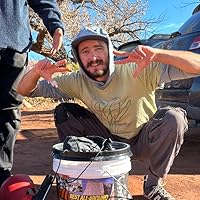
In the late 1960s, Malcolm Terence left his job as a reporter for the Los Angeles Times to look for adventure and may have found more than he bargained for. The era had triggered unprecedented social and political changes in America, tectonic shifts that challenged war and the social order that oppressed people along lines of class, gender, and race. One branch was a back-to-the-land movement, and Terence, who had just traveled for a year managing a rock band, strayed into Black Bear Ranch, a commune just starting in a remote corner of the Klamath Mountains near the California-Oregon border.
Black Bear Ranch still exists, but many of its early residents eventually returned to urban civilization. A few, Terence among them, stayed on in neighboring river towns. Some tried logging, others gold mining, and some tried growing marijuana, all with mixed success. The local mining and timber communities had a checkered opinion of their new hippie neighbors, as did the Native tribes, but it was the kind of place where people helped each other out, even if they didn’t always agree.
When wildfires grew large, Terence and other veterans of the commune joined the fire crews run by the US Forest Service. In between, the Black Bear expats built homesteads, planted gardens, delivered babies, and raised their children. They gradually overcame the skepticism of the locals and joined them in political battles against the use of herbicides in the forest and the Forest Service’s campaign to close all the mining claims. As in the best of organizing efforts, the organizers learned as much as they led.
Beginner’s Luck will appeal to anyone who experienced life on a commune in the 1960s–1970s or who wants to learn about this chapter in modern American history. Terence offers insight into environmental activism and the long history of conflict between resource exploitation and Native American rights without lecturing or pontificating. With wit, humor, and humility, his anecdotal essays chronicle a time and place where disparate people came together to form an unlikely community.
A hippie goes to the mountains to join a commune and sticks around for the long haul.
Terence is a great storyteller who reminds me of someone’s interesting grandpa telling fireside stories about the past. I fell in love with the place, the people, and the way that history figured so strongly in the community’s life. It’s a study in location and the interconnectedness of a small, remote mountain town. It’s also an ode to wild places and a fierce criticism of the incestuous relationship between government and corporate interests.
In the 1960s, journalist Malcolm Terence helped found the Black Bear Ranch, a commune near the California-Oregon border that still exists. His new memoir, Beginner's Luck: Dispatches from the Klamath Mountains, is an exuberant record of this piece of America's 1960s history.
Terence lived at Black Bear Ranch for four years. While there, he watched the advent of the first wave of feminism, both women claiming their rights and men learning to do their share of domestic labor. People at the commune had left the world they had been raised in to reinvent their lives, so women cut firewood, men cooked took care of the kids. Terrence writes about attending home births and even being the only helper present for one when the midwives were late.
Many people cycled through Black Bear Ranch over the decades and stayed a few years or a few days until they knew what they wanted to learn. Over the years, hundreds of people came through. Terence now thinks of the commune as a sort of “feral graduate school.” He eventually settled down in the small Salmon River towns near the commune, where he worked in gold mining, logging, firefighting, and tree planting before becoming a school teacher. His memoir is a heartfelt testimony to these communities.
In the 1960s, journalist Malcolm Terence helped found the Black Bear Ranch, a commune near the California-Oregon border that still exists. His new memoir, Beginner's Luck: Dispatches from the Klamath Mountains, is an exuberant record of this piece of America's 1960s history.
Terence lived at Black Bear Ranch for four years. While there, he watched the advent of the first wave of feminism, both women claiming their rights and men learning to do their share of domestic labor. People at the commune had left the world they had been raised in to reinvent their lives, so women cut firewood, men cooked took care of the kids. Terrence writes about attending home births and even being the only helper present for one when the midwives were late.
Many people cycled through Black Bear Ranch over the decades and stayed a few years or a few days until they knew what they wanted to learn. Over the years, hundreds of people came through. Terence now thinks of the commune as a sort of “feral graduate school.” He eventually settled down in the small Salmon River towns near the commune, where he worked in gold mining, logging, firefighting, and tree planting before becoming a school teacher. His memoir is a heartfelt testimony to these communities.
I like when the land claim inspector comes to assess a gold mining claim. They are using the machine to dredge the river for gold and when the inspector’s back is turned, they put extra gold in the bucket so that the claim will pass and the family can keep their land. In the end they don’t get to keep the land anyways because the chief inspector has a personal feud with the “miner” and the family has to leave. Sad that families are forced out of their generational home in this manner. I never saw the forest service as the bad guys until this book. They want everyone in the small towns in the Klamath to leave and move to larger cities. I think that’s not cool.
I appreciate how people really take care of each other in the rural area. When Terence and his friend hike through intense cold and snow, a local takes them in and gives them food and helps them warm up. Without his kindness, they might have died.
This entire review has been hidden because of spoilers.