The military is considering awarding him a Silver Star, a huge honor for any soldier -- especially for the son of a military family. Only Jake's questioning everything his family brought him up to believe. Now at home, recovering from his physical wounds, the memories of what he experienced "over there" haunt him. Meanwhile, he feels pressure from all sides. Some people want him to speak out against the military system he was brought up to honor and respect. Others, like his famous grandfather (a general himself), are urging him to return to the battlefield to fight again. Jake was raised to believe that fighting for one's country was a moral obligation. But now that he's seen firsthand the human cost of war, he is no longer sure. Bestselling YA author Todd Strasser delivers an engrossing and timely novel about very real issues faced by the young people caught in today's "forever war," and the price they pay.
Todd Strasser is an American author of more than 130 novels for adults, young-adults, and middle graders.
His most recent novel is Summer of '69
Booklist review: "Drugs, sex, and rock 'n' roll, those hallmarks of the summer of 1969, are all here, but there's so much more. In this loosely autobiographical novel, Strasser introduces 18-year-old Lucas, who is bright and sensitive but also a screw up…. The picture painted of the Woodstock music festival shows the dark side of peace and love, and the prevalence of drugs is on almost every page…The best part of the book, however, is the one that transcends eras: Lucas' introspection as he contemplates his place in the world."
Kirkus review: "Strasser perfectly captures the golden haze of youth and life on the cusp of adulthood. Readers fascinated with this time period will find much to enjoy... Vietnam, Woodstock, road trips, and acid trips: a sweetly bittersweet, surprising, even melancholy bildungsroman set against a world in flux. Groovy, man."
His most recent young adult novel is Price of Duty: 2018 New York Public Library Best Book for Teens “Compact and suspenseful, the novel raises important questions about war.” – Kirkus “This thought-provoking book is both welcome and imperative.” – Booklist * (starred review). "Rather than attempting to sway the reader, it offers awareness." - VOYA “Tightly wound and compelling ... appropriate for an older middle school and high school audience. VERDICT: Highly recommended.” – School Library Journal
Bio: Todd was born in New York City. When he was young his parents moved to Roslyn Heights, New York (Long Island). Todd went to the I.U. Willets Elementary school and then attended the Wheatley School for junior high and high school. His best subjects were math and science. He also liked to read, but he had trouble with spelling and grammar, and didn't do well in English. His favorite sports were tennis, skiing and fishing. Todd went to college at New York University for a few years, and then dropped out. He lived on a commune, then lived in Europe where he was a street musician.
All the while, Todd wrote songs and poems and lots of letters to his friends back home. Finally he decided to try being a writer. He returned to the United States and went to Beloit College where he studied literature and writing.
After college, Todd worked at the Middletown Times Herald-Record newspaper in Middletown, New York, and later at Compton Advertising in New York City. In 1978, Todd sold his first novel, Angel Dust Blues. He used the money to start the Dr. Wing Tip Shoo fortune cookie company. For the next 12 years, Todd sold more fortune cookies than books.
Todd now divides his time between writing books and speaking at schools and conferences. When he's at home, he likes to spend time with his children and dog, Cooper. He still likes to play tennis and ski, but his favorite new sport is surfing.
It's difficult to imagine that a writer could craft such a damning indictment of the US military's recruitment systems in under 200 pages without actually being anti-military, all while writing for an audience ranging from middle to high school. But somehow Strasser did it. I can't wait to get this one into students' hands. It's written in very simplistic language but in no way flinches from the absolute horrors of war.
While describing a 19-year-old returning from his first deployment with severe injuries and facing a hero's welcome, the book covers PTSD, suicide, war and battle in extreme detail and isn't an easy read. There is a paragraph about some teens saying they wanted to join the military because of Call of Duty and Strasser nails this - his criticisms of the current view of "war" by teens and military recruitment practices are chilling. The book is written in a way suitable for the middle/high audience, but also hits home HARD for this school librarian with a very personal and painful tie to the realities of our youngest men heading to war.
Highly recommended for all libraries serving teens.
Richie’s Picks: PRICE OF DUTY by Todd Strasser, Simon & Schuster, July 2018, 192p., ISBN: 978-1-4814-9709-1
“And there’s just a few things I ain’t got sorted out Sometimes they make my brain get sore Like if kids were left to their own devices Would they ever come up with a thing like war” -- Todd Rundgren, “The Wheel” (1975)
“Join the Army; travel to exotic distant lands; meet exciting, unusual people and kill them.” -- early Seventies poster on my bedroom wall during high school
“‘Oh my God, are you okay?’ Lori’s eyes are wide. She’s wearing the baggy T-shirt she sleeps in. ‘Yeah.’ I start to breathe easier, but my heart is still beating at speed-metal tempo. I was dreaming I was back at the ambush. On the roof, while the firefight continued on the street below. I was on my back, eyes blinded by the glaring sunlight. I tried to roll over but couldn’t. It felt like my body armor was bolted to the roof. A shadow moved over me--that insurgent wearing loose clothes and a cap. He was aiming his AK down at me, point-blank. My hands were sliding all over on the sandy rooftop as I desperately felt for a weapon or anything to protect myself with. But there was nothing. I was trapped on my back and he was closing in. The dark tunnel of the AK’s barrel growing larger and larger. ‘You were yelling so loud. I’ve never heard anything like it. I kept shaking you, but you wouldn’t wake up.’ Lori gives me a penetrating look, asking with her eyes what could have possibly happened over there that would result in such a violent dream. Of course, I’ve never told her about the really bad stuff. To talk about it is to relive it. To relive it is to refeel it. And I never want to feel anything like it again. With the corner of the T-shirt, she wipes some sweat off my forehead. We sit for a while in silence. Finally, she says, ‘I know you don’t want to talk about it, but if you ever change your mind…’ ‘Thanks.’ She kisses me on the forehead and gets up, switching off the light as she leaves. I lie in bed, staring up into the dark, my heart gradually decelerating. At FOB Choke Point they gave us pills for night terrors. When I got to Landstuhl in Germany, I tried to stop taking them, but my nightly yelling woke the other patients on the ward. So I started again. Here at home I thought maybe being in safe, familiar surroundings might make a difference. I haven’t taken a pill for the past three days, and tonight’s the first time I’ve had the terrors. So maybe I’m getting better. Maybe I’ll be one of the lucky ones.”
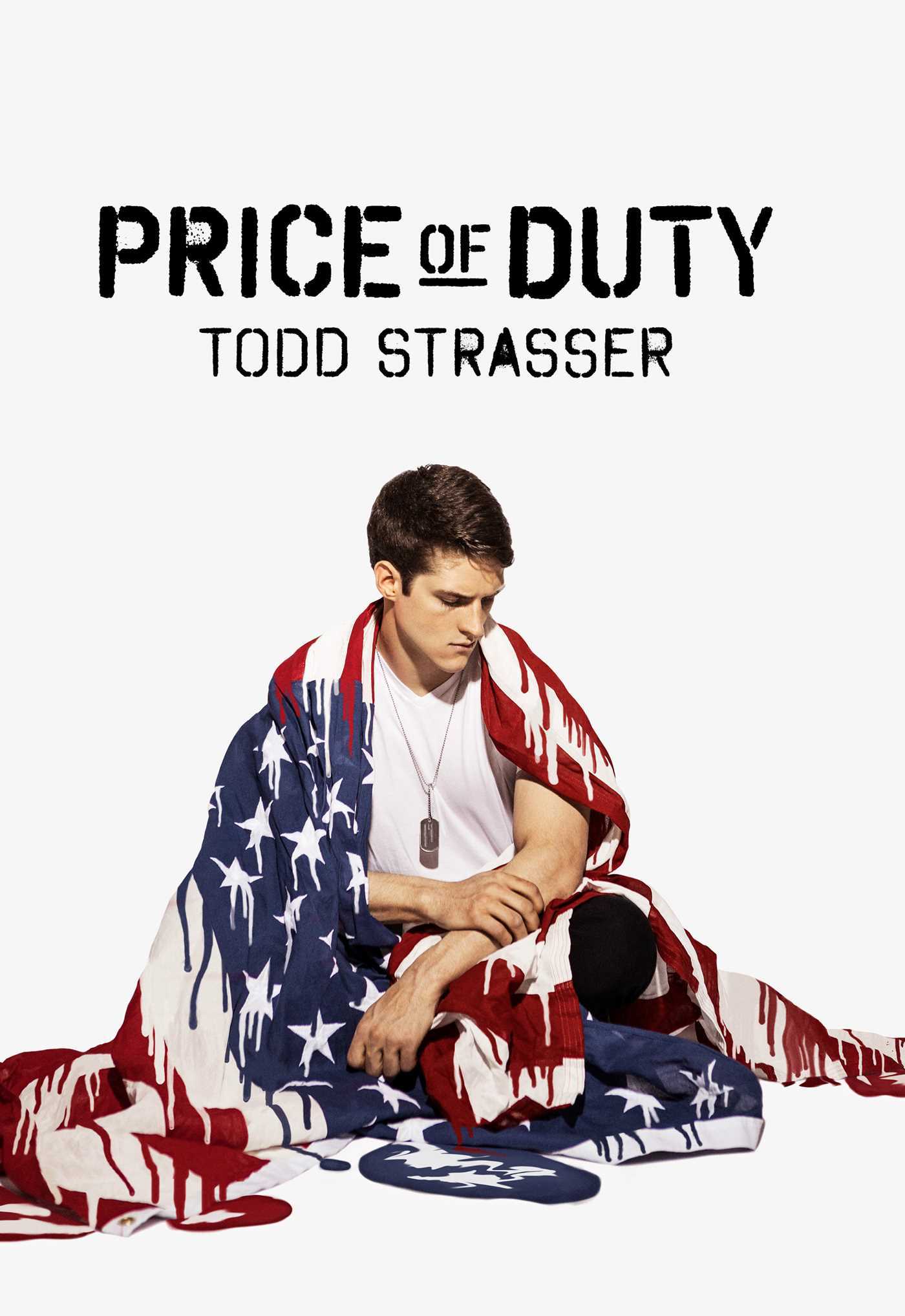
In PRICE OF DUTY, author Todd Strasser shows the reality of serving in and surviving today’s volunteer army. This contemporary YA tale is told from the point of view of Jake Liddell, who has returned to America a war hero. He’s missing one and a third of his fingers, has undergone multiple surgeries, and is on crutches, but that’s all secondary to what the experience of war has done to his psyche.
Beginning with a hero’s welcome, PRICE OF DUTY takes place during a single week when Jake returns to his hometown from the war. But he hasn’t yet completed his required time in the military. Incredibly, Jake will be required to leave at the end of the week, first to undergo physical rehabilitation, and then to return to active duty.
Jake is a survivor. He has, so far, survived becoming the pile of meat and bones and splattered brains that has been the fate of many close friends. Chewed up physically and suffering mentally from what he’s had to do, Jake is contemplating a rebellion. He’s thinking of foregoing the Silver Star medal for which he’s being considered and refusing to return to combat, which would shame his grandfather, a well-known retired general.
It’s difficult to imagine this young man readily transitioning to a normal, American, go-to-work-every-day, get-married, raise-a-family life. It makes me realize how essential the VA is.
I appreciate what the story reveals about sophisticated and unscrupulous military recruitment techniques that are used to con high school kids into enlisting. Those who suspect that shooter-based video games are desensitizing younger generations and that signing up in the military will seem an exciting and lucrative prospect to struggling students will find their fears realized.
I also applaud the stunning revelations about the manner in which potent drugs are handed out to soldiers like M&Ms in order to keep them fighting despite what they’ve experienced.
After reading PRICE OF DUTY, I’ve spent days thinking about war, about Jake, and about the epigraph of this book:
“War does not determine who is right -- only who is left.” -- Bertrand Russell
As we learn, America has managed to be involved in some war somewhere for all but 17 of the past 240 years. This is a life-and-death issue affecting adolescents that’s not going away any time soon.
PRICE OF DUTY is a hard-hitting, thought-provoking, page turner that could change the lives of young readers. Encourage them to put down their video game controllers and pick up this book.
I never review books, because I very often feel like whatever I think of a book has already been said. But, reading the other two reviews of this book, it inspired me a bit. So thank you, fellow reviewers!
Look, this book is not your average YA novel. It's heavy and it's hard-hitting, and it does a lot in a short amount of time. But mostly what it does is give you a lot to think about. Todd Strasser doesn't condescend to you. He doesn't try to tell you what to think of the military. He doesn't denigrate the people who risk their lives for so many reasons, one of which is a sense of -- you guessed it -- duty. It's a messy book. It's so unlike much of the YA I've read lately, because it doesn't wave the flag of resistance loudly and in your face, forcing you to choose to wholeheartedly agree with it or to back away slowly. How many books can we say we give our kids, our nieces, our cousins, that let them make up their own minds about an issue? How many times do we shout in their faces that this book will help them empathize, when all it does is preach? Those books are absolutely necessary, but this book asks the reader to do some work on their own. I don't have a problem with that, and in fact, revel in its nuance.
I like YA -- and kids books in general -- that don't condescend to the reader. Books that lift the reader up, ask them for more, and then never tell them whether they were right or wrong. These are the books that will create character, in my very humble opinion. And, look, I don't necessarily know if Price of Duty is going to be the quintessential book on the military's role in America, but I think it gives us an accurate representation of what it really means to be a soldier. I couldn't put it down, honestly. And I used it in conversations I had with friends for days after I read it. I think that is the point of literature. And I thank Todd Strasser for writing it.
Jake Liddell returns home from war a hero. He gets one week to visit with family and friends before beginning rehab and later returning to the front lines to finish his six month tour of duty. He has a list of things he wants to accomplish--people he needs to see before that week is up. Jake feels all the pressure of his military family to accept the medal being offered and return to service. But Jake is feeling quite disheartened with the military and isn't sure he wants to return. But can he do that to his family?
Price of Duty is a brutally honest portrayal of what soldiers experience. Some may not like a book that criticizes the military, but Strasser does an amazing job of articulating those criticisms in a respectful way. The military descriptions are painfully real, and the issues discussed are important. A well written book that reads fast and will appeal to reluctant readers.
This was an incredibly complex topic to cover in under 200 pages, and while I think it needs about 50-100 more, I was still very impressed. It covers mental health and its treatment in the military, the motives for US involvement war, the recruitment process and its deception, minorities in the military (and how they often choose it as a way out), and the JROTC program. It also argues why the US needs a military.
The writing was good and the main character was completely likable and easy to sympathize with. His struggles are clearly outlined and he has some solutions to his problem, but his arguments for the military aren't as developed as his cons (but really, can they actually be?). It is an incredibly quick read but does have mentions of seriously disturbing situations, so it is not for the faint of heart.
Thank you Edelweiss for the ARC in exchange for an honest review.
Everyone says that Jake Liddell is a war hero. He is even scheduled to receive the Silver Star for some of his actions during combat, but now that he is away from his platoon, recovering, he isn’t sure he wants to return and finish his tour. To make matters worse, he is from a military family, so there are additional expectations at home. What will Jake decide to do next? Why does he believe he isn’t a hero at all?
Price of Duty is a stand-alone novel that is gripping and heartfelt. The topic is timely in this age where war and battle are portrayed gloriously in the media, yet our young men and women are the ones living it on a daily basis. Strasser has given readers a variety of characters with many different views of war and lets the reader determine what their feelings should be. This book is a definite read for everyone and a strong suggestion for those reluctant male teen readers. Price of Duty will leave all readers thinking about the issues long after the last page is turned.
Everyone thinks Jake is a hero. Everyone except Jake, that is. He doesn't think he was heroic for his actions during combat -- he was just following his instincts, using his training, and doing what he had to do to survive. He is expecting to receive a Silver Star, nevertheless, which is an even greater honor than the Bronze Star his famous grandfather, The General, received for his valor during the Vietnam War. Jake would rather get a medical discharge from the Army. It would be sacrilege to say as much, though, since both sides of his family [and his entire town, in fact] are very pro-military. How can Jake possibly go through physical therapy only to head back and finish his deployment? How can he put himself back in danger knowing full well that he might be killed next time? How can he bear the burden of killing more "enemy" soldiers now that he has seen them up close and recognized that they feel as justified to fight on their side of the war as he does on his? Though he already has difficulty coping with what he has been through and is even starting to question how truly "voluntary" the US military is, Jake isn't sure how he could ever step away from this path he is expected to take.
By alternating between Jake's homecoming and his time in training and combat, Strasser does an excellent job juxtaposing the varied conditions under which modern day soldiers must learn to cope. After living through the explosion of an IED on patrol, for instance, Jake finds it nearly impossible to keep his cool in a military parade during which people shoot off fireworks in complete ignorance of the fact that they are triggering his PTSD. Night terrors make it difficult to sleep, and depression and anxiety make it difficult to function while awake. Sadly, trends show that many military service members often avoid mental health care due to the stigma and the belief that seeking treatment could affect their military career advancement. This book did a great job illustrating the variety of factors that play into the military mental health crisis so that civilians might better understand the difficulties faced by those who serve and have served.
My decision to read this book on Memorial Day Weekend was very purposeful, by the way. First, I wanted another way to recognize and observe the great sacrifice many service members have made for our country. Secondly, I wanted to have time to review this book by the end of #MentalHealthAwarenessMonth. It is my hope that books like this will help to start and/or keep the conversation going so that we can #EndTheStigma. For another fantastic book about a young soldier coming back from the "forever war" in the Middle East, I highly recommend Ryan Smithson's memoir Ghosts of War.
(I received an ARC of this book from Simon and Schuster through the author.)
I really liked this book. It is ambitious, and seeks to do a lot with only 177 pages. The main character, Jake, has just returned from active duty in the Middle East. He was wounded severely in a firefight where he tried to rescue several of his fellow soldiers. He is a hometown hero and may be the recipient of a Silver Star, but Jake is having all sorts of second thoughts about the nature of war, the military in America, and whether or not he wants the recognition he is receiving. He does not feel like a hero.
Strasser's writing is, as always, gripping and fast-paced. The chapters move locations and time, flashing back to reveal more of what happened to Jake during his deployment. Jake's inner monologue is engaging, and the scenes of active engagement are exciting and intense. My only gripe is the character of Morpiss. Jake goes to visit Morpiss, a fellow soldier who was the first to be WIA, in an unnamed, wide-place-in-the-road, Southern town. Unfortunately, Morpiss is not so much a character as a caricature. His speech was distractingly hick-like, peppered with "y'all" in entirely too many contexts. (It's a plural pronoun, y'all. You use it for a 2nd person reference to a group of people.) Even the scene painted of Morpiss's home was a stereotype of backwoods Southern hickdom. The conversation between Jake and Morpiss is very important to Jake's decision, and the stereotypical speech and scene was distracting from how important the scene actually was.
That being said, this was a really good read, and I'm probably just being nitpicky. I will definitely be recommending this one to my students. I am not usually a fan of military books, but this one definitely has something to say. It makes you think without being heavy-handed. I am glad I had the opportunity to read it.
I received this book as an advanced reader's copy and I have not read many military inspired novels but from the description and cover this book got me intrigued. This book does an exemplary job reflecting the hardship of having a loved one overseas fighting in the military for our freedom and the families that worry about having them return home safely. With all of the political controversy causing this particular topic very sensitive, it was refreshing to hear another point of view and potential change of perception. 5 stars!
This short book is a powerful one. Ad our hero returns from a war he found senseless, he confronts his feelings about why he did what he did and if he is indeed a hero. He knows firsthand the horrors of war and is not sure he has what it takes, to either return to duty, or confront his family, who assume that he will continue on the hero's journey. Told in short chapters, the reader will keep wanting more. There are no easy answers, but always good questions.
This book should be required reading for every young person who’s considering entering the military. This is an ambitious novel for a YA writer. If Strasser appears to bite off more than he can chew in 177 pages, it’s probably because there’s so much here that needs to be chewed over.
This book was very. . . thought-provoking. I'm still thinking through a lot of the questions the author brought up, and I feel like they had the characters sort through them in a true-to-life kind of way. I appreciated the things in this book actually being talked about, as I feel they often aren't.
The author really nails the paradox of the army - America is caught in a "forever war", and as long as there are wars, there must be soldiers. But, at the same time, many of the stories of these soldiers are horrific tragedies. He also touches on things like video games being what drew boys to the field, and the way he describes the main character's reaction to hearing that is simplistic and chilling.
PTSD was very well-portrayed. The character's struggles with medications were also very thought-provoking.
Content: Some language, a few inappropriate references, hints of sexual tension in one scene, a character commits suicide (manner stated, not seen but heard), violence/extreme injuries (I mean, it is a war story).
2.5 stars for this book, I honestly don’t know what the book was about . It keep hyping itself up for a dramatic ending by the main character giving us clues that he was getting ready to do something drastic at the ending but the more the book kept on the more boring it got for me, none of the characters feel real and the book feels both that it went for too long for such a simple and uncomplicated story and too short for the subject that it tried and failed to approach (PTSD I assume because even that wasn’t clear) . If someone can explain what the actual purpose of this book was better please go ahead because I was left with a big ....Why?
Honestly? That was pretty bad. The writing style was jumpy and horrible. It took 111 pages for the big Plot thing to be openly acknowledged, and then it didn't even go through. It really felt flat, which is a shame because it had Really good story potential!!! The writing was just awful. It's even a subject that needs to be talked about a Lot more, but this book just does Not do it justice. It's only getting a second star Because it had good story potential, and because the topic is an important one.
This entire review has been hidden because of spoilers.
⭐️⭐️⭐️💫/5. Jake is a soldier who is back home recovering from an injury sustained in the line of duty. Everyone says he is a hero, but he doesn’t feel like it as he battles night terrors and cannot function without medication. The story is told through flashbacks of his deployment and the present. It hits the issues of how the military recruits, how soldiers’ mental health is treated, and what it’s like to come home knowing some of your best friends never will (alive, at least). I recommend this for older middle school readers on up; I will definitely be book talking this one.
honestly it's great that there's a book written on this subject because i feel like it's definitely not talked about enough and this was a very educational experience.
but still....a relevant & important subject being discussed does not make a good book. the pacing was weird, the different time lines confusing and the characters were really just not interesting at all. the ending disappointed me because i truly expected more; this story had so much potential and then it just ends halfway through? maybe that makes it more realistic but i didn't like it.
I liked The price of duty. The only thing that confused me was that I wasn’t sure if it was historical fiction or an alternate reality. I liked the stories of battle and how hard it was to come home.
Jake is home after sustaining injuries during deployment. He's being lauded as a hero, but is struggling with what that really means. Jake still has six months left of deployment to finish after his rehab at Walter Reed. He's really thinking about not going back, but that would mean breaking the law. Not to mention, disappointing his grandfather, the General, and the town, who came out en masse to welcome home their hero. He's going to earn a silver star, but that is pretty hard to reconcile with all the things he's seen and done. Flashbacks intersperse with the present, as Jake tries to deal with all the pressures returning home brings forward.
One of the characters in this book is a female high school reporter who would like Jake to renounce his junior ROTC class from high school. She has some disheartening stats. Jake is able to see her point of view, but unwilling to deviate from the accepted narrative to publicly support her story. How he resolves his dilemma still has me thinking.
On a side note, something I learned as I was doing my FERPA training for school this year, is that recruiters can ask for and receive student names and addresses. I'm sure I've been told this before but it really stood out to me after reading this book.
This book may have been short, but it packed a lot of punch. It shows the grim reality of a soldier's conflicted feelings after he's wounded and sent home to recover. Jake struggles to accept his hero status and his confused feelings about war. He has to choose between recovering at Walter Reed only to be sent back into combat or refuse his Silver Star and speak out against the war. The book alternates between his time home and his time in combat. As they say, "War is hell" and this book illustrates it in its description of PTSD, wounded warriors, over-medication of soldiers, etc.
4.5 Actual This quick but powerful novel deals with a young man with a family tradition of military service. He enlisted in the army right out of high school after training with the JROTC program. Now, he is home after being seriously injured and psychologically changed during his deployment.
Strasser raises serious for which there are no easy answers: what are the costs of war; are minorities targeted for military recruitment, and unfairly increase numbers of disadvantaged teens; what is the role of ROTC; what happens to injured vets when they come home, etc.
This book was definitely at 4.5 stars for me. I rounded it down because I loved this book, but it took me forever to read because I just couldn’t get into it at first. I think the main reason for this was the “what is my girlfriend doing while I’m away fighting.” But I thought over all it was an incredibly well-written book and I was taken by the moving style that made it so deep. It was such a difficult topic and I thought he did a nice job making it still an enjoyable book.
I think the book is a 8/10. The book is a must read if you are interested in military related things. The book is interesting as it revolves around the main character named Alex, as he went to fight in the war. He came back as a war hero. He was one of the lucky men who made it back from the war. The book explores his thoughts and the physiological after math of the war. The book is very interesting and I recommend you to read it if you have the interest and time.
When Jake Liddell returns home wounded from a tour of duty in the Middle East, everyone says he’s a hero. Jake says, “My body may have returned home, but my brain is still wired for war.” He needs pills to sleep. His grandfather, a war hero called The General, is already urging Jake back to the battlefield. Jake waits—and questions—the Silver Star he will be awarded. Acclaimed author Todd Strasser examines military service in his new novel, “Price of Duty” (Simon & Schuster 2018). Jake visits his former high school JROTC and is asked, “What’s it like?” He answers, “It’s hard.” What he can’t say to them is, “. . . you’ll wish to God that you’d never come. . . you’ll lie in bed at night so scared and trembling and sick with fear that you’ll be a hair’s width from bawling loudly for your mommy.” Jake shows us the camaraderie among soldiers, the irreverent pranks and nicknames like Morpiss, Skitballs, Magnet; the unlikely friendships with the likes of Brad, the corporal who is married to Jake’s former middle school girlfriend. He shows Brad’s over-the-top jealousy, how normal tensions grow in the light of daily shelling, bombings and the ongoing threat to life. There’s plenty of graphic battle scenes here—and legs being blown off. You learn about “hillbilly armor,” welded extra iron plating to the undercarriages of their vehicles, because some of the gear was badly made. Morpiss says, “Never forget, my friend,” . . . “Your life is in the hands of the lowest bidder.” Once home Jake has a girlfriend to visit—a girlfriend who wants to know if she should wait for him when he to duty. And there’s Brandi, who writes for the Franklin High School newspaper, Brandi, who is making an anti-war video. She claims that JROTC is military preparation. She says that 40% of its members go directly into the military versus 2% from the general population—20 times more. She tells us that 12% of America’s population is black, but 30% of the U.S. Army is black. She tells us that 50% of JROTC are black or minority. She says, “Wouldn’t you say that sounds a little disproportionate?” At first Jake argues. He comes from a military family, particularly on his mother’s side. Plus, he has a paternal uncle who said the Vietnam “war was immoral, nothing more than mass murder,” was called a “draft dodger” and jailed for refusing to fight. Jake has to be careful of the historic shame this caused his family. But he’s considering not going back to the battle. His grandfather would be disappointed but could pull strings to keep him from returning. And what about that? He has special care. Jake says that the US tells the world we have an “all-volunteer Army. We just changed the method of conscription…” He asks, “Why should it be the poor and minorities, the disadvantaged and luckless, who have to bear the burden of risking their lives for our country.” And what about “guys like me who are seduced by the action ads and unethical recruiters.” There’s so much here to think about. And talk about.
Patricia Hruby Powell is author of the young adult documentary novel Loving vs. Virginia and Josephine: The Dazzling Life of Josephine Baker among other books talesforallages.com
I don’t often do book reviews, because after reading a book depending if I was satisfied or not, I just never get the time or the urge to write about it. This book was different, it spoke to me, and it helped show me to another point of view.This book isn’t for your average reader at least throughout high school, as a current high school student; this book made me think so much about a deeper meaner than what was just shown on the text. The author Todd Strasser doesn’t talk down on those who have risked their lives defending our country, but speaks on duty. Generally throughout this story written by Todd Strasser, the story gives a feeling of being set in World War II. In reality the story is set during the early 1980’s to mid 1980’s. The main character Jake Liddell returns home after being a war hero. He has a week to spend time and visit family and friends before starting rehab and after rehab returning back to the front lines to finish the last six months of his duty. Jake is also home due to being wounded severely in a fire fight where he tried to save his fellow squadron. He has a massive agenda and is trying to accomplish it within the limited time frame he has. Jake Liddell returns home as a hero(but does he really feel like a hero?), but after spending time away from the war fronts, he realized that he isn’t quite sure if he wants to return and finish his six month duty. To make stuff worse, he comes from a long line of family that is from the military. He has many expectations to live up to. Jake has a burden of thinking back to his time from the war fronts of killing his enemies. He doesn’t want to return due to this exact issue, he doesn’t want to recognize them, and have flashbacks to them. Jake also starts to question how if the military is really “voluntary” or “mandatory” from the government, because he cannot have the option to just stay home after his rehab session. Price of Duty is a great book that it brutally honest in the way it shows what a soldier experiences when returning back from the front lines or the war front. The opinions of this book may vary on how it is criticizes the military and their ways, but Todd Strasser does a terrific job of criticizing everything in a respectful manner. Everything that was listed in the book about the military was in such an extreme manner that it felt real. The imagery was there, and it shows that the issues discussed within the book are very important, and can relate to our current day military. The book covers mental health and the way the military handles treatments, and the motives of the government for being involved in a war. This showed a new insight, and I found this really interesting due to this book being for young adults. Price of Duty by Todd Strasser, Simon & Schuster, $10.99
This entire review has been hidden because of spoilers.
There are always two sides to a story, sometimes three. For some, being part of the military and serving one’s country is in their blood. It’s a privilege, a rite of passage, a duty that you don’t shirk away from. You serve your time, come back a hero, and pass along that tradition. And, that is beyond brave in my book. But there is also another side that doesn’t get talked about- the negative. I’m not just talking about being separated from loved ones for long periods of time, eating crappy food, and surviving desert temperatures while deployed. There is that ugly truth that no one wants to talk about- mental health. If you are a good soldier, you can will your brain not to be weak and if you can’t, then you fake it, so your family thinks you are okay. Until they realize you’re not and it’s too late.
Jake Liddell is of the former; he comes from a strong military family, and his grandfather was a general during Vietnam and is a powerful man in the small town in which they all live. Jake dreamed of joining the military, was in the JROTC in high school, and signed the papers as soon as graduation was over because that’s what he was taught to do. A year later and Jake is coming home to a hero’s welcome, complete with a parade, speaking at his old high school, and being shown off at one of his grandfather’s parties. And he hates every minute of it. The only reason he’s back is his leg, which he injured while deployed. He was one of the lucky ones, but his nightmares say otherwise. Some of his friends are missing whole body parts, some are dead, and some died by their own hand while he watched them spiral and did nothing. He’s only there for a week before heading out to Walter Reed for rehab and then to finish his six months. This week at home allows Jake to ponder some of the horrific things he and his friends went through, hence the nightmares. When the editor of his old high school’s newspaper asks to interview him, she brings up things that have been weighing on his mind, but he’d never thought to give them a voice. Not that he would. Talking about dishonest recruitment practices, how the JROTC is basically a giant recruitment ground, and all the missing information when you sign on that dotted line would be a massive betrayal, and he’s not about to do that to his brothers.
Told in flashbacks of the skirmish that left Jake injured, this is an important story. Todd Strasser does a great job of letting the reader decide what is right and wrong; Jake is only the starting point for discussion. Bonus points for a short book that can be read in just a few hours and packs a powerful punch in just a short time. This is an easy recommendation.
I received this eARC novel from Edelweiss. This is my honest review.
Being in a family that has served the country by being in the military, Jake felt that it was his duty to also enlist into the Forever War. He wasn't pressured by anyone, but he knew that his grandfather would judge him. Funny thing is, his father was sad and disappointed that he enlisted.
After his convoy got invaded by the enemy, Jake was one of the lucky ones who survived. His leg is in a cast, and his left arm and hand got serious injuries. Because of his wounds, he was able to go home for awhile to rest and recoup, before going off to rehab to finish off his time.
But being back home is weird. He was excited to go back to normal, but nothing is normal anymore. When fireworks go off, Jake thinks that there is gunfire happening.
So now Jake is trying to figure out how to live, and what choices he wants to make for his future.
Jake has a lot of difficult decisions to make, and a lot of past events to reflect upon.
Wow. I seriously liked this book!! It was short, but had a HUGE message in this novel, and the content was so gutwrenching to read about. My heart was breaking for Jake and what he went through overseas and then what he was going through once he got home. Everyone called him a hero, but Jake felt anything but being a hero and that shows how much he was affected by what had happened to him.
I can't even imagine being in Jake's shoes, and then to come home to "normal" only to have it not be normal anymore? I mean, he missed holding his gun, and he wasn't even at war for that long.
This book definitely shows how much war wears on a person and makes them change as a whole. Everyone always says that they look and act the same, but someone who is going to PTSD will look and act like normal. It's what's going on inside of them that really matters and will really make you understand the struggles they are going through.
This is a powerful book. A memorial book. And one that I really think teens should read.
Especially for the fact that Jake and his friends he made stated that they thought it would be good because they love playing Call of Duty video game. That, to me, makes that so real since I know how many teens do play that game. And it is completely true that being in war in real life is nothing like being a character in a video game.
I am so glad that I finally got around to reading this book, and I definitely won't forget it anytime soon!
I'm not going to lie... the only reason I bought and read this book was because it was on the Lincoln Award List. Reading the summary, the book just didn't... excite me, I guess. After reading it, I can say it was better than I expected. It reminded me a lot of "The Things a Brother Knows" and would be interesting to read and discuss alongside "The Things They Carried" in a classroom.
I guess my only hesitation is this.... It feels preachy. It feels exploitative. I was hoping for an author's note that provided context and explained why Strasser wrote this and what personal experience with the military and war that he had. But there wasn't anything. I don't know. I'm probably not being fair here. But in a time of "own voices" stories and using your experiences to make these kinds of "revolutionary" statements, I just wonder where this is coming from. Is this Strasser speaking his truth about the concerns he has about the military and what it is doing to our young people, especially the POC, or is this him seeing an opportunity to play off of people's emotions to make a buck. And maybe it doesn't matter. Maybe I'm just rambling here. But this is the one thing I struggled with after finishing the book. How "real" is it?