

What do you think?

The Extraordinary Adventures of the Athena Club #2
European Travel for the Monstrous Gentlewoman
In the sequel to the critically acclaimed The Strange Case of the Alchemist’s Daughter , Mary Jekyll and the rest of the daughters of literature’s mad scientists embark on a madcap adventure across Europe to rescue another monstrous girl and stop the Alchemical Society’s nefarious plans once and for all.
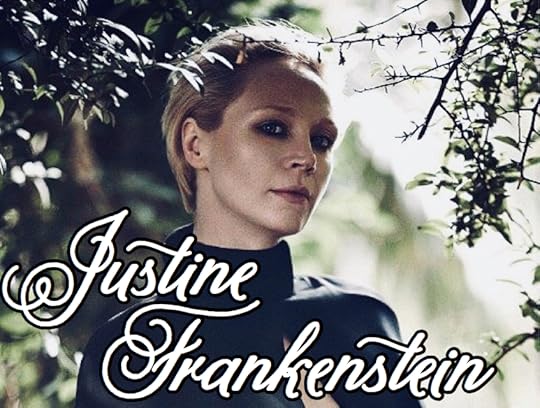
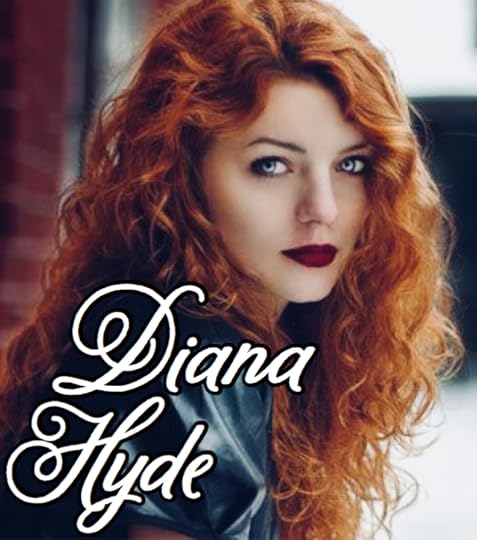
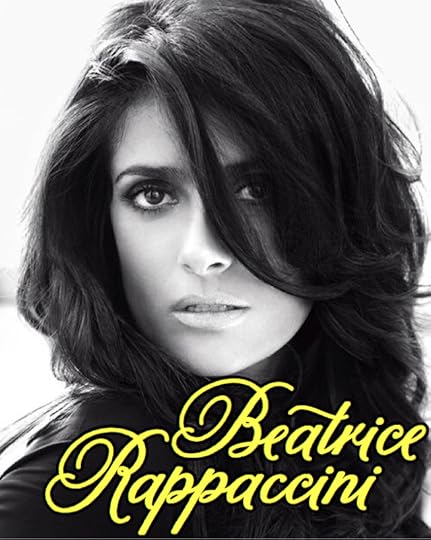
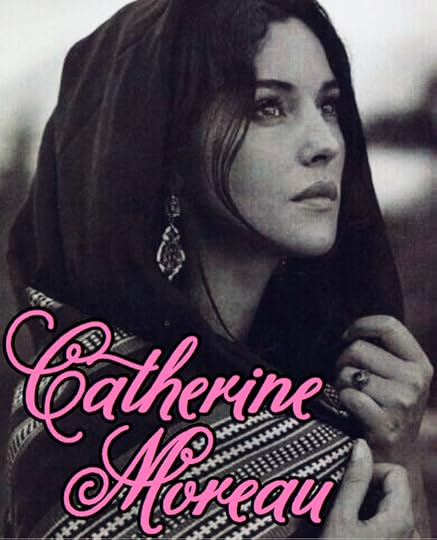
Mary Jekyll’s life has been peaceful since she helped Sherlock Holmes and Dr. Watson solve the Whitechapel Murders. Beatrice Rappaccini, Catherine Moreau, Justine Frankenstein, and Mary’s sister Diana Hyde have settled into the Jekyll household in London, and although they sometimes quarrel, the members of the Athena Club get along as well as any five young women with very different personalities. At least they can always rely on Mrs. Poole.
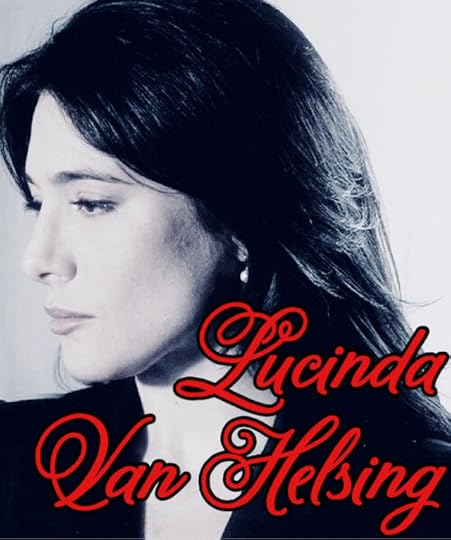
But when Mary receives a telegram that Lucinda Van Helsing has been kidnapped, the Athena Club must travel to the Austro-Hungarian Empire to rescue yet another young woman who has been subjected to horrific experimentation. Where is Lucinda, and what has Professor Van Helsing been doing to his daughter? Can Mary, Diana, Beatrice, and Justine reach her in time?
Racing against the clock to save Lucinda from certain doom, the Athena Club embarks on a madcap journey across Europe. From Paris to Vienna to Budapest, Mary and her friends must make new allies, face old enemies, and finally confront the fearsome, secretive Alchemical Society. It’s time for these monstrous gentlewomen to overcome the past and create their own destinies.
Mary Jekyll’s life has been peaceful since she helped Sherlock Holmes and Dr. Watson solve the Whitechapel Murders. Beatrice Rappaccini, Catherine Moreau, Justine Frankenstein, and Mary’s sister Diana Hyde have settled into the Jekyll household in London, and although they sometimes quarrel, the members of the Athena Club get along as well as any five young women with very different personalities. At least they can always rely on Mrs. Poole.
But when Mary receives a telegram that Lucinda Van Helsing has been kidnapped, the Athena Club must travel to the Austro-Hungarian Empire to rescue yet another young woman who has been subjected to horrific experimentation. Where is Lucinda, and what has Professor Van Helsing been doing to his daughter? Can Mary, Diana, Beatrice, and Justine reach her in time?
Racing against the clock to save Lucinda from certain doom, the Athena Club embarks on a madcap journey across Europe. From Paris to Vienna to Budapest, Mary and her friends must make new allies, face old enemies, and finally confront the fearsome, secretive Alchemical Society. It’s time for these monstrous gentlewomen to overcome the past and create their own destinies.
720 pages, Hardcover
First published July 10, 2018
About the author
Theodora Goss
132 books2,207 followersTheodora Goss was born in Hungary and spent her childhood in various European countries before her family moved to the United States, where she completed a PhD in English literature. She is the World Fantasy and Locus Award-winning author of the short story and poetry collections In the Forest of Forgetting (2006), Songs for Ophelia (2014), and Snow White Learns Witchcraft (2019), as well as novella The Thorn and the Blossom (2012), debut novel The Strange Case of the Alchemist’s Daughter (2017), and sequels European Travel for the Monstrous Gentlewoman (2018) and The Sinister Mystery of the Mesmerizing Girl (2019). She has been a finalist for the Nebula, Crawford, Seiun, and Mythopoeic Awards, as well as on the Tiptree Award Honor List. Her work has been translated into thirteen languages. She teaches literature and writing at Boston University and in the Stonecoast MFA Program.
Ratings & Reviews
Friends & Following
Create a free account to discover what your friends think of this book!
Community Reviews
Displaying 1 - 30 of 1,363 reviews
August 26, 2020
Movin' from a gift to the sea, I been called allegedly free / Oh, but nothing's gonna change that girl, we say nothing gonna change that girl (Nothing’s Gonna Change That Girl – Hurray for the Riff Raff).
It turns out page count is completely inconsequential when a book is good, who would have thought! And you’d think this a lesson I would have just instinctively known considering I’ve read fifty page books that took me so long to finish that I started to think I was trapped in a time loop and six hundred page deals that went by as quickly as an April breeze. Yet, here I am with European Travel for the Monstrous Gentlewoman realizing and relearning the same old lessons over and over again. I feel like one of those toxic YouTubers who have to make an apology video where they talk about taking accountability every couple of months because the lesson never sticks. Look, I know the conversation around this book being a door-stopper is already a point I’ve made in my original review for this book (look at it all~ll the way down there), but even though I probably should have, I didn't re-read my original review because whenever I look back on things I've already written, I need to edit and edit and edit. Besides, I couldn't help but notice that the topic of length (it’s sitting pretty at about seven hundred smackeroonies) takes up all the space of the Socratic Seminar pertaining to European Travel for the Monstrous Gentlewoman, and I’m fed up. I'm mad! If a book is good, then how long it is shouldn’t matter, and I have a suspicion that the reason why the third and final installment in The Extraordinary Adventures of the Athena Club series is so short and wraps up every remaining story thread in such a quick manner is because people wouldn’t stop complaining about being bored with this book. And you know what, that really irks me! Again, I'm mad, but in bold this time. I mean, I’m guilty of this too, but I just think constantly crying about how lo~ong it takes to finish a book is such an odd thing to be mad about in regards to this hobby specifically… like, we’re all readers, aren’t we? We should be happy when there’s more book to read, right!? And I say this as someone who has been indulging in short stories and novellas for the past few weeks. Sure, there's something special in being able to tell a compelling narrative in only a few pages, but I still enjoy a grand epic as much as the next dude. Also, I have such a hard time finding retellings of these specific characters in this specific time period that covers everything I’m interested in and captures the correct vibe, so if I come across as more testy than usual, that’s the reason.
It’s just that a lot of the times whenever people are doing an adaption of a classic, they always like to make them a contemporary affair, and it grinds my gears because characters like Dracula or Sherlock Holmes are so defined by the era in which they were created that I feel like it almost defeats the purpose to move them up on the timeline. "A modern take, can you imagine?" I can, and it sucks. That’s why the Benedict Crumberling version of Sherlock Holmes never worked for me from the jump, because even outside of the fact that they stomped all over the source material, this is a man whose main characteristics were molded by Victorian ideals, and due to this fact, we’re able to see where he defies them as well. If he’s just an odd bloke in the 21st century, then his genius is hardly noteworthy, and much more contrived. At times he even comes across as a dumbass! But back to The Extraordinary Adventures of the Athena Club books, they already feel like they should have at least five books in total, so I’m savoring every page I can get like some kind of hoarder. Anyway, European Travel for the Monstrous Gentlewoman is our second outing with Mary Jekyll and the Athena Club, and the first thing readers will notice is that it’s… more. More pages, more characters from classical literature show up, and more importantly, more adventures! If you’ve absolutely loved The Strange Case of the Alchemist’s Daughter (like me), then this book will feel like opening a present a day before Christmas. I do understand when people say that this book was doing too much, but I was never once bored. Despite the fact that we spend so much more time with everyone involved, I found that every aspect of this series just clicks with me. What I enjoy the most is that every installment feels like a natural continuation of a cohesive story, but they still each have their own distinct inspirations. For example, The Strange Case of the Alchemist’s Daughter reads like a classic Sherlock Holmes short story (which is why he’s featured the most heavily over there) with a dabble of science-fiction elements, while European Travel for the Monstrous Gentlewoman travels into the world of fantasy with vampires. And while I’ve read a great many books about vampires at this point, they’re usually some kind of watered down version of the creatures of night, where the emphasis is on their romantic nature rather than the freak side, but because this series celebrates the monstrous nature of these characters, we get to see them in their original light.
Part of what makes Count Dracula so enduring as a character is that dichotomy between his beastly nature and the thin veneer of charm he puts on, so to read a book that respects the source material while also adding its own modern twist on the genre doesn’t just make for grand entertainment, but also an incredibly refreshing read. On that note, I do wonder how Theodora Goss decides who will be a hero and who'll be a villain in this series. Like, is it a coin toss? Because I think it's interesting how the likes of Victor Frankenstein and Dracula slide right into the "good guy" slots. I appreciate how these books have empathy for monsters, but again, I wonder why that same consideration isn't extended to Frankenstein's Creature, arguably the most misunderstood monster in all of literature. Moving on though, the entire series is about men who go too far in their pursuit for scientific achievement in order to gain eternal life, so I thought it was quite clever how Theodora Goss was able to combine several different facets of folklore in order to create one sprawling narrative. And if nothing else I talk about can convince you to give this series a try, I’ll just say this… where else can you find a story containing Professor Moriarty, Frankenstein’s Monster, Dracula, Carmilla, Laura (from Carmilla), Irene Adler, and many more in one story without everything feeling like a Ready Player One cameo fest? Nowhere! Seriously, I like this book so much that I could just fill this entire review with quotes that I liked… but I won’t do that because that’d be annoying. It's like those YouTube “Essayist” who put really long clips of other stuff in their videos to “give context” to the drama they’re talking about, but it’s clear they just want to pad out the runtime. I thought this was KaylaSays, not “RandomClipSays! I remember I was reading my friends essay a couple months ago and literally every sentence had a quote from another paper, and it was quite jarring when I got to the “sources page” because it was longer than the entire paper he had written! At that point I should just read the papers he was quoting, no? Anyway, enough shade, one of my favorite things about The Extraordinary Adventures of the Athena Club series is that the author knew that there’s still a lot to be gained in a simple adventure that plays it straight rather than trying to always subvert expectations and all that. I know this sounds like a backwards compliment, but I truly mean that! As you probably know, I love the Life is Strange games, but my least favorite parts are always the fifth episodes because as the climax, that’s when the story always dives into metaphorical, dream sequence territory. And while I don’t think the stories could have been done as successfully without these attributes, I can’t lie that whenever things get too abstract, I tend to check out.
Instead, she looked around at all the diners gathered around that table, smiling or grinning, filled with a delicious feast–The Cat Woman, the Zulu Prince, the Dog Boy, the Giantess, the Poisonous Girl, several vampires… She felt gratified to be part of such a strange, wonderful gathering.
Catherine: Of monsters.
Mary: Well, metaphorically, perhaps.
Catherine: If you insist.
Besides, I think The Weeknd ruined a lot of my trust in deep and intellectual artists because he used to always have these super trippy music videos accompanying his songs that would get people talking about the themes or whatever… and then he promptly proved himself a complete dipshit hack when he made his show and his movie (The Idol and Hurry Up Tomorrow respectively), because it turns out that he didn’t know what the hell he was talking about and was just hoping that by being vague and mysterious that the fans would fill in the blanks for him. If you don't explain it in the story proper, then someone else will, right? So now, whenever something gets a bit too out there, I have an inclination towards believing that the author is probably just throwing a bunch of random stuff against the wall. Sorry, but I have a hard time trusting that they actually had a plan for this and I find excessive dream sequences somewhat lazy and tiresome. “Trust issues, ooh yeah, ooh yeah, ooh yeah, ooh yeah, ooh-woah” and all that. Otherwise, I appreciated how Theodora Goss respected the queer relationship between Carmilla and Laura, but I did find it funny how Holmes and Watson didn’t get the same treatment, as Watson is portrayed as a gentleman flirt and Sherlock Holmes has his romantic relationship with Mary Jekyll. Don’t get me wrong, I’m not bothered by it because the only historical queer relationship that I get mad at heterosexual inaccuracies is between Patroclus and Achilles, and I think the reason why enjoy the idea of a romance between Mary and Holmes is because it’s written in a very “hands off” kind of way befitting both of their personalities. A lot of the times romances are written under such a trope heavy pen that characteristics will be altered in order to satisfy a relationship that is more easily consumable by the masses. Characters known for their uniqueness get watered down and boxed into a mold that doesn't fit them! It’s important to remember that both Mary and Holmes are emotionally distant people, and while their arcs are deeply rooted in empathy and understanding, there’s still an aspect of their core personalities that stop them from fully connecting to other people. So by keeping their budding romantic feelings towards each other in subtext, the fact that they end up together not only feels like a natural progression of their character arcs, but also helps enrich the narrative by making it feel more like fluid, living world.
Because even though The Extraordinary Adventures of the Athena Club deals with some of the most famous characters in literary fiction, every one of them fits into the overarching narrative without a hitch. You could go into this book without knowing any of the players featured here and still walk away with a complete story, and that takes some real talent. A lesser author would place these characters in their book and be afraid to go “too far” in changing their most recognizable traits, whereas Theodora Goss treats every character like a real person with their own goals and motivations. Sherlock Holmes one of the most well-defined characters out there with many stories under his belt to explain what makes him tick, so a lot of readers will go into any Sherlock Holmes retelling expecting him to act a very specific way, but I like the stories that challenge him in some way. You know, "here's Holmes in love, here's Holmes with his faith shaken, here's Holmes falling off a waterfall," you get it. If writers just keeps doing the same thing over and over again with him, then doesn’t it get boring? There was this book I read called The Murder of Mary Russell by Laurie R. King that portrays an older Sherlock Holmes who has since married the much younger main character (okay, settle down there Leo), and my biggest gripe with the book was the fact that Holmes was the exact same person as he was twenty years prior in books like The Adventure of the Speckled Band or A Scandal in Bohemia! I know people expect Sherlock Holmes to act a certain way, but if there's one thing I've learned from reading the Arthur Conan Doyle stories, it's that Holmes is never rigid or stagnant. Also, there’s something sad about a man who prides himself on his logical mind never being able to change or adapt to different circumstances. In that regard, the same careful consideration goes for every other famous character featured in European Travel for the Monstrous Gentlewoman! Carmilla, Dracula, Jekyll and Hyde, Sherlock Holmes, Irene Norton, Van Helsing, all of these famous characters show up in the story, and yet the narrative never feels like a forced “celebrity cameo”-fest in the same vein as a Marvel movie or Empire season two. Hell, there are even more obscure characters popping up out of nowhere that are revealed to have been in famous works all along like Mina Murray from Dracula. I didn’t even catch that on my first and second read of this book! That’s how perfectly everything fits together, and I really do think this series is nothing short of a masterpiece. I'd call European Travel for the Monstrous Gentlewoman a miracle, but saying so would be doing all the research and effort the author clearly put into these books a disservice. This book's greatness is deliberate.
Hey, if it wasn’t clear at this point, I love this these characters and this iteration of them will always be the best in my mind. It's to the point where I even treat these books as a definitive sequel to every story that it references. I don't know, it’s also frustrating because I can’t just turn to any random person sitting next to me and gush about Mary Jekyll or Justine Frankenstein in the same way you can about Marvel superheroes "Hey, remember when The Athena Club stopped Van Helsing from creating an army of brainwashed vampires? No? Well, read this seven hundred page book and then we can talk about it!" Hm, doesn't really sound like a big sell, huh? Even if I brought up all my fun opinions of Sherlock Holmes, I would still probably get odd looks because I haven’t seen the Benedict Cumbersnart version and I’d only be referencing the original canon. You know, like a nerd! So yeah, I know a lot of reader’s favorite character after finishing these books will probably be Diana due to the fact that she’s difficult and outspoken in a time when it wasn’t just frowned upon for a young girl to act out, but dangerous to do so, but I really liked Mary because of how relatable I found her. I laughed every time she was put into a situation where somebody is going through an emotional breakdown, all crying and such, and she’s just standing around awkwardly wondering what she should do. So~oo me! Because whenever I’m around somebody crying, the first words of comfort that pop into my head is almost always, “alright then” which, as you know, is just about the worst thing somebody could say to a person in a state of crisis. But other than that, I also heavily related to Beatrice, not because I’m a deadly poisonous plant woman, but because she’s literally the embodiment of that one “the friend that’s too woke” meme, thus annoying everybody around them. This is me, "Hey, did you know that the phrase 'spirit animal' is rooted in harmful stereotypes towards Native Americans? Hi again, saying 'low man on the totem pole' is racist too, okay bye." I'm fun at parties! Anyway, I’ve probably yapped enough, and just looking at my original review right down there… man, I used to get to the point real quick! Now I just talk about whatever, but considering European Travel for the Monstrous Gentlewoman is the one installment of The Extraordinary Adventures of the Athena Club that indulges in excess, I figured I could do the same. All in all, I love these books. It's wonderful how they respect the original canon of each classic it tackles while also doubling as constructive criticism towards their often male dominated narratives. Challenging and fearless, I honestly can't think of a better book to last for seven hundred pages.
Gimme a little more time, oh, just to get things right / Won’t you gimme a little more time? Before you blow up my night.
My First Review:
I've seen a lot of criticism towards this book saying that it definitely didn't need to be seven hundred plus pages, and I totally agree... it needs to be a thousand. More, I need more!!! I'm not kidding, but I do understand why folks would find reading this book to be a monumental task because there's no denying that this is a really, really… REALLY long book. Sheesh I’m surprised I finished it as fast as I did my first go around! Though I think I actually liked it more this time, like, I was able to appreciate the minute nuances a little more because I wasn't as worried about getting to the end as quickly as possible. I mean, what other book manages to combine Jekyll & Hyde, Frankenstein, and Sherlock Holmes (and many others) all seamlessly into a cohesive narrative and a fun adventure to boot!? That wasn’t rhetorical, if you know another book series like this, please tell me, because I'll read it! This book series is like the MCU if it were good! Okay there, I filled my Marvel hate quota. Anyway I’ll always love a re-interpretation of a “monstrous creature,” like in The Shape of Water… or Shrek. The best part isn’t how the whole story becomes this unruly, monstrous amalgam like a Frankenstein(‘s monster), but the fact that that’s the point. It's messy, chaotic, and beautiful.
“You know, I think Irene was right–this really is the best costume. It hides firearms and makes men uncomfortable. A perfect combination.”
It turns out page count is completely inconsequential when a book is good, who would have thought! And you’d think this a lesson I would have just instinctively known considering I’ve read fifty page books that took me so long to finish that I started to think I was trapped in a time loop and six hundred page deals that went by as quickly as an April breeze. Yet, here I am with European Travel for the Monstrous Gentlewoman realizing and relearning the same old lessons over and over again. I feel like one of those toxic YouTubers who have to make an apology video where they talk about taking accountability every couple of months because the lesson never sticks. Look, I know the conversation around this book being a door-stopper is already a point I’ve made in my original review for this book (look at it all~ll the way down there), but even though I probably should have, I didn't re-read my original review because whenever I look back on things I've already written, I need to edit and edit and edit. Besides, I couldn't help but notice that the topic of length (it’s sitting pretty at about seven hundred smackeroonies) takes up all the space of the Socratic Seminar pertaining to European Travel for the Monstrous Gentlewoman, and I’m fed up. I'm mad! If a book is good, then how long it is shouldn’t matter, and I have a suspicion that the reason why the third and final installment in The Extraordinary Adventures of the Athena Club series is so short and wraps up every remaining story thread in such a quick manner is because people wouldn’t stop complaining about being bored with this book. And you know what, that really irks me! Again, I'm mad, but in bold this time. I mean, I’m guilty of this too, but I just think constantly crying about how lo~ong it takes to finish a book is such an odd thing to be mad about in regards to this hobby specifically… like, we’re all readers, aren’t we? We should be happy when there’s more book to read, right!? And I say this as someone who has been indulging in short stories and novellas for the past few weeks. Sure, there's something special in being able to tell a compelling narrative in only a few pages, but I still enjoy a grand epic as much as the next dude. Also, I have such a hard time finding retellings of these specific characters in this specific time period that covers everything I’m interested in and captures the correct vibe, so if I come across as more testy than usual, that’s the reason.
It’s just that a lot of the times whenever people are doing an adaption of a classic, they always like to make them a contemporary affair, and it grinds my gears because characters like Dracula or Sherlock Holmes are so defined by the era in which they were created that I feel like it almost defeats the purpose to move them up on the timeline. "A modern take, can you imagine?" I can, and it sucks. That’s why the Benedict Crumberling version of Sherlock Holmes never worked for me from the jump, because even outside of the fact that they stomped all over the source material, this is a man whose main characteristics were molded by Victorian ideals, and due to this fact, we’re able to see where he defies them as well. If he’s just an odd bloke in the 21st century, then his genius is hardly noteworthy, and much more contrived. At times he even comes across as a dumbass! But back to The Extraordinary Adventures of the Athena Club books, they already feel like they should have at least five books in total, so I’m savoring every page I can get like some kind of hoarder. Anyway, European Travel for the Monstrous Gentlewoman is our second outing with Mary Jekyll and the Athena Club, and the first thing readers will notice is that it’s… more. More pages, more characters from classical literature show up, and more importantly, more adventures! If you’ve absolutely loved The Strange Case of the Alchemist’s Daughter (like me), then this book will feel like opening a present a day before Christmas. I do understand when people say that this book was doing too much, but I was never once bored. Despite the fact that we spend so much more time with everyone involved, I found that every aspect of this series just clicks with me. What I enjoy the most is that every installment feels like a natural continuation of a cohesive story, but they still each have their own distinct inspirations. For example, The Strange Case of the Alchemist’s Daughter reads like a classic Sherlock Holmes short story (which is why he’s featured the most heavily over there) with a dabble of science-fiction elements, while European Travel for the Monstrous Gentlewoman travels into the world of fantasy with vampires. And while I’ve read a great many books about vampires at this point, they’re usually some kind of watered down version of the creatures of night, where the emphasis is on their romantic nature rather than the freak side, but because this series celebrates the monstrous nature of these characters, we get to see them in their original light.
Part of what makes Count Dracula so enduring as a character is that dichotomy between his beastly nature and the thin veneer of charm he puts on, so to read a book that respects the source material while also adding its own modern twist on the genre doesn’t just make for grand entertainment, but also an incredibly refreshing read. On that note, I do wonder how Theodora Goss decides who will be a hero and who'll be a villain in this series. Like, is it a coin toss? Because I think it's interesting how the likes of Victor Frankenstein and Dracula slide right into the "good guy" slots. I appreciate how these books have empathy for monsters, but again, I wonder why that same consideration isn't extended to Frankenstein's Creature, arguably the most misunderstood monster in all of literature. Moving on though, the entire series is about men who go too far in their pursuit for scientific achievement in order to gain eternal life, so I thought it was quite clever how Theodora Goss was able to combine several different facets of folklore in order to create one sprawling narrative. And if nothing else I talk about can convince you to give this series a try, I’ll just say this… where else can you find a story containing Professor Moriarty, Frankenstein’s Monster, Dracula, Carmilla, Laura (from Carmilla), Irene Adler, and many more in one story without everything feeling like a Ready Player One cameo fest? Nowhere! Seriously, I like this book so much that I could just fill this entire review with quotes that I liked… but I won’t do that because that’d be annoying. It's like those YouTube “Essayist” who put really long clips of other stuff in their videos to “give context” to the drama they’re talking about, but it’s clear they just want to pad out the runtime. I thought this was KaylaSays, not “RandomClipSays! I remember I was reading my friends essay a couple months ago and literally every sentence had a quote from another paper, and it was quite jarring when I got to the “sources page” because it was longer than the entire paper he had written! At that point I should just read the papers he was quoting, no? Anyway, enough shade, one of my favorite things about The Extraordinary Adventures of the Athena Club series is that the author knew that there’s still a lot to be gained in a simple adventure that plays it straight rather than trying to always subvert expectations and all that. I know this sounds like a backwards compliment, but I truly mean that! As you probably know, I love the Life is Strange games, but my least favorite parts are always the fifth episodes because as the climax, that’s when the story always dives into metaphorical, dream sequence territory. And while I don’t think the stories could have been done as successfully without these attributes, I can’t lie that whenever things get too abstract, I tend to check out.
Instead, she looked around at all the diners gathered around that table, smiling or grinning, filled with a delicious feast–The Cat Woman, the Zulu Prince, the Dog Boy, the Giantess, the Poisonous Girl, several vampires… She felt gratified to be part of such a strange, wonderful gathering.
Catherine: Of monsters.
Mary: Well, metaphorically, perhaps.
Catherine: If you insist.
Besides, I think The Weeknd ruined a lot of my trust in deep and intellectual artists because he used to always have these super trippy music videos accompanying his songs that would get people talking about the themes or whatever… and then he promptly proved himself a complete dipshit hack when he made his show and his movie (The Idol and Hurry Up Tomorrow respectively), because it turns out that he didn’t know what the hell he was talking about and was just hoping that by being vague and mysterious that the fans would fill in the blanks for him. If you don't explain it in the story proper, then someone else will, right? So now, whenever something gets a bit too out there, I have an inclination towards believing that the author is probably just throwing a bunch of random stuff against the wall. Sorry, but I have a hard time trusting that they actually had a plan for this and I find excessive dream sequences somewhat lazy and tiresome. “Trust issues, ooh yeah, ooh yeah, ooh yeah, ooh yeah, ooh-woah” and all that. Otherwise, I appreciated how Theodora Goss respected the queer relationship between Carmilla and Laura, but I did find it funny how Holmes and Watson didn’t get the same treatment, as Watson is portrayed as a gentleman flirt and Sherlock Holmes has his romantic relationship with Mary Jekyll. Don’t get me wrong, I’m not bothered by it because the only historical queer relationship that I get mad at heterosexual inaccuracies is between Patroclus and Achilles, and I think the reason why enjoy the idea of a romance between Mary and Holmes is because it’s written in a very “hands off” kind of way befitting both of their personalities. A lot of the times romances are written under such a trope heavy pen that characteristics will be altered in order to satisfy a relationship that is more easily consumable by the masses. Characters known for their uniqueness get watered down and boxed into a mold that doesn't fit them! It’s important to remember that both Mary and Holmes are emotionally distant people, and while their arcs are deeply rooted in empathy and understanding, there’s still an aspect of their core personalities that stop them from fully connecting to other people. So by keeping their budding romantic feelings towards each other in subtext, the fact that they end up together not only feels like a natural progression of their character arcs, but also helps enrich the narrative by making it feel more like fluid, living world.
Because even though The Extraordinary Adventures of the Athena Club deals with some of the most famous characters in literary fiction, every one of them fits into the overarching narrative without a hitch. You could go into this book without knowing any of the players featured here and still walk away with a complete story, and that takes some real talent. A lesser author would place these characters in their book and be afraid to go “too far” in changing their most recognizable traits, whereas Theodora Goss treats every character like a real person with their own goals and motivations. Sherlock Holmes one of the most well-defined characters out there with many stories under his belt to explain what makes him tick, so a lot of readers will go into any Sherlock Holmes retelling expecting him to act a very specific way, but I like the stories that challenge him in some way. You know, "here's Holmes in love, here's Holmes with his faith shaken, here's Holmes falling off a waterfall," you get it. If writers just keeps doing the same thing over and over again with him, then doesn’t it get boring? There was this book I read called The Murder of Mary Russell by Laurie R. King that portrays an older Sherlock Holmes who has since married the much younger main character (okay, settle down there Leo), and my biggest gripe with the book was the fact that Holmes was the exact same person as he was twenty years prior in books like The Adventure of the Speckled Band or A Scandal in Bohemia! I know people expect Sherlock Holmes to act a certain way, but if there's one thing I've learned from reading the Arthur Conan Doyle stories, it's that Holmes is never rigid or stagnant. Also, there’s something sad about a man who prides himself on his logical mind never being able to change or adapt to different circumstances. In that regard, the same careful consideration goes for every other famous character featured in European Travel for the Monstrous Gentlewoman! Carmilla, Dracula, Jekyll and Hyde, Sherlock Holmes, Irene Norton, Van Helsing, all of these famous characters show up in the story, and yet the narrative never feels like a forced “celebrity cameo”-fest in the same vein as a Marvel movie or Empire season two. Hell, there are even more obscure characters popping up out of nowhere that are revealed to have been in famous works all along like Mina Murray from Dracula. I didn’t even catch that on my first and second read of this book! That’s how perfectly everything fits together, and I really do think this series is nothing short of a masterpiece. I'd call European Travel for the Monstrous Gentlewoman a miracle, but saying so would be doing all the research and effort the author clearly put into these books a disservice. This book's greatness is deliberate.
Hey, if it wasn’t clear at this point, I love this these characters and this iteration of them will always be the best in my mind. It's to the point where I even treat these books as a definitive sequel to every story that it references. I don't know, it’s also frustrating because I can’t just turn to any random person sitting next to me and gush about Mary Jekyll or Justine Frankenstein in the same way you can about Marvel superheroes "Hey, remember when The Athena Club stopped Van Helsing from creating an army of brainwashed vampires? No? Well, read this seven hundred page book and then we can talk about it!" Hm, doesn't really sound like a big sell, huh? Even if I brought up all my fun opinions of Sherlock Holmes, I would still probably get odd looks because I haven’t seen the Benedict Cumbersnart version and I’d only be referencing the original canon. You know, like a nerd! So yeah, I know a lot of reader’s favorite character after finishing these books will probably be Diana due to the fact that she’s difficult and outspoken in a time when it wasn’t just frowned upon for a young girl to act out, but dangerous to do so, but I really liked Mary because of how relatable I found her. I laughed every time she was put into a situation where somebody is going through an emotional breakdown, all crying and such, and she’s just standing around awkwardly wondering what she should do. So~oo me! Because whenever I’m around somebody crying, the first words of comfort that pop into my head is almost always, “alright then” which, as you know, is just about the worst thing somebody could say to a person in a state of crisis. But other than that, I also heavily related to Beatrice, not because I’m a deadly poisonous plant woman, but because she’s literally the embodiment of that one “the friend that’s too woke” meme, thus annoying everybody around them. This is me, "Hey, did you know that the phrase 'spirit animal' is rooted in harmful stereotypes towards Native Americans? Hi again, saying 'low man on the totem pole' is racist too, okay bye." I'm fun at parties! Anyway, I’ve probably yapped enough, and just looking at my original review right down there… man, I used to get to the point real quick! Now I just talk about whatever, but considering European Travel for the Monstrous Gentlewoman is the one installment of The Extraordinary Adventures of the Athena Club that indulges in excess, I figured I could do the same. All in all, I love these books. It's wonderful how they respect the original canon of each classic it tackles while also doubling as constructive criticism towards their often male dominated narratives. Challenging and fearless, I honestly can't think of a better book to last for seven hundred pages.
Gimme a little more time, oh, just to get things right / Won’t you gimme a little more time? Before you blow up my night.
My First Review:
I've seen a lot of criticism towards this book saying that it definitely didn't need to be seven hundred plus pages, and I totally agree... it needs to be a thousand. More, I need more!!! I'm not kidding, but I do understand why folks would find reading this book to be a monumental task because there's no denying that this is a really, really… REALLY long book. Sheesh I’m surprised I finished it as fast as I did my first go around! Though I think I actually liked it more this time, like, I was able to appreciate the minute nuances a little more because I wasn't as worried about getting to the end as quickly as possible. I mean, what other book manages to combine Jekyll & Hyde, Frankenstein, and Sherlock Holmes (and many others) all seamlessly into a cohesive narrative and a fun adventure to boot!? That wasn’t rhetorical, if you know another book series like this, please tell me, because I'll read it! This book series is like the MCU if it were good! Okay there, I filled my Marvel hate quota. Anyway I’ll always love a re-interpretation of a “monstrous creature,” like in The Shape of Water… or Shrek. The best part isn’t how the whole story becomes this unruly, monstrous amalgam like a Frankenstein(‘s monster), but the fact that that’s the point. It's messy, chaotic, and beautiful.
“You know, I think Irene was right–this really is the best costume. It hides firearms and makes men uncomfortable. A perfect combination.”

June 16, 2021
To be blunt, this was a chore. Though the premise was intriguing–the female children of some of book-history’s most villainous men come together as a Society–the execution made it an exercise in perseverance.
But that core idea–so clever! Take the idea of female=uncontrolled=wild=nature=monster, band them together, give them a mission, and surround them with both real and literary figures. But there’s a constant interruption of meta elements, which proves tiresome. The story is ostensibly written by Catherine, one of the young women, as a means of earning money for the group. It is frequently interrupted with discussions among the characters about how they might be portrayed, or objections to what is being shared. Vaguely amusing at the start, it becomes significantly less so the fourth or fifth time it happens. By the time we reach the penultimate scenes, it’s annoying.
“DIANA: I wasn’t petulant! I’m never petulant. What does that mean, anyway? I think you made that word up. Are writers allowed to do that?
MARY: I am certainly perturbable! Catherine, you’re describing me as though I were some sort of female Sherlock Holmes, which I am not, thank you very much.
DIANA: That’s not such a bad comparison, actually. You’re as annoying as he is.'
Justine was sitting on the carpet. All our chairs, she said, made her feel as though she were folding up like an accordion. And Catherine, your author, was standing next to the fireplace, leaning on the mantle, looking particularly jaunty in a man's suit.”
Even more significantly, the pace is wildly uneven, veering back and forth between action and florid detail of who was thinking what, at what time. While the action merits some attention, there’s a level of detail that is truly unnecessary. For instance, take the appearance of a dog whistle:
“It is a common dog whistle,’ said Beatrice. ‘I borrowed it from the Count’s groom, who uses it to signal the wolfdogs. They were first invented by Sir Francis Galton to determine the range of hearing in human beings and animals. Human ears cannot hear it–as the rest of you saw, Mary was not affected at all. But those of a dog can–or a cat, or a vampire. A cat can hear sounds higher than a dog, and a vampire, I conjecture, can hear even higher. We can use it to distract and disable [redacted]. But those of you with particularly acute hearing will have to carry India-rubber earplugs to protect yourself from its sound.”
And this is why it’s a 700 page book: there’s two (plus) extra sentences for every paragraph. Yikes. Trying to pick my words carefully here, I’d say that this might appeal to the sort of reader that likes a lot of detail but minimum effort. But what about the clever allusions, the reviewer wonders? Doesn’t Goss introduces us to a historical figure that provides a bit of free psychological profiling of two of our heroines? Doesn’t that require inference? Oh, but the conclusions are spelled out shortly after, reader, when one of the other characters clarifies it. It’s like that all the way through, and I think that, in part, accounts for a lot of the feeling of disinterest.
What’s good? Goss is not incompetent with her words. The setting was well-realized. A fair amount of things happen, so despite the leisurely pace, it’s not precisely boring. I still love the concept, and the idea of these young women growing in their self-knowledge and owning their own power is a fabulous idea, especially as they band together to rescue other young women like themselves. I like the idea of ‘science’ playing a role. There’s a fair amount of diversity, and attention to class differences. If you can let go of the meta, it’s kind of fun to have guest appearances from famous historical figures brought into the story.
I’d say it’s boilerplate 1890s-ish supernatural with two things setting it apart. One, Girrrl-Power, which is done in an attractive way (although worth knowing that they need resources from other people, both male and female). Two, the idea that Dr. Moreau, Dr. Hyde, Van Helsing and many others are all members of an Alchemical Society that is dedicated to advancing knowledge and mankind through ‘scientific principles.’ ?
Still, there’s no excuse for 700 pages, unless Goss was trying to write Jonathan Strange for the young/new-adult set? Now that I think about it…
Two and a half monsters.
But that core idea–so clever! Take the idea of female=uncontrolled=wild=nature=monster, band them together, give them a mission, and surround them with both real and literary figures. But there’s a constant interruption of meta elements, which proves tiresome. The story is ostensibly written by Catherine, one of the young women, as a means of earning money for the group. It is frequently interrupted with discussions among the characters about how they might be portrayed, or objections to what is being shared. Vaguely amusing at the start, it becomes significantly less so the fourth or fifth time it happens. By the time we reach the penultimate scenes, it’s annoying.
“DIANA: I wasn’t petulant! I’m never petulant. What does that mean, anyway? I think you made that word up. Are writers allowed to do that?
MARY: I am certainly perturbable! Catherine, you’re describing me as though I were some sort of female Sherlock Holmes, which I am not, thank you very much.
DIANA: That’s not such a bad comparison, actually. You’re as annoying as he is.'
Justine was sitting on the carpet. All our chairs, she said, made her feel as though she were folding up like an accordion. And Catherine, your author, was standing next to the fireplace, leaning on the mantle, looking particularly jaunty in a man's suit.”
Even more significantly, the pace is wildly uneven, veering back and forth between action and florid detail of who was thinking what, at what time. While the action merits some attention, there’s a level of detail that is truly unnecessary. For instance, take the appearance of a dog whistle:
“It is a common dog whistle,’ said Beatrice. ‘I borrowed it from the Count’s groom, who uses it to signal the wolfdogs. They were first invented by Sir Francis Galton to determine the range of hearing in human beings and animals. Human ears cannot hear it–as the rest of you saw, Mary was not affected at all. But those of a dog can–or a cat, or a vampire. A cat can hear sounds higher than a dog, and a vampire, I conjecture, can hear even higher. We can use it to distract and disable [redacted]. But those of you with particularly acute hearing will have to carry India-rubber earplugs to protect yourself from its sound.”
And this is why it’s a 700 page book: there’s two (plus) extra sentences for every paragraph. Yikes. Trying to pick my words carefully here, I’d say that this might appeal to the sort of reader that likes a lot of detail but minimum effort. But what about the clever allusions, the reviewer wonders? Doesn’t Goss introduces us to a historical figure that provides a bit of free psychological profiling of two of our heroines? Doesn’t that require inference? Oh, but the conclusions are spelled out shortly after, reader, when one of the other characters clarifies it. It’s like that all the way through, and I think that, in part, accounts for a lot of the feeling of disinterest.
What’s good? Goss is not incompetent with her words. The setting was well-realized. A fair amount of things happen, so despite the leisurely pace, it’s not precisely boring. I still love the concept, and the idea of these young women growing in their self-knowledge and owning their own power is a fabulous idea, especially as they band together to rescue other young women like themselves. I like the idea of ‘science’ playing a role. There’s a fair amount of diversity, and attention to class differences. If you can let go of the meta, it’s kind of fun to have guest appearances from famous historical figures brought into the story.
I’d say it’s boilerplate 1890s-ish supernatural with two things setting it apart. One, Girrrl-Power, which is done in an attractive way (although worth knowing that they need resources from other people, both male and female). Two, the idea that Dr. Moreau, Dr. Hyde, Van Helsing and many others are all members of an Alchemical Society that is dedicated to advancing knowledge and mankind through ‘scientific principles.’ ?
Still, there’s no excuse for 700 pages, unless Goss was trying to write Jonathan Strange for the young/new-adult set? Now that I think about it…
Two and a half monsters.

November 3, 2020
actual rating : 4.5
list of ways to make an already perfect book series even better:
1. add vampires
2. see #1
list of ways to make an already perfect book series even better:
1. add vampires
2. see #1

July 5, 2018
Review first posted on Fantasy Literature:
Theodora Goss’s THE EXTRAORDINARY ADVENTURES OF THE ATHENA CLUB Victorian-era fantasy series brings together a valiant group of women who are the results of men’s scientific experiments: men like Dr. Moreau, Dr. Frankenstein, Dr. Jekyll and others. In this series, the women characters ― several of whom perished in the original nineteenth-century stories ― not only survive but thrive. Calling themselves the Athena Club, Mary Jekyll, her sister Diana Hyde, Beatrice Rappaccini, Catherine Moreau, and Justine Frankenstein have banded together to protect each other and others from the men who lose their moral compass in the name of scientific exploration and experimentation.
In European Travel for the Monstrous Gentlewoman, the worthy but long-winded sequel to The Strange Case of the Alchemist's Daughter, Mary receives a letter from Lucinda Van Helsing in Austria, begging for the Athena Club’s help: her professor father has been experimenting on her and she is changing in ways that terrify her. When Mary soon after receives a telegram telling her that Lucinda is missing, she, Diana and Justine head for Vienna on the Orient Express train to search for Lucinda, while Beatrice and Catherine (temporarily) stay behind in London to do some investigation there. The courageous women meet new friends and allies … but also some fearsome new enemies.
European Travel for the Monstrous Gentlewoman is a fantasy not only set in the Victorian era but informed by the literature of the time, though with a distinctly modern, feminist take on the role of women. It has a great ensemble cast of characters, supplemented by some intriguing new ones (the addition of the Van Helsing family is a broad hint at the Victorian novel from which Goss is taking inspiration for this novel).
But European Travel for the Monstrous Gentlewoman is extremely long (over 700 pages, and I sensed every one of them) and overly attentive to mundane details. I mean, it’s possible to be inspired a bit TOO much by Victorian novels. Jana (in her review) comments on the glacial pacing, and I completely agree. While I still enjoyed the diverse and unusual characters, their humorous banter and monstrous adventures, the length and pacing issues were too much of barrier for me to be fully engaged by this novel.
I received a free copy of this novel for review from the publisher. Thank you!!
Theodora Goss’s THE EXTRAORDINARY ADVENTURES OF THE ATHENA CLUB Victorian-era fantasy series brings together a valiant group of women who are the results of men’s scientific experiments: men like Dr. Moreau, Dr. Frankenstein, Dr. Jekyll and others. In this series, the women characters ― several of whom perished in the original nineteenth-century stories ― not only survive but thrive. Calling themselves the Athena Club, Mary Jekyll, her sister Diana Hyde, Beatrice Rappaccini, Catherine Moreau, and Justine Frankenstein have banded together to protect each other and others from the men who lose their moral compass in the name of scientific exploration and experimentation.
In European Travel for the Monstrous Gentlewoman, the worthy but long-winded sequel to The Strange Case of the Alchemist's Daughter, Mary receives a letter from Lucinda Van Helsing in Austria, begging for the Athena Club’s help: her professor father has been experimenting on her and she is changing in ways that terrify her. When Mary soon after receives a telegram telling her that Lucinda is missing, she, Diana and Justine head for Vienna on the Orient Express train to search for Lucinda, while Beatrice and Catherine (temporarily) stay behind in London to do some investigation there. The courageous women meet new friends and allies … but also some fearsome new enemies.
European Travel for the Monstrous Gentlewoman is a fantasy not only set in the Victorian era but informed by the literature of the time, though with a distinctly modern, feminist take on the role of women. It has a great ensemble cast of characters, supplemented by some intriguing new ones (the addition of the Van Helsing family is a broad hint at the Victorian novel from which Goss is taking inspiration for this novel).
But European Travel for the Monstrous Gentlewoman is extremely long (over 700 pages, and I sensed every one of them) and overly attentive to mundane details. I mean, it’s possible to be inspired a bit TOO much by Victorian novels. Jana (in her review) comments on the glacial pacing, and I completely agree. While I still enjoyed the diverse and unusual characters, their humorous banter and monstrous adventures, the length and pacing issues were too much of barrier for me to be fully engaged by this novel.
I received a free copy of this novel for review from the publisher. Thank you!!

April 3, 2021
LOVELOVELOVELOVELOVE IT
Irene Adler are you KIDDING ME?!
When Mary is jealous and asks Watson who she is and Watson says “the love of his life” I ‘bout wet myself.
Dracula?! Are you DOUBLE DOG KIDDING ME?!
I had no idea what the book would be about going in and I’m so happy I did that. The Dracula and Van Helsing surprises were fantastic.
I adore this audio so much. The accents are superb. I followed along with the book to tab and highlight. And I tabbed the ever loving shit out of it too.
Irene Adler are you KIDDING ME?!
When Mary is jealous and asks Watson who she is and Watson says “the love of his life” I ‘bout wet myself.
Dracula?! Are you DOUBLE DOG KIDDING ME?!
I had no idea what the book would be about going in and I’m so happy I did that. The Dracula and Van Helsing surprises were fantastic.
I adore this audio so much. The accents are superb. I followed along with the book to tab and highlight. And I tabbed the ever loving shit out of it too.

October 6, 2019
This is a very comfortable and comforting read, assuming:
A: You're a big fan of all the classic Victorian (or nearby) Horrors, SFs and Fantasies of the day.
B: You love it when minor female characters get catapulted into the limelight in frankly feminist adventures with cultured justice in mind.
C: You love roadtrip novels.
Me? I love roadtrip novels of all kinds. We even got an actual horseless carriage in this one! But mostly it was trains (Orient express!), back-country inns, and a full European vacation package.
The tangential tellings of these women's stories are delightful. And a lot less tragic. And they no longer resemble cardboard cut-outs of people! Yay!
For the literary part of me, I chortled at all the new or recurring character references. Now including a much wider cast of Dracula!
One thing I ought to mention: this is a very long novel, and while I really loved nursing a baby vampire back to sanity and enjoyed the final plot resolution a great deal, the real core of this novel is all about the JOURNEY. Like any kind of roadtrip novel. :) I took it easy and enjoyed all the sights, smells, and the spilling of blood.
A: You're a big fan of all the classic Victorian (or nearby) Horrors, SFs and Fantasies of the day.
B: You love it when minor female characters get catapulted into the limelight in frankly feminist adventures with cultured justice in mind.
C: You love roadtrip novels.
Me? I love roadtrip novels of all kinds. We even got an actual horseless carriage in this one! But mostly it was trains (Orient express!), back-country inns, and a full European vacation package.
The tangential tellings of these women's stories are delightful. And a lot less tragic. And they no longer resemble cardboard cut-outs of people! Yay!
For the literary part of me, I chortled at all the new or recurring character references. Now including a much wider cast of Dracula!
One thing I ought to mention: this is a very long novel, and while I really loved nursing a baby vampire back to sanity and enjoyed the final plot resolution a great deal, the real core of this novel is all about the JOURNEY. Like any kind of roadtrip novel. :) I took it easy and enjoyed all the sights, smells, and the spilling of blood.

August 24, 2023
How does the author make reading about what the characters pack or eat for lunch on a long train journey so enjoyable to read!?

August 28, 2018
Well that took [looks at calendar] literally three weeks. And not even because I spent a lot of time actually reading the book because oh boy did my skimming skills get put to use here, but more because I just could not bring myself to keep picking it back up. I finally powered through the last 30% last night because I just couldn't stand it anymore. Anyway, I gave it two stars in the most 'A for effort' rating that I have ever doled out because while it was the most boring thing ever, it did not necessarily inspire the level of loathing that I save for those rare one star books.
Look, this is a really great idea to meld a lot of classic stories together and also give women a voice in them, but my god it just drones on and on and on and there was barely enough story in here for a book half this length. Honestly at this point Diana is almost the only character I can stand because at least she just DOES things instead of talking about each and every step she wants to take for ten pages. There was one point where Cat said she likes writing from Mary's POV because 'Justine is too philosophical and Diana is too chaotic and a narrative does need to move forward after all' and I just about LOST IT because moving the narrative forward is NOT this book's strong suit.
Speaking of the POVs, why why why does she not just write shorter chapters and alternate POVs as if each girl is writing their own section. The constant asides are absolutely infuriating at this point and do nothing to move the plot forward. Also they keep telling you to buy the first book [for only two shillings!] in the asides and like it was funny the first time and MAYBE the second time but by the literally NINTH time I was over it I wanted to scream.
There's a few good things in here still. Like I said, I do like most of Diana's scenes and she is definitely my favorite character. This book also introduced more adult characters from the actual source material like Mina Harker, Irene Norton, and Carmilla which was cool but ultimately not enough to make up for how frustrating everything else was. Also it looks like the next book is going to be more focused on the Sherlock Holmes mythology but unfortunately I just cannot continue this series. The first book was only okay but this was one just such a struggle.
Look, this is a really great idea to meld a lot of classic stories together and also give women a voice in them, but my god it just drones on and on and on and there was barely enough story in here for a book half this length. Honestly at this point Diana is almost the only character I can stand because at least she just DOES things instead of talking about each and every step she wants to take for ten pages. There was one point where Cat said she likes writing from Mary's POV because 'Justine is too philosophical and Diana is too chaotic and a narrative does need to move forward after all' and I just about LOST IT because moving the narrative forward is NOT this book's strong suit.
Speaking of the POVs, why why why does she not just write shorter chapters and alternate POVs as if each girl is writing their own section. The constant asides are absolutely infuriating at this point and do nothing to move the plot forward. Also they keep telling you to buy the first book [for only two shillings!] in the asides and like it was funny the first time and MAYBE the second time but by the literally NINTH time I was over it I wanted to scream.
There's a few good things in here still. Like I said, I do like most of Diana's scenes and she is definitely my favorite character. This book also introduced more adult characters from the actual source material like Mina Harker, Irene Norton, and Carmilla which was cool but ultimately not enough to make up for how frustrating everything else was. Also it looks like the next book is going to be more focused on the Sherlock Holmes mythology but unfortunately I just cannot continue this series. The first book was only okay but this was one just such a struggle.

August 22, 2019
***2019 The Summer of Sherlock***
The second book of this series is every bit as delightful as the first one was. This is the continuing adventure of Mary Jekyll, Diana Hyde, Justine Frankenstein, Catherine Moreau, and Beatrice Rappaccini. The delight, for me, came with all the late Victorian references that the author throws into the salad. I’m starting to wonder which ones I overlooked out of sheer ignorance of the literature of the time period.
Needless to say, since She: A History of Adventure is one of my all time favourite books, I was thrilled when Ayesha, Leo Vincey, and Horace Holly made their appearances. Of course, the men need to be taken down a peg or two, as Goss is very determinedly puncturing the inflated egos of the men of the era.
Of course, the Athena Club (consisting of our main female characters) is bent on rescuing Lucinda Van Helsing, another young woman being experimented on my her hubristic scientist father. This firmly connects the Dracula novel to this story line, as was begun in the first volume. Also expect to see Le Fanu’s Carmilla and historic figures such as Sigmund Freud.
Sherlock Holmes and Dr. Watson appear at the beginning of this story, but are rapidly left behind when the action moves to the continent. I’ll put money on them being more involved in the third novel, which comes out this October. I for one will be looking for it and I’m considering adding more late Victorian literature to my reading docket so as to be better able to recognize the references that Ms. Goss throws into her fiction.
The second book of this series is every bit as delightful as the first one was. This is the continuing adventure of Mary Jekyll, Diana Hyde, Justine Frankenstein, Catherine Moreau, and Beatrice Rappaccini. The delight, for me, came with all the late Victorian references that the author throws into the salad. I’m starting to wonder which ones I overlooked out of sheer ignorance of the literature of the time period.
Needless to say, since She: A History of Adventure is one of my all time favourite books, I was thrilled when Ayesha, Leo Vincey, and Horace Holly made their appearances. Of course, the men need to be taken down a peg or two, as Goss is very determinedly puncturing the inflated egos of the men of the era.
Of course, the Athena Club (consisting of our main female characters) is bent on rescuing Lucinda Van Helsing, another young woman being experimented on my her hubristic scientist father. This firmly connects the Dracula novel to this story line, as was begun in the first volume. Also expect to see Le Fanu’s Carmilla and historic figures such as Sigmund Freud.
Sherlock Holmes and Dr. Watson appear at the beginning of this story, but are rapidly left behind when the action moves to the continent. I’ll put money on them being more involved in the third novel, which comes out this October. I for one will be looking for it and I’m considering adding more late Victorian literature to my reading docket so as to be better able to recognize the references that Ms. Goss throws into her fiction.
July 30, 2018
So much fun and I love the characters. More please!

February 6, 2023
I really enjoyed this, it was so nice to be back with the girls. I forgot how much I love Diana's chaotic energy, she's fantastic. Definitely excited for the final book.
I did find that this dragged a little bit though and I got a bit frustrated with how often Catherine mentioned that she is a puma. But otherwise, I loved it.
I did find that this dragged a little bit though and I got a bit frustrated with how often Catherine mentioned that she is a puma. But otherwise, I loved it.

January 28, 2018
The further adventures of the Athena Club continuing from The Strange Case of the Alchemist's Daughter (two shillings from reputable booksellers).
The members of the Athena Club travel to Eastern Europe to rescue Lucinda Van Helsing, a young dutch woman who's been experimented on and imprisoned by her father. On the way they encounter more opposition from the Société des Alchimistes as well as encountering a variety of other famous figures of the period, both real and imagined. Mary Jekyll, Diana Hyde and Justine Frankenstein are the first group to depart on the Orient Express to attempt a rescue and Catherine Moreau and Beatrice Rappaccini also have a role to play.
I'm forced to compare this to the recent Deep Roots by Ruthanna Emrys. It also is the second in a series about a found family that plays with historical fantastic literature, and in both cases the second book is much longer than the first. Also, both books are something of a talkfest, with most of the focus being on conversation and characterization. I think this book executes the concept much better than the Emrys one, mostly by including a fairly interesting and relatively fast-moving plot. The travelogue of Dracula's Europe is also a lot of fun, and the wonderful writing brings the settings of Budapest and other Eastern European locations to life brilliantly.
The stars, of course, are the "monstrous" women of the club, with the interactions of Diana and Mary being particularly great. The framing conceit of interjections from the "real" characters into the dramatized narrative written by Catherine continue to be brilliant, offering a lot of insight and humor across the board.
The series continues to be brilliant, and I'm very much looking forward to the next one based on the teaser that this book ends with.
The members of the Athena Club travel to Eastern Europe to rescue Lucinda Van Helsing, a young dutch woman who's been experimented on and imprisoned by her father. On the way they encounter more opposition from the Société des Alchimistes as well as encountering a variety of other famous figures of the period, both real and imagined. Mary Jekyll, Diana Hyde and Justine Frankenstein are the first group to depart on the Orient Express to attempt a rescue and Catherine Moreau and Beatrice Rappaccini also have a role to play.
I'm forced to compare this to the recent Deep Roots by Ruthanna Emrys. It also is the second in a series about a found family that plays with historical fantastic literature, and in both cases the second book is much longer than the first. Also, both books are something of a talkfest, with most of the focus being on conversation and characterization. I think this book executes the concept much better than the Emrys one, mostly by including a fairly interesting and relatively fast-moving plot. The travelogue of Dracula's Europe is also a lot of fun, and the wonderful writing brings the settings of Budapest and other Eastern European locations to life brilliantly.
The stars, of course, are the "monstrous" women of the club, with the interactions of Diana and Mary being particularly great. The framing conceit of interjections from the "real" characters into the dramatized narrative written by Catherine continue to be brilliant, offering a lot of insight and humor across the board.
The series continues to be brilliant, and I'm very much looking forward to the next one based on the teaser that this book ends with.

September 11, 2018
This book is 700 pages. It could have been 300. Way too long and excessively padded on the word count. Otherwise I loved the story just like I loved the first one. But seriously why wasn't this edited down?

July 21, 2018

“I stop listening when academics start mixing their Greek and Latin roots, that never leads anywhere productive.”
Theodora Goss you excel at finding, and creating, remarkable historic female characters. They are unique, usually harmonious, and a pleasure to spend time with.
Which is fortunate as it was a very long journey and short on action.
The leisurely pace is redeemed through the sheer novelty of bringing together Sherlock Holmes, Dracula, Frankenstein and making them secondary characters! Goss uses the world building/plots but keeps her focus on the women of The Athena Club.




August 10, 2018
4.5*
Considering I read this book back in August but wasn’t able to write a review at the time, it speaks that I still have it clearly in my mind.
We’re back with the characters of the Athena Club, introduced in The Strange Case of the Alchemist’s Daughter, and what a bunch this is! This was one of the things I loved in that book, how Goss took female characters from famous Gothic and Victorian novels, and subverted the whole thing. Each is fascinating in her own right in this new ‘version’, but when you put them together, sparks fly - entertaining sparks :O) And this is what she does here once more, building on the relationships as well as adding to the mix to great effect, this time bringing to the scene Irene Adler (from Sherlock Holmes) and Carmilla (LeFanu’s Carmilla).
The story starts when it comes to the group’s attention that a Lucinda Van Helsing has been kidnapped, and off they go across Europe to the rescue, not without some adventures on the way! It is a long book but truthfully I didn’t notice, being so involved in our intrepid, intelligent, women and their tribulations, from the travel aspects, very well described, to the mysteries and mad rescue plans. Made me want to go off travelling, especially at the mention of all the appetising food (cakes, cakes, cakes!!).
The narration is still in the same style as the first book, with all the characters interrupting the flow to add their opinions. This admittedly will not be to everyone’s taste but to me it worked brilliantly, especially as an audiobook! And yes, Diana and Mary do kind of steal the show... Can’t wait for the next book :O)
Considering I read this book back in August but wasn’t able to write a review at the time, it speaks that I still have it clearly in my mind.
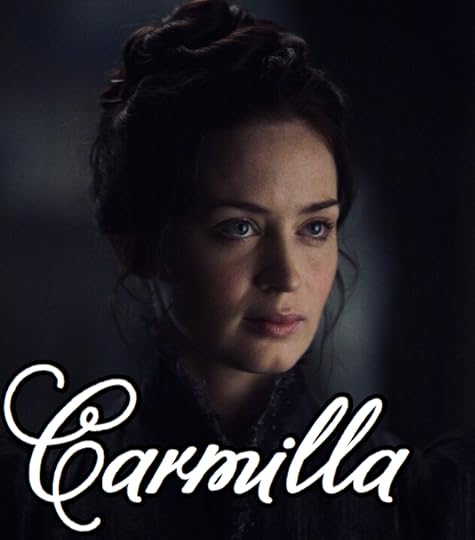
We’re back with the characters of the Athena Club, introduced in The Strange Case of the Alchemist’s Daughter, and what a bunch this is! This was one of the things I loved in that book, how Goss took female characters from famous Gothic and Victorian novels, and subverted the whole thing. Each is fascinating in her own right in this new ‘version’, but when you put them together, sparks fly - entertaining sparks :O) And this is what she does here once more, building on the relationships as well as adding to the mix to great effect, this time bringing to the scene Irene Adler (from Sherlock Holmes) and Carmilla (LeFanu’s Carmilla).
The story starts when it comes to the group’s attention that a Lucinda Van Helsing has been kidnapped, and off they go across Europe to the rescue, not without some adventures on the way! It is a long book but truthfully I didn’t notice, being so involved in our intrepid, intelligent, women and their tribulations, from the travel aspects, very well described, to the mysteries and mad rescue plans. Made me want to go off travelling, especially at the mention of all the appetising food (cakes, cakes, cakes!!).
The narration is still in the same style as the first book, with all the characters interrupting the flow to add their opinions. This admittedly will not be to everyone’s taste but to me it worked brilliantly, especially as an audiobook! And yes, Diana and Mary do kind of steal the show... Can’t wait for the next book :O)
July 31, 2018
So...this took me a LONG time to finish. I absolutely loved the first book in this series, and was eagerly awaiting the sequel. Unfortunately, this didn’t quite live up to my expectations. This could’ve been two hundred pages shorter and nothing would’ve been lost. There were SO many unnecessary details in this, from what the countryside looked like to every single the thing the girls were eating to the extremely detailed furnishings of houses. I don’t need any of that, and a lot of it was extremely repetitive. I get it. Catherine is a puma, they need to sell books, Mary lives in London. And I can’t tell you how little I care about green hills and the different assortment of pastries there were.
I was annoyed much more in this book with the girls’ interruptions, and didn’t find it funny or cute anymore when they kept saying I had to read the first book. Obviously I had to read the first book- why the hell else would I pick up a sequel before I read the previous one? Also...if you loved Mary in the first book, be prepared for her suddenly turning into a dumb ass. I’m not sure why she became such a naive idiot in this book, but she did, and I hated it. She was so brave and strong in the first one, I’m not sure why anyone thought she had to change. I only cared about the actual things that mattered, and when I was reading about those, I enjoyed the book. But there was a lot of lulls and pointless backstories that I just skimmed over.
I’m really disappointed in this and I wish so much had been taken out. This was a poor imitation of the first book and I felt like the only thing I read that was interesting was about Lucinda and Carmilla, and that’s because I took a vampire class in college and I loved how she incorporated the stories. Take this sequel with a grain of salt if you were enamored with the first.
I was annoyed much more in this book with the girls’ interruptions, and didn’t find it funny or cute anymore when they kept saying I had to read the first book. Obviously I had to read the first book- why the hell else would I pick up a sequel before I read the previous one? Also...if you loved Mary in the first book, be prepared for her suddenly turning into a dumb ass. I’m not sure why she became such a naive idiot in this book, but she did, and I hated it. She was so brave and strong in the first one, I’m not sure why anyone thought she had to change. I only cared about the actual things that mattered, and when I was reading about those, I enjoyed the book. But there was a lot of lulls and pointless backstories that I just skimmed over.
I’m really disappointed in this and I wish so much had been taken out. This was a poor imitation of the first book and I felt like the only thing I read that was interesting was about Lucinda and Carmilla, and that’s because I took a vampire class in college and I loved how she incorporated the stories. Take this sequel with a grain of salt if you were enamored with the first.

July 17, 2018
European Travel for the Mostrous Gentlewoman was preposterous, contrived, way too long, shamefully propagandistic, and not the sort of book that respectable people should be caught anywhere near. And I loved it.
The book is not as tightly plotted as The Strange Case of the Alchemist's Daughter, but it has the same approach to its subject matter, which is to create an absolutely ridiculous story out of bits and pieces of Victorian novels (most of which take themselves way to seriously) and never fall into the same trap. One never gets the sense that the author is doing anything other than having fun. The basic moral of the story is something like "don't try to cook in God's kitchen"--which is the basic moral of pretty much all of the stories represented in the pastiche: Dr. Jekyll and Mr. Hyde, The Island of Dr. Moreau, "Rappaccini's Daughter," and Frankenstein. With a fair bit of Sherlock Holmes thrown in for good measure.
But the real moral of the story is that all of these ridiculous Victorian novels written by men used women as plot devices rather than actual characters and, in the process, deprived them of their story--which Ms. Goss is determined to tell her own way, which (I think) is a pretty good way. With the women in charge, the stories change--but every time the book is in danger of taking itself too seriously, Goss brings in the device of the characters sitting around and writing the book together in a narrative future. This is an important device because it keeps the focus of the book on having fun.
This volume brings in two new Victorian novels into the mix: Dracula, who is teased through the presence of Renfield and Seward in the first volume, but is fleshed out substantially in this one; and Ryder Haggard's wonderful novel She, about which I will say very little to avoid spoilers. The cast expands almost, but not quite, to the edge of the reader's ability to keep track of stuff. And there are plenty of loose ends to be tied up in the inevitable sequel.
I loved it. I stayed up all night reading it. But, as I am a respectable English professor, I did fairly hate myself in the morning.
The book is not as tightly plotted as The Strange Case of the Alchemist's Daughter, but it has the same approach to its subject matter, which is to create an absolutely ridiculous story out of bits and pieces of Victorian novels (most of which take themselves way to seriously) and never fall into the same trap. One never gets the sense that the author is doing anything other than having fun. The basic moral of the story is something like "don't try to cook in God's kitchen"--which is the basic moral of pretty much all of the stories represented in the pastiche: Dr. Jekyll and Mr. Hyde, The Island of Dr. Moreau, "Rappaccini's Daughter," and Frankenstein. With a fair bit of Sherlock Holmes thrown in for good measure.
But the real moral of the story is that all of these ridiculous Victorian novels written by men used women as plot devices rather than actual characters and, in the process, deprived them of their story--which Ms. Goss is determined to tell her own way, which (I think) is a pretty good way. With the women in charge, the stories change--but every time the book is in danger of taking itself too seriously, Goss brings in the device of the characters sitting around and writing the book together in a narrative future. This is an important device because it keeps the focus of the book on having fun.
This volume brings in two new Victorian novels into the mix: Dracula, who is teased through the presence of Renfield and Seward in the first volume, but is fleshed out substantially in this one; and Ryder Haggard's wonderful novel She, about which I will say very little to avoid spoilers. The cast expands almost, but not quite, to the edge of the reader's ability to keep track of stuff. And there are plenty of loose ends to be tied up in the inevitable sequel.
I loved it. I stayed up all night reading it. But, as I am a respectable English professor, I did fairly hate myself in the morning.

November 22, 2020
#1) The Strange Case of the Alchemist's Daughter ★★★★☆
A behemoth of a book but the found family, feminism and fun throwbacks to classic gothic literature made the slog well worth it.
Blog • Trigger Warning Database • StoryGraph

June 5, 2022
2022 Best Books of the Year [#07 of 11]

August 21, 2019
You may remember I recently gushed over the first book in the Athena Club series, The Strange Case of the Alchemist's Daughter.
Today I'm bummed to report that while I enjoyed book two, it didn't hold my attention nearly as well as the first book!
The members of the Athena Club have fallen into somewhat of a routine in the three months since they met and helped Holmes and Watson solve the Whitechapel Murders.
When Mary receives a telegram that Lucinda Van Helsing has been kidnapped, the Athena Club hatch a plan to rescue another woman subjected to transmutation experiments at the hands of her father.
The plan unravels from the beginning when Diana stows away to join Mary and Justine's journey. The three are able to locate Lucinda thanks to a new ally introduced by Sherlock Holmes, however, something is not right with the young woman. She drinks blood and appears to be losing her mind. What has Professor Van Helsing done to his daughter?
Meanwhile at 11 Park Terrace, Beatrice and Catherine receive an alarming telegram that Mary, Justine, and Diana have not arrived at their next destination and are feared kidnapped by Professor Van Helsing and his associates.
Soon all the members of the Athena Club are headed toward Budapest and the next official meeting of the Societe des Alchimistes where they hope to report Van Helsing's illegal activities and set forth new research protocols so that no experiments can occur without consent.
Once Beatrice and Catherine finally catch up with Mary, Justine, and Diana, they're able to share information they discovered aboard the Orient Express concerning Van Helsing's plot to overthrow the current president of the society so he may continue his horrific experiments.
Oh, and did I mention we're also introduced to the infamous vampires Carmilla and Count Dracula, meet up with old enemies, and finally come face to face with the members of the secret society? Not to mention that Mary's scullery maid Alice is kidnapped and both Sherlock Holmes and Dr. Watson are now missing.
I enjoyed this story and the new characters we're introduced to but this book certainly needed some editing. It regularly strayed from the plot to give pages of unnecessary detail and the narrative interruptions I found charming and witty in book one became tedious in this second installment. I'm glad I stuck with it because overall the story is a fun one, though I had to wade through lots of details that had nothing to do with it.
If you enjoy sci-fi and classic retellings, this is a series worth checking out.
For more reviews, visit www.rootsandreads.wordpress.com
Today I'm bummed to report that while I enjoyed book two, it didn't hold my attention nearly as well as the first book!
The members of the Athena Club have fallen into somewhat of a routine in the three months since they met and helped Holmes and Watson solve the Whitechapel Murders.
When Mary receives a telegram that Lucinda Van Helsing has been kidnapped, the Athena Club hatch a plan to rescue another woman subjected to transmutation experiments at the hands of her father.
The plan unravels from the beginning when Diana stows away to join Mary and Justine's journey. The three are able to locate Lucinda thanks to a new ally introduced by Sherlock Holmes, however, something is not right with the young woman. She drinks blood and appears to be losing her mind. What has Professor Van Helsing done to his daughter?
Meanwhile at 11 Park Terrace, Beatrice and Catherine receive an alarming telegram that Mary, Justine, and Diana have not arrived at their next destination and are feared kidnapped by Professor Van Helsing and his associates.
Soon all the members of the Athena Club are headed toward Budapest and the next official meeting of the Societe des Alchimistes where they hope to report Van Helsing's illegal activities and set forth new research protocols so that no experiments can occur without consent.
Once Beatrice and Catherine finally catch up with Mary, Justine, and Diana, they're able to share information they discovered aboard the Orient Express concerning Van Helsing's plot to overthrow the current president of the society so he may continue his horrific experiments.
Oh, and did I mention we're also introduced to the infamous vampires Carmilla and Count Dracula, meet up with old enemies, and finally come face to face with the members of the secret society? Not to mention that Mary's scullery maid Alice is kidnapped and both Sherlock Holmes and Dr. Watson are now missing.
I enjoyed this story and the new characters we're introduced to but this book certainly needed some editing. It regularly strayed from the plot to give pages of unnecessary detail and the narrative interruptions I found charming and witty in book one became tedious in this second installment. I'm glad I stuck with it because overall the story is a fun one, though I had to wade through lots of details that had nothing to do with it.
If you enjoy sci-fi and classic retellings, this is a series worth checking out.
For more reviews, visit www.rootsandreads.wordpress.com

July 13, 2019
I love this series. The second was even better than the first. The writing, plot, characters, setting were all done impeccably. I love how witty and clever the dialogue is and also just the structure of the story itself. I was captivated and engrossed all the way through. The fact that she is able to make classic characters in literature fresh and exciting is so impressive to me. I cannot wait for the third book to come out.

July 17, 2018
I LOVED the Strange Case of the Alchemist's Daughter, and I couldn't wait for the second book in the series to come out. So I was hugely disappointed to find that it didn't stand up to the excellence of the first book.
I still liked most of the main characters, but I had big problems with Mary and Cat. Why has Mary suddenly turned stupid??? She was smart and brave in the first book, but in this book she has suddenly become completely dense. The number of times she 'had no idea what was going on' when it was obvious to everyone else in the room what was about to happen. For example, having spent 4 days with Lucinda feeding her blood, why on earth did she stand there wondering over and over again what Hyde was about to do when he said 'We're going to feed Lucinda, here is a girl who has volunteered and here is a sharp knife'. Obviously Agnes is going to give Lucinda blood. Why on earth does Mary have to wonder for four paragraphs what is about to happen, and not realise until Hyde cuts Agnes' arm? And when Adam shows up again, Mary recognises the voice, sees Justine's reaction, but 'has no idea what is going on'. The author makes a point of saying that Mary works with Holmes and she was so clever and took so much initiative in the first book, but all of that has vanished in this book. She has become the thickest of bricks and it's hugely disappointing. There are few things more irritating than a main character who hasn't got a clue what's going on when the reader has figured it out pages ago.
One of the things that is more irritating? The constant ads for the first book and mentions that Cat is a puma. Seriously, I think the word 'puma' was in this book at least eleventy-seven times. We get it. She's a puma. And enough with the ads. It was funny the first couple of times - the 10th time it was incredibly irritating.
My other main gripe with this book was that it rehashed so many emotions, characters and scenarios from the first book. Did no one actually die in that fire at the end of book 1? There was some point in Prendick escaping, since we hadn't properly had the showdown between him and Cat, and the situation felt unresolved. But we had the big scene between Adam and Justine. We had Mary realising that Hyde was her father and meeting him again. Time to move on to something new. But instead, we are just getting the same villains and the same emotions all over again. Except this time we are getting them with Mary being an idiot who has lost all her initiative. It's a poorer rehash of the first book and it feels like either the author wasn't happy with the first book, or else had no new ideas for the second book.
Very disappointing for a series that had so much promise.
I still liked most of the main characters, but I had big problems with Mary and Cat. Why has Mary suddenly turned stupid??? She was smart and brave in the first book, but in this book she has suddenly become completely dense. The number of times she 'had no idea what was going on' when it was obvious to everyone else in the room what was about to happen. For example, having spent 4 days with Lucinda feeding her blood, why on earth did she stand there wondering over and over again what Hyde was about to do when he said 'We're going to feed Lucinda, here is a girl who has volunteered and here is a sharp knife'. Obviously Agnes is going to give Lucinda blood. Why on earth does Mary have to wonder for four paragraphs what is about to happen, and not realise until Hyde cuts Agnes' arm? And when Adam shows up again, Mary recognises the voice, sees Justine's reaction, but 'has no idea what is going on'. The author makes a point of saying that Mary works with Holmes and she was so clever and took so much initiative in the first book, but all of that has vanished in this book. She has become the thickest of bricks and it's hugely disappointing. There are few things more irritating than a main character who hasn't got a clue what's going on when the reader has figured it out pages ago.
One of the things that is more irritating? The constant ads for the first book and mentions that Cat is a puma. Seriously, I think the word 'puma' was in this book at least eleventy-seven times. We get it. She's a puma. And enough with the ads. It was funny the first couple of times - the 10th time it was incredibly irritating.
My other main gripe with this book was that it rehashed so many emotions, characters and scenarios from the first book. Did no one actually die in that fire at the end of book 1? There was some point in Prendick escaping, since we hadn't properly had the showdown between him and Cat, and the situation felt unresolved. But we had the big scene between Adam and Justine. We had Mary realising that Hyde was her father and meeting him again. Time to move on to something new. But instead, we are just getting the same villains and the same emotions all over again. Except this time we are getting them with Mary being an idiot who has lost all her initiative. It's a poorer rehash of the first book and it feels like either the author wasn't happy with the first book, or else had no new ideas for the second book.
Very disappointing for a series that had so much promise.
This entire review has been hidden because of spoilers.
February 10, 2025
4 Stars for European Travel for the Monstrous Gentlewoman: The Extraordinary Adventures of the Athena Club, Book 2 (audiobook) by Theodora Gross read by Kate Reading.
I got about halfway through this book and realized that I really didn’t understand the plot. But I didn’t really care, I love the characters and it’s fun to hear them bicker to each other about how their story is being told. This story is just a lot of fun to listen to.
I got about halfway through this book and realized that I really didn’t understand the plot. But I didn’t really care, I love the characters and it’s fun to hear them bicker to each other about how their story is being told. This story is just a lot of fun to listen to.

October 8, 2018
European Travel for the Monstrous Gentlewoman... ... ... I don't even know what to say about you. Except maybe, why were you so monstrously long?? 300 pages could have been removed and still achieved the same effect. For all the enjoyment I had while reading this tome, I should have given it a 1 Star rating. But I save 1 Stars for books that make me mad on all levels of reading. I wasn't mad... just bored.
Things I liked:
1. Diana. She actually got things done instead of talking them to death.
Things I didn't like:
1. Length and Plot.
This book was 706 pages long. Most of this was meandering descriptions (mostly about food and clothes) and the constant interruption of character commentary (which added nothing). And normally I wouldn't mind reading a long book... BUT NOTHING HAPPENED!! All of the descriptions and the numerous character additions squashed out the plot. Not to mention the repetition. Why was everything stated over and over and over again. Catherine is a puma. Beatrice is poisonous. Diana is a wild child. We get it! Then, after reading all of those pages, it even had the nerve to end on a cliffhanger. Why couldn't we focus on the many climaxes that happened in this book (which fizzled and amounted to nothing), instead of worrying about the next book? Also, the adverts to buy The Strange Case of the Alchemists Daughter weren't funny the first time, let alone the other NINE times.
2. Mary.
Mary as the main, main character was a terrible choice. I mean, she wasn't amazing in the first book, but at least she sort of had relevance to what was going on. In this one, Mary did nothing and contributed nothing. Plus, all of a sudden, she's dumb as a rock. Then Goss tries to justify her being a monster in a monster club, but all it did was highlight how exceptionally ordinary and uninteresting she is.
3. No growth or development because of too many characters.
As I said in my last review, there are too many characters in this series. But Goss took the already-too-large cast from the first book and shoved even MORE characters into it. It didn't leave room for anyone to do anything. Lucinda was a plot device. Beatrice and Mary could've been cut out entirely. I never developed a connection to any of the characters.
4. The plot repeats itself three times.
The girls travel, get into trouble, and are rescued by a woman who happens to have a household of eclectic servants who just happen to have skills needed to help the girls on the next stage of their journey.
Do not recommend.
Will not be continuing with the series. I'm out.
Things I liked:
1. Diana. She actually got things done instead of talking them to death.
Things I didn't like:
1. Length and Plot.
This book was 706 pages long. Most of this was meandering descriptions (mostly about food and clothes) and the constant interruption of character commentary (which added nothing). And normally I wouldn't mind reading a long book... BUT NOTHING HAPPENED!! All of the descriptions and the numerous character additions squashed out the plot. Not to mention the repetition. Why was everything stated over and over and over again. Catherine is a puma. Beatrice is poisonous. Diana is a wild child. We get it! Then, after reading all of those pages, it even had the nerve to end on a cliffhanger. Why couldn't we focus on the many climaxes that happened in this book (which fizzled and amounted to nothing), instead of worrying about the next book? Also, the adverts to buy The Strange Case of the Alchemists Daughter weren't funny the first time, let alone the other NINE times.
2. Mary.
Mary as the main, main character was a terrible choice. I mean, she wasn't amazing in the first book, but at least she sort of had relevance to what was going on. In this one, Mary did nothing and contributed nothing. Plus, all of a sudden, she's dumb as a rock. Then Goss tries to justify her being a monster in a monster club, but all it did was highlight how exceptionally ordinary and uninteresting she is.
3. No growth or development because of too many characters.
As I said in my last review, there are too many characters in this series. But Goss took the already-too-large cast from the first book and shoved even MORE characters into it. It didn't leave room for anyone to do anything. Lucinda was a plot device. Beatrice and Mary could've been cut out entirely. I never developed a connection to any of the characters.
4. The plot repeats itself three times.
The girls travel, get into trouble, and are rescued by a woman who happens to have a household of eclectic servants who just happen to have skills needed to help the girls on the next stage of their journey.
Do not recommend.
Will not be continuing with the series. I'm out.

July 7, 2021
I read it twice and really enjoyed it but it could've been split into two books

September 28, 2018
The Mary and Diana Show hits the road as the monstrous gentlewomen head off to save another of their newly discovered and imperilled "sisters", Lucinda Van Helsing. This time, the Athena Club is split as they head up separate but linked investigations into activities of the Societé des Alchimistes. It was interesting watching the two groups function with members that would not automatically have gravitated together (Mary and Justine (and of course Diana), and Catherine and Beatrice.) The interpersonal dynamics are a little different, but there's still humour and plenty of support, despite the bickering. We get to learn more about their individual characters (though, admittedly, Diana is pretty easily understood and apparently annoys everyone.) I like the introduction of more female fictional characters (Irene Adler and Carmilla,) which makes this series such a hoot.
Theodora Goss ends the book with a new situation for the Athena Club to handle; I am so glad there are more adventures coming for these bright women.
Theodora Goss ends the book with a new situation for the Athena Club to handle; I am so glad there are more adventures coming for these bright women.

January 5, 2023
3.75
I enjoyed this instalment in the series a lot, but it definitely has its flaws. I think I perhaps idealise these novels in my head to an extent they can't live it up to it properly in reality. I just wish they would push the concept a little further, be little 'weirder', if that makes sense. This book in particular also suffers from being too long. There are a lot of long, long conversations dumping backstory, which, while interesting to read the first time, gets tiresome quite quickly. I also felt it took an unnecessarily long time to get going, with convoluted barriers to starting the plot. That being said, I really like the concept of this series, and the characters are interesting - I love their little comments on the text; I just wish there was more of a balance of perspectives between them because my favourite characters are Justine and Beatrice, and yet it sometimes feels like we hear from them the least (besides perhaps Diana), whereas the main perspectives, Mary and Catherine, I tend to find less interesting/sometimes a little grating. But I really enjoyed the fun plot line and the new characters introduced and I look forward to completing this series.
I enjoyed this instalment in the series a lot, but it definitely has its flaws. I think I perhaps idealise these novels in my head to an extent they can't live it up to it properly in reality. I just wish they would push the concept a little further, be little 'weirder', if that makes sense. This book in particular also suffers from being too long. There are a lot of long, long conversations dumping backstory, which, while interesting to read the first time, gets tiresome quite quickly. I also felt it took an unnecessarily long time to get going, with convoluted barriers to starting the plot. That being said, I really like the concept of this series, and the characters are interesting - I love their little comments on the text; I just wish there was more of a balance of perspectives between them because my favourite characters are Justine and Beatrice, and yet it sometimes feels like we hear from them the least (besides perhaps Diana), whereas the main perspectives, Mary and Catherine, I tend to find less interesting/sometimes a little grating. But I really enjoyed the fun plot line and the new characters introduced and I look forward to completing this series.

July 19, 2022
4.5⭐
The sheer amount of joy this series brings me is unparalleled.
I already adored this found family, but I just love them more and more as time goes on. I want to be part of the Athena Club!!!
Although there was significantly less Sherlock in this one, I definitely think it was made up for with the introduction of Irene Adler, sapphic vampires and Count Dracula. This book also touched on so many interesting topics - like how nothing is ever just black and white, and how easily religion can be corrupted and used to control people.
As always, I loved the feminist commentary, the humor, and each and every one of my precious monstrous girls!!!
The sheer amount of joy this series brings me is unparalleled.
I already adored this found family, but I just love them more and more as time goes on. I want to be part of the Athena Club!!!
Although there was significantly less Sherlock in this one, I definitely think it was made up for with the introduction of Irene Adler, sapphic vampires and Count Dracula. This book also touched on so many interesting topics - like how nothing is ever just black and white, and how easily religion can be corrupted and used to control people.
As always, I loved the feminist commentary, the humor, and each and every one of my precious monstrous girls!!!

August 30, 2020
The one reason it took me this long to start this book, after enjoying the first book in this series a lot, was the fact that it's quite a big book. Nothing against big books, but it's quite hard to read them within one day, which I prefer. But, thanks to the reading challenge I'm doing I was finally sort of forced to pick it up. And where I feared I'd need quite some time to read this, I eventually finished it within 48 hours.
This story is just so amusing and entertaining! Especially if you've read some classics (in this case especially Dracula) and can fit some pieces before the characters can. In a really original way Goss connects a lot of classics and history. And it's quite surprising how well they work together and how well the different storylines fit into one bigger story line without having to change the source material too much.
In this book we get to see and learn quite a lot about that bigger storyline. And although a part of it is sorted and solved, there's more than enough left for the next book in the series. In a brilliant way this book turns characters into scientists, if they're not already, and turns heroes into villains and the other way round. The way the conflict between ethics and science is portrayed is so interesting, although our judgement is quite clouded.
Because the true stars of this series are the heroes of this story. The daughters of those famous scientists, among them Mary Jekyll and Diana Hyde, are amazingly well written. Each of them is very unique in their own way and although they keep on seeing themselves as monsters and failed experiments, it's hard to not like them, to not root for them and to not see them as special and unique as they are.
Nice side note: The writing really fits the time period, without becoming hard to read, and the characters, in between the story, commenting on their own actions, descriptions and thought processes, makes it a perfect read to introduce high school readers to the classics! If they can get past the fact that it's quite a big book, that is.
This story is just so amusing and entertaining! Especially if you've read some classics (in this case especially Dracula) and can fit some pieces before the characters can. In a really original way Goss connects a lot of classics and history. And it's quite surprising how well they work together and how well the different storylines fit into one bigger story line without having to change the source material too much.
In this book we get to see and learn quite a lot about that bigger storyline. And although a part of it is sorted and solved, there's more than enough left for the next book in the series. In a brilliant way this book turns characters into scientists, if they're not already, and turns heroes into villains and the other way round. The way the conflict between ethics and science is portrayed is so interesting, although our judgement is quite clouded.
Because the true stars of this series are the heroes of this story. The daughters of those famous scientists, among them Mary Jekyll and Diana Hyde, are amazingly well written. Each of them is very unique in their own way and although they keep on seeing themselves as monsters and failed experiments, it's hard to not like them, to not root for them and to not see them as special and unique as they are.
Nice side note: The writing really fits the time period, without becoming hard to read, and the characters, in between the story, commenting on their own actions, descriptions and thought processes, makes it a perfect read to introduce high school readers to the classics! If they can get past the fact that it's quite a big book, that is.
July 26, 2021
At the end of the world, they encountered monsters
I'm utterly speechless. What a sequel! European Travel for the Monstrous Gentlewoman is the adventurous, wild sequel to The Strange Case of the Alchemist's Daughter. Goss takes us to Vienna and to Budapest with the Athena Club as they split up to search and rescue Lucinda Van Helsing. I don't think I could've asked for a better sequel if I'm being honest. Again, Goss introduces us to some of the most infamous characters of Gothic literature: Carmilla and Laura, Dracula, Mina Murray and Van Helsing. It was so thrilling to see these famous characters interact with the Athena Club - I definitely screamed when Carmilla and Laura were introduced! Goss' writing is superb and I never doubted it, and the commentary from the Athena Club, Mrs Poole and Alice never fails to make me laugh. The one word to describe this book is vampires. The way vampirism was discussed scientifically in this book was so intriguing, and the way it was portrayed was familiar yet felt unique to the story. Count Dracula was a romantic boi and I loved it. All I could imagine was Gary Oldman from Coppola's 1992 Dracula with the moustache and top hat. I absolutely adored this book, and even though it took me longer than I thought it would, I enjoyed every second of it. The cliffhanger has me very excited to get to The Sinister Mystery of the Mesmerizing Girl next month.
I'm utterly speechless. What a sequel! European Travel for the Monstrous Gentlewoman is the adventurous, wild sequel to The Strange Case of the Alchemist's Daughter. Goss takes us to Vienna and to Budapest with the Athena Club as they split up to search and rescue Lucinda Van Helsing. I don't think I could've asked for a better sequel if I'm being honest. Again, Goss introduces us to some of the most infamous characters of Gothic literature: Carmilla and Laura, Dracula, Mina Murray and Van Helsing. It was so thrilling to see these famous characters interact with the Athena Club - I definitely screamed when Carmilla and Laura were introduced! Goss' writing is superb and I never doubted it, and the commentary from the Athena Club, Mrs Poole and Alice never fails to make me laugh. The one word to describe this book is vampires. The way vampirism was discussed scientifically in this book was so intriguing, and the way it was portrayed was familiar yet felt unique to the story. Count Dracula was a romantic boi and I loved it. All I could imagine was Gary Oldman from Coppola's 1992 Dracula with the moustache and top hat. I absolutely adored this book, and even though it took me longer than I thought it would, I enjoyed every second of it. The cliffhanger has me very excited to get to The Sinister Mystery of the Mesmerizing Girl next month.
Displaying 1 - 30 of 1,363 reviews