Jessica Berger Gross’s “gripping memoir about growing up in—and growing out of—a deeply dysfunctional, abusive family” (Glamour.com) redefines our understanding of estrangement and celebrates the ability to triumph over adversity.
To outsiders, Jessica Berger Gross’s childhood—growing up in a “nice” Jewish family in middle class Long Island—seemed as wholesomely American as any other. But behind closed doors, Jessica suffered years of physical and emotional abuse at the hands of her father, whose mood would veer unexpectedly from loving to violent.
At the age of twenty-eight, still reeling from the trauma but emotionally dependent on her dysfunctional family, Jessica made the anguished decision to cut ties with them entirely. Years later, living in Maine with a loving husband and young son, having finally found happiness, Jessica is convinced the decision saved her life.
In her “unsentimentally courageous memoir” ( Kirkus Reviews ), one of Elle ’s “Best Books of the Summer,” Jessica breaks through common social taboos and bravely recounts the painful, self-defeating ways in which she internalized her abusive childhood, how she came to the monumental decision to distance herself from her family, and how she endured the difficult road that followed. Ultimately, by removing herself from the damaging patterns and relationships of the past, Jessica has managed to carve an inspiring path to happiness—one she has created on her own terms. Her story, told here in a careful, unflinching, and forthright way, completely reframes how we think about family and the past. Estranged is “a memoir of love, abuse, despair, and hope…a reminder that any family can hide a secret and that many victims of abuse go their entire lives without speaking out about it” ( Booklist ).
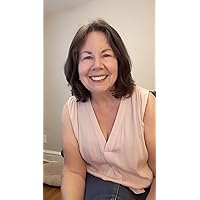
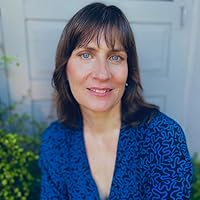
Jessica Berger Gross is the author of the memoir Estranged: Leaving Family and Finding Home. Her essays have appeared in The New York Times Magazine, The Cut, Longreads and many more. She lives in Maine with her husband and teenage son. Hazel Says No, coming June 2025 from Hanover Square Press/HarperCollins, is her first novel.
I enjoy reading memoirs a lot; part of it is seeing how other people cope with this thing called "life" and with the curveballs that get thrown at them. Another reason is the fact that usually you know things will turn out at least OK. The person made it out of whatever horrible situation they found themselves in and are now able to tell their story. I find solace in that and it makes reading about the aforementioned horrible situations bearable. I also find it important to see how other people live - it makes me more empathic person I hope and shows me that there is always more to a person than meets the eye.
Jessica Berger Gross tells the story of her childhood and her early adult years - about how her father was physically and mentally abusive and how her mother stood by. She does a remarkable job at still painting a well-rounded picture of her parents who are far more than abusers to her - they provide for her and they do love her and still do horrible things. Her parents until the end of their relationship with Jessica Berger Gross never see how all his wholly their fault and none lies with Jessica. No child deserves to be abused and to be scared at home and to internalize all the hateful things they hear.
I devoured this book in a couple of hours; I just needed to know for sure that she gets out and gets better and finds a way to live with her scars. The way the story is told is wonderfully crafted and painted a vivid picture of Jessica Berger Gross' journey and how difficult it was in places and how much better things got for her. While at the same time showing that those scars do not disappear over night and that she still fights with her memories.
My main takeaway from this book is that anyone can get a book contract these days! Advertised as "powerful" and "haunting," I found it to be neither. It's a long, uninteresting recitation of all the bad things that happened to her and how they continued to follow her into adulthood. She then attributes everything in her life to the shadows of her dysfunctional upbringing -- which is no doubt true, but it's exhausting to read a laundry list of it all.
While memoirs are, at their very core, about authors' lives and feelings and reflections, this one is painfully self-centered. I suppose she offers hope -- however implicitly -- to those struggling with toxic and abusive family members, but she doesn't offer any powerful insights beyond her own experiences.
In an effort to find the good in Gross's memoir, I did find her decision to be a testament to the life we can create when we break free from abusive relationships. While it's certainly painful to be estranged from family, it's that very detachment that creates room in our hearts for healthy, loving, positive relationships. Gross reminds us that it is our choice to fight for that happiness. "My parents had contaminated the first half of my life," she writes. "I couldn't let them ruin the second."
There were so many mixed reviews of this book that I almost didn't read it. But, after reading it I think the issue with the reviews is whether or not you've experienced abuse or trauma. If you've never experienced that it might seem like she's spoiled or complaining or unreasonably angry (all things I read in reviews), but if you've experienced abuse or trauma you can see that she is trying to sort through everything and come out on the other side and in her case she was only able to do that by cutting off contact with her family. That's obviously not the outcome for everyone, but it was painfully obvious to me that her parents NEVER took responsibility for how they treated her - it was always "also" her fault. I think the worst part of the book for me was when her brother who had always protected her and looked out for her attacked her as an adult and also refused to take responsibility or go to therapy to deal with it. It's also obvious that Gross can see how terribly she sometimes behaved growing up, but how she struggled to change - so she's not trying to justify her behavior, but show how her upbringing led to some of her decisions or behavior.
Was this book The Glass Castle? No. But, it was still a good book about a difficult topic. One thing I'm curious about is now that this book has come out has her family tried to contact her? I would worry that they would show up at an author event or something. Despite the topic, the book is hopeful especially at the end. Good for her for creating the family and life for herself she always wanted.
Some quotes I liked:
"In that small hushed office in the Village, with the comforting sound of a noise machine and the view of a brick wall, I began to deal - truly deal - with my past. Not by offering up forgiveness to my parents, or by confronting them in any outward way at all, but by going inside and allowing myself to take in the seriousness and sadness of what had happened to me. It was grueling work." (p. 195)
"My parents had contaminated the first half of my life. I couldn't let them ruin the second." (p. 235)
"After that day I decided to change my life. Each morning I forced myself to meditate or bundle up and take a cold country walk. On my yoga mat, during long drives, in kitchen conversations with Neil, late at night when I couldn't sleep, while reading Eastern philosophy or writing in my journal, I contemplated the meaning of forgiveness. The real kind that has to do with acceptance and moving forward, not the bullshit forgive-and-forget package of lies I'd been trying to swallow for years." (p. 244)
While I hate the thought of disbelieving anyone who has endured abuse, the way the author relayed her story left me feeling like she simply was someone who was throwing a tempter tantrum about not getting her way at home. Maybe it was the words she chose to relay her story, or the tone she used, regardless, I finished the book feeling sad for the family disconnect and how much her family must've been hurting as a result of her choice to walk away in unforgiveness. I only hope that through parenting her own child she is able to realize that parenting isn't black and white and as parents even though we try our hardest, we fall short and hopefully grace can be extended within this family and restoration can occur.
What a waste of $1.99. I chose this single because based on the description, it seemed to be something I would enjoy and that could help me understand a similar situation that is going on in my own life. What I got, instead, was a whiny typical JAP from Long Island crying a river about her "abusive" parents when, in reality, a lot of people would kill to be in her position. It seems to me she is digging for a reason to not associate with her parents in her adult life. Maybe I've just read too many books where other people have it worse and don't complain about it ... who knows. In my opinion, it is written very novice-ly and jumps around way too much. The description is very misleading, I was expecting something much more telling, compelling, and moving. Not some spoiled brat who gets their parents to pay in full for their college tuition and travel the world, then moan about it later and keep their grandchild from them when all is said and done. I'm a no non-sense type of person, and this was just too extremely self-absorbed for my taste.
WT???? This girl deserves compassion but she absolutely did NOT deserve a book contract. The writing was mediocre at best, there was no story at all, and I’m just sitting here stunned that Glamour called it a gripping memoir. One of the worst books I’ve ever picked up.
I didn’t appreciate this memoir all that much. While the way the author’s father treated her was certainly terrible, so much of her story is her own lousy choices that she repeats over and over again. I understand that her childhood was awful, but as an adult her attitude and life choices are very selfish and egocentric. The book contains a lot of language.
The further I read in this book the less sympathy I found I had for the author. In the beginning she is completely helpless and dependent as a child, and repeatedly victimized by her father's behavior and her mother's complicity. As she gets older and finds more autonomy, I read along slackjawed as she described her Vassar education, her seven months abroad in Nepal, her extensive time working in Israel. Her travels here, her travels there. And her friends, she had so many close friends! So much support.
She goes through several periods of depression and is supported at least once by her future husband's inheritance. She quits a job (personal assistant to Bella Abzug) because it triggers her abuse PTSD. Most of us would not be able to get in the door to interview for a job like that, let alone have the option of quitting and then collecting unemployment and laying around feeling bad about it.
I guess, in the end I am really torn, it seems as though she was happy to take her parents money as long as it suited her, then kick them to the curb when it no longer suited her. I think I would have had more respect for her if she'd taken a stand and made her own way rather than taking their money for so long, and now she's going to be making more money off of exposing them and their sins.
A swath of this book describes suburban childhood. Lots of talk of the food she ate, and the clothes she wore, the shows she liked and the books she read. (Not for everyone, that kind of writing can make your eyes glaze over.)
I did think she was very honest, telling of her own faults and sins, like charging her cigarettes to the college account that her father paid because it was billed as "miscellany."
But in the end, I just couldn't get over my resentment of her privilege. She has a husband with an academic lifestyle who supports her freelance writing. (A husband she met via her Vassar friends/connections.) They can travel, they can afford IVF. She has time and space for all the navel gazing it must have taken to write this book which again, indicts the very people who facilitated this life she lives now.
You truly never know what goes on in the homes of your neighbors and friends do you? This book is a perfect example of how little we do know about the people around us and the abuse that might be going on. Jessica is from the typical, nice Jewish home, (it even has a pool!) but one in which abuse occurs on an almost daily basis. Jessica's father is physically and emotionally abusive to her and during these periods of torment, her mother is just. silent. Similar to The Glass Castle, but one in which the child/victim comes to term with her abuse and changes the narrative.
I enjoy reading memoirs, but I found myself annoyed with this author. If you are looking for a book in this genre, I would suggest The Glass Castle by Jeannette Walls or Etched in Sand: A True Story of Five Siblings Who Survived an Unspeakable Childhood on Long Island, by Regina Calcaterra. Both of these books are outstanding.
While I have the utmost sympathy for the plight of the author as a child, and for abused children everywhere, something about the author's voice was so incredibly obnoxious..
This was the worst memoir I have ever read, and memoirs are my favorite genre. Before I read the book, I completely wanted to empathize and connect with Jessica's story, and to admire her bravery, and eventual ability to make peace with her past. However, not only was the memoir lacking in its writing ability, it was at best "good enough", and at worst, pretentious, nearly obnoxious, and trying too hard, but the writer did such a poor job of developing her story and the complexity of the family members, that I had to repeatedly remind myself to attempt to feel empathy for her. Although she is entitled to feel how she feels, I think she is also writing under a false pretense that her years of therapy and yoga and meditation gave her some sort of peace, and ability to work through. She doesn't strike me as such, at all, but rather like a person who is still furious and bordering on the vengeful. Finally, although I believe it is important for others who have similar struggles with their families to hear voices such as her, I wish she had waited to write this book until she was able to better process this and work through it, so that she would've been to offer her readers something more meaningful and mature that they can look up to.
This little Kindle Single talks about a child/parent estrangement based on physical violence. The book felt one-sided and left me feeling ambivalent. The rabid fear the daughter felt for her aged father that brackets the story seems overblown. The author is estranged from her entire family, which raised some questions for me that weren't adequately addressed in her narrative.
Can you say SPOILED TO THE CORE! This was far from “powerful, haunting and harrowing” as described. The narrative was whiny and she come off as a self-centered ungrateful brat who was blinded by her own disrespectful behavior. It lacked empathy and I had to force myself to read to the end. Most of the book was about her ungrateful, pity-party behavior where she went around using people and throwing tantrums till she got her way. She's always been financially dependent upon someone else whether it was her parents or her boyfriend Neil who is now her husband. She's never had to face real world financial struggles on her own. SPOILER ALERT In no way do I excuse the physical abuse she endured from her father as a child but the description of the abuse doesn't translate to the end of the book where she's gripped with fear to go to the neighbors because her father left a voicemail letting her know he was at a nearby hotel with his room number wanting to speak with her at his therapist recommendation to make amends. Her reaction seemed blown out of proportion with what she described. Her parents paid for her theater camps, Vassar education, school expenses, clothes, trips around the world, provided her a car and paid for her rent. She had a mother who not only enjoyed taking her shopping but would shop for her even when she was away at college still thinking about her well being. She had a father that would write her letters and cut out newspaper clippings she may like and would travel hours to pick her up from school while she left him waiting on her. Some of the worst parts of her selfishness shined through towards the treatment of her oldest brother Mark when she’s an adult throwing a fit because she doesn't get her way so she disrespects him and his wife in their home. Her brother then shoves her several times but I would be livid too if someone behaved that way in my home! Then she goes on to say her older brother only cares about money. Mark doesn't have mommy and daddy paying for everything like she did. So yes, there’s a point in your life when money matters so you can provide for your family. Unless you’re financially dependent upon others so you can concentrate your time on giving free yoga classes. I didn’t understand why she stopped talking with her brother Josh and his wife. They visited her at the home she shared with her then boyfriend Neil and Josh’s wife made a comment, “how are you going to support yourself financially if this relationship doesn’t work out?” Jessica even admits that the question was valid because she went through boyfriends. I guess the truth was too much for her to handle? The description of this memoir is completely inaccurate!
This entire review has been hidden because of spoilers.
There were parts of Jessica's story that I really related to and felt validated reading - and I appreciate how this is could be interpreted as a story about how trauma is relative to a person's experience (ie. It's possible to feel fucked up regardless of how intense or minimal the abuse is). I can see a lot of value in that, especially because I think there's a lack of stories out there about family estrangement in seemingly "average" and "normal" families.
At the same time, I didn't think that this book was very well written. It jumps quickly from event to event and contains so much descriptive language that feels hollow and I don't think adds much value to the story. I think it would've felt more interesting and impactful to read about fewer key events and dive more into the characters and their complexities.
At some point near the end of the book, she recounts a conversation she had with her toddler, who asked if she had a mom. She says something like, "Yes, and most mommies and daddies are the good kind and some are the bad kind, and I had the bad kind." This bothers me. This simplification is apparent in the rest of the book in the way she describes her parents and the other people in her life. I think that writing that treats characters as complex people rather than as "good" and "bad" makes for a better, more interesting story. And I think that it's also a more helpful way of looking at the world, and of understanding trauma - especially when it comes to parental relationships.
This entire review has been hidden because of spoilers.
Well written but ultimately I felt like she was selfish in her refusal to let go of her anger. I can see not willing to be able to see and interact with them, but as a mother maybe she could have at least extended more compassion. It also felt like one of those blogs that make you feel bad about your life - the yoga, the garden the perfect family... ain't buying it.
I received this book through NetGalley and its publisher, Scribner. This is a story about a girl growing up in a dysfunctional Jewish family. The family consists of her father, mother, and two brothers. The trials and tribulations she encounters with an abusive father and submissive mother.
At times, it feels like a typical teenager complaining about her father. Her parents were involved in helping her often: obtaining a car, buying clothes, attending summer camp. She appears out of control with drugs, alcohol and sex. She shares a few instances where her father is verbally and physically abuse while her mother stands by.
She rebels against her parents. She gets married and doesn’t invite her family. She has a miscarriage and provides heart-wrenching details of the experience – without her mother. Eventually she has a child and doesn’t share the news with her family. The child never will know his grandparents. Jess has made it clear she wants nothing to do with her family. This isn’t just about her family; she has few long-term friends.
As a parent of adult children, my heart ached for the parents. Perhaps the abuse was more prevalent than the book relays. I’m confident Jess’s parents weren’t without faults. However, Jess was absolutely unforgiving. It felt like a harsh sentence. Is she a bit spoiled?
SPOILERS CONTAINED WITHIN THIS REVIEW. I found it very hard to sympathise with Jessica Berger Gross in this autobiographical tale. She definitely came from an abused home however her actions as an adult baffled me. She cut ties but only when she no longer needed financial and/or emotional support from her parents. She portrayed her father as an abuser but made it clear that the abuse stopped by her late teens. Additionally she didn't appear to believe him to be homicidal whilst she was still in contact with him. However when asked to contact him just a few years later she ran to a neighbours house hysterically asking for protection from him. The axe that he kept under his car seat whilst driving was never explained. Did he keep it there in case of a robbery? Was she scared that he was going to use it on her? Why did she believe that he intended her harm after years of her parents trying to reconcile with her. I understand her plight, yet the story in my opinion, had an air of pretence which did not allow the reader to empathise with her character.
I wish it had been longer. I can very much relate to the author's childhood and feelings as an adult and I wanted the story to have more depth, more details. I know how hard it is to go through and write about or talk about a past like this but I was hoping there would be more of a story here. More about the author's childhood. I had a similar upbringing with regards to the abuse and I had not yet read a book on this subject before. I guess I was hoping for more to connect to.
Not sure what to say about this story. I abhor abuse in any form and am totally against it. Every child has the right to feel safe and loved in a healthy environment, but there are parts of this story that is just weird to me. Giving it the benefit of the doubt, I will say that people are effected in different ways and levels of intensities by abuse. For me, the entire family was just messed up, including the author.
This single was a great, quick read. It made me evaluate my own life and relationships. Sometimes facing your own reality is much harder to do than just ignoring it. Overall, I would recommend this single.
Wow. Between the yoga and the veggie burritos and excessive social justice....let’s just say I’m sorry this author was abused, but I wasn’t exactly rooting for her either. There’s a great word for people like this author but it’s eluding me at the moment. Gag-worthy.
The author gives a very accurate and brave account of what estrangement is like while still being fair to her family of origin. It is a must read for anyone, estranged or not to get people talking about that very unspoken about subject of abuse within families and possibly can give the courage to someone who needs to do this in order to have a better quality of life.
I read this book on a plane ride and subsequent long, boring wait at the airport and I'm SO GLAD I had it because it was a great read and made the whole process fly by, pun acknowledged if not intended. I personally don't have many problems with my parents but felt a lot of suspense about how the author was going to get through her childhood and ultimately how she would confront her family. The writing style is honest and intensely-felt, and the details she mined from her memories of her childhood in Long Island made even the toughest scenes visceral and absorbing. I thought it was also very interesting how as a mother she decided to do everything the opposite of her own parents-- never to yell, and so on-- something which most of us don't do and therefore perhaps are more likely to repeat some of the worst patterns of our parents. (I know I yell too much, for example). A friend of mine who also had a terrible mother called this "having a reverse guru." Lots of food for thought no matter your relationship to your family.
jewish girl whose father abused her physically and emotionally. two older brothers. mother didn't stand up to him. she choses to abandon her family to live a happier life. husband is colby professor. a little whiny by the end
This memoir is written in chronological order and as if it was transcribed from journals. It's interesting to see how that works - or not. I did a lot fo skipping through the pages to get to the Theme of Estrangement. It is worth reading for anyone writing a memoir.
Jessica Berger Gross wrote a lot about what she wore and eat, friends, boyfriends, school plays etc. which I did not find relevant to the story. In a way, it made me think she was avoiding the subject of pain. A pain she felt and maybe didn't understand or believe ("how can anyone hit a toddler?"). It's like she's trying to make sense of the immediate pain of being hit (as a child) by her father, while her mother stands idly by. It's like she doesn't believe it happened. She knew and remembered it did and felt guilty that she couldn't just forget, be so sensitive about it, or at forgive and move on. I get where she's coming from and while I'm grateful she decided to share her story, which is relevant for thousands (in not millions) of women like her and me, I wish it had been better edited.
This is a story of hard-fought survival, from growing up in a white-middle-class dysfunctional family. There is a part of healing not included in this memoir. The side of the story where she understands evolution, her parents and grandparents (holocaust survivors) background. The part I like to call historical empathy. I hope Jessica Berger Gross will live, unravel and write that next chapter, if not for herself, then for ours and her son's sake.