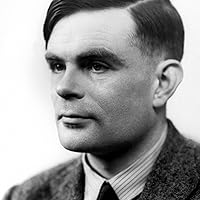
"Após o triunfo de Fidel Castro em Cuba, em janeiro de 1959, e mais ainda após a tentativa fracassada de golpe dos americanos na Baía dos Porcos, dois anos depois, “não havia intelectual [de esquerda] na Europa ou nos Estados Unidos que não sucumbisse ao feitiço da América Latina, continente onde aparentemente borbulhava a lava das revoluções sociais”, escreveu Eric Hobsbawm. Mas o caso do grande historiador britânico era especial: ele dizia que a América Latina era a única região do mundo, além da Europa, que conhecia bem e onde se sentia totalmente em casa. Membro do Partido Comunista da Grã-Bretanha desde seus dias de estudante na Universidade de Cambridge, Eric visitou Cuba no verão de 1960. Em 1962, passou três meses viajando entre Brasil, Argentina, Chile, Peru, Bolívia e Colômbia. No Brasil, ficou chocado com o atraso econômico e a pobreza que encontrou, mas também reconheceu o “imenso” potencial dos trabalhadores do campo no Nordeste brasileiro, “aquela vasta área de cerca de 20 milhões de habitantes que deu ao país os seus mais famosos bandidos [e] revoltas camponesas”.
Eric John Ernest Hobsbawm was a British historian of the rise of industrial capitalism, socialism and nationalism. His best-known works include his tetralogy about what he called the "long 19th century" (The Age of Revolution: Europe 1789–1848, The Age of Capital: 1848–1875 and The Age of Empire: 1875–1914) and the "short 20th century" (The Age of Extremes), and an edited volume that introduced the influential idea of "invented traditions". A life-long Marxist, his socio-political convictions influenced the character of his work. Hobsbawm was born in Alexandria, Egypt, and spent his childhood mainly in Vienna and Berlin. Following the death of his parents and the rise to power of Adolf Hitler, Hobsbawm moved to London with his adoptive family. After serving in the Second World War, he obtained his PhD in history at the University of Cambridge. In 1998, he was appointed to the Order of the Companions of Honour. He was president of Birkbeck, University of London, from 2002 until his death. In 2003, he received the Balzan Prize for European History since 1900, "for his brilliant analysis of the troubled history of 20th century Europe and for his ability to combine in-depth historical research with great literary talent."
The quality of these essays varies. I'd say about 1/3 of them, largely those written in the 1960s, come off as the misinformed and utopian ramblings of an American middle class Marxist intellectual. However, at the same time, about 2/3 of these essays provide a very interesting and perceptive view into the problems which faced Latin America in the last third of the 20th century, giving well-thought-through critiques of the methods of everyone from US governments to Guevarist guerillas. I would definitely recommend this book if only to get a view into the American Left's perception of Latin America.
I love Hobsbawm’s history books, this collection of essays is quite hard to follow without their context. Reads more like a primary source. But the passion and hope for a better world is still there
Pese al elitismo subyacente en algunas de sus aseveraciones, Hobsbawm captura una imagen muy especifica de Latinoamerica durante los años 60. Lo más deprimente es ver como la región ha cambiado poco y las crisis se han ahondado.
So, word of warning before reading this review, I DNFed this book 100 pages in... largely because I felt that, while well-written, the book had fundamental issues that weren't going to get resolved, with just the way the book was structured.
This book is not, as I had hoped, a history of the 20th Century in Latin America. It is, instead, a series of articles written by Eric Hobsbawm in the 60s, largely inserted without any context and seemingly without much actual order to them. It is... an odd idea, for a book. Basically, robbed of any of the surrounding context of the era, the articles aren't really useful as a view into things at the time... and knowing what happened afterwards, tends to make these articles either pointless in hindsight, or borderline laughably idealistic. For example, two chapters early on talk about political violence and the civil war in Colombia, with the author waxing lyrical about the potentials for revolution amongst the peasantry... which does somewhat fall flat when we know the next few decades will usher in an era of narcotics-based ultraviolence.
The author has some quite entrenched political views, and they do impact on my ability to trust his impartiality on certain subjects. He is clearly staunchly leftwing, to the point where the entire book is viewed through the lens of the 'potential for revolution among the peasants' and basically seems like the author is hungering a very classically Marxist idea of global uprisings against the bourgeoise. However, this attitude does make it hard to take the author on trust when talking about things like the violencia in Colombia, where he claims that Liberal and Conservative militias were responsible for horrific violence, but autonomous Communist groups were only responsible for 'armed self defence'.
The author's obsession with the idea of revolution sweeping across Latin America does feel a bit distasteful, as he is ultimately not an actual citizen of Latin America. The vibe does often feel like that of the armchair intellectual, sitting in the UK, preaching that the peasants should throw off their shackles and engage in a potentially bloody revolution that he, of course, would have no stake in. If this were only hinted at occasionally, I wouldn't mind, but almost everything is viewed through this lens, and I can't help coming away from this thinking 'well, isn't that for the so-called peasants to decide, not some guy who has the comfort of knowing he can cross an ocean and go back home?'.
Overall though, the structural issues were my biggest problem here. These articles appear without a modicum of introductory context, so its like listening to half a story where he throws out technical terms, political theory, and the names of groups and individuals as though the reader knows who they are... which of course, they don't because the articles were written in the 60s. It would even help if the dates of the article were at the beginning of the articles, so you've at least got half a chance, but no, for some reason they're saved to the end. These are undoubtedly well-written articles, but to me it was hard to draw any intellectual value from them.
This is my first venture into respected leftist author, Eric Hobsbawm's work. The book was compiled after the author's death in 2012 and is a collection of his writings on Latin America after he spent over forty years passionately exploring the continent. The essays have a deep focus on the poor masses of the populations, the peasants, the guerrillas, the indigenous natives. Latin America is at a crossroads between Third World poverty and Western modernity. A mainly homogenous tongue (ie. Spanish) unites the continent and the erosion of old colonial privileged elites has led to the people gaining much power at the bottom rungs of society. there are detailed chapters on Castro's Cuban revolution, the fallout of 'La Violencia' and ensuing FARC civil war conflict in Colombia, and the progress of pure democratic socialism in Allende's Chile. Hobsbawm can microanalyse peasant conditions in remote Peruvian altiplano villages yet never loses track of the underlying general political picture. The burdens of colonialism and unfair international political relationships are often seen as a root cause for lack of development. The author always maintains an optimism for the disaffected masses who he protects with intellectual rigour, even if in many cases the reality of the actual situations and future prospects are often futile. This book will form a great reference tool for my university essays on Hispanic Studies and I hope that I can continue to explore Eric Hobsbawm's other wide range of literary material.
I picked this book up at a Waterstone's because it was well placed and looked like a book from which I could get a good contemporary account of 1960s Latin America.
I hadn't heard of the author at the time; only later did I become aware of his tetralogy about what he called the "long 19th century" (The Age of Revolution: Europe 1789–1848, The Age of Capital: 1848–1875 and The Age of Empire: 1875–1914), The Age of Extremes on the short 20th century, and did I spot his grave in Highgate Cemetery near Karl Marx's. But the reviews in the book and on the book cover made him appear credible.
So I'm sorry to say that this book was a disappointment.
I wanted to get better insights into Che Guevara and his influence beyond Cuba, and in this particular regard, the book didn't disappoint. But beyond Guevara and providing a neophile a base level of political and social context of Latin America, it fell short. It assumed prior knowledge of political parties and personalities on the part of the reader. It's a collection of essays written for publications such as the New York Review of Books. They're disjointed, there's repetition and by the end of the book you do finally get a sense of what happened in Latin America from the second world war until the 1980s, but only after piecing much together yourself. It's not a primer of any sort. You'd do best to come to this book already steeped in a history of the continent.
Hobsbawm fue -a mi parecer- uno de los historiadores mas lucidos, divertidos y extraordinarios del siglo XX. Y esta recopilación de artículos que escribió a lo largo de su carrera sobre la temática revolucionaria en América Latina es el ejemplo ideal. Aunque no comparto las visiones y los elogios a los movimientos de la extrema izquierda que Hobsbawm apoya -al igual que todas los intelectuales de la década de los 60- debo entender el contexto histórico de rebelión, de heroísmo y de lucha que llevó a muchos en aquella década, a dar un apoyo total a dichos movimientos. Hay ciertas inconsistencias en cuanto al movimiento en Venezuela ya que los ensayos están mas centrados en Perú, Colombia y México, no obstante resulta fundamental tomar las consideraciones y las ideas de éste eminente historiador para conocer otro punto de vista sobre el movimiento guerrillero de la extrema izquierda en el continente.
First book I ever gave up on. This was so dry and dreary - I felt like I was reading a maths book on calculus. I tried and failed on this book so many times - and I'm one who never gives up on books; this is a first!
Eric Hobsbawm managed to bore me to death - and I couldn't face it any more. As a book to read - a definite no. As a university reference book - maybe? Try read a dictionary start to finish and you get what it feels like to read this.
I have an interest in South American History- but if you just want to read a book to increase your knowledge on that subject, don't start here.
A collection of articles written over Hobsbawm's life that detail Latin America's revolutionary promise and limitations. Includes both rigorous study and some personal touches that show the author's intimate relationship with the continent.
The book's long list of recommendations and citations also gives plenty of directions for readers to continue reading. A good book to pick up if you are interested in Latin America's contemporary history or peasant revolutions.
A highly interesting compilation of articles which details the transformation of Latin America - unfortunately, due to the rapid modernization of that continent, a substantial part of the book is devoted to anachronisms (rural peasants as a political power, banditry etc). The writing on Peru and Chile from the early 70's stands out as the most worthwhile reading.
Uma coletânea de artigos de distintas épocas e contextos, meio que montada nas coxas. Além de ser bem datado, carece de uma linha de raciocínio coerente. Saí meio que sem aprender nada novo. Só salvam-se uma ou outra anedota pessoal.
Book gave a good overview of peasant movements in South America. However, this books uses a lot of Spanish terminology and cultural references which are not thoroughly explained to the reader. This makes it hard to full grasp the concept discussed or places them within a wider context. Nevertheless, this is a fascinating book full of case studies of socialist and communist movements in South America.
As a latino, I could definetly find a lot of appreciation fot Hobsbawm's essays on Latin America. His comments on revolution and legendary figures like Zapata, Guevara and Allende show how rich the book is.