

What do you think?

Television Was a Baby Crawling Toward That Death Chamber
'Wives in the avocados, babies in the tomatoes!-and you, García Lorca, what were you doing by the watermelons?'
Profane and prophetic verses about sex, death, revolution and America by the great icon of Beat poetry.
Penguin Modern: fifty new books celebrating the pioneering spirit of the iconic Penguin Modern Classics series, with each one offering a concentrated hit of its contemporary, international flavour. Here are authors ranging from Kathy Acker to James Baldwin, Truman Capote to Stanislaw Lem and George Orwell to Shirley Jackson; essays radical and inspiring; poems moving and disturbing; stories surreal and fabulous; taking us from the deep South to modern Japan, New York's underground scene to the farthest reaches of outer space.
Profane and prophetic verses about sex, death, revolution and America by the great icon of Beat poetry.
Penguin Modern: fifty new books celebrating the pioneering spirit of the iconic Penguin Modern Classics series, with each one offering a concentrated hit of its contemporary, international flavour. Here are authors ranging from Kathy Acker to James Baldwin, Truman Capote to Stanislaw Lem and George Orwell to Shirley Jackson; essays radical and inspiring; poems moving and disturbing; stories surreal and fabulous; taking us from the deep South to modern Japan, New York's underground scene to the farthest reaches of outer space.
55 pages, Paperback
First published February 22, 2018
About the author
Allen Ginsberg
548 books4,240 followersAllen Ginsberg was a groundbreaking American poet and activist best known for his central role in the Beat Generation and for writing the landmark poem Howl. Born in 1926 in Newark, New Jersey, to Jewish parents, Ginsberg grew up in a household shaped by both intellectualism and psychological struggle. His father, Louis Ginsberg, was a published poet and a schoolteacher, while his mother, Naomi, suffered from severe mental illness, which deeply affected Ginsberg and later influenced his writing—most notably in his poem Kaddish.
As a young man, Ginsberg attended Columbia University, where he befriended other future Beat luminaries such as Jack Kerouac, William S. Burroughs, and Neal Cassady. These relationships formed the core of what became known as the Beat Generation—a loose-knit group of writers and artists who rejected mainstream American values in favor of personal liberation, spontaneity, spiritual exploration, and radical politics.
Ginsberg rose to national prominence in 1956 with the publication of Howl and Other Poems, released by City Lights Books in San Francisco. Howl, an emotionally charged and stylistically experimental poem, offered an unfiltered vision of America’s underbelly. It included candid references to homosexuality, drug use, and mental illness—subjects considered taboo at the time. The poem led to an obscenity trial, which ultimately concluded in Ginsberg’s favor, setting a precedent for freedom of speech in literature.
His work consistently challenged social norms and addressed themes of personal freedom, sexual identity, spirituality, and political dissent. Ginsberg was openly gay at a time when homosexuality was still criminalized in much of the United States, and he became a vocal advocate for LGBTQ+ rights throughout his life. His poetry often intertwined the personal with the political, blending confessional intimacy with a broader critique of American society.
Beyond his literary achievements, Ginsberg was also a dedicated activist. He protested against the Vietnam War, nuclear proliferation, and later, U.S. foreign policy in Latin America. He was present at many pivotal cultural and political moments of the 1960s and 1970s, including the 1968 Democratic National Convention and various countercultural gatherings. His spiritual journey led him to Buddhism, which deeply influenced his writing and worldview. He studied under Tibetan teacher Chögyam Trungpa and helped establish the Jack Kerouac School of Disembodied Poetics at Naropa University in Boulder, Colorado.
Ginsberg’s later years were marked by continued literary output and collaborations with musicians such as Bob Dylan and The Clash. His poetry collections, including Reality Sandwiches, Planet News, and The Fall of America, were widely read and respected. He received numerous honors for his work, including the National Book Award for Poetry in 1974.
He died of liver cancer in 1997 at the age of 70. Today, Allen Ginsberg is remembered not only as a pioneering poet, but also as a courageous voice for free expression, social justice, and spiritual inquiry. His influence on American literature and culture remains profound and enduring.
As a young man, Ginsberg attended Columbia University, where he befriended other future Beat luminaries such as Jack Kerouac, William S. Burroughs, and Neal Cassady. These relationships formed the core of what became known as the Beat Generation—a loose-knit group of writers and artists who rejected mainstream American values in favor of personal liberation, spontaneity, spiritual exploration, and radical politics.
Ginsberg rose to national prominence in 1956 with the publication of Howl and Other Poems, released by City Lights Books in San Francisco. Howl, an emotionally charged and stylistically experimental poem, offered an unfiltered vision of America’s underbelly. It included candid references to homosexuality, drug use, and mental illness—subjects considered taboo at the time. The poem led to an obscenity trial, which ultimately concluded in Ginsberg’s favor, setting a precedent for freedom of speech in literature.
His work consistently challenged social norms and addressed themes of personal freedom, sexual identity, spirituality, and political dissent. Ginsberg was openly gay at a time when homosexuality was still criminalized in much of the United States, and he became a vocal advocate for LGBTQ+ rights throughout his life. His poetry often intertwined the personal with the political, blending confessional intimacy with a broader critique of American society.
Beyond his literary achievements, Ginsberg was also a dedicated activist. He protested against the Vietnam War, nuclear proliferation, and later, U.S. foreign policy in Latin America. He was present at many pivotal cultural and political moments of the 1960s and 1970s, including the 1968 Democratic National Convention and various countercultural gatherings. His spiritual journey led him to Buddhism, which deeply influenced his writing and worldview. He studied under Tibetan teacher Chögyam Trungpa and helped establish the Jack Kerouac School of Disembodied Poetics at Naropa University in Boulder, Colorado.
Ginsberg’s later years were marked by continued literary output and collaborations with musicians such as Bob Dylan and The Clash. His poetry collections, including Reality Sandwiches, Planet News, and The Fall of America, were widely read and respected. He received numerous honors for his work, including the National Book Award for Poetry in 1974.
He died of liver cancer in 1997 at the age of 70. Today, Allen Ginsberg is remembered not only as a pioneering poet, but also as a courageous voice for free expression, social justice, and spiritual inquiry. His influence on American literature and culture remains profound and enduring.
Ratings & Reviews
Friends & Following
Create a free account to discover what your friends think of this book!
Community Reviews
Displaying 1 - 30 of 391 reviews

September 14, 2020
''He fucked me in the East
He fucked me in the West
He fucked me South
My cock in his mouth
He fucked me North
No sperm shot forth.''

He fucked me in the West
He fucked me South
My cock in his mouth
He fucked me North
No sperm shot forth.''

March 26, 2018
I have wanted to read some of Ginsberg's poetry for a long time, simply because he is considered to be such an important voice in 20th Century literature. Having read this short book, I am now grateful that I somehow managed to avoid his work until now, and I am dismayed that I finally took the plunge. But first let me state that I have no intention of disparaging anyone who finds merit and inspiration in his poetry. It's simply a case of it being not for me, but there are reasons why it isn't for me and these reasons are manifold:
The poems feel vastly self-indulgent, demented and often puerile rants, word splurges obsessed with narcissistic reaffirmations, scatological, irrational and shallow tirades. Ginsberg's penchant for name dropping is just one of his very irritating mannerisms, and many of his political/topical references have dated so badly that they have simply become obscure. His scatological examinations are puerile rather than whatever they are supposed to be (political? psychological? liberating?) and morbidly distasteful without any compensations. He reads like Burroughs without the wit and invention, just with the word salad mind and an overwhelming sense of bitterness disguised as activism. The poems are really just a long litany of barely-articulate complaints from someone who feels excluded from power, and his criticisms of that power appears to stem less from a philosophical or moral conviction than from some kind of weird twisted envy that he isn't the one in control. The title poem especially reads like a hebephrenic tantrum put into words. And even though there are occasional shards of beauty in some of the poems, they feel more like accidental fusions of random phrases rather than the products of a deliberate creative force.
Sorry.... :-(
The poems feel vastly self-indulgent, demented and often puerile rants, word splurges obsessed with narcissistic reaffirmations, scatological, irrational and shallow tirades. Ginsberg's penchant for name dropping is just one of his very irritating mannerisms, and many of his political/topical references have dated so badly that they have simply become obscure. His scatological examinations are puerile rather than whatever they are supposed to be (political? psychological? liberating?) and morbidly distasteful without any compensations. He reads like Burroughs without the wit and invention, just with the word salad mind and an overwhelming sense of bitterness disguised as activism. The poems are really just a long litany of barely-articulate complaints from someone who feels excluded from power, and his criticisms of that power appears to stem less from a philosophical or moral conviction than from some kind of weird twisted envy that he isn't the one in control. The title poem especially reads like a hebephrenic tantrum put into words. And even though there are occasional shards of beauty in some of the poems, they feel more like accidental fusions of random phrases rather than the products of a deliberate creative force.
Sorry.... :-(

January 11, 2022
I can see why many readers disliked this small collection of poetry. I didn't really like the poems either. These are poems of the moment - written in the 50s, 60s, 70s, 80s, 90s. A frenetic roar against capitalism and greed. Graphic poems about sex, love and revolution - all blending together. So angry, so sad, so hard to digest. But these poems took me back to when I first read Ginsberg in the late 70s. He blew my mind and exposed a world I had not experienced before. Stars can't measure that.
Penguin Modern Classics
#1 - Letter from Birmingham Jail by Martin Luther King, Jr.
#2 - Television Was a Baby Crawling Toward That Deathchamber by Allen Ginsberg
Penguin Modern Classics
#1 - Letter from Birmingham Jail by Martin Luther King, Jr.
#2 - Television Was a Baby Crawling Toward That Deathchamber by Allen Ginsberg

April 18, 2018
While a few pieces were interesting the over all feel was the ramblings of a whiner.
I want some whine with my food,
Vintage whine,
A Ginsberg red whine,
Red whine,
The kind of whine that will make you sick,
A whine from the beat,
As red as the meat I eat,
A whine that will fall with a "FUCK",
Like I give because the meat is old,
A Ginsberg whine that leaves me cold,
Mescaline bullshit to go,
Ginsberg bullshit style,
SHIT FUCK CUNT BOLLOCKS, because I can,
Red whine that punctures the skin.
Potty mouth shit will make a legend,
A dated writer of whine it's not mine,
The meat is cold,
My Ginsberg '58 is stale,
Whine,
Red whine,
Ginsberg whine,
I want some whine with my food,
Vintage whine,
A Ginsberg red whine,
Red whine,
The kind of whine that will make you sick,
A whine from the beat,
As red as the meat I eat,
A whine that will fall with a "FUCK",
Like I give because the meat is old,
A Ginsberg whine that leaves me cold,
Mescaline bullshit to go,
Ginsberg bullshit style,
SHIT FUCK CUNT BOLLOCKS, because I can,
Red whine that punctures the skin.
Potty mouth shit will make a legend,
A dated writer of whine it's not mine,
The meat is cold,
My Ginsberg '58 is stale,
Whine,
Red whine,
Ginsberg whine,

March 29, 2022
…i have not a clue what i just read

September 4, 2021
Video Review
In the video review above I recite my favourite poem from this collection of about 13 and give a rundown of general thoughts.
I think most people will dislike this, especially female readers, given how explicit and phallic almost all of the poetry is, but that which isn't is actually quite interesting once we get past the fact he's writing wildly in ALL CAPS. Howl was better. I feel there should be more nuance to gay erotic poetry, but perhaps I'm not the person to ask?
Truth is, I've never liked Beat culture, as it tries to glorify a terrible lifestyle. Though if you read Ginsberg's poetry as a response to living this lifestyle, and the motivation for it, then it gives a perspective of what it was like to live on the fringes of society back then. Or maybe my gripe with Beat culture is the noise and fear of vulnerability in it.
This poetry collection was so unabsorbing to me that in reading in a busy public square in Oxford I noticed a girl leaving her bag after a smoke break on a bench and managed to get it back to her.
--Original Review--
Comprehensive Review TBC.
A collection of ~10 of Ginsberg's poems, and at least 2 of them are about his anus!
That Penguin think this represents 1 of the 50 best writers in the last century is both hilarious, sad, true, complex, absurd...
In the video review above I recite my favourite poem from this collection of about 13 and give a rundown of general thoughts.
I think most people will dislike this, especially female readers, given how explicit and phallic almost all of the poetry is, but that which isn't is actually quite interesting once we get past the fact he's writing wildly in ALL CAPS. Howl was better. I feel there should be more nuance to gay erotic poetry, but perhaps I'm not the person to ask?
Truth is, I've never liked Beat culture, as it tries to glorify a terrible lifestyle. Though if you read Ginsberg's poetry as a response to living this lifestyle, and the motivation for it, then it gives a perspective of what it was like to live on the fringes of society back then. Or maybe my gripe with Beat culture is the noise and fear of vulnerability in it.
This poetry collection was so unabsorbing to me that in reading in a busy public square in Oxford I noticed a girl leaving her bag after a smoke break on a bench and managed to get it back to her.
--Original Review--
Comprehensive Review TBC.
A collection of ~10 of Ginsberg's poems, and at least 2 of them are about his anus!
That Penguin think this represents 1 of the 50 best writers in the last century is both hilarious, sad, true, complex, absurd...

October 21, 2018
Ginsberg is considered one of the greats for good reason. His abrupt and invigorating language is exciting and interesting. Some critique him as being aggressive but in a time where being gay, Jewish and a communist was a deadly combination, his refusal to be made silent is heroic. A true pioneer of sexual and political liberation, Ginsberg's lines are profane yet profound, fuelling many revolutions.
"To see Void vast infinite look out the window into the blue sky."
"To see Void vast infinite look out the window into the blue sky."

May 9, 2021
Reminds me of a edgy 14 year old who had sex for the first time and wanted to tell everybody about it.

November 16, 2025
This was my first time reading Allen Ginsberg. I’m not usually a poetry reader, but a few of the pieces here turned out to be surprisingly entertaining, crude, sharp, and occasionally biting, especially America.
Overall, it’s a solid read. My only real frustration came from the heavy pop-culture references of the era; readers from the 2000s generation might not catch all of them—myself included. Still, it was an interesting introduction to Ginsberg’s voice.
Overall, it’s a solid read. My only real frustration came from the heavy pop-culture references of the era; readers from the 2000s generation might not catch all of them—myself included. Still, it was an interesting introduction to Ginsberg’s voice.

March 24, 2019
I don't share some Goodreads reviewers' impressions of Ginsberg as incoherent, whiny or vulgar - his work in this volume is indeed marked by an ambitiously wide-reaching, actually global perspective that rails and pleads by turns against increasingly dominant imperialist and capitalist forces in world and US politics of his time, but a look at his biography (which, being easily enough available online, I don't fault Penguin for leaving out of this volume, as in the other Mini Modern Classics of this set) reveals a sincere and lifelong preoccupation with these issues that manifested in travel, study of Eastern religions, and activism. His supposed incoherence can be ascribed both to the breadth of the themes he wishes to address (which to my mind still come through in clear thematic units despite the abstract, elusive or "obscure" individual lines, allusions, and images) and to his receptivity to different forms of consciousness inspired by meditative practice, family history of mental illness, personal hallucinatory and mystical experiences, and experiments with a range of drugs. The volume also presents a range of Ginsberg's work with samples taken from his 20s to his 70s. Taking the author's life story, broad social network, and cultural/historical context into account should help us see him as something more than a juvenile provocateur, as some seem to, but rather as a distinctly American voice with a conscientious worldly perspective conditioned by upbringing and deep personal experience with the world around and within.

June 14, 2018
Ich möchte wirklich gar nicht sagen, dass diese Gedichte nicht gut sind. Ich möchte aber unbedingt sagen: Ich verstehe sie nicht. Und die, die ich verstehe, mag ich nicht. Don‘t say I haven‘t tried.
July 26, 2023
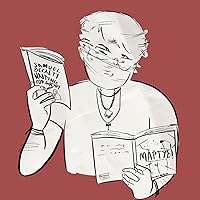
«Chopping apples for the fruit compote- suffer, suffer, suffer,suffer!». Had a little giggle

January 10, 2021
Full review to follow!
August 19, 2026
What even is this

December 15, 2024
Random words in random order. Terrible. Mind breaths is okay, after that it just gets too explicit.
Bad, give this to your most pretentious enemy, 3/10
Bad, give this to your most pretentious enemy, 3/10

July 12, 2026
Absolute scheiße!!!!! 0/5 Sterne!!!!
Dieser hässliche rassistische Hund nennt diesen Buchstabenabfall Poesie?! Beim Lesen dieser Gewalttat an meine Augen habe ich mir nur gewünscht, dass ich die Fähigkeit zum Lesen verlieren möchte. Rest in piss and agony du hässlicher Bastard
Dieser hässliche rassistische Hund nennt diesen Buchstabenabfall Poesie?! Beim Lesen dieser Gewalttat an meine Augen habe ich mir nur gewünscht, dass ich die Fähigkeit zum Lesen verlieren möchte. Rest in piss and agony du hässlicher Bastard

February 23, 2018
This was my first introduction to Ginsberg, and it did not disappoint. It is intense and i've already started learning more about him, his poetry and the Beat Generation. I highly recommend this as a starting point. It doesn't shy away from topics and questions that he asks are still relevant today. Some beautifully written pieces, my favourite is "I Am a Victim of Telephone
Works included;
- Pull My Daisy
-A Supermarket in California
-America
-Death to Van Gogh's Ear!
-Television Was a Baby Crawling Toward That Deathchamber
-I Am a Victim of Telephone
-Mind Breaths
-Fourth Floor, Dawn, Up All Night Writing Letters
-Love Comes
-Sphincer
-Personal Ad
-American Sentences
-C'mon Pigs of Western Civilization Eat More Grease
Works included;
- Pull My Daisy
-A Supermarket in California
-America
-Death to Van Gogh's Ear!
-Television Was a Baby Crawling Toward That Deathchamber
-I Am a Victim of Telephone
-Mind Breaths
-Fourth Floor, Dawn, Up All Night Writing Letters
-Love Comes
-Sphincer
-Personal Ad
-American Sentences
-C'mon Pigs of Western Civilization Eat More Grease
March 18, 2022
"... and I do love him -
tall body, pale skin,
Hot hearth within,
open blue eyes -
a hard cock never lies."
Amen, brother Ginsberg.
tall body, pale skin,
Hot hearth within,
open blue eyes -
a hard cock never lies."
Amen, brother Ginsberg.
This entire review has been hidden because of spoilers.

March 27, 2025
I kept getting distracted by my nice nail polish whilst trying to read this horrible little book
(I liked maybe 2 poems and they were the short ones)
(I liked maybe 2 poems and they were the short ones)

February 26, 2024
Meh, rambling poetry like this makes it hard to follow the experience.

June 8, 2023
w t f chyba wolałem go jako Radcliffa w filmie

January 31, 2020
Well, now I can check the "Allen Ginsberg" box off my list. This was quite the trip, especially his early poetry, which reads like a stream of consciousness rant designed more to evoke images than convey information – which I guess is the point of poetry, but I've never read any so aggressively vulgar, or really just so aggressive, period.
Further, as is always a risk with political writings, numerous references have passed from timely to obscure over the past fifty years, making what little understanding I was able to glean from them all the more fragmented and useless.
Ginsberg's later poems, however, are mellower – I won't say "better" since art is art, but I certainaly got a lot more out of them. Overall, though, this small book took me three days to read, which isn't a good sign. I enjoyed a small fraction of these poems, and the angriest of them – the ones I was most inclined to like because of their political content – were lost amid a torrent of hyperbolic rage that has not aged well.
Further, as is always a risk with political writings, numerous references have passed from timely to obscure over the past fifty years, making what little understanding I was able to glean from them all the more fragmented and useless.
Ginsberg's later poems, however, are mellower – I won't say "better" since art is art, but I certainaly got a lot more out of them. Overall, though, this small book took me three days to read, which isn't a good sign. I enjoyed a small fraction of these poems, and the angriest of them – the ones I was most inclined to like because of their political content – were lost amid a torrent of hyperbolic rage that has not aged well.

February 9, 2019
I understand why Ginsberg is an important icon of his times and the transformation of poetry, and admire the candid, matter-of-factly manner of his exhibitionism, but I'm afraid his poems are, overall, not really my cup of tea. There were a few images I liked, about the American social landscape he was in at the time; they were so powerful I could picture it, though I can't recall any verses once I've put the book down.

June 5, 2024
Allen Ginsberg’s work is like a flash delirium; a bastardized, metamorphosed, flesh monster genealogy of words that seem to capture a moment in all of it’s glorious contradiction, hypocrisy, and horniness. It’s like watching the transformation scene in an alien movie. You’ll find raw (hilarious and gross) sexual musings, political insanity, pungent urbanism and it’s brilliant! (I think)

February 1, 2019
God this was long and derivative and obscene
I think my favourite out of this collection was the one titled 'America', which really reminded me of The 1975's song 'I Like America and America Likes Me' aha
I think my favourite out of this collection was the one titled 'America', which really reminded me of The 1975's song 'I Like America and America Likes Me' aha

January 1, 2019
I am so confused... this guy makes no sense

September 15, 2020
the kind of books I hate and I would banish if I could. I would love to give it ZERO stars but I can't.

February 27, 2026
My first encounter with Ginsberg (after only reading a few extracted lines of "Howl" a few years at uni) was incredibly disappointing. So, we have a poet critiquing American excess, glacial media, and empty self-possession by writing under-edited (if not hastily written) poems that are full of name-dropping and borderline sloganeering political discussions and which are ultimately undercut by their unstable and ironic style? Yes, he does occasionally have a splendid line, but he also recycles way too many images and talking points, and his poems are full of extremely questionable if not outright off-putting lines (e.g. racism and sexism). I had to bail on a few of the longer ones here (including the interminable title one) because they became so unproductively monotonous and grating. I can also appreciate how the transgression here was historically significant, but I also find that due to their overly loose and self-satisfied nature, the poems dealing with queer sex wind up reading as smut rather than as transformative artworks. And I don't want to imply that I'm a pearl clutcher (since graphic sex scenes can offer transcendence and depth). For me, the essences of modern poetry are enjambment, lineation and overall structure (the feel/appearance/memory of the poem), and all of these too often feel aleatory or undercooked here; most of the lines feel clogged in a messy rather than powerful and controlled way (I quite like his tactic of omitting articles before certain nouns to make them feel seem even more primal or abstract, but it also leads to way too many lines and stanzas that are near-impossible to parse and derive deeper meanings from beyond the ones observed after skating/slipping across them).
In many ways, I think Ginsberg (and the cult-like praise around his work) encapsulates (and perhaps is even responsible for) the worst elements of modern poetry (not to pretend that all old poetry was amazing, however).
Oh, and, let's not forget this guy was a member of the Man-Boy Love Association. So, what I am meant to admire/worship about him again?
In many ways, I think Ginsberg (and the cult-like praise around his work) encapsulates (and perhaps is even responsible for) the worst elements of modern poetry (not to pretend that all old poetry was amazing, however).
Oh, and, let's not forget this guy was a member of the Man-Boy Love Association. So, what I am meant to admire/worship about him again?

April 16, 2026
1 star is far too generous for whatever this mess was. This is one of the worst poetry collections I have read in my life. This felt like the author was trying to be controversial, quirky, and different🤪 but just kept missing the mark time and time again.
I was surprised and horrified to see the n word casually in this? hard r and all. So that was a disgusting and alarming start already (9 pages in). It then somehow got even worse?
An excerpt from one poem:
“He fucked me in the east
he fucked me in the west
he fucked me south
my cock in his mouth
he fucked me north
no sperm shot forth”
I know you want more! So here is another one🥰
“I felt a breeze below my waist and realized my fly was open.
Sitting forward elbows on knees, oh what luck! to be able to crap!
‘That was good! That was great! That was important!’ Standing to flush the toilet.”
Believe it or not those in fact were not even my least fav poems!
I was surprised and horrified to see the n word casually in this? hard r and all. So that was a disgusting and alarming start already (9 pages in). It then somehow got even worse?
An excerpt from one poem:
“He fucked me in the east
he fucked me in the west
he fucked me south
my cock in his mouth
he fucked me north
no sperm shot forth”
I know you want more! So here is another one🥰
“I felt a breeze below my waist and realized my fly was open.
Sitting forward elbows on knees, oh what luck! to be able to crap!
‘That was good! That was great! That was important!’ Standing to flush the toilet.”
Believe it or not those in fact were not even my least fav poems!

May 1, 2024
*2.5*
Pungent and sharp poems that distinguished him as a part of the Beat Generation, writing about his distaste of America at the time. His rage certainly comes across, but at times makes him poetry sour.
Pungent and sharp poems that distinguished him as a part of the Beat Generation, writing about his distaste of America at the time. His rage certainly comes across, but at times makes him poetry sour.
Displaying 1 - 30 of 391 reviews