

What do you think?

Evacuation
Naor, a young filmmaker, is driving with his mother. He tells her about being in Tel Aviv after a recent evacuation.
Everyone else has fled, except for Naor and Yaël, his artist girlfriend, and Saba, his grandfather, who is a writer. The occasional missile explodes nearby. But Saba refuses to leave the place he loves. And Yaël has her own secret aspirations.
In defiance of the war, they scavenge an existence and explore the mysteries of their beloved city—until the unthinkable happens.
In Evacuation, a novel of suspense, a profound tale about our choices under pressure, about love, for each other and for a place, about death, and about finding a way to peace, Raphaël Jerusalmy is at the height of his powers.
Everyone else has fled, except for Naor and Yaël, his artist girlfriend, and Saba, his grandfather, who is a writer. The occasional missile explodes nearby. But Saba refuses to leave the place he loves. And Yaël has her own secret aspirations.
In defiance of the war, they scavenge an existence and explore the mysteries of their beloved city—until the unthinkable happens.
In Evacuation, a novel of suspense, a profound tale about our choices under pressure, about love, for each other and for a place, about death, and about finding a way to peace, Raphaël Jerusalmy is at the height of his powers.
176 pages, Paperback
Published February 26, 2018
About the author
Raphaël Jerusalmy
22 books11 followersRaphaël Jerusalmy, né en 1954 à Paris, au pied de la Butte Montmartre, de mère russe et de père turc immigrés en France et brocanteurs de profession, la famille turque de son père fut déportée et exterminée à Auschwitz.
Diplômé de l'Ecole Normale Supérieure et de la Sorbonne, a fait carrière au sein des services de renseignements militaires israéliens avant de mener des actions de caractère humanitaire et éducatif. Il est aujourd'hui marchand de livres anciens à Tel-Aviv.
Diplômé de l'Ecole Normale Supérieure et de la Sorbonne, a fait carrière au sein des services de renseignements militaires israéliens avant de mener des actions de caractère humanitaire et éducatif. Il est aujourd'hui marchand de livres anciens à Tel-Aviv.
Ratings & Reviews
Friends & Following
Create a free account to discover what your friends think of this book!
Community Reviews
Displaying 1 - 24 of 24 reviews

June 23, 2019
TEL AVIV ON FIRE
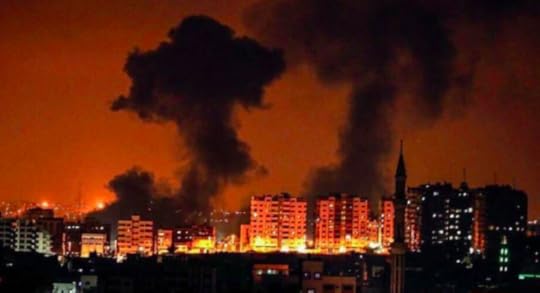
Tel Aviv on Fire.
La prima sorpresa è guardare la foto di Raphaël Jerusalmy e leggere le poche note biografiche che ho trovato: è francese, nato a Parigi, ma finiti gli studi si è arruolato nell’esercito d’Israele optando per una carriera nell’intelligence, per poi mollare tutto dopo quindici anni e mettersi a vendere libri antichi a Tel Aviv e fare il consulente televisivo.
La seconda sorpresa è il suo breve romanzo, in bilico tra la poesia e una chiacchierata, tra il racconto in prima persona e lo scambio a due, con inserti di sceneggiatura cinematografica.
Copertina
Perché il narratore, Naor, che sta guidando la macchina con sua madre sul sedile del passeggero, con la quale dialoga, ascolta e risponde, e alla quale racconta la storia che lo ha visto protagonista insieme al nonno, Saba (in lingua ebraica vuole appunto dire nonno) e alla sua ragazza, Yaël, perché Naor studia cinema e vuole fare il regista.
Mentre Saba, il nonno, è scrittore.
E Yaël è una pittrice.

Tre diverse forme d’Arte raccolte e collegate in questi tre personaggi.
Tre viandanti che decidono di non partecipare all’evacuazione di Tel Aviv sotto assedio di missili.
Evacuazione ordinata e imposta dalle autorità: ma sull’autobus che dovrebbe portarli al kibbutz, Saba all’improvviso prende la decisione di scendere.
E suo nipote lo segue, non lo abbandona. Così pure la di lui fidanzata.

Per qualche giorno sono padroni della città deserta.
Si trasferiscono a vivere in periferia nell’appartamento di un amico cineasta. Si approvvigionano a gratis di cibo, bevande e abiti, seguendo le razzie che sempre si accompagnano a questo genere di situazioni (black out, città abbandonate…).
La città non è del tutto deserta, nel loro vagare metropolitano ci sono momenti in cui devono nascondersi: per evitare i soldati, o altri razziatori, altri che si sono rifiutati di evacuare.
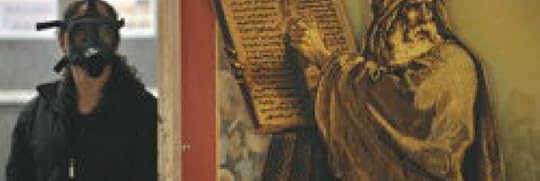
Perennemente in bilico tra realtà perfettamente verosimile e distopia, Jerusalmy regala momenti memorabili in questa sua breve narrazione, e forse, tra tutti, la cena sul tetto del condominio, il cielo di notte, la città silenziosa…
C’è un finale che non racconto, che aggiunge pathos a questo racconto dall’apparenza sciolta, a questo breve romanzo che mi è proprio piaciuto.
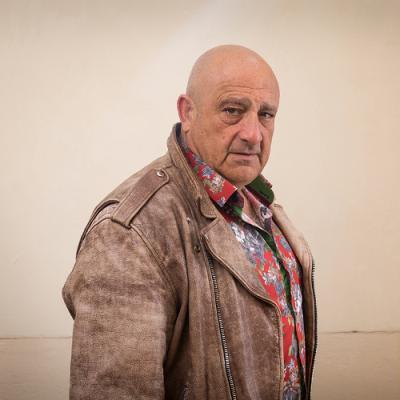
Raphaël Jerusalmy (Parigi, 7 novembre 1954)
Tel Aviv on Fire.
La prima sorpresa è guardare la foto di Raphaël Jerusalmy e leggere le poche note biografiche che ho trovato: è francese, nato a Parigi, ma finiti gli studi si è arruolato nell’esercito d’Israele optando per una carriera nell’intelligence, per poi mollare tutto dopo quindici anni e mettersi a vendere libri antichi a Tel Aviv e fare il consulente televisivo.
La seconda sorpresa è il suo breve romanzo, in bilico tra la poesia e una chiacchierata, tra il racconto in prima persona e lo scambio a due, con inserti di sceneggiatura cinematografica.
Copertina
Perché il narratore, Naor, che sta guidando la macchina con sua madre sul sedile del passeggero, con la quale dialoga, ascolta e risponde, e alla quale racconta la storia che lo ha visto protagonista insieme al nonno, Saba (in lingua ebraica vuole appunto dire nonno) e alla sua ragazza, Yaël, perché Naor studia cinema e vuole fare il regista.
Mentre Saba, il nonno, è scrittore.
E Yaël è una pittrice.
Tre diverse forme d’Arte raccolte e collegate in questi tre personaggi.
Tre viandanti che decidono di non partecipare all’evacuazione di Tel Aviv sotto assedio di missili.
Evacuazione ordinata e imposta dalle autorità: ma sull’autobus che dovrebbe portarli al kibbutz, Saba all’improvviso prende la decisione di scendere.
E suo nipote lo segue, non lo abbandona. Così pure la di lui fidanzata.
Per qualche giorno sono padroni della città deserta.
Si trasferiscono a vivere in periferia nell’appartamento di un amico cineasta. Si approvvigionano a gratis di cibo, bevande e abiti, seguendo le razzie che sempre si accompagnano a questo genere di situazioni (black out, città abbandonate…).
La città non è del tutto deserta, nel loro vagare metropolitano ci sono momenti in cui devono nascondersi: per evitare i soldati, o altri razziatori, altri che si sono rifiutati di evacuare.
Perennemente in bilico tra realtà perfettamente verosimile e distopia, Jerusalmy regala momenti memorabili in questa sua breve narrazione, e forse, tra tutti, la cena sul tetto del condominio, il cielo di notte, la città silenziosa…
C’è un finale che non racconto, che aggiunge pathos a questo racconto dall’apparenza sciolta, a questo breve romanzo che mi è proprio piaciuto.
Raphaël Jerusalmy (Parigi, 7 novembre 1954)

August 2, 2020
Una figlio racconta la sua avventura passata in una Tel Aviv quasi deserta, evacuata e sotto bombardamento, mentre accompagna la madre in macchina. Scritto in un modo peculiare, in cui scene dell’oggi si mischiano a scene del ieri attraverso la voce del narratore protagonista, e con qualche intermezzo fatto di scene di un film che Naor , il figlio, ha realizzato durante il suo periodo di “isolamento” con il nonno e la compagna nella città deserta. Strano, ma si legge bene. Ho apprezzato la struttura a matrioska del racconto, in cui una scena è dentro una scena che è dentro una scena. Facile immaginare la voce del protagonista che racconta, mentre lo si vede guidare e gesticolare rivolgendosi alla madre, e subito dopo lo si vede nelle strade annientate della città vuota.

July 24, 2026
«Il nemico fremeva di rabbia. A causa dell'evacuazione. Lo si percepiva dal modo in cui i missili arrivavano da ogni direzione. Irregolari. A scatti. Lanciati a caso.
Ogni volta che suonava l'allarme andavamo a rifugiare nella tromba delle scale.
Ci sedevamo sugli scalini.
Sul momento non hai veramente paura.
Hai fiducia nei tuoi riflessi. È solo quando ti sei messo al sicuro, ti sei nascosto, che cominci a riflettere. Che ti viene un piccolo nodo in gola.».
5 ⭐️ Non posso non dare il massimo a questo libro che parla in modo più semplice e naturale possibile della guerra, dell’evacuazione delle persone da Tel Aviv.
In tre però decidono di fermarsi, nonno nipote e fidanzata. Decidono di rimanere nella loro terra, nella loro casa. Di non muoversi anche se è molto rischioso. Un racconto molto reale sulle condizioni di oggigiorno che vediamo alla televisione. Peccato per il finale che lascia con l’amaro in bocca, non sempre c’è il lieto fine nelle storie.
Ogni volta che suonava l'allarme andavamo a rifugiare nella tromba delle scale.
Ci sedevamo sugli scalini.
Sul momento non hai veramente paura.
Hai fiducia nei tuoi riflessi. È solo quando ti sei messo al sicuro, ti sei nascosto, che cominci a riflettere. Che ti viene un piccolo nodo in gola.».
5 ⭐️ Non posso non dare il massimo a questo libro che parla in modo più semplice e naturale possibile della guerra, dell’evacuazione delle persone da Tel Aviv.
In tre però decidono di fermarsi, nonno nipote e fidanzata. Decidono di rimanere nella loro terra, nella loro casa. Di non muoversi anche se è molto rischioso. Un racconto molto reale sulle condizioni di oggigiorno che vediamo alla televisione. Peccato per il finale che lascia con l’amaro in bocca, non sempre c’è il lieto fine nelle storie.

March 28, 2022
La guerra, l’amore, l’arte. Intrecciati in un breve romanzo ambientato a Tel Aviv. La maledizione su una città e l’idea di girare un film (‘Evacuazione’, appunto) per esorcizzarla: “come i bambini di Aleppo o Mosul che giocano a campana tra due attacchi”.
Durante il viaggio di ritorno dal kibbutz alla città di Tel Aviv Naor, il giovane protagonista, racconta tutta la storia alla madre.
Costruito su narrazioni frammentarie, dialoghi, flashback, con capitoli aperti o chiusi da cartelli stradali.
Distopico, realistico, sospeso tra sogno e incubo.
Durante il viaggio di ritorno dal kibbutz alla città di Tel Aviv Naor, il giovane protagonista, racconta tutta la storia alla madre.
Costruito su narrazioni frammentarie, dialoghi, flashback, con capitoli aperti o chiusi da cartelli stradali.
Distopico, realistico, sospeso tra sogno e incubo.

January 14, 2019
3.5/5 Stars
What an odd book. I don't mean that in a bad way, but it's just different from the types of books I'm used to reading. James Joyce and his stream of consciousness writing style are referenced several times in this little novella, and they're apt references since Jerusalmy's writing style in Evacuation reminds me so much of Joyce's. The entire novella is Naor, our narrator, telling his mom what happened in the days he, his girlfriend Yael, and his grandfather got stuck in an evacuated Tel Aviv during a war in Israel. It doesn't sound very funny when reading the description, but it's actually pretty funny in the most unexpected way. Jerusalmy does a good job with keeping a balance between the dark humor and the real tragedies that occur throughout the novella.
My biggest thing, though, is how important Yael is, but she's not given very much of anything to do. It's clear she's important to Naor, but she doesn't have much personality beyond that. She likes art, and she likes interacting with Naor's grandfather. That's about it, which is unfortunate since she's probably one of the most important characters in the whole novella. Maybe her lack of character is something Jerusalmy chose on purpose to show that Yael is more of a symbol than an actual representation of a person? I don't know. I just wish that for the significance she holds not only in the novella but in the narrator's heart, she had been given something more than what we the readers got.
Overall, it's an interesting, quick read, and I'd definitely recommend it. I have a feeling I'll need to reread it a time or two as well in order to really absorb everything since it's just so odd. But odd in a good way!
What an odd book. I don't mean that in a bad way, but it's just different from the types of books I'm used to reading. James Joyce and his stream of consciousness writing style are referenced several times in this little novella, and they're apt references since Jerusalmy's writing style in Evacuation reminds me so much of Joyce's. The entire novella is Naor, our narrator, telling his mom what happened in the days he, his girlfriend Yael, and his grandfather got stuck in an evacuated Tel Aviv during a war in Israel. It doesn't sound very funny when reading the description, but it's actually pretty funny in the most unexpected way. Jerusalmy does a good job with keeping a balance between the dark humor and the real tragedies that occur throughout the novella.
My biggest thing, though, is how important Yael is, but she's not given very much of anything to do. It's clear she's important to Naor, but she doesn't have much personality beyond that. She likes art, and she likes interacting with Naor's grandfather. That's about it, which is unfortunate since she's probably one of the most important characters in the whole novella. Maybe her lack of character is something Jerusalmy chose on purpose to show that Yael is more of a symbol than an actual representation of a person? I don't know. I just wish that for the significance she holds not only in the novella but in the narrator's heart, she had been given something more than what we the readers got.
Overall, it's an interesting, quick read, and I'd definitely recommend it. I have a feeling I'll need to reread it a time or two as well in order to really absorb everything since it's just so odd. But odd in a good way!

August 21, 2019
I struggled with this book, as I found the writing style difficult to appreciate. The basis of the story is interesting and that is what initially grabbed my attention, but unfortunately the writing let it down for me.

April 2, 2019
This powerful and compelling short novel makes for some chilling reading. The narrator, Naor, is on a car journey with his mother from her kibbutz to a destination in Tel Aviv that only gradually becomes clear. While they drive, Naor recounts the time he spent in Tel Aviv with his girlfriend and grandfather during a mandatory evacuation of the city during a missile attack. The trio had been ready to evacuate as ordered, then something happens that means they remain behind. No specific details are given about the attack – there is later a mention of peace negotiations in Geneva – but this lack of specificity gives the story a timeless feel, especially considering the ongoing conflicts in Israel. The three learn to survive as best they can whilst the missiles fall around them. The danger and tension are vividly portrayed, although always in a calm and measured prose that somehow adds to the suspense. The author once worked in Israeli military intelligence and this no doubt adds to the authentic descriptions of the events described throughout the book. It’s a moving and absorbing read, and I very much enjoyed it.

November 3, 2019
ARC provided by Netgalley in exchange for an honest review.
The first thought that came to mind when I started reading Evacuation by Raphael Jerusalmy was that it was incredibly random. Who is the main character talking to? What and who is he talking about? Where and when does the story take place? It was quite confusing.
As the story continued I started figuring out more and more of the information. The main character, Naor, is travelling back to Tel Aviv with his mother and along the way he is telling her the story of the city’s evacuation (in 2010) and his decision to stay there with his girlfriend and grandfather. He explains what their life looked like then and talks about the movie they shot while waiting out the war. I did really have to do some background research to fully comprehend the story, which was disappointing.
In the end, this book really wasn’t my cup of tea. The writing style, and the set-up were just not something I enjoyed reading very much. I did find it very interesting to learn more about the situation. It’s a part of history that is very recent, but I still barely know anything about it.
The first thought that came to mind when I started reading Evacuation by Raphael Jerusalmy was that it was incredibly random. Who is the main character talking to? What and who is he talking about? Where and when does the story take place? It was quite confusing.
As the story continued I started figuring out more and more of the information. The main character, Naor, is travelling back to Tel Aviv with his mother and along the way he is telling her the story of the city’s evacuation (in 2010) and his decision to stay there with his girlfriend and grandfather. He explains what their life looked like then and talks about the movie they shot while waiting out the war. I did really have to do some background research to fully comprehend the story, which was disappointing.
In the end, this book really wasn’t my cup of tea. The writing style, and the set-up were just not something I enjoyed reading very much. I did find it very interesting to learn more about the situation. It’s a part of history that is very recent, but I still barely know anything about it.

Read
February 27, 2018‘A gently observed and deeply felt tale of three disparate characters living through unusual times.'
Pile by the Bed
‘Like the famous photograph of the string quartet amid the ruins of Sarajevo, his [Jerusalmy’s] book celebrates the persistence of art in times of chaos, and like another recent novella of the Middle East, Mohsin Hamid’s Exit West, it combines a jolting realism with the timeless quality of fables.’
Age
‘A bright, light-struck novel…Jerusalmy reveals all the strangeness of an emblematic place torn by political, artistic and religious currents. It is a crisp and oddly memorable book.’
Your Weekend
‘An elegant examination of the choices we make and the individual peace we seek…Evacuation is a short but meaningful voyage of discovery, an Israeli road trip packed with musings on war, love, death, and art.’
AU Review
Pile by the Bed
‘Like the famous photograph of the string quartet amid the ruins of Sarajevo, his [Jerusalmy’s] book celebrates the persistence of art in times of chaos, and like another recent novella of the Middle East, Mohsin Hamid’s Exit West, it combines a jolting realism with the timeless quality of fables.’
Age
‘A bright, light-struck novel…Jerusalmy reveals all the strangeness of an emblematic place torn by political, artistic and religious currents. It is a crisp and oddly memorable book.’
Your Weekend
‘An elegant examination of the choices we make and the individual peace we seek…Evacuation is a short but meaningful voyage of discovery, an Israeli road trip packed with musings on war, love, death, and art.’
AU Review
March 18, 2018
A quick and quirky read, this novella is difficult to define. Against the backdrop of a car journey from a northern kibbutz south to Tel Aviv, Naor recounts his recent evacuation of Tel Aviv in the continuing Arab conflict and its impact on him, on his lover (Yael), and on his beloved Saba (grandfather). The anticipated reconciliation between his mother and her father (his grandfather, Saba) frames his story. Tel Aviv itself is a strong character within the book, a change from the consistent focus on Jerusalem as the "pulse" and "breath" of Israel. Jerusalmy shows us the choices his characters make in crisis and what human motivations provoke those choices.

Read
November 17, 2019Living in Tel Aviv has its advantages and disadvantages. Tel Aviv is a beautiful beachside city with a thriving nightlife. Tel Aviv is sometimes in the middle of a war zone. When Naor, a film student, is forced to evacuate during a firestorm, his grandfather Saba gets off the bus and refuses to go. So Naor and his girlfriend Yaël follow and become fugitives as they hide out from the missile strikes.
As time passes, the three are forced to make do with what they can as the city is shut down. Naor begins filming the evacuation and Tel Aviv as it sits mostly empty. There are still nearby missile strikes, and they have no power or water, but the choice they’ve made allows them to experience life as they haven’t before. It is an introspective time for them. Perhaps staying in the city wasn’t such a bad thing after all, until something tragic occurs.
This novel was translated from the original French publication. At first I had a hard time following the story, as it is Naor’s narration to his mother on a car ride to her kibbutz. Once I continued through the story, I got into the rhythm and the tale. For those of us in the US, it is so hard to imagine living in a war zone such as Israel. The story of Saba, Naor and Yaël hiding out in the city is a good one. I did enjoy it.
3.5 stars
This review will be posted at BookwormishMe.com on 17 November 2019 .
As time passes, the three are forced to make do with what they can as the city is shut down. Naor begins filming the evacuation and Tel Aviv as it sits mostly empty. There are still nearby missile strikes, and they have no power or water, but the choice they’ve made allows them to experience life as they haven’t before. It is an introspective time for them. Perhaps staying in the city wasn’t such a bad thing after all, until something tragic occurs.
This novel was translated from the original French publication. At first I had a hard time following the story, as it is Naor’s narration to his mother on a car ride to her kibbutz. Once I continued through the story, I got into the rhythm and the tale. For those of us in the US, it is so hard to imagine living in a war zone such as Israel. The story of Saba, Naor and Yaël hiding out in the city is a good one. I did enjoy it.
3.5 stars
This review will be posted at BookwormishMe.com on 17 November 2019 .

February 13, 2019
I thoroughly enjoyed every page of this short little book. In fact, it is so engaging and engrossing that I want to read it all over again right away!
In "Evacuation," filmmaker Naor, his artist girlfriend Yael, and his writer grandfather Saba survive alone in Tel Aviv during a mandatory evacuation after a missile attack. As the story unfolds, the trio explore their beloved city and grow closer together. Readers relive the experience as Naor replays the event to his mother.
As I read, I imagined what I would do in the same situation and how I would feel. I was surprised at the emotions I felt, a sign of a good book.
In "Evacuation," filmmaker Naor, his artist girlfriend Yael, and his writer grandfather Saba survive alone in Tel Aviv during a mandatory evacuation after a missile attack. As the story unfolds, the trio explore their beloved city and grow closer together. Readers relive the experience as Naor replays the event to his mother.
As I read, I imagined what I would do in the same situation and how I would feel. I was surprised at the emotions I felt, a sign of a good book.

February 4, 2019
A powerful novella about 3 people, a young man, woman and his grandfather, who remain in TelAviv during an evacuation. The story is told through updates and. conversations with our narrator's Naor's mother. We see the story unfold and learn the motivation to stay behind and the subsequent consequences. Very different style and flow but I found it interesting and thoughtful.
Full disclosure- I received a copy of the book from the publisher in exchange for an honest review.
Full disclosure- I received a copy of the book from the publisher in exchange for an honest review.

October 18, 2017
Peut-être suis-je lent à comprendre, mais ça m'a pas plusieurs page pour saisir le principe de la narration vs la conversation avec la mère. J'ai donc recommencé le livre du début et là, je ne le trouvais plus décousu comme initialement. À terme, ce fut une lecture agréable, touchante par moment. Satisfaisante.

March 20, 2021
Thank you NetGalley, the publisher as well as the author Raphael Jerusalmy. This was an okay book. When I read books of dangerous situation, I always put myself in the book and say..man..why do people stick around to see their demise..RUN!!
Read the book, that is not a spoiler. That is my thought. Thank you again!
Read the book, that is not a spoiler. That is my thought. Thank you again!

March 11, 2019
A quick slightly quirky view of Jerusalmys Israel. Definitely worth the read of just for the beautiful descriptions. This book was graciously provided by the publisher via netgalley in exchange for an honest review.

July 6, 2019
This novella really captured a lot in a shorter story. This was a compelling and sometimes difficult read about what a challenging choice it would be to choose to stay versus leave when your country is under attack. So powerful.
#Evacuation #NetGalley
#Evacuation #NetGalley

May 22, 2020
Some short novels pack a deceptively powerful punch. That’s true of Raphael Jerusalmy’s “Evacuation” (Text Publishing).
See the rest of my review at http://www.thereportergroup.org/Artic...
See the rest of my review at http://www.thereportergroup.org/Artic...

April 25, 2022
If you gel with the writing style this is a really great novel. Set in a bleak reality, our characters shine a light their situation and even when more tragedy strikes you feel the overall lingering of hope.
July 19, 2018
A very short book. I liked reading about living in a city that I've visited when very few people are in it. I liked the how it was a conversation as well as a narrative.
December 12, 2018
Really gripping and very different novel.

October 7, 2019
Conversations in vehicles offer a particular intimacy: occupants have no choice but to be present. In Evacuation, by Raphaël Jerusalmy and translated from the French by Penny Hueston, a car's interior provides the opportunity for a young man to reveal his experiences during an evacuation of Tel Aviv, and for Jerusalmy, a former member of the Israeli military intelligence service, to show people upholding life and art in the midst of warfare.
The novella opens with Naor, an aspiring filmmaker, talking to his mother at the beginning of a drive. His voice serves as the primary narration throughout the book, as it's his story that unfolds. Typical small talk (put on your seatbelt, sorry about that turn) precedes his unexpected comment: "Don't be sad, Mum." With this remark the reader enters the car, too, and listens to Naor, as he drives, explain what happened during a recent military attack on Tel Aviv.
Naor and his girlfriend, Yaël, had planned to accompany Saba, his grandfather, on a bus to the countryside after the mandatory evacuation of the city. At the last minute, Saba gets off the bus and refuses to leave. Naor and Yaël follow him, initially to change his mind, but when he refuses, they decide, in an act of "dissidence," to defy the evacuation orders. Naor himself isn't really sure why the trio defied orders, and attempts to explain their motives to his mother. It's possible, Naor says, that Saba is "playing at being a rebel so people think he's younger." But his mother counters with, "Just like you're playing the rebel so you come across as more mature."
As for Yaël's motivation, she is the most enigmatic of the three. They were cut off from the world, and she "didn't want to surrender to the war." "We were going to behave as if there was no war. As if the war had never happened," Naor struggles to explain. He concludes, "Staying in deserted Tel Aviv was an act of resistance, of hanging on, standing firm." The trio scavenges for food and water, wanders the city reminiscing, and Naor even scripts a film for Yael and Saba to perform. "Have you never done that, pretended you're not part of what's happening around you?" he asks his mother. The reader, too, is lulled into pretending that there isn't a war going on. Thus, when the situation deteriorates, the devastation they experience is all the more shocking for the ordinary routines they'd established.
The politics of the Arab-Israeli war are barely mentioned in the novel. But readers see the street-level view of an aerial attack through Naor's eyes, in contrast to the typical distant perspective seen on news channels. There are people on those streets that are invisible in the larger theater of war. "War is for everyone, civilians as well as the military," Naor says. The trio's refusal to bow to the chaos of war is their ultimate act of resistance. Evacuation is no typical war novel: spare yet compelling, and extraordinarily moving in unexpected places, it challenges those who glance impassively at a televised war to step into the experience of those nearby.
-reviewed for Shelf Awareness 11-14-19
The novella opens with Naor, an aspiring filmmaker, talking to his mother at the beginning of a drive. His voice serves as the primary narration throughout the book, as it's his story that unfolds. Typical small talk (put on your seatbelt, sorry about that turn) precedes his unexpected comment: "Don't be sad, Mum." With this remark the reader enters the car, too, and listens to Naor, as he drives, explain what happened during a recent military attack on Tel Aviv.
Naor and his girlfriend, Yaël, had planned to accompany Saba, his grandfather, on a bus to the countryside after the mandatory evacuation of the city. At the last minute, Saba gets off the bus and refuses to leave. Naor and Yaël follow him, initially to change his mind, but when he refuses, they decide, in an act of "dissidence," to defy the evacuation orders. Naor himself isn't really sure why the trio defied orders, and attempts to explain their motives to his mother. It's possible, Naor says, that Saba is "playing at being a rebel so people think he's younger." But his mother counters with, "Just like you're playing the rebel so you come across as more mature."
As for Yaël's motivation, she is the most enigmatic of the three. They were cut off from the world, and she "didn't want to surrender to the war." "We were going to behave as if there was no war. As if the war had never happened," Naor struggles to explain. He concludes, "Staying in deserted Tel Aviv was an act of resistance, of hanging on, standing firm." The trio scavenges for food and water, wanders the city reminiscing, and Naor even scripts a film for Yael and Saba to perform. "Have you never done that, pretended you're not part of what's happening around you?" he asks his mother. The reader, too, is lulled into pretending that there isn't a war going on. Thus, when the situation deteriorates, the devastation they experience is all the more shocking for the ordinary routines they'd established.
The politics of the Arab-Israeli war are barely mentioned in the novel. But readers see the street-level view of an aerial attack through Naor's eyes, in contrast to the typical distant perspective seen on news channels. There are people on those streets that are invisible in the larger theater of war. "War is for everyone, civilians as well as the military," Naor says. The trio's refusal to bow to the chaos of war is their ultimate act of resistance. Evacuation is no typical war novel: spare yet compelling, and extraordinarily moving in unexpected places, it challenges those who glance impassively at a televised war to step into the experience of those nearby.
-reviewed for Shelf Awareness 11-14-19
February 8, 2019
I know what this book is about, but did not understand the way it was written, I found it very disjointed. Not my type of but.

March 17, 2019
I have read many WWII stories, both fiction and nonfiction. I am always amazed at the unreal circumstances people faced during that time. This story, while fictional, reads as totally believable. The individual acts of courage that many ordinary people performed to ultimately emerge victorious in this struggle continue to astound me. I highly recommend this book to anyone who likes a good page turning read about a time that will hopefully never come again.
Displaying 1 - 24 of 24 reviews