Jump to ratings and reviews
Rate this book

The Edge Chronicles: The Cade Series #3

The Descenders: Third Book of Cade (13)

Rate this book
Cade Quarter has spent the last few years of his life running from an enemy he’s never even met – the ruthless and power-hungry High Professor of Flight, Quove Lentis. But Quove’s deadly agenda has finally caught up with Cade, and now he must leave his home and flee once more, this time to the legendary floating city of New Sanctaphrax. But even reuniting with his uncle, Nate Quarter, isn’t the end of Cade’s troubles – and now, more than ever, he must find the courage to defy his enemies, unite his friends, and unlock the secrets of descending.

The Descenders is the third and final book in the Cade trilogy - the fifth and final saga in Stewart and Riddell’s internationally bestselling series, The Edge Chronicles, which has featured on the Times and New York Times bestseller lists, and sold more than 3 million copies. 2018 marks twenty years of the series, now complete with thirteen titles across five separate but interlinking sagas.

528 pages, Hardcover

First published March 7, 2019

15 people are currently reading
782 people want to read

About the author

Paul Stewart

217 books919 followers
Paul Stewart is a highly regarded author of books for young readers – from picture books to football stories, fantasy and horror. Together with Chris Riddell he is co-creator of the bestselling Edge Chronicles, which has sold more than three million copies and is available in over twenty languages. They have also collaborated together on lots of other exciting books for children of all ages. The Far-Flung Adventure series includes the Gold Smarties Prize Winner Fergus Crane, and Corby Flood and Hugo Pepper, both Silver Nestle Prize Winners. Then there are the Barnaby Grimes books, two Muddle Earth adventures, and the sci-fi Scavenger and fantasy Wyrmeweald trilogies. For younger readers there is the Blobheads series, while for the very young, Paul has written several picture books, including the Rabbit and Hedgehog series, In the Dark of the Night and, his latest, Wings.

Other authors by this name disambiguation Note:
Paul Stewart - business and management books

Ratings & Reviews

What do you think?
Rate this book

Friends & Following

Create a free account to discover what your friends think of this book!

Community Reviews

5 stars
182 (53%)
4 stars
101 (29%)
3 stars
44 (12%)
2 stars
9 (2%)
1 star
3 (<1%)
Displaying 1 - 30 of 39 reviews
Profile Image for Sol.
699 reviews35 followers
April 5, 2019
The Edge Chronicles are finally over (though they've said that before). Beyond the Deepwoods was one of the first real chapter books I read when I was a little less than 10, and I kept up with them until Clash of the Sky Galleons came out. It wasn't until I finished high school that I thought about them again, and decided to reread them all, including the two that had come out since then (Lost Barkscrolls and The Immortals). To my surprise, they were still very good, just as good as I remembered. So often our nostalgia clouds our memories, until we experience the real thing again. The old game we loved is clunky and poorly designed, the old movie is amateurish and poorly paced, the old book plodding and didactic. But with these books, I found that all the things I had loved as a kid - the incredibly imaginative creatures, the many locations and adventures, the range of heroes and villains, all still held up. True, they are children's books, and the first book is little more than an episodic catalogue of locations, but Paul Stewart and Chris Riddell never allowed that to make them lazy (well, maybe a bit with the first two Cade books). It felt like they were at all times trying to deliver the best story they could, enjoyable both for young children and adults, without alienating either.

As an adult, I also noticed some depths and currents that hadn't been apparent as a kid. The books manage to strike a fine balance in their worldbuilding - telling just enough to allow us to understand how the world works and came about, in both the small and large scale, without weighing the story down excessively or leaving it too light to hold together. At all times, they maintain a sense of history without giving us a laundry list of events and figures, but rather just enough understanding of the shape of historical events for it all to fit together well. In fact, throughout the series there is a keen focus on how the economic and material basis of society shapes historical conditions, and the incredible power of technological change over our way of life. From the very first few books, they have a simple but reasonable economic model of their world - raw materials are extracted from small villages in the Deepwoods, then transported to Undertown via skyships to be made into finished goods, to be traded with the floating city Sanctaphrax, or back to the Deepwoods for more raw materials. The residents of the Deepwoods are unable to form their own large-scale settlements due to the inherent dangers within it, and since Sanctaphrax is the sole source of flight rocks, it maintains a strong economic position despite not being directly part of the goods production chain, allowing its inhabitants to take on strictly academic pursuits. Now, all of this is secondary, and doesn't impinge on the fact that the books are first and foremost adventure stories, but it helps maintain the believability of the stories, especially given the many weird things that happen in them. The authors clearly took their writing seriously enough to work these things out in a basic sense, and the series is much stronger for it, even though I picked up none of it as a child.

Historical and technological change both loom large as well. After the first 4 books (1 being a prequel), the authors jumped ahead decades into the future, into a world that had changed drastically. Taking a simple but devastating event (the death of the flight rocks that enabled trade), they then imagined what kind of change this would cause in the existing societies they had set up, and what kind of technologies would be created in response to the new needs of the world. This is again a vehicle to tell different, slightly darker stories than they had in the previous books, and it worked out well. I think these books (the Rook trilogy) are probably among the best in the series collectively. They cohere very strongly, and are a bit more poignant, partially because with the time jump, the series could now more strongly take advantage of its multi-generational nature. Cities wax and wane with the changing of the times, as well as experiencing change to their character. Historical figures become forgotten or distorted, and their legacies end up far beyond their control or intentions. There are certain kinds of stories that can only be told over the course of generations, and I think the Rook trilogy and future books explored them well, while maintaining appeal to children. While the series has a strong undercurrent of tragedy in the long view, it never allows that to spoil the mood of the moment, whether that be triumph, despair or contemplation.

Religion is also an element of the series, though more slight, and more in the sense of cultural conflict between religions than individual belief. The beliefs of the Edgelanders about the afterlife, deities and superstition are generally kept very curt, though present, and it again lends an undercurrent of believability to the series. The recurrent conflict between Earth and Sky scholars throughout the series, however, has a strong resemblance to bitter religious conflicts between related sects. The two camps of scholars vary between harmony and extreme conflict, whether open or covert, and the basis of their conflict is solely a matter of belief - whether the study of the Earth or Sky will better lead to valuable knowledge. Just as seemingly minor (to outsiders) doctrinal variations can lead to bloody conflict, so too does this disagreement. The series always maintains a hopeful note of the possibility of reconciliation, but also of the fragility of peace.

The Immortals had ended on a seemingly definitive note, with Sanctaphrax returned and the beginning of new exploration down the cliff for the first time, but without actually showing us what it would be like. It seemed like a mystery that was too big to actually show, and might have been disappointing or damaging to the mystique of the series, so I was fine with this extremely literal cliff-hanger of an ending to the series. To my surprise, the authors then released 2 more books about 5 years later, adaptations of a blog series they had done exploring new creatures and locations in the Edge. I found them a little less substantial than the previous books, but they were enjoyable enough reads. Now they've finally released another "final" volume, and I think its at least as worthy. This book covers Nate's descents beneath the cliff edge, Cade's travels to New Sanctaphrax and their conflict with his great-uncle Quove Lentis, and a few other things.

Now to the actual final book in question. The secrets revealed in descending are definitely not what I expected, though in a good way, in that they're both surprising and make sense of the things that come before, without wholly tying off all possible mysteries. The authors have again struck an excellent balance between mystery and revelation. The actual process of descending is somewhat brief, though, taking up maybe a quarter of the whole book. The rest is devoted to travelling to New Sanctaphrax, the city's conflict with Quove Lentis, and new technological discoveries. Combining all of these into one novel that's shorter than The Immortals leaves all these elements a bit strapped for breathing room, though they aren't badly damaged. Rather, I felt that with a bit more space or development they could all shine more brightly. The plot as it is would be difficult to recut between different books, even if you compressed the first two Cade books down into one shorter volume, and this book showed a bit more care and thought than the previous two, so I think this was probably what the authors thought was best. As it is, it's a very worthy sendoff for the series.

But, is it actually The End? The Immortals supposedly was, so there's precedent for them going back on it. And though many high-level mysteries of the series have been more or less conclusively resolved, there are still a few hanging in the air, such as what might be past the mountains behind Riverrise, or whether there might be life lurking very deep inside the caves of the Edge. And beyond that, the authors have shown they're fine with writing prequels. As I was reading this last book, it struck me that in many ways it was almost mirroring the very beginning of the series, with New Sanctaphrax and Undergarden mirroring the original state of Sanctaphrax and Undertown as places of learning and freedom as they were long before the series actually started. I think a prequel treatment of the original establishment of those cities could be an interesting effort. I think any books placed further in the future would go too far into a straight science fiction, but I'm sure Stewart and Riddell could surprise me. So while I'd welcome future books (or short stories) in the Edge Chronicles, I'm perfectly fine with how they've ended it here, and I'm thankful for all the wonderful memories I have of this series.
Profile Image for Valentin Poggenpohl.
4 reviews1 follower
April 2, 2019
This was a decent ending to the Edge Chronicles series - but I must say it: It could have been better. Please beware, as I will spoil the book in this review.

I am a big fan of the Edge Chronicles, having read the first book when I was eleven or twelve years old, but then re-discovering it (and the entire saga) towards the end of secondary school, 8 years later. I fell head over heels for the worldbuilding, the sense of history the novels conveyed, the characters and locales. I first read the Twig trilogy, and that one was lovely, but my personal favorite is probably the Rook trilogy, and I think Stewart and Riddell really reach the peak of their expertise towards the end of that saga. That being said, I enjoyed the Quint books about just as much, and I devoured the Immortals in no time.

Then we got the Cade trilogy. The first book was quite refreshing, I really loved the more narrow scope the story had gone back to (after the epic events of The Immortals), and Cade was a likeable protagonist. I remember cheering him on as he started carving out an existence for himself at the Farrow Lake, and wishing myself that same kind of struggle, if only to grow as a person and to make friends as hearty and kind as Cade did.

Doombringer was a decent read as well, though more short and less ambitious than I would have liked, if I remember correctly. And thus began the long wait for The Descenders.

Admittedly, ~3 years is a long enough time for some expectations to build, but I feel like mine could have been met - if the book had been given more time and consideration. I might be alone in this, but let me tell you what I did and did not enjoy about The Descenders.

First off, Descending. I was immediately thrilled about the idea of Descending. The Edge had been fleshed out with so much lovely worldbuilding, I kind of pictured Descending - or what it would lead to - to be an awe-inspiring cherry on top of it all. Some sort of blindingly radiant glimpse of more of the writers' world-building genius, even if only laid out for a good show and not explored in much detail. I pictured a journey through more vast, ridiculous biomes at (or close to) groundfall, two or three preposterous revelations (though I guess the series never toyed too much with these), and a truth so profound that it would completely change how people on the edge see their world.

What we get instead is a recapitulation of previous descents at the very beginning of the book, and these really already show everything there is to Descending except for the big, final secret. And I must say, while the Descending process is written tastefully, reasonably dark (a lot of Descenders die), and with a few immersive technicalities about how Descenders adapted to the dangers of their mission... I did feel let down when the final Descent towards the end of the book only took things one step further. The second to last Descent stopped at the Scree Fields, which make out about 85-90% of the entire Edge cliff, and they are essentially just a nigh endless vertical meadow for cloud creatures to feast on. The final Descent brings the protagonists to Groundfall (or actually Groundrise). There, the Descenders are told to turn back immediately, because Groundrise is essentially where everything originates and is remade in an endless cycle - mother storms, the edge cliff itself, and all life on the Edge. But apparently, it is not a place in which a life can be lived consistently; whoever remains there too long will fade and be remade into the most basic constituents of life. While certainly being a profound discovery that does in fact change the Edge afterwards, I felt a little let down that there was not really more to the final descent, which seemed to be what most of the story had been building towards. Everything except their maneuvering of the Scree fields had already been explored at the very beginning of the book, and I found this structurally unrewarding. I'd have preferred it if us readers had been told about these previous descents during Cades time in New Sanctaphrax. (Which he certainly was, but it would have served suspense and character development if this had been part of the build-up for the reader, and gone parallel to the story of how the Nightship (which they needed for their final Descent) was being built.) The final descent would then logically have spent less time on the parts that Nate already told us about, and more on unexplored parts of the cliff. But maybe this simply wasn't the plan, and it is not my place to argue against that.

Another gripe I have with the final descent is that I really did not care too much about some of the characters coming along. While they are all introduced beforehand, we really aren't given much time to establish feelings for them, hardly any. Of course, Cade leaves a considerable number of his actual friends behind at the Farrow Lake, and the Descenders are all characters that have some sort of personal involvement in Descending or the building of the Nightship, unlike the Farrow Lakers. This makes some amount of sense, but is also very formulaic.
We get a brief, seemingly coincidental introduction to each Descender character within their respective "habitat" in New Sanctaphrax, then we get a segment in which our protagonists find a reason to spend time in said habitat and befriend them, and in the end, all these characters convene to descend in the same ship, as if they had all known this would happen from the very start. I found that it all worked "a little too well", and it is a sentiment that I had a number of times throughout the book. As the final descent happens, a number of Descenders experience flashbacks, showing us crucial moments of their past. However, at that point, I already had decided I found the characters a bit too bland, and was much more interested in where the expedition would lead. As it turns out, the flashbacks make out a good amount of padding for this final descent, and if you don't enjoy them, there is not much more that remains to be invested in, except the very end.

This is why I found the Descending aspect of the book to be falling short.

In fact, I do believe "The Descenders" should have been a trilogy of its own. The first book should have dealt with Cade fleeing to New Sanctaphrax, the second book should have dealt with the Great Glade Blockade Fleet, and the third book should have dealt with the final descent.

The Blockade of New Sanctaphrax is an interesting event in which a massive fleet is cutting of NS from the rest of the Edge, causing the city to suffer and Nate Quarter to be in a dangerous spot, as his great interest in Descending is the reason for the precariousness of circumstances. However, the blockade is very quickly and unceremoniously ended as Eudoxia Prade secretly hires a group of mercenaries/pirates to attack the fleet (which just then decided to bombard Sanctaphrax). They destroy the fleet so quickly and mercilessly that one wonders why this hadn't been considered much sooner, but it turns out Eudoxia had to pay a high price for their services. Whilst believable, I found this to be very sudden and comparatively unexciting - I would have preferred more focus on Sanctaphrax' struggles with the blockade, on Quove Lentis, who ordered the blockade, and more exploration of the network of Sanctaphrax supporters strewn about the rest of the Edge.

Which the Great Glade fleet destroyed, the final descent commences. I already talked about that one, but lets now talk about the final part of the book, which /also/ deserved more time.

As Cade and his fellow Descenders return from Groundrise, they find that the mercenaries/pirates, called the Tallow Hats, have taken over Sanctaphrax completely. This feels weirdly overwhelming, considering the final descent really does not read that long, but it is explained thoroughly.

Apparently the Tallow Hat leader, Danton Clore, has an immense crush on Nate's wife Eudoxia, as well as some immense power fantasies, and he took over Sanctaphrax as a base to usher in a new Age of Flight. Not all other Tallow Hats are too eager to join in, and it quickly turns out that there was a resistance movement among the Sanctaphraxians all along. Danton Clore loses everything about as quickly as he gained it, and the briefness of his reign as well as the (useless) revelation that he has the hots for Eudoxia leave you wondering whether you accidentally skipped an entire novel. This could have been a much longer story, delving deeper into Danton's past with Eudoxia, and having Cade at the helm of a resistance to take back Sanctaphrax. Then again, the re-taking of Sanctaphrax was already a strong plot point at the end of The Immortals, so maybe this was intentionally cut short.

At the end of the novel stands the final showdown with Quove Lentis, a character that hated Cade for more than an entire trilogy, but could never be bothered to show up in person. The Descenders briefly touches on his decadence and viciousness during the first half of the book, in which he diabolically keeps one of his lackeys waiting while he sleeps in his palace. At that point, the book also introduces his loyal bodyguard, Felicia Adereth, which happens to be related to a killer hired to assassinate Cade in book 1. (This does not really lead anywhere.)

Well, as it turns out, Felicia is not actually loyal and is smarter than she lets on, trying to turn things around the moment Nate and Cade finally face their hateful enemy. It doesn't go well for her - he is decadent, but not actually stupid, and her ploy ends just as quickly as it was introduced. Which makes you wonder why it was introduced, except as to wring some more tension out of the encounter.

However, Cade doesn't get to even spill his feelings at the man who had his father murdered, because Quove Lentis dies anyway, not by Felicia's gun, but by poisoned wine. I seriously had to pause and think at that part. Who poisoned Lentis' wine? Felicia?
Nate and Cade certainly don't care to find out, as they just straight out shrug and move along with it. This was incredibly dissatisfying. Why would you have an antagonist throughout an entire trilogy, using his name like a "You-Know-Who", painting him like a vile, deluded, power-hungry master of puppets, only to then kill him before Cade even gets to make it personal? On the one hand, this is almost bitterly realistic - the real world doesn't care about who holds the most grudges, and Lentis likely had his fair share of enemies. But still, it was surprisingly dissatisfying, considering how much more Cade could have said and done to get back at this monster.

The way things are, the Descenders just somehow move on.

Because happy endings are boring, Drax Adereth shows up at the very end of the book, killing Cade's beloved Prowlgrin and his friend Tug, but dying in the process. Tug, as it turns out two pages later, actually survives. Just one more twist to keep the adrenaline up.

The book ends on a positive note, the Fourth Age of Flight is almost an Utopia, incredibly clean energy prevails and everyone seems to want to live in peace, which is idealistic, but something I actually find nice, considering how much the Edge and its heroes have put up with so far. To round out and to show that things have come full circle, Cade's son is named Twig, which I also did like.

Some further nitpicks concern the characters:

Quove Lentis - I already mentioned it, this character was barely a character at all. It solely existed to ruin the lives of the Quarters, and they don't even get a proper hand in his sendoff. I guess they ultimately did not care much, they are not like him, but as a reader, I do feel cheated, and I am not entirely sure what to make of that.

Celestia Helmstoft: There is sincerely only one thing that bugs me about Celestia, and it is the fact that she ends up marrying Cade, and how. Up until two thirds of the novel, Celestia has absolutely no romantic interest in Cade, but instead loves Brock, a Sky-Marshal (?) of New Sanctaphrax. I lauded this decision to not always have the major female and the major male antagonist end up together, because it had been a recurring trope in the series.

However, when Brock dies, Cade immediately stands there and proclaims his utmost support, and instead of being lost in grief to the man she was in love with and waving everything else aside (as would be expected in that situation), apparently this is the exact moment that Celestia starts to realise she loves Cade after all. It takes some more time, but they eventuall do marry, and I do not think I like it. It feels like a decision that was not planned from the beginning, but more towards the end of the writing process, when they realized they really had no fit for a new love interest for Cade. Probably not what happened - but either way, not too sure on this.

Nate Quarter: I feel like Nate receives a little too much praise for how little he actually does in the novel. He mostly focuses on partaking in and organizing descents, while his wife keeps his city from dying. Yet, her loyalty is unwavering, and she is certainly one of the strongest and toughest women in the trilogy, if not the entire saga. Nate should probably use those very blue eyes of his (this is mentioned a lot, apparently his time in the Scree Fields has turned him a little bonkers) to look at Eudoxia as often as he can, so she knows he loves her. I certainly would.

The Descenders: Relating to the New Sanctaphrax Descender Crew, Greent, Theegum et al.: They were somewhat lovable, but as mentioned before, they should have been explored more thoroughly. Both deaths and goodbyes should have been sadder than they were.

Tug: I loved Tug as he was: A gentle giant, unrefined, incapable of elaborate speech, and maybe not exactly pretty. However, at the bottom of the Cliff, Tug is changed. He looks a lot more "smooth" and refined, and he can formulate speech with great ease. Apparently he himself is happy with this - I am not sure of the process was some sort of reversal into a younger, less mistreated self, or just a change that he willed into being so he could express himself better, but I honestly found it a pity. Despite some similarities to Banderbears (gentle giant trope), Tug always stood out as a character because of who he was and how he articulated himself, and I am not sure taking that away from him sends the right message about racial/cultural diversity. However, if he just undid what many years of slavery had turned him and/or his people into, then I feel like it is a blessing he did deserve. And I am very happy that he survived.


Ultimately, despite the shortcomings I perceive, I did enjoy the Descenders, and I feel thankful for this final trip to - and over - the Edge. The novel provided some more delicious worldbuilding, delivered moments of suspense and intrigue, and it ended the series on a satisfying note, on a reasonably-happy-ever-after, and it deserved that. Descenders is a novel ripe with references to all previous trilogies, and while that did feel a bit too on-the-nose in places, I certainly can say that I look forward to re-reading the entire saga, starting with Twigs adventures in the Deepwoods.
Chris Riddell has also outdone himself with the illustrations yet again, my particular favorites were the Cloud Creatures, which look deliciously strange indeed.

I really wouldn't mind revisiting the Edge through some more short stories, or some fairy tales, but for now, the ride is at an end, and I am glad to have taken part in it. Mr. Stewart, Mr. Riddell, thank you.
This entire review has been hidden because of spoilers.
2 reviews
March 19, 2019
Ever since I heard that this book would be the final one in the Edge Chronicles series, I've been eagerly awaiting its release. Quite simply, I've grown up with the Edge Chronicles, right from my early teens to today, when I'm approaching the wrong side of my mid twenties...

I consider The Immortals to be my favourite book of the series, so was firstly delighted to see the return of characters from that book, including . The first section of the The Descenders, which dealt with the events after TI, brought back a real sense of nostalgia. There was just one lingering question I have though. What happened to .

I also found some of the timing in this book to not make sense compared to the events of TI. For instance, not long into The Descenders, we find out that but in this book it seems like that happened BEFORE Nate descended the edge for the first time, despite this not being mentioned at the end of TI.

TD is not nearly as long as TI and therefore other aspects feel glossed over somewhat. Quove Lentis' attack on Sanctaphrax feels like its over before it ever really gets going, and Cade's descent of the edge feels much shorted than his journey to the floating city. I'd also have loved to have had more of Eudoxia's narrative and memories, particularly of her and Nate's backstory (which was similarly glossed over slightly in TI) and her feelings about Nate's descending, particularly given he was gone for , and learn how Sanctaphrax changed in his absence.

This sounds like I have a downer on this book, but I don't! For long time readers of the series, this is a fantastic conclusion to what has been an epic series, packed with the usual stunning illustrations we've come to know and love. There's plenty that's new here too, with the

The ending is poignant and actually gave me chills. Again, it's a nod to long time fans - with a name that takes us right back to where it all began.

I'd like to end this review just with a massive THANK YOU to Paul Stewart and Chris Riddell. Thank you for all the years of happiness your books have given me. The Edge Chronicles is one of the most richly imaginative and engaging series of books I've ever read, and criminally under-rated. I remember how sad I was when it seemed like The Immortals would be the last book, and ten years on and three books later, my feelings haven't changed in the slightest. I'll live in hope that this won't be the end, but if it is, then I'll just have to re-read them all again!
Profile Image for Sky.
8 reviews
April 2, 2019
[Loudly, and with so much feeling] T O L L I N I X

Anyway I've been crying for a week now everything's FINE except it's NOT and I love my stupid Verginix boys so much.
Profile Image for Set Sytes.
Author 34 books61 followers
August 8, 2019
[Mild spoilers]

So. I don't normally write reviews, except in my own head. But I had to force myself to make an exception for this. I've been reading The Edge Chronicles since I was just a youngling. Now, thirteen books later (14 when counting The Lost Barkscrolls), I have reached the end. The Descenders is the final book of the final saga of the Edge Chronicles that spans 3+ entire Ages of the world.


Through these books we have had the great (Beyond the Deepwoods, Freeglader), the fantastic peak-Edge (Stormchaser, Midnight Over Sanctaphrax), those that were hard to adjust to at first but turned out to really deliver (Curse of the Gloamglozer, The Last of the Sky Pirates), those that were good but not brilliant, and a little forgettable (The Winter Knights, Clash of the Sky Galleons, Vox), those that were lacking (The Nameless One, Doombringer), and that epic one that was just good for a while, a bit flawed and hard to adjust to, yet evolved into a superb last third and some of the best Edge story to date with its last quarter (The Immortals).

Anyone who read my slightly ranty review of Book 12, Doombringer, knows that it was my least favourite of the books. This last saga (trilogy, each with its own protagonist) has been the weakest so far, so how did this one compare? Not only did it need to correct the downward trend and renew my faith in the Edge after the last book, but it had a LOT to live up to - it was finally answering the MASSSSSIIIIVVVVEE cliffhanger left by the end of the Immortals. I will do my best to avoid spoilers in this review, but the end of that book - with its amazing illustration - was one of the most jaw-dropping endings of any book I've read. So it's no wonder the Cade saga struggled to win me over, as till this point it all but brushed it under the carpet.


But finally we have an answer. Yet it was a daunting thing to try to pull off. Before this book I wished they'd left the series alone after The Immortals - and I think they'd originally planned to. There seemed no way they could effectively go on and deliver. The Immortals ending seemed perfect to me because while you really wanted to know more, you were free to imagine all you liked. It seemed the perfect point to stop. Something just too crazy and expansive for a writer to live up to with another installment, yet truly engaging of the viewer's imagination. It was like a big 'So what do YOU think is next?' And I liked that a lot, especially for a series for younger readers.


Did this book pull it off? Well... yes and no. Okay, yes. But it's a hard thing to answer, because I had all my crazy ideas buzzing in my head, but none of them seemed satisfying enough. I couldn't comprehend a satisfying resolution to the Big Question, so when, in The Descenders, it was answered and resolved both fairly succinctly and in the most left-field way possible, I went through several emotions quite rapidly, beginning with THE FUUUUCK? The answer may have cruelly shot down all my imaginative ideas, but it is also one that very much works within what we already know about the Edge. It is as wondrous and cohesive as it is disappointing and bizarre (and not quite the usual bizarre we are used to and enjoy). I will probably always have mixed feelings about it, because I'm conscious of all that was denied to me. Yet because I can't think of any resolution that would actually WORK better and tie things up better than what was used, I have to grant it to Paul Stewart and Chris Riddell as a success.


Okay, enough about this mysterious ending and answer which, if you haven't read these more recent books, will be bewildering to you. What about the rest of the book? Is it good?

The book has a very strong, exciting start, full of exploration and wonder. Then there is a decent but kinda dragging and tangential mid-section (you just wanna get back to the good stuff), but one that at least is superior to the previous two Cade books. Then finally the main plot kicks back in for the latter part of the book, and things take off again, although the book never quite reaches that same level of excitement as in that very first part, with those illustrations that build on each other, reminding me of the brilliance of the final Immortals art (and pretty much carrying on from it).

In my review for Doombringer I complained about Cade being so obvious to me now as just a copy of all the other protagonists, with each one feeling diluted from a previous one by their repetition. Cade's sole trait identifying him from previous ones is he is the first to have blonde hair. Also he kinda seems too nice, in a bland boring way, but that might only be for the sake of the plot and I wouldn't be surprised if every Edge protag had small shifts in their basic personality only due to the contrivances of each plot (EXCEPT TWIG, NOBODY TALK SHIT ABOUT THE OG).

There was a small and unobtrusive romance angle in the book that was in the other books, and yet during this one I was mildly impressed because it seemed like they were gonna do something a bit different this time (i.e. not have the painfully obvious pairing). Sadly, no, in the last part of the book we go back to the cliche, and it's all written so quickly and without nuance or character development that it comes out of nowhere, feels totally unearned and just seems like they wanted to include it because the reader might have expected it, instead of what they should have done, which was subvert expectations just like they did with answering the big Immortals cliffhanger.

There is a fair amount of excitement in the book, some decent characters, though many get short shrift and others underdeveloped. Looking back on the series, bar the characters from the original Twig trilogy, characters were rarely the Edge's strong point. The world is. That is why you keep reading the Edge, and why, especially when you're younger, you love it to bits. I still remember when I considered it better than the Harry Potter series at the time (though part of that was probably me being reactionary) - another series that has its flaws but succeeds on the basis of its world. Although Harry Potter has a better constructed overall plot whereas Edge is mainly strung-together adventures with a lot of tangents that are there only to provide extra bits of adventure and exploration of the world.

The very last part of the book is a bit disappointing, because it tries to tie things up way too fast. I wanted more of the book spent on dealing with the monumental questions left hanging after the Immortals - but this only takes up part of the book, and not a big enough part if you ask me. It felt a little like Paul Stewart wanted to get this done with and go back to the "other" plot - which to me, in comparison, felt inconsequential (oh boy, it's hard explaining the gravity of all this without spoiling shit). But yeah the story gets back to people we haven't had time or much reason to care about, and villains who have been the "baddy behind the scenes" force throughout the Cade series are all tied up with a bow far too neatly and quickly, as though by the end Paul Stewart was rushing to finish. I think the book suffers a bit because it's trying to do too much at once - deal with the Immortals questions in as satisfying a manner as it can, and have adventure doing it - and also have all these other B plots and another big A plot going on that the author treats as more important, or equally as important (which it just isn't).

Anyway, I'll try and cut this review short. It sounds like I'm being very critical, but that's because I'm an adult reading a series I started when I was a kid. Unlike Harry Potter, the Edge didn't really grow older with its audience. If I was a kid reading this, I'd probably give it 5 stars. As it is, I give it 4 stars and wholly recommend it (and naturally the entire series). The world is still the Edge, and that makes it brilliant all by itself. There's more to it offered than the disappointing Doombringer, it's not so heavily flawed, and there's some truly wondrous moments.

It's also the finale, and for that I feel a great warmth and a strange sense of pride looking back over it. The Edge Chronicles has been my standard for wholly original world exploration for a long time, and a big influence on my own fantasy writing. Unlike other books, the illustrations by Chris Riddell are as important to the stories as the writing is, hence why both their names are stamped on the covers.

Here was a series that gave us a world of floating rocks (and a city built on one) and buoyant wood, of lightning that crystallised into a source of usable power, of skyships and sky pirates sailing through the clouds looking to harvest these crystals, of bloodthirsty trees that ate you, of seemingly endless thick forest absolutely packed with all manner of inventive creatures. There are so many species of goblin, trog, troll, gnome, termagant.... For goblins alone, we have flatheads, hammerheads, grey goblins, webfoots, long-haired, and others (in fact, looking at a selection of creatures on the internet, I've realised there are prominent races in the Edge I didn't even realise were more types of goblin!). There are more unique ones too, such as banderbears (my favourite, and probably the favourite of many), wig-wigs, rubble ghouls, waifs (of several species), shrykes, slime moles, prowlgrins, ratbirds, logworms, muglumps, caterbirds, quarms, vulpoons, tilder, rotsuckers, lemkins, and of course gloamglozers... and many others. You even see very new takes on otherwise familiar fantasy races - red and black dwarfs, who are cruel beak-nosed slavers.


It's the Edge. We've seen it through the Three Ages of Flight, through the glory of skyships with their great flight rocks, through the nimble varnished skycraft of librarian knights, and the industrial steaming phrax-powered frigates, and beyond. We've seen all manner of strange places and stranger races. We've seen a lot of change, and a lot that has stayed the same.

Somewhere the Edge is still there, continuing into new Ages. I wish it the very best. It has been quite the adventure.


P.S. If you are interested in starting the series, I wholly recommend not doing it chronologically, but by publication date, starting with Beyond the Deepwoods. I feel that opens up the series to the best effect (especially when it comes to revelations in the Winter Knights, which shouldn't be arrived at too early), even if it means slight bouncing between sagas/Ages. It also means you start with the best saga - the Twig trilogy.
Profile Image for miketheboy89.
105 reviews
May 20, 2019
A slightly convoluted plot aside, this final installment of Stewart and Riddell's epic series must first and foremost be regarded for what it truly represents: The immense scale and magnitude of how far the co-authors have come in their development of the Edge itself. The scale at which the series comes to be written is admirable, and though the tenth novel gave a small piece of this, it left something to be discovered, and this thirteenth novel fulfills it. Upon first inspection it is easy to see the flaws: the slower pace, the exorbitant amount of characters, and the lack of a strong antagonist, but in taking a step back to examine this conclusion in the overall scope of the series prompts a much greater appreciation. That being said, the flaws still have an impact on the quality, of course, so it is by no means a perfect novel. Overall, though, it is a much more thought-provoking and serene novel than perhaps any of its predecessors, and yet it still manages to unite the tales prior to it, although perhaps with too many endings in all of the loose endings needing to be tied up. Those tallow-hats are also pretty sweet.
Profile Image for S Weir.
152 reviews
May 19, 2019
A nice way to cap off the Edge Chronicles (although we've heard that before) and a fun adventure story.
Profile Image for 16DicksJ.
3 reviews
April 26, 2019
Another great addition to the series. Whilst it was a long wait for the preorder, it was certainly worth it. This series continues to be a joy to read, and is still as imaginative as ever with its characters and plot. I am unsure if another saga is coming soon, but I certainly hope so.
Profile Image for Frith.
148 reviews18 followers
March 19, 2019
You know what? I was pleasantly surprised by how much I enjoyed this, after being really disappointed in the previous two Cade books. And hallelujah, they finally remembered that women exist! This book had more women than the previous three combined. I'm not exaggerating, I counted. Anyway, this was a fun story, and a good wrap-up to the Edge. I'm really glad I read it.
Profile Image for Kerry.
53 reviews4 followers
March 24, 2019
As with every other Edge Chronicle book, i absoloutely loved it. I really do hope the series won't end here because i love this world so much
Profile Image for Martin Keith.
98 reviews5 followers
May 20, 2021
I read the better part of The Edge Chronicles at just the right age (11) - everything clicked in just the right ways and these books became a genuine obsession. They were dark, especially for children's books, but also full of the naïve hope we should have at that age.

The Cade Trilogy started perhaps as I was "outgrowing" the series and completing the series as an adult I notice its flaws and clichés, particularly in characterisation. But nostalgia is a powerful drug and, accounting for the younger target audience, I am still amazed at its incredible worldbuilding. It's a world so magical and fantastical yet without any magic or wizards.

The descent - the culmination of the entire series - was genuinely surprising and far exceeded my expectations. The revelation felt as if it made perfect sense in retrospect, and conjured beautiful images and reflection on events over the whole series. The reader is left with the most hopeful Edge presented in the series - one that is moving into the future, but retaining a cyclicity with the past. My childhood memories couldn't have asked for a better finale than in The Descenders.
Profile Image for Harry W.
68 reviews
December 23, 2019
I did not like this book. There were way too many deaths and uncohesive parts, I think it lost the fundamental parts of the book that made it a brilliant funny series and the ending was cliché.
Profile Image for Karl Orbell.
237 reviews41 followers
September 19, 2019
Once before I finished this series, some considerable years ago now, well early 2012. That book was The Immortals, it was so intensely brilliant that I didn't have the words to review it at the time - I reviewed everything back then, I only started using Goodreads the month before. It was an epic conclusion to a 600 year time span over eleven books in the series that wrapped up the whole thing extremely well. So... when I heard that Stewart & Riddell were adding another trilogy to the saga, I had mixed feelings.

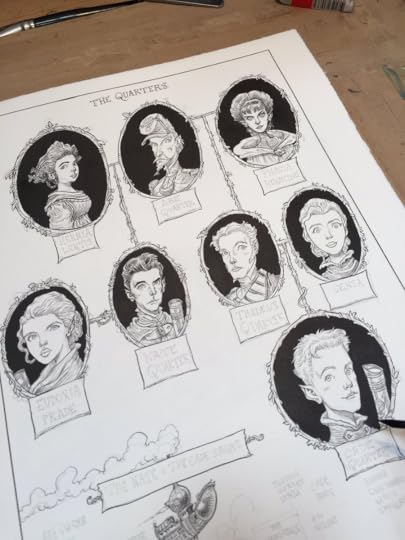
Cade Family Tree

The first two in the series were good, but not fantastic in comparison to what went before. This third and I believe final book in the series is much the same in that regard. It carries on the tale of Cade and the various troubles he has with the nefarious Quove Lentis who has taken over Great Glade and really messed up the Edge. This final novel explores, literally, the oft mentioned edge of the edge, oblivion awaits in open sky, or is there a bottom? Well that's what they are going to find out via Descending, the latest academic profession in New Sanctaphrax. Well, they would do, if the siege/war would stop for long enough to attempt it.

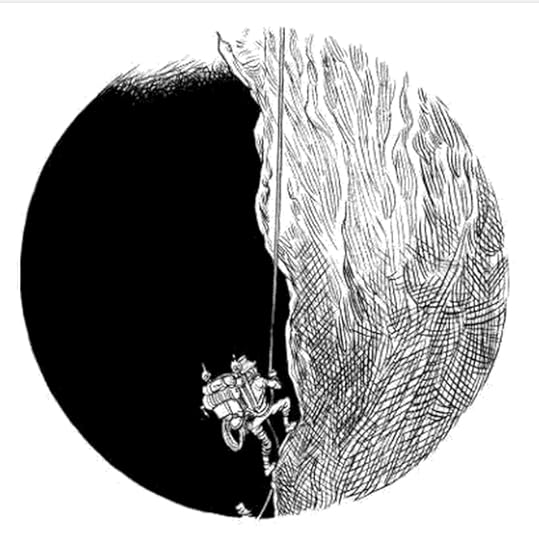
Descending the Edge

The conclusion with regard to the edge was kinda tidy, but also rather lack lustre, left a bit of a circular reference in the way that religion does - so I wasn't particularly fond of that. Also the story packs up both too quickly after the final showdown and too slowly. Tieing up a lot of lose ends, but all of them in a slightly trite way. It's been nice to explore the Edge for, well, I started the first book in April/May 2010, so 9-1/2 years! Many, many books from a pair of my favourites authors (my second most read, after Pratchett), of which the first Edge Chronicle, Beyond The Deepwoods, was the first. I've enjoyed it greatly, though the last trilogy was not the finest hour, it was worthy of my time. Thanks guys.

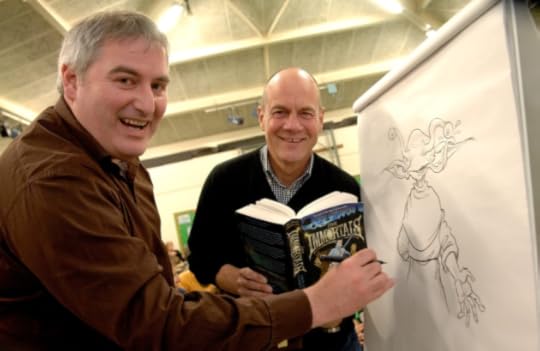
Chris Riddell and Paul Stewart
Profile Image for Priyanka.
210 reviews2 followers
May 14, 2025
Holy f***, I’m finally here at the end. What a ride it’s been. We finally feel the magnitude of changes that have taken place since Twig's first adventure as 500 years have passed and the Edge increasingly resembles our modern world.
That sense of change was compelling, but the storytelling itself sometimes stumbled. I found certain scenes a bit too drawn out yet oddly choppy at the same time. Still, a weaker Edge Chronicles entry stands head and shoulders above most other series.
We finally catch up with Nate and Eudoxia, whom we haven’t seen since Nate went over the Edge at the end of The Immortals. He is now older and more experienced, and the dynamic between him and Cade felt like a welcome change. In nearly every previous instalment, the protagonist was a young boy left to fend for himself with no real mentor, so it was refreshing to see a glimmer of support. That shift brought a real sense of closure, showing how far the world, and the story’s structure, has evolved.
I was very happy that we finally discover what lies beyond the Edge. The explanation was perfect, as it was both magical and grounded in nature and the natural order of things. The descending scene was haunting and the , rare moments (in this more sanitised trilogy) that echoed the darker tone of earlier instalments.
I think Cade is the first Verginix descendant to get a true happy ending and that made me so happy. After almost 600 years of loss and loneliness, starting with Wind Jackal, it felt deeply satisfying to finally see peace and stability.
I loved that it included an epilogue and that the saga was bookended with a Twig. What could be a more perfect end?
Though the authors have expressed interest in writing more, I think I’m finally ready to close this chapter.

Goodbye to the Edge!
Profile Image for Pádraic.
922 reviews
February 13, 2021
After the disappointing first two entires in this trilogy, The Descenders is at least somewhat of a return to form. Apparently this is the end of the Edge Chronicles (though they said the same thing about The Immortals before this, and Freeglader before that), and it's a very happily-ever-after way to end things, so your mileage may vary based on how satisfying you find that sort of conclusion.

I find myself running out of steam in my reviews of this series, so I'll keep it simple here. The good parts include: Nate's initial descents, haunting and beautiful; time spent among the ruins of Sanctaphrax and the Undergarden, rebuilding something new out of the wreckage; and once again pushing this world radically into a new future. The bad parts include: the sudden and unforeshadowed appearance of the tallow-hats, a bunch of would-be sky pirates who become briefly large players in the back third or so of the book but are never mentioned or set up before that; the transformation of Tug into a form less monstrous, which made me sigh very deeply; and the triteness of the ending, everybody paired off and in charge of their own little section of paradise.

Ah well, even if rereading and reading this series has been a patchy experience at some points, I'll always remember the Twig books fondly.
Profile Image for AilsaOD.
180 reviews
June 18, 2021

I have very mixed feelings about this book. I'm beginning to think that maybe I can't love this series as much as I used to - although I will need to reread the Rook trilogy first to tell. I have not read 'Doombringer' - book 2 of the Cade Trilogy - but I reread 'the Nameless one' specially in preparation for this hefty doorstop. What this has made apparent is that the Cade trilogy suffers from pacing issues. 'The Nameless one' meanders around in a fairly plotless manner, mainly setting the scene and 'Doombringer' appears to have been fairly self contained plot-wise (though I cannot confirm this) and I cannot help but feel like the first two books could have become one and 'the Descenders' split in two. 'The Descenders' does something similar to 'Star wars: the rise of Skywalker' in that it crams a whole trilogy onto the end of a story supposedly already two thirds in. Admittedly I enjoyed 'The Descenders' MUCH more than SW:tRoS but the plot seemed to go on and on in lots of easily separable pieces, one of which could have easily have been used to split the story in half.

Stewart and Riddell did just about justify the existance of the Cade trilogy with this book though. About the only remaining question about the edge after 'the immortals' was what is down there and while I think any attempt at answering that question would prove somewhat unsatisfying (and does a little), the first part of 'The descenders' that details Nate's descending expeditions was by far the best. Stewart and Riddell tackle the question in a manner that was exciting and reminded me of when I first read these books, though some of the drawings of the geology of the edge cliff made me laugh and the reveal of the true nature of the edge was weird.

There are also some aspects of this story that I'm not sure how deep I'm supposed to read. Probably not very but the corruption of the Freeglade Lancers from what they were in Rook's time invites comparison with long lasting institutions in real life that people look on favorably because of the past and is the nameless ones being called that an effort from the dwarves that enslave them to dehumanise them? Am I reading too much into it? Quite possibly!

Now onto my complaints: Nate should be the main character of this book - Cade never grew on me and is frustratingly incompetent and it is Nate who drives the story. Also the explanation of how Cade and Nate are related is hilariously complicated and is on par with Spock having multiple siblings he decided to keep secret! The other descenders in this story were also really interesting characters - the waif, trog duo's backstory was amazing - but their potential felt wasted with how much ground the book had to cover.

As I reread the edge chronicles I'm beginning to realise that Stewart and Riddell don't know how to deal with female characters - name one character whose mother is present in the story (Twig's adoptive mother being the notable almost exception as while Twig never sees her again she actually survived until the beginning of the story!). EVERY major character in this series has a dead/absent mother but a pretty high percentage have fathers (though they often do a bad job). I think they have gotten some things right with the female main characters in the past but Celestia really got done dirty here! She goes and joins the skymarshalls in New Sanctaphrax and participates in ONE skirmish, gets injured and nothing else happens with it. Why bother having her join in the first place? The only reason I can think of is that it introduces us to Brock, a member of the skymarshalls but then this becomes an implied love triangle and Brock is promptly punished by the narrative for daring to meddle with the endgame couple. Also there was NO reason for

The ending was extremely displeasing to me - I won't go into it because that would be spoilery but it was dissatisfying on so many different levels. Despite my whinge-fest I would recommend this book to fans of the edge chronicles, though if you haven't read any of the Cade trilogy I would suggest stopping at 'the Immortals' if you want maximum closure. If you are just starting the series don't read this book - any book before 'the immortals' is a much better starting place!
Profile Image for Sara Carmona.
270 reviews9 followers
March 7, 2024
Yes! Finally, the Edge Chronicles book I've been waiting for! The perfect ending to the series with the mysteries of the edge revealed. And what a mystery it was! I definitely did not expect what the descenders discovered at the bottom of the edge cliff. And the anticipation of getting there, the free fall, kept me on the edge of my seat. The world building and character development, of even minor characters, was stellar, as I've come to expect from these authors.

I have only three negative things to mention. The first is that the previous two books seem totally irrelevant, except to introduce a couple new characters, which easily could have been done in this book with a few more pages. The second is that some of the illustrations seemed to not quite get as much attention to detail, which gave a sense of inconsistency. And the third is the ending. It felt a little Tolkienish, compared to the ending of the final lord of the rings books. Just as the hobbits are making it back to their cozy homes, they have another problem to deal with. It felt the same with this book. I understand that things with Drax needed some closure but to throw it into the last chapter I think was not good pacing. The epilogue did make up for it some, but that was my biggest issue with this novel.

Overall though, quite a good read and a very satisfying ending for the series.
Profile Image for Ben.
34 reviews1 follower
June 23, 2019
A fitting end to the series (assume this is the last saga). Some of the magic of the earlier books is lost slightly and characters have a tendency to speak sentences of exposition at times rather than letting the reader figure things out for themselves.

Some of the final mysteries of the series are resolved in this novel and it's wrapped up in such a way that there's no sense of disappointment or a feeling that questions are left unanswered.
97 reviews2 followers
March 3, 2020
Worth it for long time readers just for the world building information. In many ways reads like 3 or 4 stories in one that happen sequentially. All ultimately fun to read if you can accept brief introductions and quick resolutions.

Aspects of the ending come out of nowhere, but serves as a good end to the long running series leaving all major questions answered with an air of optimism.
Profile Image for Judy.
Author 30 books19 followers
August 10, 2019
I’m coming away from this series with an admiration for the creators' perseverance and phenomenal creativity. Glad to have finally read the lot an will be able to chat about Edge characters until doomsday with my son.
19 reviews
December 31, 2019
The perfect ending to a perfect series. Epic, imaginative and yet deeply grounded in the fundamentals of human nature. Stories that will stand the test of time long after human civilisation has disappeared.
Profile Image for Bryan Jenks.
64 reviews41 followers
August 8, 2021
Great cap to the series. This really helps put a neat little bow on the millennia of time in the fictional world that passes, references many old faces in the story while also giving a nice resolution to this the latest trilogy. Paul Stewart does it again.
Profile Image for Tiarnán.
324 reviews74 followers
November 15, 2021
While the original three trilogies and the book of short stories are still excellent, the four 'new' books in the 'Edge Chronicles' just aren't up to much. A pity that such a great series ends with such a damp squib.
Profile Image for Derek.
12 reviews
February 6, 2025
Far better than the previous two books in the Cade Saga, we finally go back to adventures and discover more of the mysteries of the Edge! A bit of an abrupt ending, it still felt like a fitting finale of the series.
Profile Image for Bookeater.dk Bookeater.dk.
114 reviews16 followers
March 22, 2019
What a brilliant revisit to the wonderful world at The Edge. I truly hope that we won't have to wait as many years for the next book, as we did for this one :)
Profile Image for Katie Piatt.
13 reviews8 followers
March 24, 2019
The final book in the Edge Chronicles series, long awaited, and it did not fail to deliver. Tying off those loose ends and completing the circle...so much to love.
Profile Image for Noxwitchbooklife.
864 reviews12 followers
January 16, 2022
After 20 odd years after reading the first book I read the last.

It was a good ending, truly a circle of life. Not how I expected to to end but a good end nonetheless.
Profile Image for Todd Marsh.
66 reviews
July 1, 2022
It felt far too rushed in the second half, certain characters and plot points would have benefitted from being fleshed out more
Displaying 1 - 30 of 39 reviews

Can't find what you're looking for?

Get help and learn more about the design.