

What do you think?

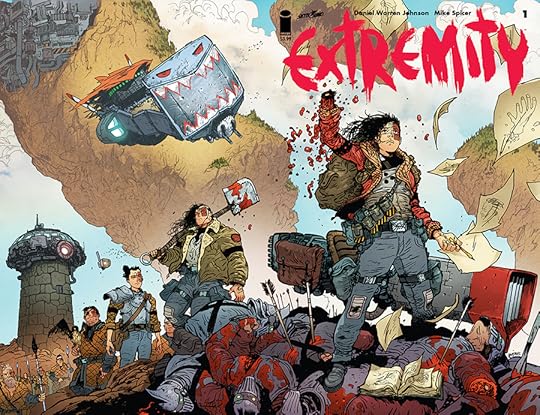
Extremity
Extremity, Vol. 2: Warrior
The Paznina take desperate measures to finish their war against the Roto... A war that will draw Thea and Rollo back into it, no matter how much death and heartbreak it promises.
Collects EXTREMITY #7-12
Collects EXTREMITY #7-12
144 pages, Paperback
First published March 2, 2018
About the author
Daniel Warren Johnson
168 books470 followersDaniel Warren Johnson is a Chicago-based comic book writer, artist, and illustrator. He's worked on titles for most major publishers, including Marvel, DC, Dark Horse, and Image. His current series with Skybound/Image Comics is EXTREMITY, a sci-fi/fantasy title he is writing and drawing, and continues to update his webcomic Space-Mullet in his spare time.
Ratings & Reviews
Friends & Following
Create a free account to discover what your friends think of this book!
Community Reviews
Displaying 1 - 30 of 88 reviews

May 13, 2018
A continuation of a heartbreaking space fantasy tale of war, revenge, and redemption. Absolutely incredible writing, world building, and artwork. And a story I wish wouldn’t have ended.
May 28, 2018
And so it ends...what a fucked up tale of revenge and love.
This is the final few days for Thea learning who she is. Built on revenge for years after what happened to her mother and her hand she wants to get back on the other clan. However, thanks to some new character's, she begins to change. Then her, and her brother, and the newly found friends, all go to end the war between the two clans. You know as well as I do that shit ain't going to be easy though.
Good: It felt very realistic. People didn't simply change their ways when they are filled with such hatred. Deaths feel meaningful, and heartbreaking sometimes, and the ending is both happy and somber. Oh, and how great is this art? It's pretty damn amazing.
Bad: The middle feels rushed, as if it wanted to slow down, but couldn't, and went back to full speed. Also, it ends. I feel it could keep going.
Overall, just like volume 1, it's fast paced, sad, violent, and exciting. Don't expect to leave happy but you will leave knowing you got one hell of a story. A 4 out of 5.
This is the final few days for Thea learning who she is. Built on revenge for years after what happened to her mother and her hand she wants to get back on the other clan. However, thanks to some new character's, she begins to change. Then her, and her brother, and the newly found friends, all go to end the war between the two clans. You know as well as I do that shit ain't going to be easy though.
Good: It felt very realistic. People didn't simply change their ways when they are filled with such hatred. Deaths feel meaningful, and heartbreaking sometimes, and the ending is both happy and somber. Oh, and how great is this art? It's pretty damn amazing.
Bad: The middle feels rushed, as if it wanted to slow down, but couldn't, and went back to full speed. Also, it ends. I feel it could keep going.
Overall, just like volume 1, it's fast paced, sad, violent, and exciting. Don't expect to leave happy but you will leave knowing you got one hell of a story. A 4 out of 5.

May 23, 2018
Yaaaaas! I friggen love this series and this volume is just as good...if not even better than the first volume.
The only negative thing I have is that it's over. I want more. there could (and should) be sooooo much more story for us to explore with these characters and this world. I want to see and know more!!
The art...the color...the panel layouts and those kickass two-page spreads!! The whole book is just...well...exactly what I wanted it to be. It all just goes down so easy and so fast - it's just so damn good that you whip right through lickety-split!
And how about those Griffins, hey...?
Seriously. More, please?
The only negative thing I have is that it's over. I want more. there could (and should) be sooooo much more story for us to explore with these characters and this world. I want to see and know more!!
The art...the color...the panel layouts and those kickass two-page spreads!! The whole book is just...well...exactly what I wanted it to be. It all just goes down so easy and so fast - it's just so damn good that you whip right through lickety-split!
And how about those Griffins, hey...?
Seriously. More, please?

August 22, 2023
As dad puts the mad in mutual assured destruction, his kids must have found an old Charlton Peacemaker comic book in the ruins of their broken world because now they love peace so much they're willing to fight for it.
The conclusion gets too mired in cliches and all the slam-bang action can't carry me past it -- though it does put in a tremendous effort.
The conclusion gets too mired in cliches and all the slam-bang action can't carry me past it -- though it does put in a tremendous effort.

January 9, 2021
Všechno co jsem řekl o jedničce platí i dvojce. Zakončení se povedlo na jedničku a byť je to svět do kterého bych se rozhodně rád vrátil a zkoumal ho dál, tak jsem rád že to nebylo natahováno dál než bylo potřeba.

December 29, 2018
The struggle between the Roto and Paznina continues with even more death and destruction left in its wake. The war will eventually open the eyes of their leaders, but it is unclear if the end of this volume also brings the long-awaited peace.
Thea and Rollo crashland near a city called the Ancient Dark. The are rescued by a friendly Paznina named Meshiba and brought to mother Diedre, a healer of sorts for the Esseni. Rollo begins work on restoring power to Shiloh, but he needs resources from the Black Canyon. The Pazninan princess Annora is pursuing the two brothers, but she gets side-tracked by attacking creatures roused by the device Jerome activated in the previous volume.
Thea and Rollo crashland near a city called the Ancient Dark. The are rescued by a friendly Paznina named Meshiba and brought to mother Diedre, a healer of sorts for the Esseni. Rollo begins work on restoring power to Shiloh, but he needs resources from the Black Canyon. The Pazninan princess Annora is pursuing the two brothers, but she gets side-tracked by attacking creatures roused by the device Jerome activated in the previous volume.

September 2, 2018
A little too predictable with the characters. The story was all over the shop but was solid. Could lead into another story arc but I doubt it. There are better Image comics out there but this is still a fun a read.

January 15, 2026
The ending question, was this all a waste? Things are still bad, people still make wrong choices but I’ve at least seen the error of my ways and have taken steps to better myself. Is there a point in trying to be good in a world that doesn’t reward goodness?
Another gorgeous collection of pages but a weak story. reminds me a lot of modern Disney stories with a lot of telling not showing. A good heart is here and I’d recommend the series to anyone who wants a quick little fantastical adventure- just don’t expect this to be more than fun with a nice lesson.
Another gorgeous collection of pages but a weak story. reminds me a lot of modern Disney stories with a lot of telling not showing. A good heart is here and I’d recommend the series to anyone who wants a quick little fantastical adventure- just don’t expect this to be more than fun with a nice lesson.

June 13, 2018
There is a saying that goes: "Everyone is fighting a battle that you cannot see."
The anguish, the grief, and the heartbreak muzzled by those battles unseen tend to simmer and scar if left on their own. Whether in times of war or peace, conflict or bliss, the bane of a humanity whose awareness borders on the sacrosanct is its tendency to believe it (humanity) is (or deserves to be) better than human. EXTREMITY culls the pitiful ambitions of the downtrodden, and in the place of pity assembles a thirst for revenge so deeply mired that it is a wonder how any of these characters survive until the final panel.
Thea of the Roto Clan is lost. Her father's war has pushed her and her brother, Rollo, to the outskirts. Does father care anymore? Is he so blinded by rage that his family no longer matters? With cannon balls sailing overhead, bloody swords salting the sullen earth, and the echoic cries of aged soldiers as they yearn for the warmth of their own families, long dead, Thea wonders of what use she, an "artist," can be in a world so thoroughly soaked, choked, and bewitched by blood.
Such is the way of EXTREMITY. Such are the internal conflicts of Thea, who endeavors to justify the hate she feels; of Rollo, who simply wants a friend; of Annora, Princess of the Paznina, who yearns for her mother's love; of Meshiba, a deserter-turned-protector-of-the-innocent . . . War and anguish darken the skies for these and other characters, but it's up to these characters, and no one else, to determine whether the sun has set for good or if it dares to rise and test its mettle one last time.
Daniel Warren Johnson has crafted an epic, this one already knows. But has he also crafted an epic with a heart questing to revoke the ties that bind humanity to its darkest inclinations? That's a tough story to write (and an even tougher story to write convincingly). And yet, the result is a comic book whose narrative rhythm, characterization, visual dynamism, and thematic consistency refuse to flinch in the face of mounting conflict. This is one amazing book.
It is, however, easy to feel bitter (or bittersweet) about a book like this. Very little occurs in a way one wants or expects for the characters. Thea's impatience and regret threaten to consume her compassion. Rollo's intellect threatens to consume and beguile his diligence. And then there's Meshiba, a big-bodied woman of color with a physical disability who steps up to lead a wayward people who have abandoned their tribal conflict. Meshiba is soft-spoken, easy-to-forgive, and noble; but only because she has already lived a life consumed with feverish pride (and discarded it). "Our way is not perfect," she says. "But we try."
EXTREMITY is a terrible storm on a beautiful beach, a disease of carrion on the hide of a newborn, the hammering of a rusted nail with a malformed fist.
There is only hope in the hope one carves for oneself.
The anguish, the grief, and the heartbreak muzzled by those battles unseen tend to simmer and scar if left on their own. Whether in times of war or peace, conflict or bliss, the bane of a humanity whose awareness borders on the sacrosanct is its tendency to believe it (humanity) is (or deserves to be) better than human. EXTREMITY culls the pitiful ambitions of the downtrodden, and in the place of pity assembles a thirst for revenge so deeply mired that it is a wonder how any of these characters survive until the final panel.
Thea of the Roto Clan is lost. Her father's war has pushed her and her brother, Rollo, to the outskirts. Does father care anymore? Is he so blinded by rage that his family no longer matters? With cannon balls sailing overhead, bloody swords salting the sullen earth, and the echoic cries of aged soldiers as they yearn for the warmth of their own families, long dead, Thea wonders of what use she, an "artist," can be in a world so thoroughly soaked, choked, and bewitched by blood.
Such is the way of EXTREMITY. Such are the internal conflicts of Thea, who endeavors to justify the hate she feels; of Rollo, who simply wants a friend; of Annora, Princess of the Paznina, who yearns for her mother's love; of Meshiba, a deserter-turned-protector-of-the-innocent . . . War and anguish darken the skies for these and other characters, but it's up to these characters, and no one else, to determine whether the sun has set for good or if it dares to rise and test its mettle one last time.
Daniel Warren Johnson has crafted an epic, this one already knows. But has he also crafted an epic with a heart questing to revoke the ties that bind humanity to its darkest inclinations? That's a tough story to write (and an even tougher story to write convincingly). And yet, the result is a comic book whose narrative rhythm, characterization, visual dynamism, and thematic consistency refuse to flinch in the face of mounting conflict. This is one amazing book.
It is, however, easy to feel bitter (or bittersweet) about a book like this. Very little occurs in a way one wants or expects for the characters. Thea's impatience and regret threaten to consume her compassion. Rollo's intellect threatens to consume and beguile his diligence. And then there's Meshiba, a big-bodied woman of color with a physical disability who steps up to lead a wayward people who have abandoned their tribal conflict. Meshiba is soft-spoken, easy-to-forgive, and noble; but only because she has already lived a life consumed with feverish pride (and discarded it). "Our way is not perfect," she says. "But we try."
EXTREMITY is a terrible storm on a beautiful beach, a disease of carrion on the hide of a newborn, the hammering of a rusted nail with a malformed fist.
There is only hope in the hope one carves for oneself.

October 21, 2018
Завершення моєї улюбленої серії минулого року (якщо не всього читацького досвіду, коли йдеться про комікси). Нічого не змінилось з попереднього тому: чудова ритмічна історія, добре розроблений світ, блискучий малюнок і морально-етичний мотив. Загалом, усе рухається до завершення, де мають зійтися два ворожих клани. Проте до цього протистояння, що відоме нам з першого тому, приєднується третій гравець, який змушує багатьох (але не всіх) переоцінити свої життєві принципи. Йдеться як про Мешібу, велику жінку з вадами (яка є чи не найбільш цікавим персонажем цього епічного чи то вестерн-фентезі, чи то антиутопічного сай-фаю, або й усього разом), так і про згодом несподіваного злодія, що руйнує усе на своєму шляху. Чи зможуть давні вороги об'єднатися навколо спільного ворога? Яку жертву вони готові принести для цього? Джонсон любить моральні дилеми, але вирішення їх ніколи не передбачиш.
Перша частина історії повільна, що потребує уважного роздивляння деталей і партій, а друга - динамічна, надто швидка для пауз. Динамічний, часто грубуватий малюнок нагадує стиль японської манги, безсоромно (але й благородно) відсилає до "Акіри" й усього робото-й-машино-дискурсу. Однак навіть це не стримує фантазію автора: тут і грифони, і триголові змії-гориничи, і лавкрафтові давні істоти, і щось подібне до динозаврів. Головне тут - люди, клани, які ніяк не можуть поділити між собою чи то землі, чи то цінності. Утім, для архаїчної свідомості (саме вона тут експлуатується) це майже одне й те ж. Усе добре, але мало. Такий прекрасний світ не хочеться полишати, тому є надія, що матимемо продовження. Нехай у ньому нічого не відбувається, але достатньо просто щоб події розвивались на цій географічній площині. At least we hope.
Перша частина історії повільна, що потребує уважного роздивляння деталей і партій, а друга - динамічна, надто швидка для пауз. Динамічний, часто грубуватий малюнок нагадує стиль японської манги, безсоромно (але й благородно) відсилає до "Акіри" й усього робото-й-машино-дискурсу. Однак навіть це не стримує фантазію автора: тут і грифони, і триголові змії-гориничи, і лавкрафтові давні істоти, і щось подібне до динозаврів. Головне тут - люди, клани, які ніяк не можуть поділити між собою чи то землі, чи то цінності. Утім, для архаїчної свідомості (саме вона тут експлуатується) це майже одне й те ж. Усе добре, але мало. Такий прекрасний світ не хочеться полишати, тому є надія, що матимемо продовження. Нехай у ньому нічого не відбувається, але достатньо просто щоб події розвивались на цій географічній площині. At least we hope.

December 14, 2025
I loved the way this wrapped up. You meet a new faction that has found a way to make peace but it is jarring. This book explores what retaliation can, and can't, accomplish. It deals broadly with the societal toll for unreconciled people groups but really is much more interested in the corrosive effect of revenge on a single person. It also looks at the nature of revenge. It is a self -feeding monster that never ends and just grows hungrier.
June 22, 2021
Secondo capitolo tutto in crescendo. Bello, bello bello!
August 27, 2022
I’d love a volume 3 and 4.

October 14, 2018
That was a thrilling second volume. I like it even more than volume 1.
Crazy pace, epic action, intruiging drama. What I find most impressive about "Extremity" is the dynamic artstyle. Every image/panel seems to be in motion, every action has impact to it and even the most chaotic battles are somehow easy to follow. I really appreciate that in such action packed story.
Crazy pace, epic action, intruiging drama. What I find most impressive about "Extremity" is the dynamic artstyle. Every image/panel seems to be in motion, every action has impact to it and even the most chaotic battles are somehow easy to follow. I really appreciate that in such action packed story.

February 11, 2021
Better than Star Wars, though it will never have the iconic multigenerational Hollywood appeal of that franchise. Man alive, I love Daniel Warren Johnson's visual storytelling, imaginative character designs, action sequences, and underlying moral messages!

May 3, 2025
This story was pretty standard but the delivery was good and I really, really liked the art. The ending was bittersweet. While this story doesn't do anything groundbreaking or introduce anything new to the formula it was an entertaining read.

March 18, 2018
Simply put this series is amazing! It has fantastic pacing, character development, world building, and the most gorgeous artwork you'll see in the world of comic books. This volume is a perfect close to what has become one of my favorite pieces of literature. Every issue was exciting and made me want to immediately go back and read it again.
There's so much more I want to say but I want to keep this spoiler free. Just do yourself a favor and read this series!
There's so much more I want to say but I want to keep this spoiler free. Just do yourself a favor and read this series!

March 18, 2020
Absolutely fantastic art and writing. Johnson is genius and this series, sadly finished, was an incredible read.

August 6, 2023
Extremity é una delle prime fatiche portate in Italia da quel fenomeno di Daniel Warren Johnson.
Ci troviamo davanti ad una storia di vendetta familiare, la classica storia dove violenza chiama violenza in un circolo infinito di sangue e morte.
2 clan rivali, nemici per colpa di una violenza che ormai si è persa nel passato ma che si ripete in ogni generazione sempre diversa ma sempre uguale , si contendono la terra e l'acqua di un mondo post apocalittico condiviso con delle bestie feroci e qualche oggetto che racconta la vita di civiltà antiche, di prima che le terre si innalzassero in cielo .
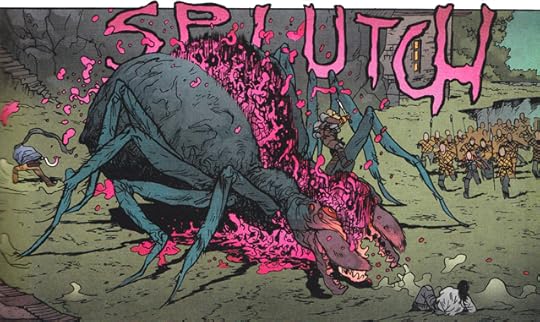
Il punto forte di questa storia inutile negarlo sono i disegni, fenomenali, con una colazione pazzesca.
La storia scorre fluida forse fin troppo, ci sarebbero volute più pagine, perché di questo mondo ci viene raccontato troppo poco, molti personaggi non hanno una degna back story, a volte solo accennata delle volte neanche .
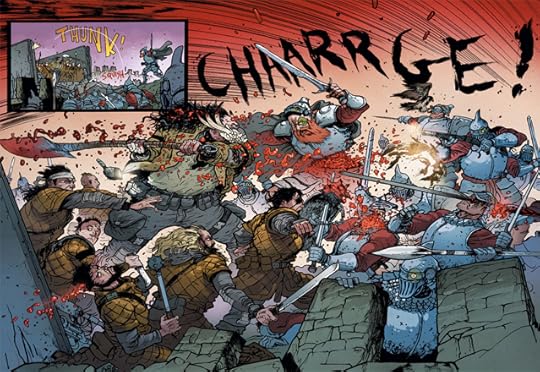
Le ultime pagine sono una piccola perla che apre un mondo nel finale, una bella trovata per non fare finire il tutto in modo banale .
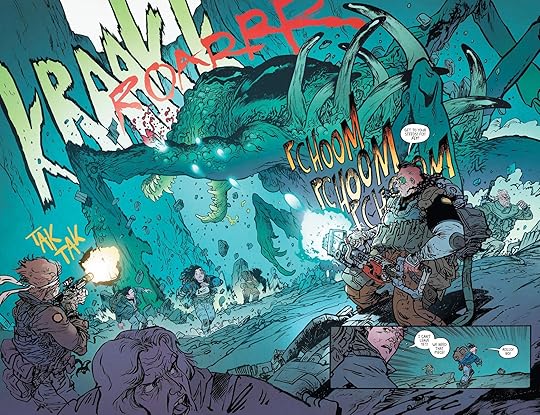
Ci troviamo davanti ad una storia di vendetta familiare, la classica storia dove violenza chiama violenza in un circolo infinito di sangue e morte.
2 clan rivali, nemici per colpa di una violenza che ormai si è persa nel passato ma che si ripete in ogni generazione sempre diversa ma sempre uguale , si contendono la terra e l'acqua di un mondo post apocalittico condiviso con delle bestie feroci e qualche oggetto che racconta la vita di civiltà antiche, di prima che le terre si innalzassero in cielo .
Il punto forte di questa storia inutile negarlo sono i disegni, fenomenali, con una colazione pazzesca.
La storia scorre fluida forse fin troppo, ci sarebbero volute più pagine, perché di questo mondo ci viene raccontato troppo poco, molti personaggi non hanno una degna back story, a volte solo accennata delle volte neanche .
Le ultime pagine sono una piccola perla che apre un mondo nel finale, una bella trovata per non fare finire il tutto in modo banale .

November 5, 2019
Another great volume of Extremity.
I just have to take a moment to mention the art in this volume, Its just incredible.
Some of the best action panels I’ve seen in recent memory, where you can just feel the momentum and speed jumping off the page, as well as some incredibly grandiose double page spreads with a breathtaking sense of scale. The whole book was just the definition of epic.
The world of Extremity continues to be really intriguing, and I’d really love to read more stories set in this universe and explore more about its history and its characters, two volumes just isn’t enough time to fully explore the fascinating world the author has built.
I just have to take a moment to mention the art in this volume, Its just incredible.
Some of the best action panels I’ve seen in recent memory, where you can just feel the momentum and speed jumping off the page, as well as some incredibly grandiose double page spreads with a breathtaking sense of scale. The whole book was just the definition of epic.
The world of Extremity continues to be really intriguing, and I’d really love to read more stories set in this universe and explore more about its history and its characters, two volumes just isn’t enough time to fully explore the fascinating world the author has built.

January 3, 2022
(4,3 of 5 for the energetic finale, which may be needed a little bit of extra space)
With this second half, DWJ stepped on the gas pedal and drove the story to a higher speed most of the time. And it felt good, really good. The downside is you just got into it, just fly through the pages and suddenly there is the end. I think even the DWJ didn't see it coming, because the ending felt like it needed more space to close the things, so DWJ at the last issue just decided to do some hints and wrapped it up. But as with all good stories, as a reader, I grew into the characters and just wanted a little bit of proper "closure".
With this second half, DWJ stepped on the gas pedal and drove the story to a higher speed most of the time. And it felt good, really good. The downside is you just got into it, just fly through the pages and suddenly there is the end. I think even the DWJ didn't see it coming, because the ending felt like it needed more space to close the things, so DWJ at the last issue just decided to do some hints and wrapped it up. But as with all good stories, as a reader, I grew into the characters and just wanted a little bit of proper "closure".

May 26, 2023
An incredibly powerful, visceral, violent illustration of the poisonous destruction of hate, anger, vengeance. The emptiness of revenge and violence and seeking Justice by our own forceful power. Mostly by way of implication but there are a few quiet moments where the true path of forgiveness is shown as the real strength and response to being wronged. As a Christian, I think it got as close to the true answer as possible apart from Christ’s redemptive blood, but even in that regard there are some strong parallels. Highly recommend, but be warned: there is a lot of blood and gore, though it serves the purpose of the theme.

July 16, 2021
I didn't like this as much as volume one. There is some really great stuff in here about the nature of violence and revenge. At what point have you gotten enough revenge? Do you have to kill ABSOULUTELY everyone, or is it just a half measure? It all builds towards the end, but it doesn't feel like it really pays off.

March 21, 2019
It reminds me short series from Mark Millar, before he started to write sh*t like Reborn and Magic Order. In twelve issues you get whole story, which is sometimes predictable, sometimes a little bit cliche, but still works and it's fun to read. Yeah, world is interesting , with great potential to explore more, main character is some kind of messiah who knows everything, but still, these are minor things and overall feeling from series is good. Art was not really my thing, especially faces of characters, sometimes it's hard to tell if you are looking at man or woman, but scenery and all are pretty nice.
May 22, 2022
So, this is probably a 4-star book, but it was over so dang fast that I docked it for brevity. This series really does deserve more time.
July 28, 2026
2.5 (biblio)

April 19, 2026
One of the most cinematic comic books I’ve ever read.

July 16, 2019
Oh boy... so, other than the art, is this a good story?
Well let’s look at what it has, it has a bunch of 2 dimensional characters who are thrown into a predictable and bloated story. We have in this trade, characters introduced who should’ve been added in the first 6 issues. We have clunky dialogue and no monologue caption. Which is dumb to me? What better way to disconnect the reader to the character than to cut off their thoughts? The whole point of a comic book medium is that it can do what a movie can’t, it can caption thoughts as well as tell a story through the imagery. This leads me to another big issue which is that we have no character development again other than Thea and her character development is minor and extremely predictable just like this whole story. From the first trade I knew she wasn’t going to be blood thirsty still why did it take her so long to come around to that? Why wasn’t Shiloh developed more when he was clearly the most interesting part of the story until the ending, why wasn’t Rolo either killed earlier or in the story at all? I hated him and wasn’t upset when he died (spoilers).
If you’re going to make a story where the outline is given to you in the first two seconds at least do what Pixar do and develop the fuck out the characters and make you care about them. I cared more about a fucking spork in toy story four more than I did for any of the characters in this story? And why is that? They all had potential to be good, their designs were cool; the Princess, Shiloh, ABBA(????), and Thea all could’ve been developed really deeply and the story could’ve been much better or you could’ve got to the point quicker and finished this in 6 issues rather than 12. It’s too long and there’s not enough there to justify it.
Ugh. I’m not into modern storytelling tbh. Everything reads like a movie these days and that’s not what Literature is supposed to be.
I think this story could’ve been great, I don’t even think the characters are bad I just think the writing is. I’m sorry. Your art is amazing but you should’ve got someone else to write the script and narrative. Call Jeff Lemire next time.
Well let’s look at what it has, it has a bunch of 2 dimensional characters who are thrown into a predictable and bloated story. We have in this trade, characters introduced who should’ve been added in the first 6 issues. We have clunky dialogue and no monologue caption. Which is dumb to me? What better way to disconnect the reader to the character than to cut off their thoughts? The whole point of a comic book medium is that it can do what a movie can’t, it can caption thoughts as well as tell a story through the imagery. This leads me to another big issue which is that we have no character development again other than Thea and her character development is minor and extremely predictable just like this whole story. From the first trade I knew she wasn’t going to be blood thirsty still why did it take her so long to come around to that? Why wasn’t Shiloh developed more when he was clearly the most interesting part of the story until the ending, why wasn’t Rolo either killed earlier or in the story at all? I hated him and wasn’t upset when he died (spoilers).
If you’re going to make a story where the outline is given to you in the first two seconds at least do what Pixar do and develop the fuck out the characters and make you care about them. I cared more about a fucking spork in toy story four more than I did for any of the characters in this story? And why is that? They all had potential to be good, their designs were cool; the Princess, Shiloh, ABBA(????), and Thea all could’ve been developed really deeply and the story could’ve been much better or you could’ve got to the point quicker and finished this in 6 issues rather than 12. It’s too long and there’s not enough there to justify it.
Ugh. I’m not into modern storytelling tbh. Everything reads like a movie these days and that’s not what Literature is supposed to be.
I think this story could’ve been great, I don’t even think the characters are bad I just think the writing is. I’m sorry. Your art is amazing but you should’ve got someone else to write the script and narrative. Call Jeff Lemire next time.

July 15, 2018
This volume starts out much stronger than the rest, with Thea and Rollo meeting a third party that tries to teach them a different way, even as their actions in the first volume bring a chance of victory to their family (at a cost they feel is too steep). But all of that is squandered by a really unsatisfying ending. I can see where it's trying to go, but it didn't work for me. It kind of feels like the story was rushed to end it here, and that didn't do it any favors. This volume is filled with epic fights that are well presented (if again excessively violent in their presentation), so if that's what you're into, you'll get a lot out of this volume. But all the impressive story and action can't make up for the limp ending.

November 7, 2019
The overall story idea is great, clans at war with each other, in some other space, time and place, the history of their people lost to time and pretty much unknown to all who currently live.
Unfortunately, I was left unsatisfied mostly, by the holes in the story. What exactly was Shiloh, what made him, how did he get there? So many questions were left unanswered. Sure the conflict between the parents was settled in a way, but so much of the story just wasn’t answered. We were given bits of stuff but never had it fulfilled.
The art was gorgeous which was a huge draw for me, I just wish there was more depth to the story. It skimmed the surface of what had potential to be really interesting but alas it ended too soon.
Unfortunately, I was left unsatisfied mostly, by the holes in the story. What exactly was Shiloh, what made him, how did he get there? So many questions were left unanswered. Sure the conflict between the parents was settled in a way, but so much of the story just wasn’t answered. We were given bits of stuff but never had it fulfilled.
The art was gorgeous which was a huge draw for me, I just wish there was more depth to the story. It skimmed the surface of what had potential to be really interesting but alas it ended too soon.
Displaying 1 - 30 of 88 reviews