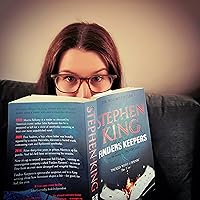
When I started reading this book, I had no idea that I would be halfway through it almost exactly when the Supreme Court struck down Roe versus Wade. Not the Supreme Court in the book no, but the actual United States Supreme Court here in June of 2022. It's very strange to be reading a book about misconceivers, (abortion providers) during this time. This book was published in 1997 and I think at the time overturning Roe vs. Wade seemed like something that would never happen, at least I don't remember wondering if Roe vs. Wade was threatened back then, when I was 22/23 years old. Remember it was considered "established law" even up until the most recent Supreme Court justices were appointed, just a few years ago. So it's very strange to be reading a book about this topic set in that very premise, describing a dystopian future…. on the very day 6/24/22 when Roe versus Wade has actually been overturned.
As I mentioned before one of my favorite books of all time is The Handmaid's Tale. I read it for the first time when I was 18 years old and I said that it was life-changing and I still think it is life-changing. That book takes the ideas of the Christian right to their full fruition in other words what would society really be like if the most extreme wings of Christian right actually was able to make all the laws to codify there religious views. I'll be honest, it's a pretty bleak view of the future. This book, The Misconceiver is quite different in that it really focus is just on abortion being illegal. The rest of society's norms abortion morality are similar to what they are currently. Yes there is a bit of shade thrown on the gay couples but remembering the book was published in 1997 it seems like no more shade than would have been thrown anyway back then. I think we've come a long way since then. I hope that the author explains why abortion itself becomes illegal without any other social morals being legislated because it is a bit strange to read about it that way. Especially AFTER having read The Handmaid's Tale several times. At least in The Handmaid's Tale the men pretend to follow their own moral-rules in public, in The Misconceiver rape is rife in society and there are pro men groups that advocate making babies with your mistress to prove your masculinity. The Misconceiver doesn't go the whole way on changing society's morals, just on banning abortions.
The book is confusing as well. It seems to suggest that back alley abortions would be bad for women (has a septic infection and probably dies -though the protagonist wonders but does not know her ultimate fate - from a botched abortion), that locking misconceivers up is bad for women (clearly Phoebe's sister died from her incarceration)...but it also very clearly refers to abortions as infanticide and has the protagonist explicitly requiring each woman to respond to the question, "Do you want me to kill your baby?" with the answer, "Yes, I want you to kill my baby." Interesting terminology and a lot to think about. Difficult to pin the author down on her views.
While not as good as The Handmaid's Tale, by far, this book was certainly an interesting page turner. I also felt that the ending of the book was not what I was hoping for (spoiler alert, stop reading now)...turning herself in and going back to jail?!?!?!?! Why would she do that? Arthur could've been a doctor in Mexico. I didn't like the ending one bit.
One thing I did very much enjoy in this book is how Ferriss imagine techonology in the near future (this book, published in 1997, actually takes place right around now in the 2020's). On page 40, she writes, "...everyone's car videos flickering from the dash as they switch to the traffic monitor seeking device." GPS, WAYZ? Ferriss predicted well there.
On page 32 she refers to sexual abuse by a clergyman.
On page 19, she speaks of an AIDS vaccine as a done deal...something only dreamed about in 1997.
On page 40 she has people iin video calls...but you have to send them a message on their beeper to get them to log on, lol. She didn't predict one device for the message and the video chat.
On page 269, "...his lap open, working with patient simulations - treating people three thousand miles away." Remote medicine is definitely a thing in the 2020's, excellent prediction, Ms. Ferriss