

What do you think?
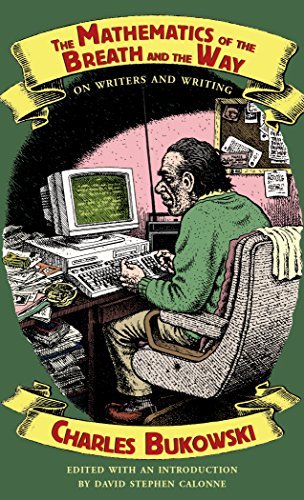
The Mathematics of the Breath and the Way: On Writers and Writing
“Genius could be the ability to say a profound thing in a simple way, or even to say a simple thing in a simpler way.”—Charles Bukowski
In The Mathematics of the Breath and the Way, Charles Bukowski considers the art of writing, and the art of living as a writer. Bringing together a variety of previously uncollected stories, columns, reviews, introductions, and interviews, this book finds him approaching the dynamics of his chosen profession with cynical aplomb, deflating pretensions and tearing down idols armed with only a typewriter and a bottle of beer. Beginning with the title piece—a serious manifesto disguised as off-handed remarks en route to the racetrack—The Mathematics of the Breath and the Way runs through numerous tales following the author’s adventures at poetry readings, parties, film sets, and bars, and also features an unprecedented gathering of Bukowski’s singular literary criticism. From classic authors like Hemingway to underground legends like d.a. levy to his own stable of obscure favorites, Bukowski uses each occasion to expound on the larger issues around literary production. The book closes with a handful of interviews in which he discusses his writing practices and his influences, making this a perfect guide to the man behind the myth and the disciplined artist behind the boozing brawler.
Born in Andernach, Germany, and raised in Los Angeles, Charles Bukowski (1920–1994) is the author of over forty-five books of poetry and prose.
David Stephen Calonne has written several books and edited four previous volumes of uncollected Bukowski for City Lights.
In The Mathematics of the Breath and the Way, Charles Bukowski considers the art of writing, and the art of living as a writer. Bringing together a variety of previously uncollected stories, columns, reviews, introductions, and interviews, this book finds him approaching the dynamics of his chosen profession with cynical aplomb, deflating pretensions and tearing down idols armed with only a typewriter and a bottle of beer. Beginning with the title piece—a serious manifesto disguised as off-handed remarks en route to the racetrack—The Mathematics of the Breath and the Way runs through numerous tales following the author’s adventures at poetry readings, parties, film sets, and bars, and also features an unprecedented gathering of Bukowski’s singular literary criticism. From classic authors like Hemingway to underground legends like d.a. levy to his own stable of obscure favorites, Bukowski uses each occasion to expound on the larger issues around literary production. The book closes with a handful of interviews in which he discusses his writing practices and his influences, making this a perfect guide to the man behind the myth and the disciplined artist behind the boozing brawler.
Born in Andernach, Germany, and raised in Los Angeles, Charles Bukowski (1920–1994) is the author of over forty-five books of poetry and prose.
David Stephen Calonne has written several books and edited four previous volumes of uncollected Bukowski for City Lights.
298 pages, Kindle Edition
First published January 1, 2018
About the author
Charles Bukowski
892 books30.6k followersHenry Charles Bukowski (born as Heinrich Karl Bukowski) was a German-born American poet, novelist and short story writer. His writing was influenced by the social, cultural and economic ambience of his home city of Los Angeles.It is marked by an emphasis on the ordinary lives of poor Americans, the act of writing, alcohol, relationships with women and the drudgery of work. Bukowski wrote thousands of poems, hundreds of short stories and six novels, eventually publishing over sixty books
Charles Bukowski was the only child of an American soldier and a German mother. At the age of three, he came with his family to the United States and grew up in Los Angeles. He attended Los Angeles City College from 1939 to 1941, then left school and moved to New York City to become a writer. His lack of publishing success at this time caused him to give up writing in 1946 and spurred a ten-year stint of heavy drinking. After he developed a bleeding ulcer, he decided to take up writing again. He worked a wide range of jobs to support his writing, including dishwasher, truck driver and loader, mail carrier, guard, gas station attendant, stock boy, warehouse worker, shipping clerk, post office clerk, parking lot attendant, Red Cross orderly, and elevator operator. He also worked in a dog biscuit factory, a slaughterhouse, a cake and cookie factory, and he hung posters in New York City subways.
Bukowski published his first story when he was twenty-four and began writing poetry at the age of thirty-five. His first book of poetry was published in 1959; he went on to publish more than forty-five books of poetry and prose, including Pulp (1994), Screams from the Balcony (1993), and The Last Night of the Earth Poems (1992).
He died of leukemia in San Pedro on March 9, 1994.
Charles Bukowski was the only child of an American soldier and a German mother. At the age of three, he came with his family to the United States and grew up in Los Angeles. He attended Los Angeles City College from 1939 to 1941, then left school and moved to New York City to become a writer. His lack of publishing success at this time caused him to give up writing in 1946 and spurred a ten-year stint of heavy drinking. After he developed a bleeding ulcer, he decided to take up writing again. He worked a wide range of jobs to support his writing, including dishwasher, truck driver and loader, mail carrier, guard, gas station attendant, stock boy, warehouse worker, shipping clerk, post office clerk, parking lot attendant, Red Cross orderly, and elevator operator. He also worked in a dog biscuit factory, a slaughterhouse, a cake and cookie factory, and he hung posters in New York City subways.
Bukowski published his first story when he was twenty-four and began writing poetry at the age of thirty-five. His first book of poetry was published in 1959; he went on to publish more than forty-five books of poetry and prose, including Pulp (1994), Screams from the Balcony (1993), and The Last Night of the Earth Poems (1992).
He died of leukemia in San Pedro on March 9, 1994.
Ratings & Reviews
Friends & Following
Create a free account to discover what your friends think of this book!
Community Reviews
Displaying 1 - 30 of 31 reviews

March 11, 2022
"The wheels were gone, the belly was gone and the heart pumped piss."
Bukowski is bad for boring marriages, boring social life, boring writers and people stuck in boring jobs. No other writer makes me want to take dangerous risks like Bukowski does. All his stories are like a sneer at people living uninspired lives. He even gives great advice to writers - if you were bored writing your book, readers will be bored reading your book :)
This is a collection of short stories, Bukowski reviewing some American poets and finally his interviews. Bukowski is ever present even in his reviews of other writers. He is not an objective guy or anything. Hahaha! Bukowski is interesting even when he is reviewing poets whom I have never heard of.
It is almost as if Bukowski knows what the people (actually me) want to hear and read. There is even a short story about a South American badass dictator politician who humiliates an American journalist. I have this friend to whom I gave a copy of Factotum and it is the only book he ever completed in his life during his daily 5 hour train journey.
"I know what's funny about Hollywood. To make them laugh you must state the most obvious thing and multiply by 15. Most people have a great fear of being different, so if they can laugh at seeming truth that almost everybody recognizes, it makes them safe- it indicates that they understand the mechanism, that they understand each other, and that they are all together, laughing."
"Yes, I've heard that laughter, the laughter of the crowd together, and its a most piteous, mewling, begging and cowardly sound.
Bukowski is bad for boring marriages, boring social life, boring writers and people stuck in boring jobs. No other writer makes me want to take dangerous risks like Bukowski does. All his stories are like a sneer at people living uninspired lives. He even gives great advice to writers - if you were bored writing your book, readers will be bored reading your book :)
This is a collection of short stories, Bukowski reviewing some American poets and finally his interviews. Bukowski is ever present even in his reviews of other writers. He is not an objective guy or anything. Hahaha! Bukowski is interesting even when he is reviewing poets whom I have never heard of.
It is almost as if Bukowski knows what the people (actually me) want to hear and read. There is even a short story about a South American badass dictator politician who humiliates an American journalist. I have this friend to whom I gave a copy of Factotum and it is the only book he ever completed in his life during his daily 5 hour train journey.
"I know what's funny about Hollywood. To make them laugh you must state the most obvious thing and multiply by 15. Most people have a great fear of being different, so if they can laugh at seeming truth that almost everybody recognizes, it makes them safe- it indicates that they understand the mechanism, that they understand each other, and that they are all together, laughing."
"Yes, I've heard that laughter, the laughter of the crowd together, and its a most piteous, mewling, begging and cowardly sound.

December 6, 2020
Ah, Bukowski. Nothing was more important to him than fitting into stereotypes.
He loved the whole romantic line of bullshit about poets being crazy, disorganized, bohemian people. He loved to shock his readers, his editors, his publishers, everybody he knew. But most of all, he LOVED being a man.
But his idea of manhood was one boring cliche. He drank a lot, hung around at bars a lot, took jobs that involved manual labor, gambled, drank some more, and of course, treated women like they were things to bed. It was important to him, even during his older days, that women immediately fall for him. It was important to him that other people fit into their stereotypes as well.
Does all this sound irrelevant to the book I'm reviewing? I wish it was. In this book, which is basically a collection of his unpublished writings, he brings up the same things about women and minorities over and over again. At times he sounds like a boomer in the worst way, spouting jokes about how women are impossible to understand and how he impressed a beautiful redhead with just a few lines of his poetry. Or at least, that's how he remembers it happening. And let's not forget the gatekeeping. You have to be a certain way to be a great writer, Bukowski wisely tells us. You gotta be anti-establishment, man. You can't sell out, man. And other such tired horseshit admired by edgy teenagers worldwide.
Bukowski ultimately did achieve his dream of becoming a stereotype. These days he perfectly fits into the idea of 'Old White Man as Poet'.
I was a fan of his for a long time though. And even now, sometimes, I'll pick up a few poems of his and remember why I liked him. Because underneath all the romanticized alcoholism and self-congratulation, there was a vulnerable soul that snuck in between the stanzas.
Motherfucker could write.
He loved the whole romantic line of bullshit about poets being crazy, disorganized, bohemian people. He loved to shock his readers, his editors, his publishers, everybody he knew. But most of all, he LOVED being a man.
But his idea of manhood was one boring cliche. He drank a lot, hung around at bars a lot, took jobs that involved manual labor, gambled, drank some more, and of course, treated women like they were things to bed. It was important to him, even during his older days, that women immediately fall for him. It was important to him that other people fit into their stereotypes as well.
Does all this sound irrelevant to the book I'm reviewing? I wish it was. In this book, which is basically a collection of his unpublished writings, he brings up the same things about women and minorities over and over again. At times he sounds like a boomer in the worst way, spouting jokes about how women are impossible to understand and how he impressed a beautiful redhead with just a few lines of his poetry. Or at least, that's how he remembers it happening. And let's not forget the gatekeeping. You have to be a certain way to be a great writer, Bukowski wisely tells us. You gotta be anti-establishment, man. You can't sell out, man. And other such tired horseshit admired by edgy teenagers worldwide.
Bukowski ultimately did achieve his dream of becoming a stereotype. These days he perfectly fits into the idea of 'Old White Man as Poet'.
I was a fan of his for a long time though. And even now, sometimes, I'll pick up a few poems of his and remember why I liked him. Because underneath all the romanticized alcoholism and self-congratulation, there was a vulnerable soul that snuck in between the stanzas.
Motherfucker could write.

February 9, 2018
Some poets wrote for beauty or truth or insight. Some wrote to get the girls. Charles Bukowski wrote for effect. He wanted readers to feel. His prose – essays - are assemblages of weakness, drunkeness, raunch, and above all, vulgarity. If there ever was an anti-hero, an unsympathetic role model, he can be found in Bukowski. The Mathematics of the Breath and the Way on Writers and Writing is a collection that puts Bukowski into perspective. There are columns, essays, introductions, book reviews and transcripts of interviews – and no poetry. From them, the man and the sham both become apparent.
It’s strange rereading these pieces in 2018. In the 1970s they were outrageous and groundbreaking. They had shock value and revealed a demi-monde most readers of the alternate press had little contact with or knowledge of. Today, the Bukowski style can be found in alternative weeklies everywhere, making it commonplace. But worse is that the country has become so vulgar, led by the president himself, the essays often seem amusingly tame.
For all his drunken life, Bukowski studied writers. He learned what made them good, where they were weak and what made them commercial. His book reviews though, were totally undisciplined meanderings that went on too long and sometimes had nothing to do with the author or the book. Bukowski wrote for himself, edited little and never planned. He spoke through his alcohol-lubricated fingers and was happy with his monologues.
His knowledge of writers fed only a need to shock, not to emulate. It started in college where he assumed the profile of a Nazi, so people would notice and remember him: “…The hatred is so nice. It sets you free. When you’re hated, you can’t fail.” It is ironic, because when he became successful, he shunned the limelight. He much preferred his isolation, where he could pound on a typewriter amid bottles of beer and wine, with classical music in the background. R. Crumb’s cartoon cover image captures it perfectly, as specified by Bukowski.
Bukowski never wanted any part of the mainstream. He was in his fifties before he ever applied for a grant. He favored the “littles” – the low circulation alternative presses, which paid poorly or not at all. He claimed he earned 30 cents a day writing poetry in the 1960s.
I didn’t bother to count, but my impression is his two most common descriptors are drunk and vomit. Besides drinking, his favorite activity was horse racing – losing big. He all but lived in bars across the USA, drifting from city to city, taking menial, manual labor jobs. His longest stint was at the post office – ten miserable years - where he finally decided to make an actual living off his writing, and quit. The result was fascination around the world. It was gratitude for blunt, seemingly honest descriptions of the hard life. He had no position on religion or politics or even exploitation of the worker. He could not afford a television until late in life so he was not up on anything in pop culture. He simply extrapolated from his bizarre day. And while most of it was at least based on himself, he exaggerated mightily to make the stories attractive. It still works.
David Wineberg
It’s strange rereading these pieces in 2018. In the 1970s they were outrageous and groundbreaking. They had shock value and revealed a demi-monde most readers of the alternate press had little contact with or knowledge of. Today, the Bukowski style can be found in alternative weeklies everywhere, making it commonplace. But worse is that the country has become so vulgar, led by the president himself, the essays often seem amusingly tame.
For all his drunken life, Bukowski studied writers. He learned what made them good, where they were weak and what made them commercial. His book reviews though, were totally undisciplined meanderings that went on too long and sometimes had nothing to do with the author or the book. Bukowski wrote for himself, edited little and never planned. He spoke through his alcohol-lubricated fingers and was happy with his monologues.
His knowledge of writers fed only a need to shock, not to emulate. It started in college where he assumed the profile of a Nazi, so people would notice and remember him: “…The hatred is so nice. It sets you free. When you’re hated, you can’t fail.” It is ironic, because when he became successful, he shunned the limelight. He much preferred his isolation, where he could pound on a typewriter amid bottles of beer and wine, with classical music in the background. R. Crumb’s cartoon cover image captures it perfectly, as specified by Bukowski.
Bukowski never wanted any part of the mainstream. He was in his fifties before he ever applied for a grant. He favored the “littles” – the low circulation alternative presses, which paid poorly or not at all. He claimed he earned 30 cents a day writing poetry in the 1960s.
I didn’t bother to count, but my impression is his two most common descriptors are drunk and vomit. Besides drinking, his favorite activity was horse racing – losing big. He all but lived in bars across the USA, drifting from city to city, taking menial, manual labor jobs. His longest stint was at the post office – ten miserable years - where he finally decided to make an actual living off his writing, and quit. The result was fascination around the world. It was gratitude for blunt, seemingly honest descriptions of the hard life. He had no position on religion or politics or even exploitation of the worker. He could not afford a television until late in life so he was not up on anything in pop culture. He simply extrapolated from his bizarre day. And while most of it was at least based on himself, he exaggerated mightily to make the stories attractive. It still works.
David Wineberg

November 10, 2024
This publication is divided into three sections. The first presents some omitted stories from "Notes of a Dirty Old Man", the second the introductions Bukowski had written for the books of some of his peers, and the third some interviews with him. If anything is worthwhile in this edition, it is not the stories, which are, after all, all in Bukowski's familiar style, with the familiar themes, but the introductions and interviews. Here we see an ever-ready, lucid, stormy Bukowski, setting out, in the form of a manifesto, his views on poetry, in a catapulting style, recommending something of a guide for aspiring writers and for those who simply abuse poetry to satisfy their personal ambitions. Bukowski gives great life lessons, prefigures his dedication to writing, and becomes a symbol of a writer who, although he always lived on the edge, one who took nothing seriously, considered poetry his most serious pursuit, fully committed to its stakes. Great reading, especially for these two sections.

January 5, 2024
Estranha forma de começar o ano... espero que se venha a revelar auspiciosa.
Bukowski no seu melhor (também se aceita 'no seu pior’).
Colectânea com algumas short stories bem fascinantes criadas pelo talento peculiar de B.
Tivesse ele nascido cinquenta anos mais tarde e decerto era impublicável. Sorte sua, ficou um autor de culto. Mais ainda, a autoficção está na moda…
Vale a pena ler nem que seja para conhecer o jeito irreverente e a escrita genial.
Bukowski no seu melhor (também se aceita 'no seu pior’).
Colectânea com algumas short stories bem fascinantes criadas pelo talento peculiar de B.
Tivesse ele nascido cinquenta anos mais tarde e decerto era impublicável. Sorte sua, ficou um autor de culto. Mais ainda, a autoficção está na moda…
Vale a pena ler nem que seja para conhecer o jeito irreverente e a escrita genial.

August 12, 2018
Another Bukowski smorgasbord. May the fine people who run his estate never run out of barely publishable odds and ends.
August 10, 2020
I’d have given it five stars had Bukowski been less of a lout and misogynist. And yet, there’s a fantastic heart in there somewhere. I wish I could have had a beer with him.
September 16, 2026
Neste livro estamos sempre perto do precipício. Bukowsvki é uma anti estrela, uma anti vedeta que por ser tão anti nos dá curiosidade de conhecer.
Tabaco e alcool e mulheres, o que consome em excesso quando não escreve.
Tabaco e alcool e mulheres, o que consome em excesso quando não escreve.

October 11, 2018
Before reading this book, my only knowledge of Bukowski was having read a couple of his poems that appeared in various anthologies, and hearing his name bandied about as an example of a manly Hemingway-esque poet. The Mathematics of the Breath and the Way is a collection of various odds and ends by Bukowski, but none of his poetry except an occasional excerpt. So now I can say I’ve read Bukowski, but not the stuff for which he is primarily known. He strikes me as an interesting character, but one I would not have wanted to hang out with. As a writer, he knows his way around words, but I think I am done with him. If I come across his poems in my reading I will not go out of my way to avoid them, but neither will I seek them out.

August 30, 2021
This is a fun collection of random Bukowski odds and ends. The introduction frames the collection as an exploration of Buk as a writer. He so often wrote about being a writer or a poet but his conception of the writer was somewhat amorphous, he was trying to find what it was to be a writer or poet and then striving to be that. I do enjoy his kind of narcissistic way of dismissing people as "not as good as Bukowski", fuck it if you don't love your own shit why even write?
We get a few short stories and much of the "Notes of A Dirty Old Man" column here (p59-149). It's hilarious and poignant but if you've read the full NOADOM collection this book won't be great bang for your buck. In order this collection has:
1. INTRODUCTION (by David Stephen Calonne) "Charles Bukowkski on Writers and Writing"
2. MANIFESTO: "On the Mathematics of the Breath and the Way"
3. TALES (short stories but mainly columns for NOADOM)
4. INTRODUCTIONS AND CRITICISM (nice to read but as you can imagine introductions for books ripped and presented separately from what they were meant to introduce is awkward)
5. INTERVIEWS
The introduction is brilliant. David is very knowledgeable and fleshes out Bukowski's often without context stories, the names Bukowski uses are actual people in some cases as David outlines (different writers he hung out with or admired). Many of the stories selected purposely focus on Bukowski referencing other writers, writing itself or what it means to be a writer, others aren't really focused on that theme but are still great. He also makes a great pitch for the purpose of this collection being as I outlined earlier, to show Bukowski as The Writer and what that meant to him. Directly after the intro we have Bukowski explaining his own views in a manifesto which this collection takes its title from. I haven't rushed to read this book, if anything I took my sweet time a bit too much, on rereading the short manifesto for this review I have to say it is a good summation of Bukowski's attitude on writing. You must live to write that's why those without life experience are bad writers, academics and the like, style is important and once cultivated should be maintained etc.
The Tales section was great although given I have a copy of NOADOM in my possession I can't help but feel I've slightly wasted my money, it must be said though I never got through the full collection but got through this easily. Obviously the editor of this just chose his favourite columns and ones which were relevant to the overall theme of Buk as writer and his thoughts on that. You get a lot of sex, drinking, the race track, porn stores, poetry reading, stories about all that stuff and if you like Bukowski you know exactly what to expect. If you love his views and humour, oodles of humour both outward and self deprecating I don't see why people don't see him as a more comic writer, you're in comfy slightly drunk territory.
The introductions and criticism section had interesting moments but feels somewhat pointless. Reading an introduction for a book separate from it feels like shaking someone's hand and then they instantly disappear. Literary blue balls for most of that section. His book reviews are great though. When he hates something he shits on it from a height and when he likes it you can feel his love through the page.
The interviews section is 45 brief pages and closes out the collection, it's like an after show Q&A as Buk would drunkenly do at poetry readings.
In closing this is one for Bukowski fans who want a less conventional look at the man. If you're a completionist though I imagine you'll have read most of this material in other locations and I would only recommend it if you haven't read him in a while and would like an unorthodox refresher. For newcomers I think it's a decent look at Bukowski as The Writer. Personally I think that's a better initial impression than selling him short as a boozer or horny bastard, he was those things but so are most people. No one is one thing but if Bukowski had to be only one it would either be Poet or Writer.
We get a few short stories and much of the "Notes of A Dirty Old Man" column here (p59-149). It's hilarious and poignant but if you've read the full NOADOM collection this book won't be great bang for your buck. In order this collection has:
1. INTRODUCTION (by David Stephen Calonne) "Charles Bukowkski on Writers and Writing"
2. MANIFESTO: "On the Mathematics of the Breath and the Way"
3. TALES (short stories but mainly columns for NOADOM)
4. INTRODUCTIONS AND CRITICISM (nice to read but as you can imagine introductions for books ripped and presented separately from what they were meant to introduce is awkward)
5. INTERVIEWS
The introduction is brilliant. David is very knowledgeable and fleshes out Bukowski's often without context stories, the names Bukowski uses are actual people in some cases as David outlines (different writers he hung out with or admired). Many of the stories selected purposely focus on Bukowski referencing other writers, writing itself or what it means to be a writer, others aren't really focused on that theme but are still great. He also makes a great pitch for the purpose of this collection being as I outlined earlier, to show Bukowski as The Writer and what that meant to him. Directly after the intro we have Bukowski explaining his own views in a manifesto which this collection takes its title from. I haven't rushed to read this book, if anything I took my sweet time a bit too much, on rereading the short manifesto for this review I have to say it is a good summation of Bukowski's attitude on writing. You must live to write that's why those without life experience are bad writers, academics and the like, style is important and once cultivated should be maintained etc.
The Tales section was great although given I have a copy of NOADOM in my possession I can't help but feel I've slightly wasted my money, it must be said though I never got through the full collection but got through this easily. Obviously the editor of this just chose his favourite columns and ones which were relevant to the overall theme of Buk as writer and his thoughts on that. You get a lot of sex, drinking, the race track, porn stores, poetry reading, stories about all that stuff and if you like Bukowski you know exactly what to expect. If you love his views and humour, oodles of humour both outward and self deprecating I don't see why people don't see him as a more comic writer, you're in comfy slightly drunk territory.
The introductions and criticism section had interesting moments but feels somewhat pointless. Reading an introduction for a book separate from it feels like shaking someone's hand and then they instantly disappear. Literary blue balls for most of that section. His book reviews are great though. When he hates something he shits on it from a height and when he likes it you can feel his love through the page.
The interviews section is 45 brief pages and closes out the collection, it's like an after show Q&A as Buk would drunkenly do at poetry readings.
In closing this is one for Bukowski fans who want a less conventional look at the man. If you're a completionist though I imagine you'll have read most of this material in other locations and I would only recommend it if you haven't read him in a while and would like an unorthodox refresher. For newcomers I think it's a decent look at Bukowski as The Writer. Personally I think that's a better initial impression than selling him short as a boozer or horny bastard, he was those things but so are most people. No one is one thing but if Bukowski had to be only one it would either be Poet or Writer.
September 28, 2018
This was the sixth book but first non-novel of Bukowski's that I read, and I was very impressed by it! I'd never read any column, review, introduction, short story or interview of his before, and this book has got all of the above. It was extremely interesting and sometimes even profound. I was hoping for more of his thoughts on novel and short-story writing in particular, but on poets and poetry there is of course tons.
"Most of us are born poets. It is only when our elders get to us and begin to teach us what they teach us that the poet dies." - Page 200
The last part, the fantastic interviews section, turned out to be my favourite aspect of the book.
"[I]f you're a good writer you're always going to disturb somebody with almost everything you write." - Page 270
"Most of us are born poets. It is only when our elders get to us and begin to teach us what they teach us that the poet dies." - Page 200
The last part, the fantastic interviews section, turned out to be my favourite aspect of the book.
"[I]f you're a good writer you're always going to disturb somebody with almost everything you write." - Page 270

February 28, 2024
Num volume que compila documentos dispersos, no género, na temática e na época de criação, vamos encontrar textos de valor diferente. Mas é uma compilação muito bem feita. Mais uma prova de que o todo é maior do que a soma das partes. É, pois, um livro indispensável para conhecer o escritor e o pensamento do homem, Charles Bukowski. Destaco esta passagem, na qual me revejo:
"Tens de ser duro para facturar, tens de estar sozinho para saberes onde raio estás. É claro que tens de sair para perceber o que anda por aí. Mas não podes ficar lá fora e nadar naquilo e ser levado por aquilo - tens de voltar para casa, fechar a porta e fazer o que tens a fazer".
Talvez a melhor definição e apologia de independência de espírito que já li.
"Tens de ser duro para facturar, tens de estar sozinho para saberes onde raio estás. É claro que tens de sair para perceber o que anda por aí. Mas não podes ficar lá fora e nadar naquilo e ser levado por aquilo - tens de voltar para casa, fechar a porta e fazer o que tens a fazer".
Talvez a melhor definição e apologia de independência de espírito que já li.

June 28, 2019
A new 2018 collection of some of BUK's writing, including his first published story from 1957. Bukowski was a "writer's writer," meaning--to me--a man who lived to write and wrote to live, literally, above all else including women, the ponies, or booze. He mentions my alma mater, Kent State University, which I loved, in one of the several included interviews, and there're great pieces from his "Notes of a Dirty Old Man" tales that are mighty FUN-knee, to boot!
My vlog review will appear very soon on my YouTube channel:
https://www.youtube.com/channel/UCBNf...
My vlog review will appear very soon on my YouTube channel:
https://www.youtube.com/channel/UCBNf...

March 4, 2022
Another poignant compilation of Bukowski works. This book can be read as a journal that captures the struggles, perceptions and thoughts of the writer during his life. It relays trips of madness, drunken nights and conversations with other literary figures. Perhaps the most noteworthy aspect of this book is that it offers a variety of mediums: essays, short stories and interviews all show different aspects of the person and writer that Charles Bukowski was.

December 1, 2024
Think what you will, but this was a five star experience, having this book at my bedside after a brief sweet visit with friends like family in town to city lights books, seeing this Bukowski and thinking it’s one that got away. Instead, it’s a collection of many of the dirty old man essays. It felt so crisp to hear his voice, to literally read his words, rather than any kind of listening as the vehicle. He’s just great.

September 18, 2024
Good, not great.
Some of the prose in the first half was interesting but ultimately felt a bit repetitive.
The non-fiction and interviews in the second half were much more interesting and powerful for me.
Did lead me to order a copy of Factotum today though...
Some of the prose in the first half was interesting but ultimately felt a bit repetitive.
The non-fiction and interviews in the second half were much more interesting and powerful for me.
Did lead me to order a copy of Factotum today though...

May 28, 2018
You can love or hate Charles Bukowski. I love him so whatever he writes is 5* in my book..
Many thanks to City Lights Publishers and Edelweiss for this ARC
Many thanks to City Lights Publishers and Edelweiss for this ARC
May 14, 2019
Did not finish.

June 5, 2019
Bukowski challenges me morally, and I enjoy it. It's refreshing to read people you don't agree with sometimes, especially when they can actually write well.

November 21, 2021
Un gran bel taccuino.

October 21, 2022
again, found too late. great interviews. breath and way clearly refers to buddhism and taoism.
don't try.
don't try.

February 15, 2023
My favorite collection in a long time
June 13, 2024
Great book
Like the different arrangements of tales and forewords and especially the interviews
Like the different arrangements of tales and forewords and especially the interviews

November 8, 2024
to consume and be consumed

November 20, 2024
Još jedna nova stara knjiga. Izmiješani tekstovi o svemu pomalo, od vrlo dobrih do teško čitljivih. Knjiga nije baš neki ogled piščevog stvaralaštva, u smislu kvalitete.
September 9, 2026
❝não sou suficientemente sábio para liderar, mas sou suficientemente sábio para não seguir.❞

October 3, 2024
knew i wasn’t gonna like him but needed to know for myself WHY i don’t like him. while he had great one liners scattered in there, his moments of sentience were outweighed by his assholeish qualities. though i do admire his truly not giving a fuck! & you can’t say he didn’t genuinely love to write. overall gives me major predatory / harvey weinstein energy and would 100% not be mainstream if he wrote what he wrote in 2024 but to that he’d probably have no issues and would insult gen pop for not having taste … (kind of iconic / cunty af)
though as i’m reading back i feel this is a review on him as a person and not on his ability to write … hmmm … his writing was not bad im just a hater and i have a hard time separating art from the artist. his writing style wasn’t necessarily my thing but i don’t think he was awful AT writing. i just didn’t like WHAT he wrote about. which again is a separate thing. i’m not sure now i’m all confused but i don’t think i liked it
though as i’m reading back i feel this is a review on him as a person and not on his ability to write … hmmm … his writing was not bad im just a hater and i have a hard time separating art from the artist. his writing style wasn’t necessarily my thing but i don’t think he was awful AT writing. i just didn’t like WHAT he wrote about. which again is a separate thing. i’m not sure now i’m all confused but i don’t think i liked it
February 16, 2022
“𝙷𝚎𝚖𝚒𝚗𝚐𝚠𝚊𝚢 𝚜𝚝𝚞𝚍𝚒𝚎𝚍 𝚝𝚑𝚎 𝚋𝚞𝚕𝚕𝚏𝚒𝚐𝚑𝚝𝚜 𝚏𝚘𝚛 𝚏𝚘𝚛𝚖 𝚊𝚗𝚍 𝚖𝚎𝚊𝚗𝚒𝚗𝚐 𝚊𝚗𝚍 𝚌𝚘𝚞𝚛𝚊𝚐𝚎 𝚊𝚗𝚍 𝚏𝚊𝚒𝚕𝚞𝚛𝚎 𝚊𝚗𝚍 𝚝𝚑𝚎 𝚠𝚊𝚢. 𝙸 𝚐𝚘 𝚝𝚘 𝚋𝚘𝚡𝚒𝚗𝚐 𝚖𝚊𝚝𝚌𝚑𝚎𝚜 𝚊𝚗𝚍 𝚊𝚝𝚝𝚎𝚗𝚍 𝚑𝚘𝚛𝚜𝚎 𝚛𝚊𝚌𝚎𝚜 𝚏𝚘𝚛 𝚝𝚑𝚎 𝚜𝚊𝚖𝚎 𝚛𝚎𝚊𝚜𝚘𝚗. 𝚃𝚑𝚎𝚛𝚎 𝚒𝚜 𝚊 𝚏𝚎𝚎𝚕𝚒𝚗𝚐 𝚊𝚝 𝚝𝚑𝚎 𝚠𝚛𝚒𝚜𝚝𝚜 𝚊𝚗𝚍 𝚝𝚑𝚎 𝚜𝚑𝚘𝚞𝚕𝚍𝚎𝚛𝚜 𝚊𝚗𝚍 𝚝𝚑𝚎 𝚝𝚎𝚖𝚙𝚕𝚎𝚜. 𝚃𝚑𝚎𝚛𝚎 𝚒𝚜 𝚊 𝚖𝚊𝚗𝚗𝚎𝚛 𝚘𝚏 𝚠𝚊𝚝𝚌𝚑𝚒𝚗𝚐 𝚊𝚗𝚍 𝚛𝚎𝚌𝚘𝚛𝚍𝚒𝚗𝚐 𝚝𝚑𝚊𝚝 𝚐𝚛𝚘𝚠𝚜 𝚒𝚗𝚝𝚘 𝚝𝚑𝚎 𝚕𝚒𝚗𝚎 𝚊𝚗𝚍 𝚝𝚑𝚎 𝚏𝚘𝚛𝚖 𝚊𝚗𝚍 𝚝𝚑𝚎 𝚊𝚌𝚝 𝚊𝚗𝚍 𝚝𝚑𝚎 𝚏𝚊𝚌𝚝 𝚊𝚗𝚍 𝚝𝚑𝚎 𝚏𝚕𝚘𝚠𝚎𝚛, 𝚊𝚗𝚍 𝚝𝚑𝚎 𝚍𝚘𝚐 𝚠𝚊𝚕𝚔𝚒𝚗𝚐 𝚊𝚗𝚍 𝚝𝚑𝚎 𝚍𝚒𝚛𝚝𝚢 𝚙𝚊𝚗𝚝𝚒𝚎𝚜 𝚞𝚗𝚍𝚎𝚛 𝚝𝚑𝚎 𝚋𝚎𝚍, 𝚊𝚗𝚍 𝚝𝚑𝚎 𝚜𝚘𝚞𝚗𝚍 𝚘𝚏 𝚝𝚑𝚎 𝚝𝚢𝚙𝚎𝚠𝚛𝚒𝚝𝚎𝚛 𝚊𝚜 𝚢𝚘𝚞'𝚛𝚎 𝚜𝚒𝚝𝚝𝚒𝚗𝚐 𝚝𝚑𝚎𝚛𝚎, 𝚝𝚑𝚊𝚝’𝚜 𝚝𝚑𝚎 𝚋𝚒𝚐 𝚜𝚘𝚞𝚗𝚍, 𝚝𝚑𝚎 𝚋𝚒𝚐𝚐𝚎𝚜𝚝 𝚜𝚘𝚞𝚗𝚍 𝚒𝚗 𝚝𝚑𝚎 𝚠𝚘𝚛𝚕𝚍, 𝚠𝚑𝚎𝚗 𝚢𝚘𝚞'𝚛𝚎 𝚐𝚎𝚝𝚝𝚒𝚗𝚐 𝚒𝚝 𝚍𝚘𝚠𝚗 𝚒𝚗 𝚢𝚘𝚞𝚛 𝚠𝚊𝚢, 𝚝𝚑𝚎 𝚛𝚒𝚐𝚑𝚝 𝚠𝚊𝚢, 𝚊𝚗𝚍 𝚗𝚘 𝚋𝚎𝚊𝚞𝚝𝚒𝚏𝚞𝚕 𝚠𝚘𝚖𝚊𝚗 𝚌𝚘𝚞𝚗𝚝𝚜 𝚋𝚎𝚏𝚘𝚛𝚎 𝚒𝚝 𝚊𝚗𝚍 𝚗𝚘𝚝𝚑𝚒𝚗𝚐 𝚝𝚑𝚊𝚝 𝚢𝚘𝚞 𝚌𝚘𝚞𝚕𝚍 𝚙𝚊𝚒𝚗𝚝 𝚘𝚛 𝚜𝚌𝚞𝚕𝚙𝚝 𝚌𝚘𝚞𝚗𝚝𝚜 𝚋𝚎𝚏𝚘𝚛𝚎 𝚒𝚝; 𝚒𝚝 𝚒𝚜 𝚝𝚑𝚎 𝚏𝚒𝚗𝚊𝚕 𝚊𝚛𝚝, 𝚝𝚑𝚒𝚜 𝚠𝚛𝚒𝚝𝚒𝚗𝚐 𝚍𝚘𝚠𝚗 𝚘𝚏 𝚝𝚑𝚎 𝚠𝚘𝚛𝚍, 𝚊𝚗𝚍 𝚝𝚑𝚎 𝚛𝚎𝚊𝚜𝚘𝚗 𝚏𝚘𝚛 𝚟𝚊𝚕𝚘𝚛 𝚒𝚜 𝚊𝚕𝚕 𝚝𝚑𝚎𝚛𝚎; 𝚒𝚝 𝚒𝚜 𝚝𝚑𝚎 𝚏𝚒𝚗𝚎𝚜𝚝 𝚐𝚊𝚖𝚋𝚕𝚎 𝚎𝚟𝚎𝚛 𝚊𝚛𝚛𝚊𝚗𝚐𝚎𝚍 𝚊𝚗𝚍 𝚗𝚘𝚝 𝚖𝚊𝚗𝚢 𝚠𝚒𝚗.”

Displaying 1 - 30 of 31 reviews