

What do you think?

Do Androids Dream of Electric Sheep? #1-24
Мечтают ли андроиды об электроовцах?
На Земле будущего, отравленной мировыми войнами, посреди радиоактивной пыли и неоновых вывесок, призывающих отправиться к сладкой жизни в колониях на других планетах, охотнику за головами Рику Декарду предстоит найти и уничтожить шестерых беглых андроидов - существ, почти неотличимых от человека. Но в ходе расследования Декарда начинают мучить сомнения и вопросы, на которые ему только предстоит найти ответы…
640 pages, Hardcover
First published January 1, 2015
About the author
Philip K. Dick
1,943 books23.3k followersPhilip Kindred Dick was a prolific American science fiction author whose work has had a lasting impact on literature, cinema, and popular culture. Known for his imaginative narratives and profound philosophical themes, Dick explored the nature of reality, the boundaries of human identity, and the impact of technology and authoritarianism on society. His stories often blurred the line between the real and the artificial, challenging readers to question their perceptions and beliefs.
Raised in California, Dick began writing professionally in the early 1950s, publishing short stories in various science fiction magazines. He quickly developed a distinctive voice within the genre, marked by a fusion of science fiction concepts with deep existential and psychological inquiry. Over his career, he authored 44 novels and more than 100 short stories, many of which have become classics in the field.
Recurring themes in Dick's work include alternate realities, simulations, corporate and government control, mental illness, and the nature of consciousness. His protagonists are frequently everyday individuals—often paranoid, uncertain, or troubled—caught in surreal and often dangerous circumstances that force them to question their environment and themselves. Works such as Ubik, The Three Stigmata of Palmer Eldritch, and A Scanner Darkly reflect his fascination with perception and altered states of consciousness, often drawing from his own experiences with mental health struggles and drug use.
One of Dick's most influential novels is Do Androids Dream of Electric Sheep?, which served as the basis for Ridley Scott's iconic film Blade Runner. The novel deals with the distinction between humans and artificial beings and asks profound questions about empathy, identity, and what it means to be alive. Other adaptations of his work include Total Recall, Minority Report, A Scanner Darkly, and The Man in the High Castle, each reflecting key elements of his storytelling—uncertain realities, oppressive systems, and the search for truth. These adaptations have introduced his complex ideas to audiences well beyond the traditional readership of science fiction.
In the 1970s, Dick underwent a series of visionary and mystical experiences that had a significant influence on his later writings. He described receiving profound knowledge from an external, possibly divine, source and documented these events extensively in what became known as The Exegesis, a massive and often fragmented journal. These experiences inspired his later novels, most notably the VALIS trilogy, which mixes autobiography, theology, and metaphysics in a narrative that defies conventional structure and genre boundaries.
Throughout his life, Dick faced financial instability, health issues, and periods of personal turmoil, yet he remained a dedicated and relentless writer. Despite limited commercial success during his lifetime, his reputation grew steadily, and he came to be regarded as one of the most original voices in speculative fiction. His work has been celebrated for its ability to fuse philosophical depth with gripping storytelling and has influenced not only science fiction writers but also philosophers, filmmakers, and futurists.
Dick's legacy continues to thrive in both literary and cinematic spheres. The themes he explored remain urgently relevant in the modern world, particularly as technology increasingly intersects with human identity and governance. The Philip K. Dick Award, named in his honor, is presented annually to distinguished works of science fiction published in paperback original form in the United States. His writings have also inspired television series, academic studies, and countless homages across media.
Through his vivid imagination and unflinching inquiry into the nature of existence, Philip K. Dick redefined what science fiction could achieve. His wor
Raised in California, Dick began writing professionally in the early 1950s, publishing short stories in various science fiction magazines. He quickly developed a distinctive voice within the genre, marked by a fusion of science fiction concepts with deep existential and psychological inquiry. Over his career, he authored 44 novels and more than 100 short stories, many of which have become classics in the field.
Recurring themes in Dick's work include alternate realities, simulations, corporate and government control, mental illness, and the nature of consciousness. His protagonists are frequently everyday individuals—often paranoid, uncertain, or troubled—caught in surreal and often dangerous circumstances that force them to question their environment and themselves. Works such as Ubik, The Three Stigmata of Palmer Eldritch, and A Scanner Darkly reflect his fascination with perception and altered states of consciousness, often drawing from his own experiences with mental health struggles and drug use.
One of Dick's most influential novels is Do Androids Dream of Electric Sheep?, which served as the basis for Ridley Scott's iconic film Blade Runner. The novel deals with the distinction between humans and artificial beings and asks profound questions about empathy, identity, and what it means to be alive. Other adaptations of his work include Total Recall, Minority Report, A Scanner Darkly, and The Man in the High Castle, each reflecting key elements of his storytelling—uncertain realities, oppressive systems, and the search for truth. These adaptations have introduced his complex ideas to audiences well beyond the traditional readership of science fiction.
In the 1970s, Dick underwent a series of visionary and mystical experiences that had a significant influence on his later writings. He described receiving profound knowledge from an external, possibly divine, source and documented these events extensively in what became known as The Exegesis, a massive and often fragmented journal. These experiences inspired his later novels, most notably the VALIS trilogy, which mixes autobiography, theology, and metaphysics in a narrative that defies conventional structure and genre boundaries.
Throughout his life, Dick faced financial instability, health issues, and periods of personal turmoil, yet he remained a dedicated and relentless writer. Despite limited commercial success during his lifetime, his reputation grew steadily, and he came to be regarded as one of the most original voices in speculative fiction. His work has been celebrated for its ability to fuse philosophical depth with gripping storytelling and has influenced not only science fiction writers but also philosophers, filmmakers, and futurists.
Dick's legacy continues to thrive in both literary and cinematic spheres. The themes he explored remain urgently relevant in the modern world, particularly as technology increasingly intersects with human identity and governance. The Philip K. Dick Award, named in his honor, is presented annually to distinguished works of science fiction published in paperback original form in the United States. His writings have also inspired television series, academic studies, and countless homages across media.
Through his vivid imagination and unflinching inquiry into the nature of existence, Philip K. Dick redefined what science fiction could achieve. His wor
Ratings & Reviews
Friends & Following
Create a free account to discover what your friends think of this book!
Community Reviews
Displaying 1 - 30 of 84 reviews
December 17, 2015
Having never read the source material I don't know how close to the original story this graphic novel is, but I really enjoyed it. I'm guessing it's a pretty close adaptation. I'm huge fan of the movie BLADE RUNNER so it was cool to finally see where it came from.
The characters were mostly all here: Deckard, Rachel, Roy Baty, etc. but there were many changes as well. There's a few major things that either weren't mentioned in the movie or were just lightly touched upon. For example, live animals are very rare in this future, as most are extinct. This was mentioned in the movie, most notably with the owl in the Tyrell Corporation. (The name is different but the corporation is in this story. The corporation owner doesn't play as a big a part in the story.) In this story, animals are a huge part.
Theres another subplot regarding a new wave religion "mercerism" as well as machines that change peoples moods. These are all major plots in this volume. Also, Deckard is married.
Overall, I really enjoyed this graphic novel. It was huge, so I'm guessing it didn't leave much out.The art was also really good. I also loved seeing how the characters differed from the movie since they were mostly here, just in slightly different roles. (Instead of a stripper, one of the androids is an opera singer. J.F. Sebastion has a new name and is a bit different from the movie, but the character is here and helps hide out the androids.)
There were a few "existential moments" that were a little jarring, but not enough to hurt the overall story.
If you are a fan of the movie Blade Runner, you really should read this. I would think if you liked the original story, you'll probably enjoy this graphic novel as well. I'm not even a fan of "hard" sci fi, but this story was so deep it was hard not to enjoy. I highly recommend this one.
The characters were mostly all here: Deckard, Rachel, Roy Baty, etc. but there were many changes as well. There's a few major things that either weren't mentioned in the movie or were just lightly touched upon. For example, live animals are very rare in this future, as most are extinct. This was mentioned in the movie, most notably with the owl in the Tyrell Corporation. (The name is different but the corporation is in this story. The corporation owner doesn't play as a big a part in the story.) In this story, animals are a huge part.
Theres another subplot regarding a new wave religion "mercerism" as well as machines that change peoples moods. These are all major plots in this volume. Also, Deckard is married.
Overall, I really enjoyed this graphic novel. It was huge, so I'm guessing it didn't leave much out.The art was also really good. I also loved seeing how the characters differed from the movie since they were mostly here, just in slightly different roles. (Instead of a stripper, one of the androids is an opera singer. J.F. Sebastion has a new name and is a bit different from the movie, but the character is here and helps hide out the androids.)
There were a few "existential moments" that were a little jarring, but not enough to hurt the overall story.
If you are a fan of the movie Blade Runner, you really should read this. I would think if you liked the original story, you'll probably enjoy this graphic novel as well. I'm not even a fan of "hard" sci fi, but this story was so deep it was hard not to enjoy. I highly recommend this one.

June 30, 2020
Cool story, of course, but way too much dialog for a graphic novel.

May 6, 2017
The story is great. It's a 5 star story.
Graphic novel wise, it's a 1 star production. Way too much text. It would literally write "Rick said" in boxes. Or it would give description of action. That's a waste of space. In a graphic novel, I should be able to infer these details from the image or the design should include different fonts or colors or placement to denote speech. The artwork isn't that great. It really lacked in terms of inviting me into the story, world-building, and character.
Graphic novel wise, it's a 1 star production. Way too much text. It would literally write "Rick said" in boxes. Or it would give description of action. That's a waste of space. In a graphic novel, I should be able to infer these details from the image or the design should include different fonts or colors or placement to denote speech. The artwork isn't that great. It really lacked in terms of inviting me into the story, world-building, and character.

June 21, 2017
It's ok.
I really like the novel and this is a pretty straight up graphic version of it, but some of the magic gets lots when you loose the way Dick describes environs and people. You might read this if you're not a big fan of science fiction but want to be able to say that you've read it. All the pertinent points were included.
Artwise, it's a tad weird. There are panels where inconsequential things are super detailed while the characters are really simplified. It ended up adding to the disjointed, depressive atmosphere of the story, but it took me a while to get used to it.
The best part of the book is after the end of the story. Several authors wrote essays for the individual issues released and they included all of them in the omnibus. I really enjoyed reading how the works of P.K. Dick influenced some of the writers that are creating the fiction of today.
I really like the novel and this is a pretty straight up graphic version of it, but some of the magic gets lots when you loose the way Dick describes environs and people. You might read this if you're not a big fan of science fiction but want to be able to say that you've read it. All the pertinent points were included.
Artwise, it's a tad weird. There are panels where inconsequential things are super detailed while the characters are really simplified. It ended up adding to the disjointed, depressive atmosphere of the story, but it took me a while to get used to it.
The best part of the book is after the end of the story. Several authors wrote essays for the individual issues released and they included all of them in the omnibus. I really enjoyed reading how the works of P.K. Dick influenced some of the writers that are creating the fiction of today.

April 11, 2016
Het verhaal Do androids dream of electric sheep van Philip K. Dick stamt uit 1968 maar heeft nog niets van zijn kracht verloren. Science fiction uit die tijd komt nu, vijftig jaar later, soms wat klunzig en een enkel keertje zelfs lachwekkend over, maar dat is alleen bij verhalen die niets anders zijn dan een fantasietje of een dystopisch/utopisch pamflet. Aan het eind van deze omnibus van de getekende versie - gebaseerd op en voorzien van de originele tekst - komen een aantal bekende, door Dick of speciaal door dit verhaal geïnspireerde, (comic)schrijvers aan het woord en één daarvan, Ed Brubaker (van o.a. captain America) zegt het volgende:
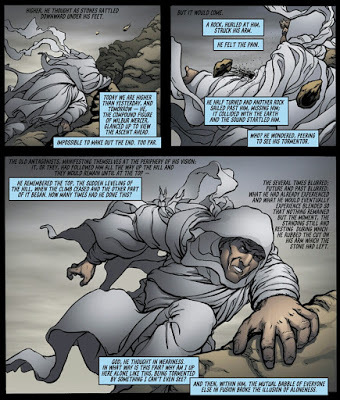
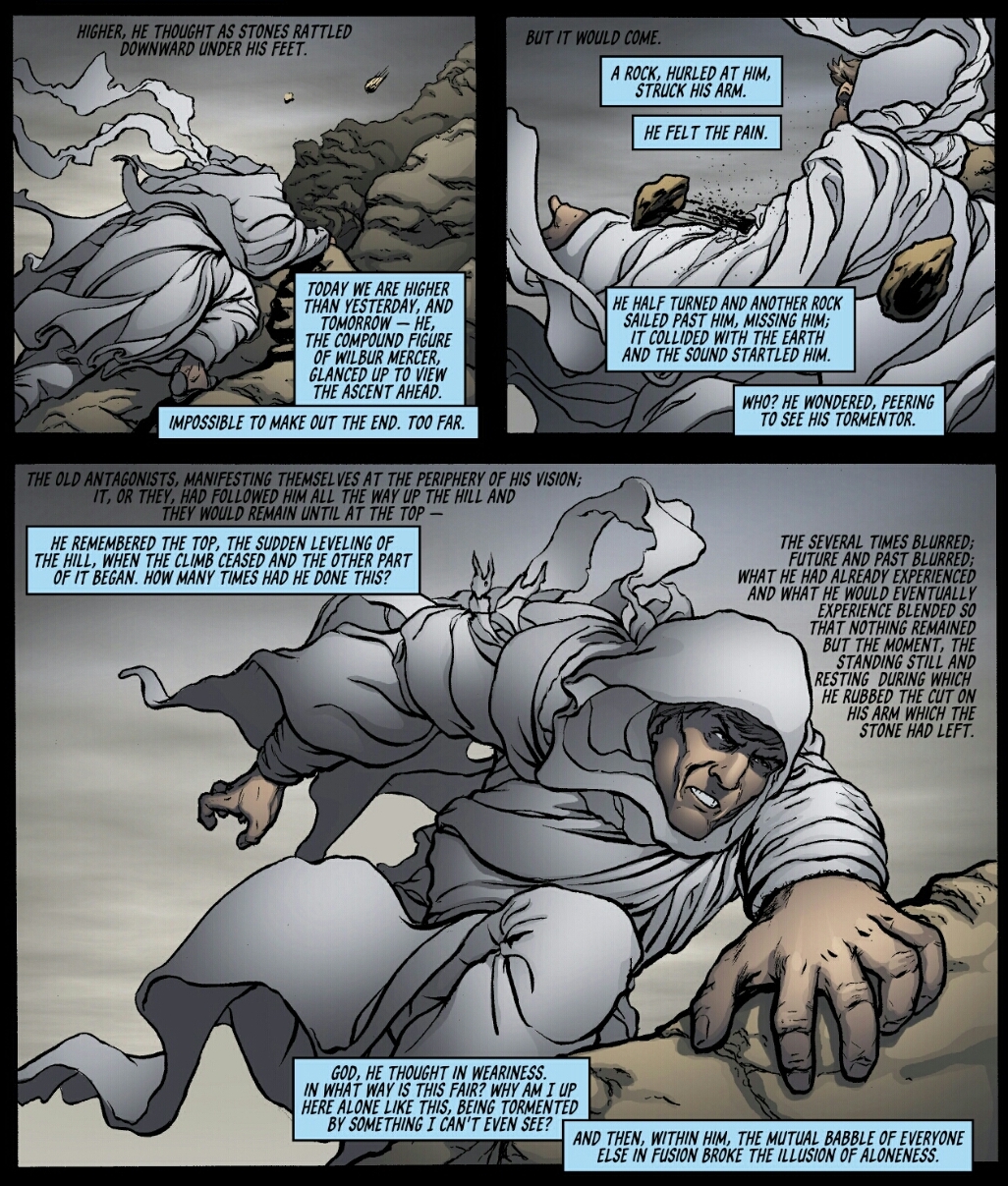
Samenvattingen van het verhaal zijn overal op internet te vinden, net als het gegeven dat de film Blade Runner gebaseerd is op dit verhaal; daar heb ik weinig meer aan toe te voegen. Het verhaal speelt zich af in een toekomst, er zijn androïdes, vliegende auto's en apparaten die nu (nog) niet bestaan, maar het is vooral een verhaal over mensen. Heel gewone mensen die toevallig leven op een verwoeste aarde, het hoofd boven water moeten zien te houden. En of dat nou is door ongewenste Androïdes op te sporen en te vernietigen of - zoals de 'speciale' John R. Isidore - zieke elektronische dieren in een ambulance op te halen, maakt niet zo heel veel uit. Maar wat doe je als er een beroep op je wordt gedaan door iemand anders en je jezelf daardoor in gevaar brengt? En wat als die iemand anders geen mens maar een androïde is? Waarom zou je soms tijdelijk depressief willen zijn, als dat helemaal niet nodig is omdat er een machine is die ervoor kan zorgen dat je je helemaal lekker voelt. Altijd en overal? Waarom zou je je letterlijk willen vereenzelvigen met Wilbur Mercer die als een moderne Sisyphos een heuvel beklimt terwijl hij, en jij en alle anderen die via de 'empathy box' met hem verbonden zijn, bekogeld worden met stenen?
Zou jij het je man/vrouw vertellen dat de echte kat dood is of laat je die vervangen door een elektronische kopie en zeg je niks om zijn/haar gevoelens te sparen? Ben jij in staat die prachtige operazangeres, die net op schitterende wijze Papagena in jouw favoriete Mozartopera heeft vertolkt, kapot te maken... 'dood' te schieten? Omdat het moet?
Dat en nog veel meer menselijks zijn de ingrediënten van een boek dat over vijftig jaar vast nog steeds relevant is. Het verhaal is beeldend en krachtig genoeg om het zonder de tekeningen van Tony Parker te kunnen doen, maar de donkere pracht van zijn tekeningen maken deze omnibus absoluut de moeite waard. Bekijk dat zelf maar.
"I'm not sure whether to be sad or not that we're so clearly living in Dick's future, but it can't really be argued. Look at this country trying yet again to fix health care, where the corporate-paid puppet politicians are the only gathering of people who seem okay with the current sytem while the vast majority of the populace wants major chance. Look at the no-bid contracts in Iraq to Halliburton. Look at the private army of Blackwater. And the funniest and most fitting example, look at Halliburton bidding on mineral rights on Mars a few years back. How long until they're buying prisoners and exporting them there to build refineries?[...] And how strange that the guy who wanted to write anything but sci-fi turned out to be the modern Cassandra, writing books that just seem more and more like a reflection of the modern world we live in everyday."
Samenvattingen van het verhaal zijn overal op internet te vinden, net als het gegeven dat de film Blade Runner gebaseerd is op dit verhaal; daar heb ik weinig meer aan toe te voegen. Het verhaal speelt zich af in een toekomst, er zijn androïdes, vliegende auto's en apparaten die nu (nog) niet bestaan, maar het is vooral een verhaal over mensen. Heel gewone mensen die toevallig leven op een verwoeste aarde, het hoofd boven water moeten zien te houden. En of dat nou is door ongewenste Androïdes op te sporen en te vernietigen of - zoals de 'speciale' John R. Isidore - zieke elektronische dieren in een ambulance op te halen, maakt niet zo heel veel uit. Maar wat doe je als er een beroep op je wordt gedaan door iemand anders en je jezelf daardoor in gevaar brengt? En wat als die iemand anders geen mens maar een androïde is? Waarom zou je soms tijdelijk depressief willen zijn, als dat helemaal niet nodig is omdat er een machine is die ervoor kan zorgen dat je je helemaal lekker voelt. Altijd en overal? Waarom zou je je letterlijk willen vereenzelvigen met Wilbur Mercer die als een moderne Sisyphos een heuvel beklimt terwijl hij, en jij en alle anderen die via de 'empathy box' met hem verbonden zijn, bekogeld worden met stenen?
Zou jij het je man/vrouw vertellen dat de echte kat dood is of laat je die vervangen door een elektronische kopie en zeg je niks om zijn/haar gevoelens te sparen? Ben jij in staat die prachtige operazangeres, die net op schitterende wijze Papagena in jouw favoriete Mozartopera heeft vertolkt, kapot te maken... 'dood' te schieten? Omdat het moet?
Dat en nog veel meer menselijks zijn de ingrediënten van een boek dat over vijftig jaar vast nog steeds relevant is. Het verhaal is beeldend en krachtig genoeg om het zonder de tekeningen van Tony Parker te kunnen doen, maar de donkere pracht van zijn tekeningen maken deze omnibus absoluut de moeite waard. Bekijk dat zelf maar.

June 20, 2021
Not a book I would normally read, but the title has always intrigued me, and I thought the graphic novel form might be doable. So now I know what the title is all about. Huh. Maybe one day we'll be wondering the same thing, but I sure hope not.
Still not my kind of book, but hey.
Still not my kind of book, but hey.

May 15, 2022
Very good art and story. Definitely a graphic novel not a comic as LOTS of text and my ebook came in at 643 pages. Had just re-read the book and watched two movies and this was true to the story and style but had it's own subtleties on interpreting the story.

December 15, 2020
Ambitious in scope and looks beautiful. The first couple of volumes are very wordy and contain a lot of exposition, but after that it settles down. A gorgeous adaptation.

January 5, 2018
Аккуратная адаптация великого романа — пожалуй, даже слишком аккуратная, хотя иногда художник забывает о пиетете перед Диком и случайно выдаёт великолепные страницы. А вот от половины эссе в конце книги можно было бы избавиться, они выглядят необязательным довеском.

March 12, 2017
more illustrated novel than graphic novel, so much text. artwork was pretty awful.
April 27, 2017
an excellent adaptation of the source text, which remains as great as always.

January 5, 2020
‘I am a fictionalising philosopher, not a novelist’, is how Philip K. Dick described his writing, going onto say ‘my novel and story-writing ability is employed as a means to formulate my perception.’
Dick’s short stories and novels are testament to the science fiction genre’s being the fiction of the ‘thought experiment’: a device of the imagination that investigates reality through scenarios. HG Well’s ‘War of the Worlds’ imagined what it would be like for Britain to be treated as it treated other nations (i.e. being invaded); Margaret Atwood’s ‘The Handmaid's Tale’ imagined what it might take to re-establish traditional gender relations in a contemporary western society. Philip K. Dick’s 1968 novel ‘Do Androids Dream of Electric Sheep?’ imagined a world in which humans and machines are so indistinguishable from one another that specialist tests are needed to determine which is which.
‘Androids’ is simultaneously Dick’s best known and least known novel. Best known because it was the basis of the iconic 1982 science fiction film ‘Blade Runner’, directed by Ridley Scott and starring Harrison Ford. Worst known because the film departs markedly from the original book, with major elements and characters changed or removed entirely. Even Dick’s original philosophical concern was altered for the film. In ‘Blade Runner’ there was a deliberate ambiguity about whether the central character Rick Deckard was actually a humanoid robot (a ‘Replicant’ as the film calls them). Deckard is a bounty-hunter tasked with eliminating (‘retiring’) rogue Replicants, however the possibility of him being a Replicant himself allows the film to explore what constitutes genuine humanity. The original book, however, leaves little doubt that Deckard is human, because as with many of Dick’s characters he is a petty-minded, ‘regular joe’ character rather than the ultra-cool detective played by Ford in the style of Philip Marlowe or Sam Spade. In ‘Androids’ Deckard's gripes about his marriage, constant money problems, and concern about attaining social status though owning pets (an important feature of this world), are contrasted to the runaway android’s (‘Andys’ in the book) intense wish to survive their built in ‘use-by’ dates. Deckard observes at one point in the novel that ‘most androids I’ve known have more vitality and desire to live than my wife’. Deckard’s wife Iran (not a character in the film) suffers from depression, and spends most of her time either on mood-altering drugs, or immersed in this world’s collective religious experience ‘Mercerism’ (another book plot element not in the film). Dick’s key concern in ‘Androids’ is that modern, bureaucratic, consumer society is gradually making humans more machine-like in their thoughts and behaviour. However he also believed there is a limit to machines acquiring humanity, and that limit is empathy.
Empathy, as aficionados of ‘Blade Runner’ would know, is what the Voight-Kampff Test looks for in order to distinguish Replicants from humans. While they consider a series of increasingly disturbing and violent scenarios, a test subject’s emotional responses are tracked. Replicants may be able to mimic human emotional responses for a while, but they eventually reach a point where their empathy for others runs out. In ‘Androids’ there is a disturbing sequence in which the fugitive Andys demonstrate their lack of empathy by continuing to engage in acts of petty cruelty, despite this obviously upsetting the one human who is willing to help them. They are unable to see the problems with their actions, and remain confused to the end about why humans react in the ways they do.
In particular, they are perplexed by the persistence of human religious belief despite it being proven a fantasy. This is the biggest difference between the stories of ‘Androids’ and ‘Blade Runner’: the religion of ‘Mercerism’ which has come to dominate this future world after a nuclear war (‘World War Terminus’) has wiped out animal life, and made the Earth increasingly uninhabitable for humans. The government has sponsored a mass emigration to other planets for most of the population, and those humans who are left on Earth have developed an obsession with owning and caring for animals. Most animals being dead, the bulk of owners must make do with robot pets (Deckard owns an artificial sheep). The intense desire to look after something living is buttressed by a devotion to the suffering of Wilbur Mercer. Every day his devotees on Earth or elsewhere use an ‘Empathy box’ to have a complete ‘immersion experience’ of Mercer’s suffering as he attempts to scale a crumbling hillside while rocks rain down on him. He is (according to legend) escaping from a hellish 'tomb world’ on behalf of humanity, and he is inviting everybody to identify with his torments in order to restore our connections with one another.
The parallels between Mercer and Christ are obvious, however Dick wrote ‘Androids’ years before his notorious religious and visionary experiences (including an an information-rich beam of pink light from space) of the mid 1970s. Dick came to believe that he was a fugitive Christian, and that time had actually stopped in 70 A.D., the year the temple of Jerusalem was destroyed by a Roman siege. Everything that happened afterwards was an illusion, and the world was still under Rome’s dominion (embodied in the Nixon administration). That brief summary doesn’t do justice to the elaborate beliefs Dick explored after this experience, however his fascination with Christianity also stemmed from his conversion in the early 1960s after a ‘mystical experience’ of a disturbing face that he feared was Satan’s. Christian imagery became a regular feature of his science fiction (e.g. 1965’s ‘The Three Stigmata of Palmer Eldritch’), and the desire of the saddest and most disturbed characters in ‘Androids’ for an intense personal connection with Mercer is an obvious parallel to Christian identity with Jesus. Faith in Mercer persists even after he is ‘proven’ to be fraudulent - which the Andes find puzzling.
Ridley Scott’s film removed practically all of these elements to make ‘Androids’ into ‘Blade Runner’. The only hint of Mercer that remains is perhaps in the final battle between Deckard and the Replicant Roy Baty, which involves scaling a decaying building. The film’s mysterious unicorn, in origami form and in Deckard’s dream, might also be an echo of ‘Androids’ preoccupation with fantasy animals. In ‘Blade Runner’ Deckard is unmarried, so his romance is entirely with the Replicant Rachael Tyrell, who is a far more sympathetic character than the Andy Rachael Rosen of the book. Rachel embodies the differences between the film’s and the book’s views of the androids: in the film Rachel is moving towards humanity, while the book affirms that Rachel remains a machine.
This graphical novel adaptation of ‘Do Androids Dream of Electric Sheep?’ by BOOM! Studios comics, takes the dialogue and descriptions of Dick’s novel and inserts them directly into artist Tony Parker’s illustrations. It was nominated for ‘Best New Series’ in the 2010 Eisner Awards. Parker sticks to the conventions of ‘action’ comics, however he has a good grasp of light and shade which is appropriate for this story. If you are coming to ‘Androids’ from the intense visual texture of ’Blade Runner’, this comic may be a useful entry point for the original story, rather than diving unprepared into Philip K Dick’s rather flat prose style.
Dick’s short stories and novels are testament to the science fiction genre’s being the fiction of the ‘thought experiment’: a device of the imagination that investigates reality through scenarios. HG Well’s ‘War of the Worlds’ imagined what it would be like for Britain to be treated as it treated other nations (i.e. being invaded); Margaret Atwood’s ‘The Handmaid's Tale’ imagined what it might take to re-establish traditional gender relations in a contemporary western society. Philip K. Dick’s 1968 novel ‘Do Androids Dream of Electric Sheep?’ imagined a world in which humans and machines are so indistinguishable from one another that specialist tests are needed to determine which is which.
‘Androids’ is simultaneously Dick’s best known and least known novel. Best known because it was the basis of the iconic 1982 science fiction film ‘Blade Runner’, directed by Ridley Scott and starring Harrison Ford. Worst known because the film departs markedly from the original book, with major elements and characters changed or removed entirely. Even Dick’s original philosophical concern was altered for the film. In ‘Blade Runner’ there was a deliberate ambiguity about whether the central character Rick Deckard was actually a humanoid robot (a ‘Replicant’ as the film calls them). Deckard is a bounty-hunter tasked with eliminating (‘retiring’) rogue Replicants, however the possibility of him being a Replicant himself allows the film to explore what constitutes genuine humanity. The original book, however, leaves little doubt that Deckard is human, because as with many of Dick’s characters he is a petty-minded, ‘regular joe’ character rather than the ultra-cool detective played by Ford in the style of Philip Marlowe or Sam Spade. In ‘Androids’ Deckard's gripes about his marriage, constant money problems, and concern about attaining social status though owning pets (an important feature of this world), are contrasted to the runaway android’s (‘Andys’ in the book) intense wish to survive their built in ‘use-by’ dates. Deckard observes at one point in the novel that ‘most androids I’ve known have more vitality and desire to live than my wife’. Deckard’s wife Iran (not a character in the film) suffers from depression, and spends most of her time either on mood-altering drugs, or immersed in this world’s collective religious experience ‘Mercerism’ (another book plot element not in the film). Dick’s key concern in ‘Androids’ is that modern, bureaucratic, consumer society is gradually making humans more machine-like in their thoughts and behaviour. However he also believed there is a limit to machines acquiring humanity, and that limit is empathy.
Empathy, as aficionados of ‘Blade Runner’ would know, is what the Voight-Kampff Test looks for in order to distinguish Replicants from humans. While they consider a series of increasingly disturbing and violent scenarios, a test subject’s emotional responses are tracked. Replicants may be able to mimic human emotional responses for a while, but they eventually reach a point where their empathy for others runs out. In ‘Androids’ there is a disturbing sequence in which the fugitive Andys demonstrate their lack of empathy by continuing to engage in acts of petty cruelty, despite this obviously upsetting the one human who is willing to help them. They are unable to see the problems with their actions, and remain confused to the end about why humans react in the ways they do.
In particular, they are perplexed by the persistence of human religious belief despite it being proven a fantasy. This is the biggest difference between the stories of ‘Androids’ and ‘Blade Runner’: the religion of ‘Mercerism’ which has come to dominate this future world after a nuclear war (‘World War Terminus’) has wiped out animal life, and made the Earth increasingly uninhabitable for humans. The government has sponsored a mass emigration to other planets for most of the population, and those humans who are left on Earth have developed an obsession with owning and caring for animals. Most animals being dead, the bulk of owners must make do with robot pets (Deckard owns an artificial sheep). The intense desire to look after something living is buttressed by a devotion to the suffering of Wilbur Mercer. Every day his devotees on Earth or elsewhere use an ‘Empathy box’ to have a complete ‘immersion experience’ of Mercer’s suffering as he attempts to scale a crumbling hillside while rocks rain down on him. He is (according to legend) escaping from a hellish 'tomb world’ on behalf of humanity, and he is inviting everybody to identify with his torments in order to restore our connections with one another.
The parallels between Mercer and Christ are obvious, however Dick wrote ‘Androids’ years before his notorious religious and visionary experiences (including an an information-rich beam of pink light from space) of the mid 1970s. Dick came to believe that he was a fugitive Christian, and that time had actually stopped in 70 A.D., the year the temple of Jerusalem was destroyed by a Roman siege. Everything that happened afterwards was an illusion, and the world was still under Rome’s dominion (embodied in the Nixon administration). That brief summary doesn’t do justice to the elaborate beliefs Dick explored after this experience, however his fascination with Christianity also stemmed from his conversion in the early 1960s after a ‘mystical experience’ of a disturbing face that he feared was Satan’s. Christian imagery became a regular feature of his science fiction (e.g. 1965’s ‘The Three Stigmata of Palmer Eldritch’), and the desire of the saddest and most disturbed characters in ‘Androids’ for an intense personal connection with Mercer is an obvious parallel to Christian identity with Jesus. Faith in Mercer persists even after he is ‘proven’ to be fraudulent - which the Andes find puzzling.
Ridley Scott’s film removed practically all of these elements to make ‘Androids’ into ‘Blade Runner’. The only hint of Mercer that remains is perhaps in the final battle between Deckard and the Replicant Roy Baty, which involves scaling a decaying building. The film’s mysterious unicorn, in origami form and in Deckard’s dream, might also be an echo of ‘Androids’ preoccupation with fantasy animals. In ‘Blade Runner’ Deckard is unmarried, so his romance is entirely with the Replicant Rachael Tyrell, who is a far more sympathetic character than the Andy Rachael Rosen of the book. Rachel embodies the differences between the film’s and the book’s views of the androids: in the film Rachel is moving towards humanity, while the book affirms that Rachel remains a machine.
This graphical novel adaptation of ‘Do Androids Dream of Electric Sheep?’ by BOOM! Studios comics, takes the dialogue and descriptions of Dick’s novel and inserts them directly into artist Tony Parker’s illustrations. It was nominated for ‘Best New Series’ in the 2010 Eisner Awards. Parker sticks to the conventions of ‘action’ comics, however he has a good grasp of light and shade which is appropriate for this story. If you are coming to ‘Androids’ from the intense visual texture of ’Blade Runner’, this comic may be a useful entry point for the original story, rather than diving unprepared into Philip K Dick’s rather flat prose style.

August 5, 2022
I should have read the book. As a graphic novel, this was tedious. I did not care for the art, nor how medium was used. This was not an adaptation, but an illustrated version of the novel. And it suffered for it - for example, there are boxes with “he said” underneath the dialog bubbles… come ON.. I tossed it aside after the first part, but found myself going back because the story is so interesting.
I was surprised at how very little the film Blade Runner has in common with its source book - the film takes the setup and goes off on its own. Blade Runner 2049 felt closer to the text.
So… I didn’t like this format but I did like the text. It’s meatier than I expected and I really just should have read the book format.
I was surprised at how very little the film Blade Runner has in common with its source book - the film takes the setup and goes off on its own. Blade Runner 2049 felt closer to the text.
So… I didn’t like this format but I did like the text. It’s meatier than I expected and I really just should have read the book format.

April 19, 2017
The art is a great compliment to the story, I love the dark colors, the dusky dark imagery.
I really enjoy that all of the characters seem to do what they think they need to do to survive. Not only to survive, but to keep the status quo.
Good read, even though the physical book fell apart and needs to be re-glued. :/
I really enjoy that all of the characters seem to do what they think they need to do to survive. Not only to survive, but to keep the status quo.
Good read, even though the physical book fell apart and needs to be re-glued. :/

March 23, 2024
NGL, I did not read all the interminable essays at the back of this tome. Of the few I did read the one by Brubaker and the one by my old college professor, Jim Blaylock, are pretty good. Anyway, I read the story so I’m gonna assuage my OCD and say that I read this book. Right?

August 11, 2018
Phenomenal illustrated novel. Aside from that, this continues to be just a beautiful, blistering story.

September 1, 2020
Full text of the novel in graphic format.
Amazing!
Amazing!

March 13, 2017
“Do Androids Dream of Electric Sheep?”
VOLUME 1
Opens with:
AUCKLAND.
A TURTLE WHICH EXPLORER CAPTAIN COOK GAVE TO THE KING OF TONGA IN
1777 DIED YESTERDAY. IT WAS NEARLY 200 YEARS OLD.
THE ANIMAL, CALLED TU'IMALILA, … WOULD BE SENT TO THE
AUCKLAND MUSEUM IN NEW ZEALAND.
“At that moment, when I had the TV sound off, I was in a 382 mood; I had just dialed it. So although I heard the emptiness intellectually, I didn't feel it. My first reaction consisted of being grateful that we could afford a Penfield mood organ. But then I realized how unhealthy it was, sensing the absence of life, not just in this building but everywhere, and not reacting—do you see? I guess you don't. But that used to be considered a sign of mental illness; they called it 'absence of appropriate affect.' So I left the TV sound off and I sat down at my mood organ and I experimented. And I finally found a setting for despair. So I put it on my schedule for twice a month; I think that's a reasonable amount of time to feel hopeless about everything, about staying here on Earth after everybody who's smart has emigrated, don't you think?”
“Emigrate or Degenerate.”
BOOK TWO:
“Empathy, evidently, existed only within the human community, whereas intelligence to some degree could be found throughout every phylum and order including the arachnida.”
“Empathy, he once had decided, must be limited to herbivores or anyhow omnivores who could depart from a meat diet. Because, ultimately, the empathic gift blurred the boundaries between hunter and victim, between the successful and the defeated.”
BOOK THREE:
“'I doubt if I'll ever own an owl.'”
- - - -
BOOK FOUR
“As Isidore knocked on the apartment door the television died immediately into nonbeing. It had not merely become silent; it had stopped existing, scared into its grave by his knock.
He sensed, behind the closed door, the presence of life, beyond that of the TV. His straining faculties manufactured or else picked up a haunted, tongueless fear, by someone retreating from him, someone blown back to the farthest wall of the apartment in an attempt to evade him.
"Hey," he called. "I live upstairs. I heard your TV. Let's meet; okay?" He waited, listening. No sound and no motion; his words had not pried the person loose. "I brought you a cube of margarine," he said, standing close to the door in an effort to speak through its thickness.”
-
"They won't do," Isidore said. He could tell that at a glance. The chairs, the carpet, the tables, all had rotted away; they sagged in mutual ruin, victims of the despotic force of time. And of abandonment. No one had lived in this apartment for years; the ruin had become almost complete. He couldn't imagine how she figured on living in such surroundings.
-
When he had parked his truck on the roof of the Van Ness Pet Hospital he quickly carried the plastic cage containing the inert false cat downstairs to Hannibal Sloat's office. As he entered, Mr. Sloat glanced up from a parts-inventory page, his gray, seamed face rippling like troubled water. Too old to emigrate, Hannibal Sloat, although not a special, was doomed to creep out his remaining life on Earth. The dust, over the years, had eroded him; it had left his features gray, his thoughts gray; it had shrunk him and made his legs spindly and his gait unsteady. He saw the world through glasses literally dense with dust. For some reason Sloat never cleaned his glasses. It was as if he had given up; he had accepted the radioactive dirt and it had begun its job, long ago, of burying him. Already it obscured his sight. In the few years he had remaining it would corrupt his other senses until at last only his bird-screech voice would remain, and then that would expire, too.- -
- - - - -
Postscript:
“All writers return to themes, but prolific writers recourse to obsessions. … Philip Dick again studies the two great questions of his life. What is real? What does it mean to be human?”
“Empathy. A quality androids do not possess.” - Warren Ellis.
“apotheosis” = the highest point in the development of something; a culmination or climax
“ameliorated” = make (something bad or unsatisfactory) better.
- -
“Do Androids Dream of Electric Sheep?”
VOLUME 2
Philip Dick held a deep sense of empathy! His book title is not “counting sheep to go to sleep”, but I suspect dreaming as in a goal, a longing, a dream for having an empathetic relationship, friendship, companion, pet.
Like David confronted by Nathan (from Scripture) this story evokes the necessity of empathy. Androids don't feel empathy. Hence, the title is a question that drives the plot. Will we find out the answer by book's end?
- - -
“Human and animal suffering make me mad; whenever one of my cats dies I curse God and I mean it; I feel fury at him. I'd like to get him here where I could interrogate him, tell him that I think the world is screwed up, that man didn't sin and fall but was pushed— which is bad enough— but was then sold the lie that he is basically sinful, which I know he is not.
I have known all kinds of people (I turned fifty a while ago and I'm angry about that; I've lived a long time), and those were by and large good people. I model the characters in my novels and stories on them. Now and again one of these people dies, and that makes me mad—really mad, as mad as I can get. 'You took my cat,' I want to say to God, 'and then you took my girlfriend. What are you doing? Listen to me; listen! It's wrong what you're doing.'”
- Introduction to "The Golden Man" by Philip K. Dick
- - -
BOOK FIVE
Isidore: “Don't dead bodies decay or something?”
BOOK SIX:
Bryant: “... But there can't be even one slip-up.”
Rick: “There never could be in andy hunting. This is no different.”
“Using an infinity key, which analyzed and opened all forms of locks known, he entered Polokov's apartment, laser beam in hand.”
BOOK SEVEN:
“His adrenal gland, by degrees, ceased pumping its several secretions into his bloodstream;
his heart slowed to normal, his breathing became less frantic.
But he still shook,
anyhow I made myself a thousand dollars just now, he informed himself.
So it was worth it.”
BOOK EIGHT:
“A new type of android that apparently nobody can handle but me.”
- - -
http://www.larevuedesressources.org/I...
VOLUME 3
Disclaimer:
“The characters and events depicted herein are fictional. Any similarity to actual persons, demons, anti-Christs, aliens, vampires, face-suckers or political figures, whether living, dead or undead, or to any actual or supernatural events is coincidental and unintentional. So don't come whining to us.”
BOOK NINE:
“Conscious of his defect and failure, Rick settled back. And, helplessly, waited for what can next.”
BOOK TEN:
Phil: “What is the basis if your Voigt-Kampff test, Mr. Deckard?”
Rick: “Empathetic response. In a variety of social situations. Mostly having to do with animals.”
BOOK ELEVEN:
“The android flees, where the bounty hunter pursues.”
“Mr. Resch, you're an android … You've everything we jointly abominate. The essence of what we're committed to destiny.”
BOOK TWELVE:
“The Andy is unable to keep the animal alive.
Animals require an environment of warmth to flourish.”
Upon seeing Edvard Munch's 'The Scream':
“At an oil painting Phil Resch halted, gazed intently. The painting showed a hairless, oppressed creature with a head like an inverted pear, its hands clapped in horror to its ears, its mouth open in a vast, soundless scream. Twisted ripples of the creature's torment, echoes of its cry, flooded out into the air surrounding it; the man or woman, whichever it was, had become contained by its own howl. It had covered its ears against its own sound. The creature stood on a bridge and no one else was present; the creature screamed in isolation. Cut off by — or despite — its outcry.”
“Cadaverous” = very pale, thin, or bony.
“Do you think androids have souls?”
- - -
“Do Androids Dream of Electric Sheep?”
VOLUME 4
BOOK THIRTEEN:
Resch: “This is necessary. Remember: they killed humans in order to get away. And if I hadn't gotten you out of the Mission police station they would have killed you. That's what Garland wanted me for; that's why he had me come down to his office. Didn't Polokov almost kill you? Didn't Luba Luft almost? We're acting defensively; they're here on our planet — they're murderous illegal aliens masquerading as —“
“He had never thought of it before, had never felt any empathy on his own part toward the androids he killed. … Empathy toward an artificial construct? he asked himself. Something that only pretends to be alive?”
Rick said, “I'm capable of feeling empathy for at least specific, certain androids. Not for all of them but — one or two.”
“So much for the distinction between authentic living humans and humanoid constructs. In that elevator at the museum, he said to himself, I rode down with two creatures, one human, the other android . . . and my feelings were the reverse of those intended. Of those I'm accustomed to feel — am required to feel.”
BOOK FOURTEEN:
“And Horst got me interested in pre-colonial fiction.”
“You mean old books?”
“Stories written before space travel but about space travel.”
“How could there have been stories about space travel before -”
“... Anyhow, there's a fortune to be made in smuggling pre-colonial fiction, the old magazines and books and films, to Mars. Nothing is as exciting. To read about cities and huge industrial enterprises, and really successful colonization. You can imagine what it might have been like. What Mars ought to be like. Canals.”
BOOK FIFTEEN:
“All of them, Isidore thought; they're all strange. He sensed it without being able to finger it. As if a peculiar and malign abstractness pervaded their mental processes.”
BOOK SIXTEEN:
“I own an animal now, he said to himself. A living animal, not electric. For the second time in my life.”
“We couldn't go on with the electric sheep any longer; it sapped my morale. Maybe I can tell her that, he decided.”
“Do Androids Dream of Electric Sheep?”
VOLUME 5
I've never taken acid, speed or similar mind-altering drugs. But I am reading the work of a man who did. Think what you will, but THIS BOOK IS READING ME. Profoundly insightful to my own psyche and sense of identity. Layers. Boom!
BOOK SEVENTEEN:
“Conscious of his own aloneness.”
BOOK EIGHTEEN:
“The stance, he reflected, of a wary hunter of perhaps the cro-magnum persuasion.”
BOOK NINETEEN:
Rachel: “We are machines, stamped out like bottle caps.
It's an illusion that I – I personally exist; I'm just representative of a type.”
BOOK TWENTY:
“He sat for a long time within the arms of a green, black, and gold leaf lounge chair, sipping coffee and meditating about the next few hours.”
- - -
“Do Androids Dream of Electric Sheep?”
VOLUME 6
BOOK TWENTY-ONE:
[Pris (android) takes Isidore's spider]: “It probably won't be able to run as fast but there's nothing for it to catch around here anyhow. It'll die anyway.”
she reached for the scissors.
[Isidore]: “Please.”
BOOK TWENTY-TWO
The android slowly mutilates a spider.
J.R. Isidore tells Rick Deckard, “If I took it back up there she'd cut it apart again.
Bit by bit, to see what it did.”
Deckard: “Androids do that.”
BOOK TWENTY-THREE
“I'll be all right,” he said, and thought, and I'm going to die.
Both those are true, too.
He closed the car door, flicked a signal with his hand to Iran, and then swept up into the night sky.”
BOOK TWENTY-FOUR
“He got to his feet, stood painfully, his face drowsy and confused, as if a legion of battles had ebbed and advanced there, over many years.”
- - - -
VOLUME 1
Opens with:
AUCKLAND.
A TURTLE WHICH EXPLORER CAPTAIN COOK GAVE TO THE KING OF TONGA IN
1777 DIED YESTERDAY. IT WAS NEARLY 200 YEARS OLD.
THE ANIMAL, CALLED TU'IMALILA, … WOULD BE SENT TO THE
AUCKLAND MUSEUM IN NEW ZEALAND.
“At that moment, when I had the TV sound off, I was in a 382 mood; I had just dialed it. So although I heard the emptiness intellectually, I didn't feel it. My first reaction consisted of being grateful that we could afford a Penfield mood organ. But then I realized how unhealthy it was, sensing the absence of life, not just in this building but everywhere, and not reacting—do you see? I guess you don't. But that used to be considered a sign of mental illness; they called it 'absence of appropriate affect.' So I left the TV sound off and I sat down at my mood organ and I experimented. And I finally found a setting for despair. So I put it on my schedule for twice a month; I think that's a reasonable amount of time to feel hopeless about everything, about staying here on Earth after everybody who's smart has emigrated, don't you think?”
“Emigrate or Degenerate.”
BOOK TWO:
“Empathy, evidently, existed only within the human community, whereas intelligence to some degree could be found throughout every phylum and order including the arachnida.”
“Empathy, he once had decided, must be limited to herbivores or anyhow omnivores who could depart from a meat diet. Because, ultimately, the empathic gift blurred the boundaries between hunter and victim, between the successful and the defeated.”
BOOK THREE:
“'I doubt if I'll ever own an owl.'”
- - - -
BOOK FOUR
“As Isidore knocked on the apartment door the television died immediately into nonbeing. It had not merely become silent; it had stopped existing, scared into its grave by his knock.
He sensed, behind the closed door, the presence of life, beyond that of the TV. His straining faculties manufactured or else picked up a haunted, tongueless fear, by someone retreating from him, someone blown back to the farthest wall of the apartment in an attempt to evade him.
"Hey," he called. "I live upstairs. I heard your TV. Let's meet; okay?" He waited, listening. No sound and no motion; his words had not pried the person loose. "I brought you a cube of margarine," he said, standing close to the door in an effort to speak through its thickness.”
-
"They won't do," Isidore said. He could tell that at a glance. The chairs, the carpet, the tables, all had rotted away; they sagged in mutual ruin, victims of the despotic force of time. And of abandonment. No one had lived in this apartment for years; the ruin had become almost complete. He couldn't imagine how she figured on living in such surroundings.
-
When he had parked his truck on the roof of the Van Ness Pet Hospital he quickly carried the plastic cage containing the inert false cat downstairs to Hannibal Sloat's office. As he entered, Mr. Sloat glanced up from a parts-inventory page, his gray, seamed face rippling like troubled water. Too old to emigrate, Hannibal Sloat, although not a special, was doomed to creep out his remaining life on Earth. The dust, over the years, had eroded him; it had left his features gray, his thoughts gray; it had shrunk him and made his legs spindly and his gait unsteady. He saw the world through glasses literally dense with dust. For some reason Sloat never cleaned his glasses. It was as if he had given up; he had accepted the radioactive dirt and it had begun its job, long ago, of burying him. Already it obscured his sight. In the few years he had remaining it would corrupt his other senses until at last only his bird-screech voice would remain, and then that would expire, too.- -
- - - - -
Postscript:
“All writers return to themes, but prolific writers recourse to obsessions. … Philip Dick again studies the two great questions of his life. What is real? What does it mean to be human?”
“Empathy. A quality androids do not possess.” - Warren Ellis.
“apotheosis” = the highest point in the development of something; a culmination or climax
“ameliorated” = make (something bad or unsatisfactory) better.
- -
“Do Androids Dream of Electric Sheep?”
VOLUME 2
Philip Dick held a deep sense of empathy! His book title is not “counting sheep to go to sleep”, but I suspect dreaming as in a goal, a longing, a dream for having an empathetic relationship, friendship, companion, pet.
Like David confronted by Nathan (from Scripture) this story evokes the necessity of empathy. Androids don't feel empathy. Hence, the title is a question that drives the plot. Will we find out the answer by book's end?
- - -
“Human and animal suffering make me mad; whenever one of my cats dies I curse God and I mean it; I feel fury at him. I'd like to get him here where I could interrogate him, tell him that I think the world is screwed up, that man didn't sin and fall but was pushed— which is bad enough— but was then sold the lie that he is basically sinful, which I know he is not.
I have known all kinds of people (I turned fifty a while ago and I'm angry about that; I've lived a long time), and those were by and large good people. I model the characters in my novels and stories on them. Now and again one of these people dies, and that makes me mad—really mad, as mad as I can get. 'You took my cat,' I want to say to God, 'and then you took my girlfriend. What are you doing? Listen to me; listen! It's wrong what you're doing.'”
- Introduction to "The Golden Man" by Philip K. Dick
- - -
BOOK FIVE
Isidore: “Don't dead bodies decay or something?”
BOOK SIX:
Bryant: “... But there can't be even one slip-up.”
Rick: “There never could be in andy hunting. This is no different.”
“Using an infinity key, which analyzed and opened all forms of locks known, he entered Polokov's apartment, laser beam in hand.”
BOOK SEVEN:
“His adrenal gland, by degrees, ceased pumping its several secretions into his bloodstream;
his heart slowed to normal, his breathing became less frantic.
But he still shook,
anyhow I made myself a thousand dollars just now, he informed himself.
So it was worth it.”
BOOK EIGHT:
“A new type of android that apparently nobody can handle but me.”
- - -
http://www.larevuedesressources.org/I...
VOLUME 3
Disclaimer:
“The characters and events depicted herein are fictional. Any similarity to actual persons, demons, anti-Christs, aliens, vampires, face-suckers or political figures, whether living, dead or undead, or to any actual or supernatural events is coincidental and unintentional. So don't come whining to us.”
BOOK NINE:
“Conscious of his defect and failure, Rick settled back. And, helplessly, waited for what can next.”
BOOK TEN:
Phil: “What is the basis if your Voigt-Kampff test, Mr. Deckard?”
Rick: “Empathetic response. In a variety of social situations. Mostly having to do with animals.”
BOOK ELEVEN:
“The android flees, where the bounty hunter pursues.”
“Mr. Resch, you're an android … You've everything we jointly abominate. The essence of what we're committed to destiny.”
BOOK TWELVE:
“The Andy is unable to keep the animal alive.
Animals require an environment of warmth to flourish.”
Upon seeing Edvard Munch's 'The Scream':
“At an oil painting Phil Resch halted, gazed intently. The painting showed a hairless, oppressed creature with a head like an inverted pear, its hands clapped in horror to its ears, its mouth open in a vast, soundless scream. Twisted ripples of the creature's torment, echoes of its cry, flooded out into the air surrounding it; the man or woman, whichever it was, had become contained by its own howl. It had covered its ears against its own sound. The creature stood on a bridge and no one else was present; the creature screamed in isolation. Cut off by — or despite — its outcry.”
“Cadaverous” = very pale, thin, or bony.
“Do you think androids have souls?”
- - -
“Do Androids Dream of Electric Sheep?”
VOLUME 4
BOOK THIRTEEN:
Resch: “This is necessary. Remember: they killed humans in order to get away. And if I hadn't gotten you out of the Mission police station they would have killed you. That's what Garland wanted me for; that's why he had me come down to his office. Didn't Polokov almost kill you? Didn't Luba Luft almost? We're acting defensively; they're here on our planet — they're murderous illegal aliens masquerading as —“
“He had never thought of it before, had never felt any empathy on his own part toward the androids he killed. … Empathy toward an artificial construct? he asked himself. Something that only pretends to be alive?”
Rick said, “I'm capable of feeling empathy for at least specific, certain androids. Not for all of them but — one or two.”
“So much for the distinction between authentic living humans and humanoid constructs. In that elevator at the museum, he said to himself, I rode down with two creatures, one human, the other android . . . and my feelings were the reverse of those intended. Of those I'm accustomed to feel — am required to feel.”
BOOK FOURTEEN:
“And Horst got me interested in pre-colonial fiction.”
“You mean old books?”
“Stories written before space travel but about space travel.”
“How could there have been stories about space travel before -”
“... Anyhow, there's a fortune to be made in smuggling pre-colonial fiction, the old magazines and books and films, to Mars. Nothing is as exciting. To read about cities and huge industrial enterprises, and really successful colonization. You can imagine what it might have been like. What Mars ought to be like. Canals.”
BOOK FIFTEEN:
“All of them, Isidore thought; they're all strange. He sensed it without being able to finger it. As if a peculiar and malign abstractness pervaded their mental processes.”
BOOK SIXTEEN:
“I own an animal now, he said to himself. A living animal, not electric. For the second time in my life.”
“We couldn't go on with the electric sheep any longer; it sapped my morale. Maybe I can tell her that, he decided.”
“Do Androids Dream of Electric Sheep?”
VOLUME 5
I've never taken acid, speed or similar mind-altering drugs. But I am reading the work of a man who did. Think what you will, but THIS BOOK IS READING ME. Profoundly insightful to my own psyche and sense of identity. Layers. Boom!
BOOK SEVENTEEN:
“Conscious of his own aloneness.”
BOOK EIGHTEEN:
“The stance, he reflected, of a wary hunter of perhaps the cro-magnum persuasion.”
BOOK NINETEEN:
Rachel: “We are machines, stamped out like bottle caps.
It's an illusion that I – I personally exist; I'm just representative of a type.”
BOOK TWENTY:
“He sat for a long time within the arms of a green, black, and gold leaf lounge chair, sipping coffee and meditating about the next few hours.”
- - -
“Do Androids Dream of Electric Sheep?”
VOLUME 6
BOOK TWENTY-ONE:
[Pris (android) takes Isidore's spider]: “It probably won't be able to run as fast but there's nothing for it to catch around here anyhow. It'll die anyway.”
she reached for the scissors.
[Isidore]: “Please.”
BOOK TWENTY-TWO
The android slowly mutilates a spider.
J.R. Isidore tells Rick Deckard, “If I took it back up there she'd cut it apart again.
Bit by bit, to see what it did.”
Deckard: “Androids do that.”
BOOK TWENTY-THREE
“I'll be all right,” he said, and thought, and I'm going to die.
Both those are true, too.
He closed the car door, flicked a signal with his hand to Iran, and then swept up into the night sky.”
BOOK TWENTY-FOUR
“He got to his feet, stood painfully, his face drowsy and confused, as if a legion of battles had ebbed and advanced there, over many years.”
- - - -

November 4, 2019
Мне кажется, если бы я пару лет назад не попыталась бы посмотреть тот самый фильм, то моё мнение было бы другим.
Но фильм мне не понравился - редкостная нудятина. Действие тянется и тянется, постоянные разговоры, а потом вдруг отрывочные бои. Отрывочные - потому что рывками. Так что книга прочно ассоциировалась с неприятием фильма.
Если честно, то я вообще не поняла, зачем андроидов делать всё человечнее и человечнее, чтобы потом прикладывать столько усилий, чтобы их найти и уничтожить. Ну и на фоне этого показаны страдания охотника на андроидов от мыслей, а точно ли андроиды просто машины и стоит ли их убивать.
В общем, какая-то псевдофилософская размазня.
Может когда-то эта книга и была прорывом, чем-то значимым. Но сейчас совершенно проходная. Не стоит внимания, только если для изучения истории развития фантастики и кинематографа тех годов.
Но фильм мне не понравился - редкостная нудятина. Действие тянется и тянется, постоянные разговоры, а потом вдруг отрывочные бои. Отрывочные - потому что рывками. Так что книга прочно ассоциировалась с неприятием фильма.
Если честно, то я вообще не поняла, зачем андроидов делать всё человечнее и человечнее, чтобы потом прикладывать столько усилий, чтобы их найти и уничтожить. Ну и на фоне этого показаны страдания охотника на андроидов от мыслей, а точно ли андроиды просто машины и стоит ли их убивать.
В общем, какая-то псевдофилософская размазня.
Может когда-то эта книга и была прорывом, чем-то значимым. Но сейчас совершенно проходная. Не стоит внимания, только если для изучения истории развития фантастики и кинематографа тех годов.

June 29, 2016
The novel that inspired some of the themes for the Blade Runner movie is a completely different beast. I was surprised to see a comic adaptation and I was wary of it, but it's a wonderful experience. Fantastic art by Tony Parker which shows us a decaying world and its misery.
It may seem to have too many text boxes, but they work perfectly to complement the art and add observations to the scene straight from the novel, so they end up feeling completely normal during the reading.
If you are not familiar with the novel, this would be a great starting point, it's simply breathtaking.
It may seem to have too many text boxes, but they work perfectly to complement the art and add observations to the scene straight from the novel, so they end up feeling completely normal during the reading.
If you are not familiar with the novel, this would be a great starting point, it's simply breathtaking.

July 20, 2021
This graphic novel adaptation of the Philip K. Dick novel was a great way to read the story. Dick had a lot of fantastic ideas, but I have had difficulty getting through any of his novels and even more difficulty trying to follow them, but this approach kept my interest. And I understood the book! The art is dark and gloomy, which it should be in this dark and gloomy post-apocalyptic tale. The pictures do a great job of interpreting the story. I wish more of Dick's novels had ben adapted this way!

May 10, 2016
Great art from the original PKD's DADOES. If you liked Blade Runner, well; you're in for a hell of a ride. If you read the novel, well, you are in for a great visualisation of it. Totally worth.

April 11, 2024
Çok ilgi çekici ve sürükleyiciydi bir gecede okudum🤯🤯
Kitabın konusu, insana çok benzeyen androidlerin ve android katillerinin bulunduğu bir evrende; bir android katili olan ana karakter Rick'in sekiz tane ileri düzeyde gelişmiş Nexus-6 türünden robotu öldürürken yaşadığı duygusal ve etik çatışmalar. Teması sanırım yalnızlık ve empati.
Androidlerin günlük hayattaki yerinin büyük ölçüde normalleştiği -tamamen değil çünkü hala gerçek hayvan yerine elektronik bir hayvan sahiplenmek toplum tarafından kınanan bir şey- dünyadaki bireylerin yalnızlığını çok iyi hissettirdi. Öyleki kitabı bitirdiğimde bir okuyucu olarak ben de gerçek bir insanla temas kurmaya, konuşmaya ihtiyaç duydum.
Kitaptaki Isidore adlı karakterle aslında bu yalnızlık ihtiyacının androidlerle giderilebileceği gösterilmişti ama androidlerle duygusal bağ kuran karakterler sonrasında mutlaka onlarla alakalı duygusal bir eksiklik, bir tür yabancılaşma hissedip umutsuzluğa kapıldı ve ilişki kurduğu şeyin "gerçek" olmadığı farkındalığıyla duygusal olarak zedelendi.
Olay zinciri ve tema olarak Her filmine çok benziyor. Bu türdeki bilim kurgu romanların zaten bazı ortak noktaları var: Robotların insanlardan başlıca ve değişmeyen farkının empati kurma becerisi olduğuna değinmek gibi. Sanırım Her filmiyle arasında spesifik olarak bağlantı kurma sebebim iki ana karakterin de bir androide yakın hissettikten sonra kendilerinin çok da özel olmadığını ve bu robotların birbirinden farklı özelliklere sahip canlı "kişi"ler değil fabrika tarafından üretilmiş çoklu makineler olduğunu fark etme şekilleri.
"'There is no Pris,' he told her. 'Only hundreds of Rachael Rosens.'"
Kurgusal olarak altının boş kaldığını düşündüğüm ve evrende eksikler gördüğüm olsa da kitabın 1969'da çıktığını düşününce sanırım bunlar çok da öne çıkan kusurlar olmuyor.
Rick'in sadece bir gün içerisinde düşünme biçiminin değişimini okumak ve bir noktada yaşadığı karmaşık hislerden dolayı çok yorgun düşüp etik olarak yanlış bir şey yaptığına tamamen emin olmasını izlemek etkileyiciydi.
"'I'm leaving this business,' he told Resch. 'I'll emigrate and go to Mars.'
'Someone has to do it,' Phil Resch replied.
'They can use androids. I've had enough. She was a wonderful singer and she liked paintings. The planet could have used her. This is crazy.'"
Böyle bir bilim kurgu evreninde insana ait duyguların toplum gözünde daha değerli hale gelmesi fikrini mantıklı buluyorum ve insanların hislerini paylaşabileceği bir "empati kutusu" konsepti de ilginç ancak bu öğretinin Mercerism adı altında kollektif bir harekete dönüşmesi ve bunu da tek bir kişinin sürekli başa saran bir video ile sembolize etmesi mantıksız geliyor. Mercer'in bir tepeye tırmandığı bu görüntünün yapay olduğunun bu kadar geç fark edilmesi de aynı şekilde inandırıcı değil.
Yine de gerçek bir hayvana sahip olmanın böyle bir alternatif gelecekte temel prensip hale gelmesi ve canlılığın kutsallaşması çok güzel bir fikir. Bunun yanı sıra androidlerin canlılığını sorgulamaya başladığındaki düşüncelerini ve kitabın isminin de oradan gelmesini çok sevdim.
"Do androids dream? Rick asked himself. Probably. That was why they killed their employers and escaped to Earth, looking for a better life as free individuals. Like Luba Luft, singing Mozart at the opera house."
Yer yer çok etkilendim ve dünyası da beni çok içine çekti. Bittiğinde karakterle çok empati kurduğum için yalnız ve depresif hissettim. Blade Runner ve Detroit'in ilham kaynağını okuyor olmak da hoş bir deneyimdi.
"Once, Rick thought, you could see the stars. But now it's only dust."
Kitabın konusu, insana çok benzeyen androidlerin ve android katillerinin bulunduğu bir evrende; bir android katili olan ana karakter Rick'in sekiz tane ileri düzeyde gelişmiş Nexus-6 türünden robotu öldürürken yaşadığı duygusal ve etik çatışmalar. Teması sanırım yalnızlık ve empati.
Androidlerin günlük hayattaki yerinin büyük ölçüde normalleştiği -tamamen değil çünkü hala gerçek hayvan yerine elektronik bir hayvan sahiplenmek toplum tarafından kınanan bir şey- dünyadaki bireylerin yalnızlığını çok iyi hissettirdi. Öyleki kitabı bitirdiğimde bir okuyucu olarak ben de gerçek bir insanla temas kurmaya, konuşmaya ihtiyaç duydum.
Kitaptaki Isidore adlı karakterle aslında bu yalnızlık ihtiyacının androidlerle giderilebileceği gösterilmişti ama androidlerle duygusal bağ kuran karakterler sonrasında mutlaka onlarla alakalı duygusal bir eksiklik, bir tür yabancılaşma hissedip umutsuzluğa kapıldı ve ilişki kurduğu şeyin "gerçek" olmadığı farkındalığıyla duygusal olarak zedelendi.
Olay zinciri ve tema olarak Her filmine çok benziyor. Bu türdeki bilim kurgu romanların zaten bazı ortak noktaları var: Robotların insanlardan başlıca ve değişmeyen farkının empati kurma becerisi olduğuna değinmek gibi. Sanırım Her filmiyle arasında spesifik olarak bağlantı kurma sebebim iki ana karakterin de bir androide yakın hissettikten sonra kendilerinin çok da özel olmadığını ve bu robotların birbirinden farklı özelliklere sahip canlı "kişi"ler değil fabrika tarafından üretilmiş çoklu makineler olduğunu fark etme şekilleri.
"'There is no Pris,' he told her. 'Only hundreds of Rachael Rosens.'"
Kurgusal olarak altının boş kaldığını düşündüğüm ve evrende eksikler gördüğüm olsa da kitabın 1969'da çıktığını düşününce sanırım bunlar çok da öne çıkan kusurlar olmuyor.
Rick'in sadece bir gün içerisinde düşünme biçiminin değişimini okumak ve bir noktada yaşadığı karmaşık hislerden dolayı çok yorgun düşüp etik olarak yanlış bir şey yaptığına tamamen emin olmasını izlemek etkileyiciydi.
"'I'm leaving this business,' he told Resch. 'I'll emigrate and go to Mars.'
'Someone has to do it,' Phil Resch replied.
'They can use androids. I've had enough. She was a wonderful singer and she liked paintings. The planet could have used her. This is crazy.'"
Böyle bir bilim kurgu evreninde insana ait duyguların toplum gözünde daha değerli hale gelmesi fikrini mantıklı buluyorum ve insanların hislerini paylaşabileceği bir "empati kutusu" konsepti de ilginç ancak bu öğretinin Mercerism adı altında kollektif bir harekete dönüşmesi ve bunu da tek bir kişinin sürekli başa saran bir video ile sembolize etmesi mantıksız geliyor. Mercer'in bir tepeye tırmandığı bu görüntünün yapay olduğunun bu kadar geç fark edilmesi de aynı şekilde inandırıcı değil.
Yine de gerçek bir hayvana sahip olmanın böyle bir alternatif gelecekte temel prensip hale gelmesi ve canlılığın kutsallaşması çok güzel bir fikir. Bunun yanı sıra androidlerin canlılığını sorgulamaya başladığındaki düşüncelerini ve kitabın isminin de oradan gelmesini çok sevdim.
"Do androids dream? Rick asked himself. Probably. That was why they killed their employers and escaped to Earth, looking for a better life as free individuals. Like Luba Luft, singing Mozart at the opera house."
Yer yer çok etkilendim ve dünyası da beni çok içine çekti. Bittiğinde karakterle çok empati kurduğum için yalnız ve depresif hissettim. Blade Runner ve Detroit'in ilham kaynağını okuyor olmak da hoş bir deneyimdi.
"Once, Rick thought, you could see the stars. But now it's only dust."
This entire review has been hidden because of spoilers.

September 28, 2023
The Second Printing, which I read, was not pictured here. It can be differentiated by the blue circle on the cover as opposed to the red circle on the cover pictured here.
Philip K. Dick's Do Androids Dream Of Electric Sheep? is the inspiration for the movie Blade Runner. Ridley Scott admits that he never made it through the entire book, and it shows when you watch the movie. While the table setting is the same (android bounty hunter Deckard, etc.), the goal posts are located in entirely different spots than the movie version which most people are familiar with.
This was a tough slog of a read for the first four to eight issues. Unlike any other comic book adaptation, this is a word for word transcription of the original novel. While I am not a fan of decompression, the first several issues are packed with so many words that they fall flat. Too wordy for a comic book, too many pictures for a novel. The huge swaths of words ruin the story flow and if I were a single issue buyer, or even if I bought the first trade back when it came out, I would have bailed on this series. It's a chore to read for a while.
The story itself is very good, although the climax was kind of a whimper instead of a bang. This is where my preconceived notion due to the film ruined things. I imagine if you read the book in the '60s or '70s it was mindblowing, predicting anti-depressants and anti-anxiety medications, the ramification of technology in daily life, the questions technology would pose to humanity, etc. The book poses different questions and moral dilemmas than the movie did.
The focus of this story is also quite different from the film. Most animals are dead due to the fallout of nuclear war, and electric animals are very popular. Owning a real animal is cost prohibitive and a status symbol as well as a sign of empathy. Due to the new “religion” Mercerism, empathy is considered the greatest virtue one can have. The Penfield mood organ is basically Xanax, with people trying to follow Mercer's teachings. Deckard pursues these androids so that he can afford a real animal.
Rick Deckard is still an android hunting bounty hunter, and he is after six of a new kind of android who have illegally returned from an offworld colony. In many ways the version of Earth in the book is even more dystopian than in the film. There's a whole subplot with Isidore that is not explored in the movie. The Noir aspect of the film is entirely absent in the original book.
As a comic this is just okay. The artwork and coloring are both mediocre, with my kindest description being “adequate”. I dislike the color palette used, a sea of bluish grays and grayish blues, overly rendered and making everything look lifeless and dull, and not in a way that serves the story. The story is very good of course.
So should you buy this? Maybe. It's worth a read, but if your local library has it you might be better off checking it out instead of buying it like I did.
Philip K. Dick's Do Androids Dream Of Electric Sheep? is the inspiration for the movie Blade Runner. Ridley Scott admits that he never made it through the entire book, and it shows when you watch the movie. While the table setting is the same (android bounty hunter Deckard, etc.), the goal posts are located in entirely different spots than the movie version which most people are familiar with.
This was a tough slog of a read for the first four to eight issues. Unlike any other comic book adaptation, this is a word for word transcription of the original novel. While I am not a fan of decompression, the first several issues are packed with so many words that they fall flat. Too wordy for a comic book, too many pictures for a novel. The huge swaths of words ruin the story flow and if I were a single issue buyer, or even if I bought the first trade back when it came out, I would have bailed on this series. It's a chore to read for a while.
The story itself is very good, although the climax was kind of a whimper instead of a bang. This is where my preconceived notion due to the film ruined things. I imagine if you read the book in the '60s or '70s it was mindblowing, predicting anti-depressants and anti-anxiety medications, the ramification of technology in daily life, the questions technology would pose to humanity, etc. The book poses different questions and moral dilemmas than the movie did.
The focus of this story is also quite different from the film. Most animals are dead due to the fallout of nuclear war, and electric animals are very popular. Owning a real animal is cost prohibitive and a status symbol as well as a sign of empathy. Due to the new “religion” Mercerism, empathy is considered the greatest virtue one can have. The Penfield mood organ is basically Xanax, with people trying to follow Mercer's teachings. Deckard pursues these androids so that he can afford a real animal.
Rick Deckard is still an android hunting bounty hunter, and he is after six of a new kind of android who have illegally returned from an offworld colony. In many ways the version of Earth in the book is even more dystopian than in the film. There's a whole subplot with Isidore that is not explored in the movie. The Noir aspect of the film is entirely absent in the original book.
As a comic this is just okay. The artwork and coloring are both mediocre, with my kindest description being “adequate”. I dislike the color palette used, a sea of bluish grays and grayish blues, overly rendered and making everything look lifeless and dull, and not in a way that serves the story. The story is very good of course.
So should you buy this? Maybe. It's worth a read, but if your local library has it you might be better off checking it out instead of buying it like I did.

October 23, 2020
This graphic novel version of Philip K. Dick's classic novel is a bit odd. I'm not sure, having never read the original novel, if this is a word-for-word adaptation (ie, the actual novel just formatted over the comic images) or if this is a condensed adaptation (ie, streamlining the novel for space) or if someone else actually rewrote the story for the purposes of a comic edition of the story (ie, your standard comic adaptation of a novel). It kind of matters because a lot of the failings of the comic Do Androids Dream of Electric Sheep? have to do with presentation, particularly how words are layered and shown on the page. It's a flaw regardless, but at least if this is the full text of the novel, it's a flaw I can accept. Otherwise there's no excuse for the way text is presented here.
But maybe the weird text presentation is also a blessing because it detracts from the actual artwork. This is not pleasing art to look at. I'm not sure exactly what's going on with it, but the images are such that I never wanted to peer into them; they were just there for the sides of my eyes to absorb while my main focus was on reading. Some of it is weird character designs, some of it is bland settings, and a lot of it is an inability to convey emotion (kind of ironic, actually). Look, emotion is hard to visually communicate—I have no idea how any artist succeeds on that front—but it's hard to give an artist a pass when a ton of artists do, in fact, have the ability to show happiness, sadness, confusion, anger, without their characters looking like a Judy & Punch puppet. (It should be acknowledged that, obviously given the size of this thing, there are a LOT of images here and this had to have been a monumental task for the artist; for this product to have ended up better would have doubtlessly taken a budget no publisher would be able to recoup.)
Anyway, as a graphic novel/comic, Do Androids Dream of Electric Sheep? fails to take advantage of the unique opportunities the comic format offers. Too much unnecessary text, weak images. But the story still succeeds at being really good. If this is the full text of the novel, I think its value increases as an illustrated version, which lessens the sting of some of the formatting oddities. If you're waffling between reading this vs the actual novel, I'd error on the side of the latter, but I'd consider this worth checking out on ensuing reads.
But maybe the weird text presentation is also a blessing because it detracts from the actual artwork. This is not pleasing art to look at. I'm not sure exactly what's going on with it, but the images are such that I never wanted to peer into them; they were just there for the sides of my eyes to absorb while my main focus was on reading. Some of it is weird character designs, some of it is bland settings, and a lot of it is an inability to convey emotion (kind of ironic, actually). Look, emotion is hard to visually communicate—I have no idea how any artist succeeds on that front—but it's hard to give an artist a pass when a ton of artists do, in fact, have the ability to show happiness, sadness, confusion, anger, without their characters looking like a Judy & Punch puppet. (It should be acknowledged that, obviously given the size of this thing, there are a LOT of images here and this had to have been a monumental task for the artist; for this product to have ended up better would have doubtlessly taken a budget no publisher would be able to recoup.)
Anyway, as a graphic novel/comic, Do Androids Dream of Electric Sheep? fails to take advantage of the unique opportunities the comic format offers. Too much unnecessary text, weak images. But the story still succeeds at being really good. If this is the full text of the novel, I think its value increases as an illustrated version, which lessens the sting of some of the formatting oddities. If you're waffling between reading this vs the actual novel, I'd error on the side of the latter, but I'd consider this worth checking out on ensuing reads.

July 31, 2020
If I never read Philip K. Dick again, it'll be because of this book. Specifically it's back matter.
First off, this is not an adaptation - this is the full text of the book presented in graphic novel form. The first volume of four issues especially suffers under interminable narration boxes, but that recedes in later volumes.
For most books, having the entire text with the images would be redundant, but here it serves the purpose of helping divorce the book from its cinematic offspring - the look is different enough that it helps to judge the book on its own merits; not as an action thriller but as a meditation on what makes us human, interspersed with negative and positive examples and a little bit of action. The art isn't particularly impressive on its own; there are a couple nice moments, but they are sparingly spread through the collection.
The book is very dense, even spread across 24 issues; it took me two days to get through the graphic novel portion of the book.
It took another two days to get through the back matter. It's more than eighty pages of essays by various luminaries writing about what Philip K. Dick meant to them, or what they think he should mean to the world. Several recycle the same quotes and themes. Most aren't memorable, but the last one, by Jonathan Lethem, was so self-aggrandizing and unnecessarily long (he included two of his own short stories and an essay within it) that I had to stop what I was doing and write down his name to make sure I avoid his work in the future. Anyone who thinks it's a revelation that their favorite author might not LIKE it if they inserted themselves into the author's life is someone whose opinions I'm not going to value. It made me less interested in its subject, Philip Dick.
Ultimately, I'm not sure who I could recommend this to - I think I would have preferred the text without illustration, and I definitely could have done without the essays. Adding art to the text has a relevant purpose here, but never justified the medium for me. If you're a fan of the movie and want to read the very different source material, but are only comfortable with comic books, this is for you. For everyone else, just go with the text version.
First off, this is not an adaptation - this is the full text of the book presented in graphic novel form. The first volume of four issues especially suffers under interminable narration boxes, but that recedes in later volumes.
For most books, having the entire text with the images would be redundant, but here it serves the purpose of helping divorce the book from its cinematic offspring - the look is different enough that it helps to judge the book on its own merits; not as an action thriller but as a meditation on what makes us human, interspersed with negative and positive examples and a little bit of action. The art isn't particularly impressive on its own; there are a couple nice moments, but they are sparingly spread through the collection.
The book is very dense, even spread across 24 issues; it took me two days to get through the graphic novel portion of the book.
It took another two days to get through the back matter. It's more than eighty pages of essays by various luminaries writing about what Philip K. Dick meant to them, or what they think he should mean to the world. Several recycle the same quotes and themes. Most aren't memorable, but the last one, by Jonathan Lethem, was so self-aggrandizing and unnecessarily long (he included two of his own short stories and an essay within it) that I had to stop what I was doing and write down his name to make sure I avoid his work in the future. Anyone who thinks it's a revelation that their favorite author might not LIKE it if they inserted themselves into the author's life is someone whose opinions I'm not going to value. It made me less interested in its subject, Philip Dick.
Ultimately, I'm not sure who I could recommend this to - I think I would have preferred the text without illustration, and I definitely could have done without the essays. Adding art to the text has a relevant purpose here, but never justified the medium for me. If you're a fan of the movie and want to read the very different source material, but are only comfortable with comic books, this is for you. For everyone else, just go with the text version.

June 25, 2021
Review in progress. Tethering btw 4 snd 5 (5 has Been given maybe 40 times in 6500 Books).
Brilliant adaptation of a quite future, a depressing existential portrayal of dehumanised humans and humanised androids. The lines are blurred between what is real and fake and right and wrong. What constitutes what is real? What is life? In a world so bleak and empty, How to fill an endless void?
Can something be real and fake at the same time? Are you human if you can’t feel empathy? Ar humans human if they do not feel in own accord? Is reverse logic invalid?
Some people are less and the ability to emote is key in defining who is deemed alive. But when devalued Emotion is achieved with the aid of a box the and when the person who is deemed less can feel more than any others, then who is more real and who is more alive?
Is Deckard in the empathy box - is his reality in his mind?
Mod box = anti-depressants?
Does the chickenhead remember a time when he was messiah, when he could bring dead back to life, when he was human, before he devolved?
Is god real if you can’t touch him?
Is empathy real if you do not have an animal to emote over.
Does Deckard evolve through enlightenment or does he experience a psychotic break - or both?
Is deckard a justifying his means with the end and with religion?
J Isidore was able to bring dead back to life but it messsed with the time line?
To remove the guilt of killing what is essentially other lifeforms?
The Android doesn’t see the sanctity of life - the mutilation of the spider puts androids under humans, deckard can kill in decent conscience but the toad not being real after all and deckard not being able to tell the difference makes him yet again uncertain and he needs to use the mood box to achieve a rest which though it’s fake seems to do the trick
Brilliant adaptation of a quite future, a depressing existential portrayal of dehumanised humans and humanised androids. The lines are blurred between what is real and fake and right and wrong. What constitutes what is real? What is life? In a world so bleak and empty, How to fill an endless void?
Can something be real and fake at the same time? Are you human if you can’t feel empathy? Ar humans human if they do not feel in own accord? Is reverse logic invalid?
Some people are less and the ability to emote is key in defining who is deemed alive. But when devalued Emotion is achieved with the aid of a box the and when the person who is deemed less can feel more than any others, then who is more real and who is more alive?
Is Deckard in the empathy box - is his reality in his mind?
Mod box = anti-depressants?
Does the chickenhead remember a time when he was messiah, when he could bring dead back to life, when he was human, before he devolved?
Is god real if you can’t touch him?
Is empathy real if you do not have an animal to emote over.
Does Deckard evolve through enlightenment or does he experience a psychotic break - or both?
Is deckard a justifying his means with the end and with religion?
J Isidore was able to bring dead back to life but it messsed with the time line?
To remove the guilt of killing what is essentially other lifeforms?
The Android doesn’t see the sanctity of life - the mutilation of the spider puts androids under humans, deckard can kill in decent conscience but the toad not being real after all and deckard not being able to tell the difference makes him yet again uncertain and he needs to use the mood box to achieve a rest which though it’s fake seems to do the trick
May 21, 2020
What a spectacular, really ahead-of-its-time novel! It has a great introduction that I've never seen before, but a reeeeeaaallly shitty ending like no other novels, I mean what the fucking hell is going on?? How can someone end a story like that???!!! I still can't believe it. Anyhow, this work is a true masterpiece, you can see how ingenious the writer is right after reading a couple of pages, his imagination is far beyond normal, he uses words that describe the scene so meticulously (and made reading hard for non-natives like me), heck he even invented a few words one of which I really like, it's "kipple", and that I think prove how eloquent he is. The novel delves right into action, just from the start you begin to literally live in his world, you begin to feel how terribly awful loneliness is, and you start questioning what it means to be human. I like the mood organ idea, it reminds me of a tool that resembles it; music. Music can change how we feel as if we have no control over it, you can choose the type of music you want to hear in order to feel in a specific way, you want to be happy?... Pop music. Calm?... Classical music. Energetic? You can find out create a playlist for workout. It's really just like the mood organ. But at the end of the novel its glow starts to dim, as if Dick lost his imagination and no longer knows what to write, the scenario and the scenes become meaningless (at least for me), Rick even finishes his job so fast and easily that I thought there was some plot that was gonna happen afterward, but then... Nothing, the novel ends in a peculiar way, so easily, without a plot, without a fucking answers.

October 4, 2021
This is a wonderful graphic interpretation of the writings by Philip K. Dick. He was obviously deep into some seriously warped thinking at times, some passages come off the pages as though straight out of a stream of consciousness. There are slow parts - where the introspection or explanations start to double back on themselves or overlap too much.
But overall the action and the characters maintain a good rhythm throughout the story. I love Blade Runner, and at first I was not into the differences. Now that I have finished Electric Sheep, I am sad that the movies didn't incorporated more from the original story.
That said, the core concepts about what does it mean to be human, what is our purpose here and how is creation different based on the creator are all here and resplendent in their simplicity, while still complicated by the realities surrounding them. The world of San Francisco post world war 3 is bleak to say the least. Mood altering machines seem terrible to me, but must seem a godsend to residents. Mercerism is a distraction like any other in its place, but is it at least more open and honest? Who generated the 'content?" And what about the other TV entertainments, Buster Friendly et all?
Decent story and excellent setting.
But overall the action and the characters maintain a good rhythm throughout the story. I love Blade Runner, and at first I was not into the differences. Now that I have finished Electric Sheep, I am sad that the movies didn't incorporated more from the original story.
That said, the core concepts about what does it mean to be human, what is our purpose here and how is creation different based on the creator are all here and resplendent in their simplicity, while still complicated by the realities surrounding them. The world of San Francisco post world war 3 is bleak to say the least. Mood altering machines seem terrible to me, but must seem a godsend to residents. Mercerism is a distraction like any other in its place, but is it at least more open and honest? Who generated the 'content?" And what about the other TV entertainments, Buster Friendly et all?
Decent story and excellent setting.

August 4, 2019
I’m probably the last person on Earth who hasn’t seen Bladerunner, so the idea was totally new to me. (I’ve reserved both DVDs from the library though, so I can catch up.)
The illustrations are five stars, really bringing the world to life and the story itself is five stars, being something original in a genre that too often repeats itself, in my opinion. I’ve never read anything of Dick before, but I’m interested in more of his work now.
Still, I couldn’t get over the actual dialogue boxes. Next to speech bubbles, there would be boxes that said “He said,” which is painfully redundant. It took me fifty or so pages to figure out why the story-telling seemed so staccato. Finally, I noticed actual descriptions in text, like this character gave that expression or did this in the room, while the picture illustrates exactly that. I’ve never come across a comic that did this, and it really did throw off the rhythm. I’d love to see this recreated with the same images and same dialogue but with an editor who can scrap those boxes that just reinforced the images and weighed it down.
The illustrations are five stars, really bringing the world to life and the story itself is five stars, being something original in a genre that too often repeats itself, in my opinion. I’ve never read anything of Dick before, but I’m interested in more of his work now.
Still, I couldn’t get over the actual dialogue boxes. Next to speech bubbles, there would be boxes that said “He said,” which is painfully redundant. It took me fifty or so pages to figure out why the story-telling seemed so staccato. Finally, I noticed actual descriptions in text, like this character gave that expression or did this in the room, while the picture illustrates exactly that. I’ve never come across a comic that did this, and it really did throw off the rhythm. I’d love to see this recreated with the same images and same dialogue but with an editor who can scrap those boxes that just reinforced the images and weighed it down.
Displaying 1 - 30 of 84 reviews