

What do you think?

Yiddish Empire: The Vilna Troupe, Jewish Theater, and the Art of Itinerancy
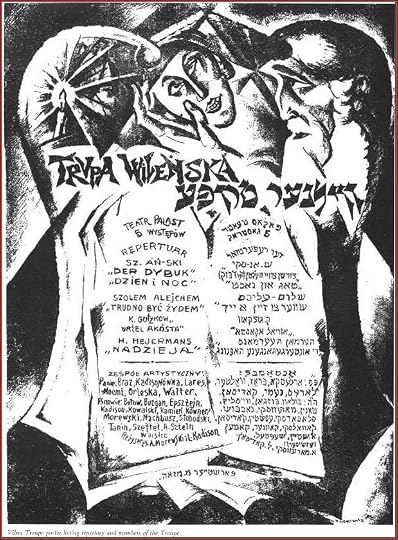
Yiddish Empire tells the story of how a group of itinerant Jewish performers became the interwar equivalent of a viral sensation, providing a missing chapter in the history of the modern stage. During World War I, a motley group of teenaged amateurs, impoverished war refugees, and out- of- work Russian actors banded together to revolutionize the Yiddish stage. Achieving a most unlikely success through their productions, the Vilna Troupe (1915– 36) would eventually go on to earn the attention of theatergoers around the world. Advancements in modern transportation allowed Yiddish theater artists to reach global audiences, traversing not only cities and districts but also countries and continents. The Vilna Troupe routinely performed in major venues that had never before allowed Jews, let alone Yiddish, upon their stages, and operated across a vast territory, a strategy that enabled them to attract unusually diverse audiences to the Yiddish stage and a precursor to the organizational structures and travel patterns that we see now in contemporary theater. Debra Caplan’s history of the Troupe is rigorously researched, employing primary and secondary sources in multiple languages, and is engagingly written.
- GenresJewish
342 pages, Hardcover
First published April 30, 2018
About the author
Debra Caplan
4 books1 followerDebra Caplan is a theater scholar, composer/lyricist, and theater educator. In all three arenas, she tells stories about the past in order to better understand the present.
She is Associate Professor of Theater at Baruch College and the Graduate Center, City University of New York. Her research focuses on Yiddish theater and drama, theatrical travel, artistic networks, and immigrant theater.
She is also a composer/lyricist, translator, director, and dramaturg. Her directing, dramaturgy, and translation work has appeared at Target Margin Theater, the New Yiddish Rep, the Baruch Performing Arts Center, CUNY's Center for the Humanities, Harvard University, the Yiddish Book Center, and the National Yiddish Theatre Folksbiene. From 2008-2009, she was the founding director of the Harvard Yiddish Players.
With Joel Berkowitz, she co-founded The Digital Yiddish Theatre Project, a research collective that applies digital tools to the study of Yiddish theater. She regularly applies Digital Humanities tools to her research, and writes about DH in theater.
She currently serves on the boards of Luna Stage and the Yiddish Book Center.
She is Associate Professor of Theater at Baruch College and the Graduate Center, City University of New York. Her research focuses on Yiddish theater and drama, theatrical travel, artistic networks, and immigrant theater.
She is also a composer/lyricist, translator, director, and dramaturg. Her directing, dramaturgy, and translation work has appeared at Target Margin Theater, the New Yiddish Rep, the Baruch Performing Arts Center, CUNY's Center for the Humanities, Harvard University, the Yiddish Book Center, and the National Yiddish Theatre Folksbiene. From 2008-2009, she was the founding director of the Harvard Yiddish Players.
With Joel Berkowitz, she co-founded The Digital Yiddish Theatre Project, a research collective that applies digital tools to the study of Yiddish theater. She regularly applies Digital Humanities tools to her research, and writes about DH in theater.
She currently serves on the boards of Luna Stage and the Yiddish Book Center.
Ratings & Reviews
Friends & Following
Create a free account to discover what your friends think of this book!
Community Reviews
Displaying 1 - 3 of 3 reviews
July 9, 2026
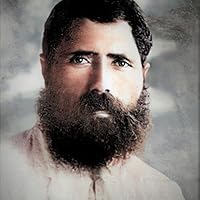
The Vilna Troupe started during World War I among amateur Yiddish theater enthusiasts, including a young sign painter named Leyb Shuster, who worked in and around Vilna. What began as a scrappy, idealistic company touring war-torn Eastern Europe grew into a genuine phenomenon.
Its 1920 premiere of The Dybbuk became a sensation, running nearly 400 performances in its first year and helping define modern Jewish theater. From there the troupe kept moving, city after city, country after country, playing Warsaw, Berlin, Paris, London, and eventually the United States, essentially never settling anywhere for long.
Actors joined for love, rebellion, or sheer obsession with the stage, and many married, raised children, and built whole family dynasties within the company. By the 1930s the original troupe had splintered into multiple offshoots, and its members had scattered to found dozens of other Yiddish theaters worldwide, so its influence kept spreading even as the "Vilna Troupe" name itself faded.
The rise of Hitler ended it for good. At least 45 of its roughly 290 members were murdered in the Holocaust, and the survivors carried its legacy into exile across the globe. Despite this and despite being largely forgotten by history, the Vilna Troupe was one of the most influential theater companies of the twentieth century, a "world theater" without a country of its own.
The Vilna Troupe crossed borders faster than customs agents could stamp visas, and Yiddish carried its own passport wherever the curtain rose. Caplan traces a company born from housepainters, tailors, and runaway sons, actors trading synagogues and sewing shops for greasepaint and gaslight.
Baruch Lumet pushed a baby carriage past a theater door and caught a habit lasting a lifetime, a small scene planting an entire dynasty, since his son Sidney later directed films for Hollywood. Jacob Ben-Ami smacked a yeshiva prodigy with a wet towel and won a one-way ticket to a Russian circus. Expulsion sometimes opens the best stage door.
The Dybbuk anchors the book's emotional core, a play built on possession, and it possessed audiences right back, running nearly four hundred performances in a single year for crowds topping two hundred thousand. Caplan stages the production as a cantorial fervor, prayer modes poured straight into a courtroom scene between the living and the dead.
Synagogue melody turned into box office gold, an empire built on borrowed liturgy and repaid in standing ovations. Romance traveled the rails alongside the actors, roughly a quarter of the company finding love inside its own ranks.
Bella Bellarina chased her sweetheart across provinces with a packed suitcase and a runaway heart, offering free love and settling for a rabbi instead. Families multiplied along with the itinerary, and children got left behind with grandparents while parents chased visas. Theodore Shniur grew into a stranger to his own parents, a plot twist too painful for any playwright to invent on purpose.
Empire building carried a cost heavier than any marquee could advertise. Nazi occupation claimed dozens of company members, actors murdered in Treblinka, the Warsaw Ghetto, and Majdanek, names recovered here with real devotion.
Caplan chases scraps of correspondence and old vinyl through archives across three continents, and the chase becomes part of the show. Reference pages stack up like ticket stubs, proof of a hunt conducted with patience and love.
The wandering troupe kept changing addresses for its entire existence, and Caplan gives it a lasting one on the page, built from paper, memory, and devotion strong enough to survive every border crossing. A curtain rises again with each page turned, and the visa on this particular empire stays valid indefinitely.
❤️ 🇮🇱
Its 1920 premiere of The Dybbuk became a sensation, running nearly 400 performances in its first year and helping define modern Jewish theater. From there the troupe kept moving, city after city, country after country, playing Warsaw, Berlin, Paris, London, and eventually the United States, essentially never settling anywhere for long.
Actors joined for love, rebellion, or sheer obsession with the stage, and many married, raised children, and built whole family dynasties within the company. By the 1930s the original troupe had splintered into multiple offshoots, and its members had scattered to found dozens of other Yiddish theaters worldwide, so its influence kept spreading even as the "Vilna Troupe" name itself faded.
The rise of Hitler ended it for good. At least 45 of its roughly 290 members were murdered in the Holocaust, and the survivors carried its legacy into exile across the globe. Despite this and despite being largely forgotten by history, the Vilna Troupe was one of the most influential theater companies of the twentieth century, a "world theater" without a country of its own.
The Vilna Troupe crossed borders faster than customs agents could stamp visas, and Yiddish carried its own passport wherever the curtain rose. Caplan traces a company born from housepainters, tailors, and runaway sons, actors trading synagogues and sewing shops for greasepaint and gaslight.
Baruch Lumet pushed a baby carriage past a theater door and caught a habit lasting a lifetime, a small scene planting an entire dynasty, since his son Sidney later directed films for Hollywood. Jacob Ben-Ami smacked a yeshiva prodigy with a wet towel and won a one-way ticket to a Russian circus. Expulsion sometimes opens the best stage door.
The Dybbuk anchors the book's emotional core, a play built on possession, and it possessed audiences right back, running nearly four hundred performances in a single year for crowds topping two hundred thousand. Caplan stages the production as a cantorial fervor, prayer modes poured straight into a courtroom scene between the living and the dead.
Synagogue melody turned into box office gold, an empire built on borrowed liturgy and repaid in standing ovations. Romance traveled the rails alongside the actors, roughly a quarter of the company finding love inside its own ranks.
Bella Bellarina chased her sweetheart across provinces with a packed suitcase and a runaway heart, offering free love and settling for a rabbi instead. Families multiplied along with the itinerary, and children got left behind with grandparents while parents chased visas. Theodore Shniur grew into a stranger to his own parents, a plot twist too painful for any playwright to invent on purpose.
Empire building carried a cost heavier than any marquee could advertise. Nazi occupation claimed dozens of company members, actors murdered in Treblinka, the Warsaw Ghetto, and Majdanek, names recovered here with real devotion.
Caplan chases scraps of correspondence and old vinyl through archives across three continents, and the chase becomes part of the show. Reference pages stack up like ticket stubs, proof of a hunt conducted with patience and love.
The wandering troupe kept changing addresses for its entire existence, and Caplan gives it a lasting one on the page, built from paper, memory, and devotion strong enough to survive every border crossing. A curtain rises again with each page turned, and the visa on this particular empire stays valid indefinitely.
❤️ 🇮🇱
May 19, 2018
Full disclosure: the author is a good friend of mine. That said, I would genuinely recommend this book to Jewish history, theater history, and Jewish theater history enthusiasts, as well as to anyone who, like me, enjoys learning about any subject if it's described expertly and passionately.
The topic is less niche than it sounds. The author does a good job of situating the Vilna Troupe within contemporary popular culture, as well as within time and space - no mean feat, given how much they moved around! I loved the stories about how different towns reacted to performances and to the Troupe's growing fame, as well as the endless debates that prominent intellectuals had about the quality, meaning, and impact of their shows. (Never change, intellectuals!) Plus, you know, backstage theater drama. Any theater history has to have at least a few love triangles and affairs and elopements!
There's something bittersweet about following the rise of Yiddish theater as an art form and the growing acceptance and mainstreaming of Jewish culture, knowing what is to come. The author deals briefly with the Holocaust, at the very end of the book, and even that short chapter is a punch to the stomach. The book is clearly meant to be a celebration of a vibrant community with a big impact on the world, and it is, but one can't help mourning all the people and organizations that might have helped keep those memories and traditions alive.
The topic is less niche than it sounds. The author does a good job of situating the Vilna Troupe within contemporary popular culture, as well as within time and space - no mean feat, given how much they moved around! I loved the stories about how different towns reacted to performances and to the Troupe's growing fame, as well as the endless debates that prominent intellectuals had about the quality, meaning, and impact of their shows. (Never change, intellectuals!) Plus, you know, backstage theater drama. Any theater history has to have at least a few love triangles and affairs and elopements!
There's something bittersweet about following the rise of Yiddish theater as an art form and the growing acceptance and mainstreaming of Jewish culture, knowing what is to come. The author deals briefly with the Holocaust, at the very end of the book, and even that short chapter is a punch to the stomach. The book is clearly meant to be a celebration of a vibrant community with a big impact on the world, and it is, but one can't help mourning all the people and organizations that might have helped keep those memories and traditions alive.
December 26, 2018
Debra Caplan has done amazing research, and written a wonderful book that tells the history of “The Vilna Troupe.”
Displaying 1 - 3 of 3 reviews