

What do you think?

Brexit collection #2
Fall Out: A Year of Political Mayhem
The unmissable inside story of the most dramatic general election campaign in modern history and Theresa May’s battle for a Brexit deal, the greatest challenge for a prime minister since the Second World War.
By the bestselling author of All Out War, shortlisted for the Orwell Prize 2017.
This is the unmissable inside story of the most dramatic general election campaign in modern history and Theresa May’s battle for a Brexit deal – the greatest challenge for a prime minister since the Second World War.
Fall Out tells of how a leader famed for her caution battled her bitterly divided cabinet at home while facing duplicitous Brussels bureaucrats abroad. Of how she then took the biggest gamble of her career to strengthen her position – and promptly blew it. It is also a tale of treachery where – in the hour of her greatest weakness – one by one, May’s colleagues began to plot against her.
Inside this book you will find all the strategy, comedy, tragedy and farce of modern politics – where principle, passion and vaulting ambition collide in the corridors of power. It chronicles a civil war at the heart of the Conservative Party and a Labour Party back from the dead, led by Jeremy Corbyn, who defied the experts and the critics on his own side to mount an unlikely tilt at the top job.
With access to all the key players, Tim Shipman has written a political history that reads like a thriller, exploring how and why the EU referendum result pitched Britain into a year of political mayhem.
By the bestselling author of All Out War, shortlisted for the Orwell Prize 2017.
This is the unmissable inside story of the most dramatic general election campaign in modern history and Theresa May’s battle for a Brexit deal – the greatest challenge for a prime minister since the Second World War.
Fall Out tells of how a leader famed for her caution battled her bitterly divided cabinet at home while facing duplicitous Brussels bureaucrats abroad. Of how she then took the biggest gamble of her career to strengthen her position – and promptly blew it. It is also a tale of treachery where – in the hour of her greatest weakness – one by one, May’s colleagues began to plot against her.
Inside this book you will find all the strategy, comedy, tragedy and farce of modern politics – where principle, passion and vaulting ambition collide in the corridors of power. It chronicles a civil war at the heart of the Conservative Party and a Labour Party back from the dead, led by Jeremy Corbyn, who defied the experts and the critics on his own side to mount an unlikely tilt at the top job.
With access to all the key players, Tim Shipman has written a political history that reads like a thriller, exploring how and why the EU referendum result pitched Britain into a year of political mayhem.
592 pages, Paperback
First published January 1, 2017
About the author
Tim Shipman
11 books151 followersTim Shipman has been a national newspaper journalist for sixteen years and has a wealth of experience reporting on British and American politics and international relations.
Currently the Political Editor of the Sunday Times, Tim has covered four British General Elections and three American elections from the US. Well known in the Westminster political mix, he is a trusted confidant of politicians from all political parties and has a growing following as a witty observer of the political scene @ShippersUnbound.
Currently the Political Editor of the Sunday Times, Tim has covered four British General Elections and three American elections from the US. Well known in the Westminster political mix, he is a trusted confidant of politicians from all political parties and has a growing following as a witty observer of the political scene @ShippersUnbound.
Ratings & Reviews
Friends & Following
Create a free account to discover what your friends think of this book!
Community Reviews
Displaying 1 - 30 of 127 reviews

August 17, 2018
It was in the middle of the big meeting, the one to decide who was the new boss of the whole gang. Suddenly the table was overturned, guns appeared in several hands, and death was the decision maker. Within two minutes three bodies hit the floor. The rest of them fled into the night. Except, in the silence, from behind the bar, one stooped figure scuttled to where the bag of jewels and cash lay, scooped it up and padded silently away from the bloody scene.
That’s how Theresa May became leader of the Conservative Party in 2015 and therefore Prime Minister of the UK.
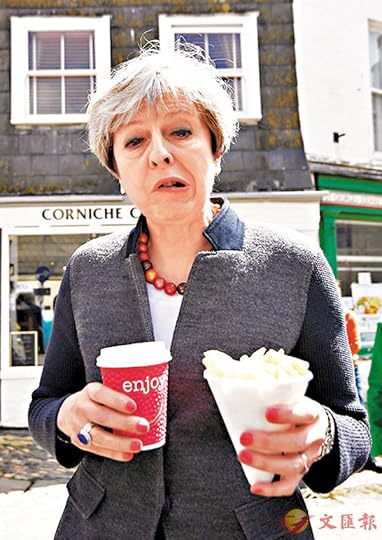
This book tells the story in microscopic detail of what happened next. Turned out that for Theresa the Vicar’s daughter, trouble was her middle name. It also turned out that she was – like that guy in Alien – actually an android.
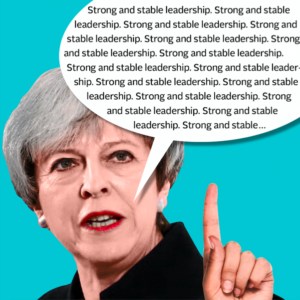
giving answers that seemed to have been churned out by a malfunctioning android programmed with a meagre diet of soundbites
She’s such an odd person to be prime minister. It’s like she wants to be anywhere but there. So awkward physically, she walks like a very tall crab, stooped and ungainly, would suit the role of sinister butler in Arsenic and Old Lace. And she purely hates to be interviewed, all her smiles look like grimaces, as though someone is pointing a gun at her favourite pet’s brains off-camera, as an encouragement – smile Theresa, you can do it. It’s not that she looks like she doesn’t want to go anywhere near ordinary voters, she looks like she doesn’t want to be anywhere near other human beings at all. Rather be in a room on her own writing something down. Making a list.
She’s the accidental prime minister, only got there because all the big names stabbed each other to death. (At the same time Jeremy Corbyn is the accidental leader of Labour, only got there because of a bunch of excitable 20 somethings on Facebook; at the same time Trump is the accidental President of the USA, at least, I hope it was an accident.)
THE SNAP ELECTION OF 2017
Theresa’s big task was to deliver some kind of Brexit but she only had a little teeny majority in Parliament - 17 seats. This meant that if 9 Conservatives voted with the opposition because they didn’t like her Brexit plan, everything would grind to a halt. So she wanted a BIG majority, and look – a couple of months after she became PM her party was way ahead of the now far-left socialist Labour party, Jeremy Corbyn was regularly denounced as a deluded antisemitic Marxist who couldn’t run a bath, never mind a country, so now was the time…. Except that for a year she told everyone read my lips there will be no new election called I will not call an election no means no absolutely not but okay yeah I want a big majority so I know I said all that but I’m calling an election.
And it all went horribly wrong after that, but you can’t blame her. I would have called that election.
One MP described the next part of the story :
We were steaming under blue skies and then we created our own iceberg and steered our own campaign towards it.
THIS LONG ASS BOOK
Is for anyone who likes geeking out on British politics. It’s 18 months of news seen from the inside, on the vicious backbiting gossip level. Lots of fun, way too much detail:
At one point that week, Timothy approached Hill and ruffled her hair from behind on one side before moving to the other side when she turned her head. They both laughed.
A FEW QUIPS
Before the election:
Except for calling a snap election, Mrs May has barely said or done anything interesting for eleven months and yet is the subject of fevered fan-worship usually reserved for One Direction and Kim Kardashian’s bottom.
During the election:
It’s like trying to organize a bunch of cats in the middle of a firework display.
After the election:
I think it’s cruel to keep her. It is like the scene in a Bruce Willis movie where the terrorist who is already shot gets used as a human sandbag to help him get from point A to point B. That is what the party is doing to her at the moment.
Apparently Theresa May always wanted to be PM. Which is really a very severe case of be careful what you wish for. She is uniquely unqualified to be Prime Minister. She hates the limelight, hates being on tv, hates the reporters, hates making speeches, hates campaigning. What did she think being prime minister consisted of, I wonder? She must be having the most miserable time unless we have a masochist running the country.
That’s how Theresa May became leader of the Conservative Party in 2015 and therefore Prime Minister of the UK.
This book tells the story in microscopic detail of what happened next. Turned out that for Theresa the Vicar’s daughter, trouble was her middle name. It also turned out that she was – like that guy in Alien – actually an android.
giving answers that seemed to have been churned out by a malfunctioning android programmed with a meagre diet of soundbites
She’s such an odd person to be prime minister. It’s like she wants to be anywhere but there. So awkward physically, she walks like a very tall crab, stooped and ungainly, would suit the role of sinister butler in Arsenic and Old Lace. And she purely hates to be interviewed, all her smiles look like grimaces, as though someone is pointing a gun at her favourite pet’s brains off-camera, as an encouragement – smile Theresa, you can do it. It’s not that she looks like she doesn’t want to go anywhere near ordinary voters, she looks like she doesn’t want to be anywhere near other human beings at all. Rather be in a room on her own writing something down. Making a list.
She’s the accidental prime minister, only got there because all the big names stabbed each other to death. (At the same time Jeremy Corbyn is the accidental leader of Labour, only got there because of a bunch of excitable 20 somethings on Facebook; at the same time Trump is the accidental President of the USA, at least, I hope it was an accident.)
THE SNAP ELECTION OF 2017
Theresa’s big task was to deliver some kind of Brexit but she only had a little teeny majority in Parliament - 17 seats. This meant that if 9 Conservatives voted with the opposition because they didn’t like her Brexit plan, everything would grind to a halt. So she wanted a BIG majority, and look – a couple of months after she became PM her party was way ahead of the now far-left socialist Labour party, Jeremy Corbyn was regularly denounced as a deluded antisemitic Marxist who couldn’t run a bath, never mind a country, so now was the time…. Except that for a year she told everyone read my lips there will be no new election called I will not call an election no means no absolutely not but okay yeah I want a big majority so I know I said all that but I’m calling an election.
And it all went horribly wrong after that, but you can’t blame her. I would have called that election.
One MP described the next part of the story :
We were steaming under blue skies and then we created our own iceberg and steered our own campaign towards it.
THIS LONG ASS BOOK
Is for anyone who likes geeking out on British politics. It’s 18 months of news seen from the inside, on the vicious backbiting gossip level. Lots of fun, way too much detail:
At one point that week, Timothy approached Hill and ruffled her hair from behind on one side before moving to the other side when she turned her head. They both laughed.
A FEW QUIPS
Before the election:
Except for calling a snap election, Mrs May has barely said or done anything interesting for eleven months and yet is the subject of fevered fan-worship usually reserved for One Direction and Kim Kardashian’s bottom.
During the election:
It’s like trying to organize a bunch of cats in the middle of a firework display.
After the election:
I think it’s cruel to keep her. It is like the scene in a Bruce Willis movie where the terrorist who is already shot gets used as a human sandbag to help him get from point A to point B. That is what the party is doing to her at the moment.
Apparently Theresa May always wanted to be PM. Which is really a very severe case of be careful what you wish for. She is uniquely unqualified to be Prime Minister. She hates the limelight, hates being on tv, hates the reporters, hates making speeches, hates campaigning. What did she think being prime minister consisted of, I wonder? She must be having the most miserable time unless we have a masochist running the country.

November 27, 2017
I must admit that I still have not got around to reading Tim Shipman’s previous book, “All out War,” about the Brexit referendum, but it is certainly a book that I will get to. I did read, “Unleashing Demons,” by Craig Oliver and that was very interesting, but, on reflection, I think Shipman’s book would have been more balanced, as he looks at all the various political parties and does not tell the story from the point of view of any one person or political outlook. In this book, Shipman does an excellent job of recounting events from all sides of the political spectrum and is always fair and reflective.
Taking us from June 2016 to October 2017, this begins with the disastrous, and unnecessary, election, which led to a hung Parliament. Theresa May asked for a mandate from the British people; expecting that she would gain a larger majority and go into the Brexit negotiations strengthened. Instead, she was left stranded, her two main advisors – Nick Timothy and Fiona Hill – forced out , among accusations of bullying, and her government weakened; while her position as Prime Minister stood on shaky ground. Admittedly, when she called the election, her lead was so strong that she, and her party, felt able to celebrate what looked like a certain win. In this book, Shipman looked at how, and why, it all went so horribly wrong.
Having touched on the aftermath of the election results, this book takes us back to the Brexit vote. Plainly, there was no plans made by David Cameron’s government for Brexit. He anticipated a Remain win and then abandoned ship when he didn’t get what he expected – something, which, judging by this book, he may now regret. May does not come across as comfortable with making decisions, or dealing with situations she finds difficult, and upset Cameron by not seeking his advice.
You could say that, if May did not need to call an election, then Cameron did not really need to resign, but it is obvious that decisions in government are no less personal than in any other office environment. Indeed, the amount of back biting, secrecy, plotting and bullying, within all the political parties (but particularly in Downing Street) is, frankly, shocking. Although Shipman is careful to always present both sides of an argument, including much written about Nick Timothy and Fiona Hill. if even a quarter of the stories told within these pages are true, they would lead anyone in any work environment to be immediately sacked.
It is obvious that there are a lot of big personalities in the Conservative government and Shipman looks at Boris Johnson, Michael Gove, Philip Hammond, David Davis and others. Looking at it purely objectively, in personal – and not political – terms, it seemed to me that Philip Hammond was treated appallingly by May’s advisors, that Boris Johnson was pretty much used (blamed for anything that went wrong, but trotted out for any events where ‘personality’ was required), that Amber Rudd was thrown in at the deep end, having to present unpopular Conservative policies, even though she had been very recently bereaved, and that virtually everyone was out for themselves, while trying desperately to walk the tightrope of appearing to be loyal to the PM, while keeping one eye on political advancement. Gove does not enter the picture until later, of course, while Shipman also follows the story of well known former ministers, such as George Osborne; gleefully causing mischief and mayhem in the background.
Shipman covers all the main events in Theresa May’s first year as Prime Minister. Her unpopular visit, (with most of the public), to see Trump, after his shock Presidential win (I still have huge problems putting the words ‘Trump’ and ‘Presidential’ in the same sentence…), the constant dissent about Brexit, her difficulty in selling an unpopular manifesto, her lack of personal charisma and her inability to show empathy (to be fair, I don’t think she is a cold person and there are lots of examples of her being very kind to those around her, but she comes across as being impersonal and stand-offish, which is pretty unappealing when she has to be in the public eye). It is also obvious that, when she decided to call an election, neither she, nor the Conservative Party were ready. No manifesto, a hastily written manifesto, then a manifesto which turned voters away in droves, with unpopular policies, confusion and too much control over what was released, when and by who. Frankly, you expect better from people who are supposed to be running a country. If you decide a call a snap election, it would make sense to have at least prepared for it, or have some kind of plan.
Meanwhile, the Labour Party, although also very divided, seemed much more aware of what they needed to do to get votes. Although they had their own issues, with secrecy between different factions and a farcical leaking of their own manifesto, they realised the importance of social media and Jeremy Corbyn seemed much more comfortable in front of the cameras and was less easily rattled than May by difficult questions. As the Tory lead fell, to many people’s surprise (including many in the Labour Party), the Labour lead started to increase.
The result of the election left Tories devastated, but also depressed many Labour members, who disliked the fact that the hard left had done so well. While the Conservatives pondered who could be Prime Minister if Theresa May was forced out, many Labour supporters realised they would be unable to force out Jeremy Corbyn… Indeed, had the Conservatives not done so well in Scotland, he may well have been Prime Minister. What followed the election was, of course, the ‘blame game,’ and the battle for political survival, with internal squabbles on both sides. What was interesting was that the fight was, largely, between the two main parties, with other political parties fighting over a much smaller vote share.
This book takes us virtually up to the present (this review being written in November 2017). It is clear that events are still very fluid and there will probably be a lot more political upheaval to come. I would imagine that Tim Shipman may well need to make this a trilogy. Well written, highly recommended and engrossing, I recommend this book highly. I received a copy of this book from the publisher, via NetGalley, for review.
Taking us from June 2016 to October 2017, this begins with the disastrous, and unnecessary, election, which led to a hung Parliament. Theresa May asked for a mandate from the British people; expecting that she would gain a larger majority and go into the Brexit negotiations strengthened. Instead, she was left stranded, her two main advisors – Nick Timothy and Fiona Hill – forced out , among accusations of bullying, and her government weakened; while her position as Prime Minister stood on shaky ground. Admittedly, when she called the election, her lead was so strong that she, and her party, felt able to celebrate what looked like a certain win. In this book, Shipman looked at how, and why, it all went so horribly wrong.
Having touched on the aftermath of the election results, this book takes us back to the Brexit vote. Plainly, there was no plans made by David Cameron’s government for Brexit. He anticipated a Remain win and then abandoned ship when he didn’t get what he expected – something, which, judging by this book, he may now regret. May does not come across as comfortable with making decisions, or dealing with situations she finds difficult, and upset Cameron by not seeking his advice.
You could say that, if May did not need to call an election, then Cameron did not really need to resign, but it is obvious that decisions in government are no less personal than in any other office environment. Indeed, the amount of back biting, secrecy, plotting and bullying, within all the political parties (but particularly in Downing Street) is, frankly, shocking. Although Shipman is careful to always present both sides of an argument, including much written about Nick Timothy and Fiona Hill. if even a quarter of the stories told within these pages are true, they would lead anyone in any work environment to be immediately sacked.
It is obvious that there are a lot of big personalities in the Conservative government and Shipman looks at Boris Johnson, Michael Gove, Philip Hammond, David Davis and others. Looking at it purely objectively, in personal – and not political – terms, it seemed to me that Philip Hammond was treated appallingly by May’s advisors, that Boris Johnson was pretty much used (blamed for anything that went wrong, but trotted out for any events where ‘personality’ was required), that Amber Rudd was thrown in at the deep end, having to present unpopular Conservative policies, even though she had been very recently bereaved, and that virtually everyone was out for themselves, while trying desperately to walk the tightrope of appearing to be loyal to the PM, while keeping one eye on political advancement. Gove does not enter the picture until later, of course, while Shipman also follows the story of well known former ministers, such as George Osborne; gleefully causing mischief and mayhem in the background.
Shipman covers all the main events in Theresa May’s first year as Prime Minister. Her unpopular visit, (with most of the public), to see Trump, after his shock Presidential win (I still have huge problems putting the words ‘Trump’ and ‘Presidential’ in the same sentence…), the constant dissent about Brexit, her difficulty in selling an unpopular manifesto, her lack of personal charisma and her inability to show empathy (to be fair, I don’t think she is a cold person and there are lots of examples of her being very kind to those around her, but she comes across as being impersonal and stand-offish, which is pretty unappealing when she has to be in the public eye). It is also obvious that, when she decided to call an election, neither she, nor the Conservative Party were ready. No manifesto, a hastily written manifesto, then a manifesto which turned voters away in droves, with unpopular policies, confusion and too much control over what was released, when and by who. Frankly, you expect better from people who are supposed to be running a country. If you decide a call a snap election, it would make sense to have at least prepared for it, or have some kind of plan.
Meanwhile, the Labour Party, although also very divided, seemed much more aware of what they needed to do to get votes. Although they had their own issues, with secrecy between different factions and a farcical leaking of their own manifesto, they realised the importance of social media and Jeremy Corbyn seemed much more comfortable in front of the cameras and was less easily rattled than May by difficult questions. As the Tory lead fell, to many people’s surprise (including many in the Labour Party), the Labour lead started to increase.
The result of the election left Tories devastated, but also depressed many Labour members, who disliked the fact that the hard left had done so well. While the Conservatives pondered who could be Prime Minister if Theresa May was forced out, many Labour supporters realised they would be unable to force out Jeremy Corbyn… Indeed, had the Conservatives not done so well in Scotland, he may well have been Prime Minister. What followed the election was, of course, the ‘blame game,’ and the battle for political survival, with internal squabbles on both sides. What was interesting was that the fight was, largely, between the two main parties, with other political parties fighting over a much smaller vote share.
This book takes us virtually up to the present (this review being written in November 2017). It is clear that events are still very fluid and there will probably be a lot more political upheaval to come. I would imagine that Tim Shipman may well need to make this a trilogy. Well written, highly recommended and engrossing, I recommend this book highly. I received a copy of this book from the publisher, via NetGalley, for review.

February 18, 2018
A follow-up to All Out War: The Full Story of How Brexit Sank Britain's Political Class – which I described as “likely to stand as the definitive account of the political events before, during and after the Brexit vote”; this book concentrates on the following year looking at the events leading up to the 2017 General Election, the election itself and the resulting fall-out while also considering the on-going negotiations on Brexit, both those between the UK government and the EU, but just as importantly within the UK government itself.
The style of the book is very similar to “All Out War” which I described as “lengthy and exhaustively detailed, but rarely less than engrossing”.
In that book I commented that the only passages of lesser interest were typically those around the “array of special advisors and campaign managers almost none of whom are known to a general reader”. In this case two such special advisors Fiona Hill and Nick Timothy are central to the book, and of course much better known to the general reader –
Shipman recounts lots of stories of their hold on May (sometimes compared to the children she never had, sometimes to pseudo parents given her reliance on them) and on their high handed not to mention abusive and bullying treatment of those around them – from Downing Street minions right up to senior politicians; while at the same time often giving space for Hill in particular to counter the accusations and making it clear that he personally has never found them both less then professional and polite.
This in turn is an example of one of Shipman’s strengths across both books – he is never less than balanced: setting out strengths and weaknesses of alternative views and more importantly always trying to understand individual’s motivations for the way they act.
The only real criticism I have of this book though is that Shipman clearly has much stronger contacts among establishment figures – and this lets him down in this book due to the anti-establishment take-over of the Labour Party: the passages on Corbyn/Momentum contain far less insider detail than is usual across the two books. In his introduction he talks about speaking to “fifteen members of Theresa May’s Downing Street staff, twenty ministers, including thirteen of cabinet rank, more than twenty-five Tory campaign staff and [my emphasis] more than a dozen senior figures in the Labour Party, the shadow cabinet, Jeremy Corbyn’s office and the trade unions” – and this asymmetrical distribution of sources is reflected in the book. An additional but unavoidable issue is Theresa May’s own closed nature and dislike of the club like nature of Westminster Politics – which means we rarely achieve anything other than a speculative insight into her own motivations.
Some interesting insights in the book: the biggest victims of Theresa May’s snap election were the English Conservative Party – planning for a 2019-20 election they had, to save costs in the meantime, stood down their digital staff and placed much of their data gathering in stasis – by contrast Momentum had geared up for the Labour leadership contests and the Scottish Conservative Party for the Scottish elections and were both much better prepared; the other issue that suffered from the snap timing was May’s social care policy – without any ability to educated voters over time (evidence is that almost no voters realised that social care already had to be paid for) what could have been presented as an example of a radical attempt to start to rebalance inter-generational wealth was simply labelled as a “dementia” tax which both convinced working class voters that May’s party was still the nasty party and (due to the hasty and badly spun about-turn” made a nonsense of May’s claims to be strong and stable; May and her two “chiefs” Hill and Timothy, had an obsession with doing things differently to Cameron, meaning that even things that could clearly have played an important role (social media, direct and personal engagement with voters, a detailed economic rebuttal of Labour’s proposals) were ruled out completely; the Conservative campaign could have been run Timothy style as a radical attempt to redefine conservatism or Lynton Crosby style as an almost manifesto-free “stability versus change” campaign – but ended up as an unsatisfactory blend of both which no-one seemed to own; the campaign should have been triggered on the day that Article 50 was signed and over a much shorter campaign period (co-inciding with the local elections) which would have allowed it to be nothing other than a Brexit campaign.
Overall it’s clear that the author is surprised that May survived any (let alone all of) the election, the Grenfell Tower fall-out and her Conference speech – and still believes (at time of publication) her time to be limited – but interestingly he starts (via an epigraph) and ends the book with a surprising tribute to her at least being willing to step up and attempt an almost impossible job of navigating Britain through Brexit when others (particularly Cameron and Osborne stepped away).
A worthwhile and engaging follow-up.
The style of the book is very similar to “All Out War” which I described as “lengthy and exhaustively detailed, but rarely less than engrossing”.
In that book I commented that the only passages of lesser interest were typically those around the “array of special advisors and campaign managers almost none of whom are known to a general reader”. In this case two such special advisors Fiona Hill and Nick Timothy are central to the book, and of course much better known to the general reader –
Shipman recounts lots of stories of their hold on May (sometimes compared to the children she never had, sometimes to pseudo parents given her reliance on them) and on their high handed not to mention abusive and bullying treatment of those around them – from Downing Street minions right up to senior politicians; while at the same time often giving space for Hill in particular to counter the accusations and making it clear that he personally has never found them both less then professional and polite.
This in turn is an example of one of Shipman’s strengths across both books – he is never less than balanced: setting out strengths and weaknesses of alternative views and more importantly always trying to understand individual’s motivations for the way they act.
The only real criticism I have of this book though is that Shipman clearly has much stronger contacts among establishment figures – and this lets him down in this book due to the anti-establishment take-over of the Labour Party: the passages on Corbyn/Momentum contain far less insider detail than is usual across the two books. In his introduction he talks about speaking to “fifteen members of Theresa May’s Downing Street staff, twenty ministers, including thirteen of cabinet rank, more than twenty-five Tory campaign staff and [my emphasis] more than a dozen senior figures in the Labour Party, the shadow cabinet, Jeremy Corbyn’s office and the trade unions” – and this asymmetrical distribution of sources is reflected in the book. An additional but unavoidable issue is Theresa May’s own closed nature and dislike of the club like nature of Westminster Politics – which means we rarely achieve anything other than a speculative insight into her own motivations.
Some interesting insights in the book: the biggest victims of Theresa May’s snap election were the English Conservative Party – planning for a 2019-20 election they had, to save costs in the meantime, stood down their digital staff and placed much of their data gathering in stasis – by contrast Momentum had geared up for the Labour leadership contests and the Scottish Conservative Party for the Scottish elections and were both much better prepared; the other issue that suffered from the snap timing was May’s social care policy – without any ability to educated voters over time (evidence is that almost no voters realised that social care already had to be paid for) what could have been presented as an example of a radical attempt to start to rebalance inter-generational wealth was simply labelled as a “dementia” tax which both convinced working class voters that May’s party was still the nasty party and (due to the hasty and badly spun about-turn” made a nonsense of May’s claims to be strong and stable; May and her two “chiefs” Hill and Timothy, had an obsession with doing things differently to Cameron, meaning that even things that could clearly have played an important role (social media, direct and personal engagement with voters, a detailed economic rebuttal of Labour’s proposals) were ruled out completely; the Conservative campaign could have been run Timothy style as a radical attempt to redefine conservatism or Lynton Crosby style as an almost manifesto-free “stability versus change” campaign – but ended up as an unsatisfactory blend of both which no-one seemed to own; the campaign should have been triggered on the day that Article 50 was signed and over a much shorter campaign period (co-inciding with the local elections) which would have allowed it to be nothing other than a Brexit campaign.
Overall it’s clear that the author is surprised that May survived any (let alone all of) the election, the Grenfell Tower fall-out and her Conference speech – and still believes (at time of publication) her time to be limited – but interestingly he starts (via an epigraph) and ends the book with a surprising tribute to her at least being willing to step up and attempt an almost impossible job of navigating Britain through Brexit when others (particularly Cameron and Osborne stepped away).
A worthwhile and engaging follow-up.

February 5, 2020
Tim Shipman once again helps shed light and makes sense of our turbulent politics since the referendum in 2016. Concentrating on the election year of 2017,Fall Out is a truly revealing account of how our politicians and civil servants were acting and thinking. I'm not going to reveal anything here because such is the quality of Tim Shipmans' writing that to do so would constitute as spoilers. Fall Out really does read like a best selling political thriller. Essential reading for anyone who is interested in British politics. I understand that a third volume is on the way and I for one can't wait.

June 11, 2018
Long-winded journalistic account with very little depth of analysis and overly sympathetic to the dramatis personae. Anyone looking for a scrupulous, insightful, and knowledgeable explanation and description of the events surrounding Theresa May's snap election will get very little from this novelistic and anecdotal story full of caricatures, spin and who knows how many half-truths. Shipman gets close to those involved but is either not astute enough or unwilling to provide anything beyond a "great man/woman" version of events, to the detriment of objectivity; a hugely partial and value-laden history told with complete absence of flair or curiosity. I would have preferred something more academic, circumspect and half as long. "Trusted confidant of politicians from all political parties" is not the recommendation Shipman seems to think it is.

October 20, 2018
Amazing how the author manages to get the inside story of everything that goes on. However the boring detail of Brexit got a bit much towards the end of this although the part about the election was fascinating. So I didn’t enjoy it quite as much as the author’s previous book about how the Brexit vote came about. Sure there will be at least one more of these as much has happened since and will do up to when/if Brexit happens and beyond and I’ll be sure to read it to find out what has really gone on behind the scenes.

September 1, 2020
Interesting summary of the events leading up to, and following, the 2017 general election, and allows you an insight into the manoeuvring and personalities behind the scenes.

January 5, 2018
After reading the author’s book on Brexit, All Out War, I was looking forward to its ‘sequel’, Fall Out, which covers the events following the UK’s vote to leave the EU and also the 2017 general election. Once again, Tim Shipman does not disappoint. Fall Out is an engrossing read and extremely insightful on the general election, especially the way it describes a disastrous and often dysfunctional Tory campaign.
Shipman pulls few punches, or rather the people he spoke to don’t, in detailing the performance and character of Theresa May during the election and in its immediate aftermath. Put simply, she is clearly unsuitable for the job of leading a national political party, but I found it to be a profound weakness of the Tory party that she was leader in the first place. And not many people were criticising her when she was flying high in the opinion polls before the election she called because she thought she was certain to win it with a much enhanced majority.
That she didn’t was down to a resurgent and insurgent Labour campaign that for the first time for a long time put clear red water between the two main parties and reshaped the political narrative in the face of a biased press and media. The desperation of the Tories when they realise the election campaign is not going how they thought it would is excellently depicted by this book, as is Labour’s radical campaign which appealed to sections of the electorate, long ignored by politicians and their parties.
Although he doesn’t say so explicitly, it’s clear that a key conclusion from Shipman’s book is that May is on borrowed time and will have to be removed if the Tories are to have any chance of future electoral success. In my view, not even that step will save them. The 2017 general election exposed the Conservatives in root and claw as not to be trusted and with public opinion on key issues like the NHS, rail and utility renationalisation and tuition fees firmly going Labour’s way, Jeremy Corbyn in Downing Street is a distinct possibility sooner rather than later.
Tim Shipman’s book is a brilliant and well-researched account of an extraordinary period in British politics. Anyone with even a passing interest in current affairs and political events needs to read it.
Shipman pulls few punches, or rather the people he spoke to don’t, in detailing the performance and character of Theresa May during the election and in its immediate aftermath. Put simply, she is clearly unsuitable for the job of leading a national political party, but I found it to be a profound weakness of the Tory party that she was leader in the first place. And not many people were criticising her when she was flying high in the opinion polls before the election she called because she thought she was certain to win it with a much enhanced majority.
That she didn’t was down to a resurgent and insurgent Labour campaign that for the first time for a long time put clear red water between the two main parties and reshaped the political narrative in the face of a biased press and media. The desperation of the Tories when they realise the election campaign is not going how they thought it would is excellently depicted by this book, as is Labour’s radical campaign which appealed to sections of the electorate, long ignored by politicians and their parties.
Although he doesn’t say so explicitly, it’s clear that a key conclusion from Shipman’s book is that May is on borrowed time and will have to be removed if the Tories are to have any chance of future electoral success. In my view, not even that step will save them. The 2017 general election exposed the Conservatives in root and claw as not to be trusted and with public opinion on key issues like the NHS, rail and utility renationalisation and tuition fees firmly going Labour’s way, Jeremy Corbyn in Downing Street is a distinct possibility sooner rather than later.
Tim Shipman’s book is a brilliant and well-researched account of an extraordinary period in British politics. Anyone with even a passing interest in current affairs and political events needs to read it.
April 13, 2020
Book no. 10 of the year!
Long-time followers (hello to both of you) might remember I loved the first one in this series, 'All Out War', which told the story of the 2016 EU Referendum. Well, this is the sequel. It tells the inside story on the first few months of May's premiership, the general election she called (lol), and the 'fallout' afterwards.
It's such a good time.
Shipman has unparalleled access to key political players at the moment. He gets the inside scoop on both May's government and Corbyn's opposition. Given how crap, frankly, both of those operations were, this reads quite like The Thick of It but in real life. The incompetence, the egos and the bad decision making are just astonishing.
A couple of things that spring to mind, immediately after reading this:
1. May was a rubbish PM.
Perhaps this is just one version of history that will be heavily revised in time, but the picture here is that she was unbelievably dependent on her 2 key aides, Fiona Hill and Nick Timothy. She appears to have almost no leadership skills of note in this time, all her key decisions seem to be shaped by those 2 - and, sub-optimally for her, they both seem highly unpleasant and with dubious judgement. Hill seems to have infuriated everyone she worked with, while Timothy's key inputs were encouraging May to call the election (oops) and basically writing the manifesto himself (a disaster).
It's really remarkable how little input she had on key decisions. She didn't decide what went in the manifesto, what her campaign would be about, who was in charge of the campaign - nothing. She just comes across as having incredibly little substance. Plus, she sounds like a nightmare to work with - everyone seems to find her awkward to spend time with, including: ministers, civil servants, foreign leaders and the queen.
And this is on top of the bad qualities that were already apparent to us laypeople watching from home. Her tendency to lie is one of these - think of, following a dramatic U-turn on her social care plans, protesting "Nothing has changed. Nothing has changed!". Or her inability to relate to people - telling a nurse who complained at 8 years of pay freezes that "there's no magic money tree". There was her lack of public sympathy to the victims of Grenfell. Plus, there was the dubious allocation of cabinet roles (Boris as Foreign Sec, anyone?) and many, many more bad decisions.
I might be being overly harsh. But I can't see that in her 3 years as PM she achieved anything of note. At least Cameron got gay marriage done!
2. This is a very favourable timeframe for Corbyn
This book covers Sept 2016 to Dec 2017. In this very specific snapshot, Corbyn's leadership actually looks strangely successful. He turned around a 20+ point deficit in the polls to gain 30 seats in the election, his personal approval ratings rose from -40 to about 0, and he silenced a lot of his detractors by the end.
Reading the book now, it's apparent that this was temporary - the 12 months before, he was on the losing side of the EU referendum, lost of vote of confidence in the parliamentary Labour party, and suffered a leadership election; in the 24 months after he suffered a landslide defeat vs. Boris. But he does oddly well in the period this focuses on, which gives a strangely positive picture.
3. The DRAMA is great
Oh man, the insults here are top notch. A couple of my favourites:
"Theresa May is Philip Hammond with a f*nny, and the inverse is also true"
The Tory election consultants described Hammond as "a f**ing cheese d*ck"
David Cameron "is not a political obsessive... he's more interested in what animal he's going to shoot, or what claret he's going to have for lunch, or where he's going to shag Sam next" (this one was actually meant as a compliment).
It's just non-stop egotistical mayhem. Easier to enjoy now that it's in the past.
So yeah, a great read - Shipman gives a fascinating insight into the absolute mayhem of May's first 18 months in charge.
4.8 / 5
Long-time followers (hello to both of you) might remember I loved the first one in this series, 'All Out War', which told the story of the 2016 EU Referendum. Well, this is the sequel. It tells the inside story on the first few months of May's premiership, the general election she called (lol), and the 'fallout' afterwards.
It's such a good time.
Shipman has unparalleled access to key political players at the moment. He gets the inside scoop on both May's government and Corbyn's opposition. Given how crap, frankly, both of those operations were, this reads quite like The Thick of It but in real life. The incompetence, the egos and the bad decision making are just astonishing.
A couple of things that spring to mind, immediately after reading this:
1. May was a rubbish PM.
Perhaps this is just one version of history that will be heavily revised in time, but the picture here is that she was unbelievably dependent on her 2 key aides, Fiona Hill and Nick Timothy. She appears to have almost no leadership skills of note in this time, all her key decisions seem to be shaped by those 2 - and, sub-optimally for her, they both seem highly unpleasant and with dubious judgement. Hill seems to have infuriated everyone she worked with, while Timothy's key inputs were encouraging May to call the election (oops) and basically writing the manifesto himself (a disaster).
It's really remarkable how little input she had on key decisions. She didn't decide what went in the manifesto, what her campaign would be about, who was in charge of the campaign - nothing. She just comes across as having incredibly little substance. Plus, she sounds like a nightmare to work with - everyone seems to find her awkward to spend time with, including: ministers, civil servants, foreign leaders and the queen.
And this is on top of the bad qualities that were already apparent to us laypeople watching from home. Her tendency to lie is one of these - think of, following a dramatic U-turn on her social care plans, protesting "Nothing has changed. Nothing has changed!". Or her inability to relate to people - telling a nurse who complained at 8 years of pay freezes that "there's no magic money tree". There was her lack of public sympathy to the victims of Grenfell. Plus, there was the dubious allocation of cabinet roles (Boris as Foreign Sec, anyone?) and many, many more bad decisions.
I might be being overly harsh. But I can't see that in her 3 years as PM she achieved anything of note. At least Cameron got gay marriage done!
2. This is a very favourable timeframe for Corbyn
This book covers Sept 2016 to Dec 2017. In this very specific snapshot, Corbyn's leadership actually looks strangely successful. He turned around a 20+ point deficit in the polls to gain 30 seats in the election, his personal approval ratings rose from -40 to about 0, and he silenced a lot of his detractors by the end.
Reading the book now, it's apparent that this was temporary - the 12 months before, he was on the losing side of the EU referendum, lost of vote of confidence in the parliamentary Labour party, and suffered a leadership election; in the 24 months after he suffered a landslide defeat vs. Boris. But he does oddly well in the period this focuses on, which gives a strangely positive picture.
3. The DRAMA is great
Oh man, the insults here are top notch. A couple of my favourites:
"Theresa May is Philip Hammond with a f*nny, and the inverse is also true"
The Tory election consultants described Hammond as "a f**ing cheese d*ck"
David Cameron "is not a political obsessive... he's more interested in what animal he's going to shoot, or what claret he's going to have for lunch, or where he's going to shag Sam next" (this one was actually meant as a compliment).
It's just non-stop egotistical mayhem. Easier to enjoy now that it's in the past.
So yeah, a great read - Shipman gives a fascinating insight into the absolute mayhem of May's first 18 months in charge.
4.8 / 5
February 3, 2018
All the access in the world can't make Shipman more than a very pedestrian writer.

October 3, 2024
Well worth the read.
For Mr Shipman, Brexit and the political parties, particularly the Tories, has been a gift that keeps giving. Two volumes down and two more to read.
I suppose the main thing drawn from the book is how much our elected politicians depend on their special advisors and the campaign specialists. There could be an argument with Mrs May as PM, the people making the decisions were Timothy and Hill, mainly Timothy for policy, and that government with the cabinet has declined over the years to be almost non existent.
Another strand is how few voters need to be targeted to win an election, the previous book stated that Cameron win in 2015 by concentrating on 200,000 voters, so much for the will of the people. This was also brought home to me, when after years my constituent being a safe Labour seat we very rarely saw canvassers, with the boundary changes making it a swing seat, canvassers almost outnumbered constituents. Might have exaggerated slightly there.
There has also been a pattern of recent PMs, broken with Sir Keir, where we have gone from extrovert to introvert; Blair to Brown, Cameron to May, Johnson to Sunak. Hopefully Sir Keir will be able to find the middle ground.
But Brexit, and its consequences are the recurring theme. Unfortunately for all it cut across political parties, aggravating any personal feelings towards “colleagues”. Critically, the difficulties inherent in leaving the EU were hopelessly underestimated and to a certain extent the final flavour of Brexit undecided, so the process difficult to process. We also seemed to rely on “we’re British and special, so Johnny Foreigner will accede to our requests”. Spoiler alert, they didn’t.
In Michel Barnier’s book, someone said to him “when the British were in the EU, they wanted a lot of opt-outs, now they are leaving they want a lot of opt-ins”.
Looking forward to the next two books.
For Mr Shipman, Brexit and the political parties, particularly the Tories, has been a gift that keeps giving. Two volumes down and two more to read.
I suppose the main thing drawn from the book is how much our elected politicians depend on their special advisors and the campaign specialists. There could be an argument with Mrs May as PM, the people making the decisions were Timothy and Hill, mainly Timothy for policy, and that government with the cabinet has declined over the years to be almost non existent.
Another strand is how few voters need to be targeted to win an election, the previous book stated that Cameron win in 2015 by concentrating on 200,000 voters, so much for the will of the people. This was also brought home to me, when after years my constituent being a safe Labour seat we very rarely saw canvassers, with the boundary changes making it a swing seat, canvassers almost outnumbered constituents. Might have exaggerated slightly there.
There has also been a pattern of recent PMs, broken with Sir Keir, where we have gone from extrovert to introvert; Blair to Brown, Cameron to May, Johnson to Sunak. Hopefully Sir Keir will be able to find the middle ground.
But Brexit, and its consequences are the recurring theme. Unfortunately for all it cut across political parties, aggravating any personal feelings towards “colleagues”. Critically, the difficulties inherent in leaving the EU were hopelessly underestimated and to a certain extent the final flavour of Brexit undecided, so the process difficult to process. We also seemed to rely on “we’re British and special, so Johnny Foreigner will accede to our requests”. Spoiler alert, they didn’t.
In Michel Barnier’s book, someone said to him “when the British were in the EU, they wanted a lot of opt-outs, now they are leaving they want a lot of opt-ins”.
Looking forward to the next two books.

December 20, 2025
I'm glad I read this book -- it felt like a trip down memory lane, encapsulating the news of the time. Who wouldn't want to relive Theresa May's 'fields of wheat' comment and the ensuing memes that followed?
With that said, the writing itself was disappointing. With a Shakespearean cast of characters (and 10x the normal allocation of fools) as well as some of the most farcical moments in recent history, Shipman managed to make this retelling of events as dry as dust. I had to stop reading at numerous points, because I would read a page and then realise I had completely zoned out. There were so many details that have increased resonance in 2025, such as learning that immediately upon Trump's first election, Steve Bannon was 'joking' about allowing Russia to 'move into a Baltic state' while speaking to NATO allies -- but these fascinating details were swallowed up by extraneous information.
Amongst the list of names and retelling of events, it felt like the humanity of the people was lost. It lacked the human touch (ironically, in a similar vein to Shipman's criticism of May). Are they villains? Fools? Tragically flawed heroes? Ultimately, in Shipman's hands, the most evocative moments of recent history become petty instances of 'he said' and then 'she said', with endless lists of names and no real commentary on the events that happened, beyond a simple recounting of the reactions that followed.
I understand the need to present an ostensibly impartial account of the events as they happened, but I am uncertain about who this book was written for. If it was for someone with an in-depth knowledge of the people and events around this time, surely they would already know what happened and would be seeking some sort of insight? If it is for the ordinary voter with an interest in politics and contemporary history, surely there could have been an attempt to shape and streamline the narrative to a purpose, instead of listing every detail to the point of hiding the really crucial information? There is a fascinating story to be told around Brexit; unfortunately, this book is never really sure about what story it is telling.
With that said, the writing itself was disappointing. With a Shakespearean cast of characters (and 10x the normal allocation of fools) as well as some of the most farcical moments in recent history, Shipman managed to make this retelling of events as dry as dust. I had to stop reading at numerous points, because I would read a page and then realise I had completely zoned out. There were so many details that have increased resonance in 2025, such as learning that immediately upon Trump's first election, Steve Bannon was 'joking' about allowing Russia to 'move into a Baltic state' while speaking to NATO allies -- but these fascinating details were swallowed up by extraneous information.
Amongst the list of names and retelling of events, it felt like the humanity of the people was lost. It lacked the human touch (ironically, in a similar vein to Shipman's criticism of May). Are they villains? Fools? Tragically flawed heroes? Ultimately, in Shipman's hands, the most evocative moments of recent history become petty instances of 'he said' and then 'she said', with endless lists of names and no real commentary on the events that happened, beyond a simple recounting of the reactions that followed.
I understand the need to present an ostensibly impartial account of the events as they happened, but I am uncertain about who this book was written for. If it was for someone with an in-depth knowledge of the people and events around this time, surely they would already know what happened and would be seeking some sort of insight? If it is for the ordinary voter with an interest in politics and contemporary history, surely there could have been an attempt to shape and streamline the narrative to a purpose, instead of listing every detail to the point of hiding the really crucial information? There is a fascinating story to be told around Brexit; unfortunately, this book is never really sure about what story it is telling.
May 6, 2026
4-stars for the effort, sourcing, and readability from the author. Other than that, it is clearly the weakest of the 4 volumes, but this is perhaps because the cast of characters; compare David Cameron, Nigel Farage, Dominic Cummings, Boris, etc to Theresa May, David Davis, Nick Timothy - the personalities and entertainment value just aren’t the same. The story also isn’t as attractive - majority of the first 200 so pages is EU/Brexit minutiae while the last 2/3 of the book is an underwhelming election primer. Even so, it’s a necessary installment and serves as a bridge to the next series of events.

June 7, 2024
As Mark Twain said, I didn’t have time to write a short letter. In a nutshell that’s my main criticism of this wonderful account of the initial events following the Brexit referendum. The book is long, very detailed, and for the most part an exciting read, even if the reader knows what happened next. Also, as the book was written shortly after the events it covers, I wonder if some conclusions would be different with the benefit of a longer perspective.

September 6, 2024
Just as good as the first. Fascinating insight into the disastrous 2017 election campaign, and why it went so wrong.

December 7, 2017
What a fascinating analysis of a political year. The subtitle of this book could be "how leather trousers led to Theresa May's downfall." The stylization of Theresa May summoned a brittle, cold modality that blocked a concrete discussion of health, education and the political economy.
It is a fascinating study of how advisers can destroy a popular politician.
It is a fascinating study of how advisers can destroy a popular politician.

July 1, 2018
Second in the inevitable trilogy. Tim Shipman's take on the Conservative's Disaster Election offers many useful and intriguing insights into what went on behind closed doors and in the corridors of power.

August 13, 2018
A very good survey of a mad period in British politics. Shipman has contacts within Tory and Labour who speak on and off the record. It's obvious where Tim's sympathies lie but he is a fair observer.
A good follow up to his referendum book.
A good follow up to his referendum book.
April 3, 2018
A cracking read. Long, demanding but utterly compelling. Shipman has a fluid writing style that brings every player to life - makes you understand how Theresa May and Co got into such a pickle!

April 11, 2020
For anyone interested in British politics this is a valuable and engrossing work following on quickly from the work by the same author that covered the 2016 referendum campaign.
This book covers the 2017 general election and, to me, has the advantage over the previous work (All out war) in that it presents a much more detailed view of what happened from non-Conservative sources and points of view.
The access the author has to top level sources is astonishing, he clearly has received information from cabinet level politicians possibly seeing his work as a way of getting their say on what happened and unfolded in those months in 2017.
To read about what happened in during the course of that election is to be reminded of how fundamentally the political scene changed during that campaign, how certainties were overturned, but also, curiously , on reflection the general election of 2019 was clearly the campaign the Tories wanted to run in 2017 with the result being the one they expected.
How the Tories ran their campaign in 2017 was a remarkable example of how the culture of an organisation is so much more important than process and organisation and how lessons learned do not persist if the new culture has no regard for the previous culture.
The control that advisers Nick Timothy and Fiona Hill held over both access to the Prime Minister Theresa May and the planning and strategy that she undertook was well known before the election but this book lays bear just how complete this control was, and how much the PM relied upon it.
This control transferred into the planning for the election to the detriment of the party , some verging on the bizarre , for instance in the hiring of Jim Messina the pollster for Barack Obama and then not permitting access for him to Theresa May to provide information about the conduct of the campaign.
Equally so , whatever one's personal views of Lynton Crosby, and mine are not positive in the slightest , to hire him for £4m and then also not allow him access to shape the campaign was very strange and highlighted the controlling culture's determination to differentiate themselves from the Cameron Conservatives of 2015 , even down to the scoring of the use of social media.
The Prime Minister is portrayed as a private and somewhat tortured figure and this book played into thoughts that I had at the time about why she sought out this highest of high profile positions and the scrutiny and pressure it would attract as well as the terrible behaviour of those supposed to be colleagues.
As mentioned this book is a more rounded work than All Out War as it presents more detail about the conduct and decisions behind the Labour Party's campaign in this election. This was of particular interest to me as a Labour party member who left the party just prior to this election due to my feeling of alientation with how the party was being lead by Jeremy Corbyn and his circle of closest colleagues and advisors.
Prior to the start of this election campaign the common view was that Labour was on the verge of a catastrophic defeat , a view supported by the local elections held no more than a few weeks before the election.
It is clear from this book that this was also the view of many in the Labour leadership and campaign coordinators , primarily those trying to prevent all that occurred in the New Labour years being torn up and cast aside, but also by those loyal to Jeremy Corbyn, to the extent that plans were in place to protect the leadership of Corbyn following the expected landslide defeat.
This book, as well as explaining the conduct of both main parties goes some way to explaining how the outcome that came to pass did so and shines a very bright light into the machinations of election campaigns in a way very rarely done so - for the political nerds such as myself this was compelling reading.
As a final thought this book illuminated for me how the 2019 election can be seen as what the 2017 election was expected to be for both main parties, both Conservative and Labour - a significant victory / defeat. I will be interested to see if a similar book is produced for the 2019 election by Tim Shipman.
This book covers the 2017 general election and, to me, has the advantage over the previous work (All out war) in that it presents a much more detailed view of what happened from non-Conservative sources and points of view.
The access the author has to top level sources is astonishing, he clearly has received information from cabinet level politicians possibly seeing his work as a way of getting their say on what happened and unfolded in those months in 2017.
To read about what happened in during the course of that election is to be reminded of how fundamentally the political scene changed during that campaign, how certainties were overturned, but also, curiously , on reflection the general election of 2019 was clearly the campaign the Tories wanted to run in 2017 with the result being the one they expected.
How the Tories ran their campaign in 2017 was a remarkable example of how the culture of an organisation is so much more important than process and organisation and how lessons learned do not persist if the new culture has no regard for the previous culture.
The control that advisers Nick Timothy and Fiona Hill held over both access to the Prime Minister Theresa May and the planning and strategy that she undertook was well known before the election but this book lays bear just how complete this control was, and how much the PM relied upon it.
This control transferred into the planning for the election to the detriment of the party , some verging on the bizarre , for instance in the hiring of Jim Messina the pollster for Barack Obama and then not permitting access for him to Theresa May to provide information about the conduct of the campaign.
Equally so , whatever one's personal views of Lynton Crosby, and mine are not positive in the slightest , to hire him for £4m and then also not allow him access to shape the campaign was very strange and highlighted the controlling culture's determination to differentiate themselves from the Cameron Conservatives of 2015 , even down to the scoring of the use of social media.
The Prime Minister is portrayed as a private and somewhat tortured figure and this book played into thoughts that I had at the time about why she sought out this highest of high profile positions and the scrutiny and pressure it would attract as well as the terrible behaviour of those supposed to be colleagues.
As mentioned this book is a more rounded work than All Out War as it presents more detail about the conduct and decisions behind the Labour Party's campaign in this election. This was of particular interest to me as a Labour party member who left the party just prior to this election due to my feeling of alientation with how the party was being lead by Jeremy Corbyn and his circle of closest colleagues and advisors.
Prior to the start of this election campaign the common view was that Labour was on the verge of a catastrophic defeat , a view supported by the local elections held no more than a few weeks before the election.
It is clear from this book that this was also the view of many in the Labour leadership and campaign coordinators , primarily those trying to prevent all that occurred in the New Labour years being torn up and cast aside, but also by those loyal to Jeremy Corbyn, to the extent that plans were in place to protect the leadership of Corbyn following the expected landslide defeat.
This book, as well as explaining the conduct of both main parties goes some way to explaining how the outcome that came to pass did so and shines a very bright light into the machinations of election campaigns in a way very rarely done so - for the political nerds such as myself this was compelling reading.
As a final thought this book illuminated for me how the 2019 election can be seen as what the 2017 election was expected to be for both main parties, both Conservative and Labour - a significant victory / defeat. I will be interested to see if a similar book is produced for the 2019 election by Tim Shipman.

March 31, 2021
After ploughing through this book – and I’ll admit, I found it quite a slog for reasons I’ll come on to – I was left wondering who the intended readership is. If you’re into the minutiae of British politics sufficiently to read an almost 600 page book, then there’s not much here of substance which you won’t already know, although it is fair to say that having the fragments of stories from daily papers placed within a coherent narrative framework is helpful in some ways, although I found it overly long and rather too detailed to grip the reader.
That said, I found myself almost shouting at the book (or more accurately at the characters therein) as I read of the stupid, petty and dysfunctional behaviour of the people who are meant to be running this county.
And I don’t just mean the obvious targets – Boris Johnson, Michael Gove et al, who I will return to - but the civil servants, the special advisers, the pollsters and all the other groups of people who indulge in the most childish behaviour imaginable: Fiona wasn’t speaking to George because he’d been out with one of her friends and it ended badly; John was cross with Phillip for failing to laugh at one of his jokes; and on and on with this pathetic parade of wasters who think their career, their ego and even the size of their desk is more important than British jobs, justice or the economy and all the while paid for by you and me.
And then there are the politicians. It would be hard to find a group of people more elevated above their natural talents than May, Johnson (not nearly as clever as he seems to think he is) or Gove. But then there is David Davis, an intellectual pygmy who thinks saying he will kick someone in the balls is witty rhetoric and who demanded a helicopter fly him to London on the morning after the election because he wanted to make a grand entrance. And then refused to turn up and face the music.
Worst of all, perhaps, is Andrea Leadsom who is described as “the least bright bulb” in the Cabinet and who made a contribution to Cabinet discussion after the election that was incomprehensible and described by another minister as the worst he had ever heard. Others say she is simply incredibly stupid. And the book makes no reference to the fact that she has a CV which is full of exaggerations and downright lies.
Let’s just pinch ourselves and be reminded: this pond life is meant to be running our country.
That said, I found myself almost shouting at the book (or more accurately at the characters therein) as I read of the stupid, petty and dysfunctional behaviour of the people who are meant to be running this county.
And I don’t just mean the obvious targets – Boris Johnson, Michael Gove et al, who I will return to - but the civil servants, the special advisers, the pollsters and all the other groups of people who indulge in the most childish behaviour imaginable: Fiona wasn’t speaking to George because he’d been out with one of her friends and it ended badly; John was cross with Phillip for failing to laugh at one of his jokes; and on and on with this pathetic parade of wasters who think their career, their ego and even the size of their desk is more important than British jobs, justice or the economy and all the while paid for by you and me.
And then there are the politicians. It would be hard to find a group of people more elevated above their natural talents than May, Johnson (not nearly as clever as he seems to think he is) or Gove. But then there is David Davis, an intellectual pygmy who thinks saying he will kick someone in the balls is witty rhetoric and who demanded a helicopter fly him to London on the morning after the election because he wanted to make a grand entrance. And then refused to turn up and face the music.
Worst of all, perhaps, is Andrea Leadsom who is described as “the least bright bulb” in the Cabinet and who made a contribution to Cabinet discussion after the election that was incomprehensible and described by another minister as the worst he had ever heard. Others say she is simply incredibly stupid. And the book makes no reference to the fact that she has a CV which is full of exaggerations and downright lies.
Let’s just pinch ourselves and be reminded: this pond life is meant to be running our country.
February 13, 2018
This is one of those books that leaves you wondering whether to laugh or cry. Shipman has done a remarkable job, setting out a detailed, compelling account of the rolling disaster starting with Theresa May’s ascension to Number 10.
I read this immediately after Michael Wolff’s “Fire and Fury”. It was a bit like chasing a packet of Revels with Ferrero Rocher. Both books are drawn, in the main, from unattributed sources, reliant on the writer’s access to those at, or close to the sources of power. However, where Wolff goes for gossip and colour, Shipman’s 20 years as a political journalist results in a far more authoritative tone, deftly mixing the story telling with explanations – important and quite helpful in the early sections that focus on May’s attempts to come to terms with just what “Brexit means Brexit” really meant.
A lot of Shipman’s credibility comes from his even handed approach. The ineptitude and in-fighting within the Labour Party is relayed in the same unflinching manner as that of the Tories – however it soon becomes evident just how much more of it there was on the Right. He also takes care to set out stories from differing perspectives where he can. The only question I’m left with in the background is whether the richness of detail he has on May, Johnson and Hammond is also down to him having much better contacts within the blue team than he does the reds.
Despite such a wealth of stories of duplicity, arrogance and incompetence, it’s striking how Nick Timothy and Fiona Hill stand head and shoulders above the rest. The grip that the “terrible twins” had on policy and process is breath taking. Timothy is shown to be an ideologue (still bellowing from the sidelines), Hill a bully.
The book also contains some interesting ideas – in particular how BoJo would have been better off in the long term if he’s opted to support Remain – still Foreign Secretary but with a full brief instead of the emasculated version he has now alongside Liam Fox.
The book concludes in November 2017 – a publishing deadline rather than any conclusion to the story. It continues to provide excellent context to May’s continued attempts to portray herself as in command. It would stand updating in the coming months / years – although I fear the overall story will remain a tragedy of epic proportions
I read this immediately after Michael Wolff’s “Fire and Fury”. It was a bit like chasing a packet of Revels with Ferrero Rocher. Both books are drawn, in the main, from unattributed sources, reliant on the writer’s access to those at, or close to the sources of power. However, where Wolff goes for gossip and colour, Shipman’s 20 years as a political journalist results in a far more authoritative tone, deftly mixing the story telling with explanations – important and quite helpful in the early sections that focus on May’s attempts to come to terms with just what “Brexit means Brexit” really meant.
A lot of Shipman’s credibility comes from his even handed approach. The ineptitude and in-fighting within the Labour Party is relayed in the same unflinching manner as that of the Tories – however it soon becomes evident just how much more of it there was on the Right. He also takes care to set out stories from differing perspectives where he can. The only question I’m left with in the background is whether the richness of detail he has on May, Johnson and Hammond is also down to him having much better contacts within the blue team than he does the reds.
Despite such a wealth of stories of duplicity, arrogance and incompetence, it’s striking how Nick Timothy and Fiona Hill stand head and shoulders above the rest. The grip that the “terrible twins” had on policy and process is breath taking. Timothy is shown to be an ideologue (still bellowing from the sidelines), Hill a bully.
The book also contains some interesting ideas – in particular how BoJo would have been better off in the long term if he’s opted to support Remain – still Foreign Secretary but with a full brief instead of the emasculated version he has now alongside Liam Fox.
The book concludes in November 2017 – a publishing deadline rather than any conclusion to the story. It continues to provide excellent context to May’s continued attempts to portray herself as in command. It would stand updating in the coming months / years – although I fear the overall story will remain a tragedy of epic proportions

May 6, 2019
How on Earth did I read 600 pages of a single year's politics and still find it all fascinating? The simple answer is that there was a lot of subtitled 'MAYHEM' but Shipman has a very accessible style and knows when to go into more detail and when to merely address issues. I gave up very quickly on 'Cameron at 10' so political office is not in itself enough to keep me reading, but there were so many sources that this was almost a great collection of gossip rather than a political account.
It's clear that Shipman's contact list is 'extensive' to put it mildly, and as a result he really manages to capture all aspects of the two main parties (and the Lib Dems when relevant) from the top teams to the backbenchers and the Civil Service. He also gives indications as to whether this is one person's account or a corroborated event to make it clear which tales are likely to be truthful. This could be patronising but given this is based on leaks and gossip this is a very useful commentary, although I wonder whether 'allies of Hill and Timothy' actually meant the pair themselves, as it seems nobody else liked them at all.
Although Shipman offers his own conclusion, which is that May's strengths are her weaknesses and calling an election wasn't a bad idea, May comes off very badly, as a leader who just does what other people tell her to, while her control freak advisors run the show. As the ruling party the Tories are covered in more detail, but Karie Murphy comes off especially badly too, another organiser using someone else's political career to further their backseat driving.
The main strength though is the writing, Shipman managing to make everything seem important, whether it is the event itself or the start of a chain of events, but in an authentic manner rather than TV hype. I followed most of the events at the time but the huge amount of source material often revealed something new, such as David Davis once being a respected MP.
At times this read like a political thriller, when it was based on a single year of politics, in which an election saw the ruling party lose only a few seats. But I'll definitely be on the lookout for this book's predecessor.
It's clear that Shipman's contact list is 'extensive' to put it mildly, and as a result he really manages to capture all aspects of the two main parties (and the Lib Dems when relevant) from the top teams to the backbenchers and the Civil Service. He also gives indications as to whether this is one person's account or a corroborated event to make it clear which tales are likely to be truthful. This could be patronising but given this is based on leaks and gossip this is a very useful commentary, although I wonder whether 'allies of Hill and Timothy' actually meant the pair themselves, as it seems nobody else liked them at all.
Although Shipman offers his own conclusion, which is that May's strengths are her weaknesses and calling an election wasn't a bad idea, May comes off very badly, as a leader who just does what other people tell her to, while her control freak advisors run the show. As the ruling party the Tories are covered in more detail, but Karie Murphy comes off especially badly too, another organiser using someone else's political career to further their backseat driving.
The main strength though is the writing, Shipman managing to make everything seem important, whether it is the event itself or the start of a chain of events, but in an authentic manner rather than TV hype. I followed most of the events at the time but the huge amount of source material often revealed something new, such as David Davis once being a respected MP.
At times this read like a political thriller, when it was based on a single year of politics, in which an election saw the ruling party lose only a few seats. But I'll definitely be on the lookout for this book's predecessor.

April 2, 2019
As we lurch from one ‘Meaningful’ Vote on Brexit to another, with no one quite knowing what to do next, it’s an opportune moment to finish Tim Shipman’s second book of instant political history as he tries to make sense of what’s been going on since Theresa May became PM.
At the end of ‘All Out War’ May had seen off all her challengers and was installed in 10 Downing Street with a pair of attack dogs (in Nick Timothy & Fiona Hill) as her joint chiefs of staff. This book charts the story of how all the wheels came off her Prime Ministership in spectacular fashion, where she is now considered the worst PM in modern history.
Inevitably the main focus of the book is the story of the 2017 General election - it was called early in a bid to win a thumping majority & capitalise on the ineptitude of the Labour Party under Jeremy Corbyn.
However clearly May & her advisers misjudged things badly. Calling a snap election where you hadn’t thought about what to put in your manifesto was just the start. For me Theresa May was unwilling or incapable of doing the key things you would expect a politician to do (or at least be able to fake) - like being able to engage & communicate effectively. This critically hampered the campaign. Couple this with Timothy & Hill who over estimated their abilities but had put so many noses out of joint that most people weren’t willing to go the extra mile for them meant that the 2017 campaign was probably the worst organised - and run- by a main political party in living memory.
Shipman makes clear (and subsequent events have borne this out) that May should probably have resigned immediately after the election. She had lost the respect of both her party & her country whilst her authority was totally undermined. The fact she continued in office has led us to the mess we are in today.
I found this book even more fascinating than his earlier one, & given that the Brexit tale is far from over, I’m sure we can expect volume 3 (maybe even 4 & 5) to follow in due course.
At the end of ‘All Out War’ May had seen off all her challengers and was installed in 10 Downing Street with a pair of attack dogs (in Nick Timothy & Fiona Hill) as her joint chiefs of staff. This book charts the story of how all the wheels came off her Prime Ministership in spectacular fashion, where she is now considered the worst PM in modern history.
Inevitably the main focus of the book is the story of the 2017 General election - it was called early in a bid to win a thumping majority & capitalise on the ineptitude of the Labour Party under Jeremy Corbyn.
However clearly May & her advisers misjudged things badly. Calling a snap election where you hadn’t thought about what to put in your manifesto was just the start. For me Theresa May was unwilling or incapable of doing the key things you would expect a politician to do (or at least be able to fake) - like being able to engage & communicate effectively. This critically hampered the campaign. Couple this with Timothy & Hill who over estimated their abilities but had put so many noses out of joint that most people weren’t willing to go the extra mile for them meant that the 2017 campaign was probably the worst organised - and run- by a main political party in living memory.
Shipman makes clear (and subsequent events have borne this out) that May should probably have resigned immediately after the election. She had lost the respect of both her party & her country whilst her authority was totally undermined. The fact she continued in office has led us to the mess we are in today.
I found this book even more fascinating than his earlier one, & given that the Brexit tale is far from over, I’m sure we can expect volume 3 (maybe even 4 & 5) to follow in due course.

May 30, 2018
Excellent insight into the UK political landscape since 2016 Brexit. Shipman is insightful, penetrating and incisive in his forensic investigation into the state of the political parties and their main players as they grapple with Brexit and election forays. The underlying feeling this book leaves me with is one of 'despair' and 'pessimism' as the UK and its governors face some of the biggest challenges in peace time for over a century. Incompetence, arrogance, dysfunction and egoism appear to reign, where strong leadership, decisiveness and vision should exist. (across all political hues, including the Europeans) One is only left to rue why, oh why, did Cameron sanction a referendum, which has left the country, the parties and the leadership completed divided and 'exposed'. Given the decision to leave the EU, the need for strong and stable leadership was never more deeply needed, however in May, we have a leader elected beyond her capability, outside her comfort zone and in contradiction to her personality. This is only overshadowed by the clearly worse scenarios of Corbyn, Boris, Davis or Rees-Mogg! It feels like we are on the Titanic, in full knowledge of the ice bergs in our path, but sailing on at full speed with the captain asleep and her deputies squabbling about the colour of the paintwork or the wine at dinner. Increasingly it will look as if we will 'drop off' a cliff edge which we are totally unprepared for, or will accept Norway plus, which nobody will be satisfied with....looking forward to his next book on the collapse of Brexit and the Conservative party, under a populous out of control socialist government led by John McDonnell and Seamus Milne - 'God help us'!! Maybe Ruth Davidson can save us??? Or maybe not....
March 18, 2019
This book has a problem, and it's not the fault of the author or publishers. Shipman's rivetting story of the Conservative Party as dysfunctional omnishambles in 2017, somehow seems to be a vision of reason and common sense when compared to the Conservative Party of late 2018 and early 2019.
Following on from the brilliant "All Out War", Shipman takes us into the inner workings of the May Government and in particular, the unholy pair of Advisors who seemingly managed to isolate May from reality and set her on a path to not quite ruin.
The Party lurches from crisis to crisis; it engages in an election (which, to be fair, everyone thought was a smart idea at the time) which ultimately proves ruinous to May's agenda, and (though it will have to wait for Shipman's 3rd volume) to any hope of a coherent Brexit.
The spectre of Hill and Timothy hangs over the narrative, with occasional guest stars (when they're not being gagged) David Davis and Boris. On the other side of the house, Corbyn hits his stride doing what he does best; protesting and for once, finding a very receptive audience.
As for the central character? Theresa May confounds all attempts to understand her. Shipman captures her actions, relating the terrible (her "nothing has changed" press conference) to her more humane (her secret visit to the victims of the Manchester bombing). But what really keeps her going? In the face of such hostility from her own party, the constant warfare between the Brexit and Remain factions and a press that has largely abandoned her, how does she find the strength to keep on pushing an agenda that no one seems to want?
Shipman can only struggle to get inside her head - but how can he hope to when those working closest to her seem to find it impossible too?
Following on from the brilliant "All Out War", Shipman takes us into the inner workings of the May Government and in particular, the unholy pair of Advisors who seemingly managed to isolate May from reality and set her on a path to not quite ruin.
The Party lurches from crisis to crisis; it engages in an election (which, to be fair, everyone thought was a smart idea at the time) which ultimately proves ruinous to May's agenda, and (though it will have to wait for Shipman's 3rd volume) to any hope of a coherent Brexit.
The spectre of Hill and Timothy hangs over the narrative, with occasional guest stars (when they're not being gagged) David Davis and Boris. On the other side of the house, Corbyn hits his stride doing what he does best; protesting and for once, finding a very receptive audience.
As for the central character? Theresa May confounds all attempts to understand her. Shipman captures her actions, relating the terrible (her "nothing has changed" press conference) to her more humane (her secret visit to the victims of the Manchester bombing). But what really keeps her going? In the face of such hostility from her own party, the constant warfare between the Brexit and Remain factions and a press that has largely abandoned her, how does she find the strength to keep on pushing an agenda that no one seems to want?
Shipman can only struggle to get inside her head - but how can he hope to when those working closest to her seem to find it impossible too?

August 11, 2018
The authors sequel to his Brexit chronicle covers the run up to and after the astonishing 2017 election. It’s snappily written and revelatory and makes a gripping drama of election night.
Again there is an attempt at fairness though it’s inevitably the party in power that gets the most scrutiny. There is acute coverage of the Corbyn surge, the manifesto traumas etc.
I warmed a bit to May; My loathing of the Cameron / Osborne regime doesn’t predispose me to her but she commendably showed sympathy for Diane Abbots interview debates, privately commending her intelligence. But there is no avoiding the PM’s ineptitude at too many key moments. Grenfell emerges as a latter day case in point.
The hubris of Nick Timothy and Fiona Hill is shocking here; seeming to regard themselves as part of a triumvirate, ruthlessly blocking access to May from anyone they didn’t trust, their fall , prompted in part by a Hammond ultimatum, was long overdue.
Whether the hung parliament was borne of remainer backlash as the author suggests or just neither party being convincing enough is debatable , but he may be right about Labours surge being due in no small part to declines of UKIP and the Lib Dem’s. But there is no denying the points made that Labour were much better at getting out there and engaging on social media, and offered a potent, if probably unrealistic , alternative to the outworn and equally unrealistic narrative of austerity.
Third book about the final shape of Brexit in the future then ?
Again there is an attempt at fairness though it’s inevitably the party in power that gets the most scrutiny. There is acute coverage of the Corbyn surge, the manifesto traumas etc.
I warmed a bit to May; My loathing of the Cameron / Osborne regime doesn’t predispose me to her but she commendably showed sympathy for Diane Abbots interview debates, privately commending her intelligence. But there is no avoiding the PM’s ineptitude at too many key moments. Grenfell emerges as a latter day case in point.
The hubris of Nick Timothy and Fiona Hill is shocking here; seeming to regard themselves as part of a triumvirate, ruthlessly blocking access to May from anyone they didn’t trust, their fall , prompted in part by a Hammond ultimatum, was long overdue.
Whether the hung parliament was borne of remainer backlash as the author suggests or just neither party being convincing enough is debatable , but he may be right about Labours surge being due in no small part to declines of UKIP and the Lib Dem’s. But there is no denying the points made that Labour were much better at getting out there and engaging on social media, and offered a potent, if probably unrealistic , alternative to the outworn and equally unrealistic narrative of austerity.
Third book about the final shape of Brexit in the future then ?

February 10, 2018
For any fans of the Theodore White & Heilemann-Halperin political tell-all genre, Tim Shipman's Fall Out, which follows directly from his Brexit-focused All Out War, presents an ideal entree into the mess that is post-Brexit British politics.
Throughout these pages, Shipman presents the many, many sides to the nascent stages of Brexit negotiations between Theresa May and the EU, May's decision to call a snap election, and the disastrous showing of the Tory Party in that election. While American readers may need to occasionally pull out Wikipedia to get accustomed to the Parliamentary institutions, rules, and players in Great Britain, Shipman's prose is easy-to-read, and any lover of politics will be able to follow along the twists and turns of the past year in British politics.
Shipman leaves a convincing trail of evidence that Theresa May, introduced to the world as a Thatcherite woman of iron will and discipline perfectly fitted to the tough divorce negotiations with the EU, instead bore resemblance to some of the politically tendencies of Hillary Clinton and her campaign in 2016. Though Shipman doles out credit to May and her team for showing up in the arena to do battle, while others like George Osborne and David Cameron watched from the safety of the sidelines, there is no denying that Theresa May has emerged not as the savior of the post-Brexit British Isles, but perhaps the country's biggest liability.
Throughout these pages, Shipman presents the many, many sides to the nascent stages of Brexit negotiations between Theresa May and the EU, May's decision to call a snap election, and the disastrous showing of the Tory Party in that election. While American readers may need to occasionally pull out Wikipedia to get accustomed to the Parliamentary institutions, rules, and players in Great Britain, Shipman's prose is easy-to-read, and any lover of politics will be able to follow along the twists and turns of the past year in British politics.
Shipman leaves a convincing trail of evidence that Theresa May, introduced to the world as a Thatcherite woman of iron will and discipline perfectly fitted to the tough divorce negotiations with the EU, instead bore resemblance to some of the politically tendencies of Hillary Clinton and her campaign in 2016. Though Shipman doles out credit to May and her team for showing up in the arena to do battle, while others like George Osborne and David Cameron watched from the safety of the sidelines, there is no denying that Theresa May has emerged not as the savior of the post-Brexit British Isles, but perhaps the country's biggest liability.

May 7, 2018
God Lord! Who would the hell want Theresa May's job after reading this entertaining and very gripping account? If she is weak? No blooming wonder! The pro-Brexiteers are waiting in dark alcoves with knives drawn and ready to pounce at the slightest sign of wavering. The other dark places are inhabited by the sour EU-remain brigade who are also ready to try and character assassinate her at any moment. Then there is the fickle electorate - the nation's voters who she mistook to have won trust from. With ill-deserved confidence, she calls for another election for an EU mandate. Many of the Brexiteers are old Labour voters etc. They were not going to allow a hated Conservative a mandate to impose dementia tax etc. Many think she is trying to impose wicked penalties for defying the government. The plebiscite rebellion still distrusts all political parties. The whole thing seems farcical. The left-wing Labour party offered free everything and still could not win. The British Prime Minister is caught between a rock and a hard place concerning the EU. She knows that the British electorate expects her to deliver on the Brexit referendum. That one principal is all she can do. But either way; she is going to make enemies. No good calling her weak. The Prime Minister is having everything thrown at her from every side. I would highly recommend this follow up to Tim Shipman's All Out War. Splendid stuff!

July 15, 2018
This is a well-written and informative account of the 18 month period from the EU referendum in 2016 until the end of 2017 when the UK scrambled an agreement with the EU to move forward with talks on enabling the UK to leave the Union on good terms. As I write, this remains an open and live issue and so reading this account provides helpful background information to the current problems facing Theresa May and her government.
The centre-piece of the book is the 2017 general election. But Shipman also provides a good account of the build-up to that event, and then follows the election with a survey of the subsequent struggle that May has had to rebuild her authority, survive coups or threats of coups, a poor party conference and the talks with the EU.
The book is even-handed and its judgements are well-argued and reasonable. In terms of authority, the book is predominately about the travails of May, her close advisers and her ministers. The accounts of Labour are thinner and do not do sufficient justice to the skills of Corbyn and his team in using May's incompetence as a campaigner to best effect.
Nonetheless, anyone who wants a better grasp of how politics has been transformed by the EU referendum will find this an exciting and stimulating read.
The centre-piece of the book is the 2017 general election. But Shipman also provides a good account of the build-up to that event, and then follows the election with a survey of the subsequent struggle that May has had to rebuild her authority, survive coups or threats of coups, a poor party conference and the talks with the EU.
The book is even-handed and its judgements are well-argued and reasonable. In terms of authority, the book is predominately about the travails of May, her close advisers and her ministers. The accounts of Labour are thinner and do not do sufficient justice to the skills of Corbyn and his team in using May's incompetence as a campaigner to best effect.
Nonetheless, anyone who wants a better grasp of how politics has been transformed by the EU referendum will find this an exciting and stimulating read.
Displaying 1 - 30 of 127 reviews