Jump to ratings and reviews
Rate this book

The Life to Come

Rate this book

Set in Australia, France, and Sri Lanka, The Life to Come is about the stories we tell and don’t tell ourselves as individuals, as societies, and as nations. Driven by a vivid cast of characters, it explores necessary emigration, the art of fiction, and ethnic and class conflict. As Hilary Mantel has written, “I so admire Michelle de Kretser's formidable technique—her characters feel alive, and she can create a sweeping narrative that encompasses years and yet still retain the sharp, almost hallucinatory detail.”


Pippa is an Australian writer who longs for the success of her novelist teacher and eventually comes to fear that she “missed everything important.” In Paris, Celeste tries to convince herself that her feelings for her married lover are reciprocated. Ash makes strategic use of his childhood in Sri Lanka, but blots out the memory of a tragedy from that time and can’t commit to his trusting girlfriend, Cassie. Sri Lankan Christabel, who is generously offered a passage to Sydney by Bunty, an old acquaintance, endures her dull job and envisions a brighter future that “rose, glittered, and sank back,” while she neglects the love close at hand.


The stand-alone yet connected worlds of The Life to Come offer meditations on intimacy, loneliness, and our flawed perception of reality. Enormously moving, gorgeously observant of physical detail, and often very funny, this new novel by Michelle de Kretser reveals how the shadows cast by both the past and the future can transform and distort the present. It is teeming with life and earned wisdom—exhilaratingly contemporary, with the feel of a classic.

296 pages, Kindle Edition

First published October 1, 2017

279 people are currently reading
3253 people want to read

About the author

Michelle de Kretser

17 books331 followers
Michelle de Kretser is an Australian novelist who was born in Sri Lanka but moved to Australia when she was 14.

She was educated in Melbourne and Paris, and published her first novel, 'The Rose Grower' in 1999. Her second novel, published in 2003, 'The Hamilton Case' was winner of the Tasmania Pacific Prize, the Encore Award (UK) and the Commonwealth Writers Prize (Southeast Asia and Pacific). 'The Lost Dog' was published in 2007. It was one of 13 books on the long list for the 2008 Man Booker Prize for Fiction. From 1989 to 1992 she was a founding editor of the Australian Women's Book Review.

Ratings & Reviews

What do you think?
Rate this book

Friends & Following

Create a free account to discover what your friends think of this book!

Community Reviews

5 stars
316 (11%)
4 stars
778 (29%)
3 stars
930 (34%)
2 stars
465 (17%)
1 star
193 (7%)
Displaying 1 - 30 of 397 reviews
Profile Image for Jim Fonseca.
1,163 reviews8,503 followers
April 8, 2018
The settings of these interconnected stories parallel the author’s paths in life: born in Sri Lanka but moved to Australia with her parents; then school in Australia and Paris. There’s a lot about Australia and the supposed differences between the cities and the cultures of Sydney and Melbourne. There’s talk of the lack of recognition given to Australian artists, especially by Australians themselves. Their culture seems to prefer ‘imported talent.’ There’s discussion of who or what is a ‘real’ Australian. So that’s fun for an outsider to read about. “Ash had thought of Australians – if he thought of them at all – as no-nonsense, practical people: Canadians with tans.”

description

The blurbs bill the book as a series of interconnected stories; it is and it isn’t. Not all the pieces stand alone as short stories but characters do reappear. The main thread is a young woman, named Pippa, whom we follow from aspiring author to wife and mother. Sometimes it’s a stretch when you are introduced to new characters while you wait to see how these folks are connected to the ones that came before. There are a LOT of characters and when they reappear it takes some time to figure out who they were when (or if) you met them before.

The basic theme is revealed by the title. We start with young people, often still in college, often starting out on careers in the arts. Most are writers, artists or musicians. So the stories are coming of age stories but not of kids, rather those in their twenties and thirties. But ‘The Life to Come” can also eventually lead to Alzheimer’s and dementia as it does in the last story. There’s also a lot of political correctness, especially about how immigrants are treated. “…Pippa knew, unequivocally, that she was on the right side. That was the side of people who drank fair-trade coffee and attended vigils for murdered asylum seekers and had rescue pets and shopped at farmers’ markets and said no to plastic bags.” On globalization: “You can get into Thai or Malaysian or Indian cuisine without ever having to know any Indians or Malaysians or Thais.”

description

So what is the strength of the book? The great writing. The excellent insights into human nature, the twists of phrases and the innovative, sometimes startling metaphors. I could list a hundred but I’ll limit myself to a sampling:

“I can remember when it became fashionable to have a convict in the family tree…Now you get people who dream up an Aboriginal ancestor. Is it progress? Or another kind of stealing to persuade ourselves we’re legit?”

“Her eye, too, were disproportionate: pits of honey, milky at the rim.”

On being interested in translation: “…it signaled the rosy mist of low factual density that gathered around an activity both glamorous and obscure.”

“The light, now down to it grotty underwear, was cinematically sad.” (I haven’t heard ‘grotty’ used since college.)

“Like so much that is true, it was of no help at all.”

“Wendy’s voice was level. But any fool could see she was screaming on the inside of her face.”

Of someone’s meek father: “Keith filled the role of a pet: tolerated, even loved, and of no importance.”

“…she had grit, longing, imagination, a capacity for hard work, a measure of selfishness, a shot of insanity – in short, everything needed for greatness except talent.”

“He walked through the shabby rooms, his eyes right and hard; lie his measured voice, they were made for summing up.”

“…she looked like an extra in a period drama about a TB sanitorium.”

description


“Her boneless hands, dangling from the sleeves, had the look of outdated appliances.”

“In time the pieces of the world came together again. But now all the seams showed.”

“She was very subtle. She could express and opinion and its opposite, and believe both.”

“Books contained hard truths, waiting like splinters in their pages.”

“She was only a minor character on the margin of the lives that mattered…”

A good read. A 4.5 rounded up to 5. I thank the publisher for a copy in exchange for a review. I previously read and liked an earlier work of hers, The Hamilton Case, a historical novel set in Sri Lanka.

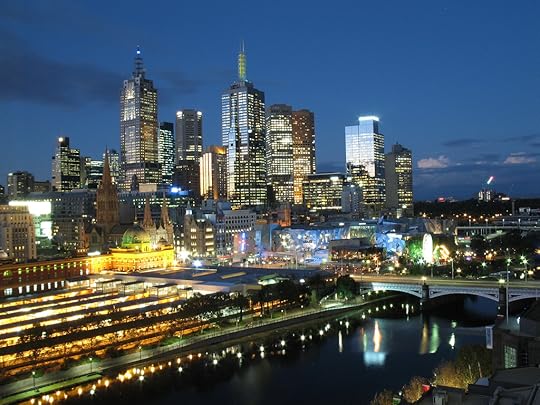
Melbourne, top, from flickriver.com
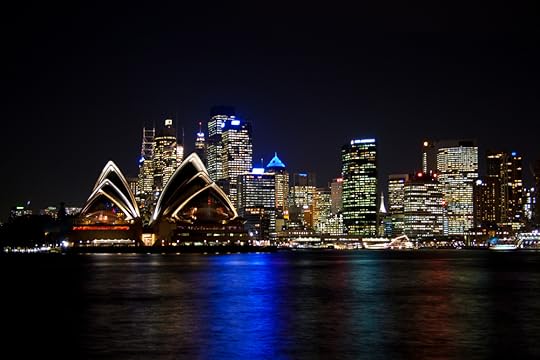
Sydney from cubebreaker.com
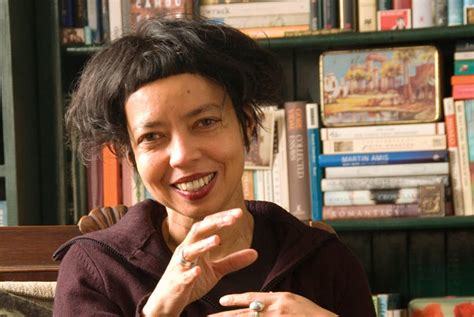
Photo of the author from spectator.co.uk

Profile Image for Vanessa.
476 reviews336 followers
August 5, 2018
“I believe in the ethics of possibility”

This will possibly be one of the more difficult books to review as this book doesn’t really centre around a plot but more a character study. It’s also very slow moving, it’s a hard thing to criticise as the writing is impeccable but I feel I favoured the beginning chapter and the characters in that part were engaging and interesting but then the further I got in the book I lost interest. The five chapters showcase a slew of different characters but also some recurring ones. While some parts of the book meandered too long some parts felt hurried with no seeming sense or purpose to the story.

Largely the book is very current and relevant in that it has it’s finger on a cross section of multicultural society it absolutely transcends borders making this a rich cultural reading experience. There’s also some satiric humour, with wickedly accurate observations. I can sense the author having some fun here so it’s not all serious. Not afraid to expose the flaws and foibles of her often absurdly pretentious characters. There are sad moments too but the author doesn’t give much time to linger on that so much, throwing in the death of characters liberally, and there are a few!

I can see how this book would be a darling of the literary and arty crowd, it just didn’t work entirely for me.
Profile Image for Marianne.
4,419 reviews340 followers
October 5, 2017
“But imagination had nothing to do with reason: its promise of change came from the same hidden, tidal source as catastrophe and luck. It was a lever that would provide whatever shift Pippa required. There would be cracking open and mess; things would be different, if not necessarily better. After a while, life would return to its monotonous groove.”

The Life To Come is the fifth full-length novel by award-winning Sri Lankan-born Australian author, Michelle de Kretser. This novel in five parts details events in the lives of several Australians: sometimes their lives intersect, sometimes they appear in the background of each other’s stories, sometimes they are sometimes loosely connected. A common character in all parts is Pippa Reynolds, an aspiring author whose journey is followed from student to writer to wife and mother.

George Meshaw is an author who has a minor influence on Pippa’s writing. Sri Lankan-born Ashoka Fernando appears in the wings of Pippa’s story via his girlfriend Cassie, who appears to have a fascination with a certain Tamil shopkeeper. Celeste Harrison is a translator whose life intersects with Pippa’s while Pippa is in Paris working on a novel. Pippa’s own story details her marriage to violinist, Matt Elkinson and certain insecurities which spur her into action. Sri Lankan expatriates, Christabel and Bunty’s lives also intersect with Pippa’s while they are next-door neighbours and become unwitting characters in her most successful novel.

De Kretser gives the reader an abundance of exquisite descriptive prose: “In the moist, grey summer dawns, George felt he was walking into a book he had read long ago” and “In Sydney he recovered lost mornings of steamy grey warmth. The city was regulated and hygienic – occidental – yet voluptuously receptive to chaos and filth. It knew the elemental, antique drama of the sea” and “The light was deep blue and close-woven; whole rows of buildings looked as if they had been cut out with care and glued against the sky” are a few examples.

More samples of too many to include here: “Her memory, a steel plate on which lists of vocabulary, rules governing the subjunctive, and a handful of French poems had been engraved forever, had areas eaten out by rust. Faces fell through it – lately even her mother’s had disappeared” and “The street was the kind where the buildings breathed into each other’s faces, and evening arrived at half-past three” and “The moon rose, and the sea kept running up to the land for a gossip.”

While some scenes in each of the parts appear to echo despite the distinct perspective of the narrators, if the reader is looking for a book where all the stories are completed and issues resolved, where everything tied with a neat bow, then this is not that book. We get glimpses into people’s lives, but not always fully realised ones. Perhaps that is de Kretser’s intention.

As for her characters, the reader can be forgiven for wondering if de Kretser actually likes any of them very much: many are not characters that come across as engaging, not characters the reader will fall in love with, care about, hope for, to any great extent. They are flawed, but not always charmingly so: some are pretentious, quite unlikeable, some are unendearingly quirky, and hard to connect with. But perhaps this is also intentional. De Kretser explores several topical issues: refugees, ostentatious philanthropy, the attitude of Australians abroad, and the state of Australian Literature. She has a unique writing style and this is a compelling read.
Profile Image for Janiece.
38 reviews2 followers
March 25, 2018
I only persisted with this because it was set for book club. I found it a chore to wade through, as there was very little which engaged me. I had read and enjoyed de Kretser's The Rose Grower years ago, but this one disappointed me. One certainly doesn't have to like the characters in fiction, but they should at least be engaging. And if they are not, there should be a strong narrative arc to drive it forward by way of compensation, but there isn't in this case. What do we have left? Some examples of fine writing; but also plenty of instances of trying too had to be poetic. Some deft satire and insights: but not anything that cannot be picked up from daily life, online and off. I feel like it could have been pruned to half the length and not lost anything. I can see many people loved it, but it just wasn't for me. I found I enjoyed it more in the last section - and it was certainly the most emotionally touching chapter, for me - but it was too little, too late.
Profile Image for Hugh.
1,293 reviews49 followers
December 28, 2018
I have now read all of de Kretser's novels and always find them interesting. This one was something of a curate's egg for me.

It could be argued that this book is a set of interlinked stories, some of them novella length. Each centres on a different character, and the only common element is that they all meet Pippa, an aspiring novelist of limited talent who is largely played for comedy.

Several of the characters are shaped by past conflicts without involving them directly, and the book is largely about the nature of friendship. However for much of the book the plot takes second place to the descriptions - fortunately de Kretser is a perceptive observer of the modern world.

I found the final part the most moving, a study of the descent into loneliness of an old woman Christabel whose life was limited by caring for a father in Sri Lanka. Brought to Australia as a companion by a schoolfriend who eventually succumbs to dementia, she is wrongly described by Pippa as a closet lesbian (another of the protagonists, Céleste, is a lesbian who Pippa meets in Paris, and both have unrealistic expectations of what friendship with Pippa can do for them).
Profile Image for Sonja Lawrance.
152 reviews2 followers
November 24, 2017
I really wanted to like this book but I just couldn’t. I know I am not enjoying a book when I just don’t care about any of the characters.
I also found the jumping around from one subject to another quite distracting and It didn’t flow well for me.
One of the few books I couldn’t finish.
Profile Image for Andrea.
1,083 reviews29 followers
November 25, 2017
With glorious prose and masterful character development, this is a story about stories - the stories we tell ourselves about our own lives.

The book is divided into five chapters, each focussing on a different character, at a different time, and locations including Sydney, Paris and Colombo. The common factor that ties them all together is a character named Pippa. And the really interesting thing about Pippa, apart from the fact that she's not very likeable, is that she really is a secondary character in the story. Even the chapter about Pippa is actually more about her in-laws!

Some of the characters I loved - Celeste and Christabel - and others I loathed. Some I can barely remember, despite only meeting them a few days ago...

And the thing about these stories we tell ourselves? Often we believe them. Because life can be too painful if we don't.
Profile Image for Michael Livingston.
795 reviews291 followers
October 18, 2017
Loved this - an honest, funny and moving portrait of modern life. de Kretser's characters are often unlikable, but only because she's so unsparing in her portraits of them - every flaw goes under the microscope. It took me a while to settle into the structure, which jumps around in time a bit and shifts focus quite suddenly, but this really is an impressive achievement.
Profile Image for Lesley Moseley.
Author 9 books38 followers
August 27, 2018
WON the Miles Franklin !!!. Announced today 27/08/18


UPDATE : Almost finished reading for the second time. UNABASHED 5 full stars!! Currently short-listed for the Miles Franklin Award, and I hope she wins.


4 1/2 stars rounded up. Such a joy to read!! So many triggers brought up forgotten errors of choice, speech, and identified so closely with one of the characters, it was scary!!
It was almost as if I was on the page, and if Michelle had been MY neighbour , I too might have been excercised...

Reminds me : of apropos of nothing, this fabulous book :
Read

The Dark Flood Rises
by Margaret Drabble

Maybe the extra 1/2 star is just for the glorious memories of a sparkling Sydney day, at the Harbour and surrounds.

JUST LOVED IT !!
38 reviews2 followers
September 13, 2017
Loved this to pieces - best thing I've read all year and the perfect antidote to some lightweight tosh I'd just read. It's snarkey, funny, pointed and compassionate and one of the great Sydney novels. A treat that deserves to be read again and again.
Profile Image for Greg Barron.
Author 24 books115 followers
May 10, 2018
The disconnected stories of a large cast of characters with only tenuous threads to bind them didn't work for me. I read to the end because the writing is sharp and often beautiful.
Profile Image for Ailsa.
217 reviews270 followers
January 8, 2019
“She showed Glenice a book whose cover featured Ned Kelly, Donald Bradman and an Anzac. It was called Australian Heroes and had never been out of print.”

Upon receiving The Life to Come as a gift I groaned inwardly. Nobody in Australia reads contemporary Australian fiction unless they have to - because it’s bad (yeah I’m saying it. fight me). So it was truly a christmas miracle when it turned out to be FANTASTIC. Almost short stories, the characters are woven together by a connection to Australia and possibly the most detestable character ever created: Pippa, a self-absorbed yuppy novelist. I really can’t do it justice in a review. Can’t recommend The Life to Come highly enough especially if you’re from Sydney. (Pippa’s inlaws make me physically squirm with recognition. When her father-in-law refers to people of the Vietnamese countryside as “unspoilt”, I think a part of my mind died from cringe. I’m convinced that, like Pippa, Michelle De Kretser must be taking inspiration from real life dinner parties and writing it down in a little notebook because IT’S SO ACCURATE. )


An aside: Glebe is the suburb in which I both lived and worked for the entirety of 2018. It's a novelty to recognise the setting and effortlessly visualise where the characters spatially. This must be what living in New York or London is like. De Kretser really nails Sydney: Jacarandas in bloom, the antiseptic Northern suburbs (‘Chatswood doesn’t count’ haha), terraces subdivided awkwardly for max rental yield.

“The suburb was moneyed boho chic…” I furrowed my brow.
“ . . . further down Glebe Pt Rd, the suburb began its social slide, its Victorian terraces given over to students and social housing. Not all the graffiti was licensed. Sizeable rats made merry in its cafes." That’s more like it.

.
.
.

“After some difficulty, a professor who would admit to having once read an Australian novel was found.” 5

“all had been published in the past twenty years. Pippa read nothing older, nothing in translation and very little that didn’t concern women’s lives.”

“Cassie was oaty porridge: pale, reassuring, wholesome.” 33

“Cassie was one of the few people in Sydney that knew that Pippa had once been called Narelle. Pippa had filed the application to change her name on her eighteenth birthday. She said. ‘No one called Narelle’s ever going to win the Booker.’ “ 47

“She saw herself plainly, one of those skinny old women with a round belly: a spider.” 121

“Celeste realised that Pippa would always need to demonstrate her solidarity with the oppressed - Indigenous people or battery hens. ” 127

“I’m the only person my age with an Arts degree who hasn’t read those guys like Foucault… The big division used to be between people who were born before the Second World War and people who were born after. Now it’s between people who know about post-structuralism and the rest of us.” 129

“Intelligence is unAustralian.” 145

“Something not immediately apparent about the Elkinsons was the way they picked up and echoed each other’s remarks… It was a form of birdsong: communal, serving to identify and bind.” 198

“never stray south of Foy’s” 211

“For the first time, she saw the glamour of oppression.” 219

“vegetarians were the Falun Gong to Pippa’s Chinese embassy.” 234

“She wanted to preserve the landscape that lay beyond. Otherwise, there will only be this life: willed into being, shipshape and all around her.” 260

“All around me are ordinary people and I am ordinary like them.” 284

“The books from which Pippa was currently drawing inspiration were grouped between two bookends. ‘My touchstones.’ Said Pippa.” 313
Profile Image for Jim Elkins.
361 reviews455 followers
Read
March 7, 2025
What is the Literary Imagination?

The idea of imagination is everywhere in talk about art and writing, and yet it's forever out of focus. It is easy to imagine what it means to say Tolkien had imagination, but what could it mean to say Beckett had a stronger imagination? What's the difference between a novelist like Michelle de Kretser, who is very accomplished in conjuring places and people, and a writer like Jon Fosse, who seems indifferent to all those skills, and yet is clearly full of imagination?

In condensed form, from least to most interesting, this is how I think about this problem of distinguishing kinds of literary imagination.

1. Transcription of the actual world
This includes autofiction as well as thinly fictionalized memoirs and authors who report on their lives but present their work as fiction (Annie Ernaux), and it also includes a swath of fiction like Michelle de Kretser's book, where the actual world is presented in detail on every page. de Kretser's vignettes of Australian life are precise and satisfying. Having visited Australia a number of times, I enjoy descriptions of outlying areas of Sydney, its wood-lined houses, its hills like "asphalted waves," its "yolky light" and surprising ethnicities. Often de Kretser's details are well judged, and the writing is admirable in that sense -- but many authors can do the same. If I am not reading to get new insights into Australia -- if I'm reading to see how fiction works -- then I'm disappointed by the lack of shaping, the absence of a distance between the implied author and her descriptive project. Why not try to step back, I keep thinking, why not attempt to feel the episodes and memories and transform them into something different, where the sense and mood of the world come through even more forcefully because they are not always in front of our eyes in perfect repertorial order?

2. World-building, "sub-creation"
A more imaginative approach to fiction is to use the novel form to build an entire invented world. A starting place here is Bakhtin, because his idea of dialogic novels turns on a prior distinction between literary modes that are open-ended, engaged in direct discourse with the world (like realism), and those that are internally coherent or self-enclosed. Tzvetan Todorov's study The Fantastic: A Structural Approach to a Literary Genre (1970) has a similar distinction between the fantastic and the marvelous, or between mimetic (realist) representation and more imaginative, self-contained worlds.
The simplest, most literal version of a self-enclosed world is "secondary world-building" practiced in fantasy fiction, genre, and science fiction. Tolkien argued for this in "On Fairy Stories" (1938) and so did Samuel Delaney in The Jewel-Hinged Jaw (1977). I don't mean "sub-creation" is easy. As Tolkien says, "to make a Secondary World inside which the green sun will be credible, commanding Secondary Belief, will probably require labor and thought, and will certainly demand a special skill, a kind of elvish craft." But in the end, if fantasy and escape aren't the final purpose of reading, "sub-creation" is not an interesting use of writing or fiction, because it is immersive and therefore unreflective about itself, its medium, its words and voice. The green sun does not exist as a strange expression, it just shines in the sky.

3. Fantasy
A step farther on from "sub-creation" is fantasy, understood as the building of logical worlds. Detective and spy fiction, murder mysteries, and elaborate plots as in Jennifer Egan or David Mitchell belong here. They don't present universes complete with green suns, but logically complete puzzles, perfect architectures. Iris Murdoch has some good things to say about the relation between this sort of fantasy and a more general imagination. In an interview with Bryan Magee, reprinted in Existentialists and Mystics, she says "creative imagination and obsessive fantasy may be very close, almost indistinguishable forces in the mind of the writer." A serious writer, though, has to "play with fire," because in "bad art, fantasy simply takes charge... Fantasy is the strong cunning enemy of the discerning intelligent more truly inventive power of the imagination." Good art, she says, "is good for people precisely because it is not fantasy but imagination. It breaks the grip of our own dull fantasy life and stirs us to the effort of true vision."
I'm not so sure art is "good" even in Murdoch's philosophically-informed sense of that word, but it certainly makes us work, and I think that work is often directed against the fantasy we read, or read into, our fiction.
What, then, is next on the road from the rote transcription of the world to more interesting forms of imagination?

4. Traditional allegory
In the past, from the Middle Ages until the Enlightenment, one answer was allegory. This isn't a current possibility for most fiction. I mention it because it's needed to contrast against a looser kind of allegory. By "traditional" I mean books like Pilgrim's Progress, which draw one-to-one correspondences between episodes and morals. The wider, modern sense of allegory has been adumbrated by Walter Benjamin in "The Origin of German Tragic Drama" (1927; see Bainard Cowen in New German Critique, 1981) and Stephen Melville and Jeremy Gilbert-Rolfe's Notes on the Reemergence of Allegory (1997).

5. Modern allegory, abstract literature, non-referential literature
Several strands may weave together here. Adorno's Aesthetic Theory, with its interest in modernist autonomy, is a reference point for literature that does not lean on the real world in a way that is direct (option 1) or systematic (options 2 and 3).
"Allegory," in this broad sense, is a way of describing what happens in writing like Beckett's trilogy, where the world seems to be referred to obliquely, at a remove, but consistently if not systematically as in traditional allegories. The mood or the universe of the narrator in The Unnameable seems like it must be a picture of life, but at an unmeasurable remove (i.e., not like A Pilgrim's Progress.)
Metafiction is a literalized, unnecessarily exact version of allegory, as in some of Gerald Murnane's more insistent meditations on "fiction."

I think that imagination of this last sort is the strongest and most interesting use of fiction. Writing literary versions of reality can be difficult (de Ketser is an excellent writer) but that road is often level and easy to travel, and it leads to familiar country (the eloquence of Foster, Maugham, and so forth). Writing world-building novels can also be difficult (like everyone, I admire the sense of endlessness in worlds like Tolkein's or Herbert's) but it is mechanical, like a job, and that mechanism shows in the seams and mortar of the made-up world. The imagination can be stronger, stranger, more concerted, more defensive and alert to its otherworldliness. It's possible to think, and feel, and live in a fictional world until that world is no longer a transcription or a fantastical alternative but an autonomous, strange, entrancing fabric of fiction, a world in a much stronger sense than Middle Earth.

Postscript
Why put a meditation on an enormous subject like this in a telegraphed form and bury it in a Goodreads review of a book on Australia? Because life is short, and if I'd made this into a book that would be another year gone.
Profile Image for Theresa Smith.
Author 5 books238 followers
January 8, 2018
The Life to Come is a novel that is very much open to the interpretation of each individual reader. More like five connected novellas instead of one continuous novel, Pippa is the anchor for all of them, a character I both loathed and loved in equal measure. Interestingly, upon reflection once I finished, I found that I liked Pippa best when I was in her story, the part called Pippa Passes. When viewed from each of the other character’s perspectives, I didn’t like her very much at all. I’m not familiar with Michelle de Kretser’s work, but to me, this felt intentional.

The Life to Come is a novel about its characters: their history, as much as their present. It’s stunningly honest and consequently both hilarious and discomforting. In each section there were characters I enjoyed and characters I did not, very much like life, really. All of these characters shared one thing in common, to my mind: they were all, to a certain degree, artificial, which oddly enough, enhanced their authenticity. The Life to Come raises the question: who are we? And, perhaps more importantly, who do people think we are?

Reading this novel made me think of a social interaction I had a few years back at a party. I was speaking with the host, who had asked me about my writing which inevitably led to a conversation about reading. He told me that he had all of Bryce Courtenay’s novels in hardcover, signed – bar his last one which hadn’t yet been published at that stage. I was suitably impressed, as was his intention of course. I told him that The Potato Factory novels were my favourite by Bryce, particularly Solomon’s Song and then asked him what his thoughts were; I was assuming he must be a fan and would have a favourite. What fan doesn’t? But he laughed and said he hadn’t read them. He didn’t even read, he’d only bought them so he could display them. So he could openly lie, socially, about who he was. He was a literary fake but not quite smart enough to hide it. I’ve never forgotten that conversation and the whole time I was reading The Life to Come, I was thinking of him, and of his efforts at social illusion, and how, essentially, we all probably fake it to some degree, because unless we actually tell, who would ever know? There are plenty of meat eaters tweeting about their vegetarianism and a whole host of people pledging allegiance via Facebook to causes they barely understand, much less truly believe in. Our lives are lived today under a microscope but most of us would prefer not to have our flaws magnified and picked over, so we deliberately present our best selves. For some, this is taken a step further as their best selves become new selves, in part or entirety.

The point of me bringing this up, is that it’s the best way I can articulate what this novel is about. It’s vast in scope and character detail, but the concept behind it is quite precise. We all have more to us than meets the eye. Some of us are comfortable with that, some of us are not. Some of us like to fake it until we make it, some of us are more subtle. The Life to Come examines this aspect of humanity in minute detail. It’s thought provoking and acerbic, at times funny while at others sad. Don’t expect a traditionally structured story; it jumps through time with a rapidity that is sometimes disconcerting and there’s never any real resolution. Sometimes, I had no idea what was going on or why a particular character and their story had been introduced; you just have to have faith in Michelle and keep on reading. The Life to Come is more of a witty and in-depth character study than a story as such, but it’s fascinating and real. So very real.

Thanks is extended to Allen & Unwin for providing me with a copy of The Life to Come for review.
Profile Image for Lisa.
3,785 reviews491 followers
October 13, 2017
At different times in our lives, we view the life to come in different ways.  Children and adolescents often yearn for a future where they are ‘grown up’ and can act with independence and agency; young adults with a mixture of confidence and trepidation anticipate a future with adventure or a career, hoping to have or do things that they think will bring satisfaction while also expecting eventually to find a loved one with whom to share their lives.  As the years go by, the anticipated future usually becomes more peopled and expands to include the futures of partners, children and grandchildren, and then, as old age beckons, the anxieties we might have about the future begin to include worrying about the inevitable decline in health, about an adequate retirement income and about a lonely old age as friends and loved ones pass away.  What is certainly true is that life rarely turns out to be the way we expected it to be…
In The Life to Come Michelle de Kretser scrutinises this existential aspect of our lives with wit and aplomb.  Set in Sydney, Paris and briefly in Colombo, the novel traces the lives of diverse futures which intersect over the decades,  contrasting despair and disillusionment with contentment and smug satisfaction.  The author unpacks the eloquent silences that surround us to reveal the issues that we deny, suppress and ignore, exposing our flawed assumptions about other people.  And she is wickedly funny about the role of social media in our lives…
Pippa is a middle-class Australian writer who is confident that when she was famous, Sydney would be obliged to place commemorative plaques outside the houses where she had lived.  But right now she is anxiously waiting on feedback from her agent Gloria:
Pippa checked her email: an invitation from Matt’s mother to lunch on the weekend, a special offer from FragranceNet, nothing from Gloria.  Pippa retweeted @MargaretAtwood urging the donation of books to prisons. She followed every famous writer she could find on Twitter, but so far none of them had followed her back. Someone posted a photo of a dog on a skateboard. @warmstrong linked to a screening of Hotel Monterey.  ‘Chantal Akerman: wonderwoman or wanker? You decide.’  Pippa read a Lydia Davis story on the New Yorker website.  She googled to see if Lydia Davis was on Twitter.  She read a Crikey piece about arts funding, followed a few links and some time later bought a swimsuit.  Her email chimed; it was an overdue reminder from the library.  Anyway, Gloria would call, not email.  Gloria’s voice was always low and exhausted.  Of Pippa’s previous novel, she had whispered, ‘Everyone here really, really loves it.  The scene with the endives is amazing! I’ve never read anything so raw.  It really amazed everyone.  But we ran it through SIMS, our amazing new reader-response software, and it says readers are over the whole French thing. I hope you’re not expecting much in the way of an advance.’
Pippa’s phone rang and she snatched it up. But it was only a former neighbour, so she let it ring out. (p.186)

To read the rest of my review please visit https://anzlitlovers.com/2017/10/02/t...
Profile Image for Robert Wechsler.
Author 9 books146 followers
March 20, 2018
The best things about Michelle de Kretser’s new (in the U.S.) novel are the constant freshness of her descriptions (and her writing in general) and the way she plays with time, so that one often doesn't know where one is in time, and comes not to care (and yet there is the title's theme of futures). Both keep the reader off balance, which is where I like to be.

The biggest problem for me was the fourth section, which features Pippa. I found it dull, despite de Kretser’s skills. Things picked up, for me, in the fifth section, but didn’t fully recover.

Although I loved her last two novels, I was not so much the right audience for this one, perhaps because of my gender, perhaps because of my dislike for a structure based on interlocking characters. But it’s amazing how much de Kretser can do without some of the basic elements of the novel. She is a wonder to watch in action.

Disclosure: I got my copy free from the publisher.
Profile Image for Carolyn.
1,277 reviews12 followers
December 27, 2020
My response to this novel was very mixed. I usually don't like to have read the 'blurb' before I start a book but in this case, had I realised that it was a set of loosely connected narratives I would have been better prepared. As it was, I became interested in the characters in the first story, only to have them disappear - at least temporarily. Because I am a great admirer of de Kretser's work I think I also had expectations that were too high for this type of book to satisfy.

The 'life to come' of all her characters seems to be one that would inevitably disappoint. They lived in expectation of a better relationship, a successful writing career, a new and safe country to live in, but the reality could not be as they hoped.

Australia and Australians generally get harsh treatment from de Kretser in this novel. Her Australian characters are seen as complacent, casually racist and lacking the depth that a longer history and understanding of suffering can create. While sometimes her satire was perfectly targeted and often extremely funny, at other times I felt she was drawing too heavily on stereotypes and her narrative voice at times quite vitriolic.

My online book group has recently finished discussion of this book and reactions to it varied enormously. I came to appreciate many of its themes and its complexity but without ever being able to share the enthusiasm of some group members. Certainly de Kretser can write with imagination and insight, using language that can be both lyrical and incisive. I wish I could give this more stars for the writing alone, but overall the novel was a disappointment to me.
37 reviews1 follower
October 9, 2017
Don't read the blurb before reading this book! The blurb misrepresents the story and sets up an expectation that is not met. Comparing the blurb with the story bothered me for the first 300 pages. Then I suddenly let it go and got into the spirit of the book.

The blurb introduces three characters but there is only one main character. Her name is Pippa and I found her difficult to like or to care about. Her flat mate George and her husband's family were far more interesting than her. I found it hard to let go of my first impression of her, as George's dippy undergraduate student.

de Kretser is a master of analogies. There are some absolutely beautiful lines which I would love to quote but can not as this is an ARC. The book is also rich in observations. Many I understood having spent time in Europe and having met similar people to some of the characters in the book. Many went over my head. For this reason, the book demands a re-read because they topple over one another to illustrate a point, a character, a scene.

It is no accident that de Kretser is a former recipient of The Miles Franklin Literary Award. She is a wonderful writer. She does not follow a formula in this story but writes confidently and on her own terms.

This book was provided free through Good reads.
Profile Image for Louise Omer.
225 reviews7 followers
October 8, 2017
I don't enjoy Michelle de Kretser's novels as novels. In that they are not enchanting stories that sweep across time and space to leave you panting, spent, and full of wonder.
Instead, her books are marvellous insights into human nature, incisive views into culture. I recognised the most shameful parts of myself (and others!) over and over. De Kretser SEES our society, as an artist is meant to see: she pulls off the veil of hypocrisy and posturing, to uncover white Australia's poisonous attitudes and casual racism; the careless way we uphold our image of ourselves, and the damage we do to others to ensure we are needed.

As well as this, her novels are pure meditations on theme; The Life to Come is often on creativity and art, and whether works which are not excellent are still worthy.

Oh! Also, read for exquisitely crafted sentences the describe moments with a directness of distilled prose that will make you pause and repeat for the craft of words.

My only (personal) drawback is that all her characters are essentially miserable, but this is a common complaint of mine in regards to contemporary fiction, ha.
Profile Image for Karen ⊰✿.
1,637 reviews
January 7, 2018
I feel like I need to preface this by saying that Literary Fiction is typically not my thing. I was given this book as a Christmas present from a client so I wanted to get into it right away rather than forget about it on the shelf ;)
de Krester is a talent and I did appreciate her writing and use of language. It just isn't a style that really grabbed me or commanded my attention. It is kind of like a book of short stories, with the concessional cross over of characters - except for Pippa who is a constant through them all. And she isn't all that likeable.
I'd recommend this for readers that enjoy Literary Fiction and are curious about reading a new work from a contemporary Australian author.
Profile Image for Christy Collins.
Author 7 books29 followers
January 24, 2019
I found this a thoroughly engaging read. I couldn't wait to get back to it each time I had to put it aside. It's smart, politically engaged, timely and funny; a book for writers and for people who love books and especially for those with a particular interest in contemporary Australian society and Australian Literature.
39 reviews
March 20, 2018
I don’t get this book at all. Only finished it because it was for my book club. I spent most of the time thinking how I could have been spending that reading time doing something way more interesting.
Profile Image for Marcus Hobson.
725 reviews116 followers
October 2, 2018
Winner of Australia’s premier literary award this year, the Miles Franklin Award, I was keen to read something by Michelle de Kretser for the first time.

I went through quite a variety of emotions with this book. Early on I was loving it, enjoying the characters and the different worlds they inhabit. Then later, my interest began to flag, because I was struggling to find a real story running through the very individual sections. Then finally I found there was a deep vein of narrative in the last section that will reward those who concentrate hard and perhaps read a second time.
Initially I thought that Michelle de Kretser might have found a winning formula that authors could use to fight back against publishers who say that they will not publish short stories. She has taken five very different stories and linked them all tenuously through the inclusion of one character in all of them. It allowed her to tell different stories while calling them a novel, because Pippa appears in each story. Sadly, the one story which has Pippa at the centre is, in my view, the least successful of the five. That is because she is one of the least likable of the characters; she is shallow, vain and worries too much about how other people see her. Pippa’s chapter is called ‘Pippa Passes’, which is the name of her fictional Twitter account. When one character tries to describe Twitter, he lists “Oversharing, ephemera, schmoozing and cats.” But then he describes Pippa perfectly with the phrase “transparently curated selves”. I was happier when Pippa was only a friend, acquaintance or flatmate, and could be used ironically as gauge of fashion, food writing or popular fiction fads.

One thing I did love in ‘The Life to Come’ were the subtle snatches of humour. Over dinner, a visiting lecturer from Berlin asks if it normal for so many sex workers to attend a gallery opening. “George had to explain that she had misunderstood the significance of shouty make up, tiny, shiny dresses and jewels so large they looked fake. Eastern suburb caste marks, they identified the arty, bookish daughters of property developers and CEOs.”
In Paris, Céleste’s life is summed up “On Fridays and weekends and in the evenings, she translated books for a small New York press that published obscure European fiction, novels devoid of spirited heroines, novels that offered no clear message nor any flashing sign as to how they were to be understood, novels whose authors were neither photogenic nor young – sometimes they were even Swiss.” Because Pippa is not an engaging character we could apply that same phrase “devoid of spirited heroines” to this novel, were there not others to compensate such as Cassie, Céleste and Christabel. We step briefly into each of their lives and find fascinating interiors, often overshadowed by doubts or disenchantment, but raw and real and effortlessly revealed to us.
The power of this book is in the interior life of the characters it lays bare before us.

I'm close to four stars...
Profile Image for Cass Moriarty.
Author 2 books191 followers
December 4, 2017
The Life to Come (Allen & Unwin Books 2017) is the latest novel by Australian author Michelle de Kretser, and as we have come to expect from this writer, it is another complex and intricate story with many intriguing layers and a cast of finely-drawn characters. I was fortunate to hear Michelle speak recently at an Avid Reader Bookshop event in Brisbane, and her thoughtful and intelligent consideration of her own writing – and of the Australian literary scene – were every bit as compelling as her writing itself.
Michelle writes the interior life of her characters in a rich and nuanced way, while still managing to imbue her stories with the freshness and vibrancy of modern life. Her sense of humour is evident throughout her novels, and so it is with The Life to Come, a book that pokes irreverent fun at iconic Australian traditions and ‘takes the mickey’ out of the people in its pages. Set in Sydney, Paris and Sri Lanka, the novel traverses times and settings through five distinct and separate, yet interconnected, stories. Reading almost as a series of novellas joined together by narrative threads, the novel is packed full of dense characterisation and authentic situations, complicated relationships and unusual perspectives.
We meet Pippa, a writer who yearns for success, and who has everything it takes to achieve it except, perhaps, for talent. Celeste is entangled in an affair with a married lover and unsure of her feelings. George is another writer (one wonders how much fun the author had inventing author characters and perhaps drawing on real-life acquaintances…) Ash’s Sri Lankan background lies close beneath the surface. After meeting in high school, Cassie is one of the few people who know that Pippa used to be called Narelle (but who ever won the Booker with a name like Narelle?!) The Ashfield Tamil keeps a spice store. Celeste and Pippa’s friendship is marred by Celeste’s discovery that Facebook renders her a bland recipient of Pippa’s general news announcements. Christabelle and Bunty met as children in Ceylon; now Bunty is dead and her friend misses her terribly. Rashida, Keith, Ronnie, Sabine, Eva, Lachlan, Djamila, Matt, Glenice, Kiki Mack, Mr Valente, Pombo, Raven, Sizzle, and of course Hank and Olly Faithful (because what would a de Kretser book be without dogs?) – this novel is absolutely teeming with characters, all of whom are delivered in complex and multi-coloured glory. This is a story about people’s perceptions of others, and about loneliness, ambition, greed, mistrust and intimacy. It is not a light read – you will be drawn deep down the rabbit holes of these characters’ lives and then go on a twisting and convoluted journey as you attempt to decipher the maze of their chronology. But it is a deeply satisfying novel, one that offers much intelligent discourse, and much to contemplate.
Profile Image for ns510.
391 reviews
March 9, 2018
What beautiful writing! This was one of those books that suffered from being put down and picked up again over and over during the work week. It would be much better read and reflected upon over a quiet day devoted to reading! (I need more of those).

This was filled with sharp, clear, sometimes biting observations on life and people, Australia and Australians. It’s about how people see themselves and how they want to be seen, contrasted with how others truly see them. With Australian woman Pippa Reynolds, and the beautiful city of Sydney in common, a medley of characters (a writer from Sydney, immigrants and refugees living in Sydney, a French woman who had lived in Sydney but is now back in Paris, et al) contemplate their lives and their relationship/personal connections to Pippa and to Australia. This was my first time reading anything by Michelle de Kretser, and I appreciated her writing. Lovely sentences and thoughtful choice of descriptions that gave shape to the people and places in her story.
13 reviews1 follower
August 20, 2018
I found this book excruciating to read, but ploughed on because I felt I needed to be absolutely sure about this before making a judgement. I found her style of writing very stilted, short sentences, no connection, flitting from one inconsequential thought to another, or to detail which took you nowhere. Where there was some merit to the writing it was often bragging, name dropping or trying to be too clever. Lots of disparaging comments too - which no doubt were intended to paint her various characters the way she did but which actually made me react even more negatively to the book. Rarely have I felt that I was just praying for it to end, and it ended just as it had begun with barely a fizzle.
Profile Image for Tundra.
901 reviews49 followers
June 19, 2018
3 1/2 stars from me. I really enjoyed the dark humour at the beginning of this novel and wished it had continued. Pippa was such an unpleasant character that I struggled through the cringe of her actions without this levity. These are certainly intense character portraits which simultaneously draw you in and repulse you.
Profile Image for Alicia Huxtable.
1,904 reviews60 followers
September 20, 2017
While I ended up enjoying this book, it took me a while to get into it. I found I had to reread sections just so I understood what was happening.
Profile Image for Rebecca.
366 reviews31 followers
December 29, 2024
Why did it take me this long to finally read this book?

Having sat on my bookshelf for several years, I finally dug it out after booking tickets to hear author, Michelle de Kretser speak about her latest book (Theory and practice).

Inter-connected stories from characters who intersect in the Inner Western suburbs of Sydney (St Peters, Marrickville, Newtown and Glebe), and a couple with Sri Lankan heritage.

The character of Christabel (the last story) is the one I found most moving, having crossed continents and decades. Her moving through the park, by the river (Steel Park?), lifting her arms to a dog possibly from a shared memory bought tears to my eyes.

The winner of the 2018 Mile Franklin Prize, I feel I really need to further read the commentary and reviews, to ensure I fully grasped this book and it’s characters.

The character of Pippa (self-given name, originally Narelle), reminded me of several people and characters I’ve encountered. To write so succinctly and elicit that emotionally response I felt every time Pippa entered a scene (with her ancient grain salads, using ‘lovely’ as a pronoun and cut flowers), is a talent of de Kretser’s.

The passages about using social media were hilarious and revealing.

Having just finished reading the book, I probably will have to reread - the insightful crafting of characters, speech and relationships.

Moving de Ketser up my summer reading pile.
Displaying 1 - 30 of 397 reviews

Can't find what you're looking for?

Get help and learn more about the design.