

What do you think?

Vodič kroz srpski mentalitet
Beogradski pisac i slikar Momo Kapor dugo godina je proučavao mentalitet svojih sunarodnika. Knjiga VODIČ KROZ SRPSKI MENTALITET predstavlja esenciju tog literarnog istraživanja, koja na najbolji način objašnjava Srpski narod i njihov način života. Čitaoci ove knjige će pronaći i naučiti kroz samoironičan i duhovit ton, koji je tako svojstven i za knjige Džordža Mikeša, Efraima Kišona i Art Buhvalda, šta Srbi vole a šta ne vole, kome se dive a koga preziru, šta vole da jedi i šta piju, kako provode svoje slobodno vreme, o čemu sanjaju i u šta veruju; jednom rečju VODIČ KROZ SRPSKI MENTALITET je knjiga o onom šta čine Srbe iznutra.
317 pages, Paperback
First published January 1, 2006
About the author
Momo Kapor
90 books274 followersMomčilo "Momo" Kapor was a Serbian novelist and painter from Bosnia and Herzegovina
He authored several screenplays, over forty novels, short stories, travel and autobiographic books and essays. He was introduced to the literary circles as the author of radio, TV and theater drama at the beginning of the sixties. His books have been translated to twenty languages.
Momo Kapor was a popular Serbian writer during his lifetime, His literary phenomenon spread over three decades. Kapor easily attracted the attention of the public by writing his vivid reflections on the reality of then current times.
He authored several screenplays, over forty novels, short stories, travel and autobiographic books and essays. He was introduced to the literary circles as the author of radio, TV and theater drama at the beginning of the sixties. His books have been translated to twenty languages.
Momo Kapor was a popular Serbian writer during his lifetime, His literary phenomenon spread over three decades. Kapor easily attracted the attention of the public by writing his vivid reflections on the reality of then current times.
Ratings & Reviews
Friends & Following
Create a free account to discover what your friends think of this book!
Community Reviews
Displaying 1 - 30 of 70 reviews
January 23, 2014
I couldn't be more impressed how differently Momo Kapor presents his small native land to the foreigners.
He doesn't illustrate the cathedrals, churches, museums, boulevards or fountains, which are considered to be the first attractions for every tourist.
But when it comes to the the fact that Šajkača cap could be used even for drinking water from a pond and could define the character of a man by the way he wore it, the fact that people drink tea only when they are sick and have a small portion of Rakija when they simply have a toothache, when you see nowadays women walking in the street and smoking in the same time, full of confidence, when you see people kissing each other three times in the cheeks not just because they haven't seen each other for a long time, and when you are a guest in a Serbian family they won't let you go without being sure that your stomach can't handle anymore food from their diverse cuisine, when you listen to the older people saying continuously that old days were the best ones and today is chaos, you realize something:
The architectonic style of the buildings, the cuisine, folk music, and traditional garments of a country can be influenced by certain circumstances and they may change time after time. What remains unchangeable is the peoples soul. It is generally what distinguishes them as a part of a certain land and nature.
He doesn't illustrate the cathedrals, churches, museums, boulevards or fountains, which are considered to be the first attractions for every tourist.
But when it comes to the the fact that Šajkača cap could be used even for drinking water from a pond and could define the character of a man by the way he wore it, the fact that people drink tea only when they are sick and have a small portion of Rakija when they simply have a toothache, when you see nowadays women walking in the street and smoking in the same time, full of confidence, when you see people kissing each other three times in the cheeks not just because they haven't seen each other for a long time, and when you are a guest in a Serbian family they won't let you go without being sure that your stomach can't handle anymore food from their diverse cuisine, when you listen to the older people saying continuously that old days were the best ones and today is chaos, you realize something:
The architectonic style of the buildings, the cuisine, folk music, and traditional garments of a country can be influenced by certain circumstances and they may change time after time. What remains unchangeable is the peoples soul. It is generally what distinguishes them as a part of a certain land and nature.

June 10, 2012
Very funny to read, especially if you know Belgrade and Serbia, if you have lived here for a while and you know what he's talking about, else you'll probably not get all the jokes. ;)

June 5, 2018
Knjigu sam čitala na engleskom jer sam u njoj pisala anotacije za prijateljicu iz Finske, kojoj ću da je poklonim. Kapor na vrstan način opisuje srpski mentalitet i svaku njegovu dobru i lošu komponentu. Volela bih da ovu knjigu pročitam i na srpskom, a da onda o njoj dam detaljne utiske jer je moguće da mi je zbog prevoda ponešto i promaklo. Ipak je srpski bogatiji od engleskog i prevodom se dosta gubi.
February 15, 2021
Loved it! I bought this book a few weeks after moving to Belgrade. Momo Kapor's sense of humor, intelligent criticism, a well balanced dose of sarcasm, and truly lovely descriptions of Belgrade, all is there! And his illustrations are amazing!

March 16, 2018
Trying to get warm, we popped into a bookstore located on one of the central streets in Belgrade and, of course, I had to roam through a shelf with English books. ‘A Guide to the Serbian Mentality’ was hidden behind books by Serbian authors but I am very glad that I dug a bit deeper and found it. It’s a collection of short stories written by the Serbian author Momo Kapor and compiled into this illuminating book about the main traits of the Serbs, in particular about the Belgrade citizens. Written in a rather poetic manner, each chapter has been a feast of laughter and a reminder of my personal experience in the city and at some of its iconic places. Besides, I really liked that the book is illustrated with the author’s drawings which make this book an even more compelling read. I would recommend this book to every single person who is interested in Serbian mentality and who would like to discover Belgrade through a literary work rather than through a guidebook.

September 12, 2019
23. knjiga pročitana 2019. godine je "Vodič kroz srpski mentalitet" Mome Kapora. To je zbirka kratkih priča koja baš dobro oslikava srpski mentalitet... Neke priče su i u drugim knjigama obuhvaćene i poznate mi od ranije, a neke fraze i ideje se provlače više puta u različitim pričama. Interesantno za pročitati... Kao kad razgovarate s nekim poznanikom i razmjenjujete utiske... Nema nekih riječi ili pompeznih rečenica koje biste čuli samo na stručnim seminarima... Sve je pisano standardnim načinom i riječima koje svako od nas upotrebljava u svakodnevnom govoru... Momo je, kao slikar, imao oko da zapazi mnoge stvari koje većini ostanu neprimijećene, a kao književnik je znao savršeno da ih prenese na papir. Moja preporuka za čitanje.
May 2, 2017
Citah ovo dok sam u SAD. Imao sam primerak na srpskom. Kapor veoma lako probudi nostalgiju u coveku, jer pise lako i ubada u centar stvari koje treba spomenuti. Ove price su sakupljene iz JAT revije cini mi se, koje je on pisao za ovaj avio magazin. Neke od njih sam vec procitao u knjizi Magija Beograda. Ne bih bas rekao da je ovo srpski mentalitet, ovde je naglasak na Beogradu. Ali ga on tako dobro opisuje, neke stvari kojih vise nema i koje su se promenile jer vreme diktira nove trendove. Ali zanimljivo je da moze da se vidi da se neki trendovi vracaju - pise kako su gramofonske ploce zamenili CDovi. Ali ipak danas zbog hipstera i retro stvari, ploce se vracaju i prodaja raste.
Kapor je takodje dovoljno ziveo/putovao po Americi, da moze da napravi neka poredjenja sa Americkim nacinom zivota i njihovom kulturom sto je super. Cela ova knjiga ce biti veoma zanimljiva da je citaju neke generacije za 50tak godina da vide kako se nekada zivelo i koje su brige Beogradjana bile :)
Inace, toliko je jela spomenuo u knjizi da je mogao i kuvar posle ovoga da sklopi
Kapor je takodje dovoljno ziveo/putovao po Americi, da moze da napravi neka poredjenja sa Americkim nacinom zivota i njihovom kulturom sto je super. Cela ova knjiga ce biti veoma zanimljiva da je citaju neke generacije za 50tak godina da vide kako se nekada zivelo i koje su brige Beogradjana bile :)
Inace, toliko je jela spomenuo u knjizi da je mogao i kuvar posle ovoga da sklopi

April 7, 2012
I bought this book in Belgrade on a whim, and I'm glad I did. Approximately half of this book bored me and half of it charmed me- charmed me enough to give it four stars anyway. I admire the author's ability to poke fun at his country and brag about it at the same time. Many of the traits he mentioned are also true of Romania and other Eastern European countries.
September 4, 2022
I wish I could read this kind of book on every country. Witty, smart, and comprehensive take on the Serbian mentality.
June 1, 2025
Fun and witty book:) Wish I could read one of these for every country!!
August 22, 2020
Nekako nemam srca Momi da dam jednu zvjezdicu jer je bio divni Moma Kapor... ali zna da bude beskrajno patetican, do tacke da mi je presladunjavo da citam i da kazem "daj bre". Drugo, ovo je vodic kroz beogradski mentalitet, preciznije kroz mentalitet druga dvojke. Moglo je to puno bolje, puno duhovitije, sa vise anegdota koje bi zaista i opisale zeljeni mentalitet, a kojih je Moma imao za tri zivota. Ljepse ga je bilo slusati, nego citati.

May 12, 2022
All I wanted is to quickly skim through the chapter titles... After all, as I was born and lived most of my life in Serbia, I should know what is the Serbian mentality like. Yet, here I am after two days of deeply absorbed reading, closing the book in heavy nostalgia-induced tears. Just one thought: I miss you, you beautiful beast of a country. ❤️
July 25, 2023
Not a bad book, however the English translation isn’t very good and has lots of errors almost on every single page.
Also it is written by a man for other men. The way he talks about women doesn’t sit right with me. At one point the sentence “many foreign women will come to Serbia to get raped since the Serbs are such good lover’s” shouldn’t have made it into the book
Also it is written by a man for other men. The way he talks about women doesn’t sit right with me. At one point the sentence “many foreign women will come to Serbia to get raped since the Serbs are such good lover’s” shouldn’t have made it into the book

September 19, 2012
I'm so glad I read this before my trip to Serbia!

March 2, 2023
In need of copy-editing & proofreading.

December 27, 2025
I read this book in French. I must say that I loved how he observed things that are characteristic of our people and all the small nuances he noticed. While I was reading, I felt a faint sense of nostalgia for some past times that seemed much simpler. He described the bohemia of Skadarlija and the nightlife in our traditional cafés, the camaraderie, that special bond between people and family in general that feels a bit lost in this day and age. I love how he poetically described Belgrade.
August 14, 2021
A delightfully, poetic, humorous and informative read. An artsy collection of Momo Kapor's drawings and musings of the old mentality of the old world (that of your grandparents.) You are sure to fall back in time with Kapor's easy and highly enjoyable read which demands next to nothing of the reader. At many points, I laughed out loud. Kapor proves to be as witty as anyone. You are bound to learn a bundle which you are nary to find anywhere else. A true gem. Recommended for anyone with even the remotest interest in Serbia and its culture.
August 26, 2025
This was fun to read having visited Serbia and knowing Serbian culture but the typos made it irritating to pick up at times.
March 4, 2016
I was given this book by a Serbian friend and colleague - it was meant to help me navigate my way in Serbia as a different sort of guide book. It certainly encourages me to want to visit the country again.
It is a collection of series of articles written for a newspaper and a magazine. It took me several months to read - you do not want to read from one article to the next, it would make too rich a diet.
There is a warts-and-all approach to the telling, almost as if Kapor at times is laughing at his compatriots. But if he is, his laughter is not malicious. He is a sympathetic guide helpfully pointing out the unusual, explaining the background, but never sneering. The Guide is a set of sketches (and accompanied by the author's drawings, too) that serve as a lamp that excites curiosity in a country and a people I had very little knowledge of.
In reading this book, I was reminded of a couple of books in a similar style by a Belgian journalist (Jean d'Osta) that helped me to understand Brussels better when we lived there, and to learn to love the city. This is a wonderful way of discovering a place.
I do look forward to exploring Serbia, and not just to test my understanding of the Serbian mentality.
So thank you, friend, for the thoughtful gift: I enjoyed and will treasure it.
It is a collection of series of articles written for a newspaper and a magazine. It took me several months to read - you do not want to read from one article to the next, it would make too rich a diet.
There is a warts-and-all approach to the telling, almost as if Kapor at times is laughing at his compatriots. But if he is, his laughter is not malicious. He is a sympathetic guide helpfully pointing out the unusual, explaining the background, but never sneering. The Guide is a set of sketches (and accompanied by the author's drawings, too) that serve as a lamp that excites curiosity in a country and a people I had very little knowledge of.
In reading this book, I was reminded of a couple of books in a similar style by a Belgian journalist (Jean d'Osta) that helped me to understand Brussels better when we lived there, and to learn to love the city. This is a wonderful way of discovering a place.
I do look forward to exploring Serbia, and not just to test my understanding of the Serbian mentality.
So thank you, friend, for the thoughtful gift: I enjoyed and will treasure it.

May 25, 2018
I don't usually like books about places, especially countries. They tend to praise as unique things that happen everywhere. Also, I can notice some kind of soft nationalism that I don't like.
Unfortunately, and inevitably I'd add, you find this in the pages of A Guide to the Serbian Mentality . However, Momo also takes the stereotypes, the obsessions of the Serbs making fun of them and, by extension, of himself. Naravno, these are the best pages of the book.
The book is formed by tens of short chapters in which the author explains with humor a particularity of the Serbians and, therefore, the most, if not all, Western Balkans people. It is a book to glance over and read little by little.
You won't learn much about Serbia, but I don't think that's the intention of Momor. If you happen to have some friends from the region you will find amusing most of the book, as it can be summed up as smijemo je jer istino.
Unfortunately, and inevitably I'd add, you find this in the pages of A Guide to the Serbian Mentality . However, Momo also takes the stereotypes, the obsessions of the Serbs making fun of them and, by extension, of himself. Naravno, these are the best pages of the book.
The book is formed by tens of short chapters in which the author explains with humor a particularity of the Serbians and, therefore, the most, if not all, Western Balkans people. It is a book to glance over and read little by little.
You won't learn much about Serbia, but I don't think that's the intention of Momor. If you happen to have some friends from the region you will find amusing most of the book, as it can be summed up as smijemo je jer istino.
May 3, 2016
A bit exaggerated at times, but he really captures the Serbian (or maybe the Belgrade) spirit, or what we believe is our spirit. I really liked the fact that it's a book of essays rather than one long story, makes it easier to read and really enjoy the tidbits of serbian culture. Would like to have read it in Serbian, but the English version is good as well...

June 11, 2015
Pues es bastante interesante, un libro escrito a base de artículos que el autor publicó, llenos de humor y me parece uno si puede entender un poco más de por qué las cosas son como son en este país de los Balcanes)
March 30, 2022
Lovely book, but the editing of this edition is abysmal.
May 7, 2026
Serbs love to talk about themselves
March 1, 2020
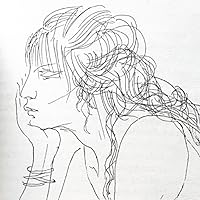
Fantastic, funny, and unique book! Like my parents, I am born in Serbia, even though I was raised in the Netherlands (only recently - six months ago - I moved back to my birth city Novi Sad). I bought this book to see what the author would say about Serbia and how much I would recognize and relate to the stories, seeing that although I grew up in a different country, I was still raised by parents who always stayed true to their roots and passed them on to me. I have to say that I absolutely enjoyed it and that I was definitely familiar with many of the cultural habits, mindset, and traditions mentioned in the book. A large part of the book described Belgrade, which I don’t know that well seeing that I have spent all of my time in Novi Sad (and absolutely love this city so much). I found the most fascinating and witty parts to be the ones where Kapor compared the West and the East or the North and the South. I know from first-hand experience how big the cultural differences are and that made reading it all the more pleasurable. The book is accompanied by many of Kapor’s illustrations. I am a big fan of Kapor’s drawing style and all of the pieces are beautifully done, however, I believe that many of the illustrations bare no connection with the written part whatsoever (or at least I can’t find it). To conclude, a great book for anyone who wants to know more about the Serbian culture or anyone who is already familiar with the Serbian culture and wants to have a good laugh.
May 9, 2023
This book only gets 4 stars because I still want to know more.
I was told that the Serbian language is much more descriptive than English. In keeping this in mind - I was aware that everything may not fully translate - so some things may have been quite literally “lost in translation” ( really good movie btw ) and meaning of words/cultural contexts and how those concepts translate would likely require a PhD level course in linguistics/history lol….
And so thoughts I’ll share re: book itself are….. Kapor and his translator do well enough to give one a sense of Serbia - Beograd in particular, Myths/legends, cultural traditions and their origins, food as well as economic/political leanings - the Writers Club section definitely caught my eye - it is indeed a solitary hobby here in the West…..
I have other thoughts but will leave it here for reviews sake - one point that stood out to me was the Tasmajdan portion - Kapor references a Langston Hughes Poem called Last Chance - I searched forever for it but never found it - after some time - it occurred to me the title itself may in fact have been “Lost in Translation”…….
I believe the correct poem title is “Final Curve”
Poem is short - haiku style so I’ll drop it here:
“When you turn the corner
And you run into yourself
Then you know that you have turned
All the corners that are left”
-Langston Hughes
Overall, it was a fun and deeply interesting read. I highly recommend to anyone looking to gain insight into The Serbian people.
I was told that the Serbian language is much more descriptive than English. In keeping this in mind - I was aware that everything may not fully translate - so some things may have been quite literally “lost in translation” ( really good movie btw ) and meaning of words/cultural contexts and how those concepts translate would likely require a PhD level course in linguistics/history lol….
And so thoughts I’ll share re: book itself are….. Kapor and his translator do well enough to give one a sense of Serbia - Beograd in particular, Myths/legends, cultural traditions and their origins, food as well as economic/political leanings - the Writers Club section definitely caught my eye - it is indeed a solitary hobby here in the West…..
I have other thoughts but will leave it here for reviews sake - one point that stood out to me was the Tasmajdan portion - Kapor references a Langston Hughes Poem called Last Chance - I searched forever for it but never found it - after some time - it occurred to me the title itself may in fact have been “Lost in Translation”…….
I believe the correct poem title is “Final Curve”
Poem is short - haiku style so I’ll drop it here:
“When you turn the corner
And you run into yourself
Then you know that you have turned
All the corners that are left”
-Langston Hughes
Overall, it was a fun and deeply interesting read. I highly recommend to anyone looking to gain insight into The Serbian people.
July 22, 2026
momo kapor piše kao sto on misli da jedan pisac treba da piše. njegove reci se čitaju tako da čovek prosto ne može pomisliti da je ovo stvarno njegov lični način izražavanja. zvuci tako lažno. ne samo to, nego i generalno loše. uglavno uživam u zbirkama kratkih priča, crtica, anegdota ali ovo je bilo mučenje. ova knjiga se najbliže može opisati kao zbirka malih artikala zadnje kolumne jednog putopisnog magazina koji stoji u svim cekaonicama doma zdravlja. vrsta teksta kojoj se i sam autor podsmeva, no njegovo delo nije toliko daleko od toga.
sto se tiče sadržaja, stanje ništa nije bolje. u svakim steriotipu ima malo istina, a kapor hvali uglavnom one najgore našeg naroda. pročitavši ovu knjigu ne mogu se dosetiti ni jednog poglavlja koji mi se dovoljno svideo, da ga je vredno zapamtiti.
nostalgicar koji prezire nostalgiju, pokušava ostati apolitičan dok pravi političke korelacije samo gde njemu odgovara. toliki beogradjanin, koji je inače poreklom iz sarajeva.
takodje ništa naročito duhovito sto se mene tiče.
sve u svemu, jasno je da mi se knjiga nije preterano svidela.
sto se tiče sadržaja, stanje ništa nije bolje. u svakim steriotipu ima malo istina, a kapor hvali uglavnom one najgore našeg naroda. pročitavši ovu knjigu ne mogu se dosetiti ni jednog poglavlja koji mi se dovoljno svideo, da ga je vredno zapamtiti.
nostalgicar koji prezire nostalgiju, pokušava ostati apolitičan dok pravi političke korelacije samo gde njemu odgovara. toliki beogradjanin, koji je inače poreklom iz sarajeva.
takodje ništa naročito duhovito sto se mene tiče.
sve u svemu, jasno je da mi se knjiga nije preterano svidela.
February 7, 2026
Note: I read the English translation. This taints things a bit, because it appears that the translators supplied their text is some form that was then fed into an Optical Character Recognition system that was extremely poor at consuming that input. There were frequent swaps between "rn" and "m". Between "b" and "h". Semicolons appearing in the middle of words. It was a constant puzzle to figure out what the word really was, which detracted from the actual images the author was trying to paint.
Anyway. Guide to the Serbian Mentality? Maybe. More like "Scenes from Belgrade," honestly. They were cute! Belgrade from the view of someone who loves Belgrade does yield cozy stories of how Belgrade Does It Right and everybody else is Stuck In Backwards Thinking. Fun, absolutely. A guide? Well, not so much. If I have to take everything with a grain of salt, even if I'm enjoying it, it's not really a guide. And we are talking about the pre-cell-phone era of Belgrade --- I'm sure things have changed, and continue to change, in that city.
I did enjoy the book. I was definitely frustrated by the book.
3 of 5 stars.
Anyway. Guide to the Serbian Mentality? Maybe. More like "Scenes from Belgrade," honestly. They were cute! Belgrade from the view of someone who loves Belgrade does yield cozy stories of how Belgrade Does It Right and everybody else is Stuck In Backwards Thinking. Fun, absolutely. A guide? Well, not so much. If I have to take everything with a grain of salt, even if I'm enjoying it, it's not really a guide. And we are talking about the pre-cell-phone era of Belgrade --- I'm sure things have changed, and continue to change, in that city.
I did enjoy the book. I was definitely frustrated by the book.
3 of 5 stars.
May 22, 2022
What makes Serbia unique in all the world? Is it kajmak, that is spread on breakfast toast? Or inat, a trait that is responsible for our uprisings and rebellions in history? Maybe it’s the šajkača hat, that has protected Serbs from defeats in war and natural disasters. Perhaps it’s šljivovica, plum brandy, that is needed everywhere you go. Could it be šumadija tea, that can heal things that even antibiotics couldn’t do?
The landscape, the cuisine, the arts of a country will inevitably change time and time again. What remains unchangeable is the human soul- the serbian mentality.
Rating: 5 stars
Reading time: 3h
The landscape, the cuisine, the arts of a country will inevitably change time and time again. What remains unchangeable is the human soul- the serbian mentality.
Rating: 5 stars
Reading time: 3h

January 16, 2025
Половину книги авто вспоминает названия всех блюд, которые ему когда-либо доводилось пробовать - не очень понятно было зачем это читать, хоть бы пробники с запахами закрепляли на страницах что ли.
Другую половину ностальгирует по детству и не хочет умирать. Романтизирует свое прошлое в Сербии и умом признает, что все здесь далеко не идеально. Но сердце, чувствуется, что в этом месте, потому что друзья и семья важнее материального благополучия.
После этой книги не так сильно уверен, что навсегда останусь в Сербии. Все-таки инат - обязательно еще будут противостоять чему-нибудь)
Другую половину ностальгирует по детству и не хочет умирать. Романтизирует свое прошлое в Сербии и умом признает, что все здесь далеко не идеально. Но сердце, чувствуется, что в этом месте, потому что друзья и семья важнее материального благополучия.
После этой книги не так сильно уверен, что навсегда останусь в Сербии. Все-таки инат - обязательно еще будут противостоять чему-нибудь)
Displaying 1 - 30 of 70 reviews