

What do you think?

Marie-Antoinette et le comte de Fersen - La correspondance secrète
Le comte suédois Axel de Fersen (1755-1810) fut bien plus, à la cour de Versailles, que le stratège qui donnait des conseils politiques à Louis XVI, et l’ami dévoué qui organisa l’évasion de la famille royale en 1791. Cet homme d’une parfaite éducation fut, surtout, l’amant de la reine de France, Marie-Antoinette (1755-1793). Et l’amour de sa vie.
Les carnets de Fersen, publiés au début du XXe siècle, avaient été censurés ; quant à la correspondance des deux amants, il n’en a jamais existé que des éditions incomplètes. Pour la première fois, voici rassemblée l’intégrale des lettres qu’ils échangèrent – dont six missives inédites. Enfin décryptés, certains passages raturés révèlent l’intensité de leurs sentiments.
Chiffres, encres invisibles, intermédiaires, sceaux secrets, doubles enveloppes, noms de codes : autant de témoignages d’une passion inavouable. Ils donnent à voir une reine frondeuse et indépendante, qui osa braver les dangers et aimer sans retenue l’homme qui avait gagné son cœur.
Les carnets de Fersen, publiés au début du XXe siècle, avaient été censurés ; quant à la correspondance des deux amants, il n’en a jamais existé que des éditions incomplètes. Pour la première fois, voici rassemblée l’intégrale des lettres qu’ils échangèrent – dont six missives inédites. Enfin décryptés, certains passages raturés révèlent l’intensité de leurs sentiments.
Chiffres, encres invisibles, intermédiaires, sceaux secrets, doubles enveloppes, noms de codes : autant de témoignages d’une passion inavouable. Ils donnent à voir une reine frondeuse et indépendante, qui osa braver les dangers et aimer sans retenue l’homme qui avait gagné son cœur.
493 pages, Kindle Edition
First published January 1, 1995
Ratings & Reviews
Friends & Following
Create a free account to discover what your friends think of this book!
Community Reviews
Displaying 1 - 12 of 12 reviews

abandoned-or-to-be-continued
January 17, 2016I couldn't do it guys. I gave it a valiant effort and tried to read this trash but I could not get through it. When she kept calling Louis a fat lazy ugly oaf whom she never loved, and claimed to know the EXACT date Fersen and Antoinette supposedly "Did the do" for the first time.

December 6, 2016
'I Love You Madly' comprises (for the first time) all the known letters between Queen Marie-Antoinette and the Swedish count Axel von Fersen. The author has managed to decipher previously unpublished sentences (adding some that were suppressed) which show clearly that these two people were deeply in love. It makes for fascinating reading and the author's narrative and explanations in between the letters gives the reader all the information needed to follow the couple's story up to and through the tragic events of the French Revolution. The letters demonstrate their increasing desperation as all possible means of rescue for the poor Queen and her family dwindled to nothing. Truly heart-rending and an essential read for anyone interested in this period of history - excellent!

May 24, 2020
This book was more than I bargained for.
Because, quite interestingly, while this is a collection of Count Fersen's and Marie-Antoinette's correspondences, it is also Evelyn Farr's tale of how she uncovered the letters. How she restored what had been crossed out and censored for centuries and turned it into actual text. While you read the letters, you also read what has been left out or deemed unsuitable for the reader's eyes. This adds an entirely new layer of meaning.
And then there's the letters themselves. Farr presents the private as well as the official correspondences between the two lovers, so starkly in contrast to each other. This allows you to get an understanding of the roles they had to play, to enter into the parallel universe they built for themselves to exist in.
Simultaneously, history marches on. Mentions of a revolution and state affairs fill the letters, making them lengthier and lengthier. Despair increases, separation ensues and we feel Count Fersen's desperation echo through centuries.
This was such an interesting and intimate glimpse into historical events that always felt so remote. The only downfall is Farr's comments, enforcing the purity of Fersen's and Marie Antoinette's love, stating Fersen was a broken man for the rest of his life. It is tempting, of course, to bring life to their mythic love story, but speculation has no place in a book where the actual letters speak for themselves.
Because, quite interestingly, while this is a collection of Count Fersen's and Marie-Antoinette's correspondences, it is also Evelyn Farr's tale of how she uncovered the letters. How she restored what had been crossed out and censored for centuries and turned it into actual text. While you read the letters, you also read what has been left out or deemed unsuitable for the reader's eyes. This adds an entirely new layer of meaning.
And then there's the letters themselves. Farr presents the private as well as the official correspondences between the two lovers, so starkly in contrast to each other. This allows you to get an understanding of the roles they had to play, to enter into the parallel universe they built for themselves to exist in.
Simultaneously, history marches on. Mentions of a revolution and state affairs fill the letters, making them lengthier and lengthier. Despair increases, separation ensues and we feel Count Fersen's desperation echo through centuries.
This was such an interesting and intimate glimpse into historical events that always felt so remote. The only downfall is Farr's comments, enforcing the purity of Fersen's and Marie Antoinette's love, stating Fersen was a broken man for the rest of his life. It is tempting, of course, to bring life to their mythic love story, but speculation has no place in a book where the actual letters speak for themselves.

August 13, 2025
Such a great book!

July 10, 2008
Drivel. Absolute drivel. Should have been published as fiction rather than a work of history.
Want to Read
May 1, 2022TL;DR - Don't bother with Marie Antoinette and Fersen, shallow and poorly written. I Love You Madly is good as a translated collection for other projects if you take Farr's commentary with extreme caution.
I am not giving a star rating to Marie Antoinette and Fersen (MA&F) nor to the companion volume I Love You Madly (ILYM) as this is less a review and more a exploration of why, despite the fact that Farr's thesis is lacking a solid evidentiary basis (extraordinary claims require extraordinary evidence, remember?)
I'll be straightforward about the main problems these two volumes have. the first is that it attempts to de politicise a inherently political subject by glossing over the following:
-the grim realities of female adultery in an 18th century dynastic monarchy and how damaging even the allegation was to royal legitimacy and how easy it was to weaponise against an already unpopular queen
- the logistics of royal life and how there was no privacy but also no trust either between royals and their courtiers - it was only a matter of time before the knife went in
-clientism, patronage, and how this related to royal power and diplomacy and esp Marie Antoinettes circle of influence and how Fersen and his associates benefited from this
- the bigger picture of the revolution
- the role and personality of Louis XVI and how Farr's utter contempt for him is distorting to say the least of not only L and MA's marriage but also of the political crisis and the Kings role in it
The second is a question of evidence and argumentation. Farr seems to think that vehemence is a substitute for evidence and there is no humility about her statements given the nature of her claims. her claims around the paternity of MA's last two children are at best wishful thinking.
Its a pity as ILYM especially, was clearly Farr's passion project and the utility of an English language volume of these letters can't be overstated. Anyone who has done archive work and decryption in multiple languages is highly impressive and not to be sneezed at. I can respect that, a lot.
MA&F's issues I believe are more rooted in the fact that Farr was clearly working within a word limit and, as is so often the case for commercial popular histories, Farr was clearly not in a position to provide more source analysis or explain her thinking about why she was willing to use certain sources and expand on why she was choosing to state what she is stating. This is unfortunate as this whole topic turns very heavily on sources that are often removed from context and even professional academics are still undecided about. That said I do get that this was a pop narrative history and space is limited.
I am not giving a star rating to Marie Antoinette and Fersen (MA&F) nor to the companion volume I Love You Madly (ILYM) as this is less a review and more a exploration of why, despite the fact that Farr's thesis is lacking a solid evidentiary basis (extraordinary claims require extraordinary evidence, remember?)
I'll be straightforward about the main problems these two volumes have. the first is that it attempts to de politicise a inherently political subject by glossing over the following:
-the grim realities of female adultery in an 18th century dynastic monarchy and how damaging even the allegation was to royal legitimacy and how easy it was to weaponise against an already unpopular queen
- the logistics of royal life and how there was no privacy but also no trust either between royals and their courtiers - it was only a matter of time before the knife went in
-clientism, patronage, and how this related to royal power and diplomacy and esp Marie Antoinettes circle of influence and how Fersen and his associates benefited from this
- the bigger picture of the revolution
- the role and personality of Louis XVI and how Farr's utter contempt for him is distorting to say the least of not only L and MA's marriage but also of the political crisis and the Kings role in it
The second is a question of evidence and argumentation. Farr seems to think that vehemence is a substitute for evidence and there is no humility about her statements given the nature of her claims. her claims around the paternity of MA's last two children are at best wishful thinking.
Its a pity as ILYM especially, was clearly Farr's passion project and the utility of an English language volume of these letters can't be overstated. Anyone who has done archive work and decryption in multiple languages is highly impressive and not to be sneezed at. I can respect that, a lot.
MA&F's issues I believe are more rooted in the fact that Farr was clearly working within a word limit and, as is so often the case for commercial popular histories, Farr was clearly not in a position to provide more source analysis or explain her thinking about why she was willing to use certain sources and expand on why she was choosing to state what she is stating. This is unfortunate as this whole topic turns very heavily on sources that are often removed from context and even professional academics are still undecided about. That said I do get that this was a pop narrative history and space is limited.
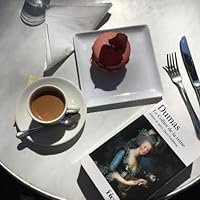
December 1, 2018
MARIE-ANTOINETTE ET LE COMTE DE FERSEN : tout sur leur histoire d’amour
Comment pouvons-nous être certain de savoir que Marie-Antoinette et Axel de Fersen ont entretenu pendant plus d’une dizaine d’années une histoire d’amour et de passion ? Qu’apprenons-nous réellement de ce couple, que je qualifie, d’emblématique ?
Chevalier servant ou Prince charmant ? Ami ou Amant ? La correspondance secrète, que Marie-Antoinette et Axel de Fersen ont entretenu, permet de prouver bien des choses sur leur relation, leurs sentiments et leur attachement. Cette romance épistolaire permet, également, de supputer bien des éléments sur la vie intime de la reine de France et sur sa famille.
Grâce au livre Marie-Antoinette et le comte de Fersen : la correspondance secrète de Evelyn Farr, j’ai pu construire cet article sur l’histoire amoureuse de Marie-Antoinette et Axel de Fersen qui se compose de 3 parties :
1. Marie-Antoinette et Axel de Fersen : le couple
Leur rencontre, le bal de l’Opéra, Louis XVII fils de MA et de Fersen ? etc.
2. La correspondance secrète et codée
Comment entretenaient-ils leur relation ? Que s’écrivaient-ils ?
3. Axel de Fersen, son rôle au sein du couple royal
Durant la Révolution : son rôle politique et l’initiateur de la fuite de Varennes.
Que savez-vous de ce couple ? L’article vous a-t-il plu ? Partagez votre sentiment :)
Plus de détails sur le couple Marie-Antoinette et Axel de Fersen
Comment pouvons-nous être certain de savoir que Marie-Antoinette et Axel de Fersen ont entretenu pendant plus d’une dizaine d’années une histoire d’amour et de passion ? Qu’apprenons-nous réellement de ce couple, que je qualifie, d’emblématique ?
Chevalier servant ou Prince charmant ? Ami ou Amant ? La correspondance secrète, que Marie-Antoinette et Axel de Fersen ont entretenu, permet de prouver bien des choses sur leur relation, leurs sentiments et leur attachement. Cette romance épistolaire permet, également, de supputer bien des éléments sur la vie intime de la reine de France et sur sa famille.
Grâce au livre Marie-Antoinette et le comte de Fersen : la correspondance secrète de Evelyn Farr, j’ai pu construire cet article sur l’histoire amoureuse de Marie-Antoinette et Axel de Fersen qui se compose de 3 parties :
1. Marie-Antoinette et Axel de Fersen : le couple
Leur rencontre, le bal de l’Opéra, Louis XVII fils de MA et de Fersen ? etc.
2. La correspondance secrète et codée
Comment entretenaient-ils leur relation ? Que s’écrivaient-ils ?
3. Axel de Fersen, son rôle au sein du couple royal
Durant la Révolution : son rôle politique et l’initiateur de la fuite de Varennes.
Que savez-vous de ce couple ? L’article vous a-t-il plu ? Partagez votre sentiment :)
Plus de détails sur le couple Marie-Antoinette et Axel de Fersen

November 28, 2024
Author Farr is convinced - and fairly convincing - on the point that the relationship between the Queen and the Count was fully physical, sexual, and all-loving. I like it when a book like this takes a position and defends it - it's the history teacher in me!
Another strength of the book is the illumination it provides on late 18th century Swedish politics and its relevance for general European affairs.
Another strength of the book is the illumination it provides on late 18th century Swedish politics and its relevance for general European affairs.
January 14, 2026
It has a loooot of history in it. The author writes with bias as she clearly believes Marie and axel had an affair to the point where she thinks he might have even had kids with her. She writes w certainty that Marie and Axel were deeply in love and had an affair. She also writes that the queen didn’t rlly love Louis XVI which I don’t think so. She portrays Louis XVI as a person who couldn’t fulfill Marie’s needs and axel could have . Idk I don’t really think so.

January 28, 2019
dnf
Read part-way thru bc I was curious & wanted a taste of the subject. Very well-written book. The introduction does an amazing job, and I loved how there are explanations & context in between each letter. A good academic book, would recommend.
Read part-way thru bc I was curious & wanted a taste of the subject. Very well-written book. The introduction does an amazing job, and I loved how there are explanations & context in between each letter. A good academic book, would recommend.
August 13, 2025
such a great book, I highly recommend!

September 27, 2007
This was a wonderfully written biography. It was fascinating to get some historical perspective on Marie Antoinette (I had no idea she never actually said, "Let them eat cake!")
Displaying 1 - 12 of 12 reviews