What do you think?
Rate this book


430 pages, Kindle Edition
First published November 1, 2012

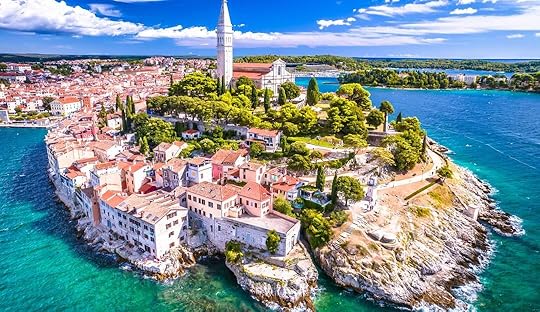
“Tiene sesenta y cinco años, pero mantiene un aspecto relativamente digno… un hombre guapo, un apuesto decadente, exhabitante de metrópolis mundiales que, a pesar de sus veinte años de lucha contra ella, ha acabado derrotado por una pequeña ciudad de provincias. Ahora está declinando a pasos agigantados”
“En Croacia es mejor no hurgar en nada. Cualquier disidencia parece aberrante porque altera el Sueño Croata sobre la propia importancia y grandeza en el mundo. En realidad, es un país pequeño que solo ofrece una vida pequeña, es como una rana que levanta con orgullo su hocico diminuto y baboso”
“Andreas Ban podría haber olvidado todo ese episodio canceroso, o al menos haberlo ignorado, para entregarse a la vida, como aconsejan los anuncios, con una sonrisa, pero también de forma enérgica, hasta histérica, consumistamente eufórica y reprimir así algo del sentido de la belleza, adquirido por genética, pero consolidado a lo largo de la vida, de la estética sublime, complicada y decadente de la que está hecho y que lo desarraiga constantemente”
What do you think this act of naming accomplishes in your writing?she replied
I do not think, I know what I want to say. However, I do not know how such an “act” resonates with an impatient reader. It is not only the names of the victims of war that I list. Now, almost fanatically, although for literature onerously—that is, needlessly—I obsessively name people, because I see more and more clearly that their names are perhaps the last cobwebby thread which singles them out from the overall chaos of the world, from the cauldron of soggy, stale mash we are immersed in. Besides, if football—soccer—fanatics can memorize teams of players through time, it is polite at least to scan through a list of victims for whose destinies all of us bear responsibility.Here the lists are the 2,061 children deported from the Netherlands to concentration camps in 1938-1945, which Ban sees when he visits the Joods Kindermomument in Den Haag (https://nl.wikipedia.org/wiki/Joods_K...) where many of the names are engraved into the climbing frames of a children's playground, a playground he is taken to in the novel by Ellen Elias-Bursac, the translator of Trieste (although not acknowledged as such in the novel).



The twentieth century, a century of great tidying that ends in cleansing; the twentieth century, a century of cleansing, a century of erasure. Language perhaps remains, but it too is crumbling. A great burden falls on twentieth-century man and he drags himself out from under it, damaged.Drndić takes a razor-sharp scythe to the lost histories and the continued legacies of Nazism and fascism, and, by suggesting that our failure to comprehend or to speak or to remember only perpetuates the erasure of these histories and is a form of passive complicity, she takes a razor-sharp scythe straight to your entrails, too.
 Hague Monument to Jewish Children by Sara Benhamou and Eric de Vries
“Then record your nothingness by writing down the fragment, because the description of annihilation is the right fragment, because it is itself an expression of the destroyed whole. The event of destruction exists even when it is no longer happening, because it returns and is ever repeated in memory, for through memory it is annihilated anew.”
“...wars are orgies of forgetfulness. The twentieth century has archived vast catacombs, tunnels of information in which researchers get lost and in the end abandon their research, catacombs that ever fewer people enter. Stored away---forgotten. The twentieth century, a century of great tidying that ends in cleansing; the twentieth century, a century of cleansing, a century of erasure. Language perhaps remains, but it too is crumbling.”
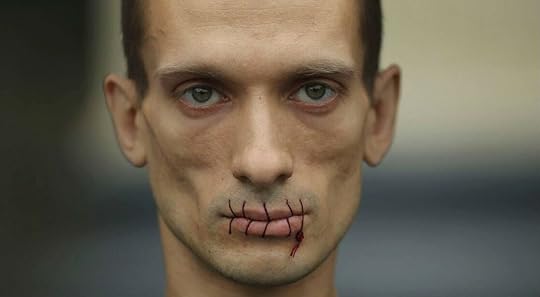
On Saturday November 19, 2002, sixty people incarcerated in a camp for illegal immigrants sew their lips together. Sixty people with their lips sewn reel around the camp, gazing at the sky. Small muddy stray dogs scamper after them, yapping shrilly. The authorities keep postponing consideration of their applications for leave to remain.That is a strong opening paragraph. Even stronger is to basically never come back to it at all.
Belladonna conceals its poison in beautiful mauve-black berries, and in its leaves and roots. The berries are full of dark inky juice, bitter-sweet, the size of cherries, and are as refreshing as a vitamin drink, so they tempt passers-by: pick me, pick me and fly away to the land of dreams. Those poisonous berries nestle comfortably in little green, five-pointed cups and sway in them quietly in the summer and autumn breeze. If eaten, just a few berries can kill a child, while an adult needs about twenty to begin to lose himself or herself, to set off for fantastical landscapes, because belladonna has a powerful hallucinogenic effect. (p.381)
[had] apologised to the victims of their Ustasha fathers and grandfathers, because this woman scholar had talked with those bigoted ninety-year-old women, she, the scholar, shook her head in denial and everyone in the audience immediately screeched at him, Andreas Ban, That’s not the subject now, and he asked, What is the subject then and what’s all this for? (p.112)
… was not important […] because those who were concerned with the essential aspects of literature, aesthetics, narrative technique and so on, they did not stick their heads in the sand, maintained that university scholar, they concerned themselves with their profession, because literary criticism was not a free space for the expression of opinions of all kinds, it was for opinions about literature. (p.113)