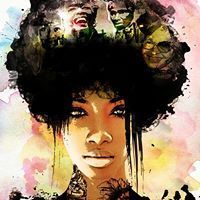
So, even if science and religion work together to break down barriers and expand the understanding of the universe, there is another battle, on different dimension that we need to examine. Knowledge without wisdom can be even more dangerous when coupled with someone talented in rhetoric. Rhetoric in this book is defined as the use of knowledge and beautiful speech to achieve a political objective. Philosophy is defined as the “love of wisdom” and the search for it among the rhetoric will prove difficult.
I must admit that it took me many years to be able to understand and verbalize this dimension. Trying to understand the difference between an argument based in laws and one that is almost all based in laws is often impossible without looking at the personal motivations and character. Often this cannot be known in time and can only be studied after the fact. This book will analyze some key moments in history, starting with the master of this topic, Socrates. Thanks to Plato, the words of the master of logic have been preserved and we can examine the battle he fought between wisdom and rhetoric, and the impact of his loss on the world.
The subtleness of this loss is symbolized on the cover of this book by the difference between the Ionic- and Doric-order. The Erechtheion is an Ionic-order temple built by the enlightened of Athens. The six Karyatides staring out to the ocean depicting the women of Athens carrying the weight of society while their men were defending Athens from foreign invasion. In his early life, it was Socrates who carved these six images of his wife, the wife who was stolen from him by a Spartan as he was away defending his country. It was this materialistic society who built the monstrous Parthenon, with none of this subtle symbolism of the value of women to the enlightened Greeks.
If you love reading essays about philosophy, religious studies and ancient history, I recommend this book. It’s very short and the writing style is simple and not overly pompous as many such essays are these days.
What I liked about “Torn between two worlds: Wisdom and Rhetoric” were the premises discussed: wisdom vs. dogma, and rhetoric as a tool that can be used for evil in the wrong hands. The author asks many questions which I have often asked myself: 1. if the 2nd law of the Ten commandments states: "Thou shalt not make unto thee any graven image, or any likeness of any thing that is in heaven above, or that is in the earth beneath, or that is in the water under the earth" (Exodus 20:4-6) why are there paintings on the walls in churches? 2. what is the difference between wisdom and dogma?
I also liked the historical figures used by the author to prove the statements made in the book: Abram, Noah, Ramesses, Socrates, Joan of Arc. However I wished - since this is about rhetoric used as propaganda - to read about one or two dictators as well as the title of the book does not limit the discussions only to religion.
If this is the first time you are reading a book such as this, then there are a couple of statements the author makes where I recommend a more detailed analysis of history before taking them for granted: 1. "For the Spartans, homosexuality with young boys was their definition of the highest form of love " - this is not true only for Spartans, but for entire Attica of the 5th to 3rd BC and early Rome. Almost all men were casual bisexuals at that time, it’s not fair to single out just the Spartans. 2. "Socrates refused to slaughter an animal for the gods, and this cost him his life " - this is a superficial statement. To prove the point of the book- that rhetoric and propaganda can lead to a very evil place and use Socrates as an example I believe it requires more analysis in the life of Socrates. Indeed Socrates was charged with asebeia (impiety) against the pantheon of Athens but he was also charged with the corruption of the youth of Athens. These were offcial motifs for his sentence, but in the background, the true motif was that he was being a thorn in the backs of the Archons because he was discrediting their corruption and their way of understanding and using democracy to rule Athens. The Archons used famous poets like Aristophanes to paint Socrates in a bad light - this is a missed opportunity the author could have used to prove early propaganda used for evil motifs. The Archons also used Socrate's relationship with Alcibiades, blaming Socrates for Alcibiades's mistakes/threatery. In the end, blaming him of asebeia was only another stick on the pyre to fuel the Athenian mob. Socrates was a dead man from the moment he started criticising politics and the Archons.
I liked the chapter where: 1. the author discussed Joan of Arc. She is a good example to show how wisdom stood against church dogma and lost. 2. the author discussed about the discrimination present in the school system in regards to the different skills our children have. Some might not be born mathematicians and some might not be great athletes, but the school demands that all "animals climb the tree" so to speak, including the fish. 3. the author discussed the New Age movement, although I wish this chapter was longer than 2.5 pages, but the author did state there was going to be another book. I agree with this statement: "Without a strong basis in wisdom, messengers of rhetoric can use such gifted people for their own purpose". But not with this one: "Could these “archangels” be the return of the old gods of those times? "
The statement that I loved the most in the whole book was this one: "Eternal damnation dogma – created as a tool for the church to control people, it generates arrogance in some Christians, that they are somehow chosen, while creating enemies from all the religions who do not believe in Jesus.” True.
However I did not see eye to eye on: 1. the chapter that discussed Neil deGrass Tyson's statement from the Cosmos series: "question everything”. I'm not here to make a critical analysis on the book - although my review is already two pages long - therefore you can read for yourself if you agree or not. 2. The chapter that discusses Lucifer as the Prince of Rhetoric. I recommend more analysis of the history of religion and not just the Bible as the reference material. Satan and Lucifer are two different entities. It is Satan the one that should be mentioned here, because Satan is the one mentioned in the Bible. But this is just my humble opinion after several years studying the history of religion. This is another form of religious propaganda, blurring the lines between these two, making people think they are one entity. From a mythological aspect, Lucifer and his twin brother, Michael, have done more for humanity's evolution than any other of the archangels combined. For an indepth study, I recommend to you: The Urantia Book; The Book of Knowledge: The Keys of Enoch; Initiation Into Hermetics; The Book of Enoch. to the reader, don't be afraid to study religion beyond the Bible.
As I mentioned in the beginning, if you are a lover of philosophy, history and religious studies and you already have an understanding of these areas, I recommend this book to you. I only wished it was longer than 40 pages from Introduction to Conclusions.
4 stars.
A copy was provided for an honest review by the author via Booktasters NonFiction @TasteNonfiction
I found the initial description of wisdom vs. rhetoric to very apropos especially as it relates to the current political races. "Rhetoric is how the most destructive leaders have motivated their followers. It starts with truths, but it is accented with propaganda (lies), driven by self-interest, often demonizing a specific group."
Reflecting on the following questions seems like excellent advise to follow in our daily lives. "1) have you made sure that what you are saying is true? 2) Is what you are saying good? 3) Is what you are saying useful?"
This is the second of three books that this author has written about the differences between the ordinary mundane world and the world of faith. All in all, I have to say that I liked this book better than the first, as it has more in it that is relevant to everyday life. It talks about the difference between wisdom and rhetoric, and this is something that our society is very much in need of being able to discern. Learning to look at things from the view of wisdom and logic rather than through the emotionally charged rhetoric that colors the vision of many in our world today may be the one and only thing that saves our civilization from falling into a state of anarchy from which it may never recover. One must appreciate faith in order to live a full life, but that appreciation must not be allowed to cloud the search for truth. True faith will be able to survive any and all revelations brought to us by science, history, or culture. But we owe it to ourselves and our children to find the truth behind the rhetoric that has infiltrated our schools, our news, and our religions. Otherwise, we will find our future held hostage to the half-truths of those who deem themselves our betters, who only want us to know just enough to make us easier to herd and subject. The difference between wisdom and rhetoric may be the barrier between living free and becoming slaves.
In a world where long and pompous speeches are often what defines a good leader to have them questioned like Shawn Murphy does it is refreshing. Because he is right, there is a serious gap between a passionate speech that comes from wisdom and it is done for the greater good and a speech that has minimal base in science, but it is very persuasive but lacks truthfulness and usefulness. Many of us are painfully aware of this truth and we often block out the words of our leaders because we question their reasons.
Shawn Murphy shows us how everything can be twisted and turned and how wisdom is a rare commodity, very difficult to find. We are being pushed into patterns and uniqueness is not encouraged. The battle between science and religion is being done with the help of rhetoric while it should be in fact a discussion based on wisdom. We find some answers between the pages of this book and so many other questions as well. A reading for the inquisitive mind.
Rhetoric can be thought of as a Dale Carnegie course on How to Win Friends and Influence People. It is glib; it is artful; it was a major part of ancient and even medieval education but it needs have nothing to do with wisdom - what IS. It subverts religion, science, and contemporary education. Socrates was to have said, “How you have felt. . . at hearing the speeches of my accusers, I cannot tell; but I know that their persuasive words almost made me forget who I was - such was the effect of them; and yet they have hardly spoken a word of truth.” One must ask oneself before speaking, “1) have you made sure that what you are saying is true, 2) is what you are saying good or 3) is what you are saying useful?” The author promises to wrap this up in a third volume.
'Rhetoric' refers in general to the study of the structure of verbal communication in an attempt to persuade. In common usage, however, it has negative connotations of deception, slander, and the pursuit of personal gain. It is the latter understanding which Shawn Murphy addresses in this second book in the "Torn Between Two Worlds" series. He opines that the use of rhetoric has led to many of the evils of the modern world, and that it will continue to do so until replaced by wisdom, the spread of ideas through the filters of truth, goodness, and usefulness. The book is short, and the language is concise, making it a good starting point for anyone looking to reconcile their words with their worldview.
This book reminded me the stile and concept with which Jostein Gaarder writes. I liked Wisdom and Rhetoric because in 44 pages immerse us in the analysis of religion and science trough philosophy. He quotes and put into perspective great minds and souls such as Socrates, Jesus, Joan of Arc, Einstein, to analyze and understand words in these fields. Words that in the history of religion have been misinterpreted. It’s a very short book considering the enormous theme is touching; but in my case it gives me the guideline to keep on reading and investigating. Wisdom and Rhetoric is the second book of a trilogy of Torn between two worlds. Definitely I will read Science and Religion & Material and Ethereal.
I love books that help me view the world in fresh ways. This is just such a book! This work stands well alone, but there are two other books in the series. I intend to read the two other books, too. This is a great idea for anyone interested in philosophy, religion or science.
This book I felt spoke to exactly what many are thinking this day in age. You have someone who uses rhetoric as their way of communication continuing to expose the ignorance of the masses. Wisdom of many is twisted and hidden. I like how many areas of history and philosophy are interwoven in and gives us a backward looking view on how we need to avoid rhetoric and not let it cloud our wisdom.