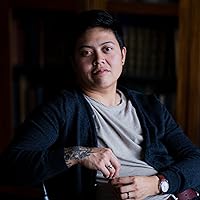
ANNEMARIE NÍ CHURREÁIN is a poet from the Donegal Gaeltacht. Her poetry has been shortlisted for the Shine Strong Award for best first collection in Ireland and for the 2018 Julie Suk Award in the U.S.A. Her publication history includes Poetry Ireland Review, The SHOp, The London Magazine, Agenda Poetry Journal and The Stinging Fly. Ní Churreáin has been awarded literary fellowships by Akademie Schloss Solitude in Germany, The Jack Kerouac House of Orlando and Hawthornden Castle in Scotland. She is a recipient of the Next Generation Artist Award from the Arts Council and a co-recipient—alongside poets Kimberly Campanello and Dimitra Xidous—of the inaugural Markievicz Award. Ní Churreáin is a member of the Writers In Prisons Panel co-funded by the Arts Council & the Department of Justice, Equality and Reform. In 2020, Ní Churreáin was an Artist-in-Residence at Centre Culturel Irlandais Paris. BLOODROOT is her debut collection.
Bloodroot, the début collection by Irish poet Annemarie Ní Churreáin, is exciting, moving and humane. I'm rarely thrilled when I read a collection of new poetry, but Bloodroot is an exception. I consumed this book in less than twenty-four hours after receiving it, which is not to say that Bloodroot is insubstantial in any way: it was simply so compelling that I couldn't stop reading it.
The first thing that struck me when reading is Ní Churreáin's astounding command of language. Her poems are full of sound and assonance: they are musical so effortlessly that you'd be forgiven for thinking that it's easy to write like this. Listen, for example, to these lines in her poem On Visiting Ellis Island: “for the bright, black bogs we were raised on, / heather-furred and spinning invisible gnats / high into the evening.”
Ní Churreáin's imagery is also assured and surprising. The first poem of the book, (Untitled) opens with, “The first time / a tree called me by name, / I was thirteen and only spoke a weave of ordinary tongues.” Immediately you know something unusual is going on here: the reader is drawn into a world where trees speak, landscapes mourn, where “muck-moon / pools / a space.” Ní Churreáin is interested in language: in Irish immigrants loosing the Irish language, and Ireland itself becoming less through the waning of its own language. She also writes about how words reflect our understanding of the world, how choosing language precisely is important not just to the poet but to everyone. In her poem, Family Law, she says, “When we speak leaves fall from our tongues. / Birds nest in the smallest of our words.”
Divided into three roughly equal sections, these poems use imagery of nature, but are not nature poems. Ní Churreáin uses the language of the landscape to reflect on some of the most dreadful moments in Irish history: the abuse in mother and baby homes, the persecution of unmarried mothers, the continued silencing and devaluing of women's voices by the Catholic church and Irish society in general. Though the poems return to the 1970s and 80s, their relevance to the present time is clear, as thirty years on, women still do not have access to abortion. Ní Churreáin is clearly angry about these issues, but her poems are restrained and humane, focusing on the lives of individuals. In her poem, The Secret, though she is writing in memory of Ann Lovett, Ní Churreáin simply says, “Every town has a shame so turned in / upon itself that the creatures begin / to live it out.”
The clarity of imagery in this collection is impressive. Though Ní Churreáin moves from past to present and from Ireland to Florida, her clarity remains consistent so the collection feels cohesive. There is a tendency for first collections to feel disparate, a selection of many parts, but Bloodroot feels like one journey. And this journey is one I feel privileged to have taken: the poems are personal, charged with emotion, and uniquely imaginative. Ní Churreáin has a huge gift with language and with creating new ways of looking at the world and in turn she gives the reader a new way of looking at their life.
As she writes in The Weir, “The weir was constructed over time by hand, / the flow is made possible by a verge, / the verge was once a dream. // When we dream of the river, the river comes.”
This book is incredible. Annemarie Ni Churreain is a poet to watch. Truly beautiful, embodied poems about Ireland and womanhood, invoking lesser-known but essential figures.
This book is my first encounter with Ní Churreáin’s writing, and it is brimming with poetry of such evocative power that it makes you shiver to read. I mean, get a load of lines like these:
“Let it be said, I cut a nick in my own skin / and by a spit became blooded to then all;” (from “Sisters”) or
“Every town has a shame so turned in / upon itself that the creatures begin / to live it out…” (from “The Secret”).
I mean, who writes like that?! The taut sentences seen throughout this collection are breathtaking. As in, they provoked a sharp intake of breath when I first read them. And beyond craft, to substance, her senses of history and time are dislocating, the past feeling so present that it becomes almost visibly perceptible in the poems. My goodness, what talent.
The collection is divided into three loose parts, which I would classify as: roots and origins (I), the living, lingering legacy of Irish “mother and baby homes” (II), and travels and diaspora (III). For me, sections I and II worked better than the last, although I had a soft spot for the poems written along the St. Johns River in northern Florida, not far from where I grew up. The totally unexpected serendipity of that geographic overlap was really fun for me to arrive at toward the end.
All told: a rave review. This is a really enchanting, immersive, almost spectral collection of poems. Ní Churreáin is a rare talent, and I’m eager to see what she publishes next.
Annemarie Ní Churreáin actually came to my class and spoke to us about the process of writing Bloodroot and what it meant to her--we weren't obligated to read it before hand, but I did see it in a bookstore and recognized that she was coming in so I bought it. I'm really glad I did. I haven't bought a collection of poetry in a long time.
Bloodroot is an impactful collection. The language used is accessible but the content is extremely heavy at times. Ní Churreáin's provided us with poems about womanhood, sisterhood, ancestry, location, and separation. She discussed her process of going to the places her poems reference and how that impacts and shapes the poem she ends up writing. "Six Ways to Wash Your Hands (Ayliffe, 1978)" is a remarkable and brutal poem, enhanced only by her reading of it.
I'm glad I own this collection and am grateful for the chance to listen to Annemarie Ní Churreáin talk about her work. I'd definitely recommend this to poetry readers.
A collection of strong, sensory-driven poems with beautiful language and powerful images that bear often of the missing children and the broken lives of the unwed pregnant girls and women who were sent to Irish Institutions where they were held captive while their children were often sent to be adopted abroad. Much silence surrounds these institutions, and there is silence here too, in these verses, which makes the poems that much stronger.
It's worth mentioning too that this collection contains some beautiful love poems.
For a whole year I tended a grapevine for a single bloom. I live with the worms in my head. What can I tell you about suffering? Nothing is impossible.