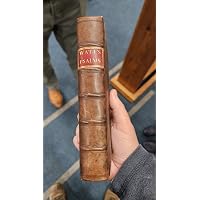
How do the covenants made with Adam, Noah, Abraham, Moses and David differ? What is their significance for the Christian today? How does the New Covenant which Christ ushered in relate to these former covenants? Let A. W. Pink answer these questions for you in this clear and careful examination of God’s covenants with His people.
Arthur Walkington Pink was born in Nottingham, England on April 1, 1886 and became a Christian in his early 20s. Though born to Christian parents, prior to conversion he migrated into a Theosophical society (an occult gnostic group popular in England during that time), and quickly rose in prominence within their ranks. His conversion came from his father's patient admonitions from Scripture. It was Proverbs 14:12, 'there is a way which seems right to a man, but its end is the way of death,' which particularly struck his heart and compelled him to renounce Theosophy and follow Jesus.
Desiring to grow in knowledge of the Bible, Pink migrated to the United States to study at Moody Bible Institute. In 1916 he married Vera E. Russell, from Kentucky. However, he left after just two months for Colorado, then California, then Britain. From 1925 to 1928 he served in Australia, including as pastor of two congregations from 1926 to 1928, when he returned to England, and to the United States the following year. He eventually pastored churches Colorado, California, Kentucky and South Carolina.
In 1922 he started a monthly magazine entitled Studies in Scriptures which circulated among English-speaking Christians worldwide, though only to a relatively small circulation list of around 1,000.
In 1934 Pink returned to England, and within a few years turned his Christian service to writing books and pamphlets. Pink died in Stornoway, Scotland on July 15, 1952. The cause of death was anemia.
After Pink's death, his works were republished by the Banner of Truth Trust and reached a much wider audience as a result. Biographer Iain Murray observes of Pink, "the widespread circulation of his writings after his death made him one of the most influential evangelical authors in the second half of the twentieth century." His writing sparked a revival of expository preaching and focused readers' hearts on biblical living.
It's a shame Pink's book doesn't receive enough interaction in modern conversations regarding covenant theology. Perhaps this is because his book provides a rather firm presentation of baptist covenant theology. Pink also writes from a unique perspective as a former dispensationalist turned reformed baptist covenentalist.
As with most of Pink's works, Divine Covenants is highly accessible. Considering how dense a study on covenant theology can often become, Pink engages in what feels like a conversation. Pink isn't as polemic as some of his contemporaries. In fact, he is very generous toward the opposition.
Divine Covenants has eight parts, each part unfolding Pink's view of a particular covenant (Redemption, Adamic, Noahic, Abrahamic, Mosaic, Davidic, & Messianic), plus a brief look at the allegory in Galatians 4. I personally found his chapters on the Abrahamic covenant to be most helpful.
Though quite long (300+ pages) and hard to find in print, if you get your hands on this gem it is well worth your time.
“A true knowledge of the covenants is indispensable to a correct presentation of the gospel, for he who is ignorant of the fundamental difference which obtains between the covenant of works and the covenant of grace is utterly incompetent for evangelism. But by whom among us are the different covenants clearly understood? Refer unto them to the average preacher, and you at once perceive you are speaking to him in an unknown tongue. Few today discern what the covenants are in themselves, their relations to each other, and their consequent bearings upon the design of God in the Redeemer. Since the covenants pertain unto the very ‘rudiments of the doctrine of Christ,’ ignorance of them must cause obscurity to rest upon the whole gospel system.” —AWP, “Divine Covenants”, pg. 7
This book was a tremendous help in understanding the way in which God has always dealt with His people, through covenants. Pink takes the position of the early puritan baptists of the 17th century (otherwise known as 1689 Federalism) with his emphasis on the newness of the New Covenant. Showing how each of the preceding covenants shadow forth and point to the New and better (Hebrews 8), Covenant of Grace. I thank the Lord for A. W. Pink and his writings. I highly recommend.
Pink views the covenants as progressively developing the covenant of redemption. Pink does not subscribe to the one covenant of grace under multiple administrations paradigm. Pink argues for the newness of the new covenant and for the gradual revelation of adumbration of the covenant of grace through God’s divine covenants. Pink takes what has been coined in contemporary discussions as a “1689 federalist view” which is similar to many early particular Baptists, especially his views on the Abrahamic and Mosaic covenants.
“We shall then take up in the chapters which follow, first, the everlasting covenant or covenant of grace, which God made with His elect in the person of their head, and show how that is the sure foundation from which proceed all blessings unto them. Next we shall consider the covenant of works, that compact into which the Creator entered with the whole race in the person of their human and federal head, and show how that had to be broken before the blessings agreed upon in the covenant of grace could be bestowed. Then we shall look briefly at the covenant Hod made with Noah, and more fully at throne with Abraham, in which the everlasting covenant was shadowed forth. Then we shall ponder the more difficult Sinaitic covenant, viewing it as a confirmation of the covenant of works and also in its peculiar relation to the national polity of Israel. Some consideration will also have to be given to the Davidic covenant, concerning which we feel greatly in need of more light. Finally, we shall point out how the everlasting covenant has been administered under the old and new covenants or economies. May the Holy Spirit graciously preserve us from all serious error, and enable us to write that which shall be to the glory of our covenant God and the blessing of his covenant people” (Pg. 10)
Pink is gracious and charitable in his interaction with both dispensationalists and paedobaptists.
Pink carefully addresses the two-fold nature of the seed of Abraham in the Abrahamic covenant,
“What was before us in the last chapter is of fundamental importance: not only to a right understanding of the Abrahamic covenant itself, but also for a sound interpretation of much of the Old Testament. Once it is clearly recognized that the type merges into the antitype, that believers in Christ are Abraham’s “children” (Romans 4:16, Galatians 3:7), citizens of the free and heavenly Jerusalem(Galatians 4:16, Ephesians 2:19, Revelation 21:2, 14), the “circumcision” (Philippians 3:3), the “Israel of God” (Galatians 6:16, Ephesians 2:12,13), it will be found that we have a reliable guide for conducting us through the mazes of prophecy, without which we are sure to lose ourselves in inextricable confusion and uncertainty.” (pg. 146)
Pink discusses the Abrahamic covenant in detail and also has an additional appendix giving an exposition of Galatians 3 regarding the Abrahamic covenant that is very profitable reading.
Pink does confuse some areas of the new covenant by making it conditional on our obedience.
For example this is a citation from Pink explaining some of the warnings against apostasy from Hebrews,
“Should a reader ask, Does my getting to heaven depend upon the everlasting covenant or the new one? The answer is upon both. First upon what Christ did for me in executing the terms of the former; second, upon my compliance with the conditions of the latter. Many are very confused at this very point. They who repudiate man’s responsibility will not allow that there are any “ifs” or “buts,” restricting their attention to God’s “wills” and “shalls”;but this is not dealing honestly with the Word...for we are made partakers of Christ, if we hold the beginning of our confidence steadfast unto the end” of Hebrews 3:6, 14! Does this render such a vital matter uncertain, and place my eternal interests in jeopardy? By no means: if I have turned “from transgression” God has made an everlasting covenant with me and has given to me the same Spirit which abode-without measure-on the Mediator (Isaiah 59:20,21). Nevertheless, I can have Scriptural assurance of this only so long as I tread the path of obedience” (Pg. 396-396)
The other weakness I observed is that Pink tends to have a weak ecclesiology and emphasizes more of the individual believer and unfortunately doesn’t give a robust theology of the means of grace with his covenant theology as other books present from a credobaptist perspective such as Samuel Renihan.
Apart from those disagreements with Pink, this is still an excellent resource and a forgotten gem for reformed Baptists.
For my full review see my website, where I also have some chapter summaries from Pink's book on the Divine Covenants:
Pink is extremely helpful in thinking about covenant theology. He really helped me see the nature of the Mosaic Covenant, especially how it was really supplemental and subservient to the Abrahamic Covenant. Here were some quotes that were very helpful to me. (It’s important to note that Pink uses the language of everlasting covenant, or covenant of grace, to mean what many would usually call the covenant of redemption, or the eternal plan of the Trinity to save the elect in Christ.)
“True believers among them [Israel] were personally dealt with according to the Covenant of Grace, even as true Christians now are; and unbelievers were under the Covenant of Works, and liable to condemnation by it, as at present: yet, the national covenant was not strictly either the one or the other, but had something in it of the nature of each” (149).
“The Sinaitic covenant in no way interfered with the divine administration of either the everlasting covenant of grace (toward the elect) nor the Adamic covenant of works (which all by nature lie under); it being in quite another region [viz. a national covenant for typical purposes]” (152).
“Now under the Abrahamic covenant, as we saw when examining the same, there was a striking conjunction of grace and law, yet the former more largely predominated—as is evident from the frequent references to the ‘promises’ (Gal. 3:7, 8, 16, 18, 21) and from the ‘preached before the gospel to Abraham’ (Gal. 3:8); so too under the Mosaic economy grace and law were both exhibited, yet the latter was far more conspicuous—as is clear from the contrast drawn in ‘for the law was given by Moses, but grace and truth came by Jesus Christ.’ The Sinaitic covenant was supplementary and subsidiary to the Abrahamic, serving to promote both its natural and spiritual ends. Its object was not to convey, but to direct life” (203). Here we see that the Mosaic Covenant was not conveying grace but only a means to direct the Israelites to the grace of the everlasting covenant.
“The new covenant actually does for those who are in it what the old one failed to do for the Jewish people. To them God gave a revelation, but it came to them in letter only; to the New Testament saints His revelation comes in power also (I Cor. 4:20; I Thess. 1:5). To them God gave the law as written upon tables of stone; to the New Testament saints God also gives the law, but writes it upon their hearts. [Here we see the moral law (what is written on our hearts) is summed up in the Ten Commandments).] Consequently, they chafed at the law, whereas we (after the inward man) delight in it (Rom. 7:22). […] That which makes all the difference is that the Holy Spirit is given to indwell and energize the latter, which He was not in those who were in the Sinaitic covenant as such—we say ‘as such,’ for there was ever a godly remnant who were indwelt by the Spirit on the ground of the everlasting covenant” (300).
“While God requires the same flawless obedience under the new covenant, yet provision has been made for failure, and if our efforts be genuine, God accepts an imperfect obedience from us because its defects are fully compensated for by the infinite merits of Christ which are reckoned to the believer’s account” (318).
“It is important that we should distinguish clearly between the everlasting covenant which God made before the foundation of the world, and the Christian covenant which He has instituted in the last days of the world’s history. First, the one was made in a past eternity; the other is made in time. Second, the one was made with Christ alone; the other is made with all His people. Third, the one is without any conditions so far as we are concerned; the other prescribes certain terms which we must meet. Fourth, under the one Christ inherits; under the other Christians are heirs: in other words, the inheritance Christ purchased by His fulfilling the terms of the everlasting covenant is now administered by Him in the form of a ‘testament’” (321). Here, Pink distinguishes between the everlasting covenant of grace/redemption and the New Covenant. The everlasting covenant was working itself out from all eternity saving people, while the New Covenant was the everlasting covenant fully ratified and revealed in time and administered with power. This distinction seems to set Pink apart from 1689 federalists who claim the New Covenant is the covenant of grace.
“Just as Hagar was rightfully the handmaid of Sarah but was wrongfully accorded the position of Abraham’s wife, so the Sinaitic covenant was designed to supplement the Abrahamic but was perverted by the Jews when they sought from it salvation and fruitfulness” (331-332). The Mosaic Covenant was intended to be a tutor to show the Israelites toward grace, but the unrepentant were under it as a covenant of works to condemnation.
The content and truth of this book seems spot on. But it’s so wordy and cumbersome that I struggled. It seemed harder to get through than Pink’s Attributes of God. I think part of the problem is that I was reading a converted PDF of the book in my Kindle app, which lacked formatting and headings. The chapters, which were the covenants in chronological order as found in Scripture such as Mosaic, Abrahamic, etc., had headings, but otherwise there were only Roman numerals separating changes in topic or direction. Overall, I’m glad I read it & feel as though I learned more about Baptist covenant theology.
This is the first book I have read by A W Pink. What a blessing it was to read this. It was a deep dive into biblical covenants. I highly recommend reading this book and maybe giving it to a friend. However do not purchase this particular addition published by parables. The book is falling apart when I bought it new, the text is often mistyped punctuation is off. But other than that, the spiritual truths held in this book were amazing and very spiritually edifying!
Needs editing. The word shall comes up as shah, for example. I lost interest when he says God made us in the likeness and image of God. God is a Spirit and that is the only likeness. His verbosity was overwhelming.
This book clearly outlines the various covenants contained throughout the Bible. Particularly useful as a starting point to traditional baptist covenant theology and 1689 federalism. Highly recommended!
Very good but very long. It would be much clearer if he would have condensed it. At times he appears recondite is is needlessly carrying on with his analysis. It is made clear, however, salvation is God's gift, not by man's effort.
Really great, thorough overview of the covenants from a non-dispensational baptist perspective. He essentially aligns with 1689 baptist federlaism, at some moments seems to be supporting a "one covenant [of grace] under two dispensations" when quoting others arguing for the paedobaptist view.
Overall, a great study of the covenants in a way that displays Christ as the fulfillment of the promises of God. Would highly recommend.
Helpful but overly brief in some sections which means he somewhat misses out on detail where it might be helpful for a reader without further context given by other authors.
If you want a detailed primer on understanding God's covenants, this is the book for you. Pink does a great job of squeezing out theological points yet still edifying the reader greatly. I would recommend this book to every Christian!
Very good material but the typeset and font made this a hard read. Line spacing too close and text to small. Besides that very good explanation of God dealings with his creation through his covenants