This book was converted from its physical edition to the digital format by a community of volunteers. You may find it for free on the web. Purchase of the Kindle edition includes wireless delivery.
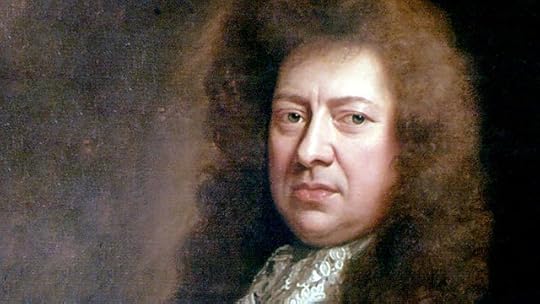
Samuel Pepys was an English naval administrator and Member of Parliament, who is now most famous for his diary. Although Pepys had no maritime experience, he rose by patronage, hard work and his talent for administration, to be the Chief Secretary to the Admiralty under King James II. His influence and reforms at the Admiralty were important in the early professionalization of the Royal Navy.
The detailed private diary he kept during 1660–1669 was first published in the nineteenth century, and is one of the most important primary sources for the English Restoration period. It provides a combination of personal revelation and eyewitness accounts of great events, such as the Great Plague of London, the Second Dutch War and the Great Fire of London.
His surname is usually pronounced /'pi:ps/ ('peeps').
Sam’s 1667 diary is his longest. This is indeed a busy year. On the family front, Sam’s mother passes away. On the work front, Sam’s career is in jeopardy. Given a poor showing in the war with the Dutch, there’s much finger-pointing in Parliament; some of those fingers point uncomfortably close to Sam’s station. The search is on for those responsible for the notable English incompetencies. Sensing danger, Sam sends his lucre for safe keeping out of town. Once the coast is clear, there’s humour in reading of Sam’s recovery effort; his father buried Sam’s wealth; one of the bags broke, scattering gold about; Sam tries his best to dig up his cherished wealth at night without calling unwanted attention. To lessen the scrutiny on his doings, Sam resigns his Navy victualling post, foregoing the £300 annual income attendant to that position. I believe 1667 finds Sam at his most lecherous; he has a rush of dalliances. He’s also mad for the theatre, despite a few solemn vows to refrain from public entertainment. Sam’s aging dog, Fancy, makes a surprising reappearance; I thought Sam lost the dog on a walk some time ago? Just what will 1668 bring for our enterprising, most human, friend?
The longest of Sam's diaries and I can see why, it was a testing year to say the least.
It begins, as per usual, with Sam's empty promises to not go to the theatre and then breaking that promise, but all worth it as he gets to kiss the actress Nell Gwyn. He declares that his belly is “full with plays, that I do intend to bind myself to see no more till Michaelmas” , yet he’s back to the theatre 2 days later. He even buys his wife an expensive watch to make up for all the frolicking.
The Navy's fiscal stress due to war with the Dutch is felt throughout the year, but at least the Lord of Sandwich had achieved peace with Spain and is ordered home to take control of the fleets.
There is much abuzz as preparations are on the way to rebuild the City, the King is most pleased, but obvious conflicts between various organisations slow the process down considerably, so much so that Sam himself wonders if the City will ever be rebuilt.
This year, Samuel's mother passes away, he pays for her mourning expenses and is relieved that his father and brother are in better condition.
While the Navy continues to struggle about how to pay their creditors, Sam finds himself flush enough in his own finances to start planning to get a coach of his own and a stable to house it in. He enjoys a great gossip session with Mrs. Turner, who dishes on the Lord Brouncker, his whore Mrs. Williams and “the most false fellow” Sir W. Pen.
As the Dutch attack relentlessly and the political fallout continues, Sam sends Elizabeth to the countryside to hide his money and makes a will, leaving everything to her and his father.
In October, Sir W. Batten passes away and Samuel is left rather lonely to deal with the Committee that is looking into the miscarriages made during the war, he loses sleep over it and frets for days.
This year, Samuel visits a spectacle maker, as his eyes continue to bother him. I feel a strange kind of sadness, knowing what's to come from it...
From BBC Radio 4 Extra: On New Year's Day 1667, Samuel Pepys awakes to find the Thames covered in ice, while some parts of London still smoulder from last year's Great Fire. Adapted by Hattie Naylor.
"There is nothing like silence -- it being seldom any wrong to a man to say nothing, but for the most part it is to say anything." -- Samuel Pepys, 6 December, 1667
The eighth (1667, with 201,000 words) and longest volume, of Samuel Pepy's famous diary. I can't believe I only have one volume left. I think the length of this volume/year has a lot to do with the unique circumstances England finds itself in. The war with the Dutch finally ends, but hasn't solved the inadequacies of money and governance in England. Charles II and his corrupt court has made it difficult to even keep a navy. Bills are piling up and debt has grown, and one of the more rational actors (The Lord Chancellor, 1st Earl of Clarendon) was undone by those in the Court that thought he had too much power with the King. He was impeached and banished with few taking his side (except his son-in-law Duke of York, and Henry Coventry*). Anyway, all of this trouble reduces Pepy's activity somewhat, so it appears he has more time to write in his diary, go to plays, prepare for his defense in from to fate House of Commons (Pepys was well respected for his competency and honest among the House of Commons, the nobility and the King), grope women, sleep with women, count his money, and even ejaculate in the Queen's chapel during High Mass on Christmas Eve ("But here I did make myself do la costa be mere imagination, marinade a jolie most and with my eyes open, which I never did before -- and God forgive me for it, it being in the chapel.).
I think one of the reasons I ADORE this diary is the honesty, the hilarity, the boldness of Pepys. It is strange. I've read now over 1 million of the most private thoughts a man can have about life, love, money, politics, ambition, marriage, duplicity, religion, science, etc., and I'm pretty sure I know Pepys better than I have known anyone except my wife and perhaps my children. He has inspired me to keep my own diary and to be as open as I can in it, but even I could never hope to rise to the level of transparency of Pepys who can riff on farts, fucks, and frigates like no man I've ever met or had the pleasure to read.
* His brother William Coventry, however, was one of those largely responsible for his fall.
When I'm feeling overcome by reading about Putin, Trump, Farage et al it's been a comfort catching up with Sam every night before I go to bed ...
A few resonant quotes from this volume:
"He (Sam's cousin Roger Pepys) tells me that he thanks God he never knew what it was to be tempted to be a knave in his life, till he did come into the House of Commons, where there is nothing done but by passion and faction and private interest."
"... to Westminster and there walked up and down till noon; where all the business is that the Lords' answer is come down to the Commons, that they are not satisfied in the Commons' reasons; and so the Commons are hot and like to sit all day upon the business what we do herein, most thinking that they will remonstrate against the Lords."
But there was hope even then of MPs of honour, like Sir Edward Nichollas, who was "one of the best men in the world ... one of the most perfect heavenly and charitable men in the whole world", of whom the editor's footnote says: According to Clarendon, no one had a 'more general reputation of virtue and piety and unquestionable integrity throughout the kingdom'.
A hideous reprint on vile paper of the Latham Matthews edition. Mine is the 2000 reprint of the 1995 edition. The cover differs from that shown here so it might be that later issued have resolved the problem. This is the longest year of the diary and what you get is a much clearer account of what's happening. in previous years it can sometimes be difficult to understand exactly what it is that Pepys does for his job: here the added detail makes it much clearer. There's a very exciting account of the Dutch raid on the Medway and the usual account of his sexual exploits, sometimes funny, sometimes disturbing.
Some years ago, I started Pepys' diary and got through seven and a half volumes. I then took a few years off. I've started reading again where I left off and have now completed Vol. 8. I've read from both Henry B. Wheatley's rendering from 1893 (convenient because its on my iPad) and the more recent rending by Robert Latham and William Matthew (1970's), its eleven volumes in my library. Wheatley chose to exclude portions of the diary apparently deeming them inappropriate for his times. Latham and Matthew were a little more bold and included all or most of the passages. L&M also has very good footnotes that bring light to the subject. Although the excluded passages are salacious or bawdy at times, they do give more understanding to the subject at large and the way of life in London 1660's. (My review and Volume numbers refer to the L&M version.)
Reading the entire diary and not a shortened version, has been very enlightening and entertaining. One might find it gets bogged down in Pepys daily business to the kingdom, but even those passages are full of human conflict and historical insights. I've enjoyed it thoroughly and will start the final year in Vol. 9 right away. In the beginning I wasted time reading a very much shortened version of the diary just to want to read it in whole right afterward. Glad I have chosen that.
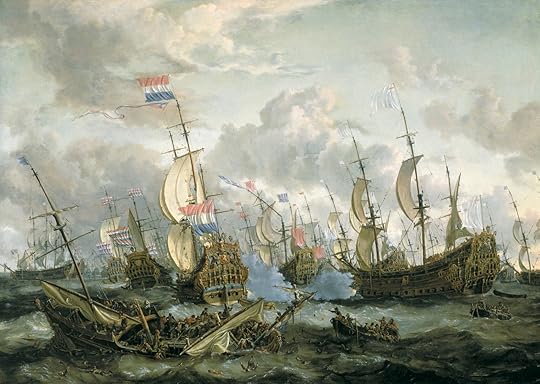
All in all this is the longest volume of the diary but also the most long winded, the whole diary is concerned with Britain being at war with the Dutch and France with the Dutch also sailing up the Medway in Kent destroying several British warships and also the pride of the Navy The Royal Charles and in the process burning or sinking the Royal James, the Royal Oake and the Loyal London. Pepys resigns from his victualling post. Lord Chancellor Clarendon is blamed for the second Dutch war and is tried and dismissed for his part in it. On the home front there is some rebuilding of London going on after the great fire but there is little money as the Navy and government in general is in financial dire straits with the king and court feverishly trying to raise war money to defeat the Dutch and pay the seamen. A prickly year between Pepys and his wife and he also has a personal scare when he fears one of his "amours" might be pregnant but turns out to be a false alarm, his wife is showing an interest in a gentleman called Coleman whom she shared a carriage with and Deb Willet appears on the scene as a servant to the Pepys'. A lot of waffle and at times a little plodding due to Pepys going off on a tangent on some things but this is probably to be expected due to the nature of the diary as its his own personal thoughts and feelings and these are obviously turbulent and is reflected by the nature of what is going on around him as he is also worrying about his job and position as many people at this point are getting investigated as to fiscal affairs, fraud and government shenanigans.
Pepys spends the beginning of the year preoccupied with the English getting slaughtered by the Dutch. By the summer the Dutch has scuttled several ships at the shipyards in Chatham and the British sunk several more to block the river. July is spent worried about an invasion of London by the Dutch (of course this never pans out as London takes several more centuries before it's attacked). Pepys is so worried he sends his wife to the country with his father. Peace is brokered by the end of the month and then the blame game begins, which surrounds the majority of the rest of the year. Pepys admits to not having relations with his wife in six months, while continuing almost daily at points, with his affairs. After Mrs. returns he is suspicious that she is pregnant from an affair in the country, which does not come to pass. His other entertainments continue as well, music and the theater. His eyes are worsening by the end of the year.
1667: London recovering from the Great Fire; political life lively, to say the least; a major scare and embarrassment over the Medway incident. The year finishes with everyone borrowing money from everyone else, as far as I can work out (the finances are very complicated), and Clarendon escaping to France. Samuel Pepys shows himself to be not only a dreadfully hypocritical womaniser but doesn't even seem to bother about whether the various women in his path are actually consenting or not. It's very readable, though, and there are some funny anecdotes and lots of interesting details of daily life.
I read the books on the toilet; I can't imagine to read the entry a long time without pause. But one gets a perspective of the 18th century. The struggle to live with health and wealth, the dumb king. I read sometimes in parallel a copy of Ackroyds book. It was a good extension. Sometimes he is copying Pepys.