Un’eroina-reporter in bancarotta emotiva, un’ambientazione sospesa tra America e Centroamerica, una prosa di filo spinato, un narratore ellittico, un intrigo politico. Ecco Joan Didion al suo quinto e ultimo romanzo, ovvero le variazioni autobiografiche dell’autrice-reporter-saggista divenuta icona attraverso libri come L’anno del pensiero magico e Verso Betlemme, consegnando a uno stile ruvido e nudo la propria epoca e il proprio dolore. La sua scrittura corre sui nervi sfibrati di Elena McMahon – figlia, moglie e madre sull’orlo di un crollo –, giornalista del Washington Post che segue la campagna presidenziale tra pranzi di beneficenza e comitati di quartiere, primarie di partito e grigiori redazionali. Come tutte le donne di Joan Didion, Elena osserva il proprio tracollo. È insoddisfatta e in fuga perenne dal presente e dal passato: dall’orrore vacuo del quotidiano, dalla morte della madre, dalla distanza della figlia, dal padre alcolizzato, gambler di emozioni, capace di mandare in frantumi la vita monocroma della figlia con l’ultimo azzardo possibile. Con la cifra stilistica che è il segno distintivo dei suoi romanzi, Joan Didion imbastisce l’enigma della morte di Elena intorno a molti vuoti, di lacuna in lacuna, senza nessi logici. Un traffico d’armi, l’amore con un agente segreto, e poi il buio. Il quadro rifiuta di ricomporsi, il centro non tiene. La leggerezza di un attimo rivela il peso di una vita intera: cambiano i decenni, non le eroine. Il suo ultimo desiderio si muove sul crinale dell’ambiguità, una linea sfuggente che divide una vita e due Americhe, al tramonto della Guerra fredda. Gli Stati Uniti opulenti – che sfilano nei rispettabili interni borghesi, tra le piscine, sui campi da tennis inondati dal sole avvolgente del Pacifico – e gli avamposti imperialisti nel Centroamerica. Uno spazio diviso che grazie a Joan Didion diviene spazio spirituale, teatro delle vanità in cui si dibattono esistenze lacerate, in cui scolora il fantasma di una donna e l’Occidente rivela il proprio cuore di tenebra.
Joan Didion was an American writer and journalist. She is considered one of the pioneers of New Journalism along with Gay Talese, Hunter S. Thompson, and Tom Wolfe. Didion's career began in the 1950s after she won an essay contest sponsored by Vogue magazine. Over the course of her career, Didion wrote essays for many magazines, including The Saturday Evening Post, Life, Esquire, The New York Review of Books and The New Yorker. Her writing during the 1960s through the late 1970s engaged audiences in the realities of the counterculture of the 1960s, the Hollywood lifestyle, and the history and culture of California. Didion's political writing in the 1980s and 1990s often concentrated on the subtext of political rhetoric and the United States's foreign policy in Latin America. In 1991, she wrote the earliest mainstream media article to suggest the Central Park Five had been wrongfully convicted. In 2005, Didion won the National Book Award for Nonfiction and was a finalist for both the National Book Critics Circle Award and the Pulitzer Prize for The Year of Magical Thinking, a memoir of the year following the death of her husband, writer John Gregory Dunne. She later adapted the book into a play that premiered on Broadway in 2007. In 2013, she was awarded the National Humanities Medal by president Barack Obama. Didion was profiled in the Netflix documentary The Center Will Not Hold, directed by her nephew Griffin Dunne, in 2017.
Sono passati ventidue anni da quando è uscito questo romanzo della Didion, il suo ultimo (finora? Ahimé, temo sia proprio l’ultimo, pochissima speranza per un nuovo titolo data l’età della signora). Per me che la amo molto, e che ho goduto tanto quello subito precedente, “Democracy”, si è trattato di un magnifico replay. E siccome ho letto la sua opera intera, non mi resta null’altro ancora da leggere, penso che mi dilungherò. Uno sproloquio d’amore incondizionato.
Joan Didion
Nei libri di Joan Didion conta ovviamente quello che viene detto, le cose che vengono ripetute, insistite, evidenziate in corsivo. Ma conta, tanto, anche quello che manca, che viene taciuto, e volontariamente omesso, che [sembra] rimanere fuori dal quadro. Come un film: a volte si percepisce che quello che rimane escluso dall’inquadratura è parte della storia, e dello stile, è essenziale. Forse perfino più importante (come nell’esempio che farò fra poco).
Definire una scrittura ‘cinematografica’ rischia di essere offensivo perché c’è poco di meno bello del leggere una sceneggiatura, dove di solito le parti più gradevoli sono i dialoghi, trattandosi il resto di descrizioni, azioni, luoghi e movimenti di macchina (un po’ come in un testo teatrale). Ma nel caso di Joan Didion si può parlare della bellezza di una scrittura ‘cinematografica’ perché del cinema trattiene il meglio: le tecniche di montaggio, le molteplici affascinanti possibilità che offrono, come sono in grado di determinare lo stile di un racconto (a questo proposito consiglio di leggere la citazione qui in basso).
Le protagoniste della Didion mi fanno pensare a lei.
Per concludere questa divagazione in chiave settima arte, devo dire che per tutto il tempo della lettura di queste splendide duecentosessantanove pagine, io ho continuato a rivedere una delle inquadrature più belle, più importanti, più discusse della storia del cinema: l’ultima del bellissimo film di Michelangelo Antonioni “The Passenger – Professione: reporter”. Più che descriverla conviene vederla – richiede attenzione, e dura più di sei minuti: https://www.youtube.com/watch?v=pvbqy...
La stessa trama di The Last Thing He Wanted echeggia quella del capolavoro di Antonioni. Nel film il protagonista della pellicola è un reporter stanco della sua vita, e della sua identità. È in un alberghetto di un qualche paese sahariano a intervistare un qualche leader politico o militare, o entrambe le cose, che gli risponde con qualche dogma e ovvietà di troppo. Ci sono problemi d’acqua, fare la doccia è un’impresa, il caldo, la sete, difficoltà di dormire... Nella stanza accanto alloggia un uomo che si scoprirà (troppo tardi) essere un trafficante di armi: il nostro reporter lo trova morto (cause naturali, apparentemente) – ne assume l’identità falsificando il passaporto, sposta il cadavere nella sua stanza, smette di essere David Robertson, comincia a essere David Locke, e presto si trova al centro di qualcosa di più grande di lui. Se voleva dare una svolta alla sua esistenza, c’è riuscito in pieno.
Le protagoniste della Didion mi fanno pensare a lei.
Sembra un film d’azione, ma non lo è, è un falso thriller. Si tratta di thriller dell’anima: niente concitazione, colpi di scena, sequenze spettacolari, fughe e inseguimenti. La suspense si annida altrove, in altri aspetti. Il romanzo di Joan Didion vede al centro una giornalista (reporter) che decide di mollare il servizio cui stava lavorando (trattandosi di Didion, non poteva che trattarsi di una campagna presidenziale) per andare in Florida a trovare suo padre. L’uomo si ammala all’improvviso e chiede alla figlia di sostituirlo nell’affare che deve assolutamente concludere per garantirsi la pensione (e per ripagare un cospicuo prestito). Si tratta di traffico d’armi con e nei paesi del Centro America negli anni Ottanta (a quell’epoca era uno dei luoghi più in fiamme e insanguinato del pianeta). La donna accetta senza sapere bene cosa va incontro, la vaghezza impera. Mentre è in Costarica, apprende dal giornale che il padre è morto in clinica. Nessuno la paga. Lei aspetta, rimane. Conosce un uomo, inizia una relazione, lui è un agente dei servizi statunitensi, lei non lo sa. I soldi rimangono nelle tasche di chi doveva pagare, l’agente viene ferito, la donna, Elena, invece viene uccisa. L’ultimo desiderio di suo padre si è trasformato nell’ultima cosa che avrebbe voluto. Ma anche qui si tratta di finta spy story, di pseudo thriller. A Joan Didion interessa altro: e lo dimostra con la sua scrittura, con lo stile che adotta (“Style is character”, ha sempre affermato Joan).
Le protagoniste della Didion mi fanno pensare a lei.
Tu lo stai supponendo – disse lei – Naturalmente. Perché non hai chissà quanta esperienza su come funzionano le cose. Ancora credi che le cose funzionano nel modo in cui dovrebbero funzionare. Io suppongo si tratti di qualcosa di più ordinaria amministrazione.
La mia impressione è che Joan sia sempre in scena in doppia veste. È sempre sia la persona che racconta, che indaga, ricostruisce, intervista, risale all’origine dei fatti, sia il soggetto raccontato, le sue eterne eroine in perenne bancarotta emotiva, fragili e d’acciaio (un mix altamente erotico), dai nervi sfibrati, che la sua scrittura sa rendere a meraviglia, sull’orlo di un tracollo… D’altra parte, lo dice altrove, lo ripete e sostiene anche nel documentario che le ha dedicato il nipote, l’attore e regista Griffin Dunne: noi stessi siamo la fonte della nostra scrittura, non c’è altro modo di scrivere se non attingendo materiale da se stessi, cercare il punto di contatto tra la propria storia personale e quella che si vuole raccontare.
Il mantra è uno strumento del pensiero: Didion lo trasforma in strumento dell’anima. Il mantra è una formula magica, un inno o preghiera la cui efficacia non dipende dalla partecipazione interiore del soggetto che la pronuncia. Ecco, io non credo che l’efficacia della scrittura della Didion dipenda o meno dalla mia partecipazione interiore: ma lei, comunque, la ottiene e conquista tutta, mi fa partecipare come forse nessun altro – leggerla è una danza sufica, è ritmo ed equilibrio, è narcosi ed estasi. Dio se mi mancherà…
Ho fatto la scrittrice per tutta la vita. Come scrittrice, anche da ragazzina, molto tempo prima che quello che scrivevo cominciasse a essere pubblicato, a poco a poco mi formai l’idea che il significato stesso fosse insito nel ritmo delle parole, delle frasi e dei paragrafi, una tecnica per nascondere quello che pensavo o che credevo, qualunque cosa fosse, sotto una vernice sempre più impenetrabile. Io sono, o sono diventata, il mio modo di scrivere, ma questo è un caso in cui al posto delle parole e dei loro ritmi avrei voluto avere una sala di montaggio, attrezzata con un Avid, un sistema di editing digitale sul quale potrei toccare un tasto e distruggere la sequenza temporale, mostrarvi simultaneamente tutte le inquadrature della memoria che ora mi vengono in mente, lasciarvi scegliere le riprese, le espressioni leggermente diverse, le varie letture delle stesse battute. Joan Didion: L’anno del pensiero magico.
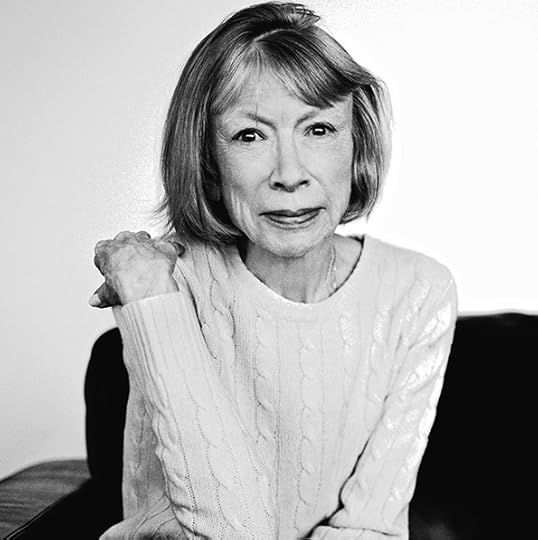
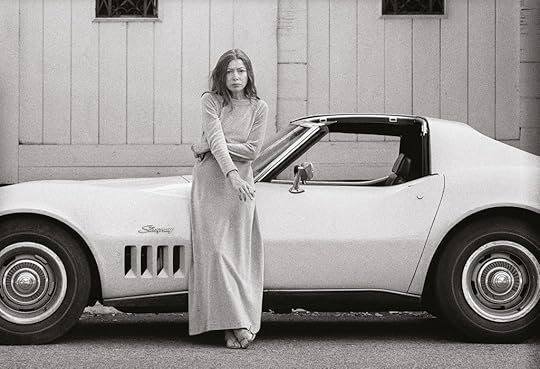
Joan Didion a 34 anni. La foto è stata scattata a Hollywood, nel 1968, da Julian Wasser per Time.
PS Purtroppo sembra che sarà Anne Hathaway a interpretare Elena McMahon, la protagonista del romanzo. Triplo sigh.
Re-read. I admired this on my first reading, but I also under-rated it. This is as accomplished as any of Joan Didion's novels and one of the finest political thrillers (among many other things) I've encountered. On first reading, I went too fast, letting myself get pulled along by the rhythmic riptide of the prose. On a second read, crucial background details became more apparent and the love story that's slipped almost imperceptibly into the crux of the narrative made complete sense. This is the rare novel that's politically savvy, propulsively plotted, structurally inventive, and aims to subvert literary conventions as actively as any dogma. It's an examination of America's ruthless role in Central America in the mid-'80s which serves as both mirror and microcosm for so much else.
Fascinating writing - but so hard to follow that I was lost almost all the time. It is one of those books that I think I should read all over again to see what the heck was going on - except I don't want to.
Call it a novel. Call it a political thriller. Or a deconstruction. Or a work of journalistic metafiction. Call it a love story, and then turn once more to page one to pick on the details you missed. Call it a crusade against the media, who apply a certain spin, who somehow manage to cock it up, leaving you, the reader, with only half the story. Only you don't know it. Nobody is truly ever in possession of all the facts. Fact: Elena McMahon had not planned to walk off the campaign in 1984. But she did. Fact: Elena McMahon walked off the campaign, retreating to the house of her arms-dealing father in Miami, and into a complex web of—what? Redactions. Evasions. Conspiracies. Cool detachment is the name of Didion's literary game and this one is no different. Knowledge of the Iran-Contra Affair might have helped. Maybe not. Or would it? If all else fails, finish reading the book. And then read the summary on Wikipedia. Now put it back on the shelf, and add it to your reread list. Next time, savor it.
The crux of what went on in this book could have fit in a 15 page short story. That it ends up a 220 plus page novel, with a narrative that circles and circles the central event without ever really touching it and yet still manages to remain intriguing and fresh and compellingly page turning is an example of Didion's genius. Some of her sentences just cut right through you. I have to be in a certain mood to read Didion, but boy do I love it when I am.
The dull and overwrought title, the fuzzy monochrome cover art dominated by letters, not to mention the plot and published date (1996) delineates this book as a certain kind of novel, native to the late 80s and 90s. The political-thriller involving shady arms deals and some person or persons just caught in-between. The American government is corrupt. Parts of it anyway. But it’s a sophisticated hands-off puppetmaster corruption. Bad things happen. People in third world countries die. American power and its politicians’ personal wealth increases.*
Yet, this story is hardly rote or typical. Joan Didion wrote it. The writing, as always, is superb. Even through the cynical lense of 2013, the events of 1984 as translated through 1996 are truly abominable. That the topic feels slightly dated may not be because it is a conception of American imperialism circa 1996, but that we have seen the process played out so often in the interim that it has become obvious and everyday.
The writing itself, told through a framing story of a reporter putting together the story many years later, is sparse and enamored with repetition. Didion observes the doublespeak and murky insubstantiality of political speak in interviews and speeches. Then repeats segments of it, over and over. She may go a little overboard, but the effect and pacing gives the novel a recursive feel. All of this has happened / is happening / will happen. Again and again.
Like Play it as it Lays, and, I suspect, most-if-not-all of Didion’s novels, the protagonist, Elena McMahon, is a woman becoming unhinged. The writing conveys an overpowering anxiety, whilst Elena maintains an aura of perfect control. Didion uses tricks like telling us when she (Elena) has stopped crying without ever telling us she had began. Or giving us a running record of how many hours it has been since she has last eaten. Again, like Play it as it Lays, the protagonist confronts a personal emptiness; they try to invoke meaningfulness through their family, their daughter, their ex-husband. Largely unsuccessfully. They have become too isolated by society, too absorbed with the abyss.
*As the novel’s central scandal is the Iran-Contra affair, this isn’t just cheap drama but an affirmation of the truth — There were virtually no consequences to all involved, and least of all to those in the highest positions.
There are those writers who write well about life and then there are those writers like Didion who excel in documenting the in-betweenness of life. The ambience of being between careers, between relationships, estranged from families and those folks who happen to be where they are less by choice and more by resigned indifference to elect to go anywhere else make up her characters' milieu.
She is in her element with vanquished characters who are jaded, spent and unable to gain entry back to the status quo. With The Last Thing He Wanted Didion's plays with the hardboiled parlance and atmosphere of a thriller with mixed results. While you'd think her distinctive wry style would easily translate to the reportage of a thriller, it tends to overwhelm what she tries to convey. You can see where she is entertained by the lingo of government-speak, the absurd quality of official reports design to reveal little while presenting the complete accounts of events and the rat-a-tat of interrogation banter, but after a while the narrative and character development being to suffer as Didion's treatment of revisiting scenes, as well as retelling moments tends to obscure the immediacy of the scene in favor of word play.
The protagonist Elena McMahon at first is rendered as a classic Didion character who disconnects from her career in PR for a presidential campaign. The most compelling aspect of this narrative is Elena's initial attempts to regain familial ties with her estranged father and daughter. The question of her father's dementia as opposed to possible duplicity is great. But, as the book descends into the the plot of a thriller, all the characters including Elena begin to talk alike--they all begin to sound like Didion speaking in wry detective-speak.
By the time you realize the tale has a romantic angle and begins to evolve beyond ironic stylized description, Didion disposes with the narrative post haste as if to say the tale isn't as important as the way as it is being presented. And because we quickly lose our connection to Elena as she descends into intrigue, and the other characters are interchangeable, the plot becomes secondary to the arch, hardboiled atmosphere that so entertains Didion, but eventually wore thin on this reader.
This book was very slow, did not capture my attention at all as my mind kept wandering. I was reading the words but not absorbing anything. Joan Didion is one of my favorite authors but this book was unfortunately a dud :(
I'll admit the impetus for reading this was hearing about the film adaptation, and then subsequently watching the trailer. Haven't seen the film yet, but seems to (necessarily!) veer sharply from the book, since it is both ambiguous and never quite clear about exactly what happens (also, there is no corresponding character to whoever Rosie Perez plays). Anyway, it is a very quick moving story, and the elliptical structure works to keep one involved. I just wish I were a BIT more confident in what the final chapters reveal, but I think it remaining cryptic is one of the strengths of the book. It's sad that an author of Didion's weight and power hasn't written a novel since this one ... 24 years is a long time to wait for another!! :-(
This is my first Joan Didion book. Thank you, friend, for recommending her work. The author writes in such a clear and distinctive voice, using an omniscient but disinterested narrator; one that creates mystery and suspense by revealing the twists and turns in the book's dark and murky plot in small but rewarding increments. "The Last Thing He Wanted's" most memorable aspect was the complexity of the relationship between its main character and her father. Their story unfolds in the third person, introducing the father in a series of flashbacks as a notorious arms dealer, a wealthy and powerful man. But when the reader meets him, the same man is a frail and demented alcoholic, suffering from mobility issues and significant short-term memory loss. He can't remember that his caregiver daughter is the only surviving family member. Nonetheless, on the strength of their family connection, coupled with the allure of certain details from his intact long-term memory, the daughter finds the motivation to investigate one last piece of unfinished family business. So I've given the book an excellent rating as a meditation on power and memory, and the subjective nature truth.
I read this specifically because of the Netflix movie. The movie looked interesting in the trailer, so I wanted to read the book first. Even having read the book, I'm not totally sure what happened in the movie. I love Didion's nonfiction, this was the first novel I've read by her. The plot is both more complicated and more simple than the book makes it seem. The arms dealing is fairly easy to grasp if you are aware of the history the book is based on, but the weirdness of the main character having to stay in Central America is like.... what. I don't know, I can't figure out if I'm putting too much thought into it or if I am missing something. Didion's technical writing is always good to read though.
I badly want to give this novel more than three stars. I badly want it to deserve more than three stars. It has remarkable qualities but is, ultimately, less than the sum of its parts.
Foremost, I am glad to have a novel about how our government sold arms to the Contras in the 80s. Just having something touch on black operations at all is highly welcome. (I suppose there is a decent amount of nonfiction on the matter, but having it fictionalized, and by a well-known name, suggests something left for posterity. Perhaps a false ideal.)
Didion's knowledge of the particulars is strong, no doubt generated by her travels and study of Central America, places like El Salvador, etc. Her credibility on the price of mines, or how one slips in and out of the United States, is high. One feels this is how things must work.
This is joined with a brave narrative ploy. We slip between the account of Elena McMahon's trip into black ops and an unnamed narrator's account of how she came to gain this information. The difference is not clearly marked (on my ebook) and so must be parsed, though is not difficult to. But we are continually fed suggestions about how things wind up for Elena, leading to a recursive, obscure style.
To borrow from the Russian formalists, if the 'fabula' is the raw story (what actually happened) and the 'syuzhet' is how the story is organized (what is actually told to us when), then the fabula portion is rather simple, the syuzhet like a bunch of diverting, snarled curlicues that ultimately are impossible to fully grasp.
That may be how information of this nature appears to a journalist or researcher of Didion's persuasion, but is frustrating as a reader. I wish she either demonstrated fully that this is just how things go - maybe stepped aside and said it full out - or... I don't know. A problem is that Elena is both a cypher and not terribly interesting as a character, so what happens to her throughout is not particularly absorbing.
The end is something of a denouement. I'm reminded of something like No Country for Old Men (the movie; I haven't read the book), where a late event is truncated as a narrative fiat (spoiler: Llewellyn's death), since we have already otherwise been shown how these murders happen. There's real heaviness to that action (in the syuzhet), but because Elena is lightweight and we're wafting along in uncertainty, the narrative ploy doesn't quite work.
All in all, a novel that remains and always must remain intriguing, but disappointing.
It would be impossible for a young person—say, a teenager—to comprehend the world of this book now. In DEMOCRACY and LAST THING, Didion was obsessed with sinister business as usual. Now we don’t have any. The foundations—what MSNBC people call “norms”—are being stripped away like copper from the innards of a palatial yacht. Here we have another Durasian novella from Joan—I simply can’t imagine how much Didion would detest Duras if she actually read her! This is a sort of INDIA SONG that accessed both the JFK hit and Iran/Contra at once. It’s about a woman, a familiar Didion woman who is “remote even from herself,” but more significantly it is about the routines and protocols of the men around her—spooks and undercover crooks who cloak their chicaneries in a laconic, cowboy ethos that both Didion and her heroine plainly love. It’s the language of their fathers! But guess what: now it’s the language of Ronald Reagan’s hacky hides killers. The action is small, short, and bracketed by a lot of meta commentary by “Joan Didion.” She has a smallish fiction output but the novels are perfectly achieved: she knows exactly the tone of sardonic shellshock she wants to hit. These works feel from an America very far away, but I think they will be central to the literature of that now-falling-to-pieces nation, foundational texts of potential self-understanding.
Lance Cleland (Captain): A friend who knows my literary predilections recommended a spy novel earlier this month. I was shocked to learn it was by Joan Didion. I had somehow missed the memo on The Last Thing He Wanted. When I looked for her work on the shelf, I always went strait for some vintage copy of Play It as It Lays or to the early nonfiction, always passing over her last novel because the title was too vague, the cover image of file folders not helping the case against its dimness. But this book is anything but dull. The story of a daughter and father and the arms deal that brings them somewhat together is told at such a clip that I was forty pages deep before I had the thought that, damn, this is Didion at her best. Unsentimental and terse, she leans against the traditional architecture of the thriller and then slowly chips away at the foundation, inventing something the likes of which I have never read before. I love how nonjudgmental this work is. How there are no easily identifiable good or bad characters. There is just the world, the people in it, their actions and the consequences of them. Heartbreak masks itself as politics. Love comes in the form of a double-cross. Like a good spy, Didion has created a perfectly executed persona with The Last Thing He Wanted. She has disguised her genius in genre.
The wait was long (especially if one had already read most of the non-fiction pieces collected in 1992's "After Henry") and this novel, like "A Book of Common Prayer" and "Democracy," is spare while somehow coming across as strangely heavy. The opening few paragraphs are a stunning work of synthesis about the 1980s from a certain point of view -- shrouded, spooky (literally, in the CIA sense of the word). From there, a tedium sets in.
I don't consider this novel one of Didion's successes, but I remember being so elated when it hit the stores; that was one of my rare experiences of letting my anticipation anxiety and fanboy-ness get the best of me. Usually I keep that shit in check.
Un romanzo nettamente visivo; da l'impressione di stare vedendo un film. Un film di spionaggio, almeno in apparenza, perché in realtà non lo è. Joan Didion romanziera è pirotecnica, piena di sottigliezze, eppure scrive con grande scioltezza e chiarezza. La sua non è una prosa arzigogolata, ma lo è il sottinteso. Diciamo che ho apprezzato l'esecuzione e riconosciuto la penna dell'autrice che ho iniziato a conoscere, ma preferisco di gran lunga i suoi memoir.
Many reviewers here say they weren't smart enough to understand this novel, which gave me the steam of resentment necessary to finish this elliptical book and declare to those humble readers that IT IS NOT YOU, IT IS HER. That's right, Didion and her deliberately obtuse writing that, for reasons of style, obscure rather than reveal, due, I am going to suggest, to hunger and too much coffee. It does not work for me because I can see the seams, and the puffs of cigarette smoke between the seams, and it does not smell like the Virginia Slims my sweet deceased grandma smoked next to her rubber band-filled remote control set permanently on Matlock. No, these seams were deliberately stitched by a lady who is too cool for school and who has definitely eaten solely ONE PAPAYA all day long AFTER some tennis and a nice long Malibu stroll. Pick up the pace, I said. These seams have never seen an exclamation point. These seams have never ever been "excited" even in the worst circumstances. These seams were plotted on an elegant mahogany secretary and then picked up and bojangled by a too thin hand with a tennis bracelet and Tiffany ring. These seams were then scattered with the lightest confectioner's sugar DUSTING of some long pauses and some declarative sentences that are actually quite lovely but NO, stop that, back to being reserved in the face of a self-imposed unraveling that could easily be stopped by a good long luncheon by oneself and, perhaps, a good dog companion and a deep breath or two.
These eyes have seen a lot of seams, and they're not going to see anymore.
How fabulous is JD? She is so consistently good and so erudite that it is a joy to open the page and let the words flow over you. This is a great story, I really enjoyed the way she played out the thriller aspect, and I believe it will be made into a movie soon - in the right hands this could be brilliant.
Set in the Central American islands or thereabouts, in the early 1980's when all those arms deals and shady happenings where being whispered about in certain circles, this book seems to me to perfectly capture the strange mix of intensity and listlessness that the tropics induce.
My first Didion. Not sure what I expected, but a literary, dreamlike, Le Carré-like story about the Iran-Contra affair wasn’t it. And yet it blew me away. This has DeLillo Libra echoes. It’s brilliant and beautiful and poignant. A tremendous novel.
5 stars for style but sadly this book just wasn’t for me. Thrillers aren’t really my thing, even less so political ones, and I had a hard time following everything in this one.
This is the most Didion book of Didion's I've ever read. Complicated, American, full of tightly spun circles that gesture towards a plot before spinning away again, the outlines of characters that fade away just as you think you know them, and an ending that is as tragic as it is frustrating insofar as you're left wondering what the hell just happened.
At it's core, it's a political thriller embedded deeply in historical context, with a middle-aged white American woman experiencing malaise (what's new), an attempt to expose the corruption of the 'truth' as attempted by the media and government organisations (the relevancy!), and, somehow, although hidden from view for a long time, a love story.
I honestly am looking forward to rereading this one day and hopefully understanding it a bit more, especially the historical references. It kind of reminds me of reading Nightwood, which took one, two, three goes, before I really knew what had happened and understood what Barnes was saying - maybe this shall be the same??
Joan Didion + the main character and I have the same name = must read! I didn’t end up loving The Last Thing He Wanted, but I’m glad I read it!
Reading this book is like sifting through archival documents—there are lots of moving parts and small details, and you need to piece them together yourself. Didion tells the story in a non-linear fashion that feels unique and cinematic. It’s a novel clearly written by a skilled journalist and screenwriter. Our narrator is inquisitive and precise, examining every conversation or news clip at the sentence level.
That being said, the technical style of this book wasn’t very enjoyable. Didion uses lots of repetition which gets a little… repetitive (haha). That and all the numbered lists give her prose a more mechanical feel than some of her other work.
I'm glad to have read this novel, but is it weird to rate my first Didion book a 3/5? She's one of the greats after all so it's more likely that the form just threw me off. But the form did throw me off I can't lie. The narrative of the book was almost impossible to follow. I know that's part of the point, but because the prose was trying so painfully hard it landed in a bad way, not a good way. Is this really a meta commentary about writers who try to hard and fail? I mean, perhaps yes. The narrator is a writer who is uncovering a secretive story about the Iran-Contra affair that played out a few years ago. There are several sections where the narrator explicitly works to get the narrative on the page in the most compelling way. There is a climactic twist in this book and unfortunately it carried almost no emotional weight for me. However, the writing was so unusual that I'm sure I'll continue to think about it from time to time.
Este livro fez me sentir que pouco inteligente 😞, muito sinceramente nunca consegui acompanhar a história nem perceber patavina! O livro tem : - imensos nomes de políticos americanos (já é difícil acompanhar o nome dos portugueses) - imensas abreviaturas e termos militares - salta no tempo e de personagens em que nem percebia quem estava a relatar a história Por tudo isto nunca consegui ficar ligada à história e não gostei da maneira como está escrito.
The undeniable stylishness of this novel made up for its confusing plot and odd pacing. I would never have finished it if it weren’t for the sheer pleasure of Didion’s sentences.