Jump to ratings and reviews
Rate this book

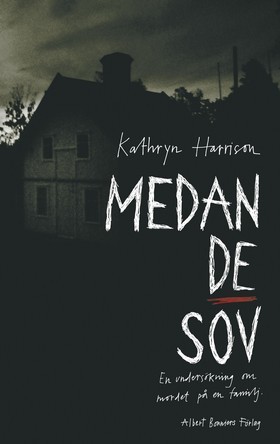
Medan de sov: En undersökning om mordet på en familj

Rate this book
Klockan 2:51 natten till den 27 april 1984 kommer ett samtal till SOS-alarm från en uppriven tonårsflicka i en amerikansk delstat. Hennes 18-årige bror Billy har dödat de sovande föräldrarna och lillasystern. Nu är han på väg till 7-Eleven för att köpa cigaretter.
Två timmar tidigare hade Jody väckts av att Billy kommit in i hennes vindsrum tillsammans med 11-åriga Becky. Han sade till den halvsovande Jody att hålla kvar lillasystern, men Becky hade snart följt efter Billy nerför trappan. Jody blev klarvaken när hon hörde dunsar och Becky som skrek. Snart kom Billy tillbaka och sade: ”Vi är fria nu.”
Ett tragiskt trippelmord - och åratal av fysisk och psykisk misshandel i en familj var över. De överlevande, Billy Gilley och 16-åriga Jody, befann sig plötsligt i en helt ny fas i livet – den ene åtalad för mord, den andra ensam och föräldralös.

Av en tillfällighet kom Kathryn Harrison för ett par år sedan i kontakt med Jody, nu välutbildad och framgångsrik yrkeskvinna med ny identitet. Hon har intervjuat henne och Billy, som fortfarande efter mer än tjugo år sitter i fängelse, vänner, poliser, socialarbetare, hon har tagit del av rättegångsprotokoll, psykiatriska utlåtanden m.m. och avslöjar den nästintill outhärdliga sanningen bakom ett fruktansvärt brott och hur samhället sviker. Hon söker också svar på frågan om hur de som överlever en traumatisk händelse kan gå vidare och skapa en framtid när deras liv indelats i Före och Efter.
Medan de sov är en betraktelse över ett brott och en familjehistoria som visar hur eskalerande våld och känslomässig misshandel påverkar barnen i en familj. Boken har fått lysande recensioner i amerikansk press och blev en av "the 100 notable books of 2008" i julnumret av New York Times Book Review.

271 pages, Hardcover

First published January 1, 2008

71 people are currently reading
921 people want to read

About the author

Kathryn Harrison

47 books296 followers
Kathryn Harrison is the author of the novels Envy, The Seal Wife, The Binding Chair, Poison, Exposure, and Thicker Than Water.

She has also written memoirs, The Kiss and The Mother Knot, a travel memoir, The Road to Santiago, a biography, Saint Therese of Lisieux, and a collection of personal essays, Seeking Rapture.

Ms. Harrison is a frequent reviewer for The New York Times Book Review; her essays, which have been included in many anthologies, have appeared in The New Yorker, Harper's Magazine, Vogue, O, The Oprah Magazine, Salon, and other publications.

She lives in New York with her husband, the novelist Colin Harrison, and their children.

Ratings & Reviews

What do you think?
Rate this book

Friends & Following

Create a free account to discover what your friends think of this book!

Community Reviews

5 stars
80 (8%)
4 stars
192 (19%)
3 stars
354 (36%)
2 stars
241 (24%)
1 star
103 (10%)
Displaying 1 - 30 of 204 reviews
Profile Image for fleegan.
334 reviews33 followers
July 13, 2008
This was (or so I thought) about the 1984 slaying of the Gilley family by their son, Billy Gilley. Billy Gilley killed his mom, dad, and little sister Becky with a baseball bat. He did this in order to save himself and his other sister Jody from further abuse by their parents. He killed Becky because she wouldn't stay in her room while he was killing the mom and dad.

I would have probably enjoyed this book more if the author herself had not imposed her own life story and dysfuntional family into the story. Especially since her story was more incestual and not "my brother killed my fam with a ball bat." If her brother had, in fact, killed her family, then I could see why she would bring up her story. But no, having an incestuous relationship with your father is not congruent to parricide. It's just not. So to me it seemed forced.

Another thing I did not like about the book is that it psychoanalized EVERYTHING. But not from a doctor's perspective. Not that that's always bad, I mean doctors can be very dry and impersonal when describing things. But when the author questions Jody (the surviving sister) about the murders and her childhood and does so with all this psychological talk it comes across as more of a hobbyist asking questions than any kind of actual study.

I just did not enjoy this book. Do I think it's interesting for a victim to write about another victim? Yes. Do I think it works in this instance? No.
Profile Image for Shaun.
Author 4 books224 followers
November 21, 2015
This is the true story of a teen who kills his parents after enduring years of physical and emotional abuse. Billy Gilley imagines a life of freedom along with his sister Jody, whom he supposedly harbors incestuous feelings toward. Unfortunately, in the process of murdering his parents, he also murders his youngest sister when she refuses to stay upstairs where he brings her after she wakes up (probably because of the violence). Jody somehow manages to not only survive this tragedy but to thrive even as her brother sits in jail organizing appeals.

What struck me while reading this story (and others like it) is how tolerant we are of abuse toward children particularly when the abuse is doled out by the parent. I realize that this is a slippery slope, but this boy endured regular abuse at the hands of his father which included severe beatings while tied to a tractor, ran away from home multiple times, pleaded with social services not to send him back home, had a history of trouble in school (probably in part because of a learning disability that went undiagnosed) and trouble with the law. Yet no one stepped in until it was too late...until after he beats both of his parents to death with a baseball bat as they slept. Then he is locked away for the rest of his life in part because the legal justice system really hasn't figured out how to handle children (particularly damaged children who are victims in their own right) who commit horrendous crimes against their victimizers.

We acknowledge battered wife syndrome as a valid defense but somehow have trouble applying the same concept to kids...after all, only an evil child could kill, and only a really, really evil child could kill his parents.

The story itself is interesting, however, this would have been better if Kathryn Harrison hadn't constantly inserted herself into the story. She tries to draw parallels between this tragedy and her own personal tragedy (which honestly is like trying to compare a scrape to a gun shot wound). I think it would have worked if she would have stopped at using it as an opening. It's not like she hasn't already written a memoir titled The Kiss in which covers the relationship she had with her biological father. Anyway, I found her meanderings indulgent and intrusive. They were a big distraction from the main story in my opinion.

Still a worthy read particularly for those interested in parricide or the shortcomings of our legal justice and social services with respect to children. There is also some interesting commentary about life before and after tragic events that I found particularly insightful.


Profile Image for Megan.
1,053 reviews2 followers
August 6, 2008
Disappointing, my friends, disappointing. This was not a book about the murder of a family so much as a chance for Kathryn Harrison to again muse on her own messed-up family life. Uh, Kathryn, you already wrote a disturbing memoir about that, and I read it, and I was properly disturbed and impressed and awed. I did not need to read a re-hash of it all. Not to mention that someone needed to do some editing of this book. Here is an actual sentence from the book:

A generation earlier, Billy's paternal grandfather, William Gilley, who beat and traumatized his son, Bill, lost his legs when, suddently intent on getting to a liquor store, he ran across a highway in front of a truck.

Say what? I had to re-read sentences on a regular basis to understand what was going on because of the comma action. And at times it read like a senior thesis, and Harrison would analyze something one of the family members said in this pseudo-psychiatric tone of voice that annoyed the piss out of me. I felt like she might have thought all the readers were too stupid to really understand what it all meant unless she spent a paragraph describing in detail the underlying meaning.

I wouldn't recommend this book, honestly.
Profile Image for Brenna.
199 reviews34 followers
April 26, 2009
When she was 20 years old, author Kathryn Harrison's estranged father kissed her on the lips - with tongue.

When she was 16 years old, subject Jody Gilley awoke when she heard her younger sister being murdered by her older brother, after he had already bludgeoned both of their parents to death.

Kathryn Harrison, in While They Slept, uses these traumatic events to draw a comparison between herself and Jody Gilley: "Both she and I had a previous self who no longer exists."

The trouble with this, of course, is that - while being kissed incestuously by a father one has not seen in one's lifetime is admittedly disturbing and life-changing - there really is exceptionally little to gain by comparing the two events. In fact, it minimizes the gruesome, tragic childhood of the latter while adding a heaping helping of chutzpah to the former. As in, "She can't be serious here, can she?" in reference to the author's digression from the subject by deliberately injecting her own personal trauma to the tale.

Yes, she is serious. And the self-absorption does not stop there, either. She goes on to describe the connection between her and the murderer Billy Gilley,. Jr: "I glimpsed an anger similar to my own [in Gilley:]. [...:] I had a history of depression, eating disorders, self-cutting, substance abuse, recklessness, and other destructive behaviors," which she mercifully omits for the sake of brevity, "all of which proceeded from my anger with my parents." And, to conclude this lengthy comparison, she asks rhetorically: "Weren't his actions [in the brutal murder of three of his immediate family members:] a manifestation of the same species of unbearable rage I had borne unconsciously for much of my life?"

(If so, then it remains unclear as to whether or not Harrison herself is in any position to pass such psychological assessments onto others.)

In providing such details as the scene as seen by young Jody (from her now-adult perspective) to the 911 call made shortly after the murders, there is no doubt that this horrific event changed Jody as a human being forever. A young girl who sought out her own worlds through books and through her friends becomes a girl who had lost the only world that had been a reality for her. How does one cope?

Instead of delving into this answer, Harrison regales the reader with such minutia as how she took the time to "investigate" what it must have felt like to swing an aluminum baseball bat repeatedly into the ground (comparing said surface with the lifeless bodies of Jody's family), and to describe "what distinguishes me from the usual crowd" of visitors to the jail in which Jody's brother is incarcerated ("I carry my vending machine quarters in a Ziplock bag. All the other women, most of whom wear tight pants and big hair [...:] keep their change in zippered, clear cosmetic cases." It is difficult to deflect such obvious hubris from the story being told, as Harrison makes it clear that she plays a role (of sorts) in the retelling of this case.

There is much to distract the reader as the book drones on with quasi-psychology and analysis as scribed by Harrison, as well as plenty of unnecessary verbosity. For example, consider the extensive detail she offers with regards to her first impression of the township of Ontario, Oregon: "The trademark green Holiday Inn logo is visible among the rest, a Staples and a Wal-Mart, a Kmart, an Arby's, a Taco Bell, a Rite Aid, a couple of diners and auto repair shops, Midas Jiffy Lube. It's a small town without much to recommend it." Now, compare with her depiction of Medford, Oregon, several pages later: "An unconscious drift of clutter over an otherwise unoffending [sic:] landscape: strip malls and mini-marts; an attenuated string of businesses devoted to auto maintenance - Midas, AAMCO, Firestone, and so on - giving way to car lots, used and new; Safeway, Rite Aid, Kmart, Costo; the fast food roster of McDonald's, Burger King, Taco Bell; Chevron, Exxon, Texaco; a movie theatre with a busted marquee; an out-of-business bowling alley; and on Medford goes."

And on Kathryn Harrison goes, as well. Page after page, she confronts the tragedy of a single American family as if it were an extension of her own confused past life. (In one particularly long paragraph, she actually describes how she purchased and subsequently used a Martha Stweart Everyday brand tablecloth "after hours of slow-motion browsing" through the aforementioned Kmart and Staples.) It would be for the best, one would think, for Harrison to delve into Jody Gilley's life as a separate subject for a book, and to perhaps write about her own life in another book altogether. As sound advice as this may seem, it becomes moot when one realizes that Harrison has already written a collection of three memoirs prior to this book.

It is somewhat disappointing and unfortunate that While They Slept has become, in its own way, the author's fourth.

Profile Image for Cathy Howland.
5 reviews
December 20, 2013
Synopsis: Me, me, me, horrible tragedy, me some more, bad things happen to other people (so who really cares) , me. And then me.
Profile Image for Laura.
384 reviews674 followers
June 22, 2008
Very fine book about a killing in the family. I will confess to being a little nervous at the beginning, as Kathryn Harrison talked a lot about herself and her incestuous relationship with her father, and I was afraid we were veering into "Enough about me, what do you think of me" territory. But my fears turned out to be unfounded, as Harrison used her own story only to segue into that of the book's subjects: Billy, the son who killed his abusive parents and his younger sister; and Jody, the daughter who had to live with the aftermath of the crime.

The book could easily have turned into the usual outlining of a gory crime and its prosecution, blah blah blah, as true crime stories so often do, but Harrison does much more with the material, examining how people use story and narrative to help them continue their lives after undergoing horrific events.

Boy, was this one a breath of fresh air after the execrable A Descent into Hell.
Profile Image for Elaine.
1 review
May 7, 2009
If you are hoping to read this, like I hoped, without having to relive Kathryn Harrison's oft mined trauma (as I'm sure you know--because all of her writing dwells on this topic--Kathryn Harrison was involved in a 4 year incestuous relationship with her biological father), don't read this book. Harrison's personal trauma was an unnecessary and unwelcome intrusion into this story. And the more she intrudes, the more awkward, expository, and tedious her writing becomes.
Profile Image for Majanka.
Author 70 books404 followers
October 19, 2011
I don’t usually read non-fiction novels, and the true crime genre is new to me as well. But when I saw this book in my local bookstore at a significant discount (three thrillers/true crime books for 10 euros), I was drawn to it like a bee is to honey. I hadn’t heard about this case before, and the name Billy Gilley didn’t ring a bell. But I had heard about other cases in which a young boy slaughters his entire family, driven to the verge of madness by a vast ray of causes, be it abuse, neglect or voices in their head. For Billy Gilley it was the first. He was mercilessly beaten and terrorized by his parents, the two people in the world who should have been there for him but weren’t. And then one day, he just snapped. His sister had skipped school that day, and got into trouble with her parents for doing so. Billy then told his sister Jody that he would like to ‘bash in their heads with a baseball bat’. That night, he did, killing both of his parents and his younger sister Becky.

Author Kathryn Harrison investigates the Billy Gilley case by interviewing both Billy and Jody Gilley regularly. She tries to reconstruct what happened that fateful day by both of their eye-witness accounts, and tries to give the reader an insight into the mind of a young man driven to murder and the aftermath of those terrible events for Jody. She tries to explain to us how Jody is coping with that loss, and the person she became because of it. As I mentioned, Kathryn Harrison ‘tried’ to do all those things. Unfortunately for the reader, she fails on more than half of those things, and offers a book that can be described as ‘interesting’ at best. It’s obvious, even for the non-experienced true crime reader, and a person with no expertise in the area of psychology or criminology whatsoever apart from some basic classes at university, that Kathryn Harrison did not do the Billy Gilley story justice. In fact, she brutally misused both Jody and Billy Gilley in her book, comparing her own bad luck in life with that of what Jody had to go through, drawing parallels that aren’t really there, applying her own mismatched amateur-psychology when it’s not wanted nor advised, and believing every word Jody says where she’s continuously sceptical towards anything Billy mentions. I spent more time being annoyed at Kathryn Harrison’s far-fetched and outrageously large narcissism, her inability to sound neutral and non-biased and her continuous referring to her own life than I spent enjoying the rest of the book, which is saying something.

Unfortunately, rather than teaching me something more about Billy and Jody Gilley, While They Slept taught me more about Kathryn Harrison than about anyone else. For instance, when she was eighteen or twenty (I forgot, because I didn’t really care) Kathryn tongue-kissed her long lost father, trying to make up for all those years of abandonment and trying to get back at her mother for God knows what reason. She then continued to have an incestuous relationship with her own father for about two years, in which he maltreated her and sometimes even locked her up (or that’s what I gathered). Eventually she got out, got her life back on track and has spent the rest of her life trying to deal with her past. It’s not that I don’t find it terrible what happened to Kathryn Harrison. Really, I do. Although she chose to have an incestuous relationship (she wasn’t really forced though, it wasn’t rape) I can understand where those feelings came from, and of course it can’t ever feel right to do that kind of stuff with your father. But let me begin by saying that she already wrote a memoir about that. There’s no need to mention these events occassionally throughout this book, to point them out to your readers in a casual but misleading way and trying to bring the spotlight from where it should be – Billy and Jody Gilley – to Kathryn Harrison. Sorry Kat, but this book isn’t supposed to be about you. You’re not the center of the universe. I understand you have problems, but you already told us about that, and if you want to, write another memoir, but don’t go ruin this story about two different people by trying to make it about you.

Furthermore, what angered me beyond belief about Kathryn Harrison is that she continuously draws parallels between the tragedy Jody Gilley had to go through – the murder of her entire family by her own brother – and Kathryn’s own troubles in life. She refers to both herself and Jody as being people who changed into a ‘before’ and ‘after’ person. I think it’s a tremendously preposterous claim of the author that both these things could even be compared. They can’t. I don’t know how it’s possible that Jody Gilley never once felt like hitting some sense into Kathryn Harrison, especially when the author grows so daring to tell these things in person. Apparently Kathryn lives in this illusion that her own life and troubles can be compared to Jody’s, that she went through so much irreversible tragedy that she’s entitled to behave like a psychologist, and that she has the right – can you believe the pretention? – to analyse everything Jody and Billy Gilley say, find hidden meanings behind their words and declare to all her readers who’s telling the truth and who isn’t. Unfortunately, Kathryn Harrison is nor a psychologist, criminologist, criminal profiler, social worker or a lawyer, and thus she is entitled to no such things. When you have no credentials in a field of expertise whatsoever, then stay out of it. She’s an author, and the point was that she had to write down Billy and Jody’s story, not mismatch it with several assumptions of her own, draw her own conclusions or have the pretention to tell her readers who to believe and who not to believe, based on amateur psychology.

But brace yourself, the horror isn’t over yet. Apart from her continous comparison between Jody Gilley and herself, and her unasked for retelling of her own memoir, Kathryn Harrison also has a clear and obvious favorism for Jody, and believes her every word contrary to those of Jody’s brother, who she doesn’t believe at all. However, from what I gathered from reading this book, sometimes what Billy says makes a lot of sense, whereas it seems as if Jody just suppressed those feelings and events in an attempt to live with survivor’s guilt. However, the author has drawn a clear line in this book: Billy is a murderer, thus he’s always wrong, and Jody isn’t, thus she’s always right. We all know that the real truth hardly is as linear, and that two people may have different reactions as to what’s going on, whereas that doesn’t necessarily mean one of them is lying. It’s obvious that in her effort to draw a parallel between herself and Jody Gilley, Kathryn chose a definite side, and she lost all abilities to talk about the murders in a neutral way.

To be honest, I think both Jody and Billy Gilley deserved an author who spend less time worrying about herself, and more time worrying about what happened to them and to listen to their story. They didn’t need to be psycho-analyzed by an amateur, and they definately didn’t need their case compared to an adult having an incestuous relationship with her own father, however disturbing that may be as well. More than anything, they deserved to be treated as main characters of this book rather than figures used for this author’s self-absorption. Moreover, Billy deserved the benefit of the doubt, definately in a society where the role of abuse leading up to a child murdering his own parents has been thoroughly investigated, speculated and debated by real psychiatrists and psychologists, and where the common answer nowadays is that it can be excusable to kill one’s own family when pushed to the breaking point by physical and mental abuse by one’s own parents. It certainly seems understandable, and we should not always judge people based on what they did in moments all logic left them. I feel that Kathryn chose to paint Billy as a murderer rather than a person, and it’s obvious that her opinion is so biased it greatly weighs down on the quality of this book.

Personally, I felt sorry for both children. Although I’m not a psychologist or criminologist or all those things Kathryn Harrison occassionally pretends to be, it’s my opinion that Billy was once again wronged with this book, in which he voluntarily participated but that portrayed him as being a liar, sometimes on purpose, sometimes without realizing it; whereas I thought it was obvious in some parts of the book that Billy’s recount of the events made more sense and seemed more logical than Jody’s. Rather than believe Jody’s every word, Kathryn should have taken into account that she should hold the same prejudice against Jody that she should against Billy. For example, Jody says she never encouraged Billy to kill her parents, but the thing is that it would be totally understandable if she did. After all, we all say stupid things sometimes, especially when we’re angered or feel threatened. Jody and Billy must have felt threated and scared continuously, and it makes sense that one would snap then. But of course, in her memory, Jody could have suppressed all the times she said things like that, trying to deal with the events and the guilt that followed them, which wouldn’t make her a liar, but rather a victim of this trauma. However, as I said, I won’t go play the psychologist as well, but I think that explenation would be a lot more logical than calling Billy a liar. After all, what would he gain from putting his sister in jail as well for conspiracy or something along those lines, the sister he tried to protect up till the point that he rather killed their parents then let himself and her get hurt at their hands one more time? If Kathryn tells her readers one option, she should also tell us the other option, and not just choose sides.

In my opinion, the emphazises was mostly on victims of a traumatic event, and how they deal with the aftermath, survivor’s guilt in particular. However, I would have liked a greater emphazises on what happened prior to the murders, the abuse that drove Billy to do what he did and Billy’s own path to redemption or dealing with what happened. Thing is that partially through this book, I began to feel sorry for Billy. One can never say that murder can be approved, but in some cases, like when a child has been abused, maltreated and terrorized until it feels like an animal in a cage, it is excusable. If Billy only saw one way of escaping and that was through murder, then it is somehow understandable that eventually he gave in and did just about that. Furthermore, he was already ridiculed by his parents and fellow schoolmates for not being able to write and read properly, something which we know realize – which no one really did at the time the murders were commited – were probably signs of a messed-up life at home. Add his aggression, the fact that from Kathryn Harrison’s and real psychiatrists’s descriptions he now seems as a loving and caring individual, the constant abuse and the never-ending fear of that abuse, and you have the circumstances set to turn everyone into a murderer. Billy was not accepted anywhere – not by the people at school, not by his own parents, and in the end, not even by the sister he probably cared for the most. It’s a saddening tale. Sometimes throughout this novel Kathryn Harrison – perhaps with her own sometimes twisted and perverted mind – often wondered aloud whether Billy loved his sister the way he shouldn’t, and Jody actually recalls Billy sexually harrassing her. I don’t know if that’s true or not, although according to the book Billy denies it, but from what I gather, in my personal opinion, I think there are two options more valuable than Kathryn just painting Billy off as a pervert. One option is that Jody replaced the image of her father harrassing her with the image of Billy doing so, because this would be easier to cope with, seeing as she already felt a lot of guilt for her parent’s death – blame it all on Billy, because he already murdered them, seems like a viable solution in that case. The other possibility is that Billy did harrass her, but in his own disturbed mind it was probably more a cry for acceptance and love than anything else. However, I’m not a psychologist, and this is just my opinion, as some sort of counter-opinion of Kathryn Harrison, who just portrays Billy as a perverted murderer.

A boy growing up in a household without much love, with a mother who backstabs him continously and a father who beats him mercilessly. He’s terrible at reading and writing, almost illiterate, ends up with the wrong friends and always ends up in trouble. On one day, he has had enough. He talks to his sister about murdering his parents. He takes her silence as an answer and that night he takes a baseball bat and beats his mother and father to death. Unfortunately his little sister hears something is going on and goes back downstairs. Panicking, Billy kills her as well, the only murder he actually feels terribly sorry for. He goes upstairs and tells Jody that now they’re finally free. Does this sound like the portrait of a mad man, a psychopath? Or does it sound like the story of a boy who knew no way out, who was let down by social services, school and everyone who ever could have helped him? Does this sound like the story of a boy accepted by no one, betrayed by everyone and desperately seeking the love and care he so needed? I think it does, and at least on that point, Kathryn Harrison agrees with me, albeit partly.

I would have liked to learn more about Billy, and less about Kathryn Harrison herself. I would honestly say that I’d like to see Billy out of jail. He has been punished before he ever commited the crime, and he has been punished severely afterward for something society nowadays usually excuses or advises therapy for. And at the end of this book, I began to feel sorry for him. I felt sorry for Jody from the beginning, but with Billy it took a while, but it’s there. Unfortunately we may never truly know what happened that fateful night – we have Jody’s version and Billy’s version and the pseudo-psychologic analyse made by Kathryn Harrison – but as always I think the truth is somewhere in the middle.

Let me finish by adding that throughout this book, Kathryn Harrison sees a lot of sexual references were there aren’t any, probably inspired by her own sexual relationship with her father, or by an overly-in-depth reading of Freud. However, once you look past her odd conclusions, her biased look on things and clear preference for Jody’s side of the story, her continuous self-absorption and her amataur psychology, you will realize that at the core of this book is a story about a family gone wrong, about abuse and destruction, about freedom, acceptance and love and about the ability to move on and keep on hoping for a better future. These underlying thoughts are inspiring, but are unfortunately overshadowed by Kathryn’s own life story and her occassional writing flaws. If you’re a fan of true fiction, or Jody and Billy’s story inspired you, then read this book. If however you’re like me and you’ll find yourself more disturbed by the author’s judgemental and erratic behavior than anything else, and you feel like writing her hatemail by the end of this book, then stay away from it as far as possible.
Profile Image for Caroline.
41 reviews1 follower
March 3, 2009
I very much wanted to enjoy this book. Truman Capote is my hero and I thought this might be a modern-day homage to 'In Cold Blood.' However, the horrible Ms. Harrison, a narcissist if there ever were one, inserts herself and her CHOICE to bed her father when she was an adult into every other page of this story. How having your entire family murdered by a brother who viewed you as being complicit is anything like embarking on an affair with your estranged father is beyond me. I wanted to know so much more about this family, Billy, in particular, but instead Harrison focused on her imagined parallels to Jody. The way this tragic tale is written evokes more a bad Lifetime movie with cheesy flashbacks rather than a tragic tale of abuse and hopelessness.
Profile Image for Judith.
1,675 reviews89 followers
January 24, 2009
I have really enjoyed this author's past works, so i expected good things. This is a true story of a boy who beat his parents and younger sister to death after a childhood of mental and physical abuse. He spared his older sister, thus the story relates both the sister and the boy's versions of the incident, their childhood, and the boy's subsequent life in prison. The story should have been fascinating, particularly since the author was covering all the angles. However, the book is bogged down in the author's mental meanderings: how the author feels about everything the boy and his sister said and did; why the author feels the way she does about the crime; how the crime relates to the author's life; what she has in common with the sister. I wanted to shout at her: you're not a psychiatrist, a social worker, a criminologist, a lawyer, a witness, a friend or family member. So, what is the significance of the author's personal feelings? Seems to me that the author was using the writing of the book as her own personal therapy. Fine, but don't make me read your journal. The most interesting part of the book occurs pre-murder when a social worker looks into the child's home life. He tells her of the beatings and she, in turn calls in the parents in front of the boy and asks them point blank if they did the things he related to her. The parents, of course, deny any mistreatment, ask to speak to the child alone, and force him to recant. He goes back and tells the social worker he had lied about the mistreatment, and the social worker prepares a written report that the boy is a liar. But I learned this in the NY Times book review before I read the book.
Profile Image for Fishface.
3,289 reviews242 followers
September 28, 2017
This is a well-written study into the murder of half a family in Medford, Oregon. The author interviews everyone she can get her hands on related to this crime -- the killer, the only other survivor of the immediate family, investigators, attorneys and so forth -- and does a good job of teasing apart what people say from what they mean and what lies beneath. I'm not sure how happy I am with the way the author found it nearly impossible to discuss the Gilley family without discussing her own incest trauma and other family resentments and regrets. They seem like two utterly different situations to me with tremendously different effects. One of the great virtues of this book is that it does talk about the long-term changes in the survivors and the community. This one is well worth your time.
Profile Image for Emi Yoshida.
1,669 reviews100 followers
September 17, 2008
Half way thru I find this super light and shallow, While They Slept is supposed to be about a boy who murders most of his family. I think it'd be a really interesting book if it were written by somebody different and less ego-centric, but Harrison manages to make much of this book about her and her own issues. Having already read one of Harrison's several autobiographies, I was disappointed and felt tricked into listening to her go on and on about herself. Enough already.

Profile Image for Pam.
31 reviews
February 16, 2009
So far the author annoys me. She uses a lot of psychological profiling so I felt compelled to look up her biography. No psychology/psychiatry background. Annoying.
Profile Image for christa.
745 reviews369 followers
December 10, 2008
In late April, 1984, Billy Gilley,18, killed his parents with a baseball bat. And when his little sister Becky wouldn't go upstairs while he finished, he beat her, too, which eventually killed her. Jody Gilley, 16 at the time, stood frozen in her bedroom, disassociating, imagining she was a character in a book and wondering if that character would jump out the window to get away from her brother.

When he was finished, Billy Gilley came upstairs, bloody, and said to his sister: "We're free."

Kathryn Harrison wrote While they Slept because she was curious about Jody Gilley, and how this survivor has separated herself from what happened that night. How a life can split and become "before" and "after" versions. Harrison's own life has that same split: life before she was involved in an incestuous relationship with her father, that begins when he jams his tongue into her mouth at the airport when she's 20. And life after it ends, four years later.

I read this book because in 1987 a guy in my brother's sophomore class killed his mom and dad and sister and brother. [I knew them both. We went to a pretty small school: The girl was two years older than me and explained a crude version of menstruation to me at a slumber party once; the boy was a year younger than me.] Not surprisingly, this is the sort of thing that sticks with you for 21 years and for every who, what, where, when and especially why that goes unanswered, I've been forced to play scenes out in my head over and over.

Harrison meets with both Billy Gilley, who is obviously in prison, and Jody Gilley, who went on to graduate from Georgetown, officially hopping to the other side of the country and cutting ties with her past. Harrison chronicles the physical, sexual and emotional abuse the Gilley children endured. The way social services failed them, especially Billy, who was frequently caught smoking or shoplifting, only to tell authorities about the atrocities at home and then later deny his accusations at his parents' heavy-handed insistence.

This book is part true crime. The meat of the killings spread out over the course of the book. It's also part memoir, as Harrison tries to draw meaning for herself and her own past from Jody Gilley. It is also a notebook filled with the outtakes -- the story behind the story, how the story evolved, what Billy Gilley likes to snack on when Harrison meets with him in prison. It is a spoof on "In Cold Blood" if Truman Capote had written it in first person: "So here I am in Kansas, see, and I'm with my friend Harper Lee."

Then, it becomes a literary critique on the surviving Gilleys. Harrison analyzes Jody Gilley's writing, and Billy Gilley's children's book as though they are merely characters a college course. Jody Gilley's compartmentalization for survival. The way Billy Gilley smooths over the jagged surfaces of the story to tell something that is more succinct, a revision that changes the subject whenever his dead sister Becky is mentioned. This becomes exhausting. Frankly, I'm usually interested in what Harrison is writing, but I'm not a fan of her writing style. She is a flowery journal writer who should shoot for inclusion in Cringe.
Profile Image for Jeanette.
555 reviews4 followers
March 2, 2009
id never heard of this but its requested on my book swap and i got it for $2 at the airport.

i have a few problems with it. kathryn harrison previously wrote books on her own experiences with abuse, which i have not read and know only about from this book. in this book before telling the story of which she is supposed to be writing, she talks about herself. a lot. and it comes across that when she was 20, she met her dad, he tongue kissed her at the airport and shes been a mess ever since.

based only on that incident (she talks of no other incidents in this story) she constantly compares herself to the two main people in this story. um- being tongue kissed by your dad when you were a gorwn adult is nothing like having your brother MURDER your parents and little sister when youre 16 because of abuse. NO comparison.

she also compares herself to the brother. um- yeah, you had some eating disorders and some insanity- you did not freaking beat your parents and little sister to death with a baseball bat!!!!

i also have a problem with her believing everything the living sister says and beliving nothing of the brother (who murdered the family.) he was obviously a mess and had some major problems but i do think there is some truth to his account.

it seems as if all jody (the living sister) and kathryn harris write about are the murders and abuse. thats all there is to them. theres nothing more to their lives. is jody the murders? is kathryn harris her dads kiss? is that all they have? appears so.

im glad i read the reviews before starting this because they all do say that she talks way too much about herself. if ihad any interest reading her memoirs- i no longer do after reading this.
Profile Image for Kellie.
47 reviews9 followers
August 31, 2008
I thought this was a decent book for about the first 2/3, then it was all I could do to finish it.

The author's insistence of bringing herself and her own history into this book drove me nuts. Why was she continually trying to compare herself to the Gilleys? Often these were forced comparisons, at best.

Reading this book is like listening to somebody speak in a monotone voice. This style could have been very effective for a book of this type, if it was done better.

This is an interesting subject and it seems to me that a really good book could have been written about this family, what happened within the family, and the lasting effects on the surviving members of the family. Sadly, that is not this book.
Profile Image for Emily.
205 reviews1 follower
February 28, 2009
On a spring night in 1984, Billy Gilley bludgeoned his father, mother, and youngest sister to death in their Oregon home while his sister Jody cowered upstairs. While They Slept is Kathryn Harrison’s rendering of the murder, its precipitating events, and its aftermath based on research that includes multiple interviews with both Jody and Billy Gilley. At the outset, Harrison informs the reader of her own survivor story (she was manipulated into sex acts with her father as a young woman) and throughout the book she attempts to link her own reckoning with Jody’s. While the Gilleys’ story is shocking and sensational enough to hold readers’ attention, Harrison’s injection of her own experiences—and her attempts to analogize them with Jody’s—are contrived and self-absorbed.
Profile Image for Rita.
62 reviews36 followers
Read
January 26, 2016
the author wrote a riveting story about child abuse and the affects it had on the
son and daughter after the son murdered both parents. In my mind, I believe that
in the young boy's mind, even his mother was a danger because she didn't protect
them and also sides with the father. As he saw it when he said to his sister: "We're free". These two imposing figures were HUGE in his mind and worried after the murder that, somehow, the father would rise up and go after
both of them. Very interesting and informative with the mental and verbal abuse.
The author is on a quest to find out how the daughter sorted it out in her mind but I am not sure if the author got her answer. That, I wonder about.
Profile Image for Antoinette Maria.
227 reviews5 followers
February 10, 2010
Disappointing. 1. The author seems to have immersed herself in this family's story only as a path to her own redemption. 2.)The author's analysis clearly shows the limits of literary analysis as a way of understanding one's own or someone else's life. That is, it can work only to a point and then only if you're willing to disregard or ignore large chunks of the story. 3.) The author identifies herself so clearly with Jody and sees Billy so clearly as an "other" that she rarely questions Jody's viewpoint or remembrances while almost always disregarding Billy's.
Profile Image for Cynthia.
34 reviews19 followers
July 12, 2018
I did not think I could get bored by a true crime story, but I did get bored in the middle of this. The author's attempt to draw parallels between this tragedy and her life trauma did not work at all, and what was left was a disorganized account of terribly abusive parents and tragically wasted lives.
Profile Image for Hank Stuever.
Author 4 books2,031 followers
August 1, 2013
A thoughtful but ultimately mangled attempt at turning true-crime into a meditation on grief and tragedy and dysfunction. Couldn't shake the creepy feeling that the writer had glommed onto the story and made it her own.
Profile Image for andrew y.
1,206 reviews14 followers
April 25, 2017
There are reasons that this isn't particularly good that have nothing to do with Harrison's self-insertion, which I actually thought was rather well done all in all despite the popular opinion in reviews here. She was honest and thoughtful in what she set out to do and I enjoyed her honesty about what brought her to begin this book.
But it got a little bloviating in attempts to not be sensationalist. That was not the right choice but I doubt it was even a conscious one.
So, this is a good true crime book to read if you like such books, as the perspective is quite unique. But it isn't the In Cold Blood of the 2000s.
Profile Image for Lisa.
41 reviews1 follower
December 10, 2018
Overall, I liked this book about the childhood of Jody and Billy Gilley. Billy committed parricide in the 80s and Jody was the only survivor. However, like other reviewers have mentioned, I did not like the parallels the author drew between her own experiences and the experiences of the Gilleys. Kathryn Harrison's assumptions about how Jody Gilley must feel/have felt seemed minimizing to me. It's unnecessary to rack and stack traumas. It was all a bit too much psychologizing for me. The story of this family is interesting enough and did not benefit from these personal statements from the author.
Profile Image for Kevin Keating.
838 reviews17 followers
October 2, 2020
Parts of the book were pretty interesting but the author injected so much of her own mental analysis and stories of her own life it was kinda boring in many parts. I think the book could have been better written by a more skilled investigator and author. This one was a bit amateurish. Also included some blatant anti-Irish bias in referring to the Gilley's heritage, which surprised me because I don't often see it in print
Profile Image for Maryann MJS1228.
76 reviews2 followers
December 15, 2015
This is a frustrating book. It is frustrating because of what it is and what it is not. It is not, emphatically not, an entry in the true crime genre. It contains none of the staples of true crime despite the author's admission that she is addicted to the genre. It is part exploration of how someone goes on after an event (or rupture, to use the author's term) severs the past from their future ,and part exploration their own role in that event. The event in question is the Billy Gilley's murder of his father, mother and 8-year-old sister, an act committed in part, allegedly, to protect his 16-year-old sister, Jody.

Sounds interesting; so what is the problem, you may ask. The problem is the author.

As an author, Kathryn Harrison comes with a back story, one that she has previously shared with the public in fictional (Thicker Than Water) and memoir (The Kiss) form. I never can decide whether Harrison is exceptionally brave or exceptionally self-exploiting or just looking for salvation in all the wrong places. It certainly takes guts to tell the world you had a sexual relationship with your father when you were an adult. But the question that lingers is why tell the entire world? And why keep telling the world over and over no matter what the topic at hand?

"Studying the Gilleys required making inquiries into myself" - and how. Harrison can't go two pages without dragging the action back to herself. Written in the "here's how I wrote this book" style that lets the reader in on the intricacies of note taking, personal filing systems and motel choices, I expected Harrison to be part of the narrative. I didn't expect the umpteenth recitation of her big, rupturing event.* Having dear, old, formerly absentee dad slip you the tongue during an airport goodbye is indeed a bad thing to have happen. But how about sticking with the main narrative?

The parts of the book that are genuinely focused on the Gilley family and Jody in particular aren't half bad. In the great nature vs. nurture debate Harrison is firmly Team Nurture so she's more interested in bad parenting than mental illness. She sees Jody almost as a character in a fairy tale rescued from her appalling circumstances not by her brother but by her intellect. The fact that Jody read books is treated like a magical gift - something along the lines of Rapunzel's long hair. I kept hoping Harrison would delve into this tendency to see Jody as a heroine instead of as an ordinary teenager, to explore the pressures this might have created for her. No dice.

At its best, Harrison strives to "construct a narrative" that will help her to understand Jody's story, and her own. At its worst, Harrison is prone to eye-roll worthy statements like "Eager to discover some of what informs the sixteen-year-old Jody's vision of the world, I buy myself a box of fifteen Harlequin romances" - the implication being that she certainly never read a single one herself. Or my personal favorite "Might not Jody, as young as six or seven ... have already begun ... to mourn ... all the Jodys she might have been were it not for the destructive environment into which she was born?" Might not Kathryn be full of it?

Occasionally insightful but more often banal and annoying, this book's every other paragraph belies Harrison's early assertion that she knows "my history and Jody's are not comparable." Kathryn Harrison is a good writer. If she could stop writing about herself she'd be worth reading.

[i]*(At one point Harrison tells us that she's never confronted her own father and that stopped me dead in my tracks. Let me get this straight, she's told the entire freaking world about this to the tune of THREE BOOKS but she hasn't had a talk with the owner of the famous tongue?)[/i]
Profile Image for Ashley.
1,261 reviews
January 25, 2010
This book explores the events leading up to, and the aftermath of, the Gilley family. Billy, 18 years old, beats his mother, father, and little sister to death with a baseball bat in the middle of the night. He then tells his other younger sister, Jody, "We're free".

Harrison does a nice job of drawing interesting, and at times insightful, parallels and observations throughout, but also seems to be continually wresting the spotlight from the Gilley family to herself. In the first chapters we learn that Harrison had a tumultuous young adulthood - her father, after being absent for her childhood, reappears when she is 18 or 20 and effectively turns her against her mother and begins a reciprocated, incestuous relationship with her that lasts several years.

Harrison is arguably a talented writer in some respects - she has a wonderful ability to place herself in others' situations and explore their inner workings, but at times her writing felt superfluous and overly complicated. I had the mental image of a middle-schooler abusing the thesaurus and then running the spelling/grammar check in Word to see if she had bumped up the grade level of her writing.

The continual re-focusing of the story back to Harrison also proved immensely distracting. She over-sympathized herself with Jody; she would state some particularly awful abuses Jody endured at the hands of her abusive parents but then compulsively throw in a mention of her own traumatic past. Throughout her research for this book, Harrison had many meetings and interviews with Jody, and I was fully expecting Jody to snap at some point - Harrison felt the need even in person, while Jody is recounting the most painful events in her life, to throw in references to herself; how similar they truly are, their different approaches to healing themselves, etc. Yes, the author undoubtedly has some baggage of her own - but to attempt to compare it to the murder of your entire family, to the survivor's guilt, to mkaing sense of such a tragedy at a mere 16 years old - it struck me as pretentious and immature. If you want to tell your own story, fine (I believe Harrison has written at least one book of her own experiences) - but don't compete with someone else's story. It was almost twisted in a way, like Harrison was jealous that the Gilley's story was more traumatic and shocking than her own, that she felt compelled to remind the reader of her own past; "I made out with my dad in the airport, though, remember? I told you that already, but I'm telling you again, in case you forgot."

This book could have been so much better if Harrison had focused and told the Gilley's story. As it stands, the author gets in her own way and is too distracting for the true story to shine.
Profile Image for Bookmarks Magazine.
2,042 reviews809 followers
Read
February 5, 2009

Kathryn Harrison has clearly done her research. She gained the trust of both Billy and Jody, which resulted in multiple interviews and access to their personal papers. The narrative fairly buzzes with warmth and concern for the siblings. However, some critics, deeming it intrusive and pompous, took issue with Harrison's frequent habit of inserting her own painful past into the story. Others believed her suffering adds depth and authenticity to the narrative. Hailed as "a heartbreaking read" by the Rocky Mountain News, While They Slept is a serious study "of what it is to salvage one's soul after a massively destructive wound" (New York Times).

This is an excerpt from a review published in Bookmarks magazine.

Profile Image for Allison.
487 reviews3 followers
July 26, 2009
The first thing to know before reading this book is that Kathryn Harrison has a bit of a sordid past. Her book The Kiss is about her romantic relationship with her biological father.
While They Slept is about the murder of the Gilley family by the only son, Billy. He kills his mother, father, and youngest sister, while saving his other sister so they can be "free". There is some question as to whether or not Billy wanted a relationship with his sister Jody and Harrison picks up on this quickly. She uses her experiences with her father throughout this book to help her connect to the two survivors and to parcel out her own feelings towards what happened to her.
A very readable book that almost doesn't feel like non-fiction. Any true crime fan should pick this one up. And be prepared to have a hard time putting it down.
Displaying 1 - 30 of 204 reviews

Can't find what you're looking for?

Get help and learn more about the design.