Often autobiographical, works of American writer Sherwood Anderson include Winesburg, Ohio (1919).
He supported his family and consequently never finished high school. He successfully managed a paint factory in Elyria before 1912 and fathered three children with the first of his four wives. In 1912, Anderson deserted his family and job.
In early 1913, he moved to Chicago, where he devoted more time to his imagination. He broke with considered materialism and convention to commit to art as a consequently heroic model for youth.
Most important book collects 22 stories. The stories explore the inhabitants of a fictional version of Clyde, the small farm town, where Anderson lived for twelve early years. These tales made a significant break with the traditional short story. Instead of emphasizing plot and action, Anderson used a simple, precise, unsentimental style to reveal the frustration, loneliness, and longing in the lives of his characters. The narrowness of Midwestern small-town life and their own limitations stunt these characters.
Despite no wholly successful novel, Anderson composed several classic short stories. He influenced Francis Scott Key Fitzgerald and the coming generation.
Another story I read thanks to the weekly Short Story Club. One former teacher is forced to leave his hometown due to his nervous and expressive hands. He had the tendency to touch his students when speaking with them and that was interpreted as unappropriated by the town folks and was banished. The story leaves space for interpretation and doubt. Was he using his hands too much in an innocent way or was it more? I suppose it wouldn't have even been a story in a Latin country where people tend to talk with the hands and touch each other frequently. Beautifully and expressively written.
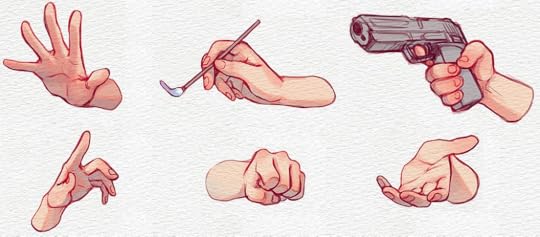
Hands: a single word title, conjuring work, writing, prayer, support, caresses, sharing, boxing, begging, greeting, signing, and more. It occurs 33 times in less than a handful of pages.
I had no prior knowledge of the author or story, but the cinematic opening captivated me for suggesting several stories in a single sentence: “Upon the half decayed veranda of a small frame house that stood near the edge of a ravine near the town of Winesburg, Ohio, a fat little old man walked nervously up and down.”
But his silly name created immediate dissonance with his obviously tragic character: “Wing Biddlebaum, forever frightened and beset by a ghostly band of doubts.” His hands are always moving, or else in his pockets to hide them - from himself as much as others. Stick with it; Anderson knows his craft. “Their restless activity, like unto the beating of the wings of an imprisoned bird, had given him his name.”
Biddlebaum’s only friend is George Willard, a reporter on the town newspaper. When they go for walks, Biddlebaum talks quickly and earnestly, though never about himself, his hands frantically moving all the time. He wants to inspire the young man to think beyond the provincial locale: “You are afraid of dreams. You want to be like others in town here… You must begin to dream.”
Dreams and memories collide and the omniscient narrator switches to Biddlebaum’s backstory for the second half. It’s taut and almost brittle, laden with ambiguity. Reading this in 2022, my response is probably very different from what Anderson expected or intended when it was published just over a century ago.
Avoid spoilers
In his memoir, Anderson railed against plot-based stories: “What was wanted I thought was form, not plot, an altogether more elusive and difficult thing to come at.” Nevertheless, read the story (link below) before reading the spoilered section.
Quotes
• “The feet of the boy in the road kicked up a cloud of dust that floated across the face of the departing sun.”
• “A few stray white bread crumbs lay on the cleanly washed floor by the table; putting the lamp upon a low stool he began to pick up the crumbs, carrying them to his mouth one by one with unbelievable rapidity. In the dense blotch of light beneath the table, the kneeling figure looked like a priest engaged in some service of his church. The nervous expressive fingers, flashing in and out of the light, might well have been mistaken for the fingers of the devotee going swiftly through decade after decade of his rosary.”
See also
• This is a very short portrayal of a character in a fictional Ohio town. It’s one of collection of 23 such pieces in Anderson’s 1919 book, Winesburg, Ohio. George Willard is a linking character.
• Gioia’s The Art of the Short Story includes excerpts of Anderson’s memoir, A Storyteller's Story, specifically about plot and form: “The words used by the tale-teller were as the colors used by the painter. Form was another matter. It grew out of the materials of the tale and the teller’s reaction to them. It was the tale trying to take form that kicked about inside the tale-teller at night when he wanted to sleep.”
"Hands" is a story from "Winesburg, Ohio," a collection of twenty-five interrelated short stories about some eccentric residents in a small town. These "grotesques" experience loneliness, and long to connect with others. But there may be one traumatic experience in their past that completely changed their life.
In "Hands," Wing Biddlebaum is a former teacher who was run out of a town in Pennsylvania. Wing has fluttering, nervous hands, and his caressing the hair or shoulders of his students was misinterpreted. (Of course, students should never have to feel uncomfortable about unwanted touch, even if it's done with innocent intentions. So we are left with just a little bit of doubt.) Since he arrived in Winesburg, he has been employed picking fruit with his fluttering hands. The only person that Wing can really talk to is George Willard, a young reporter, who ties these Winesburg stories together. It's a sad tale of social isolation and lost personal potential due to the trauma he felt twenty years ago. Sherwood Anderson used the imagery of hands in several interesting ways through out the story.
4★ “The story of Wing Biddlebaum is a story of hands. Their restless activity, like unto the beating of the wings of an imprisoned bird, had given him his name. Some obscure poet of the town had thought of it. The hands alarmed their owner.”
We don’t need to know his real name, but we do wonder why he so silent all the time, pacing back and forth on his porch. His only visitor seems to be a young reporter who walks by occasionally in the evening and drops in for a visit. With him, Wing is very chatty.
“With a kind of wriggle, like a fish returned to the brook by the fisherman, Biddlebaum the silent began to talk, striving to put into words the ideas that had been accumulated by his mind during long years of silence.”
Wing begins to talk about dreaming and describing the kind of world he’d like to see. He tells George, the reporter, he must learn to dream, tune out the people who want him to copy them. He gets excitedly enthusiastic and suddenly stops, horrified.
“With a convulsive movement of his body, Wing Biddlebaum sprang to his feet and thrust his hands deep into his trousers pockets. Tears came to his eyes. ‘I must be getting along home. I can talk no more with you,’ he said nervously. . . . ‘I’ll not ask him about his hands,’ he [George] thought, touched by the memory of the terror he had seen in the man’s eyes. ‘There’s something wrong, but I don’t want to know what it is. His hands have something to do with his fear of me and of everyone.’”
His hands had everything to do with his fear, poor man. Small towns, like Winesburg, can be hard on people.
The short story 'Hands' is a brief glimpse of the life and the sad fate of a provincial school teacher, a gentle person with expressive hands. He becomes a victim of violence just for being a kind of oddball in his community. He has to spend the rest of his life alone and lonely bearing intense guilt and unable to recover after this traumatic experience. It is a deeply poignant story.
'The story of Wing Biddlebaum is a story of hands. Their restless activity, like unto the beating of the wings of an imprisoned bird, had given him his name. Some obscure poet of the town had thought of it. The hands alarmed their owner. He wanted to keep them hidden away and looked with amazement at the quiet inexpressive hands of other men who worked beside him in the fields, or passed, driving sleepy teams on country roads. (...)The story of Wing Biddlebaum’s hands is worth a book in itself. Sympathetically set forth it would tap many strange, beautiful qualities in obscure men. It is a job for a poet. In Winesburg the hands had attracted attention merely because of their activity. With them Wing Biddlebaum had picked as high as a hundred and forty quarts of strawberries in a day. They became his distinguishing feature, the source of his fame. Also they made more grotesque an already grotesque and elusive individuality. Winesburg was proud of the hands of Wing Biddlebaum in the same spirit in which it was proud of Banker White’s new stone house and Wesley Moyer’s bay stallion, Tony Tip, that had won the two-fifteen trot at the fall races in Cleveland.'
Hands are the part of the body I appreciate the most, because they speak and they feel. Some people talk with their hands, feel with their hands, and express themselves with their hands.
The protagonist of this story, Adolph Myers, is now called Wing Biddlebaum. He was born to teach children, and the gentle touch of his fingers was his natural way of speaking. One day, a tragedy happened, and he was accused of something that never occurred. This story is a slap from a society that still cannot accept that men may show affection without any wish to harm a child. Today he lives alone in Winesburg, looking at the crumbs on the floor of his room, moving his hands, almost like praying. He did nothing wrong, but fear and guilt have stayed with him, as if he must carry a weight that is not his. He does not understand what happened, yet he feels the weight on his hands that never stop moving. Like a penance.
Every reader will find their own interpretation. It moved me as much as it disturbed me. The writing is beautiful.
Society does not look for reasons, only for someone to blame.
With a kind of wriggle, like a fish returned to the brook by the fisherman, Biddlebaum the silent began to talk, striving to put into words the ideas that had been accumulated by his mind during long years of silence.
Wing Biddlebaum talked much with his hands. The slender expressive fingers, forever active, forever striving to conceal themselves in his pockets or behind his back, came forth and became the piston rods of his machinery of expression.
An early story from Winesburg, Ohio, Anderson claims to have written this all in one go and never changed a word. According to The Story of the Week (Library of America) the manuscript for the story does show subsequent revisions.
I'm really enjoying the voice in these tales, the clarity of expression, the apparent straightforwardness. The language does not get in the way of the story, but everything is all of one piece. Simply wonderful.
The "fish returned to the brook", and the "piston rods of his machinery of expression" in the excerpt above are both especially evocative. This short is dense and very sad.
A story from Anderson's Winesburg, Ohio collection. Wing Biddlebaum is a man isolated because of his hands. It is a story about isolation, misinterpretation, self-effacement, and suffering.
I liked the way the story explained the fear of his hands. Loved the metaphor at the end, "The nervous expressive fingers, flashing in and out of the light, might well have been mistaken for the fingers of the devotee going swiftly through decade after decade of his rosary."
this haunting short story from Anderson’s “Winesburg, Ohio” collection deals with repressed identity in such a delicate way. for me, the story’s very last lines create a vivid and strong image with their religious themes that make this one of my most memorable academic reads
This is the first piece of writing I’ve read by Sherwood Anderson.
It’s the story of the gentle, loving man, formerly a school teacher, whose life was ruined by a false accusation by a “half-witted” boy of his having sexually interfered with him.
The man’s name was Adolph Myers, and his problem was that it was natural for him, loving as he was, to caress the shoulders and hair of the boys. There was no harm in this touching, it was just Adolph’s way of expressing affection.
As it was, the boy’s false accusation led to Adolph being chased out of town following an attempt to hang him.
He settled in another town, where his aunt lived, and changed his nme to Biddlebaum.
But he dared not be his natural, loving self, being afraid of what his hands might do, no matter how innocent. These days one might say he had post traumatic stress.
He was now a fat, bald old man, who had formed “something like a friendship” with a young reporter.
But he hardly dared develop this friendship, again, being afraid of what his hands might do, and what it all might end with.
Wing Biddlebaum was “forever frightened and beset by a ghostly band of doubts”; “he did not think of himself as in any way a part of the life of the town where he had lived for twenty years”.
I found this to be a sad tale of a loving man who had suffered a trauma, which had led to his suppressing his natural, kindly instincts and being afraid to live his life fully or develop friendships.
3.5 rounded up because love that the short story group is so divided over the meaning! I believe it’s a story about a man who is different and therefore misunderstood. He is traumatized by the haters and is unable to use his gifts.
It definitely makes me want to read the collection.
Quotes: 'You must begin to dream. From this time on you must shut your ears to the roaring of the voices'. 'hands were but fluttering pennants of promise'. 'the hands... were a part of the schoolmaster's effort to carry a dream into the young minds'.
Readers of "Hands" seem to fall into a couple of distinctly different camps, those who see Wing Biddlebaum as a concerned older man who has been misunderstood in the past by his community and those who damn him as a groomer and a pedo, to use a couple of idiotic terms unfortunately overused these sad days.
Either way, Wing Biddlebaum is a miserable figure, but very true to life, and his story is thought provoking. In the past, we learn from the narrator, he taught school in Pennsylvania, was accused of improperly touching a student, and then was beaten and nearly lynched by a mob of angry fathers. Now, an anxious and eccentric older man, he lives pretty much in seclusion on the outskirts of Winesburg, Ohio, next to the berry fields, where he keeps to himself and has been an object of curiosity and ridicule for the town over the twenty years he has lived there. George Willard, the younger reporter for the Winesburg newspaper, seems to be Biddlebaum’s only friend, and the two spend much time together in conversation.
No doubt Adolph Myers (Wing's name before he left Pennsylvania) is a handsy, overly expressive, feminine man who has crossed some boundaries and might even be gay. At the same time he was probably a very effective teacher in his way. But I see no reason to disbelieve the narrator when it tells us, "By the caress that was in his fingers he expressed himself. He was one of those men in whom the force that creates life is diffused, not centralized." To take the side of the "half-witted" accuser and the "trembling lads" who are interrogated by their brutal fathers is to become one of those brutal fathers, and I don't think there is evidence in the story suggesting that Anderson wants that for his readers. Unless there is something outside of "Hands" in the rest of the novel to call into question what we are told here, I'd say the narrator has disentangled the lies from the truth for us in that flashback. One day I will need to read the rest of the novel and see how this story fits into the collection of stories of the townspeople.
As "Hands" is part of the much longer Winesburg, Ohio, it may be hard to accurately understand the role of the narrator in this single story; however it seems wrong to me to doubt his reliability as this third-person omniscient narrator of "Hands" is more than just a townsperson with an agenda telling us this story of Wing Biddlebaum; it's an all-knowing voice that gets into the minds of the characters and tells us things from the past. The voice is not being filtered through Biddlebaum; I think we are supposed to take that voice and its explanation of what occurred in Pennsylvania at face value. I don't see anywhere that it is covering for Biddlebaum or obscuring something that he has done to gain our sympathy.
I'd be curious to know if Wing comes back into the story later or if George mulls over the ideas he hears from Wing and uses them to his advantage. Because as outcast and troubled as Wing is, he tells George exactly what George needs to hear as a young man with dreams growing up in a small town that will most likely destroy him and those dreams.
Wing encourages George to stop following the herd and to listen to those dreams: "You have the inclination to be alone and to dream and you are afraid of dreams....You must try to forget all you have learned...you must shut your ears to the roaring of the voices." That's pretty powerful stuff, and not just some grimy oddball sexual groomer trying to make a move on a young man. I think (unless there's something else in the story or later in the novel that we don't see here) that Anderson wants us to find a common shared humanity in the figure of Wing Biddlebaum and to feel compassion for him.
However, if Biddlebaum is true to life, so too are the awful fathers in Pennsylvania also very true to life, and they are one of the big problem facing public education right now in American society. The rising neo-fascist population in my country seems to want to ban everything that goes against their way of seeing the world, and is now quick to label public-school teachers and librarians as pedophiles and pornographers. Their ignorant, angry behavior looks much like that of the fathers in this story, and the result now of this rabid new paranoia by these Karens and Kens is that you rarely touch anyone ever in the U.S., and that’s hardly a human way to live one’s life and will create far more problems in our fractured society than solutions.
Anderson ends the story with a curious image of a lonely Biddlebaum cleaning up his kitchen, and the way he is described, it is both as a pigeon picking at breadcrumbs and a priest fingering his rosary. In our contemporary way of thinking, many readers today might assume Anderson is using the priest imagery to add further doubt to our perception of Wing as a creepy figure not to be trusted. However, it seems Anderson is doing something else, adding a sort of “holy fool” dimension to Wing’s character, which also fits in with the bizarre vision he has earlier in the story of the old man seated in a garden speaking to the young men gathered at his feet. (But even so, that vision he describes for George Willard is ambiguous, and hilariously so: “clean-limbed young men,” “mounted upon horses”!!! It’s like a homo-erotic image from a Walt Whitman poem, more than Jesus or Buddha talking to his disciples!) But Christ is abandoned in the Garden, right? And Wing is there in his agony at the end, a kind of Passion of Wing in his kitchen with the berry fields surrounding him, a very large garden.
Anderson has purposefully made Biddlebaum into an ambiguous, divisive figure. He presents us with an odd figure, someone troubled and strange who does not fit in with his society and he asks us as readers to step out of the rigid, judgmental views of mainstream society to see the humanity of the person in the story and feel compassion and empathy for them, no matter how strange or unlikeable they are. Back to my earlier observations of the priest with his beads and the passion in the garden and Wing’s vision of the man speaking to his followers that seems almost Christlike, well here’s something from Matthew 19: 13-15, King James Version, that cannot be a coincidence: “Then were there brought unto him little children, that he should put his hands on them, and pray: and the disciples rebuked them. But Jesus said, Suffer little children, and forbid them not, to come unto me: for of such is the kingdom of heaven. And he laid his hands on them, and departed thence.”
How times have changed. Today, Jesus would have been doxxed as a pedophile by those same parents.
heartbreakingly tragic and beautiful. i loved how george willard ignited a passion inside wing for the first time in YEARS—whether that be because wing had a crush on him or something else entirely. i really enjoyed a gay character that was talked about in such a soft, beautiful, and tender way. i can tell that this short story was revolutionary for the time period it was written and i love that sherwood anderson was brave enough to tackle this topic and, frankly, handle it in the best way possible. overall loved this story and its symbolism. a short read that will stick with you for a very long time!
"The story of Wing Biddlebaum's hands is worth a book in itself. Sympathetically set forth it would tap many strange, beautiful qualities in obscure men. It is a job for a poet. In Winesburg the hands had attracted attention merely because of their activity. With them Wing Biddlebaum had picked as high as a hundred and forty quarts of strawberries in a day. They [his hands] became his distinguishing feature, the source of his fame. Also they made more grotesque an already grotesque and elusive individuality."
How quick are people to jump to conclusions, but when a child is involved, can you blame them? Can you believe this was written more than 100 years ago?
It wasn’t until a student had romantic feelings towards the teacher and expressed his imaginings as reality that other students start maybe reflecting back and projecting what may not have even been there at all.
It is sad to see such a talent go unused as it’s clear from the story he was a talented teacher. Much to discuss in this very short story! Excellent read!
It only took five pages to evoke a lot of emotion. I could spend hours thinking about the character Wing Biddlebaum and his plight, but I don't want to. Hands ha done for me, the reader, exactly what a short story should do, trick me into thinking and feeling while I believe I am simply enjoying a story.
"In the dense blotch of light beneath the table, the kneeling figure looked like a priest in some service of his church. The nervous expressive fingers, flashing in and out of the light, might well have been mistaken for the fingers of the devotee going swiftly through decade after decade of his rosary." i feel so bad for him and i love this quote so much. i just think that it's so smart that anderson compares anderson's hands to a devotee working through a rosary. he's guilty, not because of his wrongdoing, but due to being seen as wrong. he portrays wing biddlebaum as a priest in a service of his church which suggests an inherent innocence and spiritual dignity. the way he's kneeling under the table just makes me feel sadder for him cause i feel like it just evokes humility, and a kind of quiet suffering. & in my own interpretation i think the light acts like as a metaphor of his character, implying that his intentions were pure that what happened to him (the accusations and exile) stemmed from misunderstamding, not malice.
A few stray white bread crumbs lay on the clearly washed floor by the table, putting the lamp upon below upon a low stool he began to pick up the crumbs, carrying them to his mouth one by one with unbelievable rapidity. i love this sm cause its so powerful and sooooo symbolic, i feel like everyones gonnna have different interpretations of this. but here for me "clearly washed floor” suggests Wing Biddlebaum’s purity of intention. his inner world is clean, deliberate, and without malice. but scattered on this spotless surface (him) are the stray white bread crumbs. ok so here's where i'm gonna get all smart about this. the authors linguistic choice for this passage is soooo smart & effective and i'm here for it. so here the word "white" we often associate it with purity and innocence, evoke something discarded, broken, or forgotten. these crumbs symbolically represent the children WHICH AREEEE seemingly innocent, yet ultimately the cause of wing’s social destruction. they are also the reason why he's so isolated from society and the reason why he's the way he is. the fact that they are “stray” reflects how something small and uncontained can lead to devastating consequences. and im not even going on the good part yet, Wing “carries them to his mouth one by one with unbelievable rapidity" is sooooooooo good. just adds another layer of complexity. here's what i think: it suggests a kind of forgiveness cause like he doesn’t hold a grudge against the children or society, but instead absorbs the pain, internalises it, and continues on. i feel like it's both so tragic and compassionate, and it just demonstrates his gentle nature in a world that constantly misjudges people
Another incredible short story that I read from The Art of the Short Story, Sherwood Anderson's "Hands" is a haunting and deeply moving short story that explores the complexities of human relationships and the power of memory. This powerful and evocative story is a true masterpiece of American literature, and it is sure to leave a lasting impression on anyone who reads it. "Hands" is a story about how past experiences can shape our present and future. The protagonist, Wing Biddlebaum, is a former teacher driven out of his hometown by false accusations of impropriety. He now lives a lonely and isolated life in a new town, haunted by memories of his past and struggling to connect with the people around him. Anderson's writing is beautiful and precise, and he conveys the complexity of his characters' emotions with remarkable skill and sensitivity. The story's climax is shocking and profoundly moving, leaving the reader questioning their assumptions and biases. "Hands" is a true masterpiece of short fiction and a testament to the power of great storytelling. Anderson's writing is insightful and compassionate, and his story is a powerful reminder of the importance of empathy and understanding in our relationships with others. This is a true five-star book in every sense of the word, and I cannot recommend it highly enough.
Super short story out of a collection, available online. Merle Miller mentioned it in "What It Means to be a Homosexual," so in my reading, that's the interpretation I brought. Miller says he saw himself in the tragic character.
In my interpretation, it's the many things can be true at once thing. Wing is handsy with the boys he teaches, but has never associated it with anything malicious. However, other parents are suspicious of it. And Wing is suspicious of his own hands - what do they betray about himself? However innocuous, homie, like, not everyone likes being touched?? Because Wing also reaches out to touch his male friend, only to recoil - it seems like it's such a subconscious expression of attraction and affection that he has been repressing hardcore. So maybe Wing is a harmless handsy weirdo, but also maybe Wing should get consent? And maybe it's not great that someone feels kindred to a man that can't stop touching young boys??
I think this story is purposefully open-ended and since it's in a collection of related stories, I won't judge it too hard. Certainly sparks a lot of conversation! The more I think on it, the more intrigued I am.
'With a kind of wiggle, like a fish returned to the brook by the fisherman, Biddlebaum the silent began to talk, striving to put into words the ideas that had accumulated by his mind during the long years of silence.'
'In the dense blotch of light beneath the table, the kneeling figure looked like a priest engaged in some service of his church. The nervous expressive fingers, flashing in and out of the light, might well have been mistaken for the fingers of the devotee going swiftly through decade after decade of his rosary.'
'Wing Biddlebaum became wholly inspired. For once he forgot the hands. Slowly they stole forth and lay upon George Willard's shoulders. Something new and bold came into the voice that talked. "You must try to forget all you have learned," said the old man. "You must begin to dream. From this time on you must shut your ears to the roaring of the voices."
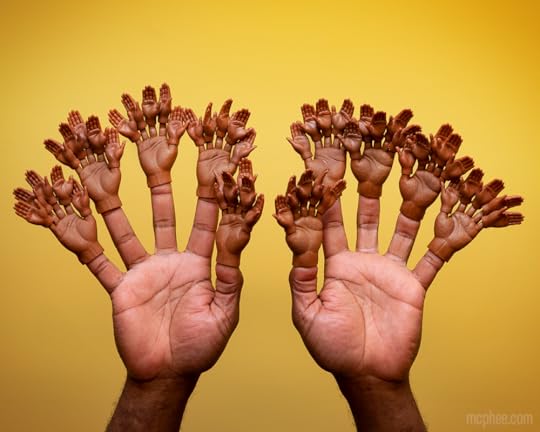
Reading this in the Short Story Group the discussion has evolved very much around the doubts raised on the main character Wing Biddlebaum (a.k.a. Adolph Myers). Is he or is he not a child molester, with his ever-moving nervous hands that seem to multiply into countless hands.
My reading was one dimensional. Biddlebaum is cursed with insecurity and with talkative, proliferating and emotive hands that would be completely at home in southern Italy. He just lived in a small village in which a tendency to feel entitled to administer justice, personally, was shared by many of the inhabitants.
As this story is part of a collection that coalesces together into the portrayal of a provincial town in Ohio at the turn of the 19thC-20thC, I suspect this is just another vignette that requires the reading of the other stories in the collection so that we can look at the whole body and not just at its Hands.
*****
My reading experience of this story was very much affected by the circumstances surrounding while I was tackling it. This is always the case for everyone, but in this case it was particularly poignant for me.
I was sitting in the terrace of a cafe in a village in Eastern Spain reading 'Hands' in my tablet. Then it began to rain, so I had to go indoors. Inevitably there was a loud TV inside the café (as is usual in provincial Spain) broadcasting the news of the day. At that moment they were discussing problems in a school, bullying rather than molesting, but it offered many parallels with the text under my eyes.
It felt very strange to try and concentrate on my reading of Biddlebaum's school while trying to block out the TV sound. Meanwhile, the owner of the cafe who got very angry with the news, thinking of what could happen to her child. She got to the front of the counter and began threatening the TV.
There is so much emotion in this short story. Wing, the main character, does everything with his hands and motions them beautifully, as the author makes sure to let the readers know. It tells the backstory of Wing and his troubled past. Also talking about him as a teacher that works great with kids. Unforchenuly there is some speculation of some other things he did but should do with his hands and the kids. Very emotional read that has you reading, thinking, and re-reading to really understand. I love the word choice in this text and the way the words all flow together.
“You are destroying yourself,” he cried. “You have the inclination to be alone and to dream and you are afraid of dreams. You want to be like others in town”. Wing Biddlebaum is the teacher every young boy needs but one not every boy deserves. Small-town Americana is perfectly synthesized in all its splendor, in all of its duplicitous idyll. Sherwood Anderson's influence on Faulkner and Hemingway is clear.
The place of origin of this story was Winesburg, Ohio, with many of social mores and activities typical of many small towns. It is a tale of social isolation, false assumptions and bigotry. One can view the results of misspent ideals, false accusations and vulgar gossip. I will leave the actual contents of Anderson's writing to curious readers. It was interesting to view the intense discussion this story stimulated in my weekly group.
Un breve racconto ma molto intenso. L'espressività del corpo, agli atteggiamenti, sono al centro della vicenda. La vita di un uomo che viene completamente distrutta da "voci di corridoio", la paura del diverso, il terrore di ciò che non si conosce. Una persona che trascorre la sua esistenza in solitudine, sentendosi in colpa per la propria natura, sentendosi sempre fuori luogo. Se riuscite a recuperarlo ve lo consiglio