

What do you think?
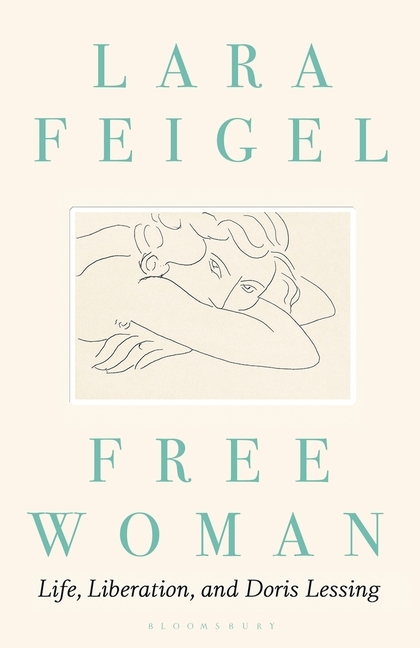
Free Woman: Life, Liberation and Doris Lessing
An intense exploration of the life and works of Doris Lessing and how their themes are reflected in the writer's own life.
Free Woman begins at a wedding and ends in the African bush. This is a memoir of Feigel's own journey as a writer, which becomes enmeshed with that of Doris Lessing. Co-opting a dead novelist into an obsessive, ambivalent relationship, Feigel sets about learning from her about how to live.
Rereading The Golden Notebook in her midthirties, shortly after Doris Lessing's death, Lara Feigel discovered that Lessing was a writer who spoke directly to her about her experiences as a woman, writer, and mother in a way that no other novelist had done. At a time when she was dissatisfied with the constraints that she felt she and her generation seemed to accept blindly, Feigel was enticed particularly by Lessing's vision of freedom.
Part memoir, part biography, and part literary criticism, Free Woman is an examination of Lessing's life and work, structured as a series of nine investigations of sexual, psychological, intellectual, and political freedom. Feigel combines incisive writing, elegant exploration, and intimate revelations with a delicate sensitivity to relationships (both real and in literature) in times of great stress to mesmerizing effect.
Free Woman begins at a wedding and ends in the African bush. This is a memoir of Feigel's own journey as a writer, which becomes enmeshed with that of Doris Lessing. Co-opting a dead novelist into an obsessive, ambivalent relationship, Feigel sets about learning from her about how to live.
Rereading The Golden Notebook in her midthirties, shortly after Doris Lessing's death, Lara Feigel discovered that Lessing was a writer who spoke directly to her about her experiences as a woman, writer, and mother in a way that no other novelist had done. At a time when she was dissatisfied with the constraints that she felt she and her generation seemed to accept blindly, Feigel was enticed particularly by Lessing's vision of freedom.
Part memoir, part biography, and part literary criticism, Free Woman is an examination of Lessing's life and work, structured as a series of nine investigations of sexual, psychological, intellectual, and political freedom. Feigel combines incisive writing, elegant exploration, and intimate revelations with a delicate sensitivity to relationships (both real and in literature) in times of great stress to mesmerizing effect.
336 pages, Hardcover
Published May 8, 2018
Ratings & Reviews
Friends & Following
Create a free account to discover what your friends think of this book!
Community Reviews
Displaying 1 - 19 of 19 reviews

April 18, 2018
It started with a spate of weddings one summer. Lara Feigel, a literature lecturer at King’s College London, found herself strangely irked at all this capitulation to marital convention, even though she herself had married in her twenties and had a young son. What did her mild outrage signify? At the same time, she was rereading the works of Doris Lessing, whom she found simultaneously admirable and vexing: Lessing lived by her ideals of free love and Communism, but it came at the price of abandoning her children. Feigel could identify with Lessing in some ways but not in others, and as she entered a rocky time in her mid-thirties – a miscarriage followed by IVF, which was a strain on her marriage; the death of a close friend; and ongoing worry over how motherhood might affect her academic career – she set out to find what Lessing could teach her about how to be free.
Throughout, Feigel holds up her own experiences of marriage and motherhood in parallel to Lessing’s. She maintains a delicate balance between biographical and autobiographical information and brings in references to other writers – everyone from Rachel Cusk to D.H. Lawrence – to explore various opinions on maternal ambivalence and sexual fulfillment. I could relate to the bookworm’s impulse to turn to literature for comfort and direction – “the most enduring novelists … illuminate our lives,” and “we live differently as a result of reading them,” Feigel insists. Lessing seemed to her the perfect “writer to discover in your thirties; a writer who wrote about the lives of grown-up women with an honesty and fullness I had not found in any novelist before or since.”
And yet a familiarity with or fondness of the works of Doris Lessing is not a prerequisite to enjoying this book. I’ve only ever read The Golden Notebook (1962) and Alfred and Emily (2008), a fictionalized biography of Lessing’s parents, both during my mid-twenties. The former I almost certainly read before I could fully appreciate it. It’s about the ways in which women compartmentalize their lives and the struggle to bring various strands into harmony; that’s what Free Woman is all about as well. Feigel often looks for clues in Lessing’s heavily autobiographical Martha Quest novels, which I’d like to read, and also travels to California to meet one of Lessing’s lovers and to Zimbabwe to see the farm where Lessing grew up.
Like Samantha Ellis’s How to Be a Heroine and Rebecca Mead’s My Life in Middlemarch, this is a richly satisfying hybrid of biography, literary criticism and memoir. I would also recommend it to readers of Alexandra Fuller’s Don’t Let’s Go to the Dogs Tonight, Nancy Horan’s Loving Frank, and Adrienne Rich’s Of Woman Born. Feigel’s is a particularly brave and forthright book. I feel proud of her in an oddly personal way: during my years as a library assistant at King’s, I saw her chair countless literature and life writing events. She seemed impossibly young for a professor type, and wore her navy blue shift dress and string of pearls like it was her grown-up’s uniform. I can tell that the years since, including the difficult experiences she recounts here, have both softened and toughened her, sandpapering away what she calls her “diffident angularity” and replacing it with womanly wisdom.
Originally published on my blog, Bookish Beck.
Throughout, Feigel holds up her own experiences of marriage and motherhood in parallel to Lessing’s. She maintains a delicate balance between biographical and autobiographical information and brings in references to other writers – everyone from Rachel Cusk to D.H. Lawrence – to explore various opinions on maternal ambivalence and sexual fulfillment. I could relate to the bookworm’s impulse to turn to literature for comfort and direction – “the most enduring novelists … illuminate our lives,” and “we live differently as a result of reading them,” Feigel insists. Lessing seemed to her the perfect “writer to discover in your thirties; a writer who wrote about the lives of grown-up women with an honesty and fullness I had not found in any novelist before or since.”
And yet a familiarity with or fondness of the works of Doris Lessing is not a prerequisite to enjoying this book. I’ve only ever read The Golden Notebook (1962) and Alfred and Emily (2008), a fictionalized biography of Lessing’s parents, both during my mid-twenties. The former I almost certainly read before I could fully appreciate it. It’s about the ways in which women compartmentalize their lives and the struggle to bring various strands into harmony; that’s what Free Woman is all about as well. Feigel often looks for clues in Lessing’s heavily autobiographical Martha Quest novels, which I’d like to read, and also travels to California to meet one of Lessing’s lovers and to Zimbabwe to see the farm where Lessing grew up.
Like Samantha Ellis’s How to Be a Heroine and Rebecca Mead’s My Life in Middlemarch, this is a richly satisfying hybrid of biography, literary criticism and memoir. I would also recommend it to readers of Alexandra Fuller’s Don’t Let’s Go to the Dogs Tonight, Nancy Horan’s Loving Frank, and Adrienne Rich’s Of Woman Born. Feigel’s is a particularly brave and forthright book. I feel proud of her in an oddly personal way: during my years as a library assistant at King’s, I saw her chair countless literature and life writing events. She seemed impossibly young for a professor type, and wore her navy blue shift dress and string of pearls like it was her grown-up’s uniform. I can tell that the years since, including the difficult experiences she recounts here, have both softened and toughened her, sandpapering away what she calls her “diffident angularity” and replacing it with womanly wisdom.
Originally published on my blog, Bookish Beck.

March 18, 2021
I do feel freer than I did in the period described in this book. I think this is because I have become more honest and because I have discovered that it's possible to live and to write honestly even in the public sphere, even at the risk of shame. This, more than anything, has been a lesson I have learnt from Lessing.
An interesting hybrid of a book that feels particularly apposite given our recent extraordinary year in lockdown. Forced into living and working in closer and unremitting proximity to those with whom we share our homes than we ever might have expected, our recent experience might have created new closeness but also new chafings and desires for freedom from the claustrophobia of intimacy. Feigel's starting point might have been different but her searching questions about what it means to be 'free' were ones which spoke to me.
It's fascinating that, in turning to the writing of Doris Lessing, Feigel finds so much relevant material for her own explorations: taking her lead especially from The Golden Notebook, the Children of Violence books and Lessing's own autobiography she ranges over issues of motherhood, love and sex, politics and activism, madness, creativity and writing. The prose feels honest, sometimes almost awkward in its revelations and self-exposure, but also productively open and questing. Because she's an academic, Feigel reaches between personal experience and the canonical literature on her themes and perhaps takes some refuge in this turning away from the personal into the protection of research.
What I appreciated is Feigel's willingness to confront ambivalences and contradictions, some of which Lessing had already articulated: how to negotiate the complexities of love when its very strength ties us into bonds that curb our freedom? What is the role of politics and community in understanding the relationship between different types of liberty?
The range of references probably also serve as recommendations of who might enjoy this book: apart from Lessing, Feigel engages in dialogues with de Beauvoir and, more recently, Rachel Cusk.

October 7, 2019
My disappointment with this book may be partly due to the fact that I thought it was a biography of Doris Lessing, a writer whom I love and has been part of the background of my life. So I was somewhat put out at the realisation that it wasn't. Whilst the book is centred on Doris Lessing's vision of freedom and the author's search for her own personal freedom, what I believe Lara Fiegal fails to do is thoroughly understand what freedom for Doris Lessing might entail. As she herself cites in the book, freedom needs to be constructed within a historical and political context. My reading of Doris Lessing has not only led me to consider freedom from a personal perspective, but also from a broader feminist and political perspective. And I have found many political themes in Lessing's work. Fiegal only flittingly discusses these broader issues in this book. It is apparent that Fiegal is struggling with her own search for freedom, and yet simultaneously using IVF to conceive a second child, which I personally find intriguing.
I did some brief research into Doris Lessing after reading this book, and read that in fact when she left her first marriage and her 2 children she was denied custody of the children. She remained living in the same area as her children for a number of years before moving to Britain with her 3rd child, which belies the notion of abandonment of her children in her search for freedom.
For me, this book fails to thoroughly explore the complexities of Doris Lessing's life and work.
I did some brief research into Doris Lessing after reading this book, and read that in fact when she left her first marriage and her 2 children she was denied custody of the children. She remained living in the same area as her children for a number of years before moving to Britain with her 3rd child, which belies the notion of abandonment of her children in her search for freedom.
For me, this book fails to thoroughly explore the complexities of Doris Lessing's life and work.

July 31, 2018
Ok. So there is an introduction. In which the self absorbed Feigel talks about why this book. By the third chapter the reader still gets the ego trips about Feigel. Thank gosh Feigel has no life, or it would have been a book about Feigel and some fragments about Lessing.
Thanks to Feigel I also failed to see the Liberation. Back in the Brontë family days most education was closed to women. And Feigel just builds up a hagiography in her race to make herself into a high priestess. These are the women who repeat to themselves that they are strong because they refused to be a kindergarten teacher. They accepted "math is for boys". They know they won't drive a truck "because it's dirty". Feigel needs to go as far as to protect her subject from the sin of failing the Motherhood. How about building the next Tesla car to put Musk to the shame? No, sir, that is a boy activity. Women are fragile and need excuses for not being breeders.
Thanks to Feigel I also failed to see the Liberation. Back in the Brontë family days most education was closed to women. And Feigel just builds up a hagiography in her race to make herself into a high priestess. These are the women who repeat to themselves that they are strong because they refused to be a kindergarten teacher. They accepted "math is for boys". They know they won't drive a truck "because it's dirty". Feigel needs to go as far as to protect her subject from the sin of failing the Motherhood. How about building the next Tesla car to put Musk to the shame? No, sir, that is a boy activity. Women are fragile and need excuses for not being breeders.

May 25, 2019
Reading this right after Sheila Heti's Motherhood was an interesting one-two: Heti writes autofiction about wanting and being repelled by the idea of becoming a mother. For me, Feigel's memoir/biography is even more interesting: it's about wanting and being repelled by the idea of being a mother. It's also about Doris Lessing, whom I have not read, which made me want to skim through the Lessing bits so I could return to Feigel's thoughtful and candid questioning.
June 29, 2023
Lara Feigel shares with us an intimate affair and lesson on author Doris Lessing, an author who bared her life on the page, an honest and wild mess. Feigel parallels a quest for freedom, freedom as a woman, though matrimony and motherhood. This search for "freedom" (such an ambivalent word), opens up into the most personal desires and fantasies, both imagined and real, across time. It was such a pleasure to be educated on Lessing, by someone who had a deep affinity for them, and I felt so honored for Feigel to share so much of themselves with me, with Lessing as her muse and inspiration, as reading them both inspired me again and again, page to page, life reaching out in between every turn.
It truly was "a daring act of self-exposure", I'm looking back now to read the summary on the book jacket. I can see how reading the summary might seem a bit over hyped, or too much of a task to undertake, but after finishing the book I'm more than impressed with how much was tackled. Still, it was difficult at times, Feigel was not always likeable and her privileges can be off putting, although I think, by the end, she handles this with a respectful amount of awareness. It's all par for the course in a no holds barred memoir.
My favorite bit, the bit I keep rolling around in my head, comes not from Feigel or Lessing but from Viginia Woolf talking about 'the angel in the house', which, for me, has proved a powerful concept over the last week after being introduced to it.
It truly was "a daring act of self-exposure", I'm looking back now to read the summary on the book jacket. I can see how reading the summary might seem a bit over hyped, or too much of a task to undertake, but after finishing the book I'm more than impressed with how much was tackled. Still, it was difficult at times, Feigel was not always likeable and her privileges can be off putting, although I think, by the end, she handles this with a respectful amount of awareness. It's all par for the course in a no holds barred memoir.
My favorite bit, the bit I keep rolling around in my head, comes not from Feigel or Lessing but from Viginia Woolf talking about 'the angel in the house', which, for me, has proved a powerful concept over the last week after being introduced to it.
Virginia Woolf gave the address called 'Professions for Women' where she exhorted the female members of her audience to kill the figure she termed 'the angel in the house'. This angel was the ego ideal that had to be resisted by the writer in search of prose tough enough to tell the truth. Woolf situated her in the Victorian era, but the figure she described was not one who could be easily banished to the past: 'she was intensely sympathetic. She was immensely charming. She was utterly unselfish. She excelled in the difficult arts of family life...And when I came to write I encountered her with the virty first words.' Woolf recounted how having murdered the angel, it took years before she could be sure that her adversary was not going to splutter into life once more.

July 4, 2018
This was interesting - it's a book about freedom, partly examined through Doris Lessing and her work and personal life, and partly from the authors personal life. It made me really interested in Lessing (haven't read anything by her) and there were also lots of other writers referenced and talked about -Jenny Liski, Rachel Cusk, Simone de Beauvoir and more. There's lots about motherhood and freedom through children as well as freedom in relationships and in ageing.
Feigel writes really openly about her thoughts, relationships and sex life, and the section where she writes about how male authors are often fine to write about sex and women aren't were my favourite bits.
Ultimately doesn't quite work for me though, but would read more by Feigel and I think bits will stay with me. Her husband sounds dreadful too.
Feigel writes really openly about her thoughts, relationships and sex life, and the section where she writes about how male authors are often fine to write about sex and women aren't were my favourite bits.
Ultimately doesn't quite work for me though, but would read more by Feigel and I think bits will stay with me. Her husband sounds dreadful too.

April 14, 2018
This makes for a really absorbing read; especially for anyone who enjoys Lessing’s work and has ever experienced the conflict of being in a marriage/partnership and/or being a parent and who identifies with that pull to stay focused on their own individual path/artistic life.
This book is made up of lessons the author has learnt from reading Lessing’s work and that she has picked up reading about various aspects of Lessing’s life (including her love stories and feminism, self love, sex, parenthood, her political ideals, her religious path, middle age/ageing, Rhodesia/Zimbabwe – Lessing was a complicated and intriguing person/artist). It is a memoir that reflects off from and parallels Doris Lessing’s life and work. Feeding from Lessing’s life and lit to make sense of a particularly tumultuous and personal time in her life, Feigel adds depth to her experiences and makes sense of her pain – while her interior journey unravels, she also travels as far as the US and Zimbabwe in an attempt to inject further life and meaning to Lessing’s words. There is also a rich tapestry of literary references (Adrienne Rich, Simone du Beauvoir, Rachel Cusk, Angela Carter, Lawrence, Thoreau, T.S Eliot, to name a few) that display the power (and need) of literature in making sense of life.
I found myself identifying and agreeing with almost everything Feigel writes. I was particularly impressed by the dignity of this memoir - the love, comprehension and respect she has for her husband, in spite of their differences, was particularly vivid. As Feigel quotes: “Writing about oneself, Anna states in The Golden Notebook, ‘one is writing about others, since your problems, pains, pleasures, emotions – and your extraordinary and remarkable ideas – can’t be yours alone.”
This book is made up of lessons the author has learnt from reading Lessing’s work and that she has picked up reading about various aspects of Lessing’s life (including her love stories and feminism, self love, sex, parenthood, her political ideals, her religious path, middle age/ageing, Rhodesia/Zimbabwe – Lessing was a complicated and intriguing person/artist). It is a memoir that reflects off from and parallels Doris Lessing’s life and work. Feeding from Lessing’s life and lit to make sense of a particularly tumultuous and personal time in her life, Feigel adds depth to her experiences and makes sense of her pain – while her interior journey unravels, she also travels as far as the US and Zimbabwe in an attempt to inject further life and meaning to Lessing’s words. There is also a rich tapestry of literary references (Adrienne Rich, Simone du Beauvoir, Rachel Cusk, Angela Carter, Lawrence, Thoreau, T.S Eliot, to name a few) that display the power (and need) of literature in making sense of life.
I found myself identifying and agreeing with almost everything Feigel writes. I was particularly impressed by the dignity of this memoir - the love, comprehension and respect she has for her husband, in spite of their differences, was particularly vivid. As Feigel quotes: “Writing about oneself, Anna states in The Golden Notebook, ‘one is writing about others, since your problems, pains, pleasures, emotions – and your extraordinary and remarkable ideas – can’t be yours alone.”

June 10, 2019
I thought this was going to be mostly a critical reading/biography of Lessing but it is actually much more of a memoir of Feigel herself. Respect, I guess, for being willing to put forward some of the less flattering things about herself, but yes, they were unflattering. She certainly does not seem like someone you want to encounter at a dinner party since a large part of the social conventions she was rejecting were the ones that just make you polite to strangers. Is being selfish freedom? I guess, but I don't think it gets us very far. And as much as I think modern weddings invite a lot of criticism, I couldn't identify at all with her rejection of stable family life which, aside from my own positive feelings about, she herself was an active participant in marriage and motherhood while sneering at others for doing the same. What? The whole Africa section was just weird and imperialist. This reminded me a lot of Woman and Work (passive aggressively making their husbands seem terrible, nodding to and then ignoring their own privilege, uncomfortable racial dynamics).
In summary, I had hoped this book was going to make me appreciate The Golden Notebook and instead it reaffirmed for me how annoying that book was. If they all just didn't date/marry the wrong men, we could have avoided all this fuss.
In summary, I had hoped this book was going to make me appreciate The Golden Notebook and instead it reaffirmed for me how annoying that book was. If they all just didn't date/marry the wrong men, we could have avoided all this fuss.

Did Not Finish
August 20, 2020DNF - found myself fast-forwarding through the sections on Feigel's personal life, and skimming other sections, although did find the passages directly discussing Lessing's fiction more interesting. Disappointing after really enjoying her earlier non-fiction.

March 28, 2018
Explores longings and spaces which many of us experience, but only few dare to write about. Superb!

April 30, 2019
”Why was I exposing myself in print?”
Lara Feigel asks herself this question, more than once, in this book which is part memoir and part literary/feminist study of Doris Lessing’s life and work. I was discussing this book with a friend, and she responded (somewhat cynically) that self-exposure is fashionable - and a way of getting a literary study published, or at the very least broadening its market. Feigel herself suggests that ”writing autobiographically is an inherently feminist act” and that there was self-liberation in the process. She also writes, with every shade of awareness and embarrassed guilt of her position in life, that exposing her ambivalence about being a wife and mother (”ungrateful in the face of middle-class privilege”) is an attempt (even if it is a ”doubtful good”) to say something ”sincere”. It’s this word “sincere” which strikes me, as so often any kind of academic writing seems anything but. Personally, I believed in Feigel’s sincerity. Her project might seem self-indulgent, or even quixotic, but I believed in its aim: that of figuring out if there is room or space for “freedom” in the traditional/conventional roles of mother/wife.
The book begins with what Feigel describes as a “summer of weddings” in which she continually encounters women who ”seemed to definite themselves in relation to others”. In her mid-30s, Feigel is married, with a child (and trying to get pregnant again), and she is also a professor at King’s College in London. She has already written several books, and is in the process of starting another on Doris Lessing. Yet despite all of her accomplishments, and the fact that her life has settled into a socially approved shape, Feigel is feeling restless, confused, judgmental and dissatisfied. As she begins to read Lessing’s The Golden Notebook she is struck by the personal ambition of the central character in that book: “I am interested only in stretching myself, in living as fully as I can.” The idea of freedom, then, becomes the “structuring principle” of Feigel’s project. By examine Doris Lessing’s writing and life choices, Feigel hopes to learn something about the possibilities (and cost) of freedom for women - and to define, even, what freedom means.
One of the pleasures of reading this book was discovering Lessing - a writer I knew very little about, although I did recognise her major titles and knew something of her background as a South African (she grew up in the former Southern Rhodesia, now Zimbabwe). While I was reading this book, I paused to read Lessing’s The Grass is Singing, which had a powerful darkness to it. I definitely plan on reading more of Lessing’s work, which conveniently, I have been collecting for years. Lessing had a brave and interesting life, and certainly made an enormous contribution to the literary world, but I wouldn’t want to emulate the choices of her personal life. If she experienced “freedom” - and Feigel certainly examines the idea from many angles, including the artistic, political, maternal and sexual - it was not without many losses and trade-offs.
It took me more than a month to finish this book, and I read several others in the meantime. But all the time I felt like I was thinking about Feigel’s project - her quest and her questions - and finding echoes of it in my life and so many of the other books that I read.
Lara Feigel asks herself this question, more than once, in this book which is part memoir and part literary/feminist study of Doris Lessing’s life and work. I was discussing this book with a friend, and she responded (somewhat cynically) that self-exposure is fashionable - and a way of getting a literary study published, or at the very least broadening its market. Feigel herself suggests that ”writing autobiographically is an inherently feminist act” and that there was self-liberation in the process. She also writes, with every shade of awareness and embarrassed guilt of her position in life, that exposing her ambivalence about being a wife and mother (”ungrateful in the face of middle-class privilege”) is an attempt (even if it is a ”doubtful good”) to say something ”sincere”. It’s this word “sincere” which strikes me, as so often any kind of academic writing seems anything but. Personally, I believed in Feigel’s sincerity. Her project might seem self-indulgent, or even quixotic, but I believed in its aim: that of figuring out if there is room or space for “freedom” in the traditional/conventional roles of mother/wife.
The book begins with what Feigel describes as a “summer of weddings” in which she continually encounters women who ”seemed to definite themselves in relation to others”. In her mid-30s, Feigel is married, with a child (and trying to get pregnant again), and she is also a professor at King’s College in London. She has already written several books, and is in the process of starting another on Doris Lessing. Yet despite all of her accomplishments, and the fact that her life has settled into a socially approved shape, Feigel is feeling restless, confused, judgmental and dissatisfied. As she begins to read Lessing’s The Golden Notebook she is struck by the personal ambition of the central character in that book: “I am interested only in stretching myself, in living as fully as I can.” The idea of freedom, then, becomes the “structuring principle” of Feigel’s project. By examine Doris Lessing’s writing and life choices, Feigel hopes to learn something about the possibilities (and cost) of freedom for women - and to define, even, what freedom means.
One of the pleasures of reading this book was discovering Lessing - a writer I knew very little about, although I did recognise her major titles and knew something of her background as a South African (she grew up in the former Southern Rhodesia, now Zimbabwe). While I was reading this book, I paused to read Lessing’s The Grass is Singing, which had a powerful darkness to it. I definitely plan on reading more of Lessing’s work, which conveniently, I have been collecting for years. Lessing had a brave and interesting life, and certainly made an enormous contribution to the literary world, but I wouldn’t want to emulate the choices of her personal life. If she experienced “freedom” - and Feigel certainly examines the idea from many angles, including the artistic, political, maternal and sexual - it was not without many losses and trade-offs.
It took me more than a month to finish this book, and I read several others in the meantime. But all the time I felt like I was thinking about Feigel’s project - her quest and her questions - and finding echoes of it in my life and so many of the other books that I read.
April 24, 2021
Somewhat of a confused jumble but enjoyable all the same. I enjoy Feigel’s writing and applaud her attempts to write her way to understanding her life but the disparate threads don’t come together in an organic way. This is a mix of genres (biography, literary criticism, memoir, auto-fiction) that feels like an attempt to craft a new one but doesn’t quite succeed. I also found the conflation of Lessing’s fictional characters with her life frustrating, and Feigel’s with Lessing’s forced (though oddly her photo on the book cover does bear a passing resemblance to a young Lessing). What works here is the exploration of themes and existential questions - the self-discovery through lived experience and literature breathed alive.

August 17, 2020
One part memoir, one part exploration of the work of Doris Lessing, Free Woman explores how Feigel's life was similar to Lessing's masterpiece The Golden Notebook and how she uses this to further explore Lessing's work and the work of other female writers. An intimate, stunning book that will have you seeking out so many more books to add to your Must Read list - Elisa, Book Grocer
Purchase this classic here for just $10.00
Purchase this classic here for just $10.00

February 12, 2024
I recently read The Golden Notebook and found this book to be a great asset, providing context for many of Lessing's ideas about free love, sex, and communism. Feigel writes about her own struggles with fertility and relationships and they can get a little old- are you really complaining about a second home - but she also has tons of self-awareness. I think looking at fiction - in this case, both Anna from TGN and Martha from the Children of Violence series to help you understand things about your own life, as well as the reverse, is a great conceit for a book. Very glad I read this.

May 31, 2025
The title to this book is slightly misleading as it appears to be a biography about Doris Lessing. However, while Lessing is talked about a fair bit throughout the book it is more a book where Lara Feigel discusses her own life and how she relates with Lessing and her books. I think a project like this is interesting and enjoyed the concept of it.
December 5, 2018
I won this book in the first reads giveaway! Lara Feigel is a wonderful story teller with a powerful voice. I was completely transfixed; couldn't put the book down!

March 5, 2022
For the fact that I've never read any Doris Lessing, this book was still intriguing. Got too into the weeds after the communism chapter for me.
April 14, 2018
I loved Ms. Fiegel's last two books, especially Love-Charm, for its wonderful blending of disparate and mostly intriguing lives (and loves) during and after WWII.
This one is a beautifully written memoir of her own struggles with life and love structured around a study of Doris Lessing and her "feminist" novels.
I constantly found myself nodding in agreement with her and being amazed by her honest, heartfelt openness in describing the most intimate and personal experiences. Her writing has great clarity and elegance.
An outstanding book
This one is a beautifully written memoir of her own struggles with life and love structured around a study of Doris Lessing and her "feminist" novels.
I constantly found myself nodding in agreement with her and being amazed by her honest, heartfelt openness in describing the most intimate and personal experiences. Her writing has great clarity and elegance.
An outstanding book
Displaying 1 - 19 of 19 reviews