From Stonewall Honor author Christopher Barzak comes a haunting novel of love and loss, in which a series of tornadoes rips through a small midwest town, forever altering the lives of those who live there.
Ellie heads up her high school yearbook, and until the tornadoes come, her biggest worry is how to raise enough money to print them. But since the day when a rash of powerful tornadoes touched down in Newfoundland, Ohio--killing more than half of the students in her school, not to mention dozens more people throughout the town--she's been haunted: by the ghosts of her best friends, by the boy next door, even by her boyfriend. And the living are haunting her too, all those left behind in the storm's wake to cope with the "gone away" pieces in their lives. A chance encounter with one ghost leads Ellie to discover a way to free the spirits that have been lingering since the storm, and she learns that she's not the only one seeing the ghosts--it's a town-wide epidemic.
Christopher Barzak is the author of the Crawford Fantasy Award winning novel One for Sorrow which has been made into the Sundance feature film Jamie Marks is Dead. His second novel, The Love We Share Without Knowing, was a finalist for the Nebula Award and the James Tiptree Jr. Award. His third novel, Wonders of the Invisible World, received the Stonewall Honor from the American Library Association and most recently was selected for inclusion on the Human Rights Campaign’s list of books for libraries in LGBTQ welcoming schools. He is also the author of three short story collections: Birds and Birthdays, a collection of surrealist fantasy stories, Before and Afterlives, a collection of supernatural fantasies, which won Best Collection in the 2013 Shirley Jackson Awards, and Monstrous Alterations. His most recent novel, The Gone Away Place, received the inaugural Whippoorwill Award, and was selected for the Choose to Read Ohio program by the State Library of Ohio, the Ohioana Library Association, and the Ohio Center for the Book.
Christopher grew up in rural Kinsman, Ohio, has lived in the southern California beach town of Carlsbad, and the capital of Michigan; he taught English outside of Tokyo, Japan, where he lived for two years. He teaches creative writing at Youngstown State University, in Youngstown, Ohio.
“The girl who sat slumped over in the folding metal chair in front of me wasn’t sure if she wanted to live or die. She couldn’t articulate her problem in those words, but after two decades of treating people who’ve suffered sudden catastrophic loss, I find it easy to recognize the signs. She’d survived when Death came on dark wings and slid his sword through the earth around her. And though she’d survived, she didn’t understand that the sword had cut a wound deep inside her as well, in the most sacred of spaces, and where, unless we could help her, it would fester for a long time.” (Page 65) Oh my goodness, that was gorgeous. These are the words of the therapist of Ellie Frame, tornado survivor, in the book The Gone Away Place by Christopher Barzak. Ellie lives in the small Ohio town of Newfoundland that was half destroyed by an “outbreak” of tornadoes. The morning of the outbreak, Ellie got in an argument with her boyfriend, Noah, and was so mad and slightly over dramatic that she ditched school to go brood in a lighthouse (Yes, there’s a lighthouse in the middle of tornado territory. Long story.). She dozes off and later awakes to witness her town’s devastation and a gas tank explosion at her school from her safe little hill. All of her closest friends are killed along with hundreds of other victims and… Noah. The boyfriend. Ouch. At this point, you’re probably predicting, as I did after Noah’s death, that the whole book will be about Ellie mourning her high school boyfriend and fulfilling adults’ stereotypes of teenage drama. If you think this, you’re wrong! Well, okay, you’re sort-of right. But Ellie isn’t that pathetic. Her levels of grieving are perfectly reasonable, and the story goes beyond the main character’s struggles. Another thing: if you think this book is realistic fiction, you’re wrong! Ellie starts seeing ghosts. Real life ghosts. Like, she can touch them and talk to them. The spirits of her friends and other victims are trapped between this world and the supposed afterlife. I won’t go into much detail because this stuff is confuzzling, but basically, Ellie must find a way to help her dead friends! (Cue adventure-movie music!) Now that you, dearest reader, know the premise and are sufficiently hooked, I’ll get down to the good stuff. As you may have noticed in my opening quote, the author uses beautiful, symbolic language. I also cannot resist a book that capitalizes “Death”. There’s symbolism everywhere from the characters’ representation to the chapter titles. The Gone Away Place gets you questioning your freaking EXISTENCE. While reading during Journalism, I kind of over analyzed and convinced myself I wasn’t alive unless someone acknowledged my presence in this world. No one talked to me for about twenty minutes (which, thinking back, makes sense since I was reading), so I had a mini existential crisis. It happens all the time; don’t worry. The only big problem I had with this book is the author’s frankly wussy attempt at diversity. One of the ghost friends told the story of her gay brother’s rejection from her Christian family. It was sad and all, but I felt like Barzak was just crossing “queer characters” off his diversity checklist. Same deal with the only character he explicitly mentioned was not white. He went all out with Japanese traditions and symbolism for a chapter or two and then continued with absolutely no racial diversity. Sure, this takes place in a conservative small town, but you can’t just toss in a gay character and a Japanese character for a bit and ignore them the rest of the time. The story could have survived without them, and it could have also benefited from their further involvement. If you don’t mind this lack of diversity and enjoy depressing but exquisite writing, The Gone Away Place is the book for you. The story itself is entertaining, and it also encourages readers to tell their own stories. In the Author’s Note, Barzak says, “In this new world where we’re experiencing more frequent extreme weather events due to a changing climate, and natural disasters continually threaten, it seems we should brace ourselves for more challenging times, not just as individuals, but as communities, both local and global. We will need one another to recover and to grieve all that we have lost and may still lose. It is my hope that this book might serve to make others experiencing tragedies of this kind feel less alone as they find their way forward in their own stories.” (Page 294)
I finished this book yesterday and have been mulling it over, trying to make a decision about what I think the main theme is, a way to sum up my feelings about it, and how to put into words all the things it is. What I have decided is that The Gone Away Place is too many things for me to put one word on it because the scope of emotions and thoughts in the book is awesome. However, the closest I can come to summing up the book for me is the word "grief". People think they know what grief means but that is too small a word and too easily dismissed to encompass all the subtleties Barzak infuses his story. Both my parents have died so I know some things about grieving but I couldn't have listed all the components of grief if asked. As I read the book and have continued to reflect on it, I realize that there are so many parts that contribute to the aching feeling of grief and they are included in The Gone Away Place. Here are some of the threads wound up in this book:
Several of the ghosts are longing for the future they will not have now. They tell Ellie about their plans - reconnecting with a brother, getting out from a sibling's shadow, beginning college. All of them delayed their own happiness because they knew they would soon be able to begin the lives of which they dreamed but now that opportunity is gone and I could feel the loss in reading their stories. When someone we love dies, all of our future dreams with that person die with them. It's not just the person themselves we are missing, it's the experiences we were going to have with them as well.
Regret is such a huge part of grieving. There will always be something you wish you had done differently with a loved one after they've died. For Ellie, her last conversation with Noah is haunting her and, since she has seen several ghosts but not him, she appears to have real evidence that he is holding that against her. Tied in with that is the idea that death puts things into perspective and makes us re-evaluate our priorities. Ellie now sees that her problem with Noah was not a big deal in the big picture.
Preserving someone's story is important. Once someone is gone, their story dies with them. Ellie finds that capturing those stories is the key to helping a ghost move on. Even her best friends tell her parts of their lives Ellie didn't know about. Remembering someone's story - things they did and what they thought - is their legacy so capture those memories while you can.
And on the theme of personal stories... Ellie's counselor talks about the disruption in Ellie's story and how she needs to find a way to continue it, possibly in a new direction. That was such a great visual for how your life begins to mend itself after a death that I stopped to let it sink in and then, to see if I could analyze what changes I'd made in the direction of my life. How often does a book cause me to stop reading and just let its message settle into me? Powerful!
Finally, there is hope. Ellie is given such a gift in that she has the chance to talk to her friends again before they move on. I haven't had that kind of encounter with a dead loved one, but I can still identify with the feeling of hope those meetings in the book gave me. Because as bad as grieving is, there are also so many moments when you see something or hear a piece of music or remember something about that person that makes you smile and makes your heart fill with love and happiness that you had that person in your life in the first place. Ellie talking with her friends brought those warm feelings to me while reading the book and it felt completely at home as a part of the grief.
The Gone Away Place is a deep story that presents itself almost as an adventure or horror novel - tornadoes! angry ghosts! Take time to read it and really experience the full range of what it has to offer.
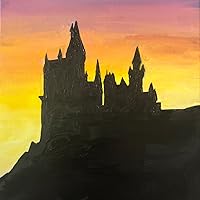
Also - holy crap, is that cover terrifyingly beautiful!
Even though it's not a long book it took me about two months to finish this, because I had to read it in short bursts--partially because Christopher Barzak's writing is so hauntingly beautiful that I wanted to take time to process it, and partially because the entire book was an emotional sucker punch to the gut. I don't think I've ever read another book quite like this, especially not one aimed at teens, but I think I'll remember Ellie and her friends for a very very long time.
I’ve read much of Christopher’s work, and I’m always taken by how the tone matches the story. The tender pace here keeps readers where they need to be as they navigate Ellie’s deeply changed world with her.
The afterword struck me especially because when the 1985 tornadoes hit, I was dating (briefly) a cute guy who would go on to be a lifelong, dear friend. His uncle’s home had been destroyed in the outbreak, and my friend and his family spent the summer rebuilding it. My friend died suddenly earlier this year, and this book lifted the veil and reminded me of how young and wide-eyed we were back then.
This book is about rebuilding and saying goodbye, but as Christopher always does, these very universal human experiences are nuanced and gorgeous and a little cracked. And Christopher writes young people so well that the reader can’t help but feel young when seeing through these characters.
I rarely give books five stars, but I thought this one was well written and went a different direction than I originally expected. Plus any book that makes me want to keep reading and not put it down is worthy of 5⭐️
I have always been a little fascinated with tornados. So for that reason alone I wanted to read this book. But it’s so much more than a story about dealing with grief in the aftermath of a traumatic tragedy.
I found Ellie’s relationship with her family to be so beautiful as opposed to poor Becca and her mom who is a narrow minded selfish person.
I think there were a few points in the story where I actually expected things to turn darker, but the author never took it there which was actually a good thing in my opinion.
I think when all is said and done - despite the focus on tragedy and the grief process, this is a book about hope. And hope is a beautiful thing that makes life worth living.
The Gone Away Place was a good book about a girl named Ellie, who was having a day like any other when she gets into a fight with her boyfriend and runs off from school to a spot in the town. After that, vicious tornadoes and storms swarm the part of town where the school is and all of Ellie's friends die, though she lives. The story is about Ellie piecing her life back together and trying to move on.
I work in a library, and I consider recommending good books an important part of my job. But it's impossible to recommend a book if you haven't actually read it. I struggle to read most YA books because the truth is, I'm really too old for them. Both of my girls are into their adult years and I have no grandchildren. I don't teach school anymore. I no longer really have a frame of reference for the themes that seem to pervade these books as a rule, and too often I find them pretty trivial...
But once in a while, and thanks to GoodReads it happens more frequently than not, I run across one that tells a deeper story than the typical teen-age angst, depression, puppy love sickness that permeates the pages of the genre.
This is one of those times. This story - while still full of plenty of teen-age theatrics - resonates deeper. It's a story of letting go of grief, a story of survivor's guilt, and a story of forgiveness and healing.
I found it enchanting. In fact, I liked it enough that I would award it a coveted "display status" spot on the feature shelf in my library. And if it was that good for me, I know it will be a lot better for those who find this genre perfect reading.
Aside from understanding and feeling at home in the book’s setting of rural Ohio - both the landscape and cultural norms featured in the text, the way that Barzak depicts the collective trauma of a rural town pulled at something that I haven’t engaged with in a long time, and maybe ever, and definitely not something I’ve talked about on this show before.
Because of the size of rural towns and the way we know everyone, loss of life hits a bit different in rural places. And I hadn’t really processed that until reading Ellie’s story and talking with Chris. For example, when your town is only 800 people and 90 of them are killed in a tornado outbreak, that’s over 10% of the population. The magnitude is relative, right?
While still living in Indiana, a tornado ripped through a tiny town called Henryville south of where I was from and the destruction was heartbreaking. The town rallied together to help one another in a similar way to Newfoundland in the book, supporting each other the best they can, and I reckon they probably still are. Devastation like that doesn’t heal and go away when the news coverage does. And it reminded me of the more recent devastation in Kentucky.
Even on a smaller scale, the trauma of the loss of even one life, has a huge impact on the community. For example, when I was still in school we lost: *A kid in the grade above me to a car accident after he light-checked a highway and ran a stop sign. *One of my favorite English teachers committed suicide. *The sister of a friend died of cystic fibrosis before anyone expected her to. *My senior year two of my classmates got into a fight where one accidentally killed the other one. *A couple of kids died in a car accident right outside my house when they were going too fast, hydroplaned, and hit a tree that bordered the soybean field.
And there have been more since I’ve left. In each of these instances, the school basically shut down or became a place of collective processing and healing. Class time was spent sharing memories or talking about how we were all dealing with the loss. I mean, my class only had 50 people in it, so if two are no longer there, the absence is extremely noticeable. It was understood and expected that no one would be at school during the days of the visitations and funerals.
What I learned was this: Even individual traumas become collective in rural places, and THE GONE AWAY PLACE brought insight into that and helped me think about it in a way I never had before.
I think every rural town has some version of this story - has trauma that it might have dealt with but might not’ve. So, I think teaching this book through a critical place-based lens could be really helpful for making space for students to process those traumas.
It has been said that disasters bring out both the best and the worst in humans, and that is clearly evident in this fascinating novel. Clearly, it is hard for the survivors of a natural disaster to go on, especially when they feel guilty for surviving or seek closure with those that have died. While its main themes seem to focus on grief, loss, and recovery, there are interesting supernatural elements in the book too. Ellie Frame is sure that she should have been in her high school along with her boyfriend, Noah, and her best friends, when the tornadoes strike her small town of Newfoundland, Ohio. But she isn't, simply because she fought with Noah over another girl and then decided to skip school. From her safe place, she watches as parts of the town are destroyed. Afterward, as she tries to recover, she begins seeing spirits. Eventually, she figures out that many of these spirits have stories to tell, important memories to share, and if she records them, they can leave the earth behind. Although some passages seem to hint at the ill-will held by some of these spirits toward others, I didn't find that to be true. Instead, I found myself swept up in the stories they chose to share of their bright and shining moments or their most memorable or meaningful times, and I loved how persistent Ellie is in trying to help the spirits go home even while aching for Noah and what can no longer be. If nothing else, the book reminds readers that it takes a lot longer to recover emotionally from a natural disaster such as a tornado than it does to rebuild the buildings that were destroyed there. Having survived Hurricane Katrina back in 2005, I know this to be true. I don't know if I would have liked this book as much without the supernatural elements, but I do know the author captures perfectly the feelings of loss and confusion anyone who was lived through such a catastrophic event has experienced. Picking up the emotional pieces and deciding how to proceed are never easy.
First off, I want to say that the premise of this book is very good: a small town recovering after a natural disaster that destroyed buildings and took lives. Having lived with tornadoes for years and living through hurricanes more recently, I can understand the feeling of coming out of it and seeing how much has been lost.
I like what this book was doing in showing the grieving process. I like how it could vary by individual and culture, and the rules on who saw the ghosts and how they moved around was pretty good. The main character could be pretty oblivious at times, though. I think her worst offense was talking to a grieving mother about seeing her daughter because she was the only link to the MC's boyfriend. But I have to say that the possession parts were downright terrifying.
But that actually brings me to the weaknesses of the book. I don't feel like it pushed quite hard enough on some stuff. Like, why aren't more people being possessed, for example? And how are the other ghosts moving on, or are they? Why is Ellie's method for helping the ghosts working in all the cases she comes across? The possession thing was also solved way too quickly and the animosity between the MC and another character was also cleaned up too neatly. I also get why the MC worked with those specific ghosts, but it would've been interesting to see some others around as well.
It was still a good story and did well in showing a girl grieving after devastating loss, but I feel like it could've been a lot stronger. And if you're gonna do ghosts, go all the way with it.
This was another one of those books that I saw someone randomly mention in a Facebook group I'm a part of, and I was intrigued, so I decided to check it out. I'm glad I did; I think it would be a good addition to our library collection at school. This is a magical realism/fantasy type of book about a girl who survives an outbreaks of tornadoes because she skipped school after a fight with her boyfriend. All of her closest friends perished in the tornadoes and she begins to realize she is being haunted by their ghosts. What she comes to find out (unexpectedly) is that she can help them move on from this "gray area" that her town has become. So Ellie ends up setting out to collect the last wills and testaments of her friends, the stories they want to live on, so they can move on to the next part of their afterlife.
Definitely recommended. This is a good one for kids who like realistic fiction/relationship stories, and for those who are interested in ghosts and paranormal.
This was a satisfying read because it explored important themes - death, loss, grief and survivor guilt- through the lens of rich and completely believable characters. Ellie’s story, as one who accidentally survived a disaster at her school, was amplified through the added dimension of the ghosts. Their existence was deepened by the fact that Ellie wasn't alone in seeing them-- and I loved the fact that the story was not about “are the ghosts real or not?” but “what do the ghosts want and how do we deal with them?” I particularly enjoyed the first person narratives of the ghosts (or their survivors), and the twist of Ellie freeing them through recording their stories. Several times this book could have veered into sappy sentimentality, but it manages to avoid that, and yet convey strong, vivid emotions.
I wasn't expecting this book to be one that struck close to home (figuratively and literally). I grew up where these tornados hit, but I wasn't living here at the time, but came to visit after and saw the devastation. Barzak did more than make this about an incident in his childhood, I think he managed to make it a story that rings true for any and all disasters that can affect one or many people. This story could be read by the the victims of all the mass shootings, the earthquakes, the floods, the wars, anyone who lost a family member, a friend, neighbors, homes, schools, teachers, children. Barzak manages to touch on both the sadness and the hopefulness that is a part of being in this world.
I loved this book -- not just because it made me cry or empathize -- but because it felt like hope was the main focus. Or rather -- getting to hope.
This was a complete surprise to me. I went into this knowing very little and I loved it! Its like a mix of contemporary and dystopian and supernatural elements. This centers on a girl Ellie who loses everyone in her life after a tumultuous event takes place and wipes out everyone she basically knows including her boyfriend Noah. She begins to see the dead spirits of those that died in the catastrophe and this book goes into each story of their life and when they finish they move on to wherever they go after death. It is a study in grief and loss and going in you should know that there is alot of that subject matter being dealt with here. The authors note said he was inspired to write this after going through an F5 tornado at a young age and seeing the devastation it caused his loved ones and his community. This book was a great surprise and got me out of a slump for sure.
Ellie has a fight with her boyfriend and leaves school because she is angry. Several tornadoes strike her small Ohio town, claiming many lives and wiping out multiple buildings, including half of her school. Her boyfriend and all of her best friends die. Ellie is left dealing with devastating loss, disaster and survivor’s guilt. She also starts to see some of the victims of the tornadoes lingering around town, unable to move on into the afterlife. Christopher Barzak seamlessly merges realistic fiction with fantasy to very accurately portray the aftermath of such a catastrophic situation while incorporating paranormal occurrences. Readers will be engaged from chapter one, anxious to find out why Ellie can still see victims of the tornado and how she will move on from the tragedy that suddenly took over her life. I highly recommend this book for independent reading.
Another enthralling entry in Chris Barzak's growing library of stories about grief and the transformative power of loss. While The Gone Away Place spends most of its time dealing with ghosts, it's the survivor who is the focus. It's her journey through the tragedy that shocked her town but spared her life. The regret, the pain, and the proxy suffering is tangible on the page. When she begins to interact with the ghosts of her friends, it's even more touching and real. Filled with incredibly constructed sentences and compelling characters, The Gone Away Place is a must read that you will find impossible to put down and impossible to forget.
I did not expect this book to be as interesting as it is. I won’t summarize, because I’m sure there are already plenty of summaries here. This author has a very fascinating way of demonstrating what it is like after someone you care for dies. Especially in the sense of regret and grief. The main character, Ellie was unable to free people until both her and the other achieved some form of peace or closure. The major takeaway from this book as that we all leave a lasting impression on the world, specifically on the ones we love. We need to find ways to keep their memory alive after they are gone.
This entire review has been hidden because of spoilers.
I haven't cried like this from a book in a very long time. There were some loose ends that I wish had been tied up, but like life it doesn't always happen. I would read this book again and again I think. So glad I picked this up from the library on a whim.
This entire review has been hidden because of spoilers.
A touching story about grief and survivor's guilt, friendship and family. I didn't expect the supernatural element, but I really liked it. It was also interesting to read the author's note and learn how he combined elements from the 1985 Trumbull County Ohio tornado outbreak and the 2011 Japanese tsunami event.
Fictional story about a major tornado that comes through an Ohio area and the tragic events that happened to a group of high school students. Most of the students have died, but Ellie is alive. It’s a hauntingly eerie fictional story that will leave you anxious to turn the page.
I myself have been through a lot of grief in the past year, while this book did not fully depict my grief. The grief shown in the book was beautifully written and honest. While i have never been into ghosts spirits and things like that this book just made me want to keep reading.
This book was a really good story. I liked how every character had something significant about them. I loved the journey Ellie went on throughout the book, and this is a five star rating for me!
Ellie has a fight with her boyfriend and leaves school because she is angry. Several tornadoes strike her small Ohio town, claiming many lives and wiping out multiple buildings, including half of her school. Her boyfriend and all of her best friends die. Ellie is left dealing with devastating loss, disaster and survivor’s guilt. She also starts to see some of the victims of the tornadoes lingering around town, unable to move on into the afterlife. Christopher Barzak seamlessly merges realistic fiction with fantasy to very accurately portray the aftermath of such a catastrophic situation while incorporating paranormal occurrences. Readers will be engaged from chapter one, anxious to find out why Ellie can still see victims of the tornado and how she will move on from the tragedy that suddenly took over her life. I highly recommend this book for independent reading.
Another good reading experience from Mr. Barzak. I enjoy his stories of the living interacting with the dead very much. This novel involving the destruction of a town by a cluster of tornadoes, as told through the post-cataclysmic experiences of the young female protagonist, was apparently intended for a young adult audience but that doesn't preclude a more mature reader from enjoying it. There isn't a lot of depth to the ideas presented here; it's straight plot with little character development beyond the protagonist, and not much exploration of the idea behind how a sudden death might leave someone stranded on this side of the veil. I started and finished the book during the 2020 SARS-CoV-2 outbreak, so that was what the times called for, an enjoyable and well-written easy read.
This book is about tragedies and surviving. Ellie is the only one of her friends who survived the tornadoes that destroy hey school and now she has live with that. Then, she starts to see ghosts, she is not the only one. The people are haunting the town and everyone is trying to find out their place in this situation.
This book made me cried. Many times. I cried for the loneliness, for the lost, for those lives and for those stories. It’s not a book I could read in one sitting because it’s a heavy book. Full of meaningful messages, but not the kind of messages you can load in one night. I’m glad I took the time to read and understand.
I liked it, and it is a good exploration of grief and loss. I recently finished reading George Saunders' Lincoln in the Bardo, and this book was an interesting companion to it. The ideas of the spirits of dead people hanging around and that place being unsafe were in both novels, which is so interesting to me.