

What do you think?

Dream Fishing the Little Spokane
Rooted in the Little Spokane River drainage, Jeffrey Dunn's novel Dream Fishing the Little Spokane is as local as it is American. For those who remember Richard Brautigan, this little book is a Trout Fishing in America for the 21 st Century. Meet the legendary Viper Bugloss who inhabits abandoned trailers and preys on campgrounds. Take a road trip with Carl Jung and his mother up the Little Spokane River to find "the split" in consciousness. Go on an erotic journey with Anais Nin to the Waikiki Ranch. Check into the Dream Fishing the Little Spokane Library where forgotten voices come to mind. Eavesdrop on Walt Whitman and Chief Spokane Garry as they wrestle with the material problem that is America. Hang in the slack water with Mister White, a neighboring mountain whitefish who corresponds with the speaker. Although the fiction does not have the traditional long-form character and plot development, certain themes recur. One concerns the treatment of children. Working class Donny, foster child Finley, and the young Chief Spokane Garry--all exemplify the precarious position of America's youth. Another concerns the impact of capitalism. Homeless Viper Bugloss, squatter Peamouth, and the middle-aged Chief Spokane Garry--all speak to the effects of burgeoning commodification. Of final concern are crimes against the environment. Dog death by decree, turtle death by pickup, and fish death by shotgun--all point to a callous disregard of anything more than singular self-interest. Visit Dream Fishing the Little Spokane today. Once you've been there and back, America will never again look quite the same.
154 pages, Hardcover
Published September 15, 2017
About the author
Jeffrey Dunn
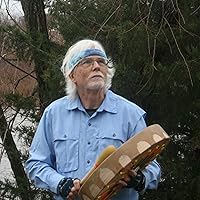
7 books14 followersAs featured on NPR and Medium, Jeffrey Dunn is a critically acclaimed author and award-winning teacher. His works of cultural fiction include the Washington State Book Award-nominated Radio Free Olympia, his upcoming Wildcat, An Appalachian Romance as well as Whiskey Rebel, the surreal Dream Fishing the Little Spokane, and his poetry collection Hubcap Collection Plate. His Ph.D. in English literature and cultural studies laid the foundation for his 41-year teaching career of addressing student learning issues and implementing educational programs at the local, state, and national levels. Embracing his dyslexia as a gift, this dream fisher and history miner roams the woods whenever possible.
Ratings & Reviews
Friends & Following
Create a free account to discover what your friends think of this book!
Community Reviews
Displaying 1 - 3 of 3 reviews
March 9, 2021
A measure of reality, a measure of absurdity, a measure of humor. In the style of Richard Brautigan yet having its own flavor, "Dream Fishing the Little Spokane" took me on a wild ride through decades of history in the Pacific Northwest and the stories of the many people who lived, died, and visited there. Or did they? Doesn't matter, this was a fun read and reminds me of those days long ago when I devoured Trout Fishing and Watermelon Sugar.

Read
May 11, 2019This is a novel by a poet. Be ready for that. He even acknowledges at the end, “why the hell can’t this writer just say what he means?”
My mind tends to wander while I read. Dream Fishing almost encourages this. A piece of prose morphs into poetry and off goes my brain into the stream.
This book is beautiful. Read it. It won’t take long unless, like me, your mind ends up in the river.
My mind tends to wander while I read. Dream Fishing almost encourages this. A piece of prose morphs into poetry and off goes my brain into the stream.
This book is beautiful. Read it. It won’t take long unless, like me, your mind ends up in the river.
April 27, 2019
How The Book Is Conveyed:
Dream Fishing the Little Spokane is a novel that at times reads like a historical biography. The interpolation of thematic elements both fiction & not, melded with personal fantasy, wind together into a ball ultimately left to the reader to untangle and knit into a quilt that pleases them. An alternative title could be: The History of The Little Spokane River; What Is, Was, & Could Have Been. Heavy emphasis on the magical nature of all three tenses. This is a philosophical & historical think piece.
While Dunn does allude to political, religious, and ethical quandaries, they never go so far as to tell you what to think, what the book thinks, or even what each 'character' might fully think. You're left instead with a modicum of information surrounding each 'character' that transforms over time as the philosophical flow of The River, or the 'plot,' progresses. This whimsical nature of flow, as I shall call it with respect to the symbolic nature of The River found in the book, carries both the over-arching 'plot' and 'characters' along with it. Sometimes you flow up The River, other times you flow down. And further yet, sometimes you stay still. The main takeaway being that time in itself is both relative and self evident.
The dynamics of narrative in this book explore elements of the self, the other, and the It. The lines between each are explored, as well as the implications on the differing definitions of those lines between various others.
Why I Do/Don't Enjoy The Book:
Dream Fishing The Little Spokane, despite it's ambiguous title, is very much honest to what the title implies. The River is time and all the experiences and emotions of those impacted by it are contained within its waters. You, the reader, explore a few of those memories as the dreams of the author wash before you. They dip their hook into the waters, pull out a piece, and let itself be presented to you. The hook may be bitten from up The River, or down. Time matters not but the contents do very much. It is up to you to decide what these dreams mean, much the same as the we interpret dreams of our own. Some of these memories are that of the author, others are historical figures (real or imagined), and others exist in the magic in-between. The beauty of this book lies just as much in the real as in the imagined.
If you are looking for a modestly quick read that explores without judgment elements of pain, joy, child & adulthood, mischief, romance, oppression & death, as well as pure unadulterated natural bliss, this may be a book for you. The historical touchstones add depth to the generally placid philosophical think piece, and guide the reader lightly into topics necessitating intersectionality and moments of pause for consideration.
Review Notes:
I wish to remain vague when describing this text as it truly needs to speak for itself. Given the nature of the piece I can only offer my interpretation, and I am most curious what the Author them-self would make of it. I could be off-base compared to the motive of the Author at the time of writing. But on the same token, I take Dunn as the kind of individual to take great joy knowing the myriad of interpretations their piece could inspire. In itself that differing very much reflects the thematic elements of the 'plot' itself.
I use quotes on 'plot' & 'character(s)' due to the in-drift way in which both are conveyed. I capitalize The River to emphasize the importance of it as it's own 'character' within the text.
Dream Fishing the Little Spokane is a novel that at times reads like a historical biography. The interpolation of thematic elements both fiction & not, melded with personal fantasy, wind together into a ball ultimately left to the reader to untangle and knit into a quilt that pleases them. An alternative title could be: The History of The Little Spokane River; What Is, Was, & Could Have Been. Heavy emphasis on the magical nature of all three tenses. This is a philosophical & historical think piece.
While Dunn does allude to political, religious, and ethical quandaries, they never go so far as to tell you what to think, what the book thinks, or even what each 'character' might fully think. You're left instead with a modicum of information surrounding each 'character' that transforms over time as the philosophical flow of The River, or the 'plot,' progresses. This whimsical nature of flow, as I shall call it with respect to the symbolic nature of The River found in the book, carries both the over-arching 'plot' and 'characters' along with it. Sometimes you flow up The River, other times you flow down. And further yet, sometimes you stay still. The main takeaway being that time in itself is both relative and self evident.
The dynamics of narrative in this book explore elements of the self, the other, and the It. The lines between each are explored, as well as the implications on the differing definitions of those lines between various others.
Why I Do/Don't Enjoy The Book:
Dream Fishing The Little Spokane, despite it's ambiguous title, is very much honest to what the title implies. The River is time and all the experiences and emotions of those impacted by it are contained within its waters. You, the reader, explore a few of those memories as the dreams of the author wash before you. They dip their hook into the waters, pull out a piece, and let itself be presented to you. The hook may be bitten from up The River, or down. Time matters not but the contents do very much. It is up to you to decide what these dreams mean, much the same as the we interpret dreams of our own. Some of these memories are that of the author, others are historical figures (real or imagined), and others exist in the magic in-between. The beauty of this book lies just as much in the real as in the imagined.
If you are looking for a modestly quick read that explores without judgment elements of pain, joy, child & adulthood, mischief, romance, oppression & death, as well as pure unadulterated natural bliss, this may be a book for you. The historical touchstones add depth to the generally placid philosophical think piece, and guide the reader lightly into topics necessitating intersectionality and moments of pause for consideration.
Review Notes:
I wish to remain vague when describing this text as it truly needs to speak for itself. Given the nature of the piece I can only offer my interpretation, and I am most curious what the Author them-self would make of it. I could be off-base compared to the motive of the Author at the time of writing. But on the same token, I take Dunn as the kind of individual to take great joy knowing the myriad of interpretations their piece could inspire. In itself that differing very much reflects the thematic elements of the 'plot' itself.
I use quotes on 'plot' & 'character(s)' due to the in-drift way in which both are conveyed. I capitalize The River to emphasize the importance of it as it's own 'character' within the text.
Displaying 1 - 3 of 3 reviews