

What do you think?
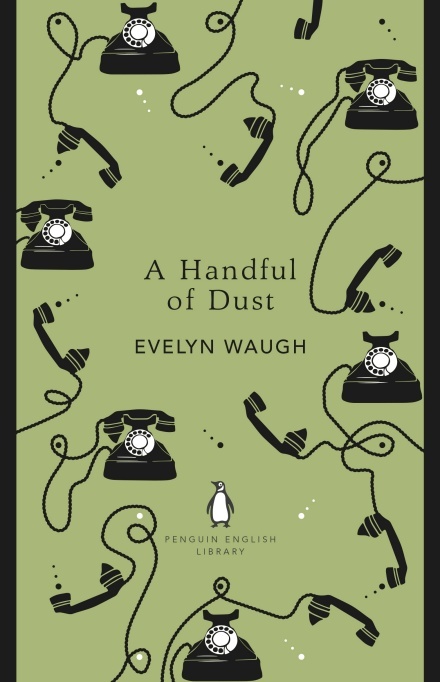
A Handful of Dust
'It would be a dull world if we all thought alike.'
After seven years of marriage, the beautiful Lady Brenda Last is bored with life at Hetton Abbey, the Gothic mansion that is the pride and joy of her husband, Tony. She drifts into an affair with the shallow socialite John Beaver and forsakes Tony for the Belgravia set. Brilliantly combining tragedy, comedy and savage irony, A Handful of Dust captures the irresponsible mood of the 'crazy and sterile generation' between the wars.
The Penguin English Library - collectable general readers' editions of the best fiction in English, from the eighteenth century to the end of the Second World War.
After seven years of marriage, the beautiful Lady Brenda Last is bored with life at Hetton Abbey, the Gothic mansion that is the pride and joy of her husband, Tony. She drifts into an affair with the shallow socialite John Beaver and forsakes Tony for the Belgravia set. Brilliantly combining tragedy, comedy and savage irony, A Handful of Dust captures the irresponsible mood of the 'crazy and sterile generation' between the wars.
The Penguin English Library - collectable general readers' editions of the best fiction in English, from the eighteenth century to the end of the Second World War.
233 pages, Paperback
First published September 4, 1934
About the author
Evelyn Waugh
379 books3,123 followersEvelyn Waugh's father Arthur was a noted editor and publisher. His only sibling Alec also became a writer of note. In fact, his book “The Loom of Youth” (1917) a novel about his old boarding school Sherborne caused Evelyn to be expelled from there and placed at Lancing College. He said of his time there, “…the whole of English education when I was brought up was to produce prose writers; it was all we were taught, really.” He went on to Hertford College, Oxford, where he read History. When asked if he took up any sports there he quipped, “I drank for Hertford.”
In 1924 Waugh left Oxford without taking his degree. After inglorious stints as a school teacher (he was dismissed for trying to seduce a school matron and/or inebriation), an apprentice cabinet maker and journalist, he wrote and had published his first novel, “Decline and Fall” in 1928.
In 1928 he married Evelyn Gardiner. She proved unfaithful, and the marriage ended in divorce in 1930. Waugh would derive parts of “A Handful of Dust” from this unhappy time. His second marriage to Audrey Herbert lasted the rest of his life and begat seven children. It was during this time that he converted to Catholicism.
During the thirties Waugh produced one gem after another. From this decade come: “Vile Bodies” (1930), “Black Mischief” (1932), the incomparable “A Handful of Dust” (1934) and “Scoop” (1938). After the Second World War he published what is for many his masterpiece, “Brideshead Revisited,” in which his Catholicism took centre stage. “The Loved One” a scathing satire of the American death industry followed in 1947. After publishing his “Sword of Honour Trilogy” about his experiences in World War II - “Men at Arms” (1952), “Officers and Gentlemen” (1955), “Unconditional Surrender" (1961) - his career was seen to be on the wane. In fact, “Basil Seal Rides Again” (1963) - his last published novel - received little critical or commercial attention.
Evelyn Waugh, considered by many to be the greatest satirical novelist of his day, died on 10 April 1966 at the age of 62.
See http://en.wikipedia.org/wiki/Evelyn_W...
In 1924 Waugh left Oxford without taking his degree. After inglorious stints as a school teacher (he was dismissed for trying to seduce a school matron and/or inebriation), an apprentice cabinet maker and journalist, he wrote and had published his first novel, “Decline and Fall” in 1928.
In 1928 he married Evelyn Gardiner. She proved unfaithful, and the marriage ended in divorce in 1930. Waugh would derive parts of “A Handful of Dust” from this unhappy time. His second marriage to Audrey Herbert lasted the rest of his life and begat seven children. It was during this time that he converted to Catholicism.
During the thirties Waugh produced one gem after another. From this decade come: “Vile Bodies” (1930), “Black Mischief” (1932), the incomparable “A Handful of Dust” (1934) and “Scoop” (1938). After the Second World War he published what is for many his masterpiece, “Brideshead Revisited,” in which his Catholicism took centre stage. “The Loved One” a scathing satire of the American death industry followed in 1947. After publishing his “Sword of Honour Trilogy” about his experiences in World War II - “Men at Arms” (1952), “Officers and Gentlemen” (1955), “Unconditional Surrender" (1961) - his career was seen to be on the wane. In fact, “Basil Seal Rides Again” (1963) - his last published novel - received little critical or commercial attention.
Evelyn Waugh, considered by many to be the greatest satirical novelist of his day, died on 10 April 1966 at the age of 62.
See http://en.wikipedia.org/wiki/Evelyn_W...
Ratings & Reviews
Friends & Following
Create a free account to discover what your friends think of this book!
Community Reviews
Displaying 1 - 30 of 2,104 reviews

April 17, 2013
Evelyn Waugh is a brilliant observer of human peccadilloes and in A Handful of Dust he is at his best… And brimming over with sparkling sarcasm…
While endeavouring to escape the boredom of aristocratic living one may find a shitload of misadventures on one’s own romantic head…
How deadly can boredom really be? For some it can become absolutely deadly.
I should say it was time she began to be bored. They’ve been married five or six years. Quite well off but everything goes in keeping up the house. I’ve never seen it but I’ve an idea it’s huge and quite hideous.
While endeavouring to escape the boredom of aristocratic living one may find a shitload of misadventures on one’s own romantic head…
How deadly can boredom really be? For some it can become absolutely deadly.

January 4, 2015
"'I never thought it would last but she seems really keen on it . . . I suppose it's a good plan . . . there wasn't much for her to do at Hetton. Of course she would rather die than admit it, but I believe she got a bit bored there sometimes. I've been thinking it over and that's the conclusion I came to. Brenda must have been bored.'"

Kristin Scott Thomas adds sizzle to the 1988 movie version as Brenda.
Tony and Brenda Last have been married for seven years and although they don’t have a fiery passionate relationship they have settled into a predictable, comfortable one. They live on the Last family country estate named Hetton Abbey, an ugly neo-gothic creation that would need to wait a few decades more before coming back into fashion. Tony is perfectly happy with the house, but Brenda is subtly, or maybe not so subtly, convincing him to make changes. Plans are made to slowly convert the interior to a more modern appearance and also add some much needed bathrooms to the house.
They have one son who is mostly just a source of annoyance to them. He is precocious and starved for attention, and is often shuffled off to the horse trainer or to the housekeeper to keep him from under the feet of his parents.
They are moderately rich, but feel pinched for money as most of it is being funneled back into Hetton Abbey. Entertainment, as most of us know when we hit a financial snag, is the first and easiest to cut back on. This does create childish resentments in Brenda towards Tony and towards the house, even though, she is the one that is insisting on the remodel. After all she doesn’t even like that ugly old house anyway.
Overall, though, despite the snag in their social life things are going rather well
Until…
John Beaver invites himself down to Hetton Abbey for the weekend. He is a social parasite who lives off the family associations. He was reasonably desperate for some one to sponge off or he would have never ventured out to the country to spend time with the Last family.
”Beaver was so seldom wholly welcome anywhere that he was not sensitive to the slight constraint of his reception.”
He is oblivious, completely oblivious to any irritation his hosts might feel at his presence. He is relying on the unshakable, ancestral sense of decorum that people have for guests, even uninvited ones.

The ever so clever Evelyn Waugh.
Beaver is not a dashing figure nor is he all that charming. He is mostly just a young lad more boy than man. He is surprised at Brenda’s interest in him. She has been out of London society for a while and seems to have lost all her bearings for what she should find attractive in a man. Beaver really has nothing to offer except youth.
She ends up leasing a small apartment in London from Beaver’s rather disreputable real estate mogul mother. Brenda begins to instruct Beaver in an attempt to mold him into a more respectful version of a man she should be seen with. This starts to create some friction with young Beaver.
”You are one for making people learn things.”
Beaver goes along as she is paying for most of their expenses as they start appearing in society together.
Brenda tells Tony she is taking economic classes. Tony does the best he can to believe her.
Beaver as far as society is concerned is just a family friend. It is so nice of him to escort her around town. The rest...well...that is all hush hush.
”That’s always the trouble with people when they start walking out. They either think no one knows, or everybody.”
It has been way too long since I’ve read Evelyn Waugh. This may be one of his bleakest novels, but also the one most rife with wonderful biting sarcasm that exposes the self-absorption of the English upper class and the disregard they have for any retributions for their actions. When tragedy strikes the Last family the understated, cold reactions of both Tony and Brenda are so selfish it reveals their truest nature. I felt sorry for Tony for most of the novel because the decisions that Brenda was making were so destructive and based on such an absurd set of reasoning that it all just seemed so unfair. My feelings for Tony changed and by the end it felt like each got what they deserved. Both are so naive and though raised in this upper crust, seemingly conservative society, they seem to know very little about how to conduct themselves in such a rigid system of socially judgmental families.
A bleak story, filled with a flurry of witty daggers that I’m sure stuck between the ribs of many a reader in 1930s Britain, but at the same time the book is laugh out loud funny. The plot is a series of absurd situations in which the Lasts and their friends ignore the most sensible course and sail into the rocky reef completely oblivious to the fact that they will most likely lose the ship.
Certainly Waugh was pointing a few fingers and wagging his eyebrows at the upper classes. This is a superb balancing act of black humor and social commentary writing that is not only difficult to do well, but also entirely entertaining in the hands of Evelyn Waugh.
If you wish to see more of my most recent book and movie reviews, visit http://www.jeffreykeeten.com
I also have a Facebook blogger page at:https://www.facebook.com/JeffreyKeeten

Kristin Scott Thomas adds sizzle to the 1988 movie version as Brenda.
Tony and Brenda Last have been married for seven years and although they don’t have a fiery passionate relationship they have settled into a predictable, comfortable one. They live on the Last family country estate named Hetton Abbey, an ugly neo-gothic creation that would need to wait a few decades more before coming back into fashion. Tony is perfectly happy with the house, but Brenda is subtly, or maybe not so subtly, convincing him to make changes. Plans are made to slowly convert the interior to a more modern appearance and also add some much needed bathrooms to the house.
They have one son who is mostly just a source of annoyance to them. He is precocious and starved for attention, and is often shuffled off to the horse trainer or to the housekeeper to keep him from under the feet of his parents.
They are moderately rich, but feel pinched for money as most of it is being funneled back into Hetton Abbey. Entertainment, as most of us know when we hit a financial snag, is the first and easiest to cut back on. This does create childish resentments in Brenda towards Tony and towards the house, even though, she is the one that is insisting on the remodel. After all she doesn’t even like that ugly old house anyway.
Overall, though, despite the snag in their social life things are going rather well
Until…
John Beaver invites himself down to Hetton Abbey for the weekend. He is a social parasite who lives off the family associations. He was reasonably desperate for some one to sponge off or he would have never ventured out to the country to spend time with the Last family.
”Beaver was so seldom wholly welcome anywhere that he was not sensitive to the slight constraint of his reception.”
He is oblivious, completely oblivious to any irritation his hosts might feel at his presence. He is relying on the unshakable, ancestral sense of decorum that people have for guests, even uninvited ones.

The ever so clever Evelyn Waugh.
Beaver is not a dashing figure nor is he all that charming. He is mostly just a young lad more boy than man. He is surprised at Brenda’s interest in him. She has been out of London society for a while and seems to have lost all her bearings for what she should find attractive in a man. Beaver really has nothing to offer except youth.
She ends up leasing a small apartment in London from Beaver’s rather disreputable real estate mogul mother. Brenda begins to instruct Beaver in an attempt to mold him into a more respectful version of a man she should be seen with. This starts to create some friction with young Beaver.
”You are one for making people learn things.”
Beaver goes along as she is paying for most of their expenses as they start appearing in society together.
Brenda tells Tony she is taking economic classes. Tony does the best he can to believe her.
Beaver as far as society is concerned is just a family friend. It is so nice of him to escort her around town. The rest...well...that is all hush hush.
”That’s always the trouble with people when they start walking out. They either think no one knows, or everybody.”
It has been way too long since I’ve read Evelyn Waugh. This may be one of his bleakest novels, but also the one most rife with wonderful biting sarcasm that exposes the self-absorption of the English upper class and the disregard they have for any retributions for their actions. When tragedy strikes the Last family the understated, cold reactions of both Tony and Brenda are so selfish it reveals their truest nature. I felt sorry for Tony for most of the novel because the decisions that Brenda was making were so destructive and based on such an absurd set of reasoning that it all just seemed so unfair. My feelings for Tony changed and by the end it felt like each got what they deserved. Both are so naive and though raised in this upper crust, seemingly conservative society, they seem to know very little about how to conduct themselves in such a rigid system of socially judgmental families.
A bleak story, filled with a flurry of witty daggers that I’m sure stuck between the ribs of many a reader in 1930s Britain, but at the same time the book is laugh out loud funny. The plot is a series of absurd situations in which the Lasts and their friends ignore the most sensible course and sail into the rocky reef completely oblivious to the fact that they will most likely lose the ship.
Certainly Waugh was pointing a few fingers and wagging his eyebrows at the upper classes. This is a superb balancing act of black humor and social commentary writing that is not only difficult to do well, but also entirely entertaining in the hands of Evelyn Waugh.
If you wish to see more of my most recent book and movie reviews, visit http://www.jeffreykeeten.com
I also have a Facebook blogger page at:https://www.facebook.com/JeffreyKeeten

August 25, 2018
Aren't we ALL Last in the end? I can just hear Waugh's grim, faith-rooted, world-weary grunt of agreement!
Tony Last is a happy remnant of the Edwardian gentry, so much like his friends (and so many folks we know) - moneyed but house-poor, measuring out his comforting illusions in coffee spoons - until those illusions are shattered.
Fate knocks on his door.
Loudly.
Illusions! What use are they in the storm?
As for me, as I grow old, I have fewer illusions - and am glad of it.
Because, like Auden's elderly friends at a twilight gathering in the final poem of his great song cycle The Quest - his version of the age-old quest for meaning (you really should read it!) - I have felt my "centre of volition shifted.”
As I age, the illusions are now much less comforting than is Eliot's "condition of complete simplicity, costing not less than everything."
The condition of the faithful.
And that is precisely what Evelyn Waugh discovered here.
Yes, when you've lost it all - as all of us will - you'll find it all, if you keep your faith.
Just like Tony (and Waugh, who had moved over to the Church just before publishing Tony Last's bittersweet story) - his own decline and fall.
Because if you're Last, you'll be the first -
The first in true, Lasting Peace - among all the Lost!
Tony Last is a happy remnant of the Edwardian gentry, so much like his friends (and so many folks we know) - moneyed but house-poor, measuring out his comforting illusions in coffee spoons - until those illusions are shattered.
Fate knocks on his door.
Loudly.
Illusions! What use are they in the storm?
As for me, as I grow old, I have fewer illusions - and am glad of it.
Because, like Auden's elderly friends at a twilight gathering in the final poem of his great song cycle The Quest - his version of the age-old quest for meaning (you really should read it!) - I have felt my "centre of volition shifted.”
As I age, the illusions are now much less comforting than is Eliot's "condition of complete simplicity, costing not less than everything."
The condition of the faithful.
And that is precisely what Evelyn Waugh discovered here.
Yes, when you've lost it all - as all of us will - you'll find it all, if you keep your faith.
Just like Tony (and Waugh, who had moved over to the Church just before publishing Tony Last's bittersweet story) - his own decline and fall.
Because if you're Last, you'll be the first -
The first in true, Lasting Peace - among all the Lost!

September 19, 2025
I first read Waugh— Brideshead Revisited —fifteen, maybe twenty years ago, and I bloody hated it. Though I was very young, and so I continued to dabble in his other work for a few years, never again finishing a book but unable to articulate why. Coming back many years later to try A Handful of Dust, I think I finally get it.
The style of satire is part of it, because I simply dislike the way all the characters and interactions are ridiculous and become increasingly ludicrous as the story (what story?) progresses. Waugh is not a plot man, and instead writes a series of situations or scenes— as one might expect to see in a sitcom —that are intentionally absurd. This, in itself, is not my cup of tea.
But a few years and, one hopes, a bit more wisdom have enabled me to see what has always not sat right with me about Waugh. And that is the female characters. Reading A Handful of Dust in 2025, I couldn't help thinking that if Waugh had been alive today he would have had his own podcast encouraging young incels that women ain’t worth shit.
For Waugh, women are frivolous creatures, morally bankrupt, materialistic and self-serving. Before we even get to this book, you've got Julia from Scoop, Agatha from Vile Bodies, Margot from Decline and Fall and many other side characters. In A Handful of Dust, we have Brenda who is so narcissistic that she gives thought to neither her husband nor her son when in pursuit of her desires, and Mrs Beaver who is a grotesque caricature of materialism, tastelessly chasing money and fashion.
His books are full of women abandoning or cheating on innocent men (the poor fools!). Waugh was some ninety years from saying "These 304s be cucking these simps." If you're thinking "Waugh, my man, WHO HURT YOU?" then I have the answer for you: his wife. Evelyn Gardner left him for another man and methinks he may not have gotten over it.
It is a curious thing about Waugh that you cannot like or connect with any of the characters in his books. He obviously doesn't want you to. This may work for some readers, but it poses a problem for me: when I do not care about the characters, I do not care what will happen to them or what the outcome of the book will be. To make matters worse, the outcome of this book is so ridiculous-- a clever comment on being trapped in futility, I'm sure, but ridiculous nonetheless.
Reading this wasn't a totally wasted exercise, though, as I feel like I've gained a lot of understanding. Waugh is not for me, and that's okay.
The style of satire is part of it, because I simply dislike the way all the characters and interactions are ridiculous and become increasingly ludicrous as the story (what story?) progresses. Waugh is not a plot man, and instead writes a series of situations or scenes— as one might expect to see in a sitcom —that are intentionally absurd. This, in itself, is not my cup of tea.
But a few years and, one hopes, a bit more wisdom have enabled me to see what has always not sat right with me about Waugh. And that is the female characters. Reading A Handful of Dust in 2025, I couldn't help thinking that if Waugh had been alive today he would have had his own podcast encouraging young incels that women ain’t worth shit.
For Waugh, women are frivolous creatures, morally bankrupt, materialistic and self-serving. Before we even get to this book, you've got Julia from Scoop, Agatha from Vile Bodies, Margot from Decline and Fall and many other side characters. In A Handful of Dust, we have Brenda who is so narcissistic that she gives thought to neither her husband nor her son when in pursuit of her desires, and Mrs Beaver who is a grotesque caricature of materialism, tastelessly chasing money and fashion.
His books are full of women abandoning or cheating on innocent men (the poor fools!). Waugh was some ninety years from saying "These 304s be cucking these simps." If you're thinking "Waugh, my man, WHO HURT YOU?" then I have the answer for you: his wife. Evelyn Gardner left him for another man and methinks he may not have gotten over it.
It is a curious thing about Waugh that you cannot like or connect with any of the characters in his books. He obviously doesn't want you to. This may work for some readers, but it poses a problem for me: when I do not care about the characters, I do not care what will happen to them or what the outcome of the book will be. To make matters worse, the outcome of this book is so ridiculous-- a clever comment on being trapped in futility, I'm sure, but ridiculous nonetheless.
Reading this wasn't a totally wasted exercise, though, as I feel like I've gained a lot of understanding. Waugh is not for me, and that's okay.

June 16, 2016
I’m not generally a fan of satirical novels (as opposed to, say, satirical sketch comedy), but this book was terrific. Seldom have I seen tragedy and comedy so successfully intermingled.
Set between the wars in the chic upper-middle classes in and around London, A Handful Of Dust is full of horrible people doing horrible things to each other, but it adds up to a bitter indictment of human behaviour. And it’s not all jokes. There’s despair lurking beneath the brittle laughs, and sadness at the waste of potential. I believe it was partly inspired by Waugh’s wife of one year leaving him for one of their friends. I suppose it’s better to laugh at pain than cry…
Country gentleman Tony Last seems more attached to his ugly ancestral estate, Hetton Abbey, than he does to his bored and attractive wife, Brenda. So Brenda takes up with the dull and penniless social climber John Beaver, even going so far as to rent out a flat in London, telling Tony that she’s studying economics while she’s carrying on this affair that everyone knows about except her dim husband.
When tragedy strikes – I won’t spoil things by revealing the event and the astonishing reaction to it – Brenda insists on a divorce. This leads to a completely absurd scene in which the cold fish Tony attempts to get himself caught being unfaithful so Brenda can get one.
One section near the end, set in Brazil and completely inappropriate and wrong in its treatment of natives (there are many instances throughout of inappropriate remarks), at first seems absurd, but when bits of dialogue from the previous 200 pages crop up, you get to see how carefully Waugh has crafted the book. (And how memorable his dialogue has been.) There’s a plot point about reading Dickens that results in the darkest comedy, and perhaps a scathing statement about literature and civilization.
Waugh is simply a brilliant writer. I don’t think satire requires characters of much depth. But Waugh gives you enough details so you know everyone in this particular vanity fair. Their conversations are tart and suggestive, with people seldom saying what they’re thinking.
What’s remarkable is that beneath the exaggeration, there’s a brutal examination of the horrible things people are capable of doing – to themselves and each other.
In one of the silliest scenes, two adults play a children's card game where they're reduced to making animal noises. It's played for laughs, but Waugh knew what he was doing. Oink oink, cluck cluck cluck indeed.
Set between the wars in the chic upper-middle classes in and around London, A Handful Of Dust is full of horrible people doing horrible things to each other, but it adds up to a bitter indictment of human behaviour. And it’s not all jokes. There’s despair lurking beneath the brittle laughs, and sadness at the waste of potential. I believe it was partly inspired by Waugh’s wife of one year leaving him for one of their friends. I suppose it’s better to laugh at pain than cry…
Country gentleman Tony Last seems more attached to his ugly ancestral estate, Hetton Abbey, than he does to his bored and attractive wife, Brenda. So Brenda takes up with the dull and penniless social climber John Beaver, even going so far as to rent out a flat in London, telling Tony that she’s studying economics while she’s carrying on this affair that everyone knows about except her dim husband.
When tragedy strikes – I won’t spoil things by revealing the event and the astonishing reaction to it – Brenda insists on a divorce. This leads to a completely absurd scene in which the cold fish Tony attempts to get himself caught being unfaithful so Brenda can get one.
One section near the end, set in Brazil and completely inappropriate and wrong in its treatment of natives (there are many instances throughout of inappropriate remarks), at first seems absurd, but when bits of dialogue from the previous 200 pages crop up, you get to see how carefully Waugh has crafted the book. (And how memorable his dialogue has been.) There’s a plot point about reading Dickens that results in the darkest comedy, and perhaps a scathing statement about literature and civilization.
Waugh is simply a brilliant writer. I don’t think satire requires characters of much depth. But Waugh gives you enough details so you know everyone in this particular vanity fair. Their conversations are tart and suggestive, with people seldom saying what they’re thinking.
What’s remarkable is that beneath the exaggeration, there’s a brutal examination of the horrible things people are capable of doing – to themselves and each other.
In one of the silliest scenes, two adults play a children's card game where they're reduced to making animal noises. It's played for laughs, but Waugh knew what he was doing. Oink oink, cluck cluck cluck indeed.

September 21, 2018
And the winner of Cruelest Words Uttered by a Literary Character is Brenda Last. The words are 'Oh, thank God,' but saying saying more would just give it away. She is tied for Worst Mother in Literature, and would like to thank the Good Mothers in Literature, as well as her son, John Andrew, without whom this honor would not be possible.
Oh, to have been part of the British landed gentry in the first quarter of the 20th century. Life is cruel, and so you might as well be rich. Or maybe it makes absolutely zero difference, given how Tony Last ends up. He is, however, a perfectly willing punching bag. The dissolution of his marriage is darkly funny, especially as he, the victim, is turned into the villain when his greatest crime is loving his estate more than his wife. Brenda is bored and shallow and Waugh—perhaps making his point a little too aggressively—leaves her in tatters as a character by the end. I don't usually like precocious children in fiction, but John Andrew is all right, especially in contrast to Winnie, who is meant to be annoying and succeeds at it. South America has always held a fascination and Mr. Todd makes a worthier antagonist than Brenda ever could. Race will always be an issue with Waugh, but his remarks are tame compared to those in Decline and Fall.
Oh, to have been part of the British landed gentry in the first quarter of the 20th century. Life is cruel, and so you might as well be rich. Or maybe it makes absolutely zero difference, given how Tony Last ends up. He is, however, a perfectly willing punching bag. The dissolution of his marriage is darkly funny, especially as he, the victim, is turned into the villain when his greatest crime is loving his estate more than his wife. Brenda is bored and shallow and Waugh—perhaps making his point a little too aggressively—leaves her in tatters as a character by the end. I don't usually like precocious children in fiction, but John Andrew is all right, especially in contrast to Winnie, who is meant to be annoying and succeeds at it. South America has always held a fascination and Mr. Todd makes a worthier antagonist than Brenda ever could. Race will always be an issue with Waugh, but his remarks are tame compared to those in Decline and Fall.

May 30, 2008
Brilliant, but its sparkle is ice cold.
It's clever that the naive and saintly Tony is seamlessly recast as the villain of the piece - not just by his wife Brenda, but by most of their friends too.
But Brenda is the evil one, most dramatically demonstrated by a misplaced "Thank God". It sounds innocuous, but in context, it's one of the most chilling lines I've ever read.
Reading Dickens in the jungle for eternity: would that be heaven or hell?
It's clever that the naive and saintly Tony is seamlessly recast as the villain of the piece - not just by his wife Brenda, but by most of their friends too.
But Brenda is the evil one, most dramatically demonstrated by a misplaced "Thank God". It sounds innocuous, but in context, it's one of the most chilling lines I've ever read.
Reading Dickens in the jungle for eternity: would that be heaven or hell?

May 22, 2021
This work is indeed a unique book in literature. A feather indeed, but at the absurd service, subtly depicted a declining society. It's tasty because it's nasty, cruel, and necessarily funny.

September 20, 2010
Reading Waugh is like being air-kissed by a socialite who clutches your shoulder in mock affection with one hand while raising an ice-pick behind your back with the other. You know you should be on guard for certain disaster, but charisma sweeps you away in an intoxicating wave of champagne and caviar.
Waugh wrote with scathing irony of the plight of English gentry between the two world wars. Sinking into debt and irrelevancy in the wake of the Depression, these bored and bigoted hyphenated lords and ladies flit from ballroom to bedroom, trading partners and gossip as they scheme for invites to the best parties and positions in the right clubs.
The soullessness of these lives would be near impossible to bear if it weren't for Waugh's rapier language and his inclusion of the reader in the Grand Guignol. His satire is deadly (quite literally, in the context of the story, but I shan't spoil the surprises) and oftentimes laugh-out-loud hilarious. David Sedaris and David Mamet owe heaps of inspiration to Waugh's deadpan comedy and rapid-fire dialogue.
"Well, well, well," said Dan, "what next."
"Do I get a drink?" said Dan's girl.
"Baby, you do, if I have to get it myself. Won't you two join us, or are we de trop?"
They went together into the glittering lounge.
"I'm cold like hell," said Baby.
Dan had taken off his greatcoat and revealed a suit of smooth, purplish plus fours, and a silk shirt of a pattern Tony might have chosen for pyjamas. "We'll soon warm you up," he said
"This place stinks of yids, " said Baby.
"I always think that's the sign of good hotel, don't you?" said Tony.
"Like hell," said Baby.
These people are so awful you can't look away. And Waugh is so brilliant you can't stop reading.
Waugh wrote with scathing irony of the plight of English gentry between the two world wars. Sinking into debt and irrelevancy in the wake of the Depression, these bored and bigoted hyphenated lords and ladies flit from ballroom to bedroom, trading partners and gossip as they scheme for invites to the best parties and positions in the right clubs.
The soullessness of these lives would be near impossible to bear if it weren't for Waugh's rapier language and his inclusion of the reader in the Grand Guignol. His satire is deadly (quite literally, in the context of the story, but I shan't spoil the surprises) and oftentimes laugh-out-loud hilarious. David Sedaris and David Mamet owe heaps of inspiration to Waugh's deadpan comedy and rapid-fire dialogue.
"Well, well, well," said Dan, "what next."
"Do I get a drink?" said Dan's girl.
"Baby, you do, if I have to get it myself. Won't you two join us, or are we de trop?"
They went together into the glittering lounge.
"I'm cold like hell," said Baby.
Dan had taken off his greatcoat and revealed a suit of smooth, purplish plus fours, and a silk shirt of a pattern Tony might have chosen for pyjamas. "We'll soon warm you up," he said
"This place stinks of yids, " said Baby.
"I always think that's the sign of good hotel, don't you?" said Tony.
"Like hell," said Baby.
These people are so awful you can't look away. And Waugh is so brilliant you can't stop reading.

April 12, 2010
For those of you who live cloistered in a medieval turret of moral purity and use the interwebs only for researching your medical ailments (and, oh -- of course, researching books as well), you may or may not be interested to know that there is a 'cuckolding' porn genre. The interesting detail about this isn't that there is a particular subset of video pornography dealing with spouses cheating on each other -- because when you consider some of the very specific porn specialty niches (biracial paraplegic dwarves humping dead color-blind Basques, for example), cheating is one of the most banal and obvious. No, the truly interesting thing is that this genre often employs the word 'cuckold' in its titles, as if this were five-cent, everyday, low-rent kinda word. At your leisure, please review some of these actual porn titles: Cum Eating Cuckolds 12, Cuckold Creampie 7, Grip and Cram Johnson's Cuckold MILFs, Non-Humiliation Cuckolding (What's the point then?), Interracial Cuckold Surprise (Is it the interracialism or the cuckolding that's the surprise? Or the permutation of both?), Forced Bi Cuckolding, and The Taming of the Cuckold. You get the idea. Many or most of these types of films involve an individual having some variant of sexual relations with another individual (or individuals) while the first individual's partner, spouse, or significant other watches or is forced to watch. (I hope you all appreciate that I had to go to www.smutnetwork.com at work -- and against my better instincts -- to procure those authentic cuckolding titles for you.)
Again, I find it interesting that the porn industry should employ the word 'cuckold' as opposed to merely 'cheating' or 'cheaters,' especially when one considers that porn video sleeves not infrequently contain misspellings of common words (I saw 'thier' recently -- ahem -- when I was doing my investigative research). There's something very Olde Englishy about the word 'cuckold' even though it has French origins... and the kind of infidelity featured prominently in Evelyn Waugh's A Handful of Dust is at least nearer to the associations I have with cuckoldry than a giant black man with a Texas-sized schlong anally penetrating a coked-out blonde bag of silicon while a skinny nebbish is tied to a windsor chair. But then again, the English language contains myriad subtleties, connotations, and associations, does it not?
In general, I don't find cuckolding stimulating. I find it sad. Not in the sense of two people in a relationship agreeing to fuck other people with the other's knowledge (which is their own perogative, I suppose), but in the sense of a spouse or partner being kept in the dark, lied to, and possibly publicly humiliated by his/her 'soulmate.' So that's what makes Evelyn Waugh's A Handful of Dust a particularly bitter satirical pill to swallow. The main character Tony Last is a cuckold. Waugh provides us with absolutely no evidence that he is anything but a kind, compassionate, and attentive husband. His wife Brenda rather glibly and carelessly carries on with an undesirable man named John Beaver, who is not particularly kind, interesting, or attractive. In fact, no one in Brenda's circle of friends and acquaintances seems to understand why Brenda should slither around with Beaver behind Tony's back, and -- more to the point -- Brenda herself doesn't seem entirely able to pinpoint his appeal.
In constructing the first half or two-thirds of the novel along these lines, Waugh creates a very prickly, uncomfortable humor. We the readers are encouraged to be amused by Tony's humiliation and Brenda's cavalier, indecipherable infidelity. Even while one laughs, one feels genuinely sorry for Tony. True to his legacy, Waugh manages some very funny, underlyingly bleak comic episodes; one involves Brenda trying to set up her husband with the wife of an Arab so that he won't bother her so much.
Around the midpoint of the novel, Waugh tosses in an exceptionally dark plot point (which I won't reveal here) which, in tune with the rest of the novel, is treated casually. Unsettlingly so. Then somewhere around two-thirds of the way in, the novel takes a strange, new course, which isn't completely successful -- but mostly successful, at any rate. Tony, it would seem, is so affronted by the protocol of the 'good society' of England that he embarks upon a rather radical response to it. But as you might expect, Waugh isn't about to provide him with the respite he desires, and that's what makes Waugh (at his best) so brittle and yet enjoyable. He makes us feel various things at odd with each other. Humor and tragedy. Empathy and mockery. Dissatisfaction and complacency.
Again, I find it interesting that the porn industry should employ the word 'cuckold' as opposed to merely 'cheating' or 'cheaters,' especially when one considers that porn video sleeves not infrequently contain misspellings of common words (I saw 'thier' recently -- ahem -- when I was doing my investigative research). There's something very Olde Englishy about the word 'cuckold' even though it has French origins... and the kind of infidelity featured prominently in Evelyn Waugh's A Handful of Dust is at least nearer to the associations I have with cuckoldry than a giant black man with a Texas-sized schlong anally penetrating a coked-out blonde bag of silicon while a skinny nebbish is tied to a windsor chair. But then again, the English language contains myriad subtleties, connotations, and associations, does it not?
In general, I don't find cuckolding stimulating. I find it sad. Not in the sense of two people in a relationship agreeing to fuck other people with the other's knowledge (which is their own perogative, I suppose), but in the sense of a spouse or partner being kept in the dark, lied to, and possibly publicly humiliated by his/her 'soulmate.' So that's what makes Evelyn Waugh's A Handful of Dust a particularly bitter satirical pill to swallow. The main character Tony Last is a cuckold. Waugh provides us with absolutely no evidence that he is anything but a kind, compassionate, and attentive husband. His wife Brenda rather glibly and carelessly carries on with an undesirable man named John Beaver, who is not particularly kind, interesting, or attractive. In fact, no one in Brenda's circle of friends and acquaintances seems to understand why Brenda should slither around with Beaver behind Tony's back, and -- more to the point -- Brenda herself doesn't seem entirely able to pinpoint his appeal.
In constructing the first half or two-thirds of the novel along these lines, Waugh creates a very prickly, uncomfortable humor. We the readers are encouraged to be amused by Tony's humiliation and Brenda's cavalier, indecipherable infidelity. Even while one laughs, one feels genuinely sorry for Tony. True to his legacy, Waugh manages some very funny, underlyingly bleak comic episodes; one involves Brenda trying to set up her husband with the wife of an Arab so that he won't bother her so much.
Around the midpoint of the novel, Waugh tosses in an exceptionally dark plot point (which I won't reveal here) which, in tune with the rest of the novel, is treated casually. Unsettlingly so. Then somewhere around two-thirds of the way in, the novel takes a strange, new course, which isn't completely successful -- but mostly successful, at any rate. Tony, it would seem, is so affronted by the protocol of the 'good society' of England that he embarks upon a rather radical response to it. But as you might expect, Waugh isn't about to provide him with the respite he desires, and that's what makes Waugh (at his best) so brittle and yet enjoyable. He makes us feel various things at odd with each other. Humor and tragedy. Empathy and mockery. Dissatisfaction and complacency.

August 15, 2017
Evelyn Waugh's writing is delightfully (and spitefully) mischievous. He's as witty as Oscar Wilde and as caustic as drain cleaner.
Something of a pessimist and a social misfit, Waugh loved to send up the chattering classes of which he was a part. This book also has an autobiographical aspect to it and centres on his inside view of upper-class selfishness and the erosion of spiritual values in post-WWI England.
Something of a pessimist and a social misfit, Waugh loved to send up the chattering classes of which he was a part. This book also has an autobiographical aspect to it and centres on his inside view of upper-class selfishness and the erosion of spiritual values in post-WWI England.

April 1, 2017
2.5 stars
I’m not sure what it is about me and Evelyn Waugh; critics have said this is one of the best novels of the twentieth century and I really don’t get it. It is, as ever, a satire on the mores of the English upper class. The title is from The Waste Land:
“I will show you something different from either
Your shadow at morning striding behind you
Or your shadow at evening rising to meet you;
I will show you fear in a handful of dust.”
This is satire, comedy and farce mixed with the absurd; again I get the sense that Waugh delights in disliking his characters.
Tony Last lives in a rather uncomfortable and decrepit country mansion with his wife Brenda and his son. It is not one of the great stately homes as the description indicates:
“Between the villages of Hetton and Compton Last lies the extensive park of Hetton Abbey. This, formerly one of the notable houses of the county, was entirely rebuilt in 1864 in the Gothic style and is now devoid of interest. The grounds are open to the public daily until sunset and the house may be viewed on application by writing.”
Brenda gets rather bored in the country and as she starts to spend more time in London, she starts an affair with John Beaver, a man of very limited means on the make. The plot is limited and there is a cast of supporting characters who have varying degrees of eccentricity.
This is said to be a turning point in Waugh’s novels; the point at which he begins to get serious. Well, he still manages to drag in race and civilization. Waugh draws on his own experiences on his visit to Guyana. When Tony’s marriage falls apart he sets off on an expedition to look for a lost city in Brazil; travelling from Demerara. This enables Waugh to draw his usual parody of uncivilized peoples of a different colour with the same sort of zest he did in Scoop. It also allows him to play with a Heart of Darkness motif (will I never escape from that book). Waugh often said that A Handful of Dust was really about the bankruptcy of humanism. Kurtz’s horror in this novel is the emptiness of secular humanism, which Waugh wants to replace with Catholicism.
Waugh also nods to Proust and the grail quest and plays with a number of ideas. This is a story of human selfishness, but perhaps Waugh does paint Tony Last with some sympathy; especially as Waugh’s marriage had recently ended. However he condemns Last to spending the rest of his days reading Dickens aloud in a native village to a Kurtz type character. The point here is that Waugh thought that Dickens was one of those responsible for the collapse of social restraint (as Waugh perceived it) in British society.
I’ve seen Waugh’s work described as a “theatre of cruelty” and I see the point of that. I also find Waugh’s attitude to women pretty suspect; look at this conversation between Tony Last and his young son’
““Where’s mummy gone?” “London.” “Why?” “Someone called Lady Cockpurse is giving a party.” “Is she nice?” ‘Mummy thinks so. I don’t.” “Why?” “Because she looks like a monkey.” “I should love to see her. Does she live in a cage? Has she got a tail? Ben saw a woman who looked like a fish, with scales all over instead of skin. It was in a circus in Cairo. Smelt like a fish too, Ben says”.”
Another trope that Waugh uses and drags in here is the “Oriental” woman who is portrayed as exotic, promiscuous, primitive and foolish. Racism and misogyny, class and cruelty and to cap it all, the death of a child used to move the plot on. Typical Waugh.
I’m not sure what it is about me and Evelyn Waugh; critics have said this is one of the best novels of the twentieth century and I really don’t get it. It is, as ever, a satire on the mores of the English upper class. The title is from The Waste Land:
“I will show you something different from either
Your shadow at morning striding behind you
Or your shadow at evening rising to meet you;
I will show you fear in a handful of dust.”
This is satire, comedy and farce mixed with the absurd; again I get the sense that Waugh delights in disliking his characters.
Tony Last lives in a rather uncomfortable and decrepit country mansion with his wife Brenda and his son. It is not one of the great stately homes as the description indicates:
“Between the villages of Hetton and Compton Last lies the extensive park of Hetton Abbey. This, formerly one of the notable houses of the county, was entirely rebuilt in 1864 in the Gothic style and is now devoid of interest. The grounds are open to the public daily until sunset and the house may be viewed on application by writing.”
Brenda gets rather bored in the country and as she starts to spend more time in London, she starts an affair with John Beaver, a man of very limited means on the make. The plot is limited and there is a cast of supporting characters who have varying degrees of eccentricity.
This is said to be a turning point in Waugh’s novels; the point at which he begins to get serious. Well, he still manages to drag in race and civilization. Waugh draws on his own experiences on his visit to Guyana. When Tony’s marriage falls apart he sets off on an expedition to look for a lost city in Brazil; travelling from Demerara. This enables Waugh to draw his usual parody of uncivilized peoples of a different colour with the same sort of zest he did in Scoop. It also allows him to play with a Heart of Darkness motif (will I never escape from that book). Waugh often said that A Handful of Dust was really about the bankruptcy of humanism. Kurtz’s horror in this novel is the emptiness of secular humanism, which Waugh wants to replace with Catholicism.
Waugh also nods to Proust and the grail quest and plays with a number of ideas. This is a story of human selfishness, but perhaps Waugh does paint Tony Last with some sympathy; especially as Waugh’s marriage had recently ended. However he condemns Last to spending the rest of his days reading Dickens aloud in a native village to a Kurtz type character. The point here is that Waugh thought that Dickens was one of those responsible for the collapse of social restraint (as Waugh perceived it) in British society.
I’ve seen Waugh’s work described as a “theatre of cruelty” and I see the point of that. I also find Waugh’s attitude to women pretty suspect; look at this conversation between Tony Last and his young son’
““Where’s mummy gone?” “London.” “Why?” “Someone called Lady Cockpurse is giving a party.” “Is she nice?” ‘Mummy thinks so. I don’t.” “Why?” “Because she looks like a monkey.” “I should love to see her. Does she live in a cage? Has she got a tail? Ben saw a woman who looked like a fish, with scales all over instead of skin. It was in a circus in Cairo. Smelt like a fish too, Ben says”.”
Another trope that Waugh uses and drags in here is the “Oriental” woman who is portrayed as exotic, promiscuous, primitive and foolish. Racism and misogyny, class and cruelty and to cap it all, the death of a child used to move the plot on. Typical Waugh.

August 14, 2023
A Handful of Dust by Evelyn Waugh is a cynical satire on the aristocratic and upper-class society. Being a traditionalist, Waugh resented the modern urbane materialistic life led by the privileged class. He saw nothing but frivolity in their lifestyle, lacking morality and discipline. Waugh's Catholic views come in headstrong collision with the immoral and errant behaviour of the men and women of the high society, and his scathing criticism is overabundant in the novel.
Waugh's satire is often misunderstood as being funny. This is quite wrong. His satire is often laced with dark humour. There is absolutely nothing funny in his stories, but painful truth, narrated in a cynical tone. For this reason, Waugh has earned mixed reception for his stories. Many to this date misunderstand Waugh's traditionalistic views of snobbery. However, despite the differences in view, that he portrayed quite a truthful account of the prevalent social, political, and moral issues of the day cannot be denied. There lies Waugh's charm for me.
A Handful of Dust is a direct attack on the modern way of living of the upper-class society. Men of the gentry, holding desperate to their falling estates, trying to relive a bygone past; society women, bored being trophy wives and having no proper channel to direct their energy, finding pleasure in adulterous affairs; and men of nobility frequenting clubs and other dining places, attending parties and doing very little work, either parliamentary or other. All these topics are satirically portrayed in the story, exposing the superficial nature of modern society.
Waugh's Catholic views are on strong play here. In addition to the frivolous nature of modern society, he attacks the modern belief of "self-determination". In the first quarter of the 19th century, the concept that "life is what you made of it" speedily enveloped society. With it came the belief that one can control the outcome of his or her life. Waugh totally dismissed this notion. To him, this was a rejection of God. Waugh was a firm believer that it was only God who could determine the outcome of human lives. Humans were after all nothing but a "handful of dust". Tony Last couldn't restore Hetton Abbey to its former glory as he intended and Brenda Last was deserted by John Beaver. This shows that we have no control over our course in life. That is determined by a higher force.
Elements from Waugh's personal experiences can be observed throughout the story. Although the character traits may differ, Tony Last, Brenda Last and John Beaver represent the real-life Waugh-Gardiner-John Haygate triangle. And the subplot was based on his own bizarre experience from a Brazilian expedition. The story is very well-written; the incorporation of personal elements seems to have greatly helped him with the task.
The novel was a winner at the start. It captured my full attention. However, the introduction of the subplot in the last third of the novel, where the protagonist takes an expedition to recover from his wife's desertion, reversed my enthusiasm. I felt that the expedition subplot was quite out of harmony with the main storyline and the character of the protagonist. Tony Last was not portrayed as an adventurous character, nor as having any passion except for the upkeeping of his ancestral home, the Hetton Abbey. The expedition subplot was a bore, and the interest I solidly held up to that point was somewhat weakened. The novel is a tragicomedy like most of Waugh's novels, and I understand that Waugh needed the tragic ending to prove a point. But in my opinion, he could have chosen a different subplot more in line with the overall story and its main character.
More of my reviews can be found at http://piyangiejay.com/
Waugh's satire is often misunderstood as being funny. This is quite wrong. His satire is often laced with dark humour. There is absolutely nothing funny in his stories, but painful truth, narrated in a cynical tone. For this reason, Waugh has earned mixed reception for his stories. Many to this date misunderstand Waugh's traditionalistic views of snobbery. However, despite the differences in view, that he portrayed quite a truthful account of the prevalent social, political, and moral issues of the day cannot be denied. There lies Waugh's charm for me.
A Handful of Dust is a direct attack on the modern way of living of the upper-class society. Men of the gentry, holding desperate to their falling estates, trying to relive a bygone past; society women, bored being trophy wives and having no proper channel to direct their energy, finding pleasure in adulterous affairs; and men of nobility frequenting clubs and other dining places, attending parties and doing very little work, either parliamentary or other. All these topics are satirically portrayed in the story, exposing the superficial nature of modern society.
Waugh's Catholic views are on strong play here. In addition to the frivolous nature of modern society, he attacks the modern belief of "self-determination". In the first quarter of the 19th century, the concept that "life is what you made of it" speedily enveloped society. With it came the belief that one can control the outcome of his or her life. Waugh totally dismissed this notion. To him, this was a rejection of God. Waugh was a firm believer that it was only God who could determine the outcome of human lives. Humans were after all nothing but a "handful of dust". Tony Last couldn't restore Hetton Abbey to its former glory as he intended and Brenda Last was deserted by John Beaver. This shows that we have no control over our course in life. That is determined by a higher force.
Elements from Waugh's personal experiences can be observed throughout the story. Although the character traits may differ, Tony Last, Brenda Last and John Beaver represent the real-life Waugh-Gardiner-John Haygate triangle. And the subplot was based on his own bizarre experience from a Brazilian expedition. The story is very well-written; the incorporation of personal elements seems to have greatly helped him with the task.
The novel was a winner at the start. It captured my full attention. However, the introduction of the subplot in the last third of the novel, where the protagonist takes an expedition to recover from his wife's desertion, reversed my enthusiasm. I felt that the expedition subplot was quite out of harmony with the main storyline and the character of the protagonist. Tony Last was not portrayed as an adventurous character, nor as having any passion except for the upkeeping of his ancestral home, the Hetton Abbey. The expedition subplot was a bore, and the interest I solidly held up to that point was somewhat weakened. The novel is a tragicomedy like most of Waugh's novels, and I understand that Waugh needed the tragic ending to prove a point. But in my opinion, he could have chosen a different subplot more in line with the overall story and its main character.
More of my reviews can be found at http://piyangiejay.com/

June 11, 2020
A Handful of Dust (1934) is a sharp, incisive and subtle satire of the lifestyle and values of the upper-middle-class. The opening paragraph sets the tone:
“Du Côté de Chez Beaver (I love the chapter title)
‘Was anyone hurt?’
‘No one, I am thankful to say,’ said Mrs Beaver, ‘except two housemaids who lost their heads and jumped through a glass roof into the paved court. They were in no danger. The fire never reached the bedrooms, I am afraid.’”
They continue to talk about damage to the property... who cares about the maids???
The novel is very funny, yet tragic and absolutely chilling. Roughly halfway there is a particularly shocking moment which had me gasping. The last part about Brazil is basically a repeat of Waugh’s earlier short story The Man Who Liked Dickens (1933). There are also autobiographical echoes as Evelyn Waugh’s first wife, also named Evelyn, had a lover named John, just as one of the main characters in this novel has a lover named John. No wonder Waugh sharpened his knives/words...
“Du Côté de Chez Beaver (I love the chapter title)
‘Was anyone hurt?’
‘No one, I am thankful to say,’ said Mrs Beaver, ‘except two housemaids who lost their heads and jumped through a glass roof into the paved court. They were in no danger. The fire never reached the bedrooms, I am afraid.’”
They continue to talk about damage to the property... who cares about the maids???
The novel is very funny, yet tragic and absolutely chilling. Roughly halfway there is a particularly shocking moment which had me gasping. The last part about Brazil is basically a repeat of Waugh’s earlier short story The Man Who Liked Dickens (1933). There are also autobiographical echoes as Evelyn Waugh’s first wife, also named Evelyn, had a lover named John, just as one of the main characters in this novel has a lover named John. No wonder Waugh sharpened his knives/words...

Read
January 22, 2026It begins:
"'Was anyone hurt?'
'No one, I am thankful to say,' said Mrs Beaver, 'except two housemaids who lost their heads and jumped through a glass roof into the paved court. They were in no danger. The fire never reached the bedrooms . . . .'"
It ends for me there. This is my fourth try. Not going for a fifth. Nothing funny about it.
Offensive to housemaids and beavers.
"'Was anyone hurt?'
'No one, I am thankful to say,' said Mrs Beaver, 'except two housemaids who lost their heads and jumped through a glass roof into the paved court. They were in no danger. The fire never reached the bedrooms . . . .'"
It ends for me there. This is my fourth try. Not going for a fifth. Nothing funny about it.
Offensive to housemaids and beavers.

Read
June 17, 2011You need a degree of sympathy for the author's intentions to enjoy reading their book, to tune in to their wave length. This was something I have never managed to do with Evelyn Waugh and his books remain for me whipped cream. I can eat them up but I get no nourishment from them.
Perhaps my appetite has been spoiled by the image of Waugh in his old age living a mock-aristocratic life, drinking too much, his wife - also an Evelyn - who had affection only for a discrete herd of pedigree cattle. His fictions seem pale intimations of the life he eventually managed to achieve for himself which makes the idea of viewing them as satires, or comedies or even tragedies as strange. Instead I'm left with the suspicion that they are in part wish fulfilment .
Anyhow this was one of my A-level set texts back in the day. It features the lives of insufficiently wealthy upper class folk in-between the wars. Nowadays thanks to the National Trust and other wholesome organisations nobody with an inherited pile need struggle with repairs, although they may have to endure sans-colottes traipsing through the main entrance hall and then not spending enough in the gift shop before going home to watch fantasy dramas of how noble and good the owners of the manor houses were in the recent past as well as how grateful and demure our ancestors were for being allowed to empty their chamber pots or bring them piping hot water for their morning ablutions. Life in Britain can be little odd, perhaps it is a by-product of the mild inbreeding of island life .
I like the bow to The Waste Land and I am quite impressed at how the sweep of Elliot's powerful vision of city workers crowding over the London bridges and the well peopled pubs is exchanged for minor provincial aristocrats and the dashed impertinence of getting divorced or not. I was thinking how the ending, which is an abrupt narrative turn giving us a real quest for a non-existent prize as a nod to the earlier allusion to the world of King Arthur and his questing knights, wasn't too bad which rather gives away, in case there was any doubt over the matter, my lack of understanding of the characters. On reflection being left alone among natives and subject to an illiterate half-caste is a pretty intolerable fate for a true blue Englishman particularly in the 1930s. Thank goodness he's got the Dickens for company...
Perhaps my appetite has been spoiled by the image of Waugh in his old age living a mock-aristocratic life, drinking too much, his wife - also an Evelyn - who had affection only for a discrete herd of pedigree cattle. His fictions seem pale intimations of the life he eventually managed to achieve for himself which makes the idea of viewing them as satires, or comedies or even tragedies as strange. Instead I'm left with the suspicion that they are in part wish fulfilment .
Anyhow this was one of my A-level set texts back in the day. It features the lives of insufficiently wealthy upper class folk in-between the wars. Nowadays thanks to the National Trust and other wholesome organisations nobody with an inherited pile need struggle with repairs, although they may have to endure sans-colottes traipsing through the main entrance hall and then not spending enough in the gift shop before going home to watch fantasy dramas of how noble and good the owners of the manor houses were in the recent past as well as how grateful and demure our ancestors were for being allowed to empty their chamber pots or bring them piping hot water for their morning ablutions. Life in Britain can be little odd, perhaps it is a by-product of the mild inbreeding of island life .
I like the bow to The Waste Land and I am quite impressed at how the sweep of Elliot's powerful vision of city workers crowding over the London bridges and the well peopled pubs is exchanged for minor provincial aristocrats and the dashed impertinence of getting divorced or not. I was thinking how the ending, which is an abrupt narrative turn giving us a real quest for a non-existent prize as a nod to the earlier allusion to the world of King Arthur and his questing knights, wasn't too bad which rather gives away, in case there was any doubt over the matter, my lack of understanding of the characters. On reflection being left alone among natives and subject to an illiterate half-caste is a pretty intolerable fate for a true blue Englishman particularly in the 1930s. Thank goodness he's got the Dickens for company...

March 9, 2024
”. . . I will show you something different from either
Your shadow at morning striding behind you
Or your shadow at evening rising to meet you;
I will show you fear in a handful of dust.”
——-The Waste Land, T.S. Eliot
And so begins the satirical novel A Handful of Dust, by Evelyn Waugh, selected by Modern Library as one of the best 100 novels of the century. Tony and Brenda Last are a young married couple who have been together for eight years and have a young son, John Andrew. Tony Last is running his ancestral home, Hetton Abby, that he loves and has plans to restore the manor. The ancient manor house is two hours outside of London so there are frequent parties and polo matches with their friends that love to come to the country. But in this setting their marriage begins to crumble as Brenda has an affair leading to the destruction of their relationship as she ultimately wants a divorce subsequent to a shattering and life-changing event. What happens when Tony Last decides to go on a trek to Brazil with an explorer to discover a lost Incan city and population is pretty riveting reading, even though it is bitter and grim. The novel focuses on adultery and its effects, wealth and its effects on society, and issues of morality. Evelyn Waugh focuses his laser vision on a society adrift between two world wars with religious and biblical undercurrents. This book has just unsettled me. There is an alternative ending written by Evelyn Waugh, which I have not read yet, but certainly will.

July 2, 2018
I'm obviously in the minority with my rating. I've read a number of reviews here (after finishing the book) and am not convinced of its worth.
When I began reading this novel, I thought I might enjoy it. However, the inane characters and their inane actions soon dispelled that notion.
I get that it was supposed to be a satire - and a bitter one - but, for me at least, there was nothing there worth satirizing.
On the back cover of the edition I read is the mention: "A Handful of Dust (was) selected by the Modern Library as one of the 100 best novels of the twentieth century." I wonder what those folks were on when they made that selection?
Out of my house and off to the library sale with this one.
When I began reading this novel, I thought I might enjoy it. However, the inane characters and their inane actions soon dispelled that notion.
I get that it was supposed to be a satire - and a bitter one - but, for me at least, there was nothing there worth satirizing.
On the back cover of the edition I read is the mention: "A Handful of Dust (was) selected by the Modern Library as one of the 100 best novels of the twentieth century." I wonder what those folks were on when they made that selection?
Out of my house and off to the library sale with this one.

May 28, 2013
Oh what fun to get directly to the root of modern British wit. Okay, okay: the Victorian conventions still resonate, but Waugh loves dialogue as much as any screenwriter--it's modernity & old school gorgeously entwined. Indeed, pages upon pages of dialogue--at times the speakers themselves become insanely irrelevant--invites a speedy and satisfying reading of it. The strands of dialogue themselves are in the spotlight... what is being said (the ideas unraveled, the conventions and hypocrisies deliciously deliberate and FUnnY) is what holds this tale of infidelity together. The third act, its deus ex machina-like implausibility, might cause a bit of a stir. Lovers of language, of a tongue that's all but dusty, must read Waugh POSTE HASTE!

November 26, 2017
I just can’t get enough of British wit. There’s something both elegant and scathing in it that North Americans don’t seem to be able to reproduce. And when it comes to biting British wit, no one can outdo the great Evelyn Waugh.
I’m not sure that I would have been interested in this book if I hadn’t read and loved “Brideshead Revisited” (https://www.goodreads.com/review/show... stories about bored people having affairs is usually not something that interests me because it feels like a subject that’s been explored to death. But Waugh’s gorgeous prose, his fascinating yet deeply unlikable characters had kept me entranced before. If anyone could make the tale of a failing marriage and estate something I’d want to read, it would be him.
Just as with « Brideshead », it’s hard not to feel like you have just landed in the middle of an episode of « Downton Abbey » : everyone has dressing rooms, frequents clubs and seems to have not a care in the world besides their own amusement. Brenda and Tony have been married for seven years, and while they give the impression of being happy, Brenda is dissatisfied. Most of their money goes into the upkeep of Tony’s estate, a huge and rather ugly Gothic manor named Hetton Abbey, and their son John is more trouble than either of them would like him to be, even when his antics are entertaining. Enter John Beaver, an impoverished socialite from Belgravia. He’s a smooth-talking social climber and when he sets eyes on Brenda, he knows exactly what to do to get to the booty (pun intended). It’s easy to see how fast that situation can go downhill, so it comes as no surprise when the rather pathetic comedy of manners turns into tragedy, which then turns into melodrama.
I read that Waugh included a very liberal amount of autobiographical details in “Handful of Dust”, as his own divorce was a nasty affair and that the withdrawal of his wife’s affection had traumatized him badly. If it’s true, then my heart breaks for him because this book is so profoundly sad. Not just because of what happens to Tony, who is clearly Waugh’s alter ego, but also because of the emptiness of all those characters’ lives and feelings. Everyone is as shallow as a birdbath, and their incapacity to care for and to connect to other people also makes them brittle. Does Brenda really think that throwing another woman in her husband’s arms will make up for her own indiscretions? What did she really think would happen with John, if she didn’t manage to get any money from her husband? Gee, lady!
I didn’t like it was much as “Brideshead” because I found the characters less compelling. Sure, both novels are about human trainwrecks, but I thought Charles, Sebastian, Julia and even Lady Marchmain were more nuanced and multilayered than Tony, Brenda and that silly Mr. Beaver. They explored a deeper side of human nature. That being said, “A Handful of Dust” was a still a good read, like a really beautiful car accident that you can’t look away from. Too bad the last part felt so disconnected from the first half; that feeling of rushed resolution was rather disappointing considering the novel's strong start. Oh well...
I’m not sure that I would have been interested in this book if I hadn’t read and loved “Brideshead Revisited” (https://www.goodreads.com/review/show... stories about bored people having affairs is usually not something that interests me because it feels like a subject that’s been explored to death. But Waugh’s gorgeous prose, his fascinating yet deeply unlikable characters had kept me entranced before. If anyone could make the tale of a failing marriage and estate something I’d want to read, it would be him.
Just as with « Brideshead », it’s hard not to feel like you have just landed in the middle of an episode of « Downton Abbey » : everyone has dressing rooms, frequents clubs and seems to have not a care in the world besides their own amusement. Brenda and Tony have been married for seven years, and while they give the impression of being happy, Brenda is dissatisfied. Most of their money goes into the upkeep of Tony’s estate, a huge and rather ugly Gothic manor named Hetton Abbey, and their son John is more trouble than either of them would like him to be, even when his antics are entertaining. Enter John Beaver, an impoverished socialite from Belgravia. He’s a smooth-talking social climber and when he sets eyes on Brenda, he knows exactly what to do to get to the booty (pun intended). It’s easy to see how fast that situation can go downhill, so it comes as no surprise when the rather pathetic comedy of manners turns into tragedy, which then turns into melodrama.
I read that Waugh included a very liberal amount of autobiographical details in “Handful of Dust”, as his own divorce was a nasty affair and that the withdrawal of his wife’s affection had traumatized him badly. If it’s true, then my heart breaks for him because this book is so profoundly sad. Not just because of what happens to Tony, who is clearly Waugh’s alter ego, but also because of the emptiness of all those characters’ lives and feelings. Everyone is as shallow as a birdbath, and their incapacity to care for and to connect to other people also makes them brittle. Does Brenda really think that throwing another woman in her husband’s arms will make up for her own indiscretions? What did she really think would happen with John, if she didn’t manage to get any money from her husband? Gee, lady!
I didn’t like it was much as “Brideshead” because I found the characters less compelling. Sure, both novels are about human trainwrecks, but I thought Charles, Sebastian, Julia and even Lady Marchmain were more nuanced and multilayered than Tony, Brenda and that silly Mr. Beaver. They explored a deeper side of human nature. That being said, “A Handful of Dust” was a still a good read, like a really beautiful car accident that you can’t look away from. Too bad the last part felt so disconnected from the first half; that feeling of rushed resolution was rather disappointing considering the novel's strong start. Oh well...
October 5, 2024
A Handful of Dust draws heavily from the collapse of Waugh’s first marriage which might explain why it is unusually bitter even by his standards. It begins jauntily enough, appearing to promise more satirical fun at the expense of the upper classes in the manner of his earlier novels. Gradually, though, it develops into something much darker and more unsettling. Despair is the key word here and the quote from Eliot’s most despairing poem entirely appropriate. But this book is much more than fictionalised autobiography and Waugh’s anguish at the failure of his marriage opens out into a bleak portrait of - as he saw it - a failed society: the landed gentry are going broke and being usurped by the materialistic upper middle class; people are facile, amoral, and rarely what they seem; religion, at least in its Anglican form, is a threadbare and meaningless joke. Ugliness is everywhere, in Gothic mansions, chromium-plated soulless flats, and, above all, the human heart. Better perhaps for a good man to be trapped forever in the Amazon than remain free in this godless wasteland.
A vision of Hell disguised as a comedy of manners: short, nasty, and quite brilliant.
A vision of Hell disguised as a comedy of manners: short, nasty, and quite brilliant.

April 7, 2018
Published in 1934, A Handful of Dust is a satirical novel that offers a social perspective of life among the upper classes in England in the early twentieth century. The socially privileged thrive on club membership, nightly parties, and the latest gossip. They keep up a charade of manners, a glamorously hollow existence to which the poorer classes aspire. The novel begins on a light witty note but the flippancy slips darkly into sadness that finally wraps the gothic world in a shroud of grief.
Tony Last is a British aristocrat who lives with his wife Brenda and young son in their ancestral home in Hetton Abbey. When we are first introduced to Tony, Jock Grant-Menzies says, “I often think Tony Last one of the happiest man I know. He’s got just enough money, loves the place, one son he’s crazy about, devoted wife, not a worry in the world.” Tony is a traditionalist and loves Hetton Abbey. Having grown up in Hetton Place, all the things in this grand old mansion ‘were a source of constant delight and exultation to Tony; things of tender memory and proud possession.’ In contrast, his wife of seven years detests the house and considers it ‘appallingly ugly’. Hints that all is not well with the Last are evident in Waugh’s description of Hetton Abbey as possessing an ecclesiastical gloom and a fireplace like a tomb of the thirteenth century. This is the first half of this novel. The second half of this narrative sees Tony trying to distance himself from his wrecked life at Hetton. From here now, the story begins to feel like a journey into the heart of darkness. Oh, the ending is shocking and supremely sad.
It strikes me that cruel and monstrous behavior is accentuated because it is politely and even comically expressed. That is the horror in this story. Waugh rarely tells us what goes on in the minds of his characters, but he shows us how they conduct themselves, and allows us to draw our own conclusions.
On the trivial side of things, I learned what 'Hard Cheese on Tony' meant idiomatically. I also found out that ‘being tight’ meant becoming inebriated. Evelyn Waugh, I also learned, is a male author!
Tony Last is a British aristocrat who lives with his wife Brenda and young son in their ancestral home in Hetton Abbey. When we are first introduced to Tony, Jock Grant-Menzies says, “I often think Tony Last one of the happiest man I know. He’s got just enough money, loves the place, one son he’s crazy about, devoted wife, not a worry in the world.” Tony is a traditionalist and loves Hetton Abbey. Having grown up in Hetton Place, all the things in this grand old mansion ‘were a source of constant delight and exultation to Tony; things of tender memory and proud possession.’ In contrast, his wife of seven years detests the house and considers it ‘appallingly ugly’. Hints that all is not well with the Last are evident in Waugh’s description of Hetton Abbey as possessing an ecclesiastical gloom and a fireplace like a tomb of the thirteenth century. This is the first half of this novel. The second half of this narrative sees Tony trying to distance himself from his wrecked life at Hetton. From here now, the story begins to feel like a journey into the heart of darkness. Oh, the ending is shocking and supremely sad.
It strikes me that cruel and monstrous behavior is accentuated because it is politely and even comically expressed. That is the horror in this story. Waugh rarely tells us what goes on in the minds of his characters, but he shows us how they conduct themselves, and allows us to draw our own conclusions.
On the trivial side of things, I learned what 'Hard Cheese on Tony' meant idiomatically. I also found out that ‘being tight’ meant becoming inebriated. Evelyn Waugh, I also learned, is a male author!

February 11, 2017
Penguin Modern Classics edition with introduction and irksome notes by Robert Murray Davis
It sounds so grown-up... and boring, I always used to think about A Handful of Dust. Just another novel about middle-aged people having affairs. In my teens, I read, loved and re-read Brideshead, Scoop, Vile Bodies and Decline and Fall, and seemed to have exhausted the really interesting Waugh books. Then, a couple of years ago, I found that The Loved One, whilst it may not have the glamour of Roaring Twenties London, is quite marvellously dark and twisted. Lately, I became intrigued by this one. Two friends whose taste I particularly trust have rated it 5 stars - and so have a whole bunch of other people. I knew I wanted to read it soon anyway, then brought it forward because of a GR group event.
Descriptions of A Handful of Dust often reference coldness. Wistfulness and fun are what I'd always associated with Waugh. There's clearly something about this one...
Reading most of it - other than the intro and short first chapter - over two days when I was ill has surely intensified my reception of said coldness. I experienced at least half of it (the middle) as a sort of extremely polite horror. A frozen dagger in the back and the seconds of waking to the presence of dreadful pain as nausea blooms and vitality drains, stiff upper lip and measured tones maintained to the last.
(I imagine it reading in firmly buoyant mood, as relishable, detached: almost watching awful people destroy themselves, yet they're not just awful, they're human after all.)
It's so very, very sad. Not in the way of many other novels and memoirs I've read, in which characters more or less wail in tormented anguish: they feel too much, and it's all too much to bear. Here what is miserable and chilling is the apparent non-emotion, the not-caring, the devil-may-care-ness and masterfully pithy expression which masks a melancholy emptiness; it can actually wound terribly and feel terribly wounded whilst barely being able to show it. I thought several times of a psychology book on the negative effects of boarding schools on individuals and British society, The Making Of Them, which may have been the last time I read, in a very different way, such a detailed evocation of people like this.
I, for one, felt for every one of the characters, couldn't see anything as anyone's fault . Brenda is a more grounded (more British, less Russian?) Anna Karenina: if only she'd kept her fling within the norms of her circle, things may have been fine; and society just loves beating up on women who feel more for a lover/partner than for a child (have never quite forgotten the kerfuffle about an Ayelet Waldman interview from years ago) - they're actually still human even though they don't fit a prescribed pattern.
(The most easily likeable characters are minor ones... Perhaps one simply doesn't see them close enough to know their own deep faultiness: Mrs. Rattery , or Colonel Inch, the laid-back Master of the Hunt: he himself was seldom in sight of hounds and could often be found in another part of the country morosely nibbling ginger nut biscuits in a lane.)
The advice and actions of the solicitors later in the story, IMO, make it ultimately ambiguous who thinks who is to blame; Waugh's is a world of surfaces and people may be saying what they think they need to say to procure the right evidence - either way it also looks like (coincidentally like Hard Times, which I read towards the end of last year) an indictment of the divorce laws of the time. John Beaver, stuck at home doing not much after university, is altogether too much like a rudderless Millenial one might hear of in an article, or as a friend of a friend's relative, to seem blameworthy. Once upon a time, this book sounded too grown-up; now the characters are younger than I am and I think no wonder Brenda was bored; she doesn't seem like the type who'd be happy marrying early, especially to someone as sensible as Tony. Though it is very grown-up (I'm not sure I'd have quite got it as a teenager) in abandoning the reader in a world of compromise and making-do among imperfect people, unglamorous and unromantic, a bleak view of human nature leavened in its grimness by dark irony and unexpected, impressive fairytale allusion.
Having become aware of Waugh's racism as a biographical issue, one of which I had no idea twenty years ago, I was wary of scenes in the colonies, in case they were appalling; however, they were no worse than from any other writer of the time. Whilst he obviously still shows the typical snobbery towards native people, they often come through as real individuals worthy of respect, whom the Brits just don't understand... he's too good an observer and writer for that not to happen, prejudice be damned. More explicitly contrary to what one might assume, on one occasion, an unpleasant character appeared to be shown as anti-Semitic [Baby] whilst a relatively admirable one [Tony] contradicted her. Neither is he necessarily known for his insight into the conditions of the lower orders, yet in a few sentences of conversation from bar girl Milly, explains how some people coped with situations that law enforcement used to take no interest in: "She's called Winnie. I was only sixteen when I had her. I was the youngest of the family and our stepfather wouldn't leave any of us girls alone. That's why I have to work. She lives with a lady at Finchley."
This is the first time I'd read Waugh in an annotated edition with introduction. The introduction perhaps went on a tad too long, with a few repetitions, but Davis has clearly learnt something of style from his subject; it's the most entertaining academic introduction I've ever read; it wasn't only the quotes that made me wonder, relishing the prospect of the imminent book, "why do I even bother with novels that aren't Evelyn Waugh?" (Not having much energy, the only other source I've checked is Wikipedia, which has provided a Clive James quote that may have been exactly what I wanted: "Nobody ever wrote a more unaffectedly elegant English... its hundreds of years of steady development culminate in him". Another quoted critic mentions his " exquisite sense of the ludicrous". And these are exactly what kept me devouring the book, and which meant it somehow wasn't only, or simply wasn't the cold bucket of existential and relational dread that I might have inadvertantly described above. Waugh is disregarded - as middlebrow - in certain corners of GR I frequent, but I do think this a mistake; great writing isn't only about complex structures; it can also be about superbly smooth sentences, and he makes it look effortless. I've been listening to Roxy Music whilst writing this... Waugh and Roxy are similar in so many ways, but ultimately it comes down to perfect, highest-quality pop.
Which is why the endnotes are such an affront. Hundreds of the buggers, interrupting the flow of brilliantly honed sentences, at first with reflexive lookings-up, eventually with constant notes-to-self-in-head "remember not to look, you'll only be frustrated". Ninety per cent of them explain terms which can be found in the average dictionary. Why "atavistic" and "heraldic" yet not "gunwales", anyway? And when it's not a dictionary definition, it's just a reference to The Wasteland or a line in one of two Waugh essays. Often, Penguin footnotes add something over and above bare definition, but not these. Perhaps ten or fifteen in the whole book felt necessary. This edition isn't fit for circulation in Britain; Waugh readers in the UK would know what Christmas crackers and the Tudors are, and deserve better than this.
It sounds so grown-up... and boring, I always used to think about A Handful of Dust. Just another novel about middle-aged people having affairs. In my teens, I read, loved and re-read Brideshead, Scoop, Vile Bodies and Decline and Fall, and seemed to have exhausted the really interesting Waugh books. Then, a couple of years ago, I found that The Loved One, whilst it may not have the glamour of Roaring Twenties London, is quite marvellously dark and twisted. Lately, I became intrigued by this one. Two friends whose taste I particularly trust have rated it 5 stars - and so have a whole bunch of other people. I knew I wanted to read it soon anyway, then brought it forward because of a GR group event.
Descriptions of A Handful of Dust often reference coldness. Wistfulness and fun are what I'd always associated with Waugh. There's clearly something about this one...
Reading most of it - other than the intro and short first chapter - over two days when I was ill has surely intensified my reception of said coldness. I experienced at least half of it (the middle) as a sort of extremely polite horror. A frozen dagger in the back and the seconds of waking to the presence of dreadful pain as nausea blooms and vitality drains, stiff upper lip and measured tones maintained to the last.
(I imagine it reading in firmly buoyant mood, as relishable, detached: almost watching awful people destroy themselves, yet they're not just awful, they're human after all.)
It's so very, very sad. Not in the way of many other novels and memoirs I've read, in which characters more or less wail in tormented anguish: they feel too much, and it's all too much to bear. Here what is miserable and chilling is the apparent non-emotion, the not-caring, the devil-may-care-ness and masterfully pithy expression which masks a melancholy emptiness; it can actually wound terribly and feel terribly wounded whilst barely being able to show it. I thought several times of a psychology book on the negative effects of boarding schools on individuals and British society, The Making Of Them, which may have been the last time I read, in a very different way, such a detailed evocation of people like this.
I, for one, felt for every one of the characters, couldn't see anything as anyone's fault . Brenda is a more grounded (more British, less Russian?) Anna Karenina: if only she'd kept her fling within the norms of her circle, things may have been fine; and society just loves beating up on women who feel more for a lover/partner than for a child (have never quite forgotten the kerfuffle about an Ayelet Waldman interview from years ago) - they're actually still human even though they don't fit a prescribed pattern.
(The most easily likeable characters are minor ones... Perhaps one simply doesn't see them close enough to know their own deep faultiness: Mrs. Rattery , or Colonel Inch, the laid-back Master of the Hunt: he himself was seldom in sight of hounds and could often be found in another part of the country morosely nibbling ginger nut biscuits in a lane.)
The advice and actions of the solicitors later in the story, IMO, make it ultimately ambiguous who thinks who is to blame; Waugh's is a world of surfaces and people may be saying what they think they need to say to procure the right evidence - either way it also looks like (coincidentally like Hard Times, which I read towards the end of last year) an indictment of the divorce laws of the time. John Beaver, stuck at home doing not much after university, is altogether too much like a rudderless Millenial one might hear of in an article, or as a friend of a friend's relative, to seem blameworthy. Once upon a time, this book sounded too grown-up; now the characters are younger than I am and I think no wonder Brenda was bored; she doesn't seem like the type who'd be happy marrying early, especially to someone as sensible as Tony. Though it is very grown-up (I'm not sure I'd have quite got it as a teenager) in abandoning the reader in a world of compromise and making-do among imperfect people, unglamorous and unromantic, a bleak view of human nature leavened in its grimness by dark irony and unexpected, impressive fairytale allusion.
Having become aware of Waugh's racism as a biographical issue, one of which I had no idea twenty years ago, I was wary of scenes in the colonies, in case they were appalling; however, they were no worse than from any other writer of the time. Whilst he obviously still shows the typical snobbery towards native people, they often come through as real individuals worthy of respect, whom the Brits just don't understand... he's too good an observer and writer for that not to happen, prejudice be damned. More explicitly contrary to what one might assume, on one occasion, an unpleasant character appeared to be shown as anti-Semitic [Baby] whilst a relatively admirable one [Tony] contradicted her. Neither is he necessarily known for his insight into the conditions of the lower orders, yet in a few sentences of conversation from bar girl Milly, explains how some people coped with situations that law enforcement used to take no interest in: "She's called Winnie. I was only sixteen when I had her. I was the youngest of the family and our stepfather wouldn't leave any of us girls alone. That's why I have to work. She lives with a lady at Finchley."
This is the first time I'd read Waugh in an annotated edition with introduction. The introduction perhaps went on a tad too long, with a few repetitions, but Davis has clearly learnt something of style from his subject; it's the most entertaining academic introduction I've ever read; it wasn't only the quotes that made me wonder, relishing the prospect of the imminent book, "why do I even bother with novels that aren't Evelyn Waugh?" (Not having much energy, the only other source I've checked is Wikipedia, which has provided a Clive James quote that may have been exactly what I wanted: "Nobody ever wrote a more unaffectedly elegant English... its hundreds of years of steady development culminate in him". Another quoted critic mentions his " exquisite sense of the ludicrous". And these are exactly what kept me devouring the book, and which meant it somehow wasn't only, or simply wasn't the cold bucket of existential and relational dread that I might have inadvertantly described above. Waugh is disregarded - as middlebrow - in certain corners of GR I frequent, but I do think this a mistake; great writing isn't only about complex structures; it can also be about superbly smooth sentences, and he makes it look effortless. I've been listening to Roxy Music whilst writing this... Waugh and Roxy are similar in so many ways, but ultimately it comes down to perfect, highest-quality pop.
Which is why the endnotes are such an affront. Hundreds of the buggers, interrupting the flow of brilliantly honed sentences, at first with reflexive lookings-up, eventually with constant notes-to-self-in-head "remember not to look, you'll only be frustrated". Ninety per cent of them explain terms which can be found in the average dictionary. Why "atavistic" and "heraldic" yet not "gunwales", anyway? And when it's not a dictionary definition, it's just a reference to The Wasteland or a line in one of two Waugh essays. Often, Penguin footnotes add something over and above bare definition, but not these. Perhaps ten or fifteen in the whole book felt necessary. This edition isn't fit for circulation in Britain; Waugh readers in the UK would know what Christmas crackers and the Tudors are, and deserve better than this.

October 23, 2016
The perfection of this novel lays only in its title, for a handful of dust is the exact description of the reading experience it provides and to some extent, its content. The fragile remains of the barely lively activity called reading this book would be swept away with the last page, if not for the purpose of writing this review. The book had so little impact on me that I, after finishing it last night, already have troubles remembering the theme.
It's a story about priviliged people of the last century, their deceits and similar troubles, built on lots of external happening, chattering and characters that are like the buzz in the spring - all over the place, but without knowing where they're coming from or going to. Their final destinatiom sure is surprising and constitutes one of the best parts of the novel, but before we reach it, gossip serves as the only tool to get in touch with them. As it is with gossip, it slips away with the change of perspective. It could be a witty conduct, but is just boring and unavailing.
It's a story about priviliged people of the last century, their deceits and similar troubles, built on lots of external happening, chattering and characters that are like the buzz in the spring - all over the place, but without knowing where they're coming from or going to. Their final destinatiom sure is surprising and constitutes one of the best parts of the novel, but before we reach it, gossip serves as the only tool to get in touch with them. As it is with gossip, it slips away with the change of perspective. It could be a witty conduct, but is just boring and unavailing.

March 17, 2016
If you like black humour this is an enjoyable book. There are some genuinely some laugh out loud scenes especially with Tony and Brenda's young son John. Coupled with insights to the decay of the upper classes and the weird rules they lived by. At times you want to shake Tony Last out of his placidity and it is a relief when he develops a backbone when his gothic home of Hetton is threatened by Brenda. I would also say that Brenda is a woman who gives villainy a bad name.
The switch to South American jungles and the insane Mr Todd and the reading of Dickens is both comedic and tragic. I enjoyed A Handful of Dust and can understand why it is considered one of Waugh's best novels. It was also interesting to read the alternative ending Waugh wrote.
The switch to South American jungles and the insane Mr Todd and the reading of Dickens is both comedic and tragic. I enjoyed A Handful of Dust and can understand why it is considered one of Waugh's best novels. It was also interesting to read the alternative ending Waugh wrote.

June 12, 2026
I say, A Handful of Dust is frightfully pompous, old chap! One can’t help but enjoy books of this era, (early twentieth century) especially a satirical tragicomedy such as this. Acerbic wit and ridiculously self-indulgent characters never fail to entertain me, these folks are savage! It appears everyone’s life’s a mess one way or another in Waugh’s literary world, and after some very unexpected turns for the worse, they got their just deserts. Beastly lot.
An easy five stars.
An easy five stars.

April 18, 2018
Bored-Privileged-Socialites or
A Biting Satire of British Upper-Class Society Between the Two Wars or
Infidelity--Marriage Without Love
There you have three one-liners that describe this book.
The two central protagonists are Brenda and Tony Last. They have been married for seven years when the book opens. They have one son. The setting is London during the late 1920s or early 1930s. An expedition is made to Brazil. That is all you will be given about the plot.
The characters are immoral and shallow. The author is making a statement about a class of people. He is not even trying to draw three-dimensional characters displaying both strengths and weaknesses, characters for whom one feels empathy.
The humor is clearly visible, but it did not make me laugh. Look again at the second one-liner. Both the humor and the entire book has a dark undertone.
Adulterous behavior describes the entire content of the first half of the book. Then something dramatic happens; the last half of the book reveals the consequences. The bottom line is that this book is a repeat of the zillion other books about unfaithful couples.
The writing comes to the fore when the setting shifts to Brazil. Landscapes are well drawn, but otherwise the prose is ordinary.
The book has autobiographical elements.
The audiobook is very well narrated by Andrew Sachs. He uses varied intonations for the different characters. The intonations are not necessarily pleasant to listen to but they each fit the respective characters well. The speed is perfect, and all the words are easy to understand. The narrator’s performance I have given four stars.
My two star rating indicates that the book was for me merely OK. It was a bore, with a sprinkling of a few good lines of prose. The humor did nothing for me. I hesitate to pick up more by the author, but I do recommend Brideshead Revisited: The Sacred and Profane Memories of Captain Charles Ryder (4 stars).
A Biting Satire of British Upper-Class Society Between the Two Wars or
Infidelity--Marriage Without Love
There you have three one-liners that describe this book.
The two central protagonists are Brenda and Tony Last. They have been married for seven years when the book opens. They have one son. The setting is London during the late 1920s or early 1930s. An expedition is made to Brazil. That is all you will be given about the plot.
The characters are immoral and shallow. The author is making a statement about a class of people. He is not even trying to draw three-dimensional characters displaying both strengths and weaknesses, characters for whom one feels empathy.
The humor is clearly visible, but it did not make me laugh. Look again at the second one-liner. Both the humor and the entire book has a dark undertone.
Adulterous behavior describes the entire content of the first half of the book. Then something dramatic happens; the last half of the book reveals the consequences. The bottom line is that this book is a repeat of the zillion other books about unfaithful couples.
The writing comes to the fore when the setting shifts to Brazil. Landscapes are well drawn, but otherwise the prose is ordinary.
The book has autobiographical elements.
The audiobook is very well narrated by Andrew Sachs. He uses varied intonations for the different characters. The intonations are not necessarily pleasant to listen to but they each fit the respective characters well. The speed is perfect, and all the words are easy to understand. The narrator’s performance I have given four stars.
My two star rating indicates that the book was for me merely OK. It was a bore, with a sprinkling of a few good lines of prose. The humor did nothing for me. I hesitate to pick up more by the author, but I do recommend Brideshead Revisited: The Sacred and Profane Memories of Captain Charles Ryder (4 stars).

March 23, 2025
A very satisfying re-read. I remember my disorientation when I first read this many years ago, as what begins as more of an interwar comedy of manners takes a darker and vivid turn. This time, I knew what was coming, but it didn’t dim my enjoyment.
The Lasts (excellent name) have been married several years, living in Tony’s expensive-to-keep-up family pile, Hetton Abbey. He’s crazy about it, and wants to keep up its traditions in his role as country squire. Wife Brenda doesn’t share his enthusiasm. They lead idle, pleasant lives, until young bounder John Beaver comes to stay and Brenda decides to take a flat in London, telling Tony that it’s so she can study ‘economics.’ Tony - the only largely moral character - remains resolutely naive until circumstances force at least a momentary realization of his situation. This realization prompts an uncharacteristic spasm of action as he sets off on a quest.
Waugh’s humour is brutal - a funny and sad depiction of moral decay.
“For some days now, Tony had been thoughtless about the events of the immediate past. His mind was occupied with the City, the Shining, the Many Watered, the Bright Feathered, the Aromatic Jam. He had a clear picture of it in his mind. It was Gothic in character, all vaned and pinnacles, gargoyles, battlements, groining and tracery, pavilions and terraces, a transfigured Hetton, pennons and banners floating on the sweet breeze, everything luminous and translucent; a coral citadel crowning a green hill top sewn with daisies, among groves and streams; a tapestry landscape filled with heraldic and fabulous animals and symmetrical, disproportionate blossom.”
The Lasts (excellent name) have been married several years, living in Tony’s expensive-to-keep-up family pile, Hetton Abbey. He’s crazy about it, and wants to keep up its traditions in his role as country squire. Wife Brenda doesn’t share his enthusiasm. They lead idle, pleasant lives, until young bounder John Beaver comes to stay and Brenda decides to take a flat in London, telling Tony that it’s so she can study ‘economics.’ Tony - the only largely moral character - remains resolutely naive until circumstances force at least a momentary realization of his situation. This realization prompts an uncharacteristic spasm of action as he sets off on a quest.
Waugh’s humour is brutal - a funny and sad depiction of moral decay.
“For some days now, Tony had been thoughtless about the events of the immediate past. His mind was occupied with the City, the Shining, the Many Watered, the Bright Feathered, the Aromatic Jam. He had a clear picture of it in his mind. It was Gothic in character, all vaned and pinnacles, gargoyles, battlements, groining and tracery, pavilions and terraces, a transfigured Hetton, pennons and banners floating on the sweet breeze, everything luminous and translucent; a coral citadel crowning a green hill top sewn with daisies, among groves and streams; a tapestry landscape filled with heraldic and fabulous animals and symmetrical, disproportionate blossom.”

November 18, 2022
I read this by mistake. I had read a review from the Times Literary Supplement which raved about four of his early works and how funny and hilarious they were, and I mistakenly thought this was one of those four ... wrong-o. 😟 😕 🙁
I definitely knew this was not one of the funny books 😟 😕 🙁 But yet the Penguin edition had this on the front cover: ‘A shrewd and witty comedy of upper-class manners between the wars.’ Comedy for whom? (After reading some reviews I think comedy in this blurb is used in the same sense as ‘satire’ or dark humor...)
Brenda was mother almost practically in name only...she spent 95% of her time away from her child and carrying on an affair with a loser, John Beaver. I suppose Evelyn Waugh was poking fun at the English well-to-do back in those days, but nobody in the novel was very nice. I suppose if I were rooting for anybody to do OK it was Tony, the husband of the Breanda who was carrying on an affair.
A little past the middle of the book the novel, to me, became exceedingly boring with Tony wanting to get away from his awful domestic situation I just wanted to finish the damn book. 🙁
Oh yeah, Jews and Blacks are trashed in the book too.
The four books that the reviewer from the Times Literary Supplement liked a lot were ‘Decline and Fall’, ‘Vile Bodies’, ‘Scoop’, and ‘Black Mischief’, which I think involved some recurring characters. So I still plan on seeking these books out...I have two on my bookshelves.
Note: I read from the Penguin edition and have read my first review (see first review below) and am quite surprised when I read this:
• And if you don’t like the ending, you’re in luck! This book has two endings: the original, and a second written in response to criticism of the original. Depending on which edition you read, you’ll find one or both. Careful Googling (after reading) will help you find the other if your edition came with only one.
Now I have to search and read the alternative ending! Well, the alternative ending is a short story that comes from the collection, ‘Charles Ryder's School Days and Other Stories’, called ‘By Special Request’. The reviewer did not like the alternative ending: see https://www.nytimes.com/1982/11/22/bo...
Reviews:
• https://efsunland.com/2015/06/24/a-ha...
• from Anatole Broyard... https://archive.nytimes.com/www.nytim...
• https://theliteraryomnivore.wordpress...
• http://www.thebookbag.co.uk/reviews/A...
• this review has many other reviews embedded in it: http://brothersjudd.com/index.cfm/fus...
I definitely knew this was not one of the funny books 😟 😕 🙁 But yet the Penguin edition had this on the front cover: ‘A shrewd and witty comedy of upper-class manners between the wars.’ Comedy for whom? (After reading some reviews I think comedy in this blurb is used in the same sense as ‘satire’ or dark humor...)
Brenda was mother almost practically in name only...she spent 95% of her time away from her child and carrying on an affair with a loser, John Beaver. I suppose Evelyn Waugh was poking fun at the English well-to-do back in those days, but nobody in the novel was very nice. I suppose if I were rooting for anybody to do OK it was Tony, the husband of the Breanda who was carrying on an affair.
A little past the middle of the book the novel, to me, became exceedingly boring with Tony wanting to get away from his awful domestic situation I just wanted to finish the damn book. 🙁
Oh yeah, Jews and Blacks are trashed in the book too.
The four books that the reviewer from the Times Literary Supplement liked a lot were ‘Decline and Fall’, ‘Vile Bodies’, ‘Scoop’, and ‘Black Mischief’, which I think involved some recurring characters. So I still plan on seeking these books out...I have two on my bookshelves.
Note: I read from the Penguin edition and have read my first review (see first review below) and am quite surprised when I read this:
• And if you don’t like the ending, you’re in luck! This book has two endings: the original, and a second written in response to criticism of the original. Depending on which edition you read, you’ll find one or both. Careful Googling (after reading) will help you find the other if your edition came with only one.
Now I have to search and read the alternative ending! Well, the alternative ending is a short story that comes from the collection, ‘Charles Ryder's School Days and Other Stories’, called ‘By Special Request’. The reviewer did not like the alternative ending: see https://www.nytimes.com/1982/11/22/bo...
Reviews:
• https://efsunland.com/2015/06/24/a-ha...
• from Anatole Broyard... https://archive.nytimes.com/www.nytim...
• https://theliteraryomnivore.wordpress...
• http://www.thebookbag.co.uk/reviews/A...
• this review has many other reviews embedded in it: http://brothersjudd.com/index.cfm/fus...

November 3, 2009
I don’t know why I thought this was going to be a comedy, but I did think that when I started. The problem might have been the title, the clear allusion to Eliot’s The Waste Land and Other Poems - you can only really be either ponderous or funny if you allude to The Waste Land and I just suspected that this would be funny. And then it starts with a character who is on the outskirts of polite society – not unlike the main character in Waugh’s first novel Decline And Fall, and well, it just made sense that this was going to be a comedy. Then it just made sense that it was going to be a dark comedy – but by the end this novel proved to be more dark than comedy - much, much more dark.
I don’t know an awful lot about Mr Waugh and his background, but my guess would be that he belonged (in some sense) to the British aristocracy (or rather the landed version of that – the type of people who not only have titles, but also manors). That is, I always assume he belonged to a class of people that in his life time had become an anachronism. Waugh’s great talent was the sad one of being able to write about how this class of incredibly privileged people suddenly (I guess between the wars, but definitely after World War Two) had either disappeared from the English landscape or found themselves, a little dusty, in among the other curiosities on display at various National Trust Houses.
I’ve just seen that A handful of Dust wasn’t Waugh’s first choice for the title of this one, but I’m going to tell you my version of this quote from Eliot and what it refers to in the poem. That is, what I think you are expected to know from this reference. From memory (and I’m the first to admit my memory is somewhat shaky) of the thing is that Apollo was rather pleased with one of the sibyls and decided to offer her wish. If there is one think that you really ought to have learnt by now from literature about this whole wish granting thing is that it needs to be avoided like the plague, but never actually is. All the same, it wouldn’t ever be much of a story if she just told Apollo, ‘Look, take your three wishes and shove them’. The bit that generally surprises me is that sibyls are supposed to have the gift of prophesy, so you might have thought she would have seen this coming, so to speak. Nevertheless, she sees a pile of dust in the corner and says she would like to live for as many years as there are specks of dust in the pile. And this is the wish that is granted to her, quite literally until she realises that it might have also been a good idea to ask for eternal youth to go along with an awfully long life. When Apollo finally takes pity on her again she is so shrivelled up she is living in a jar. And when asked what she would now wish for she replies that she would like to be allowed to die. (In a world increasingly cursed with ever increasing life spans and a boom in dementia perhaps this really is a myth for our times)
There are going to have to be some spoilers in this one, I’m afraid – so before I do those, you might want to know what I thought about this book and whether or not I would recommend it. The short answer is that I loved this book and I would recommend it whole-heartedly. I really like his writing and I really like what he writes about. I can identify with so many characters in his books on various levels and always find the themes of love and love lost and love not so much cast-aside as rather carelessly left too close to the edge of the table only to see fall and smash into a thousand sharp-edged pieces all a bit shocking in that ‘and that too is my life’ sense.
Time to look away if you are thinking of reading this one.
I think many people who have read this book might think the main female character (Brenda) is a bit stereotyped and far too harshly portrayed. I haven’t checked other reviews, but look, I wouldn’t be surprised if that was said repeatedly in them and I can see that might be a criticism. There are times in the novel when it does feel like stretching credulity to breaking point to believe that she didn’t expect her husband to fight back. And even if he is a wimp of the first order throughout much of the start of the book (and having personally been that wimp) I’m not as sure he is so completely unbelievable. I also don’t think she is as unbelievable as first impressions might imply. People tend to love to see themselves as the injured party in any interaction and just because she started an affair, abandoned her husband, tried to take away from him the only thing he truly loved (his manor house, no less) and had been effectively making a fool of him in front of just about everyone he knew (even if, for the most part, keeping all this behind his back) is no reason to believe that she would not feel like the ‘injured party’ when it came to the divorce.
We are incredibly self-centred creatures, we humans. And I don’t want you to think that this is presented as the story of some poor guy whose bitch of a wife frigs off with some no-hoper and stuffs up the life of the man who truly loves her only to find them both losing everything in the process. Look, that is certainly a reading of this book, but it is a pretty unsatisfying reading on some levels. This reading requires everything to be Brenda’s fault – and that is pretty hard to sustain. There is no question that, as in life, divorce really needs two people to get the tango going.
If your wife is finding life so tediously dull that she would need to fall in love with an idiot like John Beaver then, really, you have to say that as a husband you might not have been doing enough to meet her needs.
No one comes out of this book smelling of roses – but selfishness is the major theme being explored here. The most horrible line in the book would probably be the one said when Brenda finds out her son is dead. You know, ‘oh, thank God’ is never going to be the most endearing of sentences uttered by a mother on such an occasion. We may not all be overly fond of apple pie, but motherhood, well, that’s another story… Waugh clearly has no intention of making this woman the world’s most loved female character. I mean, we are pretty well crossing Lady MacBeth with Medea in this scene. But isn’t it just fascinating that Waugh, in a throw-away line at the end of the book, has her married to the man she says this to? Nothing is simple in this book - nothing is black or white.
The other interesting theme in this book, and one that isn’t ever answered, although it is central to the question implied by the title of the book – is when do you give up hope? And particularly given how this book ends for Tony that really does remain an open question.
Look, this is a disturbing book, this is exactly the sort of book you might expect to be written by someone who is witnessing the death of their social class. This is also a comedy in the sense that the characters seem exaggerated in exactly the way we expect characters in comedies to be exaggerated – that is, exaggerated to make a point – but the points that are made are points worth making, and points well worth reading about.
I don’t know an awful lot about Mr Waugh and his background, but my guess would be that he belonged (in some sense) to the British aristocracy (or rather the landed version of that – the type of people who not only have titles, but also manors). That is, I always assume he belonged to a class of people that in his life time had become an anachronism. Waugh’s great talent was the sad one of being able to write about how this class of incredibly privileged people suddenly (I guess between the wars, but definitely after World War Two) had either disappeared from the English landscape or found themselves, a little dusty, in among the other curiosities on display at various National Trust Houses.
I’ve just seen that A handful of Dust wasn’t Waugh’s first choice for the title of this one, but I’m going to tell you my version of this quote from Eliot and what it refers to in the poem. That is, what I think you are expected to know from this reference. From memory (and I’m the first to admit my memory is somewhat shaky) of the thing is that Apollo was rather pleased with one of the sibyls and decided to offer her wish. If there is one think that you really ought to have learnt by now from literature about this whole wish granting thing is that it needs to be avoided like the plague, but never actually is. All the same, it wouldn’t ever be much of a story if she just told Apollo, ‘Look, take your three wishes and shove them’. The bit that generally surprises me is that sibyls are supposed to have the gift of prophesy, so you might have thought she would have seen this coming, so to speak. Nevertheless, she sees a pile of dust in the corner and says she would like to live for as many years as there are specks of dust in the pile. And this is the wish that is granted to her, quite literally until she realises that it might have also been a good idea to ask for eternal youth to go along with an awfully long life. When Apollo finally takes pity on her again she is so shrivelled up she is living in a jar. And when asked what she would now wish for she replies that she would like to be allowed to die. (In a world increasingly cursed with ever increasing life spans and a boom in dementia perhaps this really is a myth for our times)
There are going to have to be some spoilers in this one, I’m afraid – so before I do those, you might want to know what I thought about this book and whether or not I would recommend it. The short answer is that I loved this book and I would recommend it whole-heartedly. I really like his writing and I really like what he writes about. I can identify with so many characters in his books on various levels and always find the themes of love and love lost and love not so much cast-aside as rather carelessly left too close to the edge of the table only to see fall and smash into a thousand sharp-edged pieces all a bit shocking in that ‘and that too is my life’ sense.
Time to look away if you are thinking of reading this one.
I think many people who have read this book might think the main female character (Brenda) is a bit stereotyped and far too harshly portrayed. I haven’t checked other reviews, but look, I wouldn’t be surprised if that was said repeatedly in them and I can see that might be a criticism. There are times in the novel when it does feel like stretching credulity to breaking point to believe that she didn’t expect her husband to fight back. And even if he is a wimp of the first order throughout much of the start of the book (and having personally been that wimp) I’m not as sure he is so completely unbelievable. I also don’t think she is as unbelievable as first impressions might imply. People tend to love to see themselves as the injured party in any interaction and just because she started an affair, abandoned her husband, tried to take away from him the only thing he truly loved (his manor house, no less) and had been effectively making a fool of him in front of just about everyone he knew (even if, for the most part, keeping all this behind his back) is no reason to believe that she would not feel like the ‘injured party’ when it came to the divorce.
We are incredibly self-centred creatures, we humans. And I don’t want you to think that this is presented as the story of some poor guy whose bitch of a wife frigs off with some no-hoper and stuffs up the life of the man who truly loves her only to find them both losing everything in the process. Look, that is certainly a reading of this book, but it is a pretty unsatisfying reading on some levels. This reading requires everything to be Brenda’s fault – and that is pretty hard to sustain. There is no question that, as in life, divorce really needs two people to get the tango going.
If your wife is finding life so tediously dull that she would need to fall in love with an idiot like John Beaver then, really, you have to say that as a husband you might not have been doing enough to meet her needs.
No one comes out of this book smelling of roses – but selfishness is the major theme being explored here. The most horrible line in the book would probably be the one said when Brenda finds out her son is dead. You know, ‘oh, thank God’ is never going to be the most endearing of sentences uttered by a mother on such an occasion. We may not all be overly fond of apple pie, but motherhood, well, that’s another story… Waugh clearly has no intention of making this woman the world’s most loved female character. I mean, we are pretty well crossing Lady MacBeth with Medea in this scene. But isn’t it just fascinating that Waugh, in a throw-away line at the end of the book, has her married to the man she says this to? Nothing is simple in this book - nothing is black or white.
The other interesting theme in this book, and one that isn’t ever answered, although it is central to the question implied by the title of the book – is when do you give up hope? And particularly given how this book ends for Tony that really does remain an open question.
Look, this is a disturbing book, this is exactly the sort of book you might expect to be written by someone who is witnessing the death of their social class. This is also a comedy in the sense that the characters seem exaggerated in exactly the way we expect characters in comedies to be exaggerated – that is, exaggerated to make a point – but the points that are made are points worth making, and points well worth reading about.
Displaying 1 - 30 of 2,104 reviews