

What do you think?

Monogatari #7
Otorimonogatari
A certain middle school girl has a fondness for hats, which serve as a line of defense against eye contact along with the overlong bangs she’s worn ever since she was little. Speaking in fits and starts when she doesn’t fall completely silent, her go-to line is “I’m sorry,” and she’s given to referring to herself in third person. Nadeko Sengoku is pretty, and not just cute.
When a jealous classmate tried to hex her with a fraudulent charm, Miss Bangs went and got cursed in earnest all by herself, having done her homework wrong and performed a gruesome ritual at a forgotten shrine. Thank goodness Big Brother Koyomi noticed and rescued her that time, but chopping up snakes at a place of worship that was dedicated to a serpent…
It might come back to bite her again, hmmmm? Hoping to be saved by someone, but unable to ask for help, the shyest member of the cast explores a running theme of these tales in her own halting voice this round: While self-reliance is well and good, beware of its debased counterfeit minted from a mere reluctance to connect with others. You know what I mean?
When a jealous classmate tried to hex her with a fraudulent charm, Miss Bangs went and got cursed in earnest all by herself, having done her homework wrong and performed a gruesome ritual at a forgotten shrine. Thank goodness Big Brother Koyomi noticed and rescued her that time, but chopping up snakes at a place of worship that was dedicated to a serpent…
It might come back to bite her again, hmmmm? Hoping to be saved by someone, but unable to ask for help, the shyest member of the cast explores a running theme of these tales in her own halting voice this round: While self-reliance is well and good, beware of its debased counterfeit minted from a mere reluctance to connect with others. You know what I mean?
287 pages, Paperback
First published June 29, 2011
About the author
NisiOisiN
281 books1,036 followersNisio Isin (西尾維新 Nishio Ishin), frequently written as NisiOisiN to emphasize that his pen name is a palindrome, is a Japanese novelist and manga writer. He attended and left Ritsumeikan University without graduating. In 2002, he debuted with the novel Kubikiri Cycle, which earned him the 23rd Mephisto Award at twenty years of age.
He currently works with Kodansha on Pandora, the Kodansha Box magazine, and Faust, a literary magazine containing the works of other young authors who similarly take influence from light novels and otaku culture. He was also publishing a twelve volume series over twelve months for the Kodansha Box line; Ryusui Seiryoin was matching this output, and the Kodansha Box website stated that this is the first time in the world two authors have done twelve volume monthly novel series simultaneously from the same publisher.
In February, 2008, his novel Death Note Another Note: The Los Angeles BB Murder Cases was released in English by Viz Media. Del Rey Manga has already released the first volume in his Zaregoto series. His Bakemonogatari, Nisemonogatari and Katanagatari novels have been adapted into anime series. Nekomonogatari (Kuro) has been adapted into an anime TV movie, and Kizumonogatari will be release in theaters this year. Monogatari Series: Second Season, adapted from 6 books in Monogatari Series will air in July 2013. Another of his works, Medaka Box (manga), has been adapted into a two-season anime series.
He currently works with Kodansha on Pandora, the Kodansha Box magazine, and Faust, a literary magazine containing the works of other young authors who similarly take influence from light novels and otaku culture. He was also publishing a twelve volume series over twelve months for the Kodansha Box line; Ryusui Seiryoin was matching this output, and the Kodansha Box website stated that this is the first time in the world two authors have done twelve volume monthly novel series simultaneously from the same publisher.
In February, 2008, his novel Death Note Another Note: The Los Angeles BB Murder Cases was released in English by Viz Media. Del Rey Manga has already released the first volume in his Zaregoto series. His Bakemonogatari, Nisemonogatari and Katanagatari novels have been adapted into anime series. Nekomonogatari (Kuro) has been adapted into an anime TV movie, and Kizumonogatari will be release in theaters this year. Monogatari Series: Second Season, adapted from 6 books in Monogatari Series will air in July 2013. Another of his works, Medaka Box (manga), has been adapted into a two-season anime series.
Ratings & Reviews
Friends & Following
Create a free account to discover what your friends think of this book!
Community Reviews
Displaying 1 - 30 of 42 reviews

October 18, 2018
Otorimonogatari is the best Monogatari novel so far. This tale is told from the perspective of Sengoku Nadeko, a shy, cute girl who loves Araragi. Unlike everyone else in these tales so far, Nadeko is a victim. But Nadeko doesn't even think she's that much; that she's just a bystander. But the truth might be a little more cold-blooded: that there are only perpetrators in this world.
Whatever the case, once you get involved with one abberation, they'll only keep coming. This is a tale of twists and turns, of convenient love, unspoken truths, hidden lies, and infinite cuteness.
Nadeko is the most well-written character in Monogatari, and this tale capitalises on all of the characters that the previous tales have built up. It's a slow burn, but it's full of more angst and biting drama than every other story, which holds your interest until stuff really starts happening. And the white snake is the best abberation sidekick so far (sorry Shinobu). Tsukihi becomes an actual character in this tale, too, which is nice.
There's so much venom and spite in this one, and this is easily the least surreal tale of them all, which is what makes it great.
Nadeko's a real snake. But that's why I love her.
Oh yeah, and this story sets up the next tale, which is an interesting change of pace.
Exactly what you expect from a NisiOisiN story and more. There's even some Senjougahara in this one, despite how hard the author wants to shaft his readers in that regard. Nadeko is the only character who is really an outsider, and NisiOisiN capitalises on that, too. This story even criticises the harem genre. It's beautifully integrated into the story, though, as meta as it is.
Good stuff.
Translations are great. Keep it up, Vertical.
I read it in two days. Looking forward to Onimonogatari.
Whatever the case, once you get involved with one abberation, they'll only keep coming. This is a tale of twists and turns, of convenient love, unspoken truths, hidden lies, and infinite cuteness.
Nadeko is the most well-written character in Monogatari, and this tale capitalises on all of the characters that the previous tales have built up. It's a slow burn, but it's full of more angst and biting drama than every other story, which holds your interest until stuff really starts happening. And the white snake is the best abberation sidekick so far (sorry Shinobu). Tsukihi becomes an actual character in this tale, too, which is nice.
There's so much venom and spite in this one, and this is easily the least surreal tale of them all, which is what makes it great.
Nadeko's a real snake. But that's why I love her.
Oh yeah, and this story sets up the next tale, which is an interesting change of pace.
Exactly what you expect from a NisiOisiN story and more. There's even some Senjougahara in this one, despite how hard the author wants to shaft his readers in that regard. Nadeko is the only character who is really an outsider, and NisiOisiN capitalises on that, too. This story even criticises the harem genre. It's beautifully integrated into the story, though, as meta as it is.
Good stuff.
Translations are great. Keep it up, Vertical.
I read it in two days. Looking forward to Onimonogatari.

August 7, 2020
This entry to the Monogatari series was by far the most bizarre and experimental one yet - and I loved it. If you have made it this far into the series, it might not come as a surprise to you to hear that Isin experiments a lot with the medium of the novel, narrative voice and what exactly you can do to break the fourth wall. This novel, however, does something he has never done before on a narrative level and presents the reader with a narrator that is almost schizophrenic in her narration style, giving this book an often very demanding and uncanny style. There were some instances where I was really put off by Nadeko's narration and other times - when it was used as a device for the story - when I totally loved it.
While Hanamonogatatri explored the psyche of Kanbaru and showed us that she was more than a two-dimensional pervert (duh, who could have guessed?), this novel basically deconstructs everything that Nadeko is pretending to be or genuinely is. After finishing this novel you will have a completely different view on the "shyest" member of the cast - heck, your view on her will change multiple times while reading this novel. Victim, victimizer, culprit - Nadeko is all of this. The important question, however, is: Which of these traits prevails and defines her character? The novel doesn't give us a straight answer and especially the afterword shoves the fact into our faces that we will need to read on to find out about her.
This novel pas a perfect execution of an author exploring, deconstructing and redefining on of their character. This instalment felt like everything Hanamonogatari should have been but never was. And if you know where to look out for hints and tidbits, there is actually quite a lot of story being developed and mysteries being set up. Especially Ogi becomes scarier and scarier the more the appears in the series, especially because we know almost nothing about her but she seems to know so damn much about what is going on around our main characters. This novel deserves every star there is to rate books here on Goodreads: One for the story, one for its characters, one for the mysteries being spun, one for the great narrative devices and one for an author having the guts to smash one of his characters to pieces and reassemble them anew into someone completely different.
"Falling in love with a person you can never reach [...] means never having to hurt. [...] It's so easy to fall in love with someone who's never going to reject you." Nisio Isin
While Hanamonogatatri explored the psyche of Kanbaru and showed us that she was more than a two-dimensional pervert (duh, who could have guessed?), this novel basically deconstructs everything that Nadeko is pretending to be or genuinely is. After finishing this novel you will have a completely different view on the "shyest" member of the cast - heck, your view on her will change multiple times while reading this novel. Victim, victimizer, culprit - Nadeko is all of this. The important question, however, is: Which of these traits prevails and defines her character? The novel doesn't give us a straight answer and especially the afterword shoves the fact into our faces that we will need to read on to find out about her.
This novel pas a perfect execution of an author exploring, deconstructing and redefining on of their character. This instalment felt like everything Hanamonogatari should have been but never was. And if you know where to look out for hints and tidbits, there is actually quite a lot of story being developed and mysteries being set up. Especially Ogi becomes scarier and scarier the more the appears in the series, especially because we know almost nothing about her but she seems to know so damn much about what is going on around our main characters. This novel deserves every star there is to rate books here on Goodreads: One for the story, one for its characters, one for the mysteries being spun, one for the great narrative devices and one for an author having the guts to smash one of his characters to pieces and reassemble them anew into someone completely different.
"Falling in love with a person you can never reach [...] means never having to hurt. [...] It's so easy to fall in love with someone who's never going to reject you." Nisio Isin

March 23, 2022
4
This book was different compared to all the Monogatari books before (even the ones with different narrators like this one). This book makes your head spin. All the choices Nisioisin makes work most of the time but sometimes it doesn't and it did annoy me. Nadeko Sengoku is interesting and boring at the same time somehow. Also, the stories told out of chronological order in the Monogatari series are kinda starting to annoy me a little right now. I am sure the next book take place after kabukimonogatari. And I think the conclusion to this volume doesn't happen during this season. I don't even know if it happens in the next set of books. I hope it does though. I don't wanna wait for the translations of Offseason and monster season. They may never happen considering the little fanbase Monogatari books have in English speaking world.
This book was different compared to all the Monogatari books before (even the ones with different narrators like this one). This book makes your head spin. All the choices Nisioisin makes work most of the time but sometimes it doesn't and it did annoy me. Nadeko Sengoku is interesting and boring at the same time somehow. Also, the stories told out of chronological order in the Monogatari series are kinda starting to annoy me a little right now. I am sure the next book take place after kabukimonogatari. And I think the conclusion to this volume doesn't happen during this season. I don't even know if it happens in the next set of books. I hope it does though. I don't wanna wait for the translations of Offseason and monster season. They may never happen considering the little fanbase Monogatari books have in English speaking world.

January 28, 2022
Nadeko would be good friends with Patrick Bateman

July 27, 2020
I was in shock when I finished this book. I couldn't believe what the protagonist had done. I can't say anything else because it would be a spoiler.

October 16, 2022
3/5 Stars: ‘Otorimonogatari: Decoy Tale’ (Book #7 of ‘Monogatari’) by NisiOisiN.
→ Age Range: Young Adult.
→ Genre: Comedy, Urban Fantasy.
→ Book Type: Light Novel.
Favourite Quote: ‘You’ve always been good at escapism, and this has got to be your biggest feat yet.’
In-depth Rating:
→ Plot: ★★★
→ Character Development: ★★★
→ Setting: ★
→ Entertainment Level: ★★★
→ Writing: ★★★
General Comments: Continuing in vain of previous entries in the Second Season by having Araragi present, but the lead female character ultimately making big decisions; taking the emotional centre stage. The most decisive, psychologically harsh and progressive arc to date; the introspective view, while understandable, is still selfish at its core. It relies on context and character juxtaposition, and an audience who understands its seriousness of this entry, as it doesn’t have its usual comedic flair.
Time Read: One Day.
→ Audiobook: No.
→ Audiobook Narrator: -
Re-Read: No.
→ -:
→ -:
Trigger Warnings:
→ Lolicon.
→ Underage Viewing of Pornography.
→ Violence.
→ Age Range: Young Adult.
→ Genre: Comedy, Urban Fantasy.
→ Book Type: Light Novel.
Favourite Quote: ‘You’ve always been good at escapism, and this has got to be your biggest feat yet.’
In-depth Rating:
→ Plot: ★★★
→ Character Development: ★★★
→ Setting: ★
→ Entertainment Level: ★★★
→ Writing: ★★★
General Comments: Continuing in vain of previous entries in the Second Season by having Araragi present, but the lead female character ultimately making big decisions; taking the emotional centre stage. The most decisive, psychologically harsh and progressive arc to date; the introspective view, while understandable, is still selfish at its core. It relies on context and character juxtaposition, and an audience who understands its seriousness of this entry, as it doesn’t have its usual comedic flair.
Time Read: One Day.
→ Audiobook: No.
→ Audiobook Narrator: -
Re-Read: No.
→ -:
→ -:
Trigger Warnings:
→ Lolicon.
→ Underage Viewing of Pornography.
→ Violence.
August 12, 2025
8/10
Didn't expect at all the "ending" of this tale.
The way this tale is narrated is interesting and crucial for the development of Nadeko and it helps to keep the mystery throughout the story till the end.
While sometimes boring, Nadeko Sengoku is a complex character surprisingly. I liked how she is conflicted with the fact that she is cute, questioning the people around her and the interactions with other characters about this topic.
Out of all the characters that appear besides Nadeko I want to mention Ougi, for the fact that her existence is mystery itself and I can't wait to see how she is relevant in the story.
All in all, Otorimonogatari is an interesting tale about cuteness (sort of), focusing on Nadeko who becomes a genuine character of this great series.
I hope that the next books are closer chronologically to NekoWhite/Kabuki, though.
Didn't expect at all the "ending" of this tale.
The way this tale is narrated is interesting and crucial for the development of Nadeko and it helps to keep the mystery throughout the story till the end.
While sometimes boring, Nadeko Sengoku is a complex character surprisingly. I liked how she is conflicted with the fact that she is cute, questioning the people around her and the interactions with other characters about this topic.
Out of all the characters that appear besides Nadeko I want to mention Ougi, for the fact that her existence is mystery itself and I can't wait to see how she is relevant in the story.
All in all, Otorimonogatari is an interesting tale about cuteness (sort of), focusing on Nadeko who becomes a genuine character of this great series.
I hope that the next books are closer chronologically to NekoWhite/Kabuki, though.


September 13, 2018
Nadeko's problem, that she wishes not to be defined merely by her cuteness, kinda feels like a huge non-issue, and it doesn't really do anything to develop her character further from how it's been in Bake- and Nise-. Actually, maybe it does, but only a little: Nadeko had no character in earlier volumes, and was simply cute, but this volume, told from her perspective offers a glimpse into her self-deprecating mind, attempting to find a "self" outside of her cuteness. The thing is, this is decent enough on its own, but we've already had Nekomonogatari (Shiro) and Hanamonogatari, which both used their non-Araragi narration to do the whole "I'm not like how Araragi makes me seem" thing (with Hanekawa being imperfect in the former and Kanbaru being a bit more serious and morose than the pervert Araragi sees). If any future novels would feature a protagonist other than Araragi, we can probably safely assume the majority of the characterization therein will try to "cancel" any seen in Araragi-told novels. Hanekawa's novel was incredibly interesting. Kanbaru's... not so much, but it did well to reconfigure Kanbaru's character, having all but overwritten how we've seen her through Araragi's eyes. But this novel, I don't know. I like Nadeko more, now, but it really feels more like she's just now finally gotten some actual character traits.
Aside from that, much of the "supernatural" content of this novel is almost wasted. We get something not unlike the same thing Nisioisin pulled in the second Zaregoto book: a twist revealing much of what we've seen has been nearly all bullshit. I guess it proves the significance of the "Decoy Tale" subtitle, and overall it's pretty interesting, but, again, I don't know. Nisioisin's done this before. Never mind that the whole "you created a brand new aberration" thing was already done with the Tiger in Neko- (Shiro). "Mister Serpent" should have been the Shirahebi snake god of the shrine's name, but the concept was imbued with the delusions of Nadeko's jealous mind, granting the new aberration the drive to kill Araragi and Senjougahara, &c.
It's pretty interesting that Nadeko has been set up as the (self-proclaimed) "final boss," and the fact that the afterword mentions the next novel covering the burning of the cram school and the one after that focuses on graduation (we can assume it contains the final fight against Nadeko) shows that Nisioisin has (probably) been planning a tighter overall narrative this time around, unlike in the "First Season," which set up the events of Spring Break and Golden Week before they officially had novels, and fell into an incredibly "episodic" sequences of tales with the actual Bakemonogatari stories, somewhat insufficiently carrying characters and subplots between episodes, culminating in a true "growing into one's own" with Nisemonogatari (only to shit itself with a rather subpar offering of Nekomonogatari [Kuro]). I would hope the "Final Season" retains the forethought of this "Second Season," just with sticking to chronological order rather than shuffling things around for quasi-postmodern points.
Aside from that, much of the "supernatural" content of this novel is almost wasted. We get something not unlike the same thing Nisioisin pulled in the second Zaregoto book: a twist revealing much of what we've seen has been nearly all bullshit. I guess it proves the significance of the "Decoy Tale" subtitle, and overall it's pretty interesting, but, again, I don't know. Nisioisin's done this before. Never mind that the whole "you created a brand new aberration" thing was already done with the Tiger in Neko- (Shiro). "Mister Serpent" should have been the Shirahebi snake god of the shrine's name, but the concept was imbued with the delusions of Nadeko's jealous mind, granting the new aberration the drive to kill Araragi and Senjougahara, &c.
It's pretty interesting that Nadeko has been set up as the (self-proclaimed) "final boss," and the fact that the afterword mentions the next novel covering the burning of the cram school and the one after that focuses on graduation (we can assume it contains the final fight against Nadeko) shows that Nisioisin has (probably) been planning a tighter overall narrative this time around, unlike in the "First Season," which set up the events of Spring Break and Golden Week before they officially had novels, and fell into an incredibly "episodic" sequences of tales with the actual Bakemonogatari stories, somewhat insufficiently carrying characters and subplots between episodes, culminating in a true "growing into one's own" with Nisemonogatari (only to shit itself with a rather subpar offering of Nekomonogatari [Kuro]). I would hope the "Final Season" retains the forethought of this "Second Season," just with sticking to chronological order rather than shuffling things around for quasi-postmodern points.
This entire review has been hidden because of spoilers.

September 7, 2018
I gotta say, Nadeko Sengoku was never a character I cared for by any means (neither in her introduction in Bake or any of her subsequent appearances) when I saw the anime and that still holds fairly true after having read a novel narrated in her voice.
If nothing else I enjoyed this book simply because Nisioisin (and by extension, Ko Ransom, the translator) did a great job in diversifying the character's voice from the others we've seen narrate at other points throughout the series. I particularly like the fact that Sengoku often misspells words or even uses them incorrectly, denoting her age, personality, and general lack of writing skill (which is outright stated in the introduction when she introduces herself mentions her grades in school).
My one major nitpick is the fact that Ko Ransom chooses to still translate honorifics instead of leaving them be (particularly in this book, using "Big Brother" instead of "Onii-chan"), whereas other translators of the series (James Balzer and Daniel Joseph) have instead chosen to keep loan words in place where applicable. Lack of consistency between books aside, I do still feel that 1:1 translations do occasionally make for some fairly rigid lines while reading.
At any rate, here's to looking forward to the next book!
If nothing else I enjoyed this book simply because Nisioisin (and by extension, Ko Ransom, the translator) did a great job in diversifying the character's voice from the others we've seen narrate at other points throughout the series. I particularly like the fact that Sengoku often misspells words or even uses them incorrectly, denoting her age, personality, and general lack of writing skill (which is outright stated in the introduction when she introduces herself mentions her grades in school).
My one major nitpick is the fact that Ko Ransom chooses to still translate honorifics instead of leaving them be (particularly in this book, using "Big Brother" instead of "Onii-chan"), whereas other translators of the series (James Balzer and Daniel Joseph) have instead chosen to keep loan words in place where applicable. Lack of consistency between books aside, I do still feel that 1:1 translations do occasionally make for some fairly rigid lines while reading.
At any rate, here's to looking forward to the next book!
This entire review has been hidden because of spoilers.
September 3, 2018
What to say about this one...Otori is probably the low point of the monogatari second season, but it isn't that low. There are constant misspellings, third-person reference, and the twist ending is probably Nisioisin least successful. Those are my issues with it.
What's good: I really had the sense that Nisio is trying something totally new here, with Nadeko's personality type. The self-effacement, aversion to being touched, dislike of meeting eyes, complex regarding cuteness; it all adds up to a personality that Nisio's stretching himself to depict, but which I think works surprisingly well. There are moments where I wish we'd gotten more from her, but that's how it is.
The ending, from right before the, uh, "cut" onwards also ties together what had been an overly meandering novel until then. The final scene with the cellphone is a high-point.
Odd story. I liked it, and I can't wait for Koimonogatari to come.
What's good: I really had the sense that Nisio is trying something totally new here, with Nadeko's personality type. The self-effacement, aversion to being touched, dislike of meeting eyes, complex regarding cuteness; it all adds up to a personality that Nisio's stretching himself to depict, but which I think works surprisingly well. There are moments where I wish we'd gotten more from her, but that's how it is.
The ending, from right before the, uh, "cut" onwards also ties together what had been an overly meandering novel until then. The final scene with the cellphone is a high-point.
Odd story. I liked it, and I can't wait for Koimonogatari to come.
April 21, 2019
Having watched nearly all of the Monogatari anime, I've decided to pick up one of my favorite arcs as an entry to the novels.
I've really enjoyed this book, reading it lets you have a much better grasp at Sengoku's character (not like the anime does a bad job either, but some things are more confusing due to the format).
As far as the translation goes, I think some of Nisio's word-plays/references should have been just left out. If it's clearly impossible to make them work in English, why keep them in and confuse the readers?
On the other hand, I really liked the butchered english words in Nadeko's monolouge, it was a very [cute] addition :)
Now that I got a peek of what the novels are like, I can really appreciate how Shaft's adaptation is so accurate and manages to keep the author's distinct style.
I'm also very much interested in the rest of the books, can't wait for Vertical to release the whole series.
I've really enjoyed this book, reading it lets you have a much better grasp at Sengoku's character (not like the anime does a bad job either, but some things are more confusing due to the format).
As far as the translation goes, I think some of Nisio's word-plays/references should have been just left out. If it's clearly impossible to make them work in English, why keep them in and confuse the readers?
On the other hand, I really liked the butchered english words in Nadeko's monolouge, it was a very [cute] addition :)
Now that I got a peek of what the novels are like, I can really appreciate how Shaft's adaptation is so accurate and manages to keep the author's distinct style.
I'm also very much interested in the rest of the books, can't wait for Vertical to release the whole series.

July 5, 2019
Took me forever to finish this because I hated the narrator. The whole referring to herself in the third person and the fake personality was really getting on my nerves.
That said, some of the best dialogues I've read in Monogatari books, the ending is really cool and I actually liked the story... now if only the narrator wasn't so annoying!!!
That said, some of the best dialogues I've read in Monogatari books, the ending is really cool and I actually liked the story... now if only the narrator wasn't so annoying!!!
February 17, 2025
I'm really loving that so many of the books in this second box set abandon Araragi as narrator and let the characters tell stories from their own points of view. This one, narrated by Nadeko takes full advantage of her being in the narrator role. Words are misspelled, sentences don't begin with capital letters, she refers to herself in the third-person even in her own internal monologue. The writing style is completely unique from the previous books in the series. Of course, this is translated from Japanese so the translator Ko Ransom had to make some tough choices in how to express Nisio Isin's intentional writing errors through English. It's difficult to know whether it reads differently in its original language. Either way, Isin fully embodies a distinct authorial voice to bring Nadeko's perspective to life. And she is an utter mess psychologically. But a fascinating one.
Back in 'Bakemonogatari', the arc 'Nadeko Snake' introduced us to the character Nadeko and while I loved that arc, my one complaint was that Nadeko felt somewhat vacuous and underwritten as a character. She did not have the same depth as the other characters and we weren't given much to suggest a sense of interiority behind her character. Well, let's just say this book not only changes that but vindicates that. Her lack of personality in her first appearance we learn in this installment is actually an indication of her struggles with her identity. She's a girl of contradictions; she's both victim and not, she hates the images and expectations that are projected on her by others but also relishes in the advantages that are offered to her as a result so she leans into them. She's complicated. Isin gives us another great character study with this book and I look forward to this chapter of her story concluding hopefully in 'Koimonogatari'.
Back in 'Bakemonogatari', the arc 'Nadeko Snake' introduced us to the character Nadeko and while I loved that arc, my one complaint was that Nadeko felt somewhat vacuous and underwritten as a character. She did not have the same depth as the other characters and we weren't given much to suggest a sense of interiority behind her character. Well, let's just say this book not only changes that but vindicates that. Her lack of personality in her first appearance we learn in this installment is actually an indication of her struggles with her identity. She's a girl of contradictions; she's both victim and not, she hates the images and expectations that are projected on her by others but also relishes in the advantages that are offered to her as a result so she leans into them. She's complicated. Isin gives us another great character study with this book and I look forward to this chapter of her story concluding hopefully in 'Koimonogatari'.

October 16, 2025
Otorimonogatari is a curious piece of literature. The style and structure of the narrative is effective in showing the inner workings of the mind of Nadeko. As a story, it focuses more on the girl and her experiences more than the characters surrounding her or the past happenings within their world. It got me drawn to the series just to understand them a little bit better.
“i don’t do what i can’t do… i can’t do what i don’t do, and i don’t do what i can’t do. That’s all,”
The main character and perspective of this novel is, quite literally, multi-faceted. She describes the world and her experiences in such a way that gets one to think introspectively, in parallel to how they are perceived by the world. It's a brilliant way of writing a character and showing her personality.
The ending feels a little rushed for me— like I need a chapter or two more to expound on the ending picture. Still, I enjoyed living the couple of days of being in Nadeko's shoes as she navigates through her own self.
This is my first exposure to the Monogatari series and it has very well convinced me to read the rest. I've always thought that they weren't exactly connected but now I am intrigued what this universe has to offer. Will work my way through the series to get a more hollistic understanding of the world that they live in.
“i don’t do what i can’t do… i can’t do what i don’t do, and i don’t do what i can’t do. That’s all,”
The main character and perspective of this novel is, quite literally, multi-faceted. She describes the world and her experiences in such a way that gets one to think introspectively, in parallel to how they are perceived by the world. It's a brilliant way of writing a character and showing her personality.
The ending feels a little rushed for me— like I need a chapter or two more to expound on the ending picture. Still, I enjoyed living the couple of days of being in Nadeko's shoes as she navigates through her own self.
This is my first exposure to the Monogatari series and it has very well convinced me to read the rest. I've always thought that they weren't exactly connected but now I am intrigued what this universe has to offer. Will work my way through the series to get a more hollistic understanding of the world that they live in.
This entire review has been hidden because of spoilers.
January 7, 2020
Once again, Nisioisin's brevity in words caught my attention from the first page. His writing style makes heavy use of shorter sentences which are easy on the eyes. It's like the opposite of the heavy infodump that some sci-fi/fantasy books are infamous for. I felt like I was shown the world in a more gentle, natural manner just like the other volumes in the MONOGATARI series.
What I enjoyed the most about Otorimonigatari was how introspective the main character, Nadeko, was. Her "cuteness" made her feel like it's the only thing people appreciate in her. We see what her "real character" is like underneath the veneer that she puts up in front of others, making her actions tragic but also sympathetic. She wants to be accepted for herself, but almost everyone (except maybe her crush) treats her like a porcelain doll who looks pretty, nothing else.
If you like a book where an everyday person's flaws are the centerpiece of the story, this one's for you.
What I enjoyed the most about Otorimonigatari was how introspective the main character, Nadeko, was. Her "cuteness" made her feel like it's the only thing people appreciate in her. We see what her "real character" is like underneath the veneer that she puts up in front of others, making her actions tragic but also sympathetic. She wants to be accepted for herself, but almost everyone (except maybe her crush) treats her like a porcelain doll who looks pretty, nothing else.
If you like a book where an everyday person's flaws are the centerpiece of the story, this one's for you.
October 30, 2022
LANDIN B. (IPOLY)
Otorimonogatari is a book about a girl named Nadeko who meets a legendary snake god. She must help this god find his body to free herself from his possession. She acts like the young girl she is but she is capable of terrible things no ordinary child could do. The focus of the book is how the victim's role in a story may be more than black and white. While reading the book it's easy to forget what Nadeko has done to make herself a victim in this story. However, the book doesn’t forget to remind you.
The book is really amazing and just like all other Monogatari books, quickly develops the characters into loveable interesting people. Throughout the whole story, I always felt that there were multiple ways to view the problem. I also felt there was way more I could learn about the world I was reading about. The world-building in this series is truly amazing.
Otorimonogatari is a book about a girl named Nadeko who meets a legendary snake god. She must help this god find his body to free herself from his possession. She acts like the young girl she is but she is capable of terrible things no ordinary child could do. The focus of the book is how the victim's role in a story may be more than black and white. While reading the book it's easy to forget what Nadeko has done to make herself a victim in this story. However, the book doesn’t forget to remind you.
The book is really amazing and just like all other Monogatari books, quickly develops the characters into loveable interesting people. Throughout the whole story, I always felt that there were multiple ways to view the problem. I also felt there was way more I could learn about the world I was reading about. The world-building in this series is truly amazing.

August 11, 2022
While all of the books do bounce off of details from previous books, this is the one that has been foreshadowed for a while now. And yet with all of that foreshadowing, it’s really hard to fully prepare for this one. This book takes place from the perspective of Nadeko Sengoku, and her inner psyche has definitely been the most chaotic out of all the characters seen before. This is probably one of the harder plots to follow, but it does come together in a rather satisfying way in the end. Overall, this book has been just as much of a thrill as the rest.

August 22, 2026
the second serious entry in a row, and boy does it keep getting better. did i feel called out in this one? a touch, perhaps. but damn was it good.
i saw someone leave a review of sengoku’s narration being borderline schizophrenic and i totally see that - flipping between self-identifying with a lowercase ‘i’ or just her name in third person, coupled with the consistent spelling mistakes in the narration. crazy stuff. how does someone even think to write like that??
anyway hopefully they continue on the streak of getting progressively better
i saw someone leave a review of sengoku’s narration being borderline schizophrenic and i totally see that - flipping between self-identifying with a lowercase ‘i’ or just her name in third person, coupled with the consistent spelling mistakes in the narration. crazy stuff. how does someone even think to write like that??
anyway hopefully they continue on the streak of getting progressively better

June 29, 2021
Despite being difficult to understand what was happening at the first pages because of the narrative choice, I loved this book. Nadeko was a good protagonist with a compelling arc, here I found one of the bests quotes from the series and ABSOLUTELY loved the last two chapters. To be honest, season two hasn’t been as good as the first. However, Decoy Tale’s end made me very curious to see how this will wrap up considering the amount of foreshadowing within the season.

January 6, 2022
Sengoku, mint POV karakter már sokkal érdekesebb volt számomra, mint Hakekawa vagy Kanbaru, viszont ha lehet, itt még jobban eltolódott számomra az egyensúly. A kötet első kétharmada jóformán teljesen érdektelen volt a számomra, aztán szerencsére nagyon beindult. Addig inkább csak a fanservice-en volt a hangsúly, de a tónusváltás, a filozofálgatás nagyon jót tett neki. Viszont ez a fajta „lezárás” kb érthetetlen, annak fényében, hogy a következő kötet nem ennek a közvetlen folytatása.

December 11, 2021
Absolutely loved it, this is one of my favourite arcs, Sengoku is such an interesting character and the part with her hair at school is one of my favourite moments from the whole series, I particularly loved that scene in the anime. And I absolutely can’t wait for Koinonogatari now, the best thing about this arc is that it leads up to the overall best arc, can’t wait!

January 28, 2024
This book is just wonderful. Nadeko does a great job as a narrator, and her role as such enables one of the coolest plot twists in the series. It also has one of my personal favorite conversations in the series (her talk with Tsukihi in the Araragi residence) followed up by one of the funniest scenes I've ever seen.
This entire review has been hidden because of spoilers.
April 24, 2025
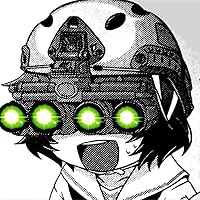
[There is an idea of a Sengoku Nadeko, some kind of abstraction, but there is no real me, only an entity, something illusory, and though Nadeko can hide her cold gaze and you can shake Nadeko's hand and feel flesh gripping yours and maybe you can even sense our lifestyles are probably comparable: i simply am not there.]
March 8, 2019
One of the best books in the series, following a character who's not as quiet and meek as she appears: Nadeko Sengoku. She has reached a breaking point, and it's really cathartic to follow her descent into madness/ascent into a God.

January 17, 2023
While not my favourite mono story, this is excellent. Sengoku getting much deserved development and the way it was handled is so good. This was a fun read and especially the last half or so are unbelievably engaging to read. Another really good Monogatari instalment.

June 24, 2023
I enjoyed this monster tale but I have to admit I was confused about who was narrating the story at first and it became an annoyance when Nadeko kept referring to herself in 3rd person and swapping between 1st and 3rd.

August 4, 2024
I shouldn’t be surprised that the 11th instalment of the Bakemonogatari series is (in my humble opinion) a perfect novel. Our protagonist, Sengoku’s most dislikable trait is how cute she is and she probably agrees but doing something about that would probably be ‘too tiring’.

August 26, 2024
A slow build up but a satisfying ending for me. I've taken a break from reading this series so coming back into it I wasn't sure what to expect - things quickly fell into place though and I found my rhythm reading the wonderfully strange writing style

July 10, 2019
NisiOsiN is the best.
Displaying 1 - 30 of 42 reviews