

What do you think?
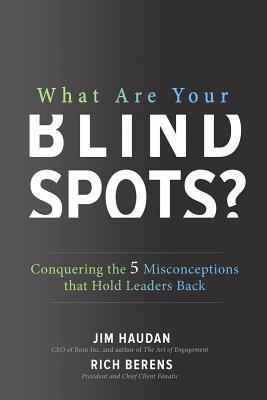
What Are Your Blind Spots? Conquering the 5 Misconceptions that Hold Leaders Back
Uncover your blind spots and reset your leadership approach for long-lasting success in any business Far too many business leaders today are using outdated practices to engage and motivate their people―and they’re failing miserably. Truly resilient, thriving organizations are those that are purpose driven and focus on more than pure profits. Purpose, or an underlying company philosophy, not only drives strategic change, but also encourages customer loyalty and employee engagement. In order to succeed, leaders must be willing to discard old ways of thinking and detrimental business habits―and recognize their blind spots.
Authors Jim Haudan and Rich Berens identify the five most common leadership blind spots that hamper Purpose, Story, Engagement, Trust, and Truth. They take you straight into the board room of well-known leadership teams to illustrate how these blind spots play out and the impact they have on organizations. You’ll learn how to identify and overcome your own blind spots and embrace positive, forward-thinking new practices.
What Are Your Blind Spots equips you with the tools needed for a personal leadership reset. You’ll discover how to increase engagement, productivity, and growth in your own organization. This is an invaluable guide for executives, managers, team leaders, and human resource professionals looking for an effective way to engage and motivate employees at every level of an organization.
Authors Jim Haudan and Rich Berens identify the five most common leadership blind spots that hamper Purpose, Story, Engagement, Trust, and Truth. They take you straight into the board room of well-known leadership teams to illustrate how these blind spots play out and the impact they have on organizations. You’ll learn how to identify and overcome your own blind spots and embrace positive, forward-thinking new practices.
What Are Your Blind Spots equips you with the tools needed for a personal leadership reset. You’ll discover how to increase engagement, productivity, and growth in your own organization. This is an invaluable guide for executives, managers, team leaders, and human resource professionals looking for an effective way to engage and motivate employees at every level of an organization.
192 pages, Hardcover
Published October 11, 2018
About the author
Jim Haudan
4 books1 followerJim Haudan is a different kind of leader, with a passion that goes beyond leading Root to success. For more than 25 years, he has been helping organizations unleash hidden
potential by fully engaging their people to deliver on the strategies of the business. With his background as a coach, it’s not a stretch that the company Jim co-founded focuses on tapping employees’ discretionary efforts – the kind that produce winning results.
Root partners with senior teams at major companies worldwide to build creative ways to execute strategy. A unique blend of 160 business experts, analysts, artists, writers, and educators, the Root team draws an organization’s people into the business by appealing to basic human curiosity and intelligence and by combining insights, art, visualization, and dialogue in innovative ways.
Root has worked with more than 500 companies and has impacted millions of people over three decades. Root’s story is captured in Jim’s best-selling book, The Art of Engagement: Bridging the Gap Between People and Possibilities (McGraw-Hill, 2008).
Jim is a frequent speaker on leadership alignment, strategy execution, employee engagement, business transformation, change management, and accelerated learning. He has spoken at TEDx BGSU, Tampa TEDx, and The Conference Board events, and has given the keynote speeches for numerous organizations throughout the world. He also writes a weekly column for Inc. and contributes to business publications and blogs, such as Switch & Shift, where he was included on the Top 75 List of Human Business Champions.
Ratings & Reviews
Friends & Following
Create a free account to discover what your friends think of this book!
Community Reviews
Displaying 1 - 9 of 9 reviews
October 14, 2018
Too many leaders today are leaders in title only. They don’t possess relevant skills, and they read book after book or attend seminars to tell themselves that they are indeed strong leaders. These leaders lack conviction in their teams or often fail to see how their misuse of their “leadership skills” only demoralize or make teams feel powerless and unappreciated.
What Are Your Blind Spots? Conquering the 5 Misconceptions that Hold Leaders Back by Jim Haudan and Rich Berens is one of my favorite leadership books that I have read in quite a while. They acknowledge that too many “leaders” don’t understand how they are holding themselves and their teams back. Sadly, these same leaders have no idea what the top leadership misconceptions are and what to do about them. By not recognizing how they are holding others back, entire teams and companies are underperforming and lack the ability to empowering people.
The authors offer tools, strategies, and stories about how blind spots have an adverse impact. Only 30% of our workforce is actively engaged, and that hasn’t changed for years. It won’t change until authentic leaders recognize their blind spots and engage in restoring purpose, engagement, and connection.
Here are the 5 leadership misconceptions that hold leaders back:
1. Purpose: Too few organizations operate purposefully. This adversely impacts people, profits, and growth. The authors share how to build a strong purpose statement that will resonate with teams and aren’t just words. Make purpose personal and be passionate about the purpose, not the numbers.
2. Story: Too many companies think that they have an unusual and compelling story to tell that everyone wants to hear. You don’t. Leaders have it in their heads but can’t articulate it to anyone else. What do you need to do? Proactively close the gap between what you say and what you mean. Also, don’t let your stories kill your strategies. Last, don’t place foolish emphasis on WIIFM.
3. Engagement: Let’s face it. Enough companies today encourage little to no participation within the organization or with teams. They don’t listen to what their people want or even really care. ASK what your people need. Focus on the emotional versus the rational. The authors suggest using dialogue to reach the hearts and minds of your people. Last, flip the switch for your people. Take the challenges of the organization to your teams and listen.
4. Trust: Too many leaders think that people won’t do the right thing unless what they are told what to do. Make priorities clear, invite people to use their strengths, and embrace human variability rather than reduce it. Clear-headed leaders clarify hard lines, guidelines, and no lines to make the complex simple.
5. Truth: Let’s face it. Many leaders don’t want to hear the truth. They feel safer living in a world where what they think is right and think they know what is best for everyone. Wrong. Teams need to feel like they are heard and leaders care. People want to know the truth. Don’t let rumors and a lack of communication rule the day. Use humor every day because it breaks down barriers and walls. People feel safer. Make it a priority to create a truth-telling culture. Be committed and don’t waver. As Haudan and Berens share, “To thyself be true, and others will follow.”
Leaders at all levels need to understand their leadership strengths and weaknesses. Too many fear to see the truth. We all need to be aware of the leadership misconceptions that plague us every day to grow as leaders and bring our teams along as authentic leaders. Pick up a copy of Blind Spots today!
What Are Your Blind Spots? Conquering the 5 Misconceptions that Hold Leaders Back by Jim Haudan and Rich Berens is one of my favorite leadership books that I have read in quite a while. They acknowledge that too many “leaders” don’t understand how they are holding themselves and their teams back. Sadly, these same leaders have no idea what the top leadership misconceptions are and what to do about them. By not recognizing how they are holding others back, entire teams and companies are underperforming and lack the ability to empowering people.
The authors offer tools, strategies, and stories about how blind spots have an adverse impact. Only 30% of our workforce is actively engaged, and that hasn’t changed for years. It won’t change until authentic leaders recognize their blind spots and engage in restoring purpose, engagement, and connection.
Here are the 5 leadership misconceptions that hold leaders back:
1. Purpose: Too few organizations operate purposefully. This adversely impacts people, profits, and growth. The authors share how to build a strong purpose statement that will resonate with teams and aren’t just words. Make purpose personal and be passionate about the purpose, not the numbers.
2. Story: Too many companies think that they have an unusual and compelling story to tell that everyone wants to hear. You don’t. Leaders have it in their heads but can’t articulate it to anyone else. What do you need to do? Proactively close the gap between what you say and what you mean. Also, don’t let your stories kill your strategies. Last, don’t place foolish emphasis on WIIFM.
3. Engagement: Let’s face it. Enough companies today encourage little to no participation within the organization or with teams. They don’t listen to what their people want or even really care. ASK what your people need. Focus on the emotional versus the rational. The authors suggest using dialogue to reach the hearts and minds of your people. Last, flip the switch for your people. Take the challenges of the organization to your teams and listen.
4. Trust: Too many leaders think that people won’t do the right thing unless what they are told what to do. Make priorities clear, invite people to use their strengths, and embrace human variability rather than reduce it. Clear-headed leaders clarify hard lines, guidelines, and no lines to make the complex simple.
5. Truth: Let’s face it. Many leaders don’t want to hear the truth. They feel safer living in a world where what they think is right and think they know what is best for everyone. Wrong. Teams need to feel like they are heard and leaders care. People want to know the truth. Don’t let rumors and a lack of communication rule the day. Use humor every day because it breaks down barriers and walls. People feel safer. Make it a priority to create a truth-telling culture. Be committed and don’t waver. As Haudan and Berens share, “To thyself be true, and others will follow.”
Leaders at all levels need to understand their leadership strengths and weaknesses. Too many fear to see the truth. We all need to be aware of the leadership misconceptions that plague us every day to grow as leaders and bring our teams along as authentic leaders. Pick up a copy of Blind Spots today!

November 19, 2022
A certain kind of person will find this book - and the consultative services offered by the authors' company Root, Inc. which it promotes relentlessly - useful. That person is the caretaker CEO, elevated to a leadership role because of her/his skill at navigating office politics rather than because they have any business acumen, novel or visionary ideas or leadership abilities. Despite receiving stratospherically-high salaries to drive corporate strategy and performance, these CEOs are unable to effectively define and message a corporate mission, establish a strong corporate culture, or create conditions for high-performing teams. Fortunately for them, they can read about how to do these things in Blind Spots and then pay Root a fortune to help facilitate changes while they go back to consolidating their power, laying off people to pay for the costs of their own failures as leaders, and collecting outsized compensation for "making the tough calls" and "accountability" for corporate performance.
This type of person will likely be taken in by the historical examples of "blind spots" described by the authors that include the bloodletting treatment that caused George Washington's death, and a cigarette marketing campaign claiming that doctors recommended cigarettes. But my reaction was that none of these examples were "blind spots," which are areas outside one's field of vision that contain unseen information or risks. Bloodletting was not a "blind spot" because nobody knew what caused disease at that time. There wasn't a source available that Washington's doctors just failed to consult because they didn't know about it. There wasn't even technology available that would have allowed them to treat him better had they just looked. Nor was the cigarette marketing an example of a "blind spot." It was a deceptive marketing campaign that the cigarette company knew full well distorted what doctors said about cigarettes; not a failure to understand that cigarettes were unhealthy. The examples seem to be "things that were once commonly believed to be true, were claimed to be true or plausibly could have been true, but no longer are," not "blind spots."
That said, the actual principles in the book do seem to reflect "blind spots," albeit blind spots of CEOs who lack the talents and self-reflective abilities to identify and correct their own leadership deficiencies. The points made in Blind Spots relating to outdated leadership beliefs and poor corporate culture are reasonable enough, and the writing is competent. But even at 150 pages, it's a slog to read, as it's all a high-level discussion about "bad corporate culture" that is allegedly solved by Root using the principles in Blind Spots, producing dramatic turnarounds, without providing any specifics about what was changed or how this produced different results. It's "take our word for it, we turned around the whole company." What I learned is that if you have to retain a company like Root to address the issues raised in Blind Spots, you really shouldn't be in a leadership position.
This type of person will likely be taken in by the historical examples of "blind spots" described by the authors that include the bloodletting treatment that caused George Washington's death, and a cigarette marketing campaign claiming that doctors recommended cigarettes. But my reaction was that none of these examples were "blind spots," which are areas outside one's field of vision that contain unseen information or risks. Bloodletting was not a "blind spot" because nobody knew what caused disease at that time. There wasn't a source available that Washington's doctors just failed to consult because they didn't know about it. There wasn't even technology available that would have allowed them to treat him better had they just looked. Nor was the cigarette marketing an example of a "blind spot." It was a deceptive marketing campaign that the cigarette company knew full well distorted what doctors said about cigarettes; not a failure to understand that cigarettes were unhealthy. The examples seem to be "things that were once commonly believed to be true, were claimed to be true or plausibly could have been true, but no longer are," not "blind spots."
That said, the actual principles in the book do seem to reflect "blind spots," albeit blind spots of CEOs who lack the talents and self-reflective abilities to identify and correct their own leadership deficiencies. The points made in Blind Spots relating to outdated leadership beliefs and poor corporate culture are reasonable enough, and the writing is competent. But even at 150 pages, it's a slog to read, as it's all a high-level discussion about "bad corporate culture" that is allegedly solved by Root using the principles in Blind Spots, producing dramatic turnarounds, without providing any specifics about what was changed or how this produced different results. It's "take our word for it, we turned around the whole company." What I learned is that if you have to retain a company like Root to address the issues raised in Blind Spots, you really shouldn't be in a leadership position.

September 29, 2018
This book dives deeply into five areas that are written and talked about often in the realm of leadership, but does it in a way that is different from all the rest. The areas of purpose, story, engagement, trust, and truth are all leadership dispositions that most would think are very straightforward. Because they are dispositions, however, we become blind to our organizations and our own approach to these, we miss opportunities for improvement or even gross inadequacies. This book is not just all talk; practical applications are given along with activities to identify and inform our blind spots. We all have a leadership style and mantra, and this book gives the reader a chance to take an introspective look at whether that mantra is what we want those on our team to be sharing about us. As a leader, student of leadership development, and leadership development professional, I found the lessons in this book engaging, able to be used immediately, and transferable. I grew professionally from reading this book.

September 4, 2018
I thought this was a very good leadership book. I've spent a lot of time studying leadership development and I think the practical exercises in this book can be used in any organization. Haudan and Berens outline the blind spots leaders can have around purpose, story, engagement, trust, and truth. The stories used to explain the five areas are clear and meaningful. And then the exercises described in detail are some of the best I've seen in all the years of my studies.
I highly recommend this book to any leader who wants to take his or her organization to a higher level where employees can do their best work.
I received an electronic advance copy of the book; however, I will be adding the hardback to my library as soon as it is released.
I highly recommend this book to any leader who wants to take his or her organization to a higher level where employees can do their best work.
I received an electronic advance copy of the book; however, I will be adding the hardback to my library as soon as it is released.

October 20, 2018
This book does a wonderful presentation of the blind spots that many of our leaders encounter every day. Starting with surprising advertisements on how what we accept as normal before turned out to be totally ridiculous ideas today, the authors successfully derived an analogy on how these common leadership blind spots are commonly accepted by many people.
The book will not just provide you with ideas but more importantly, asks you to do some exercises that will help you in making the most practical applications of what you read.
I am very excited to let you know that this book will help you put things into perspective when you lead your organization.
The book will not just provide you with ideas but more importantly, asks you to do some exercises that will help you in making the most practical applications of what you read.
I am very excited to let you know that this book will help you put things into perspective when you lead your organization.

January 27, 2020
A straight-forward book regarding employee engagement. It deals with breaking down barriers and getting all levels of leadership engaged in purpose. It speaks directly to the issues and gives tools for analysis and improvement. While there is a lot of common sense things here, this book shows that the practical application of these methods will help catapult companies into areas where they thought were once unattainable. In some instances, it will keep companies relevant.
The most important theme is: Get to know your employees, listen to them and show them their value. The rewards are unfathomable they are so great.
The most important theme is: Get to know your employees, listen to them and show them their value. The rewards are unfathomable they are so great.

November 4, 2018
This text highlights organizational blind spots that leaders and followers alike have probably experienced at some point in thier working life. The blind spots highlighted are purpose, story, engagement, trust and truth. While these may seem obvious the authors present new ways to employ in overcoming them to move an organization forward. I recommend this short book to anyone looking to improve their organization.

February 8, 2019
So boring, couldn't push my self to finish it.

July 21, 2018
I enjoyed this book about identifying your personal blind spots in life. I think it's applicable to anyone from any walk of life.
Many thanks to NetGalley, the author, and the publisher for our ARC. All opinions are my own.
Many thanks to NetGalley, the author, and the publisher for our ARC. All opinions are my own.
Displaying 1 - 9 of 9 reviews