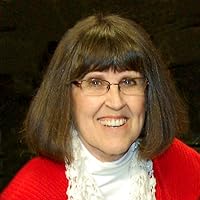
Elaine Lobl Konigsburg (February 10, 1930 – April 19, 2013) was an American writer and illustrator of children's books and young adult fiction. She is one of six writers to win two Newbery Medals, the venerable American Library Association award for the year's "most distinguished contribution to American children's literature."
Konigsburg submitted her first two manuscripts to editor Jean E. Karl at Atheneum Publishers in 1966, and both were published in 1967: Jennifer, Hecate, Macbeth, William McKinley, and Me, Elizabeth and From the Mixed-up Files of Mrs. Basil E. Frankweiler. From the Mixed-up Files of Mrs. Basil E. Frankweiler won the 1968 Newbery Medal, and Jennifer, Hecate, Macbeth, William McKinley, and Me, Elizabeth was listed as a runner-up in the same year, making Konigsburg the only author to win the Newbery Medal and have another book listed as runner-up in the same year. She won again for The View from Saturday in 1997, 29 years later, the longest span between two Newberys awarded to one author.
For her contribution as a children's writer Konigsburg was U.S. nominee in 2006 for the biennial, international Hans Christian Andersen Award, the highest international recognition available to creators of children's books.
Short stories aren't what E.L. Konigsburg is famous for—she released only one other book of them, Altogether, One at a Time, in 1971—but her unique style still comes through in Throwing Shadows, five short stories centered on smart, thoughtful kids just beginning to find their way in the world. First is "On Shark's Tooth Beach", about a boy who lives by the seashore in northern Florida. Ned's father owns a fishing camp that caters to tourists, and Ned helps customers have positive experiences on and around the water. He's used to a wide spectrum of customer behavior, but he's slightly thrown off when an older gentleman who goes by "President Bob" (he once was in charge of a college in Michigan) starts visiting the camp every day, wanting Ned to help him search for shark teeth. Ned and his parents are aficionados when it comes to collecting shark teeth, and President Bob is a rank amateur, but Ned resigns himself to putting other activities on hold so he can comb the beach daily with President Bob. Theirs is an unconventional friendship, if it rightly can be labeled that, but it might teach Ned something about self-sacrifice for a fellow human in need of companionship.
"The Catchee" is next, the shortest story in this book at seventeen pages. Avery Basford's brother Orville, older by six years, has a knack for getting away with light mischief, but from an early age Avery realizes he doesn't share that knack. He terms himself a "catchee", someone who gets in trouble every time he does something wrong and often even when he's guilty of nothing but unfortunate timing. Avery tells Orville his thoughts on the matter, and big brother agrees; he has observed the same thing about Avery. But by accepting his status as a catchee, Avery can deal with the stressful situations it puts him in, calmly explaining himself to whatever authority "catches" him until the truth prevails. It's not fun being a catchee, but Avery makes the best of what he is.
Antonio might be the ideal narrator for "In the Village of the Weavers", but he hasn't learned fluent English yet, so Ampara assumes the role. She is learning to be a professional guide for tourists who want to witness the beauty of her country, Ecuador. One day when she accompanies a guide to the village of weavers, Ampara makes friends with Antonio, who today is taking the place of his grandfather to sell the family's weaving because his grandfather is sick from an infected foot wound. Antonio's grandfather won't go to the hospital, so Ampara makes the trip and brings back medicine. After Antonio gets to know Ampara better, he brings groups of other young weavers on the bus tours that Ampara is a guide for. There isn't much extra room onboard, but the kids entertain the tourists and become a welcome addition. Ampara and Antonio have benefited from their friendship, and will continue learning from each other for the foreseeable future.
Our next narrator is Phillip, who has a heart-changing experience with the older generation in "At the Home". After breaking his arm in a skateboard mishap, Phillip spends a lot of time talking to residents at the nursing home where his mother works. Mr. Malin, an elderly Ukranian man, sings folk songs for him, and Phillip starts bringing a cassette recorder so his own father, who enjoys Ukranian music, can hear Mr. Malin. Phillip meets Miss Ilona Szabo, an old Hungarian woman with a long story as to how "being so ugly saved my life." He returns day after day to record Miss Ilona's expansive narrative, which goes back to 1939 Hungary and proceeds up to the present day. Dozens of residents lobby for Phillip to listen to and record their stories, and before Miss Ilona is done with him he sees how lonely the residents of a home for the elderly must be, forgotten by most of the world. A kid taking an interest in them is a boon to their morale.
"With Bert & Ray" is our finale. William and his mother are in financial straits after his father dies. An alcoholic, Pa left them with a mound of debt, but William and Ma hold an estate sale for Pa's belongings so they can pay their dental bills and get a head start on other obligations. Bert and Ray, who own an antique shop in another section of town, offer quite a bit of cash for some of Pa's things, and they ask Ma if she might like to manage a few estate sales for them. With no better prospects, Ma agrees, and she and William become friends with Bert and Ray while learning to run estate sales. Mother and son steadily improve their understanding of the job, and people begin contacting them to run sales independent of Bert and Ray. Soon Ma is better at spotting valuable antiques than her two mentors are, but she developed a submissive personality under Pa's domineering presence, and wouldn't dream of showing up Bert and Ray. It takes intervention by William to prove to Ma how good she is at the antique game, illuminating her path to a promising future after William eventually leaves for college and embarks on his own life. Sometimes tomorrow, however uncertain, does take care of itself...if you're willing to show a bit of tenacity.
Throwing Shadows isn't as remarkable as most of E.L. Konigsburg's novels, but the stories have decent rhythm and are all readable. I would rank the five from best to least, but there isn't much difference in quality; one is pretty much as good as the next. If you appreciate perceptive characters and subtle stories, you'll enjoy Throwing Shadows at least somewhat. Children's literature is lucky to have E.L. Konigsburg.
“It is sometimes necessary to use unnecessary words like thank you and please just to make life prettier.” Pg 66 “You have to know something about the Hungarian language. It is unrelated to any other European language. It is unrelated to any other European language except Finnish, and people that I have known who have been to Finland are not so sure that it’s related there either.” Pg. 90 “It is a peculiar language, almost all consonants. I think we donated our share of vowels to Hawaii.” Pg. 90
I missed this one when I was a kid, wish I hadn't. 5 super compelling stories that each tell the story of a child becoming a better version of themselves. A perfect easy read for helping a child (or anyone) learn empathy and the art of imagining the world complexly.
Throwing Shadows is a collection of short stories published by E.L. Konigsburg in 1979. Each story is told in the first person, from the perspective of a young person who, during his or her story, has a significant encounter with another person which changes his or her life.
The stories are as follows: On Shark's Tooth Beach. Ned Hixon, son of Hixon of Hixon's Landing gets into a competition of sorts with President Bob, an older man who claims to be a former university president. They search for fossils of shark teeth all along the beach, and try to outdo each other in size, number, and uniqueness. The Catchee. Avery, an African-American boy, finds himself to always be the unlucky one who gets caught doing something wrong, or stuck in the middle of a misunderstanding. His older brother, who has noticed this special talent of Avery's, helps him to see its value. In the Village of the Weavers. Ampara, who is a tour guide for visitors to her native Ecuador, tells the story of her friendship and rivalry with an enterprising boy named Anthony. At the Home. Phillip tells of his experience listening to (and recording) Miss Ilona, a resident at a nursing home, as she tells the story of how being ugly saved her life. He also becomes a popular fixture at the home, as other residents beg him to hear their stories as well. With Bert & Ray. William pushes his mother toward a career selling antiques after dealers Bert and Ray teach her how to run house sales. This helps her to overcome the subservient attitude she developed before her alcoholic husband died.
What really struck me more than anything else about this book was the diversity of the different narrators. Some authors sound the same no matter whose point of view they are writing from. Konigsburg's characters are as different from one another as any real people, and though these stories are just quick peeks into the worlds of these characters, the reader feels as if he/she gets to know each one in depth. Ampara and William have interesting accents, which help to differentiate their voices from the others', but even without those obvious markers, these characters are all so well developed there can be doubt that each one is a separate entity.
I also really loved the way the stories fit together, not just thematically, but in certain details as well. The theme of a boy's voice changing appears in more than one story, as does business partnership between mother and son, and the notion of older generations passing on wisdom to the new. I especially appreciate how Konigsburg's stories aren't just about kids interacting with kids - rather, she spends a lot of time writing about kids interacting with the many adults who populate the world, outside of just relatives and teachers. These stories are very real because they focus on tiny slices of life that are both specific to an individual and universally applicable. I am in awe of this book, and I hope it remains in print so a new generation of kids can come to appreciate its brilliance.
These five short stories feature twelve-year-old boys and girls discovering their sense of self. All are set in the United States, except for one in Ecuador. Written with wit and intelligence, they explore unique, engaging topics that kids will relate to.
1. On Shark's Tooth Beach by Ned - A retired older man eagerly waits at the dock each day for Ned to return from school or the weekend, when they go fossil hunting. Ned is initially annoyed but eventually finds himself competing with him. A compelling story of overcoming arrogance. (5/5)
2. The Catchee by Avery - Avery, the last one to hold the stick, recounts a series of misadventures where he's mistakenly caught doing something wrong until he clarifies the situation to the authority. Hilarious and insightful. (5/5)
3. In the Valley of the Weavers by Ampara - Ampara trains as a tour guide in Ecuador and encounters Antonio from the Otovalo people. She helps him resolve a problem, leading to a clash of stubbornness and pride before they find common ground. A powerful story of stubbornness and pride. (4/5)
4. At the Home by Philip - Philip accompanies his mother to a volunteer shift at an old folks' home. He retrieves batteries for his cassette player across the street and meets a Ukrainian man singing Russian lullabies. Later, he encounters an older woman with a Hungarian accent, eager to share her story on tape—prompting others to do the same. A charming tribute to the lessons we learn from older generations. Excellent. (5/5)
5. With Bert and Ray by William - William's father passed away six years ago; he wasn't a kind man, leaving his mother timid. During a garage sale of his belongings to pay off dental bills, they meet happy antique investors who later hire them for estate sales. A personal favourite, reminiscent of my own experience in collectibles and estate sales. An enjoyable read as always. (5/5)
I bought this at my libraries book sale - a discarded book. I love Konigsburg's books, and I met her once at a writer's seminar while I was working in Reno. Lovely lady. Jennifer, Hecate, William McKinley etc is maybe my favorite of her books. This one is not one continuous story, but each chapter is a story by itself. Chapter 3 made me laugh last night while reading it.
5/9/12 - I finished this book the other night, and I just changed my stars to 5. I do love Konigsburg's writing! The main characters voices were/are so distinct, there's no possibilty of mixing them up. I was thinking I'd donated this book to a book exchange the next time I meet up with some Maudies, but now I'm thinking I'm going to keep it. Highly recommended!
This novel by E.L. Konigsburg is a series of short stories. Each chapter is about a different person, and there is no through line that connects them together. The stories do tie together though in that each of the characters learn something about themselves, and they learn to embrace it, or to make the changes to become what they would rather be. It's quite a good book.
These fictional stories are good because they shed light on humankind on an individual level and caused me to think about my own life in those situations and how I would react. I liked this one much better than Jennifer, Hecate but not as much as From the Mixed-up Files or The View from Saturday.
E.L Konigsburg has been one of my favorite authors since childhood...The View From Saturday and From The Mixed Up Files of Mrs. Basil E. Frankweiler being two of my favorite childhood books...but I think I enjoyed these stories much more as an adult than I would have if I had read them as a child. They are simple and lovely, all but one written from a child's point of view, but the part I love most is just the quiet wisdom in these stories.
I have no idea where this book came from but it was a beautiful set of stories about kids growing up and realizing bits of life. One of my favorites was a story about a kiddo who recorded the stories of the elderly in a home. I think it’s just a bit of a lesson in the wisdom of kids. Gotta listen to em
Basically liked each of the five stories in this anthology more than the one proceeding it. Like much of E.L. Konigsburg's work, the settings feel kind of dated--and maybe the stories feel kind of innocent to me, too, like they're harkening back to a different period of childhood. Or maybe I just don't read as much elementary/middle-grade fiction as I used to.
These stories were okay. I enjoyed the last 2 stories (At the Home & With Bert & Ray) the best because of the interesting character relationships that develop in the stories. I may consider trying to use those last 2 stories in the classroom with my students.
Konigsburg has a real talent for writing from a child's perspective. Each of the five short stories casts a shadow on what was and illumines what could be. It's about how one experience can change a life, or at least your perspective on life. Very fast read! Well worth the time.
Another great book by Konigsburg! I felt like some were not strong enough to stand next to the others, but overall, I would highly recommend this book to kids. I especially liked the story about the boy visiting the old folks home. I think more kids today should do that.
E.L. Konigsberg delivers again. These short stories about human nature all have a lesson to teach. And, in Kongsberg form, the lesson is not pointed out. It comes in quiet reflection. A good read.
I liked E.L. Konigsburg's other book so I thought I'd give this a go. It's 5 short-stories written from the first person perspective. I enjoyed it quite a bit.
This was a fun collection of short stories, featuring really varied plots, characters and voices. I won't go into all of the various plots, but it was a fun, quick read.
At first I was a little disappointed in this book, because I thought it was going to be different. By the end it really won me over. The last couple of stories were really wonderful.
Still one of my favorite authors. I especially loved the story called At the Home, about a kid learning to feel less sorry for himself by helping other people.
Though technologically old-fashioned (cassette tapes and other antiquities), I enjoyed this again. Konigsburg's characters never fail to infuriate, then grow and charm.