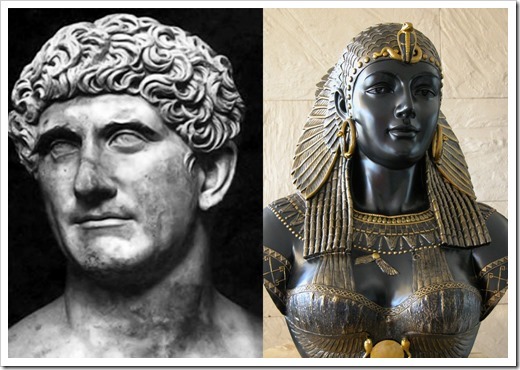
Falling in love with the man she intended only to use for his political power, Cleopatra becomes determined to maintain her hold on the throne of Egypt despite Rome's persistent attacks, until her famous suicide. Reprint.
Judith Tarr (born 1955) is an American author, best known for her fantasy books. She received her B.A. in Latin and English from Mount Holyoke College in 1976, and has an M.A. in Classics from Cambridge University, and an M.A. and Ph.D. in Medieval Studies from Yale University. She taught Latin and writing at Wesleyan University from 1988-1992, and taught at the Clarion science-fiction-writing workshops in 1996 and 1999.
She raises and trains Lipizzan horses at Dancing Horse Farm, her home in Vail, Arizona. The romantic fantasies that she writes under the name Caitlin Brennan feature dancing horses modeled on those that she raises.
Judith Tarr does what she does best, here. Fantastically researched history and really beautiful characters.
While this one is ostensibly about the grand romance between Antony and Cleopatra, I think it's really about Dione, one of the priestesses of Isis. The tumultuous romance of the other two is kinda obvious, after all. Antony and Cleopatra is one of Shakespeare's best Histories. It's probably one of the best-known romances in history.
Is this really enough to carry a whole novel, however well-researched?
Possibly, but Judith Tarr is a better writer than most people ever give her credit for. It's her equal focus on Dione, this priestess of Isis -- of love -- that balances everything out.
There are two relationships in this novel. The mirroring between Dione and her steady scholar from Rome is a wonderfully subtle indictment of Antony and Cleopatra.
The two couples mirror each other. Wonderfully. I was as invested with the quiet, understated romance as I was in the flashy and tragic one, and it served as a really nice antidote.
Between the bigger than life and the totally grounded, I felt like we were getting a wonderfully beautiful and rounded (perhaps eternal) exploration of love.
Some say the story of Cleoptra IX and Marc Anthony is one of the greatest love stories ever told. I agree, especially since it's one of the few true stories.
This is the second book by this author and the second time she's taken me on an adventure in Egypt. The first time, we were there during the first Crusades when the country was under Muslim rule. This time, she's taken me way back to the last of the great pharaohs. I LOVE ancient Egypt, though usually even farther back in time than Cleopatra IX's rule, so this was a special treat for me. And the way the author invoked the colourful temples but also described everyday life was utterly fascinating.
We get the signature conflict between the Roman Empire and Ancient Egypt what with the Caesars considering Egypt a province like any other. The two empires were quite different: Rome being the super organized mega structure while Egypt is this mystically wild place (or maybe it's just in my imagination?). Thus, the two cultures collide and we get a fiery queen fighting to ensure her people's survival while also falling in love with the enemy - at first with Julius Caesar as a political ploy, then with Marc Anthony (apparently) out of true love that ends in the famous disaster. The interesting thing for me about this story, among other things, is the political background: we get the Roman Empire while it was still mighty whereas Egypt had its best times behind it - but then, due to a Caesar being willing to sacrifice everthing for love, Rome also struggled and stumbled.
There is the political aspect - Rome's economical as well as military power, Egypt's earthly riches - but none of it mattered too much in the end. Just like duty didn't matter in the end.
Like I said, this author has a unique way to transport you to the setting of her novels. Egypt lends itself fantastically as a setting in general, but even so, it's not always easy bringing it to life properly. Judith Tarr writes about it as if she had been there, which is why I thoroughly enjoyed the book. Moreover, despite knowing the historical cornerstones and how it would all end, I was sitting on the edge of my seat, shared in the characters' excitement and heartship.
A wonderful adventure and one of the most inspiring (true) love stories.
Two of the most important historical figures from the ancient world.
A love affair for the ages.
Two ancient nations that helped shape the world.
Conquests, politics, war, clashing religions, creating maneuverings and subtle clashes between two of the most powerful nations at the time.
And, on top of all that... MAGIC!
Bear in mind, this is just one guy's opinion. But this book made all of the above REALLY dull. It does not give me joy to say this about a historical fiction novel. But my attention limped through this book.
Overall I found Throne of Isis to be a dry, cold rendering of Cleopatra and Antony. The major details of historical significance were accurate but they were woven into the story as if the author was just inserting uninteresting scenes in-between.
The story is told largely from Dione's point of view, a priestess of Isis. Dione is a fictional character and added pretty much nothing to the story or the history. Dione does start a romantic (pseudo romantic for much of the book) relationship with a Roman, Lucius, an auger for Antony. Lucius is an absolute stick in the mud and bored me to tears. The conversations between Lucius and Dione were rather dull and left no impression of genuine emotions between the two (another issue of the coldness of the writing). I also grew tired of Dione's parts where Cleopatra was nowhere to be found, which was quite often. Dione is rather dull on her own and her parts had many scenes with her children, also boring.
You would think that the parts involving Cleopatra and Antony would prevail, if not in time spent at least in impact. Unfortunately both characters play too limited a role, in my opinion, and their conversations are largely confrontations. The major scenes in the first half of the book involve Cleopatra demanding her sister's death and lands from Antony. The whole way Tarr chose to have the two interact and Cleopatra react to Antony with or without his presence felt very inauthentic to me. Antony, overall, felt cold and unlike what historians have indicated his character was likely to be. The only interesting scenes seemed to be those when Cleopatra and Dione or Cleopatra and a Roman messenger interacted. Cleopatra did at times have entertaining comments, especially when it came to Octavian and Roman customs.
Another note on the character of Cleopatra: Tarr felt it very important to frequently note the unattractiveness of her face. She made sure to have multiple characters note it and it became quite tedious. But, oh the voice! *sigh* I think Tarr may have just gone simply on Roman propaganda and did no research beyond.
I also have a long-standing distaste for magical/fantasy elements in historical fiction and unfortunately Throne of Isis contains such things. Cleopatra is even shown with essentially a witch's circle, calling upon the gods of the underworld because Antony married Octavia as part of his agreement with Octavian. *sigh* Nevermind the fact that I could not imagine Cleopatra doing this but this scene, in a HF novel? Oy.
Overall I was left unimpressed by Tarr's interpretation of Cleopatra and Antony. The telling focused too much on Dione, too little on Cleopatra and when it was focused on her she felt inauthentic to me. A dry novel, certainly.
Judith Tarr should be placed under arrest, tried and convicted for the first-degree murder of an historical figure via a fictional account of that person's life!
Judith Tarr's portrayal of the legendary Cleopatra VII was at the very least a mockery of the very life she sought to do honour through fiction.
Ms. Tarr seems hung up on the "ugly-Cleopatra" idea probably because she has not seen any portraits of Cleopatra VII other than on coins. Admittedly, the minted portraits of Cleopatra VII are horrendous, but by all other historical accounts of Cleopatra's time, she was not an ugly woman - the statuary and inscriptions bear witness to this as well. If Tarr had truly done more thorough research, for example outside of her own public library or a quick Net search - one can only surmise she would have seen fit to write this book better than she did....if not out of the sheer guilt of honoring the memory of probably History's most powerful awe inspiring women of all time.
I can only say that the only worse book on Cleopatra that I have ever read outside of this one is called "That Egyptian Woman!" written during the fifties. (I cant even remember the author it was so bad!) A book with the description and dialogue that sounded like it came right off the set of "I Married Joan."
I wouldn't recommend Judith Tarr's book even as doorstop. Tarr, like a literary Lizzie Borden has performed a nightmarish hatchet job on the Queen of the Nile.
I just didn't enjoy this. I liked the parts actually about Cleopatra, but the parts that focused on the POV character dragged and didn't add much. The magic just isn't my cup of tea in most cases and that held true here. The book was just dull.
Przypadkowo wpadło mi w ręce w bibliotece a totalnie mnie porwało. Realizm drugiego triumwiratu i romantyzm każdego drugiego małżeństwa idealnie wymieszały się z egipskim mrokiem i magią. Jeju co to była za przygoda.
Really a very bad fictional rendering of the story of Antony and Cleopatra. When an author is writing about events in the the 1st Century BCE, she should avoid using “well, la-dee-da!” In any dialogue, for example. The writing was dry, dull, and flat. The characters were completely devoid of character. Any action and passion were non-existent. I don’t even know why I forced myself to read to the end.
A sort-of lower decks look at the story of Anthony and Cleopatra. While the Roman soldier Anthony and the Egyptian queen Cleopatra try and (spoiler alert!) fair to take over the world, we also see a mirror of their relationship in the Roman senator Lucius and the Egyptian priestess Dione. Not having the luxury granted by power and money to do whatever they ant, these two have a much more sedate, mature relationship. They are fascinated by both the differences and similarities they see in each other and in each other’s cultures and they allow a friendship to grow - and let love and marriage bloom without a lot of histrionics.
But with Octavian, Anthony and Cleopatra treating the geopolitical situation like a board game, Dione and Lucius are just two of many, many game pieces that get tossed around.
I liked seeing the usual main characters from somewhat of a distant, which allows for more of critical look. The main character Dione may serve Cleopatra faithfully – but she can also see her flaws.
I was taken aback by the fact that Tarr decides not just to have the characters use magic spells but to have it be real, with astral projecting, ghosts, curses and demons all over the place. I prefer when a story has the characters believe but the writer making it clear its not working, or to at least have an enigmatic ‘maybe-yes / maybe-no’ ending. This just seemed weird to all of the sudden having workable magic, but also have it not change the plot at all - a very wobbly bit of genre shifting.
One of the best written books I have ever read. This will immerse you right into the world of Cleopatra and Antony. I love that Tarr acknowledged that Cleopatra was Greek in origin and was not very beautiful, which a lot of lay people do not know. I LOVED the incorporation of magic and religion, enhances by Dione’s character. Dione was an amazing character and I loved Lucius as well, the fact it was told largely through their eyes and not Cleopatra honestly made this story better. This book felt like a spiritual activation or a past life remembrance, I hope more people find out about it.
I enjoyed this thoughtful portrayal of Antony and Cleopatra--ranking it right up there with Margaret George's autobiographical novel "The Memoirs of Cleopatra" & Gillian Bradshaw's take on Caesarion, "Cleopatra's Heir". Judith Tarr populated her tale with well-rounded secondary characters, and incorporated Egyptian mythology very well.
I adore Judith Tarr (I don't know why no one else seems to read her!) but this one wasn't a standout for me, possibly because I knew going in exactly how it would end, as it's Cleopatra after all. Dione isn't a fantastic heroine/narrator for me - she was okay, but not as good as Meriamon in Lord of the Two Lands. And Tarr couldn't pull off the sexual awakening plotline as adeptly in this book as in that one, considering that this heroine is a mature woman with two children. I just wanted them to get to it already. The unexpected character death at the end threw me, though. Why did Tarr have to do that? (Only because it's exactly what that character would have done but still!!) Anyway, it was a book that bothered me, and in that sense Tarr was successful, I suppose, but this isn't one I'll reread.
Read this at the tender age of twelve and absolutely loved it. Recently re-read and while the romance between Dione and Lucius is rather lackluster, this is still a well-researched read with a fun element of magic. Cleopatra reads as very human here: she's intelligent and alluring, while also temperamental and arrogant. The most recent biographies that I've read suggest that she may have been ordinary looking rather than downright homely as portrayed here, but the savvy, wit, and charm that she apparently had are well-realized in Throne of Isis. The book is best when she's on the page, that's for sure.
I would have given this book another star if I had reviewed it last night, when I was done reading it. However, now that I let it settle, it dropped in ratings. I think it was because I like to keep my four and five-star reviews for books that really stick with me and that I can remember what happened in detail days later. Although I liked Throne of Isis, A. it took me more than two days to read which isn't great for me so I probably found it a bit boring, and B. I can't remember a lot of what happened, it drops the rating. It's a good book, though, just not great.
I love the story of cleopatra and the way tarr wrote of her and marc Antony just added to my love of it. Egypt is fascinating all by itself, when you add war, love, friendship, and power it makes it a book you just can't put down. What I loved most about the story was that it wasn't told through cleopatra, but a ficticious character that had a story of her own. Her story was just as captivating as cleopatra's, however, much less tragic.
This was one of those novels that I didn't want to see end, so engrossing was the story. Knowing the outcome already, I didn't want to finish the final hundred pages and see the empire that Antony and Cleopatra had built come collapsing around them. Marvelously written, Tarr brings to life these historical figures in such a way to make them not only feel realistic, but to make the reader feel as if they had been part of their lives.
Read years and years ago, just thought of it because of another book I am reading which reminds me so much of this,.Hand of Isis . This is good, if not too memorable. A solid type of story.
Throne of Isis is set during Cleopatra's reign, though Cleopatra is not the main character. The setting serves as a backdrop for a romance between a Roman and an Egyptian. Tarr's book is very good, and she presents a very believable portrait of Egypt's infamous or famous last Pharaoh.
While it seems like a Cleopatra and Antony story, I found the relationship between Dione and Lucius to be more entjoyable. A beautiful love story of what was not meant to be.