

What do you think?

The strange case of Billy Biswas
The Strange Case of Billy Biswas is a compellingly thought provoking novel. A novel in which the normal and the abnormal, the ordinary and the extraordinary, illusion and reality, resignation and desire to rub shoulders.
The protagonist, Billy Biswas, is a man of extraordinary passions. He has everything going for him - education, wealth, status, travel and a loving wife. Yet his inner world is rocked by a groundswell of discontent. He is consumed by a restlessness which grows steadily...
Characterised by great elan and sophistication, the narrative unfolds in quick succession, and would be hard to believe were it not related in such a matter of fact, down to earth manner
The protagonist, Billy Biswas, is a man of extraordinary passions. He has everything going for him - education, wealth, status, travel and a loving wife. Yet his inner world is rocked by a groundswell of discontent. He is consumed by a restlessness which grows steadily...
Characterised by great elan and sophistication, the narrative unfolds in quick succession, and would be hard to believe were it not related in such a matter of fact, down to earth manner
242 pages, Hardcover
First published January 1, 1971
Ratings & Reviews
Friends & Following
Create a free account to discover what your friends think of this book!
Community Reviews
Displaying 1 - 30 of 57 reviews

December 19, 2015
It's fascinating, and yet a tad shameful, that almost everyone who's read this book had never heard of it until someone happened to tell them about it. It's so obscure when it should be downright popular.
I get completely put off when I see that Indian literature is written by authors who spend half, less, or none of their time in this country. They live, usually, in the UK and the US, but they write about India and Indians. I don't understand that. You don't see the country fit to live in permanently, then why glorify it in your writing? It reeks of hypocrisy and pandering; of wanting to be exotic. This author and this book are completely different from the herd.
The story is engaging and well written, with typical Indianisms and a few literal translations (from Hindi to English) that are delightful. To give a basic gist of the story, Billy Biswas, born and brought up in an upper class Delhi society in the early post-British era who loves anthropology and becomes a professor, disappears one day during a college trip to the tribal forests. Romi, the narrator and one of the handful of Billy's closest friends, tell us about the strange case of Billy Biswas.
The book has elements of mystery, mysticism, folklore, and social commentary. Despite the year it was published in and the occasional temporal references, the book can pass off as contemporary. It's that good.
If you want to read good, proper Indian literature, the way Indian literature should be (according to me, at least), please make it a point to read this book.
I get completely put off when I see that Indian literature is written by authors who spend half, less, or none of their time in this country. They live, usually, in the UK and the US, but they write about India and Indians. I don't understand that. You don't see the country fit to live in permanently, then why glorify it in your writing? It reeks of hypocrisy and pandering; of wanting to be exotic. This author and this book are completely different from the herd.
The story is engaging and well written, with typical Indianisms and a few literal translations (from Hindi to English) that are delightful. To give a basic gist of the story, Billy Biswas, born and brought up in an upper class Delhi society in the early post-British era who loves anthropology and becomes a professor, disappears one day during a college trip to the tribal forests. Romi, the narrator and one of the handful of Billy's closest friends, tell us about the strange case of Billy Biswas.
The book has elements of mystery, mysticism, folklore, and social commentary. Despite the year it was published in and the occasional temporal references, the book can pass off as contemporary. It's that good.
If you want to read good, proper Indian literature, the way Indian literature should be (according to me, at least), please make it a point to read this book.
March 8, 2014
Would have never come across this book had a well read bookseller not thrusted it upon me, assuring that - "In sahib ne 1970s mien wo sab likh ke chod diya jo aap log abhi dhang se samajh bhi nahi paa rahe hain" - which roughly translates to "This guy could pen down the very stuff (so beautifully) in 1970s which you are grappling to even come to terms with".
Chances are that you will identify in bits and pieces with the main character Billy Biswas who is an explorer of the life as they say it but to me, beautiful even more were the sketches of his two best friends, the narrator (an IAS officer) who is earnest in his pursuit of understanding Billy Biswas for us and the female friend (a practicing psychologist) who is intriguing even for Billy himself for her knack of looking beyond the obvious.
A light read. An inconclusive read. Can be enjoyed both for the story and for the larger questions it choses to pose but does answer definitely - which is the best part! Mule over or let go!
Chances are that you will identify in bits and pieces with the main character Billy Biswas who is an explorer of the life as they say it but to me, beautiful even more were the sketches of his two best friends, the narrator (an IAS officer) who is earnest in his pursuit of understanding Billy Biswas for us and the female friend (a practicing psychologist) who is intriguing even for Billy himself for her knack of looking beyond the obvious.
A light read. An inconclusive read. Can be enjoyed both for the story and for the larger questions it choses to pose but does answer definitely - which is the best part! Mule over or let go!

December 31, 2015
I was surprised at the quality of writing and I was hooked on to it. The concepts explored in the book, including belief/religion, patriotism, societal parochialism, escapism, anarcho-primitivism, are things that I have been contemplating in the recent past. In addition, I was able to relate to the protagonist's idiosyncrasies in rather disconcerting ways. The anecdotal nature provided sufficient unreliability to the narrative to make things more interesting. Although I felt that the end was relatively underwhelming, I would recommend this book to anyone who hasn't read the author's work before or who hasn't tried Indian authors from this period.

April 27, 2023
I read this book for the second time in my life, and it's shaken me this time too. It's a story of a man who didn't belong to this world and how he tried to leave it but couldn't. It's also a story of alternative modes of life, of unknown depths of tribal civilizations, of people who search for themselves in unusual places, of people who answer the call unequivocally and pay the price for it. We still don't know much about the marginalised tribal people of Central India and their way of life no matter how many anthropologists have researched them. It's a book that I'll read again after a while.

March 22, 2013
i borrowed the book because i thought it looked interesting. Little did i know that it would transform me. I found it hard to even put the book down. Arun Joshi is an excellent narrator and the book gripped me from start to end. Billy's character deserves a place equal to Zorba in the land of literature. Everyone should read this book.
I await the day when the primitives will call out to me to join them.
I await the day when the primitives will call out to me to join them.

May 14, 2019
This was one of the books recommended in an online reading group for offbeat books. While this did not get selected to be read together, I was so charmed by the cover and theme that I ended up buying it. It took me 2 years though to get around to reading it.
In come ways I found the theme similar to the books 'Razor's Edge' and 'Moon and the Six Pence' by Somerset Maugham. The protagonist is someone who is frustrated with the banality of high society living of a big city and seeks a deeper meaning in life. While the protagonist of the Razor's edge seeks interesting experiences and that of Moon and Six Pence the inspiration for his art, the protagonist of this book's quest is somewhat more mystical in nature. He is shown to have mystical experiences right from his childhood days that drives him towards life among tribal people - a primeval experience - a life of simplicity in the material world accompanied by a much richer experience in the spiritual world. This aspect kind of reminded me of Ursula Le Guin's novella "The Word for World is Forest" as well - a story of conflict between rapacious capitalistic civilization and a mystical tribal culture.
I personally relate to stories of protagonists who are frustrated with banality of mundane ordered life and seek to break out and seek something more meaningful. I have always felt it. But I have never been clear what it it is that I am seeking - only what it is that I want to get out of. And with just that never had the courage to break my bonds and step into uncharted territories seeking that golden barrage - that abstract something missing from my life. But I have always been interested in stories where protagonists muster that courage. And this was one such book.
At a social level it is a conflict between two ways of life - the civilized life and tribal life. Civilization seeks to maintain an air of superiority and seeks to reform the tribal. But what if tribal life has something that is lacking in civilized life? The story kind of brings to light the tragic outcomes of encounters between civilization and tribalism. It also shows how the so called civilized ones dehumanize the aborigine. This is quite a relevant theme in the context of a recent incident where an young American sought to evangelize an isolated tribe against laws protecting the isolation in the Andaman islands and got killed in the process. Maybe individuals and societies should be allowed to follow their own destinies and course of evolution without interference from other individuals and societies. Like suggested by the prime directive of star trek regarding encounters with alien races. Maybe many of the tragedies of today's world such as terrorism, international conflict are result of human societies not being allowed to evolve a their own pace and in the direction of their choice.
Overall a highly though provoking book that made me think at many different levels.
In come ways I found the theme similar to the books 'Razor's Edge' and 'Moon and the Six Pence' by Somerset Maugham. The protagonist is someone who is frustrated with the banality of high society living of a big city and seeks a deeper meaning in life. While the protagonist of the Razor's edge seeks interesting experiences and that of Moon and Six Pence the inspiration for his art, the protagonist of this book's quest is somewhat more mystical in nature. He is shown to have mystical experiences right from his childhood days that drives him towards life among tribal people - a primeval experience - a life of simplicity in the material world accompanied by a much richer experience in the spiritual world. This aspect kind of reminded me of Ursula Le Guin's novella "The Word for World is Forest" as well - a story of conflict between rapacious capitalistic civilization and a mystical tribal culture.
I personally relate to stories of protagonists who are frustrated with banality of mundane ordered life and seek to break out and seek something more meaningful. I have always felt it. But I have never been clear what it it is that I am seeking - only what it is that I want to get out of. And with just that never had the courage to break my bonds and step into uncharted territories seeking that golden barrage - that abstract something missing from my life. But I have always been interested in stories where protagonists muster that courage. And this was one such book.
At a social level it is a conflict between two ways of life - the civilized life and tribal life. Civilization seeks to maintain an air of superiority and seeks to reform the tribal. But what if tribal life has something that is lacking in civilized life? The story kind of brings to light the tragic outcomes of encounters between civilization and tribalism. It also shows how the so called civilized ones dehumanize the aborigine. This is quite a relevant theme in the context of a recent incident where an young American sought to evangelize an isolated tribe against laws protecting the isolation in the Andaman islands and got killed in the process. Maybe individuals and societies should be allowed to follow their own destinies and course of evolution without interference from other individuals and societies. Like suggested by the prime directive of star trek regarding encounters with alien races. Maybe many of the tragedies of today's world such as terrorism, international conflict are result of human societies not being allowed to evolve a their own pace and in the direction of their choice.
Overall a highly though provoking book that made me think at many different levels.

April 25, 2014
I read this book almost seven years back as part of my English class and I am eternally grateful to my teacher for introducing me to it. It is a poignant masterpiece of Indian literature that takes you on a man's journey from following norms (or trying to) to eventually breaking free on his own terms in a society that has always followed convention. Told from the point of view of Billy Biswas's friend this book remains etched in my memory as one that I thoroughly enjoyed and will read again and again for years to come.
Recommended for people who appreciate good, profound writing and a unique story.
Recommended for people who appreciate good, profound writing and a unique story.

April 20, 2013
Truth be told- it did leave me dazed and confused immediately after finishing it. However, plotted against the backdrop of India in the 70s, with its flawless english and vivid imagery, this book did leave a mark.Strange it may seem for one to abnegate the luxuries of modern life, and lead a tribal life, but that's what billy biswas' story is all about.A good and a quick read, with the message - "The most futile cry of man is his wish to be understood"

January 14, 2026
I will not talk about the morals and ethics of the civilisation.. I will not criticise Billy.
But what was this book??? was it written by a human hand or was it engraved in a dream? There is no doubt that one cannot read this book only once, I just finished it but I crave to read it again...
Poor Romi....
Indeed a strange strange case...
AND THIS BOOK WAS WRITTEN 56 YEARS AGO!!!
But what was this book??? was it written by a human hand or was it engraved in a dream? There is no doubt that one cannot read this book only once, I just finished it but I crave to read it again...
Poor Romi....
Indeed a strange strange case...
AND THIS BOOK WAS WRITTEN 56 YEARS AGO!!!
This entire review has been hidden because of spoilers.

November 13, 2012
The best book ever.

August 12, 2019
I stumbled upon this book accidentally at a book store and almost picked it up out of instinct and I am glad I did it.
Once I started reading , I couldn't hold back.
Set in 1950's-60's , published in 1971. The story is relevant even today. It touches so many topics, capitalism, Tribalism, Spirituality, Socialism, Primitivism, Magic, Reality, Superstition, Gun violence in USA etc. Not being preachy and not taking sides. The story itself is incredibly interesting and every page you turn you want to know what happened to Billy! .. Why did he do it! Written in flawless, fluid English, it is easy and a quick read and in most fascinating way describes the forest like no other book I have ever come across. Books like these need more promotion
Once I started reading , I couldn't hold back.
Set in 1950's-60's , published in 1971. The story is relevant even today. It touches so many topics, capitalism, Tribalism, Spirituality, Socialism, Primitivism, Magic, Reality, Superstition, Gun violence in USA etc. Not being preachy and not taking sides. The story itself is incredibly interesting and every page you turn you want to know what happened to Billy! .. Why did he do it! Written in flawless, fluid English, it is easy and a quick read and in most fascinating way describes the forest like no other book I have ever come across. Books like these need more promotion

March 26, 2018
It is one of those books that paid off all the expectations that I had and more. I am writing this review in a hurry. I hope to write something in my blog soon. But I have a lot to say about it. Like Lispector, Nabarun Bhattacharya, G.V. Desani, Arun Joshi is another of my discovery of writers little known but who were actually great and had the power to positively change the world.

March 21, 2017
Billy was treated by the humdrum society like it treats its rebels, hermits and seers.
This is a poetic tale of Billy, the man with strange obsessions and stranger ways of the world. It takes the reader through the surreal, supernatural and fantastic with great ease and beauty.
The story starts with the narrator meeting Billy Biswas as anthropology students in New York, continues to their journeys into becoming a professor and a civil servant and culminates in them meeting each other in extraordinary circumstances, fifteen years later.
This is a poetic tale of Billy, the man with strange obsessions and stranger ways of the world. It takes the reader through the surreal, supernatural and fantastic with great ease and beauty.
The story starts with the narrator meeting Billy Biswas as anthropology students in New York, continues to their journeys into becoming a professor and a civil servant and culminates in them meeting each other in extraordinary circumstances, fifteen years later.

August 29, 2024
4.5 stars

Read
June 5, 2026Billy Biswas is a very interesting guy. He likes jazz and archaic drums. He reads. He is original and critical and doesn’t care for the superficial things. He is wealthy but “boy, he doesn’t care for it”. Also, he wants to escape. He does, in the deep saal forests of India with people living “in the older ways”. Your true believer in some sort of anarcho-privitialism. Also, he never grows up, in the proper sense, an act of becoming. He does a PhD, gets married, has a child, takes care of family business. However, he does not undergo the internal process of taking on responsibility in the proper sense, of becoming in the proper sense. Consequently becomes, in my opinion, in many ways, because something you ought to become invariably, everything he deplores: unoriginal, uncritical and superficial. He would be a great teenage/young adult crush character except he’s 30. He does become a king of sorts, though. At least he is considered as such by the people in the village he settles in. Then again, a spirit-king who deplores authority and structure and power as such is, simply, …
The matter of originality can either way be considered as a false problem because it is truly improbable that we can be truly original in the arch-tale we tell and ground ourselves in [however, still considering deeply original the path and the totality of the infinitely small acts it takes to get us there]. So, we’re left with critical and unsuperficial. He deplores the people around him spending their time complaining about “the daily”: money or lack of it, power, who dressed what, etc. He has no care for this. He has no care for power structures. He considers them ruinous (for example the man leading the anthropology department at the university he works in). Then again, once in the deep villages of the forests, he gets considered the spirit-king. No one likes authority and yet everyone wants to be exceptional and why not, an authority of sorts. And even better when you are endowed with some sort of spiritual authority and yet you get to simultaneously play the cards of not-really-wanting-it.
Now on the matter of depth. The argument goes, the way I read it, that the real life, what life is really really about in its deepest essence can only be found in his escape to nature, living at the subsistence level. He denotes people there lead simple lives with the occasional singing and dancing, living from the earth. In his words:
"We lived at the subsistence level, what kept us happy, I suppose, were the same things that have kept all primitives happy through the ages: the earth, the forests, the rainbows, the liquor from the mahua, an occasional feast, a lot of dancing and lovemaking, and more than anything else, no ambition, none at all."
All sounds dreamy. Except there’s [inevitably but Billy manages very well to avoid diving into] disease and suffering and lack of education. The starkest witnessing of the improbability of having the anarchic freedom and happiness by the sole escape to the old and nature is when his friend, the narrator, Romi, as now a government Collector, travels through the villages of the deep forests after a terrible drought has taken place. There is little to no means of survival among the people there.
“From morning to night, I bumped along dirt roads strewn with carcasses of dead cattle, cursing my bosses, cursing the gods, baffled by the enormity of it all”, in Romi’s words.
All it took was one drought. The government can offer very little, even with Romi’s best attempts, he knows he can only collect only what is needed to help about 1/10th of the people. And one can imagine the consequent rioting and turmoil.
Bureaucracy is hateful and soul-killing, granted. Except it grants civilization survival based not only on local knowledge (but allows for way more through structured education from what we have learned all over the world, in time) and the to-some-extent freedom to not have to get along with fellow-villagers to survive as survival is not so directly (or at least there’s a possibility) for it to not be rooted on being in on the group. I don’t even need to make the argument for the alleviation of suffering. I imagine, sense, some sort of suffering-as-a-virtue in itself in this way of thinking, which, I find, perverse. Or power structures, which he so desperately wanted to escape and then deep-dove in the tribal structure [but of course, no complaints if it works to your benefit].
Then again, he says he made the difficult choice and went for it.
Funny thing that Billy mentions the gravity and importance of making choices, for he didn’t really, really make one. In his words:
“Any choice worth its name is drastic. It is another matter that we whittle it down or gloss over it until it ceases to be drastic. At the same time, it ceases to be meaningful either. Sometimes I think the human mind is equipped with a build-in apparatus for compromises. As soon as you are faced with a difficult choice this apparatus is switched on. It runs about here and there, brokering between the various parts of man, rationalizing this, postponing that, until what is left is the conventional expedients of the age and hardly a choice. Deep down we are afraid that the price of making such choices is terrible, not realizing that the price of not making them is even more terrible.” pg.136
That apparatus to slow down, as he calls it, it’s maturity. It’s reflection and not jumping as an adrenaline junkie would to the drastic because yes, choices have prices and we are not the only ones that pay for it. And yes, the price of not making choices is certainly even more terrible.
For all the grandeur of the search for the true, he did not rise up to the same grandeur: that of confrontation of the self and the consequences that derives. Even if not right in the moment when he decided for sure he did not want to lead the same life he had led thus far, or even if not in the subsequent days of confusion and fear on facing the morphing into reality of that decision but at one point, sooner rather than later, he simply did not. Just left everyone around him, scared, confused, searching for him, for days, some for years. Why? Because they wouldn’t have left him be. Because he wouldn’t be understood and probably not left alone. So rather than undertaking the harsh road of confronting the reality that comes with confronting the self [though I do doubt his self-confrontation] and making those tough choices as he calls them, and the pain that might cause to others and that you have to work through that, he just simply – did not. Consequently, others had to pick up the pieces. Consequently, led to the even more tragic ending.
That said, we could all use a little more mysticism in our lives. Not in the naïve sense, not in the escapist sense. Though, for the latter, the case could be made that temporary escapism is something to be experienced. More like the rather wisdom of knowing that you can’t possibly know and control everything [easy to recognize intellectually, hard to embody] and to somehow be able to contain within you this and the very idea that you can’t let go entirely to some deterministic form. & all this without going mad.
Other than that, Arun Joshi has such a talent, like quite few but great novel writers do, to describe the fleeting feeling. I mean, that is the true spirit of the novel. As Kundera says in Immortality: "The purpose of poetry is not to dazzle with an astonishing thought, but to make one moment of existence unforgettable and worthy of unbearable nostalgia".
Particularly on his descriptions of the shared understanding Bimal [Billy] & Romesh [Romi] share with one another. Those moments where words are not all that count but also the pace, the approach, the standing, the walking, the waiting. How one intervenes when the other is speaking, when, where. To be truly understood. Though I doubt how much of that was in the vice-versa, meaning how much Bimal understood Romesh in return. He did care, that much was evident. There was certainly a shared understanding. But perhaps we can’t expect the narrator to be understood in return when he is describing what was the strange case of Billy Biswas, that is what is estranging, that is, what the narrator, Romesh himself, slightly but not entirely is. He states at some point, lying in bed that he did not have Billy’s imagination but he could imagine… I doubt it was a lack of imagination. It certainly doesn’t sound it like it in the partaking of understanding the other so deeply as to narrate him and it certainly isn’t so when it comes to entrenching himself in impossible situations and yet being so graceful about it. That is it, the gracefulness, for a lack of a better word, some sort of nobility but without the titles, rather reflected in his demeanor.
And to wrap it up with two random, perhaps non-consequential but such beautiful passages on understanding the other, what the other cannot express and the self:
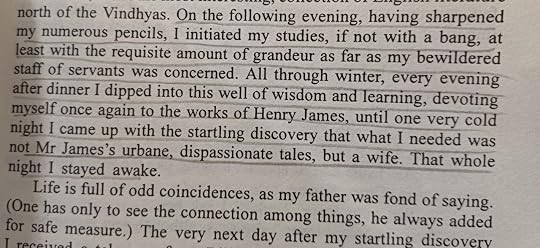
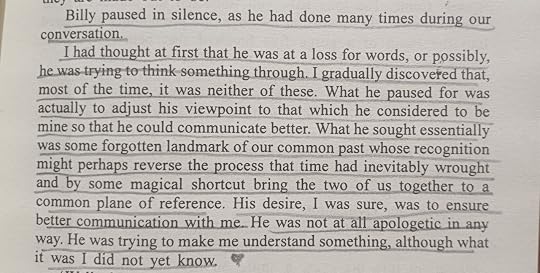
And also, not-so randomly, a plate of nespole, from the Universal Childhood Tree:

The matter of originality can either way be considered as a false problem because it is truly improbable that we can be truly original in the arch-tale we tell and ground ourselves in [however, still considering deeply original the path and the totality of the infinitely small acts it takes to get us there]. So, we’re left with critical and unsuperficial. He deplores the people around him spending their time complaining about “the daily”: money or lack of it, power, who dressed what, etc. He has no care for this. He has no care for power structures. He considers them ruinous (for example the man leading the anthropology department at the university he works in). Then again, once in the deep villages of the forests, he gets considered the spirit-king. No one likes authority and yet everyone wants to be exceptional and why not, an authority of sorts. And even better when you are endowed with some sort of spiritual authority and yet you get to simultaneously play the cards of not-really-wanting-it.
Now on the matter of depth. The argument goes, the way I read it, that the real life, what life is really really about in its deepest essence can only be found in his escape to nature, living at the subsistence level. He denotes people there lead simple lives with the occasional singing and dancing, living from the earth. In his words:
"We lived at the subsistence level, what kept us happy, I suppose, were the same things that have kept all primitives happy through the ages: the earth, the forests, the rainbows, the liquor from the mahua, an occasional feast, a lot of dancing and lovemaking, and more than anything else, no ambition, none at all."
All sounds dreamy. Except there’s [inevitably but Billy manages very well to avoid diving into] disease and suffering and lack of education. The starkest witnessing of the improbability of having the anarchic freedom and happiness by the sole escape to the old and nature is when his friend, the narrator, Romi, as now a government Collector, travels through the villages of the deep forests after a terrible drought has taken place. There is little to no means of survival among the people there.
“From morning to night, I bumped along dirt roads strewn with carcasses of dead cattle, cursing my bosses, cursing the gods, baffled by the enormity of it all”, in Romi’s words.
All it took was one drought. The government can offer very little, even with Romi’s best attempts, he knows he can only collect only what is needed to help about 1/10th of the people. And one can imagine the consequent rioting and turmoil.
Bureaucracy is hateful and soul-killing, granted. Except it grants civilization survival based not only on local knowledge (but allows for way more through structured education from what we have learned all over the world, in time) and the to-some-extent freedom to not have to get along with fellow-villagers to survive as survival is not so directly (or at least there’s a possibility) for it to not be rooted on being in on the group. I don’t even need to make the argument for the alleviation of suffering. I imagine, sense, some sort of suffering-as-a-virtue in itself in this way of thinking, which, I find, perverse. Or power structures, which he so desperately wanted to escape and then deep-dove in the tribal structure [but of course, no complaints if it works to your benefit].
Then again, he says he made the difficult choice and went for it.
Funny thing that Billy mentions the gravity and importance of making choices, for he didn’t really, really make one. In his words:
“Any choice worth its name is drastic. It is another matter that we whittle it down or gloss over it until it ceases to be drastic. At the same time, it ceases to be meaningful either. Sometimes I think the human mind is equipped with a build-in apparatus for compromises. As soon as you are faced with a difficult choice this apparatus is switched on. It runs about here and there, brokering between the various parts of man, rationalizing this, postponing that, until what is left is the conventional expedients of the age and hardly a choice. Deep down we are afraid that the price of making such choices is terrible, not realizing that the price of not making them is even more terrible.” pg.136
That apparatus to slow down, as he calls it, it’s maturity. It’s reflection and not jumping as an adrenaline junkie would to the drastic because yes, choices have prices and we are not the only ones that pay for it. And yes, the price of not making choices is certainly even more terrible.
For all the grandeur of the search for the true, he did not rise up to the same grandeur: that of confrontation of the self and the consequences that derives. Even if not right in the moment when he decided for sure he did not want to lead the same life he had led thus far, or even if not in the subsequent days of confusion and fear on facing the morphing into reality of that decision but at one point, sooner rather than later, he simply did not. Just left everyone around him, scared, confused, searching for him, for days, some for years. Why? Because they wouldn’t have left him be. Because he wouldn’t be understood and probably not left alone. So rather than undertaking the harsh road of confronting the reality that comes with confronting the self [though I do doubt his self-confrontation] and making those tough choices as he calls them, and the pain that might cause to others and that you have to work through that, he just simply – did not. Consequently, others had to pick up the pieces. Consequently, led to the even more tragic ending.
That said, we could all use a little more mysticism in our lives. Not in the naïve sense, not in the escapist sense. Though, for the latter, the case could be made that temporary escapism is something to be experienced. More like the rather wisdom of knowing that you can’t possibly know and control everything [easy to recognize intellectually, hard to embody] and to somehow be able to contain within you this and the very idea that you can’t let go entirely to some deterministic form. & all this without going mad.
Other than that, Arun Joshi has such a talent, like quite few but great novel writers do, to describe the fleeting feeling. I mean, that is the true spirit of the novel. As Kundera says in Immortality: "The purpose of poetry is not to dazzle with an astonishing thought, but to make one moment of existence unforgettable and worthy of unbearable nostalgia".
Particularly on his descriptions of the shared understanding Bimal [Billy] & Romesh [Romi] share with one another. Those moments where words are not all that count but also the pace, the approach, the standing, the walking, the waiting. How one intervenes when the other is speaking, when, where. To be truly understood. Though I doubt how much of that was in the vice-versa, meaning how much Bimal understood Romesh in return. He did care, that much was evident. There was certainly a shared understanding. But perhaps we can’t expect the narrator to be understood in return when he is describing what was the strange case of Billy Biswas, that is what is estranging, that is, what the narrator, Romesh himself, slightly but not entirely is. He states at some point, lying in bed that he did not have Billy’s imagination but he could imagine… I doubt it was a lack of imagination. It certainly doesn’t sound it like it in the partaking of understanding the other so deeply as to narrate him and it certainly isn’t so when it comes to entrenching himself in impossible situations and yet being so graceful about it. That is it, the gracefulness, for a lack of a better word, some sort of nobility but without the titles, rather reflected in his demeanor.
And to wrap it up with two random, perhaps non-consequential but such beautiful passages on understanding the other, what the other cannot express and the self:
And also, not-so randomly, a plate of nespole, from the Universal Childhood Tree:

November 5, 2019
Made many things clear. Why do we crave for the simplicity that probably people who live in tribes still have!
May 21, 2013
I ended up reading one of the most compelling, contemplating and thought provoking Indian novel by a writer who for godforsaken reason remained quite unknown to mass or even literature loving crowd. Looking at its queer and interesting title, don’t consider it as a tale of fantasy; rather it’s something very opposite. It’s one of finest existential novel grounded on roots questioning the façade of civilized world. It’s something where normal & abnormal, illusion and reality, rational and irrational, alienation and freedom plays pivotal role to the life and identity of an anthropologist named Bimal aka Billy Biswas. The tale was told with fine sophistication narrated by his close buddy that maintains interesting succession of events. What is more appreciable of Joshi’s oeuvre is that even though it questions the very pertinent questions of todays civilized world, it maintained a fair amount of understated tone abstained from being too dark or didactic. Compared to some of the most sought after Indian writers in English, Joshi’s writing and narration seems so down to earth, decent and uncluttered one without losing a grip and it finely devoid of verbosity, elite over sophistication or stylistic exhibitionism. And I love to read few others too…especially ‘The Last Labyrinth’ for which he won Sahitya Academy Prize.

December 16, 2012
A beautiful and an amazing read this story was! Arun Joshi has very effectively written of how a man frustrated from the 'civilized' society seeks refuge in the 'primitive' life. The hero of the story, Billy Biswas (Bimal Biswas)is in a constant search for his 'actual' purpose on earth and the force of the primitive voice is very strong in him that he leaves his luxurious life style and moves into the forest. He is attracted to the unaltered lives of the tribal people and the love and affection that they show toward their fellow humans is always on a greater plane. The story revolves around a plot on for how long can Billy keep himself away from the eyes of the 'civilized' people and even if he is seen by them, then how is Billy going to escape from them.

January 18, 2016
A fast moving story of a man's quest to rid himself of civilization in favor of 'going primitive', with the to be expected tragic results. Joshi is certainly an accomplished writer and it is sad that he never attained the fame that a person of his many talents certainly deserved. The one thing that drove me crazy is that the narrator is always apologizing for not remembering the exact details of a conversation that happened 10 or 15 years ago... and then proceeds to put down a verbatim transcript of such for the next 20 pages!
October 17, 2015
Oh! What a book! I googled Arun Joshi and still dont know as to why this man has gone into an oblivion.This book is an absolute gem.The language and craft is unbelievable.This is one writer who shouldn't go unread.Get a copy people!

July 16, 2022
What a book and what a style of writing. Simply marvellous.
Why did I not come through this book earlier and why did this book get the attention and publicity it deserves.
Not going to spoil your curiosity by divulging the story line, Read and feel the magic.
Why did I not come through this book earlier and why did this book get the attention and publicity it deserves.
Not going to spoil your curiosity by divulging the story line, Read and feel the magic.

April 3, 2014
Compelling conversations throughout the book. A light but thought provoking book.

August 3, 2018
into the wild.......................

October 22, 2019
The strange case of billy biswas - Arun Joshi
ಬಹುಶಃ ಎಪ್ಪತ್ತರ ದಶಕದಲ್ಲಿ ಭಾರತೀಯ ಇಂಗ್ಲೀಷ್ ಲೇಖಕರು ಈಗಿರುವಷ್ಟು ಗ್ಲಾಮರಸ್ ಆಗಿರಲಿಲ್ಲವೋ ಏನೋ? ಅದಕ್ಕೇ ಆಗಿನ ಹಲವಾರು ಅದ್ಭುತ ಲೇಖಕರು ನಮಗೆ ನೆನಪೂ ಇಲ್ಲ. ಉದಾಹರಣೆಗೆ ಇವರನ್ನೇ ತಗೊಳ್ಳಿ. ಅವತ್ತೊಮ್ಮೆ ಅಜಕ್ಕಳ ಗಿರೀಶ್ ಭಟ್ ಇವೆ ಬಗ್ಗೆ ಉಲ್ಲೇಖಿಸಿದ್ದು ಬಿಟ್ಟರೆ ನನಗೆ ಗೊತ್ತಾದದ್ದು ಫೈನ್ ಬ್ಯಾಲೆನ್ಸ್ ಓದಿದ ಬಳಿಕ ಗುಡ್ರೀಡ್ಸ್ ವೆಬ್ಸೈಟ್ ಕೊಟ್ಟ ರೆಕಮಂಡೇಷನ್ ಮುಖಾಂತರ! ಅದರಲ್ಲೂ ಇವರ ಕಥಾಸಂಕಲನ ಲಭ್ಯವೇ ಇಲ್ಲ.
ಇರಲಿ.
ಮೇಲ್ನೋಟಕ್ಕೆ ಒಬ್ಬ ವ್ಯಕ್ತಿಯ ಅತೃಪ್ತಿಯ ಹುಡುಕಾಟದಂತೆ ಭಾಸವಾಗುವ ಕಥೆ ಎಷ್ಟು ಆಯಾಮಗಳನ್ನು ಮುಟ್ಟುತ್ತದೆ ಅಂದರೆ ಓದಿ ಮುಗಿಸಿದಾಗ ಲೇಖಕ ಇದನ್ನು ಹೇಳಲು ಹೊರಟಿದ್ದಾ? ಅದನ್ನಾ? ಅಂತೆಲ್ಲ ಪ್ರಶ್ನೆಗಳು ಕಲ್ಲೆಸೆದ ಕೊಳದ ಹಾಗೆ ಮನದ ತುಂಬಾ ತರಂಗಗಳ ಎಬ್ಬಿಸುತ್ತದೆ.
ಬಿಲ್ಲಿ ಬಿಸ್ವಾಸ್ ಎಂಬಾತ ನಿರೂಪಕನ ಅಮೆರಿಕದಲ್ಲಿ ಭೇಟಿಯಾಗಿ ಇವ ಅವನ ರೂಮ್ಮೇಟ್ ಆಗಿ ಒಂದು ಬೇಸಿಗೆ ಕಳೆದು ವಾಪಾಸಾಗುವುದರೊಂದಿಗೆ ಅವನ ಸಂಬಂಧ ಮತ್ತು ಗೆಳೆತನ ಶುರುವಾಗುತ್ತದೆ. ನಿರೂಪಕ ಐಎಸ್ ಬರೆದು ಸಾರ್ವಜನಿಕ ಸೇವಾ ಇಲಾಖೆ(ಕಲೆಕ್ಟರ್) ಯಲ್ಲಿ ತೊಡಗಿಸಿಕೊಂಡವ. ಬಿಲ್ಲಿಯಾದರೋ ಕೋರ್ಟ್ ಜಡ್ಜ್ರ ಮಗನಂತಹ ಮೇಲ್ವರ್ಗದವನಾದರೂ ಅವನ ಆಸಕ್ತಿಗಳೇ ಬೇರೆ. ಅವನ ಆಸಕ್ತಿಯ ಕ್ಷೇತ್ರವೇ ಬೇರೆ.ಅವನ ಬಿಟ್ಟೂ ಬಿಡದೆ ಭೇಟಿಯಾಗುವ ನಿರೂಪಕ, ಬಿಲ್ಲಿಯ ಮದುವೆಗೆ ಸಾಕ್ಷಿಯಾಗುತ್ತಾನೆ.ಅವನ ಸಂಸಾರ,ಮಗು ಇವಕ್ಕೆಲ್ಲ ಸಾಕ್ಷಿಯಾದವನಿಗೆ ಅವನು ಸುಖವಾಗಿಲ್ಲ .ಪತ್ನಿಯೊಂದಿಗೆ ಅವನ ಸಂಬಂಧ ನೆಟ್ಟಗಿಲ್ಲ ಅನ್ನುವುದು ಕ್ರಮೇಣ ಗೊತ್ತಾಗುತ್ತದೆ. ಇದಕ್ಕೆಲ್ಲ ಅವ್ಯಕ್ತದೆಡೆಗಿನ ಬಿಲ್ಲಿಯ ತುಡಿತವೇ ಕಾರಣ ಅನ್ನುವುದೂ ನಿರೂಪಕನಿಗೆ ಅರಿವಿಗೆ ಬರುತ್ತದೆ. ಹಾಗಿರಲೊಂದು ದಿನ ಒಂದು ಕೆಲಸಕ್ಕೆ ತಂಡದೊಂದಿಗೆ ಹೋದ ಬಿಲ್ಲಿ ನಾಪತ್ತೆಯಾಗುತ್ತಾನೆ. ಅವನ ಹುಡುಕಾಡುವುದು ವಿಫಲವಾಗುತ್ತದೆ. ಕೊನೆಗೆ ಹುಲಿ ಅವನ ತಿಂದಿರಬಹುದು ಎಂಬ ನಿರ್ಧಾರಕ್ಕೆ ಬರಲಾಗುತ್ತದೆ.
ಇದಾಗಿ ಹತ್ತು ವರ್ಷಗಳ ನಂತರ ಆಕಸ್ಮಿಕವಾಗಿ ಬಿಲ್ಲಿ ಮತ್ತು ನಿರೂಪಕನ ಭೇಟಿಯಾಗುತ್ತದೆ. ಅಲ್ಲಿಂದ ಬಿಲ್ಲಿಗೆ ಹೀಗಾಗಲು ಕಾರಣ ಏನು? ಅವನೊಳಗಿನ ಖಾಲಿತನಕ್ಕೆ ಉತ್ತರ ಸಿಕ್ಕಿತೇ? ಅನ್ನುವುದೆಲ್ಲ ಉಳಿದ ಕಥೆ.
ಒಂದು ಕಡೆ ಬುಡಕಟ್ಟು ಜನಾಂಗ ಮತ್ತು ನಾಗರಿಕರ ನಡುವಿನ ಸಂಘರ್ಷದ ದುರಂತ ಕಥೆಯಂತೆ ಭಾಸವಾಗುವ ಇದು, ಇನ್ನೊಂದು ಕಡೆ ನಾಗರಿಕ ಸಾಂಸಾರಿಕ ಜಗತ್ತಿನಿಂದ ಬೇಸತ್ತ ಒಬ್ಬನ ಸತ್ಯಾನ್ವೇಷಣೆಯಂತೆಯೂ ಕಾಣುತ್ತದೆ. ಮತ್ತೊಂದೆಡೆ ಸರಳವಾಗಿ ಬಿಲ್ಲಿ ಮಾನಸಿಕ ಅಸ್ವಸ್ಥ ಎಂದು ತಳ್ಳಿ ಹಾಕುವ ಸಾಧ್ಯತೆಯೂ ಗೋಚರಿಸುತ್ತದೆ. ತಮ್ಮ ನಿಯಮಗಳಿಗೆ ಒಲ್ಲದವರ ಕೊಂದು ಹಾಕುವ ಕ್ರೂರತೆಯಂತೆಯೂ ಕಾಣುತ್ತದೆ. ಹಾಗಾದರೆ ಇದು ನಾಡಿನಿಂದ ಬೇರೆಯಾಗಿ ನ್ಯಾಯ ಹುಡುಕಹೊರಟ ನಕ್ಸಲರ ಕಥೆಯಾ? (ಕಾದಂಬರಿಯ ನಾಯಕನ ಜಾಡು ಸಾಕೇತ್ ರಾಜನ್ನ ನೆನಪಿಸಿತು. ಆದರೆ ಈ ಕಾದಂಬರಿ ಬಂದದ್ದು 1971ರಲ್ಲಿ) ಅಥವಾ ಇದು ಸಂಸಾರ ತೊರೆದು ಹೊರಟ ಬುದ್ಧನ ಕಥೆಯಾ?
ಅಥವಾ ಸುಮ್ಮನೇ ಅರುಣ್ ಜೋಶಿ ಬರೆದ ಒಬ್ಬ ಮನುಷ್ಯನ ತನ್ನೊಳಗಿನ ಹುಡುಕಾಟದ ಕಥೆಗೆ ಓದುಗನಾಗಿ ತನ್ನೆಲ್ಲ ಅರ್ಥಗಳ ಆರೋಪಿಸುತ್ತಿರುವುದ
ಒಂದಂತೂ ನಿಜ. ಓದುವಾಗ ಒಂದು ತರಹ ,ಓದಿದ ಬಳಿಕ ಒಂದು ತರಹ ,ಯೋಚಿಸಿದಾಗ ಇನ್ನೊಂದೇ ತರಹ ಕಾಣುವ ಗುಣವಿರುವ ಕಾದಂಬರಿ ಇದು. ತನ್ನ ನೂರೆಪ್ಪತ್ತಾರು ಪುಟಗಳಲ್ಲಿ ಇದು ಭಾರತದ ವರ್ಗ ಸಂಘರ್ಷ, ಮನುಷ್ಯನ ತೊಳಲಾಟ, ಆಧ್ಯಾತ್ಮ ಎಲ್ಲವನ್ನೂ ತೋರಿಸುತ್ತದೆ.
ರಾಜರಾವ್, ಆರ್ ಕೆ ನಾರಾಯಣ್ , ಅರುಣ್ ಜೋಶಿ ಭಾರತವನ್ನು ಪಾಶ್ಚಾತ್ಯ ಸಾಹಿತ್ಯದಲ್ಲಿ ಎತ್ತರಕ್ಕೆ ಕೊಂಡೊಯ್ದರು ಅಂತ ಓದಿದವರಿಗೆ ಅರ್ಥವಾಗುತ್ತದೆ. ಆದರೆ ಐದೇ ಐದು ಕಾದಂಬರಿ ಒಂದು ಕಥಾ ಸಂಕಲನ ಬರೆದ ಅರುಣ್ ಜೋಶಿ ಈಗ ನೆನಪಲ್ಲೇ ಇಲ್ಲ ಅನ್ನುವುದು ವಿಷಾದವನ್ನೂ ಹುಟ್ಟಿಸುತ್ತದೆ.
ಬಹುಶಃ ಎಪ್ಪತ್ತರ ದಶಕದಲ್ಲಿ ಭಾರತೀಯ ಇಂಗ್ಲೀಷ್ ಲೇಖಕರು ಈಗಿರುವಷ್ಟು ಗ್ಲಾಮರಸ್ ಆಗಿರಲಿಲ್ಲವೋ ಏನೋ? ಅದಕ್ಕೇ ಆಗಿನ ಹಲವಾರು ಅದ್ಭುತ ಲೇಖಕರು ನಮಗೆ ನೆನಪೂ ಇಲ್ಲ. ಉದಾಹರಣೆಗೆ ಇವರನ್ನೇ ತಗೊಳ್ಳಿ. ಅವತ್ತೊಮ್ಮೆ ಅಜಕ್ಕಳ ಗಿರೀಶ್ ಭಟ್ ಇವೆ ಬಗ್ಗೆ ಉಲ್ಲೇಖಿಸಿದ್ದು ಬಿಟ್ಟರೆ ನನಗೆ ಗೊತ್ತಾದದ್ದು ಫೈನ್ ಬ್ಯಾಲೆನ್ಸ್ ಓದಿದ ಬಳಿಕ ಗುಡ್ರೀಡ್ಸ್ ವೆಬ್ಸೈಟ್ ಕೊಟ್ಟ ರೆಕಮಂಡೇಷನ್ ಮುಖಾಂತರ! ಅದರಲ್ಲೂ ಇವರ ಕಥಾಸಂಕಲನ ಲಭ್ಯವೇ ಇಲ್ಲ.
ಇರಲಿ.
ಮೇಲ್ನೋಟಕ್ಕೆ ಒಬ್ಬ ವ್ಯಕ್ತಿಯ ಅತೃಪ್ತಿಯ ಹುಡುಕಾಟದಂತೆ ಭಾಸವಾಗುವ ಕಥೆ ಎಷ್ಟು ಆಯಾಮಗಳನ್ನು ಮುಟ್ಟುತ್ತದೆ ಅಂದರೆ ಓದಿ ಮುಗಿಸಿದಾಗ ಲೇಖಕ ಇದನ್ನು ಹೇಳಲು ಹೊರಟಿದ್ದಾ? ಅದನ್ನಾ? ಅಂತೆಲ್ಲ ಪ್ರಶ್ನೆಗಳು ಕಲ್ಲೆಸೆದ ಕೊಳದ ಹಾಗೆ ಮನದ ತುಂಬಾ ತರಂಗಗಳ ಎಬ್ಬಿಸುತ್ತದೆ.
ಬಿಲ್ಲಿ ಬಿಸ್ವಾಸ್ ಎಂಬಾತ ನಿರೂಪಕನ ಅಮೆರಿಕದಲ್ಲಿ ಭೇಟಿಯಾಗಿ ಇವ ಅವನ ರೂಮ್ಮೇಟ್ ಆಗಿ ಒಂದು ಬೇಸಿಗೆ ಕಳೆದು ವಾಪಾಸಾಗುವುದರೊಂದಿಗೆ ಅವನ ಸಂಬಂಧ ಮತ್ತು ಗೆಳೆತನ ಶುರುವಾಗುತ್ತದೆ. ನಿರೂಪಕ ಐಎಸ್ ಬರೆದು ಸಾರ್ವಜನಿಕ ಸೇವಾ ಇಲಾಖೆ(ಕಲೆಕ್ಟರ್) ಯಲ್ಲಿ ತೊಡಗಿಸಿಕೊಂಡವ. ಬಿಲ್ಲಿಯಾದರೋ ಕೋರ್ಟ್ ಜಡ್ಜ್ರ ಮಗನಂತಹ ಮೇಲ್ವರ್ಗದವನಾದರೂ ಅವನ ಆಸಕ್ತಿಗಳೇ ಬೇರೆ. ಅವನ ಆಸಕ್ತಿಯ ಕ್ಷೇತ್ರವೇ ಬೇರೆ.ಅವನ ಬಿಟ್ಟೂ ಬಿಡದೆ ಭೇಟಿಯಾಗುವ ನಿರೂಪಕ, ಬಿಲ್ಲಿಯ ಮದುವೆಗೆ ಸಾಕ್ಷಿಯಾಗುತ್ತಾನೆ.ಅವನ ಸಂಸಾರ,ಮಗು ಇವಕ್ಕೆಲ್ಲ ಸಾಕ್ಷಿಯಾದವನಿಗೆ ಅವನು ಸುಖವಾಗಿಲ್ಲ .ಪತ್ನಿಯೊಂದಿಗೆ ಅವನ ಸಂಬಂಧ ನೆಟ್ಟಗಿಲ್ಲ ಅನ್ನುವುದು ಕ್ರಮೇಣ ಗೊತ್ತಾಗುತ್ತದೆ. ಇದಕ್ಕೆಲ್ಲ ಅವ್ಯಕ್ತದೆಡೆಗಿನ ಬಿಲ್ಲಿಯ ತುಡಿತವೇ ಕಾರಣ ಅನ್ನುವುದೂ ನಿರೂಪಕನಿಗೆ ಅರಿವಿಗೆ ಬರುತ್ತದೆ. ಹಾಗಿರಲೊಂದು ದಿನ ಒಂದು ಕೆಲಸಕ್ಕೆ ತಂಡದೊಂದಿಗೆ ಹೋದ ಬಿಲ್ಲಿ ನಾಪತ್ತೆಯಾಗುತ್ತಾನೆ. ಅವನ ಹುಡುಕಾಡುವುದು ವಿಫಲವಾಗುತ್ತದೆ. ಕೊನೆಗೆ ಹುಲಿ ಅವನ ತಿಂದಿರಬಹುದು ಎಂಬ ನಿರ್ಧಾರಕ್ಕೆ ಬರಲಾಗುತ್ತದೆ.
ಇದಾಗಿ ಹತ್ತು ವರ್ಷಗಳ ನಂತರ ಆಕಸ್ಮಿಕವಾಗಿ ಬಿಲ್ಲಿ ಮತ್ತು ನಿರೂಪಕನ ಭೇಟಿಯಾಗುತ್ತದೆ. ಅಲ್ಲಿಂದ ಬಿಲ್ಲಿಗೆ ಹೀಗಾಗಲು ಕಾರಣ ಏನು? ಅವನೊಳಗಿನ ಖಾಲಿತನಕ್ಕೆ ಉತ್ತರ ಸಿಕ್ಕಿತೇ? ಅನ್ನುವುದೆಲ್ಲ ಉಳಿದ ಕಥೆ.
ಒಂದು ಕಡೆ ಬುಡಕಟ್ಟು ಜನಾಂಗ ಮತ್ತು ನಾಗರಿಕರ ನಡುವಿನ ಸಂಘರ್ಷದ ದುರಂತ ಕಥೆಯಂತೆ ಭಾಸವಾಗುವ ಇದು, ಇನ್ನೊಂದು ಕಡೆ ನಾಗರಿಕ ಸಾಂಸಾರಿಕ ಜಗತ್ತಿನಿಂದ ಬೇಸತ್ತ ಒಬ್ಬನ ಸತ್ಯಾನ್ವೇಷಣೆಯಂತೆಯೂ ಕಾಣುತ್ತದೆ. ಮತ್ತೊಂದೆಡೆ ಸರಳವಾಗಿ ಬಿಲ್ಲಿ ಮಾನಸಿಕ ಅಸ್ವಸ್ಥ ಎಂದು ತಳ್ಳಿ ಹಾಕುವ ಸಾಧ್ಯತೆಯೂ ಗೋಚರಿಸುತ್ತದೆ. ತಮ್ಮ ನಿಯಮಗಳಿಗೆ ಒಲ್ಲದವರ ಕೊಂದು ಹಾಕುವ ಕ್ರೂರತೆಯಂತೆಯೂ ಕಾಣುತ್ತದೆ. ಹಾಗಾದರೆ ಇದು ನಾಡಿನಿಂದ ಬೇರೆಯಾಗಿ ನ್ಯಾಯ ಹುಡುಕಹೊರಟ ನಕ್ಸಲರ ಕಥೆಯಾ? (ಕಾದಂಬರಿಯ ನಾಯಕನ ಜಾಡು ಸಾಕೇತ್ ರಾಜನ್ನ ನೆನಪಿಸಿತು. ಆದರೆ ಈ ಕಾದಂಬರಿ ಬಂದದ್ದು 1971ರಲ್ಲಿ) ಅಥವಾ ಇದು ಸಂಸಾರ ತೊರೆದು ಹೊರಟ ಬುದ್ಧನ ಕಥೆಯಾ?
ಅಥವಾ ಸುಮ್ಮನೇ ಅರುಣ್ ಜೋಶಿ ಬರೆದ ಒಬ್ಬ ಮನುಷ್ಯನ ತನ್ನೊಳಗಿನ ಹುಡುಕಾಟದ ಕಥೆಗೆ ಓದುಗನಾಗಿ ತನ್ನೆಲ್ಲ ಅರ್ಥಗಳ ಆರೋಪಿಸುತ್ತಿರುವುದ
ಒಂದಂತೂ ನಿಜ. ಓದುವಾಗ ಒಂದು ತರಹ ,ಓದಿದ ಬಳಿಕ ಒಂದು ತರಹ ,ಯೋಚಿಸಿದಾಗ ಇನ್ನೊಂದೇ ತರಹ ಕಾಣುವ ಗುಣವಿರುವ ಕಾದಂಬರಿ ಇದು. ತನ್ನ ನೂರೆಪ್ಪತ್ತಾರು ಪುಟಗಳಲ್ಲಿ ಇದು ಭಾರತದ ವರ್ಗ ಸಂಘರ್ಷ, ಮನುಷ್ಯನ ತೊಳಲಾಟ, ಆಧ್ಯಾತ್ಮ ಎಲ್ಲವನ್ನೂ ತೋರಿಸುತ್ತದೆ.
ರಾಜರಾವ್, ಆರ್ ಕೆ ನಾರಾಯಣ್ , ಅರುಣ್ ಜೋಶಿ ಭಾರತವನ್ನು ಪಾಶ್ಚಾತ್ಯ ಸಾಹಿತ್ಯದಲ್ಲಿ ಎತ್ತರಕ್ಕೆ ಕೊಂಡೊಯ್ದರು ಅಂತ ಓದಿದವರಿಗೆ ಅರ್ಥವಾಗುತ್ತದೆ. ಆದರೆ ಐದೇ ಐದು ಕಾದಂಬರಿ ಒಂದು ಕಥಾ ಸಂಕಲನ ಬರೆದ ಅರುಣ್ ಜೋಶಿ ಈಗ ನೆನಪಲ್ಲೇ ಇಲ್ಲ ಅನ್ನುವುದು ವಿಷಾದವನ್ನೂ ಹುಟ್ಟಿಸುತ್ತದೆ.

February 5, 2021
It’s been a day since I finished reading the book. Though I am short of time but I am sitting down to write this review before I come out of the spell cast by this novel. Or maybe I will never come out of this spell for I, myself don’t want the magic to diminish.
This novel was recommended in a reading club and instantly I was drawn to it. There are many books in my ‘to be read’ books but this one did not end up there. I simply ordered it the very same day. I was intrigued by the title, the reviews on Goodreads and certainly drawn towards it.
It is a short novel of 176 pages but the writer manages to lure you into the world of Billy Biswas with his vivid writing and descriptions. Getting hooked to the story is inevitable.
There is a shade of normal and abnormal in each one of us. We suppress the abnormal and continue to live a normal life though we are normal only on the surface. Billy Biswas is just the opposite. He is ready to experiment the abnormal but unfortunately Billy Biswas, the weird anthropologist disappears when we he goes on a field trip to the tribal areas of Chambal.
While his friend Romi, an IAS looks for him in the interiors, the author describes these pristine places with great detail so much so that the reader unknowingly becomes a part of the journey. Together they step into the wilderness, watch the moon rise and bedazzle the treetops. The Chandtola hill takes on many hues as the narrative touches upon the supernatural.
The narrative unfolds in quick succession, afterall the author has written a thin book to narrate the unique story of Billy Biswas. It is hard to predict the pace of the novel and it also makes you traverse into the unknown. It is a thought provoking book. Though it describes the inner tussles of the protagonist, it resonates with your own feelings. Also, the author often talks about the energies in the atmosphere which are hard to define yet difficult to ignore.
This is the first time I have a read a book by the Sahitya Akademi Award Winning Author, Arun Joshi. Needless to say that I’ll be reading more of his books in the near future.
This novel was recommended in a reading club and instantly I was drawn to it. There are many books in my ‘to be read’ books but this one did not end up there. I simply ordered it the very same day. I was intrigued by the title, the reviews on Goodreads and certainly drawn towards it.
It is a short novel of 176 pages but the writer manages to lure you into the world of Billy Biswas with his vivid writing and descriptions. Getting hooked to the story is inevitable.
There is a shade of normal and abnormal in each one of us. We suppress the abnormal and continue to live a normal life though we are normal only on the surface. Billy Biswas is just the opposite. He is ready to experiment the abnormal but unfortunately Billy Biswas, the weird anthropologist disappears when we he goes on a field trip to the tribal areas of Chambal.
While his friend Romi, an IAS looks for him in the interiors, the author describes these pristine places with great detail so much so that the reader unknowingly becomes a part of the journey. Together they step into the wilderness, watch the moon rise and bedazzle the treetops. The Chandtola hill takes on many hues as the narrative touches upon the supernatural.
The narrative unfolds in quick succession, afterall the author has written a thin book to narrate the unique story of Billy Biswas. It is hard to predict the pace of the novel and it also makes you traverse into the unknown. It is a thought provoking book. Though it describes the inner tussles of the protagonist, it resonates with your own feelings. Also, the author often talks about the energies in the atmosphere which are hard to define yet difficult to ignore.
This is the first time I have a read a book by the Sahitya Akademi Award Winning Author, Arun Joshi. Needless to say that I’ll be reading more of his books in the near future.

February 16, 2022
Backstory: This book has been in my home since 1987, it was a gift to my parents on their 1st anniversary, and I have literally grown up seeing it on our bookshelf. But I never picked it up, God knows why, but I am glad that I finally did, because my mind was blown!
I started reading this book while I was in the midst of reading another book that had me yawning every other page, despite the fact that it belonged to my choice of genres. An author's choice of words and narrative can definitely make or break a book, and I am not saying this because The Strange Case of Billy Biswas was so much better and easier to grasp, but rather, because of these aspects, it kept me hooked on till the very well, and I could imagine myself as different characters while reading.
Arun Joshi has touched base, and wonderfully so, on a lot of topics - family, marriage, affairs, existential and identity crisis, mental health and the lack of its awareness, the frustration of not being able to save people you love, just to name a few, all the while narrating the story of Billy Biswas as his close friend, Romesh Sahai.
I wish the book was more popular, because it deserves to be known by a larger audience, but I also low-key don't want the book to become mainstream - kind of like protecting one's palylist.
I started reading this book while I was in the midst of reading another book that had me yawning every other page, despite the fact that it belonged to my choice of genres. An author's choice of words and narrative can definitely make or break a book, and I am not saying this because The Strange Case of Billy Biswas was so much better and easier to grasp, but rather, because of these aspects, it kept me hooked on till the very well, and I could imagine myself as different characters while reading.
Arun Joshi has touched base, and wonderfully so, on a lot of topics - family, marriage, affairs, existential and identity crisis, mental health and the lack of its awareness, the frustration of not being able to save people you love, just to name a few, all the while narrating the story of Billy Biswas as his close friend, Romesh Sahai.
I wish the book was more popular, because it deserves to be known by a larger audience, but I also low-key don't want the book to become mainstream - kind of like protecting one's palylist.
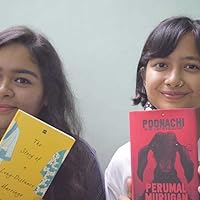
August 11, 2018
Just finished reading "The Strange Case of Billy Biswas" by Arun Joshi, a Sahitya Akademi Award Winning author. Published in the 1970s, the novel is the story of Billy, a guy that doesn't belong in the bourgeoisie everyday world of yours and mine. Much like the protagonist of Arun Joshi's last novel that i read, the Foreigner, Billy too, suffers from a sense of lack of belongingness. The story is narrated from the perspective of Romesh Sahai, a friend of Billy's.
The novel is quite intriguing, the language and the story itself is spun beautifully and touches upon topics like religion, the concept of normalcy, love, fate, and more. The character of Billy is very interesting and at times relatable. He is a rebel, at times funny, and quite insightful too. Right from the beginning of the novel, the reader knows what awaits Billy Biswas, but the question remains why he did what he did.
I absolutely loved and enjoyed reading this book. Arun Joshi deserves much more readership. A very underappreciated author.
The novel is quite intriguing, the language and the story itself is spun beautifully and touches upon topics like religion, the concept of normalcy, love, fate, and more. The character of Billy is very interesting and at times relatable. He is a rebel, at times funny, and quite insightful too. Right from the beginning of the novel, the reader knows what awaits Billy Biswas, but the question remains why he did what he did.
I absolutely loved and enjoyed reading this book. Arun Joshi deserves much more readership. A very underappreciated author.

September 22, 2024
Very engaging and thought-provoking writing; it basically deals with a very privileged man who, even after having everything, was not happy and tried to escape. His discomfort and disconnection from his world make you feel sympathy for him, and you might also relate to him because we all, at some point, thought of leaving everything, didn’t we? But the truth is that his actions were not correct, and he didn’t make a mistake once or twice; he did it multiple times, which can make you frustrated. Not gonna lie, at some point, all I felt was that this man is trying so hard to mansplain all his shortcomings in a very philosophical way. But again, Billy was not the fictional man we all dream of; he was a tragic hero whose downfall is definitely sad, but you can’t help but blame him only because the series of events he opted for led to this.
July 1, 2021
I'm a bit overwhelmed by emotion as I put this book down . I just couldn't stop reading it end-to-end. It is phenomenal Indian writing, honest, simple, and unpretentious. Of course, I want to scream at a couple of characters, (why do they often end up being women?) but as in real life, these artificial egos will efficiently deflect, won't they?
I'm tempted to respond to Billy's mother - "They killed your son, Mrs. Biswas. The effing women killed your son because they couldn't bear to think of anyone being free. They couldn't even pause for a moment to consider someone else's way of life, or what they want. It was their way or he be damned. They killed him."
I'm tempted to respond to Billy's mother - "They killed your son, Mrs. Biswas. The effing women killed your son because they couldn't bear to think of anyone being free. They couldn't even pause for a moment to consider someone else's way of life, or what they want. It was their way or he be damned. They killed him."
This entire review has been hidden because of spoilers.
April 19, 2018
This book describes the inner meaning of life. Through the character, it has pointed out the shams of Indian high society, a pointless system made by social animals and how some human beings are misread.
There are people around us who are different, different from so called cultured men/women. We need to understand them, think like them, nurture them and if possible - be like them. I believe that is one way to make this planet a beautiful place.
Mr. Arun Joshi is one kind of a person who understands them (these beautiful species of Earth) perfectly.
There are people around us who are different, different from so called cultured men/women. We need to understand them, think like them, nurture them and if possible - be like them. I believe that is one way to make this planet a beautiful place.
Mr. Arun Joshi is one kind of a person who understands them (these beautiful species of Earth) perfectly.
Displaying 1 - 30 of 57 reviews