

What do you think?
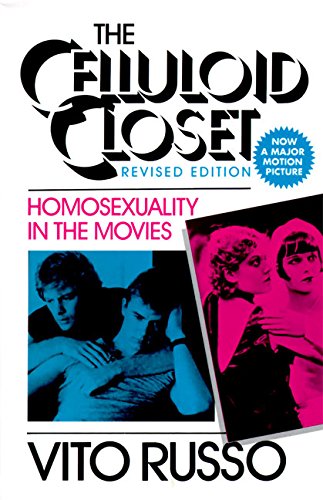
The Celluloid Closet: Homosexuality in the Movies
Praised by the Chicago Tribune as "an impressive study" and written with incisive wit and searing perception--the definitive, highly acclaimed landmark work on the portrayal of homosexuality in film.
368 pages, Paperback
First published January 1, 1981
About the author
Vito Russo
8 books24 followersVito Russo was an early gay activist whose work at the Museum of Modern Art and love of movies led to the ground-breaking book The Celluloid Closet, which takes a look at the coded representations of gay men and women in the movies. He was also a vocal AIDS activist who helped found both GLAAD and ACT UP in response to the Reagan Administrations inaction at what is still a global epidemic.
Ratings & Reviews
Friends & Following
Create a free account to discover what your friends think of this book!
Community Reviews
Displaying 1 - 30 of 110 reviews

July 22, 2009
Reread this as it was the main textbook of a Queer Film undergrad class I helped out with last semester, and my initial reaction was more or less confirmed: when analyzing LGBTQ representation in classic Hollywood and other early cinemas Russo is as enlightening as he fun to read, but when he gets to post-Code representation he goes into Righteous Anger mode and it just all starts getting very numbing and increasingly unnuanced. For some reason Russo can locate endless resistance and subversiveness in the Sissies and Bulldykes in old Hollywood musicals and comedies, but something like Suddenly Last Summer or The Boys in the Band are pegged as an irredeemable exercise in negative stereotyping—I just don't buy that line of thinking and so I didn't even bother revisiting the last chapter or two.
I also have mixed feelings because Celluloid Closet is widely hailed as the first study of its kind, while the late, great and now-forgotten Parker Tyler's Screening the Sexes: Homosexuality in the Movies is hardly ever ever remembered, though it was written nearly a decade earlier. Not that it's hard to see why this is the case: where Russo is Serious and Scholarly, Tyler is, characteristically, campy, tongue-in-cheek and can at times be baffling in regards to its allusions and in-jokes—in many ways Richard Dyer's Now You See It and Richard Barrios's Screened Out: Playing Gay in Hollywood from Edison to Stonewall are nice medians, as rigorous as Russo but retaining Tyler's sense of fun.
But it can't be denied that The Celluloid Closet serves as a good primer on queer film—it certainly was mine, and I'll always appreciate it for that.
I also have mixed feelings because Celluloid Closet is widely hailed as the first study of its kind, while the late, great and now-forgotten Parker Tyler's Screening the Sexes: Homosexuality in the Movies is hardly ever ever remembered, though it was written nearly a decade earlier. Not that it's hard to see why this is the case: where Russo is Serious and Scholarly, Tyler is, characteristically, campy, tongue-in-cheek and can at times be baffling in regards to its allusions and in-jokes—in many ways Richard Dyer's Now You See It and Richard Barrios's Screened Out: Playing Gay in Hollywood from Edison to Stonewall are nice medians, as rigorous as Russo but retaining Tyler's sense of fun.
But it can't be denied that The Celluloid Closet serves as a good primer on queer film—it certainly was mine, and I'll always appreciate it for that.

December 18, 2011
Rating: 3* of five
A groundbreaking revelation when it came out almost 30 years ago, this book, as revised by its author in 1987, is very dated; and it's never been my idea of a prose paradigm.
I admit I was going down the primrose path of nostalgia when I decided to read this revised edition. I'd read the first edition as an eager young slut-about-town, yearning to impress the Older Men (25! 30! Oh, those old roués!) I was seducing in job lots with my encyclopedic knowledge of their old-fashioned world.
*snort*
But I did learn a lot, and it's always useful to do so. I wasn't aware that queer subtexts in Hollywood movies were the prime motivating factor for the introduction of the Production Code. I wasn't aware that the hoi polloi didn't know some of its major heartthrobs only throbbed for their own kind (Rock, of course, but Farley Granger, Randolph Scott, Burt Lancaster, ye gods what fun it would have been to be there then!!)...but I've known all that for a long time now, and I found it dreary to go back and read the uninspired prose of the late Mr. Russo without the sense of discovery and amazement I brought to it the first time.
You can't go home again. I suppose one shouldn't want to, either, but the urge hits once in a way, less and less often as the years pile up. I expect I'll stub my toe on this rock again. I'd say, if you're an average straight person, this book could be informative and possibly even interesting if you like the movies a lot. But it sure won't be entertaining.
A groundbreaking revelation when it came out almost 30 years ago, this book, as revised by its author in 1987, is very dated; and it's never been my idea of a prose paradigm.
I admit I was going down the primrose path of nostalgia when I decided to read this revised edition. I'd read the first edition as an eager young slut-about-town, yearning to impress the Older Men (25! 30! Oh, those old roués!) I was seducing in job lots with my encyclopedic knowledge of their old-fashioned world.
*snort*
But I did learn a lot, and it's always useful to do so. I wasn't aware that queer subtexts in Hollywood movies were the prime motivating factor for the introduction of the Production Code. I wasn't aware that the hoi polloi didn't know some of its major heartthrobs only throbbed for their own kind (Rock, of course, but Farley Granger, Randolph Scott, Burt Lancaster, ye gods what fun it would have been to be there then!!)...but I've known all that for a long time now, and I found it dreary to go back and read the uninspired prose of the late Mr. Russo without the sense of discovery and amazement I brought to it the first time.
You can't go home again. I suppose one shouldn't want to, either, but the urge hits once in a way, less and less often as the years pile up. I expect I'll stub my toe on this rock again. I'd say, if you're an average straight person, this book could be informative and possibly even interesting if you like the movies a lot. But it sure won't be entertaining.

February 1, 2025
I’m so happy that I finally read this book! I first saw the documentary adaptation of The Celluloid Closet around 15 years ago in a film class in college and I fell in love with it. The way it traced the history and evolution of queer representation in movies was so interesting to me. I’ve rewatched the documentary multiple times and done countless hours of researching the history of queer movies. But for some reason I never went back and read Vito Russo’s book that inspired the documentary.
This was just a completely wonderful read. It covers plenty of movies that aren’t discussed in the documentary, so it didn’t feel repetitive or like I wasn’t learning anything new. Even with all the other research I’ve done into older queer films there were still things brought up in the book that I’ve never heard of before. It was also excellent to get Vito Russo’s personality and thoughts about the movies, actors, and topics that he was covering. This book isn’t academic in tone, it has moments of humor and being able to feel Russo’s rage at different points.
The revised edition of the book I read came out in 1987, but so many of the things he was writing about still feel so relevant to current discussions about Hollywood and queer representation. Like discussions of how the most interesting queer films tend to be independent and made outside of Hollywood because big studios are too scared to make massive mainstream movies with queer characters. Or how characters need to be fully formed people who happen to be queer and then the whole movie doesn’t need to be about homosexuality or teaching something to a presumed straight audience.
If you’re interested in the history of queer representation then definitely think about reading this book or watching the documentary. Of course they’re somewhat dated since the book came out in the 80s and the doc is from the 90s. But it’s also really fascinating to get views from history about representation to be able to compare with how much progress has been made… but also how much still needs to change.
This was just a completely wonderful read. It covers plenty of movies that aren’t discussed in the documentary, so it didn’t feel repetitive or like I wasn’t learning anything new. Even with all the other research I’ve done into older queer films there were still things brought up in the book that I’ve never heard of before. It was also excellent to get Vito Russo’s personality and thoughts about the movies, actors, and topics that he was covering. This book isn’t academic in tone, it has moments of humor and being able to feel Russo’s rage at different points.
The revised edition of the book I read came out in 1987, but so many of the things he was writing about still feel so relevant to current discussions about Hollywood and queer representation. Like discussions of how the most interesting queer films tend to be independent and made outside of Hollywood because big studios are too scared to make massive mainstream movies with queer characters. Or how characters need to be fully formed people who happen to be queer and then the whole movie doesn’t need to be about homosexuality or teaching something to a presumed straight audience.
If you’re interested in the history of queer representation then definitely think about reading this book or watching the documentary. Of course they’re somewhat dated since the book came out in the 80s and the doc is from the 90s. But it’s also really fascinating to get views from history about representation to be able to compare with how much progress has been made… but also how much still needs to change.

Read
July 23, 2020i remember being much much younger & getting this shivery, gleeful zing of recognition from characters or conversations or shots that felt like they were saying more to me than to anyone else. i remember how closely i followed that feeling, that subtextual, insubstantial, intuitive want, the sense of affinity built out of suggestion & hope, held together by spit. i remember how little they had to offer, how much i made of crumbs, & yet how much more alive & interesting those possible moments of homoeroticism, those ambiguously gendered, ambiguously sexual figures felt than the characters i was told were like me, the plotlines that were meant to follow what it was like to be like me.
& in a lot of ways, i think the arc of this book, from the playful dropped hairpins of the thirties & forties to the murderous & murdered gay characters of the sixties & seventies, follows the emotional arc of my 'growing up' & looking fr my self -- starting w curiosity, feeling out what isn't said or shown or named, coming up against alienation and hurt, as you are increasingly named & distorted w each naming, & ending in frustration, exhaustion & need, feeling alone & unseen & silenced even as yr told yr face is staring back at you from the screen. it's more than that, it's a valuable primer on gay cinema & film history, and a piece of gay history in its own right, but it was the tone that felt v familiar to me, the growing sense of disbelief & anger. i can't speak to the accuracy or fairness of russo's individual judgments, or to what has changed in the intervening years, & i only really have a fleeting interest in most of the films russo discusses, but i can absolutely say that i'm glad to have made space fr this book in my brain -- it adds texture & context to smth that i experienced belatedly & alone, it explains & shares in an anger that i felt & expressed alone, it reminds me of who i was at sixteen & how i made sense of myself and the world.
& in a lot of ways, i think the arc of this book, from the playful dropped hairpins of the thirties & forties to the murderous & murdered gay characters of the sixties & seventies, follows the emotional arc of my 'growing up' & looking fr my self -- starting w curiosity, feeling out what isn't said or shown or named, coming up against alienation and hurt, as you are increasingly named & distorted w each naming, & ending in frustration, exhaustion & need, feeling alone & unseen & silenced even as yr told yr face is staring back at you from the screen. it's more than that, it's a valuable primer on gay cinema & film history, and a piece of gay history in its own right, but it was the tone that felt v familiar to me, the growing sense of disbelief & anger. i can't speak to the accuracy or fairness of russo's individual judgments, or to what has changed in the intervening years, & i only really have a fleeting interest in most of the films russo discusses, but i can absolutely say that i'm glad to have made space fr this book in my brain -- it adds texture & context to smth that i experienced belatedly & alone, it explains & shares in an anger that i felt & expressed alone, it reminds me of who i was at sixteen & how i made sense of myself and the world.

August 22, 2009
HIGHEST RECOMMENDATION:
Russo's is an impeccably argued tract. I can't imagine a better thought-out analysis of the predicament of gays and lesbians and their presentation in film in the pre- and immediate post-Stonewall era of the cinema. He zeroes in on the wider attitudes of society, nails the nature of the mixed messages in films with overt or coded gay content, even in films that were supposedly relatively enlightened. This book proves a film study can be written with a popular clarity and still adhere to scholarly rigor. Bravo all the fucking way on this one!
---------
(earlier:)
I'm well into this now and it's impressive. Russo finds a happy median between academic comprehensiveness/precision and a popular authorial voice in expressing the concepts and keeping them interesting. In fact, this book is quite fun; it seems like there was no film with even the slightest hint of homosexual suggestiveness --- going all the way back to the very earliest silents -- that Russo did not see or give mention to here. I'm learning a lot and enjoying this. Tons of well-selected stills that illustrate precisely the points that Russo makes.
----
(first impression:)
I saw the 1995 same-titled documentary of this a decade ago. I don't really remember much about it other than the parade of Hollywood star narrators and talking heads, including Lily Tomlin and others. I think I was moved by some of it but also remember it being somewhat simplistic and exuding self-satisfied self-importance. I have a copy of the original 1981 book -- in its time just about the only game in town in terms of a popular study of gay cinema (I'm sorry, but I don't envision ever using the word queer). So far it has just enough academic authority without being obscurantist. It is definitely geared to a wide popular audience. The examples it cites are well selected and researched. Reading on...
Russo's is an impeccably argued tract. I can't imagine a better thought-out analysis of the predicament of gays and lesbians and their presentation in film in the pre- and immediate post-Stonewall era of the cinema. He zeroes in on the wider attitudes of society, nails the nature of the mixed messages in films with overt or coded gay content, even in films that were supposedly relatively enlightened. This book proves a film study can be written with a popular clarity and still adhere to scholarly rigor. Bravo all the fucking way on this one!
---------
(earlier:)
I'm well into this now and it's impressive. Russo finds a happy median between academic comprehensiveness/precision and a popular authorial voice in expressing the concepts and keeping them interesting. In fact, this book is quite fun; it seems like there was no film with even the slightest hint of homosexual suggestiveness --- going all the way back to the very earliest silents -- that Russo did not see or give mention to here. I'm learning a lot and enjoying this. Tons of well-selected stills that illustrate precisely the points that Russo makes.
----
(first impression:)
I saw the 1995 same-titled documentary of this a decade ago. I don't really remember much about it other than the parade of Hollywood star narrators and talking heads, including Lily Tomlin and others. I think I was moved by some of it but also remember it being somewhat simplistic and exuding self-satisfied self-importance. I have a copy of the original 1981 book -- in its time just about the only game in town in terms of a popular study of gay cinema (I'm sorry, but I don't envision ever using the word queer). So far it has just enough academic authority without being obscurantist. It is definitely geared to a wide popular audience. The examples it cites are well selected and researched. Reading on...

November 1, 2012
This was a very interesting book that deserves its reputation as a classic but does have (at least in my opinion) a few flaws.
First and foremost, the research that went into this book is excellent. Russo describes the development of gay characters in motion pictures from the silent movies and the early talkies until the mid 1980s.
The best part is the one about the early days up to the 1950s (or what Russo calls the stereotyp of the "sissy"). It's very detailed and features a very good analysis of why characters were described as they are, how the audience reacted and which actors specialized in those roles and what their characteristics are. It also describes early lesbian parts and how for example the real-life character of an actress like Greta Garbo added to what was finally shown on film.
Very interresting if extremely depressing is the part that covers the 1960s and '70s. Russo shows how homosexuality was not - as one could have hoped in those times - shown in a realistic or sympathetic way but how it degenerated into some kind of freak show, designed to shock "normal" audiences and confirming the worst clichés.
And here we come to the book's most serious flaw (apart from the fact that it sometimes comes down to a listing of movies that lack the elaborate analysis that went into the earlier works from the 1920 to '50s): the author has a message. Well, of course he has - he wants to show how stereotypical and ultimatly wrong and damaging the portrait of homosexual people in movies is. What gets lost on the way is the fact that there are a few - if only a very few - movies that are not like that. He mentions them in passing, but never do they get a spotlight and that's sad. As important as it is to show all that is wrong in the movie-industry, I don't think you should ignore when something's actually good.
Also he has a tendency to ignore (or propably he really doesn't see it) irony or a twisted sense of humour. For example, someone who criticises "Victor/Victoria" for not showing an explicit sex-scene between Toddy and his lover hasn't understood the movie (I agree about his criticism about the fact that James Garner's character had to see that Julie Andrews is a woman before he kissed her - I love that they altered this in the stage version). The same can be said about his comments about over-the-top farces like "La cage aux folles" and "Tootsie" - but most of the time his evaluations of the movies he's discussing are well written and to the point (for example "The children's hour" which I always thought was overrated - Russo shows beautifully how this movie actually enforced prejudices).
It would have been great if this book had been updated since (the revised edition was published in 1987) - I'd like to see what the author would have had to say to contemporary cinema and the gay characters today.
All in all a good and informative book.
First and foremost, the research that went into this book is excellent. Russo describes the development of gay characters in motion pictures from the silent movies and the early talkies until the mid 1980s.
The best part is the one about the early days up to the 1950s (or what Russo calls the stereotyp of the "sissy"). It's very detailed and features a very good analysis of why characters were described as they are, how the audience reacted and which actors specialized in those roles and what their characteristics are. It also describes early lesbian parts and how for example the real-life character of an actress like Greta Garbo added to what was finally shown on film.
Very interresting if extremely depressing is the part that covers the 1960s and '70s. Russo shows how homosexuality was not - as one could have hoped in those times - shown in a realistic or sympathetic way but how it degenerated into some kind of freak show, designed to shock "normal" audiences and confirming the worst clichés.
And here we come to the book's most serious flaw (apart from the fact that it sometimes comes down to a listing of movies that lack the elaborate analysis that went into the earlier works from the 1920 to '50s): the author has a message. Well, of course he has - he wants to show how stereotypical and ultimatly wrong and damaging the portrait of homosexual people in movies is. What gets lost on the way is the fact that there are a few - if only a very few - movies that are not like that. He mentions them in passing, but never do they get a spotlight and that's sad. As important as it is to show all that is wrong in the movie-industry, I don't think you should ignore when something's actually good.
Also he has a tendency to ignore (or propably he really doesn't see it) irony or a twisted sense of humour. For example, someone who criticises "Victor/Victoria" for not showing an explicit sex-scene between Toddy and his lover hasn't understood the movie (I agree about his criticism about the fact that James Garner's character had to see that Julie Andrews is a woman before he kissed her - I love that they altered this in the stage version). The same can be said about his comments about over-the-top farces like "La cage aux folles" and "Tootsie" - but most of the time his evaluations of the movies he's discussing are well written and to the point (for example "The children's hour" which I always thought was overrated - Russo shows beautifully how this movie actually enforced prejudices).
It would have been great if this book had been updated since (the revised edition was published in 1987) - I'd like to see what the author would have had to say to contemporary cinema and the gay characters today.
All in all a good and informative book.
March 1, 2022
It is good every now and then to sit down and read, or read again, those classic books that everyone knows and refers to, quotes and claims to have read/own/love/have as a bible, etc. and take a look at how good they are. The Celluloid Closet does not disappoint and is as refreshing, challenging and interesting as when it was first published. I think this is a tribute not only to Mr. Russo's intelligence and ground breaking ideas but because he was such a fine writer. This book is accessible to anyone while still be relevant to the student of film. Don't just have it on your to read lists - read it - you will be wiser and also greatly amused and informed by it.

June 14, 2026
"Hollywood is where a gay director makes anti-homosexual films so that he can continue to work with the big boys. Hollywood is where gay screenwriters churn out offensive teenage s*x comedies and do it well because there isn't anything they don't know about pretending to be straight... Hollywood is too busy trying to make old formulas hit the jackpot again to see the future. Hollywood is yesterday, forever catching up tomorrow with what's happening today. This will change only when it becomes financially profitable, and reality will never be profitable until society overcomes its fear and hatred of difference and begins to see that we're all in this together."
Still very insightful, despite being published 45 years ago now. Queer cinema still has a long way to go I think.
Still very insightful, despite being published 45 years ago now. Queer cinema still has a long way to go I think.

June 4, 2024
A groundbreaking text that may be somewhat dated but nevertheless conveys the often submerged history of queer culture in cinema from the silent era through 1980.

July 17, 2011
Uneven. The first section is great - the early years of American cinema and the representation of homosexuality. Russo is informed and congenial. Later, he appears to know less about his subject (oddly enough). The same films are discussed at length and some strange omissions/slights occur. Once we hit the 1980s, the slights and omissions become glaring. Still, an important work and one I'm glad to have read.

August 2, 2011
Read this for an essay, and I enjoyed it, having seen the docu a few times. The book has more space for a deeper look at some of the examples that flies back on film. One of my favourite random facts in the book: Greta Garbo once "expressed...her desire to play in a film version of Oscar Wilde's The Picture of Dorian Gray with herself in the title role and Marilyn Monroe as a young girl ruined by Dorian". Imagine how AWESOME that could've been?

January 11, 2014
One of the books that really shaped the way I look at life and my favorite art form, the movies. I had to buy it over and over because I would lend it to friends who would baldly state, without any doubt, "You know I'm not giving this back, don't you?".

June 20, 2021
I don't want to bash this book too much because it's famous and was really important in its time and became a documentary, but the presentation of the material is not stellar. When the author goes into theory and discussion of gay history, it's very good. When he talks about specific films, he mentions titles in passing and rarely goes into plot summaries to explain in what context he's bringing them up. If you're unfamiliar with most of the films (and surprise surprise, I did not grow up with a lot of these films playing endlessly on cable and have only seen a few of them) you'll be a little lost.

January 20, 2025
Very interesting history of homosexuality on american screen it is very outdated of course but I dont think thats necessarily a bad thing it's good to see the views at that time and not to always distort history by focusing on our current understanding of film or queerness. It's like a time capsule. My only critic is that it's very about what it's about the how is explored throughly but the reasons why Hollywood presents gay people that way or like the history of films/ how america views sex are unexplored. Um but also maybe that would convolute things ! I read this more my diss

June 26, 2025
Buenísimo con unas frases de impacto. El reflejo de una sociedad tan espantosa que condenaban de forma arbitraria, grosera, sin respetar nada, cualquier actividad sexual debía ser castigada con la muerte, el
Repudio y tratado como enfermedad mental.
Me asombró lo de Ben Hur y los grandes momentos heterosexuales disfrazados con juego de palabras, el recorrido de la historia de como se representa la homosexualidad en el cine en especial. Muchas voces que le da una perspectiva profunda al tema y poder para abrir o cerrar mundos.
Repudio y tratado como enfermedad mental.
Me asombró lo de Ben Hur y los grandes momentos heterosexuales disfrazados con juego de palabras, el recorrido de la historia de como se representa la homosexualidad en el cine en especial. Muchas voces que le da una perspectiva profunda al tema y poder para abrir o cerrar mundos.
February 7, 2023
definitely well informed around the beginning, the pre-code stuff is all very interesting, once he gets to post-code though it starts reading like a condemnation of every depiction of queer people in the movies ever. and like obviously a lot of that especially in the early 80s/late 70s was Not Good! but it stops being as educational about it and more angry. if that makes sense. if i want to watch al pacino dance in a gay bar by god am i going to do that. but anyway overall i thought it was a very interesting novel and enjoyed it quite a bit
June 15, 2020
An indictment and a history of the portrayal of gays in film rolled into one. Insightful criticism that does not hold back in holding Hollywood figures as well as critics accountable for their historically homophobic remarks and attitudes regarding same sex love shown in movies. Only goes into the mid-80s - I wish someone would take up the mantle and write a sequel.

April 21, 2020
Great coverage of gay representation in cinema from the very beginning. I wish the chapters were broken up into sections, the lack of sections made reading the long chapters a little tiring.

September 27, 2020
a really interesting pre aids crisis look on queer cinema, i loved seeing the implications for the future of the genre
May 11, 2025
One of the best books I have ever read about lgbt representation in film. Devastatingly sad and also infuriating, amazing book. Cannot recommend enough

December 27, 2019
And with this, my final book of this year's reading challenge comes to a close.
The Celluloid Closet functions as a multi-purpose wonder: first, as a survey of Hollywood films from the thirties to the eighties and the cultural context within which those movies functioned when signaling toward, or denigrating, homosexual life; second, the primer of movies come with a helping of very fair criticism to the point where it becomes a way to amass a list of good gay/lesbian film recommendations (I hesitate to say 'queer' because Russo is only really dealing with homosexuality here, hence the subtitle); and third, it manages to be a microcosm of a larger struggle that Lillian Faderman's The Gay Revolution points to: the illusory liberalism of institutions that are bizarrely considered liberal (in this case, Hollywood) and the extent to which the queer community would want, to quote James Baldwin, "integrate into a burning house." Russo celebrates the victories of independent cinema and slams the gutless, overly cautious, conservative, and pretty shitty institution that is Hollywood film, but for good reasons that are still valid today. For Faderman, the push/pull between creating a radical, independent infrastructure for gay and lesbian voices to flourish versus trying to court a larger acceptance with a tired, formulaic mainstream.
Some people find Russo's snark and/or fury off-putting, but this is just a reflection of our generation having historical amnesia and/or its flagrant ingratitude towards those who fought and perished before us in the name of civil rights. The inability of folks who read this admittedly older text and understand the outrage are simply not in touch with the justifications of that outrage, which to me shows a willing blindness towards the origins of our current political situation, which in turn begets a dangerous and foolish ignorance that stratifies queer politics as tepid and backwards. It's a weird extension of AIDS erasure to disallow Russo his fury as his friends and lovers died around him.
This was an entertaining, informative, adorably snarky, and very important text to re-evaluate why people are so upset at folks who condemn Hollywood writ large, who value independently created product over industry product, the condescension towards those who strive for something with authenticity and verisimilitude, and how much people seem all too willing to "sell out," buy the assimilationist Kool-Aid, and then wonder why the best Hollywood has to offer is the comfortable, upper-class sterility of Love, Simon. It turns out perhaps that people with more "hipster" or "snobby" preferences might just feel injured by how the mainstream has betrayed reflecting accurately the lives and struggles of real people. But there's no room for that in a great cultural moment that is terrified of critiquing anything in the era of Peak TV, that lets Disney beat stories to death and yet we willfully ingest their umpteenth iterations. The Celluloid Closet is an invitation for pop-culture-obsessed queers to re-equate themselves with their queer roots and core film sensibilities. Excellent.
The Celluloid Closet functions as a multi-purpose wonder: first, as a survey of Hollywood films from the thirties to the eighties and the cultural context within which those movies functioned when signaling toward, or denigrating, homosexual life; second, the primer of movies come with a helping of very fair criticism to the point where it becomes a way to amass a list of good gay/lesbian film recommendations (I hesitate to say 'queer' because Russo is only really dealing with homosexuality here, hence the subtitle); and third, it manages to be a microcosm of a larger struggle that Lillian Faderman's The Gay Revolution points to: the illusory liberalism of institutions that are bizarrely considered liberal (in this case, Hollywood) and the extent to which the queer community would want, to quote James Baldwin, "integrate into a burning house." Russo celebrates the victories of independent cinema and slams the gutless, overly cautious, conservative, and pretty shitty institution that is Hollywood film, but for good reasons that are still valid today. For Faderman, the push/pull between creating a radical, independent infrastructure for gay and lesbian voices to flourish versus trying to court a larger acceptance with a tired, formulaic mainstream.
Some people find Russo's snark and/or fury off-putting, but this is just a reflection of our generation having historical amnesia and/or its flagrant ingratitude towards those who fought and perished before us in the name of civil rights. The inability of folks who read this admittedly older text and understand the outrage are simply not in touch with the justifications of that outrage, which to me shows a willing blindness towards the origins of our current political situation, which in turn begets a dangerous and foolish ignorance that stratifies queer politics as tepid and backwards. It's a weird extension of AIDS erasure to disallow Russo his fury as his friends and lovers died around him.
This was an entertaining, informative, adorably snarky, and very important text to re-evaluate why people are so upset at folks who condemn Hollywood writ large, who value independently created product over industry product, the condescension towards those who strive for something with authenticity and verisimilitude, and how much people seem all too willing to "sell out," buy the assimilationist Kool-Aid, and then wonder why the best Hollywood has to offer is the comfortable, upper-class sterility of Love, Simon. It turns out perhaps that people with more "hipster" or "snobby" preferences might just feel injured by how the mainstream has betrayed reflecting accurately the lives and struggles of real people. But there's no room for that in a great cultural moment that is terrified of critiquing anything in the era of Peak TV, that lets Disney beat stories to death and yet we willfully ingest their umpteenth iterations. The Celluloid Closet is an invitation for pop-culture-obsessed queers to re-equate themselves with their queer roots and core film sensibilities. Excellent.

April 14, 2022
“AN EXPLORATION OF GAY CHARACTERS IN AMERICAN FILM”
In his introduction to The Celluloid Closet: Homosexuality in the Movies, Vito Russo says that his book is “an exploration of gay characters in American film.” He bookends this statement in the afterword: “This book is meant to survey the portrayal of lesbians and gay men in mainstream commercial American cinema.” The Celluloid Closet includes a thorough index, a filmography, a necrology of films in which gay characters die, and many black-and-white stills from the movies he discusses. The book doesn’t have notes or a bibliography. I assume Russo wanted to appeal to a popular audience, so he didn’t saddle his book with the apparatus of an academic tome that would appeal only to scholars.
The Celluloid Closet shows its age by the use of the word “homosexuality” in the subtitle of the book. But Russo justifies his use of the term when he writes, “There have never been lesbian or gay men in Hollywood films. Only homosexuals.” Throughout the book, Russo examines homosexuals in the movies as if he were a lepidopterist studying exotic butterflies. The book is an invaluable documentation of which films contain gay characters, however coded they may be. I found the first chapter somewhat awkward, maybe because I’m not at all familiar with silent and early sound movies. By the middle of the book, Russo is locked and loaded. When he gets to the last chapter, he shoots with both barrels. So many quotable lines!
After I began reading the book, I decided to test Russo. I remembered a film that I saw in the 1980s that starred Goldie Hawn in which a gay couple was presented matter-of-factly. I couldn’t remember the title of the film. Surprisingly, Hawn is listed in the index. On the page given for her, Russo has a paragraph on Protocol (1984), the movie I had seen. He writes about Protocol: “The difference when an actor is not instructed to ‘play gay’ is that instead of a homosexual stereotype, what emerges is a person who happens to be gay.” I assume that Protocol would pass, at least in part, GLAAD’s Vito Russo Test, a “set of criteria to analyze how LGBTQ characters are included within a film” (https://www.glaad.org/sri/2017/vitorusso).
I was thrilled that Russo discusses the character of Eve Harrington in All about Eve (1950). I once read somewhere that when Joseph Mankiewicz, the director and writer of the film, was asked if Eve Harrington was supposed to be a lesbian, he replied, “Most certainly.” When I mention this subtext to the film to gay friends, they always say, “What?” I tell them to watch the movie again and pay attention to how, as the movie progresses, Eve’s voice becomes lower and her hairstyle more severe. She becomes less feminine--more butch--right before our eyes. These are all stereotyping characteristics, but they are there in Anne Baxter’s portrayal. And rather than call the police, Eve invites the young female intruder to spend the night. Doesn’t she realize that she has her own Eve Harrington lurking in the wings? My take is that Addison DeWitt is gay, too, but Russo doesn’t discuss him.
Russo’s analysis of The Boys in the Band (1970) is much more benign than I thought it would be. He first says, “It was in fact a freak show,” then he later observes, “[The film] is an enlightened period piece that has lost its power to offend; it should be seen again, especially by gay audiences.” When the movie first came out, I saw it on a Saturday night at a suburban movie theater filled with young straight couples on dates. I was probably the only gay man in the audience. After Harold said to Emory, “Your lips are turning blue. You look like you’ve been rimming a snowman,” the young frat boy sitting in front of me turned to his girlfriend and asked, “What does that mean?” Russo is correct when he writes, “Mainstream films about homosexuality are not for gays. They address themselves exclusively to the majority” (315) and, I would add, the majority may not even understand what they are watching. I saw The Boys in the Band about three years ago for the second time and thought it was brilliant.
Russo gives due attention to Sunday Bloody Sunday (1971). I saw this film numerous times on its original release. Every time I saw the movie I heard audible expressions of disgust when Peter Finch and Murray Head, the bisexual lover of both Finch and Glenda Jackson, kissed. I have always thought that the Head character was kind of a cipher compared to the stronger characters of Finch and Jackson, but Russo’s discussion of the film makes me look at it in an entirely different way.
Russo describes A Very Natural Thing (1973) as “the first film on a gay liberation theme intended for commercial distribution.” Every gay man I knew raced to see it. A clean-shaven Vito Russo appears in the movie in a scene filmed on Fire Island. The New Prelude, a gay bar in New Hope, Pennsylvania, which I frequented regularly at the time, proudly and prominently displayed the poster of the film showing two nude men running through the surf. Russo doesn’t mention the music that is used in the films he discusses, but about fifteen minutes into A Very Natural Thing a lovemaking scene is accompanied by Samuel Barber’s Adagio for Strings on the soundtrack. Recordings of Barber’s beautiful piece, as well as recordings of Mozart’s opera Cosi fan Tutti, the trio of which was wonderfully used in Sunday Bloody Sunday, probably skyrocketed after these films were released.
Russo gives the most astute analysis of Victor/Victoria (1982) that I have ever read about what this film could have done but didn’t. He says that Blake Edwards, the director, didn’t trust his audience. Russo writes: “For all of its high-flown dialogue about heterosexual insecurity with homosexuality, Victor/Victoria is as straight as the values it pretends to challenge.”
Anyone who is interested in how gay men and lesbians, excuse me, homosexuals, have been portrayed in American films from the beginning of Hollywood to the middle 1980s should at least browse through The Celluloid Closet or look up films that come to mind and read what Russo has to say about them.
Several years ago, when the documentary Vito (2011) was screened at the Philadelphia gay and lesbian film festival, no one—absolutely no one—got up to leave during the closing credits. The audience remained in their seats, overwhelmed, many in tears. Russo was a major gay rights and AIDS activist, as well as a film scholar. He was one of a kind. We will never see his like again. We lost him to AIDS on November 7, 1990 at the age of 44.
In his introduction to The Celluloid Closet: Homosexuality in the Movies, Vito Russo says that his book is “an exploration of gay characters in American film.” He bookends this statement in the afterword: “This book is meant to survey the portrayal of lesbians and gay men in mainstream commercial American cinema.” The Celluloid Closet includes a thorough index, a filmography, a necrology of films in which gay characters die, and many black-and-white stills from the movies he discusses. The book doesn’t have notes or a bibliography. I assume Russo wanted to appeal to a popular audience, so he didn’t saddle his book with the apparatus of an academic tome that would appeal only to scholars.
The Celluloid Closet shows its age by the use of the word “homosexuality” in the subtitle of the book. But Russo justifies his use of the term when he writes, “There have never been lesbian or gay men in Hollywood films. Only homosexuals.” Throughout the book, Russo examines homosexuals in the movies as if he were a lepidopterist studying exotic butterflies. The book is an invaluable documentation of which films contain gay characters, however coded they may be. I found the first chapter somewhat awkward, maybe because I’m not at all familiar with silent and early sound movies. By the middle of the book, Russo is locked and loaded. When he gets to the last chapter, he shoots with both barrels. So many quotable lines!
After I began reading the book, I decided to test Russo. I remembered a film that I saw in the 1980s that starred Goldie Hawn in which a gay couple was presented matter-of-factly. I couldn’t remember the title of the film. Surprisingly, Hawn is listed in the index. On the page given for her, Russo has a paragraph on Protocol (1984), the movie I had seen. He writes about Protocol: “The difference when an actor is not instructed to ‘play gay’ is that instead of a homosexual stereotype, what emerges is a person who happens to be gay.” I assume that Protocol would pass, at least in part, GLAAD’s Vito Russo Test, a “set of criteria to analyze how LGBTQ characters are included within a film” (https://www.glaad.org/sri/2017/vitorusso).
I was thrilled that Russo discusses the character of Eve Harrington in All about Eve (1950). I once read somewhere that when Joseph Mankiewicz, the director and writer of the film, was asked if Eve Harrington was supposed to be a lesbian, he replied, “Most certainly.” When I mention this subtext to the film to gay friends, they always say, “What?” I tell them to watch the movie again and pay attention to how, as the movie progresses, Eve’s voice becomes lower and her hairstyle more severe. She becomes less feminine--more butch--right before our eyes. These are all stereotyping characteristics, but they are there in Anne Baxter’s portrayal. And rather than call the police, Eve invites the young female intruder to spend the night. Doesn’t she realize that she has her own Eve Harrington lurking in the wings? My take is that Addison DeWitt is gay, too, but Russo doesn’t discuss him.
Russo’s analysis of The Boys in the Band (1970) is much more benign than I thought it would be. He first says, “It was in fact a freak show,” then he later observes, “[The film] is an enlightened period piece that has lost its power to offend; it should be seen again, especially by gay audiences.” When the movie first came out, I saw it on a Saturday night at a suburban movie theater filled with young straight couples on dates. I was probably the only gay man in the audience. After Harold said to Emory, “Your lips are turning blue. You look like you’ve been rimming a snowman,” the young frat boy sitting in front of me turned to his girlfriend and asked, “What does that mean?” Russo is correct when he writes, “Mainstream films about homosexuality are not for gays. They address themselves exclusively to the majority” (315) and, I would add, the majority may not even understand what they are watching. I saw The Boys in the Band about three years ago for the second time and thought it was brilliant.
Russo gives due attention to Sunday Bloody Sunday (1971). I saw this film numerous times on its original release. Every time I saw the movie I heard audible expressions of disgust when Peter Finch and Murray Head, the bisexual lover of both Finch and Glenda Jackson, kissed. I have always thought that the Head character was kind of a cipher compared to the stronger characters of Finch and Jackson, but Russo’s discussion of the film makes me look at it in an entirely different way.
Russo describes A Very Natural Thing (1973) as “the first film on a gay liberation theme intended for commercial distribution.” Every gay man I knew raced to see it. A clean-shaven Vito Russo appears in the movie in a scene filmed on Fire Island. The New Prelude, a gay bar in New Hope, Pennsylvania, which I frequented regularly at the time, proudly and prominently displayed the poster of the film showing two nude men running through the surf. Russo doesn’t mention the music that is used in the films he discusses, but about fifteen minutes into A Very Natural Thing a lovemaking scene is accompanied by Samuel Barber’s Adagio for Strings on the soundtrack. Recordings of Barber’s beautiful piece, as well as recordings of Mozart’s opera Cosi fan Tutti, the trio of which was wonderfully used in Sunday Bloody Sunday, probably skyrocketed after these films were released.
Russo gives the most astute analysis of Victor/Victoria (1982) that I have ever read about what this film could have done but didn’t. He says that Blake Edwards, the director, didn’t trust his audience. Russo writes: “For all of its high-flown dialogue about heterosexual insecurity with homosexuality, Victor/Victoria is as straight as the values it pretends to challenge.”
Anyone who is interested in how gay men and lesbians, excuse me, homosexuals, have been portrayed in American films from the beginning of Hollywood to the middle 1980s should at least browse through The Celluloid Closet or look up films that come to mind and read what Russo has to say about them.
Several years ago, when the documentary Vito (2011) was screened at the Philadelphia gay and lesbian film festival, no one—absolutely no one—got up to leave during the closing credits. The audience remained in their seats, overwhelmed, many in tears. Russo was a major gay rights and AIDS activist, as well as a film scholar. He was one of a kind. We will never see his like again. We lost him to AIDS on November 7, 1990 at the age of 44.

April 30, 2026
Great analysis of queer, Hollywood film history from the 1920s-1980s. The most resounding theme from the book was how Hollywood treated gays/lesbians as invisible in film. It wasn’t even something to hide because even when all the “signs” were there, a queer characters sexuality was ignored because Hollywood refused to admit that gays existed. The industry wouldn’t tell stories about people it refused to believe existed.
While reading the book I wonder what an analysis of queer media from 1980s-today would look like. In a world where Heater Rivalry is obsessed over by media giants, this is a far cry from the Hayes Code censorship discussed in the book. I wonder what Russo would say about how gay men and women are depicted today and if it is helpful or hurtful to the queer community. The novel stresses the importance of gay stories being told by gay people and how that better reflects the experience of those within it.
Also does Hollywood today accept gay storylines because they have been “scrubbed clean” and accepted into mainstream America. Again, maybe some gay storylines (the Heated Rivalry, Overcompensating, CMBYN, and Challengers) that are more likely white and male have had success. But what about lesbian films and queer POC? A continued study over the last 40 years since this book would be a great addition.
Great book to use in a film class too!
While reading the book I wonder what an analysis of queer media from 1980s-today would look like. In a world where Heater Rivalry is obsessed over by media giants, this is a far cry from the Hayes Code censorship discussed in the book. I wonder what Russo would say about how gay men and women are depicted today and if it is helpful or hurtful to the queer community. The novel stresses the importance of gay stories being told by gay people and how that better reflects the experience of those within it.
Also does Hollywood today accept gay storylines because they have been “scrubbed clean” and accepted into mainstream America. Again, maybe some gay storylines (the Heated Rivalry, Overcompensating, CMBYN, and Challengers) that are more likely white and male have had success. But what about lesbian films and queer POC? A continued study over the last 40 years since this book would be a great addition.
Great book to use in a film class too!

August 9, 2010
People's roles within a society are defined by those in power. For centuries homosexuality was defined by those in power as alternatively pathologiccal (a mental disorder) or morally deviant and evil. Vito Russo shows how in the medium of film, from silents through the 1990's, the portrayal of gays and lesbians on film was defined by the powers that be as villainous, tainted, manipulative schemers; hiding in shadows or flamboyantly hip-swaying down the street, limp wrists akimbo, and alternately murderous or suicidal.
Some of the examples Russo provides are hilarious in their extremity; some heartbreakingly sad. If you remove the issue of homosexuality from the equation, the definition of letting others decide the image with which society labels us can apply to any minority group. The issue is universal. This book is an excellent example of that point.
Some of the examples Russo provides are hilarious in their extremity; some heartbreakingly sad. If you remove the issue of homosexuality from the equation, the definition of letting others decide the image with which society labels us can apply to any minority group. The issue is universal. This book is an excellent example of that point.

September 10, 2014
I'm not really a fan of non-fiction but when I found out that this book is about homosexuality in Hollywood, I couldn't resist to read it. First because I love old movies and this book is exactly about that, since the early years of cinema and second, it's how Hollywood had treat homosexuality in their movies.
Now I know the history of homosexuality in cinema and I highlighted many movies in this book that are worth to check out. To movie lovers, especially old movie and who interested in the theme if homosexuality in cinema, this book is a must-read.
Now I know the history of homosexuality in cinema and I highlighted many movies in this book that are worth to check out. To movie lovers, especially old movie and who interested in the theme if homosexuality in cinema, this book is a must-read.

April 1, 2011
A fascinating and frank study of the representation of the LGBT community in cinema! Russo’s analysis is incredibly insightful and a thoroughly enjoyable read thanks to the humor and irony with which the book in filled. I would recommend it to anyone who is even mildly interested in the LGBT rights movements as Russo shows how cinema more than anything serves as a barometer for the relationship between mainstream culture and the LGBT minority.

April 12, 2013
Russo study of film is fantastic, but I was also moved by his views on advocacy, and his powerful insights on being an outsider, and how stereotypes, even positive ones, cause harm. The term Russo uses, ghettoized, really pulled together many of the ideas I've seen in other book aimed at historical analysis. An amazing work that covers a broad scope of time and theme but does not lose the reader, or become dry and sterile.

December 12, 2014
A classic in film criticism and queer history, Russo's prose can be a tad dry, but it is an illuminating look at how movies and the dominant culture have dealt with homosexuality in the 20th century.

November 20, 2021
The Celluloid Closet is a famous book for many reasons: for one, Vito Russo is a queer elder/figure that every LGBT person should know, as he founded the Gay and Lesbian Alliance Against Defamation, and he also appears in many HIV/AIDS archival footage (one of them being the 1989 Academy Award winning documentary, Common Threads: Stories from the Quilt) as he himself was fighting the virus since he was first diagnosed with HIV in 1985 (4 years after The Celluloid Closet was published), and while the book is far from being the first on the subject of homosexuality in the movies, I think the reason why his book on the subject had more attention and fame was the sheer level of detail (and also publicity and promoting) that he put into it. While it is indeed very dated, as it is 40 years old now, it is still very important, accessible, and necessary literature. You don't have to be a film student, you don't even have to be queer, this should be an essential work for everyone as this story represents American history from a queer lens which will always be fascinating and vital.
I have the 1981 copy, so I can't say anything about the revised 1987 version, but getting the original copy is nice, but either edition is now a collector's item and is still a product of the 80's regardless. The writing for The Celluloid Closet is academic but never feels boring and dry. As is the case for most non-fiction books, you'd have to expect some repetition of facts, titles, etc. that might have you lose focus sometimes, but I never felt overwhelmed by the well of information, nor did this ever feel tedious or painful to read. The highlights of the book is when Russo gives us so much insight into the silent and pre-Code era of queer film representation with pictures included. I also thought that the Filmography at the end of a book was a really nice touch as oftentimes he'd mention so many films but you won't have to worry about losing track of them, Russo has a handy-dandy list ready for us at the end so we can watch those movies ourselves. The later section where he delves into the 50's - 80's don't feel as straight-forward and nuanced in its delivery as the silent/pre-Code era section, where he interjects more of his opinionated personal feelings and viewpoints, which is understandable and not surprising, as we have to keep in mind that this was published in 1981 after all, so he's writing from his perspective at that time when queer rep in cinema wasn't as positive as it is now, so that's not his fault at all and if anything it's just an interesting throwback to how not just Russo, but how other queer people might have felt about queer cinema at the time, even that is important and deserves to be here, and adds even more to the experience. And you'd also have to think how revolutionary and bold this publication was at the time, as Vito Russo says in his introduction how taboo it was for this book to be published at all. I'm glad he got to write this book when he was in good health, tho there is a tinge of sadness knowing that 9 years later, he'd die of AIDS-related complications. 5 years after his death in 1995 we'd have a documentary of the same name based off his book that includes interviews from Tony Curtis, Whoopie Goldberg, Harvey Fierstein, Tom Hanks, and many others who would talk about the queer roles they played in their films, it's fabulous and I think would have made Vito Russo very proud.
Is this book the best of its subject, will it be the best book you'll ever read on queer cinema? I would say it's ONE of the best, and while its dated nature might turn off some folks or won't convince them that this is it, it's still essential reading, because after all, it has stood the test of time for a reason.
I have the 1981 copy, so I can't say anything about the revised 1987 version, but getting the original copy is nice, but either edition is now a collector's item and is still a product of the 80's regardless. The writing for The Celluloid Closet is academic but never feels boring and dry. As is the case for most non-fiction books, you'd have to expect some repetition of facts, titles, etc. that might have you lose focus sometimes, but I never felt overwhelmed by the well of information, nor did this ever feel tedious or painful to read. The highlights of the book is when Russo gives us so much insight into the silent and pre-Code era of queer film representation with pictures included. I also thought that the Filmography at the end of a book was a really nice touch as oftentimes he'd mention so many films but you won't have to worry about losing track of them, Russo has a handy-dandy list ready for us at the end so we can watch those movies ourselves. The later section where he delves into the 50's - 80's don't feel as straight-forward and nuanced in its delivery as the silent/pre-Code era section, where he interjects more of his opinionated personal feelings and viewpoints, which is understandable and not surprising, as we have to keep in mind that this was published in 1981 after all, so he's writing from his perspective at that time when queer rep in cinema wasn't as positive as it is now, so that's not his fault at all and if anything it's just an interesting throwback to how not just Russo, but how other queer people might have felt about queer cinema at the time, even that is important and deserves to be here, and adds even more to the experience. And you'd also have to think how revolutionary and bold this publication was at the time, as Vito Russo says in his introduction how taboo it was for this book to be published at all. I'm glad he got to write this book when he was in good health, tho there is a tinge of sadness knowing that 9 years later, he'd die of AIDS-related complications. 5 years after his death in 1995 we'd have a documentary of the same name based off his book that includes interviews from Tony Curtis, Whoopie Goldberg, Harvey Fierstein, Tom Hanks, and many others who would talk about the queer roles they played in their films, it's fabulous and I think would have made Vito Russo very proud.
Is this book the best of its subject, will it be the best book you'll ever read on queer cinema? I would say it's ONE of the best, and while its dated nature might turn off some folks or won't convince them that this is it, it's still essential reading, because after all, it has stood the test of time for a reason.

April 19, 2021
I have a lot of not-fully-formed thoughts about this book but mostly, I feel deeply indebted to the tremendous amount of work and ground covered by Vito Russo in this book and in his (sadly, shortened) lifetime.
Something that did bother me, and especially because it tends to happen even now with white gay/queer people making arguments against homophobia in mainstream culture, is the constant pitting of race against sexuality — i.e., the constant "it wouldn't be okay to say this about black people but it's okay to say it about gay people..." What if I told you that some people are black AND gay? And experience these identities and the oppressions that come with them at the same exact time? And cannot be meted out so cleanly? Also, it isn't true! Even in many of the examples Russo cites, these same publications and films DO say and promote harmful and racist ideologies, and with impunity. What's interesting is that I believe Russo made these arguments out of a sense of solidarity, but for a black queer reader, it alienated me from many of the arguments in the text. And I felt that there wasn't a very robust consideration of alternative (in this case, I specifically mean non-white) cinemas. What if some of the subversion that Russo was looking for was actually in independent non-white cinema? What if there were a more nuanced understanding of how race, gender, and sexuality play out on screen in ways that are not always analogous and require more balance, more nuance, and more depth? Require us to not make assumptions based on a presumed default whiteness?
Ultimately, no book on a subject like this can be comprehensive. There is a lot that is still radical and revolutionary about Celluloid Closet and a lot that needs revision and to be updated. Which I believe Russo knew and understood. If only he had had more time. If only we had had more of his time. I think there's a whole world of thinking and writing about cinema that could have been possible.
Something that did bother me, and especially because it tends to happen even now with white gay/queer people making arguments against homophobia in mainstream culture, is the constant pitting of race against sexuality — i.e., the constant "it wouldn't be okay to say this about black people but it's okay to say it about gay people..." What if I told you that some people are black AND gay? And experience these identities and the oppressions that come with them at the same exact time? And cannot be meted out so cleanly? Also, it isn't true! Even in many of the examples Russo cites, these same publications and films DO say and promote harmful and racist ideologies, and with impunity. What's interesting is that I believe Russo made these arguments out of a sense of solidarity, but for a black queer reader, it alienated me from many of the arguments in the text. And I felt that there wasn't a very robust consideration of alternative (in this case, I specifically mean non-white) cinemas. What if some of the subversion that Russo was looking for was actually in independent non-white cinema? What if there were a more nuanced understanding of how race, gender, and sexuality play out on screen in ways that are not always analogous and require more balance, more nuance, and more depth? Require us to not make assumptions based on a presumed default whiteness?
Ultimately, no book on a subject like this can be comprehensive. There is a lot that is still radical and revolutionary about Celluloid Closet and a lot that needs revision and to be updated. Which I believe Russo knew and understood. If only he had had more time. If only we had had more of his time. I think there's a whole world of thinking and writing about cinema that could have been possible.
Displaying 1 - 30 of 110 reviews