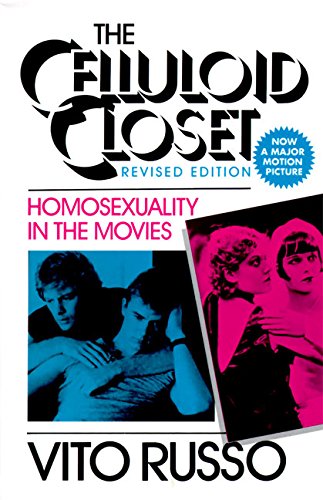
The Celluloid Closet is a famous book for many reasons: for one, Vito Russo is a queer elder/figure that every LGBT person should know, as he founded the Gay and Lesbian Alliance Against Defamation, and he also appears in many HIV/AIDS archival footage (one of them being the 1989 Academy Award winning documentary, Common Threads: Stories from the Quilt) as he himself was fighting the virus since he was first diagnosed with HIV in 1985 (4 years after The Celluloid Closet was published), and while the book is far from being the first on the subject of homosexuality in the movies, I think the reason why his book on the subject had more attention and fame was the sheer level of detail (and also publicity and promoting) that he put into it. While it is indeed very dated, as it is 40 years old now, it is still very important, accessible, and necessary literature. You don't have to be a film student, you don't even have to be queer, this should be an essential work for everyone as this story represents American history from a queer lens which will always be fascinating and vital.
I have the 1981 copy, so I can't say anything about the revised 1987 version, but getting the original copy is nice, but either edition is now a collector's item and is still a product of the 80's regardless. The writing for The Celluloid Closet is academic but never feels boring and dry. As is the case for most non-fiction books, you'd have to expect some repetition of facts, titles, etc. that might have you lose focus sometimes, but I never felt overwhelmed by the well of information, nor did this ever feel tedious or painful to read. The highlights of the book is when Russo gives us so much insight into the silent and pre-Code era of queer film representation with pictures included. I also thought that the Filmography at the end of a book was a really nice touch as oftentimes he'd mention so many films but you won't have to worry about losing track of them, Russo has a handy-dandy list ready for us at the end so we can watch those movies ourselves. The later section where he delves into the 50's - 80's don't feel as straight-forward and nuanced in its delivery as the silent/pre-Code era section, where he interjects more of his opinionated personal feelings and viewpoints, which is understandable and not surprising, as we have to keep in mind that this was published in 1981 after all, so he's writing from his perspective at that time when queer rep in cinema wasn't as positive as it is now, so that's not his fault at all and if anything it's just an interesting throwback to how not just Russo, but how other queer people might have felt about queer cinema at the time, even that is important and deserves to be here, and adds even more to the experience. And you'd also have to think how revolutionary and bold this publication was at the time, as Vito Russo says in his introduction how taboo it was for this book to be published at all. I'm glad he got to write this book when he was in good health, tho there is a tinge of sadness knowing that 9 years later, he'd die of AIDS-related complications. 5 years after his death in 1995 we'd have a documentary of the same name based off his book that includes interviews from Tony Curtis, Whoopie Goldberg, Harvey Fierstein, Tom Hanks, and many others who would talk about the queer roles they played in their films, it's fabulous and I think would have made Vito Russo very proud.
Is this book the best of its subject, will it be the best book you'll ever read on queer cinema? I would say it's ONE of the best, and while its dated nature might turn off some folks or won't convince them that this is it, it's still essential reading, because after all, it has stood the test of time for a reason.