

What do you think?
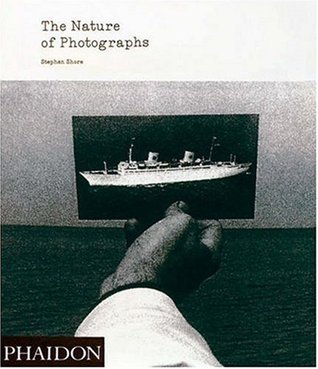
The Nature of Photographs: A Primer
The Nature of Photographs is an essential primer of how to look at and understand photographs, by one of the world's most influential photographers, Stephen Shore. In this book, Shore explores ways of understanding photographs from all periods and all types - from iconic images to found photographs, from negatives to digital files. This books serves as an indispensable tool for students, teachers and everyone who wants to take better pictures or learn to look at them in a more informed way.
136 pages, Hardcover
First published January 1, 1998
About the author
Stephen Shore
89 books72 followersStephen Shore's work has been widely published and exhibited for the past forty-five years. He was the first living photographer to have a one-man show at the Metropolitan Museum of Art in New York since Alfred Stieglitz, forty years earlier. He has also had one-man shows at George Eastman House, Rochester; Kunsthalle, Dusseldorf; Hammer Museum, Los Angeles; Jeu de Paume, Paris; and Art Institute of Chicago. In 2017, the Museum of Modern Art opened a major retrospective spanning Stephen Shore's entire career. He has received fellowships from the Guggenheim Foundation and the National Endowment for the Arts. His series of exhibitions at Light Gallery in New York in the early 1970s sparked new interest in color photography and in the use of the view camera for documentary work.
More than 25 books have been published of Stephen Shore's photographs including Uncommon Places: The Complete Works; American Surfaces; Stephen Shore, a retrospective monograph in Phaidon's Contemporary Artists series; Stephen Shore: Survey and most recently, Transparencies: Small Camera Works 1971-1979 and Stephen Shore: Elements. In 2017, the Museum of Modern Art published Stephen Shore in conjunction with their retrospective of his photographic career. Stephen also wrote The Nature of Photographs, published by Phaidon Press, which addresses how a photograph functions visually. His work is represented by 303 Gallery, New York; and Sprüth Magers, London and Berlin. Since 1982 he has been the director of the Photography Program at Bard College, Annandale-on-Hudson, NY, where he is the Susan Weber Professor in the Arts.
More than 25 books have been published of Stephen Shore's photographs including Uncommon Places: The Complete Works; American Surfaces; Stephen Shore, a retrospective monograph in Phaidon's Contemporary Artists series; Stephen Shore: Survey and most recently, Transparencies: Small Camera Works 1971-1979 and Stephen Shore: Elements. In 2017, the Museum of Modern Art published Stephen Shore in conjunction with their retrospective of his photographic career. Stephen also wrote The Nature of Photographs, published by Phaidon Press, which addresses how a photograph functions visually. His work is represented by 303 Gallery, New York; and Sprüth Magers, London and Berlin. Since 1982 he has been the director of the Photography Program at Bard College, Annandale-on-Hudson, NY, where he is the Susan Weber Professor in the Arts.
Ratings & Reviews
Friends & Following
Create a free account to discover what your friends think of this book!
Community Reviews
Displaying 1 - 30 of 63 reviews

May 15, 2011
Despite of its design, I think this is hardly counts as a coffee table book. This is the kind of book that requires a serious photographer behind it.
The book has oldskool appearance, with a cover image from Ken Josephson, containing mostly old-dated, obscure great black and white photographs (there are some colours too) with little texts that you could actually finish reading overnight. However, to fully understand the principle that Shore explained in the book, one needs to actually read slowly, meditatively, while staring ponderously at the images provided next to its text, because they are closely related.
This is not a light book. It doesn't serve you the knowledge in a silver platter, it's more like you need to actually look through it and think about it, to actually grasp the information in it. But in the end, even though it wasn't as light as I thought, I enjoyed thoroughly reading it. I think I spent well over a month for it. Taking the bites slowly, and enjoying every moment.
Not to be mistaken, the book is not talking about photography in technique or theory, but it is talking about "the nature of photograph", which means photograph as printed matter, how you are supposed to approach it, and depict it. So this is not a photography book.
The book has oldskool appearance, with a cover image from Ken Josephson, containing mostly old-dated, obscure great black and white photographs (there are some colours too) with little texts that you could actually finish reading overnight. However, to fully understand the principle that Shore explained in the book, one needs to actually read slowly, meditatively, while staring ponderously at the images provided next to its text, because they are closely related.
This is not a light book. It doesn't serve you the knowledge in a silver platter, it's more like you need to actually look through it and think about it, to actually grasp the information in it. But in the end, even though it wasn't as light as I thought, I enjoyed thoroughly reading it. I think I spent well over a month for it. Taking the bites slowly, and enjoying every moment.
Not to be mistaken, the book is not talking about photography in technique or theory, but it is talking about "the nature of photograph", which means photograph as printed matter, how you are supposed to approach it, and depict it. So this is not a photography book.

March 6, 2018
کتابی جمع و جور برای درک ساختار عکس همراه با تصاویر زیاد، برای کسانی که در ابتدای عکاسی اند و علاقه مند به فهم عکس:-)

March 25, 2016
Brief. Succinct. No hand-holding. Most likely will elicit critical-thinking. A few pages of what felt like really dense-speak. Not overly hoyty-toyty. A very serious discussion about photography as an art form for whomever is interested in having a very serious discussion about photography as an art form. Definitely something to come back to. Like later in life. Again. And again. And again. And again.
December 26, 2008
eh. it's a coffee table book with coverlet that makes you think it's a textbook. did i learn anything? nah. are the photos chosen for the book worthy of a coffee table? eh. were they displayed well? nah. but i still read the thing and the author is an interesting enough guy. actually, i'm taking a star away and i cant recommend the book.

November 3, 2011
The Nature of Photographs is a very useful primer that employs a fantastic range of photos as well as a lifetime of experiences to instruct us on how to look more closely and meaningfully at photographs. It is also a meditation on the wonderful “feedback loop” between inspiration, perception, and experience that spurs on our desire and need to create.
January 20, 2016
This is not a technical manual. This book will not teach you how to make photos. This book will show you ways to think about images, and ways to think about what you are seeing through your viewfinder before pressing the button.
Worth going back to as you evolve as a photographer.
Worth going back to as you evolve as a photographer.

November 20, 2013
Shore includes about 50 photos by well-known photographers, such as Diane Arbus, Alfred Stieglitz, and Edward Weston. He uses them to instruct the reader in looking at and understanding photography.
Shore is described as "the first living photographer to have a one man show at New York's Metropolitan Museum of Art.
Shore gives some very complex ways of looking at a photograph, and those will help photographers hoping to take better photos.
Shore is described as "the first living photographer to have a one man show at New York's Metropolitan Museum of Art.
Shore gives some very complex ways of looking at a photograph, and those will help photographers hoping to take better photos.

May 19, 2021
A deceptively simple guide on how to "read" a photograph. Stephen Shore is brilliant, of course. He elucidates how the viewer can discern the meaning of the photograph through careful parsing and intentional "seeing". Photographs require self-guided, quiet contemplation instead of the linear progression of words and sentences. Shore illustrates that just like the author chooses words for their reader, the photographer chooses frame, time, focus, and flatness to communicate to the viewer.
This is a very easy read with many, many notable photographs by well-known photographers. A must-read for anyone interested in photography theory.
This is a very easy read with many, many notable photographs by well-known photographers. A must-read for anyone interested in photography theory.

April 1, 2026
This book is a phenomenal text for people interested in photography, and a book I wish I had five years ago. The ideas in it aren’t especially pathbreaking, but the format that it is presented in is very helpful - the photos are paired with the text in a way that is useful. I was drawn to his idea of how every concept he introduces layers upon one another. I would strongly recommend this book to educators.
The other half of me wonders where photography can hope to progress from here as a medium. Maybe that’s why I am drawn to it? Camera technology isn’t evolving, but has reached a stasis in which practitioners can move freely?
The other half of me wonders where photography can hope to progress from here as a medium. Maybe that’s why I am drawn to it? Camera technology isn’t evolving, but has reached a stasis in which practitioners can move freely?

May 25, 2014
I really wanted to like this. I wanted to learn from it. But in the end all I walked away with was a new familiarity with a handful of good photographs. No increased understanding of how the photographs were made. No insight into how better to appreciate them. Just a handful of photographs I hadn't seen before and liked, and several paragraphs of text that seemed to be written with obfuscation as their primary purpose. The author would drop an idea and would either a) not explore it any further, leaving you curious and unsatisfied, or b) explore it in a highly theoretical, circular way that didn't give you any confidence in your understanding.
To me, it came off as snooty and lazy.
To me, it came off as snooty and lazy.

June 12, 2015
Seems to be two main camps for writing about photo's. You either reflect on their nature and role in society or you discuss the grammatical rules of photographs, i.e. the decisions the author has made, how they made them, and their effect. This one is in the latter camp-the harder camp for an outsider to wrap their head around but the one that's probably more rewarding in the end.

February 23, 2016
استیون شور (عکاس آمریکایی و بنیانگذار برنامه عکاسی دانشکده بارد نیویورک) در این کتاب به طور بسیار مختصر و مفید در مورد ماهیت عکس ها توضیح داده است. توضیحات ( در حد چند خط) همراه با عکس می باشد و حاوی موارد مهمی است که در زمان عکاسی باید به آنها توجه داشت تا عکس تاثیرگذاری خلق شود. خواندن این کتاب برای دانشجویان و علاقمندان عکاسی بسیار مفید خواهد بود

March 16, 2020
کتاب برای کسایی که تازه عکاسی رو شروع کردن خیلی خوبه، هم مخاطب رو به سبب عکسها با تعداد زیادی عکاس مهم در تاریخ عکاسی آشنا میکنه و هم یه سری مفاهیم مهم در عکاسی رو سعی میکنه به زبان ساده و به اختصار توضیح بده، اول ممکنه چیزایی که میخونین بدیهی به نظرتون برسه اما بعد متوجه میشین که اینها بدیهیاتی هستن که شما بهشون فکر نکرده بودین! و ماجرا اینجاست!

March 23, 2018
I love this man’s work. And his words here on photography graphs are decent. But otherwise this collection he put together of the world of other artists is pretty “meh” and the reading is far too lite. The introduction was pretentious to boot.

August 12, 2018
Hands down, one of the best books I have ever read (about photography, but also in general). Stephen Shore makes his reader understand what can easily be taken for granted when studying / practicing photography.
July 19, 2021
This is a primer intended for students studying photography at university, but it has something useful to say to anyone interested in what photography truly is and how it can affect our view of the world. It sports numerous photographs to illustrate the textual points made, and explains how photography, as a medium, can be seen as art.
Divided into five sections, The Nature of Photographs, The Physical Level, The Depictive Level, The Mental Level, and Mental Modelling, the book places photographic image-making into the world of more than merely record-making and into a method of altering how we see the world.
The author, a talented photographer, points out how making pictures with photography differs from the processes involved in creating pictures with paint. The latter begins with a blank canvas and applies paints to build a picture either from the view before the artist or from the artist’s imagination.
A photographer, however, uses the frame to select content already in place, a viewpoint to determine the relationships between the elements contained, the moment that best captures the scene before the camera, and the depth or point of focus that can include or exclude various elements of the finished work. Photography is essentially an analytical discipline. The photographer, faced with a subject already existing, employs the features of the medium to determine the outcome of the finished depiction of that subject.
The text, expanding on the four basic aspects of the medium, is written in an easily accessed style, making it easy for the non-technical minded to understand what can limit and what can enhance the outcome of that moment the shutter is pressed.
It’s a useful book for anyone involved in photography at any level. I’ve been a photographer for 60 years and I took a number of positives from this text, so I recommend it to all who are interested in this amazing and versatile medium.
Divided into five sections, The Nature of Photographs, The Physical Level, The Depictive Level, The Mental Level, and Mental Modelling, the book places photographic image-making into the world of more than merely record-making and into a method of altering how we see the world.
The author, a talented photographer, points out how making pictures with photography differs from the processes involved in creating pictures with paint. The latter begins with a blank canvas and applies paints to build a picture either from the view before the artist or from the artist’s imagination.
A photographer, however, uses the frame to select content already in place, a viewpoint to determine the relationships between the elements contained, the moment that best captures the scene before the camera, and the depth or point of focus that can include or exclude various elements of the finished work. Photography is essentially an analytical discipline. The photographer, faced with a subject already existing, employs the features of the medium to determine the outcome of the finished depiction of that subject.
The text, expanding on the four basic aspects of the medium, is written in an easily accessed style, making it easy for the non-technical minded to understand what can limit and what can enhance the outcome of that moment the shutter is pressed.
It’s a useful book for anyone involved in photography at any level. I’ve been a photographer for 60 years and I took a number of positives from this text, so I recommend it to all who are interested in this amazing and versatile medium.

June 29, 2022
El título del libro puede hacer creer erróneamente a un potencial lector que sacará de éste distintas técnicas y tips para mejorar su habilidad como fotógrafo, como si de un manual se tratase. Pero lo que este libro ofrece son reflexiones para nutrir el entendimiento de lo que es la fotografía y su naturaleza (como mejor se alude en su título original en inglés)
Es muy interesante cómo el autor, dentro de los puntos de vista que tiene en sus argumentos, no impone cierta forma de leer las fotografías. Después de unos breves párrafos que tocan algún tema en particular, se disponen al hilo unas cuántas fotografías que podrían parecer haber sido elegidas al azar, pero que cierta relación guardan con la reflexión recién planteada; sobre la bidimensionalidad o la textura de la fotografía, para dar unos ejemplos. El autor no describe ni explicita qué relación hay entre el texto y la fotografía, cómo puede el lector ahora analizar la fotografía según lo que acaba de leer. Se da el espacio para que el mismo lector reflexione y esto me parece un gran ejercicio para cualquier fotógrafo que quiera profundizar la manera en que afronta la fotografía tanto como realizador, como espectador.
Es muy interesante cómo el autor, dentro de los puntos de vista que tiene en sus argumentos, no impone cierta forma de leer las fotografías. Después de unos breves párrafos que tocan algún tema en particular, se disponen al hilo unas cuántas fotografías que podrían parecer haber sido elegidas al azar, pero que cierta relación guardan con la reflexión recién planteada; sobre la bidimensionalidad o la textura de la fotografía, para dar unos ejemplos. El autor no describe ni explicita qué relación hay entre el texto y la fotografía, cómo puede el lector ahora analizar la fotografía según lo que acaba de leer. Se da el espacio para que el mismo lector reflexione y esto me parece un gran ejercicio para cualquier fotógrafo que quiera profundizar la manera en que afronta la fotografía tanto como realizador, como espectador.

February 26, 2018
This book is like a heavily distilled course on how to look at and understand photos and photography. It does not focus on the technical aspects of photography such as cameras and lenses but more on the visual elements that comprise pictures.
It breaks photographs down into separate levels that all build on one another and are comprised of key elements. The levels are physical, the print or physical image itself, the depictive level (what’s being shown) and the mental level (how the image is perceived).
This book is a quick read, like I said it is highly distilled into the key components, and provides great photos to accompany the points. I read it once and then a second time to draw more from the text.
A great primer for anyone wanting to go deeper into the meaning or nature of a photograph and really think about what it is to create an image.
It breaks photographs down into separate levels that all build on one another and are comprised of key elements. The levels are physical, the print or physical image itself, the depictive level (what’s being shown) and the mental level (how the image is perceived).
This book is a quick read, like I said it is highly distilled into the key components, and provides great photos to accompany the points. I read it once and then a second time to draw more from the text.
A great primer for anyone wanting to go deeper into the meaning or nature of a photograph and really think about what it is to create an image.

November 14, 2022
Stunning. Both in concept and composition. This book breaks down the art of photography into digestible concepts that are not only for the artistic, but also for the logical or philosophical.
The purpose of this book is to essentially explain the process of creating a photograph—whether that process is conscious or unconscious on the part of the photographer.
I would have loved to sit under Shore’s tutelage in the classroom. The way he explains the building of an image is so simple, yet profound. It’s amazing how our minds work, and I recommend this book to anyone who enjoys photography as a career or a hobby.
The purpose of this book is to essentially explain the process of creating a photograph—whether that process is conscious or unconscious on the part of the photographer.
I would have loved to sit under Shore’s tutelage in the classroom. The way he explains the building of an image is so simple, yet profound. It’s amazing how our minds work, and I recommend this book to anyone who enjoys photography as a career or a hobby.

Read
July 9, 2022Highlighted passages:
"Where a painter starts with a blank canvas and builds a picture, a photographer starts with the messiness of the world and selects a picture."
"[T]here are four central ways in which the world in front of the camera is transformed into the photograph: flatness, frame, time, and focus. These four attributes define the picture's depictive content and structure. They form the basis of a photograph's visual grammar."
I wish the concept of mental space is elucidated further, parts of that chapter are unclear to me.
"Where a painter starts with a blank canvas and builds a picture, a photographer starts with the messiness of the world and selects a picture."
"[T]here are four central ways in which the world in front of the camera is transformed into the photograph: flatness, frame, time, and focus. These four attributes define the picture's depictive content and structure. They form the basis of a photograph's visual grammar."
I wish the concept of mental space is elucidated further, parts of that chapter are unclear to me.

April 22, 2025
جمعوجوره و نوشتههای کم و عکسهای مهم و زیادتری داره، خوندن و دونستن این نکات با اینکه در وهلهی اول ممکنه بدیهی به نظر برسه، خیلی واجب و مهمه. به نظرم در کنار این ویژگیهایی که استیفن شور برای عکس و عکاسی میگه، ویژگیهایی که سارکوفسکی بیان میکنه رو هم بدونیم و باهم مقایسه کنیم خیلی ارزشمندتر میشه تجربه خوانش این کتاب.

March 3, 2020
A remarkable way of looking and understanding the nature of the photograph and how much influence the photographer has over all aspects. Some really great works included to explain the theories, highly enjoyable and thought provoking read.

May 15, 2017
Sencillo, directo... nada que posiblemente no sepas, pero muy ameno y ordenado. Yo lo revisitaré seguro.

November 2, 2017
A wonderful look at photography, how they are interpreted

November 10, 2017
Īsti nezinu cik ļoti patika, vai nepatika. Interesanti, bet..

December 26, 2017
While having little text this book has a lot to say. A nice meditation on photographs.

April 20, 2020
Un libro para pensar la fotografía, comprender elementos de la composición y entender un poco la filosofía tras las cámaras y el revelado.
March 26, 2021
Superb - Essential reading if you are anywhere remotely interested in visual language and photography. Shore is the master !
August 5, 2021
مختصر و مفید.
۱۴ مرداد ۱۴۰۰
۱۴ مرداد ۱۴۰۰

Read
March 23, 2022به نظرم فراتر از صحبت در مورد عکس ها بود
Displaying 1 - 30 of 63 reviews