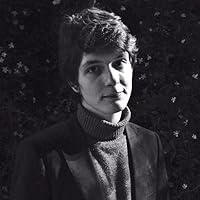
Political conflict in our society is inevitable, and the results are often far from negative. How then should we deal with the intractable differences arising from complex modern culture? In Agonistics , Mouffe develops her philosophy, taking particular interest in international relations, strategies for radical politics and the politics of artistic practices. In a series of coruscating essays, she engages with cosmopolitanism, post-operaism, and theories of multiple modernities to argue in favor of a multipolar world with a real cultural and political pluralism.
Chantal Mouffe is a Belgian political theorist. She holds a professorship at the University of Westminster in the United Kingdom. She is best known as co-author of Hegemony and Socialist Strategy with Ernesto Laclau. Their thoughts are usually described as post-Marxism as they were both politically active in the social and student movements of the 1960s including working class and new social movements (notably second-wave feminism in Mouffe's case). They rejected Marxist economic determinism and the notion of class struggle being the single crucial antagonism in society. Instead they urged for radical democracy of agonistic pluralism where all antagonisms could be expressed. In their opinion, ‘...there is no possibility of society without antagonism’; indeed, without the forces that articulate a vision of society, it could not exist.
There's an interview with author Chantal Mouffe at the end of the book. I found it a helpful intro to the concepts she discusses in the book. Wish it had been placed at the beginning.
Wonderful book, though it left me confused why the critique of (false, uncritical) universalism must ALSO be anti-communist, i.e. there are forms of (21st Century, radically democratic) communism that retain universalism as an IDEAL, yet follow precisely the push and the path to pluralism that Mouffe prefers.
Chantal Mouffe raises sensible points in 'Agonistics'. An abridged compilation of her thoughts, it brings up many issues in the current state of affairs of democracy. While I find many of her ideas worth considering, my thoughts on other arguments are less favourable. Whereas she finds reason to be out of the question in the political arena and finds emotions as a good substitute for social cohesion, I believe the positive outcomes of this idea may not justify their use (indeed, she acknowledges the risks of a constructivist approach to nationalism in a context where essentialism is the norm.) However, her opposition to horizontalism is a good case, insofar as the idea of complete rejection of institutions may result in a suppression of pluralism, a key element of Mouffe's thought. With these issues in mind, a sensible defence of democracy and social pluralism needs to take the ideas of republican socialists and post-Marxists such as Mouffe into account.
~ Los movimientos de protesta "horizontalistas" también son partícipes de la retórica neoliberal antiestatal. Celebran "el común" por sobre el mercado, pero su rechazo de lo "público" y de todas las instituciones ligadas al Estado exhibe asombrosas similitudes con la postura neoliberal. Su insistencia en percibir al Estado como una entidad monolítica, en lugar de concebirlo como un complejo conjunto de relaciones, dinámico y atravesado por contradicciones, les impide reconocer las diversas posibilidades que podría ofrecer el control de las instituciones del Estado para luchar contra la mercantilización de la sociedad. ~
ojalá ser yo tan delusional y reformista en fin chica vive en tu burbuja. las estrellas son porque es muy claro y está escrito bien y porque me hizo mucha gracia q esté todo el tiempo citándose a ella misma o al churri (laclau)
Reading Chantal Mouffe, I actually felt hope like I haven’t felt in a long time! It was a refreshing take and I view it as a starting point to initiating some form of social change. As I read visionary philosophers such as Freire, Dewey, Greene, Ikeda in the past, who believe in the innate humane goodness, I was always inspired with their work & core philosophy re-affirming my belief in the humanistic approach. Indubitably, I still believe in their overarching vision but have been completely lost as to how does one move from the current reality of our world to this idealistic way of being where everyone is deeply respectful, working for the welfare of others and co-creating egalitarian ways of being. Paradoxically, Mouffe identifies antagonism and hegemony to be at the center of human interaction and social relations. The recognition of these factors does reflect the reality of current individual, communal, national and global relationships. And even though everyone’s reality is different and dynamic, we cannot not acknowledge the injustices, intolerance and dominant hegemonic powers currently at play.
She proposes the idea of agonism, which indicates the struggles between adversaries. She differentiates adversaries with enemies, as adversaries are encouraged to operate within the same principles of framework for instance, equality and justice, but are free to interpret these principles differently and put forth conflicting opinions. In fact, she believes that it is these conflicting opinions that form the basis of democracy, where everyone has the ability to express their thoughts, beliefs, worldviews etc. and re-align the operating power relations. Given her position that is, being from Belgium, I believe she writes keeping the United States in mind, given the dominant place it has held post World War II. With Europe losing its centrality, this theory propounds the possibility of multiple hegemonic entities re-entering the space of power. With all the privileges that Europe has, based on its past historical and social context, it may not be that difficult for Europe to re-negotiate its hegemonic position in the world. And to begin with, would she even be writing about this theory, had Europe been the current sole hegemonic power.
A confrontation between conflicting hegemonic positions assumes that everyone is on equal grounds to even be able to engage in this confrontation. However, for nations and collective identities of historically marginalized groups, how do they acquire the required power to participate in this hegemonic battle? Since, the people in power are already dominating factors and systems such as media, money, education that own, influence and shape mindsets. Furthermore, there is an assumption that both opponents will share a common allegiance to the overarching goals / vision.
I do think it’s interesting that she deems that the western idea of liberal democracy is not applicable to the rest of the world and each nation should interpret what does democracy mean for them, their collective identities and their nation. The example of the Middle East forming democracy based on Islam and the Sharia Law, based on divine sovereignty made for a thought-provoking example. I began wondering what does that mean for India’s current democracy. In many ways, the constitution has been most far-sighted with regards to encouraging being secular, a sovereign republic, standing for justice, equality, fraternity and liberty of thought, expression, belief, faith and worship. Having several communities and states, democracy to a large extent has meant the co-existence of diversity in the nation. The current Government, being right wing, is posing endless challenges to this vision of inclusiveness.
This leads to my next thought on the power of the multitude, as highlighted by Chantal. She strongly believes that if the multitude would come together, they would be able to create effective counter-hegemonic movements. An example comes to mind in the landscape of Indian democracy. A politician’s son, had walked scott-free after shooting a girl in front of several witnesses because of the money and power his family possessed, was only indicted and jailed after multitude of people protested on the streets. It was solely the power of the public that had ensured this girl received justice. Nonetheless, how does one encourage the daily engagement of the multitude in the functioning of the country? These movements manifest with power once in a blue moon, when a number of factors are weaved together. How does one sustain these movements, which would then enable continual checks on the existing hegemonies? Moreover, there are so many variables, such as multitudes resulting in mob madness, who are not always tied together by the same goal. And I do think it’s exhausting that leadership, who have been elected to serve the best interests of the people, are not expected to be self-accountable!
Mouffe notes that one doesn’t ‘reach a rational fully inclusive consensus without exclusion but sublimate passions by creating collective forms of identification around democratic objectives’, however, the point is who is designing these democratic objectives that everyone is conflictingly working towards? And how does the design of these objectives include / exclude groups / communities / nations in the foundation itself!
She does emphasize deeply the demarcation between the ‘us’ and ‘they’ especially with regards to different ideologies being represented by political parties so that people can have a sense of belonging. Moving towards the center and not having extreme points of view on the political continuum, she find problematic. However, I am trying to understand how does moving towards the center imply lack of alternatives to existing hegemonic order? In fact, doesn’t one extreme for instance, the right, stand by policies that can possibly de-humanize people / collective groups, such as standing for gun violence, holding on to conservative views, being anti-homosexual / transgender rights / taking away the freedom from women to make a decision for their own bodies / imposing nationalism / excluding religious beliefs!
She gives several examples of tools that can be used by the multitude to counter dominant hegemonies. For instance, she highlights the role of the media and how it can be the mirror for people to know the truth. However, the media has its own subjectivities, interpretations and power dynamics because of which it needs to be looked at critically. I do think that aesthetics play an integral role in creating spaces that can in turn re-articulate cultural practices and influence power relations. On an additional note, I do want to emphasize though that Berlusconi, who she mentions extensively as being the political leader who was driven out of the hegemonic system, has just made a comeback to Italian politics declaring himself to be the Grandfather of Italy!
Wundervolles Buch über die Einführung von Agonismus und Antagonismus. Diskurs, Dissenz und der Notwendigkeit Dinge auszuhalten. Inklusive einer Perspektive von Kunst auf die politischen Debatten und ihre politischen Lager.
Mooie inzichten, maar boek voelt als de samenvatting van de samenvatting. Goede reden om het eerdere en waarschijnlijk uitgebreidere werk van Mouffe er eens bij te pakken.
Second work I read for my pre-master thesis. Made extended notes on it's content for that reason, which are far too detailed to jot in this Goodreds review. Allow me to say, however, that I found this more recent work much clearer than the first essay collection I read by her (On the political). Although she write congruently about similar concepts, like hegemony, the political, agonisme etc., to me it was easier to put into perspective in this work. Maybe because it more current, maybe she writes in a cleared way or maybe her ideas manage to come through more the more I read about them. I doubt it is entirely due to this last reasoan however, as Mouffe has a tendency to repeat herself a lot. I particullary took note of this as I was summarizing because I was asking myself all the time: 'hey. haven't I summarized this before' or 'did she not just say this in another form'. Although this can come across a bit repetative, I found it quite helpful to get a good grip on her political theory which I found original, provocative, interesting and slightly obstinate. This is something that I really enjoyed: Mouffe seems to frame her thoughts without the fear of not being 'subtle' enough (which is a hegemony in itself in our science driven world where having a opinion can be considered unscientific and being political is negated for the purpose of being 'objective'). What I like about Mouffe's theory is that she both in word and unapologetic writing style hits the point home that every human inherently is political (and should want to be) and that part of 'the political' is antagonism. Her starting point is therefor completely different than cosmopolitan or neoliberal universalist writer who deny that this conflitues realm exist (and therefor creating more conflict by default) while Mouffe tries to hit the point home that it exist, wheter we want to or not, and that we can better focus on a finding approriate ways to express is. She calls this in an 'agonistic' instead of an 'antagonistic' form. What I particullarly value here is that she is very humble considering the way how this should be done. The point out that the rational and 'universalist' view of the neoliberal west is not the only way a society could be formed and the political could be structured. In fact, she acknowledges that proposing this form as the only good way to structure a society is rather supremacist. Instead she proposes that the political dimension of societies can be organized on a regional level so that people see themselves represented in local 'poles' of a certain way that a society is organized that together again form a multipolar world. What I commend about this particullar work is that she explains quite clearly the role that Europe could take considering the different European poles and does not do away with the idea of the existence of the continent, like so many others. The same goes for international politics, which she understands are necessary. Yet her approach is less imperialist and more humble, activistic and realist than many of the 'exodus' or 'neoliberal paradigm' approaches currently at work. She does not advocate for going along with the neoliberal hegemony, nor with the complete distruction of the current democracy and it's instituions (towards an absolute democracy); in fact she argues for reshaping our institutions in such a way that they represent us in an agonistic adversary form, at least here in Europe that is and explains how she thinks we could do so. Wheter you agree with Mouffe or not, her work is interesting, innovative and hopeful. I would recommend reading it to help you see another way our of our current hegemonic neoliberal paradigm and get acquinted with a new way to think the world politically.
The book is good, and I think the critique about the portrait of representative democracy as a threat is very important. Just as the author's perspective about conflict and how it should be grasped instead of suffocated. We live in a manifolded world, each person with a singular path, so it is obvious that conflict will be an ever-present element. The search for consensus should be changed for strategies about dealing with conflict. How can I live in a world with multiple and opposite identities, ideas and beliefs? Instead of how can I annihilate the ones that do not think like me? Understanding the process of constructing identities is discursive and collective, and that can happen through representation.
But I think that technology should be considered as well in Mouffe's analysis, because it seems that she is stuck in traditional arenas of representation and participation. The development of techniques such as blockchain, just as the pervasive connection that characterizes our society, are the newest elements in this discussion about politics, accountability and reliability. I also thin that she romanticizes the experiences of left wing governments in South America, and the actual context is a symptom not only of the discredit of state incrusted in neo-liberalism discourse, but also of the not so successful promises of leftist parties in the region. The corruption scandals and the detachment from the basis electorate for sure had its impacts and compromised the crisis in institutions.
Mouffe has an interesting view of the political being the ineradicable possibility of conflict (to which I would add concord, as the one entails the other). If we understand the political as such, we also understand that everything around us is political, even the issues that we decide we do not want to deal with politically. This means that no choice is absolute and that every decision is in some way arbitrary. Our neoliberal system, of which we often think that it is our only option for the future, can thus be changed by the left. In order to do so, Mouffe claims, we need to create a counter-hegemony by a chain of equivalences headed under one floating signifier. Artists play a big role in this, and I like the way that Mouffe stresses the importance of both the arts and institutions in creating this counter-hegemony.
I think this is an interesting and insightful book about political philosophy. However, in order to understand political ideologies as such, we sometimes need to understand politics as a branch of ethics (which doesn't have to mean that it is absolute, although Mouffe seems to think so). But overall: very inspiring, I'd recommend it!
Mouffe always offers good insights;, though her optimism in Syriza, Front de Gauche, the Pink Tide & the EU don't hold up well. These are sort of examples pointed to to support her key ideas, so the question is were they bad examples air are they flawed ideas. The jury on that remains largely out.
The biggest theoretical weakness as I see it is in the idea that there can be illiberal democracies. While I share Mouffe's criticism of universalism and universal approaches I'm not aware of any actual existing--or historic--illiberal democracies worthy of the distinction. The notion that the collective is as or more important than the individual is not, in any case, something foreign to Western thought as Mouffe suggests...
This volume is worth reading, but neither as significant nor as insightful as early works such as Hegemony & Siciaoist Strategy (with Ernesto Laclau,) or the Return of the Political, which offers a more direct and forceful defense of liberal democracy against Leninism.
I find Mouffe’s work very thought-provoking and interesting, and the concept of agonistic pluralism in particular intrigues me. I see great value in the idea that conflicts are not always to be resolved, and that in many cases the tension is productive, so long as we can foster respect for each other in so doing. I am particularly interested in scientific conflicts and conflicts over knowledge, as I think it often degrades into ad hominem attacks or only certain experts are able to influence political agendas (and sometimes they are not actually experts at all). I have been searching, however, for something she has written that provides concrete insights into how to foster agonistic pluralism. This was not that book. It is a good primer on her work (this will all be familiar to you if you have read her academic papers), and an interesting description of democratic and political dynamics and challenges, but it falls short of the concrete insights I was looking for.
Mouffe advocates the establishment of a multipolar order, an agonistic world order.
A multipolar world is better than a unipolar world, as it is less likely to foster the emergence of extreme forms of antagonism.
Conflict must not take the form of an antagonism (struggle between enemies, but a form of agonism (struggle between adversaries). Here others are not seen as enemies to be destroyed, but rather as adversaries whose ideas can be fought yet who have the right to defend said ideas.
Mouffe promotes challenging neo-liberal institutions to create change. Since media is a reflection of society and the world, many opportunities can be found to intervene directly with the neo-liberal model. However, media alone cannot fulfill this role and must be accompanied by other political interventions.
Corona allows me to re-read books that once thoroughly influenced my own thinking and gather in the second thoughts that come up after so many years. This was and is not the best of her books but now I found this a very valuable one for its quick summaries. The opening chapter and the final chapter (an interview) offer a good, concise summary of central themes Mouffe elaborated in her major works throughout the years; the other chapters I found less coherent, less convincing or less relevant for our heavily changed a(nta)gonistic political situations today, both locally and globally. Nevertheless, Mouffe and Laclau have laid hugely important milestones in late 20-century political thought, on the basis of which 'we' worldwide now attempt to renew post-socialism and post-liberalism.
La negatividad radical de lo político, la condición posdemocrática, los afectos y, por su puesto, la agonística. Chantal Mouffe tiende a repetirse a sí misma. En sus libros toca, aunque sea superficialmente, todas las aristas de su pensamiento, siempre resaltando una en particular. Considero que su aporte resulta pertinente a la hora de abordar las disputas internas que inevitablemente surgen dentro de los de movimientos de izquierda. Concebir al "otro" político como adversario y no como enemigo puede, a mi parecer, convertirse en una herramienta que consolide la unidad de los progresismos. Su críticas al éxodo institucional y al horizontalismo propuestos por Negri y Hardt son también remarcables y provocadoras.
Este libro de la filósofa y politóloga Chantal Mouffe no solo es de importancia para la academia sino para la vida, pues permite formularse las diferentes prácticas políticas de nuestro mundo actual y el deber ser de los Estados a partir de la creación de consensos que permitan la existencia de antagonismos, donde el reconocimiento a la diferencia constituye un factor de lo político y asimismo, una propuesta para la radicalización de la democracia. Un libro complejo en su estructura pero de lectura rápida, la forma en la cual está escrito enreda al lector al nivel de no querer soltarlo hasta acabarlo.
I am a devoted proponent of Mouffe's ideas and her presentation. I can see this book as both a great starting point for her ideas, and a good reinforcement of those same ideas for readers familiar with her longer, and possibly more intellectually dense and difficult writings. For me, this book shows the limits of our current idea of Western Liberal Democracy, and, more importantly, it shows that until we as citizens and theorists are unable to escape the idea that WLD is the ideal and the final stage of civilized living we can never actually address the wide range of social, political, and economic faults of our current existence.
Good rehearsal of Mouffe's agonistic understanding of the 'political' in relation to a range of current conjunctures, but slightly disconcerting to see how easily her idea of a politics organised around the 'constitutive outside' becomes a predictable analysis of each of those conjunctures. Nice observations on the consensual assumptions underpinning Occupy rhetoric.
Mouffe no dice: "The years in which the hegemony of neo-liberalism was unchallenged have fortunately come to a close. With the multiplication of protest movements, we are witnessing a renewed interest in a type of radical politics that might be able to bring about an alternative to the current neo-liberal globalization…"
Mouffe truly uses "Schmitt against Schmitt" throughout her work. Even though I disagree with some of her conclusions (such as the idea that liberal democracy can be transformed,) I genuinely appreciate her honest reformism. Her critiques of certain "post-political" theorists are on-point, noentheless.
Excellent in the way that Carl Schmitt's ideas are in fact immortal. You cannot get rid of them even if your political roots are anchored in a genuine left-wing sea bottom. Decision remains the political act par excellence and conflicts are not avoidable. Nevertheless you've to try all possible convergencies as Schmitt's ideal situation is the coincidentia oppositorum.
Väldigt intressant och inflytelserik bok om att undvika fällan av vän/fiende till att upprätthålla sin meningsmotståndares rätt till existens vis det Mouffe kallar för agonistik - att vara kvar i smärtan. Det är förstås intressant att veta mer hur hon föreställer sig att detta ska gå till, men det finns säkerligen i andra böcker.
Mouffe is known to keep her books short and easily read (for discussions on political theory, that is), and in addition, this book is optimistic yet factual, examining political functions of society, democracy, and arts, giving one the feeling that not all hope is lost in achieving an alternative society.
Str. 56- ...da nobeden del človeštva ne premore formule, ki bi bila veljavna za ves svet -in da si je nemogoče zamišljati človeštvo, poenoteno z enim samim načinom življenja, kajti v tem primeru bi človeška kultura popolnoma okostnela.
Fell asleep twice. An agony full of post-marxist cliches, e.g. "Trojan horse of neo-liberalism" or "American hegemony". The book is as slow, as leftist, as lost in time and space, as the whole Europe is. Parts on artistic practices and the interview in the end would be more than enough.