

What do you think?

Seven Soldiers of Victory #1-4
Seven Soldiers by Grant Morrison Omnibus
Grant Morrison's epic and ambitious SEVEN SOLDIERS saga is collected here in its entirety for the first time ever!
SEVEN SOLDIERS is an epic tale of life, death, triumph and redemption that explores the nature of heroism and sacrifice. Featuring seven heroes: the Shining Knight, the Guardian, Zatanna, Bulleteer, Frankenstein, Mister Miracle and Klarion the Witch Boy. Independently, each of these characters is featured in a story that redefines their purpose in the DC Universe. But their stories also interweave with the others, telling a grander story of a devastating global threat to mankind. Together, these reluctant champions must work together to save the world from the insidious threat of the invading Sheeda warriors -- without even meeting one another.
With art from one of the greatest group of illustrators ever collected, including J.H. Williams III, Ryan Sook, Cameron Stewart, Yanick Paquette, Doug Mahnke and more, this massive omnibus collection brings together one of the most ambitious projects in DC history. Collects SEVEN SOLDIERS #0-1, SEVEN SOLDIERS: SHINING KNIGHT #1-4, SEVEN SOLDIERS: GUARDIAN #1-4, SEVEN SOLDIERS: ZATANNA #1-4, SEVEN SOLDIERS: KLARION THE WITCH BOY #1-4, SEVEN SOLDIERS: MISTER MIRACLE #1-4, SEVEN SOLDIERS: BULLETEER #1-4 and SEVEN SOLDIERS: FRANKENSTEIN #1-4.
SEVEN SOLDIERS is an epic tale of life, death, triumph and redemption that explores the nature of heroism and sacrifice. Featuring seven heroes: the Shining Knight, the Guardian, Zatanna, Bulleteer, Frankenstein, Mister Miracle and Klarion the Witch Boy. Independently, each of these characters is featured in a story that redefines their purpose in the DC Universe. But their stories also interweave with the others, telling a grander story of a devastating global threat to mankind. Together, these reluctant champions must work together to save the world from the insidious threat of the invading Sheeda warriors -- without even meeting one another.
With art from one of the greatest group of illustrators ever collected, including J.H. Williams III, Ryan Sook, Cameron Stewart, Yanick Paquette, Doug Mahnke and more, this massive omnibus collection brings together one of the most ambitious projects in DC history. Collects SEVEN SOLDIERS #0-1, SEVEN SOLDIERS: SHINING KNIGHT #1-4, SEVEN SOLDIERS: GUARDIAN #1-4, SEVEN SOLDIERS: ZATANNA #1-4, SEVEN SOLDIERS: KLARION THE WITCH BOY #1-4, SEVEN SOLDIERS: MISTER MIRACLE #1-4, SEVEN SOLDIERS: BULLETEER #1-4 and SEVEN SOLDIERS: FRANKENSTEIN #1-4.
792 pages, Hardcover
First published January 14, 2007
About the author
Grant Morrison
1,811 books4,672 followersGrant Morrison has been working with DC Comics for twenty five years, after beginning his American comics career with acclaimed runs on ANIMAL MAN and DOOM PATROL. Since then he has written such best-selling series as JLA, BATMAN and New X-Men, as well as such creator-owned works as THE INVISIBLES, SEAGUY, THE FILTH, WE3 and JOE THE BARBARIAN. In addition to expanding the DC Universe through titles ranging from the Eisner Award-winning SEVEN SOLDIERS and ALL-STAR SUPERMAN to the reality-shattering epic of FINAL CRISIS, he has also reinvented the worlds of the Dark Knight Detective in BATMAN AND ROBIN and BATMAN, INCORPORATED and the Man of Steel in The New 52 ACTION COMICS.
In his secret identity, Morrison is a "counterculture" spokesperson, a musician, an award-winning playwright and a chaos magician. He is also the author of the New York Times bestseller Supergods, a groundbreaking psycho-historic mapping of the superhero as a cultural organism. He divides his time between their homes in Los Angeles and Scotland.
In his secret identity, Morrison is a "counterculture" spokesperson, a musician, an award-winning playwright and a chaos magician. He is also the author of the New York Times bestseller Supergods, a groundbreaking psycho-historic mapping of the superhero as a cultural organism. He divides his time between their homes in Los Angeles and Scotland.
Ratings & Reviews
Friends & Following
Create a free account to discover what your friends think of this book!
Community Reviews
Displaying 1 - 30 of 42 reviews

September 15, 2019
A hugely inventive and original series that revives and reimagines old and unknown DC characters and binds them together (in a way) to stop the good old end of the world event. The book consists of seven 4-issue mini-series each focusing on a different character, bookended by two "main" issues that tie everything together. It's not a perfectly smooth read — the constant switching between series can get annoying, and not every character's mini is a standout. I enjoyed Zatanna, Klarion, Shining Knight and Frankenstein the most, and I felt like Guardian and Mister Miracle were weak and not very engaging — Mister Miracle especially suffers in comparison to Tom King's absolutely stunning recent series, Morrison's take just feels very blah, and with the worst artwork in the entire (otherwise quite good-looking) collection. The Bulleteer mini was just tonally all over the place — it felt like something straight out of The Boys, it deals a lot with objectification of female superheroes yet manages to say absolutely nothing meaningful about it, and Yanick Paquette's art is very good on a technical level but it's also very icky because he draws women in a very porn-y and gross way (so many crotch shots, butt close-ups and women in lingerie), which really doesn't do the book's themes any favours. The JH Williams III-drawn bookending one-shots are gorgeous and very impressive, especially the finale where Morrison ties all seven books together, even though I can't say that they did it entirely coherently — it gets kinda choppy towards the end. Overall though, Seven Soldiers is still a great read and a very satisfying experience packaged in one nice hefty omnibus, especially for those people who want to read up on DC's C- and D-listers.

October 25, 2018
Seven Soldiers deals with an issue I have reading team books, in that mostly the focus is on the ensemble as a whole and rarely do the individual characters get fleshed out. Grant Morrison turns this on its head and takes seven unknown characters from the DC Universe (aside from Zatanna I guess) and gives them their own miniseries. Another twist is that these seven are a team without them knowing about it or even meeting.
These seven series can't be read seperately however, there's plenty of connective tissue. Most of that is related to the Sheeda, an alien lifeform that's invading Earth and all of our seven heroes are affected by it. But Morrison finds other ways to have the series connect. There are revelations in one series that are relevant to another, and so on. That's why this is a pretty demanding read, since you have to keep track of several storylines at once and remember where certain characters are in their arc.
It all comes together in the end though and Seven Soldiers turns out to be a very rewarding reading experience. It's full of typical Morrison-isms like breaking the fourth wall and crazy magic, but it never gets too confusing or incomprehensible. You don't even need that much background on the DCU, aside from knowing who the New Gods are. As such, the Mr. Miracle series is connected to continuity the most and is even a loose prequel to Final Crisis.
Another impressive aspect of this series is that every character has an artist that fits the style of the story perfectly. The standout is Frazer Irving's art on Klarion the Witch Boy, which is utterly fantastic:
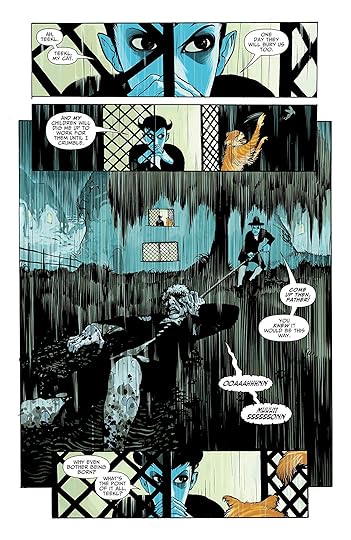
In this regard the Mr. Miracle series has the least impressive art, but all the others are pretty great. J. H. Williams III draws the opening and final chapter and does a fantastic job at that as well.
All in all Seven Soldiers is a very ambitious project that demands quite a bit from you as a reader, but you get a lot in return.
These seven series can't be read seperately however, there's plenty of connective tissue. Most of that is related to the Sheeda, an alien lifeform that's invading Earth and all of our seven heroes are affected by it. But Morrison finds other ways to have the series connect. There are revelations in one series that are relevant to another, and so on. That's why this is a pretty demanding read, since you have to keep track of several storylines at once and remember where certain characters are in their arc.
It all comes together in the end though and Seven Soldiers turns out to be a very rewarding reading experience. It's full of typical Morrison-isms like breaking the fourth wall and crazy magic, but it never gets too confusing or incomprehensible. You don't even need that much background on the DCU, aside from knowing who the New Gods are. As such, the Mr. Miracle series is connected to continuity the most and is even a loose prequel to Final Crisis.
Another impressive aspect of this series is that every character has an artist that fits the style of the story perfectly. The standout is Frazer Irving's art on Klarion the Witch Boy, which is utterly fantastic:
In this regard the Mr. Miracle series has the least impressive art, but all the others are pretty great. J. H. Williams III draws the opening and final chapter and does a fantastic job at that as well.
All in all Seven Soldiers is a very ambitious project that demands quite a bit from you as a reader, but you get a lot in return.

August 3, 2022
There is a ton of great art throughout this book from a multitude of excellent artists. Sadly, its written by Grant Morrison. I just don't get what people see in him as a writer. He excels at trying to confuse writers, writing nonsense, and people love it. Its so bizarre to me. Here, I have no idea what happened or why. I certainly don't think it mattered. Thirty issues to tell a story that...does what? Good question. Overall, if you like Morrison, I'm sure you'll like this. If you like coherent story-telling, you won't.

May 19, 2018
One of the greatest comic book stories of all time.

September 28, 2018
The books follows multiple mini-series following different characters from DC's past Morrison brought into the present with this storyline. Each book has a different artist and the issues are in the correct reading order throughout this volume so you read issues from different parts of the mini-series chronologically instead of by individual series. I wish we saw this be more common as this is how the big companies ask people to read the single issues.
Overall an interesting story and the art, while different in the separate series, was good and created different ambiance within different character's stories.
Overall an interesting story and the art, while different in the separate series, was good and created different ambiance within different character's stories.

Did Not Finish
August 25, 2019Sadly couldn’t get into this one. An interesting premise, but the only characters I really found interesting were Klarion and to a lesser extent Zatanna.
February 21, 2024
This book was hugely inventive and crazy and mindbending, and I don’t know how to feel. It’s seven standalone stories that all secretly intersect without the characters actually meeting each other to stop the invasion of the sheeda. It also helped set up some things for final crisis. I’ve often heard people complain that Morrison is confusing and inaccessible and this was the first book that I felt this way about they pulled from things from the golden age of DC that I have no connection and felt utterly lost on.
October 19, 2021
This book didn´t keep the magic in it, ironically, caus eit features alot of character swith magical powers. I just think that Morrisons has alot of other stronger works with richer characters.

Read
September 23, 2022Morrison takes the Modern Age superhero revamp and plays it over and over again across dozens of characters and concepts, embracing, critiquing, and evolving the practice through a story that explodes the corporate rehashing of children's entertainment into a story of characters and their authors, mentees and mentors, children and parents, readers and storytellers. How the power and responsibility of the adult can be used and abused in passing down maturity to a child, yet how the child can grow and recover and become something new, embracing the "third path" of growing up while using the magic of imagination to see through self doubt, trauma, and the grim realities of the world, and search for a better tomorrow. Morrison being Morrison conveys this through an undead zombie warrior fighting an eternal devil on Mars, a time traveling knight of King Arthurs's court hunting the corrupted final evolution of humanity to the end of time and back, a shitty little puritan witch kid who lives beneath the sewers, subway pirates, etc. Where Greg Rucka says he writes from character and theme, Morrison seems to write from theme and COOL FACTOR. While this leads to me wishing some characters had more time or exploration, and just a bit of decompression (Neh-Buh-Lo deserved better!), I nonetheless respect this series for its inability to ever bore the reader or stray from it's mission. Art-wise this is one of Morrison's finest collaborations yet, with my only complaint being that Yannick Paquette's art on Bulleteer undercuts Sally Sonic's story by drawing her like she's in her late 20s (although perhaps that's purposeful to make her story more tolerable? Or does it do the reverse and make us the reader complicit in her sexualization?). JH Williams- what is there to say that hasn't been said? That final issue is some once in a generation talent on display. Hope to one day own a copy of this that I can reread and dissect, but until then I will make like Frankenstein and read to death theories and analysis from the internet.
May 14, 2025
I think that if you love Morrison's work, you'll like this one (it's hard to picture loving it).
If you're neutral on their work, or you dislike it, I think that you're probably going to be unimpressed by this one.
There are a lot of people that really love Morrison's writing, and I've heard a number of people refer to them (Morrison prefer they/them) as the greatest comic writer of his generation. For me, I don't see it, and I think this book is a prime example of that discrepancy.
Morrison has weird, entertaining ideas. That, in my opinion, is their strength. However, I think that their stories rarely really come together, and I think there's a lot of hubris in their writing, showing that they also believe themselves to be a genius. Just reading the introduction to this book supports that, where they said (paraphrased) that they had accomplished all previous challenges, so was now going to take obscure characters (not sure that applies to these) and reinvent them, writing a one issue introduction to each character, and then three issues that build their story and leave lots of plots and subplots for other writers to then take and, using his ideas, continue on into successful series. Meanwhile, each character is supposed to be an unwitting part of a team, and, though they never meet each other, their combined efforts accomplish the goal of the storyline.
Morrison says they succeeded.
I disagree.
The first issue of each book doesn't really do a great job of introducing the character, except for maybe Klarion and Guardian. The others have their backstories largely skipped over.
Then a bunch of stuff happens to each character, really quickly, in a really disjointed manner that would make you think they didn't have enough issues to tell each story, except that they waste much of each 4 issue arc that could have been used to make a more cohesive story. In the end, there are small references in each book to each other, but nothing more than that. The conclusion of the story just drops random things on the reader with no supporting basis for them, "Aha!" moments that have not been earned (looking at YOU, Morrison Batman), and there is no sense that all the different books REALLY contributed to the outcome, or that things really came together in any sort of neat way, as claimed.
Mister Miracle, in particular, seems like just a combination of random scenes that he wanted, as well as excuses to show that Morrison thinks that they can write urban black gang characters, and that that should be their revamped version of Kirby's Fourth World (spoiler: it shouldn't).
There is also A LOT of Morrison's animosity towards Alan Moore on display.
Zatanna has a number of scenes which are little more than retellings of things Moore wrote better (in Swamp Thing) while also taking direct shots at him (multiple instances of Zatanna or characters talking to her essentially suggesting that Morrison writes magic better than Moore does, and is less preachy and more understandable than Promethea; hard disagree: Promethea is meant to teach about magic, identity, imagination as creation; Morrison just throws terms around out of context).
Heck, Guardian literally has "No Beard" (Morrison) defeating "All Beard" (Moore).
I think the Moore/Morrison thing is a big part of my issue here. Not necessarily that there is animosity between the two (Morrison has denied it on many occasions, but has also posted plenty of antagonistic things that say otherwise, or at least are intended to stir up drama to, in my opinion, get them more attention; Morrison is, at the end of the day, a salesperson for the Grant Morrison brand, and any publicity seems to be good publicity for that brand).
Morrison writes weird things. Morrison sets up complicated stories. Morrison drops random, obscure references. Morrison brings up comics history that they think they remember, and fudges it when they don't (like not remembering Damian Wayne's conception correctly, and then admittin to never having read it, but writing about it like they did). Morrison says things that the reader thinks they should understand. When the reader doesn't, the reader just doesn't get it, but believe you me, Morrison does.
Except, you know, that isn't good writing.
Moore writes weird things. Moore sets up complicated stories, and they intertwine and actually come together meaningfully in the end. Moore drops random, obscure references, except they turn out to not be random, and they increase the meaning of the work, instead of just giving it a topcoat sheen of "smart". Moore makes references to comic history when it improves the story (and it tends to be correct), and not just to make people think they missed something. Moore explains most of what is difficult to understand. What isn't explained is usually not necessary to the story, but if you look into it more, it WILL enrich the story.
These are big differences to me. When Moore mentions made-up things (GLC Annual story "Tyger"), they mean something, but maybe it hasn't been revealed yet, or you'll understand it soon. Morrison, by contrast, says random, occult-sounding things, but either Morrison themself doesn't know what they really mean, or Morrison does a poor job explaining them.
I think it's a mix. Morrison says a lot of stuff to sound deep and meaningful, but it isn't; it just sounds complicated, obscure, and occult (in the common sense; I suppose some of it is occult in the word-origin sense). A lot of other things, maybe Morrison knows what they INTEND to be going on, but if you don't explain it well, then that isn't the reader just not getting it, that's poor writing.
In the end (sorry, this critique of this book turned into more of a critique of Morrison's writing), this is typical Morrison: big on weird ideas, big on random references that don't get explained, but short on satisfaction or earning the conclusion.
Side note: None of these series grew into an ongoing, and have been (to my knowledge) largely ignored, except for maybe peripherally in Creature Commandos).
If you're neutral on their work, or you dislike it, I think that you're probably going to be unimpressed by this one.
There are a lot of people that really love Morrison's writing, and I've heard a number of people refer to them (Morrison prefer they/them) as the greatest comic writer of his generation. For me, I don't see it, and I think this book is a prime example of that discrepancy.
Morrison has weird, entertaining ideas. That, in my opinion, is their strength. However, I think that their stories rarely really come together, and I think there's a lot of hubris in their writing, showing that they also believe themselves to be a genius. Just reading the introduction to this book supports that, where they said (paraphrased) that they had accomplished all previous challenges, so was now going to take obscure characters (not sure that applies to these) and reinvent them, writing a one issue introduction to each character, and then three issues that build their story and leave lots of plots and subplots for other writers to then take and, using his ideas, continue on into successful series. Meanwhile, each character is supposed to be an unwitting part of a team, and, though they never meet each other, their combined efforts accomplish the goal of the storyline.
Morrison says they succeeded.
I disagree.
The first issue of each book doesn't really do a great job of introducing the character, except for maybe Klarion and Guardian. The others have their backstories largely skipped over.
Then a bunch of stuff happens to each character, really quickly, in a really disjointed manner that would make you think they didn't have enough issues to tell each story, except that they waste much of each 4 issue arc that could have been used to make a more cohesive story. In the end, there are small references in each book to each other, but nothing more than that. The conclusion of the story just drops random things on the reader with no supporting basis for them, "Aha!" moments that have not been earned (looking at YOU, Morrison Batman), and there is no sense that all the different books REALLY contributed to the outcome, or that things really came together in any sort of neat way, as claimed.
Mister Miracle, in particular, seems like just a combination of random scenes that he wanted, as well as excuses to show that Morrison thinks that they can write urban black gang characters, and that that should be their revamped version of Kirby's Fourth World (spoiler: it shouldn't).
There is also A LOT of Morrison's animosity towards Alan Moore on display.
Zatanna has a number of scenes which are little more than retellings of things Moore wrote better (in Swamp Thing) while also taking direct shots at him (multiple instances of Zatanna or characters talking to her essentially suggesting that Morrison writes magic better than Moore does, and is less preachy and more understandable than Promethea; hard disagree: Promethea is meant to teach about magic, identity, imagination as creation; Morrison just throws terms around out of context).
Heck, Guardian literally has "No Beard" (Morrison) defeating "All Beard" (Moore).
I think the Moore/Morrison thing is a big part of my issue here. Not necessarily that there is animosity between the two (Morrison has denied it on many occasions, but has also posted plenty of antagonistic things that say otherwise, or at least are intended to stir up drama to, in my opinion, get them more attention; Morrison is, at the end of the day, a salesperson for the Grant Morrison brand, and any publicity seems to be good publicity for that brand).
Morrison writes weird things. Morrison sets up complicated stories. Morrison drops random, obscure references. Morrison brings up comics history that they think they remember, and fudges it when they don't (like not remembering Damian Wayne's conception correctly, and then admittin to never having read it, but writing about it like they did). Morrison says things that the reader thinks they should understand. When the reader doesn't, the reader just doesn't get it, but believe you me, Morrison does.
Except, you know, that isn't good writing.
Moore writes weird things. Moore sets up complicated stories, and they intertwine and actually come together meaningfully in the end. Moore drops random, obscure references, except they turn out to not be random, and they increase the meaning of the work, instead of just giving it a topcoat sheen of "smart". Moore makes references to comic history when it improves the story (and it tends to be correct), and not just to make people think they missed something. Moore explains most of what is difficult to understand. What isn't explained is usually not necessary to the story, but if you look into it more, it WILL enrich the story.
These are big differences to me. When Moore mentions made-up things (GLC Annual story "Tyger"), they mean something, but maybe it hasn't been revealed yet, or you'll understand it soon. Morrison, by contrast, says random, occult-sounding things, but either Morrison themself doesn't know what they really mean, or Morrison does a poor job explaining them.
I think it's a mix. Morrison says a lot of stuff to sound deep and meaningful, but it isn't; it just sounds complicated, obscure, and occult (in the common sense; I suppose some of it is occult in the word-origin sense). A lot of other things, maybe Morrison knows what they INTEND to be going on, but if you don't explain it well, then that isn't the reader just not getting it, that's poor writing.
In the end (sorry, this critique of this book turned into more of a critique of Morrison's writing), this is typical Morrison: big on weird ideas, big on random references that don't get explained, but short on satisfaction or earning the conclusion.
Side note: None of these series grew into an ongoing, and have been (to my knowledge) largely ignored, except for maybe peripherally in Creature Commandos).

December 13, 2020
There are some great ideas here, some great art, and loads of ambition like most Morrison projects. It also shows the complexity of the DC universe and what’s possible with its rich history and characters. However, this is a case of Morrison’s brilliant concepts not always translating to coherent storytelling. The story in its simplest terms is one we’ve seen hundreds of times: a group of heroes come together to stop a world-ending threat. Some parts are better than others and I quite like the bookending issues with JH Williams’ amazing art. I can’t help but feel though that this story would have worked better if it were shorter, or at least not in the four-issues format. There was a fair amount of filler that sometimes made the story even more confusing. Still, Morrison’s writing is good, and I was intrigued more often than not. But I wouldn’t call this his best DC work.
I have to point out this amazing line from Zatanna: “Look, we just spent an hour listening to the most lurid account of monster sex I can imagine outside of Starro the Conqueror’s porno stash.”
I have to point out this amazing line from Zatanna: “Look, we just spent an hour listening to the most lurid account of monster sex I can imagine outside of Starro the Conqueror’s porno stash.”

January 13, 2019
Slighty less weird that the last thing I read from Morrison, which was his frankly amazing Doom Patrol run. Of course, slighty less weird Morrison still has an invasion from fairy-like monsters from the distant future, a pirate war in the secret subways of New York, the Undying Don, and the flesh-eating horses of Red Mars, so...
Also, the art is generally incredible.
Also, the art is generally incredible.

April 14, 2021
The artwork was great, but the stories are mostly awful. I know what was the intent of the book, I read the foreword too, bit the individual stories are boring and uninterested. These characters are in the same universe? Wow! I didn't know the characters in this book whom Morrison tries to revitalize, but after reading this, I don't care.
This book is far from good, very far.
This book is far from good, very far.
February 5, 2024
fucking speechless. last issue gave me a rare feeling of euphoria ala Southland Tales but times 100...may manage to analyze this in relation to Final Crisis but for now i'm just dazed by its glory!!

October 10, 2025
I had this in my collection for a long time and finally got around to reading it. I knew since it was Grant Morrison that it would require all my brain cells to get through. Grant Morrison is responsible for some of the best comics ever written (All Star Superman) some of the most creative and fun comics (Doom Patrol) but there is also a Grant Morrison that will deliver things that are very creative but make zero narrative sense (to everyone but him). That third category is what we get here.
I will never deny Grant is a brilliant genius but there are times when he lets his creativity overtake his ability to deliver a story that makes sense. Or, to put it another way, is a satisfying narrative.
I will sum up the plot as I saw it and I do not profess to be correct about this plot because I think it would require 20 more re reads to try and decipher the plot. The main threat is this Fairy army that attacks Earth once every X number of years. The prophecy says they will be stopped by Seven Soldiers so the Fairy Queen kills off a super hero group every time there are seven people in it. So - and this is Grant being smugly smart - the key to this whole collection of stories is that our seven heroes never realize they are working together towards the same goal and yes the seven heroes bring down the Fairy army but they never actually meet each other (and therefore the Fairy Queen doesn't have them killed to stop them).
If I stop right there, I actually think that would have been an amazing story - done right. And the key words are "done right". Because after 700+ pages we do not get a satisfying ending, we do not get "oh!! Look how it all came together and those 7 stories all intersected nicely". We got - oh look - those 7 stories ended and I guess maybe if I squint I can see how all 7 heroes helped bring down the Fairy queen's army...maybe. Still not sure how they did it or what happened but...okay.
Also - the lead up is soooooo long. Are there some interesting stories along the way? Sure. Klarion the Witch boy had some amazing art and was a fun read. And each one had some fun moments. But what was happening - in my mind - was Grant was trying to relaunch 7 characters and "stopping the Fairy army" was only a key part of a few of their stories and some of them had zero to do with that story. Let's focus on the Bulleteer. It is a 4 part story about how the woman became the Bulleteer because her husband was obsessed with super heroes (and had a fetish for super powered women). He dies and she still has the metal covered skin and is introduced to the more commercial side of being a hero (the conventions - the fans - the fetishes). The story has great art - was an okay read - and had zero to do with the Fairy army. Now, you can say "just enjoy the story why worry about it being part of the larger story" but..that was the whole premise of this collection - these 7 heroes all played a part in taking down the Fairy army and if the Bulleteer's only role was she crashed her car into the Fairy Queen by accident then...that is weak writing IMO. Not clever.
And I think if the 4 part stories for each character were more fun I could have ignored the fact the larger story wasn't that satisfying but - those 4 part stories weren't that much fun. If I had read the Shining Knight 4 part series on its own I would have thought it was weird and made no sense. The Guardian was interesting but too weird to follow. Zatanna was a highlight but the ending was unsatisfying. Frankenstein (which others have praised) was a big mess IMO - just a lot of fight scenes with people I didn't care about.
And Grant's desire was that all 7 characters would live on with other creators taking over the stories. This never happened. This is proof the project was - in the end - a failure.
So - overall - this was a fail for me. It was Grant's imagination over reaching his ability to deliver an interesting story that had a satisfying ending.
I will never deny Grant is a brilliant genius but there are times when he lets his creativity overtake his ability to deliver a story that makes sense. Or, to put it another way, is a satisfying narrative.
I will sum up the plot as I saw it and I do not profess to be correct about this plot because I think it would require 20 more re reads to try and decipher the plot. The main threat is this Fairy army that attacks Earth once every X number of years. The prophecy says they will be stopped by Seven Soldiers so the Fairy Queen kills off a super hero group every time there are seven people in it. So - and this is Grant being smugly smart - the key to this whole collection of stories is that our seven heroes never realize they are working together towards the same goal and yes the seven heroes bring down the Fairy army but they never actually meet each other (and therefore the Fairy Queen doesn't have them killed to stop them).
If I stop right there, I actually think that would have been an amazing story - done right. And the key words are "done right". Because after 700+ pages we do not get a satisfying ending, we do not get "oh!! Look how it all came together and those 7 stories all intersected nicely". We got - oh look - those 7 stories ended and I guess maybe if I squint I can see how all 7 heroes helped bring down the Fairy queen's army...maybe. Still not sure how they did it or what happened but...okay.
Also - the lead up is soooooo long. Are there some interesting stories along the way? Sure. Klarion the Witch boy had some amazing art and was a fun read. And each one had some fun moments. But what was happening - in my mind - was Grant was trying to relaunch 7 characters and "stopping the Fairy army" was only a key part of a few of their stories and some of them had zero to do with that story. Let's focus on the Bulleteer. It is a 4 part story about how the woman became the Bulleteer because her husband was obsessed with super heroes (and had a fetish for super powered women). He dies and she still has the metal covered skin and is introduced to the more commercial side of being a hero (the conventions - the fans - the fetishes). The story has great art - was an okay read - and had zero to do with the Fairy army. Now, you can say "just enjoy the story why worry about it being part of the larger story" but..that was the whole premise of this collection - these 7 heroes all played a part in taking down the Fairy army and if the Bulleteer's only role was she crashed her car into the Fairy Queen by accident then...that is weak writing IMO. Not clever.
And I think if the 4 part stories for each character were more fun I could have ignored the fact the larger story wasn't that satisfying but - those 4 part stories weren't that much fun. If I had read the Shining Knight 4 part series on its own I would have thought it was weird and made no sense. The Guardian was interesting but too weird to follow. Zatanna was a highlight but the ending was unsatisfying. Frankenstein (which others have praised) was a big mess IMO - just a lot of fight scenes with people I didn't care about.
And Grant's desire was that all 7 characters would live on with other creators taking over the stories. This never happened. This is proof the project was - in the end - a failure.
So - overall - this was a fail for me. It was Grant's imagination over reaching his ability to deliver an interesting story that had a satisfying ending.

October 19, 2022
Album zawiera zeszyty z serii: SEVEN SOLDIERS #0-1, SEVEN SOLDIERS: SHINING KNIGHT #1-4, SEVEN SOLDIERS: GUARDIAN #1-4, SEVEN SOLDIERS: ZATANNA #1-4, SEVEN SOLDIERS: KLARION THE WITCH BOY #1-4, SEVEN SOLDIERS: MISTER MIRACLE #1-4, SEVEN SOLDIERS: BULLETEER #1-4 and SEVEN SOLDIERS: FRANKENSTEIN #1-4.
Monumentalna saga spod pióra Morrisona, która momentami potrafi zachwycić, aczkolwiek potrafi być przekombinowana, co zważywszy na długość lektury, w tym przypadku nie jest zaletą. Niemniej to nadal Szkot o niesamowitej wyobraźni i to ona trzyma czytelnika przy jego dziele. Z Morrisonem jest tak, że albo się go kocha, albo nienawidzi. Podobnie będzie tutaj.
Autor wziął na warsztat postacie z zamierzchłej przeszłości DC, sięgającej początku lat. 40., częstokroć ładnie nawiązując do tamtych figur, aczkolwiek idea Siedmiu została tutaj gruntownie przemodelowana. Będzie to historia o walce ze złem, jednak postacie, jakie tu nam przedstawiono nie mają pojęcia o swoim istnieniu. A jest ich całe siedem.
Lśniący Rycerz, Justin to bodajże jedyna postać z oryginalnej grupy. Relikt czasów, kiedy istniał jeszcze arturiański Camelot, jednakże wskutek pewnych machinacji sił zła trafia on wraz ze swoim wierzchowcem - Vanguardem, do naszych czasów. Musi sobie poradzić w tak zaistniałej sytuacji. Następnie poznajemy Jake'a Jordana, który właśnie przystaje do pewnej organizacji, aby występować tam w roli Strażnika Manhattanu. Przyjdzie mu walczyć z pewnego rodzaju piratami. W metrze... Tak, czuć tu Morrisonem. Zatanna to chyba najbardziej rozpoznawalna marka z tego teatrzyku, posługująca się odwrotną magią, odbywa swoją misję w towarzystwie pewnej dziewczyny. Będzie tu też sporo z jej relacji z ojcem.
Najbardziej jednak intrygował mnie Klarion, Wiedźmi Chłopiec, żyjący w zamkniętej, odseparowanej społeczności, która bierze swoje korzenie w zaginionej kolonii Roanoke. Pisarz tłumaczy co się stało przed wiekami i co oznacza tajemnicze określenie Croatoan. To chyba najbardziej egzotyczny wątek. Najmniej z kolei interesował mnie Mr. Miracle, którego wątek ma zaskakująco dużo wspólnego z Nowymi Bogami i wydarzeniami z "Kryzysów". To nie koniec atrakcji, bowiem mamy jeszcze dwójkę bohaterów: Bulleteer oraz samego Frankensteina! Tej pierwszej ciało pokryło się tajemniczą substancją i dało jej większą wytrzymałość i siłę, a ten drugi... Cóż to chyba najbardziej odjechany wątek w całym tym tomie. Jaki i niepokojący, bo choć ten fragment ma brzydką kreskę, to jednak jakoś idealnie się to wpisuje w konwencję.
A kto zatem stoi po drugiej stronie stawki? Jest nią demoniczna zaraza Sheeda oraz jej przyboczni, jednakże autor nie rozpisuje tutaj antagonisty tak dobrze, jakby mógł, bo woli bawić się w mniej mainstreamowe elementy, rozbudowując nam wspomniane postacie. Za wroga mógłby tu posłużyć każdy, zło ma tutaj być tylko symbolem. Zamierzchłej grozy, która unosi się nad losem postaci, w ten sposób nakierowując je na ostateczną konfrontację.
Ten omnibus nie jest też wskazany dla absolutnych świeżaków, których kontakt składa się na kilka tomów Supermana oraz Batmana, gdyż wymaga pewnej dozy wiedzy na temat postaci. Nie każdemu może pasować też swoisty meta-komentarz, który bawi się z przenikaniem rzeczywistości. Wprowadza to czasami chaos, który trudno ogarnąć, bo i każda zawarta tu mini-seria jest odrębnym doświadczeniem, zarówno tematycznie jaki i wizualnie. Nie mogę Morrisonowi odmówić za to unikatowej wyobraźni i szaleństwa, które ma swoją metodę. To piękny zbiór, który ładnie się będzie prezentował na półce.
Monumentalna saga spod pióra Morrisona, która momentami potrafi zachwycić, aczkolwiek potrafi być przekombinowana, co zważywszy na długość lektury, w tym przypadku nie jest zaletą. Niemniej to nadal Szkot o niesamowitej wyobraźni i to ona trzyma czytelnika przy jego dziele. Z Morrisonem jest tak, że albo się go kocha, albo nienawidzi. Podobnie będzie tutaj.
Autor wziął na warsztat postacie z zamierzchłej przeszłości DC, sięgającej początku lat. 40., częstokroć ładnie nawiązując do tamtych figur, aczkolwiek idea Siedmiu została tutaj gruntownie przemodelowana. Będzie to historia o walce ze złem, jednak postacie, jakie tu nam przedstawiono nie mają pojęcia o swoim istnieniu. A jest ich całe siedem.
Lśniący Rycerz, Justin to bodajże jedyna postać z oryginalnej grupy. Relikt czasów, kiedy istniał jeszcze arturiański Camelot, jednakże wskutek pewnych machinacji sił zła trafia on wraz ze swoim wierzchowcem - Vanguardem, do naszych czasów. Musi sobie poradzić w tak zaistniałej sytuacji. Następnie poznajemy Jake'a Jordana, który właśnie przystaje do pewnej organizacji, aby występować tam w roli Strażnika Manhattanu. Przyjdzie mu walczyć z pewnego rodzaju piratami. W metrze... Tak, czuć tu Morrisonem. Zatanna to chyba najbardziej rozpoznawalna marka z tego teatrzyku, posługująca się odwrotną magią, odbywa swoją misję w towarzystwie pewnej dziewczyny. Będzie tu też sporo z jej relacji z ojcem.
Najbardziej jednak intrygował mnie Klarion, Wiedźmi Chłopiec, żyjący w zamkniętej, odseparowanej społeczności, która bierze swoje korzenie w zaginionej kolonii Roanoke. Pisarz tłumaczy co się stało przed wiekami i co oznacza tajemnicze określenie Croatoan. To chyba najbardziej egzotyczny wątek. Najmniej z kolei interesował mnie Mr. Miracle, którego wątek ma zaskakująco dużo wspólnego z Nowymi Bogami i wydarzeniami z "Kryzysów". To nie koniec atrakcji, bowiem mamy jeszcze dwójkę bohaterów: Bulleteer oraz samego Frankensteina! Tej pierwszej ciało pokryło się tajemniczą substancją i dało jej większą wytrzymałość i siłę, a ten drugi... Cóż to chyba najbardziej odjechany wątek w całym tym tomie. Jaki i niepokojący, bo choć ten fragment ma brzydką kreskę, to jednak jakoś idealnie się to wpisuje w konwencję.
A kto zatem stoi po drugiej stronie stawki? Jest nią demoniczna zaraza Sheeda oraz jej przyboczni, jednakże autor nie rozpisuje tutaj antagonisty tak dobrze, jakby mógł, bo woli bawić się w mniej mainstreamowe elementy, rozbudowując nam wspomniane postacie. Za wroga mógłby tu posłużyć każdy, zło ma tutaj być tylko symbolem. Zamierzchłej grozy, która unosi się nad losem postaci, w ten sposób nakierowując je na ostateczną konfrontację.
Ten omnibus nie jest też wskazany dla absolutnych świeżaków, których kontakt składa się na kilka tomów Supermana oraz Batmana, gdyż wymaga pewnej dozy wiedzy na temat postaci. Nie każdemu może pasować też swoisty meta-komentarz, który bawi się z przenikaniem rzeczywistości. Wprowadza to czasami chaos, który trudno ogarnąć, bo i każda zawarta tu mini-seria jest odrębnym doświadczeniem, zarówno tematycznie jaki i wizualnie. Nie mogę Morrisonowi odmówić za to unikatowej wyobraźni i szaleństwa, które ma swoją metodę. To piękny zbiór, który ładnie się będzie prezentował na półce.
January 30, 2025
One of the best Super-hero comics I have ever read. I will preface my review by stating that I generally like Grant Morrison and their writing style, so I was unsurprised to enjoy this as much as I did.
The Seven Soldiers save the planet, all without ever meeting one another. A strange premise but expertly written as Morrison weaves together disparate plot threads to form a singular coherent story.
Each of the "soldiers" gets time to shine in their own distinct stories, each of which have different artists and different writing styles. I particularly enjoyed the story of Justine the Shining Knight, whose comic has an almost Arthurian legend style of writing.
I was surprised by how much I enjoyed the writing of the Guardian, whose comic had an almost Golden/Silver Age style, where the Guardian is a hero working for a newspaper. A newspaper which has a team of delivery boys who help out with the super-hero action and investigation. The Guardian has to tackle foes such as the Subway Pirates of New York, a silly but dark concept where the homeless population of New York ride the subway like pirates of old, pilfering and raiding the city.
The Bulleter was also an interesting character, focusing on the dark side of heroes in the DC Universe. Where low ranking heroes pay their bills by attending conventions and there is a world of hero-pornography. There is a very early 2000s Millar-esque style with this story, but Morrison treats the characters with humanity and respect which keeps the story engaging.
Many of the characters in this story are re-inventions of classic characters like The Shining Knight and the Bulleter. Some are old favourites like Zatanna. One of my favourites was Frankenstein, who would later appear in Jeff Lemires's Frankesntein Agent of Shade.
So many plot threads all being dealt with separately make for a confusing story, but by the end I was satisfied and had connected the dots together. The foe the heroes face are slowly unveiled across the narratives and in my spoiler-free opinion are a rather cool and interesting enemy for the heroes to face.
As with any Morrison comic there are many complex themes to be delved into, such as fate, legacy, and heroism. Overall I love this book and couldn't recommend it enough.
The Seven Soldiers save the planet, all without ever meeting one another. A strange premise but expertly written as Morrison weaves together disparate plot threads to form a singular coherent story.
Each of the "soldiers" gets time to shine in their own distinct stories, each of which have different artists and different writing styles. I particularly enjoyed the story of Justine the Shining Knight, whose comic has an almost Arthurian legend style of writing.
I was surprised by how much I enjoyed the writing of the Guardian, whose comic had an almost Golden/Silver Age style, where the Guardian is a hero working for a newspaper. A newspaper which has a team of delivery boys who help out with the super-hero action and investigation. The Guardian has to tackle foes such as the Subway Pirates of New York, a silly but dark concept where the homeless population of New York ride the subway like pirates of old, pilfering and raiding the city.
The Bulleter was also an interesting character, focusing on the dark side of heroes in the DC Universe. Where low ranking heroes pay their bills by attending conventions and there is a world of hero-pornography. There is a very early 2000s Millar-esque style with this story, but Morrison treats the characters with humanity and respect which keeps the story engaging.
Many of the characters in this story are re-inventions of classic characters like The Shining Knight and the Bulleter. Some are old favourites like Zatanna. One of my favourites was Frankenstein, who would later appear in Jeff Lemires's Frankesntein Agent of Shade.
So many plot threads all being dealt with separately make for a confusing story, but by the end I was satisfied and had connected the dots together. The foe the heroes face are slowly unveiled across the narratives and in my spoiler-free opinion are a rather cool and interesting enemy for the heroes to face.
As with any Morrison comic there are many complex themes to be delved into, such as fate, legacy, and heroism. Overall I love this book and couldn't recommend it enough.
November 22, 2024
El planteamiento es muy interesante: un equipo de 7 heroes que no se llegan a conocer acaba deteniendo una invasión de una especie de hombres hada que vienen del futuro por una serie de ¿casualidades? y conexiones.
Es una pena que la historia no acabe de estar a la altura, ya que cada miniserie que la compone es muy irregular. Las historias de Frankenstein, Klarion, Zatanna y Justinna son las que me parecen mas redondas en todos los sentidos, pero el resto no creo que aporten mucho al conjunto mas allá de cierto contexto para cosas que ocurren en las miniseries que acabo de comentar.
La de guardian por ejemplo solo es interesante por el transfondo de los repartidores de periodicos, porque el personaje principal y su arco es algo bastante visto ya.
Los numeros de bulleteer juegan con algún concepto chulo pero el dibujo es muy para 'pajas', que si entrase tema que me daría para un par de parrafos mas pero bueno.
Por ultimo tenemos los de Mister Milagro, que tienen algunas ideas que me han gustado mucho pero no aportan al conjunto ni creo que se acaben de desarrollar lo que deberian, y encima el dibujo no acompaña (el colorista de 10 eso si). Hubiera preferido que escribiese una mini serie sobre el personaje independiente a esta para tener mas espacio a explorar ciertas ideas sobre los nuevos dioses.
Pese a lo dicho, Morrison siempre cumple y aquí reinventa a muchos personajes de 3era y 4rta fila aportando ideas interesantes, y aunque se pase de enrevesado en ocasiones le queremos igual
Es una pena que la historia no acabe de estar a la altura, ya que cada miniserie que la compone es muy irregular. Las historias de Frankenstein, Klarion, Zatanna y Justinna son las que me parecen mas redondas en todos los sentidos, pero el resto no creo que aporten mucho al conjunto mas allá de cierto contexto para cosas que ocurren en las miniseries que acabo de comentar.
La de guardian por ejemplo solo es interesante por el transfondo de los repartidores de periodicos, porque el personaje principal y su arco es algo bastante visto ya.
Los numeros de bulleteer juegan con algún concepto chulo pero el dibujo es muy para 'pajas', que si entrase tema que me daría para un par de parrafos mas pero bueno.
Por ultimo tenemos los de Mister Milagro, que tienen algunas ideas que me han gustado mucho pero no aportan al conjunto ni creo que se acaben de desarrollar lo que deberian, y encima el dibujo no acompaña (el colorista de 10 eso si). Hubiera preferido que escribiese una mini serie sobre el personaje independiente a esta para tener mas espacio a explorar ciertas ideas sobre los nuevos dioses.
Pese a lo dicho, Morrison siempre cumple y aquí reinventa a muchos personajes de 3era y 4rta fila aportando ideas interesantes, y aunque se pase de enrevesado en ocasiones le queremos igual

February 11, 2024
One of the more interesting aspects of Seven Soldiers is how is serves as prototype/proof of concept for what Morrison would later do with the Multiversity - you have an overarching story but the named series only consists of two book end issues and the rest of it is told via miniseries or one shot. I think it works better here (which is not a knock on Multiversity) because you get to spend so much more time with the characters, since they all got four issues. There is not a weak story to be found here, but my favorites are easily the Mister Miracle and Klarion stories, it's really no surprise that Morrison took two Kirby characters and ran with them while still remaining true to Kirby (same with Manhattan Guardian and the Newsboy Legion here as well). The art across the all the books is stellar, with Frazer Irving on Klarion being my favorite.
Despite Mister Miracle spinning into Final Crisis, this is actually a really nice, self contained volume. It's some of Morrison's best work and I think it flies under the radar a bit since it's about more lesser known characters.
Despite Mister Miracle spinning into Final Crisis, this is actually a really nice, self contained volume. It's some of Morrison's best work and I think it flies under the radar a bit since it's about more lesser known characters.

April 6, 2025
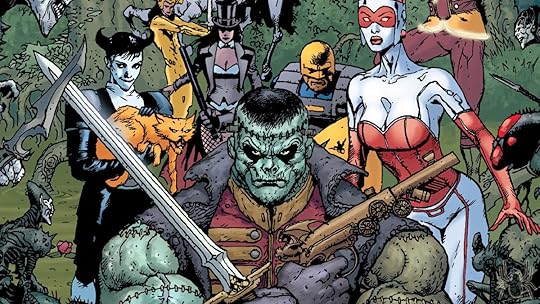
Sete Soldados da Vitória conta a história da perspectiva de cada herói que lutam contra uma invasão sem nunca terem se encontrado. A premissa é interessante e Grant Morrison conta de forma separada as histórias de cada um.
Aos poucos as histórias de cada um vai se fechando até o final da obra ser conectada. Conceito muito maneiro e a curiosidade pra saber o que acontece deixa você completamente vidrado.
Mas tem uns pontos negativos: Há situações, algumas cenas que não são muito bem explicadas ou quando um personagem esta em um local e aparece em outro; e não é mostrado a sequencia dos quadros. Algumas cenas de ação também acontece. Isso me incomoda um pouco. Mas nada que justifique não ler essa obra.
Não gostava do quadrinhos dele mas com um certo tempo, você cansa de quadrinhos tradicionais. Pensando por esse lado, é legal sair da casinha as vezes.
Vale a pena pra quem quer sair do tradicional!!!

March 4, 2024
SHINING KNIGHT 4/5: Nice twist.
GUARDIAN 4/5 : lol
ZATANNA 3/5: ok
KLARION THE WITCH BOY 5/5: What a knave
MISTER MIRACLE 3/5: Maybe I should've read the prelude to Final Crisis before this part...
BULLETEER 1/5: Truly truly disgusting, what am I reading, why does this exist? It is wrong, it is a deep rotting stain on the wall of what would otherwise have been a masterpiece. The fact that I am not giving this omnibus 1-star is a testament to how good the overall concept and plot convergence of the other issues are.
FRANKENSTEIN 5/5: Pure awesomeness.
The Klarion and Frankenstein part are some of my favorite issues in DC. The Sheedas are terrifying villains. The art and dialogue are varied for each mini-series and appropriately suit their respective character(Note that this does include the Bulleteer as it has garbage art and dialogue). Honestly an amazing reading experience.
GUARDIAN 4/5 : lol
ZATANNA 3/5: ok
KLARION THE WITCH BOY 5/5: What a knave
MISTER MIRACLE 3/5: Maybe I should've read the prelude to Final Crisis before this part...
BULLETEER 1/5: Truly truly disgusting, what am I reading, why does this exist? It is wrong, it is a deep rotting stain on the wall of what would otherwise have been a masterpiece. The fact that I am not giving this omnibus 1-star is a testament to how good the overall concept and plot convergence of the other issues are.
FRANKENSTEIN 5/5: Pure awesomeness.
The Klarion and Frankenstein part are some of my favorite issues in DC. The Sheedas are terrifying villains. The art and dialogue are varied for each mini-series and appropriately suit their respective character(Note that this does include the Bulleteer as it has garbage art and dialogue). Honestly an amazing reading experience.

February 10, 2021
Falaram tão bem disso pra mim que pensei que fosse um Watchmen ou um Dark Knight Returns ou um Sandman. Não importa o que for, se for o Grant Morrison que escrever seus fãs dirão que é uma obra prima, independente se for bom ou ruim. Se pegassem outro roteirista e ele fizesse exatamente a mesma coisa dessa revista, diriam que é ruim ou provavelmente nem pegariam para ler. Enfim.
Eu até gosto de algumas coisas de Grant Morrison, mas essa revista aqui definitivamente está anos luz de ser uma delas. Ele tem créditos por trazer de volta personagens do baixo escalão da DC, mas cara, isso não conseguiu me atrair em absolutamente nada.
Eu até gosto de algumas coisas de Grant Morrison, mas essa revista aqui definitivamente está anos luz de ser uma delas. Ele tem créditos por trazer de volta personagens do baixo escalão da DC, mas cara, isso não conseguiu me atrair em absolutamente nada.

January 7, 2019
Put simply: I loved this. A great concept in that 7 superheroes have to save the world, but they never actually meet. What makes it better? Grant Morrison takes characters who were (at the time) D and F-list people no one had thought of in a long time and revamped them. I was partial to the Guardian and Klarion books the most, but each mini-series was fantastic. At first I was a little skeptical of the order the issues were put in, but it helped to make their connection to the larger story all the more clear. Couldn’t recommend this enough. An all-star team of DC artists on this one.
August 26, 2024
A todos los que amamos a Grant Morrison nos ha pasado alguna vez que hemos llegado a perdernos en la complejidad de sus obras. Este experimento de macro relato lo consigue solucionar un poco. Todas las subtramas aportan a la gran trama principal y, aunque pueda parecer un poco confuso al principio, los elementos clave se repiten lo suficiente como para que el lector pueda retener el hilo conductor y se enganche a seguir leyendo.
Lo cierto es que, aún tratándose de Morrison, no esperaba que esta historia me diera tantos dolores de cabeza. Es cualquier cosa menos centrada.
Lo cierto es que, aún tratándose de Morrison, no esperaba que esta historia me diera tantos dolores de cabeza. Es cualquier cosa menos centrada.
February 19, 2025
I’ll need to read through this at least one or two more times for it all to sink in, but Morrison achieved what they set out to do as stated in the introduction and wrote a comic like nothing I’ve read before. My favorite stories were either the Guardian or Mr. Miracle. Pirates of the Subway is just a super fun idea, while Mr. Miracle breaking through the bonds of death to fight back against the Dark Side and anti-life is incredibly inspirational. The overall message of fighting back no matter what against those who only wish to destroy and consume and conform really hits hard these days

March 24, 2020
This isn't a 3 star book but I don't know if it's a 4 star book either. The story really starts to fall apart a little more towards the end and some of the characters are more interesting than others but you have to give credit to the huge scope and scale of the attempted overarching story. I could have rated this a 4 with the same comments because of the ambition of the idea but 3.5 is probably better suited.

June 15, 2022
Miałem obawy, ale Grant Morrison rozwiał je do tego stopnia, że dałem pięć gwiazdek. O połowę gwiazdki na wyrost. Historia jest złożona. A pomysł intrygujący: główni, tytułowi bohaterowie nie spotykają się, nawet nie wiedzą o swoim istnieniu. Źródłem moich obaw byli właśnie oni: pomniejsi, zapomniani superbohaterowie ze „stajni” DC. Ostatnio niezbyt przepadam za trykociarzami. Jednak warto było zaufać autorowi, który stworzył „Doom Patrol”. Powieść jest potężna, prawdziwa cegła.
December 13, 2023
One of Morrison’s finest moments, and a cunningly conceived tale full of wonders and escapism. Granted (no pun intended), if you don’t like Morrison’s somewhat confusing-but-enchanting style and obsession about oldschool continuity, you probably won’t like it. Me, I miss their contribution to the genre and I think such high won’t ever be reached again in the medium of American superhero comic books
May 28, 2025
This book is Grant Morrison through and through- equal parts weird and clever. It’s overstuffed with great ideas, but also features a few missteps along the way. The overall concept of 7 parallel stories that never properly intersect was really cool even if some of the stories were stronger than others. Overall, a great read for die hards but not really a book for the casual fan.

February 28, 2025
A huge undertaking of having 7 separate "superheroes" take on an evil that threatens our world. Each storyline reads separately while also very into the main plotline. This is some great planning and writing and the art varies so much and usually is wonderful. Heck yes.
Displaying 1 - 30 of 42 reviews