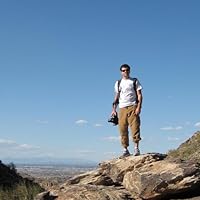
I deserti dei quali si occupa questo libro sono quelli del Sudovest americano, un territorio vastissimo che include fra gli altri Stati Arizona, California, Nevada, New Mexico e Utah; un territorio conosciuto dall'autore a partire dalla metà degli anni Sessanta e poi di nuovo assiduamente esplorato nei decenni successivi, in seguito al suo trasferimento alla University of California di Santa Cruz. In qualità di storico dell'arte, Banham sa cogliere perfettamente gli aspetti paesaggistici e «pittoreschi» del deserto; ma in qualità di storico dell'architettura, ciò che lo attrae ancora di piú sono le ibridazioni di natura e cultura, le tracce lasciate dall'uomo in quel luogo teoricamente "vergine" che dovrebbe essere il deserto. In questo senso, pur essendo il libro di un «viaggiatore incantato», Deserti americani si distingue radicalmente dalla letteratura di viaggio: mentre infatti chi viaggia è irretito soprattutto dal fascino dell'avventura e della scoperta dei luoghi, per Banham, accanto a tali aspetti, vi è la genuina sorpresa nel ritrovare nel deserto quanto apparentemente dovrebbe essersi lasciato alle spalle: la civiltà, con tutte le sue contraddizioni. Cosí, oggetto dell'interesse di Banham sono non soltanto gli antichi pueblos indiani di Mesa Verde e di Taos, i capolavori di architettura moderna di Frank Lloyd Wright o gli insediamenti sperimentali di Paolo Soleri, ma anche quei segni minori e perfino minimi dell'intervento dell'uomo che fanno del deserto - al di là di qualsiasi immagine oleografica o retorica - un luogo costruito, usato e abitato.
Silenzio, calura e luce. Quando spensi il motore dell'automobile, che morí con il solito convulso tremore di ferraglia tipico delle V-8 americane di allora, il silenzio ci sommerse come in uno stagno. Non era ancora un silenzio assoluto, poiché le portiere cigolarono quando le spalancammo; ma essendone già abbastanza consapevoli da non volerlo violare, le lasciammo aperte, in tacito accordo, per evitare di sbatterle, e ci scostammo dall'auto di pochi passi, prima di essere bloccati dall'immane quiete. Non appena si smorzò anche il suono delle nostre scarpe sulla ghiaia del deserto, fummo avvolti da un silenzio sempre piú profondo, interrotto soltanto dai gridi di uccelli lontani, volati via al nostro arrivo, e dal ronzio di un jet che disegnava nel cielo lontano di Las Vegas una scia di vapore.
Peter Reyner Banham (1922-1988) was a prolific architectural critic and writer best known for his 1960 theoretical treatise "Theory and Design in the First Machine Age", and his 1971 book "Los Angeles: The Architecture of Four Ecologies" in which he categorized the Angelean experience into four ecological models (Surfurbia, Foothills, The Plains of Id, and Autopia) and explored the distinct architectural cultures of each ecology.
He was based in London, moving to the USA from 1976. He studied under Anthony Blunt, then Siegfried Giedion and Nikolaus Pevsner. Pevsner invited him to study the history of modern architecture, giving up his work Pioneers of the Modern Movement. In Theory and Design in the First Machine Age (1960), Banham cut across Pevsner's main theories, linking modernism to built structures where the 'functionalism' was actually subject to formal strictures. He wrote a Guide to Modern Architecture (1962, later titled Age of the Masters, a Personal View of Modern Architecture).
He had connections with the Independent Group, the This is Tomorrow show of 1956 (the birth of pop art) and the thinking of the Smithsons, and of James Stirling, on the new brutalism (which he documented in The New Brutalism, 1955). He predicted a "second age" of the machine and mass consumption. The Architecture of Well-Tempered Environment (1969) follows Giedion's Mechanization Takes Command (1948), putting the development of technologies (electricity, air conditioning) even ahead of the classic account of structures. This was the area found absorbing in the 1960s by Cedric Price, Peter Cook and the Archigram group.
Green thinking (Los Angeles, the Architecture of Four Ecologies, 1971) and then the oil shock of 1973 affected him. The 'postmodern' was for him unease, and he evolved as the conscience of post-war British architecture. He broke with the utopian and technical formality. Scenes in America Deserta (1982) and A Concrete Atlantis (1986) talk of open spaces and his anticipation of a 'modern' future.
As a Professor, Banham taught at the University of London, the State University of New York (SUNY) Buffalo, and the University of California, Santa Cruz. He also was the Sheldon H. Solow Professor of the History of Architecture at the Institute of Fine Arts, New York University. He also starred in the short documentary Reyner Banham loves Los Angeles.
Banham said that he learned to drive so he could read Los Angeles in the original.
Passionate writing on US desert locations, including Mojave, Red Desert Wyoming, Kitt Peak Arizona. Instead of a review, I've created a Google map with most of the locations referenced: https://goo.gl/maps/Pxyo52giKcgFAjFu9
One lingering mystery: the book's final essay is on abstraction and perception of color, referencing a specific Helen Frankenthaler painting called "Indian Redscape." Oddly, there's no evidence of this painting online. He mentions the title must be a reference to a pigment ("Indian Red"). There is a Frankenthaler painting called "Indian Summer" (1967). Wondering if Banham got the name wrong, or if the name was changed at some point? The book has a small selection of locations reproduced in low quality black and white, but the painting is not one of them.
A less scholarly book from a favorite author of mine. This one is a self-reflective look at Banham's attraction to the American desert, and ranges far and wide both geographically and philosophically. A good introduction to an author who is often over my head, but compelling enough for me to keep reading anyway.
Gran bel libro, questo. Difficile da catalogare, troppo denso di argomenti e di spunti per incasellarlo fra i libri di viaggio, o di critica d'arte, di riflessione o di antropologia. Gli architetti secondo me sono tutti un po' svitati: potrebbe essere da meno Banham, che dell'architettura fu storico e critico? Inglese, di formazione europea, critico d'arte, saggista, scopre per caso i deserti del sud ovest americano e se ne innamora. E al contrario di come avrei fatto io o, come recita la quarta di copertina, ogni "ecologista manicheo o di maniera", se ne va in giro attratto dalle tracce lasciate dal passaggio degli uomini che l'hanno preceduto e che questi deserti tuttora attraversano. Percorre chilometri e chilometri avanti indietro in queste solitarie e abitatissime terre sperdute fra cespugli di artemisia e laghi prosciugati attraversate da reticoli inimmaginabili di strade e autostrade, sbigottito dall'immensità di orizzonti impossibili nella piccola Europa e affascinato dalle luci e dai colori, e cosa va a cercare? Le tracce della civiltà. Percorre interstatali, Highway e piste, costeggia ferrovie e ne descrive e commenta le stazioni, fa rifornimento nelle stazioni di servizio, si insabbia, quasi si scontra, nel deserto!, con un autotreno. Visita quel refuso tipografico, come lo chiama lui, di Zzyzx con le rovine della stazione climatica fondata dall'evangelista radiofonico Curtis Howe Springer, alle quali non si può negare un notevole fascino; le utopie di quei geniali pazzoidi come Paolo Soleri e Frank Lloyd Wright; la missione di San Xavier del Bac; si ferma umile e sgomento a Mesa Verde e a Taos, davanti ai resti di una civiltà che non capisce e ne ricava uno spaesamento culturale. Inatteso il suo angolo visuale: tracce umane e natura si assimilano le une con l'altra senza darsi fastidio, si abbracciano e si compenetrano: culturalmente non attrezzato a questi paesaggi scopre che un pozzo petrolifero con le sue macchine in azione o un'autostrada, la stessa Las Vegas, in quel posto, con quella luce, immersi in quei colori, sono in armonia. Niente a che vedere con le immagini ormai diventate retorica della Monument Valley, che lui assimila nella mente ad un parco a tema. Last but not least, Banham scrive piuttosto bene, leggerlo è un piacere. Fa anche venir voglia di partire, si si, in questo campo direi che è pericoloso! In sostanza, io cerco il deserto in mezzo alla civiltà, lui cercava la civiltà nel deserto, affascinato dall'uno e dall'altra. Ma non lo sento poi così lontano. Un po' più convenzionale e distante da me il suo approccio alle montagne, che vede da sotto e da lontano, resta incantato dal panorama ma, secondo me, pur dedicando loro un intero capitolo, non comprende mai del tutto.
Peter Reyner Banham was born in England and ended up as an architectural historian at UCLA. His book about Los Angeles, "The Architecture of Los Angeles. Four Topologies," is one of the best about the city I've ever read. Somehow or other he happened to travel into the Mojave desert -- maybe on a trip to Las Vegas -- and he fell in love with desert space. After years of visits, he compiled his experiences into "Scenes," which he completed just a few years before his death in 1988.
Banham has a keen eye and wide-ranging sympathy. He writes beautifully and with an open honesty about himself and his reactions to the people and places he sees. I don't agree with everything he has to say; his praise of John C. Van Dyke's "The Desert" (1901) gives Van Dyke way more credit than he deserves as a desert observer. (To be fair, much of the evidence of Van Dyke's fraudulence only came out after Banham was gone.) But the value of Banham's book doesn't lie in his literary assessments, the best of which are one-liners on Ray Bradbury, another denizen of LA. Rather, his thoughtful, reflective observations and his interest in the everyday, both in places and people, charge "Scenes" with its charm and depth. If you love deserts, "Scenes" deserves a place on your shelf.
Il deserto americano e il fascino che suscita è il tema centrale da cui scaturiscono, come scene cinematografiche, "Rivelazioni" che sono il pretesto per indagarne il senso, finendo per porre interrogativi sull'architettura, sul paesaggio, sulla vita e la percezione del mondo. Chi conosce e apprezza l'autore non può esimersi dal leggerlo; Banham non delude mai.