

What do you think?
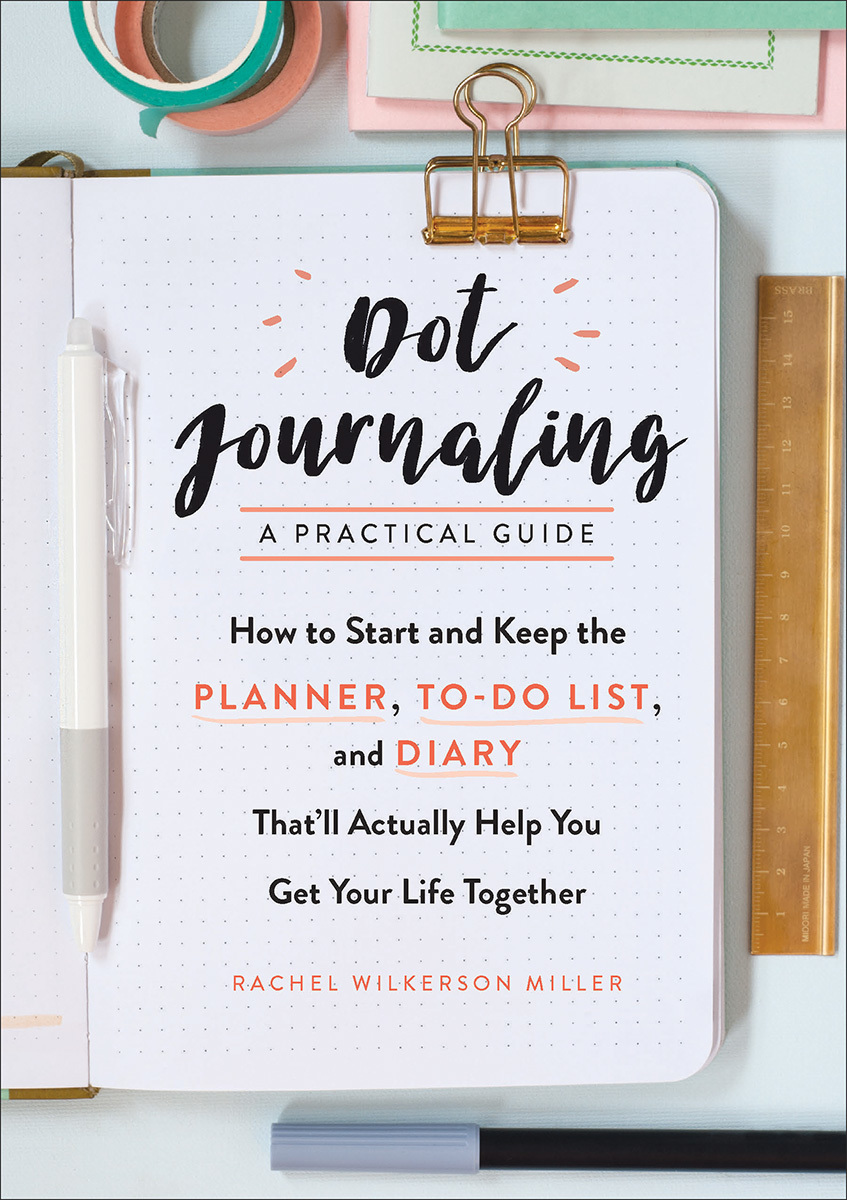
Dot Journaling - A Practical Guide: How to Start and Keep the Planner, To-Do List, and Diary That'll Actually Help You Get Your Life Together
Organize your life, record what matters, and get stuff done!
What the heck is a dot journal? It's a planner, to-do list, and diary for every aspect of your life: work, home, relationships, hobbies, everything.
Early adopter Rachel Wilkerson Miller explains how to make a dot journal work for you--whether you find the picture-perfect examples on Pinterest inspiring or, well, intimidating. You decide how simple or elaborate your journal will be, and what goes in there:
Lists of your to-dos, to-don'ts, and more
Symbols that will make those lists efficient and effective
Spreads to plan your day, week, month, or year
Trackers for your habits and goals (think health, money, travel)
Accouterments such as washi tape, book darts, and more!
What the heck is a dot journal? It's a planner, to-do list, and diary for every aspect of your life: work, home, relationships, hobbies, everything.
Early adopter Rachel Wilkerson Miller explains how to make a dot journal work for you--whether you find the picture-perfect examples on Pinterest inspiring or, well, intimidating. You decide how simple or elaborate your journal will be, and what goes in there:
Lists of your to-dos, to-don'ts, and more
Symbols that will make those lists efficient and effective
Spreads to plan your day, week, month, or year
Trackers for your habits and goals (think health, money, travel)
Accouterments such as washi tape, book darts, and more!
185 pages, Kindle Edition
First published July 31, 2017
Ratings & Reviews
Friends & Following
Create a free account to discover what your friends think of this book!
Community Reviews
Displaying 1 - 30 of 796 reviews

February 2, 2018
I am one of those people who got on the bullet journal bandwagon early, so was interested in seeing what this book had to offer. It's simply BuJo by another name. I did not learn anything new, and am actually rather disturbed that the author does not seem to credit Ryder Carroll, who created the system, at all. There are tons of people on Instagram and online with BuJo spreads if you are in search of inspiration, and if you are part of this world already, you know that spreads can be as plain or as highly decorative as you like. If you are new to BuJo lookup the basics online and save yourself the cost of this book.

March 12, 2025
I've found that I'm forgetting things in my attempts to be organized. I'm using two wall calendars, a planner, my computer, my notebook, and sticky notes. I just finished Rachel Wilkerson Miller's Dot Journaling. I like the concept of a hard copy bullet or dot journal to keep organized and to keep diary entries all in the same place. I've been enjoying making layouts by using the sample templates Miller provides in her book to fit my needs. Miller's tone in the text is airy and conversational. The graphics are alluring; using softened tones to show pictures of opened journals and pretty pens and stationary to inspire the reader to create his or her or their own dot journal. I also understand that at the time of publication there was an online social community of people who share their journals and inspirations with others. It reminded of the scrapbooking trend that was popular in the 1990s and early aughts.

July 3, 2017
Trying to learn dot journaling from Instagram is like trying to learn how to swim by watching Michael Phelps at the Olympics. Fortunately,
Dot Journaling: A Practical Guide: How to Start and Keep the Planner, To-Do List, and Diary That’ll Actually Help You Get Your Life Together
is a no-frills how-to that won't intimidate you with over-the-top decorations and embellishments, but rather just gives you basic instructions for creating and customizing your journal format. Its emphasis is on utility and not flashiness, so those who appreciate the structure and features of this amazing new paradigm of personal record-keeping will feel confident jumping right in.

January 28, 2018
the dot grid pages in the back are a nice idea, but if i'm too scared i'll screw up a blank journal, the alternative of screwing up a printed book someone else might read is in no way reassuring

September 3, 2022
Simple, straightforward, lighthearted and silly and with beautiful, helpful examples throughout. Highly recommend this to anyone just beginning to bullet journal and looking for a good jumping-off point!

April 30, 2020
The original creator, Ryder Carroll, has all of his trademarked content (what is found in this book that has been stolen and renamed to make money) posted free at bulletjournal.com.
Calling Miller an "early adopter" is laughable; bullet journaling predates her "dot journaling": Carroll created his trademarked bullet journaling method in 2013. Miller's first article about bullet journaling on Buzzfeed, "WTF Is A Bullet Journal And Why Should You Start One? An Explainer [sic]" was written on May 31, 2016, and mentions her starting bullet journaling in January of 2016, a full three years after bullet journaling was created and had time to flourish. While yes, Miller acknowledges Carroll in her blog, she does not mention that his methods in their entirety are freely accessible at his website, which she has repackaged them in book form to be sold for $12.95 retail (or whatever price they are being sold for).
I have posted (and reposted - when I’m assuming the author had it removed) this review MULTIPLE times on Amazon; I refuse to believe Miller is a legitimate journalist and would never dream of calling her an author, much less deign the title of writer upon her (given the quality of her writing as seen from BuzzFeed).
Calling Miller an "early adopter" is laughable; bullet journaling predates her "dot journaling": Carroll created his trademarked bullet journaling method in 2013. Miller's first article about bullet journaling on Buzzfeed, "WTF Is A Bullet Journal And Why Should You Start One? An Explainer [sic]" was written on May 31, 2016, and mentions her starting bullet journaling in January of 2016, a full three years after bullet journaling was created and had time to flourish. While yes, Miller acknowledges Carroll in her blog, she does not mention that his methods in their entirety are freely accessible at his website, which she has repackaged them in book form to be sold for $12.95 retail (or whatever price they are being sold for).
I have posted (and reposted - when I’m assuming the author had it removed) this review MULTIPLE times on Amazon; I refuse to believe Miller is a legitimate journalist and would never dream of calling her an author, much less deign the title of writer upon her (given the quality of her writing as seen from BuzzFeed).

February 2, 2020
This book feels like a Pinterest page of bullet journal spreads - which is so much better to use, instead of getting lost in a Pinterest hole and wasting time! Miller has dozens of example pages to try out, encouraging snippets for beginners, and fun and informative historical facts about journaling through the ages. I plan on keeping my copy for inspiration every month, to try out different spreads, depending on what my upcoming schedule looks like.

December 21, 2017
Ótimo, didático e inspirador :)

October 15, 2019
THIS BOOK IS BLATANT THEFT.
DOT JOURNALING IS A RENAME OF BULLET JOURNALING BUT PRETENDING IT'S DIFFERENT SO MAYBE THE AUTHOR DOESN'T GET SUED.
This is like the nonfiction version of crappy fanfiction. Basically, this is someone writing "Larry Potter," copying all of the original author's ideas with only mild riffs off of the source material, including one absurdly brief mention of J.K. Rowling without including full context, and selling it to make money for themselves on something THEY DID NOT INVENT.
I mean, the author was "most recently" (=currently unemployed?) a "lifestyle editor," at BUZZFEED. If this doesn't tell you everything you need to know about the quality of text you're going to find here, then nothing will.
As a gazillion other reviewers have noted, all of this information is available on the internet for free. Start at bullet journaling inventor Ryder Carroll's official website, then look basically anywhere else on the planet for more information, ideas, and inspiration.
I'd like to also point out that Ryder Carroll has not attempted to monetize his original system in ANY WAY. Everything you need to know about bullet journaling, he offers for free. The only stuff he actually sells is completely optional to your adoption and deployment of the process.
Ms. Wilkerson-Miller could learn a thing or two from her fellow Brooklynite from whom she stole so much.
Further irritated, eye-rolling commentary I didn't feel like organizing into coherence:
--Oh it's a "future spread," is it? You sure you're not just misremembering "future log"? LOL just kidding, we all know it's so you can pretend this is your system somehow.
--They're called "bullets," not "dots," you asshat. In bullet journaling AND in typography.
--(Preceding a symbol key) "Here are the symbols that I've come to find most useful..." Oh? Did you come to find them useful? After much experimentation and endless trial and error? Or did you just wholesale lift them from Ryder's key and act like you're brilliant?
--I know you think your chatty perky crass oversharing millennial "girlfriends" tone is cute, but it's not. Sincerely, a millennial who is not amused and understands now why her entire generation is always getting stereotyped that way.
--Ryder Carroll is not listed in the acknowledgments. How adorable, the sole human who enabled you to create this crappy little tome, not anywhere in the entire book but one very brief mention in the intro.
DOT JOURNALING IS A RENAME OF BULLET JOURNALING BUT PRETENDING IT'S DIFFERENT SO MAYBE THE AUTHOR DOESN'T GET SUED.
This is like the nonfiction version of crappy fanfiction. Basically, this is someone writing "Larry Potter," copying all of the original author's ideas with only mild riffs off of the source material, including one absurdly brief mention of J.K. Rowling without including full context, and selling it to make money for themselves on something THEY DID NOT INVENT.
I mean, the author was "most recently" (=currently unemployed?) a "lifestyle editor," at BUZZFEED. If this doesn't tell you everything you need to know about the quality of text you're going to find here, then nothing will.
As a gazillion other reviewers have noted, all of this information is available on the internet for free. Start at bullet journaling inventor Ryder Carroll's official website, then look basically anywhere else on the planet for more information, ideas, and inspiration.
I'd like to also point out that Ryder Carroll has not attempted to monetize his original system in ANY WAY. Everything you need to know about bullet journaling, he offers for free. The only stuff he actually sells is completely optional to your adoption and deployment of the process.
Ms. Wilkerson-Miller could learn a thing or two from her fellow Brooklynite from whom she stole so much.
Further irritated, eye-rolling commentary I didn't feel like organizing into coherence:
--Oh it's a "future spread," is it? You sure you're not just misremembering "future log"? LOL just kidding, we all know it's so you can pretend this is your system somehow.
--They're called "bullets," not "dots," you asshat. In bullet journaling AND in typography.
--(Preceding a symbol key) "Here are the symbols that I've come to find most useful..." Oh? Did you come to find them useful? After much experimentation and endless trial and error? Or did you just wholesale lift them from Ryder's key and act like you're brilliant?
--I know you think your chatty perky crass oversharing millennial "girlfriends" tone is cute, but it's not. Sincerely, a millennial who is not amused and understands now why her entire generation is always getting stereotyped that way.
--Ryder Carroll is not listed in the acknowledgments. How adorable, the sole human who enabled you to create this crappy little tome, not anywhere in the entire book but one very brief mention in the intro.

January 8, 2018
Yes, you can get all of this content hither and thither online, but - I just really like having it all in a single place. The book is fairly bristling with sticky tape flags marking things I want to remember or reference.
2019: I reread this since I was reading The Bullet Journal Method: Track the Past, Order the Present, Design the Future - Miller's book is a nice example of a slightly different way to bullet journal. And her many layout examples are frequently more helpful than those of The Bullet Journal Method.
2019: I reread this since I was reading The Bullet Journal Method: Track the Past, Order the Present, Design the Future - Miller's book is a nice example of a slightly different way to bullet journal. And her many layout examples are frequently more helpful than those of The Bullet Journal Method.

September 25, 2017
This book is totally Marie Kondo of journaling! The author is hands-on and really, really has tried everything she is talking about.
She has written for the obsessed. (me, me!)
I always used to have one notebook going where I write everything down but I realized in the past few years, I was using different media for different things I used to write down in my notebooks (Wunderlist for TO DOs, Evernote for pretty much EVERYTHING, Goodreads for Books, Google Calendar and an ongoing excel file for tracking different things), but the physical notebook remained with me for the occasional journaling inspiration. This year I decided to get rid of the notebook altogether but then I got into writing "morning pages" and the notebook was revived. (oh joy, I have so many beautiful notebooks to fill) and I will now use some of the tips in this book to complement it. There is something for everybody here, there are quotes and historical references and beautiful pictures. And lots of first hand (knowledgeable) advice from the author. Love it!
And this quote by Joan Didion, I totally found myself in it:
"The impulse to write things down is a peculiarly compulsive one, inexplicable to those who do not share it, useful only accidentally, only secondarily, in the way that any compulsion tries to justify itself...Keepers of private notebooks are a different breed altogether, lonely and resistant rearranger of things, anxious malcontents, children afflicted at birth with some presentiment of loss."
She has written for the obsessed. (me, me!)
I always used to have one notebook going where I write everything down but I realized in the past few years, I was using different media for different things I used to write down in my notebooks (Wunderlist for TO DOs, Evernote for pretty much EVERYTHING, Goodreads for Books, Google Calendar and an ongoing excel file for tracking different things), but the physical notebook remained with me for the occasional journaling inspiration. This year I decided to get rid of the notebook altogether but then I got into writing "morning pages" and the notebook was revived. (oh joy, I have so many beautiful notebooks to fill) and I will now use some of the tips in this book to complement it. There is something for everybody here, there are quotes and historical references and beautiful pictures. And lots of first hand (knowledgeable) advice from the author. Love it!
And this quote by Joan Didion, I totally found myself in it:
"The impulse to write things down is a peculiarly compulsive one, inexplicable to those who do not share it, useful only accidentally, only secondarily, in the way that any compulsion tries to justify itself...Keepers of private notebooks are a different breed altogether, lonely and resistant rearranger of things, anxious malcontents, children afflicted at birth with some presentiment of loss."

November 15, 2017
I was surprised to find this title in our bookstore as I didn't really think bullet journaling is a thing in my city and I agonised whether this is a book I should spend my money on, mainly because I knew there's tonnes of similar information online, which I have been checking out mainly on YouTube. I bit the bullet (heh) and purchased it and as someone else in the review section said, the great thing about this guide is that it's finite. So once you've read it, you can just put the book down and get started with your own journal rather than wonder if you've got all the necessary information to start with. It's a quick read and it helped me understand the bullet journal process a lot more clearly than anything else I had seen/read before. It was cool reading the author's own preference for journaling whilst mentioning others' and how it's really about finding whatever works for you.
The plentiful layout example images gives you a really clear idea of what she is writing about. The images are clean, pretty and informative and I even had fun reading the fictional sample entries. I found it useful seeing the various ways you could create a spread for the same theme - it got me thinking about which one might work best for me.
Another thing that added interest to this book is the inclusion of quotes and bite sized facts relating to famous journals in history. A really nice touch that kept me engaged.
The book contains some information on the author's favourite supplies at the end of the book which I thought would be handy when I go shopping for journaling supplies in the future. I can't get most of those things where I live so I will probably just start without them for now.
I appreciate how organised the book is which I took as a reflection of someone who successfully bullet journals, to the point it made me wonder if bullet journals could be a tool for writers to organise their ideas.
As a side note, I haven't read a print book of this type before and it was interesting seeing all the references to online media platforms that I follow on the web being mentioned in print form - it felt slightly strange to experience the two worlds converging! I guess you're less likely to feel this way if you were to purchase the book in electronic format. In fact, I am now more interested in picking up hard copy books that are written by people who mostly write for online platforms than I was before.
The plentiful layout example images gives you a really clear idea of what she is writing about. The images are clean, pretty and informative and I even had fun reading the fictional sample entries. I found it useful seeing the various ways you could create a spread for the same theme - it got me thinking about which one might work best for me.
Another thing that added interest to this book is the inclusion of quotes and bite sized facts relating to famous journals in history. A really nice touch that kept me engaged.
The book contains some information on the author's favourite supplies at the end of the book which I thought would be handy when I go shopping for journaling supplies in the future. I can't get most of those things where I live so I will probably just start without them for now.
I appreciate how organised the book is which I took as a reflection of someone who successfully bullet journals, to the point it made me wonder if bullet journals could be a tool for writers to organise their ideas.
As a side note, I haven't read a print book of this type before and it was interesting seeing all the references to online media platforms that I follow on the web being mentioned in print form - it felt slightly strange to experience the two worlds converging! I guess you're less likely to feel this way if you were to purchase the book in electronic format. In fact, I am now more interested in picking up hard copy books that are written by people who mostly write for online platforms than I was before.

July 12, 2018
I've been wanting to make the switch from a pre-printed planner to the bullet journal/planning method for awhile now but have been ridiculously intimidated to attempt it. This little gem of an e-book (free with my Kindle Unlimited account) has given me the incentive to give it a go. Such a great, helpful little book! I've decided I need to purchase a paper version of the book and maybe even get the book set. Really excited about switching to this style next year. This is a great book for anyone who has wanted to take the BuJo plunge but feel a bit overwhelmed about setting one up.

January 27, 2020
Before a friend sent me this book, I had briefly come across the bullet journal concept before and been intrigued. As I love diaries, lists, tidiness, and notebooks, the appeal was obvious. This book certainly makes a strong case for bullet journals as an organisational tool. The argument for them as an artistic outlet is less effective, although the examples shown are certainly pretty. I was most interested in the mentions of bullet journals as a return to the diary norms of hundreds of years ago. Before the self-reflective, individualistic turn of modern times, a diary was apparently more likely to consist of short lists of events for family reference. I liked this deliberate effort to connect a new and trendy phenomenon to the past. Although the writing style was very bloggy, which I don't mean to sound as patronising as it probably does, the book discusses a lot of helpful material. How to set up a bullet journal, why this approach can be useful, and a range of ways to customise it to specific needs are covered well. The copious illustrations support the text nicely, and make for a quick and pleasant read. Only in the section about pens does it morph entirely into a stationary catalogue.
While 'How to Bullet Plan' certainly sold me on bullet journals in principle, in practise I'm less convinced. Reading it made me realise that at the moment I make daily use of no less than four diaries: a work diary in outlook, a handbag diary that I use to plan my non-work life, a small notebook tracking health, and a chunky journal of daily reflections on whatever I'm doing and thinking about. The idea of consolidating all of them into a single notebook of bullet points is intimidating, to say the least. While four diaries does seem excessive and was definitely not planned, it also reflects a compartmentalisation of different elements of my life. When writing in my reflective diary before going to sleep, I don't want to think about all the bullshit tasks I have to do the next day. Conversely, I wouldn't want to drag a compendium of personal thoughts around in my bag all the time. The bullet journal approach has potential to replace my work, life planning, and health diaries, but not the reflective one. When re-reading my old diaries (which I've been keeping on and off in various forms since the age of 13), I find the longform reflective stuff most interesting and thought-provoking, not the lists of mundane tasks I had to do. I recently rediscovered some diaries from 2011 and found reading them quite an intense experience, intermittently hilarious or upsetting. Thus I agree with Wilkerson Miller about storing old journals for future reference, but do not think a bullet journal could ever totally replace my diaries. While I love making to do lists, I also love rambling about last night's dreams at length. I'm not sure whether the two could or should co-exist in the same notebook. The tracking boxes are really neat, though.
While 'How to Bullet Plan' certainly sold me on bullet journals in principle, in practise I'm less convinced. Reading it made me realise that at the moment I make daily use of no less than four diaries: a work diary in outlook, a handbag diary that I use to plan my non-work life, a small notebook tracking health, and a chunky journal of daily reflections on whatever I'm doing and thinking about. The idea of consolidating all of them into a single notebook of bullet points is intimidating, to say the least. While four diaries does seem excessive and was definitely not planned, it also reflects a compartmentalisation of different elements of my life. When writing in my reflective diary before going to sleep, I don't want to think about all the bullshit tasks I have to do the next day. Conversely, I wouldn't want to drag a compendium of personal thoughts around in my bag all the time. The bullet journal approach has potential to replace my work, life planning, and health diaries, but not the reflective one. When re-reading my old diaries (which I've been keeping on and off in various forms since the age of 13), I find the longform reflective stuff most interesting and thought-provoking, not the lists of mundane tasks I had to do. I recently rediscovered some diaries from 2011 and found reading them quite an intense experience, intermittently hilarious or upsetting. Thus I agree with Wilkerson Miller about storing old journals for future reference, but do not think a bullet journal could ever totally replace my diaries. While I love making to do lists, I also love rambling about last night's dreams at length. I'm not sure whether the two could or should co-exist in the same notebook. The tracking boxes are really neat, though.

June 16, 2018
Umm
‘Dot journaling’ is just code name for bullet journaling. I’m so happy that I read this on Kindle Unlimited and not wasted money on this. You can find all this information from blog posts and YouTube videos.
‘Dot journaling’ is just code name for bullet journaling. I’m so happy that I read this on Kindle Unlimited and not wasted money on this. You can find all this information from blog posts and YouTube videos.

May 26, 2021
Dot Journaling—A Practical Guide was my first intro to journaling. I originally wanted to read it to help me with my overflowing list of NETGALLEY reads. With over 50 books on my shelf I really need to find some organization.
This is just a simple pretty basic look. I liked the authors examples and found most of it helpful. I borrowed this from my local library but will want to check at least one more guide before I feel good about starting this. This was also useful for my SOAP method through the book of Psalms.
I hope this was helpful and thanks to my local library for this book.
This is just a simple pretty basic look. I liked the authors examples and found most of it helpful. I borrowed this from my local library but will want to check at least one more guide before I feel good about starting this. This was also useful for my SOAP method through the book of Psalms.
I hope this was helpful and thanks to my local library for this book.

December 4, 2020
MEU DEUS esse era um dos primeiros livros na minha wishlist quilométrica, estava lá a muito tempo!!! Mas finalmente consegui ler!!
Mantenho diários/caderninhos a bastante tempo e entrei em contato com o método bullet journal a uns 3 anos mais ou menos. Gosto muito de aprender sobre apesar de no dia a dia eu não seguir certinho o método.
Esse livro te dá várias ideias de layouts diferentes e o melhor, tem fotos explicativas, então parece que você esta no pinterest pesquisando ''bullet journal layout ideas''
Adorei. Simples, explicativo e inspirador.
Mantenho diários/caderninhos a bastante tempo e entrei em contato com o método bullet journal a uns 3 anos mais ou menos. Gosto muito de aprender sobre apesar de no dia a dia eu não seguir certinho o método.
Esse livro te dá várias ideias de layouts diferentes e o melhor, tem fotos explicativas, então parece que você esta no pinterest pesquisando ''bullet journal layout ideas''
Adorei. Simples, explicativo e inspirador.

August 15, 2017
A great, fast read on dot journaling (what some others call "bullet journaling") - what it is, how it works and sample layouts for you to try.
I've been curious about this all-in-one format of planner, to do list and diary, but found most explanations overly complicated and confusing. Miller boils things down very simple with lots of examples.
I read it in one night and will be testing out dot journaling myself this week!
I've been curious about this all-in-one format of planner, to do list and diary, but found most explanations overly complicated and confusing. Miller boils things down very simple with lots of examples.
I read it in one night and will be testing out dot journaling myself this week!

January 15, 2021
I love looking at journal spreads on Pinterest and Instagram but never really knew where to start, what layout to use, what designs to incorporate, and how to fully maximize the use of a journal. To be honest, I wasn't entirely sure what a 'dot journal' was aside from all the habit tracker spreads I always see on my feed...
But that's why this book was so great! It's a great beginners' guide on how to get started with a Dot Journal/DIY planner with all the basics tips and techniques for keeping your life organized.
I loved that this book didn't include a bunch of overly complicated designs that I always see on Pinterest (those can be overwhelming to look at, and rather time-consuming to replicate). Instead, this book shared a lot of basic (and easily customizable) layouts/spreads, ways to organize and keep track of different information, and a lot of other really helpful tips.
This book covers various useful journaling topics including:
- Starting an index
- Yearly, Monthly, Weekly, and Daily Spreads (with various layout options depending on your needs)
- How to cover up mistakes
- Writing prompts
- Health & Fitness spreads
- Financial spreads,
- Chore spreads,
- Meal Plan spreads,
- Travel spreads,
- Types of lists that you can keep in your journal (and ways to organize these lists),
- Useful accessories to have if you decide to start journaling, and
- Types of titles and dividers (to make your spreads prettier).
I thought everything was explained very clearly with great (and very do-able) examples to go with each tip.
I'll admit that I haven't started dot journaling yet (I have my hands full with my 3-year journal and my work notebook), but I do plan on using some of the tips and tricks I learned (for example, the index technique was super useful and I have been using that in all my notebooks now).
*** #24 of my 2021 Popsugar Reading Challenge - A book by a blogger, vlogger, YouTube video creator, or other online personality ***
But that's why this book was so great! It's a great beginners' guide on how to get started with a Dot Journal/DIY planner with all the basics tips and techniques for keeping your life organized.
I loved that this book didn't include a bunch of overly complicated designs that I always see on Pinterest (those can be overwhelming to look at, and rather time-consuming to replicate). Instead, this book shared a lot of basic (and easily customizable) layouts/spreads, ways to organize and keep track of different information, and a lot of other really helpful tips.
This book covers various useful journaling topics including:
- Starting an index
- Yearly, Monthly, Weekly, and Daily Spreads (with various layout options depending on your needs)
- How to cover up mistakes
- Writing prompts
- Health & Fitness spreads
- Financial spreads,
- Chore spreads,
- Meal Plan spreads,
- Travel spreads,
- Types of lists that you can keep in your journal (and ways to organize these lists),
- Useful accessories to have if you decide to start journaling, and
- Types of titles and dividers (to make your spreads prettier).
I thought everything was explained very clearly with great (and very do-able) examples to go with each tip.
I'll admit that I haven't started dot journaling yet (I have my hands full with my 3-year journal and my work notebook), but I do plan on using some of the tips and tricks I learned (for example, the index technique was super useful and I have been using that in all my notebooks now).
*** #24 of my 2021 Popsugar Reading Challenge - A book by a blogger, vlogger, YouTube video creator, or other online personality ***

July 19, 2020
If the Ryder Carroll, The Bullet Journal Method, book feels a little too detailed, and you just want a simpler, more accessible, quick-start guide to bullet journalling this might be a good place to start. That said, I'd always recommend the reader gives that, later book, a shot first.
I'd also disagree with a number of Rachel's approaches to BuJo too. I really can't get my head around her implication that doing both monthlies and weeklies is a good idea. That just seems like too much admin for me. I'd always suggest starting with monthlies, and only switching to weeklies if you see a need (I actually use monthlies in my personal BuJo, and a 3-week sprint cycle in my work one). Also, her approach to dailies seems a little rigid - implying either a day per page or just dump them for weeklies. I'm a huge fan of run-on dailies that feels much more responsive to what each day might want: either 2 lines, or 2 pages.
On the plus side, it's well written, engaging, and even funny in places. There are also some great suggestions for spread layouts and so on that Ryder's book never really covers. I just wish the contrast of the images wasn't so poor that looking at them on the Kindle was a real challenge.
I'd also disagree with a number of Rachel's approaches to BuJo too. I really can't get my head around her implication that doing both monthlies and weeklies is a good idea. That just seems like too much admin for me. I'd always suggest starting with monthlies, and only switching to weeklies if you see a need (I actually use monthlies in my personal BuJo, and a 3-week sprint cycle in my work one). Also, her approach to dailies seems a little rigid - implying either a day per page or just dump them for weeklies. I'm a huge fan of run-on dailies that feels much more responsive to what each day might want: either 2 lines, or 2 pages.
On the plus side, it's well written, engaging, and even funny in places. There are also some great suggestions for spread layouts and so on that Ryder's book never really covers. I just wish the contrast of the images wasn't so poor that looking at them on the Kindle was a real challenge.

December 30, 2024
Watching YouTube videos on this topic was more helpful for me than reading about it.

March 13, 2020
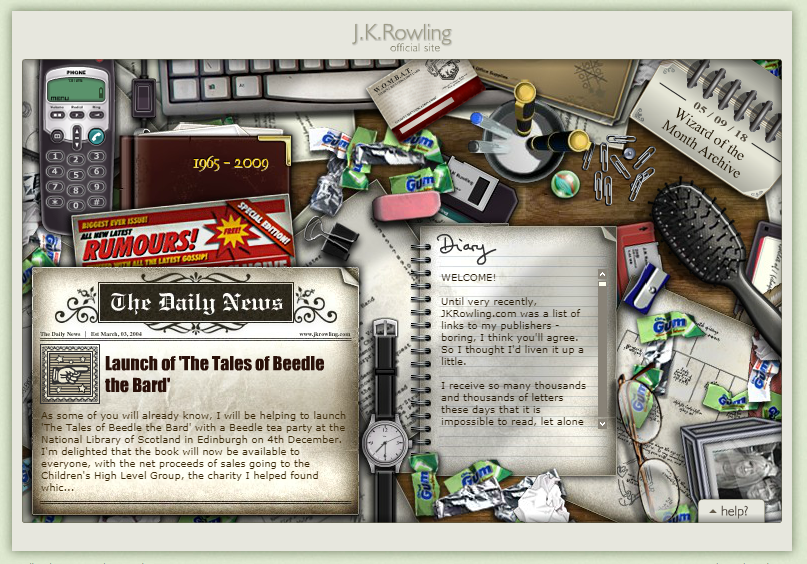
Clean, clear, concise, and classically comely (Too much alliteration? No? I didn't think so.), Miller (Wilkerson Miller?) has put together a really wonderful guide to beginner dot journalists and made a solid argument for implementing this practice into your life. Full of photo examples that are laid out beautifully without looking too pretty and overwhelmingly intimidating. Honestly, the overhead look at a journal on a desktop with various accoutrement surrounding it reminded me—and my nostalgic heart—of the first iteration of J.K. Rowling's website. Remember this?
With several examples for each segment/layout/spread of the dot journal, Miller has offered up enough variety—but not too much. I loved the humor she injected, as well as the quotes from various famous diaries. I honestly feel ready to dive in. I love the idea that she and other dot journalist enthusiasts have pointed out that this helps a lot of creative people not only stay organized for their days/weeks/months, but also allows an outlet for that creativity that can otherwise be hampered with our busy daily lives.
With several examples for each segment/layout/spread of the dot journal, Miller has offered up enough variety—but not too much. I loved the humor she injected, as well as the quotes from various famous diaries. I honestly feel ready to dive in. I love the idea that she and other dot journalist enthusiasts have pointed out that this helps a lot of creative people not only stay organized for their days/weeks/months, but also allows an outlet for that creativity that can otherwise be hampered with our busy daily lives.

April 28, 2018
I have been considering journaling to help me organise information and was looking for ideas on how to proceed. This book contains much advice as well a number of examples which you can use or adapt.
Overall I have found this a useful resource.
Overall I have found this a useful resource.

March 11, 2018
ótimo guia para começar a criar o seu diário rápidamente. Por ser bastante focado no por quê de fazer um diário em tópicos não nos deixa ansiosas focando em caligrafia ou layouts elaborados.

August 15, 2018
A lovely, useful introduction to the current organization craze.
You'll learn stuff, too! This isn't just a how-to - it's a "why people have," interspersed with excerpts from famous journals and lots of tidbits about the lost art of journal-keeping. Well, mostly lost, as Miller is right here to revive it for you.
And revive it she does. Those already familiar with dot/bullet journals can jump right to the layout chapters and be inspired by Miller's lovely layouts (she includes a list of pens/supplies she used, in case you want to try them on for size). Absolute beginners will appreciate the explanation of the system, and the consistent exhortations to just do things at your own pace and don't worry if it looks nice (though, admittedly, Miller's DOES look awfully nice, much nicer and neater than mine -thank goodness for washi tape, amirite?).
Ahem. This is a great book, but be advised, librarians: Miller includes a section of dotted practice pages at the back, so if you don't buy consumables, you may want to pass this one over. That being said, dot/bullet journals are THE hot crafty thing to do right now, so you may want to bite the bullets (ha) and pick this up anyway, steeling yourself for the inevitable replacements and damage. This could also make a neat adult summer reading prize if your budget permits. Most useful as a personal purchase and reference, but recommended for collections with wiggle room.
You'll learn stuff, too! This isn't just a how-to - it's a "why people have," interspersed with excerpts from famous journals and lots of tidbits about the lost art of journal-keeping. Well, mostly lost, as Miller is right here to revive it for you.
And revive it she does. Those already familiar with dot/bullet journals can jump right to the layout chapters and be inspired by Miller's lovely layouts (she includes a list of pens/supplies she used, in case you want to try them on for size). Absolute beginners will appreciate the explanation of the system, and the consistent exhortations to just do things at your own pace and don't worry if it looks nice (though, admittedly, Miller's DOES look awfully nice, much nicer and neater than mine -thank goodness for washi tape, amirite?).
Ahem. This is a great book, but be advised, librarians: Miller includes a section of dotted practice pages at the back, so if you don't buy consumables, you may want to pass this one over. That being said, dot/bullet journals are THE hot crafty thing to do right now, so you may want to bite the bullets (ha) and pick this up anyway, steeling yourself for the inevitable replacements and damage. This could also make a neat adult summer reading prize if your budget permits. Most useful as a personal purchase and reference, but recommended for collections with wiggle room.

March 29, 2018
It was helpful, the guides and examples were soooo good. Rachel's notes and funnies were good. And most of her quirks that she had to work out when she started journaling I already figured out a long time ago, so it doesn't bother me anymore.
However, there were three instances of bad words, on *suggested* f bomb, and one diary entry that was recorded from a historian that was inappropriate in unnecessary.
Anyway, overall, great book. I just got to scratch out the parts that are bad and I'll be referencing to it a lot now until I get a hang of bullet journaling. :D
However, there were three instances of bad words, on *suggested* f bomb, and one diary entry that was recorded from a historian that was inappropriate in unnecessary.
Anyway, overall, great book. I just got to scratch out the parts that are bad and I'll be referencing to it a lot now until I get a hang of bullet journaling. :D

February 25, 2020
If you’ve ever been curious about bullet journaling, I would highly recommend reading this book. It’s a quick and easy read with lots of pictures of examples on how yearly, monthly, weekly, and daily spreads can be organized. I really appreciated that this book gave the basics of dot journaling and kept her examples true to Ryder Carroll’s methods. This book is well organized, has great references and ideas for possible spreads, habit trackers, and even what pens she has discovered to be neat and tidy in her own journals.

January 12, 2019
Pointless
You could also watch a YouTube video on bullet journal and get the same information. Not worth the money. If you really want to know more about the bullet journal then read Ryder Carroll's (the creator of this method) "The Bullet Journal Method"
You could also watch a YouTube video on bullet journal and get the same information. Not worth the money. If you really want to know more about the bullet journal then read Ryder Carroll's (the creator of this method) "The Bullet Journal Method"

January 28, 2018
My full review is on my blog...http://librarymomonbooks.bravesites.c...

April 14, 2019
I had heard of bullet journaling, but didn't know what it was, and wasn't curious about it....until I learned two of the most organized people I know use it. After years of attempting to go paperless when it came to keeping my life organized, I was slowly realizing it wasn't working. Paper lists never really went away. I've also become more aware of how our digital world means I'm leaving little, if any, record behind of what my life is like. I no longer reflected on anything. Feeling a little overwhelmed with remembering to do so many things at home and at work, and realizing I had a million little to do lists everywhere, I decided to look into this bullet journaling thing. And I quickly became a little overwhelmed and intimidated by the world of bullet journaling.
Enter this book.
The author was able to explain clearly (and humorously!) what a bullet journal is, what makes it different, what kinds of things you can do with it, and how to set up the main pages you will probably want to have. Everything was presented clearly, beautifully, and positively. I finished reading this in only a few hours, feeling knowledgeable about the process, excited about bullet journaling's potential to organize and record my life, and inspired to get my bullet journal started.
Highly recommended if you are intrigued by bullet journaling. I wish I owned a copy. I may buy one anyway.
Enter this book.
The author was able to explain clearly (and humorously!) what a bullet journal is, what makes it different, what kinds of things you can do with it, and how to set up the main pages you will probably want to have. Everything was presented clearly, beautifully, and positively. I finished reading this in only a few hours, feeling knowledgeable about the process, excited about bullet journaling's potential to organize and record my life, and inspired to get my bullet journal started.
Highly recommended if you are intrigued by bullet journaling. I wish I owned a copy. I may buy one anyway.
Displaying 1 - 30 of 796 reviews