

What do you think?

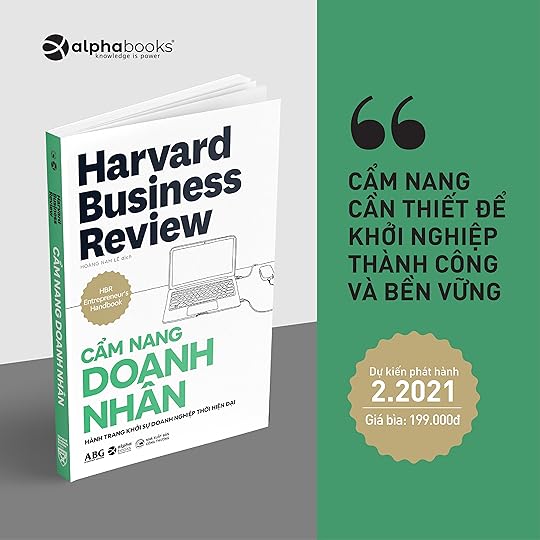
Harvard Business Review Entrepreneur's Handbook: Everything You Need to Launch and Grow Your New Business
The one primer you need to develop your entrepreneurial skills.
Whether you're imagining your new business to be the next big thing in Silicon Valley, a pivotal B2B provider, or an anchor in your local community, the HBR Entrepreneur's Handbook is your essential resource for getting your company off the ground.
Starting an independent new business is rife with both opportunity and risk. And as an entrepreneur, you're the one in your actions can make or break your business. You need to know the tried-and-true fundamentals--from writing a business plan to getting your first loan. You also need to know the latest thinking on how to create an irresistible pitch deck, mitigate risk through experimentation, and develop unique opportunities through business model innovation.
The HBR Entrepreneur's Handbook addresses these challenges and more with practical advice and wisdom from Harvard Business Review's archive. Keep this comprehensive guide with you throughout your startup's life--and increase your business's odds for success.
In the HBR Entrepreneur's Handbook you'll
Step-by-step guidance through the entrepreneurial processConcise explanations of the latest research and thinking on entrepreneurship from Harvard Business Review contributors such as Marc Andreessen and Reid HoffmanTime-honed best practicesStories of real companies, from Airbnb to eBay
You'll
Which skills and characteristics make for the best entrepreneursHow to gauge potential opportunitiesThe basics of business models and competitive strategyHow to test your assumptions--before you build a whole businessHow to select the right legal structure for your companyHow to navigate funding options, from venture capital and angel investors to accelerators and crowdfundingHow to develop sales and marketing programs for your ventureWhat entrepreneurial leaders must do to build culture and set direction as the business keeps growing
HBR Handbooks provide ambitious professionals with the frameworks, advice, and tools they need to excel in their careers. With step-by-step guidance, time-honed best practices, real-life stories, and concise explanations of research published in Harvard Business Review, each comprehensive volume helps you to stand out from the pack--whatever your role.
Whether you're imagining your new business to be the next big thing in Silicon Valley, a pivotal B2B provider, or an anchor in your local community, the HBR Entrepreneur's Handbook is your essential resource for getting your company off the ground.
Starting an independent new business is rife with both opportunity and risk. And as an entrepreneur, you're the one in your actions can make or break your business. You need to know the tried-and-true fundamentals--from writing a business plan to getting your first loan. You also need to know the latest thinking on how to create an irresistible pitch deck, mitigate risk through experimentation, and develop unique opportunities through business model innovation.
The HBR Entrepreneur's Handbook addresses these challenges and more with practical advice and wisdom from Harvard Business Review's archive. Keep this comprehensive guide with you throughout your startup's life--and increase your business's odds for success.
In the HBR Entrepreneur's Handbook you'll
Step-by-step guidance through the entrepreneurial processConcise explanations of the latest research and thinking on entrepreneurship from Harvard Business Review contributors such as Marc Andreessen and Reid HoffmanTime-honed best practicesStories of real companies, from Airbnb to eBay
You'll
Which skills and characteristics make for the best entrepreneursHow to gauge potential opportunitiesThe basics of business models and competitive strategyHow to test your assumptions--before you build a whole businessHow to select the right legal structure for your companyHow to navigate funding options, from venture capital and angel investors to accelerators and crowdfundingHow to develop sales and marketing programs for your ventureWhat entrepreneurial leaders must do to build culture and set direction as the business keeps growing
HBR Handbooks provide ambitious professionals with the frameworks, advice, and tools they need to excel in their careers. With step-by-step guidance, time-honed best practices, real-life stories, and concise explanations of research published in Harvard Business Review, each comprehensive volume helps you to stand out from the pack--whatever your role.
304 pages, Kindle Edition
First published January 23, 2018
Ratings & Reviews
Friends & Following
Create a free account to discover what your friends think of this book!
Community Reviews
Displaying 1 - 27 of 27 reviews

June 7, 2020
The book introduces the reader to topics relevant to each maturity stage of a business. If you’re generally curious in the dynamics between investor and entrepreneur, building culture, recruiting board members, go for it.
But beware that if you’re an aspiring entrepreneur, reading this book is not your priority.
You’ll find more immediately useful information to starting a venture if you got exposed to lean methods, user centered design (UCD), extreme programming (XP) (if your idea is in tech). Authors who may interest you are:
Lean: Steve Blank, Eric Ries, Alexander Ostervalder, Ash Maurya.
UCD: Erica Hall (there are more, but start with reading on UX Research)
XP: Kent Beck, Jeff Patton, others including but not limited the founders of the Agile Manifesto.
However, I’d be lying if I told you nothing is to be learned here - pros and cons of capital raising alternatives and tips for forming your board definitely clarified my thoughts.
.
But beware that if you’re an aspiring entrepreneur, reading this book is not your priority.
You’ll find more immediately useful information to starting a venture if you got exposed to lean methods, user centered design (UCD), extreme programming (XP) (if your idea is in tech). Authors who may interest you are:
Lean: Steve Blank, Eric Ries, Alexander Ostervalder, Ash Maurya.
UCD: Erica Hall (there are more, but start with reading on UX Research)
XP: Kent Beck, Jeff Patton, others including but not limited the founders of the Agile Manifesto.
However, I’d be lying if I told you nothing is to be learned here - pros and cons of capital raising alternatives and tips for forming your board definitely clarified my thoughts.
.

August 13, 2022
I do not understand any rating below 4 stars on this. As the title says, it’s a “handbook” and lays out basics of everything an entrepreneur needs to know about doing a business from inception to selling. The reader may choose which area to look into or study further based on the stage they are at or what interests them. It includes lists of tons of books and articles as further reading to save the time of the readers who will get intrigued on a certain topic. For reviews that say it’s too basic or lacks info, as I mentioned earlier, it’s a handbook.

January 24, 2020
The best way I can describe this is...odd.
When I saw the title I was expecting a book that would get more down to the nitty-gritty of a business. The legal aspects of starting up, taxes, how to get through the first 3 years without closing. That isn't really what we got.
The beginning of the book seemed promising, as it did explain the differences in partnership, corporation, and LLC. That was the most I found useful. I can even see the benefit of how to find investors (if you're forming a tech company or designing the next great VR system). Other than that, though, this didn't feel like it was for someone launching a business.
It goes into topics such as going public and forming a board of directors. It referenced giants, whose success is admirable but rare- EBay, Air B&B, Occulus Rift.
The only person I would recommend this to is someone who already has their business and made it through the first two years and are looking to grow. Anyone else, probably won't find this helpful.
When I saw the title I was expecting a book that would get more down to the nitty-gritty of a business. The legal aspects of starting up, taxes, how to get through the first 3 years without closing. That isn't really what we got.
The beginning of the book seemed promising, as it did explain the differences in partnership, corporation, and LLC. That was the most I found useful. I can even see the benefit of how to find investors (if you're forming a tech company or designing the next great VR system). Other than that, though, this didn't feel like it was for someone launching a business.
It goes into topics such as going public and forming a board of directors. It referenced giants, whose success is admirable but rare- EBay, Air B&B, Occulus Rift.
The only person I would recommend this to is someone who already has their business and made it through the first two years and are looking to grow. Anyone else, probably won't find this helpful.

January 22, 2022
I got interested in reading about how companies are financed more in detail after reading about how the Chilean Notco got labeled as a unicorn company.
This book is worth it, probably as most of what HBR writes. It is packed with details not only about which door to knock on, when, and how at different stages of your company, but it also gives you some very good inputs about management and innovation. I want to specifically mention part 4 of the book, as it gives you a down-to-earth guide on how to manage a company depending on how big it is, and where to focus.
One of the biggest ideas I can get from this book is the importance of innovation, how to look for it, and that competitive advantages are only temporary. Whatever got you an advantage, soon it will stop being one as others will catch up, so it's up to you to figure out the next advantage. That is not debatable.
This book is worth it, probably as most of what HBR writes. It is packed with details not only about which door to knock on, when, and how at different stages of your company, but it also gives you some very good inputs about management and innovation. I want to specifically mention part 4 of the book, as it gives you a down-to-earth guide on how to manage a company depending on how big it is, and where to focus.
One of the biggest ideas I can get from this book is the importance of innovation, how to look for it, and that competitive advantages are only temporary. Whatever got you an advantage, soon it will stop being one as others will catch up, so it's up to you to figure out the next advantage. That is not debatable.

September 6, 2021
I should've invested in my current small business after reading this book. It points every single subject that entrepreneur faces on daily basis. Highly recommend to all entrepreneurs, who are planning to start his own business, who wants to invest in any business and so on.

December 10, 2024
Book review by Blackbird (Current Inmate & Co-Founder)
Many inmates are afraid that they might not be able to find a steady job when they come home. Worried about their record standing in the way of employment, numerous prisoners chose to turn to self-employment. However, without the tools or knowledge, most businesses fail and this can lead to a person slipping back to the easy money of the negative past.
The authors of this book provide people looking to start business pages full of useable tools and ideas on how to make your business successful. They provide readers with online help services and written activities to help you along the way. The book is easy to read and follow. No matter where you are at in your new business this book has tips and tools for support. The book is full of real-world examples and exercises shared by people who took this same path to success. Not only do you hear the success stories of major companies that came before you, but you are also given the information on the work it took to get there. This book has great useful tools and information for every step of the way. Reading the book, the reader is also always challenged to reflect on our own thinking process to make sure that the business ownership is right for us.
There is no guarantee that a business will be successful. However, by taking the tie to properly study and prepare, the chances of success grow. For inmates, this book is great for offering sound business advice and delivering the information in a positive way. There is a lot of fear in risking to start something new. This book lowers that fear level of the unknown for the reader. Not only does this book teach us how to get our business off the ground, but how to properly manage the wealth once we get there. At the very least, this book provides inmates with a real chance of successful business ownership and that can lead to hop.
Many inmates are afraid that they might not be able to find a steady job when they come home. Worried about their record standing in the way of employment, numerous prisoners chose to turn to self-employment. However, without the tools or knowledge, most businesses fail and this can lead to a person slipping back to the easy money of the negative past.
The authors of this book provide people looking to start business pages full of useable tools and ideas on how to make your business successful. They provide readers with online help services and written activities to help you along the way. The book is easy to read and follow. No matter where you are at in your new business this book has tips and tools for support. The book is full of real-world examples and exercises shared by people who took this same path to success. Not only do you hear the success stories of major companies that came before you, but you are also given the information on the work it took to get there. This book has great useful tools and information for every step of the way. Reading the book, the reader is also always challenged to reflect on our own thinking process to make sure that the business ownership is right for us.
There is no guarantee that a business will be successful. However, by taking the tie to properly study and prepare, the chances of success grow. For inmates, this book is great for offering sound business advice and delivering the information in a positive way. There is a lot of fear in risking to start something new. This book lowers that fear level of the unknown for the reader. Not only does this book teach us how to get our business off the ground, but how to properly manage the wealth once we get there. At the very least, this book provides inmates with a real chance of successful business ownership and that can lead to hop.

November 10, 2019
If you plan to start a new business or have already started on your entrepreneurial journey, this book will prove to be handy. It covers a lot of ground- from identifying an entrepreneurial opportunity to formulating business model and strategy to financing your business and understanding financial statements, and everything is covered clearly and succinctly.
Be it exiting from your startup, or how to evaluate the worth of your company, the book provides informational and case studies to make the concepts come alive. I found it useful to read and personally relevant and will recommend it to budding entrepreneurs.
Be it exiting from your startup, or how to evaluate the worth of your company, the book provides informational and case studies to make the concepts come alive. I found it useful to read and personally relevant and will recommend it to budding entrepreneurs.

Want to Read
February 21, 2021
Tôn trọng bản quyền, mua sách Ở ĐÂY để ủng hộ tác giả, dịch giả và nhà xuất bản bạn nhé
Sách có mấy lời khuyên khởi nghiệp hữu ích phết, mỗi tội áp dụng hiệu quả ở nước ngoài nhiều hơn hoặc cho các bạn kinh doanh trong ngành công nghệ cao, công ty to, tập đoàn lớn. Chứ người buôn thúng bán mẹt ngoài chợ, ngoài lề đường như mình thì không hữu ích cho lắm
Sách có mấy lời khuyên khởi nghiệp hữu ích phết, mỗi tội áp dụng hiệu quả ở nước ngoài nhiều hơn hoặc cho các bạn kinh doanh trong ngành công nghệ cao, công ty to, tập đoàn lớn. Chứ người buôn thúng bán mẹt ngoài chợ, ngoài lề đường như mình thì không hữu ích cho lắm
May 11, 2020
Good basics book - reminded me a lot of PMP prep books where they really cover all the project management basics and interdependencies but don't really teach you how to execute those basics. If you read it with a bit of experience under your belt, that's when you appreciate the importance of all the basics being written down. Think of this as a brain jogging activity as to whether you are making a costly mistake or not, not a practical how to guide.

March 4, 2021
Kaliteli içerik ve doğru yönlendirmelerden oluşmuş HBR in kitabi. Serüvene yeni başlayan, içerisinde olan ya da yeni seruvenlere ayilacakalr için kilit bilgiler yer alıyor.
Eleştiri anlamında kitap tr ye direk cevrilirken üretildiği kaynağa göre olan yaklaşımlar ülkemize uymayabiliyir bu başlıklarda farklı kaynak ve desteklere ihtiyaç olacağından fikir vermesi ve ışık yakması açısından başarılı diyebilirim.
Eleştiri anlamında kitap tr ye direk cevrilirken üretildiği kaynağa göre olan yaklaşımlar ülkemize uymayabiliyir bu başlıklarda farklı kaynak ve desteklere ihtiyaç olacağından fikir vermesi ve ışık yakması açısından başarılı diyebilirim.

July 1, 2024
Great book for general knowledge on how to start a business. I think it’s more suited for people that want to to start and grow a large business, but there are parts and chapter in there that are really helpful for anyone that wants to start their own business whether small or large. They have a section of suggested further reading if you want to get in more depth with the topic. Overall great read and great insight on what it takes to cultivate a new business.

December 2, 2019
Very USA focused and not much insights. However the chapter on bringing cultural change was helpful but not something unknown. Way too many names, who worked in successful companies with million dollar revenues and some topics have a few biased views. Guess europe is quite different in that aspect.
May 2, 2021
For someone well-versed in tech and less so in the business side, for someone who has been kept out of the executive meetings, who has not been in business meetings before, this is another great feet-wetting exercise.
August 2, 2022
Basic
Not worth reading. Only the totally uninitiated might find this worthwhile. Not becoming of a Harvard work, but then again look at the Woke culture of Harvard. I guess intellect takes a backseat as demonstrated in this work.
Not worth reading. Only the totally uninitiated might find this worthwhile. Not becoming of a Harvard work, but then again look at the Woke culture of Harvard. I guess intellect takes a backseat as demonstrated in this work.

March 6, 2023
got to know intresting topics like lean , there are contradicting topics like writing a business plan exactly opposite way to lean methodology , chobani's founder had intresting take organic growth without any funding

August 7, 2023
Kendi girişimini yeni kurmuş, tecrübesiz girişimciler için mükemmel bir giriş seviyesi kitabı. Gerekli her şeyi, nitelikli fakat yüzeysel bir şekilde anlatıyor.
4 sene önce okumuş olsam daha fazla etkilenirdim kesin. 😊
4 sene önce okumuş olsam daha fazla etkilenirdim kesin. 😊

March 30, 2024
This book provides an amenable introduction to entrepreneurship and startups. While the writing style can be a bit dry in places, it is offers information on essential business elements in an easy-to-understand format.
January 3, 2019
An easier read as compared to many other business/finance books out there. Suitable for most lay people I would think.

January 31, 2020
A compact info set for an entrepreneur. The financial part is more related to US but most of them valid for other countries as well.
July 18, 2020
This is a great book, I learned a lot.

January 5, 2021
average combined old information, maybe would be a good choice for someone completly new to the business world
February 25, 2022
Basic reference book, doesn’t press one to think very hard and doesn’t have anything really interesting.

April 28, 2022
The basics, an overview, but good basics!

February 27, 2023
Nice roadmap.

June 21, 2023
Reading about business is different than people’s day-to-day experiences. I wish HBR had a book about anecdotal stories in business operations.

July 25, 2023
Un resumencillo. Esquematiza bien, aunque no aclara mucho las famosas rondas

October 21, 2023
Very useful, although quite basic, information on establishing and managing a start-up. Written in a very pleasant and engaging style. A great book to start with.
Displaying 1 - 27 of 27 reviews