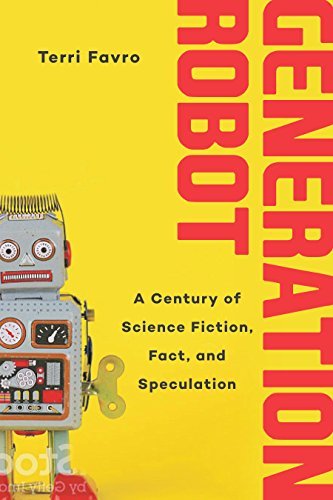
Generation Robot covers a century of science fiction, fact and, speculation—from the 1950 publication of Isaac Asimov’s seminal robot masterpiece, I, Robot, to the 2050 Singularity when artificial and human intelligence are predicted to merge. Beginning with a childhood informed by pop-culture robots in movies, in comic books, and on TV in the 1960s to adulthood where the possibilities of self-driving cars and virtual reality are daily conversation, Terri Favro offers a unique perspective on how our relationship with robotics and futuristic technologies has shifted over time. Peppered with pop-culture fun-facts about Superman’s kryptonite, the human-machine relationships in the cult TV show Firefly, and the sexual and moral implications of the film Ex Machina, Generation Robot explores how the techno-triumphs and resulting anxieties of reality bleed into the fantasies of our collective culture.Clever and accessible, Generation Robot isn’t just for the serious, scientific reader—it’s for everyone interested in robotics and technology since their science-fiction origins. By looking back at the future she once imagined, analyzing the plugged-in present, and speculating on what is on the horizon, Terri Favro allows readers the chance to consider what was, what is, and what could be. This is a captivating book that looks at the pop-culture of our society to explain how the world works—now and tomorrow.
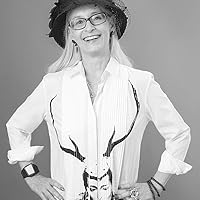
Growing up in an immigrant neighbourhood in Canada's Niagara region, Terri Favro was always told that "if there's a nuclear war, we'll be the first to go", due to the proximity of the Niagara hydroelectric station. Her earliest influences were superhero comics, Warner Brothers cartoons, robots, MAD magazine, Narnia, Middle Earth, her Nonno’s deliciously violent Italian fairytales and the Atomic Bomb. Her life’s ambition was to write satirical comics while living under a lunar geodesic dome.
Not much has changed. Terri is now the author of three novels, a pop-science book about robots, and comic books she creates with her visual artist husband. She’s fond of red wine, cycling, cats, Sinatra standards from the ‘50s and her sons.
Although the lunar dome thing didn’t pan out, Terri enjoys stargazing in east end Toronto whilst sipping a wet dirty martini. Or two.
Terri is currently completing edits to "The Sisters Sputnik", the sequel to her critically acclaimed speculative fiction novel "Sputnik's Children" (ECW ) which was longlisted for 2020 CBC Canada Reads and chosen as one of the Globe & Mail's 100 Best Books of 2017, CBC Books Top 10 Canadian Fiction Books of 2017, and Quill & Quire Best Books of 2017.
“I was born in the middle of the big, fat fifties, a decade stuffed with lardy piecrust, Fluffernutters and fear.” And with that brilliant opening line, Terri Favro takes us on a funny, fascinating, deeply felt journey through her generation’s relationships with robots, artificial intelligence and computers.
Favro, who is also the author of the critically acclaimed novel sci-fi novel Sputnik’s Children, is a master at physical description, creating closely observed worlds both real and imagined.
Because I am a child of the 60s, I especially loved her early chapters about her father, a self taught electrician and inventor who worked with the first factory robot, UNIMATE, which inspired him to build robots at home. One of his first inventions was the driverless lawn-mover, an unheard of technical marvel back then, which Favro describes with her usual affectionate wit:
“He started with a simple concept: attach the metal cable to the steering mechanism, jam it in place so that it went in perpetual circles, and let the mower wind itself up until it had cut the equivalent of a UFO crop circle on one side of the lawn, then move the contraption to another side of the lawn and let it cut another huge circle.”
Undeterred, her enterprising father moved onto the idea of underground sensors, a prototype of the way that robotic lawnmowers move today. But as Favro notes, he lacked the equipment to turn his robo-mower into reality, and it eventually ended up in a pond.
Being an aging boomer means I may one day have to think about caretaking, as I get old and possibly lose my marbles. Here Favro shines, as she envisions a world of kindly cyborg caregivers, whose entire existence will focus on caring for geezers in varying states of physical and mental decline.
“They’ll sit with us at meals and encourage us to eat our vegetables,” she writes. They’ll make sure we take our meds, get enough exercise, and don’t get depressed. If we have a bathroom accident or a medical emergency, they’ll summon help. If the kitchen catches fire, they’ll rescue us even if it means sacrificing themselves.
An added bonus? You can custom design your caretaking cyborg, choosing a tall, silver, silent type—“handsome, if you’re into the whole “machine man” thing, and dressing him in your preferred styles.
But could your sexy, caring robot perform … ahem….more intimate services than making sure you make it to the loo on time? You betcha, Favro claims. No pearl-clutching moralist, she takes a clear-eyed look at the many benefits of sex dolls, who in the not so distant future can be programmed to love us, assume various positions with their flexible bodies, and respond appropriately to our moans with pre-programmed pillow talk. As Favro puts pragmatically puts it:
“Robots could be great tools for sex therapists, pitching in to help couples experiencing problems in bed. They could be sex workers. Or they could carry on being an enhanced version of what sex dolls really are—a toy.”
But would you want your great-grand-nephew to marry one? In one of her most imaginative (but chillingly plausible) chapters, “Sex And the Singularity”, Favro envisions a time, in 2050, where human-robot marriages could be legalized. The wedding is performed in a Singularian church, the name coming from a belief “that we are all moving toward a singular event in history when all artificial intelligence merges into a single superintelligence and enlightened humans (i.e., the Singularitarians) upload their consciousness to conjoin with it.” In other words, some humans will opt to download their consciousness into machine bodies, become robots and conceivably live forever.
Experts are still divided as to whether this will actually happen or not. “It isn’t easy to separate the bizarre from the possible.” Favro writes, in summing it all up. But for anyone interested in robots, past, present and future, her book is a captivating, must-read look into our long-awaited World of Tomorrow.
Uma obra intrigante para juntar às estantes de livros sobre futurismos. Com um ponto de vista único, e raramente visto neste género. Não apregoa apocalipses distópicos nem pinta tudo com um rosa optimista berrante. Não é um livro escrito por alguém ligado ao futurismo ou ao comentário sobre tecnologia. Antes, é uma reflexão muito pessoal, construída a partir de reminiscências de uma vida, amor à ficção científica e pesquisa independente sobre computação, robótica e inteligência artificial.
Não podemos esperar um novo e deslumbrante ponto de vista deste livro. Aliás, isso é quase impossível em todo o género que captou a atenção do público, muitos são variações sobre os mesmos tópicos, detalhando impactos positivos e negativos das tecnologias. O que varia neste é a forma como se assume como equilibrado, não dando eco quer aos piores exageros quer às mais utópicas predições. Talvez por estar construído a partir de um ponto de vista pessoal, de uma escritora, especializada em manuais técnicos, que sabe que a sua carreira e vida pessoal foi muito enriquecida pela tecnologia. Uma atitude que encontra nas suas entrevistas, ao explorar eventos dedicados à internet das coisas, automóveis autónomos, ou engenheiros a trabalhar em robótica avançada. Ao evitar, por não ser um nome sonante, os grandes nomes da tecnologia, a autora consegue traçar cenários mais moderados, confiando que a evolução tecnológica nos continuará a trazer um futuro melhor.
A viagem pessoal e de pesquisa aos temas do livro é entrecortada com notas da cultura pop de FC, que nos mostram que as preocupações que hoje sentimos como pertinentes, ao nos apercebermos dos prováveis impactos que a tecnologia terá sobre as sociedades (ou melhor, impactos que já se estão a manifestar), já alimentavam o imaginário de FC.
I rarely read non-fiction, but I found the title and premises of this book appealing. Terry Favro explores how robots were conceived in literature and film, and how that translated into reality. We witness the beginning of simple machines like elevators, and then typewriters and computers; how Gates and Jobs started their journey, and the evolution of AI, driverlerss cars, without forgetting the eternal debate about whether robots will take away our jobs.
I found it an interesting book, even though I belong to a newer generation, but it was enjoyable how the robot industry affected Terry Favro and her family. There was a bit of speculation that I enjoyed less, for the simple fact that I didn’t find it realistic enough. I think it is, in general, a good book for sci-fi enthusiasts and people who are curious about the evolution of robots and computers, but maybe a bit too generic if you are looking for a more scientific read.
Teri Schnaubelt did a wonderful job narrating this book, keeping it interesting and compelling, and using different voices when Favro was quoting somebody. You can’t go wrong with Schnaubelt!
I received a copy of this book in audio format from the narrator in exchange for an honest review.
Favro presents the current advances in robotics and AI, and their expected near-future developments, in the context of the sci-fi culture of the last 70 years. In a fun and engaging prose Favro takes us from Asimov to the current sci-fi movies as she charts how our current and foreseeable scientific discoveries agree or differ from the fictionalized versions that preceded them. She centers the narrative in her own lifespan discussing the beginnings of automation that her father shared with her as a child and the imagined future she can plausibly project around the next two decades of her life. She focuses on the societal impact of such upcoming technologies as self-driving cars, increasing job automation, etc., circling back to how these technologies were foreseen by the sci-fi writers that initially talked about them. Overall the book was an interesting and light read that is certain to make the reader crack a smile here or there.
I admit it, I'm a huge (fictional) robot nut and I picked this book up expecting more of a focus on fictional robots -- but can you blame me when it talks about science fiction directly in the title? That said, Generation Robot is still an informative read, giving an overview of the development of modern-day robots since the 1950s, and speculating on how far robotics and AI may come in 2050. It's definitely not a comprehensive look at robotics, however, and the author's informal tone and tendency to drift off on tangents can work against it.
Terri Favro does refer to fictional robots and their appearances in various media, but mostly to compare them to the real-life development of robots, and their roles in factories, our homes, and at expositions and conventions showing off the latest developments in the field. She discusses other aspects of the robotics fields, such as the rise of computer and self-driving vehicles, and hypothesizes on what the future might look like with robots commonplace in our homes and lives, all our appliances "smart" and connected, and what might happen when society reaches a point where you can actually marry your robot companion!
While informative, this book isn't a comprehensive look at the history of robotics -- robots are a much older phenomenon than we think, though Terri chooses to focus on the development of robots from about 1950 onward. And while she does talk about some of the dangers and shortcomings of robots -- job loss, hacking, the dangers of an AI becoming TOO smart, etc. -- for the most part her outlook on robots is rosy and optimistic. And while her focus is on real robots, she does talk about various pop-culture robots to compare them to our present-day developments, worries, and concerns over real-world robots and AI.
The conversational tone of this book makes it easily accessible, but can also be a bit detrimental. Terri tends to drift off-topic quite a bit, and injects more of her personal life story into this book than I found necessary (especially as she has no actual scientific or engineering background -- writing advertising copy for IBM doesn't count). Also, I found a couple of errors in the "facts" she presented (Star Wars stormtroopers are NOT robots), and unfortunately when noticeable errors crop up in a non-fiction work, it makes me wonder what other errors there might be that slipped in under the radar...
Despite its flaws, Generation Robot is still an interesting read. It's not an in-depth look at robotics, but is entertaining and informative enough for the lay person, and is a fascinating speculation on where robotics may take us in the next few decades.
Terri Favro's Generation Robot—what a surprising pleasure the book is—as if a warm conversationalist is visiting with you, sharing personal stories and upbeat, cool information about past, present, and even future human beings interacting with computers ..er, robots. ( From the notes at the back alone, you know she's done a whack of research, but she has the gift of the light touch and a laugh out loud sense of humour).
A fun and enlightening book on not only the past of robots but also, probable future. It's a perfect read for those of us who are delighted and intrigued by robots but do not have a scientific or mathematical background. I highly recommend it!
Fascinating. Brilliantly written and hilarious, with sharp-as-a-tack insights, observations, past, present and future.
I haven’t enjoyed a book this much since Trespassing on Einstein's Lawn: A Father, a Daughter, the Meaning of Nothing, and the Beginning of Everything by Amanda Gefter. That book, about which this was said, “In a memoir of family bonding and cutting-edge physics for readers of Brian Greene's The Hidden Reality and Jim Holt's Why Does the World Exist?, Amanda Gefter tells the story of how she conned her way into a career as a science journalist--and wound up hanging out, talking shop, and butting heads with the world's most brilliant minds”, was voted one of the Best Books of the Year by Kirkus Reviews and, in my opinion, as should Generation Robot.
This is essential (and highly entertaining and thoroughly researched) reading in a time when the fantasies of Black Mirror are more like a dire prognosis of what our future holds and Electric Dreams brings Philip K. Dick’s insanely unreal stories into the realm of the scarily real. And Favro’s personal spin draws the reader in, we sit at the table having lunch with the family, chatting about robots, workplace safety and the impending nuclear war.
One of Favro’s greatest strengths as a writer (and she has many) is to create such a vivid sense of time and place. Her writing is itself a time machine whisking you back into the past and hurtling you into the future.
Generation Robot also a lovely homage and tribute to Attilio ‘Tee’ Favro, Terri’s father and to the workplace and lifestyle of the 50's.
You’ll learn all kinds of interesting things in this documentation of pop culture through the decades – a lot of which was a trip down memory lane, dating me, no doubt!
And, for those fearful of reading the book in case the prognosis is dire, fear not, we humans hold the cards, the future is ours, and what an interesting future it is!
I don't think much about the technical side of my phone except when the battery is low and I need to charge it. I certainly never think twice about stepping into an elevator and I've never watched an entire episode of Star Trek. What I did do was pick up a copy of the wonderful non-fiction book, Generation Robot. A Century of Science, Fact, and Speculation after hearing author, Terri Favro speak about it. I soon found out that Favro's writing is as captivating as her presentation skills. In the book, Favro takes us through a hundred years of technology, computers, and robots all the while weaving in personal stories like her father's work with robots in the sixties, her time as a copywriter for IBM in the eighties and her musings on what her life might look like in the year 2050. Her writing is humorous and clever, enticing the non-sci-fi enthusiast like myself to turn the page and become engaged in the stories she is telling. Equally interesting are the side notes that appear in each chapter relaying facts about robots in the world of pop culture like the talking car K.I.T.T. from Knight Rider or Ferris' IBM PC XT computer in the eighties classic Ferris Bueller's Day Off. After reading, I'm left with a greater interest in the current "robots" that take their place in my day-to-day life like my friend's Roomba vacuum cleaner and have begun to wonder if my young children will ever need to study for their driver's license or rather be picked up in a driverless car to get around. I'm also left with a much greater curiosity for my surroundings, thus a testament to what good writing should do.
Fine read to review the past few decades of robots, both in science fiction and in real use, and it also predicts the near future of AI/robots such as self-driving vehicles, smart homes, etc.
The first half is interesting; for instance, why do we remain suspicious over "new" technology? If the public don't embrace the new stuff (read: buy it), it gets shelved due to lack of R&D money, so this is a critical question. The quotation marks are added because, often, the technology isn't so new; again, just as an example, automatic transmissions took 40 years (!) to win acceptance--people just didn't want to give up manual control. So can we give up the steering wheel? Humans are conservative, skeptical beings, prone to accuse robots when humans are just as likely (or more likely) to make the same mistakes.
The second half is a bit tedious; most of the things she discusses weren't new to me. Yes, AI/internet is collecting data through our tweets, online shopping records, etc etc. Yes, the algorithm will reflect our human prejudice (even though math itself is unbiased). All are happening already, influencing our career choices, dating habits, voting decisions, and more. The book sounds almost old in this part.
I rarely read non-fiction, but this was conversational, funny, and driven by the authors' own personal narrative, enough that I fully enjoyed it. It explores things like how Asimov's Three Laws still drive much of the industry - and philosophy - of robotics today; the plausibility of the technological singularity; and what a fully automated Internet Of Things household might look like and when we can expect it.
The risk of writing about tech is how soon your words become outdated, and I'm afraid that happened in a minor way with this book despite its recent publication date. When discussing the last thing on that list, a robotically managed household, Favro points out that the perils include hackers wh0, as they do today, might infiltrate your systems to empty your bank account, steal or identify, or just to get some illicit kicks. In the last few months, however, we've seem a darker purpose - aggregation of your personal data to institute oppressive political regimes. (It feels like science fiction to say such a thing, but there it is, real life news.)
Despite not being clairvoyant enough to include that danger in her work, Favro's book is delightful.
3.5 stars, rounding up. Ranging from somewhat interesting to creepy and insane, the book is a round trip of the author's observations and predictions concerning human/robot relationships. Funny enough, I have an ongoing relationship with a robot of my own. I am a land surveyor using a robotic "one man" total station to increase productivity. It is an amazing and wonderful piece of technology that has seen several iterations over the past couple of decades.
The seemingly infinite potential of robots and AI are made far more plausible than should be the case due to the prevalent view of mankind as wholly material. If man is machine, successful replicating intelligence in a machine of our own seems within reach. I regard this attitude as utter foolishness and hubris and I think time will bear this out. Weirdest of all to me, even more so than the sex robot, is the notion that, by imitating our psyche, we can transfer "ourselves" to a machine and live forever. Death will not be cheated by such means and it only testifies to the foolishness of humanity to believe otherwise.
I enjoyed this popular science look at the current status of robotics and AI. I was expecting it to be more of a look at robots as they were portrayed in science fiction from the tag line but it was much more science fact than I thought it would be. it was a pleasant surprise as the writing was good (from an advertising veteran apparently). The visions of the future were funny, the writing was mostly amusing, the personal anecdotes were relatable, the topics were interesting. There were too few references for my liking for many of the topics, with whole chapters referencing other popular science books on a particular topic, but it was a nice easy introduction to where robotics is at this point in time and what the current vision of the future is.
A fun and interesting read. Favro's father worked in a factory in the Niagara Falls area, which my grandfather did as well. Some of the stories of gruesome accidents Favro's father saw on the job were very reminiscent to things my grandfather told us he had seen, so that added a personal layer for me. It really drove home how robots can be used to make jobs safer. As well, robots as aides to the elderly and people with disabilities, is a big part of this book. I looked up videos of some of the robots she mentions (Tangy and Casper) and it's really neat to see how the technology is progressing.
This was an interesting look at the development of technology from the beginnings of the "computer" era/SciFi Golden Age to speculations about the near future.
I enjoyed this for the most part, but the notable amount of typographical errors and various informal/frankly annoying choices of words were a bit distracting (of course, that could just be a "me problem").
Either way, the book didn't overstay its welcome, so it gets three stars for getting to the point and getting out while it still could!
I thoroughly enjoyed reading Generation Robot. The chapters about past and present were informative. I especially like the visual of two AIs taking turns doing the Turing test! The speculative chapters were also informative, and also forced me to think about the possible future as presented. I recommend this highly!
A pretty solid book, but I much enjoyed the first half of it over the latter half (when the "speculation" part of the book kicked in). It was definitely an interesting read though as we're living through a boom in AI right now, since the book grapples with a lot of questions related to those. 3.5/5 rounded up.
I enjoyed reading the antidotes about her father. I enjoyed the fictional little stores that she wrote at the beginning at some of the chapters. Reading the self driving car chapter made me wish there were self driving cars right now. This was a fun book to read.
This was a very interesting and fun book to listen to.The topics it covered were many.Teri Schnaubelt was a terrific narrator..I was given this book by the narrator,author or publisher free for an honest review.
Good book, entertaining, with a reasonable amount of information. Not extraordinary, but good. If you are interested in robots and the evolution of robotics, this is a "pop science" kind of source.