

What do you think?

The Woman at 1,000 Degrees
‘I live here alone in a garage, together with a laptop and an old hand grenade. It's pretty cosy.'
And...she's off. Eighty-year-old Herra Björnsson lies alone in her garage waiting to die. One of the most original narrators in literary history, she takes readers with her on a dazzling ride of a novel as she reflects - in a voice by turns darkly funny, bawdy, poignant, and always, always smart - on the mishaps, tragedies and turns of luck that shaped her life.
Born into a prominent political family, Herra's idyllic childhood in the islands of western Iceland was brought to an abrupt end when her father foolishly cast his lot with a Hitler on the rise. Separated from her mother, and with her father away at war, she finds herself abandoned and alone in war-torn Germany, relying on her wits and occasional good fortune to survive. Now, with death approaching, forced to hack into her sons' emails to have any contact with them at all, Herra decides to take control of her destiny and sets a date for her own cremation - at a temperature of 1,000 degrees.
In this international bestseller, Hallgrímur Helgason invites readers on a journey that is as hilarious as it is heartbreaking, and which ultimately tells the deeply moving story of a woman swept up by the forces of history.
And...she's off. Eighty-year-old Herra Björnsson lies alone in her garage waiting to die. One of the most original narrators in literary history, she takes readers with her on a dazzling ride of a novel as she reflects - in a voice by turns darkly funny, bawdy, poignant, and always, always smart - on the mishaps, tragedies and turns of luck that shaped her life.
Born into a prominent political family, Herra's idyllic childhood in the islands of western Iceland was brought to an abrupt end when her father foolishly cast his lot with a Hitler on the rise. Separated from her mother, and with her father away at war, she finds herself abandoned and alone in war-torn Germany, relying on her wits and occasional good fortune to survive. Now, with death approaching, forced to hack into her sons' emails to have any contact with them at all, Herra decides to take control of her destiny and sets a date for her own cremation - at a temperature of 1,000 degrees.
In this international bestseller, Hallgrímur Helgason invites readers on a journey that is as hilarious as it is heartbreaking, and which ultimately tells the deeply moving story of a woman swept up by the forces of history.
464 pages, Hardcover
First published January 1, 2011
About the author
Hallgrímur Helgason
35 books291 followersHallgrímur Helgason is an Icelandic author, painter, translator, cartoonist and essayist. He has studied at the School of Visual Arts and Crafts in Reykjavík and the Academy of Fine Arts in Munich.
His most famous works are 101 Reykjavík, which was made into a popular film, and Höfundur Íslands (Iceland's Author), which won the Icelandic Literary Prize in 2001. He was nominated for the prize again in 2005 for the novel Rokland (Stormland), along with the Nordic Council's Literature Prize for 101 Reykjavík and Rokland.
His most famous works are 101 Reykjavík, which was made into a popular film, and Höfundur Íslands (Iceland's Author), which won the Icelandic Literary Prize in 2001. He was nominated for the prize again in 2005 for the novel Rokland (Stormland), along with the Nordic Council's Literature Prize for 101 Reykjavík and Rokland.
Ratings & Reviews
Friends & Following
Create a free account to discover what your friends think of this book!
Community Reviews
Displaying 1 - 30 of 456 reviews

March 11, 2024
This book contains the reminiscences of Herra Björnsson, an (entirely fictional?) Icelandic woman born in 1929 and who now, 70-odd years later, sick with cancer and emphysema, finds herself squatting in the garage of a friend, with only her laptop computer, a hospital bed, and a daycare help to keep her company.
Just before the outbreak of World War II Herra’s family move to Denmark and eventually to Germany, since Herra’s father wants to join the Nazi army. When war arrives he does indeed do so, abandoning Herra and her mother to fend for themselves. Herra is soon separated from her mother and her wanderings all over war-torn Europe, in her harrowing struggles to survive the war years as an adolescent child, begin. Herra’s family all survive the war and they meet up again in Iceland but they are not welcome there with her father’s history, so they emigrate to Argentina.
Herra’s memories are told in a series of haphazard short chapters rather than in chronological order, interspersed every now and then with chapters describing her current life. The narrative, in which guilt and regret play an important role, is strongest when the author uses magical realism style, but stylistically the book, although terrifically interesting and engaging, is perhaps not sufficiently uniform or homogeneous. Nevertheless, at his best, Hallgrímur is a bit like a fabulist’s cross between Günter Grass and Halldór Laxness. Some of the scenes and characters he describes, e.g. the “Half Hitler” (Hitler’s younger brother Aaron who is Jewish and misses both his legs!) or “The Crocodile” (a deaf-mute in Argentina, whom his family only keep alive for inheritance purposes!) are very impressive. Many times I was reminded of scenes in Tarantino films by the visually suggestive power with which this author is able to write. Another thing I liked about the book is the many witty maritime similes and metaphors that are being used (probably an Icelandic thing!).
Just before the outbreak of World War II Herra’s family move to Denmark and eventually to Germany, since Herra’s father wants to join the Nazi army. When war arrives he does indeed do so, abandoning Herra and her mother to fend for themselves. Herra is soon separated from her mother and her wanderings all over war-torn Europe, in her harrowing struggles to survive the war years as an adolescent child, begin. Herra’s family all survive the war and they meet up again in Iceland but they are not welcome there with her father’s history, so they emigrate to Argentina.
Herra’s memories are told in a series of haphazard short chapters rather than in chronological order, interspersed every now and then with chapters describing her current life. The narrative, in which guilt and regret play an important role, is strongest when the author uses magical realism style, but stylistically the book, although terrifically interesting and engaging, is perhaps not sufficiently uniform or homogeneous. Nevertheless, at his best, Hallgrímur is a bit like a fabulist’s cross between Günter Grass and Halldór Laxness. Some of the scenes and characters he describes, e.g. the “Half Hitler” (Hitler’s younger brother Aaron who is Jewish and misses both his legs!) or “The Crocodile” (a deaf-mute in Argentina, whom his family only keep alive for inheritance purposes!) are very impressive. Many times I was reminded of scenes in Tarantino films by the visually suggestive power with which this author is able to write. Another thing I liked about the book is the many witty maritime similes and metaphors that are being used (probably an Icelandic thing!).

April 28, 2019
This is a novel written in first person voice of an elderly woman from Iceland who is contemplating her death and the 1,000 degrees Celsius that will be needed to cremate her body. As she considers her demise she recalls her teenage years living in Denmark when the Germans invaded and her family became entangled in the upheaval of war. The book describes a present day curmudgeonly and crusty personality that is a product of a hardscrabble youth when she was forced to struggle and use her wits to survive.
Multiple stories are revealed as the book's narrative switches back and forth between the past and present. Her family was stranded in German controlled Denmark early in World War II unable to return to Iceland. Her family was split on how to respond to the invasion. The following excerpt describes the divisions within the family as they sit around a dining table trying to carry on a conversation:
Incredibly, her father who at the beginning of the war was in the German Wehrmacht had managed to be taken prisoner-of-war by the Russians, and then in the prison camp had somehow convinced the Russians that he was Estonian thus eligible to be drafted into the Russian Army. Consequently, he had spent the first part of the war in the German Army invading Russia, and then in the later part of the war he was in the Russian Army invading Germany. He managed to survive both of these perilous situations, and after the war moved to Argentina to get a new start in life.
The story was inspired by an actual person's life, but the author begins the book with an "Author's Note" emphasizing that the story is fictional. It is my understanding from other sources that the surviving family members of the person whose story is being told in the book are not happy about how their relative was depicted. I'll have to admit that I've speculated about which parts were fictional and which parts were actual events. Certainly, the part of the story that depicts the eighty-year-old antagonist as a computer hacker breaking into the online social media lives of her children and in-laws would be problematic for almost any family. Some of the stories of survival from WWII are hard to believe, but I suspect there's a kernel of truth in them. In particular, the part about her father beginning the war on the German side and ending up on the Russian side is too unbelievable to be fiction. I wish the author had described which parts were true.
In the "Acknowledgments" at the end of the book the author describes how he first encountered the woman who inspired the story. His only contact with her was a forty minute telephone conversation in which she described her life. She died a year later. He never met her in person. He didn't change names for the book, which is probably one reason why the relatives are not happy. The book was originally written in Icelandic and later translated to English.
Multiple stories are revealed as the book's narrative switches back and forth between the past and present. Her family was stranded in German controlled Denmark early in World War II unable to return to Iceland. Her family was split on how to respond to the invasion. The following excerpt describes the divisions within the family as they sit around a dining table trying to carry on a conversation:
Grandma sat at the end and glared at the SS insignia on my father as he slipped into the place farthest away from her. I sat opposite him and felt as if I were sitting at a negotiating table. Because it was a tricky situation. Grandma was a Danish aristocrat who was married to an Icelander and despised the Germans. Dad was a German soldier who was married to an Icelandic woman and despised the Danes. Jón Krabbe was a half-Icelandic official, married to a Danish woman, who every day had to bow to the Germans. Puti was a half-Danish but optimistic Icelander who allowed himself to dream of an independent Iceland. Kylla was also Icelandic Danish but married to a Faeroese man who considered the idea of Icelandic independence utterly ludicrous. Mom was from Breidafjördur and saw everything from the perspective of the sea. I was still a work in progress. (p86)The book's narrator likewise felt that she never fit in wherever she went. I think the following excerpt offers a hint of her crusty personality.
... but I was wrong everywhere I went. To Åse I was too Danish. At school I was too German. And to everyone too Icelandic. I never fitted in. At any time in my life. In Argentina after the war, people thought I was German and looked at me askance. In Germany, when they realized I'd been to Argentina, people looked at me askance. And at home I was a Nazi, in America a Communist, and on a trip to the Soviet Union I was accused of "capitalistic behavior." In Iceland I was too traveled, on my travels too Icelandic. And I was never elegant enough for the presidential residence in Bessastadir, while in Bolungarík, where I lived with my sailor Bæring, they called me a prima donna. Women told be I drank like a man, men like a slut. In my flings I was deemed too keen; in my relationships to frigid. I couldn't fit in any damned where and was therefore always looking for the next party. I was a relentless fugitive on the run, ... (p94)Through a series of unfortunate events she ends up wondering through the occupied Polish countryside during the war without ID papers which raises the possibility of her being apprehended by the Nazis and assumed to be Jewish. She witnesses the death of a peasant family that's hiding her, she ends up being raped, then later seduces a German officer who will be executed for cowardice. At the end of the war she ends up being a sex slave for the invading Russian soldiers where she crosses paths with her father who is now in a Russian Army uniform
Incredibly, her father who at the beginning of the war was in the German Wehrmacht had managed to be taken prisoner-of-war by the Russians, and then in the prison camp had somehow convinced the Russians that he was Estonian thus eligible to be drafted into the Russian Army. Consequently, he had spent the first part of the war in the German Army invading Russia, and then in the later part of the war he was in the Russian Army invading Germany. He managed to survive both of these perilous situations, and after the war moved to Argentina to get a new start in life.
The story was inspired by an actual person's life, but the author begins the book with an "Author's Note" emphasizing that the story is fictional. It is my understanding from other sources that the surviving family members of the person whose story is being told in the book are not happy about how their relative was depicted. I'll have to admit that I've speculated about which parts were fictional and which parts were actual events. Certainly, the part of the story that depicts the eighty-year-old antagonist as a computer hacker breaking into the online social media lives of her children and in-laws would be problematic for almost any family. Some of the stories of survival from WWII are hard to believe, but I suspect there's a kernel of truth in them. In particular, the part about her father beginning the war on the German side and ending up on the Russian side is too unbelievable to be fiction. I wish the author had described which parts were true.
In the "Acknowledgments" at the end of the book the author describes how he first encountered the woman who inspired the story. His only contact with her was a forty minute telephone conversation in which she described her life. She died a year later. He never met her in person. He didn't change names for the book, which is probably one reason why the relatives are not happy. The book was originally written in Icelandic and later translated to English.

January 9, 2018
Despite my personal dislike of quirky old person narratives, I really found myself enjoying this novel. Herra Bjornsson lives in a garage where she is dying from emphysema, and is thinking back on her life. And what a life! She came of age in Iceland during World War II. I had never stopped to think about Iceland during World War II, and the book gave me the occasion to do so. Technically Iceland was ruled by Denmark at the time, but Denmark was invaded by Germany while the island of Iceland was occupied by the British. And in 1944, Iceland declared its independence in the midst of the worldwide chaos.
So what do you do if you are a young Icelandic girl whose father fights for the Nazis? Herra moves with her mother to the Danish island of Amrum where hundreds of people are taking shelter from the war, until they are forced to relocate. At that point she is sent to live with a family who is supposed to only take her in for a few months. But when her mother doesn't make the rendezvous point and Herra's father goes back to the front, she is forced as a young teen to attempt to survive on her own, taking her through areas of Denmark, Poland, and Germany. When she returns to Iceland, her father is ostracized and she can't forgive her mother, while her grandparents (the president of Iceland) have war-forgetting cocktail parties for the new wealthy class that profited from the war.
Between the chapters of this history are chapters from the "present day," which in this novel is 2009. Herra is bedridden but she has internet access and spends much of her time trolling people on the internet, including her daughter-in-law. One of her neighbors teaches her how to be a low-key hacker and this leads to other shenanigans.
The reference to 1,000 degrees is the temperature at which a body is burned for cremation, and one memorable scene has Herra making her own appointment at the crematorium.
I think without the balancing of the feisty old person Herra, the story may have seemed overly melodramatic. It did add a lot to the story to know where she ended up. And it isn't glamorous!
There is even more here - commentary on the Icelandic people, the discomfort of representing the great white ideal because of Hitler (her father was a professor of myth/history ... the line gets a bit blurred by the Nazis of course), the reactions of normal people to war and other atrocities, survival, and even sexual awakening (this last one makes me consider whether or not this is mild enough for a book club recommendation.)
There is enough humor to balance the stark realities, and Herra is probably the most kickass invalid you will ever encounter. I enjoyed it far more than I expected, and will seek out additional books by the author, someone who somehow escaped me in my year of reading Iceland. Shame!
Thanks to the publisher for providing early access to this title via NetGalley. The book comes out January 9, 2018.
So what do you do if you are a young Icelandic girl whose father fights for the Nazis? Herra moves with her mother to the Danish island of Amrum where hundreds of people are taking shelter from the war, until they are forced to relocate. At that point she is sent to live with a family who is supposed to only take her in for a few months. But when her mother doesn't make the rendezvous point and Herra's father goes back to the front, she is forced as a young teen to attempt to survive on her own, taking her through areas of Denmark, Poland, and Germany. When she returns to Iceland, her father is ostracized and she can't forgive her mother, while her grandparents (the president of Iceland) have war-forgetting cocktail parties for the new wealthy class that profited from the war.
Between the chapters of this history are chapters from the "present day," which in this novel is 2009. Herra is bedridden but she has internet access and spends much of her time trolling people on the internet, including her daughter-in-law. One of her neighbors teaches her how to be a low-key hacker and this leads to other shenanigans.
The reference to 1,000 degrees is the temperature at which a body is burned for cremation, and one memorable scene has Herra making her own appointment at the crematorium.
I think without the balancing of the feisty old person Herra, the story may have seemed overly melodramatic. It did add a lot to the story to know where she ended up. And it isn't glamorous!
There is even more here - commentary on the Icelandic people, the discomfort of representing the great white ideal because of Hitler (her father was a professor of myth/history ... the line gets a bit blurred by the Nazis of course), the reactions of normal people to war and other atrocities, survival, and even sexual awakening (this last one makes me consider whether or not this is mild enough for a book club recommendation.)
There is enough humor to balance the stark realities, and Herra is probably the most kickass invalid you will ever encounter. I enjoyed it far more than I expected, and will seek out additional books by the author, someone who somehow escaped me in my year of reading Iceland. Shame!
Thanks to the publisher for providing early access to this title via NetGalley. The book comes out January 9, 2018.
December 21, 2012
In which is demonstrated that there is a difference between having a terrific idea for a book and writing it.
Herra is 80 years old and has already made an appointment with the crematorium, although as the pleasant young man on the phone points out, she has to be dead before they push her into the 1000° oven. In the meantime she lives alone in a garage along with a laptop and a hand grenade. On the laptop she has set up several accounts at facebook, using a photo of Linda Pétursdóttir (Miss World 1988 as any fule kno), and gingering up the hopes of men from Harare to Hamilton. The hand grenade is a relic from WW2. To deflect the legitimate concern of her carer she claims it is a novelty perfume flask (Feu de Cologne).
It all starts off well, you see. Droll, in a quirky, bizarre way. What German calls skurril, which is a false friend to the English word scurrilous. Not vulgar or offensive, merely freakish, funky, flaky. Fun.
Like many elderly people, Herra lives more in the past than the present, and like many an elderly raconteur, the memories pour in willy-nilly. The most intense experiences of her life are the ones that elbow their way to the front of the unruly crowd; those of the war years, when she was a girl in Denmark and Germany. As one might expect, the fun fizzles out fast to be replaced by horror.
So the concept is realistic. Yes, 80 year olds do ramble. I know, I spend several hours a week with my 89 year old father-in-law. He's a poppet with a great sense of humour, but he does go off at a tangent sometimes. One of his legendary phrases is "Den kennst du doch", which has entered family lore: You must know him, surely, thingie, whatshisname, he lives down the street from the woman who used to do for Annemarie's sister's hairdresser, you know. The best non-committal response is to nod and shrug at the same time. So I know the form. But it is far from engrossing. Sometimes, dare I say it, a little frustrating.
Jumbled up and comical is fine, but of the 119 short chapters, over half, around 60 or so take place in the years between 1939 and 45. Not much to laugh at there, no matter how twisted a sense of humour you might have. Not much in the way of suspense. Not much incentive to pick up the book once it was put down.
Interestingly enough (I hope), since Iceland has a population of around 320,000, Hallgrímur Helgason has more readers in Germany than in his home country. As far as national stereotyping is concerned, he's very considerate of his German readers. I suppose it's not a good idea to alienate your main audience. But he is definitely writing about Iceland, and is scathing of the change of values that led to the 2008 crash. And I managed to finish this on the day the centre-right parties who are widely held responsible for that particular debacle have been returned to power. How topical is that.
Herra is 80 years old and has already made an appointment with the crematorium, although as the pleasant young man on the phone points out, she has to be dead before they push her into the 1000° oven. In the meantime she lives alone in a garage along with a laptop and a hand grenade. On the laptop she has set up several accounts at facebook, using a photo of Linda Pétursdóttir (Miss World 1988 as any fule kno), and gingering up the hopes of men from Harare to Hamilton. The hand grenade is a relic from WW2. To deflect the legitimate concern of her carer she claims it is a novelty perfume flask (Feu de Cologne).
It all starts off well, you see. Droll, in a quirky, bizarre way. What German calls skurril, which is a false friend to the English word scurrilous. Not vulgar or offensive, merely freakish, funky, flaky. Fun.
Like many elderly people, Herra lives more in the past than the present, and like many an elderly raconteur, the memories pour in willy-nilly. The most intense experiences of her life are the ones that elbow their way to the front of the unruly crowd; those of the war years, when she was a girl in Denmark and Germany. As one might expect, the fun fizzles out fast to be replaced by horror.
So the concept is realistic. Yes, 80 year olds do ramble. I know, I spend several hours a week with my 89 year old father-in-law. He's a poppet with a great sense of humour, but he does go off at a tangent sometimes. One of his legendary phrases is "Den kennst du doch", which has entered family lore: You must know him, surely, thingie, whatshisname, he lives down the street from the woman who used to do for Annemarie's sister's hairdresser, you know. The best non-committal response is to nod and shrug at the same time. So I know the form. But it is far from engrossing. Sometimes, dare I say it, a little frustrating.
Jumbled up and comical is fine, but of the 119 short chapters, over half, around 60 or so take place in the years between 1939 and 45. Not much to laugh at there, no matter how twisted a sense of humour you might have. Not much in the way of suspense. Not much incentive to pick up the book once it was put down.
Interestingly enough (I hope), since Iceland has a population of around 320,000, Hallgrímur Helgason has more readers in Germany than in his home country. As far as national stereotyping is concerned, he's very considerate of his German readers. I suppose it's not a good idea to alienate your main audience. But he is definitely writing about Iceland, and is scathing of the change of values that led to the 2008 crash. And I managed to finish this on the day the centre-right parties who are widely held responsible for that particular debacle have been returned to power. How topical is that.

September 21, 2019
It's 3.5 ⭐️⭐️⭐️ actually
Did you ever love a book and in the same time hate it with just as much intensity??? This is exactly how I am left feeling about this book....it is not an easy read and it doesn't paint an easy to digest story......but it is beautiful in it's own quirky way.....love/hate hate /love
Did you ever love a book and in the same time hate it with just as much intensity??? This is exactly how I am left feeling about this book....it is not an easy read and it doesn't paint an easy to digest story......but it is beautiful in it's own quirky way.....love/hate hate /love

February 7, 2018
If you like Björk...
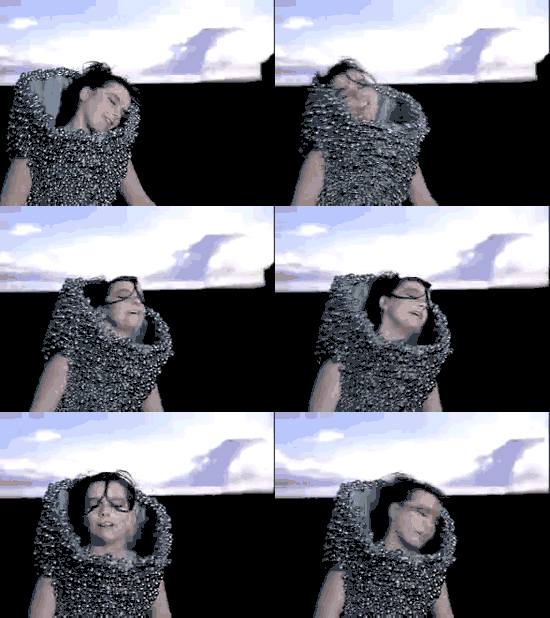
An Icelandic 80-year-old woman named Herra Björnsson lies in her garage, a human reliquary holding onto the live grenade from WWII she was given by her Nazi father, estranged from her two sons, and waiting to die after having made an appointment for the 14th to be cremated (a Woman at 1,000 degrees).
Herra may be the crassest female narrator in my recollection, often resorting to the vulgar in language to describe the repulsive in life. It is definitely not for those weak of stomach.
She recounts her tragic life beginning primarily when she, the daughter of a confused Icelandic royal who joins the Nazi cause, becomes a lost child who treks across Poland trying to survive, suffering brutal rapes time and again and being forced to sell her body for food, often describing her degradation in sickening detail.
At one time she passes near the Treblinka extermination camp, and describes the smell of burning bodies. She goes with her father to Argentina, presumably for him to escape prosecution as a Nazi war criminal. There, she becomes pregnant under bizarre circumstances. This segment felt like it did not fit and should have been a separate short story or novella.
When she moves back closer to home, she marries an abusive husband.
It's not all bleak though. Helgason occasionally employs humor, mostly tongue-in-cheek anecdotes and mordant wit within the recollections of this acerbic lady's mostly horrible life.
While the quality of writing is excellent, the woman narrator is so embittered and relentlessly nasty, I was constitutionally incapable of feeling anything for her or her plight. This was particularly so with a narrative structure in which she traveled back in her memories in an incoherent way to different time periods with no pattern nor apparent purpose. I'd describe this structure as atonal, or maybe a better description would be Björk-like. That is to say, if you like Björk, you will likely enjoy Herra and her story.
An Icelandic 80-year-old woman named Herra Björnsson lies in her garage, a human reliquary holding onto the live grenade from WWII she was given by her Nazi father, estranged from her two sons, and waiting to die after having made an appointment for the 14th to be cremated (a Woman at 1,000 degrees).
Herra may be the crassest female narrator in my recollection, often resorting to the vulgar in language to describe the repulsive in life. It is definitely not for those weak of stomach.
She recounts her tragic life beginning primarily when she, the daughter of a confused Icelandic royal who joins the Nazi cause, becomes a lost child who treks across Poland trying to survive, suffering brutal rapes time and again and being forced to sell her body for food, often describing her degradation in sickening detail.
At one time she passes near the Treblinka extermination camp, and describes the smell of burning bodies. She goes with her father to Argentina, presumably for him to escape prosecution as a Nazi war criminal. There, she becomes pregnant under bizarre circumstances. This segment felt like it did not fit and should have been a separate short story or novella.
When she moves back closer to home, she marries an abusive husband.
It's not all bleak though. Helgason occasionally employs humor, mostly tongue-in-cheek anecdotes and mordant wit within the recollections of this acerbic lady's mostly horrible life.
While the quality of writing is excellent, the woman narrator is so embittered and relentlessly nasty, I was constitutionally incapable of feeling anything for her or her plight. This was particularly so with a narrative structure in which she traveled back in her memories in an incoherent way to different time periods with no pattern nor apparent purpose. I'd describe this structure as atonal, or maybe a better description would be Björk-like. That is to say, if you like Björk, you will likely enjoy Herra and her story.

January 25, 2018
Read Around the World: Iceland
I really enjoyed the first 200 pages of this book - Herra Bjornsson is an old, feisty, foul-mouthed woman who has had a huge life and who's story is pretty amazing. Until it wasn't. I could have done without the last 100 pages [at least] - there was plenty of sorrow and anger and angst in the stories that were told on the previous pages that I am not sure we needed more. It is a good example of having a really good idea for a book and then actually writing said book.
There are parts that are hilarious [her many email correspondences comes to mind] and it IS and interesting look at World War 2 that we Americans rarely get [thanks to Joy Walsh for that phrase, it was perfect], but ultimately, it just became a little too much for me.
I really enjoyed the first 200 pages of this book - Herra Bjornsson is an old, feisty, foul-mouthed woman who has had a huge life and who's story is pretty amazing. Until it wasn't. I could have done without the last 100 pages [at least] - there was plenty of sorrow and anger and angst in the stories that were told on the previous pages that I am not sure we needed more. It is a good example of having a really good idea for a book and then actually writing said book.
There are parts that are hilarious [her many email correspondences comes to mind] and it IS and interesting look at World War 2 that we Americans rarely get [thanks to Joy Walsh for that phrase, it was perfect], but ultimately, it just became a little too much for me.

December 16, 2023
ak Herra, tavs stāsts... šajā grāmatā IR VISS.
[..]
“apsoli man arì ko citu..."
"Ко?"
"Ka nekļūsi par sievieti."
Mani pārņēma apstulbums.
"Nekļūt par sievieti?"
"Jā. Sievietēm ir tik grüti. Esi cilvēks. Ne sieviete."
[..]
[..]
“apsoli man arì ko citu..."
"Ко?"
"Ka nekļūsi par sievieti."
Mani pārņēma apstulbums.
"Nekļūt par sievieti?"
"Jā. Sievietēm ir tik grüti. Esi cilvēks. Ne sieviete."
[..]

January 9, 2018
Very rarely do I enjoy a man writing about a women's experiences (especially those involving rape), but Helgason does quite a formidable job. Maybe it's the fact that I didn't live through World War II, or that I'm not an Icelandic woman, but his voice was certainly refreshing. I mean, first of all, I can't remember the last time that I read a book about an elderly person. Maybe never? Second of all, Herra is blunt and brunt and rude. And that's something women rarely get to be, even in literature.
And, something I don't see as often is women living to their greatest potential. Herra did so much--and was forced to do so much--so it's completely understandable why she takes upon such a harsh tone through Helgason's writing. She falls in love multiple times, gets pregnant multiple times, is forced to flee multiple times--all while being accompanied by her father's hand grenade.
There's also some great passages about being a woman within this book that I so wish I had underlined. Like I said before, I was a little wary about this being written by a man, but wow. I think he understands how much and how often women sacrifice themselves in order to appease men (whether on a personal level or a political, global level).
Overall, this book was so incredibly enjoyable and interesting that I had a hard time putting it down. I definitely recommend this to those who like fiction, biographies, and WWII literature.
Review cross-listed here!
And, something I don't see as often is women living to their greatest potential. Herra did so much--and was forced to do so much--so it's completely understandable why she takes upon such a harsh tone through Helgason's writing. She falls in love multiple times, gets pregnant multiple times, is forced to flee multiple times--all while being accompanied by her father's hand grenade.
There's also some great passages about being a woman within this book that I so wish I had underlined. Like I said before, I was a little wary about this being written by a man, but wow. I think he understands how much and how often women sacrifice themselves in order to appease men (whether on a personal level or a political, global level).
Overall, this book was so incredibly enjoyable and interesting that I had a hard time putting it down. I definitely recommend this to those who like fiction, biographies, and WWII literature.
Review cross-listed here!

March 18, 2024
Dažas ļoti spilgtas ainas un valodas uguņošana man īsti nespēja kompensēt brīžiem šķietami bezmērķīgās domu pastaigas un "pusmūža vīrietis raksta par pusaudzes seksualitāti" fonu, lai gan, jā, jā, tas viss ir simboliski un apzināti sajāti. Arī teju 400 zemsvītras piezīmes man drīzāk saraustīja lasījumu, nekā palīdzēja uztvert apslēptos slāņus.

August 16, 2020
Femeia la 1000 de grade a fost pentru mine cel mai bun companion de vacanță în materie de lectură. Deși aparent stufoasă, cartea te captează imediat și se parcurge foarte ușor; atât de ușor încât îți pare rău când te apropii de final. Mai multe pe blog. 😊
https://citibila.com/2020/09/02/femei...
https://citibila.com/2020/09/02/femei...

June 29, 2016
Пожилая и очевидно чокнутая тетка лежит почти прикованная к кровати в чужом гараже, умирая от всех болезней сразу, кроме отсутствия чувства юмора и старческой деменции. Мозгов ей хватает на то, чтобы разыгрывать в интернете глупеньких австралийцев и прочих падких на красоток островитян, ну и на то, чтобы понемногу, короткими главами вспоминать свое детство и юность - Исландия, Германия, Буэнос-Айрес.
Очень неровно: местами чудо как хорошо (истории про Гюнну Потную и жизнь на маленьком исландском острове, про уродливого El Croco и Рождество в компании девочки и черепахи, про трех женщин, у которых девочка скрывалась, прогуливая школу), а местами довольно ужасно. Про ВВ2 ожидаемо тяжело и с множественными изнасилованиями. Про современность - очень скучно. Автор активно использует языковую игру и делает всяческие сальто со словами, что сначала симпатично, а потом надоедает. Последние 20% читала очень невнимательно; конец невнятный; хорошо бы автору было сначала придумать какую-то тактику, а потом ее придерживаться.
Очень неровно: местами чудо как хорошо (истории про Гюнну Потную и жизнь на маленьком исландском острове, про уродливого El Croco и Рождество в компании девочки и черепахи, про трех женщин, у которых девочка скрывалась, прогуливая школу), а местами довольно ужасно. Про ВВ2 ожидаемо тяжело и с множественными изнасилованиями. Про современность - очень скучно. Автор активно использует языковую игру и делает всяческие сальто со словами, что сначала симпатично, а потом надоедает. Последние 20% читала очень невнимательно; конец невнятный; хорошо бы автору было сначала придумать какую-то тактику, а потом ее придерживаться.

April 30, 2019
The narrator is 80 years old and lies dying in a converted garage attic. She looks back at her life and relates a tale of mainly her experiences during WWII where she is separated from her parents and roams around Germany and Poland.
The narrator is Icelandic (she reminds the reader on almost every page), she is dying (every second page) and has lived a life full of sex (twice each page). This repetition was one of the things that detracted from a promising start. The other annoying aspect was the trying-to-hard-to-be-funny stories being remembered.
This is no A Man Called Ove or The Hundred-Year-Old Man Who Climbed Out of the Window and Disappeared.
The narrator is Icelandic (she reminds the reader on almost every page), she is dying (every second page) and has lived a life full of sex (twice each page). This repetition was one of the things that detracted from a promising start. The other annoying aspect was the trying-to-hard-to-be-funny stories being remembered.
This is no A Man Called Ove or The Hundred-Year-Old Man Who Climbed Out of the Window and Disappeared.

March 16, 2016
Gavau dovanų. Perskaičiau ~30 puslapių ir padėjau, nutarusi, kad negaišiu laiko. Beveik po metų, kai susidarė laukiančių savo eilės knygų vakuumas, pasidėjau prie lovos ir skaičiau ankstyvais savaitgalio rytais, kol visa šeima dar miegodavo (vienintelė knyga prie lovos, negi kelsies ir tipensi kitos pasiimti, tai ir perskaičiau).
Dvilypis jausmas: pagrindinė herojė labai šauni senučiukė, tokia "kieta", su charakteriu ir "prie bajerio", bet skaitymas vargino, neužkabino reikiamos stygos.
Pasižymėjau šitą vietą:
"Gyvenimą pradedi auksinėmis svajonėmis apie bekraščius miškus, o pabaigoje džiaugiesi vienui vienu medžiu. Toks ir yra kiekvienos gyvos būtybės tikslas - iškirsti svajones."
Dvilypis jausmas: pagrindinė herojė labai šauni senučiukė, tokia "kieta", su charakteriu ir "prie bajerio", bet skaitymas vargino, neužkabino reikiamos stygos.
Pasižymėjau šitą vietą:
"Gyvenimą pradedi auksinėmis svajonėmis apie bekraščius miškus, o pabaigoje džiaugiesi vienui vienu medžiu. Toks ir yra kiekvienos gyvos būtybės tikslas - iškirsti svajones."

April 21, 2018
They say your life passes before your eyes before you die. Something like this is happening to Herra Björnsson as she lies bedridden and clutching a live WWII hand grenade in a converted garage in Reykjavik. Herra's been forgotten and exploited by family and friends, but she hasn't lost the dark sense of humor that has enabled her to survive a life that would have broken a dozen lesser women. Tossed about by world history and personal tragedy, she lives life on her own terms. When she calls a crematorium to make a reservation for her own cremation at 1000 degrees Celsius, you realize she intends to die on her own terms as well.
Don't read this book if you want to laugh without crying at the same time. As a young girl, Herra lives a simple and happy life with her mother on a remote island in Iceland, but shortly before WWII, her Danish/Icelandic father returns to claim the family he's hidden away in shame. When the war breaks out, her father becomes a Nazi soldier while Herra and her mother navigate life in occupied Denmark, until circumstances separate them and launches Herra into a survival situation in war-torn Poland. From then on, Herra's life enters a series of amazing roller coaster up and downs.
Herra relates her story in first person, out of chronological order, as one might expect from a dying old woman. Her reflections on the past mingle with her relationships with her caregiver and family in the present. To while away the time while she's waiting to die, she embarks on a hobby of poignant and hilarious online trolling and catfishing. Herra is a wounded soul, but she's not one to indulge in self-pity. If she had been, she'd have given up the ghost long ago.
I enjoyed this book immensely - from its darkly humorous beginning to its devastating ending. If you're looking for a light read, this isn't it. But if you're looking for drama, history, and a quirky, sarcastic, tough-as-nails character who gives as good as she gets, look no further than Woman at 1000 Degrees.
Don't read this book if you want to laugh without crying at the same time. As a young girl, Herra lives a simple and happy life with her mother on a remote island in Iceland, but shortly before WWII, her Danish/Icelandic father returns to claim the family he's hidden away in shame. When the war breaks out, her father becomes a Nazi soldier while Herra and her mother navigate life in occupied Denmark, until circumstances separate them and launches Herra into a survival situation in war-torn Poland. From then on, Herra's life enters a series of amazing roller coaster up and downs.
Herra relates her story in first person, out of chronological order, as one might expect from a dying old woman. Her reflections on the past mingle with her relationships with her caregiver and family in the present. To while away the time while she's waiting to die, she embarks on a hobby of poignant and hilarious online trolling and catfishing. Herra is a wounded soul, but she's not one to indulge in self-pity. If she had been, she'd have given up the ghost long ago.
I enjoyed this book immensely - from its darkly humorous beginning to its devastating ending. If you're looking for a light read, this isn't it. But if you're looking for drama, history, and a quirky, sarcastic, tough-as-nails character who gives as good as she gets, look no further than Woman at 1000 Degrees.

April 16, 2020
Romanul de faţă este o cu totul altfel de carte despre război şi Hitler, o asumare de nebănuit din partea unui personaj feminin care a întruchipat feminismul înaintea conturării propriu-zise a termenului, o copilă care îşi pune mereu sub semnul întrebării şi investigării identitatea (deopotrivă pe cea de fată ori femeie şi pe cea naţională), cu auto-ironie şi o dare de seamă a vieţii trecute făcută cu sarcasm şi umor.
Herra vorbeşte despre o copilărie care amestecă, într-un mod atât de particular, fericirea absolută dintr-o familie cu primele impulsuri sexuale, dar şi cu moartea aflată la fiecare pas, cu violuri şi crime, cu abuzuri în numele nazismului pe care fetiţa aproape că îl îmbrăţişase cândva, când tatăl ei sărise în război orbit de strălucirea de lider a altora.
Recenzia integrală aici: https://ancazaharia.ro/2020/04/o-plec...
Herra vorbeşte despre o copilărie care amestecă, într-un mod atât de particular, fericirea absolută dintr-o familie cu primele impulsuri sexuale, dar şi cu moartea aflată la fiecare pas, cu violuri şi crime, cu abuzuri în numele nazismului pe care fetiţa aproape că îl îmbrăţişase cândva, când tatăl ei sărise în război orbit de strălucirea de lider a altora.
Recenzia integrală aici: https://ancazaharia.ro/2020/04/o-plec...

May 19, 2021
⚫️ “Ši atoki žemė pačiame vandenyno pakraštyje man davė tai, ko vėliau negavau Europos didmiesčiuose,- saugumo jausmą ir šilumą.<…> Vėliau buvau išplėšta su visomis šaknimis, bet mane guodė mintis, kad niekas neturėjo gilesnių šaknų. Jos buvo tokios ilgos, kad man pavyko jas išsaugoti per visą karą.”
⚫️” Niekados nesileisk valdoma nei širdies, nei proto. Visada turi gauti abiejų pritarimą.”
⚫️” Niekados nesileisk valdoma nei širdies, nei proto. Visada turi gauti abiejų pritarimą.”

January 2, 2022
Mi-a luat ceva timp să termin epopeea Herrei, dar ce poveste!
Cred că ideea romanului a fost una deosebită, dar execuția m-a plictisit pe alocuri. Putea fi ceva mai condensată povestea pe ici, pe colo.
Așadar, ascultăm povestea octogenarei care își așteaptă moartea într-un garaj, fumând și depănând amintiri despre o viață care are de toate: iubiri, trădări, moarte, dar mai ales supraviețuire.
Cred că ideea romanului a fost una deosebită, dar execuția m-a plictisit pe alocuri. Putea fi ceva mai condensată povestea pe ici, pe colo.
Așadar, ascultăm povestea octogenarei care își așteaptă moartea într-un garaj, fumând și depănând amintiri despre o viață care are de toate: iubiri, trădări, moarte, dar mai ales supraviețuire.
November 8, 2020
(TW: sexual abuse of a minor, violence, rape, pedophilia)
Disclaimer: Honest review of a book I totally disliked.
I had been debating with myself on whether I wanted to do this book review or not because I have nothing good to say about it but after reading @mybookworldtour post yesterday I decided I should go ahead with it. I first picked up this book for #NordicLitNovember organised by @fridayinapril and @mystormingbook. I was so excited to read this book as it was my first book by an Icelandic author and also the blurb looked really interesting.
I started reading the book and it seemed to be pretty good at first. A feisty octogenarian with just three weeks left to live, describing her illustrious past to us in a series of flashbacks with the beautiful Icelandic landscape in the background, sounds intriguing right, I thought so too, for a while there. Plus the flashbacks were set in WW2 era and were shown from the perspective of an Icelander and also a scene with a Beatle (John Lennon) and I thought, what's not to like, atleast at first.
It didn't take much time for it all to go downhill from there real soon. At first it was the gross and vulgar descriptions, but I don't have a preference for descriptions of that kind so I thought it was just a 'me' problem. Then came the detailed descriptions of the protagonist's breasts, especially in the flashback sequences where she was a minor. I got increasingly uncomfortable with those descriptions, especially when it was concentrating more on exploring a eleven year old girl's sexuality (wtf!!) I had until then, not given more than a cursory glance at the author's name, not enough to ascertain their gender. After the uncomfortable segments I decided to look up the author's gender and to my not-so-surprise discovered that the author was a male. This made the descriptions even more problematic for me because I absolutely despise it when male authors write in depth description of female genitalia when it has no importance to the plot whatsoever 🙄 (stop doing that, it's uncomfortable and disgusting af)
This little discovery increased my discomfort manifold.There was also this unnecessary segue where the author goes to Argentina with her father to recuperate after the war. I really don't want to get into what I hated about it because I'm doing my absolute best to forget it. Towards the end it didn't get better but continued to get worse and worse until I started to wish I had never read this book. You may ask me why I didn't dnf this book if I hated it so much, to which I say, I have no freaking idea why!
To sum up I would like to say, there are many books that you should read before you die, this book is not one of them.
Disclaimer: Honest review of a book I totally disliked.
I had been debating with myself on whether I wanted to do this book review or not because I have nothing good to say about it but after reading @mybookworldtour post yesterday I decided I should go ahead with it. I first picked up this book for #NordicLitNovember organised by @fridayinapril and @mystormingbook. I was so excited to read this book as it was my first book by an Icelandic author and also the blurb looked really interesting.
I started reading the book and it seemed to be pretty good at first. A feisty octogenarian with just three weeks left to live, describing her illustrious past to us in a series of flashbacks with the beautiful Icelandic landscape in the background, sounds intriguing right, I thought so too, for a while there. Plus the flashbacks were set in WW2 era and were shown from the perspective of an Icelander and also a scene with a Beatle (John Lennon) and I thought, what's not to like, atleast at first.
It didn't take much time for it all to go downhill from there real soon. At first it was the gross and vulgar descriptions, but I don't have a preference for descriptions of that kind so I thought it was just a 'me' problem. Then came the detailed descriptions of the protagonist's breasts, especially in the flashback sequences where she was a minor. I got increasingly uncomfortable with those descriptions, especially when it was concentrating more on exploring a eleven year old girl's sexuality (wtf!!) I had until then, not given more than a cursory glance at the author's name, not enough to ascertain their gender. After the uncomfortable segments I decided to look up the author's gender and to my not-so-surprise discovered that the author was a male. This made the descriptions even more problematic for me because I absolutely despise it when male authors write in depth description of female genitalia when it has no importance to the plot whatsoever 🙄 (stop doing that, it's uncomfortable and disgusting af)
This little discovery increased my discomfort manifold.There was also this unnecessary segue where the author goes to Argentina with her father to recuperate after the war. I really don't want to get into what I hated about it because I'm doing my absolute best to forget it. Towards the end it didn't get better but continued to get worse and worse until I started to wish I had never read this book. You may ask me why I didn't dnf this book if I hated it so much, to which I say, I have no freaking idea why!
To sum up I would like to say, there are many books that you should read before you die, this book is not one of them.

Did Not Finish
January 16, 2019I read a third of this and learned a lot about Iceland. I also learned that a crappy translation is, well, a crappy translation. Some of the clunkiest prose this side of an undergraduate essay.

March 2, 2020
„Femeia la 1000°C” este o poveste savuroasă, care pornește de la o istorie de viață reală, cea a nepoatei primului președinte al Islandei, dar iese din tiparul realității, urmând regulile operelor cu caracter ficțional. Unele personaje au existat în realitate, însă altele sunt pură ficțiune. Autorul aduce în prim plan o femeie extrem de puternică, pe care viața a călit-o atât de tare încât nu se mai teme în prezent să spună lucrurilor pe nume și să își etaleze în fața cititorilor toate sentimentele așa cum sunt ele, fără niciun fel de prefacere sau înfrumusețare. Totul a fost și este așa cum este, iar timpul este limitat. Herra Bjornsson nu mai are chef de niciun fel de disimulare, oricum este bătrână și părăsită. Așterne în fața cititorilor săi evenimentele vieții sale așa cum au fost ele și cum îi revin în memorie, aducând în discuție perioada celui de Al Doilea Război Mondial, care a fost extrem de nemiloasă cu ea, lăsând-o să se descurce singură în haosul creat de naziști în întreaga lume, dar și cea de după, când a încercat câte puțin din tot ceea ce are viața de oferit: iubire, trădare, iertare.
https://crampeiedesufletblog.wordpres...
https://crampeiedesufletblog.wordpres...
September 18, 2018
This is a book I could best describe as unusual. To me this equated to fascinating but it did take me awhile to sink into. The first person narrator, Herra, is at first a very obnoxious and unlikeable cranky old woman but as her history is revealed it becomes more and more apparent that this is a woman who has suffered enormously. She is still sharp and obnoxious but also funny and highly observant. There are definitely laugh out loud moments amongst the carnage.
The Icelandic sense of place is also very much in the foreground as the narrator describes the relationship of her people with the people of other countries in Europe. It is a perspective that was new and very interesting.
The Icelandic sense of place is also very much in the foreground as the narrator describes the relationship of her people with the people of other countries in Europe. It is a perspective that was new and very interesting.

June 20, 2020
Neradau "rakto" šiai knygai. Jos skaitymas buvo kaip darbas, iššūkis, kurį norėjau įveikti. Moters gyvenimo istorija įdomi, juodas humoras labai tiko, retkarčiais vis pasitaikydavo gerų pafilosofavimų. Bet iš šios knygos tikėjausi kažko kito. Nors gyvenimas apima aštuonis dešimtmečius ir daugybę šalių, skirtingų žemynų, didžioji dalis skirta Antrojo pasaulinio karo metams. Dauguma kitų dešimtmečių aprašyti lyg tarp kitko. Galima suprasti, nes karo metai - išskirtinis laikotarpis, ypač kai paauglė patenka į veiksmo sūkurį su visais baisumais.
Kadangi pasakojimas nėra linijinis, tai dalis įvykių aprašomi keletą kartų - pasitaiko, kad skaitai ir žinai, kas bus, nes apie tai jau buvo pasakota prieš kelis šimtus puslapių.
Beje, buvo labai keista, kad islandų rašytojo knyga versta ne iš islandų kalbos, bet iš prancūziško vertimo. Keistas leidyklos sprendimas - išleisti vertimo vertimą.
Vienas patikusių intarpų - apie islandų "tylėjimo tradiciją":
"Esu susipažinusi su daugybe kitų kalbų ir reta kuri tokia iškilminga, nes jos skirtos kasdieniam vartojimui.
Vokiečių kalba man atrodo visai nepretenzinga: žmonės ja naudojasi kaip mūrininkas savo plaktuku, kad pastatytų mintims namus, nė kiek nesirūpindami jų grožiu. Be rusų, gražiausia pasaulyje kalba yra italų, kiekvieną žmogų paverčianti imperatoriumi. Prancūzų kalba - tai skanus padažas, kurį kalbėtojai nori kuo ilgiau išlaikyti burnoje; jie šneka vartydami, atrajodami žodžius, kol padažas galop ištrykšta iš lūpų. Danų kalba buvo aprobuota prieš du šimtus metų per vieną parlamento sesiją: "Nuspręsta, mes kalbėsime šitaip. Kad kiti neišmoktų!" Olandų kalba prarijo dvi kitas. Švedų kalba tariasi esanti šiaurės prancūzų, ir švedai ja šnekėdami laižosi iš malonumo. Norvegų kalba susidarė, visai tautai stengiantis nekalbėti daniškai. Anglų - tai jau nebe kalba, o visuotinis reiškinys, kaip deguonis arba saulės spinduliai. Ir pagaliau ispanų - keista lotynų kalbos versija, atsiradusi tuo metu, kai ispanai susižavėjo neturinčiu iškalbos karaliumi. Bet kaip tik šią kalbą aš išmokau geriausiai.
Reta kuri iš šių tautų moka patylėti. Tylėjimo varžybose mūsų pagrindiniai konkurentai yra suomiai, nes tai vienintelė tauta, mokanti tylėti dviem kalbomis, kaip sakė Brechtas. Bet mes, islandai, vieninteliai pasaulyje taip dieviname savo kalbą, kad kuo mažiau ją vartojame, norėdami išsaugoti nepaliestą, nelyginant šventą ir amžiną tautinę skaistybę."
Kadangi pasakojimas nėra linijinis, tai dalis įvykių aprašomi keletą kartų - pasitaiko, kad skaitai ir žinai, kas bus, nes apie tai jau buvo pasakota prieš kelis šimtus puslapių.
Beje, buvo labai keista, kad islandų rašytojo knyga versta ne iš islandų kalbos, bet iš prancūziško vertimo. Keistas leidyklos sprendimas - išleisti vertimo vertimą.
Vienas patikusių intarpų - apie islandų "tylėjimo tradiciją":
"Esu susipažinusi su daugybe kitų kalbų ir reta kuri tokia iškilminga, nes jos skirtos kasdieniam vartojimui.
Vokiečių kalba man atrodo visai nepretenzinga: žmonės ja naudojasi kaip mūrininkas savo plaktuku, kad pastatytų mintims namus, nė kiek nesirūpindami jų grožiu. Be rusų, gražiausia pasaulyje kalba yra italų, kiekvieną žmogų paverčianti imperatoriumi. Prancūzų kalba - tai skanus padažas, kurį kalbėtojai nori kuo ilgiau išlaikyti burnoje; jie šneka vartydami, atrajodami žodžius, kol padažas galop ištrykšta iš lūpų. Danų kalba buvo aprobuota prieš du šimtus metų per vieną parlamento sesiją: "Nuspręsta, mes kalbėsime šitaip. Kad kiti neišmoktų!" Olandų kalba prarijo dvi kitas. Švedų kalba tariasi esanti šiaurės prancūzų, ir švedai ja šnekėdami laižosi iš malonumo. Norvegų kalba susidarė, visai tautai stengiantis nekalbėti daniškai. Anglų - tai jau nebe kalba, o visuotinis reiškinys, kaip deguonis arba saulės spinduliai. Ir pagaliau ispanų - keista lotynų kalbos versija, atsiradusi tuo metu, kai ispanai susižavėjo neturinčiu iškalbos karaliumi. Bet kaip tik šią kalbą aš išmokau geriausiai.
Reta kuri iš šių tautų moka patylėti. Tylėjimo varžybose mūsų pagrindiniai konkurentai yra suomiai, nes tai vienintelė tauta, mokanti tylėti dviem kalbomis, kaip sakė Brechtas. Bet mes, islandai, vieninteliai pasaulyje taip dieviname savo kalbą, kad kuo mažiau ją vartojame, norėdami išsaugoti nepaliestą, nelyginant šventą ir amžiną tautinę skaistybę."

May 13, 2024
ļoti jaudīgs literārais piedzīvojums. galvenā varone kā laikmeta soģis, vērotājs un vientiesis. romāns kā grēksūdze, apsūdzības raksts un tiesas spriedums vienlaikus. brīnišķīgs ceļojums viena laikmeta, valsts un cilvēka dzīvesstāstā. izcils tulkotāja Dena Dimiņa veikums.

January 28, 2018
An octogenarian Icelander ruminates on her life from the confines of a hospital bed in someone’s garage.
I struggled with this one. Chapters 19 & 20 have some of the most beautiful language I’ve read in a long time. At other times Herra’s memoirs are slow going and uninspiring. At 300 & some pages it should have been an easygoing read but it felt like I was wading in this woman’s life for weeks and weeks, living the War in real time, especially at the end.
Very similar to the 100 Year Old Man Who Climbed Out the Window and Disappeared. Only without the pace & drive.. The story meanders mostly through the second World War and Herrbjorg's struggles through Germany and Poland as an Icelander and a teenage girl.
Far from the dry/dark humour I was expecting from the blurb, this is a harrowing tale of a war survivor's life, and the struggles she faced even after the war was over
Read if you enjoy historical fiction, particularly from the second World War.
Read if you enjoyed Winter Garden by Kristin Hannah
I struggled with this one. Chapters 19 & 20 have some of the most beautiful language I’ve read in a long time. At other times Herra’s memoirs are slow going and uninspiring. At 300 & some pages it should have been an easygoing read but it felt like I was wading in this woman’s life for weeks and weeks, living the War in real time, especially at the end.
Very similar to the 100 Year Old Man Who Climbed Out the Window and Disappeared. Only without the pace & drive.. The story meanders mostly through the second World War and Herrbjorg's struggles through Germany and Poland as an Icelander and a teenage girl.
Far from the dry/dark humour I was expecting from the blurb, this is a harrowing tale of a war survivor's life, and the struggles she faced even after the war was over
Read if you enjoy historical fiction, particularly from the second World War.
Read if you enjoyed Winter Garden by Kristin Hannah

May 17, 2020
The most conceptually and linguistically inventive author I’ve read in years! 4.5
August 22, 2022
Labai idomiai susiskaite. Tik pasakojimas pirmu moters asmeniu neitikino (kai kur net pykde) - knyga rase vyras ir man tas jautesi. Turbut geriau kai moters istorija pirmu asmeniu raso moteris

January 24, 2025
Sometimes there are books that are so easy to review, and then there are books like this one that have aspects I either really liked or ones that made me want to put it down. Instead of rambling on like I often do, here are some things I enjoyed:
🔆 Our main character is a sassy octogenarian who catfishes people on the internet, gives cheeky unsolicited advice, and is kind of terrible but in a witty and often hilarious way.
❄️ The story jumps between our cranky current main character and her memories of the past. While many of these memories are depressing, there’s a decent amount of humor that lightens things up a bit.
🔆 The story is loosely based on a real person, who the author came across so randomly, and I love the story of how she came to tell the author about her life.
❄️ Some of the stories are pretty outlandish, but our main character is clearly coming to the end of her life and her memory is getting hazy, so it’s difficult to know whether what she’s telling us is accurate. I like that we aren’t quite sure at times.
🔆 We get some excellent descriptions of Icelandic scenery, culture, and history.
Unfortunately, the good in the book didn’t outweigh the bad for me, and there were some very off putting aspects of the book that include:
🔆 There were several times that it was so glaringly obvious that this book was written by a man. Why do male authors writing female protagonists so often fixate on breasts? The main character describes her own (or other people’s) breasts as burgeoning, mountain-like, budding, ledge-like, motherly, puffed-up, yeasted and semi-virginal, and a host of other ridiculous ways. And I’m sorry, but the number of times women swoon over a man’s “tulip” in this book made me groan. So many of these descriptions were about teenage (or younger even) girls, and this really started to feel icky.
❄️ The main character is assaulted just before two of the above descriptions, and calling a 14 year old victim “semi-virginal” after she just survived a brutal sexual assault felt so disrespectful to the character and to women in general.
🔆 I don’t mind time jumps in a book, but there were a few that felt extremely jarring.
❄️ There were a few truly despicable encounters, situations, etc that I really disliked and didn’t feel necessary. I really wonder if the woman this book was based on would have upset to have her likeness written in this way. I won’t mention them here to avoid spoilers, but if you want to know I’ll gladly tell you.
I buddy read this book, and we both enjoyed the beginning, became more and more frustrated, and then hoped it would pick up again toward the end. Spoiler, it did not, and two of my least favorite scenes came during the last 20-ish percent of the book. I’m a little worried now, because I have another book by this author on my Icelandic book list for this year, and I can only hope it doesn’t have some of the issues this one had for me.

July 27, 2025
Grāmata, kura sākumā lasījās negribīgi un grūti, ilgi. Bet tie spožie citāti!!! Te vien varētu burnīcu no vienas vietas pierakstīt! Tādas pērles🤍 Un valoda un humors, krematorija pakalpojumu pieteikšana vien bija smiekli līdz asarām. Un taipat laikā kara traumatiskā pieredze gan Herrai, gan tēvam. Ļoti daudz uzziņas materiāla par Islandi. Nezinu, vai gribētu to visu vēlreiz lasīt, ja nu vienīgi brīnišķīgos domu aforismus, bet grāmatu noteikti pirkšu savam plauktam. Vāks vien ko vērts. Bet vēlreiz ieskatīšos noteikti…

January 22, 2020
Frábær.
Hlustaði á bókina í lestri Hallgríms og ég mæli hiklaust með því en þetta er í fyrsta sinn sem mér finnst upplestur bæta við bókina. Stórgóð persónusköpun og söguflétta í bland við skáldskapinn. Ég gef henni fimm stjörnur en samt gæti ég gagnrýnt nokkur atriði, til dæmis væri áreiðnlega hægt að stytta bókina um 100 blaðsíður án þess að það bitnaði á sögunni.
Hlustaði á bókina í lestri Hallgríms og ég mæli hiklaust með því en þetta er í fyrsta sinn sem mér finnst upplestur bæta við bókina. Stórgóð persónusköpun og söguflétta í bland við skáldskapinn. Ég gef henni fimm stjörnur en samt gæti ég gagnrýnt nokkur atriði, til dæmis væri áreiðnlega hægt að stytta bókina um 100 blaðsíður án þess að það bitnaði á sögunni.
Displaying 1 - 30 of 456 reviews