

What do you think?

The Serpent and the Rainbow
A scientific investigation and personal adventure story about zombis and the voudoun culture of Haiti by a Harvard scientist.
In April 1982, ethnobotanist Wade Davis arrived in Haiti to investigate two documented cases of zombis—people who had reappeared in Haitian society years after they had been officially declared dead and had been buried. Drawn into a netherworld of rituals and celebrations, Davis penetrated the vodoun mystique deeply enough to place zombification in its proper context within vodoun culture. In the course of his investigation, Davis came to realize that the story of vodoun is the history of Haiti—from the African origins of its people to the successful Haitian independence movement, down to the present day, where vodoun culture is, in effect, the government of Haiti’s countryside.
The Serpent and the Rainbow combines anthropological investigation with a remarkable personal adventure to illuminate and finally explain a phenomenon that has long fascinated Americans. 8-page photo insert.
In April 1982, ethnobotanist Wade Davis arrived in Haiti to investigate two documented cases of zombis—people who had reappeared in Haitian society years after they had been officially declared dead and had been buried. Drawn into a netherworld of rituals and celebrations, Davis penetrated the vodoun mystique deeply enough to place zombification in its proper context within vodoun culture. In the course of his investigation, Davis came to realize that the story of vodoun is the history of Haiti—from the African origins of its people to the successful Haitian independence movement, down to the present day, where vodoun culture is, in effect, the government of Haiti’s countryside.
The Serpent and the Rainbow combines anthropological investigation with a remarkable personal adventure to illuminate and finally explain a phenomenon that has long fascinated Americans. 8-page photo insert.
371 pages, Mass Market Paperback
First published January 1, 1985
About the author
Wade Davis
85 books853 followersEdmund Wade Davis has been described as "a rare combination of scientist, scholar, poet, and passionate defender of all of life's diversity."
An ethnographer, writer, photographer, and filmmaker, he holds degrees in anthropology and biology and received his Ph.D. in ethnobotany, all from Harvard University. Mostly through the Harvard Botanical Museum, he spent more than three years in the Amazon and Andes as a plant explorer, living among 15 indigenous groups in eight Latin American nations while making some 6,000 botanical collections. His work later took him to Haiti to investigate folk preparations implicated in the creation of zombies, an assignment that led to his writing Passage of Darkness (1988) and The Serpent and the Rainbow (1986), an international best seller that appeared in ten languages and was later released by Universal as a motion picture.
His other books include Penan: Voice for the Borneo Rain Forest (1990), Shadows in the Sun (1993), Nomads of the Dawn (1995), The Clouded Leopard (1998), Rainforest (1998), Light at the Edge of the World (2001), The Lost Amazon (2004), Grand Canyon (2008), Book of Peoples of the World (ed. 2008), and One River (1996), which was nominated for the 1997 Governor General's Literary Award for Nonfiction. Into the Silence, an epic history of World War I and the early British efforts to summit Everest, was published in October, 2011. Sheets of Distant Rain will follow.
Davis is the recipient of numerous awards, including the 2002 Lowell Thomas Medal (The Explorers Club) and the 2002 Lannan Foundation prize for literary nonfiction. In 2004 he was made an honorary member of the Explorers Club, one of just 20 in the hundred-year history of the club. In recent years his work has taken him to East Africa, Borneo, Nepal, Peru, Polynesia, Tibet, Mali, Benin, Togo, New Guinea, Vanuatu, and the high Arctic of Nunavut and Greenland.
A native of British Columbia, Davis, a licensed river guide, has worked as park ranger and forestry engineer and conducted ethnographic fieldwork among several indigenous societies of northern Canada. He has published 150 scientific and popular articles on subjects ranging from Haitian vodoun and Amazonian myth and religion to the global biodiversity crisis, the traditional use of psychotropic drugs, and the ethnobotany of South American Indians.
Davis has written for National Geographic, Newsweek, Premiere, Outside, Omni, Harpers, Fortune, Men's Journal, Condé Nast Traveler, Natural History, Utne Reader, National Geographic Traveler, New York Times, Wall Street Journal, Washington Post, Globe and Mail, and several other international publications.
His photographs have been featured in a number of exhibits and have been widely published, appearing in some 20 books and more than 80 magazines, journals, and newspapers. His research has been the subject of more than 700 media reports and interviews in Europe, North and South America, and the Far East, and has inspired numerous documentary films as well as three episodes of the television series The X Files.
A professional speaker for nearly 20 years, Davis has lectured at the National Geographic Society, American Museum of Natural History, Smithsonian Institution, and California Academy of Sciences, as well as many other museums and some 200 universities, including Harvard, MIT, Oxford, Yale, and Stanford. He has spoken at the Aspen Institute, Bohemian Grove, Young President’s Organization, and TED Conference. His corporate clients have included Microsoft, Shell, Hallmark, Bank of Nova Scotia, MacKenzie Financials, Healthcare Association of Southern California, National Science Teachers Association, and many others.
An honorary research associate of the Institute of Economic Botany of the New York Botanical Garden, he is a fellow of the Linnean Society, the Explorers Club, and the Royal Geographical Society.
(Source: National Geographic)
An ethnographer, writer, photographer, and filmmaker, he holds degrees in anthropology and biology and received his Ph.D. in ethnobotany, all from Harvard University. Mostly through the Harvard Botanical Museum, he spent more than three years in the Amazon and Andes as a plant explorer, living among 15 indigenous groups in eight Latin American nations while making some 6,000 botanical collections. His work later took him to Haiti to investigate folk preparations implicated in the creation of zombies, an assignment that led to his writing Passage of Darkness (1988) and The Serpent and the Rainbow (1986), an international best seller that appeared in ten languages and was later released by Universal as a motion picture.
His other books include Penan: Voice for the Borneo Rain Forest (1990), Shadows in the Sun (1993), Nomads of the Dawn (1995), The Clouded Leopard (1998), Rainforest (1998), Light at the Edge of the World (2001), The Lost Amazon (2004), Grand Canyon (2008), Book of Peoples of the World (ed. 2008), and One River (1996), which was nominated for the 1997 Governor General's Literary Award for Nonfiction. Into the Silence, an epic history of World War I and the early British efforts to summit Everest, was published in October, 2011. Sheets of Distant Rain will follow.
Davis is the recipient of numerous awards, including the 2002 Lowell Thomas Medal (The Explorers Club) and the 2002 Lannan Foundation prize for literary nonfiction. In 2004 he was made an honorary member of the Explorers Club, one of just 20 in the hundred-year history of the club. In recent years his work has taken him to East Africa, Borneo, Nepal, Peru, Polynesia, Tibet, Mali, Benin, Togo, New Guinea, Vanuatu, and the high Arctic of Nunavut and Greenland.
A native of British Columbia, Davis, a licensed river guide, has worked as park ranger and forestry engineer and conducted ethnographic fieldwork among several indigenous societies of northern Canada. He has published 150 scientific and popular articles on subjects ranging from Haitian vodoun and Amazonian myth and religion to the global biodiversity crisis, the traditional use of psychotropic drugs, and the ethnobotany of South American Indians.
Davis has written for National Geographic, Newsweek, Premiere, Outside, Omni, Harpers, Fortune, Men's Journal, Condé Nast Traveler, Natural History, Utne Reader, National Geographic Traveler, New York Times, Wall Street Journal, Washington Post, Globe and Mail, and several other international publications.
His photographs have been featured in a number of exhibits and have been widely published, appearing in some 20 books and more than 80 magazines, journals, and newspapers. His research has been the subject of more than 700 media reports and interviews in Europe, North and South America, and the Far East, and has inspired numerous documentary films as well as three episodes of the television series The X Files.
A professional speaker for nearly 20 years, Davis has lectured at the National Geographic Society, American Museum of Natural History, Smithsonian Institution, and California Academy of Sciences, as well as many other museums and some 200 universities, including Harvard, MIT, Oxford, Yale, and Stanford. He has spoken at the Aspen Institute, Bohemian Grove, Young President’s Organization, and TED Conference. His corporate clients have included Microsoft, Shell, Hallmark, Bank of Nova Scotia, MacKenzie Financials, Healthcare Association of Southern California, National Science Teachers Association, and many others.
An honorary research associate of the Institute of Economic Botany of the New York Botanical Garden, he is a fellow of the Linnean Society, the Explorers Club, and the Royal Geographical Society.
(Source: National Geographic)
Ratings & Reviews
Friends & Following
Create a free account to discover what your friends think of this book!
Community Reviews
Displaying 1 - 30 of 550 reviews

January 4, 2021
The Marriage of Heaven and Hell
Wade Davis has written an entertaining, at times profound, tale of his research into the zombi-phenomenon in Haiti. As an ethnobiologist, he has sympathetically brought together the country’s history and sociology, conventional medicine and pharmacology, religious ritual, and his own personal experience in a nail-biting narrative. Your typical swashbuckling hero has nothing on Davis - except perhaps a little self-effacement.*
What I find most compelling about The Serpent and the Rainbow, though, is Wade’s appreciation for the theological import of the uniquely Haitian way of life signified by Voodoo. That Voodoo is a religion is often challenged by other religions originating outside of Haiti, especially, for historical reasons, Christianity. But despite objections, it is clear that Voodoo has not only a central spiritual purpose but also a rather sophisticated theological structure. I’ll try to enumerate my reasons for this conclusion based on Davis’s observations.
1. Voodoo is intensely syncretistic. It absorbs almost every spiritual belief it encounters and transforms the original into an aspect of its comprehensive worldview.
2. Consequently Voodoo has no fixed doctrine or dogma. It’s expression in prayer and ritual may vary greatly and yet still be recognisable for what it is.
3. This absence of fixed doctrine is accompanied by an interesting association between symbolic ritual and physical causality; or, if one prefers, between the psychological and the material.
4. While it is without doctrine, Voodoo maintains itself through tradition. Its West African origins are evident in its vocabulary, ritual, and spiritual cosmology.
5. In Voodoo, while spirits of various sorts exist and affect daily life through their presence in material things or events, these things or events are not the spirits themselves.
6. Neither do various ritual prayers and actions cause the presence of spirits. Spirits are merely invited, often begged, to participate in human activities. It is a mistake to term ritual aspects of Voodoo ‘magic.’ They are the equivalent of what can be called psychic or spiritual therapy: “... the human form is by no means just an empty vessel for the gods. Rather it is the critical and single locus where a number of sacred forces may converge, and within the overall vodoun quest for unity it is the fulcrum upon which harmony and balance may be finally achieved.”
7. There are no moral absolutes in Voodoo. Good shades into Evil. In fact Good and Evil often inhabit the same situation in a sort of Zen condition. Davis quotes one of his sources: “Good and Evil are the same; but do not confuse them.”
8. While Good and Evil cohabit in Voodoo, there is nevertheless Justice. Before anyone is punished or condemned, correct procedure must be followed. This involves listening to those who are aggrieved as well as to those who are more sympathetic, and only then forming a consensus on guilt.
9. Despite its pervasiveness in Haiti, Voodoo is not an established religion. It has no clerical hierarchy, no fixed structure whatsoever. And although it has been infiltrated from time to time by governmental elements (like the Ton Ton Macoute), it remains an independent force in Haitian society.
No wonder the that other religions find Voodoo so disturbing. It defies all the presumptions of ‘global religions.’ It is democratic, decentralised, non-coercive, therapeutic, respectful of dissent, and able to exist without state support. A real marriage of heaven and hell.
————————
*Some of Davis’s historical material is astoundingly revealing. For example, in the ten years prior to the Haitian Revolution in 1793, over 400,000 Africans were imported into the country. These were part of the 5 million Africans brought to the Caribbean (The entire population of The United States was 2.5 million at the time of the American Revolution). A white population of less than 10% of this number drove the most successful colonial enterprise on the planet, accounting for economic activity greater than that of the whole of the newly formed United States.
The Haitian Revolution also had profound effects for the future of the young United States. Napoleon had dispatched two armies, totalling in excess of 40,000 troops, to reinforce French settlements along the entire Mississippi valley. He also ordered them to mop up the continuing mess in Haiti. Both armies were destroyed in Haiti and never arrived in New Orleans. In a pivot to Plan B, Napoleon agreed the Louisiana Purchase with the Jefferson administration. One can only speculate what the inhibition to American migration would have meant to the entire West if the Haitians had been subdued.
Wade Davis has written an entertaining, at times profound, tale of his research into the zombi-phenomenon in Haiti. As an ethnobiologist, he has sympathetically brought together the country’s history and sociology, conventional medicine and pharmacology, religious ritual, and his own personal experience in a nail-biting narrative. Your typical swashbuckling hero has nothing on Davis - except perhaps a little self-effacement.*
What I find most compelling about The Serpent and the Rainbow, though, is Wade’s appreciation for the theological import of the uniquely Haitian way of life signified by Voodoo. That Voodoo is a religion is often challenged by other religions originating outside of Haiti, especially, for historical reasons, Christianity. But despite objections, it is clear that Voodoo has not only a central spiritual purpose but also a rather sophisticated theological structure. I’ll try to enumerate my reasons for this conclusion based on Davis’s observations.
1. Voodoo is intensely syncretistic. It absorbs almost every spiritual belief it encounters and transforms the original into an aspect of its comprehensive worldview.
2. Consequently Voodoo has no fixed doctrine or dogma. It’s expression in prayer and ritual may vary greatly and yet still be recognisable for what it is.
3. This absence of fixed doctrine is accompanied by an interesting association between symbolic ritual and physical causality; or, if one prefers, between the psychological and the material.
4. While it is without doctrine, Voodoo maintains itself through tradition. Its West African origins are evident in its vocabulary, ritual, and spiritual cosmology.
5. In Voodoo, while spirits of various sorts exist and affect daily life through their presence in material things or events, these things or events are not the spirits themselves.
6. Neither do various ritual prayers and actions cause the presence of spirits. Spirits are merely invited, often begged, to participate in human activities. It is a mistake to term ritual aspects of Voodoo ‘magic.’ They are the equivalent of what can be called psychic or spiritual therapy: “... the human form is by no means just an empty vessel for the gods. Rather it is the critical and single locus where a number of sacred forces may converge, and within the overall vodoun quest for unity it is the fulcrum upon which harmony and balance may be finally achieved.”
7. There are no moral absolutes in Voodoo. Good shades into Evil. In fact Good and Evil often inhabit the same situation in a sort of Zen condition. Davis quotes one of his sources: “Good and Evil are the same; but do not confuse them.”
8. While Good and Evil cohabit in Voodoo, there is nevertheless Justice. Before anyone is punished or condemned, correct procedure must be followed. This involves listening to those who are aggrieved as well as to those who are more sympathetic, and only then forming a consensus on guilt.
9. Despite its pervasiveness in Haiti, Voodoo is not an established religion. It has no clerical hierarchy, no fixed structure whatsoever. And although it has been infiltrated from time to time by governmental elements (like the Ton Ton Macoute), it remains an independent force in Haitian society.
No wonder the that other religions find Voodoo so disturbing. It defies all the presumptions of ‘global religions.’ It is democratic, decentralised, non-coercive, therapeutic, respectful of dissent, and able to exist without state support. A real marriage of heaven and hell.
————————
*Some of Davis’s historical material is astoundingly revealing. For example, in the ten years prior to the Haitian Revolution in 1793, over 400,000 Africans were imported into the country. These were part of the 5 million Africans brought to the Caribbean (The entire population of The United States was 2.5 million at the time of the American Revolution). A white population of less than 10% of this number drove the most successful colonial enterprise on the planet, accounting for economic activity greater than that of the whole of the newly formed United States.
The Haitian Revolution also had profound effects for the future of the young United States. Napoleon had dispatched two armies, totalling in excess of 40,000 troops, to reinforce French settlements along the entire Mississippi valley. He also ordered them to mop up the continuing mess in Haiti. Both armies were destroyed in Haiti and never arrived in New Orleans. In a pivot to Plan B, Napoleon agreed the Louisiana Purchase with the Jefferson administration. One can only speculate what the inhibition to American migration would have meant to the entire West if the Haitians had been subdued.

June 28, 2020
Книгата на Уейд Дейвис е побрала в себе си всичко, което бихте желали да научите за Хаити, преди да решите, в кой точно аспект на тази многолика земя искате да се потопите за по-дълго. Препоръчвам я!
Първоначалното намерение на Дейвис, който е етноботаник по призвание и по професия, с предишен полеви опит в Амазония, е да намери рецептата за "отровата", която превръща човек в зомби. Идеята е, тя да послужи за основата на нови, по-добри анестетични лекарства.
Оказва се, че това далеч не е толкова проста задача! На този остров има толкова тайни общества, култове, неписани закони и религии, с дълбоки корени загубени още на далечния Черен континент. В опитите да се сдобие с желаното, пред него се открива една цяла нова и необятна Вселена, различна от познатата нему. Намирам и за много интересен фактът, че е започнато по-сериозно проучване на вуду и на зомбирането едва в средата на 80-те години на 20 век!
Но за да бъдеш превърнат в зомби, трябва да си нарушил някое от строгите правила на обществения живот в тези бедни селски общности. Организира се съд и ако бъдеш намерен за виновен, тогава попадаш под властта на бокора, който с магията и отровата си те наказва - зомбира те и те продава да работиш, наказание без възможност за изкупление. Това не е някакво произволно действие, както си мислех преди да потъна в този чудесно написан научно-популярен труд! Присъдата се приема от всички и даже, ако по някакво чудо зомбито успее да избяга или да се осъзнае, то няма място в стария си живот и бива безмилостно отритнато. Физически жертвата все още е жива, психически - умира, а социално - вече е мъртва.
Освен за зомбирането и свързаните с него ритуали, тази книга ще ви разкаже и за историята на Хаити, за нечовешкия бизнес с роби, отначало с бели, в последствие и с черни. Тук идва и друга изненада - монополът на търговията с черни роби от Африка, се държи от други местни племена, не по малко безскрупулни от белите прекупвачи на живата стока... Над половин милион са закарани да работят по плантациите на Сен Доменг, често при нечовешки условия, прозивол и ужасяваща смъртност.
Робите започват да се бунтуват, хиляди бягат в планините на острова и стават марони. Движението е толкова силно, че прераства в революция и отнема завинаги властта на белите колонизатори, но и съсипва ориентираната към износ икономика на страната и обрича последвалите поколения на перманентна бедност. Най-стъписващото е, че водачите на робския бунт в Хаити, всъщност не са искали да премахнат съществуващата система, те са искали да заемат високите постове в нея...
Има интересни описания на вуду религията, обредите и боговете, авторът се е опитал да вникне и да ни предаде нещо по принцип непонятно за нас белите и мога да кажа, че до някаква степен е успял.
Отделено е малко внимание и на политическата обстановка в Хаити в близкото минало и към момента (1982-1984 година) - обяснено е как е взел властта диктаторът Дювалие, как се е задържал в нея и е определен генезисът на възникването на печално известните му наказателни отряди Тон Тон Макут. Голяма част от ръководителите и членовете на тези отряди се оказват могъщи фигури във вуду религията.
Уейд Дейвис има чудесен стил на предаване на информацията, книгата му е увлекателно и интригуващо четиво. Доста време прекарах и в нета, за да проверявам допълнително за неща, които ме заинтригуваха в текста!
Издателство "ЕРОВЕ" са ни дали изключителна като качество книга - отличен превод, коректор и редактор, оформление, мненията на двойка сведущи консултанти, страхотна корица и арт от Албена Лимони (корицата е просто страхотна и грабва окото веднага), библиография, изобщо достойно изпипан труд, на който аз давам максимална оценка и ще продължа да купувам книги от издателството, с най-голямо удоволствие. Сигурен съм, че ще подберат за читателите си още много такива завладяващи истории!
Цитати:
"... има едни мъже и жени, които живеят незименно в настоящето, където миналото е мъртво, а бъдещето е изпълнено със страх и невъзможни желания."
"Хаити ще те научи, че доброто и лошото са едно и също. Ние никога не ги бъркаме и никога не ги разделяме."
"Японска логика: Онези които ядат фугу, са глупци. Но онези, които не ядат фугу, също са глупци."
P.S. От книгата не се разбира, как са се използвали придобитите знания от съставките на така наречените "зомби отрови" - успели ли са западните учени да ги използват в направата на нови лекарства?
Авторът има още една книга преведена на български, която ще прочета задължително:
https://www.goodreads.com/book/show/3...
Първоначалното намерение на Дейвис, който е етноботаник по призвание и по професия, с предишен полеви опит в Амазония, е да намери рецептата за "отровата", която превръща човек в зомби. Идеята е, тя да послужи за основата на нови, по-добри анестетични лекарства.
Оказва се, че това далеч не е толкова проста задача! На този остров има толкова тайни общества, култове, неписани закони и религии, с дълбоки корени загубени още на далечния Черен континент. В опитите да се сдобие с желаното, пред него се открива една цяла нова и необятна Вселена, различна от познатата нему. Намирам и за много интересен фактът, че е започнато по-сериозно проучване на вуду и на зомбирането едва в средата на 80-те години на 20 век!
Но за да бъдеш превърнат в зомби, трябва да си нарушил някое от строгите правила на обществения живот в тези бедни селски общности. Организира се съд и ако бъдеш намерен за виновен, тогава попадаш под властта на бокора, който с магията и отровата си те наказва - зомбира те и те продава да работиш, наказание без възможност за изкупление. Това не е някакво произволно действие, както си мислех преди да потъна в този чудесно написан научно-популярен труд! Присъдата се приема от всички и даже, ако по някакво чудо зомбито успее да избяга или да се осъзнае, то няма място в стария си живот и бива безмилостно отритнато. Физически жертвата все още е жива, психически - умира, а социално - вече е мъртва.
Освен за зомбирането и свързаните с него ритуали, тази книга ще ви разкаже и за историята на Хаити, за нечовешкия бизнес с роби, отначало с бели, в последствие и с черни. Тук идва и друга изненада - монополът на търговията с черни роби от Африка, се държи от други местни племена, не по малко безскрупулни от белите прекупвачи на живата стока... Над половин милион са закарани да работят по плантациите на Сен Доменг, често при нечовешки условия, прозивол и ужасяваща смъртност.
Робите започват да се бунтуват, хиляди бягат в планините на острова и стават марони. Движението е толкова силно, че прераства в революция и отнема завинаги властта на белите колонизатори, но и съсипва ориентираната към износ икономика на страната и обрича последвалите поколения на перманентна бедност. Най-стъписващото е, че водачите на робския бунт в Хаити, всъщност не са искали да премахнат съществуващата система, те са искали да заемат високите постове в нея...
Има интересни описания на вуду религията, обредите и боговете, авторът се е опитал да вникне и да ни предаде нещо по принцип непонятно за нас белите и мога да кажа, че до някаква степен е успял.
Отделено е малко внимание и на политическата обстановка в Хаити в близкото минало и към момента (1982-1984 година) - обяснено е как е взел властта диктаторът Дювалие, как се е задържал в нея и е определен генезисът на възникването на печално известните му наказателни отряди Тон Тон Макут. Голяма част от ръководителите и членовете на тези отряди се оказват могъщи фигури във вуду религията.
Уейд Дейвис има чудесен стил на предаване на информацията, книгата му е увлекателно и интригуващо четиво. Доста време прекарах и в нета, за да проверявам допълнително за неща, които ме заинтригуваха в текста!
Издателство "ЕРОВЕ" са ни дали изключителна като качество книга - отличен превод, коректор и редактор, оформление, мненията на двойка сведущи консултанти, страхотна корица и арт от Албена Лимони (корицата е просто страхотна и грабва окото веднага), библиография, изобщо достойно изпипан труд, на който аз давам максимална оценка и ще продължа да купувам книги от издателството, с най-голямо удоволствие. Сигурен съм, че ще подберат за читателите си още много такива завладяващи истории!
Цитати:
"... има едни мъже и жени, които живеят незименно в настоящето, където миналото е мъртво, а бъдещето е изпълнено със страх и невъзможни желания."
"Хаити ще те научи, че доброто и лошото са едно и също. Ние никога не ги бъркаме и никога не ги разделяме."
"Японска логика: Онези които ядат фугу, са глупци. Но онези, които не ядат фугу, също са глупци."
P.S. От книгата не се разбира, как са се използвали придобитите знания от съставките на така наречените "зомби отрови" - успели ли са западните учени да ги използват в направата на нови лекарства?
Авторът има още една книга преведена на български, която ще прочета задължително:
https://www.goodreads.com/book/show/3...

November 30, 2017
Wade Davis's renowned investigation into Haitian zombies has the benefit of featuring a hero who is fearless, rugged and insightful. It has the drawback that the hero is also the author, and so his presentation of himself as a latter-day Indiana Jones (an inevitable comparison that comes up in every review ever printed of this book; I will shamefacedly join the queue) is tinged with more than a little self-aggrandisement.
Still, if you can't find a Boswell to write this stuff about you, you might as well do the job yourself. Davis has lived a boy's-own kind of life, and this deep-dive into voodoo and Caribbean secret societies in the mid-1980s was ethnographic fieldwork in the grand old style – hours of poring over dusty books in university libraries interspersed with midnight rituals, mind-altering chemicals, and treks through the jungle, all in search of the secret behind zombification. ‘It belongs here in Haiti,’ cry the houngans, bokors, and other assorted sorcerers. ‘It belongs in a museum,’ snarls Wade, who, conceivably, has spent his life trying to make up for the extreme dullness of his name. ‘Wade Davis’ sounds like someone who should be managing a small accounts team in Omaha, not grinding human bonemeal to appease the Ancient Ones.
Nevertheless, it's an enticing objective that does much to give this book its driving narrative force. His findings can be found summarised in various places online, but I won't spoil the surprise here because following him on his quest is well worth the adventure. Suffice to point out that he refers to it as an ‘ethnobotanic’ story – he goes into Haiti with the hypothesis that some plant-based drug is involved, and on the whole he finds his basic assumptions reinforced.
Admirably, Davis makes some very specific claims here, and therefore opens himself up to widespread disagreement. Some botanists of the non-ethno variety have pooh-poohed his results, but they do not give Davis enough credit for his lengthy consideration of what psychedelic researchers call the ‘set and setting’ of Haitian vodou – the mindset and cultural assumptions that people bring to any drug-induced experiences. Still, it's probably fair to say that, if his theories have not yet been comprehensively debunked, that's only because they were never totally bunked in the first place. Personally, I find his explanation, inconclusive though it is, very convincing. Certainly there appear to be no better ideas beyond either ‘zombies don't exist’ or ‘zombies are supernatural’.
Davis's occasional lapses into quasi-mystic lyricism do not do him any favours, however. One minute he'll be reeling off Latin names and calculating datura toxicity on the back of an envelope; the next, he'll come out with stuff like this:
I imagine these passages got up the noses of any academics who were trying to assess the book on its scientific merits. Perhaps aware of this, Davis published a straight academic account of his investigation a few years later, called Passage of Darkness: The Ethnobiology of the Haitian Zombie. If you want just the facts, you might try that instead, but personally, I'd stick with this one. It's great fun, and chock-full of high-octane scholarship and intellectual as well as physical adventure. Fortune and glory, kid. Fortune and glory.
Still, if you can't find a Boswell to write this stuff about you, you might as well do the job yourself. Davis has lived a boy's-own kind of life, and this deep-dive into voodoo and Caribbean secret societies in the mid-1980s was ethnographic fieldwork in the grand old style – hours of poring over dusty books in university libraries interspersed with midnight rituals, mind-altering chemicals, and treks through the jungle, all in search of the secret behind zombification. ‘It belongs here in Haiti,’ cry the houngans, bokors, and other assorted sorcerers. ‘It belongs in a museum,’ snarls Wade, who, conceivably, has spent his life trying to make up for the extreme dullness of his name. ‘Wade Davis’ sounds like someone who should be managing a small accounts team in Omaha, not grinding human bonemeal to appease the Ancient Ones.
Nevertheless, it's an enticing objective that does much to give this book its driving narrative force. His findings can be found summarised in various places online, but I won't spoil the surprise here because following him on his quest is well worth the adventure. Suffice to point out that he refers to it as an ‘ethnobotanic’ story – he goes into Haiti with the hypothesis that some plant-based drug is involved, and on the whole he finds his basic assumptions reinforced.
Admirably, Davis makes some very specific claims here, and therefore opens himself up to widespread disagreement. Some botanists of the non-ethno variety have pooh-poohed his results, but they do not give Davis enough credit for his lengthy consideration of what psychedelic researchers call the ‘set and setting’ of Haitian vodou – the mindset and cultural assumptions that people bring to any drug-induced experiences. Still, it's probably fair to say that, if his theories have not yet been comprehensively debunked, that's only because they were never totally bunked in the first place. Personally, I find his explanation, inconclusive though it is, very convincing. Certainly there appear to be no better ideas beyond either ‘zombies don't exist’ or ‘zombies are supernatural’.
Davis's occasional lapses into quasi-mystic lyricism do not do him any favours, however. One minute he'll be reeling off Latin names and calculating datura toxicity on the back of an envelope; the next, he'll come out with stuff like this:
Sometimes with my eyes closed, and the silence broken only by the odd bird, I would hear whispered messages of the land that intuitively I understood, if only for a moment. Eventually I came to respect those moments, for the cycle of logical questions was getting me nowhere.
I imagine these passages got up the noses of any academics who were trying to assess the book on its scientific merits. Perhaps aware of this, Davis published a straight academic account of his investigation a few years later, called Passage of Darkness: The Ethnobiology of the Haitian Zombie. If you want just the facts, you might try that instead, but personally, I'd stick with this one. It's great fun, and chock-full of high-octane scholarship and intellectual as well as physical adventure. Fortune and glory, kid. Fortune and glory.

July 17, 2013
Pool read, zombied out and slathered in Coppertone. Can't remember much else about it.

February 25, 2012
Wade Davis is a dedicated scientist and a very brave man. He dared to venture into deepest Haiti and consort with dangerous characters in his search for the chemical used to change an ordinary person into a mindless (non-flesh eating) zombie.
Too bad he's not a more compelling storyteller. He misses almost every opportunity to build suspense. I know his aim was to strip away the mystery surrounding his subject, but a little atmosphere wouldn't have hurt. This is the stuff of legends after all.
Davis provides detailed descriptions of the poisons that can bring about a death-like trance. Macbeth's witches would have cackled with delight at some of these formulas:
...ground millipeds and tarantulas are mixed with plant products...
...a snake and a toad were buried together in a jar until they "died from rage."
Throw in a little toxic puffer fish, and you're on your way to creating the perfect zombie.
There was a fascinating chapter on slave uprisings during the 1700s where many slave owners were mysteriously poisoned. Davis also talks in great detail about Zora Neale Hurston's Tell My Horse: Voodoo and Life in Haiti and Jamaica, in which she recounts her experiences participating in vodoo practices. From his description, I can't help wondering if maybe Hurston's is not the better book on the subject.
Too bad he's not a more compelling storyteller. He misses almost every opportunity to build suspense. I know his aim was to strip away the mystery surrounding his subject, but a little atmosphere wouldn't have hurt. This is the stuff of legends after all.
Davis provides detailed descriptions of the poisons that can bring about a death-like trance. Macbeth's witches would have cackled with delight at some of these formulas:
...ground millipeds and tarantulas are mixed with plant products...
...a snake and a toad were buried together in a jar until they "died from rage."
Throw in a little toxic puffer fish, and you're on your way to creating the perfect zombie.
There was a fascinating chapter on slave uprisings during the 1700s where many slave owners were mysteriously poisoned. Davis also talks in great detail about Zora Neale Hurston's Tell My Horse: Voodoo and Life in Haiti and Jamaica, in which she recounts her experiences participating in vodoo practices. From his description, I can't help wondering if maybe Hurston's is not the better book on the subject.

January 21, 2018
Just got reminded that I've read this book, and never spoken about it.
Tetrodotoxin - it's a word to live and die by. But is it death, if you comeback as a zombie.
Read this book and find out. It's a classic if you would like to know more about Voudoun and Haitian culture. (Note - this is not the movie by Wes Craven...) this is the real stuff.
Tetrodotoxin - it's a word to live and die by. But is it death, if you comeback as a zombie.
Read this book and find out. It's a classic if you would like to know more about Voudoun and Haitian culture. (Note - this is not the movie by Wes Craven...) this is the real stuff.

October 19, 2007
I have a deep and abiding fear of zombies. I spend more time thinking about what to do in the event of a zombie outbreak than is probably good for one's mental health. But then I also a good amount of time worrying about giant squid attacks as well, so perhaps my fears aren't the most rational. Regardless, some wise person whose name I have long forgotten once said that if you faced you fears you would realize how foolish they were. I tried this with sharks once and ended up far more afraid than I originally was. This is not the case with Serpent and the Rainbow.
Author Wade Davis is an ethnobotanist from Cambridge who ventures to Haiti after two cases of zombis come to the attention of medical staff on the island. Funded by a group of scientists eager to learn the secret potion used to make one appear dead and then miraculously rise again some time later, Davis begins to peel apart the layers of mystique and tradition that serve to create the soul of Haiti, and which once allowed it to be the only country to successfully free itself from slavery in the history of Western domination of the Americas. As the answer to the mystery of the zombi reveals itself, Davis gains entry into the secret voudoun societies that serve as the spiritual guides and enforcers of Haitian life.
Davis has crafted a fantastically interesting story that combines history, spirituality, and excitement in what can only be described as a real-life Indiana Jones adventure. I've been savoring this book for over a month for good cause, it's just that intriguing.
Author Wade Davis is an ethnobotanist from Cambridge who ventures to Haiti after two cases of zombis come to the attention of medical staff on the island. Funded by a group of scientists eager to learn the secret potion used to make one appear dead and then miraculously rise again some time later, Davis begins to peel apart the layers of mystique and tradition that serve to create the soul of Haiti, and which once allowed it to be the only country to successfully free itself from slavery in the history of Western domination of the Americas. As the answer to the mystery of the zombi reveals itself, Davis gains entry into the secret voudoun societies that serve as the spiritual guides and enforcers of Haitian life.
Davis has crafted a fantastically interesting story that combines history, spirituality, and excitement in what can only be described as a real-life Indiana Jones adventure. I've been savoring this book for over a month for good cause, it's just that intriguing.

September 18, 2015
I would highly recommend reading this in conjunction with Mountains Beyond Mountains so that you can compare the different appearances of the Ton Ton Macoute. I believe this book is very good for 'blancs' to read, because Western society just doesn't engender the capacity to understand Haitian culture, or for that matter any culture that is highly spiritual outside of Judeo-Christian religions. Just from an anthropological standpoint, this book is highly interesting, but combined with all of the spiritual, political, and scientific background it becomes truly eye-opening.

June 16, 2022
Ethnobotanist's how-to guide for making your own zombie.

June 24, 2011
I wonder how many great biographies are ruined by autobiography - not so much because the content must inevitably differ but because it is so different to read “Look at him, he is great, look at what he can do” than it is “Look at me, I am great, look at what I can do.”
It’d be a tricky thing for Indiana Jones to write his own autobiography. He could play it jocky or nerdy or self-deprecating but he absolutely could not play it straight down the middle. That scene when he shoots the dude with the sword, for example - he could either downplay it completely or talk about how he was too stupid to think of anything else to do and panicked, but he would be best advised not to write about how he was a hero doing something spectacular, even if he was and this is the point - Indiana Jones, writing in a style truly faithful to his cinematic actions, would come off as a complete dick.
This is the problem for Wade Davis, who has had a life pretty close to Indiana Jones, and has allowed his publisher and his stylistic decisions to saddle him with a shit-ton of blurbish marketing that makes him out to be so much like Indiana Jones that we should buy and read his book for precisely this reason. There’s a scene about a quarter of the way through where our dashing white anthropologist gets into a horse race with a local chief to try to establish his masculine bona-fides and get admitted into the Voudoun club, and about halfway through the race, all of the assembled locals see that he’s actually capable of riding a horse and start screaming “Go whitie (blanc)!” over and over again. If an eye-witness or arm’s length biographer had written about that moment with the same enthusiasm, it would be breath-taking. Coming from the author, it sounds swaggering and contrived. While it should be bracing and adventurous to hear chapter after chapter of a guy begging and scamming his way into ultra-top secret Haitian Voudoun rituals through the strength of his personality alone, it eventually comes off as self-aggrandizing, no matter how sincere or incredible all of this stuff actually is. Throw in a few overlong passages about how “profoundly spiritually moved” he is by Haiti and all of those godawfully leering passages about the hot Haitian 17 year old he picks up as a sidekick and it’s hard to make it all of the way through without tripping a lot of the silent alarms of liberal education - for all of his admission into the darkest corners of Haitian spirituality, it still mostly seems to serve as the necessary note of menace necessary to imply his own heroic character.
And this isn't easy, because not all that much is really happening. Davis talks to a lot of people and that's fine, that's how investigative journalism works, but his narrative is shot through with a tone of danger which seems mostly the desire to write a thriller and not something closer to The Botany of Desire.
I did enjoy the parts about science and history, and there are a lot of them. There are wonderful passages about the history of poison in politics, Haitian rebellion and toxic botany, and Wade is limber enough to take on the language of both toxicology and sociology without sounding like he’s straining. I loved everything about the book but the insertion of the character of Wade himself, and I am left wondering if I might have the same reservations about Teddy Roosevelt or Spider-Man if they had gotten around to writing their own.
It’d be a tricky thing for Indiana Jones to write his own autobiography. He could play it jocky or nerdy or self-deprecating but he absolutely could not play it straight down the middle. That scene when he shoots the dude with the sword, for example - he could either downplay it completely or talk about how he was too stupid to think of anything else to do and panicked, but he would be best advised not to write about how he was a hero doing something spectacular, even if he was and this is the point - Indiana Jones, writing in a style truly faithful to his cinematic actions, would come off as a complete dick.
This is the problem for Wade Davis, who has had a life pretty close to Indiana Jones, and has allowed his publisher and his stylistic decisions to saddle him with a shit-ton of blurbish marketing that makes him out to be so much like Indiana Jones that we should buy and read his book for precisely this reason. There’s a scene about a quarter of the way through where our dashing white anthropologist gets into a horse race with a local chief to try to establish his masculine bona-fides and get admitted into the Voudoun club, and about halfway through the race, all of the assembled locals see that he’s actually capable of riding a horse and start screaming “Go whitie (blanc)!” over and over again. If an eye-witness or arm’s length biographer had written about that moment with the same enthusiasm, it would be breath-taking. Coming from the author, it sounds swaggering and contrived. While it should be bracing and adventurous to hear chapter after chapter of a guy begging and scamming his way into ultra-top secret Haitian Voudoun rituals through the strength of his personality alone, it eventually comes off as self-aggrandizing, no matter how sincere or incredible all of this stuff actually is. Throw in a few overlong passages about how “profoundly spiritually moved” he is by Haiti and all of those godawfully leering passages about the hot Haitian 17 year old he picks up as a sidekick and it’s hard to make it all of the way through without tripping a lot of the silent alarms of liberal education - for all of his admission into the darkest corners of Haitian spirituality, it still mostly seems to serve as the necessary note of menace necessary to imply his own heroic character.
And this isn't easy, because not all that much is really happening. Davis talks to a lot of people and that's fine, that's how investigative journalism works, but his narrative is shot through with a tone of danger which seems mostly the desire to write a thriller and not something closer to The Botany of Desire.
I did enjoy the parts about science and history, and there are a lot of them. There are wonderful passages about the history of poison in politics, Haitian rebellion and toxic botany, and Wade is limber enough to take on the language of both toxicology and sociology without sounding like he’s straining. I loved everything about the book but the insertion of the character of Wade himself, and I am left wondering if I might have the same reservations about Teddy Roosevelt or Spider-Man if they had gotten around to writing their own.

July 21, 2017
Уейд Дейвис забива пирон право в сърцето на парцаливата кукла на клишетата. Защото зомбитата и вуду магиите съществуват, но съвсем не приличат на това, което Холивуд показва.
„Змията и дъгата” е риба балон (защо тази аналогия – като прочетете книгата). Прочитът ѝ или ще те убие веднага, или ще те остави още дълго да се рееш сред сенките между наука и мистика.
Браво, Издателство Ерове!
http://knijno.blogspot.bg/2017/07/blo...
„Змията и дъгата” е риба балон (защо тази аналогия – като прочетете книгата). Прочитът ѝ или ще те убие веднага, или ще те остави още дълго да се рееш сред сенките между наука и мистика.
Браво, Издателство Ерове!
http://knijno.blogspot.bg/2017/07/blo...

April 2, 2010
After graduating from Shimer College, my youngest stepbrother, Erik Badger, sponsored by an undergraduate mentor long active in Haiti, went to the island to work on education projects. The first step in the process was total immersion in the culture in order to learn, among other things, Creole. He was deposited, alone, in a village where no one spoke English and lived there for several months. It worked and he worked in Haiti for several years, educating educators offering classes to the (mostly) rural poor in their native language--a rather radical idea in a land where instruction has traditionally been conducted in French, a language foreign to almost everyone there.
During his years in Haiti, Erik would stay with me in Chicago when on break. When the project ended, he moved in, staying for several years during the course of which I became introduced to many persons from the island and endeavored on my own to read up on what he'd been involved in. Wade Davis' book, upon which the movie of the same name was very loosely based, was one of the works so pursued.
It was also probably the most fun. It's probably impossible to grow up in the States and not know about voodoo and zombies, at least from cinema. Davis' effort was to account for the practice with particular regard to the creation of persons who believe themselves zombies. His explanations include the use of psychotropic drugs and some very peculiar mindsets and settings. The story as he tells it reads like a mystery. The science and the anthropology come across in the story painlessly. It is an easy and intriguingly fascinating tale.
It is not, however, a balanced view of modern Haiti. Most Haitians have much more practical things than voodoo to concern themselves with. This book is best read after studying something of the culture and its history in order to be able to contextualize what is really a rather marginal subcultural current.
During his years in Haiti, Erik would stay with me in Chicago when on break. When the project ended, he moved in, staying for several years during the course of which I became introduced to many persons from the island and endeavored on my own to read up on what he'd been involved in. Wade Davis' book, upon which the movie of the same name was very loosely based, was one of the works so pursued.
It was also probably the most fun. It's probably impossible to grow up in the States and not know about voodoo and zombies, at least from cinema. Davis' effort was to account for the practice with particular regard to the creation of persons who believe themselves zombies. His explanations include the use of psychotropic drugs and some very peculiar mindsets and settings. The story as he tells it reads like a mystery. The science and the anthropology come across in the story painlessly. It is an easy and intriguingly fascinating tale.
It is not, however, a balanced view of modern Haiti. Most Haitians have much more practical things than voodoo to concern themselves with. This book is best read after studying something of the culture and its history in order to be able to contextualize what is really a rather marginal subcultural current.

January 30, 2011
Everything you think you know about voodoo is probably wrong. Voodoo dolls were never part of the religion, and zombies are not the living dead. "Voodoo" simply means "god" or "spirit" in the Dahomey language. The beliefs and practices are every bit as logical as those of any other religion when viewed as a means of providing social structure and maintaining order in the community.

April 12, 2009
Too bad they made this wonderful book into a horror flick. The book is about a Harvard trained ethnobotanist who goes to Haiti to learn about some of the naturally occuring compounds used in the voudoun culture. The hope is that some of the active compounds may provide a safer alternative to general anaesthesia. What I found remarkable about the book was Wade Davis' ability to embrace and respect the voudoun culture (and it is a culture in the full sense of the word) without making western value judgements and assumptions about it. It is only through his understanding of the culture that he is able to learn what he came to find out. I don't want to include any spoilers here about the specific drugs or their effects, but I highly recommend this book to anyone who is interested in anthropology and/or biology.

June 22, 2017
Това беше най-увлекателният и интересен нехудожествен текст на който съм попадал. Допълнителни точки и за минималистичните корица и разделител, както и за смелостта на „Ерове” да издадат вече втора книга с антропология.
Уейд Дейвис е етноботаник(нещо като криптозоолог при растенията) и е изпратен от професора си в Хаити да намери ботаническите корени на зомби отровата, с която се надяват да заменят опасната пълна упойка при хирургическите операции.
При сблъсъка му с вуду културата на хаити, ученият затъва дълбоко и успява да заобича страната и свободолюбивия и народ. По пътя на намиране на съставките Дейвис все повече разбира смисъла на вуду и как то обхваща всички аспекти на живота в Хаити – от религия, през история, чак до всекидневието.
Ходуни, бокури, лоа, тайни общества, съживени мъртъвци, отрови, революция. Хаити е възел от живи емоции, непонятни за белия човек и повдигането на завесата от Дейвис ме накара само да искам още знания по въпроса.
Има и голяма и подробна библиография, която ученият е използвал при написването на книгата си, издържана в формата подходяща за научен доклад.
Много ми допадна и ще чакам с нетърпение следващата книга от колекцията.
Уейд Дейвис е етноботаник(нещо като криптозоолог при растенията) и е изпратен от професора си в Хаити да намери ботаническите корени на зомби отровата, с която се надяват да заменят опасната пълна упойка при хирургическите операции.
При сблъсъка му с вуду културата на хаити, ученият затъва дълбоко и успява да заобича страната и свободолюбивия и народ. По пътя на намиране на съставките Дейвис все повече разбира смисъла на вуду и как то обхваща всички аспекти на живота в Хаити – от религия, през история, чак до всекидневието.
Ходуни, бокури, лоа, тайни общества, съживени мъртъвци, отрови, революция. Хаити е възел от живи емоции, непонятни за белия човек и повдигането на завесата от Дейвис ме накара само да искам още знания по въпроса.
Има и голяма и подробна библиография, която ученият е използвал при написването на книгата си, издържана в формата подходяща за научен доклад.
Много ми допадна и ще чакам с нетърпение следващата книга от колекцията.

April 16, 2011
A book that starts off with the taste of sterile laboratory text. And grows throughout to ensnare and hold you, till your sitting next to this man, feeling the mists from this massive waterfall caress your face. Hearing the great roaring crash of the water. Seeing the rainbow, and knowing serenity as the light falls upon your face. He shows you the deep well from whence the the people draw life from, and he shows you the purpose and rite of zombification. A really thorough description of a mans journey to find the zombies of Haiti. And how he instead finds a family. A family that can be as sweet as sugar, or as bitter as bile.

May 24, 2022
Do not confuse this book with the fictional story depicted in The Serpent and the Rainbow film directed by Wes Craven. If you go in expecting a read that closely resembles that movie, you will be disappointed. This is the true story that the film was loosely based on and is not a movie novelization or movie tie-in book.
I personally enjoyed this nonfiction story much more than I thought I would. It is elegantly written; Wade Davis has a very poetic style, which helps when describing the dense and complicated topics that are covered in this book. This could have easily turned out to be a dry and boring read. However, I found it extremely fascinating as well as eye-opening.
Davis probably could have been a bit more concise at times, and I feel like the story ends a little abruptly, but, overall, this is an awesome read. I am glad to have learned much more about a culture I previously knew very little about!
I personally enjoyed this nonfiction story much more than I thought I would. It is elegantly written; Wade Davis has a very poetic style, which helps when describing the dense and complicated topics that are covered in this book. This could have easily turned out to be a dry and boring read. However, I found it extremely fascinating as well as eye-opening.
Davis probably could have been a bit more concise at times, and I feel like the story ends a little abruptly, but, overall, this is an awesome read. I am glad to have learned much more about a culture I previously knew very little about!

May 20, 2017
…народът се състои от осемдесет и пет процента католици и сто и десет процента водунисти…:
http://knigolandia.info/book-review/z...
Робите в Хаити донасят своите специфични вярвания и ритуали, които залягат в основата на вуду-културата, която Холивуд изкриви до неузнаваемост за своите цели, и именно която Уейд подробно изследва на място в поредица от посещения, всяко от които запълва още някое парченце от пъзела. Той попада сред една бедна, но адаптивна държава, която притежава могъщо вътрешно самоуправление, работещо в изненадващ синхрон с формалните държавни институции. Това самоуправление се поддържа от тайни общества, формирани около борбите за независимост и които обединяват локалните общности, търсещи и намиращи справедливост и сигурност в своята сплотеност.
http://knigolandia.info/book-review/z...
Издателство Ерове
http://knigolandia.info/book-review/z...
Робите в Хаити донасят своите специфични вярвания и ритуали, които залягат в основата на вуду-културата, която Холивуд изкриви до неузнаваемост за своите цели, и именно която Уейд подробно изследва на място в поредица от посещения, всяко от които запълва още някое парченце от пъзела. Той попада сред една бедна, но адаптивна държава, която притежава могъщо вътрешно самоуправление, работещо в изненадващ синхрон с формалните държавни институции. Това самоуправление се поддържа от тайни общества, формирани около борбите за независимост и които обединяват локалните общности, търсещи и намиращи справедливост и сигурност в своята сплотеност.
http://knigolandia.info/book-review/z...
Издателство Ерове

April 15, 2012
The number of times you have tell me you are Harvard educated clearly correlates with the trustworthyness of your claims. I don't trust you, dude.

March 18, 2026
Davis’s project, which spanned across several years, was to investigate the zombi cult in Haiti. After much research he obtained the funding to visit the country to study the secret ingredient in the powder that the locals use to ‘make’ zombies. The task proves far more difficult than it seems, as the concoction is a closely guarded secret. Undeterred, Davis ingratiates himself to a Bokor (or sorcerer) named Marcel Pierre. The Bokor allows Davis to watch him prepare the magic powder and take samples back to Harvard. After liaising with scientists he concludes the main ingredient is tetrodotoxin, or blowfish poison.
Tertrodotoxin can be deadly but it can also cause a catatonic paralysis from which a person can recover but only under certain conditions; such cases have occurred in Japan where fugu, or blowfish, is a delicacy.
There is no doubting that Davis’s research is fascinating and indeed ground-breaking. Almost thirty years after publication it still amazes readers. The book, however, is too long. Davis seems determined that this piece of non-fiction reads like fiction, and in its lengthy dialogue passages, that is to its detriment. As a non-fiction book of a hundred pages less this would be much more powerful. Equally, if he had written a horror novel based on his research that would also have been very appealing.
Tertrodotoxin can be deadly but it can also cause a catatonic paralysis from which a person can recover but only under certain conditions; such cases have occurred in Japan where fugu, or blowfish, is a delicacy.
There is no doubting that Davis’s research is fascinating and indeed ground-breaking. Almost thirty years after publication it still amazes readers. The book, however, is too long. Davis seems determined that this piece of non-fiction reads like fiction, and in its lengthy dialogue passages, that is to its detriment. As a non-fiction book of a hundred pages less this would be much more powerful. Equally, if he had written a horror novel based on his research that would also have been very appealing.

October 23, 2022
Znalazłem w tej książce chyba nawet więcej niż oczekiwałem!

September 30, 2018
Initially, I was really into this book, and I was impressed by the author’s descriptive talent. One of my favorite passages was a description he wrote early in the book about riding a train.
My interest waxed and waned the further I got into the book. His sections about the history of poisoning and the fear of being buried alive were fascinating. I wasn’t as enamored of the in-depth explanations of the plants he was studying in relation to the zombie poison, but when he got to puffer fish and tetrodotoxin, he piqued my interest again.
As the author moved away from his original goal of tracking down poison and antidote—he did accomplish the first part to the satisfaction of his financial backers, but he included no account of whether or not it was used in the way they’d hoped—I started to lose interest in his tangents. The history of Haiti is extremely interesting, and I did like the deviation from his own story to give that background. His explanations of vodoun and its secret societies were a bit more convoluted, and it was hard to tell how much he truly learned. By his own descriptions, it was unclear how much people were really confiding in him, and he often had to pay for the glimpses, bits and pieces he was allowed. I appreciated that he apparently loved the country and seemed respectful of the culture. I liked this description of returning to Haiti after a year away.
A couple of personal issues probably affected my rating, even though they had nothing to do with the quality of the writing. I was disturbed that a man nearing his thirties had a teenage girl as his guide and traveled extensively with her. Maybe that’s cultural bias on my part, but it bothered me.
Also, it was surprising how often he was willing to drink unknown substances and put them on his skin, given that either was a possible delivery system for poison. It struck me as more foolish than brave.
This might deserve a higher rating than I gave it, but I was so ready to be done by the end, I think I’ll stick with 3 stars and still say it’s worth a read.
Still, the rhythm of the rails is always seductive, and the passing frames race by like so many childhood fantasies, alive in color and light.
My interest waxed and waned the further I got into the book. His sections about the history of poisoning and the fear of being buried alive were fascinating. I wasn’t as enamored of the in-depth explanations of the plants he was studying in relation to the zombie poison, but when he got to puffer fish and tetrodotoxin, he piqued my interest again.
As the author moved away from his original goal of tracking down poison and antidote—he did accomplish the first part to the satisfaction of his financial backers, but he included no account of whether or not it was used in the way they’d hoped—I started to lose interest in his tangents. The history of Haiti is extremely interesting, and I did like the deviation from his own story to give that background. His explanations of vodoun and its secret societies were a bit more convoluted, and it was hard to tell how much he truly learned. By his own descriptions, it was unclear how much people were really confiding in him, and he often had to pay for the glimpses, bits and pieces he was allowed. I appreciated that he apparently loved the country and seemed respectful of the culture. I liked this description of returning to Haiti after a year away.
Still, along with the easy happiness I had come to associate with the country, I was aware of a new and perhaps less superficial sensation—that sense of familiarity and alienation that comes to one who knows a place well, but who can never hope to become a part of it.
A couple of personal issues probably affected my rating, even though they had nothing to do with the quality of the writing. I was disturbed that a man nearing his thirties had a teenage girl as his guide and traveled extensively with her. Maybe that’s cultural bias on my part, but it bothered me.
Also, it was surprising how often he was willing to drink unknown substances and put them on his skin, given that either was a possible delivery system for poison. It struck me as more foolish than brave.
This might deserve a higher rating than I gave it, but I was so ready to be done by the end, I think I’ll stick with 3 stars and still say it’s worth a read.

December 14, 2014
I have very mixed feelings about this book. Part of me would like to like it more than I do, and another part wants to hate it, but I can’t commit to either one or the other. There’s definitely some very interesting information in here, and the author deserves credit for taking a sober and serious attitude towards what is a sensationalist topic in the United States, but somehow the fact that it’s written (as a review on the back cover comments) as “a corker of a read” undermines its credibility and the respect I feel for it.
If you’ve seen the movie, you’re likely to be confused by the book. They have relatively little to do with one another. The movie, which is completely fictional, actually works better as a story, but of course the very fact that it is plotted as a horror film prevents any deep insights into the actual workings of Haitian vodoun and the creation of real-world zombis. This book is an attempt to present vodoun to a American audience in order that they come to understand it better. The trick, I think, is vodoun practitioners aren’t particularly interested in being understood, and any outsider who studies or writes about them may be led down a garden path to divert them from actual understanding. Davis tries to get this across, by showing the odd politics of interacting with his informants, and the various twists and turns of his search, but somewhere along the line, it seems like it’s really all about him, not about vodoun anymore. And maybe that’s the inevitable result of any investigation of vodoun.
The best chapters of the book, in my opinion, are those dealing with the history of Haiti, which few Americans know much about. Davis contradicts standard misunderstandings and gives a Haitian-centric view of their own history, which otherwise I never would have read. Other interesting material includes information about psycho-active drugs and their use in spiritual (and non-spiritual) contexts, and his investigation into the drug he believed to be responsible for the zombi phenomenon.
The book remains on reading lists now 30 years after its initial publication, and that’s no small feat. The question is whether that is because it is genuinely useful or simply diluted enough to be seen as non-threatening.
If you’ve seen the movie, you’re likely to be confused by the book. They have relatively little to do with one another. The movie, which is completely fictional, actually works better as a story, but of course the very fact that it is plotted as a horror film prevents any deep insights into the actual workings of Haitian vodoun and the creation of real-world zombis. This book is an attempt to present vodoun to a American audience in order that they come to understand it better. The trick, I think, is vodoun practitioners aren’t particularly interested in being understood, and any outsider who studies or writes about them may be led down a garden path to divert them from actual understanding. Davis tries to get this across, by showing the odd politics of interacting with his informants, and the various twists and turns of his search, but somewhere along the line, it seems like it’s really all about him, not about vodoun anymore. And maybe that’s the inevitable result of any investigation of vodoun.
The best chapters of the book, in my opinion, are those dealing with the history of Haiti, which few Americans know much about. Davis contradicts standard misunderstandings and gives a Haitian-centric view of their own history, which otherwise I never would have read. Other interesting material includes information about psycho-active drugs and their use in spiritual (and non-spiritual) contexts, and his investigation into the drug he believed to be responsible for the zombi phenomenon.
The book remains on reading lists now 30 years after its initial publication, and that’s no small feat. The question is whether that is because it is genuinely useful or simply diluted enough to be seen as non-threatening.

March 27, 2012
I noticed most of the poor reviews of this book come from people who were expecting to read about zombies and then the odd person who really dislikes Wade Davis.
So movie style zombies aren't real and I happen to have a mad author crush on Wade Davis so I feel free to enjoy this book. He's an anthropologist, he's an ethnobotonist...kind of a sexy geek, which isn't what some people were expecting. I love his TED talk on the destruction of cultures and my guess is that he is better at speaking than at writing but it's still pretty good.
I read this because I like his voice, not because I am really, really interested in how to make a zombie, although I guess I now know as much about that as most who aren't Haitian or anthropologists. It's a story about a man who is interested in everything and he is drawn into figuring out a puzzle another anthropologist hands him. It starts as a task and becomes more than that. Yep, it's full of weird details about a small subject, but I am interested in almost everything. I love to learn new things, therefore I really appreciate this very readable account of Mr. Davis' Haitian travels and work to study the zombies and secret societies of Haiti.
So movie style zombies aren't real and I happen to have a mad author crush on Wade Davis so I feel free to enjoy this book. He's an anthropologist, he's an ethnobotonist...kind of a sexy geek, which isn't what some people were expecting. I love his TED talk on the destruction of cultures and my guess is that he is better at speaking than at writing but it's still pretty good.
I read this because I like his voice, not because I am really, really interested in how to make a zombie, although I guess I now know as much about that as most who aren't Haitian or anthropologists. It's a story about a man who is interested in everything and he is drawn into figuring out a puzzle another anthropologist hands him. It starts as a task and becomes more than that. Yep, it's full of weird details about a small subject, but I am interested in almost everything. I love to learn new things, therefore I really appreciate this very readable account of Mr. Davis' Haitian travels and work to study the zombies and secret societies of Haiti.

September 28, 2012
I really don't understand most of the reviews for this book. I guess most of you saw the movie first and expected that? This book offered much more than just a zombie story. You actually learn some pretty interesting things. And not just about voodoo and "zombies". I completely understand how and why Haiti has evolved to where it is today because of this book. I've read this book 3 times. Will read it again. Maybe the most interesting and unique non-fiction book I have ever read. The Haitian history, voodoo, cultures, people.... Scary, interesting, educational, astonishing.... this book almost seems to amazing to be true... but reinforces the statement that "fact can be stranger than fiction.". I highly recommend this book to ANYONE!! No matter what kind of subject matter you prefer. Honestly, I can't say enough about this book. Get it, read it, you should enjoy it. Maybe my favorite book ever.

August 13, 2022
I have now read two books by this author including Serpent. I found both books to be interesting at the start but then tedium set in quickly. There is plenty of information in the pages but very little literary quality. I would often find myself examining a sentence and figuring out how it could have been better written.
I guess I'm not a fan of Davis' style of writing and most definitely not a fan of ethnobotany.
3 stars
I guess I'm not a fan of Davis' style of writing and most definitely not a fan of ethnobotany.
3 stars

September 9, 2023
Fabularyzowany reportaż w stylu gonzo, albo z pogranicza tego stylu.
Co trochę zaskakujące, miałem skojarzenia z "Songlines" Bruce'a Chatwina i to momentami dość mocne. Dopiero po chwili zorientowałem się, że książki powstały w zasadzie równolegle 🙃
Bardzo lekka i przyjemna w odbiorze pozycja, przywodząca na myśl trochę awanturnicze przygody akademika w stylu Indiany Jonesa (ach te 80').
Co trochę zaskakujące, miałem skojarzenia z "Songlines" Bruce'a Chatwina i to momentami dość mocne. Dopiero po chwili zorientowałem się, że książki powstały w zasadzie równolegle 🙃
Bardzo lekka i przyjemna w odbiorze pozycja, przywodząca na myśl trochę awanturnicze przygody akademika w stylu Indiany Jonesa (ach te 80').

April 7, 2009
Some Harvard Ethnobotanist goes to Haiti to discover the secret zombie poison. Merriment and hijinks ensue. Not really. He's from Harvard. Harvard is where he is from. Did someone say Harvard? Harvard.

February 13, 2021
“To understand Haiti,” he said, “you must think of a glass of water. You cannot avoid touching the glass, but it is just a means of support. It is the water that slakes your thirst and it is the water, not the glass, that keeps you alive.
“In Haiti the glass consists of the Roman Catholic church, the government, the National Police and army, the French language, and a set of laws invented in Paris. Yet when you think of it, over ninety percent of the people do not understand, let alone read, French. Roman Catholicism may be the official religion, but as we say the nation is eighty-five percent Catholic and one hundred and ten percent vodoun. Supposedly we have Western medicine, but in a country of over six million, there are but five hundred physicians, and only a handful of these practice outside of the capital..."
Haiti
Zombies
Voodoo
Secret cultures
I wasn't sure what to expect from this one, to be honest, but after reading its intriguing description and checking its aggregate rating, I decided to check it out. I'm glad I did, as the story told here was incredibly interesting.
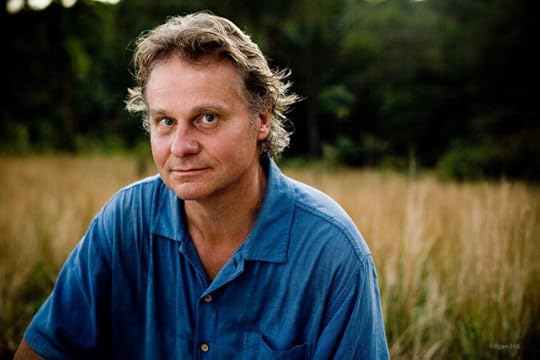
Author Edmund Wade Davis is a Canadian cultural anthropologist, ethnobotanist, author, and photographer.
Wade Davis:
I found the writing here to be very well done. Davis is a competent story-teller, and has succeeded in producing a book that is very readable; a rare ability among authors. Amongst scientists who write books; even more so. I always award extra points when an author writes with an effective, engaging style like this.
The Serpent and the Rainbow centers on the curious case of Clairvius Narcisse; a Haitian man who claimed to have been turned into a zombie by Haitian vodou, and forced to work as a slave.
Wade unfolds an interesting theory here, that I'll cover with a spoiler, to avoid giving anything away.
Wade details his journeys to Haiti in the pages here, and the insight this writing provides to the Haitian Vodou culture was incredibly interesting. Criticisms of Wade's theory aside, the book is well worth a read just for the accounts of his time in Haiti.
There was also a decent bit of writing near the end of the book that describes the Maroon uprisings, rebellion and eventually; the resulting Haitian revolution.
I enjoyed this one, and would recommend it to anyone interested.
4 stars.
“In Haiti the glass consists of the Roman Catholic church, the government, the National Police and army, the French language, and a set of laws invented in Paris. Yet when you think of it, over ninety percent of the people do not understand, let alone read, French. Roman Catholicism may be the official religion, but as we say the nation is eighty-five percent Catholic and one hundred and ten percent vodoun. Supposedly we have Western medicine, but in a country of over six million, there are but five hundred physicians, and only a handful of these practice outside of the capital..."
Haiti
Zombies
Voodoo
Secret cultures
I wasn't sure what to expect from this one, to be honest, but after reading its intriguing description and checking its aggregate rating, I decided to check it out. I'm glad I did, as the story told here was incredibly interesting.
Author Edmund Wade Davis is a Canadian cultural anthropologist, ethnobotanist, author, and photographer.
Wade Davis:
I found the writing here to be very well done. Davis is a competent story-teller, and has succeeded in producing a book that is very readable; a rare ability among authors. Amongst scientists who write books; even more so. I always award extra points when an author writes with an effective, engaging style like this.
The Serpent and the Rainbow centers on the curious case of Clairvius Narcisse; a Haitian man who claimed to have been turned into a zombie by Haitian vodou, and forced to work as a slave.
Wade unfolds an interesting theory here, that I'll cover with a spoiler, to avoid giving anything away.
Wade details his journeys to Haiti in the pages here, and the insight this writing provides to the Haitian Vodou culture was incredibly interesting. Criticisms of Wade's theory aside, the book is well worth a read just for the accounts of his time in Haiti.
There was also a decent bit of writing near the end of the book that describes the Maroon uprisings, rebellion and eventually; the resulting Haitian revolution.
I enjoyed this one, and would recommend it to anyone interested.
4 stars.

October 12, 2022
"Only, in Haiti, I realized, is it possible to drink rum and haggle with a god."
Non-fiction that reads as fiction.
The author's writing abilities are indisputable, he paints a vivid picture of his travels through the mysteries of Haiti. He mixes culture and science into a delightfully easy read. I inevitably got infected by his fascination with the natural world and Haitian culture. What I found most interesting turned out to be not the process of making "zombies", but the history of Haitian societies that can be traced through the struggles for independence all the way back to the African origins of its people.
Some of the (scientific) conclusions the author makes seem incomplete if not questionable but I guess the book can only describe a small part of the long process scientists go through when they do research.
On the other hand, the author is obviously proud of his abilities and achievements, and it is the only thing that might have really bothered me while reading.
All in all, an enjoyable and recommendable book.
Non-fiction that reads as fiction.
The author's writing abilities are indisputable, he paints a vivid picture of his travels through the mysteries of Haiti. He mixes culture and science into a delightfully easy read. I inevitably got infected by his fascination with the natural world and Haitian culture. What I found most interesting turned out to be not the process of making "zombies", but the history of Haitian societies that can be traced through the struggles for independence all the way back to the African origins of its people.
Some of the (scientific) conclusions the author makes seem incomplete if not questionable but I guess the book can only describe a small part of the long process scientists go through when they do research.
On the other hand, the author is obviously proud of his abilities and achievements, and it is the only thing that might have really bothered me while reading.
All in all, an enjoyable and recommendable book.
Displaying 1 - 30 of 550 reviews