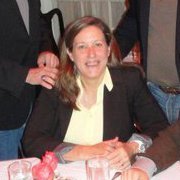
Była piękna i bezwzględna. Posiadała przenikliwy umysł i stalową wolę. Urodzona w Bukareszcie Vera Maria Rosenberg, już jako Vera Atkins została w latach 30. i podczas II wojny światowej najlepszą kobietą-szpiegiem nie tylko w wywiadzie brytyjskim. Dzięki wcześniejszym sukcesom trafiła do ścisłego kierownictwa Zarządu Operacji Specjalnych (SOE). Rekrutowała i wyszkoliła kilkuset agentów, w tym dziesiątki kobiet realizujących tajne zadania na głębokich tyłach wroga. William Stevenson stworzył poruszający obraz pracy agentów, którzy, słowami gen. Dwighta W. Eisenhowera, „skrócili wojnę o wiele miesięcy”. To zarazem książka, dzięki której Vera Atkins zyskuje wreszcie należne sobie miejsce w panteonie najwybitniejszych szpiegów XX wieku. Dotąd bowiem jej osiągnięcia, skrywane za zasłoną milczenia, pozostawały praktycznie nieznane.
To właśnie Stevensona uznała za jedyną osobę godną tego, by zgłębić i opisać jej niezwykłe życie. On także ze swej strony dotrzymał danego Atkins słowa i książkę o niej opublikował dopiero po śmierci Very w 2000 roku.
W ten sposób powstał niesamowity portret kobiety, której inteligencja, uroda oraz bezgraniczne poświęcenie stało się kluczem do odwrócenia kolei II wojny światowej.
Librarian Note: There is more than one author in the Goodreads database with this name.
William Stevenson was a British-born Canadian author and journalist. His 1976 book "A Man Called Intrepid" was about William Stephenson (no relation) and was a best-seller. It was made into a 1979 mini-series starring David Niven and Stevenson followed it up with a 1983 book titled "Intrepid's Last Case."
Stevenson set a record with another 1976 book, "90 Minutes at Entebbe." The book was about Operation Entebbe, an operation where Israeli commandos secretly landed at night at Entebbe Airport in Uganda and succeeded in rescuing the passengers of an airliner hi-jacked by Palestinian militants, while incurring very few casualties. The remarkable record in that pre-internet age is that Stevenson's "instant book" was written, edited, printed and available for sale within weeks of the event it described.
The more that I read about WWII, the more I live with the realization that it's a darn miracle that we're not living in some alternative world. Anti-Semitism was rearing its ugly head and countries didn't want to do anything to help one another. Then after the war, many nations including the United States and Britain didn't want to take in refugees. The number of times that I put this book down and sighed in exasperation probably equals at least a hundred.
The persistence of a small group of people in fighting against Nazi policies and the war machine is the focus of this book. In particular, "Spymistress" is supposed to reveal the true individual that was British spy, Vera Atkins. Unfortunately, too many people overshadow a woman that remains as mysterious as the Enigma code.
I tried to read this book and couldn't get past the first chapter. I found the author jumped around erratically depending on the paragraph, and it was hard to understand what he was talking about. I got so frustrated I didn't bother continuing. Vera Atkins may have been a great female secret agent in WWII, but you need a decoder to read her biography...
As a historian whose work looks at Anglo-American intell cooperation, I found this book to be melodramatic, problematic from a historical perspective as well failing to do Atkins justice. Atkins is one of the first women to hold a major position in a spy organization. She deserves more than this to do her justice. If you do not know much or anything about the Special Operations Executive and the Secret Intelligence Services, then you will be lost in this book. Just as with several movies done in the last few years (including the otherwise excellent King's Speech), Churchill Frederick Winterbotham, and others are given too much credit to early for various actions, there is a failure to appreciate late 1930s British public opinion, among other political and military factors. One would do better reading Sarah Helm's book on Atkins and her search for what happened to a number of SOE's female agents, a book that itself has issues, but does better at looking at her subject objectively. Stay away from Stevenson, both for this and for his work on William Stephenson, a book entitled A Man Called Intrepid.
Without doubt Vera Atkins was an incredibly brave and determined woman who fought tirelessly in the war against Nazi Germany.
Born in Romania to Jewish parents, in 1937, with her mother (her father died in 1932) she made her way to Britain, spurred on by the changing political picture in Europe: she did more than, as this author most energetically proclaims, just ‘her bit’.
She did, according to this most energetic author, return to Europe just prior to the outbreak of the war - putting her life on the line - to rescue a number of Polish cryptologists: Henryk Zygalski, Marian Rejewski, Jerzy Różycki. This undoubted risky mission must be given a little context.
By 1932, the Polish code and cipher boys and girls had cracked the German’s Enigma signals, reconstructed an Enigma machine, and shared their success with French and British counterparts.
This fine and honourable effort on behalf of the British was Vera Atkins’ first mission: ‘to locate and escape from Poland the named cryptologists’.
I doubt anyone would deny that such a brave and determined individual did not try with every once of effort to fulfil her mission, but, in truth, (the truth being a most important word to hang onto when reading this author’s account of events) she failed. IN FACT - the Polish Cipher Bureau handled the escape to Romania of these cryptologists, where Gustave Bertrand, a French Intelligence Officer, transported them to France.
In the work, ‘Enigma: How the German Machine Cipher Was Broken, and How It Was Read by the Allies in World War Two’, Marian Adam Rejewski, (a Polish mathematician) recalling his experiences, fails to mention having met or even heard of Vera Atkins.
It’s about now that I’m getting to suspect that - once more - a journalist has ‘unfortunately’ allowed the truth to NOT get in the way of a good story (a story that would have been equally as good if the truth was told).
Shortly after her venture into Poland, (and I do not detract from her courage in doing so) Vera Atkins gets a job as a secretary in ‘F Section’ of SOE. And, according to Sarah Helm, in her work, ‘A Life in Secrets: The Story of Vera Atkins and the Lost Agents of SOE’, “Vera Atkins was soon made assistant to section head Colonel Maurice Buckmaster, and became a de facto intelligence officer.”
There remains a question hanging over ‘F Section’ - Why when strong evidence made it clear that a network controlled by F Section had been compromised (a radio signal was sent without the required security password. Doing so was the accepted method of informing control that the network is blown) did F Section continue to send agents in? Many lives were lost as a result of this error. An error which some attribute to Vera Atkins’ negligence.
I see this work as an effort to put Vera Atkins’ on a pedestal.
This is yet - once more - a ‘New York Times Bestseller’, the author is avid in claiming to know the subject and I feel attempts to put everyone, other than Vera, into the shadow: ‘without Vera, SOE would have collapsed, ceased to be of any use to the war effort’.
I’m sure all agree, Vera Atkins and all in SOE should be recognised.
Should you want to more fully understand the workings of the SOE and in particular ‘F Section’ and even more so those who controlled operations, please read, ‘Security and Special Operations: SOE and MI5 During the Second World War’, Christopher J Murphy: 2006.
I do wonder if William Stevenson (a British born journalist and author) knew of Christopher J Murphy’s work.
This is painful! The bromide about a thousand monkeys locked in a room with a thousand typewriters may be totally in effect here. There is no narrative, there are only real and alleged facts randomly strung together with no discernible connective tissue except, perhaps, vague segmented periods of time. I am to surmise that Ms. Atkins was England's premier super-spy even pre-WWII feeding information to both William Stephenson's internation spy apparatus and ultimately to Winston Churchill himself (to whom she gave private briefings). Ms Atkins than ran the whole French SOE operation after the war started. Okay, why am I suppose to believe any of this except for Mr. Stevenson's fevered imagination (note that many of the provided footnotes cite "private conversations"?
I give up - I can't finish this mess (over 50% "read"). My head is going to explode if I keep tying to decrypt this gobbledygook. This is the poorest written book I think I have tried to read.
Vera Aktins was a force of nature and the S.O.E's French sector's spark plug, most ardent defender and its' field agents avenging angel - her memory deserves much, much better than this disorganized, poorly written and, to a large degree, factually dubious morass of randomly mashed together string of words!
This author has published several books on World War II including the commercially successful “A Man Called Intrepid”, which has been taken to task by several critics for combining fact and fiction. In this one, Stevenson purports to tell the story of Vera Atkins, the woman he says was the greatest female agent during the war. Vera played a dangerous role, recruiting, training and sending secret agents to occupied France. These dedicated men and women risked their lives using guerilla tactics to distract and thwart Germany’s progress from its planned invasion of Great Britain. Behind enemy lines, they linked up with resistance fighters, destroyed vital targets, helped allied pilots escape capture and radioed important information back to London.
It is clear Stevenson was impressed by Vera’s quick mind, mastery of languages, incredible memory, dedication, and fierce ant-Nazi stance. But his account gives no personal chronological history of the work she did, reveals little of her various jobs and lacks a verifiable account of what she accomplished. In Stevenson’s manuscript, she seems to be here, there and everywhere, always involved in important decisions with access to everyone from hall porters to captains of industry. One can only wonder what is real and what is not real in this narrative.
Stevenson insists he was chosen by Vera as her biographer. But even that is in question. Throughout her life Vera refused to talk about the work she did during the war years and after her death in 2000, her papers were released to her niece Zenna Atkins. Zenna, the executor of Vera’s estate, says there is no mention of Stevenson in any of Vera’s papers which she turned over to Sarah Helm a British author, to write a biography. Stevenson on the other hand, insists he and Vera were close friends and confidantes and he details many conversations he says he had with her. All of which leads one to question Stevenson’s assertion that he himself was Vera’s chosen biographer and the only person she wanted to tell her story.
But even so, Stevenson in no way gives us a scholarly history. His narrative is full of holes, gaps in chronology and perhaps even in truth. The notes that should buttress Stevenson’s manuscript are scant and many notations are of “conversations with, recollections of or interviews with”. Some even refer “notes” from people he has known. Most are secondary rather than primary sources and some events are not referenced at all. At times he even suggests he knows what Vera was thinking. Granted the spy world insists on few if any documents, but even recently released official government files, which Stevenson says he had access to, are not used to ground his assertions. He also uses frequent opportunity to refer to what he calls “our Mutual Friends”, people who required anonymity and who didn’t talk when they didn’t have to. Meaning once again, a source cannot be verified. So in approaching this manuscript one must be wary of the complete truthfulness of its content.
One wonders where the editors were in this entire process. It is not just the facts that need to be checked, but the entire narrative needs some solid fraamework. It is confusing, jumping periods of time and place so the reader never knows for certain what is going on in the overall scheme of things. And there is “a cast of thousands” of individuals who jump into and out of the manuscript, disappearing and resurfacing for reasons which are never clear. It is tough going, slogging through and trying to make any logical sense of it, or trying to connect one chapter with the next.
There are a number of different intelligent organizations to keep straight in Britain, France, Germany and the United States. Interestingly and sadly, many of the British agencies were competitive with one another. They distrusted and even hated each another and refused to share their information. Given the terrorist attack on 9/11 in New York City’s Twin Towers and the results of the investigations that followed, it seems lessons have not been learned and history is repeating itself.
Stevenson reminds us how many in Britain remained indifferent to events in Europe at the time. Most London newspapers cut foreign news to a few lines on the back pages, spending more space on news coming from its Commonwealth countries. There was no public outrage if and when news coming from British correspondents in Germany hit the papers. Rumours about the legal disposal of the mentally ill and less than perfect babies or brutal work camps did not seem worthy of mention. And Britains seemed unmoved by Germany’s huge production of warships and submarines. Nor was the Vatican any help, as the bishops advised the Pope there were no grounds to fight Nazism. In fact many parliamentarians, the London elite and even the royal family were pro-German and believed they could work with Hitler. They felt he was their ace against Stalin and Communism which they feared more than Nazism. They seemed to be caught in the quandary of being fearful of another war and at the same time fearful of preventing it.
I really enjoy books about strong women but this one is a huge disappointment. It is full of several interesting stories but one can never be certain what is fact and what is fiction. It is poorly written and could have been so much better if the editors had taken a firm guiding hand.
Stevenson jumps around; he jumps around too much and the book is not linear. He also is vague in places and seems not to have anything but a sense of worship for his subject. Atkins always feels like she is in the background, not the foreground. At times she seems over romanticized
I did learns some things, though. I did, however, find it interesting that Stevenson left out the fact that some of the female SOE members who were killed were raped first, at least as far as Atkins was able to determine.
This entire review has been hidden because of spoilers.
I must admit that I didn't finish this book. I really tried. I was eager to read it. However the writing is so disjointed that it was hard just to make sense of a paragraph. There was no flow at all. Every sentence seemed to have a new idea in it, so it was hard to figure out what was going on with whom when. A real pity because I truely enjoy biographys of daring women.
I can generally push through when a book is slow or complicated, but I could not get past the first 50 pages of this book. It is so disconnected and all over the place that it is hard to keep track of what is going on. Jumping locations and time periods is the worst part In the beginning. I love history books about WWII and was really looking forward to this. It is a shame it turned out to be a disappointment.
This book should have been fascinating. It covers the shadowy Special Operations Executive during World War II and its spymaster, the secretive Vera Atkins, a Jewess born in Romania who became more English than the English.
However, I had to slog hard to get to the end. It is so disjointed and cryptic in places that I found myself reading passages again to try to understand them. The author introduces what look like interesting topics (e.g. his own father stuck in a house surrounded by Germans) only to drop them without further explanation. This made it a very frustrating read.
Certain people are introduced with little explanation of who they were. On the other hand, almost every time Admiral Canaris' name is mentioned we are told that he was chief of the Abwehr. This book needed rather more diligent editing than it plainly received.
And there are some strange omissions. We are told almost nothing of how Atkins recruited the majority of the operatives, and very little about the recruitment and training processes.
This is a pity because I have a particular interest in this area. However, the book has provided me with a number of topics for further research, which I hope will shed more light on them.
A fantastic read about largely forgotten heroines of WW2. The twists and turns of the story will leave you amazed at what Vera Atkins managed and looking for other books to add to the life stores of characters such as Violette Szabo.
Four stars as the book could benefit for an editor. Stevenson revisits stories and fates repeatedly in a way I found a bit confusing.
This book was an eye-opener about the intelligence and counter-intelligence operations during World War II. What really surprised me was the pro-Nazi feelings of British royalty and the anti-semitism within the British government and all governments within the allies. The other surprise was how all the intelligence agencies seemed to be in competition with each other and how agents were betrayed by factions in their own governments. The book was hard to read, because of the number of different intelligence groups and a large number of people it tried to cover. It took a lot of concentration to keep things straight. There was also plenty of double agents and multiple identities. Vera Atkins was born Jewish and kept it secret in case the British government she worked for turned against her. The book was also hard to read in terms of what the Gestapo did to captured agents. The torture and deaths of agents was horrific. Plus many of the agents were women just out of high school who wanted to make a difference. It's hard to read how their lives were ended so brutally, sometimes being betrayed by the British SIS in order to confuse the Gestapo. Another example of the sacrifices the Greatest Generation made to free Europe from Hitler. The book should be read by any WWII buff or anyone interested in the resistance.
This book is an unreadable mess. Don’t waste your time.
There were a few interesting tidbits, but it’s not worth the time or the frustration of trying to negotiate the author’s shocking lack of narrative ability. Good grief.
This book reads as though the author threw in every detail - fact or rumour - he ever came across, just for the sake of including it. This style has the unsettling effect on the reader of constantly feeling as though you’re about to get the story around that detail, the reason for its inclusion, only to have the topic suddenly change entirely, with that original subject never to be addressed again.
The writing is disjointed and circular, with wild lateral leaps from topic to topic between paragraphs - and sometimes between sentences. And ‘facts’ are used as justification for conclusions that are only tangentially related in terms of subject matter.
It took me nearly a year to read this (for a reason) and I finished it entirely out of spite, just to get it the hell off my ‘currently reading’ shelf.
Dense and at times, dull reading. It did not meet my expectations as I was primarily interested in the life of the Spymistress - Vera Atkins - and her band of female secret agents. In retrospect, I should have picked up A Life in Secrets: The Story of Vera Atkins and the Lost Agents of SOE by Sarah Helm.
Stevenson's Spymistress devoted pages to events and incidents around the time period, dwelled on the issues of Churchill vs. Chamberlain, appeasers vs. anti-Nazi supporters, and at times, document episodes of downed airmen's escapes from barn to barn to supporters' homes and over the Pyrenees to Spain etc. The number of names and personalities mentioned in this book is probably equal to the number of pages in the book itself. A reader can easily get mired into the various characters and their activities etc. While interesting, my interest was more narrowly focused.
What I gleaned about Vera Atkins was tantamount to decoding ciphers and messages to get at the gems within the book. Here are a few tidbits:
Vera Atkins is of Jewish ancestry. Born Vera Maria Rosenberg in Romania, she changed her name and adopted an Anglicised version of her mother's maiden name - "Etkins". Her father Max Rosenberg died when Vera was only twenty four but he prepared his daughter well. Max was astute and passed on his wisdom to his daughter. Max once lived in South Africa where he invested in the diamond mining business but scuttled out of there when the economy collapsed (1902) returning to Romania where he lived in a mansion along the Danube while investing in "the fur trade, timber, and Danube riverboats". His other investments in London enabled Vera and her mother to live well in England. By the time of his death, he was bankrupt.
Max Rosenberg hired "the best horseman to teach Vera to ride, the best marksmen to teach her to use a gun, and the best dance teachers. He sent her to secretarial college in London...finishing schools in France and Switzerland - which later led to friendship with the widowed mother of two schoolboys destined to become kings." Max's aim was "to give Vera the sophisticated air that got upper class people through all borders". Max told his daughters to keep a tight lip and that boldness favored the brave. Words that Vera lived by throughout her life. Vera's mother affected the ways and mannerisms of an English gentlewoman and blended in with her English neighbours who never knew about her Jewish ancestry.
Max's famous words to Vera was "Become an English churchgoer and a Bright Young Thing". Vera witnessed firsthand how Jews were perceived and she saw her father "weep over the Book of Lamentations and the centuries of Jewish suffering." Undoubtedly her early years have a profound impact on Vera and was at the core of her tenacity to fight the Nazis.
Vera met William Stephenson later dubbed The Quiet Canadian who ran a spy agency with influential contacts including both Churchill and Roosevelt. He is credited for influencing American public opinion from an isolationist position to America's subsequent involvement in the war.
Stephenson saw motive and grit in Vera; he admired her strong organizational aptitude and an uncanny ability to draw out information from others. He enlisted her and introduced her to Count von der Schulenburg who became her lover and contact for information which can be easily passed on to her without detection as the Count was in the Diplomatic service and had strong anti-Nazi views. She also became the lover of a British Pilot dubbed "Stringbag" who actually taught Vera how to fly his Gypsy Moth biplane. Vera had decided however that marriage and children may impede her straight thinking and focus.
Vera was diligent and a hard worker. She equipped herself with knowledge and skills critical to the role she was in. She sharpened her skills at the Marylebone Ladies' Rifle Club. Stephenson believed in non-traditional methods for the success of the missions - use of assassins, false identities, and acts deemed terrorism and outside of war protocols. A methodology adopted by SOE (Special Operations Executive) to which Vera belonged.
Another close contact of Vera was Colin Gubbins who was very committed to the Polish cause. Vera was given papers which would offer her protection as a prisoner of war if she fell into German hands. Vera was charged to secure information and recruit for the anti-Nazi cause. And here is where I would have liked to read more details on her talent-spotting and how she enlisted some of the female agents. Vera knew that from among the Jews who escaped or from downed aviators who escaped or folks who have been charting passages for Jews onward to Palestine, she may find a crop of individuals who can map out safe houses and contacts or get into the action of sabotage and spying.
Some of the courageous women who Vera enlisted include:
Krystyna Skarbek - a Polish countess and a woman "very much like Vera, keeping her eyes on dangerous objectives... smuggling in weapons and equipment." She "loved men, and under her spell they would do anything for her."
Noor Inayat Khan - an Indian princess and the daughter of the last descendant of the Mughals. Brave and ferocious. Suggestions that she and a few others were betrayed.
Sonia Olschanezky, Vera Leigh and Diana Rowden all died at a concentration camp. Madeleine Damerment had parachuted straight into the hands of the Gestapo imitating all the correct signals. Eighteen others did the same thing and none survived. It was clear that the network was comprised and messages going to London without a security code was left undetected.
Information on these women were not as detailed as I had hoped for so I finished reading the book still wishing for more information on the likes of Marie "Missie" Vasilchikov, Violette Szabo (sadly executed at Dachau), Virginia Hall (who established a reliable stop along an escape line), Odette Sansom (also a mother of two daughters), Rolande Colas, Varian Fry and others. I was also hoping for more information on the controversy over the destruction of files and information, of Vera parachuting girls to their deaths, and the issues of the compromised messages left undetected.
Vera Atkins took her father's advice and remained tight-lipped throughout her life. She was recognized by the French in her role to free France and her mentor Stephenson recognised her as the greatest spymistress. Whatever allegations she had to deal with, I am sure that Vera was happy with her life as she succeeded in stymieing Hitler, in freeing Jewish peoples of hateful stigma and she lived to see Jewish people as progressive and successful and often very wealthy, as well as a powerful state of Israel today.
Author William Stevenson supplied copious notes surrounding his research. His book was just okay. My interest was more focused so the detailed context he provided about De Gaulle, the rivalry between SIS - the British Secret Intelligence Service and the SOE - Special Operations Executive, and the politics in England was too dense. I understand the importance of creating the context for the story line but it became too tedious; could have been better condensed. Three stars.
O carte despre război, spionaj, suferință, inteligență umană. M-a ținut prinsă în anii de odinioară cu sufletul la gură așteptând să aflu cât mai multe detalii despre viața ei.
O carte perfectă pentru iubitorii de istorie și nu numai.
This was very disappointing. After 350 plus pages, the only thing I know about Vera Adkins is: she was attractive, highly intelligent, and worked for the SOE. She had a number of contacts scattered across Europe, the Middle East and India. How she organized and dealt out assignments is still a mystery. I know about Chuck Yeager after he was shot down then the subject of this non-fiction story. I also learned a lot about the following women: Virginia Hall, Krystyna Skarbek. Their exploits and behind the line activities of sabotage are fascinating.
I guess if you want a story that provided useless information about the history of Great Britain, France, to be famous authors, who is going to head the CIA (OSS) after the war and host of other non-essential facts, you might like this.
Let us also not forget the underlying story of getting the cryptologists out of Poland. They did crack the three-wheel enigma machine. And what of Poland being a sovereign country after the war? Oh yeah, Stalin’s going to be all for that!
Who will like this? Good question. There are some excellent nuggets of information and history scattered through this conglomeration. I guess, if you want to know how turbulent the political atmosphere was in White Hall and how infighting tried to derail Churchill’s attempts at pulling the country together and fighting the Germans and to a lesser degree, the spread of Communism, it’s not a bad read
Though there is certainly a story to be told here, and an amazing one, the author can’t seem to tell it. Though there is certainly a great deal of information, there is no overarching structure or coherence. Maybe there are too many people, too many stories to tell simultaneously. However, between the author and the editor, someone should have recognized that such a data dump approach would not satisfy a reader looking to know more about special ops during WWII. Did I learn something? Yes, but it was a struggle. I finally found myself just powering through. There were no helpful transitions between stories or events, little sense of continuity from paragraph to paragraph, and a prose style that is difficult, at best, to follow. Still, Vera Atkins has a place in my hall of heroines now. At least there’s that.
This is fascinating, but unfortunately the author (William Stevenson) seems to be writing in code. It may be a code understood by a history buff, but I'm not convinced that this is the case. He does make the point that Vera Atkins was an amazing, brave and potentially brutal spymistress. He also gives telling details of the political and personal challenges she faced, not the least of which was the lack of support at Whitehall for saving Jews in Eastern Europe, and the dubious motives of people like FDR, who resisted immigration of 'wailing Jews'. Stevenson's vague references, for example to 'agents' without noting which side these particular agents were working for, made it tough to figure out parts of this book. Did anyone else find it obscure? Is Intrepid better?
This is the third book about female spies I’ve read and it was excellent. Vera Atkins was the type of woman that would drive most modern feminists mad. She never tried to elevate herself, yet was one of the most important women in WW2! Extremely intelligent and born a Romanian Jew, Vera understood what was at stake for the European Jews and for the continent at large. This is a must read for anyone interested in history and the vital role women played in fighting the Nazis. After reading this book, I suggest A Woman of No Importance about Virginia Hall (who is mentioned several times in this book), and Nancy Wake. These women outshine any modern day feminist with grace , guts, and grit!
Thinking of how to describe the book brings to mind the small shops in Manhattan that one saw in the eighties, so crammed with beautiful things, standing out on the sidewalk looking at the window of one was quite like being in a museum.
An extraordinary wealth of vital information, usually pushed under rugs, is crammed in this book, in a way that not only keeps one alert while reading - or else one can miss a vital detail in a half sentence or so - but makes it not an easy read. Easy it's not, worthy of being read by everyone it definitely is, for the many intricate layers of truth veiled in the usual story told about the era.
By the end of it much that is for decades locked away in secrecy from public gaze or pushed under the rug is exposed, including Stalin's refusal to allow allies help for Poland and the Germans sinking British convoys for Russia due to USSR deliberately using codes known to be broken by nazis, Vichy officials following orders for extermination of Jews in thousands even after Normandy invasion, German forces burning alive whole villages of france and hundreds of people imcluding children of every age, and allies ignoring repeated messages about extermination camps throughout Europe that could have been easily forced to stop work, much of this because the British or French officials concerned were pro Nazi or antisemitic or agents working for Stalin.
What comes through above all, halfway through the book, is just how much of a lie is the talk about the Cliveden Set, even if all true - for, it wasn't a small set that was pro Nazi and looking for peace with them even through the battle of Britain, it was most, or at least much, of the aristocracy, including the royalty and not just the ex- king but the king too, and in all likelihood the Dowager queen as well. She is mentioned in context of a tea and a conversation that's between appeasing and pro Nazi.
But the detail that strikes one as the most prominent and pushed under rug everywhere else, is the mention of "Duke of Coburg who was pro nazi", which stops one in tracks and gets one searching for what they mean, since its in context of the British Royal family. Turns out, it was Charles Edward, the son of Prince Leopold who was the fourth son of Queen Victoria, whose sister Princess Alice was Duchess of Athlone and in Canada during WWII with her husband who was appointed the Cicero there, and they hosted the various conferences of allies including Churchill and FDR.
Charles Edward though was not just a sympathiser but an active Nazi, involved in S.A. and aware of the genocides at concentration camps; his sister and brother in law pleaded on his behalf with U.S. authorities, travelling to Germany post WWII from Canada for the purpose, but the request wasnt granted. However, he received an indictment and sentence on a lighter charge since his daughters son was set to inherit the Dutch throne eventually, was impoverished as a result, and saw the coronation of his first cousin's daughter Elizabeth only in a theatre in Germany where he lived, whether because uninvited or other reasons.
It wasn't the Cliveden Set that was exceptional, it was Churchill who stood up for truth and right and fought for it, with general public on his side.
What's worse, the officialdom was aware of the genocide, but carefully pushed it under the rug, and that makes one wonder, was that how Divine Justice brought it about that the sun did finally set on the empire - and how! ............
The preface brings one awake.
"Vera Atkins was the brilliant, highly effective leader of a select group who fought in secrecy against the Nazis in occupied Europe after the fall of France in 1940. These brave young men and women had volunteered for Special Operations Executive (SOE), improvised at this time of greatest peril by Winston Churchill, the last hope of a country whose leaders he had tried for years to awaken to the growing danger of Nazi Germany. Long out of office, he suddenly—“almost too late,” he remarked—became prime minister on May 10, 1940, at which point he had to confront those in Whitehall who sought to appease Hitler and make a separate peace. Even loyal staff officers in the War Office of Churchill's government resented the secrecy surrounding SOE and feared that its agents’ violent actions against the enemy were incompatible with democratic traditions, “offending international law and the concept of habeas corpus.” To these niceties, the utterly pragmatic Churchill responded by instructing the British chiefs of staff “to develop a reign of terror to make the lives of German occupiers an eternal torment.” That message also gave Vera Atkins's SOE a license to conduct her campaign in occupied France as her extraordinary mind and steely resolve dictated.
"Churchill's hope after he became prime minister was that, sooner or later, America would join England in opposing the formidable Nazi war machine, for despite his indomitable public figure and ringing statements, he was far from sure England could win alone. His relations with President Roosevelt were good, but as the 1940 election neared, Roosevelt warned his friend that antiwar sentiment in the States was high, even overwhelming, which he could not ignore. In that election year Roosevelt—and the American people—were also far from convinced England would win the war. To get a better picture, FDR sent his trusted confidant William J. Donovan, the future head of OSS, to London to assess the situation. There Donovan was put in contact with Vera Atkins. She so impressed him that he reported back to the president his strong impression of her, and Britain's, courage and his conviction that the tide would be turned. Thus it is fair to say that, in addition to her accomplishments as Britain's Spymistress, she was also a key factor in convincing the Roosevelt administration of the Allies’ ultimate success.
"SOE was Churchill's desperate attempt to demonstrate that there was life in the old lion yet and, indeed, to make life “an eternal torment” for the Nazis, who after their blitzkrieg attacks across continental Europe were preparing to carry out Hitler's Directive 16 and invade England. SOE's mandate from the start was to sabotage, burn, harass, and kill the enemy, “to set the continent ablaze.” Its numbers were strikingly few. Of 480 agents in the French Section, 130 were tortured, and many were executed in shocking circumstances. Despite their heavy losses, these men and women, over the four long years of German occupation, wreaked havoc on the Nazis throughout the country. With the growing help of the French Resistance, they cut phone lines to force the Germans to communicate by wireless (so Bletchley could intercept), blew up bridges and tunnels, and derailed military trains. As this book shows, at the time of the Normandy invasion on June 6, 1944, they were so effective in harassing the German divisions rushing from the south of France and the Eastern Front to reinforce Normandy that they slowed down their arrival long enough, perhaps, to have turned the tide of the war.
"In prewar Europe, Vera had already been working against this ruthless enemy. She was aided in this clandestine effort by William Stephenson (Intrepid), a Canadian businessman who, together with some other imported North Americans, had early sensed the dangers inherent in Hitler's rise to power, and formed in New York the British Security Coordination (BSC) office. Meeting Vera first in Bucharest and later in London, Stephenson was so impressed by her mind, her mastery of several languages, her dedication, and her fierce anti-Nazi stance that he sent her on fact-finding missions to several European countries, secretly reporting her findings to a few trusted souls in Britain. Together they supplied Churchill, then in his political wilderness, with facts about the growing Nazi threat and the sorry neglect of UK defenses. These facts were ignored by most members of Parliament before the outbreak of World War II on September 1, 1939, when the first German blitz quickly subjugated Poland. A fierce Polish anti-Nazi resistance arose from the ashes to inspire similar resistance movements in other German-occupied countries. Vera immediately saw that France, just across the English Channel, would soon be fertile ground for her agents.
"Despite her very British name and demeanor, Vera was actually Romanian Jewish, born Vera Maria Rosenberg in Bucharest. In England, this put her at constant risk from the Alien Act of 1793 and the Official Secrets Act, which criminalizes the publication—even the republication—of certain kinds of information deemed to be a security risk. She took the name Vera Atkins, derived from her mother's maiden name, Etkin, to avoid detention as an enemy alien. Into her old age, she would dance and make merry with SOE survivors who knew her only as Miss Atkins, who honored her for superior qualities of intellect and loyalty, and who never talked of their wartime work until SOE came under attack by postwar critics.
"Colonel Maurice Buckmaster, who had worked alongside Vera, was thunderstruck when in October 1958 a book entitled Double Webs was published. Its author, Jean Overton Fuller, claimed that SOE's air movements officer in France, Henri Dericourt, had actually been a double agent and that SOE agents were deliberately sacrificed “to draw the Gestapo away from still more secret operations.” On November 13, 1958, Dame Irene Ward, a member of Parliament, proposed to table a motion calling for an Official Secrecy Act Inquiry into these and other allegations of SOE incompetence. She was persuaded not to proceed by then prime minister Harold Macmillan, who said an official history would be commissioned. This appeared eight years later, in 1966, written by M. R. D. Foot, with details approved by the government and published by Her Majesty's Stationery Office.
"Buckmaster released a public statement that said in part: “The events which took place more than twenty years ago have left their mark on many people who would be glad to have left the dead to sleep in peace (allowing the results of their bravery to speak for themselves). …We have been called amateurs. It is true that SOE was an ad hoc organization for which no blueprints existed before the war…. The most appalling accusation made against us is that we DELIBERATELY sent out agents into the hands of the Gestapo” to be tortured into disclosing misleading information. “I flatly deny such monstrous and intolerable accusations…. The French Resistance, in the words of General Eisenhower, ‘shortened the war by many months.’ The world owes to the men and women of the French Section [of SOE] a debt which can never be fully discharged.”
"All her life, Vera had fought running battles with bureaucrats and military chiefs who disapproved of SOE “skullduggery.” She had scuffled continuously with the SIS, whose European networks had been compromised by the German kidnapping of SIS agents. Some SIS mandarins were actually dedicated to the destruction of SOE. After the war Vera held her tongue, even more conscious of her vulnerability in the Cold War hunt for Soviet-run agents with Jewish and foreign backgrounds.
"During her lifetime Vera was publicly silent. She had bitter memories of the SIS effort from 1940 through 1945 to shut down SOE while her agents fought valiantly abroad. Immediately after World War II, SOE's domestic enemies finally succeeded in shutting it down. Then, early in 1946 a mysterious fire gutted the top floor of SOE's Baker Street headquarters, destroying most of its records. According to Angus Fyffe, a veteran of SOE and its record keeper, those records contained political time bombs waiting to explode. Vera and her colleagues had fought doggedly during the war to maintain their independence from the War Office and official bureaucracy. Once the war was over, Vera withdrew to her home in Winchelsea where she lived quietly—and silently—for the next half century.
"Vera lived long enough to see Churchill's foresight vindicated yet again. It justified her silence. Why give away secrets to satisfy short-term public curiosity, secrets about underground operations and improvised explosives and weapons that a new enemy could adopt? She still had reservations about the potential power of secrecy laws, but she never believed, as many did when the Cold War ended, that we had reached the end of history. Churchill's book The River War, published in 1899—and her own needless difficulties in fighting domestic enemies—convinced her that secrecy laws could be held in reserve to deal with exceptional danger. She knew that parliamentary procedures could go hand in hand with secrecy, as her hitherto untold story here reveals."
If the preface is as thrilling as this, the rest must be unimaginably vital. ............
The introduction, plunging one in London in midst of the blitz, with a ten year old boy scout using his bicycle to carry messages to and from important people when phone lines aren't working due to bombing and he has to avoid craters on road, is far from disappointing after the preface - and this boy introduces us to Vera Atkins.
"The bombing of London was at its peak in the summer of 1940. I bicycled messages between East Ham police station and emergency posts if phone lines were cut. My Boy Scout uniform opened a way through cordoned streets where rescue workers dug for survivors. Hitler's war machine had destroyed France and was poised to cross the English Channel. I had seen from the sergeant's procommunist Daily Worker that the chairman of the U.S. Senate Foreign Relations Committee, Key Pittman, said Great Britain faced certain defeat and “must capitulate.” The sergeant never read the popular papers, insisting, “They're run by pro-Nazi press barons.”
"The address was in London's West End. Piccadilly, Marble Arch, and Buckingham Palace had been hit in the night, as well as the Park Lane mansion of the Marquess of Londonderry, a former air minister who wanted an alliance with the Nazis. Of this, I knew little. I was a last-resort means of communication: a small, bare-headed, bare-kneed boy, bicycling past overturned electric trams and their drooping power cables still spitting blue sparks between mangled metal tracks. Drivers of red double-deck buses bravely tried to keep to their peacetime schedules, and some nosedived into pits that yawned suddenly when time bombs exploded. In one crater, the bus to Ladbroke Grove creaked and groaned like a dying dinosaur."
The boy met Vera Atkins, and the man she took him up to meet, who sent a message to his mother through him to inform her that the boy's father was safe, returning home from France, and that neither of them should say any of it to anyone else.
"My reunited family moved to 109 Bletchley Road, Bletchley, home of the ULTRA code breakers who sat in cold wooden huts, struggling daily to solve the ever changing ...
Spymistress by William Stevenson I was going to give this book four stars, mostly on account of the author’s incredible level of research, although there are some inaccuracies, particularly where countries other than Britain are concerned. Perhaps it only deserve a three stars. One gets the impression that Spymistress, the story of Vera Atkins, was written for historians. The general reader, whose knowledge of the prewar and wartime era may lie somewhere between moderate and superficial, will have trouble making heads or tails of the sheer volume of names – many totally unknown – and the secret and not so secret deals and machinations that took place in the vast spy network of this period. The work would benefit from adding a paragraph or two of explanatory notes after each paragraph of facts, rather than the sparse notes in the end pages, which are often read out of context. To come back to Vera Atkins, she had an exceptional childhood, with a father who recognized her intelligence and, from an early age, talked with her as a responsible adult and encouraged her to develop critical thinking. She grew up surrounded by high-powered people involved in government and British intelligence gathering. William Stevenson gives a detailed account of the interwar years, and the reader is left to deduct how it shaped Vera’s character, because the author does not do so. It is also a window opened on why and how WWII started, and how vital intelligence was often ignored, leading to countries being woefully unprepared for war. The remarkable description of the political games to which Vera was a witness when not directly an actor provides valuable insights to understanding the war in Europe and the factions that divided governments, both in the U.S. and in Britain. The book is packed with information, though I'd like to caution the writer/reader to double check on facts. Although Vera is featured, there is very little about how she actually went about her prewar missions, and in that sense the book falls short of being a biography. The reader really wants to know how she managed to get on a train to B in the upheaval of Poland invasion, but all we get is a scant “she joined the team in B”. Statements like: “she saw the Reichsicherheitshauptman (RSHA) as a personal enemy” leaves the reader wanting to know why and how did she come to that conclusion. Only when the war comes to British skies, and Vera’s role becomes more prominent, does the reader reconnect with her well-known SOE image. At the same time we are left wondering how and why did all this take place. The author appears to ignore the researcher’s (and writer’s) dictum of Who? Where? When? Why? and How? The author could be opened to the accusation of exploiting Vera Atkins' SOE’s reputation and her lovely photo. He does not really deliver what the reader is led to expect.
Thinking of how to describe the book brings to mind the small shops in Manhattan that one saw in the eighties, so crammed with beautiful things, standing out on the sidewalk looking at the window of one was quite like being in a museum.
An extraordinary wealth of vital information, usually pushed under rugs, is crammed in this book, in a way that not only keeps one alert while reading - or else one can miss a vital detail in a half sentence or so - but makes it not an easy read. Easy it's not, worthy of being read by everyone it definitely is, for the many intricate layers of truth veiled in the usual story told about the era.
By the end of it much that is for decades locked away in secrecy from public gaze or pushed under the rug is exposed, including Stalin's refusal to allow allies help for Poland and the Germans sinking British convoys for Russia due to USSR deliberately using codes known to be broken by nazis, Vichy officials following orders for extermination of Jews in thousands even after Normandy invasion, German forces burning alive whole villages of france and hundreds of people imcluding children of every age, and allies ignoring repeated messages about extermination camps throughout Europe that could have been easily forced to stop work, much of this because the British or French officials concerned were pro Nazi or antisemitic or agents working for Stalin.
What comes through above all, halfway through the book, is just how much of a lie is the talk about the Cliveden Set, even if all true - for, it wasn't a small set that was pro Nazi and looking for peace with them even through the battle of Britain, it was most, or at least much, of the aristocracy, including the royalty and not just the ex- king but the king too, and in all likelihood the Dowager queen as well. She is mentioned in context of a tea and a conversation that's between appeasing and pro Nazi.
But the detail that strikes one as the most prominent and pushed under rug everywhere else, is the mention of "Duke of Coburg who was pro nazi", which stops one in tracks and gets one searching for what they mean, since its in context of the British Royal family. Turns out, it was Charles Edward, the son of Prince Leopold who was the fourth son of Queen Victoria, whose sister Princess Alice was Duchess of Athlone and in Canada during WWII with her husband who was appointed the Cicero there, and they hosted the various conferences of allies including Churchill and FDR.
Charles Edward though was not just a sympathiser but an active Nazi, involved in S.A. and aware of the genocides at concentration camps; his sister and brother in law pleaded on his behalf with U.S. authorities, travelling to Germany post WWII from Canada for the purpose, but the request wasnt granted. However, he received an indictment and sentence on a lighter charge since his daughters son was set to inherit the Dutch throne eventually, was impoverished as a result, and saw the coronation of his first cousin's daughter Elizabeth only in a theatre in Germany where he lived, whether because uninvited or other reasons.
It wasn't the Cliveden Set that was exceptional, it was Churchill who stood up for truth and right and fought for it, with general public on his side.
What's worse, the officialdom was aware of the genocide, but carefully pushed it under the rug, and that makes one wonder, was that how Divine Justice brought it about that the sun did finally set on the empire - and how! ............
The preface brings one awake.
"Vera Atkins was the brilliant, highly effective leader of a select group who fought in secrecy against the Nazis in occupied Europe after the fall of France in 1940. These brave young men and women had volunteered for Special Operations Executive (SOE), improvised at this time of greatest peril by Winston Churchill, the last hope of a country whose leaders he had tried for years to awaken to the growing danger of Nazi Germany. Long out of office, he suddenly—“almost too late,” he remarked—became prime minister on May 10, 1940, at which point he had to confront those in Whitehall who sought to appease Hitler and make a separate peace. Even loyal staff officers in the War Office of Churchill's government resented the secrecy surrounding SOE and feared that its agents’ violent actions against the enemy were incompatible with democratic traditions, “offending international law and the concept of habeas corpus.” To these niceties, the utterly pragmatic Churchill responded by instructing the British chiefs of staff “to develop a reign of terror to make the lives of German occupiers an eternal torment.” That message also gave Vera Atkins's SOE a license to conduct her campaign in occupied France as her extraordinary mind and steely resolve dictated.
"Churchill's hope after he became prime minister was that, sooner or later, America would join England in opposing the formidable Nazi war machine, for despite his indomitable public figure and ringing statements, he was far from sure England could win alone. His relations with President Roosevelt were good, but as the 1940 election neared, Roosevelt warned his friend that antiwar sentiment in the States was high, even overwhelming, which he could not ignore. In that election year Roosevelt—and the American people—were also far from convinced England would win the war. To get a better picture, FDR sent his trusted confidant William J. Donovan, the future head of OSS, to London to assess the situation. There Donovan was put in contact with Vera Atkins. She so impressed him that he reported back to the president his strong impression of her, and Britain's, courage and his conviction that the tide would be turned. Thus it is fair to say that, in addition to her accomplishments as Britain's Spymistress, she was also a key factor in convincing the Roosevelt administration of the Allies’ ultimate success.
"SOE was Churchill's desperate attempt to demonstrate that there was life in the old lion yet and, indeed, to make life “an eternal torment” for the Nazis, who after their blitzkrieg attacks across continental Europe were preparing to carry out Hitler's Directive 16 and invade England. SOE's mandate from the start was to sabotage, burn, harass, and kill the enemy, “to set the continent ablaze.” Its numbers were strikingly few. Of 480 agents in the French Section, 130 were tortured, and many were executed in shocking circumstances. Despite their heavy losses, these men and women, over the four long years of German occupation, wreaked havoc on the Nazis throughout the country. With the growing help of the French Resistance, they cut phone lines to force the Germans to communicate by wireless (so Bletchley could intercept), blew up bridges and tunnels, and derailed military trains. As this book shows, at the time of the Normandy invasion on June 6, 1944, they were so effective in harassing the German divisions rushing from the south of France and the Eastern Front to reinforce Normandy that they slowed down their arrival long enough, perhaps, to have turned the tide of the war.
"In prewar Europe, Vera had already been working against this ruthless enemy. She was aided in this clandestine effort by William Stephenson (Intrepid), a Canadian businessman who, together with some other imported North Americans, had early sensed the dangers inherent in Hitler's rise to power, and formed in New York the British Security Coordination (BSC) office. Meeting Vera first in Bucharest and later in London, Stephenson was so impressed by her mind, her mastery of several languages, her dedication, and her fierce anti-Nazi stance that he sent her on fact-finding missions to several European countries, secretly reporting her findings to a few trusted souls in Britain. Together they supplied Churchill, then in his political wilderness, with facts about the growing Nazi threat and the sorry neglect of UK defenses. These facts were ignored by most members of Parliament before the outbreak of World War II on September 1, 1939, when the first German blitz quickly subjugated Poland. A fierce Polish anti-Nazi resistance arose from the ashes to inspire similar resistance movements in other German-occupied countries. Vera immediately saw that France, just across the English Channel, would soon be fertile ground for her agents.
"Despite her very British name and demeanor, Vera was actually Romanian Jewish, born Vera Maria Rosenberg in Bucharest. In England, this put her at constant risk from the Alien Act of 1793 and the Official Secrets Act, which criminalizes the publication—even the republication—of certain kinds of information deemed to be a security risk. She took the name Vera Atkins, derived from her mother's maiden name, Etkin, to avoid detention as an enemy alien. Into her old age, she would dance and make merry with SOE survivors who knew her only as Miss Atkins, who honored her for superior qualities of intellect and loyalty, and who never talked of their wartime work until SOE came under attack by postwar critics.
"Colonel Maurice Buckmaster, who had worked alongside Vera, was thunderstruck when in October 1958 a book entitled Double Webs was published. Its author, Jean Overton Fuller, claimed that SOE's air movements officer in France, Henri Dericourt, had actually been a double agent and that SOE agents were deliberately sacrificed “to draw the Gestapo away from still more secret operations.” On November 13, 1958, Dame Irene Ward, a member of Parliament, proposed to table a motion calling for an Official Secrecy Act Inquiry into these and other allegations of SOE incompetence. She was persuaded not to proceed by then prime minister Harold Macmillan, who said an official history would be commissioned. This appeared eight years later, in 1966, written by M. R. D. Foot, with details approved by the government and published by Her Majesty's Stationery Office.
"Buckmaster released a public statement that said in part: “The events which took place more than twenty years ago have left their mark on many people who would be glad to have left the dead to sleep in peace (allowing the results of their bravery to speak for themselves). …We have been called amateurs. It is true that SOE was an ad hoc organization for which no blueprints existed before the war…. The most appalling accusation made against us is that we DELIBERATELY sent out agents into the hands of the Gestapo” to be tortured into disclosing misleading information. “I flatly deny such monstrous and intolerable accusations…. The French Resistance, in the words of General Eisenhower, ‘shortened the war by many months.’ The world owes to the men and women of the French Section [of SOE] a debt which can never be fully discharged.”
"All her life, Vera had fought running battles with bureaucrats and military chiefs who disapproved of SOE “skullduggery.” She had scuffled continuously with the SIS, whose European networks had been compromised by the German kidnapping of SIS agents. Some SIS mandarins were actually dedicated to the destruction of SOE. After the war Vera held her tongue, even more conscious of her vulnerability in the Cold War hunt for Soviet-run agents with Jewish and foreign backgrounds.
"During her lifetime Vera was publicly silent. She had bitter memories of the SIS effort from 1940 through 1945 to shut down SOE while her agents fought valiantly abroad. Immediately after World War II, SOE's domestic enemies finally succeeded in shutting it down. Then, early in 1946 a mysterious fire gutted the top floor of SOE's Baker Street headquarters, destroying most of its records. According to Angus Fyffe, a veteran of SOE and its record keeper, those records contained political time bombs waiting to explode. Vera and her colleagues had fought doggedly during the war to maintain their independence from the War Office and official bureaucracy. Once the war was over, Vera withdrew to her home in Winchelsea where she lived quietly—and silently—for the next half century.
"Vera lived long enough to see Churchill's foresight vindicated yet again. It justified her silence. Why give away secrets to satisfy short-term public curiosity, secrets about underground operations and improvised explosives and weapons that a new enemy could adopt? She still had reservations about the potential power of secrecy laws, but she never believed, as many did when the Cold War ended, that we had reached the end of history. Churchill's book The River War, published in 1899—and her own needless difficulties in fighting domestic enemies—convinced her that secrecy laws could be held in reserve to deal with exceptional danger. She knew that parliamentary procedures could go hand in hand with secrecy, as her hitherto untold story here reveals."
If the preface is as thrilling as this, the rest must be unimaginably vital. ............
The introduction, plunging one in London in midst of the blitz, with a ten year old boy scout using his bicycle to carry messages to and from important people when phone lines aren't working due to bombing and he has to avoid craters on road, is far from disappointing after the preface - and this boy introduces us to Vera Atkins.
"The bombing of London was at its peak in the summer of 1940. I bicycled messages between East Ham police station and emergency posts if phone lines were cut. My Boy Scout uniform opened a way through cordoned streets where rescue workers dug for survivors. Hitler's war machine had destroyed France and was poised to cross the English Channel. I had seen from the sergeant's procommunist Daily Worker that the chairman of the U.S. Senate Foreign Relations Committee, Key Pittman, said Great Britain faced certain defeat and “must capitulate.” The sergeant never read the popular papers, insisting, “They're run by pro-Nazi press barons.”
"The address was in London's West End. Piccadilly, Marble Arch, and Buckingham Palace had been hit in the night, as well as the Park Lane mansion of the Marquess of Londonderry, a former air minister who wanted an alliance with the Nazis. Of this, I knew little. I was a last-resort means of communication: a small, bare-headed, bare-kneed boy, bicycling past overturned electric trams and their drooping power cables still spitting blue sparks between mangled metal tracks. Drivers of red double-deck buses bravely tried to keep to their peacetime schedules, and some nosedived into pits that yawned suddenly when time bombs exploded. In one crater, the bus to Ladbroke Grove creaked and groaned like a dying dinosaur."
The boy met Vera Atkins, and the man she took him up to meet, who sent a message to his mother through him to inform her that the boy's father was safe, returning home from France, and that neither of them should say any of it to anyone else.
"My reunited family moved to 109 Bletchley Road, Bletchley, home of the ULTRA code breakers who sat in cold wooden huts, struggling daily to solve the ever-changing ...
Thinking of how to describe the book brings to mind the small shops in Manhattan that one saw in the eighties, so crammed with beautiful things, standing out on the sidewalk looking at the window of one was quite like being in a museum.
An extraordinary wealth of vital information, usually pushed under rugs, is crammed in this book, in a way that not only keeps one alert while reading - or else one can miss a vital detail in a half sentence or so - but makes it not an easy read. Easy it's not, worthy of being read by everyone it definitely is, for the many intricate layers of truth veiled in the usual story told about the era.
By the end of it much that is for decades locked away in secrecy from public gaze or pushed under the rug is exposed, including Stalin's refusal to allow allies help for Poland and the Germans sinking British convoys for Russia due to USSR deliberately using codes known to be broken by nazis, Vichy officials following orders for extermination of Jews in thousands even after Normandy invasion, German forces burning alive whole villages of france and hundreds of people imcluding children of every age, and allies ignoring repeated messages about extermination camps throughout Europe that could have been easily forced to stop work, much of this because the British or French officials concerned were pro Nazi or antisemitic or agents working for Stalin.
What comes through above all, halfway through the book, is just how much of a lie is the talk about the Cliveden Set, even if all true - for, it wasn't a small set that was pro Nazi and looking for peace with them even through the battle of Britain, it was most, or at least much, of the aristocracy, including the royalty and not just the ex- king but the king too, and in all likelihood the Dowager queen as well. She is mentioned in context of a tea and a conversation that's between appeasing and pro Nazi.
But the detail that strikes one as the most prominent and pushed under rug everywhere else, is the mention of "Duke of Coburg who was pro nazi", which stops one in tracks and gets one searching for what they mean, since its in context of the British Royal family. Turns out, it was Charles Edward, the son of Prince Leopold who was the fourth son of Queen Victoria, whose sister Princess Alice was Duchess of Athlone and in Canada during WWII with her husband who was appointed the Cicero there, and they hosted the various conferences of allies including Churchill and FDR.
Charles Edward though was not just a sympathiser but an active Nazi, involved in S.A. and aware of the genocides at concentration camps; his sister and brother in law pleaded on his behalf with U.S. authorities, travelling to Germany post WWII from Canada for the purpose, but the request wasnt granted. However, he received an indictment and sentence on a lighter charge since his daughters son was set to inherit the Dutch throne eventually, was impoverished as a result, and saw the coronation of his first cousin's daughter Elizabeth only in a theatre in Germany where he lived, whether because uninvited or other reasons.
It wasn't the Cliveden Set that was exceptional, it was Churchill who stood up for truth and right and fought for it, with general public on his side.
What's worse, the officialdom was aware of the genocide, but carefully pushed it under the rug, and that makes one wonder, was that how Divine Justice brought it about that the sun did finally set on the empire - and how! ............
The preface brings one awake.
"Vera Atkins was the brilliant, highly effective leader of a select group who fought in secrecy against the Nazis in occupied Europe after the fall of France in 1940. These brave young men and women had volunteered for Special Operations Executive (SOE), improvised at this time of greatest peril by Winston Churchill, the last hope of a country whose leaders he had tried for years to awaken to the growing danger of Nazi Germany. Long out of office, he suddenly—“almost too late,” he remarked—became prime minister on May 10, 1940, at which point he had to confront those in Whitehall who sought to appease Hitler and make a separate peace. Even loyal staff officers in the War Office of Churchill's government resented the secrecy surrounding SOE and feared that its agents’ violent actions against the enemy were incompatible with democratic traditions, “offending international law and the concept of habeas corpus.” To these niceties, the utterly pragmatic Churchill responded by instructing the British chiefs of staff “to develop a reign of terror to make the lives of German occupiers an eternal torment.” That message also gave Vera Atkins's SOE a license to conduct her campaign in occupied France as her extraordinary mind and steely resolve dictated.
"Churchill's hope after he became prime minister was that, sooner or later, America would join England in opposing the formidable Nazi war machine, for despite his indomitable public figure and ringing statements, he was far from sure England could win alone. His relations with President Roosevelt were good, but as the 1940 election neared, Roosevelt warned his friend that antiwar sentiment in the States was high, even overwhelming, which he could not ignore. In that election year Roosevelt—and the American people—were also far from convinced England would win the war. To get a better picture, FDR sent his trusted confidant William J. Donovan, the future head of OSS, to London to assess the situation. There Donovan was put in contact with Vera Atkins. She so impressed him that he reported back to the president his strong impression of her, and Britain's, courage and his conviction that the tide would be turned. Thus it is fair to say that, in addition to her accomplishments as Britain's Spymistress, she was also a key factor in convincing the Roosevelt administration of the Allies’ ultimate success.
"SOE was Churchill's desperate attempt to demonstrate that there was life in the old lion yet and, indeed, to make life “an eternal torment” for the Nazis, who after their blitzkrieg attacks across continental Europe were preparing to carry out Hitler's Directive 16 and invade England. SOE's mandate from the start was to sabotage, burn, harass, and kill the enemy, “to set the continent ablaze.” Its numbers were strikingly few. Of 480 agents in the French Section, 130 were tortured, and many were executed in shocking circumstances. Despite their heavy losses, these men and women, over the four long years of German occupation, wreaked havoc on the Nazis throughout the country. With the growing help of the French Resistance, they cut phone lines to force the Germans to communicate by wireless (so Bletchley could intercept), blew up bridges and tunnels, and derailed military trains. As this book shows, at the time of the Normandy invasion on June 6, 1944, they were so effective in harassing the German divisions rushing from the south of France and the Eastern Front to reinforce Normandy that they slowed down their arrival long enough, perhaps, to have turned the tide of the war.
"In prewar Europe, Vera had already been working against this ruthless enemy. She was aided in this clandestine effort by William Stephenson (Intrepid), a Canadian businessman who, together with some other imported North Americans, had early sensed the dangers inherent in Hitler's rise to power, and formed in New York the British Security Coordination (BSC) office. Meeting Vera first in Bucharest and later in London, Stephenson was so impressed by her mind, her mastery of several languages, her dedication, and her fierce anti-Nazi stance that he sent her on fact-finding missions to several European countries, secretly reporting her findings to a few trusted souls in Britain. Together they supplied Churchill, then in his political wilderness, with facts about the growing Nazi threat and the sorry neglect of UK defenses. These facts were ignored by most members of Parliament before the outbreak of World War II on September 1, 1939, when the first German blitz quickly subjugated Poland. A fierce Polish anti-Nazi resistance arose from the ashes to inspire similar resistance movements in other German-occupied countries. Vera immediately saw that France, just across the English Channel, would soon be fertile ground for her agents.
"Despite her very British name and demeanor, Vera was actually Romanian Jewish, born Vera Maria Rosenberg in Bucharest. In England, this put her at constant risk from the Alien Act of 1793 and the Official Secrets Act, which criminalizes the publication—even the republication—of certain kinds of information deemed to be a security risk. She took the name Vera Atkins, derived from her mother's maiden name, Etkin, to avoid detention as an enemy alien. Into her old age, she would dance and make merry with SOE survivors who knew her only as Miss Atkins, who honored her for superior qualities of intellect and loyalty, and who never talked of their wartime work until SOE came under attack by postwar critics.
"Colonel Maurice Buckmaster, who had worked alongside Vera, was thunderstruck when in October 1958 a book entitled Double Webs was published. Its author, Jean Overton Fuller, claimed that SOE's air movements officer in France, Henri Dericourt, had actually been a double agent and that SOE agents were deliberately sacrificed “to draw the Gestapo away from still more secret operations.” On November 13, 1958, Dame Irene Ward, a member of Parliament, proposed to table a motion calling for an Official Secrecy Act Inquiry into these and other allegations of SOE incompetence. She was persuaded not to proceed by then prime minister Harold Macmillan, who said an official history would be commissioned. This appeared eight years later, in 1966, written by M. R. D. Foot, with details approved by the government and published by Her Majesty's Stationery Office.
"Buckmaster released a public statement that said in part: “The events which took place more than twenty years ago have left their mark on many people who would be glad to have left the dead to sleep in peace (allowing the results of their bravery to speak for themselves). …We have been called amateurs. It is true that SOE was an ad hoc organization for which no blueprints existed before the war…. The most appalling accusation made against us is that we DELIBERATELY sent out agents into the hands of the Gestapo” to be tortured into disclosing misleading information. “I flatly deny such monstrous and intolerable accusations…. The French Resistance, in the words of General Eisenhower, ‘shortened the war by many months.’ The world owes to the men and women of the French Section [of SOE] a debt which can never be fully discharged.”
"All her life, Vera had fought running battles with bureaucrats and military chiefs who disapproved of SOE “skullduggery.” She had scuffled continuously with the SIS, whose European networks had been compromised by the German kidnapping of SIS agents. Some SIS mandarins were actually dedicated to the destruction of SOE. After the war Vera held her tongue, even more conscious of her vulnerability in the Cold War hunt for Soviet-run agents with Jewish and foreign backgrounds.
"During her lifetime Vera was publicly silent. She had bitter memories of the SIS effort from 1940 through 1945 to shut down SOE while her agents fought valiantly abroad. Immediately after World War II, SOE's domestic enemies finally succeeded in shutting it down. Then, early in 1946 a mysterious fire gutted the top floor of SOE's Baker Street headquarters, destroying most of its records. According to Angus Fyffe, a veteran of SOE and its record keeper, those records contained political time bombs waiting to explode. Vera and her colleagues had fought doggedly during the war to maintain their independence from the War Office and official bureaucracy. Once the war was over, Vera withdrew to her home in Winchelsea where she lived quietly—and silently—for the next half century.
"Vera lived long enough to see Churchill's foresight vindicated yet again. It justified her silence. Why give away secrets to satisfy short-term public curiosity, secrets about underground operations and improvised explosives and weapons that a new enemy could adopt? She still had reservations about the potential power of secrecy laws, but she never believed, as many did when the Cold War ended, that we had reached the end of history. Churchill's book The River War, published in 1899—and her own needless difficulties in fighting domestic enemies—convinced her that secrecy laws could be held in reserve to deal with exceptional danger. She knew that parliamentary procedures could go hand in hand with secrecy, as her hitherto untold story here reveals."
If the preface is as thrilling as this, the rest must be unimaginably vital. ............
The introduction, plunging one in London in midst of the blitz, with a ten year old boy scout using his bicycle to carry messages to and from important people when phone lines aren't working due to bombing and he has to avoid craters on road, is far from disappointing after the preface - and this boy introduces us to Vera Atkins.
"The bombing of London was at its peak in the summer of 1940. I bicycled messages between East Ham police station and emergency posts if phone lines were cut. My Boy Scout uniform opened a way through cordoned streets where rescue workers dug for survivors. Hitler's war machine had destroyed France and was poised to cross the English Channel. I had seen from the sergeant's procommunist Daily Worker that the chairman of the U.S. Senate Foreign Relations Committee, Key Pittman, said Great Britain faced certain defeat and “must capitulate.” The sergeant never read the popular papers, insisting, “They're run by pro-Nazi press barons.”
"The address was in London's West End. Piccadilly, Marble Arch, and Buckingham Palace had been hit in the night, as well as the Park Lane mansion of the Marquess of Londonderry, a former air minister who wanted an alliance with the Nazis. Of this, I knew little. I was a last-resort means of communication: a small, bare-headed, bare-kneed boy, bicycling past overturned electric trams and their drooping power cables still spitting blue sparks between mangled metal tracks. Drivers of red double-deck buses bravely tried to keep to their peacetime schedules, and some nosedived into pits that yawned suddenly when time bombs exploded. In one crater, the bus to Ladbroke Grove creaked and groaned like a dying dinosaur."
The boy met Vera Atkins, and the man she took him up to meet, who sent a message to his mother through him to inform her that the boy's father was safe, returning home from France, and that neither of them should say any of it to anyone else.
"My reunited family moved to 109 Bletchley Road, Bletchley, home of the ULTRA code breakers who sat in cold wooden huts, struggling daily to solve the ever changing ...
Spymistress: The True Story of the Greatest Female Secret Agent of World War II by William Stevenson tells of Vera Atkins, a legendary English spy during World War II. Mr. Stevenson was a journalist, scriptwriter, TV news commentator, and bestselling author.
The more I read about the response to the plight of the Jewish people during World War II, the more I’m amazed that any survived. From the conference in Évian, where the participants condemned them to a prolonged death at the hands of the Nazis, to the refusal to allow immigrants. If it wasn’t for a small group of people (relatively speaking), history would look a lot different.
One of those people was Vera Maria Rosenberg, known as Vera Atkins because a Romanian Jew, born in Bucharest, would not be accepted. Unfortunately, Ms. Rosenberg was overshadowed for decades, despite her brilliant contributions to the war effort.
Spymistress: The True Story of the Greatest Female Secret Agent of World War II by William Stevenson attempts to correct that mistake. The book also sheds light on many secrets which were locked away for decades. Stalin refusal to help allies in Poland, Germany sinking British ships because the Russians were using a known broken code, the Vichy government murdering thousands of jews after Normandy, as well as the allies refusing to destroy the concentration camps, despite solid proof and ability to do so. According to the author, this is because many powerful people were either pro-Nazi, antisemitic, or working for Stalin.
Vera Atkins was not only brilliant, but effective as well. She fought in the Special Operations Executive (SOE), answering to Churchill obviously at great peril. Author Ian Fleming even based Ms. Moneypenny, from James Bond fame, on Ms. Atkins. There’s even a mention of Virginal Hall, the famous American spy.
While this book is a bit difficult to get into, the story is amazing and certainly needed to be told. The extraordinary amount of vital information in this book makes it a must read for any World War II buff.
Reading this book I discovered how 'sanitized' our history books were in high school. Apparently there were many people in high places in Britain that supported the Germans and had no more use for the Jews than Hitler had. Vera Atkins never revealed that she was actually a Romanian Jewess. This is quite a story!
My feminist tendencies are coming out in a big way. This book is written with a lot of facts and dates but dry as the Sahara. The writing is in no way creative and does nothing to keep my attention. A sad tribute to one of the greatest female secret agents..
Vera May Atkins was born in Romania in 1908. Her name at birth was Vera May Rosenberg. She attended the Sorbonne, as well as a finishing school. She emigrated to Great Britain with her mother after the unfortunate death of her father, in part because of the worsening political situation in Romania and other parts of Europe for people of Jewish descent. Vera began working for the British government during World War II, thanks to her secretarial skills. How she evolved from secretary to spy was very interesting, but I do not want to spoil the story for those who wish to read it. Vera was a very keen and resourceful woman, and I enjoyed learning about her very much.
For some reason, in the past couple of years, I have picked up several books about spies during World War II. Anyone with half a brain knows that there are always covert operations and shady doings during war time...and any other time...but I hadn't realized there were this many books about the topic that I had yet to come across. This book was very entertaining and informative. I thought the story of Vera was wildly interesting. The research was well done, and the book was written in a way that gave you the facts while keeping your attention, which I always appreciate when reading a nonfiction book. People get turned off about reading nonfiction because they hate a dry recitation of facts, which I totally understand. This book was not one of those. If you are into spies, check this book out. It is currently free to listen to on Audible Plus, which is where I got my copy.